




Abstract
In regions with protracted violence, why do some people view collective resistance as personally agentive relative to other forms of political participation? I argue that victimization experiences shape attitudes about civilian agency. Specifically, individuals who experience direct victimization are most likely to view collective resistance as agentive. To test this, I conceptualize individual-level agency attitudes as a multiform outcome to measure if individuals report that voting, nonviolent organizing or armed organizing is the best way they can personally improve their security. I account for if respondents feel uncertain or apathetic to their situation. In addition, I employ novel measures of victimization to investigate the heterogenous effects of high and low intensity types of victimization, as well as the effects of direct and indirect victimization experiences. Using original survey data from Mexico’s criminal conflict, I find that direct victimization experiences are associated with viewing collective resistance as agentive.
Introduction
How do victimization experiences shape attitudes about civilian agency? This question is of particular importance for the study of civilians in regions with protracted violence (Dorff, 2019; Masullo, 2021b; Schubiger, 2021). A growing body of research highlights how civilian experiences with violence influence attitudes and drive political behavior in both contexts of criminal conflict (Bateson, 2012; Ley, 2018; Berens & Dallendörfer, 2019; Osorio et al., 2021; Moncada, 2022) and other types of intrastate conflict (Voors et al., 2012; Beber et al., 2014; Masullo, 2021a). To understand how populations respond to, and eventually influence, trajectories of violence and insecurity, we require evidence on the direct link between experiences with violence and attitudes towards political resistance. Overwhelmingly, the bulk of studies on victimization and politics have focused on behavioral outcomes, such as voting turnout or attending a protest. 1 Yet the need for evidence linking experiences with violence to attitudes about agency and, in particular resistance options, is not only relevant to cases of intrastate conflict—where the study of civilian behavior and agency is increasingly gaining attention (Arjona, 2017; Van Baalen, 2024)—but also in areas where protracted violence is tied to organized criminal groups and contested political authority (Trejo & Ley, 2018). In regions with widespread criminal conflicts, such as in cases across Latin America (Durán-Martínez, 2015), politics are often regulated by organized criminal groups (OCGs) (Magaloni et al., 2020). 2 OCGs use violence to control territory, challenge state actors, and ensure the population’s compliance; in conditions like these, civilians might take action to promote accountability and reduce violence (Arias, 2019; Moncada, 2009).
The importance of studying individual attitudes in areas of protracted criminal violence is emphasized by a growing body of scholarship that examines attitudes towards a wide range of conflict processes, in general, such as civilian attitudes towards peace (Tellez, 2019); civilians’ willingness to inform on armed actors (Lyall et al., 2015); and civilian support for perpetrators of violence (Levy, 2022). A similar focus on civilian attitudes in criminal conflicts is developing, such as in the study of civilian support for vigilantism (Zizumbo-Colunga, 2017) and extra-legal violence (Cruz & Kloppe-Santamaría, 2019). These studies make important contributions, but often focus on the determinants of civilian attitudes towards support for other actors rather than on the conditions that influence civilian attitudes towards their own means of political organizing and agency (Arjona, 2017; Dorff, 2019). This is important, since civilians also respond to patterns of political and criminal violence through a variety of actions, from voting to protest, to community resistance or staying at home (e.g. see (Jentzsch & Masullo, 2022; Kaplan, 2013a; Ley, 2022; Mahecha, 2018; Ventura et al., 2024).
In cases of criminal violence, there is increasing evidence that individual political behavior is driven by one’s own direct experience with violence both in the short term (Bateson, 2012) and over time (Osorio et al., 2021). The same is also likely to be true for attitude formation about personal self efficacy or agency. In this paper, I examine civilian attitudes about civilian agency in the case of an on-going armed criminal conflict. I start from the position that agency attitudes are a key part of the collective action puzzle in settings of criminal violence. I use “agency attitudes” to describe attitudes about actions people feel they can take to create political change. Building on prior research on political behavior and civilian response in political and criminal conflicts, I argue that in contexts of prolonged violence, victimization is a politically transformative experience that affects the costs and benefits calculation of different political behaviors. People who experience direct and violent forms of criminal victimization are shown first-hand the inadequacies of the state’s security capabilities and have already paid the cost of one of the worst outcomes of insecurity: victimization. Victimization alters one’s sense of safety, and signals to an individual that the state is incapable of providing protection, as it promises to do through citizenship (Carreras (2013) and Ley (2022, p. 796)). This is important for understanding the link between activism and experiences with violence, because victimization experiences can shift individual priorities away from state-based political participation towards community-based participation. If this is true, we would expect to see survivors of violence view civilian and community-based political modes of engagement as more personally agentive than state-based politics.
In sum, this study contributes to literature on the relationship between victimization and politics in three ways. First, I focus on explaining how criminal violence affects people’s attitudes about their own sense of political agency, rather than examining the relationship between victimization and a particular participatory outcome. Understanding agency attitudes is an important first step in the study of the micro-foundations of civilians’ non-electoral political behavior. Second, my theoretical argument explains why we would expect different types of victimization to result in different attitudes about agency. Importantly, I examine two features of victimization: (1) high intensity and low intensity types of victimization experiences, wherein more violent crimes correspond to crimes likely to be committed by organized armed groups, and (2) direct and indirect victimization which reflects whether people experience victimization personally or not, and whether they know others who have been victimized. I expect that direct victimization experiences, especially high-intensity experiences, are politically transformative events for shaping attitudes and are positively associated with viewing civilian resistance as agentive. I also examine whether proximate violence — the experience of violence through one’s intimate social network — has a similar effect on attitude formation as personal victimization. I include novel survey measurements that accurately capture the potential heterogenous effects of victimization. Third, I depart from the dominant approach in the literature, where civilian attitudes about different forms of political participation are studied independently from one another. Instead, I conceptualize individual “agency attitudes” as a multiform choice outcome that focuses on individuals’ sense of personal efficacy. This allows me to situate my main outcome of interest, agentive attitudes, as a broad menu of options. This decision is not without its own limitations in the sense that individuals can, in reality, both view voting and organizing collectively as useful for changing their political situation. Yet, this approach is an apt strategy to detect how people view different political options as personally agentive when given the chance to weigh their costs together rather than separately.
My findings also contribute to the literature on civil resistance and civilian agency more broadly, where individual-level information on favorable attitudes for civilian-led collective action, relative to other political outcomes, has been less studied. I use original survey data collected in Mexico (2014) to show that on average, individuals who experience direct and violent victimization are significantly less likely to view voting as the best method of personally improving their security, and are significantly more likely to view nonviolent mobilization as agentive. In some cases, experiences with victimization are also associated with more agentive attitudes about armed organizing. These results are consistent across a variety of control variables and different sub-samples of the data.
Victimization, Attitudes, and Civilian Agency
Literature on civilian agency in settings of armed conflict, 3 variously conceptualized as studies of civilian contention (Masullo, 2021a), autonomy (Kaplan, 2017), resilience (Dorff, 2017), non-cooperation (Arjona, 2017) and resistance (Moncada, 2022), suggests that there is still much to be learned about how a population, living under stress and uncertainty brought on by heightened insecurity and a weakened rule of law views their own agency. Research on political agency in non-conflict contexts suggests that a sense of agency is not a fixed or inherent precondition for political participation. In other words, there is important variation in who feels politically empowered and why (Beaumont, 2011).
The growing literature on civilian agency during conflict predominantly focuses on the effects of meso- and macro-level observable processes like community-wide peace movements and organizations (Kaplan, 2013b). We know less about how individuals process their own experiences with violence and weigh their political options at the individual level. In this study, I shift the focus from analyzing sociotropic attitudes, or an assessment of what society might do as a whole to improve a given situation, to an egotropic focus. 4 Namely, I study how civilians view their own sense of agency in the midst of criminal violence. In particular, I examine the conditions under which civilians view collective resistance as personally agentive relative to other modes of political participation. I use the term collective resistance as a way to broadly capture civilian-based, organized collective action. Generally, I define collective resistance as coordinated acts of group resistance, particularly generated in response to perceived injustice. 5
I turn first to scholarship on the consequences of criminal and political victimization. Current research and historical evidence suggests that experiences with violence are a motivating factor behind preference formation, attitudes, and political behavior. People living in criminal conflicts reduce their participation in elections (Ley, 2018; Trelles & Carreras, 2012). Victims of criminal violence are likely to lose faith in the institutions sworn to protect them because they are exposed to the consequences of an ineffective state (Carreras, 2013). Intuitively, experiences with crime and violence leave a deep and lasting impression on a person, one that negatively influences an individual’s perception of the state and can generate feelings of anger and apathy (Berens & Dallendörfer, 2019). In this sense, victimization experiences are both highly emotional and a part of attitude formation about one’s own political agency. Though the psychological literature on trauma suggests many survivors of violence might withdraw from the social world following a traumatic event (Alesina & Ferrara, 2002), it is also the case that adverse experiences tied to the governments’ responsibility to protect can spur political action. As Wood (2003) notes, some people might experience an emotional benefit in taking risks for the ‘pleasure’ of agency, especially in violent contexts. Furthermore, Bateson (2012) finds that criminal victimization is a positive, robust predictor of non-electoral political participation across a sweeping range of collective behaviors such as community meetings, protests, and conversations about politics, suggesting that coming together to improve security through collective efforts can be an attractive, if risky, option for victims.
Considering these findings, a key question arises: how do people’s experiences with victimization shape their attitudes about the personal effectiveness of different political participation options, such as civilian-based collective action versus electoral participation? Generally, existing literature implies that this relationship hinges on three key dimensions: the collective nature of the political action, the costs of the political action, and how the action varies along institutional versus extra-institutional lines. 6 These dimensions often correlate. On the first dimension, collective acts against government inadequacy are well documented in Latin American cases: when institutions are strong, the population is more likely to participate through institutionalized means yet if institutions are weak, protests and other unconventional modes of participation become more appealing (Machado et al., 2011, p. 342). In the same vein, research shows that individuals’ taste for punitive politics increases with greater personal insecurity and victimization (García-Ponce et al., 2023; Visconti, 2020), which can also increase the likelihood people opt for political vigilantism (Phillips, 2017). Yet collective resistance often comes with a higher physical cost compared to regularized, institutionalized political acts like voting where one’s physical integrity typically faces less risk. Previous research shows that less intensive experiences of violence raise the likelihood of voting compared to very violent experiences (Berens & Dallendörfer, 2019). Despite the risks, individuals who have first-hand experiences with violence might also no longer view the state as a viable actor for influencing political change.
This suggests that collectively organizing via nonviolent resistance (such as protest)
7
or violent resistance (such as armed self-defense groups) are two outcomes
8
that exist at the opposite end of the spectrum from state-based political participation (e.g. voting). Despite the potential cost, survivors of physically violent crimes are more likely to view collective resistance as useful and agentive for two main reasons: these actions are both community-based and operate outside the state. Collective resistance offers an opportunity to self-organize among peers which might be more attractive following victimization and provide social and emotional benefits (Ley, 2022; Walgrave & Wouters, 2022). Violent experiences, in particular, are likely to alter perceptions of how one can ensure justice and security in the future and shift agency-seeking behaviors of victims. In response to victimization, people update their understanding of their own personal security and draw on both personal and community resources to cope (Dorff, 2017; Ley, 2022). This could be especially true when violence is associated with armed groups and a poorly functioning state. When it comes to criminal victimization in settings where the rule of law is unstable, collusion between armed actors and the state is high, and violence against the population is all too common, survivors of violence are likely to view the state as ineffective at handling security issues (Moncada, 2022, p. 124). Civilians who have directly experienced victimization are thus likely to view both extra-institutional and collective political actions as more attractive options compared to individual, institutional, electoral models of participation. These options offer community and agency in the face of insecurity. The schematic below describes how different modes of political participation vary along this theoretical spectrum (Figure 1).
9
Schematic of political engagement varying along the spectrum of civilian-based resistance versus engagement with state-based politics.
In sum, I expect that people who have directly experienced victimization will view collective resistance—actions such as protest or joining armed self-defense groups—as most useful for personally improving their security situation. I expect this positive association to hold for those who have personally and directly experienced victimization and to be strongest among those who experience violent physical attacks, such as kidnapping and assault. Hypothesis 1a: Compared to no direct victimization, direct victimization experiences increase the likelihood an individual views collective resistance as agentive. Hypothesis 1b: As the intensity of victimization increases, the magnitude of the increased likelihood will also increase.
If a friend or family member is victimized, does this have a similar effect as personal victimization experiences? While it is likely that direct experiences with victimization, especially violent victimization events, are inherently transformative of one’s sense of agency, it is less clear whether these effects exist only for those who experience criminal violence first-hand or if they extend to those who experience it indirectly through violence against someone in their intimate social network. Quantitative studies on the various political consequences of criminal victimization tend to conceptualize individual victimization as whether or not an individual experienced victimization themselves first hand (Bateson, 2012) or in their network (Ventura et al., 2024); less research addresses both types of victimization in tandem. 10
Evidence on psychological well-being suggests that there are differential effects of direct and indirect exposure to violence (Lopes et al., 2015) and that these can carry political consequences (Schmid & Muldoon, 2015). Exposure to violence through networks might affect people’s willingness to engage in political movements out of a desire to prevent future tragedy. Family-based activism, when a family member becomes a social change advocate in response to a serious or traumatic situation involving a family member, can alter political preferences and motivate individuals towards collective action (Verberg, 2006). For example, research on the carceral state demonstrates that, in some cases, close ties to people who are incarcerated motivates political engagement (Anoll & Israel-Trummel, 2019); research on sexual violence suggests a similar pattern, that the victimization of close friends or family spurs individuals to engage politically (Chojnacki, 2023). Gallagher (2023)’s important ethnographic work in Mexico demonstrates how those affected by human rights violations, whether personally or through someone close to them, engage in the sustained mobilization of “victim’s” movements. 11 Stories of family-based activism are common across Latin America, as illustrated by the cases of Mexico’s Caravana 43, a network of grieving parents protesting the disappearances of their children; Madres de la Plaza de Mayo, a movement in response to Argentina’s 1976–1983 reign of terror; and El Salvador’s Committee of Mothers and Relatives of the Political Prisoners, Disappeared, and Assassinated in El Salvador also known as CoMadres (Bejarano, 2002). The unbearable costs of losing a loved one due to a broader socio-political conflict can also lead to conflict fatigue and an increased motivation to end the violence (Shnabel et al., 2018). The cost of activism can also be higher for those directly surviving a violent experience, given the increased mental and physical health burdens that potentially traumatic experiences can bring (Khalifeh et al., 2015).
Furthermore, political motivation among survivors’ networks might be particularly acute when the rule of law is weak and impunity is high. Evidence from the literature on vigilantism suggests this is often the case. As impunity and dissatisfaction with the state increases, so too does support for vigilantism and extra-judicial punishments (Cruz & Kloppe-Santamaría, 2019; García-Ponce et al., 2023). I expect the following second hypothesis: Hypothesis 2: Individuals without direct victimization experiences are likely to view resistance as agentive if they have indirect exposure through social networks.
As H2 states, it is likely that agency attitudes are also shaped by indirect experiences of violence. However, due to the diffuse nature of indirect victimization, these effects may be less pronounced than direct victimization experiences. The more immediate and personal nature of direct victimization could reasonably lead to a stronger effect on individual-level attitudes — a point I will examine closely in the empirical analysis.
The Mexican Criminal Conflict
The Mexican Criminal Conflict is a compelling case to study victimization and agency attitudes. The government’s provision of order and security is highly variegated across Mexico (Osorio, 2013), resulting in different modes of violence against the civilian population. In some regions the population experiences high levels of disorder and uncertainty around the ‘rules of behavior,’ while in others, the population operates within normal institutional arrangements, such as relying on law enforcement and showing up on election day to hold political actors accountable. 12 In many areas, government actors at both federal and local levels are seen as corrupt and controlled by Organized Criminal Groups (OCGs) and competition between government, social, and criminal actors produces a blurred understanding of the rule of law. This rise in criminal violence has coincided with Mexico’s democratic development (Trejo & Ley, 2020), making it a relevant case for the study of how ordinary citizens think about their own agency when it comes to political participation in these contexts.
I explore the determinants of attitudes towards resistance in this heterogeneous context of order and violence for three key reasons. First, this study builds on claims by Mampilly (2012) and Arjona (2014) who suggest that researchers should better acknowledge the context within which civilians live and survive in order to improve micro-theories on the mechanisms that inform civilian strategic choice as well as macro-level theories, which usually treat civilians as solely dependent on the strategic moves of other armed actors. In studying agency attitudes, this study makes important contributions to the intersection of research on civilian agency in crisis-affected regions and our understanding of the political consequences of criminal victimization.
Second, the Mexican case presents a relevant crisis to study: the criminal conflict is on-going, which allows us to examine attitudes as events unfold, rather than through long-term memory recall of events decades past. Since President Calderon’s change in military policy in 2006, Mexico witnessed an unprecedented surge in violence. (Atuesta et al., 2019) Competition among drug cartels left thousands dead; at least 150,000 people died from 2007–2015. 13 Adding to this devastating number, estimates suggest that at least 16,000 people have disappeared during the Calderón presidency alone (Gallagher, 2023) and the number of kidnappings increased sixfold from 2005 to 2013 (Cawley, 2014; Gisbert, 2024). This ‘narco-insurgency’ created an insecure environment characterized by corruption and protracted violence. Although Mexico is not a case of civil war, in which a group of actors wish to overtake state leadership or secede from a given territory, the Mexican case does embody dynamics similar to experiences of other populations surviving conflict zones around the world. OCGs seek power and authority through corruption and territorial control. In doing so, they engage in conflict not only against government structures, but against other OCGs and civilian-organized armed groups. Additionally, OCGs’ tactics are brutal; they frequently resort to beheadings, kidnappings and even bombings to illicit fear and brand themselves as powerful.
Finally, in Mexico, civilians have responded to violence by organizing through different methods of collective resistance throughout the country. One of the best known nonviolent movements is led by Javier Sicilia, a famous Mexican poet who mobilized protests and marches across the nation after his son was violently killed. Known as the Movement for Peace with Justice and Dignity (MPJD), the campaign coordinated marches across insecure regions within Mexico and has gained both national and international media attention. In addition to the rise of nonviolent efforts to combat the systemic problems of justice in the region, in 2013 civilian-led self-defense groups were present in as many as 13 federal entities and over 70 municipalities (Phillips, 2017). Prior to 2013, vigilantism and self-defense groups had a long and rich history in Mexico but were less widespread. Historically, self-defense groups represented indigenous communities exercising the right to defend their homelands. Yet in 2013, many communities began to organize anew. Modern day self-defenses ranged from farmers with minimal arms to professionalized groups with assault rifles. 14 Groups’ original stated goals were to protect communities from criminals and violence or to guard natural resources, and in some cases, groups tried to capture members of OCGs. These self-defense groups represented “a social response to the failures of the state security agency in ensuring peace and order in their communities” (Merino & Colorado, 2013, p. 150). Evidence suggests that self-defense groups gained some support from their local communities (Asfura-Heim & Espach, 2013). 15 Self-defense efforts have raised concerns, however, that such groups could evolve into the execution squads or government-supported paramilitaries found in other conflicts, such as in Colombia. And, indeed, some groups are documented to have become corrupt (Becerra Acosta, 2014). In some cases, the Mexican government also tried to register groups as official ‘Rural Defense Forces.’ Despite variation in the affiliations of different groups, many of these groups were genuine community-based movements at the time the data for this study were collected. The variation of civilian resistance efforts during this time makes the Mexican case a particularly relevant case to study agency attitudes (Tuckman, 2014).
Data and Methods
Survey Data
To investigate agency attitudes, I conducted a national survey in Mexico in the spring of 2014 at a time when self-defense forces were gaining attention and violence persisted in states across the country. Given the different modes of political participation active in Mexico at this time, this is a highly relevant time period for studying agency attitudes. It was unclear how civilians felt about how they could influence their situation — did they believe in the efficacy of voting? Did they think nonviolent actions were useful? Did they see armed action as a viable method for achieving change? My empirical strategy is comprised of three key components: a national survey of 1000 respondents, an oversampled population of 300 respondents, and a multi-choice modeling approach. Both of the sampled regions are shown in Figure 2. The national survey and oversampled population is discussed below; greater detail for each aspect of the survey is provided in the Appendix. Total of 1300 respondents surveyed, municipal locations shown in grey.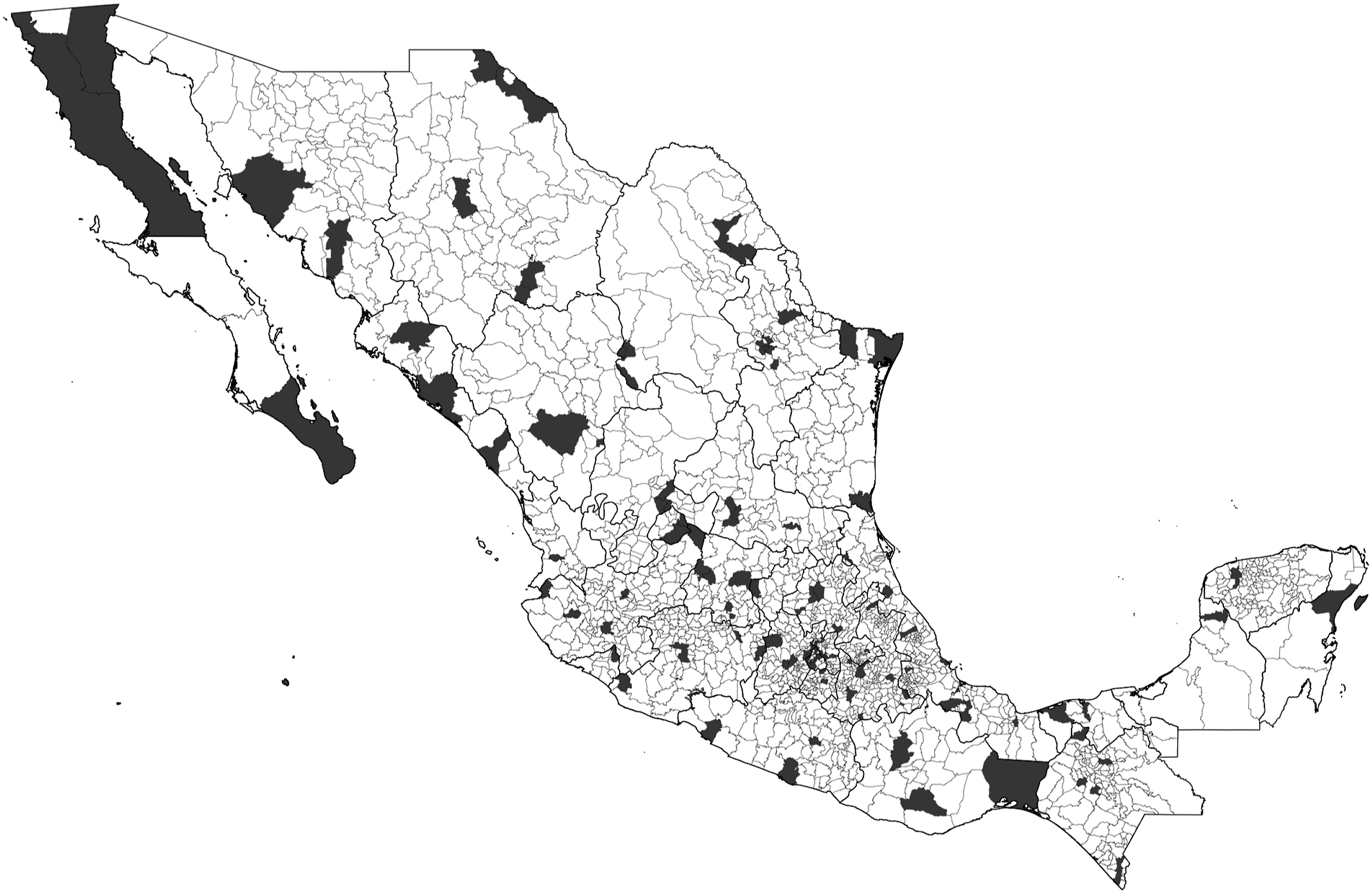
Along with a survey team based in Mexico City, I conducted a national survey that uses a probabilistic sample design of Mexican residents age 18 or older. The interviews were conducted from February 13, 2014 to March 3, 2014. All interviews were face-to-face with the respondent in or right outside their home. The questionnaire had an average duration of 25 minutes. Generally, respondents were willing to participate. These methods produce a representative national sample consisting of 1000 valid interviews with an estimated margin of error of +/− 3.1% at a 95% confidence level. In addition to the national sample, the survey team also over-sampled three areas in close geographic proximity to communities where self-defense groups (grupos de autodefensa) were active. 16 The sample size of this over-sample is 300 valid interviews. To complete the 1300 interviews the survey team contacted a total of 1857 households, which produces a non-response rate of 30%. The data for the combined sample of 1300 interviews is shown in Figure 2. 17
Dependent Variables
My theoretical expectation is that direct and violent forms of victimization will positively predict that people are more likely to view collective resistance as agentive compared to electoral participation. In addition, I expect that network effects will be less pronounced, and that indirect exposure to victimization through intimate social networks will have a positive, though weaker effect on the likelihood that an individual will favor collective resistance. To test these hypotheses, I use multinomial logit regression models. In all models, the dependent variable stays the same and measures individual-level attitudes. Previous work examines individual-level attitudes (or in related studies, behavior) in isolation from one another which obscures trade-offs civilians might make when deciding how to invest in different modes of political participation. I argue a different picture emerges when the dependent variable is instead conceptualized as a menu of options. Empirically, this achieves two goals. First, current literature asks researchers to consider civilian attitudes and behavior as a “spectrum” (Arjona, 2017) or a “menu” (Dorff, 2019) of options. My empirical strategy responds directly to this development in the literature and allows us to more precisely measure the effect of victimization on agentive attitudes about political participation. Second, there is always the potential that confirmation bias is at play when measuring ‘favorable’ attitudes about agency and political actions like nonviolent resistance. More people might say they view these collective action methods as useful, particularly when they are not asked about the method relative to any other method. Perhaps the hardest test, then, is to ask the respondent to choose one option among a set of choices.
As explained in the previous section, people living in Mexico operate under a varied rule of law and institutional arrangements. In addition, there is evidence of active armed and unarmed collective resistance strategies. While it is not realistic to study all possible forms of political organizing and participation, my dependent variable, agency attitudes captures the key dimensions of my theory. First, my dependent variable measures which action civilians view as personally useful for improving security, while allowing for the possibility that respondents prefer to express apathy and the feeling that they are unable to do anything to change their situation (Berens & Dallendörfer, 2019). If agency is defined as the ability of an individual to monitor their situation, and perform actions to change their situation or environment (Bandura, 2006), then a potential consequence of violence is a lack of agency and even an increased sense of apathy. Second, to capture the comparison of different options, my dependent variable needs plausible political actions a civilian might reasonably take to improve their situation that include both state and civilian-based options.
I measure my dependent variable using the following survey question: “Which is the main way you believe you could have the most influence to change things?” Importantly, prior to this question the respondent is primed to think about security and order in their specific municipality. The first priming question asks whether or not the respondent thinks that the people in their municipality respect the rule of law. The second question asks whether or not they believe that the government of their municipality respect the rule of law. The respondents then are asked to assess how they can be most influential within this context. The options are inherently political and follow directly after the questions on relating to the rule of law. The respondent’s menu of choices are: (1) Vote to elect parties or candidates that defend your position; (2) Participate in nonviolent mobilization (protests, sit-ins, blockades, strikes, etc.); (3) Join self-defense groups and engage in counter-violence against armed actors; 18 (4) It is not possible to influence to make things change, it doesn’t matter what you do; (5) Don’t know (DK).
Given the structure of the dependent variable, I turn to the multinomial logistic regression model for my analysis. My outcome variable meets two assumptions of multinomial logit models, the outcome is not an ordered outcome and represents distinct categories. This approach allows me to assign specific choices a probability, based on a set of independent variables. Given the largest category of my dependent variable is “voting” I use this category as the baseline reference category for all of the models discussed below.
Covariates of Interest
To test my hypotheses, I rely on victimization measures that capture important variation in victimization experiences. This approach departs from previous studies that employ a simple binary approach to capture many types of victimization experiences in one measure. In this survey, direct victimization experiences is measured using two blind self-report questions. First, respondents are given a card with a list of crimes and asked to confirm whether they had ever experienced any of the crimes present on the card. Each respondent is then sequentially given two cards: the first card shows a list of more minor, typically less violent and lower intensity crimes such as robbery, fraud, and theft. This card captures “low” level forms of victimization.
19
Then, the respondent is given a second card which contains a list of more distinctly violent crimes, crimes that are typically linked to organized crime in the case of Mexico, such as assault, sexual assault, and kidnapping. In an effort to create a feeling of safety and privacy, the enumerators simply passed the card to the respondent so that they could read it themselves and then respond.
20
From these two questions and cards, I construct the victimization measure which is shown in Figure 3. Specifically, the categories range from no direct victimization, low-level victimization only, and high-level victimization experiences.
21
As shown in the figure, the distribution varies within each subgroup of the dependent variable.The second key measurement of interest is network victimization, which is when a person experiences victimization through their intimate social network. For each form of victimization recorded above in the self report cards, the respondents are then also asked if they know of anyone who has experienced this kind of victimization in their close social network. I create a new variable, “network victimization”, to capture those respondents who are exposed to victimization only through their social network.
22
Unsurprisingly, self-identifying as a victim of a “low” form of victimization is positively correlated with knowing someone who has also experienced this form of victimization. Thus to parse out whether or not the effects of network victimization have any effect, no effect, or are similar to the effects of personal victimization, this measure captures respondents who did not also experience direct, personal victimization and instead report only knowing someone who was victimized. Thus, the comparison here is between those who experience no victimization versus those who experience only network victimization. Due to the lower responses on this measure, I combine all levels of victimization into a binary outcome (no victimization versus any form of victimization). Out of the national sample, 18.7% of respondents report knowing someone who was victimized but do not report also experiencing personal forms of victimization. Different levels of direct victimization across categories of the dependent variable (agency attitudes).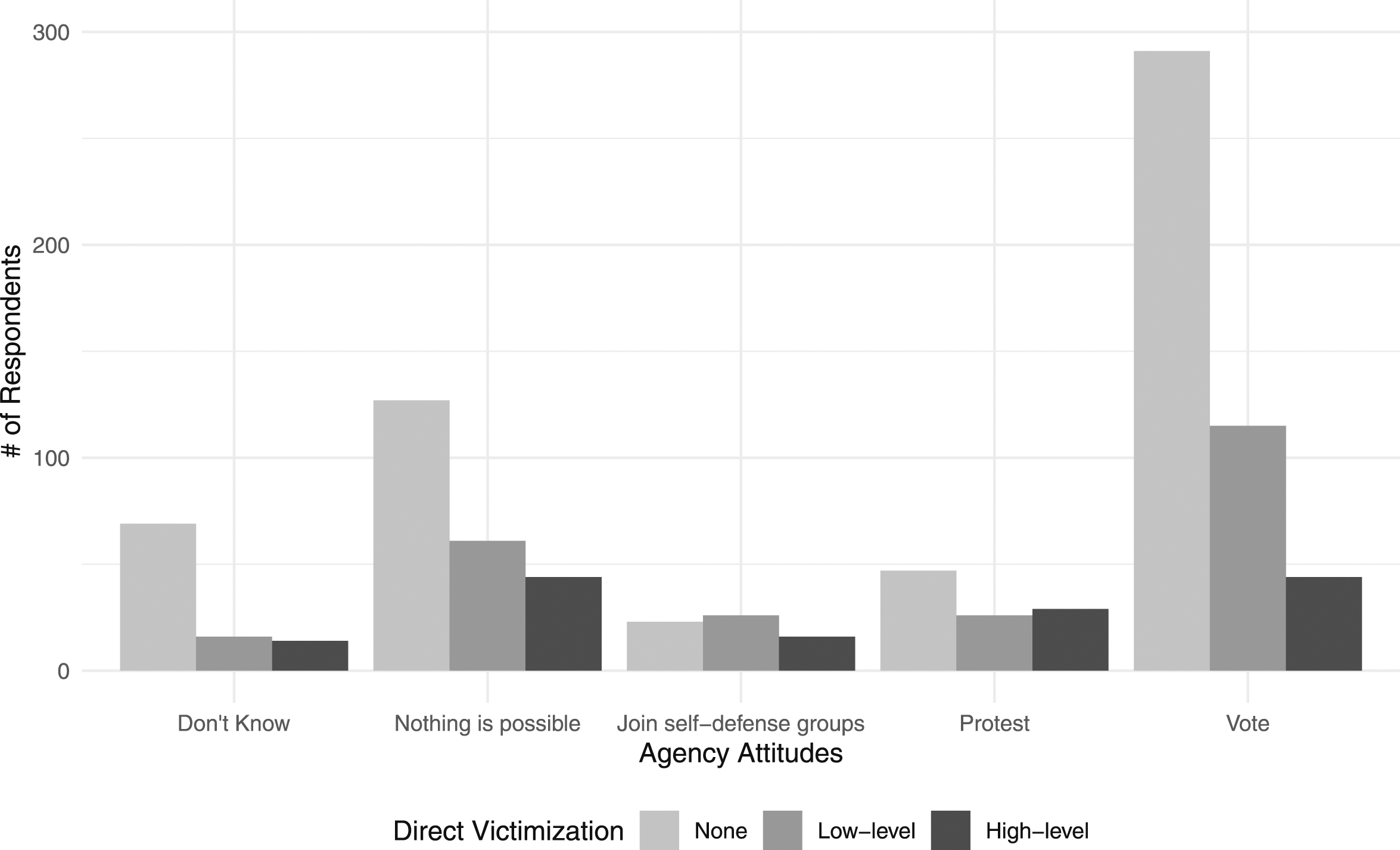
Control Variables
There are other conditions, beyond experiences with violence, that might influence both the likelihood of victimization and agency attitudes in this context. First, in all models using the national sample, I also control for 5 main regions in Mexico: Central, East, North Pacific, and South. 23 Individual characteristics could also play a role. Drawing from existing literature, I control for individual characteristics with three variables: Gender, Age, and Education. 24 The first two variables are demographic yet theoretically also of interest. Age is a self-reported numeric variable and Gender is a self-reported binary variable (whereby female is randomly assigned the value 1 and male the value of 0). The study of gender dynamics and political organizing has grown in recent years but many of the claims around whether or not women are more or less likely to organize collectively to challenge violent oppressors remain case specific. In Mexico, women participate in victims’ marches, nonviolent protests, and in armed self-defense forces. At the same time, femicide has been a notable problem across the Mexican region, particularly targeting young women, which could also raise the perception that there is a higher risk of participation in resistance movements. 25 I control for gender using a self-reported measure. 26
In addition, conventional wisdom might suggest that younger people are more likely to participate in protests, as demonstrated by news headlines such as “Why do you march? Young protestors explain what drives them” (Ifill, 2014). However, research on the austerity protests in Greece suggest that protestors are not young; the average age of Greek protestors in 2010 was only slightly lower than the national average and the age group with the highest share of both strikers and demonstrators was those between forty-five and fifty-four years of age (Rüdig & Karyotis, 2014). In the case of attitude formation in contexts of violence, we might expect that the youth feel they have less to lose, and thus are willing to take higher risks in organizing via unconventional methods. Yet it could also be the case that those who are older are better educated about the functioning of the state, and are more knowledgable about the available alternatives to voting. I control for age effects using a self-reported numeric indicator.
Education is also controlled for in the model. Research on feelings of personal agency and efficacy suggest education may be a key determinant of increased feelings of political agency (Beaumont, 2011). Although I am currently unaware of research specifically focused on education and agency attitudes in contexts similar to that of this study, research on political participation offers a guideline: scholars have identified mixed support for the conventional wisdom that individuals without formal education are more likely to participate in violence. For example, while Humphreys and Weinstein (2008) find support for the negative relationship between education and political conflict in civil wars, Zeira (2019)’s study of participation in the Palestinian National Movement reveals a non-linear effect wherein moderate levels of education increase participation in resistance. Relatedly, using observational data from Mexico, Phillips (2017) finds income inequality is robustly associated with organized vigilantism. Education is likely to correlate with income. I account for education effects by binarizing a categorical variable capturing different self-reported education levels where in no education/some primary school is coded as a zero and all else (secondary school or higher) is coded as a 1.
Finally, another body of research suggests access to information could shape both victimization and attitudes about resistance and agency. Namely, a surge in the study of protest diffusion following the Arab Spring shows that people are likely to learn, adapt, and update their preferences through exposure to information about organizing. Knowledge about successful movements encourages participation, a hypothesis investigated mostly across countries (Braithwaite et al., 2015; Brancati & Lucardi, 2019; Gleditsch & Rivera, 2017). Yet, information and knowledge about resistance could inform attitudes at the individual level too (Sharp, 1973), as well as views on whether or not nonviolent methods are efficacious (RezaeeDaryakenari & Asadzade, 2020). These types of information effects do not necessarily work against the theory that victims are more likely to favor community-based forms of political engagement, but they do suggest an important condition to consider: does heightened exposure to violence still motivate favorable attitudes towards resistance in areas where resistance is on-going?
Given the setting of this study, we might also be concerned with endogeneity. Individuals who are already involved in collective resistance could be more likely to be victims. If that is the case, then a third variable — knowledge of on-going resistance campaigns — would drive people into both high victimization and high support for collective resistance categories. To provide additional empirical tests of my hypotheses, I control for whether or not respondents are familiar with nonviolent organizing efforts. I specifically control for familiarity with the (at the time) on-going nonviolent social movement, The Movement for Peace with Justice and Dignity, using the national survey data. Though the measure I use is self-reported, it still allows me to control for how familiar respondents are with well established social movements. The binary variable MPJD Familiarity represents familiarity with Javier Sicilia’s Movement for Peace and Justice with Dignity. At the time of the survey, this was the region’s most current and widespread campaign advocating distinctly nonviolent methods. This question asked, “How familiar are you with the work of Javier Sicilia/the Movement for Peace with Justice and Dignity?” The possible response ranged from: “Very familiar to not familiar or don’t know.” A little over 60% of the population had little to no familiarity with this movement (coded as 0) and a little less than 40% were somewhat to very familiar (coded as 1). 27 To examine whether or not my main findings are consistent when respondents live near armed resistance groups, I turn to a robustness analysis using my oversample data in a section following the main results. 28
Results
Direct Victimization
I model the relationship between direct victimization and agency attitudes (H1a and H1b) in Models 1 and 2. In addition to the key independent variable, direct victimization, I control for regional effects in Model 1. In Model 2, I also control for age, gender, education, region, and knowledge with the Movement for Peace with Justice and Dignity. Following best practices in current methodological research, I focus on interpreting predicted probabilities, not the raw coefficients of the multinomial logit models themselves (King et al., 2000; Paolino, 2021). 29 To do this, I use a counterfactual data approach, also known as an “observed data” approach outlined by Hanmer and Ozan Kalkan (2013). I generate predicted values from the models by using the observed data and varying only the independent variable of interest, victimization. 30
Below, for the benefit of interpretation, I plot the predicted probabilities from both Model 1 and Model 2 in a side-by-side comparison. Importantly, the results are consistent across the two models. 31 My interpretation of these results focuses on Model 2 (model with controls). To show support for Hypothesis 1a, we would expect to see that those who experience direct victimization of either or both types have a higher predicted probability of selecting resistance options as agentive and a lower predicted probability of selecting voting as agentive. The findings support H1a: even with additional controls, on average, those who experience direct victimization are less likely to view voting as agentive and more likely to view collective resistance as agentive.
The results, however, reveal the heterogenous effects of different types of victimization (low versus high) when we look across outcomes and provide mixed evidence for Hypothesis 1b. H1b posits that high-level victimization will increase the likelihood that individuals view collective resistance as agentive compared to low-level victimization. This does not appear to be the case for armed resistance. As shown in Figure 4, the average probability of selecting self-defense groups as agentive is about 4% for those with no direct victimization experiences but increases to about 11% for those with low-level victimization or high-level victimization. Findings for voting and protests are in support of H1b. Specifically, on average, those who experience low-level victimization are about 10% likely to view protest as agentive whereas those who experience high-level direct victimization are, on average, nearly twice as likely (19%) to view protest as agentive. Complimentarily, the average probability of selecting the choice, Voting, for a respondent who experienced no victimization and low-level victimization is about 51% and 49% respectively, but decreases to 32% for those who experience the highest level of victimization. In other words, there is a 35% decrease in the predicted probability for selecting voting when we compare non-victims to those who have experienced direct victimization. Predicted probabilities are calculated using an observed values approach varying only levels of direct victimization. Model 1 is a multinomial model with 5 choices in the dependent variable. Independent variables are direct victimization and regional controls. Model 2 is the same model specification as model 1 but with additional control variables for age, gender, education, region and knowledge of MJPD. Sample: national sample.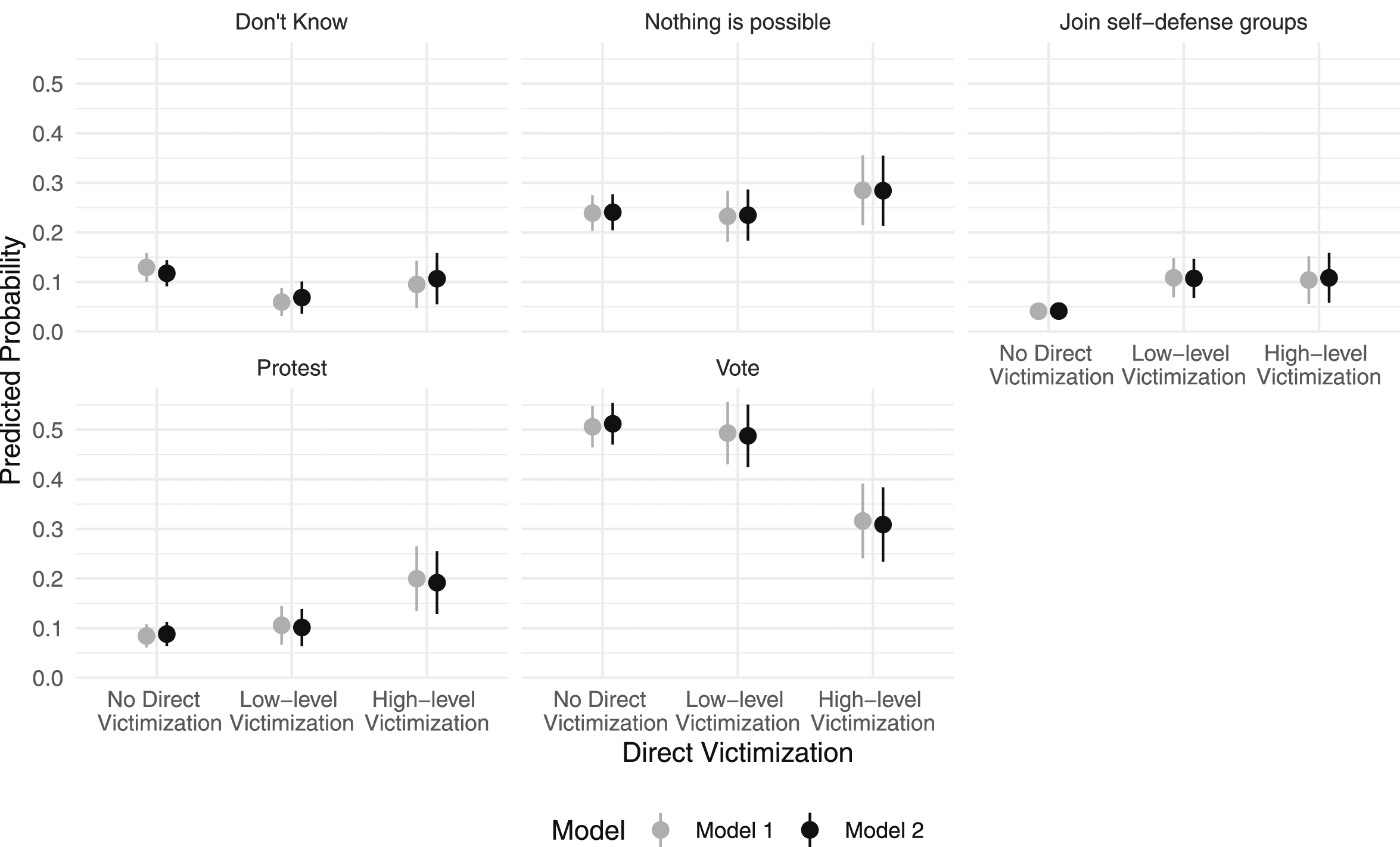
These findings provide evidence that, overall, direct victimization experiences are a transformative political experience, one that informs individuals’ sense of agency and increases the likelihood people view collective resistance as agentive. These findings also call attention to the importance of both theorizing and measuring victimization in nuanced ways. In particular, if we were to average the effect of the low and high measures, or simply assume all victimization experiences into one concept, it would mask how intensity and violence meaningfully shape attitudes about agency.
Network Victimization
Next, using the same approach as above, I test the relationship between network victimization and agency attitudes. To isolate the potential effect of network victimization, I subset the data to include respondents who have experienced only network victimization and no direct victimization.
32
Model 3 is a multinomial logistic regression with only network victimization and regional control variables in the model.
33
The predicted probabilities in Figure 5 are consistent across the two models for the outcomes of interest. Overall, the effect of network victimization is in the expected direction of H1a and H1b in the case of protests (positive) but not armed resistance (negative). The average probability for viewing protest as agentive is about 7% for those with no victimization experiences and 13% for those who experience victimization only through others in their intimate social network. The average probability for viewing armed resistance as agentive is about 5% for those with no victimization experiences and 2% for those who experience victimization only through others in their intimate social network. Predicted probabilities are calculated using an observed values approach varying only levels of network victimization. Model 3 is a multinomial model with 5 choices in the dependent variable. Independent variables are network victimization and regional controls. Model 4 is the same model specification as model 3 but with additional control variables for age, gender, education, region and knowledge of MJPD. Sample: national sample subset.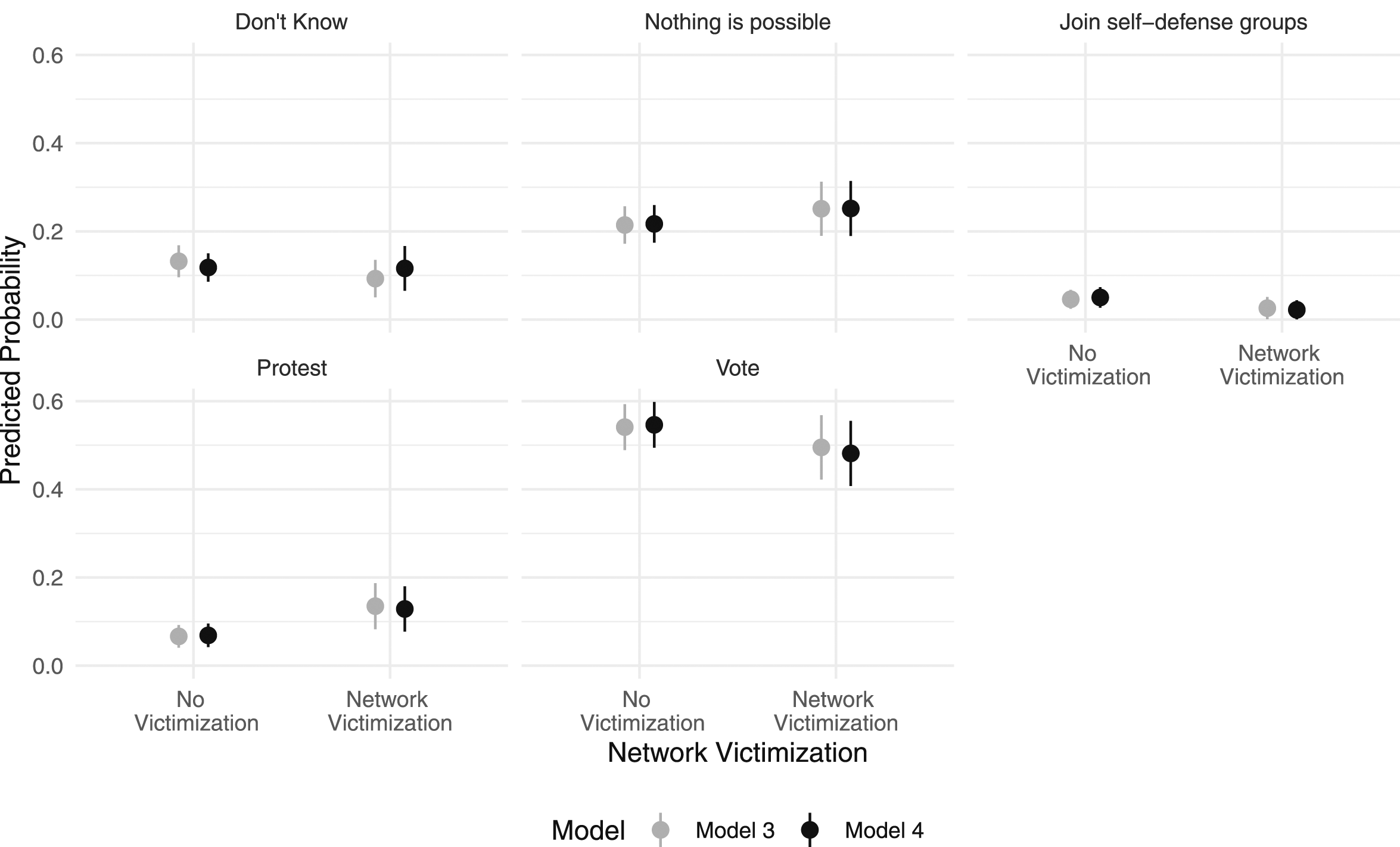
This might suggest that while direct victimization activates favorable attitudes towards both resistance types, network efforts have a differential effect. Personally knowing someone who has experienced victimization is sufficient to shift attitudes towards viewing nonviolent protests as agentive. Yet, the same experience can also produce a counter effect, perhaps discouraging participation, in the case of armed collective resistance. Further research on how community-level and intimate network experiences shape individual attitudes is needed, but, critically, these findings are suggestive of the differential effects of direct versus indirect victimization experiences. Ley (2022)’s research on the protest behavior of self-identified victims in Mexico shows that socialization networks play a pivotal role in mobilizing survivors of criminal violence to participate in protests against crime. Perhaps, then, combining the measures of network victimization from this present study with Ley’s work on broader socialization processes would yield further insights into the mechanisms behind how network victimization is linked to participation. Future work might also further delineate the role of networks by examining network composition and collecting data on the relationship between the respondent and the person(s) victimized. 34 Examining this could illuminate how different networks play distinct roles in shaping both attitudes and participation.
Robustness
Familiarity with Armed Resistance
Finally, I account for people’s exposure to information about violent collective resistance by oversampling locations with known self-defense groups. This design allows me to examine how place and location matters for victims’ agentive attitudes. It is important to note that based on the recommendation of my survey team, it was not possible at the time of the survey to draft a nationally representative sample of those living in neighborhoods with self-defense groups for three reasons. First, my team and I were rightfully concerned about enumerator and respondent safety. In the weeks leading up to this survey, the enumerators had been stopped and held for hours while working on another survey in the field in contested regions. Second, at the time of data collection, the true population living near self-defense groups was unknown which limited my ability to create a representative sample. Instead, we knew of a few primary locations where self-defense groups were publicly organizing. Thus, my team and I decided to oversample three areas that the team could safely access and had a known, self-defense group presence. An example of the over-sampled population’s proximity to self-defense groups is shown in Figure 6. In total, we oversampled three states, Guerrero, Hidalgo, and Michoacán, resulting in 300 interviews. The over-sample was successful in that the survey team was able to safely operate in regions in which self-defense groups were active. A map of Guerrero state, with an over-sampled municipality shown in purple. To demonstrate the proximity of the sample to self-defense groups, municipalities with known self-defense forces are shaded gray. The over-sample was conducted within the states of Guerrero, Michoacán, and Hidalgo. The breakdown of the survey sample across states is shown in the Appendix.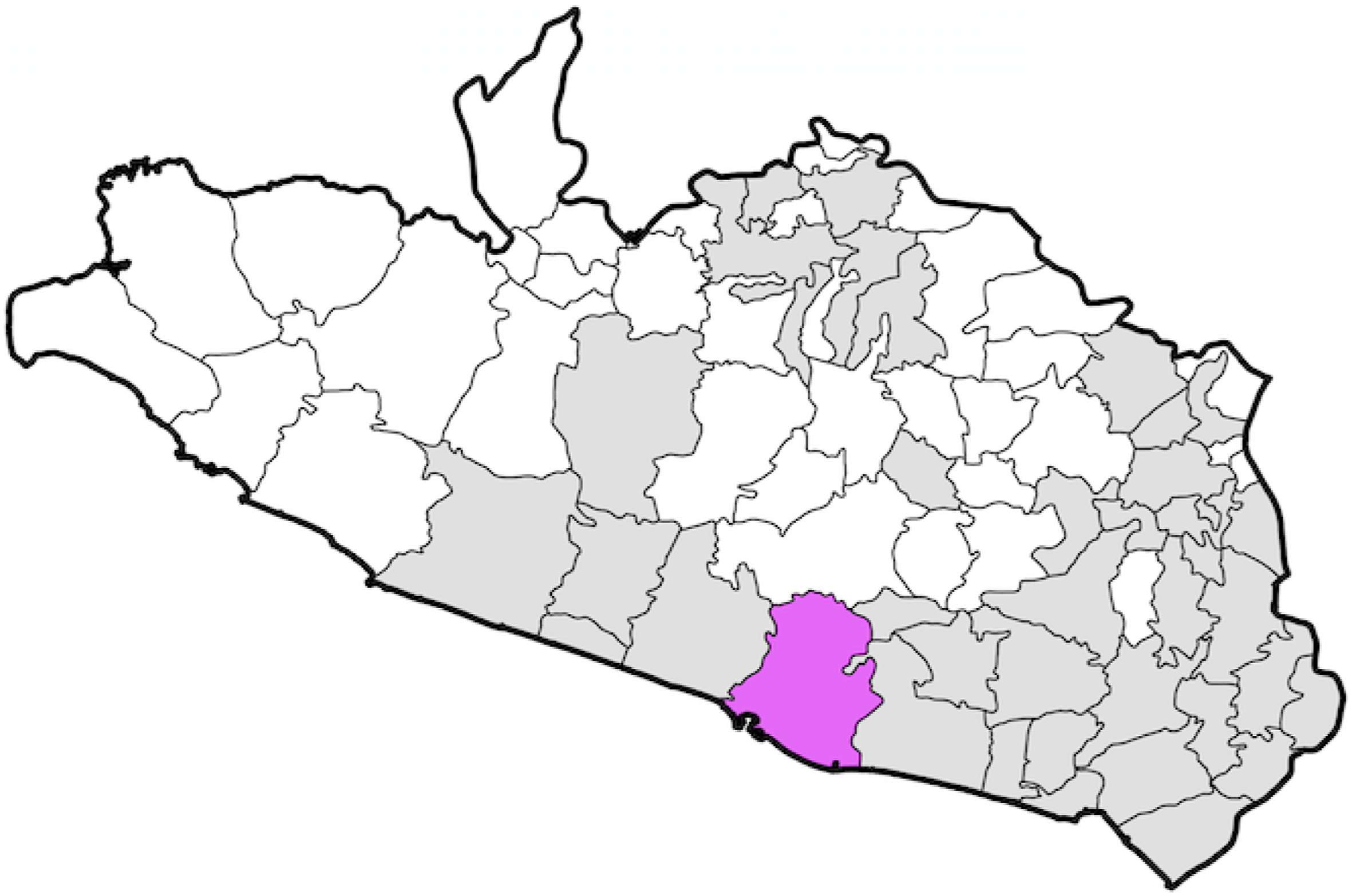
In sum, the oversampled regions in Mexico represent highly contested regions. If the results are consistent using the oversample, then victims in these areas are still more likely to favor collective action over state based methods. If the results are not consistent, this then suggests that conflict between armed civilians, the government, and criminal groups decreases the likelihood that victims view collective resistance as useful.
In Model 5, I test H1a and H1b using only data from the oversample. To test H1a and H1b, I report the same covariate specification (with controls) as used in Model 3 above. Using the same method in the previous analyses, I report predicted probabilities for Model 5 in Figure 7. Support for H1a is consistent using only data from the oversample. Namely, on average, those who experience some form of direct victimization are more likely to view resistance as agentive even when they live near self-defense forces. The trends for voting are also similar to the national sample in that those who experience direct victimization are less likely to view voting as agentive. This provides clear evidence in support of H1a. Predicted probabilities are calculated using an observed values approach varying only levels of direct victimization. Model 5 is a multinomial model with 5 choices in the dependent variable. Independent variables are direct victimization and control variables for age, gender, education, region and knowledge of MPJD. Sample: oversample near self-defense forces.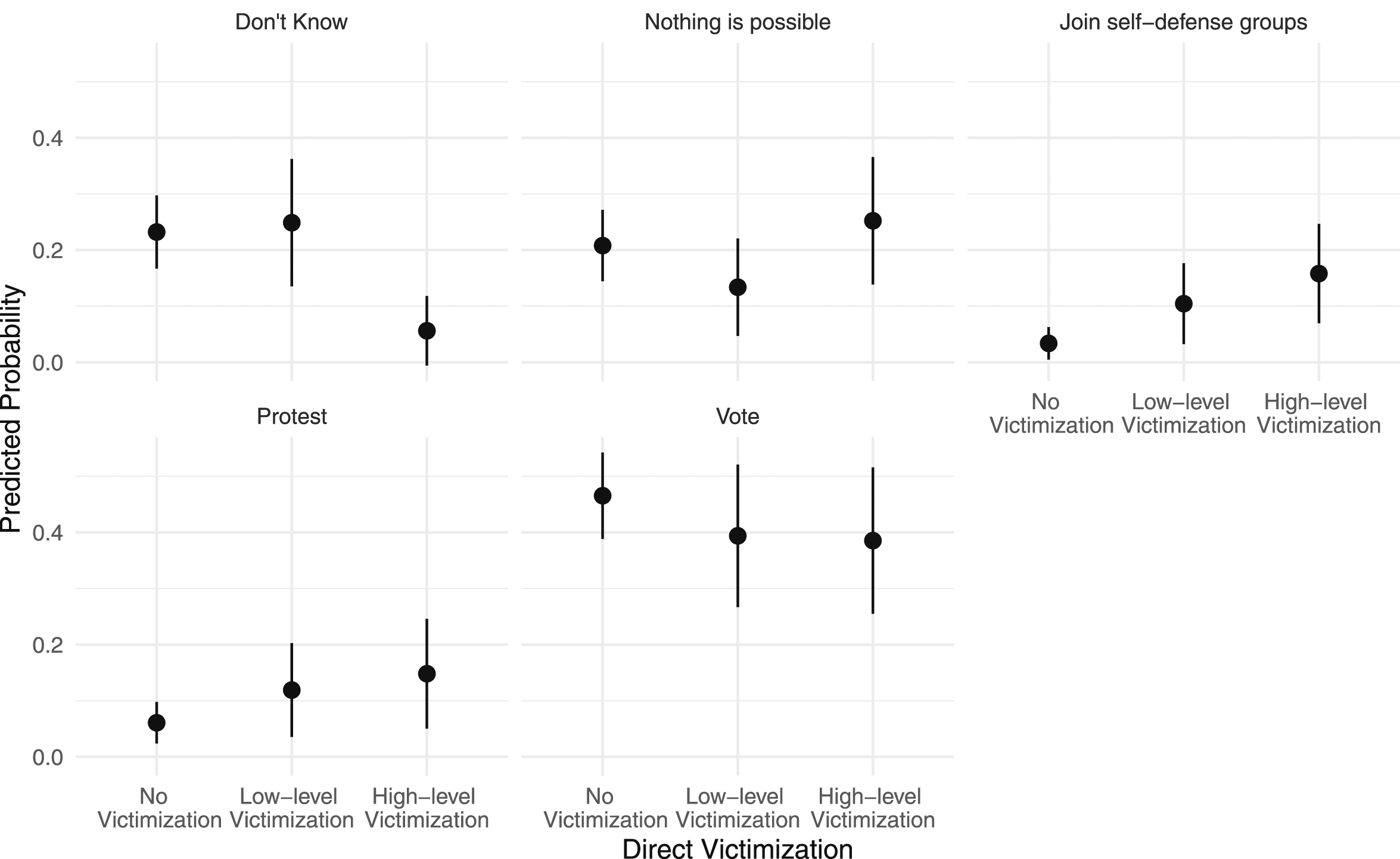
Furthermore, the results from the oversample also support H1b: as the intensity of victimization increases, the likelihood individuals favor resistance also increases. Living near self defense groups, however, does have an important influence over which methods civilians view as useful when compared to the national sample. Consistent with the logic that proximity to organizing could influence attitudes, the main difference between the oversample results and the national sample is that the increase in the predicted probabilities from low to high victimization is more pronounced for selecting self-defense groups than it was in the national sample. In the national sample, the difference was more pronounced for protests. In other words, for those living near self-defense groups, self-defense groups are more likely to be viewed as agentive, especially among respondents that experience high-level victimization.
I also test H2 to examine if network victimization predicts attitudes in the oversampled population (Figure 8). Similar to the national sample results, I find a positive relationship between knowing someone who is victimized and viewing protest as agentive. In addition, in the oversample regions, those who experience network victimization are more likely to report that joining self-defense forces is agentive. Predicted probabilities are calculated using an observed values approach varying only levels of direct victimization. Model 6 is a multinomial model with 5 choices in the dependent variable. Independent variables are network victimization and control variables for age and gender. Sample: oversample near self-defense groups.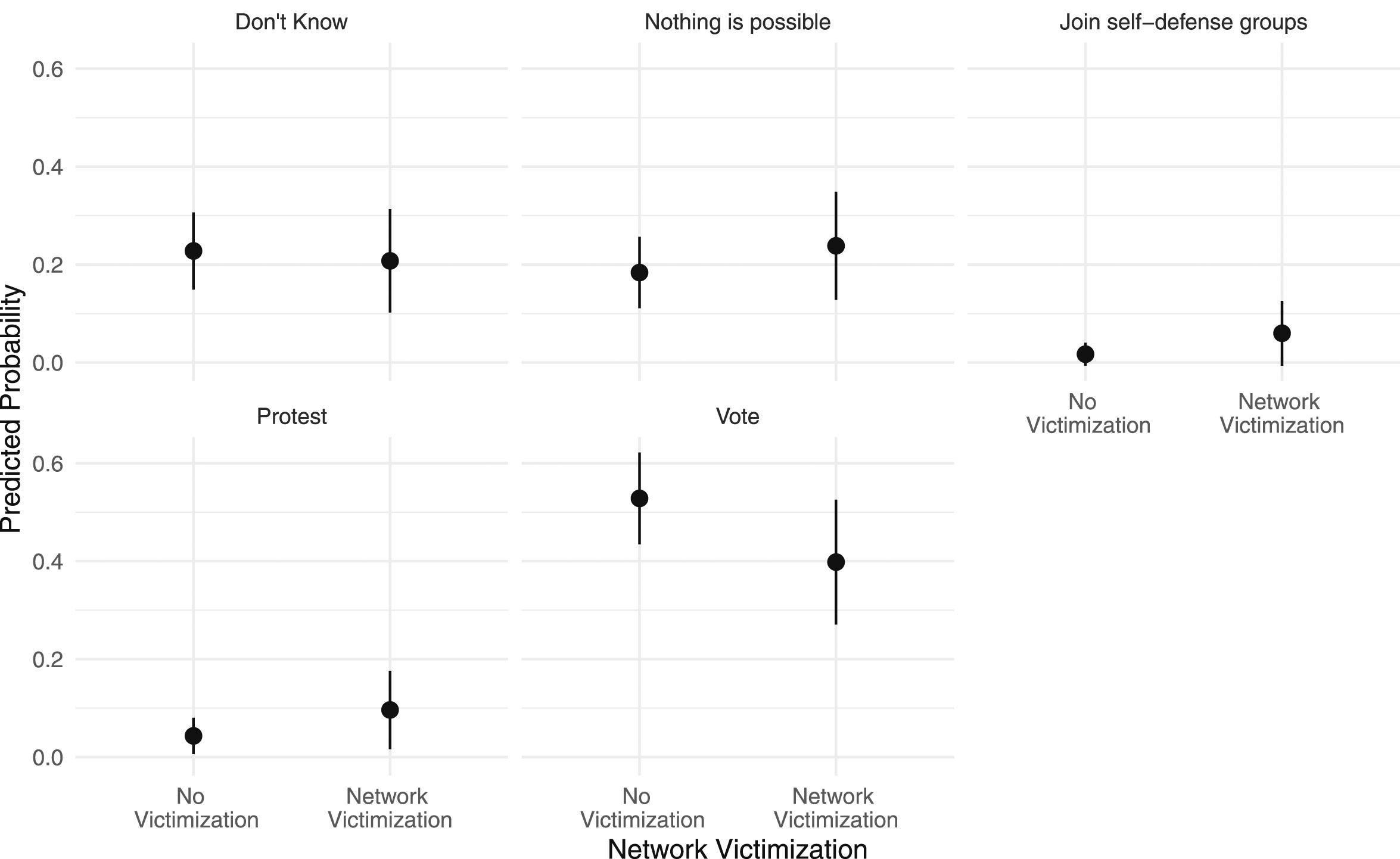
Taken together, these results present clear evidence that experiences with victimization shape how civilians view their own sense of political agency. Victimization experiences personally reveal the cost of a poorly functioning state and inform the way people think about their self efficacy and their ability to make a change. On the whole, when given the chance of weighing different options together, survivors of direct victimization are more likely to view collective modes of resistance as useful for taking personal action to change the status quo and less likely to view voting as agentive. These results are consistent across a variety of modeling specifications and are even consistent for those respondents living near armed self-defense groups.
Although the results show mixed support for the idea that very violent victimization always predicts greater favorable attitudes towards resistance, the heterogeneity of the results are crucial for future research. Namely, on average across Mexico, violent victimization is associated with a higher predicted probability of favoring protests. Yet when we use a data sample that ensures respondents live close to self-defense forces, we see the same trend for favoring armed resistance. This suggests that direct exposure to different strategies of civilian organizing might shape how people view their own options for changing their security situation.
Finally, network effects also matter for agentive attitudes, though to a lesser extent than direct victimization. In general, across Mexico, those who know someone in their close social network who experienced victimization are more likely to view protest as agentive yet slightly less likely to view joining self-defense groups as agentive. In the case of those living near self-defense groups, however, network victimization is also positively associated with viewing self-defense groups as agentive.
Discussion
In this research, I theorize that victimization experiences shape attitudes about agency. My theory addresses how different types of victimization matter for attitudinal outcomes. In addition, I provide theoretically informed measures of agency attitudes and civilian victimization and find support for the primary hypothesis under study. Individuals who experience direct criminal victimization are more likely to express positive agentive attitudes towards collective resistance. Below, I discuss to three primary areas for future research.
First, panel data could allow scholars to better understand how the timing and accumulation of victimization affect attitude formation. Although barriers exist to collecting such data, greater temporal specificity would enable future scholars to explore these relationships further. 35 Related to temporal concerns, it could be the case that those in support of collective resistance, or potentially participating in it already, are simply more likely to experience violence in the first place which undermines the core takeaway of the study. Two possible considerations arise. Namely, if this is the case, it is not clear theoretically why participants in the survey would have a reason to report collective resistance as a particularly desirable and agentive option—if their existing involvement did indeed lead to a violent experience. In addition, the extensive tests of alternative arguments and different survey sampling strategies help ameliorate these concerns. We would expect, for example, that some of the respondents who report medium to high levels of familiarity with the Movement for Peace with Justice and Dignity might also be activists. Yet, when we control for this kind of access to information, the results consistently show that respondents who report high-level victimization experiences also report higher support for collective resistance compared to those with no victimization experiences.
Second, this study provides the necessary groundwork to compare attitudes about even more specific strategies, such as nonviolent and violent resistance, in the future. In doing so, researchers can incorporate other emotions and attitudes into the theoretical puzzle of agency. For example, while the results here reveal that survivors of violence are influenced by the type of victimization they experience, they also suggest that proximity to organizing might influence which mode of resistance individuals view as most agentive. This is in line with previous work on fear and emotions in Mexico which finds that living near armed organizing might increase fear of taking non-violent action (Dorff & Braithwaite, 2018). Researchers could bring these findings together to address how attitudes about agency and strategy might relate to other emotions and attitudes — such as trust (Blanco, 2013; Zizumbo-Colunga, 2019), insecurity (Altamirano et al., 2024) and fear (García-Ponce et al., 2021). Clarifying these connections is undoubtedly a challenging but critical area for future research.
Third, although my focus in this study is on attitudes, the findings of this study are in conversation with research on the relationship between attitudes and political behavior. By influencing agency attitudes, citizens’ victimization experiences have the potential to influence the democratic process, if these attitudes do indeed inform future actions. While this study shows that violent and direct victimization experiences are associated with more favorable attitudes towards protests, it does not explain why some individuals ultimately choose to participate. Additional research can better uncover the pathways between attitudes and participation. Network processes might play a role in helping us understand the relationship among victimization, attitudes, and action. Research by Ley (2022) demonstrates that local networks influence whether activism ultimately comes to fruition at observable levels. Similarly, Dorff (2017) suggests kinship networks moderate which victims will become politically active and which will not. Moncada (2020) rightly encourages us to think of victimization effects as a more dynamic process, involving local networks, interdependence, and cycles of activism. Although the findings of the present study are at the individual level, they suggest that victimization experiences are still a first step in a longer chain of important mobilization events.
Conclusion
Drawing on literature on the political consequences of political and criminal violence, this study contributes compelling evidence for how victimization experiences shape attitudes about political agency in areas of protracted criminal violence and insecurity. Individuals who have directly experienced victimization are more likely to perceive collective action as a useful method for political change. This study relies on original survey data and a unique dependent variable that measures ordinary citizens’ attitudes towards a range of political behaviors in a context of corruption, insecurity, and high levels of criminal violence. Overall, the empirical results are supportive of the central hypothesis of this paper: direct victimization experiences increase the likelihood an individual will view collective resistance as agentive. Typically, researchers have predominately focused on the relationship between violent experiences and voting, or violence and attitudes about one single form of political participation. By uniting different possible choices into a multiform outcome, this study demonstrates the kind of prioritization and trade-offs civilians might make as they consider how their own agency is embedded in different forms of political participation. This empirical strategy provides compelling evidence that experiences with violence greatly influence civilians’ perception of the efficacy of collective action. In doing so, it answers the call for more analysis on disaggregated, individual level effects of violence on resistance: as Chenoweth and Cunningham (2013, p. 273), state “…the field of civil resistance has been limited by a reliance on aggregate, campaign-level data. This has a number of distinct benefits…but sacrifices important levels of nuance about the dynamics of contention.”
Finally, the findings have implications for organizers and policymakers. For policymakers interested in designing programs to help victimization survivors in areas of protracted violence, the study shines a light on the need to not only focus on mental health and medical services, but to consider whether or not policies leave civic spaces open to armed groups. Similarly, the findings present a key insight for local organizers: movement organizers can potentially create opportunities for individual survivors to express their agency through collective action.
Supplemental Material
Supplemental Material - Criminal Victimization and Agency Attitudes in Mexico
Supplemental Material for Criminal Victimization and Agency Attitudes in Mexico by Cassy Dorff in Comparative Political Studies
Footnotes
Acknowledgments
I am grateful to the participants in this survey and the helpful team of dedicated survey enumerators in Mexico for their work, feedback and support. Thank you also to the many scholars who provided comments on different stages of this project, especially Laia Balcells, Jessica Braithwaite, Erica Chenoweth, Anita Gohdes, Mala Htun, Oliver Kaplan, Jennifer Larson, Sandra Ley, Noam Lupu, Zoe Marks, Shahryar Minhas, Sarah Parkinson, Guillermo Trejo, Michael Ward, Michael Weintraub, and Elizabeth Zechmiester. Thank you also to Sofía Berrospi and Sophia Tannir for their research assistance. This project benefited from attendee participation across several spaces, including the Sié Chéou-Kang Center for International Security and Diplomacy at the Josef Korbel School of International Studies; the Security, Peace, and Conflict Workshop at Duke University; the Workshop on Conflict, Strategies, and Tactics at the University of Essex; the International Relations Workshop at Yale University; and the Speaker Series for the Department of Peace and Conflict Research at Uppsala University. In addition, this project received helpful comments at the Annual Meetings of the American Political Science Association and International Studies Association as well as excellent feedback from the reviewers and editors at Comparative Political Studies.
Declaration of Conflicting Interests
The author(s) declared no potential conflicts of interest with respect to the research, authorship, and/or publication of this article.
Funding
The author(s) disclosed receipt of the following financial support for the research, authorship, and/or publication of this article: This work was supported by Duke University and the International Center of Nonviolent Conflict.

Supplemental Material
Supplemental material for this article is available online.
Notes
Author Biography
References
Supplementary Material
Please find the following supplemental material available below.
For Open Access articles published under a Creative Commons License, all supplemental material carries the same license as the article it is associated with.
For non-Open Access articles published, all supplemental material carries a non-exclusive license, and permission requests for re-use of supplemental material or any part of supplemental material shall be sent directly to the copyright owner as specified in the copyright notice associated with the article.
