



Abstract
Political parties often mobilise issues that can improve their electoral fortunes by splitting existing coalitions. We argue that by adopting a distinctively adversarial stance, radical right-wing parties have increasingly politicised climate change policies as a wedge issue. This strategy challenges the mainstream party consensus and seeks to mobilise voter concerns over green initiatives. Relying on state-of-the-art multilingual large language models, we empirically examine nearly half a million press releases from 76 political parties across nine European democracies to support this argument. Our findings demonstrate that the radical right’s oppositional climate policy rhetoric diverges significantly from the mainstream consensus. Survey data further reveal climate policy scepticism among voters across the political spectrum, highlighting the mobilising potential of climate policies as a wedge issue. This research advances our understanding of issue competition and the politicisation of climate change.
Introduction
Challenger parties, such as radical right and green parties, are typically ‘issue entrepreneurs’ that seek to politicise new issues to expand their voting appeal (Abou-Chadi, 2016; Adams et al., 2006; De Vries & Hobolt, 2020; Meguid, 2005). This strategy is particularly successful when they politicise so-called ‘wedge issues’ – issues that cut across party lines and threaten to spark intra-party or intra-coalition divisions (Haas et al., 2023; Heinkelmann-Wild et al., 2020; Hillygus & Shields, 2009; Hobolt & de Vries, 2015; Jeong et al., 2011; van de Wardt et al., 2014). Prime examples of wedge issue competition include the mobilisation of immigration by the radical right (Green-Pedersen, 2019; Gessler & Hunger, 2022; Hutter & Kriesi, 2022; Meijers & van der Veer, 2019) and the mobilisation of the environmental issue by green parties (Grant & Tilley, 2019; Spoon, 2011; Spoon et al., 2014). Yet, despite important scholarly contributions, the ways in which challenger parties adopt new wedge issues to broaden their electoral appeal in the context of dynamic issue entrepreneurship is less explored.
In this article, we document the politicisation of climate change policies by radical right-wing parties across Europe. We examine the extent to which these parties leverage climate change policies to expand their appeal by adopting an adversarial position on related green policy initiatives. Moreover, we present evidence that suggests that the radical right’s mobilisation of climate change has all the hallmarks of a classic wedge issue. Namely, that mainstream political parties are largely in agreement that even costly climate policies are necessary, while a proportion of voters across the political spectrum remain sceptical of the costs involved with reducing carbon emissions and fossil fuel dependence. We argue that the radical right in Europe has shifted its strategy from largely ignoring the climate policy issue to politicising climate change as a potential wedge issue by taking advantage of the broad consensus among mainstream parties and a growing disquiet among some voters.
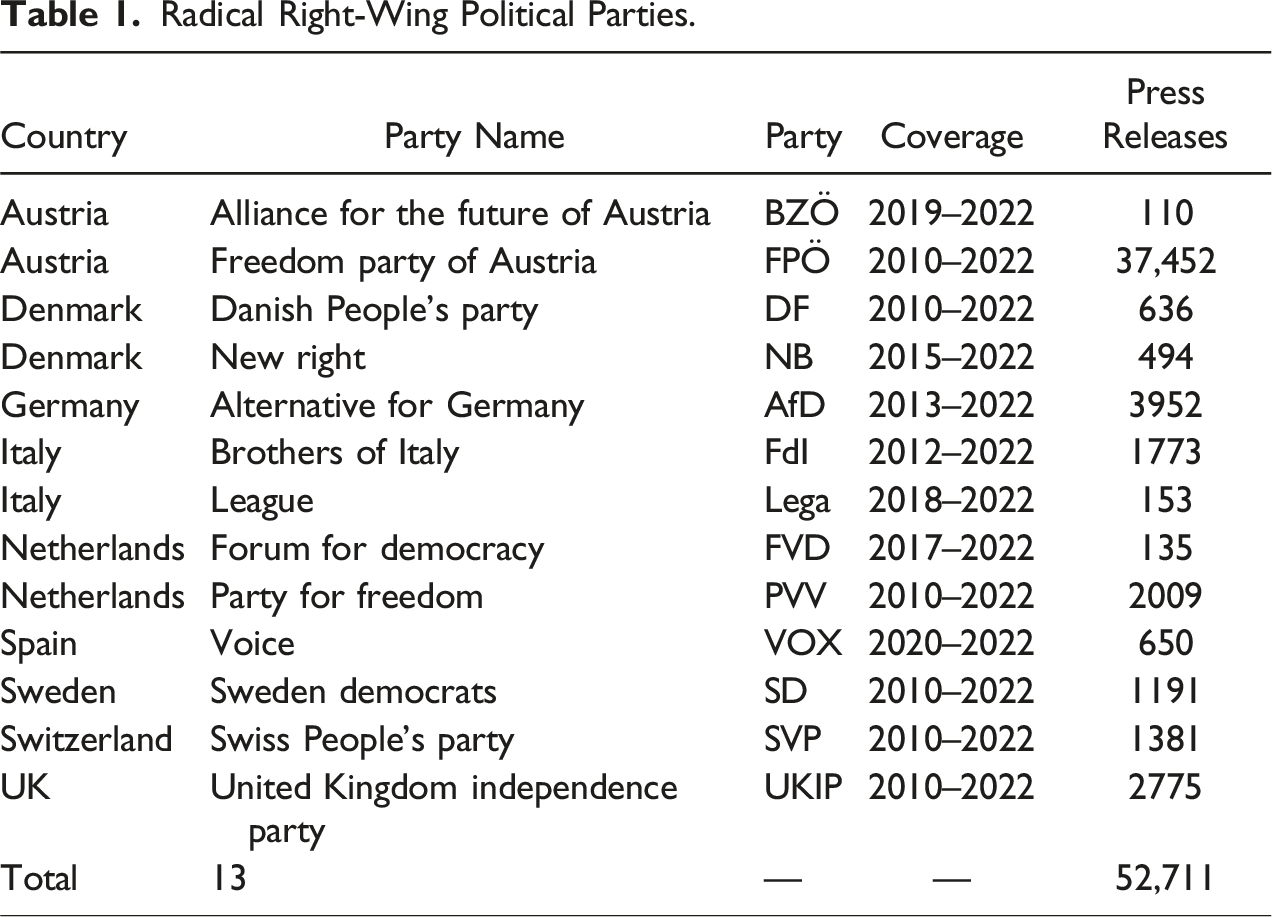
To test this argument, we leverage a unique dataset of party press releases from 76 political parties across nine Western European countries that span the years from 2010 to 2023. This dataset builds on and expands the PARTYPRESS dataset created by Erfort et al. (2023) which includes nearly 400,000 full press releases – over 50,000 of which are from radical right-wing parties. The distinct advantage of the party press releases is that they allow for capturing party issue competition unfiltered by institutional constraints. Additionally, the press releases capture the dynamic attention and issue positions of parties over time rather than solely during election periods as with party manifestos.
Our analysis draws on recent advances in deep learning and computational methods to descriptively analyse the press releases. We train, validate and make public two multilingual large language models (LLMs), one of which classifies party press releases according to the 21 issue categories defined by the Comparative Agendas Project (CAP) (CAP, 2023), and the other of which is a generative model that summarises the primary policy objectives in a given press releases and identifies the party’s position on the policy. We use these models to analyse the press releases and ultimately to measure party salience and party positions on climate change-related policies. Our findings illustrate that radical right parties are not only emphasising climate change-related issues more than they did in the past, but that their positions on climate change policies have significantly diverged from the mainstream pro-climate change consensus adopted by other party families.
Further, we examine the mobilising potential of this ‘climate policy sceptic’ strategy among voters, leveraging high-quality survey data from the countries studied throughout the analysis. We find that nearly every mainstream party family has significant proportions of voters who express scepticism of climate policies, thus positioning climate policy as a true wedge issue that does not align neatly with the left-right party divide (De Vries & Hobolt, 2020; Kriesi et al., 2006). Narrowing the focus to the British and German context, we then show that the radical right receives the vast majority of its support from climate policy sceptics. Finally, we analyse panel data from the British case to show that a significant proportion of the radical right’s support in 2023 comes from climate policy sceptics who supported the Conservative Party in 2020, which further highlights the mobilising potential of this strategy.
Our paper thus contributes to the literature on party competition by illustrating the potential for parties to engage in wedge issue mobilisation through the adoption of an adversarial position when widespread consensus exists across mainstream parties on an issue. Furthermore, our study demonstrates the dynamic nature of wedge issue competition, where challenger parties seek to expand their appeal by mobilising new wedge issues. The findings also have wider implications for the literature on responses to climate change as they point to a future of growing politicisation of the issue, as the policies to tackle climate change come at an increasing cost to voters and the radical right seizes the opportunity to mobilise opposition to these policies for electoral gain.
Wedge Issue Competition and Climate Change
It is well-established that parties can increase their appeal to voters by drawing attention to issues on which they are seen as particularly competent (issue ownership strategy) or by emphasising issues that have otherwise received limited attention by existing coalitions (issue entrepreneurship) (Budge & Farlie, 1983; De Vries & Hobolt, 2020; Green-Pedersen, 2007, 2019; Green-Pedersen & Mortensen, 2015; Petrocik, 1996; Riker, 1986). By strategically emphasising an issue, political parties can increase its salience, inducing voters to weigh the issue more heavily in their electoral calculus, all while reducing the salience of issues that are less favourable to the party (Bélanger & Meguid, 2008; Hobolt & de Vries, 2015).
Challenger parties, in particular, often seek to mobilise so-called ‘wedge issues’ to broaden their electoral appeal and to undermine the popularity of their opponents. As Schattschneider noted more than 60 years ago, “the effort in all political struggles is to exploit cracks in the opposition while attempting to consolidate one’s own side” (Schattschneider, 1960, pp. 69–70). A common challenger party strategy is thus to split the opposition using wedge issues in search of new voters (Jeong et al., 2011). There are two key characteristics of wedge issues. First, such issues cannot easily be subsumed by the dominant dimension of contestation in a party system. In other words, a representational deficit exists when it comes to the issue or a position on the issue. Second, a wedge issue has the potential to bring about rifts in party platforms that can destabilise another party or a coalition of parties. Wedge issues therefore provide political opportunities for challenger parties, as they exploit divisions within mainstream parties or coalitions to gain voter support (Heinkelmann-Wild et al., 2020; Hillygus & Shields, 2009; Jeong et al., 2011; van de Wardt et al., 2014).
The literature on multi-party competition has shown that challenger parties are more likely to mobilise wedge issues that can split existing coalitions of parties and partisans (van de Wardt et al., 2014), whereas mainstream parties tend to emphasise issues that they own and that are aligned with the dominant economic dimension of contestation (De Vries & Hobolt, 2020; Meguid, 2005, 2008). For instance, van de Wardt et al. (2014) demonstrate that challenger parties that have never formed part of government are more likely to mobilise the wedge issue of European integration. De Vries and Hobolt (2020) show that this also applies to other wedge issues, such as the environment and immigration. There are numerous studies demonstrating that the environment is typically mobilised by green parties (Abou-Chadi & Kayser, 2017; Farstad, 2018; Grant & Tilley, 2019; Kriesi et al., 2006; Spoon, 2011; Spoon et al., 2014), while immigration has been successfully politicised by the radical right for decades (Mudde, 2007; Rydgren, 2008; Gessler & Hunger, 2022; Hutter & Kriesi, 2022; Meijers & van der Veer, 2019).
We build on and expand this literature by examining a specific type of wedge issue competition, namely where a party politicises an issue that is already ‘owned’ by other parties by adopting a distinct position on the issue. Typically, the literature on issue ownership and issue competition in Europe has focused on the salience of issues, arguing that parties mobilise issues through strategic emphasis, thus appearing attentive and increasing the salience of the issue in the minds of voters (Budge & Farlie, 1983; Green-Pedersen, 2019; Petrocik, 1996). However, wedge issue competition is about ‘driving a wedge’ between existing coalitions by adopting a distinct position that appeals to voters, not merely through greater emphasis and attention (Jeong et al., 2011; Koedam, 2022; Meguid, 2008). Hence, wedge issue competition is necessarily about both emphasis and positioning.
In the American context, previous studies have shown that Republicans have historically adopted an adversarial position on issues not aligned with the dominant economic liberal-conservative dimension, such as race. US Republicans used race as a wedge issue to split the Democratic Party, whose supporters were economically liberal but had conflicting preferences on social issues like race (Jeong et al., 2011; Miller & Schofield, 2003; Riker, 1986). Similarly, in a European context, challenger parties have politicised European integration by adopting a distinctly Eurosceptic position in the face of a mainstream pro-European consensus, appealing to voters who were also sceptical of further European integration (Heinkelmann-Wild et al., 2020; Hobolt & de Vries, 2015; Hooghe & Marks, 2009; Kriesi, 2016; van de Wardt et al., 2014). Another common adversarial strategy of the radical right is on the issue of immigration, where these parties adopted a hard-line policy position on immigration earlier than many mainstream parties. Indeed, the success of the radical right in recent decades in Europe has been attributed in large part to its appeal to the anti-immigration sentiment of voters who are found across the political spectrum (Lucassen & Lubbers, 2012; Rydgren, 2008; Van der Brug & Fennema, 2007). We argue that a similar adversarial strategy can be successfully adopted, even when an issue is already ‘owned’ by another party family.
An example of such an issue is the environment and climate change. A quintessential green party issue, the environment has grown in salience in recent years, in part due to the mobilising effort of the green party movement, but also due to the increasingly visible threat of climate change and policies adopted to respond to this threat (Abou-Chadi, 2016; Crawley et al., 2020; McAllister & bin Oslan, 2021). The growing policy activity in this area, including high-profile initiatives such as the European Green Deal and domestic carbon reduction policies that are costly to consumers, has heightened the potential for a public backlash, and thus presents mobilising opportunities for an adversarial party strategy.
While most of the literature on issue strategies of the radical right has focused on these parties’ anti-immigration, nationalist or social conservative agenda (Mudde, 2007; Rydgren, 2008; Gessler & Hunger, 2022; Hutter & Kriesi, 2022; Meijers & van der Veer, 2019), there is a small but burgeoning literature on the radical right’s position on the environment (Böhmelt, 2021; Forchtner, 2019; Forchtner & Kølvraa, 2015; Forchtner & Lubarda, 2022; Huber et al., 2021; Schaller & Carius, 2019; Schwörer & Fernández-García, 2023). For example, Forchtner and Lubarda (2022) analyse the contributions of far-right Members of the European Parliament (MEPs) on the issue of climate change and conclude that radical right MEPs do not generally deny the existence of anthropogenic climate change, but they are critical of the ways in which climate change is addressed. Similarly, Schwörer and Fernández-García (2023) analyse the positions of populist radical right-wing parties on climate change using party manifestos from 10 West European countries. The authors find that while these parties are divided, they are generally less likely to speak out in favour of climate protection than other parties. A number of these studies have also sought to explain how features of the ideology of the radical right – such as populism and nationalism – have shaped their position on climate change (Böhmelt, 2021; Forchtner, 2019; Kulin et al., 2021; Lockwood, 2018; Schwörer & Fernández-García, 2023). The climate change issue is often considered as part of the cultural axis of party competition (Hooghe & Marks, 2018; Kriesi et al., 2006), yet policies to combat climate change also have distributional consequences (Bolet et al., 2023), which allows the radical right to mobilise in opposition by appealing both to cultural (e.g. ‘anti-woke’) sentiments as well as concerns about the economic costs of the policy responses.
We aim to contribute to this literature by developing and testing a more general party competition argument about how challenger parties can strategically leverage climate change as a wedge issue to expand their voter appeal by pushing back against the mainstream consensus. Building on the theory of wedge issue competition, we argue that the radical right has recently adopted a wedge issue strategy and politicised the already salient issue of climate change by adopting an adversarial position. In line with the wedge issue competition argument, we stipulate that such a strategy has three essential components: (1) an increase in issue emphasis, (2) an adversarial position distinct from other parties and finally, (3) a mobilising potential, which is demonstrated by a subset of voters who share the party’s position on the issue and whose preferences are not already represented by mainstream parties. This argument is thus based on the following core assumptions. First, we assume that in order for a party to strategically advance a wedge issue strategy, that party seeks to increase the salience of the issue. Second, an adversarial wedge issue strategy implies that a party offers a position on the issue that is distinct from other parties. Third, for this strategy to be successful, there must be a sizable proportion of the electorate that shares the party’s position on the issue, since a wedge issue strategy is only advantageous to the extent that it attracts new voters. Finally, a successful wedge issue strategy should not risk a split among a party’s own base, and hence any adversarial position should have broad-based support among a party’s existing supporters.
In the remainder of the paper, we demonstrate empirically how radical right-wing parties in Europe have engaged in such an adversarial wedge issue strategy on the issue of climate change policies, and how this strategy has the potential to mobilise climate policy sceptic voters who have traditionally supported mainstream parties.
Data and Research Design
We examine the ways in which radical right-wing parties engage with climate change policies by analysing party press releases circulated directly from the party organisations. Party press releases present an excellent opportunity to further understand policy attention and the positions of political parties for several reasons. First, party press releases represent the organic attention and positions of parties without the influence of institutional constraints. Second, press releases are published throughout the election cycle, allowing for a dynamic understanding of the evolution of issue competition over time. Other sources of text used in previous studies, such as parliamentary speeches or party manifestos, are in contrast more limited in capacity to capture the dynamic and organic dimensions of issue competition realised by relying on party press releases.
Radical Right-Wing Political Parties.
Salience
The first part of our analysis focuses on the salience aspect of wedge issue competition. We seek to understand the degree to which climate change has increased in salience for radical right-wing parties. For this, we measure the amount of attention devoted to climate-related issues in the parties’ press releases. To measure attention, we classified each of the press releases according to the primary issues it addressed. This presented a specific challenge as there is no common language among the European countries we study. We therefore relied on a pre-trained multilingual large language model, which we fine-tuned to predict the corresponding issue of each press release.
Our base language model was a BERT multilingual model based on the transformers architecture (Devlin et al., 2019). We then fine-tuned the model on over 100k previously-annotated political documents in each of the languages of the parties in our analysis. This considerable undertaking would not have been possible without the public availability of annotated documents provided by the Comparative Agendas Project (CAP 2023). 2 We therefore take a transfer-learning approach (Laurer et al., 2024) by first training our model on the annotated documents from the Comparative Agendas Project, which includes bills, laws, newspaper articles and other political documents that have been previously annotated according to the 21 issue categories, and then using the trained model for inference on the party press releases. Our classification scheme therefore follows the issue categories defined by the Comparative Agendas Project (CAP, 2023), which are intended to capture the various agendas of political actors. 3
Our transfer learning approach was particularly effective. With a weighted average F1 score of 0.85, our model outperforms alternative methods of issue classification such as dictionary methods in terms of accuracy (Gessler & Hunger, 2022). Full details of the training data used, as well as the optimised hyperparameters and validation of the model, are available in Supplemental Materials A. 4
After classifying each press release, we measured the salience of climate change for radical right-wing parties as a proportion of the total number of press releases issued. These “attention proportions” are made at monthly time intervals. This process allows us to compare the levels of attention a given party family designates to climate-related issues while taking into consideration differences in the frequency with which different parties distribute press releases. Measuring attention as a proportion is important both empirically and theoretically because attention to a given issue must always be a subset of attention to all issues (Baumgartner & Jones, 2010).
Attention to the environment by radical right-wing parties is presented in Figure 1. The figure suggests that radical right-wing parties have mostly lagged other party families over the last decade. However, a shift occurred around the start of the COVID-19 pandemic in which parties reduced their attention to the environment, re-directing to COVID-19 related matters. Following the pandemic, however, parties re-adjusted their focus on climate. Emerging from the pandemic, radical right-wing parties appear to outpace the other party families (except Green/Ecologist parties) in producing press releases in which climate change and environmental issues are a key focus. At the end of 2023, nearly 1 in 6 press releases from radical right-wing parties were focused on climate change policies, which positioned these parties ahead of all other party families except green parties.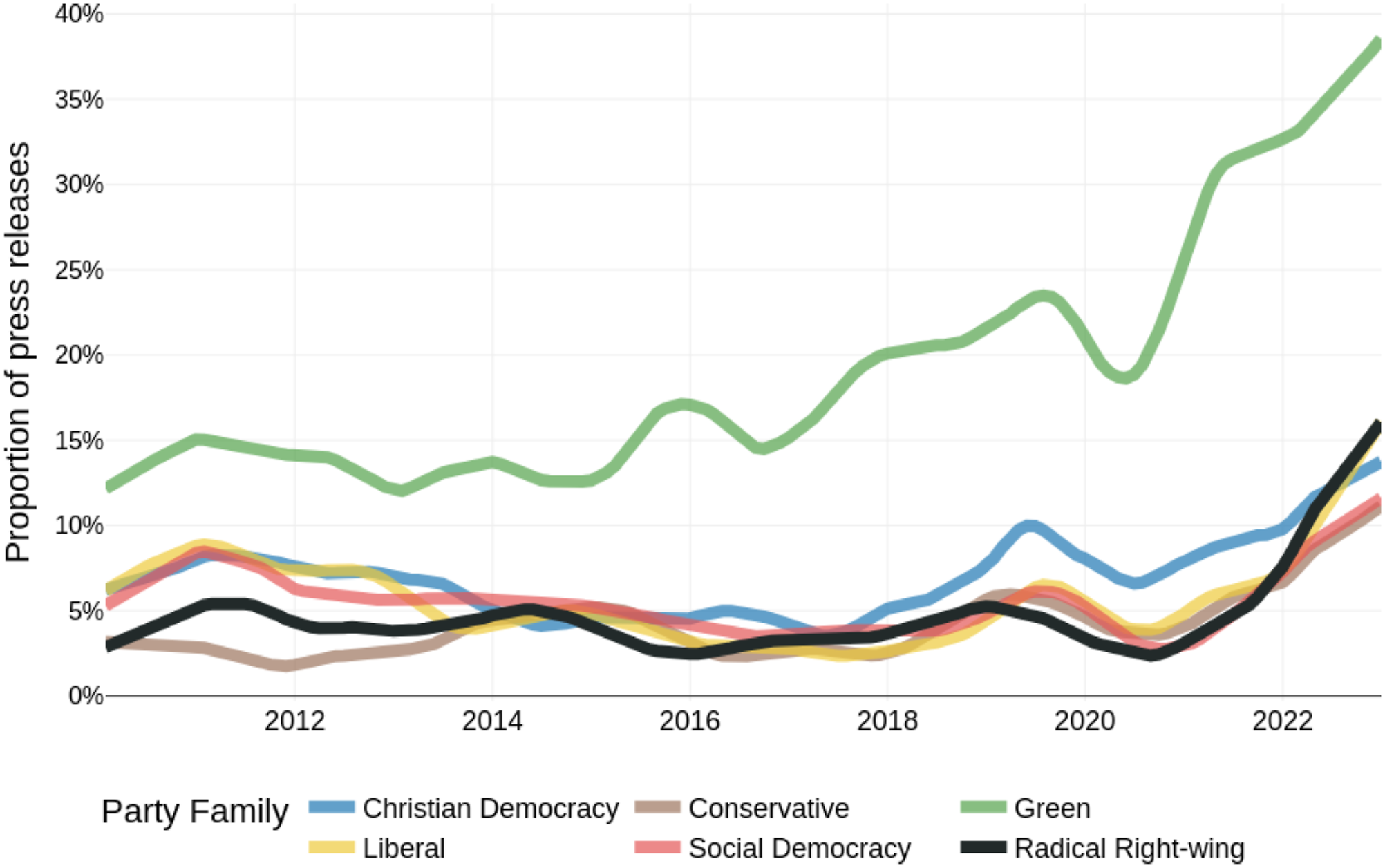
This also suggests that radical right-wing parties view it in their strategic interests to raise attention to climate related issues, in line with our expectation of wedge issue mobilisation.
Positioning
Although we identify an increase in attention to climate related issues from radical right-wing parties, this increase in salience alone does constitute a wedge issue strategy. Indeed, the mobilisation of a wedge issue requires adopting adversarial positions on issues that otherwise enjoy widespread consensus (Bischof, 2017; De Vries & Hobolt, 2020), which is what we expect from radical right-wing parties on climate change. Consequently, we now shift the focus of our analysis to the programmatic policy stances articulated by radical right-wing parties in press releases related to climate change.
Differing methodologically from the previous analysis where the aim was to classify the press releases into specific issue categories, here we wish to identify both the primary policy and the policy stance of the party in each press release. For this task, we turned to sequence-to-sequence text generation, which is a natural language processing technique that uses embeddings and a neural network to generate text based on a given input (Lewis et al., 2019). Unlike classification models, which are trained to predict a pre-defined label for a given input, sequence-to-sequence models are trained to predict a sequence of labels (outputs) for a given input. The resulting output is therefore a much shorter sequence that can capture the primary dimensions of the longer input sequence when trained properly. This type of model is common in summarisation tasks, such as reducing a long document into a shorter summary while retaining its primary features (Liu et al., 2023).
Despite the potential of sequence-to-sequence models for our specific task, training such a model requires significant training data consisting of concise summaries of the press releases. To generate the necessary training data, we relied on the generative capacity of GPT-3.5, which is the language model underlying OpenAI’s popular ChatGPT (OpenAI, 2023). We prompted GPT-3.5 to generate a summary of each press release with instructions to provide the primary issue and the position taken on the issue. After generating a training dataset of 6k press release–summary pairs using the GPT-3.5 API, we manually reviewed the summaries and made necessary edits. 5
Armed with a training data set of 6k pairs of press releases and summaries, we then fine-tuned a pre-trained BART model on the generated training data. The BART base model is similar to the BERT model used in the previous analysis, but instead relies on a bidirectional encoder and an autoregressive (GPT-like) decoder (Lewis et al., 2019). One of the big advantages of training such a model is that it serves not only the purpose of summarising the press releases, but it also operates as a translation model. Because we trained the model on summaries in English, the outputs of the model are also in English, which makes this application especially valuable in multilingual contexts.
Although there are no formal metrics for evaluating the performance of sequence-to-sequence models that are specific to our task of summarising press releases,
6
we evaluated the performance of the model qualitatively by comparing the generated summaries to the original press releases. Below, we demonstrate an example of the model’s output based on a Swiss People’s Party press release about renewable wind energy. The original press release is passed to the model in German and the model’s exact output is provided below.
7
The primary issue addressed in this press release is the use of renewable energy sources, specifically wind turbines and solar panels. The party, SVP, is against the government’s energy strategy 2050, which focuses on phasing out nuclear power in the medium term, and the proposed electricity guzzler law (climate law). They argue that the government is deceiving the population by claiming that a secure power supply can be achieved solely with sun, wind, and water, while simultaneously implementing laws that would make it difficult to drive and heat with electricity.
The generated summary captures the primary policy issue addressed in the press release, the party’s position on the issue, and a short summary that provides additional information about the press release.
After qualitatively evaluating the model’s performance, we used the fine-tuned model to generate summaries for all press releases that addressed the environment or energy, which were identified in the previous analysis with the classification model. In order to then provide a high-level understanding of the positions of radical right-wing parties on climate change compared to other party families, we reduce the issue-position pairs to a single dimension by differentiating between whether an addressed policy issue is intended to reduce climate change and its consequences, it is neutral, or it opposes a climate policy meant to reduce climate change and its consequences (respectively: 1, 0, −1). We aggregate these measures to a six-month interval.
The result, presented in Figure 2, can be interpreted as the extent to which parties (aggregated into party families) advance positions for or against climate change policies in their press releases. For example, a party family with 100% policy support indicates that every press release that addresses climate- or environment-related issues expresses support for the pro-climate position. In contrast, a party family with −100% support would indicate that all press releases addressing climate- or environment-related issues express opposition to the pro-climate position. Although this measure cannot capture a party’s position when the party does not share its position via press releases, it portrays the ways in which parties wish to position themselves to the public via press releases.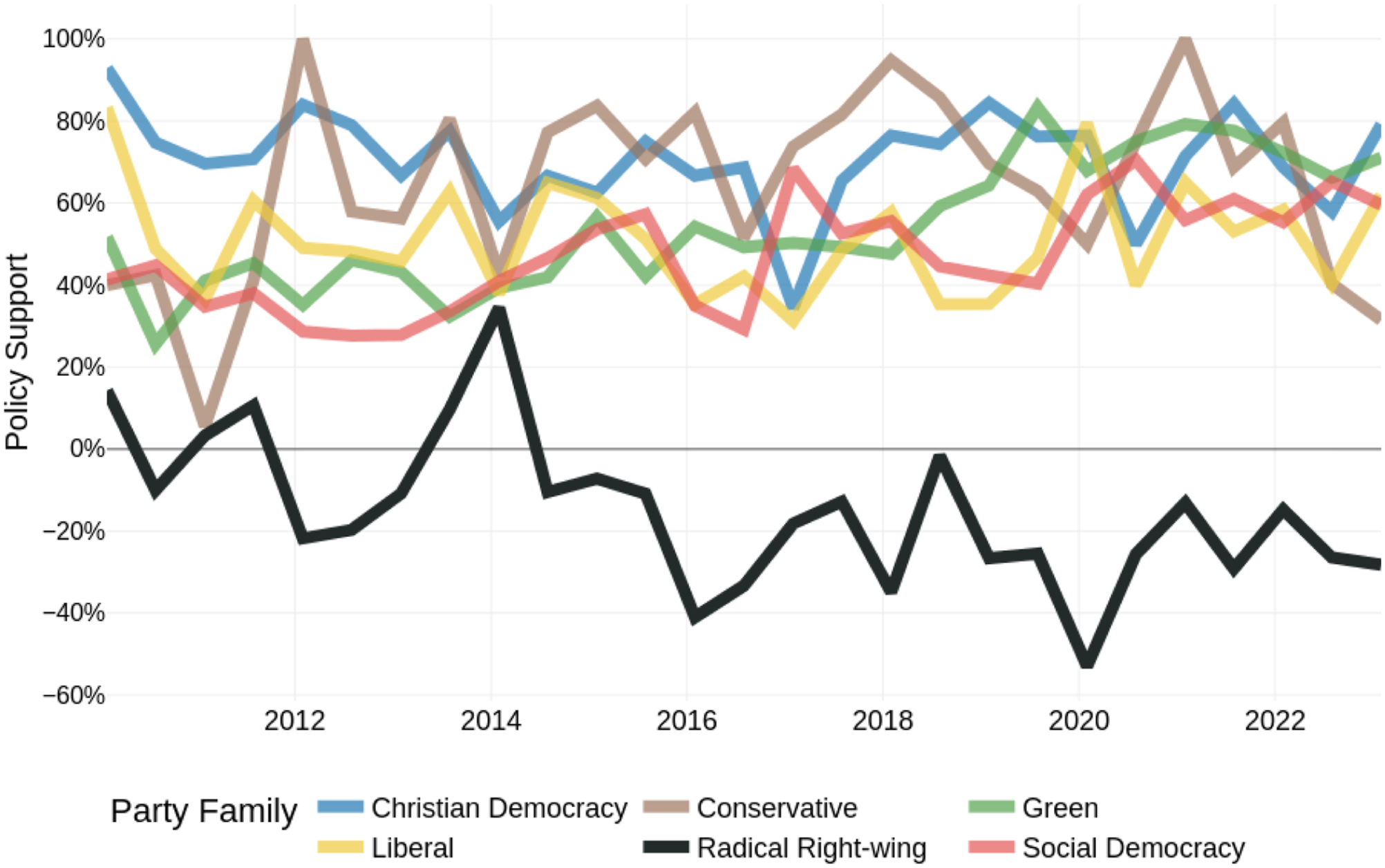
Figure 2 indicates a clear separation between the climate policy positions of radical right-wing parties’ in relation to other party families. Moreover, it appears that radical right-wing parties have increasingly taken an adversarial position on climate change policies since 2014. Whereas mainstream party families have remained relatively stable and likely increased in positioning on climate policy, radical right-wing parties stand in stark contrast, departing significantly from the other mainstream party families.
This is in line with our argument that the radical right takes advantage of the high levels of congruence on climate change, and the increasing salience of the issue, by adopting an adversarial position. Whereas mainstream parties – as well as green parties – are in close congruence on emphasising support for climate change policies, radical right-wing parties are not only incongruent with these parties, they have become less congruent and more oppositional since 2010.
Mobilising Climate Policy Scepticism
The analysis presented above suggests that the radical right has increasingly diverged from the mainstream by taking adversarial positions on climate change policies. However, without a group of voters who are sceptical of climate change policies, radical right-wing parties’ strategies will fall on deaf ears, limiting the mobilisation capacity of these parties on the issue and diminishing its potential appeal as a wedge issue. We therefore focus on the third pillar of our argument, which requires mobilisation capacity in order for parties to advance a wedge issue strategy.
In this section, we turn to examining the mobilising potential of climate policy scepticism as a wedge issue. We first show that a significant portion of voters who currently do not support radical right-wing parties are indeed sceptical of climate change policies. The extent to which radical right-wing parties can drive a wedge between mainstream parties and their supporters on climate change policies is contingent upon whether there is a group of mainstream party voters who oppose mainstream climate change policies. According to the literature on wedge issue competition, challenger parties can attract voters by adopting a position on an issue that is different from that of mainstream parties but shared by a significant proportion of their voters (De Vries & Hobolt, 2020; Hillygus & Shields, 2009; Jeong et al., 2011; van de Wardt et al., 2014).
Relying on cross-national survey data from the European Social Survey (ESS), we first consider the attitudes of voters towards climate change policies by country and previous vote choice. We are not interested in ‘climate change scepticism’ as such (e.g., is climate change real? Is it man-made?), which is not a consistent part of the radical right-wing agenda in Europe, as previous research has shown (Forchtner & Lubarda, 2022), but rather in negative attitudes towards the policies designed to combat climate change, which we refer to as ‘climate policy scepticism’. The ESS is a biennial survey of individuals across Europe that covers a wide range of topics, including attitudes towards climate change and climate change policies. To begin with, we focus on responses from the 2016 ESS survey for two reasons: first, the survey asks a series of questions about climate change policy attitudes. Second, it was after this time when there was a notable increase in radical right-wing parties’ attention to climate change related issues (see Figure 1). Therefore, from a party strategic perspective, radical right-wing parties may have developed their issue strategies – including on the issue of climate change – in part in response to public attitudes around the time of the 2016 ESS.
We analyse ESS data in the same countries that were the focus of our press release analyses. 8 The 2016 ESS asked several questions about attitudes and beliefs about climate change, however, only two questions specifically capture preferences for policies aimed at addressing climate change. Namely, (1) whether voters support increasing taxes on fossil fuels to reduce climate change, and (2) whether they support subsidising renewable energy to reduce climate change. We use these two questions as they are the most direct measures of climate policy scepticism.
For the analysis, we consider the distributions of voters who are opposed to the two aforementioned policies according to their vote choice in the previous election. In order to contextualise the results in a way that is comparable to the previous analyses, we reduce party vote choice to the party’s associated party family. We classify parties according to party family using data from ParlGov (Döring & Manow, 2012). Figures 3 and 4 present the climate positions of voters according to vote choice and for the each of the two policies.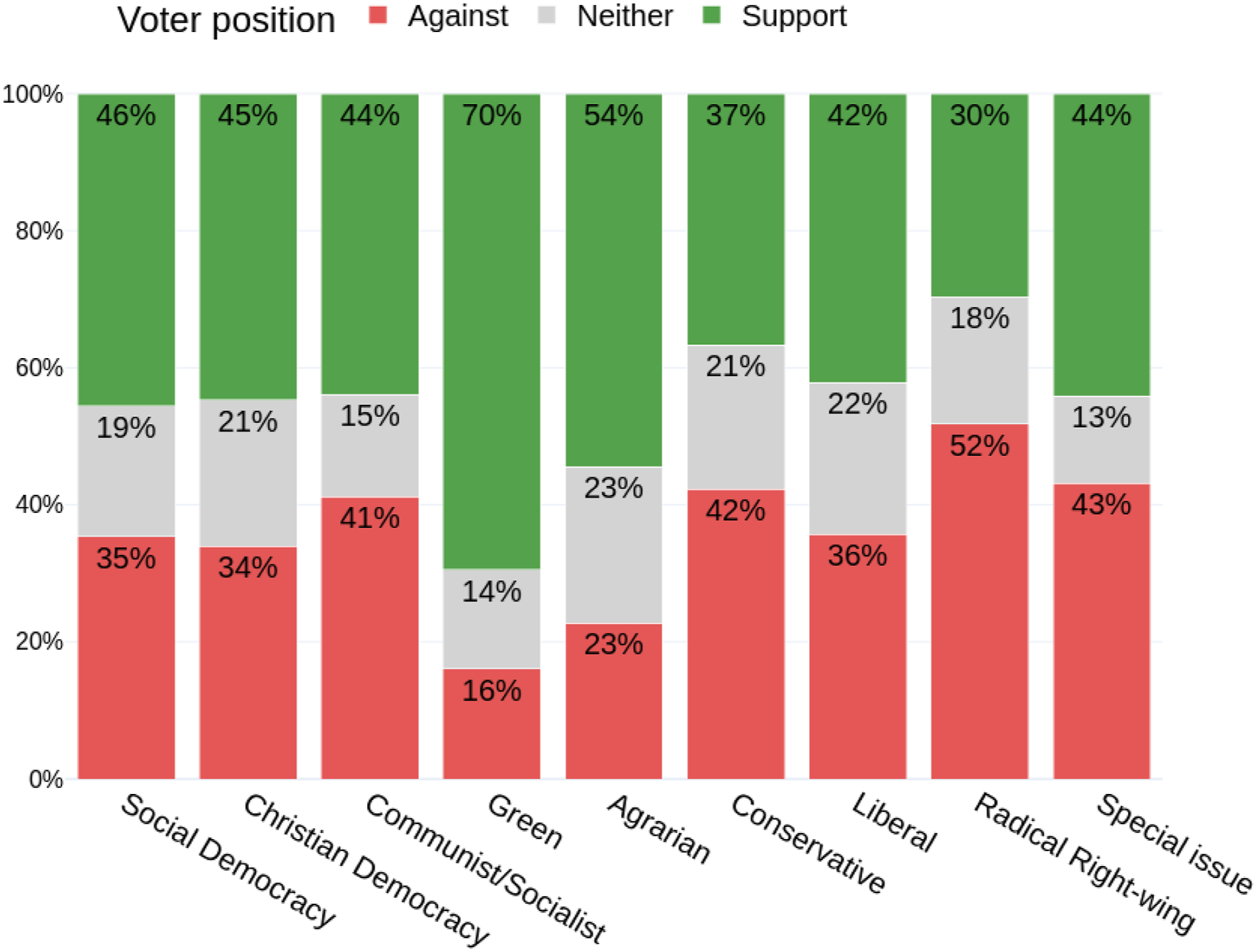
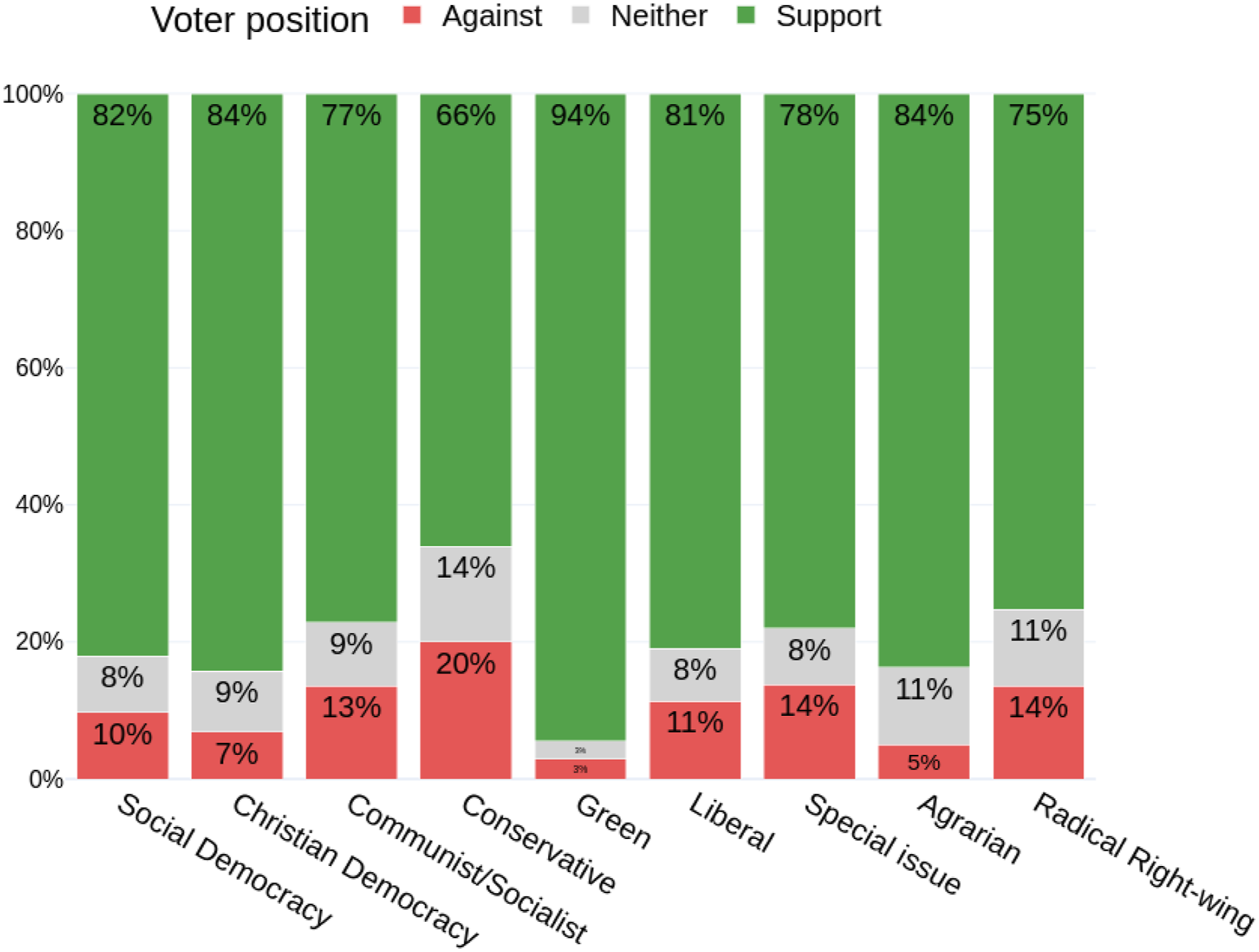
The results presented in Figure 3 demonstrate significant opposition to fossil fuel taxes to reduce climate change across all party families. Even nearly one-third of voters who typically support green parties are either opposed or indifferent on the policy, and no mainstream party family’s voters have a majority in support. This suggests that there is a significant proportion of voters who are opposed to fossil fuel taxes to reduce climate change, and that such ‘climate policy scepticism’ is far from limited to voters who already support radical right-wing parties. However, the results for subsidising renewable energy to reduce climate change tell somewhat of a different story. Namely, that voters are largely supportive of the policy across all party families. Not only does a majority of voters in every party family somewhat or strongly support subsidising renewable energy, outright opposition to the policy peaks at 20% among Conservative voters.
These descriptive data on voter attitudes have several implications for the likely success of wedge issue competition on climate change. First, preferences for climate change policies do not currently map neatly onto partisan support. This suggests that radical right-wing parties can use the issue to drive a wedge between voters who typically vote for parties in other party families, but who may be opposed to the consensus view among mainstream parties on climate policy. Second, no party family is entirely safe from losing voters to radical right-wing parties on the issue of climate change. Even a non-trivial proportion of Green voters are opposed to certain policies aimed at reducing climate change when they are framed in terms of an increase in taxes.
Third, the framing of climate change policies matters to voters. While many voters are opposed to increasing taxes on fossil fuels, they are generally much more open to subsidising renewable energy. In line with the literature on wedge issues (Hillygus & Shields, 2009; Jeong et al., 2011; van de Wardt et al., 2014), radical right-wing parties may be able to attract voters who are unsure or opposed to climate change policies if they frame the issue in terms of increased costs or prices.
Does the Radical Right Risk Alienating Its Own Base?
Our analysis of the distribution of climate policy sceptics across party family vote choice suggests that radical right-wing parties may be able to attract voters from every party family, in line with the argument of successful wedge issue competition. Yet, radical right-wing parties could potentially alienate their own voters if a significant proportion of their support comes from constituents with pro-climate policy views. We therefore supplement our analysis with recent survey data from the UK and Germany, examining the pattern of voting behaviour of both climate policy-sceptic and pro-climate policy voters, using the British Election Study (BES) (Fieldhouse et al., 2023) and the German Longitudinal Election Study (GLES) (GLES, 2023). We focus on a classic question in both election studies that explicitly asks about the trade-off between fighting climate change and economic growth. This question forces respondents to consider the costs associated with combating climate change, and therefore better captures the strength of commitment to climate change policies. The question also differs from the previous questions examined on subsidising renewables and fossil fuel taxes, both of which have shortcomings in assessing preferences for climate change policies, because a positive view of subsidisation does not require personal costs, while a question on fossil fuel tax may partly capture general opposition to further taxation.
Focusing on the latest survey waves in which voters were posed the climate change versus economic growth question (GLES Wave 15 (2021) & BES Wave 25 (2023)), Figures 5 and 6 present the distribution of vote choice according to individuals who prioritised either climate change policy or economic growth. Notably, the overwhelming majority of radical right-wing supporters report preferences for economic growth at the expense of combating climate change. In both countries, there is thus limited risk of an adversarial strategy on climate change policy alienating pro-climate voters of the radical right.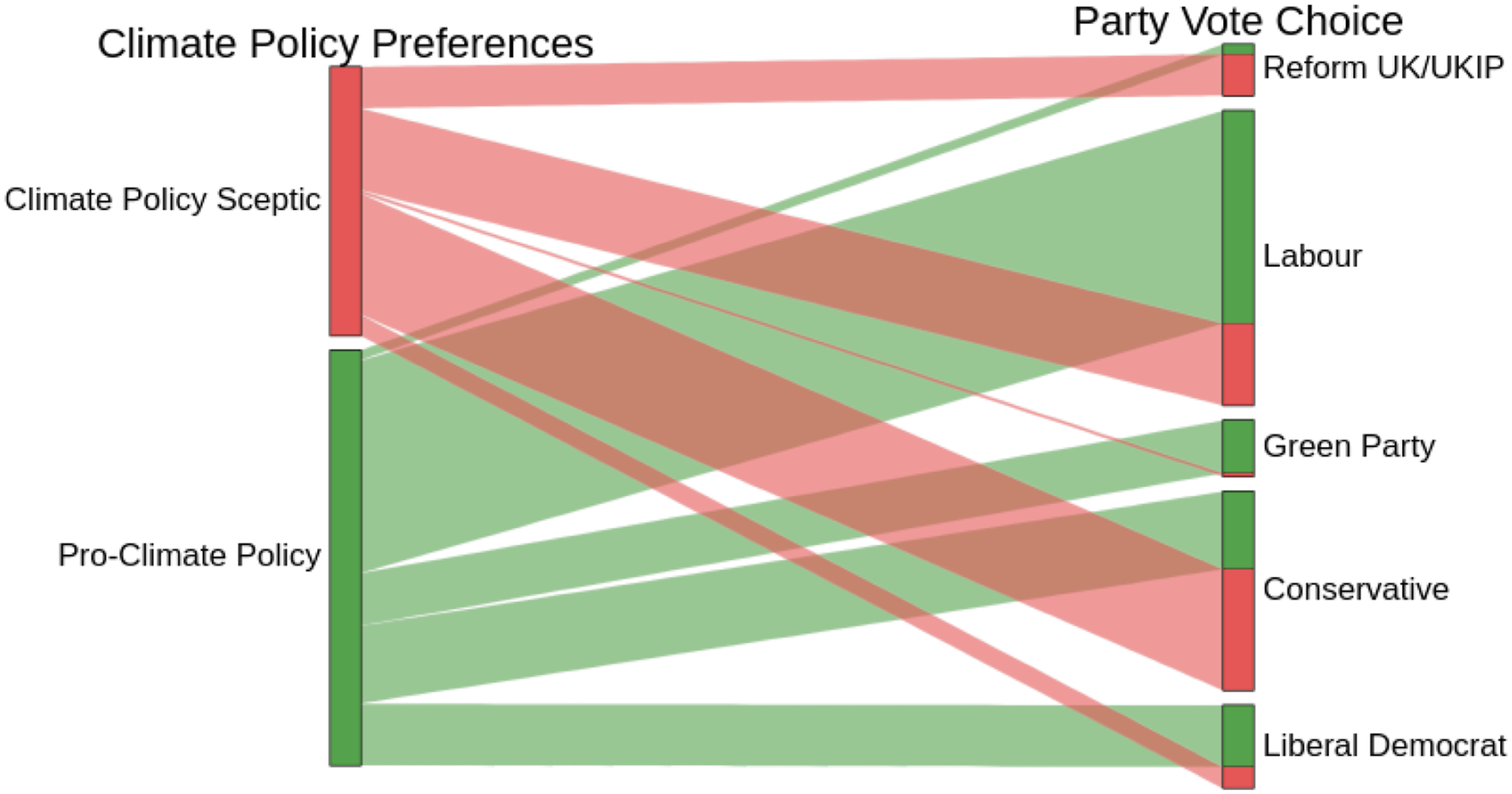
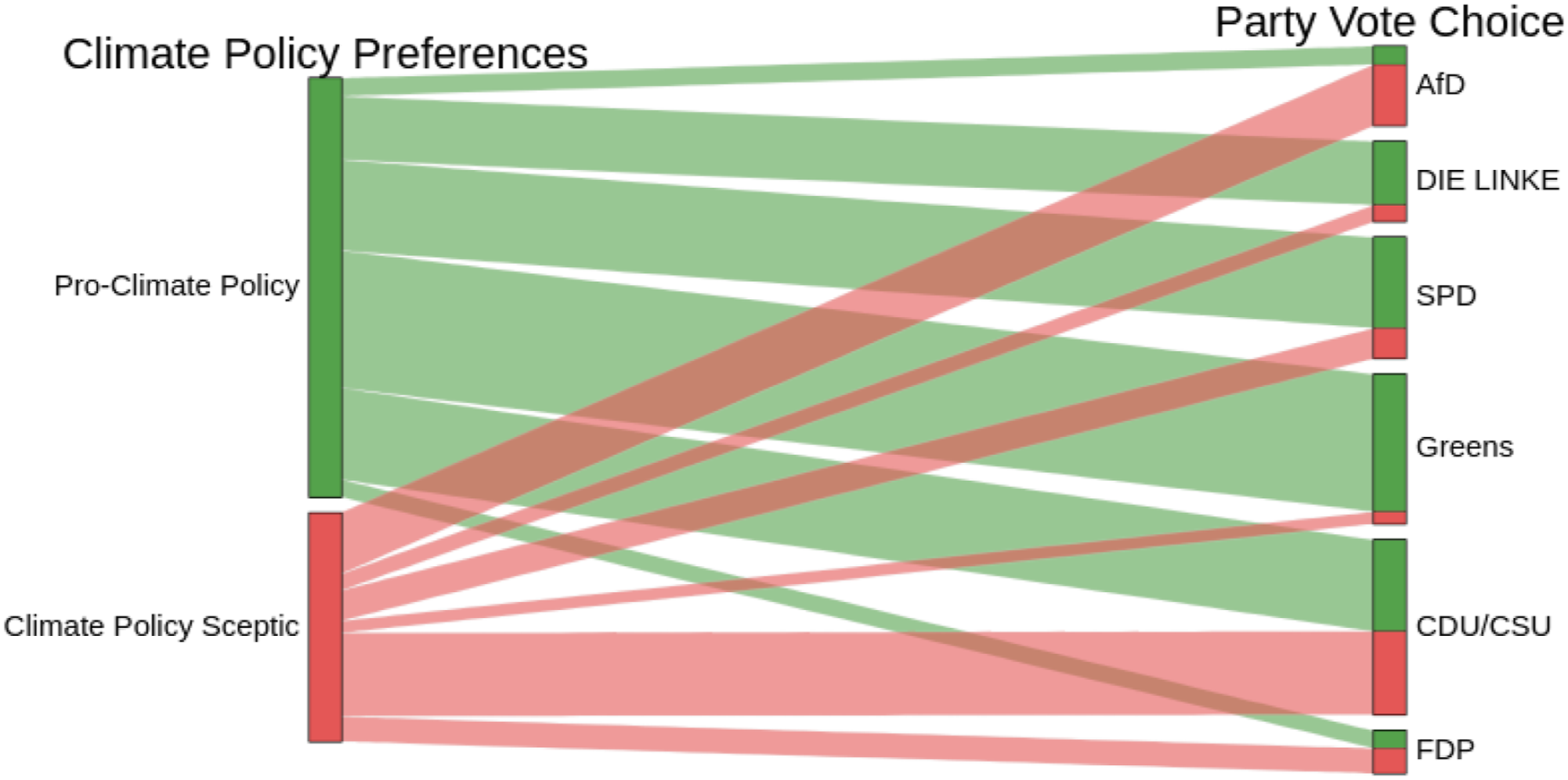
Despite more than a third of the electorate in both countries expressing scepticism in climate change policies, no mainstream parties represent these views in the same way as the radical right, as shown in the previous section. Radical right-wing parties may therefore expect electoral gains from voters who are mobilised by climate policies, with only minimal costs associated with alienating their pro-climate voters who make up only a small proportion of their coalition. In contrast to radical right-wing parties, mainstream parties have the potential to alienate significant swathes of their current voters by changing positions on climate change, as Figures 5 and 6 suggest that even center-right parties like the UK Conservatives and the CDU/CSU get nearly half their support from voters with pro-climate views. For other parties, that proportion is even higher. Consequently, the decision to oppose the mainstream climate policy consensus is much clearer for radical right-wing parties compared to other parties who stand to lose a significant proportion of their own voters.
Who are the Vote Switchers?
Narrowing in on panel data from the British Election Study, we examine the makeup of the vote switchers from mainstream parties to the radical right. Although many of election studies available rely on cross-sectional data, the BES includes a repeated true panel that allows for examining the composition of radical right-wing supporters according to their climate change policy positions. Using the same operationalisation as the previous analysis, Figure 7 presents party vote choice in May 2020 (wave 20) and May 2023 (wave 25), with climate policy sceptics identified in red and pro-climate policy respondents in green.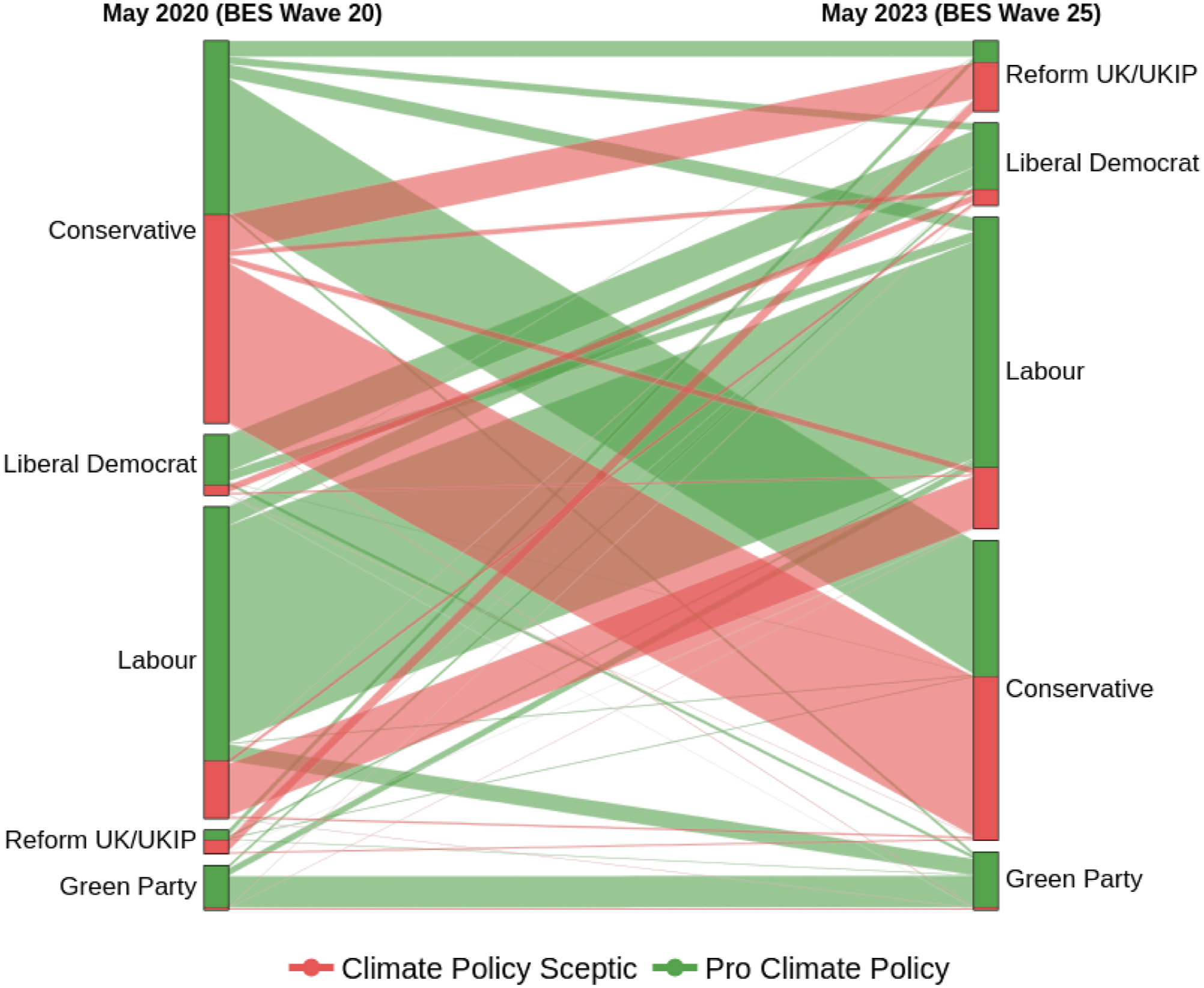
The figure suggests first that a large proportion of radical right-wing supporters in 2023 were Conservative Party supporters in 2020. Of the voters who switched from the Conservative Party, the vast majority are sceptical of climate policies. Indeed, the radical right ‘stole’ more climate sceptic voters from the Conservative Party than it retained among its existing supporters between 2020 and 2023.
These findings illustrate that by increasing the salience of climate change policy, as well as taking an adversarial position, parties can exploit cracks in existing coalitions by advancing a wedge issue strategy. However, such a strategy also requires that a sizeable proportion of the electorate also supports such policies. We have shown this to be the case with the radical right and climate change policy. In Figures 3 and 4, we showed that there is indeed a proportion of the electorate that is sceptical of climate policies. Although voters are more supportive of subsidising renewable energy, a significant proportion of voters across the political spectrum are opposed to fossil fuel taxes to reduce harmful emissions. These findings are in line with the third pillar of our argument on wedge issues and suggest considerable mobilising potential – especially if the radical right can frame the climate change debate in terms of costs to voters. By focusing on the UK and Germany, we have further shown that there is only limited risk to the radical right in advancing its wedge issue strategy in terms of fracturing its own coalition. In both countries, the vast majority of the radical right’s base shares their party’s scepticism of climate change policies. In contrast, other parties – especially the centre right CDU/CSU and the UK Conservatives – are tasked with holding together coalitions that consist of both pro-climate policy and climate policy sceptic voters. This can prove challenging for these parties, which is demonstrated in Figure 7 in which the vast majority of the radical right’s support in the UK in 2023 comes from climate policy sceptic individuals who supported the Conservative Party in 2020.
Conclusion
In recent decades, challenger parties – such as radical right-wing parties and green parties – have siphoned off mainstream party voters through strategic issue emphasis and positioning on key wedge issues that are salient to certain voters (De Vries & Hobolt, 2020). Radical right-wing parties across Europe have been particularly effective in applying this template to the issue of immigration (Gessler & Hunger, 2022; Mudde, 2007; Rydgren, 2008). Although immigration remains a salient issue for the radical right, mainstream parties have shifted in their stances, reducing the capacity of radical right wing parties to differentiate themselves on the issue (Abou-Chadi, 2016; Abou-Chadi & Krause, 2020; Dahlström & Sundell, 2012; Haas et al., 2023; Hutter & Kriesi, 2022). As the radical right seeks to broaden its issue appeal, climate change policies present a unique opportunity as a wedge issue, reminiscent of immigration in the 1990s and 2000s. Similar to the broadly pro-immigration (and pro-European) congruence that existed among many mainstream parties, there is consensus across European party families in support for policies to combat climate change. Importantly, however, there is a sizeable proportion of mainstream party voters who are more sceptical of these policies, in particular those that require sacrifices among citizens (such as green taxes). We argue that this mainstream consensus combined with the division in public opinion presents an opportunity for radical right-wing parties to politicise climate change as a wedge issue.
This article develops and empirically investigates this argument. In doing so, we make four key contributions to the literature on issue competition and the politicisation of climate change. First, we develop the wedge issue competition argument and apply it to issues previously owned by other party families. Rather than treating issue competition as fairly static, we argue that it is inherently dynamic in nature and that a broad mainstream consensus allows a challenger party to mobilise a wedge issue – even when it is traditionally associated with another party family – by adopting a distinctly adversarial strategy.
Second, we apply this wedge issue argument to the radical right and climate change, providing novel evidence of increasing salience and adversarial stances on climate change policies in the rhetoric of the radical right. We document that radical right-wing parties increased their emphasis on climate change since 2010 and dramatically so since 2020, now only trailing green parties. Furthermore, we show that the radical right has increasingly taken more adversarial stances on climate related policies, challenging the mainstream party consensus on the various measures intended to alleviate the climate crisis.
Third, our paper illustrates that the radical right’s wedge issue strategy has mobilising potential with voters. We show that voters who are sceptical about costly climate change policies are not clustered within a single party family, but can be found across the political spectrum. This suggests that radical right-wing parties can use climate change to drive a wedge between voters and mainstream parties. We provide further descriptive evidence that such a strategy comes with limited costs for the radical right, as the vast majority of its base expresses sceptical views of climate policy. Moreover, we demonstrate that climate policy sceptic voters are far more likely to abandon the mainstream right in favour of the radical right in the case of Britain.
Finally, we contribute methodologically to the comparative study of party competition by creating two state-of-the-art large language models that enable us to measure the issue-specific salience and positioning of parties using their press releases. These LLMs also allow for both the replication of our analysis in this article as well as numerous cross-domain applications to the study of political text by other researchers.
While this paper does not directly test whether this wedge issue strategy will indeed be electorally successful, the evidence it presents still has implications for the politics of climate change. Importantly, it suggests that the climate change issue is likely to become more politicised, especially through the efforts of challengers on the radical right that will seize the opportunity to mobilise voters by opposing climate changes policies. How this will affect actual policy-making efforts to address climate change and reach Net Zero targets will depend not just on how public attitudes develop, but also on the responses of mainstream parties to the challenges from the radical right. Several studies of wedge issue competition on the issue of immigration have shown that mainstream parties have often responded to the anti-immigration rhetoric of the radical right with strategy of accommodation (Abou-Chadi, 2016; Hjorth & Larsen, 2022; Krause et al., 2023; Spoon & Klüver, 2020). A similar response to this most recent challenge by the radical right could have grave consequences for governments’ willingness to take difficult decisions to respond effectively to climate change.
Supplemental Material
Supplemental Material - Going Against the Grain: Climate Change as a Wedge Issue for the Radical Right
Supplemental Material for 'Going Against the Grain: Climate Change as a Wedge Issue for the Radical Right' by Zachary P. Dickson and Sara B. Hobolt in Comparative Political Studies.
Footnotes
Acknowledgments
The authors would like to thank Argyrios Altiparimakis, Christopher Bickerton, Albert Falco-Gimeno, Edgar Grande, and participants at the European Political Science Association (EPSA) 2023 and European University Institute SOLID conferences, as well as the Comparative Political Studies reviewers, for helpful comments on previous versions of this paper.
Declaration of Conflicting Interests
The authors declared no potential conflicts of interest with respect to the research, authorship, and/or publication of this article.
Funding
The authors are grateful for generous financial support from the Volkswagen Foundation via The COVIDEU Project (grant no. 9B051).

Data Availability Statement
All data and code required to reproduce this analysis is available at Dickson & Hobolt (2024).
Supplemental Material
Supplemental material for this article is available online.
Notes
References
Author Biographies
References
Supplementary Material
Please find the following supplemental material available below.
For Open Access articles published under a Creative Commons License, all supplemental material carries the same license as the article it is associated with.
For non-Open Access articles published, all supplemental material carries a non-exclusive license, and permission requests for re-use of supplemental material or any part of supplemental material shall be sent directly to the copyright owner as specified in the copyright notice associated with the article.
