




Abstract
Across the world, citizens sidestep the state to punish offenses on their own. Such vigilantism can help communities provide order, yet it raises concerns about public accountability and the rights of the accused. While prior research has identified the structural correlates of vigilantism, an open question is in which cases citizens prefer vigilantism over conventional policing. To make sense of these preferences, we draw on two logics of punishment: state substitution and retribution. Using survey data from a conjoint experiment presented to over 9000 households across Guatemala, we find that preferences for vigilantism depend on how transgressive the crime is as well as how unlikely it is to be prosecuted by the state. Victim and perpetrator gender, as well as crime severity and profession of the perpetrator, affect whether people endorse vigilante punishment. These results ultimately raise concerns about the viability of "informal" forms of policing.
Introduction
Vigilantism—the extralegal prevention, investigation, or punishment of offenses (Bateson, 2021)—has been observed in a remarkable variety of forms and contexts. Contemporary examples include armed patrols on the US-Mexico Border (Independent, 2019), spontaneous “lynch mobs” in parts of Central America (Godoy, 2002), and vigilantes in post-apartheid South Africa (Smith, 2019). These cases are often consistent patterns of behavior that challenge the state’s monopoly on the use of force. That citizens are willing to take the law “into their own hands” raises concerns about a lack of procedural justice (Tyler, 1994), vigilante impunity (Jaffrey, 2019), and tit-for-tat violent escalation. Thus, vigilantism has implications for the formation of order, the quality of governance, and the politics of policing across the world.
A growing literature has identified correlates of public support for vigilantism, including low state capacity (Anderson, 2002; Mendoza, 2006; Tajima, 2014), low state legitimacy (Haas et al., 2014; Jung & Cohen, 2020; Nivette, 2016; Zizumbo-Colunga, 2017), high inequality (Phillips, 2017), and anger and punitiveness (Asif, 2023; García-Ponce et al., 2023; Nivette, 2016). Yet, while prior work tells us about why citizens support vigilantism generally, there is much we still do not know about the extent to which approval of vigilantism varies on a case-by-case basis and the determinants of that variation.
In this project, we aim to make two contributions to the study of vigilantism. First, we link key aspects of crimes that citizens might encounter in daily life—such as the identity of the perpetrator and the victim as well as the nature of the crime—to people’s preferences over vigilante punishment. We do so with reference to two broad logics of punishment: state substitution and retribution. In the former, punishment deters crime and maintains order (McFatter, 1978; Rawls, 1955); when the state is unable or unwilling to punish, the vigilante serves as a substitute. In the latter, punishment is motivated by a desire for retribution (Carlsmith, 2006; Gerstein, 1974). These logics are not mutually exclusive, since people may seek to impose vigilante punishment both to deter future offenses and to enact vengeance. Previous research typically focuses on one of these logics at a time, examining general support for vigilantism rather than considering how specific attributes of a crime shape support for vigilantism in response to it.
Second, we provide causal estimates of the effect of a range of crime characteristics on people’s preferences for vigilantism over conventional policing, drawing on an original sample of over 9000 households across Guatemala collected in an endline evaluation of the Model Policing Project (MPP); vigilantism is an important political issue in Guatemala. We use a forced-choice conjoint experiment that randomly varies the attributes of different crimes; we ask respondents to choose which crime they would prefer a vigilante to punish (instead of the police) as well as which crime should be punished more severely. Our results suggest that preferences for vigilantism are contingent on how transgressive the crime is and how unlikely it is to be prosecuted by the state. For example, crimes committed by the police or by gang members are more likely to be selected for vigilante justice. Crimes against women by men are particularly likely to elicit support for vigilantism, as are more severe crimes. Additionally, we find that the crimes people are more likely to select for vigilante justice are the same crimes they think should be punished more severely. These findings suggest that, to understand support for vigilantism, we must consider not only individual and community-level characteristics but also crime-level traits.
In reaching these conclusions, we provide insight into a form of security provision—the extralegal punishment of offenses by community members—that has received relatively little attention from political scientists (Bateson, 2021; Moncada, 2017) but which characterizes how many around the world experience the provision of order. At stake is the question of how to balance under-served security needs of communities against the fundamental rights of the accused (Anderson, 2002). That demand for vigilantism may be linked to vengeance raises difficult normative questions about whether communities can or should meet their own security needs, even in forms like community-based policing (Blair et al., 2021) or in contexts where vigilantism overcomes gaps in public security provision (Diaz, 2019). Thus, our results have implications for research agendas on the politics of policing, community-based responses to crime, and the study of order in contexts where the state is weak.
Order, Insecurity, and Vigilantism
Vigilantism can vary greatly in form and content; as a result, scholars have struggled to define it (Cohen et al., 2023; Moncada, 2020). For instance, some forms of vigilantism take place online (Trottier, 2019), involve off-duty representatives of the state (González, 2019), or entail coordination with local political authorities (Moncada, 2023). The nature of vigilante punishment itself can range dramatically, from the spectacular—such as a suspected thief doused in gasoline and set on fire (CNN, 2015) or (Schoichert and Beltran, 2015)—to the more mundane, such as forced apologies and public shaming (Godoy, 2002). Further, vigilantism doesn’t just arise in response to crime but also in response to a wide variety of socially constructed transgressions, including witchcraft or other violations of cultural norms (Handy, 2004).
We follow Bateson (2021) in defining vigilantism as the “extralegal prevention, investigation, or punishment of offenses” (p. 4). Like Bateson, we conceptualize vigilantism as an “exercise in power” that is fundamentally “extralegal” in nature because, while it is almost always illegal, it often follows the spirit of the law but goes “beyond” it in scope or severity (Bateson, 2021). Thus, vigilantism as a concept only makes sense in settings where there is some semblance of legal order and excludes violence in places without a recognized state authority; this is an important scope condition for the discussion in the next section. This complex relationship with the state differentiates vigilantism from other forms of political violence or coercion in which force is used in direct opposition to the state, such as guerrilla violence. We do not differentiate between vigilantism which emerges spontaneously or that which operates within durable institutions (Cohen et al., 2023). We do, however, focus on contexts in which the choice is between community and state punishment, although there are of course other contexts in which organized crime or rebels also punish violations.
Vigilante justice is illegal and often violent, and yet it finds open support from a non-trivial number of people around the world, including in Latin America (Figure 1). Much of what we know about public support for vigilantism suggests that support is highest in places where the state is seen as weak, predatory or illegitimate (Anderson, 2002; Jung & Cohen, 2020; Tajima, 2014). In this vein, a range of studies show that individuals who live in more dangerous areas or who exhibit lower trust in state institutions tend to support vigilantism at higher rates (Haas et al., 2014; Nivette, 2016; Tankebe, 2009; Zizumbo-Colunga, 2017). Indeed, our data suggests that support for vigilantism in the case of sexual violence is correlated with local police capacity (Figure 2 and Table A.9). Support for vigilante justice by country. Source: LAPOP 2014. Point estimates, 95% confidence interval.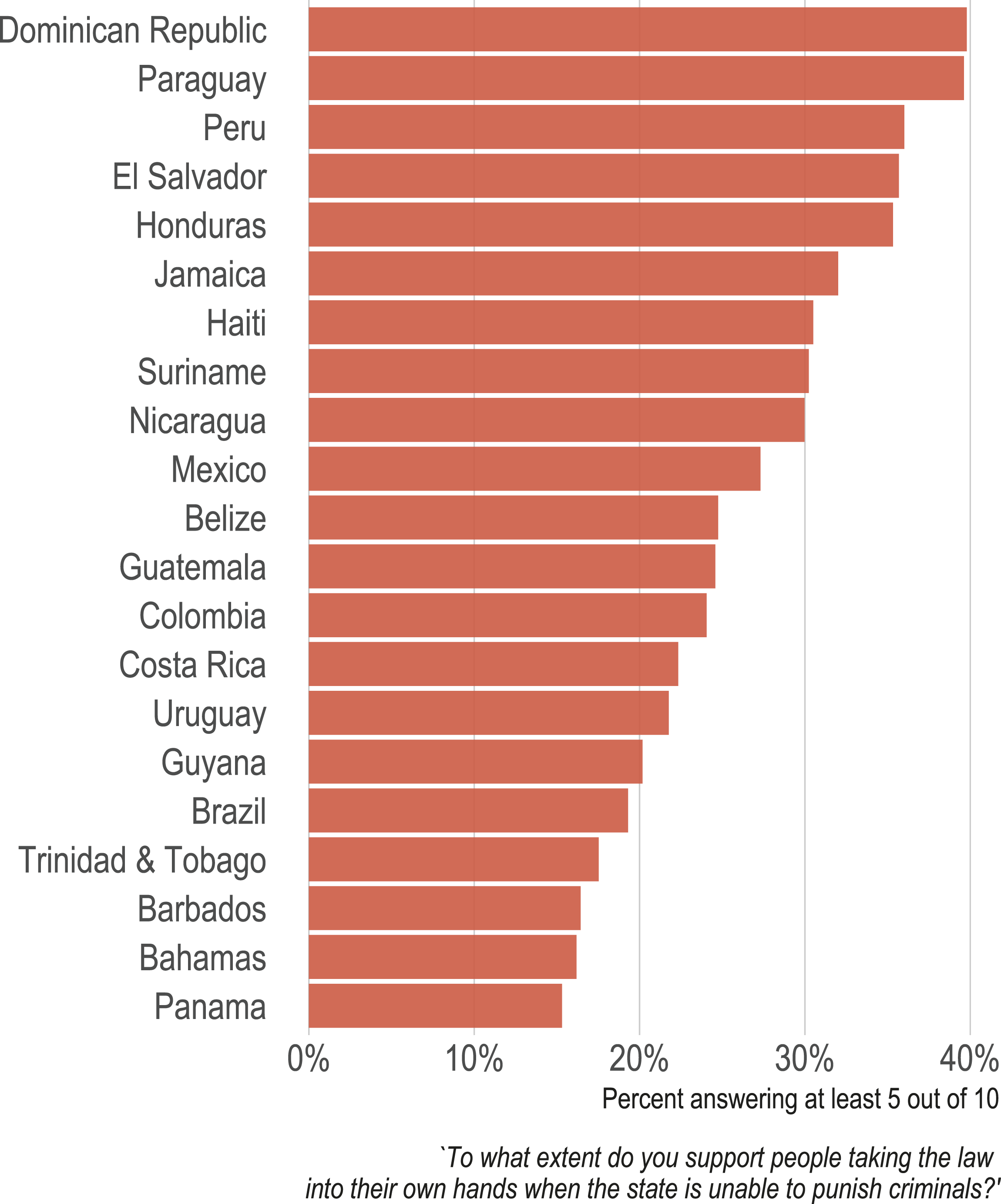
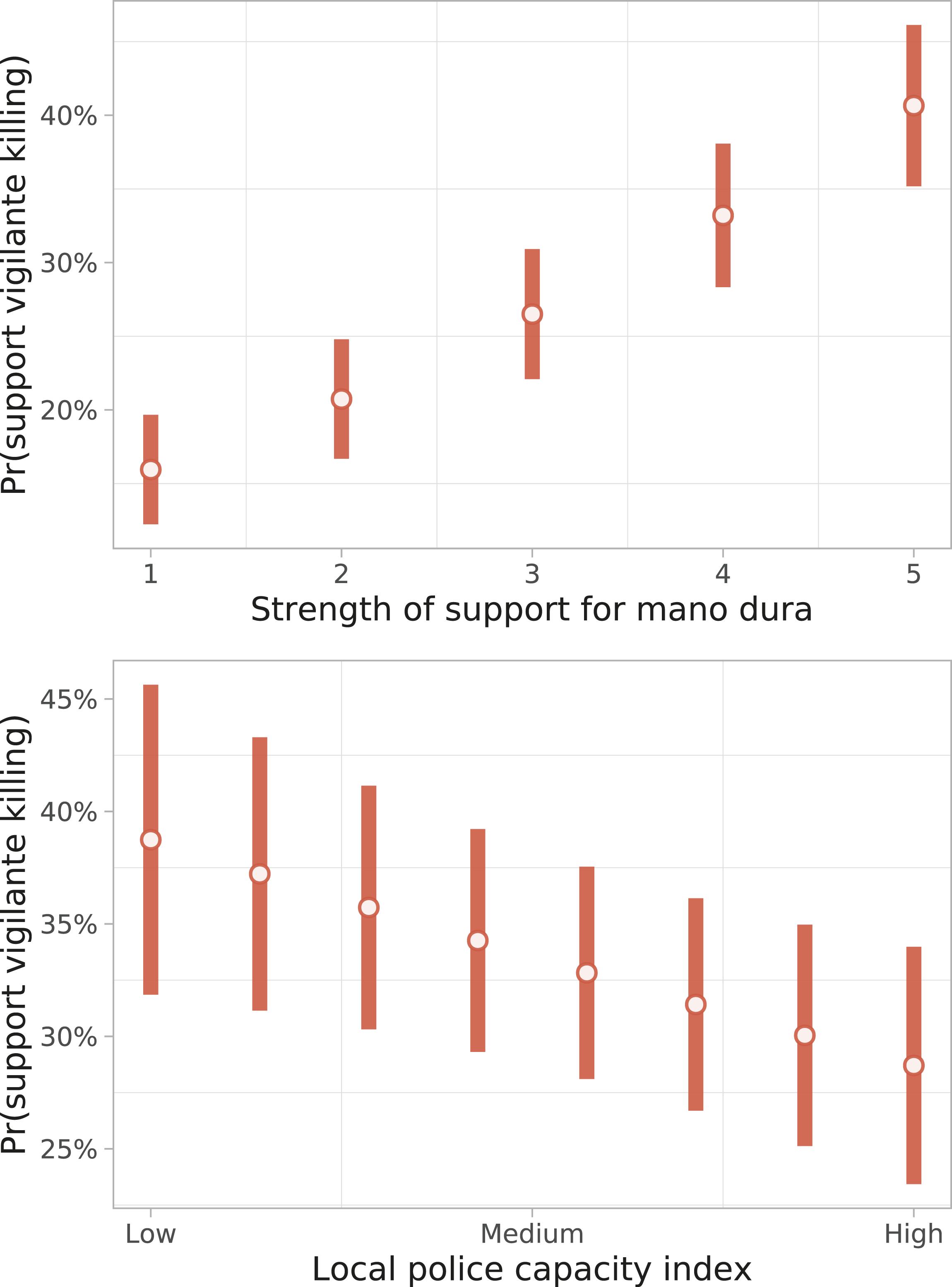
Other work points to economic inequality (Phillips, 2017), indigenous customary practices (Godoy, 2002; Handy, 2004), and conflict legacies (Bateson, 2013) as important factors in where vigilantism emerges and receives public support. A final set of findings argues that variation in support for vigilantism across individuals can be explained by personality or psychological factors. For example, emotions like anger, or a general predisposition to punitiveness, help fuel support for vigilante or extralegal punishment (Asif, 2023; García-Ponce et al., 2023; Nivette, 2016; Young, 2019). Relatedly, our data suggests that support for vigilantism in response to sexual violence is correlated with support for mano dura policies (Figure 2 and Table A.9). 1
Most existing studies rely on data measuring general support for vigilantism, which ignores the possibility that support may be contextual. That is, that people may think vigilante justice is appropriate in some scenarios but not others. This is precisely what García-Ponce et al. (2023) find in their study of attitudes towards responses to crime in Mexico; they conclude, for instance, that people are more willing to support harsh and illegal punishments for morally upsetting crimes. 2 There is much we still don’t know, though, about the extent to which approval of vigilantism varies on a case-by-case basis and which aspects of a crime make it likely that people will approve of its punishment by vigilantism. Thus, we examine victim and perpetrator gender, perpetrator professional affiliation, perpetrator relationship to the community, and crime severity. 3 In the following section, we discuss these dimensions of crime and derive theoretical expectations for how each dimension impacts individual support for vigilantism.
Contextual Preferences for Vigilantism
Our hypotheses regarding how crime characteristics shape preferences over vigilantism depend on the underlying logic of vigilantism in the eyes of the individual. That is, a person might want a vigilante to intervene in some situations but not others; what is the “logic” underpinning these preferences? Vigilante punishment often mirrors the ways in which communities and societies conventionally punish crimes (Bateson, 2021). Thus, bringing theories concerning punishment motives (e.g., Carlsmith et al., 2002) into the study of vigilantism is a fruitful way to analyze its role within communities. We will review two broad logics of punishment: behavioral control and retribution.
Behavioral control accounts of punishment emphasize that punishment’s central purpose is to deter present and future transgressions by increasing the associated costs of crime (McFatter, 1978). Such accounts are intimately related to utilitarian or consequentialist philosophical justifications for punishment as a means for upholding the social order (e.g., Rawls, 1955). In its pure form, punishment as behavioral control is dispassionate, seeks only to “correct” improper behavior, and is unconcerned either with the moral implications of the offense or the perpetrator’s moral character (Vidmar & Miller, 1980). A wide range of lab experiments suggest that people are willing to punish others, even at a cost to themselves, and that doing so promotes cooperation (e.g., Fehr & Gächter, 2000; Gächter et al., 2008; Rockenbach & Milinski, 2006). 4 People expect the state to be the primary guarantor of security, and indeed citizens blame the government for crime (e.g., Claassen & Magalhães, 2022; Cummins, 2009; Milliff, 2021; Sønderskov et al., 2020). In summary, this logic suggests that the purpose of punishment is to ensure security. Though that job typically falls to the state, vigilantes may pursue the same goals where the state is unable or unwilling to do so. Therefore, we henceforth refer to this logic as the state substitution logic.
In contrast, many scholars argue that punishment is motivated by a desire for retribution (e.g., Gerstein, 1974) that is orthogonal to deterrence. Prior psychological research in this vein suggests that people think offenders ought to be punished not to prevent future offenses, but rather because the perpetrators deserve to suffer for causing harm or transgressing social norms (Carlsmith, 2006). Studies have found that negative emotions toward misbehaving individuals are the key mechanism behind punishment, that anger and guilt are sufficient motives for third party punishment (vigilantism), and that individuals distance themselves from transgressions by expressing moral outrage and engaging in moral cleansing (Fehr & Gächter, 2002; Nelissen & Zeelenberg, 2009; Tetlock et al., 2000). If punishment is driven by a desire to punish individuals who are seen as especially deserving of the suffering, then attitudes toward punishment should be driven by biases about who is more or less “moral” or “deserving” of punishment.
We argue that, broadly, the two accounts of punishment can be mapped onto prior research on vigilantism. Studies showing support for vigilantism where the state is weak (Anderson, 2002; Jung & Cohen, 2020; Tajima, 2014) and among those who do not trust the state (Haas et al., 2014; Nivette, 2016; Tankebe, 2009; Zizumbo-Colunga, 2017) are implicitly evaluating vigilantism as a form of behavioral control following the state substitution logic. If the state must deter crime, then vigilantes who step in to do the job of the state when it is not doing so effectively should fulfill the same purpose. In contrast, studies that argue for the role of emotions and punitiveness in promoting vigilante activity (e.g., Asif, 2023; García-Ponce et al., 2023; Nivette, 2016) are outlining a motive for punishment which is rooted in retribution. We call this the retribution logic. 5
Our approach differs from existing studies (for an overview, see Cohen et al., 2023) in that we argue that these two logics of vigilantism can co-exist and even interact with each other. For instance, support for vigilantism in response to a particular crime may be simultaneously caused by both an anticipated absence of state punishment and moral outrage over the nature of the crime. Indeed, if a case evokes particularly strong moral outrage, anticipated lack of state punishment for that crime may cause even higher levels of support for vigilantism in response to it. Given that these logics can operate simultaneously, we do not take a stance on the degree to which emotions or rationality drive public opinion regarding vigilantism, even though there is important theoretical and empirical work that focuses on emotions as motivators of behaviors and beliefs (e.g., Young, 2019). We note here simply that existing work on vengeance tends to emphasize emotions, whereas prior work on state substitution and deterrence characterizes people as making decisions based in more “rational,” utilitarian calculations.
Which Contextual Factors Increase Support for Vigilantism?
We now draw on these logics of vigilantism to generate hypotheses about the conditions that are more likely to lead to support for vigilante actions. The two logics frequently produce identical hypotheses but occasionally suggest contradictory ones. More specifically, we seek to answer the following question: under what circumstances are people more likely to support vigilantism over state-oriented approaches to punishment? In this theoretical discussion, we assume that the state is present, if imperfect. In other words, either the state or the vigilante could engage in punishment of a specific crime, and the two punishment options exist alongside each other. This assumption implies that our theory would not apply to contexts of state failure or non-state group territorial control.
The first set of situational factors we explore bears on the identity of the perpetrator and the victim. First, we consider how the gender of the perpetrator and the victim will influence preferences for vigilantism. We focus on gender because it is an important element of identity in the study of responses to crime (Mustard, 2001).
If the retribution logic holds, the gender of the actors involved in the crime should play a decisive role in forming preferences for vigilantism because perpetrator and victim gender shape perceptions of transgression. Studies consistently find that criminal violence against women (relative to men) elicits strong responses from the public, likely rooted in gendered norms about women’s “need” for social protection (King & Roberts, 2017; Pickett et al., 2013). 6 If vigilantism is driven by a desire for retribution, then crimes in which the victim is a woman should typically elicit stronger demand for vigilante action than crimes against men. By the same token, if people anticipate that vigilante justice will be especially severe, then we should expect that people will be less willing to submit crimes to vigilante justice when the perpetrator is a woman. In other words, under the retribution logic, people will be more likely to prefer vigilante punishment when the perpetrator is a man or the victim is a woman.
In terms of the state substitution logic, people generally expect the state to behave in a procedurally just manner (e.g., Mazerolle et al., 2013; Reisig & Lloyd, 2009; Sunshine & Tyler, 2003; Tyler, 2010). That is, insofar as the goal is solely to deter future crime, whether the victim is a woman (vs. a man) or the perpetrator is a man (vs. a woman) should not matter in punishment decisions—both gender groups should be punished equally. If the state is perceived as a neutral arbiter of justice, then the vigilante could be expected to provide the same “neutral” justice that the state provides; gender would in these contexts have no effect on preferences for vigilantism over state punishment. Yet, in many contexts, states discriminate in the ways they police and prosecute citizens across identity groups. As such, victims from marginalized groups suffer disproportionately from a lack of effective state punishment of crime; for example, violence against women is often committed by men and goes unpunished (Macaulay, 2006; Musalo & Bookey, 2013; Walsh & Menjívar, 2016). Thus, victim and perpetrator gender should shape preferences for vigilantism only when there is perceived gender bias in the state’s response to crime. 7 This logic of state substitution suggests that people should be more likely to prefer vigilante punishment when the perpetrator is a man and the victim is a woman, but only in contexts of significant state impunity for gendered crimes against women. Guatemala is certainly one such context (e.g., Musalo & Bookey, 2013; Walsh & Menjívar, 2016) in which impunity for crimes against women is well known. In fact, in 2005, the Guatemalan Congress declared femicide in the country a crime against humanity (Congreso de Guatemala, 2005). Relatedly, if women are stereotyped as victims, as discussed above, then men are stereotyped as criminals. Thus, another reason people may prefer male perpetrators for vigilante punishment is that they think men are more likely to commit future crimes; vigilantism against male perpetrators thus serves a deterrent purpose.
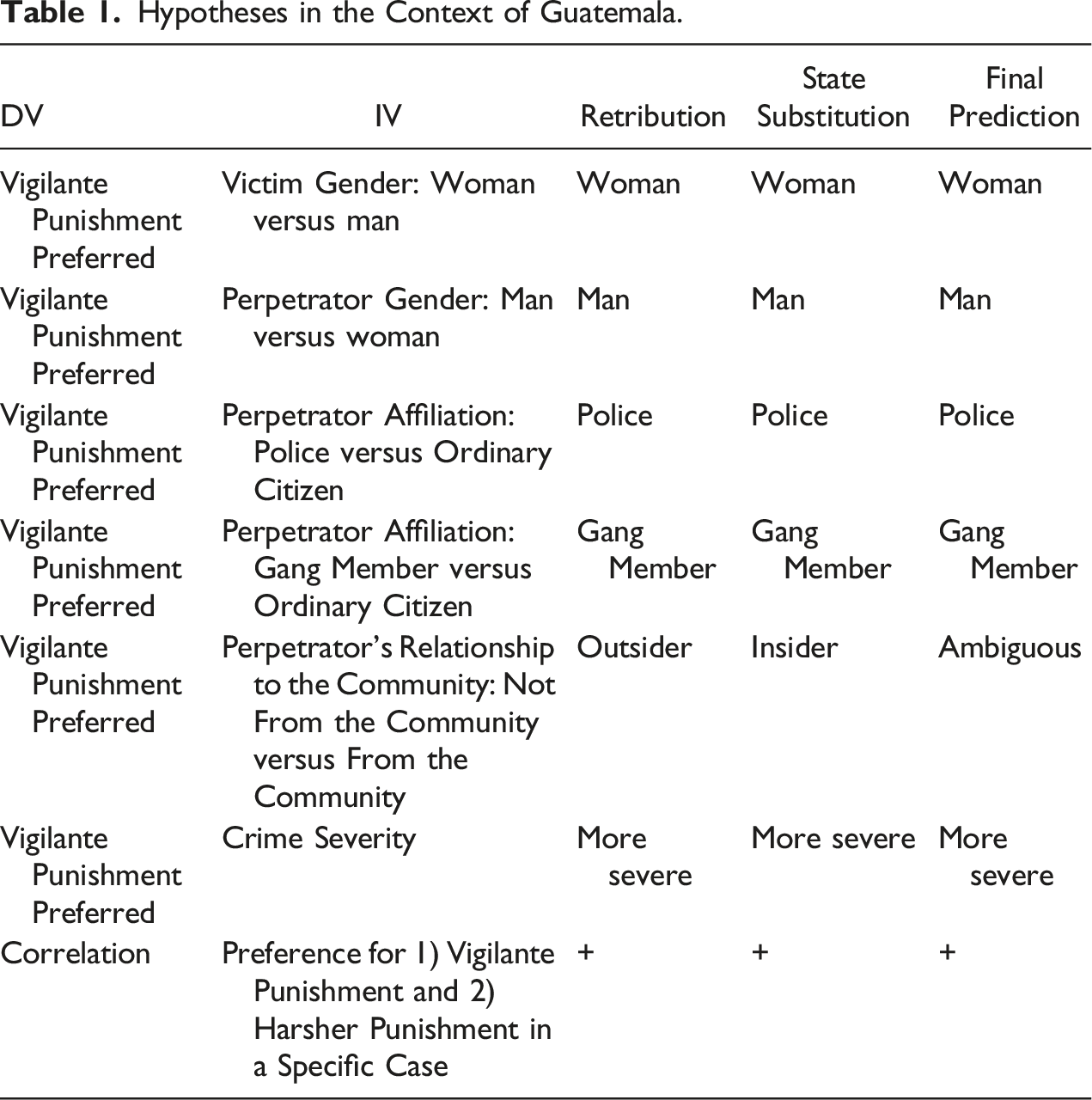
Given that both the state substitution logic and the retribution logic suggest that gender shapes preferences for vigilantism in similar ways in Guatemala, we hypothesize the following: • •
A second aspect of identity that we consider is the perpetrator’s professional affiliation. Crimes are committed not just by “ordinary” citizens but also by people involved in organized crime or even representatives of the state, such as the police. We expect that, under the retributive logic, crimes committed by gang members or police officers will increase demand for vigilante justice (relative to crimes by ordinary citizens) because those crimes are seen as especially morally upsetting. People’s priors about actors shape their moral judgment about actions committed by those actors (Helzer & Critcher, 2018; Hester & Gray, 2020; Uhlmann et al., 2015), meaning that actions committed by “bad” actors will be seen as worse. Gang members are seen in such a negative light in many contexts (Carballo, 2017; Lee & Bubolz, 2020; Rosen & Cruz, 2018), including in Guatemala (Azpuru et al., 2018; Krause, 2014: 129). Therefore, the crimes they commit will evoke particularly strong outrage. Indeed, support for mano dura policies throughout Latin America is tied to fears of organized crime (Silva Forné et al., 2021; Wolf, 2017). 8 Like crimes committed by gang members, those committed by police officers are especially likely to be morally upsetting. In the case of police officers, these crimes run counter to the police’s ostensible goal within the community. Indeed, “hypocritical” criminals are seen as more deserving of punishment (Effron et al., 2015; Laurent et al., 2014). Thus, crimes committed by both police officers and gang members should evoke demand for vigilantism under the retribution logic.
For the state substitution logic, crimes committed by the police should also increase support for vigilantism. When the police are directly involved in crime, the state becomes an ineffective tool for deterrence. Indeed, the state is less likely to prosecute crimes committed by its officials (e.g., Brinks, 2007; Jorgensen, 2009). Similarly, we suggest that citizens recognize the potential for corruption and impunity that is unique to organized crime (Kugler et al., 2005), given close ties between organized crime and state officials (Eguizabal et al., 2015; Trejo & Ley, 2019). Thus, people should be more supportive of vigilantism for both police and gang perpetrators than for ordinary community members under both logics of punishment. • •
A final characteristic of the identity of the perpetrator that we consider is their status in relation to the community, that is, as an outsider or an insider. As Szymanska (2011) details, vigilantism may serve as a device for conflict resolution and coordination. If the aim of vigilantism is to maintain order within a given community, as the behavioral control logic suggests, then we might expect that people prefer vigilante punishment for members of the in-group because cohesion and compliance are required only from those individuals who will continue to interact with community members, that is, in-group individuals (Mendoza et al., 2014; Shinada et al., 2004).
On the other hand, if vigilantism is driven by a desire for revenge, then citizens are more likely to want to see criminals punished harshly out of a sense of vengeance or outrage—sometimes beyond the scope of the legal system.
9
The retribution logic would then predict that citizens favor vigilantism for outsiders because they prefer (or anticipate) that vigilante justice will be especially harsh. Prior research suggests that people are especially hesitant to harshly punish members of their in-group and, conversely, are often more willing to harshly punish otherwise similar crimes committed by an out-group individual (Bernhard et al., 2006; Delton & Krasnow, 2017; Fehr & Gächter, 2002; Jordan et al., 2014; Schiller et al., 2014). Thus, under the retributive logic, people should prefer vigilantism for out-group perpetrators either because they want to spare their in-group members from severe punishment or because they see out-group perpetrators as particularly deserving of harsh punishment. Given that the two logics make opposite predictions regarding the role of perpetrator community punishment in shaping support for vigilantism, we have two alternative hypotheses: • •
The last contextual factor we examine corresponds to the nature of the crime itself. In particular, we focus on the severity of the crime. Severity should be central to preferences in the retribution account, since more severe crimes tend to elicit more anger and desire for vengeance (García-Ponce et al., 2023; Jensen & Petersen, 2011). The more severe the crime, the more likely people will want to use vigilante justice in response.
It is possible that the severity of the crime should be less decisive in preferences for vigilantism under the state substitution logic. For instance, Carlsmith et al. (2002) argue that someone motivated by a logic of deterrence will be “relatively unconcerned with the magnitude of the harm …” (pg., 286) because vigilante punishment should substitute for the state in punishing all crimes, independent of their severity. However, we take a broader view of behavioral control and suggest that people might indeed take into account the magnitude of harm caused by a given crime. If one goal of vigilantism is to deter behaviors that harm the community, then deterring the most severe crimes is likely to be a larger priority for many community members. The cost imposed on the community rises as the severity of the crime increases, and therefore, community members will want to deter the most costly actions first.
10
In sum, crime severity should be positively correlated with support for vigilantism under both the logic of retribution and that of state substitution. •
Here, it is important to briefly establish how we define crime severity, given that scholars have operationalized the concept in a variety of ways (García-Ponce et al., 2023; Jensen & Petersen, 2011; Kwan et al., 2000). We draw on work from psychology which suggests that moral judgment is principally a product of perceived harm (Schein & Gray, 2018). In our study, we consider 4 types of crime (sexual assault, extortion, theft, and fighting) and thus discuss their severity here. First, sexual assault is a very severe crime because it is a prototypical example of extreme bodily harm. Indeed, people rapidly reach the conclusion that rape is both immoral and harmful (Schein & Gray, 2018). Extortion is less severe than sexual assault because it always causes material harm but only sometimes causes bodily harm. Theft, in contrast, typically causes only material harm. The least severe crime we consider is a fight. Although it causes physical harm, the victim in this crime is judged as responsible and thus is characterized as suffering less harm (Gray & Wegner, 2009; Schein & Gray, 2018). 11 We order the following crimes in decreasing order of severity: sexual assault, extortion, theft, and fighting. 12
Our analysis thus far focuses on the contextual features of a crime that make people more likely to favor the application of vigilante punishment over state punishment. Yet, the nature of vigilante punishment can vary, ranging from public shaming to detainment to murder. We thus additionally consider one key aspect of vigilantism—the severity of the punishment for the crime in question—as an additional outcome in our study. Because vigilante punishment delivers what is seen as adequate or appropriate punishment, rather than what is legal punishment, the severity of vigilante punishment may be distinct from that of state punishment. 13
Drawing on both the retributive and state substitution logics, we expect that crimes that are chosen for vigilante action will also be punished more severely than other crimes. First, the retributive account predicts vigilantism for more transgressive crimes precisely because, in that account, people want to see the perpetrator punished as harshly as possible. In some cases, vigilantism may go beyond what the law allows. This means that, under the retributive logic, we should see a strong correlation between the crimes people think should be punished more severely and the crimes people think should be subject to vigilante justice. Second, an individual motivated by the state substitution logic will be concerned with whether the vigilante punishment is severe enough to deter others from committing similar crimes. We expect this will also lead to individuals preferring more severe punishments for the same crimes for which they prefer vigilante punishment, given that harsher punishments are more likely to deter crime. •
Hypotheses in the Context of Guatemala.
Vigilantism in Guatemala
Guatemala is roughly average within Latin America in terms of the percentage of the population who supports vigilante punishment in response to sexual assault (as shown in Figure 1). Further, vigilantism has a long history in Guatemala. Following the end of a 36-year civil war in 1996, the country experienced a substantial increase in violence and severe crime. During this period, many citizens formed neighborhood watches and local security groups (CICIG, 2019b). In some cases, these self-defense groups were an explicit (though unsuccessful) attempt by the newly created Policía Nacional Civil (PNC) to implement community policing programs (Argueta, 2019). Though not necessarily violent by design, these organizations have sometimes resorted to violence in investigating and punishing crimes.
Perhaps the most public form of violent vigilante justice in Guatemala is the so-called “lynch mob.” In the 5-year period after the signing of the 1996 peace accords, the UN Commission for Guatemala (MINUGUA) reported 421 cases of lynchings (Handy, 2004). Grupo de Apoyo Mutuo, a Guatemalan civil society organization, documented 1660 cases in the country between 2008 and 2018 (GAM, 2019). Victims of lynching are often known criminals and gang members, but in some cases they are ordinary citizens suspected of committing crimes. Lynchings may be planned and relatively well-organized, or mobs may arise spontaneously to apprehend a suspected criminal (Handy, 2004). Despite the violence involved, the aim of the lynching is not always the death of the alleged perpetrator (Gutiérrez & Kobrak, 2011). In fact, between 2008 and 2018, only about 21% of lynchings ended with the victim’s death (GAM, 2019).
Further, not all forms of vigilantism in Guatemala are as violent as lynchings. For example, indigenous Maya practices include a diverse range of punishments, ranging from lynchings to lashings, walking on knees to ask for forgiveness from the earth, public shaming, and receiving advice from Mayan authorities or family members (e.g., Hawkins et al., 2013; Sieder, 2020). In indigenous communities, people may take justice into their own hands because they perceive the state authorities—the PNC in particular—as illegitimate and seek their response for crimes at lower rates (e.g., Denny et al., 2023). These communities may also have a different concept of justice than the state’s legal system (Sieder, 2011). 15
Prior research on vigilantism in Guatemala has pointed to the government’s inability to respond to crime as an explanation for the prominence of community punishment. Indeed, Guatemala has struggled with ensuring equal access to institutions of justice for all its citizens across its territory. Judicial institutions, ranging from the police and public prosecutors to the courts, suffer from severe personnel and equipment shortages. As of 2021, there were 22,481 agents of the PNC, 4.50 prosecutors and 4.43 judges per 100,000 inhabitants (ICCPG, 2021). These deficiencies translate into high levels of impunity. According to the International Commission against Impunity in Guatemala (CICIG), from 2008 to 2018, 94% of all crimes went unsolved in the country. Corruption cases, robberies and crimes against women had the highest rates of impunity, at 98.75%, 97.45%, and 97.05%, respectively (CICIG, 2019a). There is a negative correlation between the number of courts in a department and the occurrence of vigilantism (Mendoza, 2006). Yet vigilante violence in Guatemala has also historically been most common in the regions with the lowest homicide rates, in the northwestern departments of Huehuetenango and Quiché (GAM, 2019). In addition, places that saw extensive civil war violence have experienced more violent vigilantism, in part due to the militarization of civil society during the conflict (Bateson, 2017) but also because the conflict heightened residents’ sensitivity to the threats of violence (Schirmer, 2001).
Research Design
MPP Survey
The data for this project comes from an endline survey that was part of the Model Policing Project (MPP) in Guatemala. The program, funded by the U.S. Bureau of International Narcotics and Law Enforcement (INL), ran from June 2016 through June 2019. It was designed to strengthen collaboration between the Guatemalan National Police and municipal governments across the country. The endline survey was conducted from July through September of 2019 in 64 municipalities across 14 of the 22 departamentos of the country, and enumerators collected responses from more than 18,000 Guatemalans across 1110 communities. For sampling details, see Appendix 1. Sampled communities are shown below in Figure 3. The key survey element is a conjoint experiment concerning the conditions under which civilians prefer vigilante justice. Communities in the sample.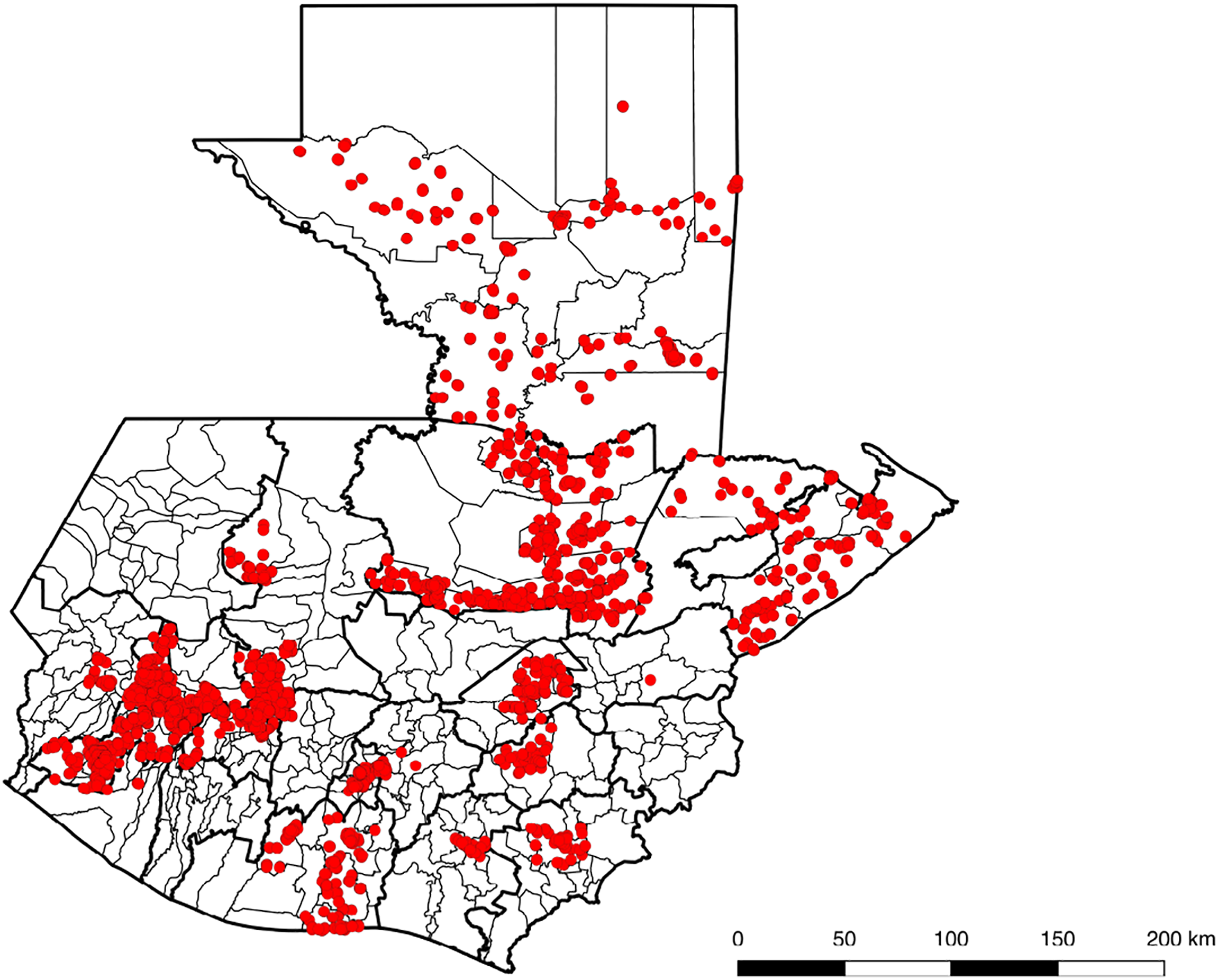
Before proceeding to the design of the survey questions, there are several ethical and methodological decisions to note. First, the survey was enumerated not only in Spanish but also in a range of indigenous languages. 16 Given the history of exclusion and victimization against Guatemala’s large indigenous population, this multi-linguistic design was necessary to ensure that indigenous Guatemalans were included in the sample as well as to minimize their discomfort in responding to the survey. Enumerators were hired and trained locally, ensuring that indigenous enumerators surveyed indigenous populations. Relatedly, respondents were able to skip any questions with which they were uncomfortable. Additionally, in order to limit any traumatizing effect that the experiment might have on respondents who had been victimized themselves, the descriptions of the crimes in the experiment were deliberately sparse.
We did not require that female respondents were surveyed by female enumerators despite the sensitivity of questions about sexual assault. Responses to the conjoint did not vary on the basis of respondent gender when the enumerator was a man (Table A.2), though they did vary by enumerator gender (Table A.1 and Figure A.1). Similarly, although allowing respondents to self-administer the survey would have limited social desirability bias, we were unable to field the survey in this fashion because of varying levels of reading comprehension.
Conjoint Experiment
In the conjoint experiment, respondents were presented with information regarding two hypothetical crimes. Given the length of the survey, the conjoint module was presented to a randomly selected half of all 18,000 respondents. The prompt preceding the conjoint, in English, is: Occasionally there are crimes that occur within communities. In some cases, people think it is better to let the police investigate the crime and punish the perpetrator. In other cases, people think that the community should take matters into their own hands. Consider the following scenarios and tell me in which case you think it would be better for the community to take matters into their own hands. Even if you are not completely sure, choose one of the cases.
Conjoint Elements.
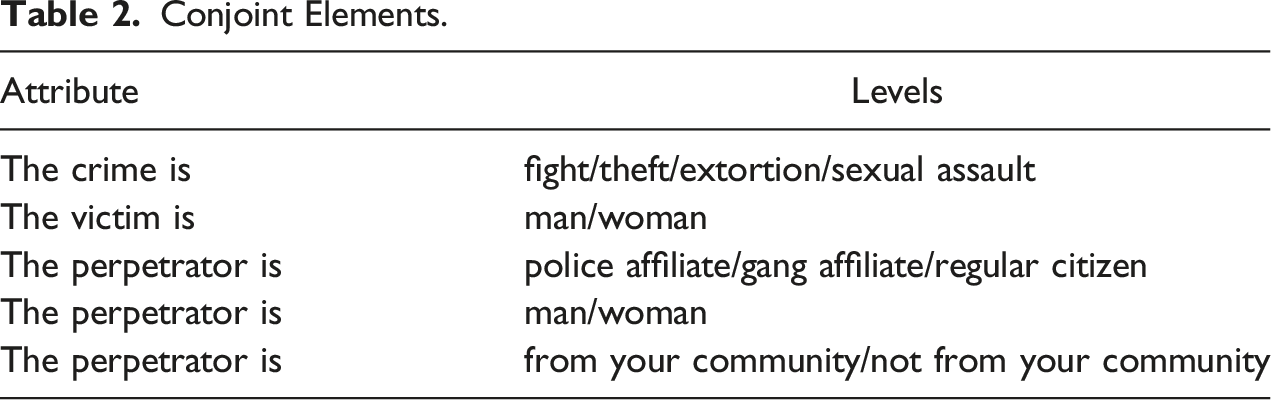
The conjoint design is well-suited to test the empirical implications of our theory. Conjoint experiments allow for the estimation of the average causal effects of multiple treatment components at the same time (Hainmueller et al., 2014). Because respondents must consider multiple components of crimes, the conjoint structure also limits the social desirability bias involved in answering questions about preferences for extralegal violence (Horiuchi et al., 2022). Forced-choice conjoints also perform well in comparison to behavioral benchmarks (Hainmueller et al., 2015) and provide a partial solution to informational equivalence violations (Dafoe et al., 2018).
To test the hypotheses about the effects of situational factors on demand for vigilantism, we estimate the “average marginal component effect” (AMCE), clustering standard errors by respondent. This estimand is the marginal effect of each attribute averaged over the joint distribution of all other attributes (Hainmueller et al., 2014). The AMCE can intuitively be interpreted as how much more likely a crime is to be preferred for vigilantism if that crime has a particular level of an attribute, relative to the baseline level of that attribute. We also present marginal means estimates (Leeper et al., 2020). The marginal mean describes the overall favorability of profiles with a particular level of a given attribute, ignoring all other features. We primarily discuss results in terms of AMCEs because the hypotheses described above are structured as comparisons between levels of a given attribute.
Results
How do respondents choose between police and vigilante punishment across varied crime scenarios in the conjoint experiment? Figure 4 below plots both AMCEs and MMs for each attribute level, and numerical conjoint results are found in Tables A.3 and A.4.
18
The results suggest that the gender of the perpetrator and victim, the severity of the crime, and the professional affiliation of the perpetrator all shape the likelihood that a crime will be preferred for vigilante punishment. However, the perpetrator’s status as a member of the community does not affect the likelihood that a crime will be preferred for vigilantism. AMCE and estimated marginal means with 95% confidence intervals. For AMCEs, baseline category is centered at zero.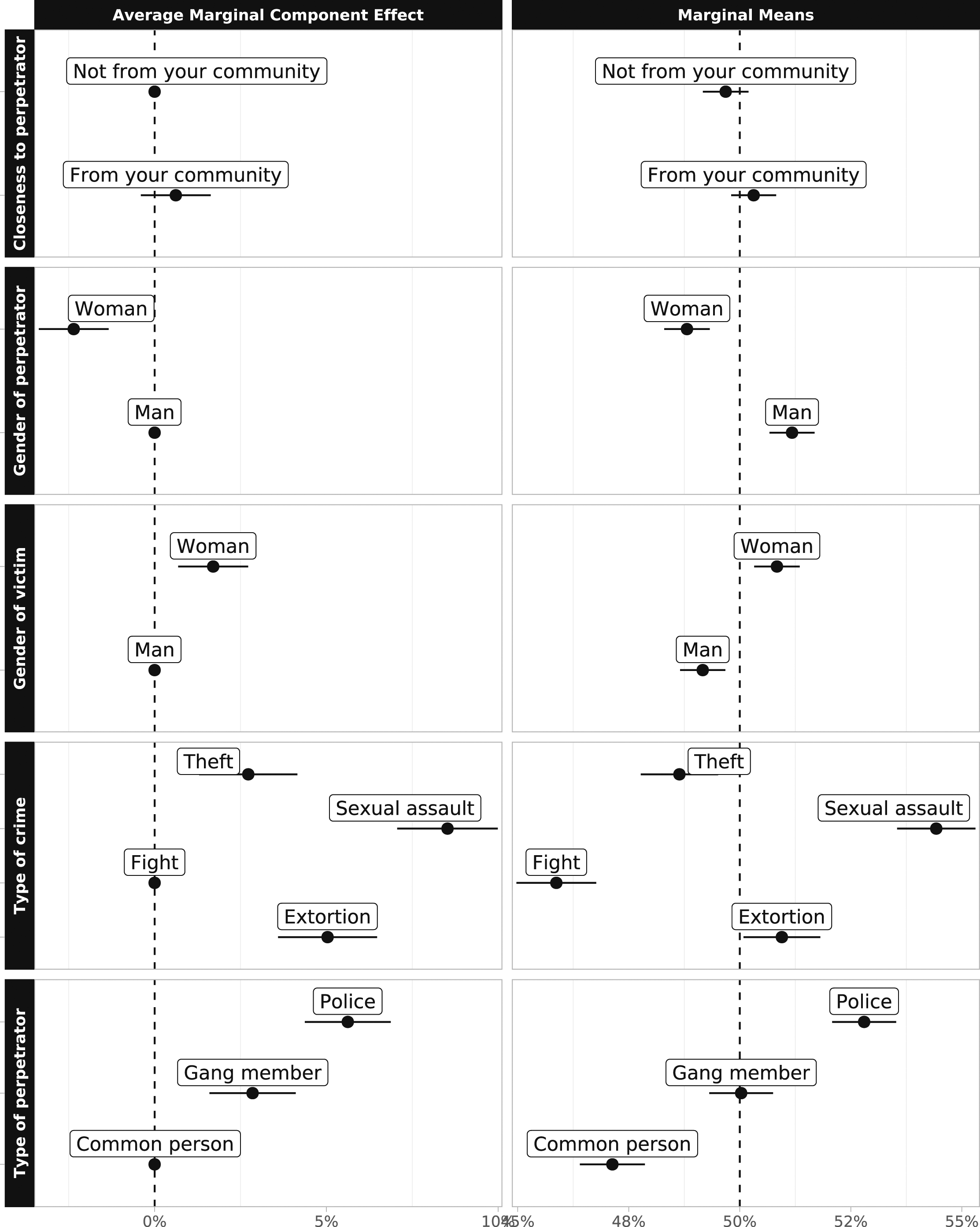
We start by looking at factors related to the identity of the victim and the perpetrator. First, we find that perpetrator and victim gender play important roles in citizen decision-making. Compared to when the victim is a man, the victim being a woman increases the likelihood that a crime will be preferred for vigilante punishment by two percentage points (0.017, CI = [0.007, 0.027]). Relatedly, compared to a male perpetrator, a female perpetrator decreases the likelihood of a crime being preferred for vigilantism by two percentage points (−0.024, CI = [−0.034, −0.014]). These findings provide support for both the
Perpetrator professional affiliation also matters for vigilantism preferences. In accordance with our expectations, we find that, relative to being a common person, being a gang member increases the likelihood of a criminal being selected for vigilante punishment by three percentage points (0.029, CI = [0.017, 0.041]). Relative to an ordinary citizen, police affiliation of the perpetrator increases the likelihood of that individual being preferred for vigilante punishment by six percentage points (0.056, CI = [0.044, 0.068]). These findings provide support for the
Finally, we did not have a directional hypothesis concerning whether an insider or outsider perpetrator would be more likely to be preferred for vigilante punishment. Indeed, we do not find any evidence that the perpetrator’s status as an outsider or insider to the community matters in preferences over vigilantism (0.006, CI = [−0.004, 0.016]). It could be that both versions of the
The last aspect of the crime we consider is its severity. We expect that, as the severity of the crime increases, so should the likelihood that a crime is preferred for vigilante punishment. We find strong evidence in support of this
We now turn our attention to the relationship between demand for vigilantism and the severity of punishment desired. We find that our results look similar if we focus on which of the two crimes respondents think should be punished more severely, rather than which should be subject to vigilantism (Figure 5). This striking correspondence demonstrates that the cases that elicit a desire for more severe punishment and the cases that increase support for vigilantism tend to be the same ones. In other words, when people are thinking about vigilantism, they are thinking implicitly about severe punishment, in support of the Estimated marginal means with 95% confidence intervals.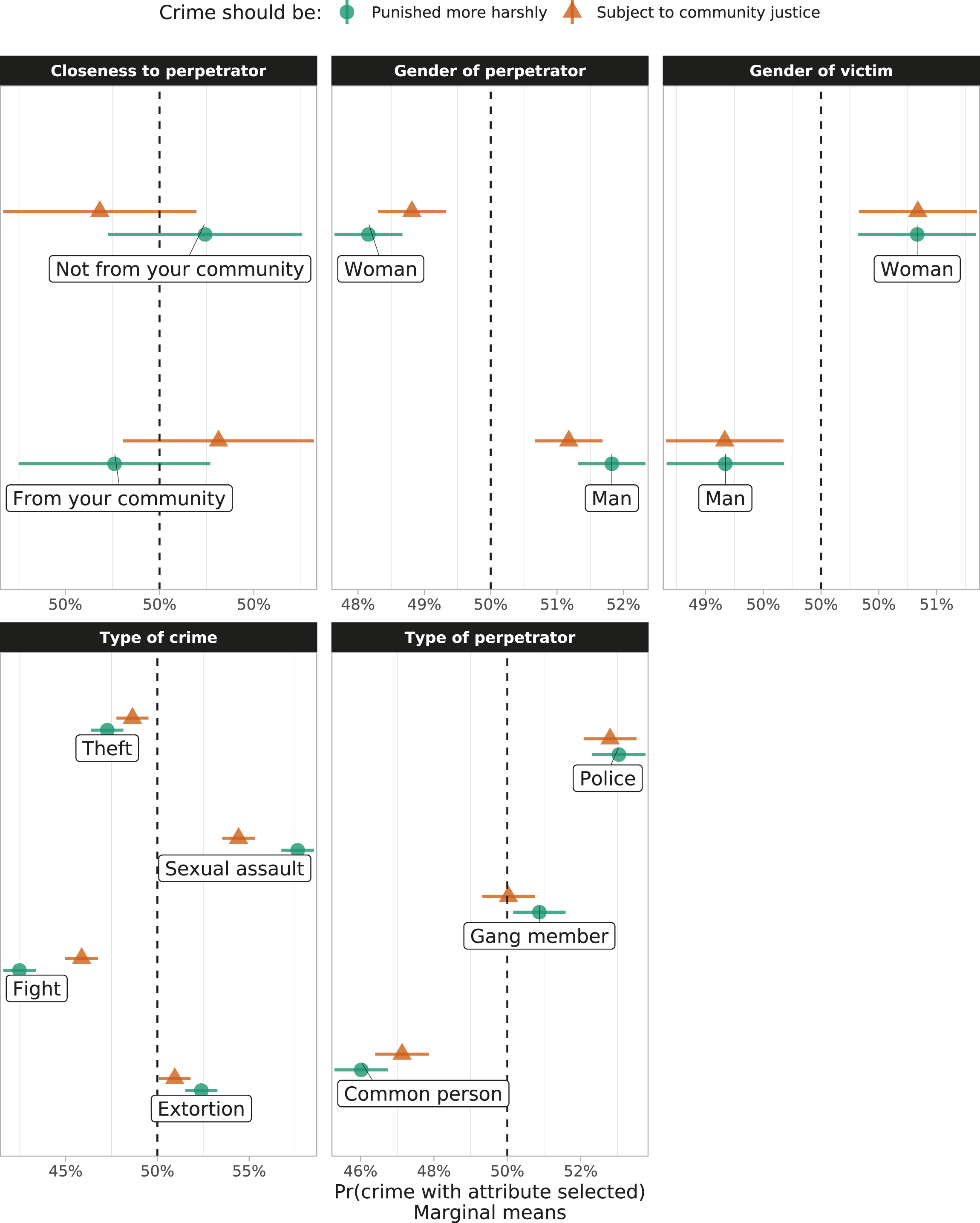
We also find some interesting interactions between the attributes in exploratory analyses that follow from our theoretical discussion (Table A.7). We find again that gender in particular plays an important role: as Figures A.6 and A.7 show, crimes in which the perpetrator is a man and the victim is a woman are most likely to be preferred for vigilante punishment, relative to all other combinations of victim and perpetrator gender. Similarly, sexual assault is more likely to be subject to vigilante justice when committed by a man. Interestingly, when the perpetrator is an outsider to the community and a man, people generally prefer vigilantism, yet they prefer state policing when the perpetrator is a woman. 19
Figure A.8 indicates that, across all attributes, sexual assault is the crime most likely to be preferred for vigilantism, and fighting the least likely. Sexual assault is further seen as especially deserving of vigilantism when the perpetrator is a police officer. Not only is sexual assault by a police officer an especially heinous and transgressive betrayal of public trust, but expectations of state prosecution are also relatively low because security agents and perpetrators of violence against women both enjoy widespread legal impunity.
Alternative Arguments
Next, we consider several alternative hypotheses and potential threats to inference related to the security environment in which respondents live, the context of Guatemala, and views about gender. We also discuss survey and experimental validity.
First, one concern might be that a proper test to show whether the retribution or state substitution logic explain people’s conjoint choices should be to condition those choices on the security environment the respondent is in. If the state substitution account predicts increased support for vigilantism where the police are ineffective, then the effect of each conjoint attribute should depend on the quality of policing accessible to respondents. Table A.6 shows that preferences vary in a marginally significant fashion (p < .1) across low and high police capacity locales. Figure A.5 further indicates that there are few meaningful differences between how respondents in high and low police capacity assess the levels of each attribute in relation to other levels. Importantly, we do not find differences in preferences based on the victim’s or perpetrator’s gender, which suggests that respondents in low capacity areas are not more likely to consider vigilantism as a needed substitute for the state in preventing violence against women. There are only two significant differences in terms of how people respond to specific levels within the conjoint: respondents in high police capacity areas are more likely to prefer vigilantism for someone who belongs to the community (and less likely to prefer it for someone who does not), and they are less likely to prefer vigilantism for a gang member. One possibility is that, where the police are effective, gangs are not perceived to be as serious of a threat and thus evoke less anger from respondents. Alternatively, respondents may see less of a need to use vigilante action as a deterrent against persistent gang activity when the police have higher local capacity.
A second concern is that preferences over vigilantism could be similarly conditioned by three important contextual factors in the Guatemalan setting: whether a respondent is indigenous, whether a respondent was victimized in the civil war, and whether respondents participated in armed patrols during the civil war (Bateson, 2017). Table A.6, however, finds no evidence of preference heterogeneity across these variables. In other words, respondents do not respond to the conjoint differently depending on these characteristics. Our findings are not inconsistent, however, with prior research; our data concern the crimes which people think merit vigilantism, whereas existing research focuses on which communities in Guatemala engage in vigilantism.
Lastly, our theory suggests that people may respond to victim and perpetrator differently depending on their views on gender. For example, individuals who see gender inequality as particularly egregious may be more sensitive to impunity for crimes against women. While we do not have measures of individual attitudes towards gender inequities, we make use of rough proxies that arguably correlate with these attitudes. These include (1) whether the respondent believes women in their community are accepted into leadership roles (i.e., people who live in communities where women are more accepted are likely to have more progressive views on gender); (2) whether the respondent believes sexual assault is becoming more common in their community (i.e., those who believe sexual assault is a growing problem may be especially likely to perceive gender inequities in criminal deterrence); (3) how likely the respondent believes they could be subject to sexual violence in the future (a similar logic to (2)); and (4) the gender of the respondent (i.e., women are more likely than men to perceive gender inequities in policing). Yet, across all four of these proxies, we find no evidence of preference heterogeneity (Table A.8).
Survey and Experimental Validity
Finally, we consider other possible limitations in the generalizability of our results. First, since the set of municipalities we sampled was defined by the MPP program, our sample may be unrepresentative of the Guatemalan population. We find, however, that demographics from our survey closely align to statistics from the most recent census (see Appendix 6). Additionally, PNC administrative data on homicide and extortion comparing the survey municipalities and non-surveyed municipalities suggests that there are no statistically significant differences in crime rates (Table A.10). 20 These tests increase our confidence that our results apply broadly to other parts of Guatemala which were not sampled.
Last, in terms of the conjoint experiment, there is no nonresponse bias because all respondents answered. As for design effects as described in Hainmueller et al. (2014), there are limited carryover effects (Figure A.3), and a randomization check suggests that randomization produced well balanced experimental groups (Figure A.4). Given that the attribute order is the same for all respondents in this survey, it is impossible to check assumption 4 of Hainmueller et al. (2014). However, we did find evidence of profile order effects: the criminal profile presented first is more likely to be selected across a range of attributes (Figure A.2, F-test in Table A.5). This issue is likely the result of the conjoint being presented verbally rather than in written form; respondents may have had difficulty remembering the second profile.
Lastly, it is important to note here how we attempted to ensure that people could respond to our survey regardless of their language or literacy skills. As discussed above, the survey was enumerated in various languages and working with indigenous enumerators. Additionally, we ensured that illiterate individuals could complete the survey by both reading it out loud and by simplifying the language used in the survey. We also worked with enumerators to build a list of similar words they could offer to respondents who were confused by some of the more complex words.
Conclusion
Vigilantism challenges the state’s monopoly on the use of force, has implications for patterns of state-building in developing countries, and raises ethical concerns about the rights of the accused. However, while existing research tells us much about why citizens support vigilantism in general, it indicates little about the crimes in response to which people support vigilantism over conventional policing.
In this paper, we laid out an explanation for why and how key aspects of a specific crime—the identity of the victim and the perpetrator as well as severity of the crime itself—matter for people’s assessment of whether the appropriate response to that crime is vigilante punishment. To do so, we built on two logics: the logic of state substitution and the logic of retribution. Using experimental survey data from a large-scale survey in Guatemala, we find that perpetrator and victim gender, perpetrator affiliation with police or a gang, and crime severity play important roles in citizen decision-making regarding which crimes merit the application of vigilante punishment. The results suggest that respondents prefer vigilantism over conventional policing for male perpetrators, criminals who have victimized women, perpetrators of severe crimes, and individuals who are affiliated with the police and gangs. Furthermore, the cases that elicit a desire for vigilante punishment are the same ones which elicit a desire for harsher punishment.
Vigilantism may be particularly tied to a logic of state substitution in Guatemala due to the state-formed nature of many self-defense groups during the civil war. Additional research should consider how legacies of conflict shape not only the emergence of vigilantism but also how people understand the role of vigilante punishment. Relatedly, future research should consider how people evaluate vigilantism when the alternatives to community punishment are not only state punishment but also non-state-armed group punishment or organized crime punishment. Indeed, the choice of how to punish crimes becomes more complicated when there is more than one authority in a given area. Future research should also consider how the results would change in contexts in which the state is more effective at ensuring procedural justice for accused criminals. For example, we argued that, under the state substitution logic, perpetrator and victim gender should affect preferences for vigilante punishment only when there is perceived gender bias in the ways the state responds to crimes. Lastly, just as we have disaggregated the crimes in response to which people support vigilante punishment, future research should further disaggregate forms of vigilante punishment: For example, in response to which crimes would people support lynching instead of milder vigilante punishments?
Our study sheds light on attitudinal preferences for vigilante action, and the conclusions should be tested behaviorally in the future. Importantly, vigilante actions may depart from community preferences due to the costs associated with punishing particular perpetrators from organized groups that can retaliate against communities—like police or gang members. This may reinforce perceptions of impunity and police ineffectiveness that generate citizen dissatisfaction and frustration with the state.
In prescriptive terms, our results should caution about the ability of vigilantism to provide stable, dispassionate justice for both victims and alleged perpetrators, rendering community justice a potentially dangerous political outcome. Vigilantism cannot be evaluated in a vacuum, however, and in many settings, the police also behave unjustly and without regard for due process. The relative efficacy of vigilantism and the police—and of communities to hold either accountable (Arjona, 2016; Tellez et al., 2020)—are likely to vary substantially across contexts, which presents a future research avenue for the study of vigilante action.
Supplemental Material
Supplemental Material - State Absence, Vengeance, and the Logic of Vigilantism in Guatemala
Supplemental Material for State Absence, Vengeance, and the Logic of Vigilantism in Guatemala by David A. Dow, Gabriella Levy, Diego Romero, and Juan Fernando Tellez in Comparative Political Studies
Footnotes
Acknowledgments
We thank RTI International and ASIES for their collaboration in the collection of data for this project. We would also like to thank Livia Schubiger, Erik Wibbels, members of Duke’s Development Lab, and participants at APSA for their encouragement and critiques. We thank Kai Thaler, Yuhki Tajima, Sasha Klyachkina, Lauren Young, and participants at UC Davis PSRW. Lastly, we are grateful to the editors of Comparative Political Studies and two anonymous reviewers. Pre-analysis plan is registered with the OSF ( ).
).
Declaration of Conflicting Interests
The author(s) declared no potential conflicts of interest with respect to the research, authorship, and/or publication of this article.
Funding
The author(s) disclosed receipt of the following financial support for the research, authorship, and/or publication of this article: This work was supported by the U.S. Department of State, Bureau of International Narcotics and Law Enforcement (INL).
Supplemental Material
Supplemental material for this article is available online.
Notes
Author Biographies
References
Supplementary Material
Please find the following supplemental material available below.
For Open Access articles published under a Creative Commons License, all supplemental material carries the same license as the article it is associated with.
For non-Open Access articles published, all supplemental material carries a non-exclusive license, and permission requests for re-use of supplemental material or any part of supplemental material shall be sent directly to the copyright owner as specified in the copyright notice associated with the article.
