




Abstract
In a panel study where one survey was conducted immediately after a terrorist attack in central Stockholm, with over 20,000 participants, we examine the possibility that first-hand experiences with terror increases effects compared to people located elsewhere in Sweden. We use matching and as-if random variation in our data to identify the effect of personal proximity. While we find that people close to the attack perceived themselves as more affected, attesting to the vividness of the experience, we find no evidence of stronger rally effects, greater outgroup dislike, preferences for security policies or emotional effects. The results challenge previous theories on public opinion change in the aftermath of vivid events. In line with prior research, however, the results indicate that public opinion among people across Sweden did change on a range of issues. These general effects occurred uniformly, regardless of geographic location in the country.
Introduction
“I was right in the middle of it. The truck almost hit me. I was spared by the smallest of margins.”—Survey Panel Member A
“Saw injured and dead outside the office.”—Survey Panel Member B
“I was half a block away. People were running toward me, screaming.”—Survey Panel Member C
Terrorist attacks are associated with rally-round-the-flag effects, anti-immigrant sentiments, and other changes in perceptions, attitudes and behavior (Woods, 2011). These types of consequences are most acutely felt in the country of the attack, but also, albeit to a lesser degree, in neighboring countries. People in countries far away from the attack are the least affected (Böhmelt et al., 2019). This may imply that the closer individuals are to a terrorist attack, the stronger they react. There is some—although inconclusive—evidence in favor of this proposition. For example, the terrorist attacks on 9/11 influenced people in the New York City metropolitan area to a greater degree (Fischhoff et al., 2003; Huddy et al., 2002a). Similarly, individuals in the areas around mass shootings, a related traumatic event, tend to become more in favor of stricter gun controls (Newman & Hartman, 2019). However, these studies only focus on people in the general vicinity (e.g., 100 miles from the event) and not on the individuals with direct exposure. Thus, while they point to the importance of the geographic location of the terrorist attack in relation to the potential victims of terrorism, to date, no previous study exist on the broad political consequences of being at the exact location of a terrorist attack.
On 7 April 2017, a supporter of the Islamic State stole a truck in the city center of Stockholm, Sweden, and used it as weapon, speeding down a busy shopping street. Five people were killed and fifteen wounded. Since the attack happened in the central part of the country’s biggest city, many became witnesses to the terror, including a large number of individuals that we previously had surveyed about terrorism-related issues. The first survey included over 20,000 people. 1 After the terrorist attack, we surveyed this group twice about their attitudes and reactions. Therefore, by design and by chance, we can describe what it means to be in the middle of a terrorist attack and how it influences public opinion.
The theoretical rationale behind a stronger effect among the directly impacted rests on the vividness of the experience. As the quotes above highlight, individuals close to a terrorist attack have a radically different sensory experience compared to people located elsewhere. Over several decades, vivid information has been suggested to play a particularly meaningful role in shaping reactions (Janis, 1967; Johnson & Tversky, 1983; Loewenstein et al., 2001; Newman & Hartman, 2019; Nisbett & Ross, 1980). However, the relationship between experiencing a threatening situation and attitudinal or behavioral change is more complex than what is traditionally assumed (Barney & Schaffner, 2019; Weinstein, 1989). Since it is unclear whether or not personal experiences with terror affects attitudes more compared to those who learn about it from other sources, our purpose is to investigate this research question.
The potential consequences of terrorism on public opinion are wide-ranging. Therefore, we study three broad categories of politically relevant outcomes: rally effects, outgroup dislike, and security preferences. Moreover, we examine the emotional consequences of terrorism, a fourth category. By focusing on many facets of reactions, we are able to give a fuller and more fine-grained picture of how terrorism affects people.
We document several general effects of the attack in the sample. Individuals in the post-attack survey express high levels of anger and anxiety. We show that these emotions are connected to several interesting attitude changes. Next, utilizing the uniquely detailed data, we identify individuals as either proximate or not proximate to the attack, using three different definitions of “closeness.” The indicators have different advantages and should, taken together, provide a good overall indication of the proximity effect. To our knowledge, this is the first study able to explore this research question at this level of detail, with a large group of respondents with first-hand experiences of the attack.
We use matching and as-if random variation in our data to identify the effect of proximity. Overall, we find little evidence of a specific proximity effect. Individuals close to the attack neither express higher levels of anger nor larger attitude changes than similar, less proximate individuals. This is true even for individuals who directly witnessed the events. Thus, our results show that for these types of outcomes, proximity might be of less importance than suggested by several previous studies on terror events.
Theory and Previous Research
Distance to Terrorist Attacks
The geographic location of a terrorist attack is a major factor behind reactions. When attacks happen in the same country as the observer, it moves public opinion on many issues (Bar-Tal & Labin, 2001; Esses et al., 2002; Gaines, 2002; Huddy et al., 2002b; Ladd, 2007; Vasilopoulos, 2018). The spatial component is underlined by studies on how attacks in one country affect public opinion in others. The strongest effects are in the country of the attack, but countries close to the attack are also affected. With growing distance, effects are attenuated (Böhmelt et al., 2019). That said, even populations in countries far away from an attack can be affected, yet that evidence is weaker (Finseraas & Listhaug, 2013). Similarly, individuals who are at a higher risk of becoming victims of terrorism because they are within range of rockets are more likely to support right-leaning politicians (Getmansky & Zeitzoff, 2014). Overall, these results indicate that the closer people are to the violence, the stronger the effects.
The general effects of geographic location may suggest that the strongest consequences should be found among those really close to an attack. However, evidence of proximity effects at the very local level is lacking, and to the extent that previous studies exist, they have mostly been conducted in the U.S. after 9/11, and show mixed results. When individuals living 100 miles (about 160 km) from the World Trade Center are compared with people further away, those who were closer only had slightly higher terror risk perceptions. Furthermore, this difference is only present among certain demographic groups (Fischhoff et al., 2003). Small and mixed effects are also found in another study after 9/11 conducted with a sample from Long Island, New York. People in Queens were more likely to perceive a somewhat higher personal threat compared to other Long Islanders farther out, yet there is no evidence that Long Islanders who were commuting to work in New York City or knew victims were more personally affected or perceived a higher threat to the United States (Huddy et al., 2002a). As for other psychological outcomes, it is also mixed. In the aftermath of 9/11, anxiety and sadness was higher among those in the NYC metro area and the perceived threat of terrorism was higher among individuals in the Northeast. However, this study found no effects of being in the metro area on perceived threat or living in the Northeast on anxiety (Huddy et al., 2005). The relatively uniform effect within countries is underlined by data collected during the November 2015 terrorist attack in Paris where 130 people were killed. The study finds no evidence that migration attitudes in France changed more among people living relatively close to the attack compared to those living elsewhere in the country (Nussio et al., 2019). However, none of these studies focus on the consequences of being personally at the exact location of an attack.
One of the few studies on the direct personal experience with terrorism finds that people close to the 9/11 attacks on Lower Manhattan showed symptoms of post-traumatic stress disorder and depression. These findings are in line with the idea that personal experiences matter, but the study only relies on data from 45 individuals and does not compare them with individuals with no direct experiences of terror (Bonanno & Jost, 2006). That psychological distress is associated with indirect or direct exposure to terrorism has also been found in the Israeli context (Canetti-Nisim et al., 2009). This type of composite proximity is also indirectly correlated with more skepticism toward the peace process between Israel and Palestine (Hirsch-Hoefler et al., 2016). The studies conducted in Israel indicate that personal exposure is of central importance, but due to operationalizations of personal exposure, it is not clear if effects are driven by direct personal experiences or connections to the personal experiences of friends and family members. In the same vein, an innovative study on family-members and neighbors of New Yorkers who lost their lives in the terrorist attacks on 9/11 show that they became more politically engaged and more supportive of the Republican Party (Hersh, 2013). While the results of this study do not speak to the effects of personal exposure to terrorism, it suggests that a personal connection can be a key factor behind change, in this case through the loss of someone very close.
Vivid Experiences
The proposed mechanism behind proximity effects is that personal experiences convey vivid information that goes above and beyond what is coming from other sources, such as news media or other individuals. Compared to people not at the location, a person who is witnessing an attack is more likely to have unfiltered auditory information (e.g., hearing screams and sirens), visual information (e.g., seeing violence, dead or injured people) and even olfactory information (e.g., smelling smoke or dust). In a particularly influential study, Loewenstein et al. (2001) suggest that vividness (or the lack of it) can explain several types of judgments and behavior, such as why people buy too little insurance against less dramatic threats compared to the opposite tendency against vivid threats like terrorist attacks. Personal encounters with vivid information are especially meaningful. Overall, vivid experiences are proposed to lead to strong emotional and cognitive effects (Johnson & Tversky, 1983; Nisbett & Ross, 1980; Weinstein, 1989). Thus, from this perspective, the mechanisms (e.g., threat reduction needs or emotional responses) that lead to changes in public opinion in the aftermath of terrorist attacks should be more pronounced if they are more vivid.
While the news media also vividly portrays terrorist attacks—for example, videos of airplanes crashing into the World Trade Center and the towers eventually coming down are vivid also on a screen—this theoretical perspective argues that personal experiences add something extra, on top of media exposure. The idea that direct exposure to threats plays a particularly meaningful role has a long history in the social sciences. For example, Janis writes that “[d]irect confrontation with the threat seems to be extraordinarily effective in breaking through the defensive facade that normally enables a person to maintain an unwarranted but highly cherished attitude of complacency.” (Janis, 1967, p. 219)
When it comes to reactions to other events besides terrorism, the role of personal proximity is emphasized in many strands of research. For example, closeness to gun violence increases support for gun control (Newman & Hartman, 2019) and crime victims all over the world tend to be more politically engaged (Bateson, 2012). The general importance of personal experiences is also highlighted in studies on economic voting (Healy et al., 2017), antiwar attitudes (Erikson & Stoker, 2011), among others. From this perspective, it seems plausible that people with first-hand experiences from terrorist attacks should react the strongest.
However, even though there are good reasons to expect a heightened effect by personal proximity on terrorism-related attitudes, a strong case can also be made for it not having any additional effect. After all, it is worth reiterating that the evidence in favor of proximity effects at the local level issue is mixed and at the hyperlocal level non-existent. In the same vein, findings from effects of experiencing gun violence may not be as robust as first thought (Barney & Schaffner, 2019; Sundell, 2019). Furthermore, effects of vivid personal experiences on attitudes and behavior may be more complex than is often assumed. For example, a study that summarizes the empirical evidence on the effects of car accidents on seat belt use, crime victimization on efforts to reduce future risk of crime, heart attacks on smoking and effects of other similar events on subsequent behavior, shows that the link from personal experience to risk reduction depends on a number of factors and cognitive biases. Often, there is no connection at all (Weinstein, 1989). Similarly, an article aptly titled “Stalking the Elusive ‘Vividness’ Effect” documents little evidence in favor of the vividness argument in previous experimental studies, either as a direct consequence of the manipulations or as an effect that appears after some time has passed (Taylor & Thompson, 1982).
Another factor that may make it harder to find proximity effects is the specific information environment after a terrorist attack. Almost immediately after an attack, the news media is saturated with information about the attack. Consequently, people everywhere in the country are receiving a strong information effect. Such media effects on attitudes are well-documented in prior research on terrorism (e.g., Greenberg, 2002; Shoshani & Slone, 2008). Moreover, in crisis situations, people tend to communicate about the event with friends, family, colleagues and acquaintances, and seek out information on social media (Austin et al., 2012). These sources may reinforce the dramatic nature of the terrorist attack. Thus, in order for the proximity effect to be noticeable, it needs to be stronger than the already heightened reactions among people not at the location.
Public Opinion and Political Behavior in the Aftermath of Terrorist Attacks
Research on the consequences of terrorist attacks on public opinion and political behavior often focus on particular outcomes like government trust or attitudes toward immigrants. Through these individual studies, a pattern of directly politically relevant effects has emerged. Generally, effects concern the following three broad categories: rally effects, outgroup dislike and security preferences (for a similar typology, see Woods (2011).) Besides the many facets of political reactions covered by these broad categories, people also tend to respond emotionally after terrorist attacks. Below, we discuss these four types of effects in turn.
Rally-round-the-flag effects, or rally effects for short, was one of first outcomes to gain attention among scholars of public opinion after dramatic war(-like) events. Originally introduced by Mueller (1970), it refers to the tendency of people to increase their support for the president in times of crisis. One of the strongest rally effects ever observed occurred after 9/11, when support for George W. Bush increased dramatically. Other national symbols also gained support at the same time, with trust in government increasing at a similar rate (Gaines, 2002; Hetherington & Nelson, 2003). Attacks in other countries show a similar pattern of results. After a terrorist attack in Madrid in 2004, trust in a range of institutions increased substantially (Dinesen & Jaeger, 2013). Other expressions of patriotism, such as national pride, also tend to increase after terror attacks (Moskalenko et al., 2006). This class of effects might more accurately be described as ingroup favoritism because they are concerned with the connection with the own group (Skocpol, 2002), and are consequences in line with social identity theory (Tajfel, 1982), but we nonetheless refer them as rally effects because this terminology is well-established in prior research.
The second category of effects concern outgroup attitudes. In the aftermath of 9/11, the share of respondents who expressed negative views of Arabs, Muslims and the Islamic faith increased (Panagopoulos, 2006). Similarly, hate crimes against Muslims increased by large numbers (Byers & Jones, 2007). In general, attitudes toward the whole group of immigrants became more negative after 9/11 (Esses et al., 2002). Experimental studies support a similar conclusion. Dutch participants primed with terrorism-related news increased prejudices attitudes toward outgroups, which in this case were Muslims (Das et al., 2009).
The third group of effects are related to preferences for security measures. A successful terrorist attack underlines vulnerabilities. In the tradeoff between civil liberties and security measures, people tend to focus more on security after attacks. For example, after 9/11 there was a large shift toward preferences for stronger security measures over personal freedoms (Best et al., 2006; Huddy et al., 2002b). While there are several proposed reasons for outgroup dislike and security preferences, a prominent explanation centers on threat reduction, where they are thought to help citizens in dealing with a difficult and intimidating situation (Doty et al., 1991).
A fourth broad category of responses relate to emotions. Terrorist attacks tend to lead to negative emotions with fear and anger being common responses (Lerner et al., 2003). These emotions, in turn, have been found to influence political attitudes. For instance, Huddy et al. (2005) find that feeling anxiety in response to the September 11 attacks was negatively associated with presidential approval and support for a military response to the attacks. In a recent paper, Vasilopoulos et al. (2019) show that respondents feeling angry after the 2015 Bataclan attack in Paris were more likely to support the far-right party Front National. That is, these emotions are sometimes proposed to mediate the effects of terrorist attacks (Lambert et al., 2011).
As for other underlying mechanisms behind the outcomes mentioned above, researchers have also pointed to the role of political elites, where united leaders tend to move public opinion more (Baker & Oneal, 2001).
The Stockholm Terrorist Attack of 2017
The terrorist attack in Stockholm began when Rakhmat Akilov hijacked a truck in the afternoon of 7 April 2017. Only minutes later, he used the truck to deliberately ram into people along a 500-meter long pedestrian path on Drottninggatan in the central part of the city. The truck stopped when it hit the building of the department store Åhlens, after which the terrorist attempted to set off a bomb. However, instead of detonating, the bomb started a fire. Akilov immediately fled the scene, but was apprehended by the police the same day. Figure 1 shows a map of the attack.
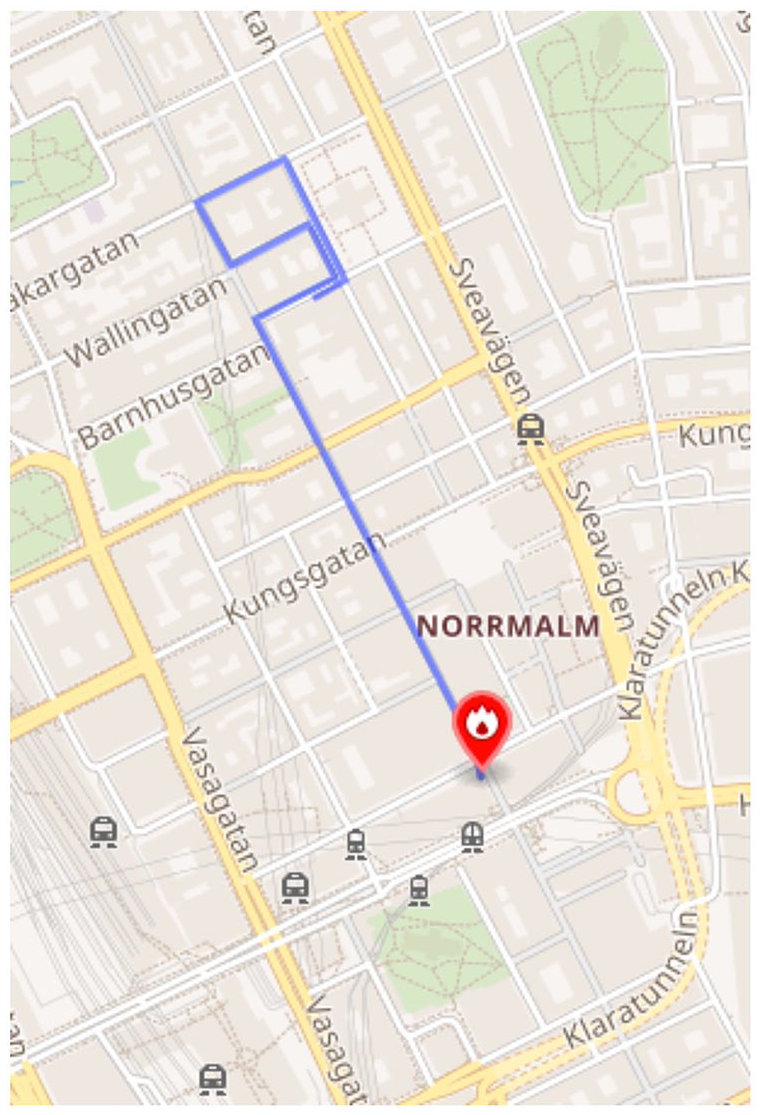
The path of the truck used in the attack.
In the subsequent trial, the prosecution presented evidence showing that Akilov had planned the attack since early 2017. Videos showed Akilov pledging allegiance to the Islamic State. The motive for the attack was to punish Sweden for its participation in the fight against the Islamic State. The court sided with the prosecution, and sentenced Akilov to life in prison for five murders, attempted murder of 119, endangerment of twenty-four and terrorist crimes. Due to the timing and location of the attack, an unusually large group of people heard and saw the events directly.
Data and Research Design
Outcome Variables
We utilize panel data to study the effect of the Stockholm attack on a range of different outcome variables. Specifically, we take advantage of data from the Citizen Panel collected online by the Laboratory of Opinion Research (LORE) at the University of Gothenburg. The panel has existed since 2010 and focuses on political attitudes. We primarily make use of data from three different waves to study the attack: a first wave (
The pre-attack data, including past values of the dependent variables and covariates (see below), are mainly from the
To capture the overall effect of the attacks on attitudes, we study a variety of different outcome variables that previous research has found to be affected by terror events. For each outcome variable we consider both the effect at
We also consider a question on whether the respondent thinks he or she was personally affected by the attack. We use this as a rough validity measure for our indicators of physical proximity (see below). Although a noisy measure—respondents might of course think they are affected for different reasons other than geographic proximity—we at least expect respondents who were physically proximate to the attack to, on average, acknowledge that they were personally affected to a larger extent than less proximate respondents. It is still an open question, however, to what extent these respondents felt more anger/anxiety or were more strongly affected in their attitudes.
All outcome variables were measured with Likert scales with between 5 and 7 categories. The final variables were normalized (min: 0, max: 1). See the Supplemental Appendix for details about the questions used.
Measuring the Effect of Geographical Proximity
Our data give us a unique opportunity to study the effect of being geographically close to a terrorist attack. Our post-attack survey (
We study the effect of geographical proximity in three different ways that taken together should give a good indication of the overall effect. Previous studies gauging the effect of proximity have often used relatively blunt measures, like whether a respondent lives in an area close to the attack (Huddy et al., 2005). Measures like this do not necessarily capture whether a respondent was in the area at the time of the attack or how close he or she was. We aim to use a more nuanced approach. First, we use a question in the post-attack survey indicating whether a respondent was in central Stockholm at the time of the attack. “Central Stockholm” in this sense refers to a geographical area that encompasses parts of Stockholm roughly within 3 to 4 km of the attack (Drottninggatan is located right in the middle of central Stockholm). People in this area would be affected either by directly observing the events or by experiencing the ensuing chaos in the aftermath of the attack (including police, helicopters, closed down public transportation, and so on). In total, about 8.5% (about 1,800 individuals) of respondents in our sample reported that they were in central Stockholm at the time of the attack and are hence categorized as “close” according to this variable. Of these, about 60% are residents in the Stockholm region. We call this variable
Second, we construct a measure of physical proximity based on respondents’ reports of how they were informed about the terrorist attack. Our reasoning is the following. For people very close to the attack, the first indication of the event would be some direct observation of the attack and/or its aftermath. People who were not geographically proximate to the event would instead find out about the attacks by some other channel, presumably via media (for instance, by a newsflash on their phone or via the radio). We utilize an open-ended question in the post-attack survey (
Our data are hence uniquely suited to study the effect of geographical proximity. First, we have both pre- and post measures of all main variables of interest. Second, instead of relying on indirect measures of “closeness,” like whether a respondent lives close to the area targeted by an attack, our measures indicate whether a respondent was actually present in central Stockholm at the time of the attack. Moreover, our
Estimating the Effect of Geographical Proximity
We define the average causal effect of being geographically close to the attack, denoted by
In this regard, our different measures of geographical proximity have different advantages and disadvantages. For
For
We view
Results
Overall Effects of Attack
Before turning to estimating the effect of physical proximity we briefly consider the overall effects of the attack in the sample. How did the Swedish population respond to the attack on Drottninggatan? Figure 2 shows respondents’ emotional response to the attacks at
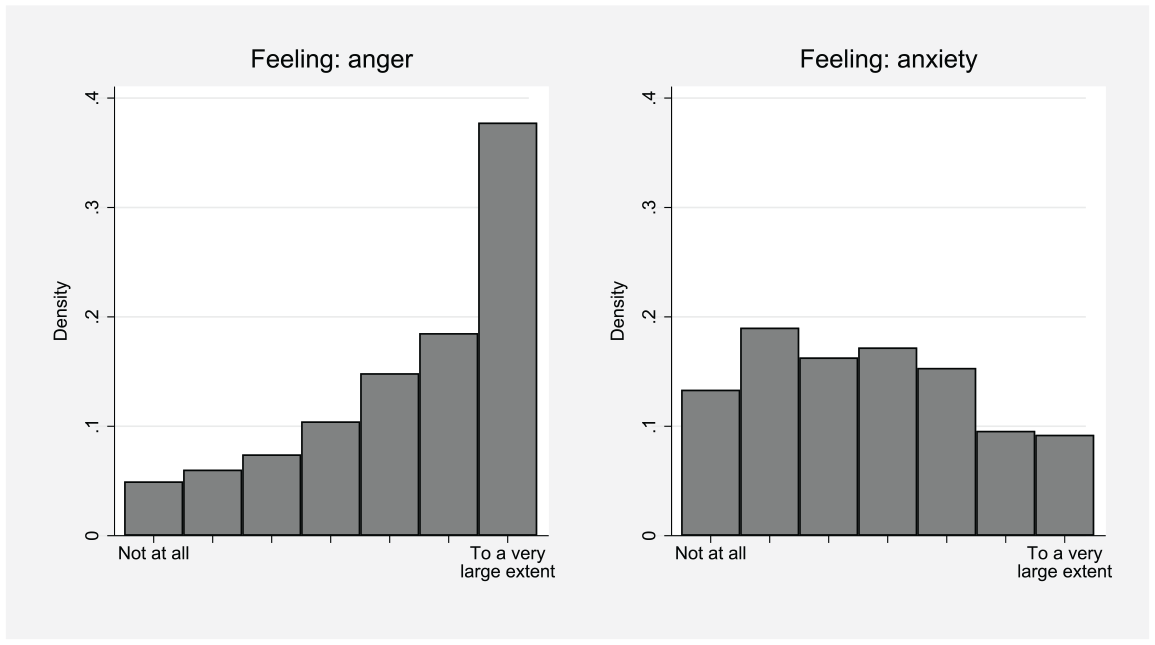
Emotional response to the attack at
Clearly, many respondents felt anger: almost 40% selected the highest response option. The anxiety measure, on the other hand, is more evenly distributed. This is in line with previous research finding strong anger-responses to terror events (Vasilopoulos et al., 2018, 2019).
We also examine the general trends with regard to political attitudes in the sample by looking at the average within-respondent change between
As shown in Figure 3, respondents express stronger national identity after the attack, compared to the pre-attack interview. Respondents in the post-attack interviews are also more likely to view Muslims as a threat and report considerably more support for surveillance measures (security attitudes). We see slightly negative trends with regard to government and parliamentary trust. We note that the trends should not be taken to directly equal the overall causal effect of the attack, given that we have no way of accounting for other potential sources of attitude change between
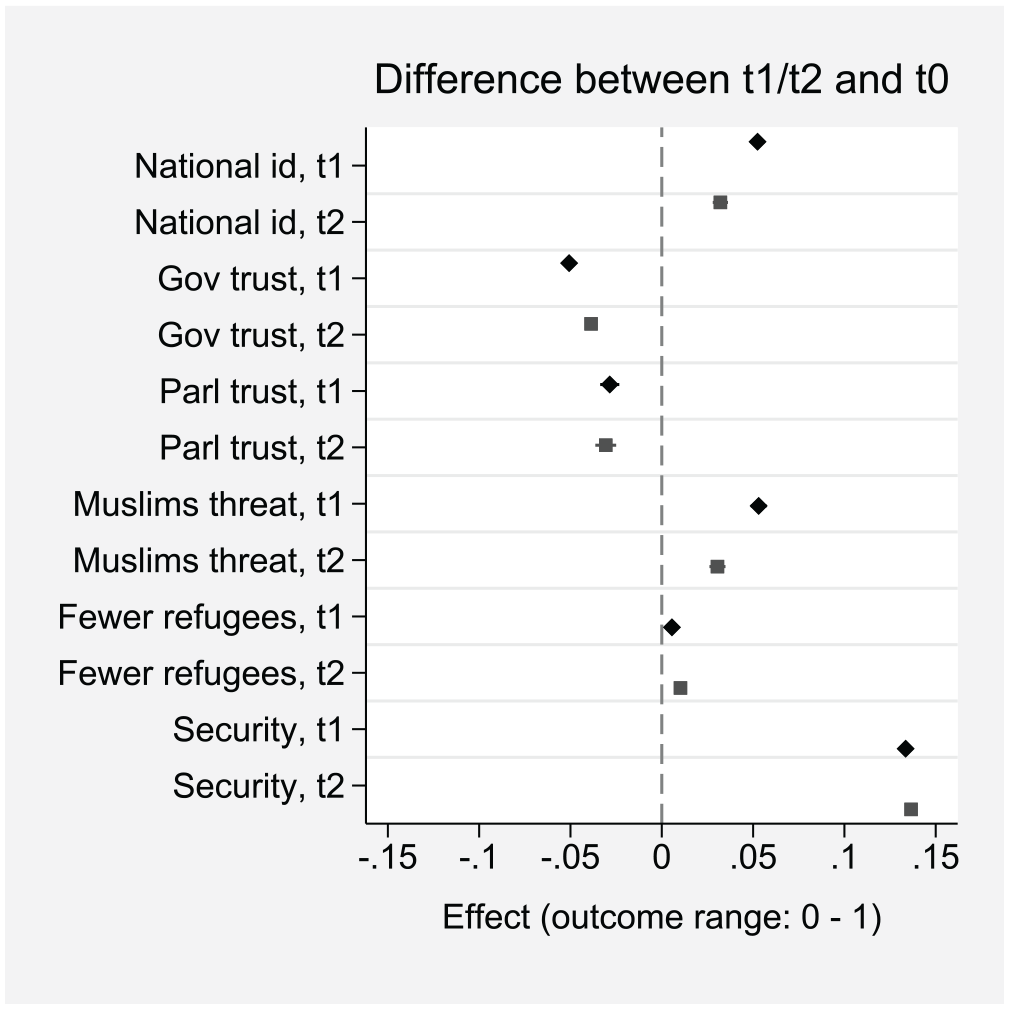
General trends in the sample: Within-respondent attitude change between
To complement these analyses, we examine to what extent emotional responses to the attack are associated with attitude change. This is a strategy that is used in much previous research (see Huddy et al., 2005; Vasilopoulos, 2018; Vasilopoulos et al., 2018, 2019), where we regress our set of attitude outcome variables on respondents’ emotional response to the attack and a large set of covariates, including each dependent variable measured at or before
Taken together, these analyses show that respondents reacted with anger and, to some extent, anxiety to the attack. Moreover, we see positive overall changes with regard to the national id variable, the Muslims threat variable, and the security variable, and we show that these changes are correlated with strong emotional reactions. Hence, these results are similar to the overall effects of terror highlighted in previous research (Woods, 2011), and provide suggestive evidence that the attack affected respondents’ emotions and attitudes both in the short (
Effects of Physical Proximity
We now move on to the main question for this paper: did physical proximity affect people’s reactions to the attack? We start by considering the three outcomes related to respondents’ immediate reaction to the attack. First, we consider the question of whether proximate respondents acknowledge that they were “personally affected” by the attack. As described above, we consider this as a rough validity check for our measures of physical proximity. We then study whether proximate respondents felt more anger and anxiety than similar less proximate respondents. We show estimates for all three proximity measures,
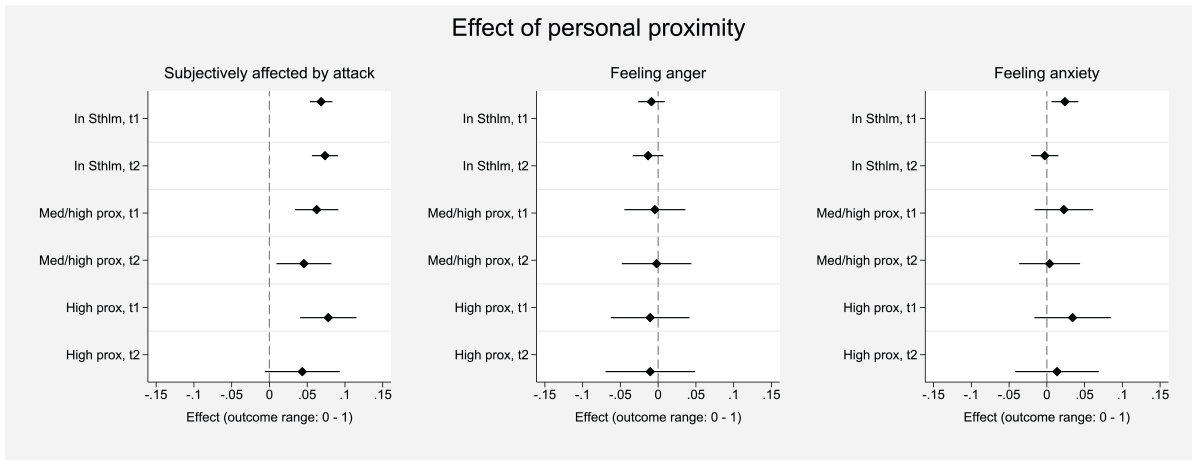
“In Stockholm” (
The left-hand graph shows that our proximity measures seem to have face validity: respondents coded as “proximate” also acknowledge that they were personally more “affected” by the attack than other respondents. This is true both for respondents who were in central Stockholm (compared to other respondents in Sweden), and for respondents who were highly proximate to the attack (compared to other respondents in central Stockholm). However, in general, the emotional responses are not substantively stronger for proximate respondents, neither right after the attacks (
While proximate respondents did not have substantively stronger emotional reactions than other respondents, it is still possible that the attacks caused larger attitude changes in the former group, possibly by some other mechanism. To investigate this, Figure 5 displays the matching estimates for
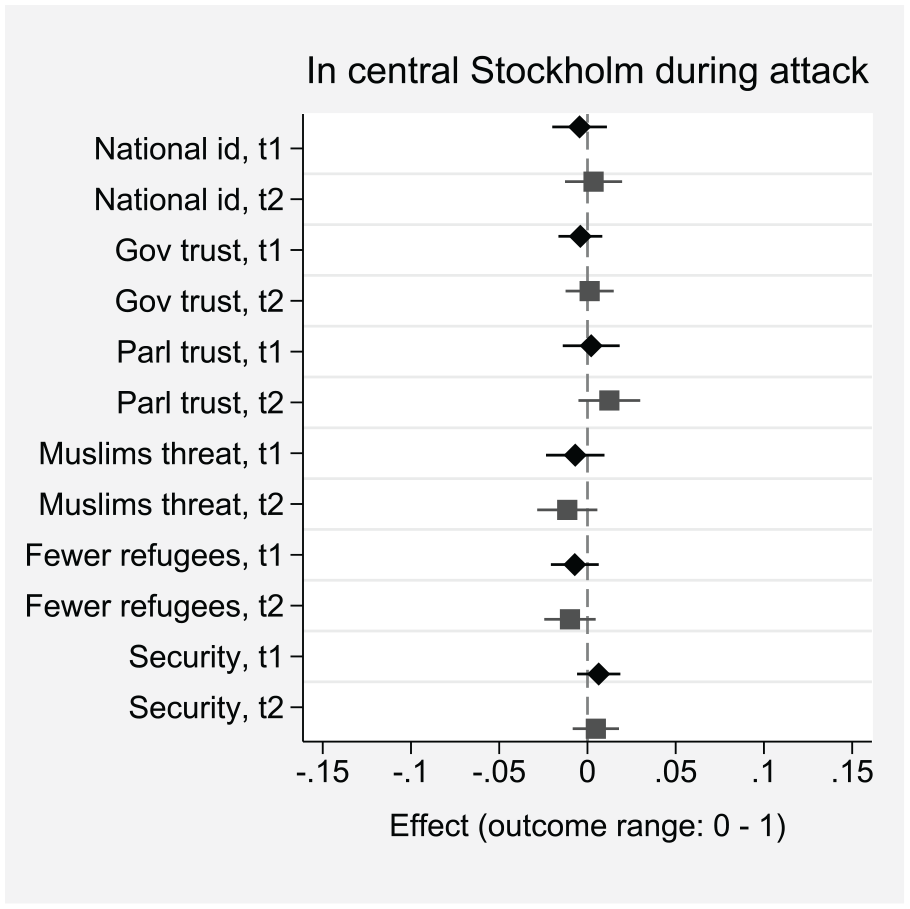
“In Stockholm” (
The results show no indication of a proximity effect for respondents who were in central Stockholm at the time of the attack for any of our attitude outcomes. All coefficients are very close to 0 and the confidence intervals exclude effect sizes larger than 0.05 in either direction. Overall, this amounts to a series of precisely estimated null-effects. Given the range of different potential effects captured by our outcome variables, and given the large sample size, this is strong evidence that the attack did not cause larger attitude changes for respondents who were in central Stockholm.
Maybe being in central Stockholm was not enough? Next, we focus on respondents who were very close to the attack, as measured by
As indicated by Figure 6, we find little evidence of this being the case. Based on much previous research, we should expect stronger (in this case more positive) effects of physical proximity. The only significant coefficients, however, are for the trust in parliament measure. The point estimates are small, indicating a
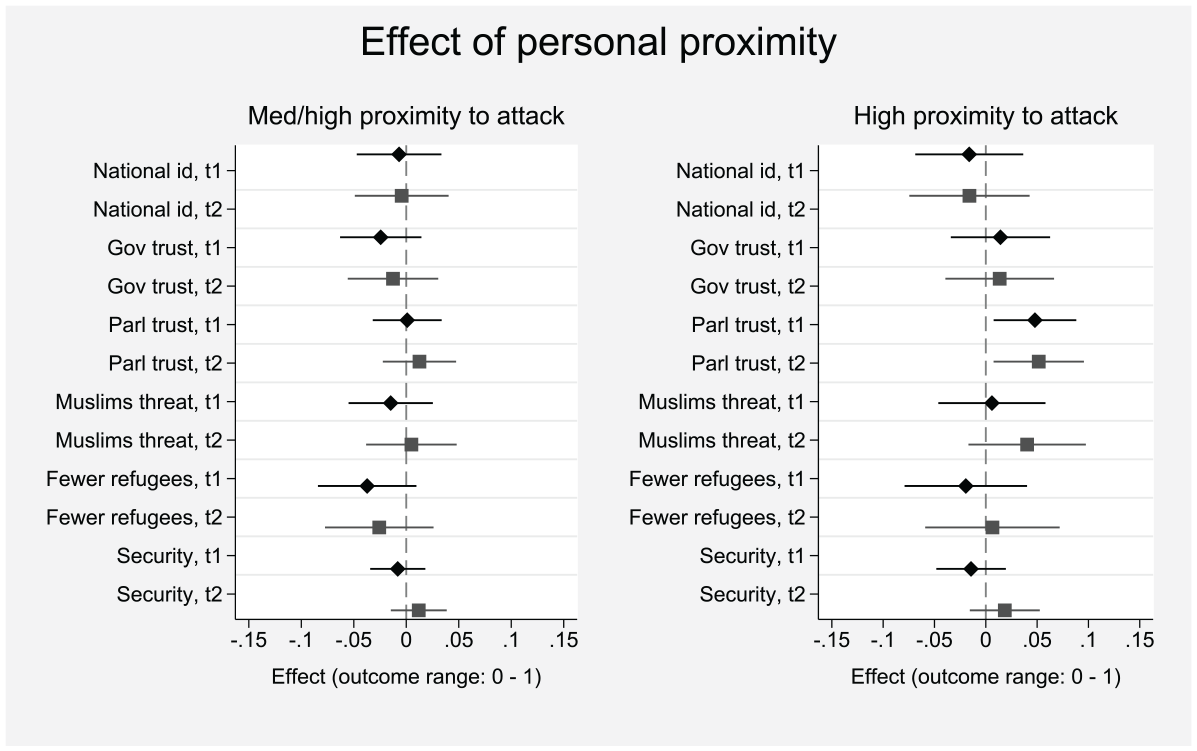
OLS estimates.
As a robustness check, we also estimate the effect of
Long-Term Effects
Maybe some of the effects in the case of proximate respondents took longer to materialize? Such divergence over time could happen either because effects subsided faster among those farther away or because of delayed increases among the individuals close to the attack. Thus, as an additional robustness check, we explore the possibility of a long-term proximity effect by utilizing an additional panel wave,
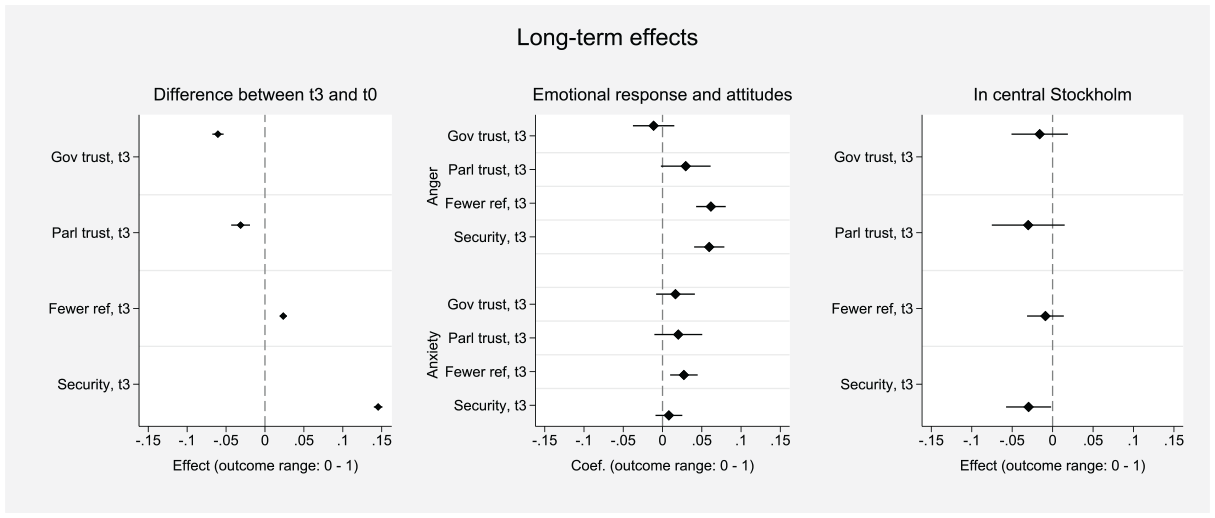
Outcomes measured 6 to 7 months after the attack (
As shown in the figure, the overall patterns resemble the main analyses, even 6 to 7 months after the attack. The general within-respondent trends are similar to those in Figure 3 and we find some positive, although slightly attenuated, associations between emotional response at
Conclusions and Discussion
Using a novel panel with over 20,000 respondents interviewed before and after the terror attack in Stockholm in April 2017, this study explores the effects of terror events on emotions and attitudes. The data is unique in that it includes a large group of individuals with first-hand experience of the dramatic and vivid event, allowing us to precisely study the effects of physical proximity.
We find several interesting suggestive effects, as well as multiple equally interesting null-effects. First, it is clear that many respondents had strong emotional responses to the attack, especially in terms of anger. By regressing several different outcomes on the emotional measures, while controlling for past values of the dependent variable, we also show that these responses are associated with attitude changes, some of which seem to persist even 6 to 7 months after the attack.
Second, we find no evidence that physical proximity was an important factor driving either emotional responses or attitude changes. While respondents close to the attack acknowledge that they were personally affected, they do not express higher anger or substantially higher anxiety than other respondents. Furthermore, they do not report larger attitude changes than other respondents on a wide range of different outcomes, either in the short-term, medium-term or long-term. These results are consistent across all our three proximity measures. Given the nature of our proximity measures, each with their different set of advantages, we view the lack of significant effects as highly informative. If proximity is an important factor with regard to these outcome measures, we should find effects for respondents who actually witnessed the attack. The fact that we do not makes us question the importance of proximity-based vividness as an explanation for changes in politically relevant attitudes.
Prior research has convincingly demonstrated that reactions to terrorist attacks have a geographic component. In general, people in the same country are affected the most, with reactions gradually declining as the radius grows to people in countries farther away (Böhmelt et al., 2019). There is also some evidence of varying effects within countries where people in region of the attack are influenced more (Huddy et al., 2005).
However, there is considerably less consensus on the reasons for these geographical effects. One explanation centers on the vividness of personal experiences. While it is rare to be a victim of a terrorist attack, it is much more common to have a personal connection to the terrorist attack. For example, in a study conducted with Long Island respondents, around 60% reported that they knew at least one victim from the attacks on 9/11 (Huddy et al., 2002a). If the definition of personal proximity is broadened to also include knowing someone who was near an attack, the number increases even further. In our study, we focus on the vividness explanation, and even though we rely on a precise operationalization of the concept, we find little support in favor of this view. Another and perhaps a more plausible explanation for geographic effects in previous research focuses on communication. According to this view, the more people are exposed to information about attacks in the news, the more their attitudes and emotions are influenced (Shoshani & Slone, 2008). Given the logic of the news media, where news events closer to the news consumers are reported on more extensively, differential reactions depending on distance—especially between people in different countries—has a straightforward explanation.
One potential limitation with our study concerns the proximity measures. A possibility is that people with the strongest attitudinal or emotional reactions might exaggerate their closeness. If this were true, however, we should see a stronger relationship between proximity and the other measures. That is, we would find upwardly biased estimates. But since there is little evidence of a proximity effect in the first place, it is presumably not a threat to the validity of the study. Moreover, if exaggerated closeness were a concern, we believe that this would be a bigger problem for the direct question of where respondents were at the time of the attack (
This leads us back to the “elusive” vividness effect (see Taylor & Thompson, 1982). Over the last years, several influential experimental studies in psychology and other social science disciplines have drawn increased scrutiny, where many replications have failed in spite of efforts to implement procedures that are the same as the original experiments (Camerer et al., 2018; Open Science Collaboration, 2015). The failure to replicate includes the Klein et al. (2019) study of Terror Management Theory (TMT) (Greenberg et al., 1994). Across the 21 replication experiments, subjects who were reminded about their own death were not more likely to defend their worldview, which they should according to TMT. We do not know whether or not people close to the terrorist attack in Stockholm were reminded of their own death, but given the destruction and chaos they witnessed first hand, it is plausible that many were. Yet in spite of a vivid experience, which may have increased thoughts about death, we document little support for the idea this group was affected more. Obviously, our study does not nullify previous findings on vividness effects, but it does underline the elusiveness of such effects.
Lastly, a concern is the extent to which our findings are generalizable to other settings and other forms of terrorism. The overall effects of the terrorist attack on the whole sample are in line with prior research on the consequences of attacks. That is, the Swedish population is reacting largely as people elsewhere to this type of event. This fact alone does not guarantee that proximity effects are absent or very small in other settings, but it does demonstrate that the Swedish reactions, in general, are comparable to other populations. Another reason for thinking that the vividness effect is elusive also elsewhere has to do with human nature. The vividness explanation centers on psychological processes that, if present, should be present in countries across the world. For these reasons, we believe it is plausible that terrorism inspired by, for example, far-right extremism would lead to a similar conclusion on the effects of close personal proximity. However, that said, even psychological processes are context-dependent and country-specific (e.g., Triandis, 1978), some more (Buss, 1989) than others (Aknin et al., 2013), and we therefore encourage further studies on potential proximity effects in other settings.
Supplemental Material
sj-pdf-1-cps-10.1177_0010414021997162 – Supplemental material for Personal Proximity and Reactions to Terrorism
Supplemental material, sj-pdf-1-cps-10.1177_0010414021997162 for Personal Proximity and Reactions to Terrorism by Mattias Agerberg and Jacob Sohlberg in Comparative Political Studies
Footnotes
A Appendix A.l Survey details
The t1 survey was rolled out on the eve of the attack (April 7) to a portion of respondents participating in the Swedish Citizen panel. In total, the panel has around 60,000 active members. Information about the Citizen panel (including technical reports of each survey wave) can be found at https://www.gu.se/en/som-institute/the-swedish-citizen-panel. Around l6% of the total tl sample responded on the 7th. The rest of the data collection for the tl wave was carried out in accordance with the usual procedure for the Citizen panel, by rolling out two additional survey waves a few days later. Over 90% of the data was collected within a week of the attack. The exact response dates are shown in the table below. We find no evidence that t1 response wave predicts what respondents reported with regard to our proximity measures (C1, C2, and C3), or that respondent characteristics are different on average between the waves. Respondents answering the survey directly after the attack versus a few days later therefore do not differ on observables and do not show different reporting patterns as to whether they were proximate to the attack. 6
The t2 survey was rolled out starting two weeks after the attack. The data was collected as a regular part of the Citizen panel in a total of four survey waves. Most responses were collected by May 5, a month after the attack. We also show the field periods for the other waves that were used to get past covariate values for some respondents. Finally, we show the exact question wording used for our main measures (translated from Swedish) in Table 4.
A.2 Descriptive statistics
This section shows sample characteristics for the t1 and t2 wave, as well as basic descriptive statistics (pre-attack) for our main outcome variables.
Acknowledgements
The authors would like to thank Maria Andreasson, Peter Esaiasson and Johan Martinsson for their help and suggestions during the data collection. The authors are also grateful for the comments from participants at workshops in Hindås and Reykjavík. The manuscript has improved considerably thanks to the detailed feedback from reviewers and editors.
Declaration of Conflicting Interests
The authors declared no potential conflicts of interest with respect to the research, authorship, and/or publication of this article.
Funding
The authors disclosed receipt of the following financial support for the research, authorship, and/or publication of this article: Funding for this project was provided by the Swedish Civil Contingencies Agency (Grant number 2017-2860) and NordForsk (Grant number 88043).

Supplemental Material
Supplemental material for this article is available online.
Notes
Author Biographies
References
Supplementary Material
Please find the following supplemental material available below.
For Open Access articles published under a Creative Commons License, all supplemental material carries the same license as the article it is associated with.
For non-Open Access articles published, all supplemental material carries a non-exclusive license, and permission requests for re-use of supplemental material or any part of supplemental material shall be sent directly to the copyright owner as specified in the copyright notice associated with the article.
