




Abstract
Protest against authoritarian rule is a well-studied phenomenon in the social sciences, but mass rallies in favor of authoritarian regimes have received only limited scholarly attention. While previous work has portrayed authoritarian regimes as characterized by mass apathy and political demobilization, we show that this is only partially true today. We argue that autocrats mobilize their supporters selectively as a strategic response to political threats. Rallies increase collective action costs for rivaling elites, opposition movements, and bystanders because they signal regime strength (deterrence) and curb mobilization efforts against the regime (repression). Nevertheless, the mobilization of supporters is costly, as autocrats have only imperfect information about current levels of support, rallies require organizational capacity and clashes between supporters and opponents can get out of control. Drawing on the first global data set with information about pro-government rally events in all authoritarian regimes from 2003 to 2015, our quantitative analysis reveals systematic patterns in the occurrence of rallies in line with our theoretical framework. We find systematic increases in pro-government mobilization during episodes of large domestic and regional opposition mobilization, high coup risk, and prior to elections.
Introduction
Authoritarian governments, by definition, exclude large parts of the population from political decision-making and restrict civil rights and liberties. It is therefore tempting to believe that autocratic leaders do not enjoy high popularity among ordinary citizens. Nevertheless, while many people certainly acquiesce to autocratic rule, others join mass rallies to express their support in public. In Russia, for example, the Kremlin mobilized hundreds of thousands to participate in almost one hundred pro-Putin rallies in March 2012 (Ross, 2015, p. 4). The Iranian government rallied thousands of supporters after the controversial presidential elections and widespread anti-regime protest in 2009. One of the most prominent cases is Turkey, where civilians took to the streets in July 2016 to fend off a coup attempt against current president Erdoğan, despite the country’s recent move toward competitive authoritarianism (Esen & Gumuscu, 2017). At the same time, authoritarian governments do not always welcome demonstrations in their support. The Chinese government censors bottom-up efforts in social media networks, even those that call for pro-government rallies (King, Pan, & Roberts, 2013) and the Malaysian security forces deployed water cannons against pro-government protesters that supported former Prime Minister Najib Razak after a corruption scandal in 2015.
While the dynamics of anti-government protest under autocracy are extensively studied, we know relatively little about pro-government mobilization. Previous work emphasized that authoritarian regimes—in contrast to totalitarian regimes—are characterized by demobilization and mass apathy due to the lack of an all-encompassing ideology (Linz, 2000). Pro-government mobilization is also largely missing in current debates about “competitive authoritarianism” (Levitsky & Way, 2010) that center around political institutions, co-optation, and state repression. Despite notable exceptions (e.g., Robertson, 2010; Smyth, Sobolev, & Soboleva, 2013), existing studies of comparative authoritarianism do not adequately explain the timing of pro-government rallies and how they can help autocrats survive episodes of political contention. In addition to that, there is a noticeable lack of systematic, cross-national empirical evidence beyond single-country case studies.
This study aims to shed more light on this phenomenon and makes two important contributions to the literature on comparative authoritarianism. First, we develop a theoretical framework to explain the selective occurrence of pro-regime rallies in autocracies. 1 Based on the observation that autocratic governments have considerable discretion over mobilization processes, we apply a state-centered perspective and argue that pro-government rallies are part of autocrats’ action repertoire to respond to political threats. In our view, rallies fulfill two main functions. They provide a signal of the incumbent government’s strength to deter political challengers. They are also an instrument to repress ongoing mobilization efforts by the opposition because violent acts by government supporters during street clashes are usually tolerated and go unpunished. As a consequence, rallies raise collective action costs for challengers and reduce their chances of successfully challenging the regime. Depending on who challenges the current regime, we identify three strategic goals of pro-government mobilization: coup-proofing against threats from elite members, diffusion-proofing to thwart mobilization of the masses, and counter-mobilization against dissidents. We argue that rallies are especially likely in situations in which more direct means of coercion will lead to a backlash against the regime. However, we emphasize that autocrats face considerable costs when mobilizing their supporters. Rallies require knowledge about current levels of support, organizational capacity, and the ability to monitor participants; clashes between supporters and dissidents can quickly escalate to open street violence. With these trade-offs in mind, we derive expectations regarding the occurrence of pro-government mobilization.
Second, we provide empirical evidence from one of the first attempts to systematically collect event data on pro-government rallies for a global sample of authoritarian countries. In the descriptive part of our analysis, we compare pro-government rallies to anti-government protests and find that the former are more violent and, not surprisingly, less subject to state repression. Moreover, we find that rallies occur more frequently in some authoritarian subtypes than in others and that there is considerable variation between leaders. In the main part of our analysis, we propose a first empirical model to explain variation in the occurrence of rallies within autocratic regimes. In line with the expectations from our theoretical framework, the regression results show that rallies are more likely in times of large domestic and regional opposition mobilization, high coup risk, and prior to elections. We discuss the implications of these findings for our understanding of mobilization under authoritarianism and the repressive function of nonstate actors in authoritarian regimes.
Mass Support in Authoritarian Regimes
According to early comparative work, political mobilization in authoritarian regimes is the exception and not the rule. 2 As stated in the influential typology of non-democracies by Linz (2000) published more than 40 years ago, political demobilization and apathy are defining features of authoritarian regimes. In contrast to totalitarian countries and so-called “movement-regimes” (Tucker, 1961) in which an all-encompassing ideology propagates continuous political engagement, authoritarian regimes lack the ideological foundations to sustain high levels of mobilization (Linz, 2000, p. 165). Therefore, as Linz (2000) argues, authoritarian regimes tend to converge on low levels of political mobilization over time (p. 167). In a nutshell, the dominant mode of interaction between rulers and their subjects in authoritarian regimes is “compliance rather than active support or enthusiasm” (Schmitter, 1972, p. 91).
Nowadays, only few regimes qualify as totalitarian, but authoritarian regimes are a persistent element of today’s political landscape. More recent contributions note that those regimes have changed in important ways over the past decades. Modern autocrats increasingly introduce formal democratic institutions but deny fair political competition. Still, the basic notion of demobilization as a characteristic feature of authoritarian regimes remains untouched by recent discussions about “hybrid regimes” (Diamond, 2002), “electoral authoritarianism” (Schedler, 2013) or “competitive authoritarianism” (Levitsky & Way, 2010).
A closer look at the power base of modern authoritarian regimes can help understand the apparent lack of attention to pro-government mobilization. Most scholars agree with Svolik (2012) that to stay in power, autocrats need to ensure the support of a small elite coalition and keep down the masses. Authoritarian rulers constantly fear being toppled due to their incapacity of making credible commitments to powerful elites and a lack of information about current levels of public support (Wintrobe, 1998). Policy-making in authoritarian countries is thus heavily constrained by the threat of a revolutionary overthrow or a coup d’état (Acemoglu & Robinson, 2005). Assuming that autocrats’ main goal is to stay in power, they are well advised to secure the loyalty of a small support coalition at the expense of the well-being of the larger population (Bueno de Mesquita & Smith, 2011). This mode of policy-making creates low incentives for citizens to publicly praise their political leaders. From this perspective, the mobilization of supporters is a challenging task with uncertain benefits for autocrats. In an environment in which preference falsification makes it difficult to identify loyal supporters and where elite actors are the most powerful contenders, autocrats should rely on other means such as the direct use of repression and coercion to defend their rule.
In line with this basic conception of authoritarian politics, numerous studies have analyzed how autocrats try to minimize the risk of being toppled by making strategic use of political institutions to monitor and co-opt political elites (Gandhi & Przeworski, 2007; Magaloni, 2008; Wright and Escribà-Folch, 2012) and devise strategies to repress popular dissent (Davenport, 2007; Escribà-Folch, 2013; Lust-Okar, 2004). Recently, studies that highlight the relevance of claims to legitimacy for the persistence of autocratic rule have gained momentum (Dukalskis & Gerschewski, 2017). Legitimacy among the public can take different forms, such as passive obedience or tolerance; therefore, it does not require mass demonstrations of public support. In sum, the literature on comparative authoritarianism tells us little about the conditions under which autocrats mobilize their supporters. Before we outline how pro-government mobilization can be used as a strategic means to increase the chances of regime survival, we turn to more specific contributions that shed light on different aspects of this phenomenon.
First of all, we know that some people have good reasons to support autocratic leaders. Certain social groups may benefit from existing clientelist structures or patronage networks. Therefore, members of these groups fear changes to the status quo and “worse alternatives,” as, for example, a leader from a different ethnic group (Padró i Miquel, 2007). 3 Other individual-level sources of support are the exposure and receptiveness to state propaganda (Geddes & Zaller, 1989) as well as certain personality traits such as agreeableness (Greene & Robertson, 2017). Surveys with pro-government rally participants in Russia underline the diverse motivations for turnout, where few participants claim that they were participating involuntarily (Smyth, Soboleva, Shimek, & Sobolev, 2015). Despite apparent difficulties to identify participants’ true motivations with this methodological approach, “civic duty” appears to be a strong driving factor. 4 These studies offer a first glance at the micro-level foundations of authoritarian support. However, rallies require collective action and organization; individual motivations are not sufficient to explain the occurrence of pro-government rallies.
Classical resource mobilization theory highlights the relevance of organizations for the coordination of collective action (McCarthy & Zald, 1977). Authoritarian regimes deliberately establish political organizations and support them. Party organizations, for instance, can provide the networks and personal ties needed to organize collective action (Geddes, Wright, & Frantz, 2018; Magaloni & Kricheli, 2010). Besides parties, there are other regime-affiliated organizations that can assume this function and mobilize regime support in civil society. Robertson (2009) refers to such organizations as ersatz social movements because they possess the characteristics of typical social movements but “are deliberately designed, created, organized, supported, and, if need be, marginalized, by important regime players” (p. 545). Kasza (1993) makes a similar point about so-called administered mass organizations in single-party and military regimes. These entities control a broad range of societal groups and can mobilize support for government policy if needed. Youth organizations such as the Young Guard in Russia constitute one prominent example of this type of organization. Still, similar organizations exist in various types of authoritarian regimes and their mere existence does not tell us when to expect street protest.
Finally, there is anecdotal evidence from authoritarian countries in Eastern Europe and Russia, in particular, that provides more specific insights into the role of pro-government mobilization. According to Koesel and Bunce (2013), mass rallies were part of a “diffusion-proofing” strategy to prevent the spread of anti-regime protest waves such as the Color Revolutions (p. 758). In Belarus, for instance, President Lukashenko recruited students into the Belorussian Republican Youth Union and celebrated pro-government mass events to prevent the outbreak of a Color Revolution (Korosteleva, 2009). Similarly, during the 2000s, the Kremlin took an active role in the building-up of state-dependent civil society groups such as the youth movement Nashi and the Russians People’s Front with the aim to provide visible support in the streets (Smyth et al., 2013, p. 27). This decision was a reaction to increasing political competition and the Color Revolutions in Georgia, Ukraine, and Kyrgyzstan that raised the specter for an electoral defeat for Putin and United Russia (Horvath, 2011; Robertson, 2009). Rallies aimed at maintaining an image of strength during times of elections (Robertson, 2010; Smyth et al., 2013). According to Finkel and Brudny (2012), the success of pro-government movements in preventing a Color Revolution in Russia was not only due to their organizational capacity but also due to their ability to mimic nonviolent protest tactics used by color revolutionaries in other countries.
Although the existing literature gives us partial insights into the role of pro-government mobilization in autocracies, our knowledge remains scattered and incomplete. We lack a comprehensive theoretical framework and a systematic examination of empirical patterns to better understand under what conditions rallies occur, and why autocratic rulers might have incentives to foster (or suppress) them. Based on case-based evidence alone, it is difficult to know whether we can identify more general patterns in the occurrence of rallies, in particular, as the available evidence is mostly limited to a single region (Eastern Europe). In what follows, we develop a theoretical framework that connects rallies and authoritarian politics. We conceptualize the mobilization of supporters as a strategic decision made by autocratic governments and highlight the different ways in which it could help to forestall threats to the survival of the incumbent regime, while potentially having adverse consequences for authoritarian governments. Our state-centered perspective not only allows us to identify the conditions under which we can expect increased levels of pro-government mobilization but also explains why pro-government mobilization is not always autocrats’ preferred choice.
The Argument
In the following, we use a simple cost–benefit framework to describe autocrats’ decision to rally their supporters. We argue that rallies can help to deter and repress threats to regime survival. We distinguish between three sets of potential challengers: (a) powerful elites with the ability to stage a coup d’état, (b) dissident movements with the capacity to initiate a revolution, and (c) bystanders who have to decide whether or not to join the dissident movement. 5 While all challenger groups are potential targets of the regime strength signal, the repressive component mostly applies to dissident movements. After having outlined the potential strategic advantages of pro-government rallies, we also discuss the expected costs of mobilization. We approach pro-government mobilization from a state-centered strategic perspective for two reasons. First, we know from previous work that autocrats make strategic decisions to counter threats to their rule (Moore, 2000; Weyland, 2016). With respect to collective mobilization, we also know that authoritarian regimes use nationalist demonstrations as a strategic foreign policy tool (Weiss, 2014) and permit a certain degree of anti-government protest to identify potential challengers (Lorentzen, 2013). Second, autocrats have considerable discretion over the organization of rallies and the mobilization of participants. There are cases in which state employees were incentivized to participate in mass rallies by their employers or the government (Beissinger, 2013, p. 586). In other cases, people were simply forced to join mass rallies (Skidmore & Wilson, 2013, p. 40). It is important to note here that we do not dispute the existence of voluntary participation; in fact, people often joyfully join mass rallies. However, given governments’ capabilities to quell unwanted mobilization efforts and the collective nature of rallies, we believe that if we want to understand the timing of pro-government rallies, the right question to ask is, “When do rallies serve the regime’s interest?” Pro-government rallies rarely happen without at least the explicit consent or minimum logistic support from the government.
Our main argument is that rallies serve two main functions. First, they signal strength and mobilization capacity in response to threats to regime survival. Individuals aiming to overthrow the incumbent government such as dissatisfied military officers or dissident activists face a collective action dilemma (Lichbach, 1995): They need to be sure that others join their efforts, as failed attempts to bring down the regime can have disastrous consequences in the form of legal persecution and violent repression. Thus, it is crucial for challengers to correctly assess the incumbent’s current strength and the personal risk involved. However, as Boix and Svolik (2013) observe, potential challengers have only imperfect information about the incumbent’s strength, which is why they have to base their decisions on informative signals. At this point, pro-government rallies come into play. We argue that autocrats rally their supporters to demonstrate strength and mobilization capacity and thereby reduce the perceived likelihood of a successful overthrow. Second, they are a tool to repress mobilization efforts by the opposition. There are many cases in which rallies occur at the same time of protest against the government. Government supporters often attack and harass dissidents, and clashes such as the recent ones in Venezuela leave a number of injured people behind. Rallies thus serve a deterrence function by signaling regime strength and a repressive function through violence exerted by counter-demonstrators. 6 In the following, we describe the effect of pro-government mobilization on the different challenger groups in more detail.
Rallies and the Elites: Coup-Proofing
Looking back in history, the majority of autocratic regimes has been brought down by members of the ruling elite (Geddes et al., 2018, p. 179). Autocrats are well aware of this constant threat and employ a variety of measures to sustain elite support. There are a number of ways to channel these power struggles in the long run, for instance, by establishing political institutions (Gandhi & Przeworski, 2007; Wright and Escribà-Folch, 2012). Autocrats can also mitigate the risk of elite defection through diverse coup-proofing strategies (Belkin & Schofer, 2003). Nevertheless, the threat of an elite-led overthrow cannot be fully eliminated.
When elite members contemplate overthrowing the incumbent ruler, they are well advised to assess the chances of success. The outcome of these strategic considerations crucially depends on the strength of the incumbent regime as it affects the expected likelihood of a successful coup (Belkin & Schofer, 2003). Plotters need to be sure that their efforts will be accepted by large parts of the population and powerful elite groups. Otherwise, a coup attempt might be reversed, for example, via a counter-coup, or the public might demand the reinstatement of the former leader. Coup plotters will thus try to assess the regime’s current strength as accurately as possible. One way of doing so is by taking cues from public dissatisfaction with the incumbent government and the regime’s response. Large-scale anti-government protest, for instance, can be interpreted as a signal for the regime’s weakness and illegitimacy, particularly if protesters use nonviolent tactics and protest occurs near the capital (Johnson & Thyne, 2018; Lutscher, 2016).
Mass rallies in support of the current government should have the opposite effect. They deter coup plotters by demonstrating the regime’s strength and mobilization capacity. This should reduce the challenger’s perceived likelihood of a successful overthrow in the short-term and the establishment of a stable political order in the long run. According to Geddes et al. (2018), parties are particularly effective in mobilizing civilians due to the fact that members of the ruling party have a strong interest in the regime’s survival (p. 103). In simple terms, pro-government rallies can thus be seen as an instrument to increase cohesion among the ruling elite and reduce the likelihood of coup occurrence by leading challengers to believe that the regime is hard to overthrow.
Rallies and the Masses: Diffusion-Proofing
Challenges from powerful elites are not the only threat to autocratic survival. Pro-government rallies can be used in response to challenges “from below.” A key feature of nondemocratic states is that the political preferences of the wider public largely unknown to autocratic rulers (Wintrobe, 1998). In times of political contention, citizens can decide to join or support a dissident movement, do nothing and thus contribute to the preservation of the status quo, or actively support the incumbent government. Broad-based participation is crucial for protest movements to be successful. However, organizing collective action against authoritarian regimes is particularly challenging due to preference falsification. Someone who is willing to express dissatisfaction with the current government in public cannot be certain that others will turn out for protest as well (Kuran, 1989). Once protest has broken out, however, it opens a window of opportunity for future protest. Anti-government protest often diffuses in form of waves or “cascades” (Granovetter, 1978), not only across but also within countries. Bystanders need to be convinced that protesting against the regime is promising and protest abroad increases confidence in the effectiveness of collective action. Often enough, protesters overestimate their chances of success; they simply follow the example of social movements elsewhere (Weyland, 2014).
Autocrats should thus be aware of the danger of being washed away by a wave of contention. Given that protest diffuses across borders, contention in similar countries serves as a warning sign and gives autocrats time to anticipate domestic dissent. Evidence from the 1848 Revolution in Europe (Weyland, 2016) to the Color Revolutions (Koesel & Bunce, 2013) shows that this is indeed the case and leaders pay attention to political events in nearby countries. Koesel and Bunce (2013) state that autocratic leaders make strategic decisions to counter the diffusion of cross-national anti-government movements, a process they refer to as “diffusion-proofing.” Pro-government rallies are one option to close this window of opportunity for regime opponents by affecting the decision of bystanders whether to jump on the bandwagon. Similar to elites that consider overthrowing the regime, rallies signal bystanders that the incumbent regime is strong enough to withstand political challenges. If citizens believe that the incumbent government is too strong to be overthrown, they might refrain from supporting a potentially unsuccessful movement. In Kuran’s (1989) terms, pro-government rallies extinguish the prairie fire before it spreads.
Rallies and the Opposition: Counter-Mobilization
Besides signaling regime strength, pro-government rallies also serve a repressive function in the form of violent counter-demonstrations. Its targets are active dissident organizations such as opposition parties or human rights groups that openly oppose the government and organize collective action. In contrast to the masses or bystanders, members of those organizations have already taken sides; they will remain marginalized politically under the current regime (Ginkel & Smith, 1999). 7 Opposition movements make strategic decisions when and where to organize collective action, taking into account the regime’s use of repression and the likelihood of being successful (Karklins & Petersen, 1993). In many cases, pro-government rallies take place simultaneously. Those counter-demonstrations increase the costs of activism in different ways.
First, pro-government rallies increase the individual risk associated with protest participation as government supporters often engage in violent clashes with anti-government protesters. In Egypt, for instance, Mubarak supporters attacked anti-government demonstrators at Tahrir Square leaving two people dead and many more wounded (Kirkpatrick & Fahim, 2011). The risk of experiencing violence could discourage dissidents from participating in future street protest. In addition to that, the government can plausibly deny responsibility for these acts of violence, as they cannot be attributed to state security forces. Supporters do not necessarily need to be instructed to attack dissidents; it might be sufficient for the government not to punish supporters for committed acts of violence or not to prevent confrontations between supporters and opponents. 8 Pro-government mobilization can thus be seen as a way to outsource repression from state actors to civilians. Images of violent clashes can also hurt the public image of a movement and reduce its public support, no matter which group was actually responsible for the escalation of violence.
Second, rallies can serve to legitimize the violent intervention of security forces. Direct physical repression against peaceful protesters is often seen as a manifestation of the illegitimate nature of the regime’s power. Frequently, it results in increased mobilization or, in some cases, the defection of the security forces (Sutton, Butcher, & Svensson, 2014). To prevent the backfire effect of repression, counter-demonstrations by supporters can help the regime to justify repressive measures in the name of defending public safety and order. This makes it easier to frame the intervention as a necessary act to prevent public unrest initiated by an alleged minority group of dissidents. It is also conceivable that security forces are less likely to defect if they see that certain societal groups approve of drastic measures against dissidents.
Finally, pro-government rallies directly affect the organization of street protest. Mass rallies often take place at public places with cultural significance; regime supporters thus occupy attractive protest venues that could serve as focal points for the opposition. For instance, the Russian movement Strategy 31 was repeatedly denied access to historic Triumfalnaya Square because pro-Kremlin youth groups held events at the same time.
The Costs and Risks of Pro-Government Mobilization
In the previous sections, we have described why mobilizing supporters has strategic benefits to increase the chance of authoritarian survival. It would be tempting to conclude that autocrats simply rally their supporters whenever they are challenged. However, this ignores the difficulties and drawbacks of mobilizing supporters that are often overlooked in existing studies on pro-government rallies. We identify three important challenges during the different phases of mobilization. At the initial stage, autocrats face a collective action dilemma, similar to dissidents that aim at organizing protest against the regime. Once supporters are mobilized, autocrats are confronted with a principal–agent problem in the sense that they have to monitor supporters and, in the case of counter-mobilization, make sure that clashes with anti-regime demonstrators do not escalate. Finally, supporters need to be demobilized once their active support is not necessary anymore. In the following, we briefly describe these different costs (mobilization costs, monitoring costs, and demobilization costs) associated with pro-regime mobilization in greater detail.
Autocrats need to think about how to motivate citizens to turn out for protest in the first place, given the collective nature of rally events. Due to the fact that citizens in authoritarian settings overstate regime support, leaders lack precise information about current levels of popularity and the supply of loyal supporters (Wintrobe, 1998). A weak rally cry without a subsequent massive demonstration of support would be a clear indicator for the regime’s weakness and could even motivate the opposition to intensify its activities. Thus, to assess whether mobilization is a viable strategy at all, autocrats first have to identify potential rally participants. Initial mobilization is exacerbated by collective action problems that apply to street protest organization in general. Even if individuals had a vital interest in keeping the current regime in power, they have incentives to free ride and stay at home, whereas others invest resources to contribute to the collective good (in this case, the survival of the current regime). In a nutshell, although most authoritarian regimes retain some civilian support, motivating supporters to participate in rallies is a challenging task.
To overcome collective action problems, autocrats rely on a mix of three strategies: selective incentives, recruitment through regime-affiliated groups, and propaganda. First, regimes often target potential supporters directly by providing rewards (or punishment) for (non-)participation. Examples of this type of mobilization strategy are financial remunerations for those who participate or direct coercion. For instance, anti-Maidan protesters in the Ukraine were at least in part paid for their participation (Toal, 2017, p. 252). Autocratic regimes tend to target citizens that depend on the regime, for example, public sector employees. In Syria, for instance, text messages were sent out to a large number of citizens and schools were closed to ensure the rally participation of schoolchildren (Zoepf, 2005). A second option is to leave the organization of rallies to regime-affiliated organizations. These organizations can provide a stock of reliable rally participants, choreograph protest performances, and ensure the coherent use of movement tactics. Third, drawing on evidence from Russia, pro-regime rallies are “a well-organized play” (Smyth et al., 2013) in which protest venues have high symbolic and historical value and are accompanied by extensive regime propaganda. Those efforts include instigating nationalist sentiments, fueling ethnic rivalries or personalist appeals, and invoking the regime’s foundational myth. Complementing these mobilization strategies, state-controlled media outlets often vilify anti-government movements, which facilitates the mobilization of people convinced to be supporting a good cause.
Monitoring costs arise once initial mobilization is achieved; the regime has to make sure that rallies go according to plan. While certain levels of violence against anti-government protesters can be “desirable” from the regime’s perspective, uncontrolled street violence and excessive property damages are not. Similar to pro-government militias (Mitchell, Carey, & Butler, 2014), however, supporters are more difficult to control compared with police forces that are trained extensively to closely follow orders from above. This can create principal–agent problems in the form of continuous clashes between supporters and dissident organizations that result in spiraling violence and the radicalization of the opposition. In Malaysia, for example, the security forces used tear gas against government supporters to prevent the escalation of ethnic violence between Malays and Malaysian Chinese during the so-called Malay Dignity rally in 2015. Rallies bear the risk of unintended consequences from the regime’s perspective. We expect the potential for unwanted mobilization to be higher in states with low state capacity or strong segmentation along ethnic lines. In these political environments, mobilization costs should be particularly low as ethnic rivalries can be exploited, but the likelihood of civil war is comparatively high. This helps to understand why the Chinese government censors bottom-up efforts to organize pro-government rallies (King et al., 2013). The risks of mobilization do not outweigh the potential benefits as the Chinese state has the capacity to use other, more direct, repressive means to manage dissent.
Finally, autocrats might face demobilization costs as rally organizers and participants can demand compensation in return for their loyalty. This might require giving leaders of support groups access to high-level positions in government institutions or increasing spending on public policy for supporters. Authoritarian governments have little interest in spending resources on supporters during times in which street support is not needed. Marginalizing supporters once they are organized, however, is at least as difficult as mobilizing them in the first place. According to Østbø (2017), this strategic dilemma explains why the Kremlin appealed to emotions such as fear and anxiety to mobilize supporters instead of rallying them behind a specific political goal. In the long run, the mobilization of feelings leads to apathy and demobilization. The different types of costs described in this section should not be underestimated as they directly influence the regime’s decision to mobilize supporters.
Implications
To sum up the theoretical part, we have outlined how pro-government rallies can help to stabilize autocratic regimes by not only deterring but also repressing challenges from above and below. We also put emphasis on the costs associated with the organization of pro-government rallies as well as the monitoring and demobilization of supporters. In light of these trade-offs, autocrats will decide whether the mobilization of supporters is the right choice to respond to a given threat. Alternative or complementary strategic options are purges of the elite, the co-optation of challengers, direct or subtle methods of coercion and concessions. 9 For instance, leaders who can rely on a loyal and effective repression apparatus would probably prefer repression over mobilization. By contrast, if leaders anticipate a backlash against direct coercion, pro-government mobilization can be used as an instrument to outsource, or maybe even avoid, violent repression.
Given that pro-government mobilization is costly, autocrats are unlikely to make this investment in times of political tranquility. We should therefore see rallies primarily during times of contention, when the regime is seriously challenged but still strong enough to bear the associated costs. In accordance with the three types of challenges described above, the likelihood of observing pro-government rallies should be higher if the risk of a coup d’état is high, if opposition movements organize large-scale anti-regime protest, and when there are upheavals in neighboring countries with the potential to diffuse across borders. The latter is a clear example for the presence of a latent revolutionary risk. More direct means of repression are unfeasible in this situation as would-be protesters cannot be targeted in advance.
In addition to that, we expect higher levels of pro-government mobilization during election periods. A large number of authoritarian regimes hold elections at more or less regular time intervals. Although the chances of a electoral loss are rather low, they induce considerable short-term instability (Knutsen, Nygård, & Wig, 2017; Schedler, 2013). Elections affect all groups of potential challengers. Weak electoral performance serves as an indicator for the regime’s weakness and can trigger not only coup attempts (Wig & Rød, 2014) but also election-related protest (Trejo, 2014). Moreover, election periods convey information about current levels of public (dis)satisfaction (Miller, 2015) and the regime’s mobilization capacity (Cheibub & Hays, 2017). Signaling high mobilization capacity helps to discourage the opposition from challenging the election results as the prospects of political change are low. 10 In addition to that, authoritarian regimes are constrained with regard to the use of direct repression during pre-election periods as they need to maintain the image of free and fair elections (Bhasin & Gandhi, 2013). Pro-government rallies thus avoid the costs of violent repression during election periods while signaling regime strength and exacerbating mobilization efforts by the opposition. Contextual factors such as the presence of a ruling-party, state-controlled civil society organizations, or a charismatic leader should reduce but not eliminate the costs for mobilization.
We would like to emphasize at this point that our framework is tailored toward authoritarian regimes with a minimum of state capacity. In consolidated democracies, political power is usually transferred through free and fair elections. Military takeovers and revolutions are the exception and not the rule, which is why rallies in favor of the government play a less important role. When they do occur, they are more policy-oriented and concern highly contentious debates such as abortion or secession in which the government represents the views of one of the parties of the dispute. 11
Data and Descriptive Results
A new data collection effort allows us to examine the occurrence of pro-government rallies across a large set of cases. We first present rich descriptive evidence and conduct an exploratory data analysis in which we investigate the timing of pro-government rallies. In the main part of the analysis presented in the following section, we test our theoretical expectations.
New Data on Pro-Regime Rallies
Systematic empirical evidence on pro-government rallies is limited. Our knowledge is almost exclusively based on a small number of qualitative case studies focusing on single countries. Those contributions have generated important insights but do not allow for a systematic analysis of patterns in the occurrence of rallies. While several data collections on anti-regime protest exist, we are not aware of any data set with information about pro-government mobilization events for a large sample of countries. 12 In what follows, we provide descriptive evidence from the first effort to collect data on pro-regime rallies in all authoritarian regimes as defined by Geddes, Wright, and Frantz (2014) from 2003 to 2015.
Our research uses the Mass Mobilization in Autocracies Database (MMAD), which contains information on public gatherings of at least 25 people with an expressed political motivation to support the central, regional, or local government. This definition intends to capture a broad set of collective action events without imposing any additional conceptual constraints regarding key actors, tactics, or specific rally goals. Events which are directed against foreign powers are only included if support for, or opposition against, the domestic government is stated. The database does not include activities of pro-government militias or death squads without a clear political motivation other than using violence against dissidents. In addition to that, the MMAD contains events directed against the government using an analogous definition of protest events described above, which allows for comparisons between anti- and pro-regime protest in our analysis below. The database relies on news reports extracted from the LexisNexis database, and sources are limited to three agencies: Associated Press (AP), Agence France Presse (AFP) and BBC Monitoring. The latter is a reporting service that relies mostly on local sources translated into English. Human coders then extract relevant information from the news reports. 13 All in all, the database records 2,117 incidents of pro-government mass rallies in 73 authoritarian countries, corresponding to roughly 13% of all recorded protest events.
Descriptive Evidence
We start our empirical exploration with a detailed descriptive analysis of our data, before later turning to regression modeling to test the implications of our theoretical framework. In this descriptive analysis, we give particular attention to three questions that concern key parameters of interest in protest event research. First, we analyze the frequency of pro-regime mobilization over time to identify possible trends. Second, we compare pro-regime rallies with anti-regime protest, both when it comes to the frequency of these events, but also the use of violence by participants and the state. Third, we explore the use of pro-regime mobilization across different types of autocratic regimes, showing that this strategy is used more often in certain regimes as compared with others.
Figure 1 displays the frequency of monthly reported pro-regime rallies in all authoritarian regimes over the full sample period. The left panel shows the raw number of events per month including a smoothed trend line based on locally weighted regression. Pro-government mobilization peaks during the nuclear crisis in Iran at the beginning of 2006, during the Arab Spring in 2011 and 2012, after the controversial elections in Russia at the end of 2011 and the annexation of Crimea in 2014. We do not find strong evidence for a global trend of any direction over the 10-year observation period. The right panel of Figure 1 depicts the relationship between rallies and anti-government protest by plotting the ratio between the two counts over time. Throughout the observation period, the number of anti-regime protest exceeds the number of pro-government rallies at a ratio of 7:1. Overall, the ratio remains relatively constant over time despite some occasional fluctuations. The fact that the Arab Spring period shows less extreme values in comparison with the left panel suggests a relationship between both types of mobilization. Based on the fine-grained temporal and spatial resolution of the data, we can say that around 33% of all pro-government rallies are instances of direct counter-mobilization, meaning that they occur at the same time and locality as anti-government demonstrations.
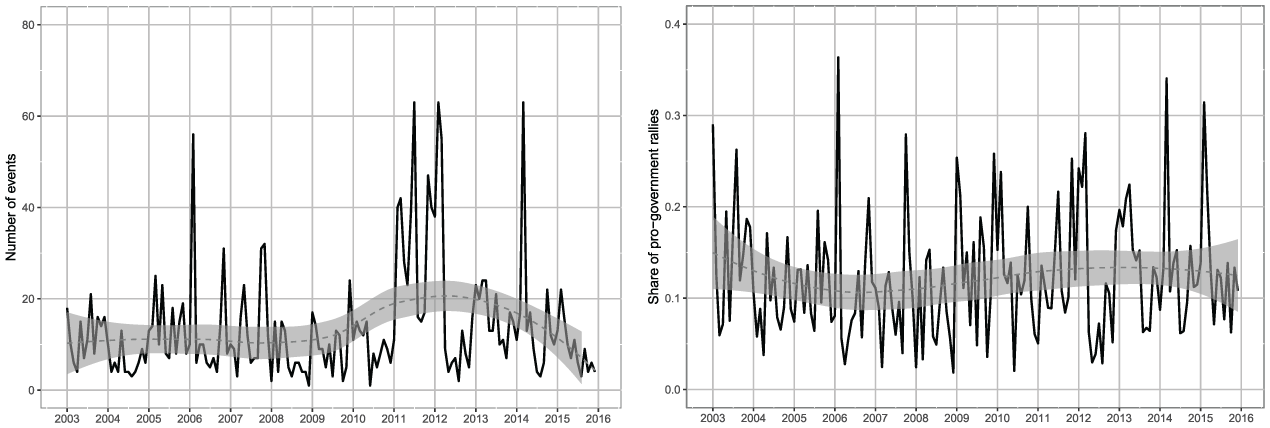
Number of monthly rally events in all authoritarian countries (left panel) and share of pro-government rallies of all protest events (right panel) over time.
In a next step, we look at differences between pro- and anti-government protest events with regard to two dimensions of protest violence: the degree of violence exerted by participants and the state’s response. In the MMAD data, violence by participants and by security forces is coded as an (ordered) categorical variable, which is why we use mosaic plots in Figures 2 and 3 to visualize the differences between both types of protest. 14 The plot shows two rows of rectangles for the two protest types and four columns that represent the different degrees of violence as recorded in MMAD. Figure 2 focuses on the behavior of protest and rally participants, and Figure 3 shows the distribution of security force engagement during the protest events. The size of the tiles represents the relative frequency of the respective combination of characteristics, and shading indicates significant deviations from conditional independence based on simulated permutation distributions (Zeileis, Meyer, & Hornik, 2007). 15
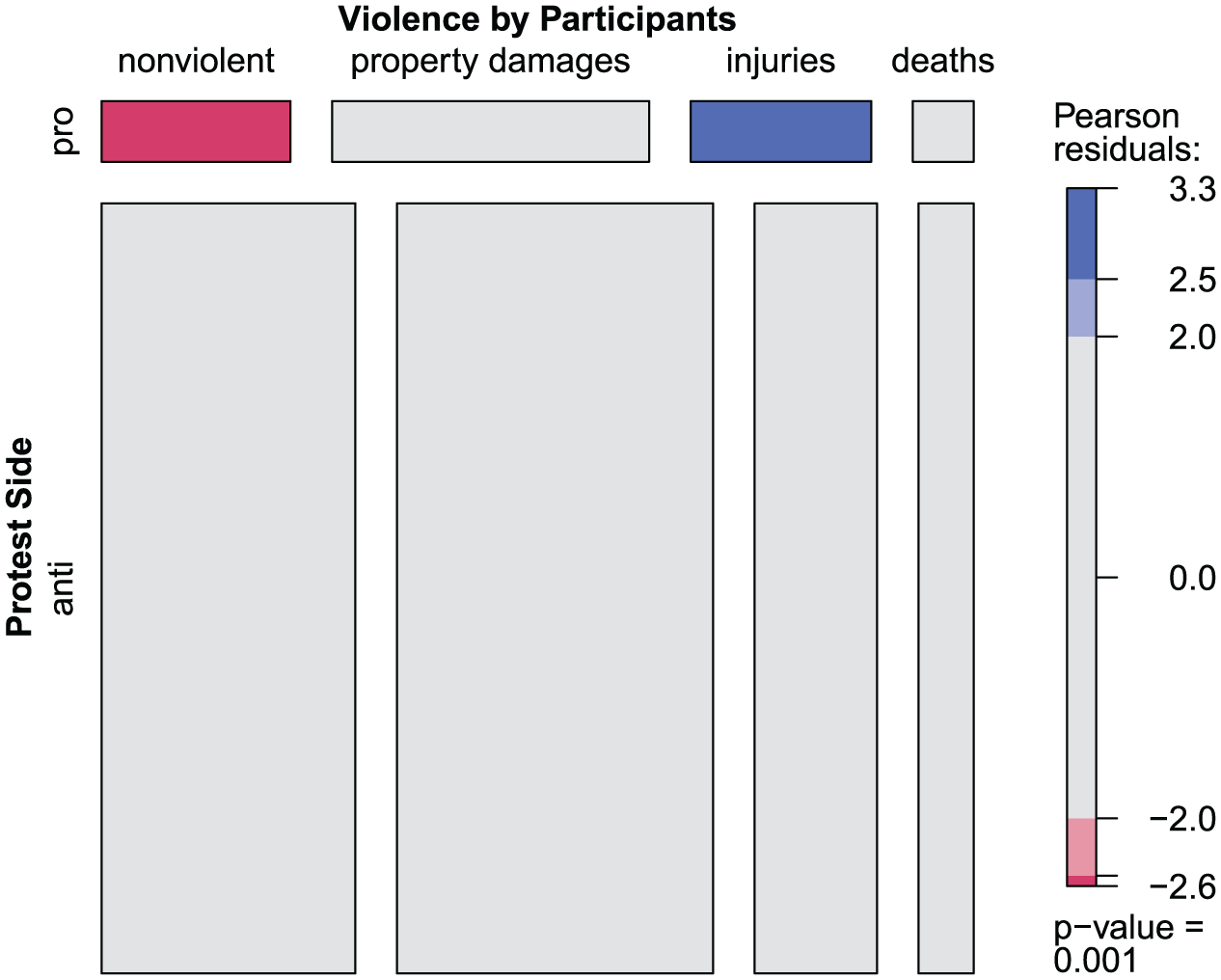
Participant violence by protest type (n = 4,871; missings excluded).
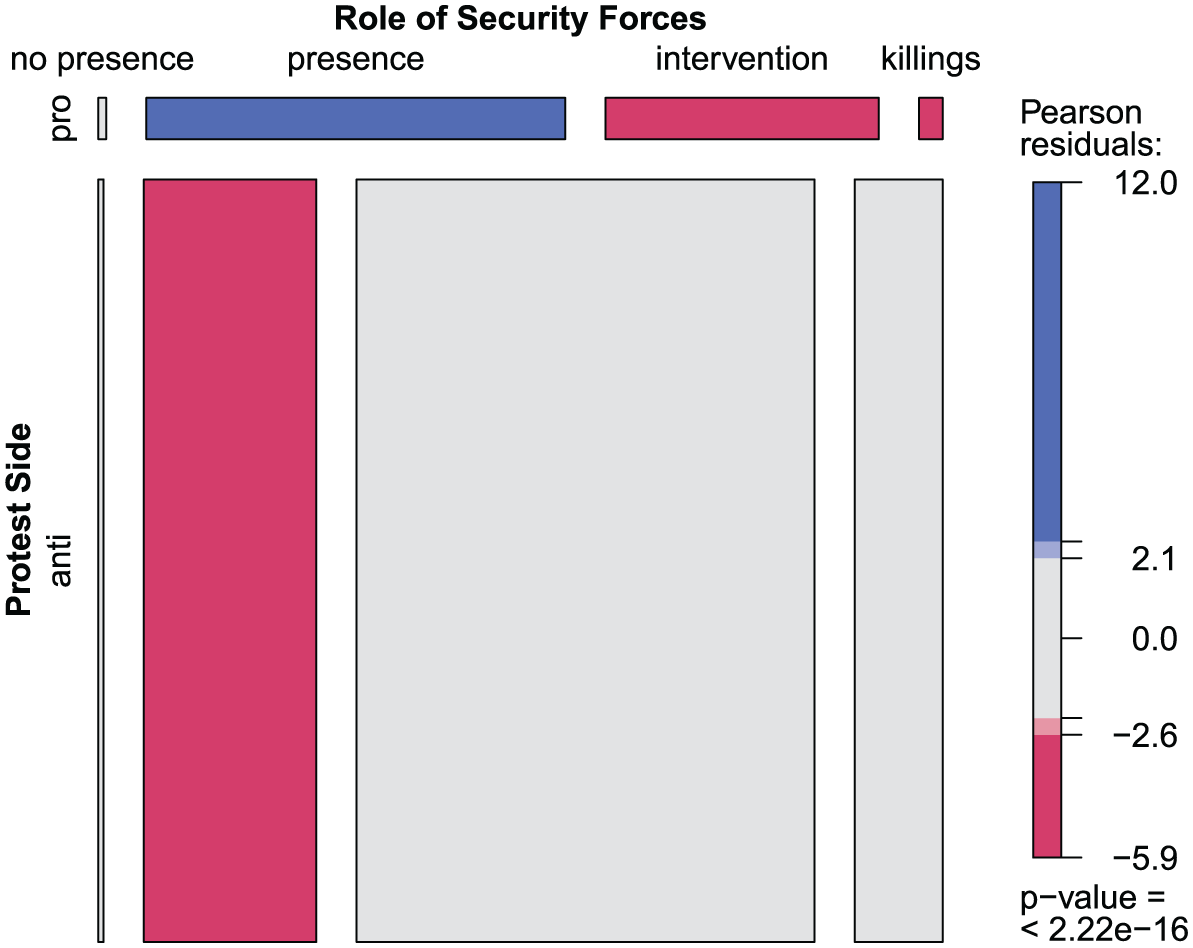
Security forces engagement by protest type (n = 7,148; missings excluded).
The plots reveal several interesting patterns. First, compared with anti-regime demonstrations, pro-government rallies more frequently result in injured bystanders, opposition activists or police officers. They are also less likely to be explicitly described as nonviolent. As far as property damages are concerned, we do not find significant differences between both event types. At least two plausible explanations can account for the finding that pro-government rallies are more violent. Authoritarian leaders encourage violence against dissidents or at least indicate that supporters get away without being held accountable by security forces for violent acts. Alternatively, supporters are only mobilized when contention is high and the regime’s survival is at stake. Simultaneous mobilization by both sides can then quickly lead to violent encounters in the streets.
We see more pronounced differences when we look at how official security forces engage with pro- and anti-regime protesters. Not surprisingly, regime supporters are less frequently subject to violent interventions by members of the security apparatus. The plots also show that security forces are more likely to be present during pro-regime rallies without actively intervening. This pattern could reflect an information advantage of the incumbent regime. Given the active role of authoritarian regimes in the mobilization of rally events, they might be better informed about the preparation of pro-regime rallies compared with anti-regime protests. Alternatively, this result could be due to the regime attempting to minimize the principal–agent problem and to prevent clashes between both sides. The fact that we do see cases in which security forces act against regime supporters shows that mobilization is not always welcomed and might be perceived as counter-productive from the regime’s perspective. Killings of government supporters, however, are rare and occur when security forces attempt to take back control during chaotic clashes between opponents and supporters, for instance, during post-election clashes between Awami League and Bangladesh Nationalist Party supporters in 2016.
Next, we look at differences between countries and different subtypes of authoritarian regimes. The data show that regimes differ in the levels of mobilization. Figure 4 displays the monthly average number of pro-government rallies and anti-government protest by regime type, using the typology by Magaloni, Min, and Chu (2013). 16 Single-party and military regimes display the highest levels of pro-government mobilization followed by multiparty regimes. We observe only very few pro-government rallies in monarchies. This descriptive finding is in line with the work by Kasza (1993) about the strong role of “administered mass organizations” in military and single-party regimes for the organization of street support. The low number of rallies in monarchies is not surprising as these regimes, in contrast to most single-party regimes, do not legitimize their power through mass support. 17 We also note that in single-party regimes the relative share of pro-government rallies from all events is highest. Military regimes see much more dissident activity at similar levels of pro-government mobilization.
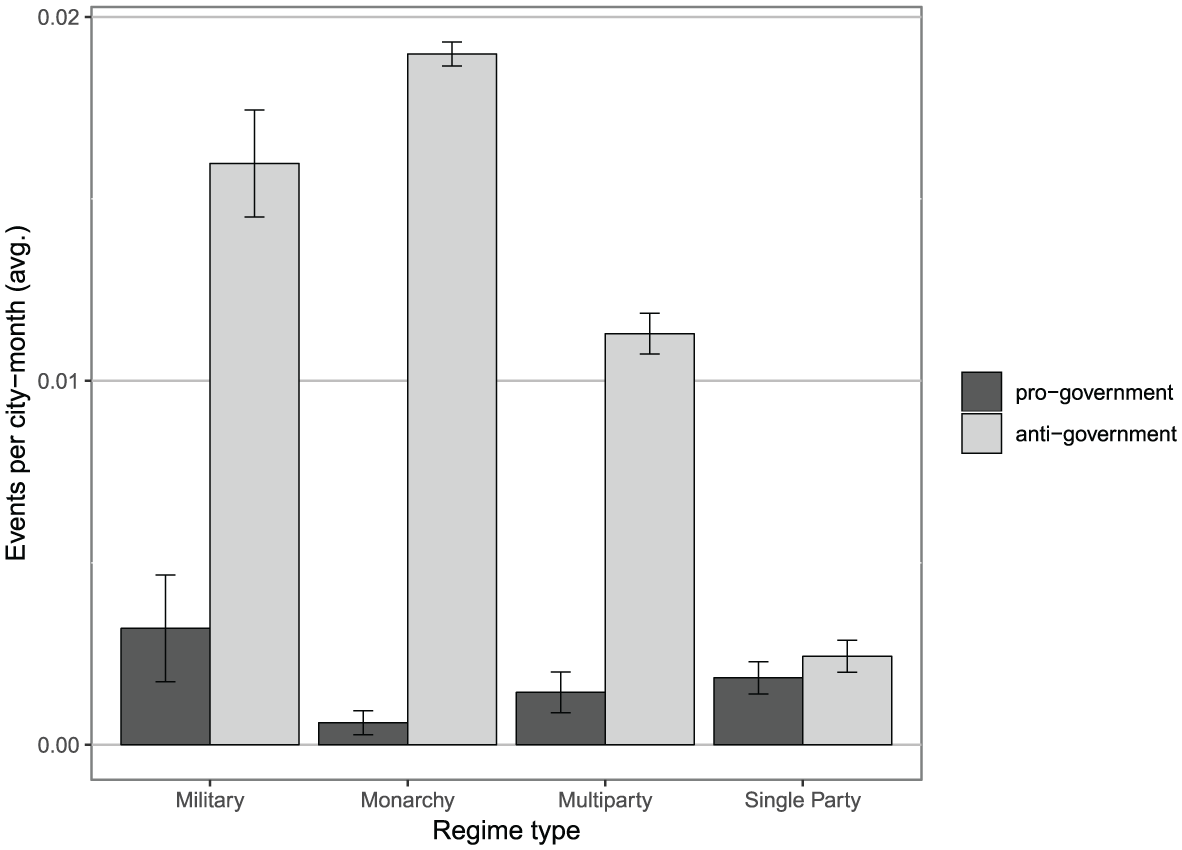
Monthly average number of pro-government rallies (dark gray) and anti-government protest (light gray) by regime type as defined by Magaloni, Min, and Chu (2013).
Figure 5 shows how both protest types vary by the closedness of the political system measured by the Polity score (Marshall, Jaggers, & Gurr, 2014). In line with previous research on political opportunities and repression in hybrid regimes, we observe more protest against the government in authoritarian countries with higher polity scores. The trend for pro-government rallies is less pronounced indicating that rallies occur in similar numbers in closed and more open autocracies.
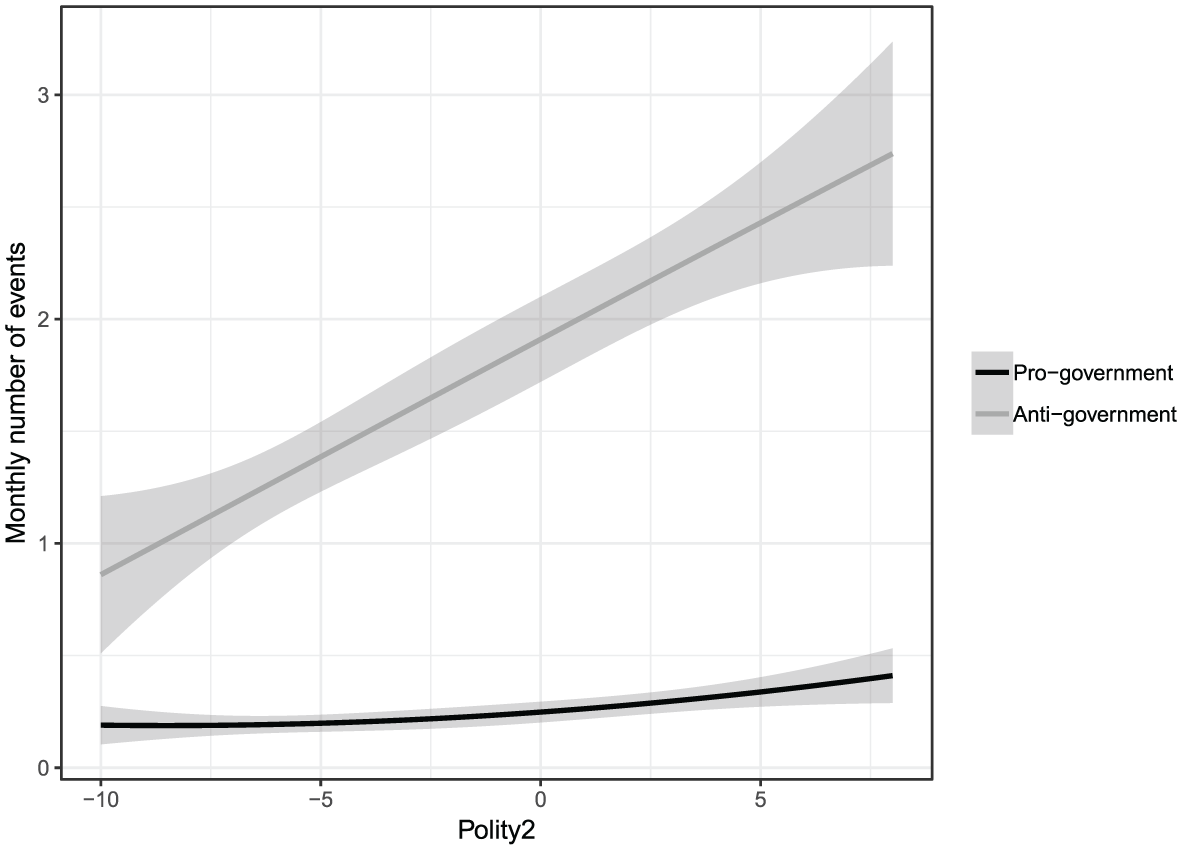
Monthly number of pro-government rallies (black) and anti-government protest (dark gray) by Polity2 score (Marshall, Jaggers, & Gurr, 2014).
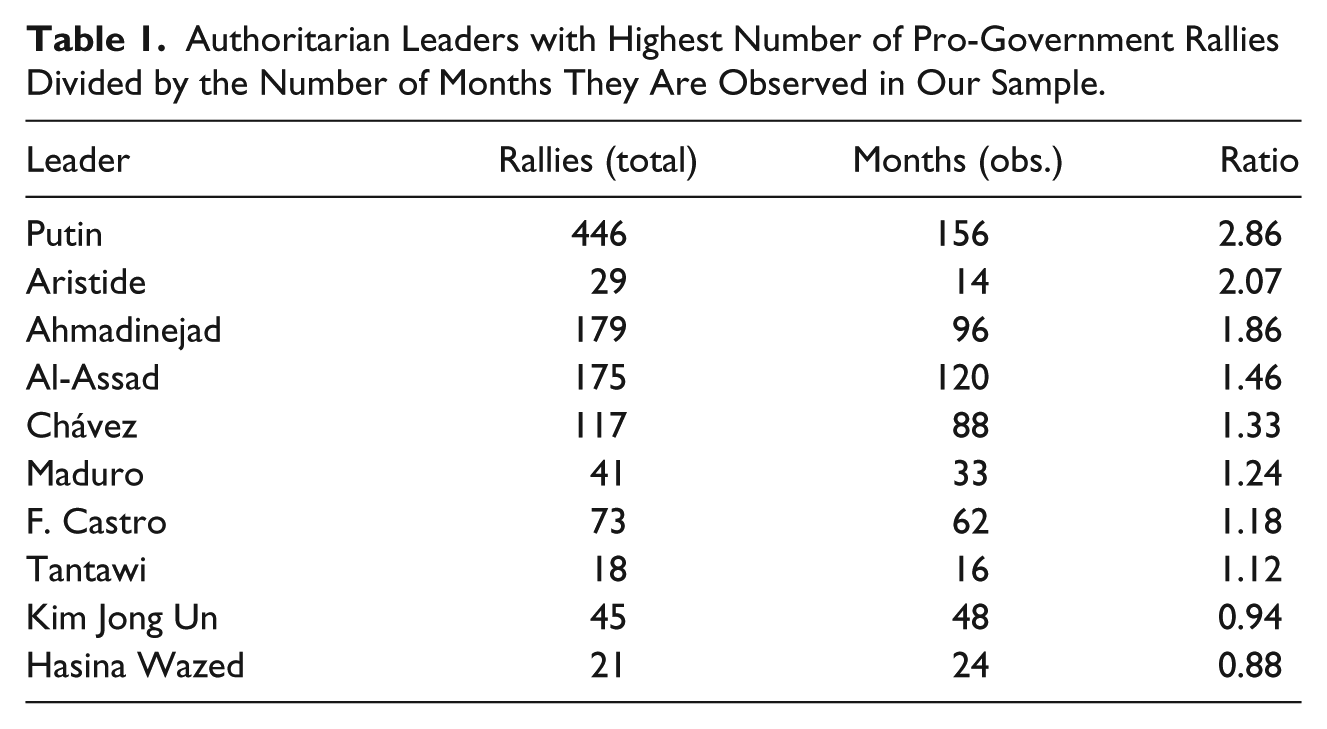
Finally, we look at differences between individual autocratic leaders. Table 1 lists the 10 leaders with most pro-government rallies per month in the MMAD data. It shows that high levels of mobilization are present in regimes with very diverse ideological backgrounds. We also see that rallies are not confined to leaders who are commonly described as overly charismatic or populist.
Authoritarian Leaders with Highest Number of Pro-Government Rallies Divided by the Number of Months They Are Observed in Our Sample.
In the next section, we substantiate these descriptive results by running a series of multivariate regression models which allows us to test our theoretical framework in a more systematic way.
Regression Analysis
The new data described in the previous section allow for a first quantitative analysis of the determinants of pro-government mobilization in authoritarian regimes. The goal of this exploratory analysis is to put our theoretical framework to an initial empirical test and assess the effect of a set of predictor variables on the occurrence of rallies. Given our interest in the dynamics of mobilization and the limited temporal coverage of the database, we focus on time-varying explanatory variables derived from the theoretical framework. In the following part, we describe the operationalization of the relevant variables as well as the statistical methods used to assess the domestic determinants of pro-regime rallies.
Dependent Variable
Based on the event data in MMAD, we construct a panel data set with information about the monthly number of pro-regime rallies in a given authoritarian country as the main dependent variable. This variable captures variation in the occurrence of pro-regime rallies over time and across countries. In 797 out of 8,999 country-months (8.9%), we see at least one event. If pro-regime rallies occur in a given country-month, we observe between one and three events in the majority of cases. There are a few exceptional cases: for instance, in February 2012, the database lists 51 pro-regime rallies in Russia and 49 events in February 2006 in Iran. 18
Independent Variables
We analyze the effect of several explanatory factors in line with the implications that follow from our theoretical considerations. First, we test whether we find a systematic increase of pro-government rallies as the risk for an elite-led overthrow grows. Due to the inherent difficulties of observing the latent coup risk, we employ two different measures. First, we create two binary indicators that identify the 3-month period before and after a coup attempt took place based on the data provided by Powell and Thyne (2011). 19 We infer from the actual occurrence of a coup attempt that the risk must have been higher, especially before the event. Preparations for a coup d’état are covert activities. However, coup plotters respond to more general political developments such as economic performance or public dissatisfaction with the regime, which is why autocratic rulers should be able to make at least a rough risk assessment of there being an internal threat. Our indicators do not capture those instances in which the actual coup risk was high but a coup d’état did not take place, meaning that we are likely to underestimate the effect of coup risk. In addition to that, coup attempts are fairly rare events; we observe only a dozen of coup attempts during the period of investigation. To address these issues, we also use the coup risk data by Bell (2016). The data are built using machine learning techniques and provides monthly estimates of coup risk based on a large number of coup-related variables such as socioeconomic conditions or political violence indicators. This additional variable captures more subtle variations in the latent risk of coup occurrence.
Next, we look at the relationship between domestic dissent and pro-government mobilization by including two measures of dissident activities on the right-hand side of the equation: the number of anti-regime protest events and the log of monthly anti-government protest participant numbers. We agree with Biggs (2018) that event frequency and protest size represent related but slightly distinct concepts. The former measures dissenter’s organizational capacity to organize street protest and the level of country-wide diffusion of protest, whereas the latter indicates the overall level of societal mobilization. We expect that both predictors should be associated with higher levels of pro-regime mobilization. 20 As more people mobilize against the regime, pro-government rallies become more viable in comparison with repression by security forces. We lag both variables by one time unit to mitigate concerns of reverse causality given that anti-government protest could be a reaction to pro-government mobilization.
To test the hypothesis about “diffusion-proofing” (Koesel & Bunce, 2013), we create a variable that captures regional levels of contention. For each country, we sum the monthly number of all anti-government protests in all countries from the same world region as defined by the United Nations’ geoscheme and subtract the number of domestic protests. One could imagine that whether or not autocrats fear the diffusion of contention from a third country depends on similarities between both countries, for example, in terms of culture, language, religion, or ethnicity. For this initial exploratory analysis, however, we rely on a measure based on geographical distance which, of course, is highly correlated with other indicators of similarity. We use lagged values of this variable, one reason being that autocrats might need time to react to political developments abroad and prepare the organization of mass rallies. The variable is thus adjusted to this potential delay. 21
Finally, we test whether we can observe a systematic increase of pro-government rallies during election periods. Similar to the binary indicator for the pre- and post-coup period, we create variables that identify the 3 months before and after an election based on information about election dates provided in the National Elections Across Democracy and Autocracy (NELDA) data set. 22
In addition to our main variables of interest, we include a series of controls in our models to address potential alternative explanations for the relationships that we hypothesize. First, we control for developments in political violence by the state or challengers which could affect mobilization on both sides. We include data on state violence from the Political Terror Scale (Gibney, Cornett, Wood, Haschke, & Arnon, 2016) which measures state violations of physical integrity rights. 23 We also add binary indicators for terrorist attacks from the Global Terrorism Database (National Consortium for the Study of Terrorism and Responses to Terrorism, 2018) and violent events from the Uppsala Conflict Data Project’s Georeferenced Event Dataset (Sundberg & Melander, 2013). It is also possible that the time a given authoritarian leader is in power affects the emergence of challenges by elites and the loyalty of supporters. We control for these leader characteristics by including a variable for months in office and leader age (Bell, 2016). Controlling for leader tenure avoids that our results simply reflect contention during the early phase of power consolidation.
Economic performance might matter as well for government support and the likelihood of the emergence of challengers. To make sure that our results are not mainly driven by economic developments, we include data on GDP (gross domestic product) per capita and changes in GDP growth (both logged and lagged by one time unit) as well as population size compiled by Marquez (2016). 24 To take into account temporal dependence between observations, we include time polynomials following advice from Carter and Signorino (2010). Finally, we use the monthly number of media reports about anti-regime protest events as additional control variable to mitigate the risk of media bias. Our concern here is that anti-regime protest attracts international media attention which increases the chances of pro-government rallies being reported. If this was the case, we would incorrectly attribute an observed increase of pro-government rallies to our predictor variables. Given that Hellmeier, Weidmann, and Rød (2018) find that patterns of media attention for protest events have clear spatial and temporal boundaries, we are confident that these concerns should not affect the relationship between regional contention and pro-government mobilization. With regard to the effect of election periods, we believe that this measure should reduce concerns about higher levels of media attention during contentious election periods. The summary statistics for all variables used in the analysis can be found in Supplemental Table A1. Lagged independent variables are used to reduce concerns of reverse causality.
Models and Results
Throughout the regression analysis, we use negative binomial models (R Core Team, 2018; Venables & Ripley, 2002) to assess the effect of several predictors on the number of pro-government rallies. This decision is due to the fact that our dependent variable is the monthly count of pro-government rallies and it is in line with existing quantitative studies on protest events (cf. Hendrix and Haggard, 2015). Protest events frequently cluster in time, which could result in overdispersion; we therefore prefer the negative binomial model over the Poisson model. 25
Furthermore, we take the panel structure of the data and the dependence of observations within countries and over time into account. A common approach to deal with correlated observations is the inclusion of fixed effects. Fixed-effects models focus on variation within units of observations, in this case authoritarian countries, and disregard variation between units. We use an unconditional negative binomial model with clustered standard errors as proposed by Allison and Waterman (2002). The downside of fixed effects is that rarely changing variables such as a country’s political culture or history cannot be estimated as these variables and the fixed effects are collinear. We believe that the fixed-effects approach is the right choice for two reasons. First, our theoretical framework emphasizes within-country variation, we have identified conditions under which authoritarian regimes are more or less likely to mobilize their supporters. We should thus avoid that our estimates are driven by differences between countries. Second, rarely changing variables correlate with a series of country-specific factors such as political culture, ideological belief systems, or the ethnic composition of a state. Given that most of these factors change only gradually over time, we cannot disentangle the individual effects of these specific factors. We therefore use fixed effects in all regression models. To control for common time trends for all units, we also include year dummies in all models.
The main results are displayed in Table 2. In the first model, we include all predictors derived from our theoretical considerations: domestic and regional anti-government mobilization, protest size, as well as coup and election periods. All measures of dissent are positively related to the level of pro-government mobilization. Expressed in incidence rate ratios, one more protest event in a given month leads to a 3% increase in the number of pro-government rallies in the following month. Ten more protest events in the same region lead to 14% more rallies. The effects are highly significant at conventional levels. Protest size has an independent effect of event frequency, lending support to the hypothesis that larger opposition protest events increase the regime’s demand for pro-government rallies. The model also shows that there are significantly more rallies during the pre-coup and pre-election period, but not in the aftermath of those contentious events. One reason for this pattern could be that authoritarian regimes use more direct repression against citizens in the aftermath of elections as they do not need to fear a defeat at the polls (Bhasin & Gandhi, 2013, p. 623).
Correlates of Pro-Government Rallies.
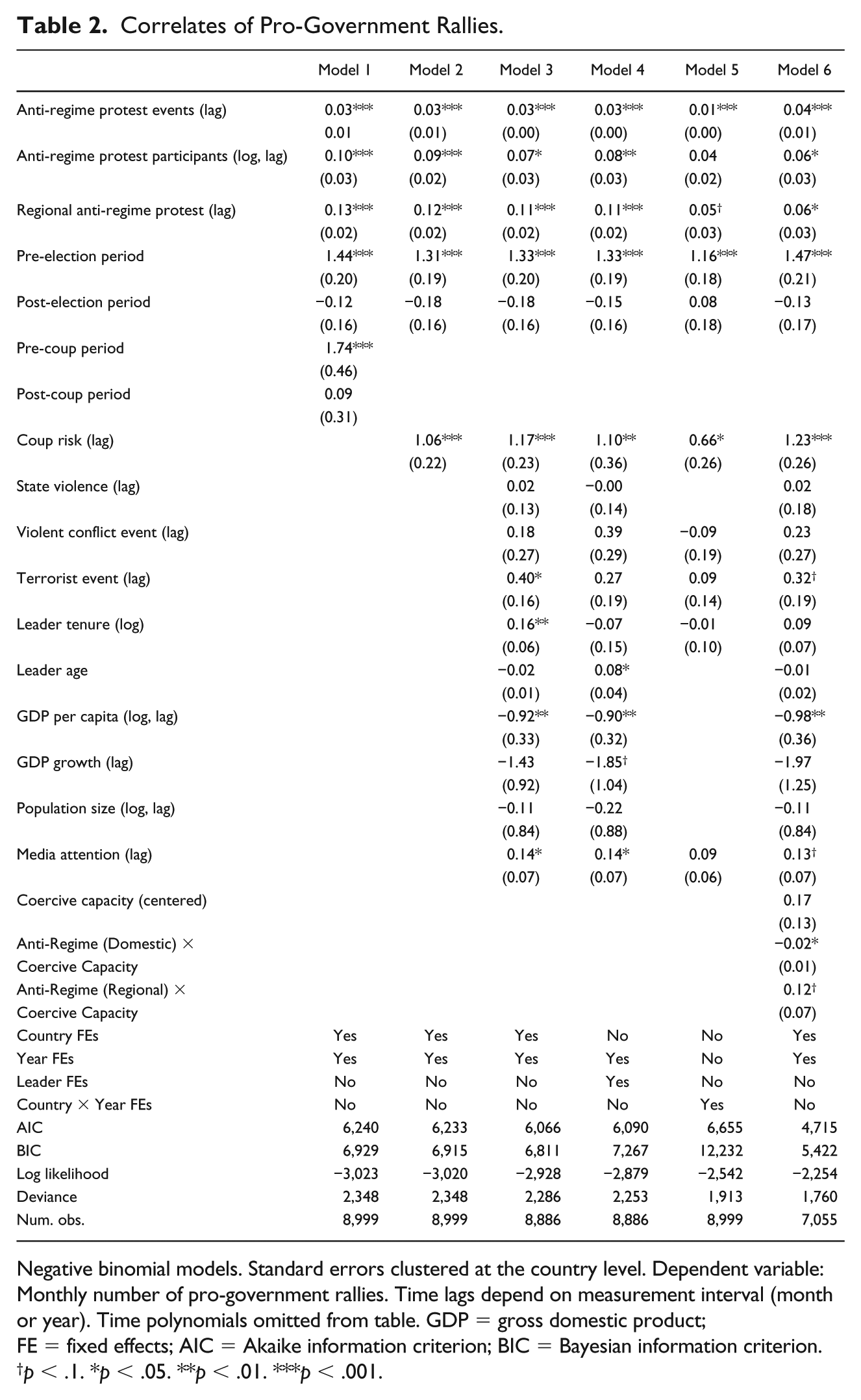
Negative binomial models. Standard errors clustered at the country level. Dependent variable: Monthly number of pro-government rallies. Time lags depend on measurement interval (month or year). Time polynomials omitted from table. GDP = gross domestic product; FE = fixed effects; AIC = Akaike information criterion; BIC = Bayesian information criterion.
p < .1. *p < .05. **p < .01. ***p < .001.
Given that our coup-dummy captures only very limited moments of high coup risk, we replace the dummy variables with the monthly coup risks estimates by Bell (2016) in Model 2. Again, we find a significant and positive relationship between coup risk in a given month and the amount of pro-government rallies in the same month. In Model 4, we add all relevant control variables to check whether our results are robust to the inclusion of potential confounders. The results for our main variables of interest are remarkably stable and the added variables do not alter our main conclusions. Interestingly, we find that pro-government rallies are more likely in the wake of terrorist attacks, when a leader stays longer in office and media coverage of anti-government protest is high. Rallies are significantly less likely when a country’s economic performance improves. These results emphasize our point that rallies should be more likely if the incumbent government is vulnerable, for instance, due to economic decline, and that rallies are not a “reward” for good performance. In Model 4, we use fixed effects for leaders instead of countries to show that the results are not driven by leader-specific characteristics such as charisma or vanity. Due to the fact that our main variables of interest are measured at the monthly level, whereas a number of control variables are measured at the yearly level, we introduce country-year fixed effects in Model 5. We exclude all yearly measured variables and only look at variation within a given country-year. Although the coefficient for protest size is not statistically significant anymore, our main results are unaltered.
One important alternative explanation for our results is that the patterns that we observe are driven by government supporters’ decision to mobilize without any involvement on behalf of the state. In this view, supporters independently realize that the survival of the regime is at stake and take to the streets to show support for the status quo. Even though the preferences of leaders and supporters are hardly separable, we provide additional support for our strategic approach in Model 6. We add an interaction effect between the state’s coercive capacity measured by logged values of military expenditure (Marshall et al., 2014) and the number of domestic and regional anti-regime protest. 26 This serves to better illustrate the proposed strategic decision-making process. The results show that higher coercive capacity dampens the effect of anti-government protest on pro-government rallies. On the contrary, regional unrest leads to more rallies in states with high coercive capacity. In line with our framework, states with high coercive capacity should be better at repressing opposition protest and thus avoid the costs of mobilizing their supporters, but they should also be better at mobilizing when they need to signal regime strength as means to prevent dissent. While this pattern is not fully incompatible with a bottom-up explanation of pro-government mobilization, it requires the strong assumption that supporters have accurate information about the strength of the incumbent government and the likelihood of an overthrow.
To increase confidence in our results, we run the same models using different model specifications: ordinary least squares (OLS) with a logged event count as dependent variable (Supplemental Table A2), a conditional logistic regression with a binary indicator for rally occurrence (Supplemental Table A3), and a linear probability model using two-way fixed effects (Supplemental Table A4). These models yield very similar results.
In addition to this series of multivariate regression models, we fully leverage the fine-grained resolution of the MMAD data to look closer at the dynamics of rally events during elections in Figure 6. We aggregate the number of rallies at the weekly level and calculate the temporal differences between any given country-week and the previous and upcoming elections. Figure 6 displays the results of a nonparametric regression (Harrell, 2017) on a subset of the data within the range of 5 months before and after every election. The black line shows the probability of seeing at least one pro-government rally in a given country-week dependent on the temporal distance to election events. The data show a strong increase of the probability that a pro-government rally occurs as elections draw nearer. The increase sets in at about 10 weeks before the elections are scheduled and peaks right before the election. After elections have been held, the probability of pro-government rally occurrence gradually decreases. As stated before, this could be due to the fact that autocrats use different means of repression in the post-election period. It is also possible that the election results strengthened the power position of the incumbent leader and thus eliminated the regime’s demand for mobilization.
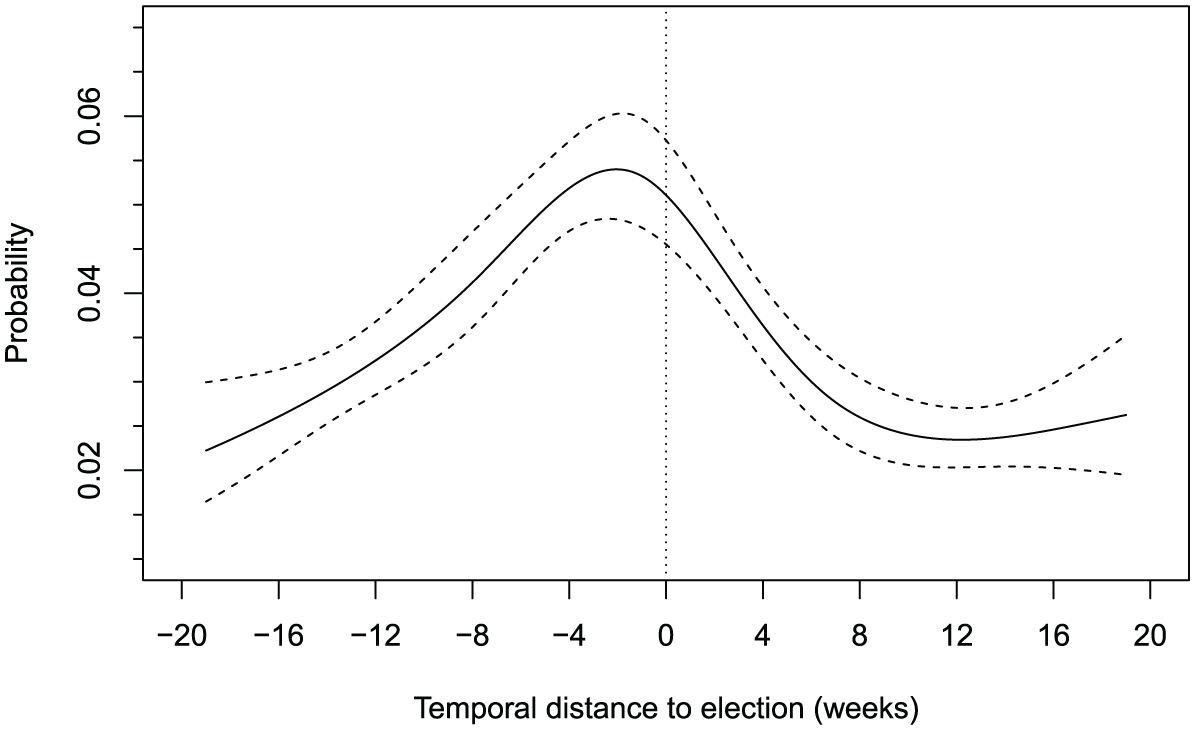
Relationship between temporal distance to upcoming or past elections and the probability of rally occurrence.
To sum up the findings of our analysis, we find systematic increases of pro-government rallies when authoritarian leaders can benefit from signaling regime strength or using alternative means of repression. Rallies are more likely when collective dissent is large, prior to elections, when coup risk is high and when contention unfolds in neighboring countries. Taken together, we interpret these results as tentative support for our theoretical framework.
Some caveats apply to our analysis. First, our data do not capture the full strategic decision-making process on behalf of authoritarian leaders that we postulate in the theory section. Based on the observation that autocrats have considerable influence in mobilization processes and the presence of collective action dilemmas in the organization of protest, however, we believe that the described process is the most plausible explanation for our empirical results. 27 Determining the degree of state involvement for such a large number of rally events using media data is simply impossible. Even if media reports mention that participants were forced to attend the rally, it is unclear how these individual statements generalize to the majority of participants. Furthermore, statements about the voluntariness of rally participation are part of the political struggle. States actively try to downplay their involvement in the organization of rallies in an attempt to portray rallies as spontaneous grass-roots movements. 28 Drawing the line between the active use of force or selective incentives and more subtle mobilization strategies is challenging as well. Second, a more fine-grained resolution of data on other repressive state actions such as arrests could help to better understand how rallies interact with other types of state actions. Unfortunately, existing measures as the one used in the analysis are only available at the yearly level. Third, while we have tried to mitigate the risk of media bias in our analysis, there is little scientific evidence about the representation of pro-government mobilization in Western news agencies. Keeping in mind that these agencies are biased toward revolution and political change (Baum & Zhukov, 2015), we might suspect a certain degree of underreporting of rally events. It is difficult to specify with certainty, however, if and how this would affect our results. One advantage of our fixed-effects approach is that it takes care of country-specific sources of bias that are constant over time such as a country’s geopolitical relevance.
Conclusion
This article set out to shed more light on a theoretically as well as empirically puzzling phenomenon. Previous work has stipulated that authoritarian regimes are characterized by mass apathy and passive acquiescence. However, we observe mass rallies in support of autocratic leaders quite frequently. In some cases, autocrats actively mobilize their supporters; in others, they quell bottom-up efforts to praise the incumbent government. We have argued that pro-regime rallies can be best understood as an instrument to defend autocratic regimes against domestic challenges by signaling regime strength and repressing opposition movements. Both mechanisms raise collective action costs for political challengers. Our framework describes the different ways in which rallies can potentially stabilize autocratic rule, depending on who challenges the regime. However, we have also highlighted the costs associated with mobilization such as latent difficulties to identify and mobilize potential supporters and to prevent excessive street violence between supporters and challengers.
To analyze the occurrence of pro-government rallies systematically, we presented evidence from one of the first comprehensive data sets with fine-grained information about rally events in all autocracies between 2003 and 2015. The descriptive data analysis shows that pro-government rallies are more violent than anti-government demonstrations, but they are less likely repressed by state security forces. Based on our theoretical considerations, we developed expectations about when to expect increasing levels of pro-government rallies. Our exploratory multivariate regression analysis shows that rallies are more frequent when anti-government activities are large, the risk of a coup d’état is high, prior to elections, and in light of contention in neighboring countries.
This study provides the first systematic cross-national analysis of pro-government rallies and the results show initial empirical evidence for our broad theoretical framework. However, our framework implies other empirical relationships, for example, regarding the distinction between violent and nonviolent opposition. Nonviolent protest is a major challenge to authoritarian rule, mostly because repression can backfire as bystanders perceive the state reaction as disproportionate, but also because nonviolent campaigns enjoy higher legitimacy which facilitates broad-based mobilization of activists (Chenoweth & Stephan, 2011). The expected benefits of organizing rallies to counter nonviolent movements by delegitimizing their claims and provoking violence should be particularly high, which is something that should be explored further. Future work could also investigate the interaction between opponents and supporters as well as the short-term and long-term consequences of mobilization. Under what conditions does pro-government mobilization substitute or complement state repression? More in-depth work is also needed to analyze the mobilization processes and the organizations that are behind them. More specifically, we need to know more about the processes of demobilization in the aftermath of contentious episodes. Our general theoretical framework and the new data that we presented in this article can serve as a useful starting point to investigate these questions.
All in all, our analysis shows that there are systematic patterns in the occurrence of pro-regime mobilization in authoritarian regimes that are line with the regime’s interests. How does this change our understanding of the role of mobilization in authoritarian regimes? On one hand, we still think that authoritarian regimes have a vital interest in keeping the masses out of politics. Mass apathy should be preferred over mobilization due to the latter’s potential costs, unless a public signal of support is indispensable for political survival. On the other hand, we should acknowledge the benefits of selective support in the streets to keep an authoritarian regime in power. Most importantly, we need to understand that despite the absence of an all-encompassing totalitarian ideology, autocrats can successfully mobilize their supporters, and they do so for good reasons. Besides direct rewards, nationalism, personalism, or simply fear of political change are effective tools for selective mobilization. However, the evidence also shows that this mobilization oftentimes does not remain peaceful and is a threat to opposition activists. Hence, we should see pro-government mobilization as part of an autocrat’s repressive toolkit: Instead of exclusively focusing on state actors when analyzing repression, researchers need to pay more attention to nonstate agents.
Supplemental Material
appendix – Supplemental material for Pulling the Strings? The Strategic Use of Pro-Government Mobilization in Authoritarian Regimes
Supplemental material, appendix for Pulling the Strings? The Strategic Use of Pro-Government Mobilization in Authoritarian Regimes by Sebastian Hellmeier and Nils B. Weidmann in Comparative Political Studies
Supplemental Material
CPS_replication_Hellmeier_Weidmann – Supplemental material for Pulling the Strings? The Strategic Use of Pro-Government Mobilization in Authoritarian Regimes
Supplemental material, CPS_replication_Hellmeier_Weidmann for Pulling the Strings? The Strategic Use of Pro-Government Mobilization in Authoritarian Regimes by Sebastian Hellmeier and Nils B. Weidmann in Comparative Political Studies
Footnotes
Acknowledgements
We would like to thank Anita Gohdes, Johannes Vüllers and the participants at the workshops on “The Empirical Study of Autocracy” and “Civilian Activism in Civil Wars” held at the University of Konstanz for comments on earlier versions of this paper. Moreover, we are grateful to Espen Geelmuyden Rød and our research assistants at the University of Konstanz for their help with the MMAD data. Finally, we thank the three anonymous reviewers whose comments led to major improvements of this paper. All remaining errors are our own.
Declaration of Conflicting Interests
The authors declared no potential conflicts of interest with respect to the research, authorship, and/or publication of this article.
Funding
The authors disclosed receipt of the following financial support for the research, authorship, and/or publication of this article: This project was supported by the Alexander von Humboldt Foundation (Sofja Kovalevskaja Award for Nils B. Weidmann) and the DFG (Project number 402127652).

Notes
Author Biographies
References
Supplementary Material
Please find the following supplemental material available below.
For Open Access articles published under a Creative Commons License, all supplemental material carries the same license as the article it is associated with.
For non-Open Access articles published, all supplemental material carries a non-exclusive license, and permission requests for re-use of supplemental material or any part of supplemental material shall be sent directly to the copyright owner as specified in the copyright notice associated with the article.
