




Abstract
Keywords
Introduction
I am honored to receive this Muriel Driver Memorial lectureship. Having attended and recently read many of the lectures of my predecessors, I recognize the scholarship and visionary leadership they have brought to the profession of occupational therapy.
The topic of my lecture is mobilizing critical occupational therapy praxis to promote structural justice, equity, and rights in everyday practices. Praxis, according to Freire (2009), refers to the process of “reflection and action directed toward social structures that need to be transformed” (p. 126). I approach this topic from multiple identities. As a cis-gender woman, I come from personal experiences of misogyny and sexism which have solidified a perspective of feminism that has generated critical thinking about how social structures influence domination and oppression of some groups over others. More importantly, as a white, English-speaking, university-educated descendant of settlers to Canada, I acknowledge my significant privilege in a socially unjust and inequitable world.
My choice of topic for this lecture was informed by career-long discomfort that has not always been easy to name and frame. My first job as an occupational therapist was in a long-term rehabilitation facility. My role was to assist people to gain the skills and resources to return home. I felt I was trained for that role and had many rewarding experiences. However, it was in my efforts to develop therapy relationships with people from First Nations and Metis communities that it became obvious to me that something was very wrong and that the problem was embedded in the system in which I was working. Neither I nor any of the members of the team had any context for the violence experienced by a woman from a remote community who sustained a severe head injury at a house party. No one had any understanding of the environment to which a man with significant mobility impairment and aphasia would be returning. I was puzzled and discomforted by the quiet and fearful compliance of an elderly woman with whom I was working and was told by my white colleagues that this was attributable to “culture.” There was no mention of how, instead, this may have been a way of surviving in an unjust and retraumatizing system. In the ensuing years, it has taken a lot of education and reflection to increasingly understand what has been so wrong and why I have been compelled to act in ways that were not always helpful to the people I was working with. Yet, I am still compelled, mostly in moments of stress, time limitations, and pressures of dominant norms of behavior, to act in ways an unjust system has hard-wired me to act. Unjust structures in the form policies, processes, and systems compel us all at times to behave in ways that are harmful. These structures need to change. This lecture is intended to inspire individual and collective praxis in the form of critical reflection leading to
Structural Justice, Equity, and Rights
I will begin by providing a context for structural justice, equity, and rights as they are situated in Canada by summarizing some key theoretical concepts that have influenced ideas in the Global North. Then I will address three urgent questions for occupational therapists as they consider mobilizing critical occupational therapy praxis. First, why should occupational therapists integrate structural justice, equity, and rights into their everyday practices? Second, what gives occupational therapy the potential to be a structural justice-, equity-, and rights-oriented profession? Third, how can occupational therapy mobilize critical praxis that will promote structural justice, equity, and rights?
Concerns about structural justice are both political and moral. Global North perspectives have, for the most part, denied the political nature of health and social care. Consequently, occupational therapy has tended to take an apolitical stance. However, many occupational therapy scholars and leaders have identified the need for more explicit political practices, e.g., (Kirsh, 2015; Pollard & Sakellariou, 2014; Restall et al, 2018). This requires increased political literacy (Galheigo, 2011).
Thus, I will begin by providing an overview of some selected political philosophical understandings of structural justice that have influenced Global North societies including Canada. I will focus explicitly on the concept of justice which, in the context of health and social care, has become an umbrella term for which equity and rights are inextricably linked. Justice is dependent on people's equitable access to resources and opportunities to achieve equal outcomes for living a good life in the “absence of unfair, avoidable, or remediable differences among groups of people” (World Health Organization, 2024). Justice also requires that human rights are respected and assured including the “right to life and liberty, freedom from slavery and torture, freedom of opinion and expression, the right to work and education, and many more” (United Nations, n.d.).
Modern-day concepts of justice have their origins in political philosophy with advancements in additional disciplines including those associated with health care. Here, I will provide a brief overview of some of the concepts put forward by three justice theorists: John Rawls, Iris Young, and Amartya Sen. My choices for summarizing, albeit briefly, the theories and concepts of justice from Rawls, Young, and Sen are because of their influences on, and ideas about, justice related to the types of structures that are embedded in Canadian society and occupational therapy in the Global North.
The current understanding of justice in liberal societies such as Canada has been heavily influenced by writings of John Rawls. Rawls furthered the idea of justice as fairness in the distribution of society's resources (Rawls 1999). He espoused a principle in which “all social values—liberty and opportunity, income and wealth, and the bases of self-respect—are to be distributed equally unless an unequal distribution of any, or all, of these values is to everyone's advantage” (Rawls, 1999, p.54). Rawls and other theorists have acknowledged the ethical and moral complexity of deciding whether there is justification for an unequal distribution of social goods. For example, in capitalistic societies like Canada, there are claims that people's relative contribution to the common good or the marketplace or some concept of merit should be considered. Alternatively, there may be claims that certain groups have particular needs or inherited rights (Kheechen, 2013).
Young (1990), while recognizing that the fair distribution of social goods is important, argued that social structures are powerful conveners and maintainers of injustices because they promote or constrain access to resources. She emphasized the idea that social justice should include the elimination of institutionalized domination and oppression that constrain self-determination and self-development, respectively. Given the complexity of decisions about what is fair distribution, Young believed that justice must include people's rights to participate in decisions about policies and processes that affect them. She argued that, although groups who are dominated and oppressed by institutional contexts may have similar concerns, they can also have fundamentally different experiences and needs, and these must be acknowledged and respected (Young). For example, Indigenous peoples in Canada have had unique experiences of land theft and dispossession. These unique experiences have created oppressions and needs that are fundamentally different from those of all groups who are oppressed by social structures in Canada. In summary, Young's version of justice requires that society's resources are distributed fairly, that people participate in dialogue and decision-making about institutional decisions that affect them, and that group differences are valued in the expression of needs and participation in decision-making (Young).
Sen (1979; 2009), in his conceptualization of justice, also recognized the influences of people's contextual circumstances on their lives. He pioneered the capabilities approach, which was further developed by Nussbaum (Nussbaum, 2011) and others. The focus of the capabilities approach is on people's opportunities and freedom to do or be what they value as influenced by their own intrinsic capabilities as well as by their environments (Sen, 2009). The approach recognizes the plurality of what people may value such as being well nourished, taking part in community life, and developing skills and knowledge. The focus is not on what people do but on what they can do given their circumstances (Sen, 2009). Sen has argued that while much has been written about the application of the capabilities approach to individuals, it is equally applicable to groups and communities (Sen, 2009). Several occupational therapy and occupational science scholars have embraced the capabilities approach framework or component parts of the framework to inform occupational therapy's approach to justice (e.g., Hammell, 2015; 2022; Pereira et al, 2020; Sterman et al, 2020; Townsend, 2012).
These ideas about justice have been grounded in Eurocentric perspectives, except for Sen's ideas which have also been influenced by Eastern philosophies (Sen, 2009). There are many additional perspectives about justice from, for example, Indigenous worldviews and the Global South. However, Rawls, Young, and Sen offer understanding of the influences of structures of injustice in Global North societies. These structures create the conditions, as Young points out, for domination and oppression of groups while, at the same time, enabling other groups to have unearned privileges and opportunities for, in Sen's words, exercising their capacities.
Why Should Occupational Therapists Integrate Structural Justice, Equity, and Rights into Their Everyday Practices?
I turn now to my first urgent question for this talk which is why should occupational therapists integrate structural justice, equity, and rights into their everyday practices? It is only recently that occupational therapists’ obligations to integrate justice, equity, and rights into their everyday practices have been clearly articulated in professional documents. By examples, the World Federation of Occupational Therapists’ (2019) Position Statement on Occupational Therapy and Human Rights stated that occupational therapists globally are obligated to promote human rights. In Canada, the most recent version of Competencies for Occupational Therapists in Canada (Association of Canadian Occupational Therapy Regulatory Organizations et al, 2021) includes the competency domain of culture, equity and justice with the expectation that therapists promote equity and anti-oppressive behaviors. In Promoting Occupational Participation: Collaborative Relationship-Focused Practice, we identified the use of justice-, equity-, and rights-based lenses as foundational processes for doing occupational therapy (Restall et al, 2022).
This is a watershed time. We have been inundated with evidence that speaks of the ways that structures of racism, ableism, classism, heteronormativity, sexism and additional forms of oppression and their intersections have created injustices, inequities, and denial for rights that reduce the choices and opportunities for people to participate in the occupations that they need and want to do. Protests such as those associated with Black Lives Matter have made explicit how injustices pervade our society, making it increasingly difficult for white people with privilege to ignore them. Through powerful calls to action from the Truth and Reconciliation Commission of Canada (2015) and the calls for justice from the National Inquiry into Murdered and Missing Indigenous Women and Girls (2019), we have been told that it is our responsibility to learn, unlearn, relearn, and act. These messages call on occupational therapists to take notice and engage in actions that address the colonial structural underpinnings of our society.
There have been many calls within the profession for justice-oriented praxis in occupational therapy. Thirty-one years ago, Elizabeth Townsend (1993) in her Muriel Driver lecture presented a social vision for occupational therapy. More recently, there have been national and international calls by clinicians and scholars to decolonize the structures and systems in which the profession is embedded (e.g.,Emery-Whittington, 2021; Emery-Whittington & Te Maro, 2018; Galvaan, 2021; Gibson, 2020; Phenix & Valavaara, 2019). Additional literature acknowledging occupational therapy's complicity in reproducing structures of injustice and oppression has proliferated recently with global calls to disrupt unjust and oppressive practices (e.g., Gerlach, 2015, Gibson, 2020; Hammell, 2021; Ivlev, 2024; Pooley & Beagan, 2021; Ramugondo, 2018; Restall et al, 2016; Restall et al, 2019; Trentham et al, 2022; Turcotte & Holmes, 2024; Valavaara et al, 2017). In addition, occupational therapy and occupational science scholars have encouraged recognition and disruption of the ways that therapists from equity-deserving communities within the profession experience oppressions in therapy relationships and with their colleagues (Beagan et al, 2023; Beagan et al, 2022; Bizzeth & Beagan, 2023; Chacala et al, 2014; Gamboa Yao et al, 2022; Trentham, 2022). Yet, everyday practices aimed at transforming social structures, when they occur, continue to be enacted at the margins of occupational therapy (Farias & Rudman, 2019a) because they have not adhered to individualistic, technical, and Eurocentric approaches common in the profession. Alternatively, they have been hidden in individual therapists’ elusive acts of resistance (Aldrich & Rudman, 2019).
Why, despite occupational therapy's history and awareness of calls to action and justice, have we have not sufficiently leveled up to this challenge? Young (2011) proposed that there are at least four reasons that people might avoid responsibility for structural injustice. First, people can engage in reification, that is, they accept injustices and inequities as forces that compel us to act in the ways we must. For example, occupational therapists can follow the norms and policies of the organizations in which they work because they feel the pressure to adhere to a duty of loyalty and fear repercussions if they engage in agency toward social change (Carrier et al, 2021). Second, people can deny their connection to broader systems of oppression. For example, reinforcing Eurocentric ideas about childrearing without seeking to understand or honor ways of childrearing from Indigenous worldviews has broad systemic implications that are not fully acknowledged or understood. Third, people may accept the ways they are complicit with unjust policies and processes, but these concerns are subsumed by everyday demands of their jobs, families, friends and homes. Finally, people can simply consider that addressing structural injustices is not their job. However, in this regard, I would like to say that as occupational therapy clinicians, educators, researchers and leaders it is our job.
It is our job because we are implicated in the reproduction of structural injustices. To build on one of Young's (1990) examples, imagine going into a fast fashion store in your local mall. On a table of t-shirts, you find one in a size that fits and a color you like. You buy it. That t-shirt came from an offshore company in which workers who produce clothing for Canadian markets in unsafe conditions don't earn a living wage (Sawa et al, 2024). Although you are not personally responsible for creating those structures of injustice, having bought the t-shirt you are implicated in allowing those conditions to persist.
Similarly, when we reinforce the oppressive and discriminatory rules and policies of the organizations and systems in which we work, we are implicated. For example, rules around discharging individuals and collectives after a finite number of missed appointments are most likely to impact groups of people that have limited resources for childcare, taking time off work, and transportation. If we don't seek to understand underlying contextual factors when we enforce institutional rules, we can become complicit in reproducing injustices.
Second, occupational therapists embeddedness in systems and structures implicates them by association even if it is not their actions that reproduce injustices. In a digital storytelling project with Indigenous women and gender-diverse people living with HIV (Jay et al, 2024), Melissa (2024), one of the storytellers, gifted her story and has agreed for me to share it during this lecture. Melissa relayed how many years ago she was living in the downtown eastside of Vancouver and was hospitalized for complications related to her use of illicit drugs. She described how her right to privacy and dignity was violated by staff questioning whether she was using drugs. Melissa said “I had the worst experience of my life getting treated at the hospital. When I woke up after my procedure, I was followed to the washroom and asked if I would be using drugs in there. I wasn't allowed to take my purse into the washroom… I left the hospital crying, feeling alone and shameful about who I was as a person who used drugs” (Melissa, 0:39). Despite this situation happening many years earlier and Melissa becoming a researcher and advocate in the area of HIV, Melissa was clear that the way she was treated in the hospital at that time had long term effects on her trust of the healthcare system. Melissa said: “I still fear stigma in the healthcare system when disclosing my HIV status or my former drug use and that will most likely never change” (Melissa, 3:27).
Being denied the right to dignity and experiencing its related trauma implicate everyone in the system regardless of whether they were the perpetrators of the indignity. This extends beyond an occupational therapists’ acknowledgment of potential previous traumas to recognition, as Grenier (2020) pointed out, of how their own positionality can cause fear and distrust. Traumas created by systemic and structural injustices implicate everyone in the system and are everyone's responsibility.
The third way occupational therapists are implicated in the reproduction of structural injustices relates to each therapist's experiences of social privileges and oppressions related to factors such as race, sex, gender, ability, sexual orientation, social class, age, and the intersections among them. We are bound personally to unjust social structures regardless of our social positions and whether we like it or not or choose to be or not to be (McKeown, 2021; Young, 2011). For example, the experience of unstable housing in Canada that is inequitably distributed among Indigenous people and among people with severe and persistent mental health concerns is connected to most occupational therapists’ experiences of safe, affordable housing. The same system that allows me the privilege of good housing is the same system that denies it to many of the people with whom I might work. Meritocracy, that is, the belief that people's merit determines their relative social position, is a myth. From a position of white privilege, it has taken deep reflection to recognize that it has been the historical and contemporary social, economic, and political structures that have, and continue to, inequitably distribute resources and opportunities intergenerationally that privilege some groups to have safe, affordable housing and other groups to be denied of it.
What Is Occupational Therapy's Potential To Be Structural Justice-, Equity-, and Rights-Oriented Profession?
Having argued that it is the occupational therapists’ job to promote structural justice, equity, and rights in everyday practices, I now turn to the second urgent question which is, what is occupational therapy's potential to be structural justice-, equity-, and rights-oriented profession? I will offer four factors that have created the conditions for achieving this potential.
The first factor is occupational therapy's primary focus on occupational participation in which individuals and collectives access, initiate and sustain occupations within meaningful relationships and contexts (Egan & Restall, 2022, p. 77). Occupational therapists understand the link between occupational participation and people's environments and the possibilities afforded by these environments (Rudman, 2010). These opportunities and possibilities are matters of structural justice as pointed out by Rawls, Young, and Sen. There is great potential for the same knowledge and skills that therapists use to modify people's immediate or micro-level environments to be enhanced toward reducing structural injustices (Bailliard et al, 2020). I envision a future in which every occupational therapist can readily recognize the colonial policy and normative barriers to participation in valued occupations as they now can recognize those presented by disabling physical environments.
The second factor is the profession's growing critical consciousness. The concept of occupational consciousness emerged through the work of South African occupational therapist and scholar Elelwani Ramugondo (2012; 2015). Ramugondo defined occupational consciousness as “ongoing awareness about the dynamics of hegemony and recognition that dominant practices are sustained through what people do every day, with implications for personal and collective health” (Ramugondo, 2015, p. 488). Occupational consciousness prompts therapists to appreciate the dynamic and powerful ways that individual and collective occupations can perpetuate dominant practices and narratives and can also be mechanisms of resistance (Ramugondo, 2012). The power of occupations to contribute to, or resist, structural injustices, places occupational therapists in a primary position to promote structural justice.
Third, the experiences of trailblazers have provided exemplars of occupational therapy practices that address structural injustices. Community-oriented (e.g., Irvine-Brown et al, 2021; Letts et al, 2022; Pereira et al, 2020; Whiteford et al, 2018) and decolonizing practices (e.g., Emery-Whittington, 2021; Galvaan et al, 2022; Phenix & Valavaara, 2019; White & Beagan, 2020), as well as social transformative occupational therapies in the Global South (e.g., Assis Costa et al, 2023; Richards & Galvaan, 2018) have illustrated the synchrony between occupational therapy and promoting justice.
The fourth factor that positions occupational therapy to be a structural justice-, equity-, and rights-oriented profession is its capacity for collective action (Young, 2011). Collective efforts can occur in workplace groups and professional organizations. Established community-based non-profit organizations fully engaged with people with lived and living experience can offer spaces to lead actions directed toward structural justice. When there isn't an existing organization to address the complexity of structural justice concerns occupational therapists have the capacity and a history of being leaders in creating intersectoral networks to promote collective action (Backman, 2022). As an example, I collaborated with the Nine Circles Community Health Centre to initiate the Manitoba HIV-STBBI Collective Impact Network that has the mandate to make system changes toward better prevention and treatment of HIV, and support for people to live well. The Network is composed of people from First Nation communities, Indigenous-led organizations, academia, community health and social services agencies, as well as provincial and federal health organizations (Larcombe et al, 2021).
How Can Occupational Therapy Mobilize Critical Praxis to Promote Structural Justice, Equity, and Rights in Everyday Practices?
I will now address the third urgent question of my talk which is, how can occupational therapy mobilize critical praxis to promote structural justice, equity, and rights in everyday practices? Critical reflexivity and critical reflection on one's own power and unearned privileges and oppressions are the starting point (Restall et al, 2022). Critical reflexivity and critical reflection require foundational learning, unlearning, and relearning that include, as examples, the historical origins and ongoing legacy of colonization, unlearning the myth of meritocracy and as Farias and Rudman (2019b) point out, recognizing the ongoing oppressive influences of neoliberalism and dominant discourses of individualism, healthism, and managerialism. Critical reflexivity and critical reflection can help unravel complicity with unjust systems. This work is unique to each individual therapist. It is also collective work that can be facilitated by communities of occupational therapy practice (e.g., Gallagher et al, 2023; Galvin et al, 2022; Hyett et al, 2023; Ivlev, 2024), and through interdisciplinary and transdisciplinary engagement (Peters et al, 2023). Considering the collective nature of complicity with the colonial scripts to which the helping professions have been indoctrinated (Gebhard et al, 2022), work is required specifically by white occupational therapists to interrogate the harmful scripts that have underpinned occupational therapy.
In everyday practices, occupational therapists have many opportunities to recognize, name, and frame that which is hidden and misunderstood. The ability to recognize, name, and frame structural injustices was sorely missing in those experiences early in my career when I knew viscerally and uncomfortably that something was wrong but could not identify the sources of the problem. From positions of privilege, vigilance is required to recognize oppressions and injustices accurately, to listen carefully to people from socially marginalized groups who point out these oppressions, and to humbly resist the inclination toward white fragility (Diangelo, 2018), denial, and rationalization. Recognizing and naming how systems of oppression are embedded in practices, processes, and everyday interactions can change behavior. Relational accountability to the people who receive occupational therapy services and to colleagues from equity-deserving groups requires support for the occupational therapy clinicians, educators, managers, researchers, and students who are naming oppressions in their workplaces, schools, homes, and communities.
Recognizing the structural determination of people's experiences, possibilities, and choices provides the groundwork for reframing dominant discourses in health and social care systems that blame individuals for structurally determined circumstances. Critical reflection on people's choices and experiences within their historic and contemporary contexts can lead to a deeper understanding of the structures that underlie inequities. Deep understanding of contexts helps us to name and frame structural injustices leading to action to address the injustices despite colonial scripts that encourage occupational therapists to maintain the status quo.
Structural justice-, equity-, and rights-based lenses must guide everyday doings of occupational therapists (Restall et al, 2022). Ramugondo (2015) noted that “everyday doing—while the most difficult thing to change at individual or collective levels—is probably the most powerful mechanism through which to resist dominant discourses and practices” (p. 497).
Acts of resistance and disobedience can be found in the good practices of many occupational therapists. They are in the ways that therapists frame applications for equipment when the criteria are oppressive and disadvantage the people who are the most vulnerable. They are in the actions of a therapist doing a home visit to collaboratively determine the best discharge solutions with someone in a complex social environment when home visits are not sanctioned in the program. However, without disrupting and changing the policies themselves, the potential for oppression will persist through its dependency on the choices of individual therapists to comply or resist. Critical occupational therapy praxis means that therapists, as professionals responsible through their everyday doings, take action to address micro-level oppressions and act to collectively address the meso- and macro-level structures that create and sustain vulnerability to oppression.
Scholars such as Hocking (2017) and Frank (2012) have argued that justice in the context of occupational therapy and occupational science is a moral concern as well as a political one. Praxis for structural justice requires moral imagination and moral courage to change everyday doings and enact bold maneuvers. Occupational therapists from socially marginalized groups have borne a disproportionate burden of engaging their moral imaginations and moral courage every day. It is time for that burden and responsibility to be shared more equally among occupational therapists with more privilege.
Moral imagination can help occupational therapists develop possibilities for changing a range of oppressions in workplaces that have been institutionalized through rules, policies, documentation, and taken-for-granted norms of behavior. Moral imagination, along with an occupational perspective, can bring occupation-related injustices into greater awareness (Kinsella & Durocher, 2016). It can open minds to world views that diverge from dominant ideas about health, wellness, society, and occupations to find everyday doings in occupational therapy that are meaningful to the people occupational therapists work with. For example, in a study of the experiences of living with HIV, participants spoke about the essential role of culture and community in their healing journeys (Restall et al, 2023). One participant illustrated this by speaking about the importance of connections with a group that participated in sweat lodges, shake tents, drumming, and singing. These insights suggest that moral imagination is needed to find creative and culturally respectful ways to promote participation in these types of occupations even in health care environments that emphasize occupational therapy's role in basic physical self-care.
While everyday doings may create incremental changes, bold maneuvers are required to disrupt the underlying power structures that create and sustain oppressions. For example, bold maneuvers can enact people's rights to self-determination through meaningful participation in structural decisions that affect them. Many well-meaning attempts to involve people from equity-deserving groups in institutional and social policy decisions frequently default to managerial styles of decision-making that are often foreign to or at odds with, an individual's or collective's own styles of decision-making. Instead, these mechanisms need to avoid tokenistic processes that traumatize (Restall, 2015) and positively accommodate the diverse ways that individuals and groups feel culturally and emotionally safer (Restall & Kaufert, 2011). Bold maneuvers are required to co-create processes that disrupt colonial managerial power structures.
The additional ingredient needed to mobilize critical occupational therapy praxis to promote structural justice is moral courage. Kidder (2005) described moral courage as having three elements. The first element is doing the right thing by following the codes of behavior that people across geographies and cultures would agree to. The second element is that there is an unknown but real risk to doing the right thing which often involves risk to livelihood, social relationships, or emotional wellbeing. The third element of moral courage is having the endurance to withstand a high-risk outcome. Thus, moral courage means doing the right thing when there are clear risks in doing so and having the endurance to withstand the hardship when the risks are high. Building the capacity for moral courage requires training oneself to make difficult moral decisions while imagining possible courses of action and their risks. Moral courage is facilitated by building social networks that help endure the risks.
Transforming moral imagination and moral courage into critical occupational therapy praxis requires repetition so that occupational therapists’ everyday doings counteract oppression and domination as they occur. Practice can prepare the profession collectively to habitually take bold maneuvers toward dismantling oppressive structures.
Conclusion
I began this lecture by briefly summarizing some key philosophical concepts of justice that have influenced ideas in the Global North. I then provided perspectives on, first, why occupational therapists should integrate structural justice, equity, and rights into their everyday practices; second, what gives occupational therapy the potential to be a structural justice, equity, and rights-oriented profession and, third, how occupational therapy can mobilize critical praxis that will promote structural justice, equity, and rights.
I conclude by noting that reducing structural injustice is urgent. The urgency is substantiated by the disproportionately high suicide rates in some First Nations regions and all Inuit regions in Canada (Government of Canada, 2023). There is considerable evidence for health inequalities experienced by Indigenous peoples, sexual and racial minorities, immigrants, people living with functional limitations, and people with lower socio-economic status (Public Health Association of Canada, 2018). Having inherited the legacy of the structural injustices of colonization, we all can, and must, contribute to dismantling the structures of oppression that kill and make ill. It is worth considering that those who benefit most from the unearned privileges bestowed by unjust systems have a special responsibility to change those systems (Young, 2011).
I envision an occupational therapy profession that is recognized for mobilizing critical praxis to create a more just world in which individuals and collectives have real freedoms and opportunities to participate in the occupations they need and want to do and to have lives they value for their families, communities, themselves, and the natural environment. To that end, I invite us all to be in anti-oppressive solidarity with the people in our profession from equity-deserving communities who are leading the way in mobilizing critical occupational therapy praxis to promote structural justice, equity, and rights. I implore us all, individually and collectively, to unleash our moral imaginations and hone our moral courage, to be uncomfortable, courageous, and relentless, and to show up with each other in pursuit of a more just world.
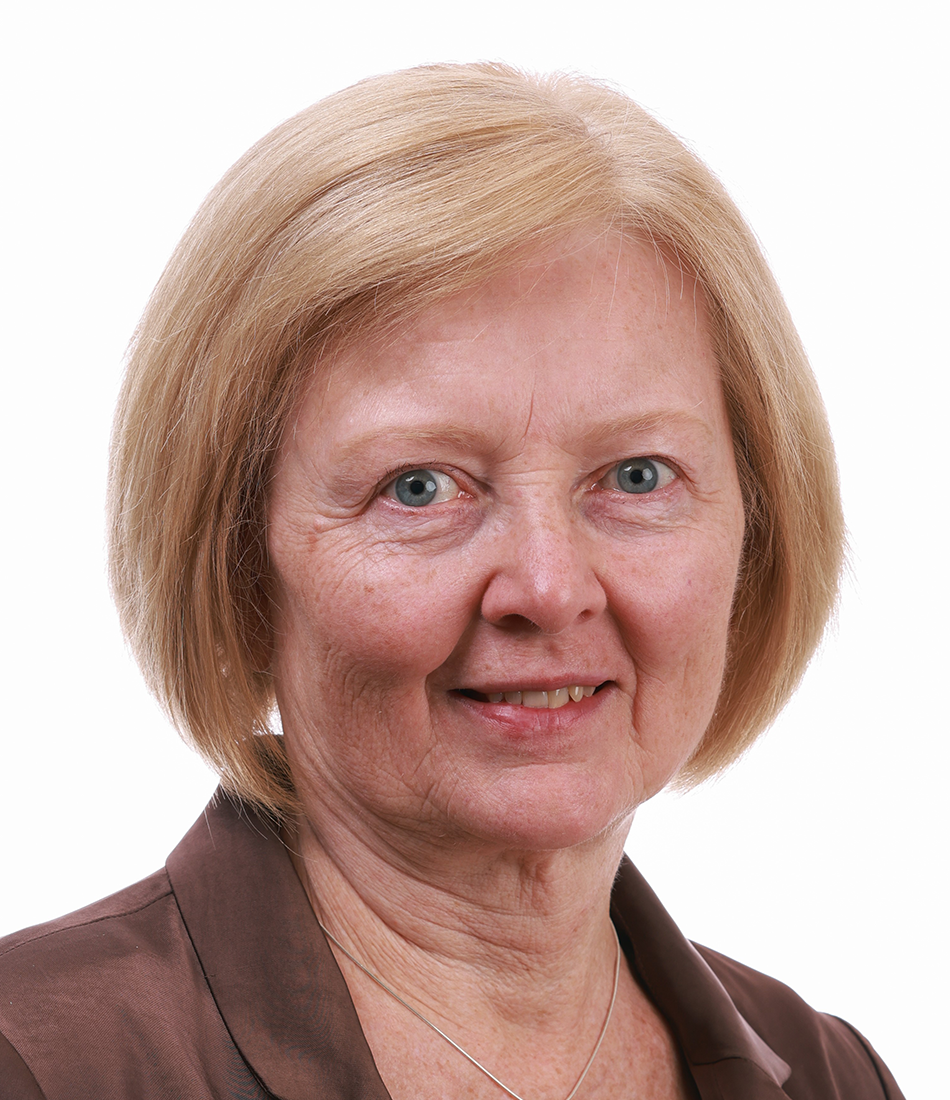
Gayle Restall, O.T. Reg. (MB), Ph.D.
Department of Occupational Therapy, College of Rehabilitation Sciences, Rady Faculty of Health Sciences, Winnipeg, Canada
E-mail: gayle.restall@umanitoba.ca
Key Messages
Occupational therapists have obligations to address structural justice, equity, and rights in their everyday practices.
Occupational therapy is well-positioned to be a profession that promotes structural justice with its focus on promoting opportunities for, and participation in, the occupations that individuals and collectives need and want to do.
Occupational therapists can transform moral imagination and moral courage into critical occupational therapy praxis in pursuit of a more just world.
Footnotes
Acknowledgments
I am grateful to the people who nominated me for this award: Juliette Cooper, Angie Phenix, Leanne Leclair, Kaarina Valavaara, Mary Egan, Sharon Eadie, and the late Joseph Kaufert. Their belief that I am worthy of such an honor is deeply appreciated. Angie Phenix, Kaarina Valavaara, and Mary Egan provided feedback on earlier drafts of the lecture. I am grateful for their friendship and collegiality that continually inspire and challenge me. I thank my husband Louis and daughter Megan, my cherished ancestors, families, and friends for their love and constant reminders of how life's joys and meaning are bound in relationships. Thank you to occupational therapy and interdisciplinary colleagues, mentors, Knowledge Keepers, Elders, and students that I have learned from and with. The countless people with lived experiences of structurally determined vulnerabilities that I have had the privilege to know have shaped my passions and commitments and steered me on better paths.
Funding
This study was supported by the Canadian Association of Occupational Therapists Muriel Driver Lectureship.
