



Abstract
Scaling is both the main goal and the ultimate challenge for industrial small tech firms (STFs). This is particularly true when firms offer complex and innovative digital solutions for industrial applications. We delineate scaling strategies deployed by STFs, uncovering the underlying configuration of activities driving the scaling process. This study reveals a distinctive sequence, where scaling evolves from a common phase of systematic digital solution piloting, into two distinctive strategies called ecosystem scaling (i.e., solution market evaluation, ecosystem development, and horizontal partner-led scaling activities) and servitization scaling (i.e., customer insights mining, service operations development, and vertical customer-led scaling activities).
Scaling presents a significant opportunity and a unique challenge for industrial small tech firms (STFs). Essentially, industrial STFs are small-size firms that leverage rapidly evolving technologies to develop and commercialize digital solutions in B2B industries (e.g., manufacturing, process, mining). STFs are crucial contributors to the economy because they revitalize innovation and drive the digital transformation. 1 The inherent scalability of digital solutions unlocks new value creation opportunities at lower marginal costs through generativity and automation. 2 Indeed, the intangible nature and global reach of digital solutions enable STFs to effectively expand across markets despite the liability of smallness. For instance, the Swedish industrial STF Mobilaris scaled its digital solution to achieve an 800% growth over four years. 3 However, scaling is not easy, and many industrial STFs face critical challenges that increase the complexity of the process.
While STFs hold novel and specialized digital capabilities, they lack the tacit knowledge to identify and engage with the right stakeholders in industrial ecosystems, struggling to move from initial customer interactions. In addition, digital solutions are subject to stringent regulatory compliance and safety standards. These require thorough testing and validation to meet industry-specific requirements, 4 which significantly slow down the scaling process. Moreover, industrial STFs face costly country-specific adaptations when scaling digital solutions across markets, caused by different degrees of cross-border demand heterogeneity, such as changing customer preferences. 5 The dynamic nature of the scaling process over time 6 becomes even more evident for industrial STFs. However, limited research has been undertaken in this domain, and “much is yet to be understood about scaling as an organizational process.” 7
The nascent scaling literature offers insights into what scaling means, 8 but there is a lack of knowledge on how the scaling process emerges and evolves. In other words, prior research fails to unpack the nuances of scaling, such as understanding the emerging barriers and the phases of the process. While digital technologies offer new opportunities to rapidly scale, 9 industrial STFs still face complexity along the process, calling for an in-depth analysis of how scaling unfolds over time. In addition, further research is needed to identify the different strategies—sequence and prioritization of specific activities—deployed to manage the scaling process. While there is no uniform activity pattern that drives success, 10 identifying the underlying configuration of activities that enable the scaling of digital solutions is essential to enhance industrial STFs’ ability to manage the scaling process. By uncovering the micro-foundations of the scaling process, 11 our study examines how the process unfolds (i.e., barriers and phases) and which strategies (i.e., underlying configuration of activities) drive industrial STFs’ effective scaling of digital solutions. We build on in-depth case studies where we explore and understand the nuances of the scaling process from the perspective of key informants in four industrial STFs. In doing so, we answer to the recent call by Coviello et al. for a “fine-grained view of what firms need ‘to do’ to initiate and support the scaling process.” 12
Our findings reveal that industrial STFs face three main barriers to scaling: eternal proof of concept, industrial inertia, and resource drought. We further delineate the scaling process sequence, where STFs move from a common starting phase—namely, systematic digital solution piloting—into two distinctive scaling strategies, which we refer to as the ecosystem scaling strategy and the servitization scaling strategy. In addition, we provide a detailed understanding of the sensing, reconfiguration, and growth activities comprising each of the strategies in the scaling process.
Understanding the Field: Market Scaling, Process, and Strategies
Even though scaling has been a trending topic among practitioners in recent decades, scaling as a theoretical concept has scarcely been explored in academia. 13 This has led to the emergence of various definitions according to the focus of scaling being the impact (e.g., social impact), 14 the outcome (e.g., economies of scale), 15 the business (e.g., capabilities), 16 and the market (e.g., internationalization). 17 For this study, we adopt the definition of market scaling 18 as the process where a firm expands its customer base in local and/or international markets, and we focus on exploring how industrial STFs increase the number of customers who adopt and implement their innovative digital solutions.
Market scaling of digital solutions has caught increasing attention from scholars in recent years, providing us with novel insights. First, studies by Huang et al. 19 and Schou 20 show that the scaling of digital solutions brings about tensions that require the firm’s adaptation to fit the new context. Indeed, the scaling process implies an internal transformation to fit the emerging opportunities brought by digital technologies, yet little is known about STFs’ ability to manage the complexity (i.e., barriers) of the scaling process in an industrial context. Second, Tatarinov et al. stress the importance of co-creation to enhance the market scaling of digital solutions across borders. 21 Although the generativity of digital solutions can accelerate expansion at a global scale, 22 there is limited knowledge about when (i.e., phases) to leverage such opportunities in the scaling process. Third, Giustiziero et al. argue that the scaling process is enabled by the firm’s intensive resource allocation in a focal high-priority activity. 23 Whether specialization enables the scaling of digital solutions, further research is needed to identify the effective strategies (i.e., the underlying configuration of activities) driving the scaling process of industrial STFs.
The market scaling literature recognizes the presence of different strategies by arguing that there is no uniform activity pattern but rather a diversity of configurations. For instance, Jansen et al. 24 identify three scaling dimensions: expansion (broadening of a firm’s customer base, turnover, or scope of activities), replication (practices that allow firms to disseminate and implement solutions on a larger scale), and synchronization (establishing a coherent architecture that drives the coordinated mobilization of resources over time). Mula et al. 25 further confirm the importance of synchronization, where building organizational capacity emerged as a key priority followed by continuous process innovation. Even though these studies demonstrate the dynamic nature of scaling, current knowledge falls short in providing rich insights into the configuration (i.e., sequence and prioritization of activities) leveraged by industrial STFs’ scaling strategies.
Method
This study builds on the empirical exploration of different strategies that industrial STFs deploy to scale digital solutions. We collected data from informants in four STF cases operating in the mining, processing, and manufacturing industries. The selection of cases was first informed by preliminary interviews with small firms known to be industrial providers of digital solutions. We followed a purposive strategy to select a rich and diverse sample according to the following selection criteria: 26
The industrial STF must be currently engaged in market scaling activities, meaning the process of expanding the customer base in current and/or new customer segments in local and/or international markets;
The digital solution must have an innovative component, meaning a digital technology that is either new or not widely adopted for the particular industrial application; and
The target customers must engage in industrial process operations, meaning their core activity is not related to digital technologies and their applications.
Scaling is directly influenced by the characteristics of the firm and its embedded context. The selected cases were particularly interesting due to their diverse digital solutions and industries while experiencing similar challenges and goals in relation to the scaling process. Given the small size of the cases, we focused on recruiting the founder and/or CEO of the firm and on strategic roles with decision-making power in the scaling process to ensure quality and breadth of data from informants. A description of cases and informants can be found in Table 1.
Description of Industrial STF Cases and Informants.
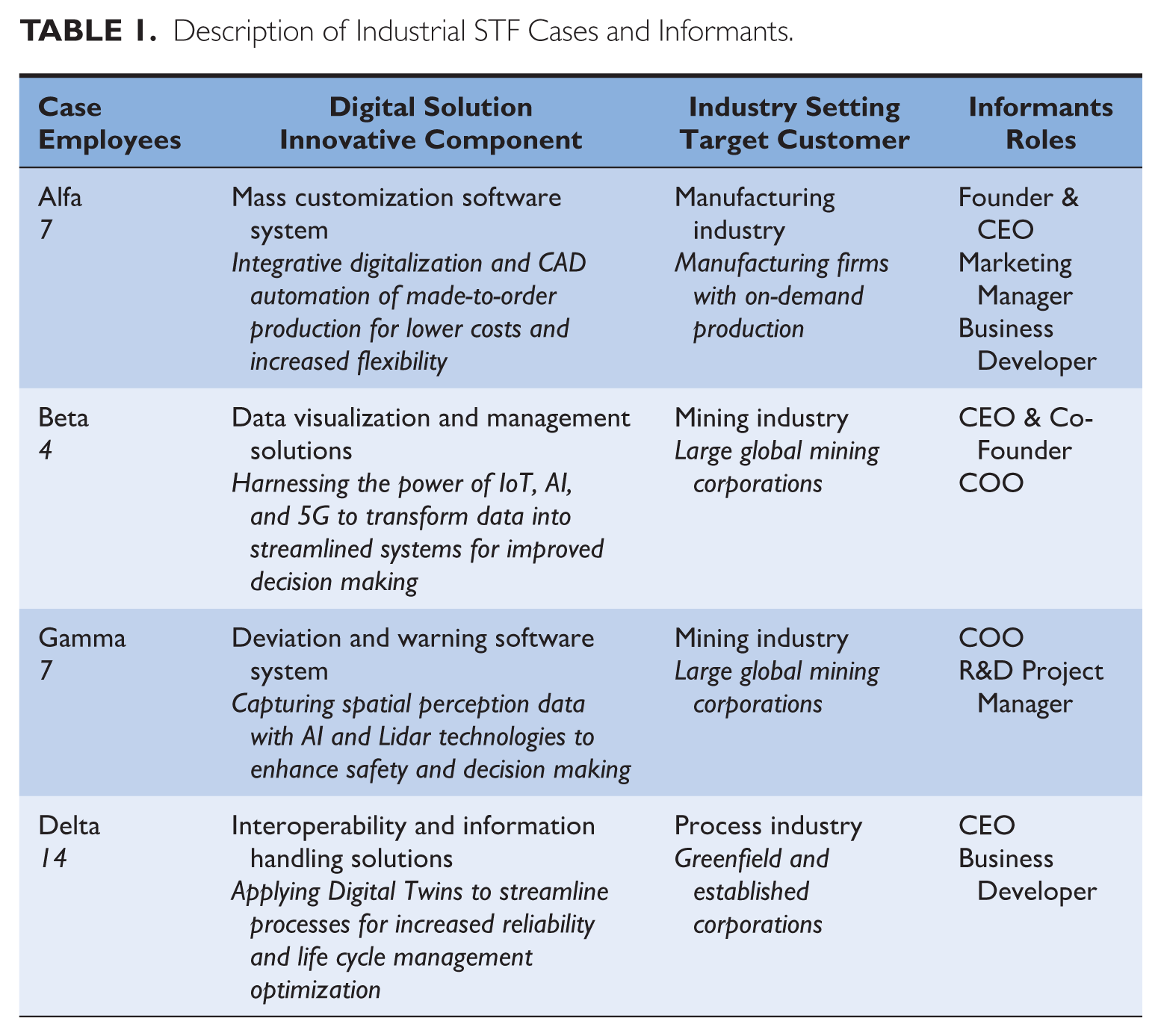
The data collection relied on multiple data sources, with the main methods involving interviews and focus groups over a six-month period. Interviews provided informants with a dedicated time to share their opinions and experiences in detail, ensuring the richness and quality of data from the STFs’ scaling process. While scaling is the ultimate goal, the underlying strategies are not consciously lined up, but rather emerge and evolve with the firms’ routine activities. To capture such configurations that are habit ridden and not usually thought out in detail, three focus groups were developed where the case firms collectively shared their insights. Information shared during interactions with informants was recorded and transcribed, and field notes were taken during the focus groups to capture the multiple and diverse views of informants. 27 The combination of primary data through collective focus groups and individual interviews enabled us to garner the richness and depth of data necessary to understand the particularities and similarities of STFs’ market scaling process and strategies.
The data collection process started with initial in-depth interviews to become familiar with the STFs’ scaling process through a semi-structured guide, including questions about digital solutions, customer engagement, competitors, scaling goals, and challenges. Thematic analysis was used to identify the crucial aspects of STF scaling journeys, resulting in three main themes: catalysts & drawbacks, customer engagement, and ecosystem development. Focus group interviews were conducted to validate the themes and obtain the buy-in from STF informants to participate. We refined the focus group design based on the STFs’ feedback and ran the first session on catalysts & drawbacks, with subsequent focus groups running periodically. Focus groups were moderated by two of the authors, shifting between leader (guiding the interactions) and follower (notetaking and timekeeping). They encouraged informants, used cues, and asked probing questions to achieve depth in the discussions while allowing informants the freedom to share ideas and experiences. 28 Consensus and disagreements were identified, and underlying motives were explored further in follow-up and concluding interviews to obtain a clear picture of participants’ perspectives.
The data analysis was developed following the systematic constant comparative method characteristic of qualitative research, 29 where data were interpreted and coded in multiple iterations within and across cases until a robust and reliable explanation of the phenomenon was achieved. Given our focus on how the scaling process unfolds for industrial STFs, we coded the data into four main themes. Barriers to scaling consist of the elements that negatively impact STFs’ scaling process. Data from initial interviews and focus group 1 were coded into barriers, and further refined through follow-up interviews and subsequent focus groups, where details were provided by informants when discussing particular experiences. The identified barriers were experienced by all the STFs to some extent, impacting their ability to scale throughout the process. We further identified the phases in the scaling process, starting with systematic digital solution piloting and evolving into two differentiated strategies, ecosystem and servitization. It quickly became apparent that the pilot phase was common to all STFs as it surfaced in initial interviews and was further discussed during focus group 1. The strategies, on the other hand, were less obvious at the beginning but emerged as distinctive in focus groups 2 and 3. We identified patterns in the analysis based on STFs’ stance on either partner-driven (Alfa and Gamma) or customer-driven (Beta and Delta) activities, regarding their impact and priority in enabling the scaling progression. The coding process was iterative in nature, with patterns emerging early during the initial interviews. These were further assessed and combined with focus group data, and then refined through follow-up interviews. Data from concluding interviews confirmed our insights and ensured that we accurately portrayed the scaling experiences of the STFs.
To ensure rigor, the coding process was developed by two members from the team of authors and further reviewed by the other two. Thus, the findings are the result of a consensus of the professional and independent views of the team of authors, where any discrepancy during the data analysis was discussed and reviewed until a common decision was achieved. Furthermore, the collection of several sources of evidence (i.e., interviews, focus groups) over a six-month period meant that an efficient and effective saturation of categories was achieved. Therefore, the depth of data collected supports the quality of the findings as enacted by the STFs. Last, we validated our final insights with the informants, reducing the impact of subjective bias and confirming that the data interpretation reflects the reality of the cases.
Understanding the Scaling Process of Industrial STFs
The analysis revealed how market scaling unfolds for industrial STFs (see Figure 1). First, we conceptualize three fundamental barriers that impede the market scaling of STFs (eternal proof of concept, industrial inertia, and resource drought). Second, we illustrate how STFs overcome these barriers in the scaling process. Specifically, we detail how the scaling process starts with systematic digital solution piloting (phase 0) and then bifurcates into two distinctive strategies (phases 1-3)—namely, ecosystem and servitization scaling strategies. Our findings identify when in the process each scaling strategy becomes evident, and we provide a detailed understanding of the emerging configuration of sensing (phase 1), reconfiguration (phase 2), and growth (phase 3) activities underlying the successful achievement of market scaling outcomes. Accordingly, market scaling outcomes include increasing sales to their current customer base, reaching new customer segments through their digital solution, and entering new regions and markets.
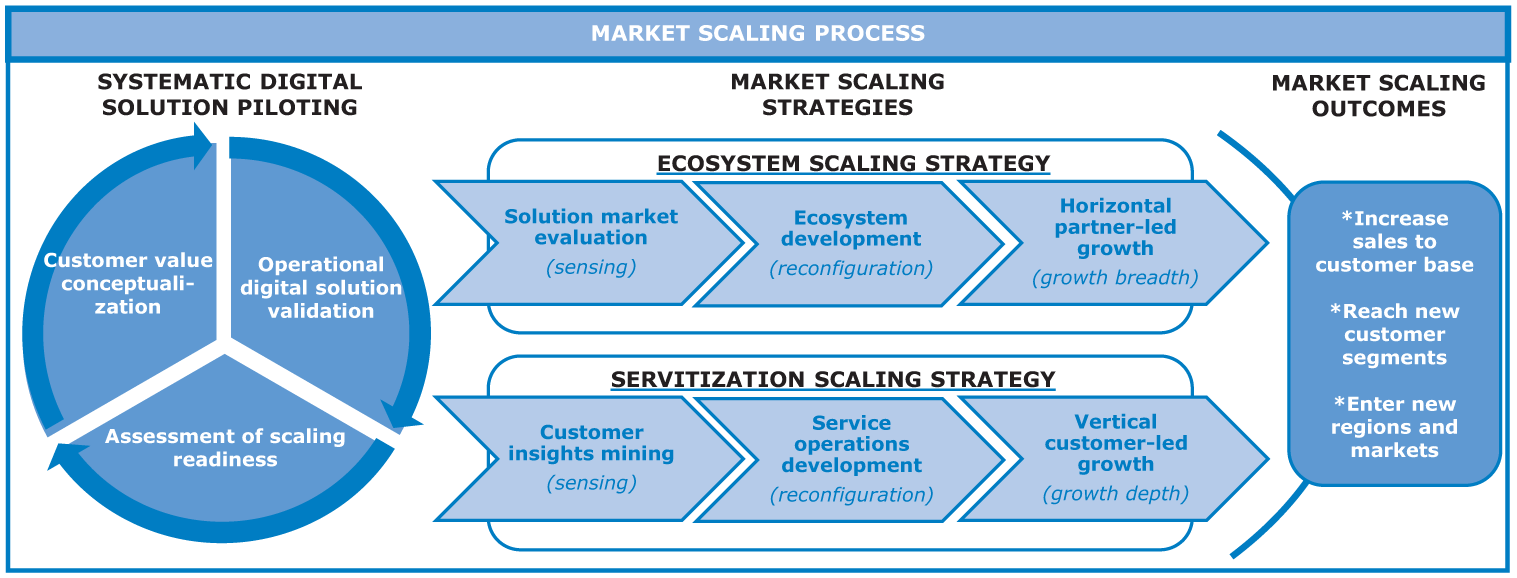
A framework for market scaling of digital solutions.
Market Scaling Barriers
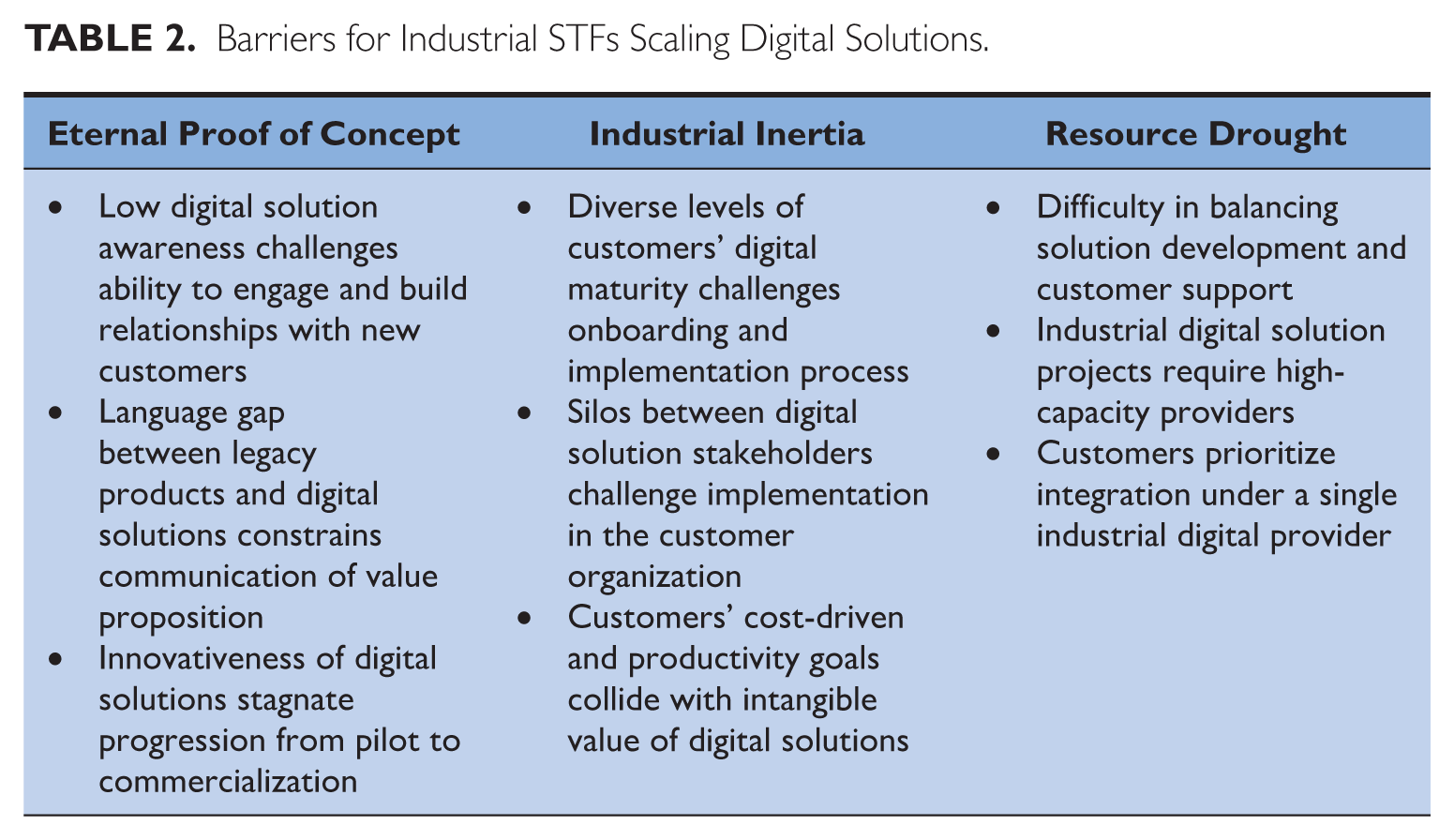
Table 2 provides a detailed overview of the market scaling barriers encountered by STFs. Each barrier is classified and explained according to the perspectives and experiences of industrial STFs aiming to scale digital solutions. Barriers emerge and are present throughout the entire scaling process, varying in their impact as STFs learn how to best overcome them.
Barriers for Industrial STFs Scaling Digital Solutions.
Eternal Proof of Concept
A common barrier among informants was being stuck in an eternal proof of concept with their digital solutions. This means that industrial STFs are constrained by constantly needing to demonstrate a proof of concept, recurrently testing and refining solutions without progressing in their scaling process. While physical products have established protocols to be tested and validated, digital solutions are faced with a lack of awareness where their value and viability are constantly called into question. The novelty of the digital solution also translates into a language gap, making it hard to find the right ways to communicate the value proposition to the customer. Accordingly, informants complained about constantly being put in the “piloting box” where industrial STFs experience delays in the decision to invest in the digital solution. The problem arises when trying to bring the solution forward into production where, as pointed out by the R&D Project Manager of Gamma, the process stagnates, remaining in a pilot limbo without clear prospects of commercialization:
To go from the [R&D] department to the production, there is a huge gap. This is something which right now it is very difficult to find a way over . . . We have several projects so far that we proved the concept, we showed that it works, we showed the results. They were really happy with the results. And there is no moving forward.
Industrial Inertia
We found industrial inertia to be a common barrier experienced by industrial STFs when trying to scale digital solutions. Industrial inertia refers to the STFs’ perceived organizational resistance of customers to adopt new digital solutions. For example, informants highlighted they experienced considerable variation in digital maturity across industries and even within the same firm, adding complexity to the onboarding of new customers and the implementation of digital solutions. In addition, the digital solution requires a holistic approach, where several decision makers in the customer organization must be convinced to move forward with the implementation decision. Informants pointed to the difficulty in reaching agreements due to the presence of silos and described how individual bubbles led to inertia instead of adoption. For instance, the CEO of Delta described the sub-optimal outcomes of dealing with silos while highlighting the need for a holistic approach in the customer organization to successfully implement the digital solution:
[Employees in the customer organization] must look through the whole company, you can’t just focus on your work, what you are doing, development, engineering, production, and so on. You need to work more holistically. Which means that you need to come together and make a decision jointly, not just from [your] perspective, so that’s a thing that I would also think is a problem.
Informants pointed to the goals of potential customers as a source of inertia and a roadblock to scaling. STFs noted that customers focus on costs and productivity, a goal that collides with the intangible value of digital solutions. While the value of physical products is easily quantifiable, the value of digital solutions tends to evolve over time because it requires a period of adaptation and internal changes. As explained by the Founder and CEO of Alfa, if the focus is on the price tag, there is little room for discussion about the value and the changes required for the customer to experience the benefits of the digital solution:
[The] problem is those who want to specify everything upfront before they take the first step . . . But, it always changes . . . Those who cannot [start] without knowing the exact cost of the entire transformation, they usually fail. Because they can’t get the investments for change or anything like that . . . since they don’t know what they’re buying.
Resource Drought
A key scaling barrier is resource drought, which relates to the intrinsic resource adversities faced by industrial STFs due to their size and capacity constraints. While STFs are agile in adapting the digital solution to fit specific needs, informants highlighted the need to provide extensive customer support to use and leverage the solution. This demanding task leads to a hard-to-balance trade-off, where customer support deflects their limited resources from other scaling demands, such as solution development. The COO of Gamma explained the firm’s experience of wearing several hats simultaneously to provide the digital solution, given its limited capacity:
The industrial customer has these expectations, and it’s hard for a small company to manage this . . . Now we are acting like the distributor, and service provider, and the researcher, we are like in all roles at the same time . . . We already know that we shouldn’t do what we are doing today because it takes all the resources for product development.
In addition, the provision of industrial digital solutions tends to happen within the umbrella of large-scope projects, which is challenging for STFs to accommodate with their limited resources. Informants expressed their concerns about the commitment required in such projects, which exceeds their capacity. According to STFs, this situation is aggravated by the wish of customers to integrate digital solutions under a single provider. For instance, the Founder and CEO of Alfa described how the provision of digital solutions to large customers required a scope that was too big to handle by a small firm:
We still see a lot of that, especially the larger customers that have this requirement, “we don’t care if it’s a bad approach, we want one contract to buy, and it should solve all the problems in the future.” And then . . . you have to make sure all the pieces are in place. [What] we think is easier, is that you don’t buy one, you buy many. Maybe it is one core system that you decide on, and then it is possible to add to this and extend it all the time.
Systematic Digital Solution Piloting (Phase 0)
The market scaling process of industrial STFs starts with a piloting phase to conceptualize customer value and validate the digital solution in the market. Our findings indicate that STFs learn to follow a systematic and iterative approach, where the goal is to identify and learn about the digital solution configuration that best satisfies customer needs. This phase concludes with an internal assessment of scaling readiness, which sets the scene for the subsequent pursuit of the scaling strategy. Informants highlighted the enabling role of the pilot to gain legitimacy and awareness in the market, catalyzing the scaling process from common validation into the selective expansion phase.
Several activities are deployed to conceptualize customer value at the start of the scaling process. First, informants pointed to the identification and examination of key industry players to map the value of the digital solution against representative customer needs. Second, relationship-building activities, such as engaging in customer visits, enabled them to identify problem owners’ most pressing needs and set priority areas accordingly. Last, openness to adapt to customer requests increases the likelihood of achieving a winning digital solution configuration. For example, the COO of Gamma explained how co-developing a new digital application strengthened Gamma’s position by demonstrating the capacity to solve a persistent problem in the customer organization:
So, the idea came from them [the customer]. Because we were always focusing on ‘how can we help you?’ And they came up with an idea to [digital application] . . . We said that we don’t have this today, but we can develop it, if you want it. . . . because no one has ever solved it. And they had that need . . . I think it was a challenge in the beginning, but if you solve it, they see your capacity.
Next, the focus is to achieve the operational validation of the digital solution through targeted testing and experimentation in key customer operations. Our findings show how industrial STFs adopt a total care role in this step, assisting in the adoption and integration of the digital solution as well as providing ongoing support and training to the customer. These activities, according to the informants, are crucial in enabling customer exploitation of the digital solution. As pointed out by the Founder and CEO of Alfa, when discussing the early phase in the scaling process, time and effort are put into providing services to ease customers’ change management:
And from our experience, when we’ve been working, when we started, we provided a lot of services. Because that’s how we got our software out, we were out there, we were helping with doing and assisting with change management because the customers didn’t solve it themselves.
The closeness to the customer during these activities enables the continuous refinement of the digital solution. Informants explained how they build on the emerging insights and the lessons acquired from the validation process to adapt and align the digital solution in an agile manner. Iterations between activities take place until the digital solution configuration that best solves customer needs is achieved.
At this point, the internal assessment of scaling readiness takes place, signaling the moment when the progression to a particular scaling strategy becomes evident. Informants stressed the importance of documenting and capturing the customer pilots in the form of attractive success stories, which granted the legitimacy needed to embark on the next step in their scaling process. For instance, the R&D Project Manager of Gamma explained how they convinced prospective customers about the digital solution by building on use cases with established industrial firms, which enabled them to move to the next scaling stage:
I believe that without stage one, stage two wouldn’t be possible. Because no one would believe that this is actually possible. But if they see those use cases up and running online, they see it’s working.
The awareness and credibility gained open new opportunities in the market, and it is time to focus on the growth phase of the journey. Before moving on, several actions are taken to optimize their limited capacity and to be ready to achieve the desired scalability. The analysis revealed how STFs gauge the internal resources and competencies to know their preparedness to address further scaling demands. In addition, weighing core and complementary roles is used to determine their ability to fulfill additional scaling responsibilities. Informants described how such activities result in an understanding of the strengths and weaknesses governing scaling prospects, which evidence the progression to the next phase in the scaling process. For instance, the Business Developer of Delta highlighted their competitive advantage in providing digitalization support to customers in comparison to the general approach of competitors:
We are working with business development from the informational digital point of view, and there are a lot of competitors that have services from the general point of view . . . But we are, with our experience from how to handle this and the support in the systems, in an area that is quite unique for us because there aren’t that many companies that have that kind of skills.
Market Scaling Strategies (Phases 1-3)
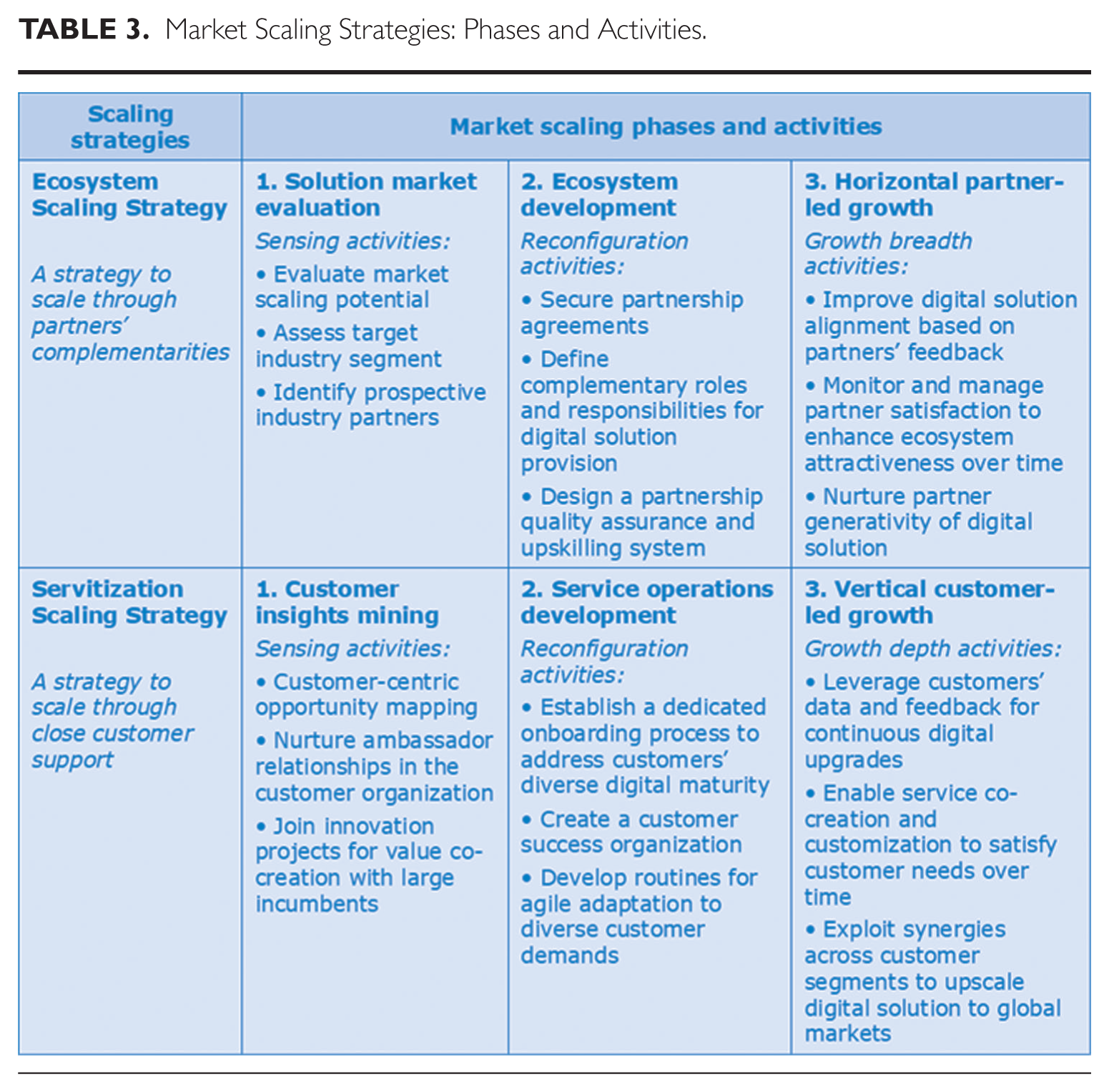
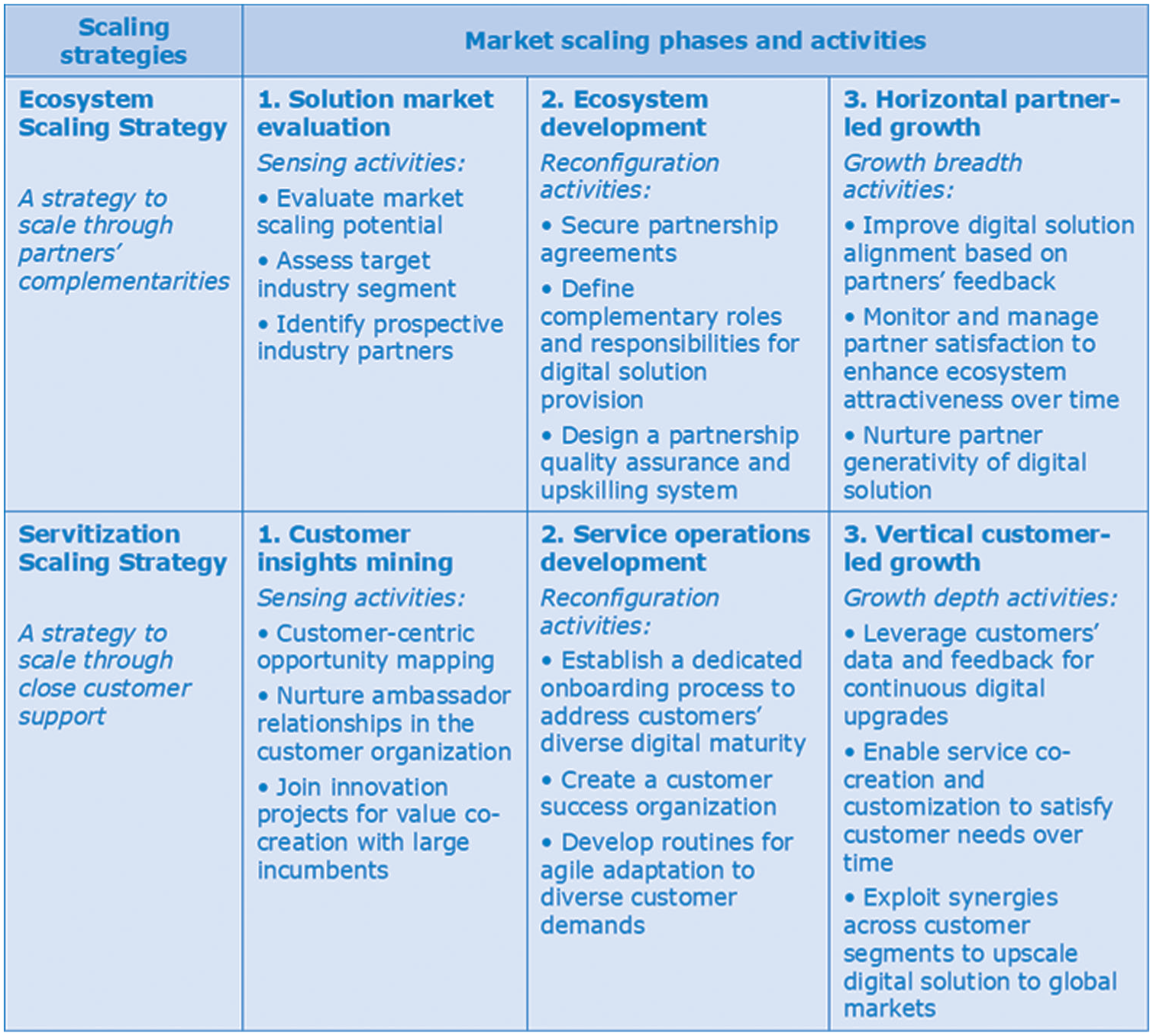
The completion of the pilot allows for a transition where new scaling opportunities become available for STFs to leverage and exploit. Our findings identify two distinctive configuration patterns—an ecosystem scaling strategy and a servitization scaling strategy. While different in content, we found a pattern in the sequence of emerging sensing, reconfiguration, and growth activities (Table 3). Sensing (phase 1) refers to the activities deployed to identify, assess, and explore the scaling opportunities. Reconfiguration (phase 2) comprises the activities that mobilize and transform resources and operations to exploit the scaling opportunities. Growth (phase 3) includes the activities developed to capture and leverage the scaling outcomes over time.
Market Scaling Strategies: Phases and Activities.
Ecosystem Scaling Strategy
In the ecosystem scaling strategy, STFs rely on partners’ complementarities for sustained growth and continuous development of the digital solution. The analysis revealed that sensing takes place through solution market evaluation activities, that reconfiguration happens through ecosystem development activities, and that growth occurs through horizontal partner-led growth activities.
Solution market evaluation essentially relates to sensing activities deployed to understand the expansion potential of the digital solution. First, STFs analyze multiple industries and segments to evaluate the market scaling potential. Once the target industry segment has been identified, informants described progressing to an in-depth assessment to gain relevant insights into customers’ pains and gains, key existing players in the industry, and competing and complementary solutions, among others. The market intelligence acquired during these activities provides the building blocks to set the appropriate scaling goals in the industry. For instance, the Founder and CEO of Alfa described how they identified and assessed the technical requirements for the digital solution to best scale in the manufacturing industry:
Essentially, there are two types of software working for the industry now. In our terms, it’s new cloud software and its legacy systems. There are like essentially conditions you have to deal with to actually be one of the new clouds . . . So we really worked hard to stay in that field of the new modern cloud services . . . depending on which manufacturing system and what [customers] have chosen, we adapt to make sure it fits with that.
Finally, informants expressed how they conclude the market evaluation by identifying prospective industry partners to support the scaling journey. Here, selection criteria are established according to the demands of the segment, such as solution fit, delivery network, cultural fit, and customer access, to find the most appropriate partners.
Concerning ecosystem development, reconfiguration takes place through the mobilization of resources and the transformation of processes to synchronize activities with their scaling goals in the selected industry segment. First, securing partnership agreements is a cornerstone activity to ensure that the right support is on board and aligned with the scaling goals. Gamma explained their experience and described how agreements can also emerge unexpectedly:
Now we are trying to build the ecosystem, then we can also push it, like which part do we want to do, or we can activate others to take different roles. So that’s very interesting . . . It is evolving quite fast . . . And a conversation we had, which many came like nothing, sometimes a small meeting, and that is taking our system to the U.S. market. There are a lot of unexpected moves as well.
Second, the analysis revealed that defining complementary roles and responsibilities among partners is a crucial activity to satisfy the effective provision of the digital solution. Indeed, informants agreed that decisions on what not to do help to optimize the allocation of limited time and resources. For instance, the Founder and CEO of Alfa explained how delegating intensive customer-relationship tasks to specialized support partners during the onboarding and implementation of the digital solution facilitates the streamlining of the scaling process in favor of more rewarding activities:
We could employ more people providing professional services, because it’s a lot of help needed in the industry . . . You can get paid for this, but we want to sell [digital solution] . . . So instead of [doing it ourselves], we give leads for those companies that have a year or two before being ready for this, because they have so many things to decide on internally. Those we usually bounce, we say talk to these people, and they take care of it, and they can make a lot of money from it. But then we can streamline and focus on what we want to do . . . When those are ready to start, we will make sure right away to go out online in weeks.
Last, the findings point to the need to design a partnership quality assurance and upskilling system to maintain the desired performance in the ecosystem. This activity requires close monitoring, assessing, and managing of partners to foresee and mitigate any conflicts while enhancing synergies in the ecosystem. Given the variety of actors, enforcing transparency through open communication and disclosure is crucial in maintaining a quality performing ecosystem.
The last set of activities in the ecosystem scaling strategy refers to horizontal partner-led growth, where replication occurs through partners’ extended impact, maximizing scaling breadth. The findings revealed how STFs leverage partners’ feedback to continuously improve alignment of the digital solution with ecosystem needs. In addition, informants stressed the need to monitor satisfaction and manage competing forces to prioritize synergies in the ecosystem, enhancing their attractiveness to current and potential partners over time. As a result, alignment and commitment from partners drive digital solution sales in the ecosystem, with new partners coming into play to jointly satisfy the changing needs of the customer base.
Breadth in growth also occurs through generativity in the ecosystem, where partners are encouraged to augment and upgrade the digital solution. To nurture generativity, informants pointed to the role of open systems, modularity, and standardization during the design and provision of the digital solution, facilitating the integration of partners’ new applications and functionalities. Thus, the ecosystem contributes to the replication of the digital solution and its scalability to new customer segments and markets. For instance, the R&D Project Manager of Gamma explained how partners increase the adoption rate of new customers, offering the digital solution in a combined package with additional integrations:
And another is a hardware provider . . . They are promoting us on their channels as well . . . So basically, they’re advertising us on their website. And with [partner], this is quite early in the relationship, but they’re already borrowing our system to go to the trade show to showcase their software based on our system . . . We would like to have a network of integrators of our software. Because our software is only one part of the solution, but there is more to have a full solution . . . And in this way, we could reach many more customers much quicker and much easier.
Servitization Scaling Strategy
In the servitization scaling strategy, STFs rely on close customer support for sustained growth and continuous development of the digital solution. The analysis revealed that sensing takes place through customer insights mining activities, that reconfiguration happens through service operations development activities, and that growth occurs through vertical customer-led growth activities.
Customer insights mining refers to sensing activities aimed at exploring the expansion potential of key customer relationships. First, STFs adopt a customer-centric approach to map emerging opportunities based on customer needs, goals, and challenges. For instance, informants explained the development of scaling route maps that illustrate potential areas for expansion and innovation in collaboration with customers. In addition, they identify and nurture the relationship with ambassadors who open doors and promote the digital solution in the customer organization. Such individuals understand the value of the solution and are willing to educate others, creating internal legitimacy that promotes rapid adoption. For example, the Business Developer of Delta explained the relevance of ambassadors in spreading the word about their digital solution and convincing additional stakeholders in large firms:
It’s important that we talk to the right people . . . based on what kind of person or understanding you have, not a specific kind of role in the company . . . We need to try to get them to help us convince their colleagues . . . I think it’s very important for us to have the help of these kinds of ambassadors . . . that can help us to educate and describe and explain the value of this kind of solution.
Customer insights are also acquired through joint innovation projects with large industrial incumbents, where value co-creation drives collaboration between the parties. Such activity enables early alignment to meet specific industry needs. For instance, the CEO and Co-Founder of Beta explained how iterations to the digital solution in collaboration with a key customer resulted in the right configuration to match the industry’s evolving demands:
We go early to the customer, we might not have a finished product, but we go to them, and we start testing, we get feedback, we can prove it, and then we come back again. So, we do these iterations not in our lab, but together with the customer, and they get to influence how the system works . . . That really made us able to fine-tune the solution to at least what we think the market is looking for.
With service operations development, reconfiguration takes place through the establishment of a customer-centric architecture that enables the synchronization of activities with the rapidly changing and diverse industry needs. First, STFs establish a dedicated onboarding process to address the different levels of customers’ digital maturity. For instance, informants described how educational and training programs are customized to suit the digitalization needs of customers and facilitate the adoption of innovative solutions. In the words of the CEO of Delta, it is a customized case-by-case process to fit the particularities of each customer:
Yeah, case by case . . . So it’s more like a membership, educate the user so he doesn’t need to go back to his manager and say, “Oh, I need to understand, like I need some training” . . . it’s almost every time some customization for the customer. What kind of products do they have? How are they working? And so on, so it’s often very much customized services.
Second, customized support is not only needed during onboarding, but throughout the adoption and implementation processes. The findings pointed to the creation of a customer success organization to monitor, assess, and synchronize processes in an agile manner. Such dedicated units support a flexible approach to meeting current customer needs while identifying further development opportunities. In the words of the COO of Beta, scaling the digital solution requires support from an organization that takes care of managing customers’ emerging goals and problems in a thorough manner:
What we need is a support organization . . . as soon as we start getting larger installation of this [digital solution], we need support from an organization that works with support day in and day out. But we realized that we need to have the information and the communication with the customer because otherwise we are blind to changes, problems, ideas, or whatever that we need, just to see how we can develop things further. And how should we do to give the customer what they need in the way they need it and have a stable and functional service.
Last, ongoing service operations are complemented with new routines to enable an agile adaptation to the diversity and evolution of customer demands. Informants highlighted that customer success is tightly linked to being close to their operations, assessing patterns and predicting upcoming demands to rapidly implement the changes required to continuously support customers’ goals.
The last set of activities in the servitization scaling pathway refers to vertical customer-led growth, where replication occurs through customers’ extended impact, which maximizes scaling depth. A common activity emerging from the analysis is to leverage customers’ data and feedback for continuous upgrades of the digital solution. For instance, informants described building on close relationships to deploy agile modifications that deliver added value to the customer’s usage experience. In addition, informants portrayed a deep focus on service co-creation, letting the needs of customers guide the scaling process. As a result, agile adaptation and customization drive digital solution sales, where value for the customer base evolves in line with the emerging demands of the industry.
Depth in growth also occurs with new customers and segments, where STFs exploit cross-industry synergies to upscale the digital solution to global markets. While adoption is a slow process, informants were shown to leverage the acquired lessons and brand awareness to enter new regions and markets. Informants explained how meeting the demanding needs of the selected industry segment already surpasses the expectations of customers in additional local and international segments, opening the path to global scalability. For instance, the CEO and Co-Founder of Beta highlighted the advantage of having extensive experience with their key customer base to reach replication in additional segments and markets:
From the start, even though we would do a really hard focus on [industry segment] . . . we decided to diversify and also do other things that are not dependent on just a few [large firms] . . . And what we have seen when we say that the solution was designed for [industry segment] with the requirements on robustness and so on and so forth, that gives a little bit of advantage in comparison to others.
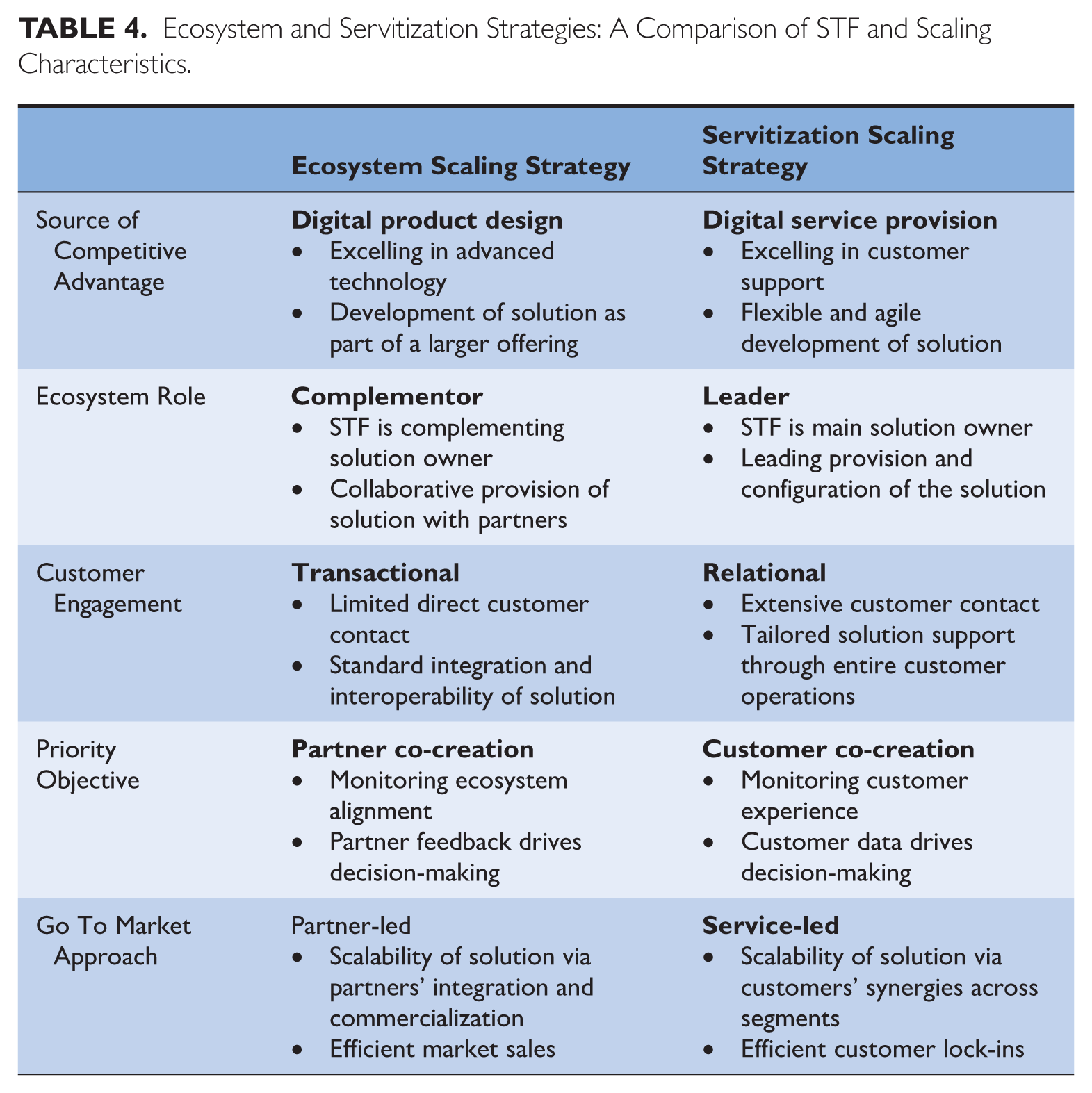
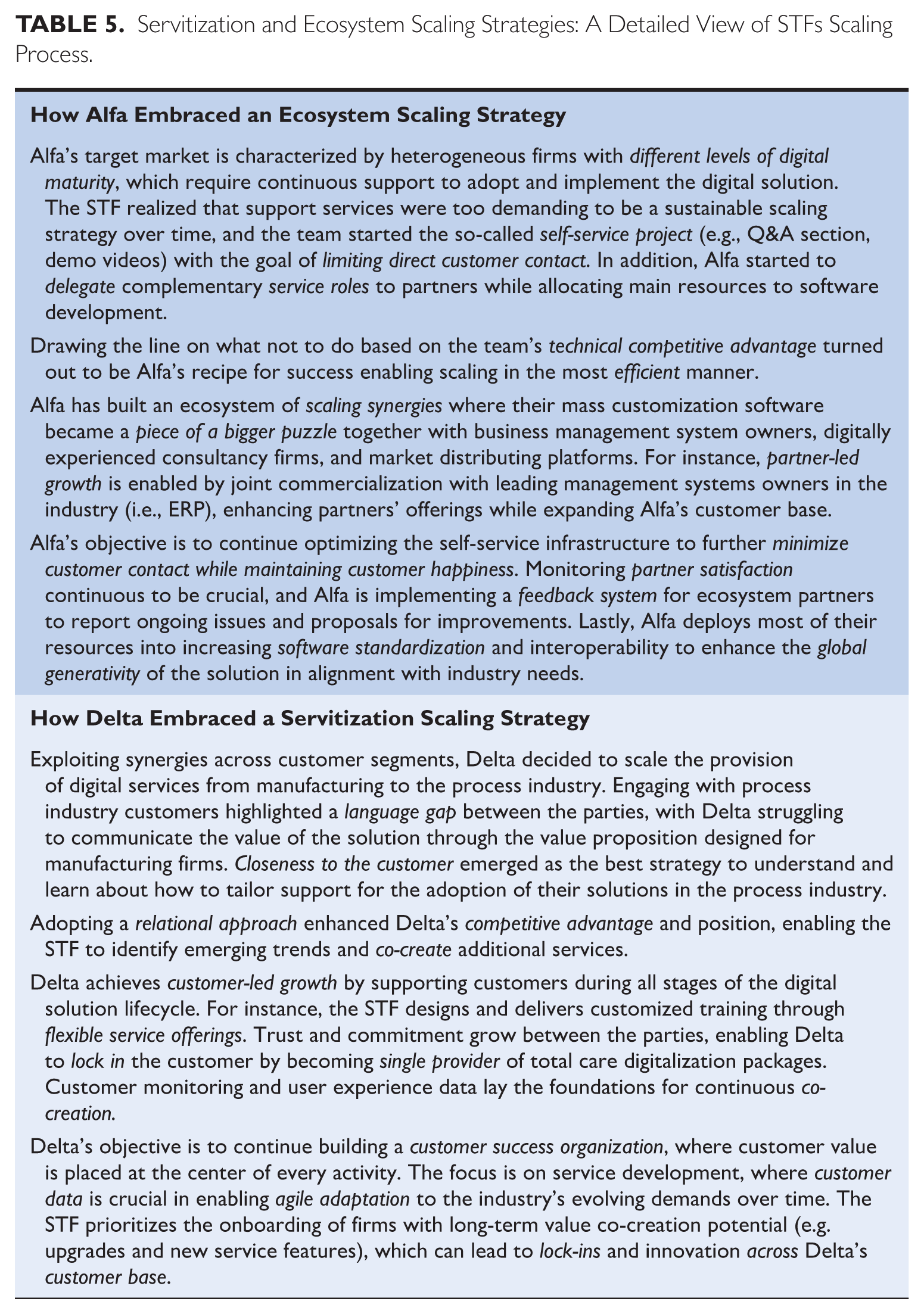
To conclude, Table 4 provides a comparison of both strategies where there is an alignment between the characteristics of the STFs undertaking the strategy and the features driving the underlying configuration of activities. We further exemplify the strategic choices made by STFs through a detailed description of Alfa’s and Delta’s scaling strategies, highlighting how the process unfolds, overcome barriers, and achieve market scaling (Table 5).
Ecosystem and Servitization Strategies: A Comparison of STF and Scaling Characteristics.
Servitization and Ecosystem Scaling Strategies: A Detailed View of STFs Scaling Process.
Alfa comprises a team of 7 engineers that provide mass customization software to manufacturing firms with on-demand production. The software is designed to be embedded in digital platform systems where customers and partners can further develop its functionalities through extended features and applications. The below quote from the Founder and CEO summarizes the ecosystem scaling strategy of Alfa:
Since the last three years, we’ve been focusing on the [digital product] . . . Historically, we sold more services . . . But now we’re focusing on making sure that they prefer to do it themselves or the partners, and we can get cash flow from the product instead of the services . . . we have focused on providing the puzzle pieces instead of being the whole provider because then we need to be so big to solve their needs . . . We have decided to be on the other end of the scale. Because technology is the thing we’re good at, so we’re leveraging that.
Delta, on the other hand, consists of 14 specialists in life cycle optimization and information handling for industrial firms to realize the benefits of digitalization. While using digital tools is important, the STF prioritizes the adoption and integration of new ways of working in the customer organization. The below quote from the CEO summarizes the servitization scaling strategy of Delta:
We started it off more than ten years ago, with a focus on selling software. But we . . . found out that our area where we can grow it is actually services . . . You can’t rely on the customer taking care of adoption and really make things happen to see the benefits . . . it’s important for us to be there . . . It’s important to work for customer success, helping the customer to gain value, . . . and they need to see that they can continue buying services from us . . . So we are focusing more on building a [customer support] organization . . . We think that our services are needed by our customers, and we are also focusing on not just finding a customer but finding the right customer . . . where we can gain from cooperating.
Conclusions and Implications
By investigating how industrial STFs scale digital solutions, we uncovered the micro-foundations of the scaling process in terms of barriers, phases, strategies, and activities, thus contributing to the scaling literature in several ways.
First, there are several unique ways in which industrial STFs scale. We identify how scaling follows a sequential order from a common starting point into two distinctive scaling strategies, contributing to the understanding of scaling priorities and their evolution between phases of diverse scaling intensity. 30 We further unveil the richness of the strategies through the underlying configuration of activities—sensing, reconfiguration, and growth—expanding the understanding of large-scale market commercialization of digital solutions. 31
Second, an internal transformation of the firm occurs during the scaling process. We unveil the interplay between firm characteristics and scaling, where adaptation occurs early in the process and the core nature of the firm is leveraged in the strategy. For instance, Alfa adapted its characteristics (i.e., complementor, digital product design) to fit the demands for a pilot (i.e., relational customer engagement, service-led approach) during phase 0 of the scaling process. Moving forward, Alfa managed to create and exploit long-term scaling opportunities by leveraging its true nature through partners in the ecosystem strategy.
Third, monitoring and managing partner satisfaction is crucial for sustained scalability. In the ecosystem scaling strategy, industrial STFs delegate complementary activities to partners (e.g., onboarding and digital transformation of customers). While this finding is in line with Giustiziero et al.’s conclusions on hyperspecialization, 32 we also discovered that partners take on crucial scaling activities driving generativity (e.g., digital solution development and integration). Our study signals that involving partners in core and complementary activities is beneficial for the scaling of digital solutions, provided that the attractiveness of the ecosystem is not compromised. For instance, Gamma envisions their scaling from a brand agnostic perspective, where the STF adopts a niche technical role in the ecosystem while partners commercialize and implement the solution.
In addition to these implications, this study offers several practical takeaways for the CEOs and managers of industrial STFs seeking to scale digital solutions.
Be selective and systematic in how you approach solution piloting. Our informants described having to deal with endless requests for pilots from customers and getting stuck in an eternal proof-of-concept stage. To avoid becoming bogged down in the scaling process, decision makers in the industrial STF should become more selective and systematic about when, where, and how to engage in piloting activities. This involves selecting a sufficiently mature customer with a clear operational need and distinct performance parameters to evaluate. Moreover, it is crucial to systematically plan, monitor, and evaluate the pilot activities to test critical assumptions regarding value creation and capture (e.g., required implementation routines, appropriate revenue model). Managers treating this phase as an opportunity to refine strategic insights—rather than as a routine step in customer engagement—can achieve increased knowledge and actionable parameters for scaling the digital solution. The advice is to treat systematic digital solution piloting as a strategic priority rather than a necessary evil.
Evaluate different scaling strategies. STFs have the tendency to believe that scaling must be internally driven and directed toward the entire market. Instead, industrial STFs should prioritize resource investments among competing alternatives (e.g., developing customer relationships vs. ecosystem relationships) to evaluate an appropriate strategy for scaling. Specifically, we detail two distinct scaling strategies (ecosystem and servitization) with diverging ways of how industrial STFs leverage competitive advantages and ecosystem roles. The appropriate strategy to take may depend on multiple contingencies, such as firm identity, market conditions, internal resource availability, and the nature of existing partnerships. Accordingly, managers need to adopt a flexible approach to align the scaling activities with the characteristics of the STF and the context in which the process unfolds. The advice is to approach scaling as a unique strategy rather than a one-size-fits-all endeavor.
Prioritize customer value realization. The servitization strategy requires decision makers in the STF to emphasize customer-driven value creation as a core strategic priority. Rather than striving for wide mass-market adoption, this strategy entails focusing on depth of engagement (e.g., addressing multiple pain points) with a selected customer. The key is for industrial STFs to engage in progressive cycles of digital solution development and implementation governed by customer inputs to progressively increase value creation for customers. However, digital solutions are not enough, and industrial STFs must also invest in routines to support their customers (e.g., onboarding, customer success) in realizing concrete value. Accordingly, servitization is resource-intensive, 33 and scaling in this way requires managers to take small and focused steps to concentrate on distinct customer impact before engaging with the broader market. The advice is to master the main recipe before aiming for the whole menu.
Make your partners’ business your business. This is the essential recommendation for industrial STFs following the ecosystem strategy who are reliant on partners to scale their solutions. Choosing the right partner is not enough, and decision makers in the STF also need to monitor and support partners in commercializing digital solutions. For example, partners may need support in developing sales pitches as well as in educating sales and service staff to effectively sell and implement the STF’s solutions. Critically, following this strategy means that you must delegate agency in your own success to a partner. Accordingly, industrial STFs should invest in the relationship (e.g., understanding partners’ business and motivations) and create platforms for knowledge sharing (e.g., market feedback loop) to drive commercialization and continued innovation. Industries are continuously evolving, and scaling in this way requires managers to prioritize an adaptive mindset of aligning incentives, active support, and co-innovation with partners to unlock broader scaling opportunities. The advice is to make the common good the multiplier of your scaling efforts.
Footnotes
Author Biographies
Patricia Carolina Garcia Martin is a Postdoctoral Researcher in the subject of Entrepreneurship and Innovation at Luleå University of Technology in Sweden (email:
Nikolina Koporcic is an Academy Research Fellow in the Department of Marketing at Aalto University School of Business in Finland, a Docent (Adjunct Professor) at the University of Turku in Finland, and Associate Editor of Business Ethics, the Environment & Responsibility Journal (email:
David Sjödin is an Associate Professor of Entrepreneurship and Innovation at Luleå University of Technology in Sweden and a Professor of Entrepreneurship and Innovation at the University of South-Eastern Norway (email:
Vinit Parida is a Chaired Professor of Entrepreneurship and Innovation at Luleå University of Technology in Sweden and a Visiting Scholar at the University of South-Eastern Norway and the University of Vaasa (email: