




Abstract
Many companies are implementing transparency initiatives to improve environmental and social impacts throughout their supply chains. Meaningful change, however, is elusive, and transparency efforts are often criticized as legitimizing mechanisms or “window-dressing.” This article introduces a model of transformational transparency that enables new insights to drive radical change in companies and supply chains, as well as in industries and society at large. The model highlights the need for technological investments grounded in improving data, empowering stakeholders, and applying moral leadership. It presents examples that demonstrate how the model allows companies to foster dramatic improvements in social and environmental impacts.
Keywords
Many companies have made significant progress in improving the transparency of their operations and supply chains, particularly with respect to visibility into issues such as working conditions, environmental impacts, and community benefits. For example, public pressure for transparency on working conditions in apparel supply chains has led to a multitude of firm, supply chain, and industry level efforts.
To take one prominent example, Nike was famously the target of a global consumer boycott campaign in the 1990s because of the “sweatshops” throughout its supply chain. 1 Over two decades later, Nike now publicly shares where its products are made around the world through an interactive manufacturing map on its website. 2 Similarly, one of Nike’s main competitors, Adidas, publishes its Global Factory List in a lengthy Excel file. 3 Moreover, to help improve working conditions throughout the broader apparel industry, Nike and Adidas have put aside their competitive differences to collaborate on a variety of industry- and non-governmental organization (NGO)-led initiatives, such as participating in the Fair Labor Association. 4
The improvement in transparency initiatives at individual firms and in their supply chains has been accompanied by a proliferation of transparency instruments, such as online footprint calculators, scorecards, and disclosure standards. 5 Likewise, NGOs have developed independent monitoring initiatives—such as Greenpeace’s monitoring of retailers 6 or ISEAL’s The VIA (Values and Impact) Initiative 7 —to assist firms interested in providing evidence-based communication of their sustainability efforts.
Emerging technologies play a key role in providing forward-looking companies with the ability to dramatically improve the transparency of their supply chains. 8 Blockchain technologies, for example, are increasingly used throughout supply chains to exchange information, verify transactions, and determine the provenance of products. 9 Implementing blockchain technologies thus assists in addressing some critical transparency problems in supply chains—such as identifying counterfeit goods or contaminated products that must be recalled. As another example of addressing calls for transparency, remote sensing, vocalization analysis systems, and imaging technologies have automated animal welfare monitoring. 10 The demand for enhanced transparency has led to the proliferation of companies that provide bespoke monitoring services and technologies, such as “intelligent capture technologies” 11 that utilize AI to automatically analyze data from monitoring devices.
Despite these efforts, meaningful change in many supply chains and industries remains elusive. Neither technology alone nor multi-stakeholder collaborations are sufficient solutions to improving transparency. 12 Increasingly, transparency efforts are labeled as self-serving legitimizing mechanisms, where transparency is narrowly focused on issues that benefit the firm and that are poorly integrated throughout their supply chains (e.g., blockchain technologies monitor product movements but do not capture other aspects of operations; audits are selectively performed at Tier 1 suppliers but not deeper in the supply chain).
In the academic literature, transparency in supply chains is often viewed through the lens of legitimacy theory or institutional theory. 13 Largely, these studies point out that transparency—enacted by, for example, supplier audits—serves to legitimize firms’ activities and make firms “appear good.” 14 Relatedly, the MSI Integrity Initiative criticized multi-stakeholder initiatives (MSIs)—inclusive of well-known platforms such as the Forest Stewardship Council (FSC) or FairTrade that certify food or consumer products across the world as “sustainable,” “fair,” or “ethical”—stating that, “they are not fit-for-purpose to reliably detect abuses, hold corporations to account for harm, or provide access to remedy.” 15 Notably, these MSIs are considered the most advanced and most credible instruments for achieving transparency in the market. 16 We draw on institutional and legitimacy theory to explain how transparency is underpinned by the need to move from symbolic to substantive institutional practices that result in meaningful change.
With the above in mind, it is important to recognize that there is potentially a dark side to improved transparency, with possible pitfalls including “covering” for a lack of meaningful performance improvements (such as upgraded working conditions or reduced harmful pollutant emissions), deepening inequality by further empowering the powerful, and strengthening possibilities for employee surveillance and control. 17 Firms also might work to improve transparency in one area, while undermining it in others. 18 Transparency must therefore be viewed as a part of a larger effort to transform business activities for the greater good of the societies in which it operates. 19
From Transparency to Transformational Transparency
Organizational transparency refers to the perceived quality of intentionally shared information and encompasses three aspects 20 : disclosure, clarity, and accuracy. Disclosure implies that information is received in a timely manner, and includes accessibility and observability of information. Inaccessible information delimits a stakeholder’s ability to gain a full and accurate picture of the organization. Clarity requires that the information be understandable to the receiver. Simply because the information is disclosed does not mean it is transparent; the information must also provide relevant meaning and insight. Finally, accuracy refers to the idea that the information is free from bias or deceit; inaccurate disclosures cannot be considered transparent. Hence, to be transparent requires being “free from pretense or deceit, easily detected or seen through, readily understood, [and] characterized by visibility or accessibility of information,” 21 especially concerning “the availability of firm-specific information to those outside publicly traded firms.” 22
Transparency at the supply chain level includes “visibility (accurately identifying and collecting data from all links in a supply chain) [and] disclosure (communicating that information, both internally and externally, at the level of detail required or desired).” 23 Different types of transparency exist within supply chains. For example, traceability of products and sourcing can be characterized as management transparency, while public authorities and inspectors concerned about safety and policy implications focus on regulatory transparency. Consumer-oriented transparency concerns itself with disclosing information through labeling and certification to meet consumer needs for sustainability. Finally, public transparency is focused on disclosures to the wider public domain beyond consumers, and includes citizens, NGOs, and the media. 24 Moreover, disclosure matrices distinguish, for example, between noncritical, optional, strategic, and critical disclosures and various disclosure strategies. 25 Importantly, transparency does not require that companies disclose everything about their activities, but it does require difficult decisions in order to distinguish between issues that other parties have a right to know versus those that they do not.
Firms face a variety of barriers in improving transparency. For example, companies may genuinely lack a full understanding of the issues of concern. This may stem, for example, from a lack of awareness or an inability to detect a problem or measure performance. Companies may find gathering and disclosing information to be cost prohibitive. Additionally, there may be delays between the occurrence of an event and disclosure of the key details, which may or may not be within the control of the company to ameliorate. Even when companies have all of the information they need in a timely manner, they may have an inability to effectively communicate their performance. They may, for example, find it difficult to identify and reach key interested parties or be unsure of how to communicate complex issues.
A further challenge is that companies may choose to actively engage in “impression management,” which might include intentionally withholding damaging information, misrepresenting performance, altering records, or seeking to legitimize poor practices. A key concern is that companies may engage in transparency initiatives symbolically rather than substantively. Symbolic adoption of environmental initiatives, for example, may be used to “bolster or protect an organization’s reputation but not necessarily improve environmental performance.” 26 Symbolic adoption of institutional practices can lead to gaps between stated and real performance, 27 allowing companies to claim transparency when, in fact, little to none exists. Moreover, symbolic adoption of institutional practices is often driven by a desire for external legitimacy, given that even the appearance of conformance (rather than actual conformance) with a standard or practice can yield legitimacy gains. 28 Ceremonial implementation of transparency initiatives can exacerbate information asymmetries between a company and its stakeholders, and, if exposed, could leave the company open to charges of “organizational hypocrisy.” 29 Symbolic adoption of institutional practices thus carries risks for the organization’s stakeholders, as well as the organization itself. Genuine improvements in organizational transparency require substantive, rather than symbolic, adoption of institutional practices directed toward that end.
Given the complexity of the issues, improving transparency at the firm and supply chain levels is difficult. These complexities become magnified as the notion of transparency is expanded to the industry and societal levels. For example, implementing sustainability standards and disclosures through product labeling and certifications 30 can improve transparency, although, as indicated earlier, these efforts are not a panacea. Transparency also can have unintended consequences, such as inadvertently furthering inequality by empowering the powerful, leading to further surveillance and control, and increasing information overload. 31 Transparency thus has the potential to exacerbate existing problems, and could be used to unpalatable ends, such as increased worker exploitation. Furthermore, transparency alone is no guarantee of performance improvements. 32 This could arise due to symbolic adoption of practices to improve transparency, but even substantive initiatives can sometimes have unintended performance-oriented consequences. For example, having transparency that unacceptable practices are present in a supply chain may actually lead to the abandonment of certain suppliers or supply chains instead of working to fix the issue. Because of these complexities, transparency is perhaps not inherently beneficial; “it is dynamic, situational, and even paradoxical.” 33
There is, therefore, not just a need for greater transparency for its own sake but also to improve a wide range of social and environmental concerns, such as eliminating forced labor and illegal use of resources. However, the mere desire to improve transparency as a basis for improved social and environmental outcomes is insufficient. For example, some of the most serious human and labor rights issues take place deep in the supply chain, yet many sustainability frameworks do not entirely account for supply chain activities. 34 Transparency is, thus, a key concern at the firm level and beyond, to supply chains, industries, and broader society.
When used as a part of a broader system designed to empower stakeholders and substantively reduce adverse social and environmental impacts, technology can address many of the inherent challenges in enhancing transparency. 35 For example, a company’s ability to detect problems in its facilities and those of its suppliers can be greatly improved through the use of sensors, mobile applications, or satellite imaging. In the apparel industry, for example, sensors are used to monitor noise, emissions, or building safety. Guided by a set of principles regarding how these data can be used in a worker-centric way, 36 employees use mobile applications to report on their working conditions in real time. Satellite imaging monitors activities throughout the agricultural supply chain that provides much of the industry’s raw materials inputs, such as cotton and rubber. Importantly, technology can help reduce the information asymmetries between firms, their suppliers, and their buyers. 37 Moreover, technology can provide a foundation for transparency grounded in substantive institutional practices, and it can help identify situations where transparency is ceremonial or symbolic. Additional illustrative examples of how emerging technologies can be used to provide transparency across various categories of supply chain information are provided in Table 1.
Transparency-Enabling Technologies.
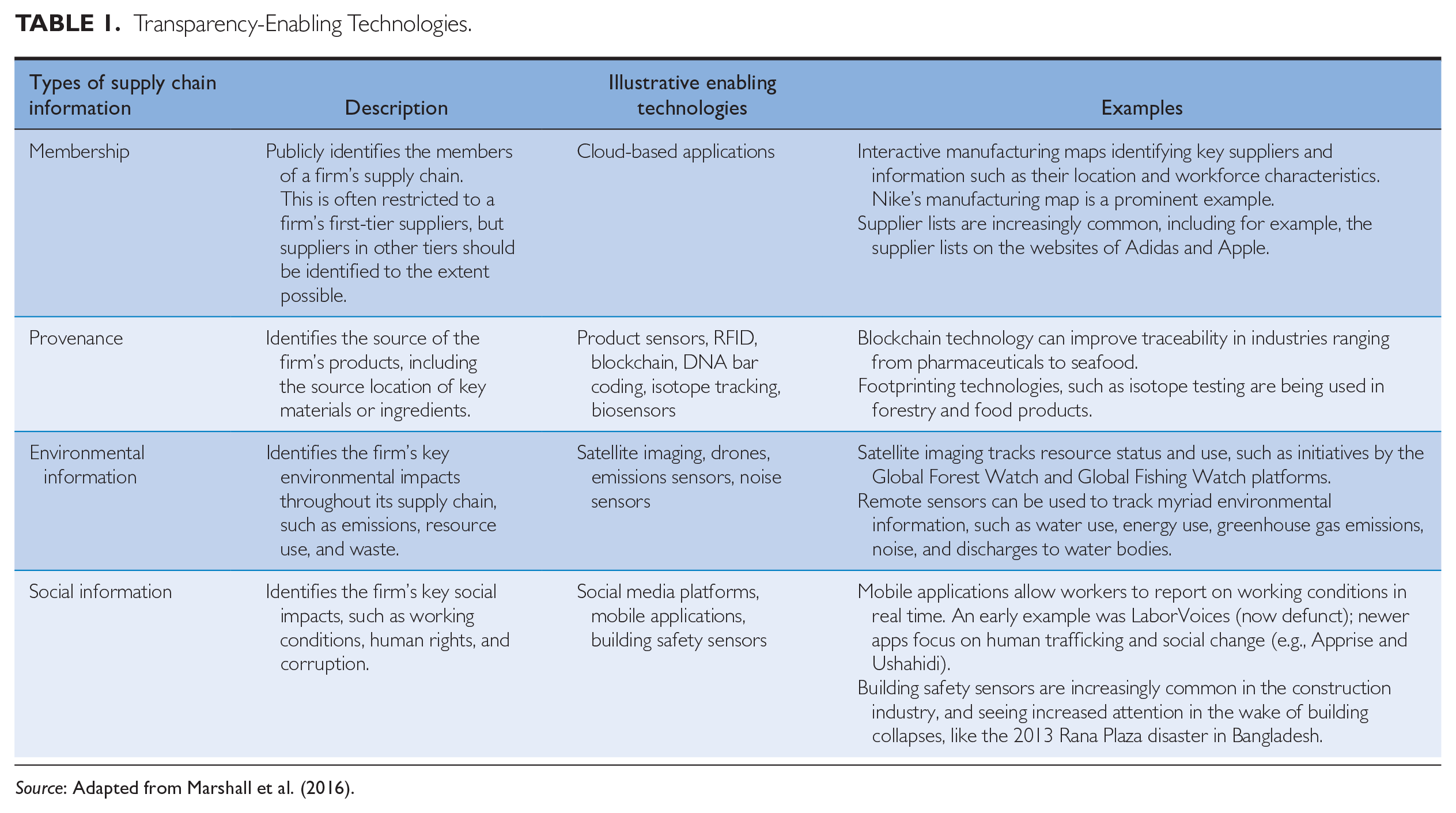
Source: Adapted from Marshall et al. (2016).
Companies exhibit different orientations in their use of technology to foster transparency; a control orientation focuses primarily on using technology to improve supplier compliance with required obligations, while a relational orientation focuses on using technology to open lines of communication to bring members of the supply chain closer and improve openness and trust. 38 The enhanced transparency yielded by leveraging new technologies can lead to improvements in supply chain design and in anticipating risks. 39 In fact, recent technological developments mean that such improvements represent only the tip of the iceberg of what transformations are possible, such as the elimination of modern slavery, deforestation, and other persistent social and environmental concerns that flourish deep in opaque supply chains. To that end, we argue that a desire to increase transparency is merely the first step on a journey to becoming transformationally transparent. Grounded in the expectation of sharing timely, accurate information with relevant stakeholders, we define transformational transparency as transparency that enables fundamentally new ways of knowing and doing—not just within firms and their supply chains but also in industry and society as a whole. The outcome to be gained is fundamentally new insights that allow for new strategies and behaviors to drive radical change.
Transformational transparency adopts a “virtue-based approach to transparency questions.” 40 This explicit normative position is based on the premise that firms have an ethical obligation to do the right thing. 41 According to das Neves and Vaccaro, transparency should not be limited to a utilitarian analysis (that which is associated with the relationship between a firm and a specific category of stakeholders); rather, transparency should be pursued through ethical virtues “in the performance of any kind of organizational activity with internal and external stakeholders.” Such disclosure, “as performance of the virtue of truthfulness,” is necessary for trust and to preserve not only the functioning of society, but also capitalism in particular—which is very prone to distrust. 42 Transformational transparency therefore requires firms to recognize that transparency is in the service of something other than the firm itself and that firms contribute to, and benefit from, broader societal and environmental factors.
Technology can provide a foundation for transformational transparency, but the mere application of technology is not enough to achieve it. Technology can be used to improve the veracity and timeliness of data throughout supply chains, 43 but it must be embedded in a broader governance system that is driven by moral leadership focused on empowering stakeholders and reducing adverse social and environmental impacts for the betterment of society as a whole. In the absence of that broader context, including an ethical technology mindset, 44 technology could be used to further the various dark sides of transparency described earlier, as well as to amplify existing human biases. 45 However, when embedded in an integrated approach to advancing transformational transparency, technology can help enable radical change, such as improved working conditions, an end to human trafficking, and a regenerative approach to extraction and manufacturing that improves natural ecosystems. Radical change is fundamentally grounded in the need to move from symbolic to substantive institutional practices that actually address problems, including their root causes.
Although the role of transparency in supply chain transformation is acknowledged, 46 the various pathways from transparency to transformation are not necessarily easy; structured thinking to achieve transformation remains largely unexplored.
Transformational Transparency: Levels, Principles, and Enablers
Figure 1 provides a basis for structured thinking regarding transformational transparency. In theoretical terms, the model is grounded in institutional and legitimacy theory. Transformational transparency is fundamentally underpinned by the need for substantive, rather than symbolic, institutional practices. In addition to failing to advance radical change, symbolic implementation of initiatives intended to improve transparency could institutionalize “rational myths,” which could encourage the perception of sub-standard practices as legitimate, 47 and thus, actively inhibit progress toward transformational transparency. Our model therefore infuses the institutional view with interrelated themes of data and adoption of technologies, empowered stakeholders, and moral leadership.
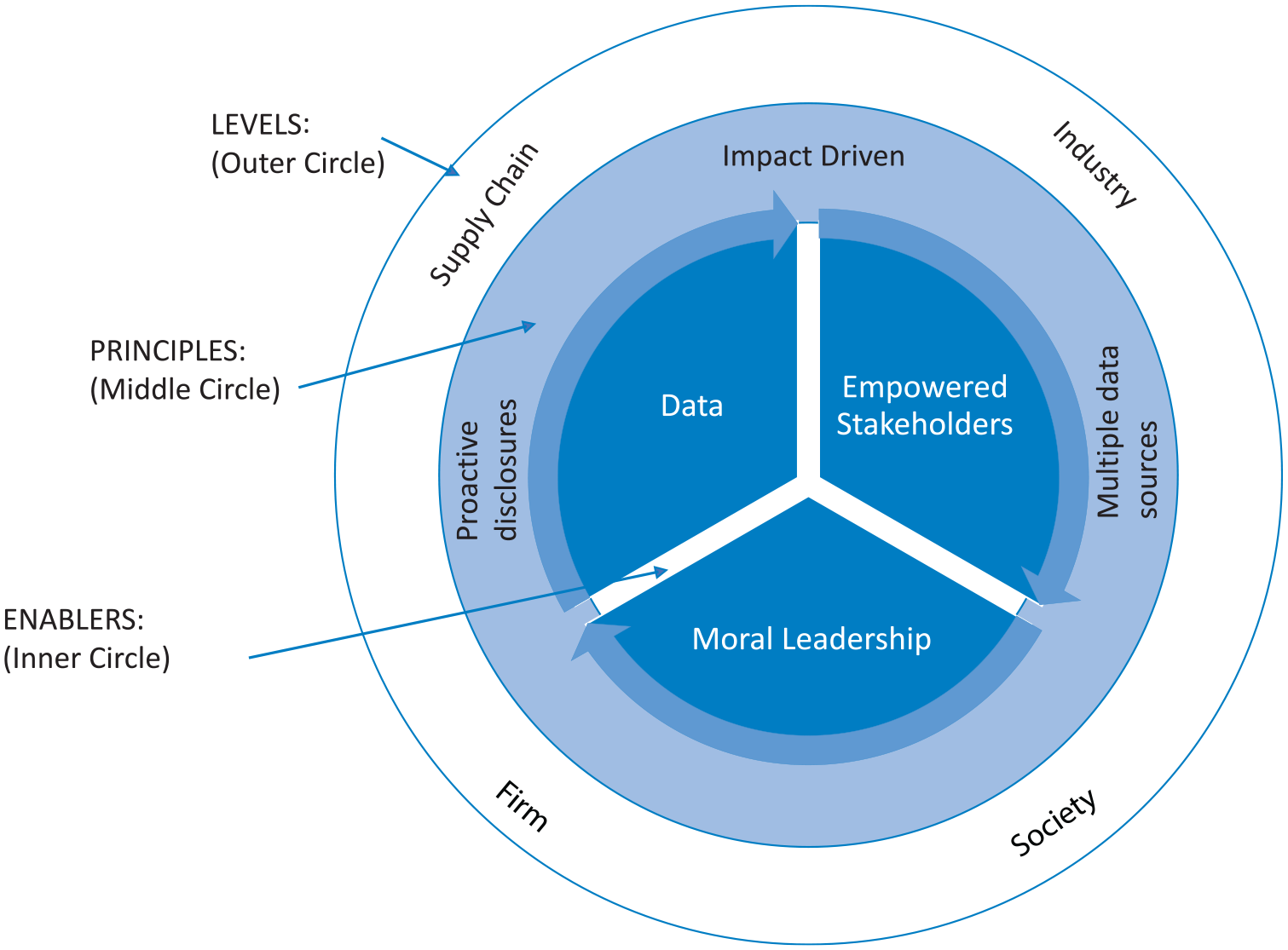
Transformational transparency: Levels, principles, and enablers.
Figure 1 shows that transformational transparency: can occur at four levels; is supported by three principles; and is facilitated by three enablers grounded in emerging technologies. Different conceptualizations of the levels, principles, and enablers are possible; however, these elements provide the necessary foundation to achieve transformational transparency. Our subsequent elaboration on these elements explicitly addresses both why and how these factors enable transformational transparency. 48 The elements of the model are a part of an integrated whole and are intended to work together by design: it is their collective application that results in transformational transparency. Each of the levels, principles, and enablers have been addressed to varying extents in the literature and practice. However, they are typically addressed in isolated initiatives that are poorly integrated with the other areas of the model. While isolated initiatives can certainly help improve transparency, they typically yield small, steady changes more closely associated with incremental improvement than the radical improvement envisioned by transformational transparency. Moreover, a failure to consider all components in the model could potentially result in sub-optimization or ceremonial adoption that is poorly connected to key social and environmental outcomes, shifts problems between levels (e.g., harmful emissions being shifted from a focal firm to a supplier), or enables objectionable uses of enhanced transparency (e.g., furthering inequality, surveillance, and control). Hence, transformational transparency requires the synergistic effects of all components in the model.
Levels
Central to transformational transparency is a focus on transparency activities that extend beyond the firm and its supply chain to also encompass the industry and society at large. To move from transparency to transformation requires changes in both the range of people who have insights into the issues, as well as how that information is used by stakeholders both inside and outside of the firm. Transformations can occur at any of the four levels in the figure, but transformations at one level often enable transformations at another.
The first level is at the firm. A focal firm provides the basis for all levels of analysis, as the firm’s products or services are what it offers to customers in the market. Transparency at the firm level requires honest, open communication of the firm’s core business practices in forms that are readily understood by its key stakeholders, but also without compromising the proprietary aspects of the business. The second level includes the focal firm’s supply chain, comprised of all parties that supply goods and services to the focal firm as well as all activities required to get the product from the manufacturing facilities to the market (including transportation choices, warehousing, storage, and retailing). The third level is the industry level. Transparency at this level requires disclosure, clarity, and accuracy around issues such as when competing firms are working together on shared initiatives and shared suppliers. For example, firms may choose to work together on issues of mutual interest and concern that are not competitive differentiators (e.g., working conditions at suppliers serving multiple brands). For instance, amfori 49 provides a platform for companies to work on shared projects related to social responsibility and sustainability. The platform provides a wide range of services that apply to industries as a whole, starting from due diligence programs to social and environmental audits. Also, amfori assists firms in reporting on their progress with respect to the United Nations’ Sustainable Development Goals (SDGs). Society at large is the fourth level. The inclusion of this level recognizes that transparency is not just about due diligence or managing risk; it is about proactive societal transformation. For example, satellite imagining can be used to monitor biodiversity—such as in the case of the Eco-index project in New Zealand, which provides remote sensing of biodiversity across the country. In time, the Eco-index aims to indicate a country’s biodiversity performance and is also developed to provide accountability and transparency in terms of the impact of industry sectors and individual firms on national biodiversity. 50 Such increased transparency could facilitate changes in consumer behavior/consumption, such as in the quantity and types of apparel or food they purchase.
Principles
Three key principles accompany our notion of transformational transparency. First, transformational transparency is impact-driven. Rather than merely reinforcing the status quo or helping the firm generate additional profits, it offers well-informed, meaningful insights that allow dramatic improvements on key environmental and social issues. For example, the e-Trash Transparency Project 51 used GPS tracking to collect data on what really happens with electronic products targeted for recycling. The GPS-tracking devices placed in electronic devices deemed unrepairable revealed a significant proportion of illegal handling of e-waste. 52 Second, transformational transparency requires a shift from convenient disclosures to a more proactive disclosure orientation regarding what information is shared, when, and with whom. Third, transparency is always grounded in the collection of credible data; transformational transparency emphasizes and requires that data is triangulated from multiple sources. For example, ISEAL, a global membership organization focused on improving sustainability-related transparency through collaborative action, conducted a Value and Impacts Analysis (VIA) pilot between 2015 and 2017 to enhance the credibility of communication in the forest products value chain. Supported by several major companies, such as IKEA, Kingfisher, Tetra Pak, and Precious Woods, the Initiative involved an independent review to support the translation of evidence-based, scientifically grounded information into business-ready information. The initiative provides clear guidelines on the communication of claims of firms’ performance as a way to validate those claims. 53 All three principles underscore the need for substantive adoption of practices to advance transparency.
Enablers
Transformational transparency is built on a foundation of three key technology-enhanced enablers, which are inherently intertwined.
First are the new technology-enabled mechanisms for collecting, analyzing, and sharing high-veracity data in a timely fashion. These data enable deeper insights that offer opportunities for more radical change in social and environmental impacts arising from proactive disclosures. A key underpinning of technology-enabled transparency, the Internet of Things, can revolutionize opportunities in the supply chain for both efficiencies and revenue growth. 54 Technologies such as satellites, drones, and sensors can support the collection of data that can be accessed and analyzed by stakeholders within and outside of firms, supply chains, and industries through other technologies, such as cloud-based applications. Data may come from a variety of sources inside and outside of a firm. It may, for example, be generated by NGOs, such as through Global Forest Watch’s satellite imaging program, or by citizens engaged in citizen science initiatives. The use of credible data generated by third parties can reduce the possibility of symbolic transparency initiatives.
Second is the critical engagement of a broad range of stakeholders enabled by technology, including those not previously empowered to participate in disclosures and decisions. Inclusiveness of both issues and stakeholders must be broadly conceived—including employees, suppliers, distributors, and retailers, as well as local communities, NGOs, the media, and the general public. 55
Third is what increasingly is being referred to as moral leadership, 56 a type of ethical, responsible leadership in which a specific individual defies existing norms by taking an alternative, morally charged stance to spur radical change in a system. Moral leadership can be exhibited by top managers, with well-known examples including Ray Anderson at Interface and Paul Polman at Unilever. Likewise, moral leadership can emerge informally at lower levels in the organization, where change is spurred by individuals who initiate organizational-level change in pursuit of a better world, and who mobilize other employees and stakeholders to take action. 57 For example, Amazon employees cite a “moral responsibility” to speak out on climate, despite the risks of losing their jobs. 58 Moral leaders often advocate for new technological solutions to support the engagement of disempowered players, to facilitate candid and honest disclosures, and to mobilize others in the industry to do the same. 59 Moreover, moral leadership is incompatible with efforts to legitimize poor practices; it requires genuine efforts to improve performance substantively.
Collectively, the mutually reinforcing enablers of data, empowered stakeholders, and new models of moral leadership drive transitions from transparency to transformational transparency. In line with our definition of transformative transparency, these core elements facilitate new ways of knowing and doing that yield new insights. These insights, in turn, allow for new strategies and behaviors to drive radical change. These radical changes can vary across firms, supply chains, industries, and societies but are fundamentally focused on substantively addressing serious and persistent areas of social and environmental concern.
Components of the Model in Action
Data
Many firms and supply chains have developed commendable foundations for transformational transparency through their heavy investments in new technologies and big data. To drive transformative transparency, however, those investments also must be supported by changes in policies and governance to facilitate inclusivity of both stakeholders and data sources. One notable change would be a shift in mindsets at the firm, supply chain, and industry levels away from proprietary data collection and analysis toward greater reliance on open-access models. Data consistency within and between supply chains is a major concern and, as other experts note, is often worse than people realize. 60 The idea behind open access means unrestricted access to digital content. This would mean, for example, that data be machine readable in a non-proprietary format.
Technology-enabled open-access data can facilitate previously unimaginable levels of transparency that could drive changes in how companies collaborate within and between their supply chains and industries, as well as in how members of society purchase, monitor, and regulate those firms’ products. Beyond making data available to others, transformational transparency also requires that others have the ability to link to the databases they require, particularly to provide improved context regarding transparency. 61
In addition to supporting all four types of supply chain information listed in Table 1, open-access data models require support from firms and their supply chain partners. Importantly, these open-access models do not necessarily need to be led by the firms/supply chains themselves. Consistent with our model of empowered stakeholders, NGO initiatives are already underway, such as the Open Data Institute (ODI). As its website states, the ODI “works with companies and governments to build an open, trustworthy data ecosystem, where people can make better decisions using data and manage any harmful impacts.” 62
Moral leadership is at the heart of the ODI initiative, particularly with respect to “how data is collected, managed, and used; ensuring equity around who can access and use data; engaging widely with affected people and organizations.” 63 The ODI, for example, promotes the development of “data trusts,” designed to provide improved data stewardship. It also provides an important example in terms of the types of infrastructure and governance needed in order to facilitate the usage of open data at the firm, supply chain, industry, and society levels. At ten years old, the ODI is still developing, but it provides an important illustration of what is possible with the goal of achieving transformational transparency.
As noted previously, identifying suppliers, particularly those beyond the first or second tier, is often deceptively difficult due to the length and complexity of many chains, including sub-contractors who may not be disclosed to buyers. 64 Transformative transparency, however, goes beyond identifying the suppliers in any one supply chain. Rather, it requires that firms actively engage and support open data source initiatives to enable transparency across multiple, overlapping supply chains. Unique supplier IDs, for example, can greatly aid in the communication of supplier names and locations around the world. The development of unique supplier IDs has been tested in the agriculture industry through the development of the BlueNumber (B#) 65 and BlueMark initiatives, which provide a unique ID for farmers and companies. BlueNumber is working on expanding its Global Unique Identifiers to other supply chains, organizations, and even individuals. To date, B# IDs have been issued to nearly 400,000 people, over 500,000 organizations, and over 17,000 places. 66
The availability of timely, high-veracity data related to a company’s activities, but not generated or held by the company itself, can help to hold companies accountable, enable monitoring that was previously difficult or impossible, reduce information asymmetry, and increase consumer awareness and power. Efforts such as BlueNumber and institutions such as the ODI underscore the importance of empowered stakeholders to support open-access data. Ultimately, this requires a move away from private- or government-owned data to data available to society at large. While firms will need to continue to protect core proprietary data (e.g., beverage companies cannot disclose their formulas), there are many examples of companies participating in the development of open data ecosystems. The World Benchmarking Alliance (WBA) is an example of a collaborative effort to improve open data ecosystems across industries. With over 150 global organizations as members, the WBA is focused on creating benchmarks and fostering cross-sector partnerships in order to advance progress on the SDGs. 67
Consider another example where collaboration across multiple NGOs has leveraged isotope testing, a type of chemical forensic analysis, to detect fraudulent products and materials. 68 The World Forest ID Initiative aims to develop a reference database of wood samples from around the globe that can be used to verify timber origin and species. 69 Illegal logging accounts for 50%-90% of the volume of all forestry in key producer tropical countries, and 15%-30% globally. 70 Illegal logging also has a significant impact on global warming and carbon emissions. Deforestation, while not exclusively the outcome of illegal logging, has been estimated to account for “17 percent of global carbon emissions: about 1.5 times greater than emissions from all the world’s air, road, rail and shipping traffic combined.” 71 Illegal logging can be significantly reduced if new technologies, such as isotope testing, are rapidly developed. Similarly transformative initiatives using isotope testing have been conceived in other areas, such as water, fish, and pork, though they currently remain mainly in the conceptual phase. At the moment, isotope testing is often reserved for secondary verification and as a forensic tool, but it holds the potential to underpin the development of credible publicly available databases for use by stakeholders at all levels. A key challenge in implementing many such initiatives is the time, effort, and money, as well as the fact that the data revealed could expose companies to unwanted attention.
Moral Leadership
Transformational transparency cannot occur in the absence of moral leadership. Moral leadership requires individuals and companies to “take a moral stance on an issue, convince others to do the same, and together spur change in a moral system.” 72 From a transparency perspective, moral leadership manifests in transformative actions that inform and drive changes in behavior, not just at the company and supplier levels, but also at the societal level (such as in customer behavior) to achieve new levels of social and environmental performance. Moral leadership can therefore require taking action even when the direct benefits to the company are limited or non-existent. This aspect is consistent with, and underscores, the normative compass provided by transformational transparency as a whole. It also underscores the need for substantive, rather than symbolic, action.
Consider two examples. Patagonia’s “buy less and demand more” 73 initiative addresses consumerism, a prominent area of debate and discussion in the apparel industry, and directly draws attention to the potential negative environmental and social impacts of its own products. As Patagonia proactively discloses on its website, “The clothing industry contributes up to 10% of the pollution driving the climate crisis,” and “apparel workers are among the lowest paid in the world.” 74 The logic underpinning the initiative is that “Informed buyers will force the clothing industry to drop their dirty practices,” 75 and in so doing, facilitate impact-driven transformative change.
In a similar vein, chocolate company Tony’s Chocolonely (so named by Dutch founder “Teun” [Tony in English] van de Keuken because he created this business with no help from the existing companies in the chocolate industry) was founded to address the poverty gap and end slave labor in the chocolate supply chain; its mission states, “Together we’ll make chocolate 100% slave-free.” 76 The existence of modern slavery in chocolate and other supply chains remains a shocking and pressing challenge 77 in need of the greater attention and scrutiny transformational transparency can bring. Importantly, Tony’s Chocolonely is not limiting its focus to just its own chocolate; rather, it is directing its efforts to all chocolate worldwide.
As these two examples demonstrate, moral leadership goes beyond mere disclosure of information to using the data to drive impact-driven decision-making to achieve radical substantive changes in industries and society as a whole. Moreover, further analysis of the examples underscores that transparency development in a supply chain must not put asymmetrical burdens on the players in the supply chain that may not be able to bear them. As Tony’s Chocolonely explains, “Things aren’t shared fairly in the chocolate supply chain. The chain starts with the millions of farmers that produce cocoa and ends with the billions of consumers that enjoy chocolate. But what about the bit in between? This section is dominated by a group of chocolate giants that profit from keeping the cocoa purchasing price as low as possible. For the farmers, this creates a poverty trap that leads to illegal child labor and modern slavery.”
78
Moral leadership in the context of transformational transparency also means that a firm actively engages in new and innovative ways of “doing” on issues that matter—especially in leading and/or supporting the use of new technologies for societal benefits. Even taking the initial steps toward a principled leadership stance can send an important signal to internal and external stakeholders. Transformational transparency is based on doing the right thing to drive radical substantive change.
Empowered Stakeholders
Transformative transparency requires new and enhanced forms of consultation and collaboration with empowered stakeholders at the firm, supply chain, industry, and societal levels. As noted earlier, stakeholders are broadly considered and could include individuals and groups inside and outside of any one company, such as employees, suppliers, distributors, retailers, local communities, NGOs, the media, and the general public. Technologies show great promise in engaging stakeholders that were previously under-engaged or disengaged completely.
Consider the example of social audits in supply chains. Even though these audits have been in place for decades, such as in auditing working conditions in developing countries, challenges in their efficiency and effectiveness remain widespread. The recently retired LaborVoices 79 offered a platform for workers to report on working conditions at factories around the world in real-time using apps on their cell phones. Apprise offers a technological solution to monitor forced labor and other human rights violations. 80 Other technologies supporting workers’ voices in supply chains continue to emerge. 81 These technologies empower stakeholders—in this case, the workers—to participate in the data collection, which in turn, is shared and used by independent parties to monitor forced labor across industries that are poorly regulated. While many technological solutions for advancing human rights in supply chains have yet to achieve the needed scale and impact, 82 further uptake of these technologies could be encouraged if they are able to address concerns related to the quality of the data, the need for meaningful action in response to workers’ concerns, and concerns regarding the potential for new risks to workers’ well-being and safety. 83
Stakeholders may also be empowered through their leadership and participation in multi-stakeholder initiatives (MSIs). MSIs help “define, implement, and enforce rules that direct corporations’ behavior with regard to social and environmental issues,” 84 and have been conceptualized as “private governance mechanisms involving corporations, civil society organizations, and sometimes other actors, such as governments, academia, or unions, to cope with social and environmental challenges across industries and on a global scale.” 85 MSIs are playing an increasing role in supporting sustainable supply chains and include initiatives such as the Forest Stewardship Council (FSC), the Roundtable on Sustainable Palm Oil (RSPO), and the Fair Labor Association. 86 Fair Factory Clearinghouse provides an example of a platform that enables firms to monitor suppliers, as well as to develop multi-stakeholder engagement in the supply chain. 87 MSIs can have different levels of stakeholder engagement and can have different objectives, but they generally focus on “providing learning platforms, developing behavioral standards, developing mechanisms of auditing and compliance of the rules, and issuing labels and certifications.” 88 As discussed earlier, MSIs aren’t perfect, but enhancing sustainability-related transparency in supply chains can be a complex problem and is often best addressed through “long-term, coordinated action involving actors from both the public and private sectors.” 89 More recently, governments have stepped in to introduce due diligence legislation. For example, in Germany, due diligence legislation imposes on companies increased regulatory oversight of their supply chains. This new legislation has received support from MSIs—signaling that a smart mix of regulation and voluntary initiatives is where the future of transparency lies. 90
Although a number of firms and initiatives have worked to engage and empower a wider range of stakeholders, transformative transparency can empower new types of stakeholders as well. For instance, firms can proactively leverage and develop the capabilities and interests of a broader base of the general public to facilitate their engagement in data collection or basic analytics around sustainability. 91 Citizen-science initiatives can engage the general public in monitoring issues such as air pollution, trace locations of medicinal plant species, or food provenance and contamination. 92 Widely available social media apps can be used as a part of restoration management projects, as is already being done in the case of biodiversity monitoring. 93 Other apps facilitate citizen participation in efforts such as helping scientists understand the effects of light pollution on health, the environment, and society; tracking marine debris; monitoring noise levels; and monitoring plants and animals. 94 More advanced technological solutions, such as mobile devices using near-infrared spectroscopy (NIRS), can provide citizen scientists and other stakeholders with abilities to detect unlawful timber harvests in real time. 95 Data gathered by citizen scientists can be used to support and deepen existing analyses conducted by firms. Companies could also further enable citizen science initiatives by permitting access to non-proprietary company data. For example, if companies proactively share the boundaries of their forestry concessions, citizen scientists could find it easier to identify which land is owned by whom and in accordance with which management practices. Critically, data collected by citizen scientists can also be used to support triangulation from multiple data sources. This could lead to an increased level of accountability by firms making public claims related to their social and environmental performance.
Engaging and empowering stakeholders inside and outside of a company and its supply chain can transform auditing, monitoring, and reporting for transparency. For example, the RSPO is sharing boundary maps of certified and uncertified palm oil plantations, which enables, for instance, the monitoring of fires contributing to haze. 96 New technologies continue to emerge to make audits more data-driven and to foster connections between companies, supply chains, consumers, and the general public. For example, programs such as the Social and Labor Convergence Program (SCLP) 97 and Supply Shift 98 provide e-audit platforms to support data sharing among buyers and suppliers. While these platforms are currently used primarily by companies seeking certification, greater audit traceability has the potential to benefit buyers at the firm and consumer levels.
Pathways to Implementing the Model
While the model in Figure 1 is intended to structure thinking and discussion on the essential elements of transformational transparency, the pathways to transformational transparency will look different for different firms. Even firms in the same industry, for example, could follow unique pathways given their specific circumstances, such as their starting points, end points, capacity, and capabilities. Moreover, the trajectory of these pathways will likely be heavily influenced by the firm’s motivations for moving toward transformational transparency. These motivations, for example, could be altruistic, or they also could be grounded in more instrumental concerns, such as responding to stakeholder and/or regulatory pressure, protecting firm reputation, building supply chain resilience, and improving risk management.
The pathways are also likely to be non-linear; in addition to improvements in transparency, there may be pauses and setbacks along the way. This uneven progress reflects the fact that transformational transparency is fundamentally about radical change, which often includes performance discontinuities. Moreover, tensions will be inherent in the journey to transformational transparency: “transparency is part of complex communicative, organizational, social processes rife with tension and unsettling effects of disclosure.” 99 Inevitably, there will be differing perspectives on what should be disclosed and to whom. Additionally, the competing interests and potential conflicts among stakeholders may mean that these differing perspectives are irreconcilable. Firms will face difficult decisions that will influence the trajectories of their pathways to change. Despite these differences, the pathways to transformational transparency must be aligned based on a common understanding of the guiding principles, enablers, and levels at which transformations can occur. There are three pathways by which companies begin their journey to transformational transparency, as summarized in Table 2.
Illustrative Pathways to Transformational Transparency.
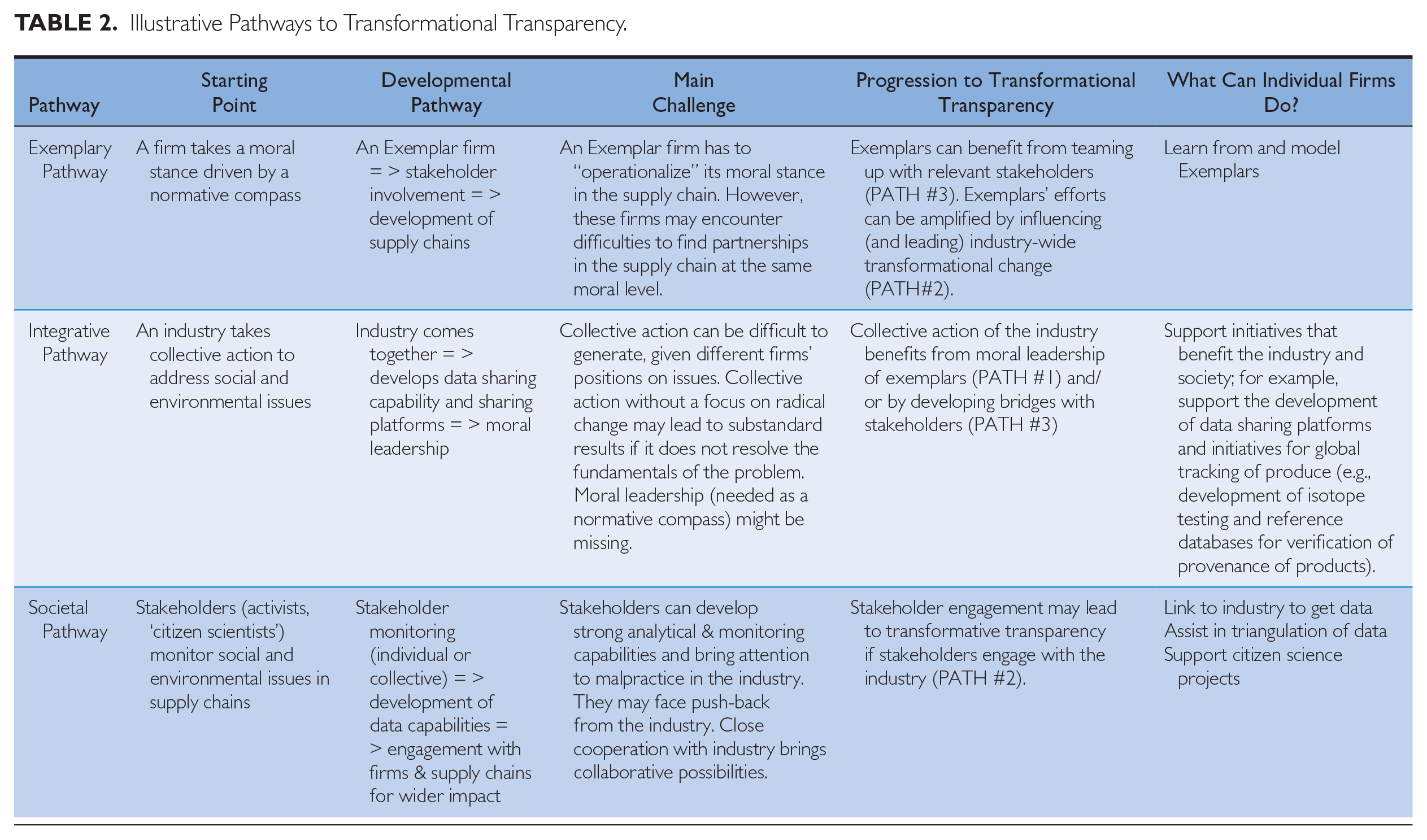
The first pathway is the Exemplary Pathway, in which a company takes an exemplary stance, for example, on a moral issue and/or the level of transparency offered regarding its impacts. Its decisions regarding industry partnerships, data for transparency, or stakeholder empowerment will be driven by its principled leadership. In the process of working toward transformative transparency, exemplar firms are likely to be challenged by existing industry practices and to find it difficult to align their supply chains with their morally-driven vision. These issues may be difficult for large firms to navigate; startups or middle-sized firms may need to be quite innovative in their approach to operationalizing their vision. In its quest to eradicate modern slavery in the chocolate industry, Tony’s Chocolonely recently revealed that it is sharing processing facilities with Barry Callebaut, one of the biggest cocoa processors in the world with a mixed reputation in its labor practices. This illustrates the real-world challenge that materials (e.g., cocoa, but also a multitude of other raw materials such as wood, minerals, and meat products) often mix at some point in the upstream supply chain. This can complicate product traceability, which companies like Tony’s Chocolonely must address. In this case, Tony’s Chocolonely commented:
“Make no mistake . . . This partnership brings us that much closer to our vision of making 100% slave free the norm in chocolate. Setting up shop right beside Big Choco means that we’re able to prove first-hand that it is possible to be processing substantial volumes of cocoa beans and still be 100% traceable and slave free.”
100
The second pathway is an Integrative Pathway, in which a company chooses to proactively lead and/or contribute to industry-wide transformative activities. A focus here could be on creating data-sharing / data-exchange technologies that not only benefit multiple players in the industry (to avoid expensive duplication), but also for all parties to have a clear line of sight into the data. As the development of the Integrative Pathway progresses, moral leadership becomes increasingly important in steering the collective industry action toward transparency that transcends the benefits for individual actors or the industry. For example, by collaborating with others that are typically part of the supply chain or industry, a company may find that its collaboration in such activity sparks its own sense of moral purpose, as well as its desire to engage with a broader range of stakeholders (perhaps NGOs or others) that are working toward similar initiatives. Hence, over time, it may deepen its commitments, ultimately generating new perspectives and insights to create radical, impact-driven initiatives that any one party alone may not see the value in or that may not have been surfaced in isolation. It is important that Exemplars (as per Pathway 1) are influential actors in Integrative Pathways to provide a “moral compass” and inspiration for other actors.
The third pathway is the Societal Pathway. This pathway recognizes that various stakeholders are engaged in monitoring activities. These stakeholders develop unique capabilities to monitor firms and industry sectors. Such monitoring also involves investments in technologies and data analytics. For instance, the development of open data sources or projects as part of the “citizen science” umbrella provides examples of how stakeholders are working on developing a fertile ground for enhanced transparency. However, such efforts might be accelerated through engagement with industry that can bring mutual benefits. Engaging stakeholders can transform the way not just information is collected, shared, and used, but also the way to reimagine the very notion of stakeholder engagement. For example, empowering stakeholders to be part of the data collection and monitoring process removes the potential conflict of interest that companies themselves may face. This change in dynamic can then lead to a commitment to new voices being heard that drives not only radical change, but also company commitments to empowered stakeholders, again allowing the idea of transformational transparency to create a virtuous cycle of sorts. It is imperative, though, that such cooperation is grounded in a transparent and open-minded manner. As one NGO told us in a study of modern slavery that we recently completed, “NGOs need to shift their mindset from ‘name and shame’ to ‘name and fame.’” In other words, recognizing the reality and acknowledging the problem is an important element of transformational transparency. In the absence of such a positive stance, it is more likely that firms will engage in covering-up problems in their supply chain and focus on defensive (and largely symbolic) approaches to transparency. This trend is also recognized by leading multi-stakeholder initiatives. For example, Rainforest Alliance has published position statements 101 around the “assess and address” approach—that is, to highlight the risk of due diligence legislation having unintended consequences on supply chains (such as shifting production to less risky locations instead of addressing the problem).
Conclusion and Implications
Despite the attention currently devoted to transparency, many supply chains continue to have negative impacts on social and environmental outcomes. Indeed, many industries and individual firms have long histories of impression management and outright hypocrisy. 102 Given the risks that transparency can be used in the service of objectives that run contrary to the interests of society and the environment, new technological solutions offer the potential to shed light on the most pressing challenges today. While leveraging technology can help to surface such problems, technology alone will not create meaningful changes. Rather, meaningful change requires new ways of thinking. Hence, this article articulates the notion of transformational transparency, including why it is imperative in today’s business environment. Transformational transparency can result in non-linear, radical change that improves key issues of social and environmental concern.
Addressing the elements in the model individually may yield incremental improvements in transparency, but transformational transparency requires their integrated application. Critical social and environmental issues supersede any one company, supply chain, or industry. Broader collaboration and stakeholder empowerment can drive transformational transparency and create meaningful change. The supplemental (online) material provides a detailed case study of transformational transparency in supply chains addressing modern slavery.
In addition, the model offers two critical charges for managers in light of the urgency of social and environmental issues. First, managers must commit to shifting their transparency initiatives from instruments of accountability to instruments of meaningful change. Indeed, managers have a moral obligation to surface and address the crucial social and environmental issues that plague supply chain performance. As technology-enabled transparency continues to evolve, new challenges and opportunities will continue to be revealed by the improved availability, veracity, and timeliness of data. Guided by a strong normative ethical compass, managers must continue to leverage these developments to elicit transformational change. Second, managers must think holistically: transformational impacts will not be possible with isolated initiatives. Rather, the issues are interwoven and require systemic solutions. For example, deforestation issues have implications for communities and livelihoods. Rather than thinking about solutions in terms of trade-offs, viewing the issues as intertwined can surface new solutions to address multiple issues simultaneously. These implications suggest that transparency must be managed strategically; it is not a peripheral issue that can be addressed simply by additional disclosure. As our model recognizes, different firms, supply chains, industries, and societies will have different challenges and opportunities, which means that their pathways to transformational transparency will look different. Even in the face of these issues, however, managers must commit to viewing transparency as a central driver of radical change in their firms.
Managers who are willing to take principled stances to drive meaningful change and who can think holistically in their views regarding problems and solutions will not only improve transparency but also realize transformative social and environmental outcomes that benefit not just individual firms, but society as a whole. Technology-enabled transparency that is grounded in the principles and enablers articulated here offers the potential for transformations in modern slavery, deforestation, and myriad other areas of social and environmental concern.
Supplemental Material
sj-docx-1-cmr-10.1177_00081256221126204 – Supplemental material for Transformational Transparency in Supply Chains: Leveraging Technology to Drive Radical Change
Supplemental material, sj-docx-1-cmr-10.1177_00081256221126204 for Transformational Transparency in Supply Chains: Leveraging Technology to Drive Radical Change by Cory Searcy, Pavel Castka, Jakki Mohr and Sönke Fischer in California Management Review
Footnotes
Declaration of Conflicting Interests
The author(s) declared no potential conflicts of interest with respect to the research, authorship, and/or publication of this article.
Funding
The author(s) received no financial support for the research, authorship, and/or publication of this article.
Supplemental Material
Supplemental material for this article includes a detailed example of transformational transparency involving modern slavery in supply chains; it is available online.
Notes
Author Biographies
Cory Searcy is the Vice-Provost and Dean of the Yeates School of Graduate Studies at Toronto Metropolitan University (email:
Pavel Castka is Associate Dean of Research and Professor in Supply Chain Management and Sustainability at the University of Canterbury, New Zealand. He is a member of ISO/TC 176 at the International Organization for Standardization (ISO) (email:
Jakki Mohr is the Regents Professor of Marketing and Poe Distinguished Faculty Fellow at the College of Business at the University of Montana (email:
Sönke Fischer is the strategy director at Assurance Services International (ASI). He has supported the development and implementation of over two dozen standard systems covering a broad range of sectors (email:
Supplementary Material
Please find the following supplemental material available below.
For Open Access articles published under a Creative Commons License, all supplemental material carries the same license as the article it is associated with.
For non-Open Access articles published, all supplemental material carries a non-exclusive license, and permission requests for re-use of supplemental material or any part of supplemental material shall be sent directly to the copyright owner as specified in the copyright notice associated with the article.
