




Abstract
Extant studies on stakeholder engagement have noted the inherent tensions arising from participation efforts, giving rise to the dark side of engagement. However, few studies have focused on organizational power relations that provide specific conditions for engagement and the related paradox that control represents. Drawing on strategy discourse and paradox as theoretical lenses, we examine engagement as a nexus of observed societal expectations, subjectivities provided by the strategy discourse, and the subject positions adopted by the individuals, giving rise to a contradiction between openness and control. As a result, we present three modes of participation: inclusion, admittance, and quasi-participation. We contribute to stakeholder engagement and paradox literature by outlining the “engagement-control paradox” and showing how the prevailing strategy discourse may drive the use of participation as a form of control. Maintaining different modes of participation introduces inadvertent closure for participation and hinders strategy-making and the development of the organization.
The “openness turn,” taking place both in (Western) societies and organizations, as well as in academic research (Dobusch et al., 2019; Whittington & Yakis-Douglas, 2020), has increased our awareness of the need for making governmental and organizational decision-making more accessible and, in the spirit of democratizing organizational processes, empowering people to have a say in matters that concern them (Tkacz, 2012; Whittington et al., 2011). Especially in contexts such as public sector organizations in democratic nations, stakeholder engagement is regarded as a necessary, and sometimes even regulated, practice. Even though extant studies of stakeholder engagement (i.e., those “practices that the organization undertakes to involve stakeholders in a positive manner in organizational activities” Greenwood, 2007, pp. 317–318) have emphasized the positive aspects of those endeavors, also the existence of a “dark side” of these engagement efforts has been recognized (Greenwood, 2007; Kujala et al., 2022). Studies adopting a communication or discourse view have pointed toward the tension-ridden and even paradoxical nature of engagement processes (Castelló et al., 2013; Cooren, 2020; Stohl & Cheney, 2001), raising the need to rethink the role and limits of managerial control (Sachs & Kujala, 2021; Schultz et al., 2013; Wenzel et al., 2019).
However, the more critical questions of power and control in stakeholder engagement processes are seen as a relevant but still largely omitted viewpoint (Kuhn, 2021; Kujala et al., 2022). Discursive strategy participation studies, focusing on organizational efforts to increase the input of stakeholders to strategy-making, have already shown the contradictions that these efforts induce in organizations where management’s role as the sole decision-maker has been taken for granted. The prevailing strategy discourse (i.e., the strategy talk that defines power relations between actors engaged in strategizing; Mantere & Vaara, 2008) may not allow participants a genuine right to participate in organizational activities (Knights & Morgan, 1991; Vaara et al., 2019). Where this traditional managerial view prevails, the outspoken aim of openness contradicts management’s need to control activities and outcomes (i.e., to allow something while preventing other things based on the deemed appropriate course of action). This brings forward the paradox of “participation by command” (Eriksson & Lehtimäki, 2001). With paradox, we refer to contradictions or “bipolar opposites” that “persist over time, impose and reflect back on each other, and develop into seemingly irrational or absurd situations” (Putnam et al., 2016, p. 8). Participation then becomes a question of power, as it can be seen and used as a form of control “in and through which organizational members or other actors are drawn into organizational decision-making that is largely orchestrated by top management” (Vaara et al., 2019, p. 16). Stakeholder engagement literature would, therefore, benefit from a discursive viewpoint addressing the tensions that the dynamics of power and control produce in organizational settings (Wenzel et al., 2019), helping unveil how tension and conflict are generated and how control and domination are iteratively re-accomplished in practice (Kuhn, 2021).
The purpose of this article is to examine the role of control in stakeholder engagement in the context of a public social and health sector organization of a medium-sized Nordic city. The city’s strategy process provides an illuminating setting for examining the tensions between the mission of a Nordic welfare model and democratic system with the requirements of equality and inclusion and the hierarchical management tradition with the financial constraints of an administrative organization. As our research question, we ask: How do the engagement efforts intertwine with the prevailing strategy discourse?
By positioning our study in the stream of literature focusing on power and tensions within the wider field of stakeholder engagement (Dawkins, 2015; Henry et al., 2022; Kujala et al., 2022; Laine & Vaara, 2015; Mantere & Vaara, 2008; Stohl & Cheney, 2001; Vaara & Rantakari, 2024; Winkler et al., 2020), we address this problem from the viewpoint of paradox and discourse in general (Putnam et al., 2016), and strategy discourse (Dameron & Torset, 2014; Laine et al., 2016; Laine & Vaara, 2007) in particular. We draw on a discursive analysis of 54 interviews conducted at different levels of the organization, from top management to customer service personnel. As a result, we show how the strategy discourse transforms engagement efforts as vehicles for control, promoting different modes of participation: admittance (management-controlled participation), quasi-participation (with no real possibility to influence strategy), and, in rare cases, inclusion (participation as a right, based on organizational citizenship). Our study contributes to the studies of power in stakeholder engagement (Castelló & Lopez-Berzosa, 2023; Kujala et al., 2022) and strategy participation (Friesl et al., 2023; Vaara & Rantakari, 2024) by offering a view of the power relations and underlying mechanisms that bring forward the paradoxicality of engagement efforts, resulting in unintended outcomes of control and exclusion. Therefore, this study also builds and extends on the research on paradoxes and tensions in stakeholder engagement (Castelló et al., 2013; Wenzel et al., 2019; Winkler et al., 2020) by outlining the “engagement-control” paradox.
Paradox of Control in Stakeholder Engagement: Strategy Participation and Discourse Lens
Stakeholder engagement, as a diversified and multidisciplinary field, has addressed different aims, activities, and impacts related to the organizational efforts to involve other individuals, groups, or organizations that affect or are affected by organizational activities (Freeman, 1984; Kujala et al., 2022). These studies have mainly maintained a positive undertone, focusing on aims with democratic ideals, different forms of activities, and positive outcomes for the organization and the stakeholders (Jones et al., 2008; Knights & Morgan, 1991; McCabe, 2010; Nederhand & Klijn, 2019; Scherer & Vögtlin, 2020; Wohlgemuth et al., 2019). Underlying these different streams of research, a division between rational ideology (as highlighted in the strategic perspectives to stakeholder engagement: Sachs & Kujala, 2021) and normative ideology, emphasizing the ethical and moral underpinnings of engagement efforts (Dawkins, 2015; Scherer & Palazzo, 2011; Schultz et al., 2013), can be seen.
At the core of the division between these two ideologies stands a question of power and control. Studies adopting a strategic approach to stakeholder engagement (Sachs & Kujala, 2021) have approached managerial control as the natural starting point for engagement efforts in which the level of control exercised guides the form of engagement adopted and the degree of openness allowed (Quick & Feldman, 2011; Sloan, 2009). However, studies building on a communicative view of engagement (Schultz et al., 2013) have highlighted a more complex view of organizations as a polyphonic and thereby tension-ridden context for engagement where dissent, a plurality of voices, and conflict are ever-present (Castelló et al., 2013; Castelló & Lopez-Berzosa, 2023; Vaara & Rantakari, 2024). In this kind of context, consensus that tends to be seen as a natural outcome of the strategic processes of organizations can in fact exist only as a temporary result, a stabilization of power that always entails some form of exclusion (Castelló & Lopez-Berzosa, 2023; Mouffe, 1999; Schultz et al., 2013). From the discourse perspective, control can even be seen to form a logical opposite or contradiction (Putnam et al., 2016) to openness entailed in stakeholder engagement, the dynamics of which define how stakeholder engagement is played out in organizations.
Strategy-making in particular can be seen as a paradoxical context for stakeholder engagement due to the strong prevailing strategy discourse and strategy’s tight connection with organizational hierarchy where the role of managers and the “management of participation” is often highlighted (Eriksson & Lehtimäki, 2001; Laine & Vaara, 2015; McCabe, 2010). Instead of enabling the active subjectivity of participants, the dominant role of top management within the strategy discourse has been noted to reduce or prevent the subjectivity of the rest of the organization (Mantere & Vaara, 2008). Even though the intention would be to create “a dynamic context of interaction, mutual respect, dialogue and change, not a unilateral management of stakeholders” (Manetti & Toccafondi, 2012, p. 365), the process is bound to be intertwined with the power relations between the participating organization(s) members and the way they make sense of their rights and responsibilities regarding strategy-making.
From a discourse perspective, however, the control may not ultimately reside in any individual but in strategy discourse: a historically formed “conversation” of specific people or groups, which denotes “how people enact and recognise socially and historically significant identities . . .through well-integrated combinations of language, actions, interactions, objects, tools, technologies, beliefs and values” (Gee, 2015). Critical strategy studies approaching strategy participation as an issue of subjectivity and power (Dameron & Torset, 2014) have pointed toward the origins of the assumptions underlying people’s hierarchical positions. According to this view, organizational actors give sense to their activities through strategy discourse (Dameron & Torset, 2014; Ezzamel & Willmott, 2008; Hardy et al., 2000; Laine et al., 2016; Laine & Vaara, 2007; Oswick et al., 2000; Samra-Fredericks, 2005), that can provide a sense of order and control for some but simultaneously marginalize others (Samra-Fredericks, 2005). Through the discourse, control is not exercised over the behavior or outcomes but through individuals’ subjectification (Fleming & Spicer, 2014; Rantakari & Vaara, 2016), defining how the world is perceived.
Paradox of Control in Strategy Participation
In traditional strategy discourse, managers are seen as responsible for operational efficiency and therefore having the task of control over the processes and outcomes of people’s activities (Ouchi, 1979). From the perspective of control, engagement comes at a cost: involving stakeholders in strategy-making sets constraints for the strategy process and slows down decision-making (Andersen, 2004; Collier et al., 2004). Managers therefore feel a need to balance the benefits and costs of engagement (Henry et al., 2022) and, therefore, to control participation. As a result, those activities meant to include people in strategy events may become frustrating plays, as individuals’ contributions are superficial, and they do not have a real possibility to influence strategy (Vaara & Whittington, 2012). Instead, the goal might be to make the personnel understand the management’s strategy “correctly” (Balogun & Johnson, 2005), leading to a paradoxical situation where managers command others to participate in the strategy process but retain the right to decide what is the appropriate kind of participation (Eriksson, 1999). Eriksson and Lehtimäki (2001) call this “participation on command”: if people do not participate appropriately, they are not allowed to participate at all.
Here, we approach control in stakeholder engagement through a paradox view. We view control as forming a “bipolar opposite” with openness, autonomy, and freedom entailed in engagement that “persist over time and reflect back to each other and develop into seemingly irrational or absurd situations because their continuity creates situations in which options appear mutually exclusive, making choices among them difficult” (Putnam et al., 2016, p. 72). We adopt a strategy discourse lens to examine the emergence and enactment of this paradox through participants’ subjectivities in relation to the prevailing strategy discourse. From a constitutive view of paradox (Putnam et al., 2016), discourse is seen as a key to understanding the way multiple voices, tensions, and levels give rise to organizational paradoxes. As a result, participants may find themselves in seemingly irrational or absurd situations or facing ironic or irrational outcomes (e.g., when democratic systems come to restrict participation; Johansson & Stohl, 2012; Stohl & Cheney, 2001). Participants then experience and communicate the tensions: “stress, anxiety, discomfort, or tightness in making choices, responding to, and moving forward in organisational situations” (Putnam et al., 2016). Following the definition by Putnam et al. (2016), we understand tensions as feeling states that underlie contradictions and paradoxes and result from frustration or blockage or uncertainty that individuals face in dealing with contradictions and paradoxes (Lewis, 2000; Smith & Lewis, 2011), into which participants then respond in various ways (Wenzel et al., 2019).
Participation as an Issue of Subjectivity: Strategy Discourse Lens
When examining the engagement-control paradox through a strategy discourse lens, control is to be understood in the context of strategic management’s history as a discipline as well as the developed social codes and knowledge (Ezzamel & Willmott, 2008; Knights & Morgan, 1991). Accessing and mastering this knowledge is also a symbol of professionalization and has implications for subjectivity and organizational power relations (Balogun et al., 2014). Strategy as discourse refers to different meanings and interpretations based on a shared history of experiences that have evolved over time into cultural truisms that are not challenged—strategy as the task of top management is one of those. People then use these truisms to explain their actions and justify their identity choices (Eriksson & Kovalainen, 2008; Hardy et al., 2000).
Individuals participate in the discourse through subjectivities: categories against which people evaluate themselves and others and, based on the evaluation, position themselves and others as included or excluded in relation to the category (Davies & Harré, 1990). Subjectivity is constructed based on the perceived position in the discourse (subject position) and the related opportunities to act and influence (Davies & Harré, 1990; Edley, 2001). Thus, subjectivity is not a synonym for an individual but refers to a category in the discourse (Knights & Morgan, 1991). Similarly, subjectivity can also be seen as a contextual social identity constructed in the discourse, including people’s “right and opportunities to engage in organizational decision-making, their autonomy as organizational actors, and ultimately their identity as respected and important organizational members” (Laine & Vaara, 2007, p. 36).
From the discourse perspective, control resides in the relationship between individuals and the discourse and can be understood as self-governance. As a result of subjectification, individuals aim to align their behavior according to what is seen as appropriate (Fleming & Spicer, 2014; Rantakari & Vaara, 2016). In the strategy discourse literature, power and control are often seen in a dialectical relationship with resistance (Laine & Vaara, 2007; Mantere & Vaara, 2008; Mumby, 2005; Mumby et al., 2017; Rantakari & Vaara, 2016; Zoller, 2014) and to result in a continuous struggle over preferred understandings of social reality, attempting to marginalize and close off, or voice alternative views (Mumby, 2005).
At the same time, people, and groups of people, are socialized into the discourse, guiding their actions without the participants consciously thinking about how or why they have learned to think or act in a certain way (Edley, 2001; Remes, 2006, p. 289). The discourse guides its subjects to see the world through perspectives defined by the discourse, and the controlling effect of the discourse may even be so strong that those inside the discourse understand the external reality outside the discourse as an illusion that gets defined from within the discourse (Jokinen & Juhila, 1999).
What this means for engagement is that the rights and responsibilities are connected to the way participants interpret their relationship to the discourse that determines the activity that is socially acceptable or unacceptable in a specific context. The strategy discourse may guide organizational actors to see some subjectivities as active (for example, top management as strategy subjects) and some as passive (for example, some groups of workers as strategy objects). These assumptions are offered as the default positions by the strategy discourse for its members.
Thus, from a discourse view on stakeholder engagement, the concept of the strategy participant should be seen as singular and historically contingent, rather than as a universally defined phenomenon. This kind of thinking also opens the potential that it would not be necessary to define the strategy participants as either the designers or the implementers of the strategy. However, from the strategy discourse perspective, the subjectification of the strategy participant is firmly rooted in the exercise of power in the strategy discourse and might be difficult to alter merely by declaring an “open participation.” In the following sections, we study individuals’ participation in strategy-making to understand how prevailing strategy discourse produces assumptions of individuals’ rights and responsibilities to participate in the strategy process and how these power relations give rise to the “engagement-control paradox.”
Context and Methods
Research Context
The context of the study is the strategy process of a social and health sector organization of a medium-sized city (here referred to by the pseudonym “Seahaven”) in a Nordic country. With a population of around 210,000 residents, Seahaven’s public services are provided by approximately 11,000 employees, 30% of whom are dedicated to welfare services. The annual budget, totaling nearly 1.3 billion euros, designated over half of these funds (700 million euros) to welfare services, demonstrating the city’s commitment to upholding the Nordic welfare model. This model, grounded in principles of equality and solidarity, ensures equal access to essential social and health care services for all citizens, regardless of their socioeconomic status.
The Nordic welfare model, functional in Denmark, Finland, Iceland, Norway, and Sweden, is characterized by a comprehensive, universal, and publicly funded system. High tax rates generate the necessary revenue to support a wide range of services, including health care, education, child care, elderly care, and unemployment benefits. However, the challenges that Seahaven faces include organizing efficient and cost-effective service delivery, adapting to demographic changes, and ensuring long-term financial sustainability, particularly in the face of shifting economic landscapes.
During the study period, Seahaven underwent a merger with smaller municipalities in its vicinity to form a larger entity. Concurrently, a prolonged global economic downturn had severe consequences for the information and communication technology (ICT) sector that had traditionally been important for Seahaven. This resulted in substantial job losses, reduced tax revenues, and an increased need for support services for affected residents. As Seahaven grappled with these challenges, it was confronted with the difficult task of reconciling the increased demand for services with diminished resources.
Against this backdrop, Seahaven’s strategy process provided us with an illuminating setting for examining the tensions between the mission of a democratic system with the requirements of equality and inclusion and decision-making and the financial constraints of an administrative organization. In a democratic city context, politicians are democratically elected to their positions and hold the highest decision-making power in the city organization. While the managers and other organizational actors then implement the decisions made by the city council and board, the managers are also responsible for preparing the decisions and therefore deciding on which issues are to be presented for the decision-makers to be decided in the first place. Moreover, in Seahaven, the strategy process was the responsibility of strategy experts. They were working in the city’s central administration and were responsible for designing and conducting the strategy process, coordination of strategy-making, and documenting the results.
Seahaven’s strategy process was intended to be inclusive, engaging different stakeholders widely. Political decision-makers, directors, and some of the managers were invited to participate in workshops, and the citizens could comment on the strategy through a web site. The same opportunity to comment was also offered to employees. Strategy experts collected the input of different participants and then composed them into the strategy documents. Some middle managers also contributed to the strategic planning by preparing documentation in their area of expertise under a predefined title and scope, for instance. Strategy documentation composed by the strategy experts and approved by the politicians was seen as the main output of the strategy process. When approved, these documents were distributed to the supervisors, who were told to implement the strategy.
Data Collection
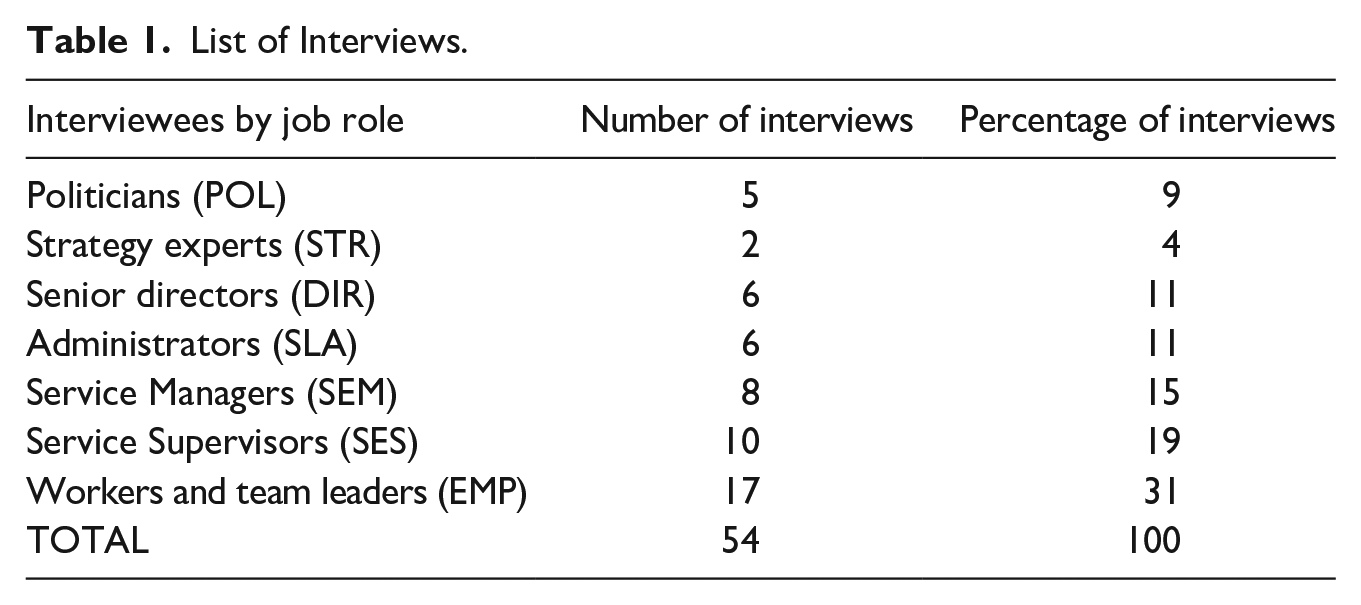
The material consists of interviews with politicians, internal strategy experts, senior directors, service directors, administrators, middle managers, team leaders, and employees in the field. We used purposive sampling, meaning that the selection of interviewees was guided by the research problem. The total number of personnel within the social and health care services was 2,700, excluding temporary workers. Of those people who were interviewed, 47 worked in the Seahaven’s social and health care services. Six of them were directors of social and health care services, and they were interviewed first. Second, the managers on the next level in the organizational hierarchy and the strategy experts were sent an invitation for interview, and those who accepted the invitation were interviewed. Other interviewees were selected through systematic sampling based on an alphabetically ordered list of personnel acquired from the city’s human resources department. An invitation to interview was sent to every tenth name on the list. Fifteen percent of the invited people accepted and were interviewed. Finally, five politicians were invited from those committees that guide the service sector in question. These were politicians who had been elected by citizens in the municipal election and, as politicians, were not employed by the city organization, nor were they necessarily experts in this specific field. The interviews were conducted within a period of 5 months, between February and June 2014. After the interviews, it was checked that the interviewees represented the different group of actors in the organization. A total of 54 people were interviewed, yielding 65 hours of interview material. The organizational roles and interviewees are presented in Table 1.
List of Interviews.
The one-to-one theme interviews were conducted by applying the principles of responsive interviewing (Rubin & Rubin, 2005): each interview took the form of a discussion, the aim of which was to talk about things the interviewee regarded as important in strategy-making and participation. The process and content of the discussion were allowed to adapt to what the interviewee brought to the discussion. Each discussion started with the same warm-up question about the interviewee’s career path and current job role. Next, they typically progressed to themes related to possibilities of having an influence at work, participation in strategy-making, the role of strategy in their own work, and values and leadership.
In addition to the topics above, many interviewees spoke spontaneously about challenges related to their work, of which the most often mentioned were how tired they were of being forced to save money and resources at the customer end, the burden of organizational changes, the lack of support from the organization, and the feelings that the organization did not respect their work and efforts. In such a discussion, we saw the role of the interviewer not as a neutral observer but as a co-producer of direction, content, and meaning. The duration of the interviews ranged from one to two hours. They were recorded and later transcribed, resulting in over 800 pages of written material.
Data Analysis
Guided by the constitutive view of paradox (Putnam et al., 2016), we began the analysis with the preliminary idea of how to better understand the tension control produced in relation to engagement. We adopted an open-ended research design and the idea of iterative analysis (Tracy, 2013). In the first phase, we used discourse analysis to understand and conceptualize how the interviewees talked about strategy and themselves as strategy participants. We identified six types of subjectivities (see Table 2) that the discourse allocated to the participants. We then turned to positioning theory (Davies & Harré, 1990) to analyze the subject positions that the strategy discourse made available for the interviewees and how the interviewees then positioned themselves. In relation to these positions, we also identified factors that either enabled or disabled participation.
Subject Positions and Subjectivities Identified in the Studied Organization.
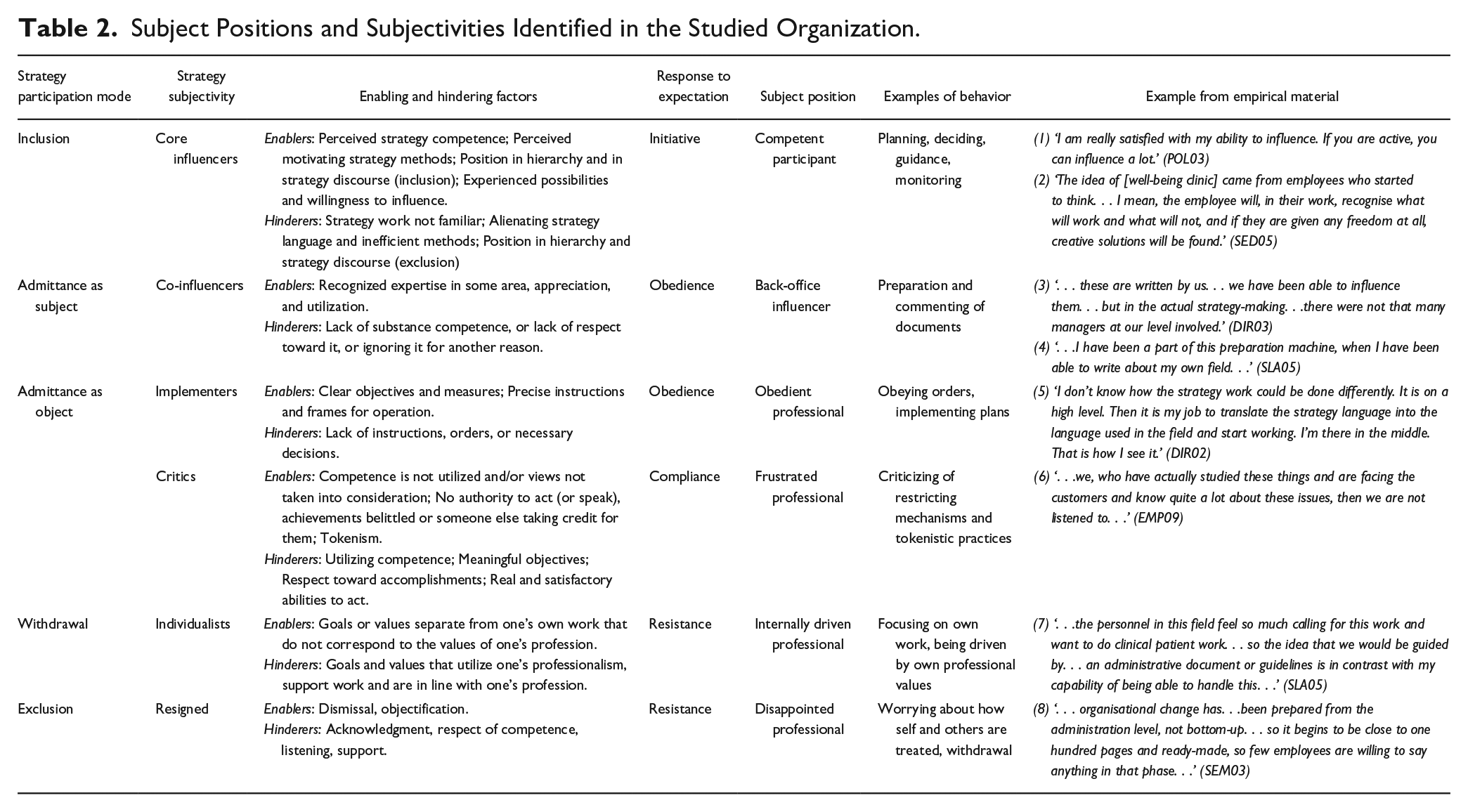
In the second phase, we turned our focus to those enabling/hindering factors and what seemed to lie beneath participation. We paid attention to the division between those positions that accepted the allocated subjectivities and those that did not. Most of those participants who chose to position themselves differently presented criticism toward the process and felt themselves restricted or even excluded. Following the typology presented by Putnam et al. (2016), we then focused on those issues that interviewees brought forward as tensions: what they experienced as “stress, anxiety, discomfort, or tightness in making choices, responding to, and moving forward” (Putnam et al., 2016, p. 69). We then took a closer look at those moments in which these tensions occurred. We noticed that when talking about these moments, interviewees were explaining their responses to the contradicting needs of being engaged in the process and doing as they were told or trying to understand the reasons or justifications for the decisions the politicians or the management had made. We then categorized the described paradoxical situations under four themes: mechanistic process, exclusion, control of participation, and detachment of strategy (see Table 3).
Paradoxical Situations Arising From the Strategy Process.
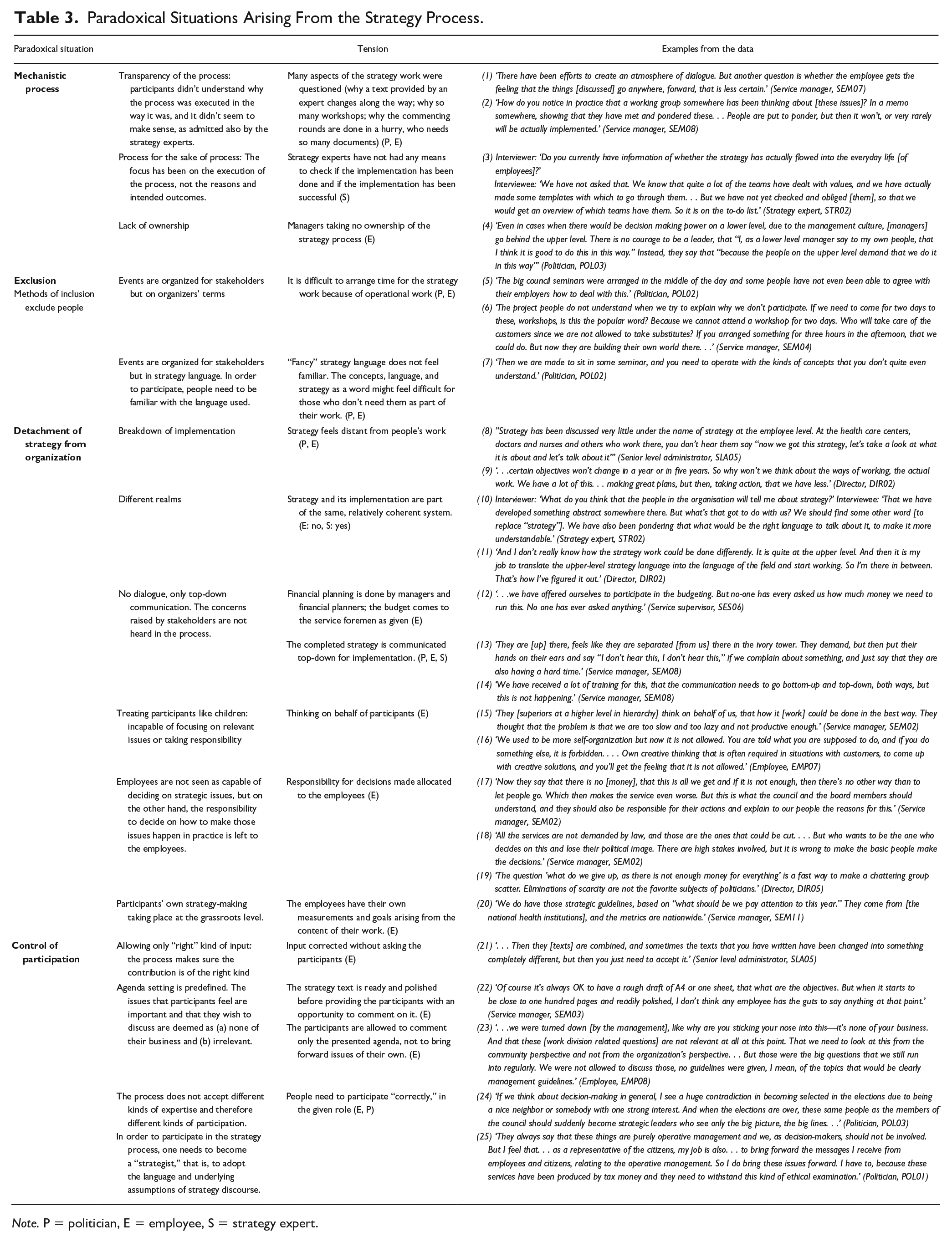
Note. P = politician, E = employee, S = strategy expert.
Based on this understanding of the participants’ differing possibilities of contributing to the process and what kind of absurd outcomes this division produced, we took a closer look into two main categories: the control of participation (resulting in exclusion) and detachment of strategy (resulting in no meaningful outcomes). We compared the experiences of those interviewees who were satisfied with the process and felt like being able to contribute to those interviewees’ descriptions that presented criticism. We noticed that the experiences of these two groups, as reflected in the subject positions, seemed to represent a completely different reality: one focusing on strategy on a conceptual level and the other one struggling with the challenges of everyday work. Based on the allocated subjectivities, a division between these realms was maintained, providing the participants in the conceptual strategy realm the right and duty to control the activities of the participants from the practical strategy realm, who then were left with the options of compliance or withdrawal. Based on the division of subjectivities, the differing responses, and subject positions, we identified three modes of participation available (see Table 2). The division into separate realms and the way the mode of participation was defined by the discourse, provided us with means of theorizing about the “engagement-control paradox” in strategy-making. We describe these findings in the following section.
Findings
Our findings reveal how the prevailing strategy discourse and hierarchical management tradition took over the engagement discourse in Seahaven’s strategy process. Despite Seahaven’s intention of designing an inclusive strategy process that would bring together the whole city community and involve widely different stakeholders, the discourse turned engagement efforts into practices of control. In what follows, we aim to show those paradoxical situations that the participants found themselves in, the way they responded to these situations by positioning themselves in relation to the strategy discourse, and how the “engagement-control paradox” emanated from their responses. As a result, the discourse divided participants into two separated realms with different kinds of understanding of the strategy process and provided different modes of participation accordingly.
Control of Participation: Paradoxical Situations and Different Responses
In the studied organization, the legacy of hierarchical strategy tradition was integrated into the strategy discourse. The practices were built on the assumption that strategy is a management-led process, the purpose of which is to plan the future on behalf of the whole organization and to set high-level goals that would then be communicated to the rest of the organization for implementation. These assumptions led to an execution of a strategy process in which people were expected to participate, and when they did so, they found themselves torn between their own expectations and the demands of the discourse. The tension-ridden setting gave rise to different paradoxical situations observed by the interviewees. In these situations, many had accepted the subjectivity of a Critic, and they were found among all organizational positions: people who were admitted to the strategy discourse in a controlled manner and were often dissatisfied with the way things were and how they were progressing. Frustrated professionals would have been especially willing to participate but had poor or no possibility at all to contribute. Thus, they were annoyed and pointed out the cosmetic nature of participatory practices.
Paradoxical Situations
One type of paradoxical situation was related to the mechanistic execution of the process. Many aspects of the strategy work were questioned, such as why a text provided by an expert was changed along the way, why there were so many workshops, why the commenting rounds were done in a hurry, or why so many documents were needed. The interviewees did not understand why the process was executed in the way it was, as many of the aspects contradicted the expressed intentions of inclusiveness as well as the objectives of the strategy work: building community and shared vision and putting strategy into practice. The issue was somewhat recognized also by the strategy experts, but from the viewpoint of their adopted positions of Competent participants they nevertheless found that the process worked as intended. In fact, their aim was to adapt the strategy process to the hierarchical management system and formulate the strategy so that it could be communicated as clearly as possible and processed in a machine-like manner at the lower levels of the organization: One slide [about the strategy], with one picture, you can actually say it all. That was what we were looking for, whether we could formulate it in this kind of a machine-like way, but we could not get quite that far. But a simple thing, because then it is easier to communicate. (Strategy expert, STR02)
At the same time, the strategy experts admitted that they did not have any means to check if the strategy plan had been implemented and if the implementation had been successful, for instance. In other words, the process was conducted for the sake of the process, and not for the impact the strategy was intended to have (Table 3, quote 3).
Conducting the process just for the sake of it resulted in some aspects of the participatory process that were hindering participation. For instance, 2-day-workshops for decision-makers were arranged during office hours—the time when decision-makers were engaged in their day jobs (Table 3, quotes 5-6). When people were not able to participate in the strategy work, it became difficult to understand and comment on the documents and, consequently, to commit to the results. In addition, the strategy workshops operated with the kind of “fancy” strategy language that most of the participants were not familiar with, making it ever more difficult to provide input (Table 3, quote 7). As a result, a democratic process was conducted in a small group’s terms, resulting in methods of inclusion to exclude people.
Consequently, strategy was detached from other organizational processes. Employees saw strategy as distant from their work (Table 3, quote 8). Also, managers and strategy experts agreed that the way strategy was talked about and implemented was not functional, yet they could not imagine how it could have been done differently (Table 3, quotes 10–11).
One of the paradoxical aspects of the process was the intention to promote dialogue, while the employees felt that the information, and orders, were flowing in only one direction. Managers seemed to be thinking on behalf of employees, though the employees were the experts in their own work (Table 3, quote 15). This led to a tension between the strategy work and the practical consequences of the decisions made. The process seemed to ignore many of the challenges caused by the ongoing organizational change as well as the new problems that the decisions caused, for example. The decisions were made at the top of the hierarchy, but on a practical level, problem-solving was left to the employees, who then needed to find a way to reconcile limited resources and extended services: what services were they able to provide, or how to prioritize customers in need of a service (Table 3, quotes 17-19).
Governed by the strategy discourse, the strategy process was used to control participation. The participants felt torn between the expectations of participation and the exercised control over their activities and inputs, for instance, when people were expected to participate “in the right way,” according to their role (Table 3, quote 24). Many of the participants were not familiar with strategy language or techniques, but those who were allocated the subjectivity of a strategist were nevertheless supposed to act like strategists: “. . .that the council members should suddenly become strategic leaders who look only at the big picture, broad guidelines. . .” (POL03).
As the strategy experts were acting according to their positions and the assumptions provided by the discourse, they were making sure that participation followed the hierarchy and that only the “right” kind of issues were raised. Employees had, for instance, several concerns in relation to the division of work that they deemed important and would have wanted to bring into discussion. However, these initiatives were blocked by the management, stating that work-related concerns were not in the core of the strategy (Table 3, quote 23). Instead, the strategy text and organizational plans were detailed and polished at the management level before employees were given the possibility to comment on them (Table 3, quote 22). The process was also seen as opaque: the participants had no view of how their input was used. Some had also noticed that their input was changed at some point in the process without asking, showing control over the content as well (Table 3, quote 21).
Different Responses
Whether the participants were able to experience the tensions and the paradoxical situations in the first place depended on the allocated subjectivity and the way they were positioned in the process. Competent participants, who were allocated the subjectivity of a Core influencer, talked about their participation as if it was unquestionable. Typically, this position was assumed by the politicians, the top management and the strategy experts, as well as those who participated in the strategy workshops and seemed to think that it was their right and duty. Those participants who accepted the allocated rights and responsibilities responded with (and were expected of) obedience: Of course everyone understands that in a city organisation, it is the politicians who run it. And those [decisions] are then implemented here at the level of officials as best we can, and we commit to them. You cannot do this kind of work if you are not committed, even if you personally would have different. . . As citizens, we all of course have the right, but in those roles that we have in these jobs, of course we need to implement that, it is crystal clear. And if that becomes too stressful, well then you just need to go somewhere else. (Director, DIR03)
For instance, Back-office influencers accepted their restricted participation in which their input was a predefined piece of strategy (Table 2, quote 4). Similarly, Obedient professionals accepted the position in which their duty (as Implementers) was to obey orders and implement the plans coming from above (Table 2, quote 5).
However, many of the participants did experience the tensions, and as a response to the observed paradoxical situations, they decided to position themselves differently than what the allocated subjectivity expected from them. For them, attempts to adapt to the strategy became a struggle for survival. They expressed concerns and criticism of the strategy work, as they attempted to comply with the demands of strategy but were dealing constantly with the need to reconcile between contradictory ends: They [the governmental supervisory body] said that we should follow the nutrition recommendations. We began applying them, and that caused costs. Now they are not accepted in the budget, so they need to be added there. So I’m thinking why am I here trying to talk about these issues and complain. I mean, if we get these kinds of recommendations and begin to follow them, the [response] will be ”do follow, but you won’t get any money.” But I don’t quite have the powers of Jesus yet. . . (Service manager, SEM04)
Yet another response was resistance. Some of the interviewees chose to withdraw themselves from strategy participation and rejected the imposed subjectivity of an Implementer. Instead, they adopted a subject position of an Internally driven professional. Within this position, they saw a contradiction between the objectives arising from the strategy and objectives arising from the content of the work (Table 3, quote 25). In response, they expressed more commitment toward personal and professional values than to the demands of strategy (Table 2, quote 7).
There were also people who had been Resigned—excluded from participation and who had become objects dependent on the decisions of others. The employees that had taken the subject position of a Disappointed professional felt hurt by the lack of respect and control over their work arrangements (Table 2, quote 8). There was a smoldering rebellion among the resigned toward the management-led process and the administration-bureaucratic system, but at least at the time of the interviews, it remained at the level of internal discussions within the work teams. As it was, the assumption of strategy as a management-led process, the purpose of which is to plan for the future, remained unquestioned.
Division Between Conceptual Strategy Realm and Practical Strategy Realm: Different Modes of Participation
Division of Strategy Realms
Interviewees expressed different prevailing strategy realms underlying the experienced tensions based on the allocated subjectivities and expected positions. By those identified as the subjects in the strategy process, the process was described as one that enabled broad participation of politicians, management, employees and citizens alike. This reflected the “conceptual strategy realm”: We had really massive strategy preparation seminars, and anybody who wanted was able to influence. For us decision-makers, it was more of a question of how some got frustrated and didn’t want to participate. However, in my opinion, anybody who really wanted to influence was able to influence for sure. And not just the decision-makers but also employees . . . and citizens as well. (Politician, POL03)
Another strategy area was described by the strategy experts, who wanted to believe that preparation related to strategy content had first begun at the front line of the organization. This practical knowledge, they said, was then brought up in the organization along the path of the management system and ultimately used by the participating managers and leaders in the strategy workshops: The strategic management. . .is the city management team. . .and then the other participation takes place along with the normal management system in the organisation. (Strategy expert, STR01)
However, the strategy realm experienced by the employees involved little or no participation (the practical strategy realm). When employees participated in strategy-making, it was done by preparing documents for the strategy process or commenting on the strategy documents, guided by the upper levels of the hierarchy. More often, however, the strategy was seen as a high-level construct in which employees had no influence: I really don’t know who eventually makes the strategy. We are just told that we must start implementing it. It is done somewhere far away from us. . .that is exactly what makes it feel so distant. (Service manager, SEM09)
Participation was therefore divided into two different realms. While the conceptual strategy realm held an image of openness, the discourse allocated the right and responsibility of managerial control to the politicians and the senior management and of the expert control to the strategy experts. The practical strategy realm was separated from the conceptual one, and consequently, from the strategy process.
Different Modes of Participation
As the people described the process and participation in it from their own positions, it can be seen how the assumptions following the subjectivities maintained these separate realms. The discourse categorized its participants, based on their organizational status, into active subjects (with expectation of contribution) and passive objects (no real contribution expected) of strategy-making. In this discourse, some of the organizational members were assumed to take the initiative, but compliance was expected from the rest. The strategy subjects held a view of a widely participative process in which all stakeholders could be heard, and this was also their genuine aim. Providing such subjectivities as the Individualist, the Critic, or the Resigned, or creating space for withdrawal, frustration, or exclusion, was not intentional but rather a result of the form of participation imposed by the discourse.
As a result, we identified three different modes of participation (see Table 2). Inclusion, representing a “genuine” form of participation, sees strategy as the collaboration of the organization’s members. It is based on the idea of ‘organizational citizenship’: all organization members are defined as strategy participants with rights and abilities for taking initiatives. How and to what extent each organization member is willing and able to contribute was, from this perspective, a matter of agreement instead of a controlled duty: How actively and in what way you bring things up. . . I am personally satisfied with my possibilities to influence, I mean, of course it is about cooperation and based on democracy, but one can really make a difference by being active and acting. (Politician, POL04)
This was the viewpoint and aim in the conceptual strategy realm and was maintained by those individuals allocated with the subjectivity of core influencers. However, this mode was not reserved for other participants. When analyzing situations where the individuals would have assumed their position, other than through the subjectivity allocated by the discourse, we were able to identify only few examples that were directly connected to the level of operations: one example in relation to developing a children’s health service process (“. . .the idea of a welfare clinic has come from the employees. . . it started from one clinic and has now become a city-wide practice. . .”—Service director, SED05), and one development project in which the employees took the initiative, and had the management step back: . . . in the ‘Good reception’ project. . .the employees were finally able to think for themselves how this work could be done better and with more efficiency and effectiveness . . . (Service manager, SEM02)
Nevertheless, the rare occasions show that, due to the chosen participation of individuals, it was sometimes possible for them to deviate from and take the initiative against the assumptions of the discourse.
The strategy discourse was built on the idea that it is the hierarchy that defines the access to the strategy process. Those who had been approved and included in the strategy process as real strategy participants were given the status of a strategist with an opportunity to influence the strategy plans. Others were seen as strategy implementers. Instead of being a matter of choice, the status of both strategists and strategy implementers were provided by the strategy discourse, in which the shared assumptions of and about the discourse guided the participants to act correctly in their respective roles. For those who had no actual decision-making power but who contributed based on their expertise, the participation took the form of admittance. The participants who were admitted to strategy discourse as strategy subjects were expected to provide input “correctly,” or they would be excluded. While the participants in the inclusion mode were seeing the participation as genuine co-production, in the admittance mode, the participants were experiencing the tension between the engagement discourse and the control of participation, accentuating the division between realms: They [in the central administration] are in their comfort zone and occupied in doing by themselves the things they consider important for themselves. They make those very nice power point slides and then give them to us and tell us that we must fill out the boxes on our part because the city council has so ordered. (Director, DIR04)
Also, several instances of quasi-participation were reported in which the aim of participative practices was little more than to follow instructions according to which different stakeholders needed to be included in the strategy process. People were then made to participate for the sake of participation, and not for the cause itself. The participants were therefore admitted only as objects, having no real possibility to influence: Now that the lay-offs and such have been under discussion, it tends to go into being so wrong and how can we handle it and what will become of it. I must then put a stop to it and remind that these are the facts, this has been decided and there is nothing we can do about it. We just have to accept it. We all agree that it is not a good solution and there will be problems. But because there is nothing we can do about it, we just have to focus on how to deal with it the best possible way. (Service Manager, SEM06)
The operational workforce and the citizens were merely provided with the opportunity to comment on the strategy text. This kind of participation represented a form of manipulation, decorated with words and methods from participative management but without real intentions to offer employees genuine opportunities to contribute to strategy-making—except for understanding the management’s strategy correctly to implement it as told.
What is interesting in these findings is that individuals were able to see the strategy-making and participation in it only from their own perspective, therefore making it impossible for the management, or strategy experts in administration, to realize that the participation they were experiencing was bound to the way they were positioned in the process. As a result, the impact sought from the increased stakeholder engagement remained modest. The strategy-making remained distant from other organizational activities, and the employees felt more like strategy survivors than strategists. These findings provide several theoretical implications for stakeholder engagement and different dimensions of engagement, which we will discuss next.
Discussion
The aim of this study was to examine how strategy participants positioned themselves in relation to strategy discourse and responded to the contradicting demands of participation and control. Through our findings, we locate control in the relationship between strategy discourse and participants of the process. By adopting certain subject positions based on allocated subjectivities, participants then self-regulate their participation according to the modes available to them. In this setting, participation is defined and contained within separate strategy realms. These findings provide a basis for outlining the engagement-control paradox in strategy-making. First, we establish how the paradox emerges by introducing engagement discourse in the context of the prevailing strategy discourse and the hierarchical management tradition. As a result, the discourse transforms engagement efforts into mechanisms of control. Second, we elucidate how the paradox becomes maintained: through the distribution of specific subjectivities and the regulation of modes of participation, which ensure that only the “right” or “appropriate” form of participation takes place.
Engagement Under the “Dome” of Strategy Discourse and Control: Different Modes of Participation
The polyphonic organizational context has been identified as a tension-ridden environment for participation (see Castelló et al., 2013; Castelló & Lopez-Berzosa, 2023; Wenzel et al., 2019; Winkler et al., 2020), where a more nuanced understanding of the role of managerial control is needed (Sachs & Kujala, 2021; Schultz et al., 2013; Vaara & Rantakari, 2024). By placing control in the relationship between participants and the discourse, the strategy discourse view enabled us to theorize different positions and modes of participation co-existing in the process (see Table 4). Our findings depict participation in the organizational context and connected to strategy-making as a complex process that emerges from the subjectification of both the managers and other participants (see Figure 1).
Modes of Strategy Participation.
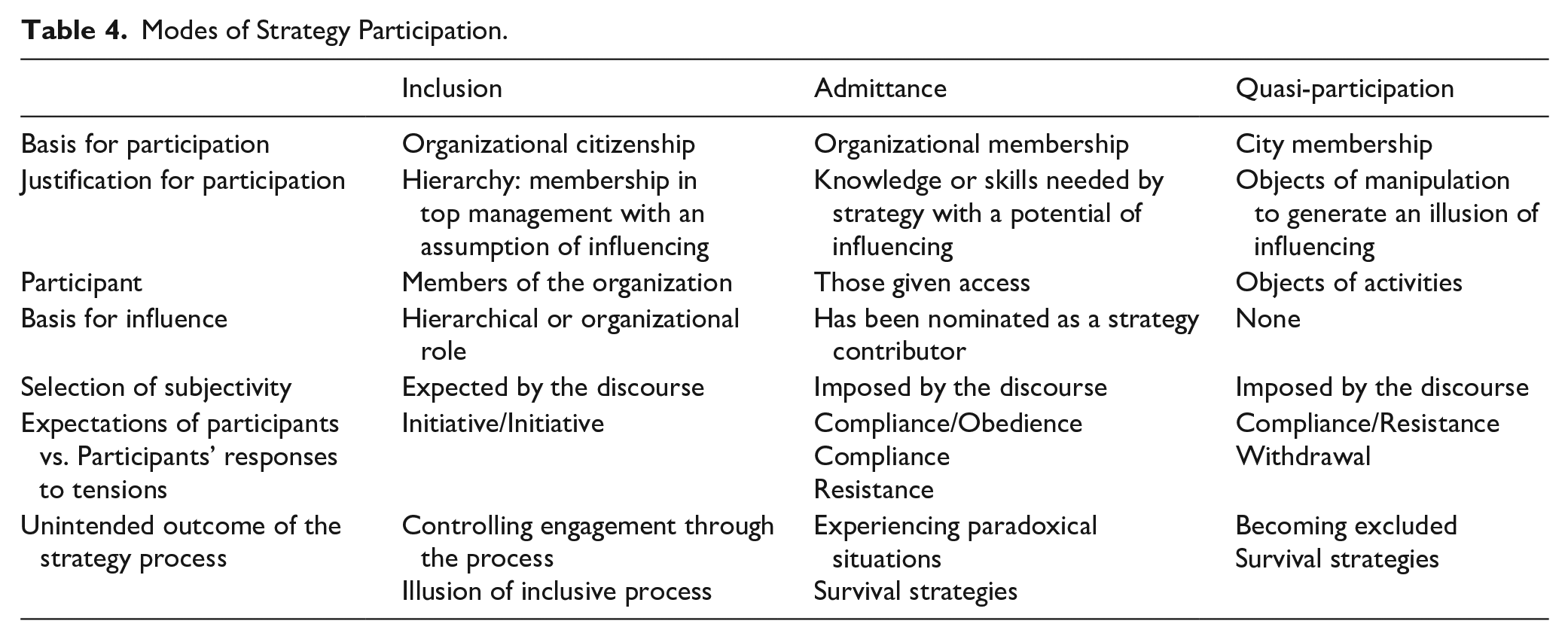
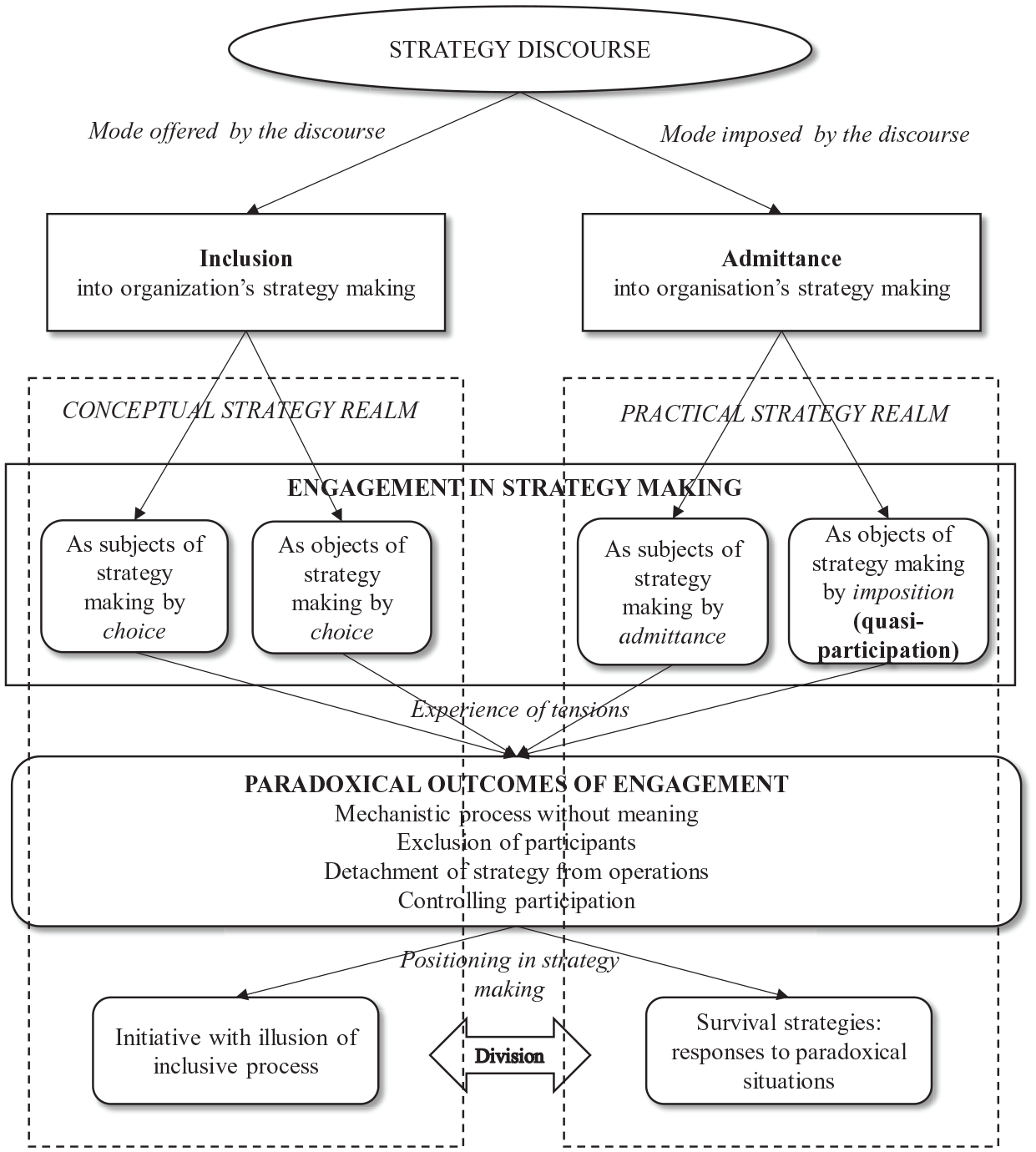
Participation by Choice or Participation by Command: Offered and Imposed Modes of Participation.
The prevailing management culture (i.e., how the management has internalized their rights and responsibilities and how activities and outcomes are controlled in the first place) sets the overall condition for the process to take place. People are either admitted or included in the organization’s strategy-making depending on their ability to influence the decision-making concerning the task at hand and their mode of participation. When admitted, their mode of participation is imposed by the strategy discourse. However, they can choose their mode when included: whether they become subjects, active and willful participants or settle on being controlled objects of strategy-making. Part of the choice is that people can also choose not to become engaged, which is something that the strategy discourse tied to the hierarchy does not consider.
Quick and Feldman (2011) make a cogent argument that the conflation of participation and inclusion within terms such as “engagement” may inadvertently lead to a limitation in the evolution of democratic engagement theory and practice. Their analysis, and our research findings, underscore the vital importance of distinguishing different types of engagement based on the capacity of participants to contribute input or co-produce processes, policies, or programs. Our findings show, first, how three modes of participation were present in the process. Here, inclusion was meant to refer to the kind of co-production that Quick and Feldman (2011) discussed; however, in practice, it was possible only for the positions in the conceptual strategy realm, in which the processes, policies, and programs were designed. The others were allocated such subjectivities that allowed either participation through admittance (i.e., they were allowed the access but were expected to provide input “correctly”) or became excluded. A part of the subjectivities was admitted only as objects, representing quasi-participation, as these participants had no possibility for influence. This concerned the operational workforce and citizens, who were merely provided with the opportunity to comment on the strategy text. The basis for this mode can be seen as manipulation, although it could be argued that it was not intentional but imposed by the discourse.
Second, our study also shows how the decision about the mode of engagement was not necessarily intentional (i.e., under managerial control), but also the assumption of the right and responsibility of functional control was allocated to the management by the discourse and, by self-regulation, assumed by the management. While participants in the lower organizational ranks seemed most often to accept the subjectivity allocated to them, subjectivities were also rejected or modified by the individuals based on their evaluation of their subject position in the discourse. Studies on activism and social movements (de Bakker et al., 2008; den Hond & de Bakker, 2007) have shown that the stakeholders may also initiate engagement; however, in our case and in the shadow of the prevailing discourse this was possible only within the practical strategy realm. Our findings therefore resonate with Friesl et al. (2023) study of self-selection in strategy participation in which they draw on structuration theory and model strategy participation as a dynamic interplay with individual choices and rules of participation. Based on the developed process model of individuals’ self-selection in participation, they conclude that it is important to recognize and reflect on the participation rules in order to accomplish genuine “inclusive openness.” Our findings build on and elaborate this notion through the empirical examination of those “rules” and the conditions that prevent the reflection from taking place, locking the “stabilizing trajectory” of participation (Friesl et al., 2023).
Emergence of the Engagement-Control Paradox
While the extant studies have noted the complex relationship between managerial control and stakeholder engagement (Sachs & Kujala, 2021; Schultz et al., 2013), few studies so far have examined the dynamics and conditions that control sets for stakeholder engagement. Another contribution of our study thus arises from the adoption of the constitutive paradox view (Putnam et al., 2016) on stakeholder engagement, allowing us to outline the engagement-control paradox in the context of strategy-making. Building on the notion of “participation by command” (Eriksson & Lehtimäki, 2001), our study elaborates on the contradiction that simultaneous enactment of control and engagement produced. The manifestation of unexpected, even absurd outcomes and the varied reactions of participants served to substantiate the existence of a paradox, as postulated by Smith and Lewis (2011) and Putnam et al. (2016).
Our findings show how the prevailing strategy discourse took over the engagement discourse and infused it with the task of control. The discourse produced different categories for participation, according to which all the participants came to self-regulate themselves. As a result, the engagement efforts such as workshops and commenting rounds became vehicles of control, where the “right” kind of participation was determined by the discourse. In the context of strategy discourse, the mechanistic adoption of the idea of engagement and related discursive practices caused the tensions to surface. The need for engagement affected everyone: the strategy experts, with the need to build the process as a means of controlling people’s participation and outcome and thereby enacting expert control; the managers adopting the role that discourse allocated to them and enacting managerial control; and other stakeholders, causing most of them to feel “inclusion-washed” by quasi-participation.
The discourse divided participants into two separated realms: the conceptual and practical strategy realms, the existence of which people were only vaguely aware of. Rather, the assumption of the active strategists was that by participating, people are automatically part of the conceptual strategy realm. People of the practical realm did not have access to the conceptual realm; and the people of the conceptual realm did not consider the practical realm relevant for strategy-making. Maintaining this separation also maintained the paradox. As in stakeholder engagement literature, the issue of power is largely seen as omitted also in paradox studies (Cunha & Putnam, 2019, p. 100; Wenzel et al., 2019). By juxtaposing engagement with control, our case shows how the issue of power becomes central due to the paradox. While the literature most often maintains the idea of managing (with) paradoxes by finding a balanced compromise, our case shows that due to power, that choice was possible for only the strategy subjects. Strategy objects had only the alternative of accepting the expected position or resigning from the process. However, it was exactly this division that maintained the paradox, and, as Wenzel et al. (2019) notice, paradox is not a controllable “thing” that managers can resolve. Trancending the paradox would first require its acknowledgment and acceptance (Putnam et al., 2016). For example, Henry et al. (2022) found that accentuating boundaries between different actor groups was actually a constructive process that deparadoxified the tensions. In our case, the “dome” of strategy discourse prevented the acknowledgment of the existence of the paradox and worked to maintain the status quo.
In sum, our research offers insights into the study of stakeholder engagement by revealing the power of the paradox lens. It uncovers the latent contradictions that can arise when the engagement discourse interacts with established organizational contexts. It moves the focus from instrumental, technical, or moral aspects of engagement to those mechanisms that underlie engagement efforts and the kind of power relations that they produce (see Dawkins, 2015). By focusing on the intricate power relations and underlying mechanisms of engagement efforts, we offer a nuanced perspective on the “dark side” of stakeholder engagement. By examining engagement efforts through the lenses of discourse and paradox, we can scrutinize the co-existence of the “bright” and “dark” sides of stakeholder engagement.
Conclusions
This article has presented a discursively oriented study of a public organization’s stakeholder engagement efforts in the strategy process, showing how the hierarchical structure and power relations surface the “engagement-control paradox.” Our findings offer two key theoretical contributions. First, our study contributes to the research on power and control in stakeholder engagement (Stohl & Cheney, 2001; Wenzel et al., 2019; Winkler et al., 2020) by shedding light on the “dark side” of stakeholder engagement and showing how control emerges as participants’ self-regulation of their participation according to the modes of participation available to them. Second, this study builds and extends on the research on paradoxes and tensions in stakeholder engagement (Castelló et al., 2013; Wenzel et al., 2019; Winkler et al., 2020) and strategy participation (Friesl et al., 2023) by outlining the “engagement-control paradox” and the dynamics with which it operates, showing how the prevailing discourse may transform engagement efforts into mechanisms of control.
Our study also suggests various avenues for future research. While our study focuses on the relationship between an individual and the discourse, the interviews did now allow us to connect to the strategy tradition of the processes the organization was following. Future studies could address these, for instance, via observing strategy sessions and analyzing strategy documentation. The chosen discourse perspective also moves the socio-psychological side of participation and the individual variation in the willingness no affect social situations in the background, the role of which has been pointed out by Friesl et al. (2023) in their theorization of self-selection.
The findings could benefit managers and practitioners in recognizing the need for external observation (outside the “dome”) and providing participants with possibilities for participation by choice. The prevailing management tradition and power relations in the organization provide particular conditions for stakeholder engagement that need to be understood if the “engagement-control paradox” is to be addressed. Recognizing and giving room for different voices would be crucial for the “re-articulation rhetoric” (Winkler et al., 2020) to take hold and pave the way for the virtuous cycle of engagement.
Footnotes
Acknowledgements
The authors thank the anonymous reviewers for their constructive and encouraging comments. They also thank the Special Issue Editors for their dedication and guidance throughout the process. All their insights and feedback have helped them to improve the article in many ways.
Declaration of Conflicting Interests
The author(s) declared no potential conflicts of interest with respect to the research, authorship, and/or publication of this article.
Funding
The author(s) received no financial support for the research, authorship, and/or publication of this article.
