



Abstract
This study explored the emerging issue of eco-anxiety in climate education, focussing on how teachers in New South Wales address students’ emotional responses to learning about climate change. Through interviews with 30 primary and secondary school teachers across the state, the study investigated the range of challenges and obstacles teachers faced in managing this complex emotional terrain. Upon outlining those challenges, the article argues for a more integrated approach to climate education, proposing policies aimed at enhancing teacher training, expanding mental health resources, and revising curricula to address both scientific knowledge and emotional resilience.
Keywords
Introduction
Schools have become critical sites for responding to the climate crisis, with primary and secondary education institutions increasingly framed as key venues for fostering awareness, developing problem-solving skills, and encouraging civic engagement on environmental issues (Anderson, 2012; Mochizuki & Bryan, 2015; UNESCO, 2021). To that end, in Australia, sustainability has been incorporated into educational policy at both national and state levels, with curricular documents outlining learning objectives that emphasise environmental consciousness and the science of climate change (Australian Curriculum, Assessment and Reporting Authority [ACARA], 2021). However, while these objectives focus on building scientific and technical knowledge, far less attention has been given to the significant emotional burden that climate education can place on young learners and their teachers.
Eco-Anxiety and Young People
The term “eco-anxiety” began appearing in the environmental psychology literature in the late 2010s to describe persistent feelings of worry, fear, and existential unease arising in response to escalating climate threats (Clayton & Karazsia, 2020; Pihkala, 2018). Building on earlier concepts such as Albrecht’s (2005) notion of solastalgia, the term has since gained traction among psychologists, educators, and public health researchers as a key affective response to ecological decline (Hickman et al., 2021). Although definitions vary, eco-anxiety is commonly understood as a sustained emotional response to knowledge of environmental degradation and its broader social implications, including concerns about extreme weather events, long-term habitability, and collective futures (Andrews & Hoggett, 2019; Clayton, 2020; Ray, 2020; Verplanken et al., 2020). While early research focused primarily on adults such as scientists, activists, and communities directly affected by environmental change (Head & Harada, 2017), a growing body of scholarship demonstrates that children and adolescents also experience significant climate-related distress, often at heightened intensities (Hickman et al., 2021; Ojala, 2012, 2017). For young people, eco-anxiety is shaped not only by classroom learning but also by constant exposure to climate narratives through news media, social media, and direct encounters with climate-related disruptions in their local environments (Cunsolo et al., 2020; Verlie, 2021).
Climate Education, Emotional Labour, and Student Well-Being
Climate education in schools has come to the fore in recent years as a primary context in which young people encounter in-depth discussions about global warming, biodiversity loss, and sustainability solutions, with scholars emphasising that education systems are among the key cultural spaces where children and youth engage emotionally and imaginatively with the challenges of the Anthropocene (Rousell & Cutter-Mackenzie-Knowles, 2020). Although schools can serve as important catalysts for awareness and engagement, educators commonly face the challenge of balancing factual information with considerations of students’ emotional well-being (Ojala, 2012, 2014). Such emotional labour can extend to teachers, who manage not only their own climate-related worries but also those of their students (Verlie et al., 2021). Several scholars contend that ignoring the emotional dimensions of climate change can exacerbate student distress, highlighting the importance of educational strategies that address both cognitive and affective needs (Bryan, 2020; Hickman et al., 2021).
Educators who integrate social-emotional learning (SEL) frameworks into their climate lessons report a decrease in student anxiety and an increase in perceived empowerment (Durlak et al., 2015; Ojala, 2017). SEL-based approaches encourage empathy, emotional regulation, and collaborative problem-solving, aligning well with the ethical and interpersonal dimensions of climate education. However, the extent to which such strategies are widely adopted varies, as many school curricula prioritise factual mastery over affective or psychological support (Jones & Davison, 2021).
Internationally, policy frameworks around climate change education exhibit significant variation. The Intergovernmental Panel on Climate Change (IPCC) has underscored the critical role of education in mitigating climate impacts, calling for an integrated approach that combines knowledge dissemination with skill development in resilience and adaptation (IPCC, 2022). Organisations like UNESCO also emphasise education for sustainable development, advocating for transformative pedagogies that recognise emotional and ethical considerations alongside factual competencies (UNESCO, 2020). More recently, the OECD’s PISA 2025 Science Framework has embedded “Agency in the Anthropocene” as a key competency, signalling a shift toward assessing students’ capacity to act meaningfully within complex socio-environmental systems (OECD, 2024). Despite these calls and early efforts, many curricula still offer limited guidance on addressing the psychological repercussions of climate change, focussing predominantly on scientific content and practical applications.
Climate Education in the Australian Curriculum Context
In the Australian context, the Australian Curriculum Assessment and Reporting Authority (ACARA) acknowledges sustainability as a cross-curriculum priority (ACARA, 2021). Introduced in 2010 as one of three cross-curriculum priorities within the first Australian Curriculum, the Sustainability Cross-Curriculum Priority (SCCP) was designed to embed knowledge, values, and actions for sustainability across all subject areas. This emphasis has led to an increased presence of climate-related content in subjects such as science, geography, and social studies. Research examining the SCCP has shown that although the initiative sought to embed sustainability across learning areas, implementation has often been inconsistent and limited by insufficient pedagogical guidance, inconsistent translation of policy into practice, and inadequate professional development for teachers (Kennelly et al., 2012). Subsequent studies confirm that these structural and pedagogical challenges persist, with many teachers expressing uncertainty about how to meaningfully integrate sustainability into classroom teaching (Nicholls & Thorne, 2017).
Australian teachers tasked with introducing climate science and global sustainability processes have long reported limited formal training and institutional support. More than a decade ago, Nicholls and Stevenson (2016) documented that over 300 Queensland teachers felt under prepared to teach climate change, citing gaps in professional development and uncertainty about pedagogical approaches. Recent research suggests that these challenges have persisted with little improvement. Albion et al. (2025), for example, found that while Australian teachers continue to express strong support for sustainability education, many still lack confidence and key knowledge to teach it effectively. This enduring lack of preparedness is compounded by curricula that tend to emphasise scientific and geographic dimensions of climate change, while offering limited guidance on how to address students’ emotional responses. Many educators also experience their own anxiety about environmental collapse, further complicating their ability to engage with students on the subject (Bryan, 2020). Despite growing recognition of these issues, few systemic supports exist to help teachers manage the emotional and pedagogical demands of climate education, a gap that affects both student well-being and the overall effectiveness of climate learning.
Despite these notable advancements in the scholarship, there remains a gap in understanding precisely how teachers are (or are not) supported in addressing the emotional dimensions of climate change in their classrooms. To help understand the nature of this problem in Australian classrooms and comprehend how schools might begin to improve the situation, this article explores how teachers in New South Wales perceive, experience, and respond to eco-anxiety in their classrooms.
Methodology
Research Design
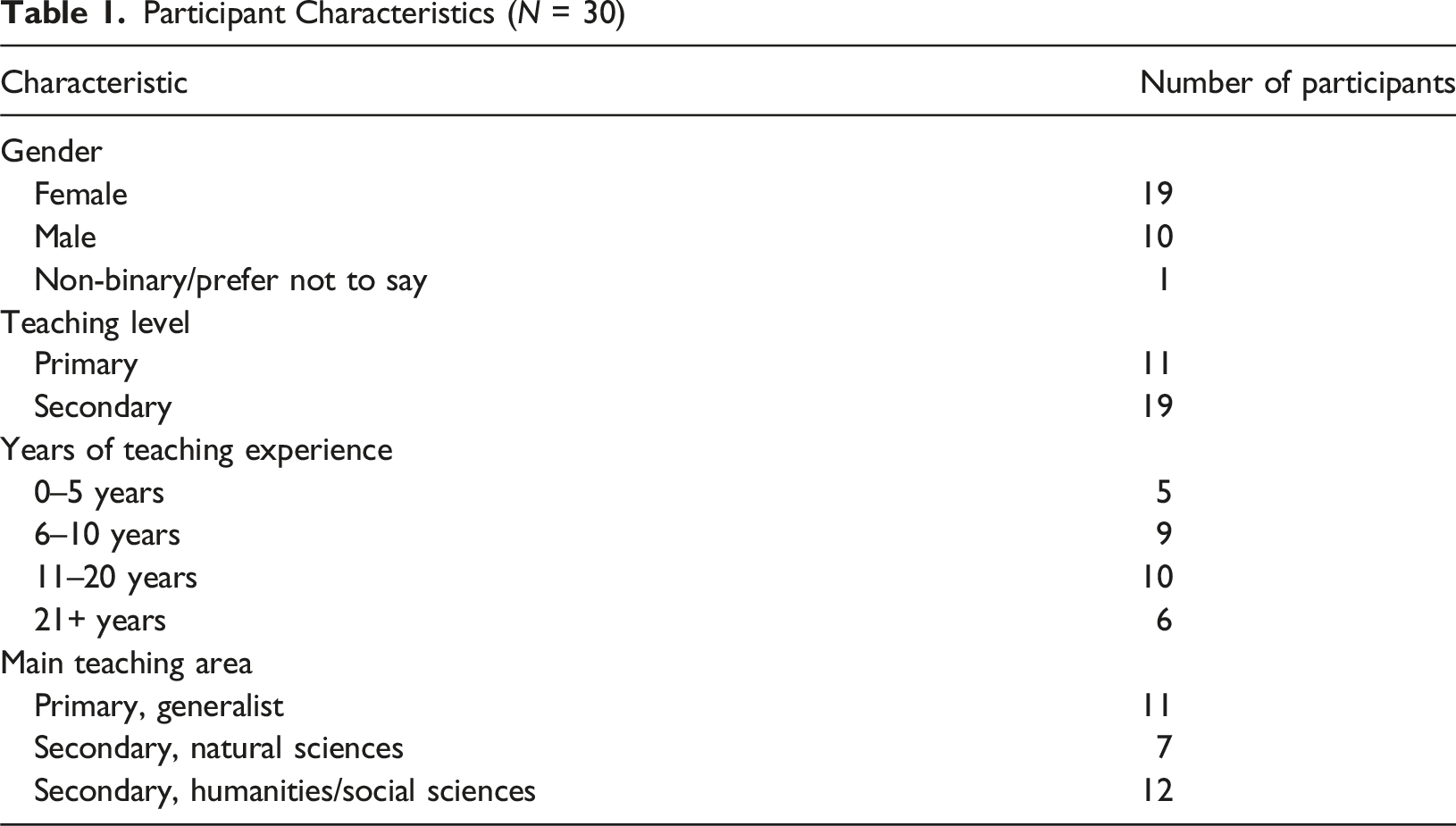
Participant Characteristics (N = 30)
Data Collection
Data were collected through semi-structured interviews in an effort to balance uniformity of key questions with the flexibility to explore emergent themes (Creswell & Poth, 2018). An interview guide was developed to cover the following domains: teachers’ approaches to climate change instruction, observations of student emotional responses, perceptions of available resources and support, and the broader policy or administrative context influencing their teaching practices. Each interview lasted approximately 45–60 minutes and took place either in person or via Zoom. All interviews were audio-recorded with participants’ permission to maintain accuracy in capturing verbal data. Field notes were also taken to document non-verbal cues and general reflections (Marshall & Rossman, 2016). Transcription was carried out verbatim, and transcripts were checked against the audio recordings. To enhance trustworthiness, participants were given the opportunity to review their transcripts and clarify or correct any statements.
Teaching Approaches Represented in the Sample
The teachers interviewed represented a broad range of experiences with climate change education. A little more than half delivered science-based instruction focused on developing factual understanding of climate systems, emissions, and environmental impacts as part of either generalist teaching in primary schools or specialist teaching in secondary institutions. Others in the social sciences delivered climate education in the context of topics like global affairs, geography, business, economics, politics, local sustainability issues, civic engagement, ethics, and well-being. This diversity of pedagogical experience provided a rich context for interpreting how teachers’ experiences of eco-anxiety intersected with their instructional approaches and levels of institutional support.
Data Analysis
Thematic analysis was employed to systematically interpret the qualitative data, following the six-phase approach outlined by Braun and Clarke (2006). The process began with familiarisation, during which the researcher read the interview transcripts repeatedly to gain an overall sense of the content. Initial codes were then generated inductively, with particular attention to references to eco-anxiety, pedagogical challenges, policy constraints, and teacher coping strategies. These codes were clustered into potential themes, which were subsequently reviewed and refined for internal consistency and distinctiveness. Exemplary quotes were identified to illustrate each theme, and definitions were finalised to ensure each theme spoke directly to the study’s research questions.
Results
The interviews yielded five prominent themes, the aggregate of which captures some of the key dynamics educators face when introducing and managing climate change topics, revealing both shared challenges and diverse strategies for handling students’ emotional responses.
Theme 1: Insufficient Teacher Training
One of the most consistently voiced challenges across the interview data was a profound sense of being underprepared to handle the emotional aspects of climate education. Teachers acknowledged that, while pre-service training and professional development often build competency in teaching scientific content, these programs rarely address how to respond constructively to students’ often deep feelings despair, fear, or anger about environmental degradation. Many participants described feeling “thrown in the deep end”, lacking a clear framework for incorporating both accurate science and emotional support into their lesson plans. “I know how to teach about greenhouse gases and melting ice caps”, one secondary school geography teacher explained, “but I have no idea how to calm a student who’s really upset because they think the world is ending… I just haven’t been shown what to do in that situation”. Another teacher, who had been in the profession for over twenty years, recalled that her university training covered “all the basics of classroom management”, yet never provided “even a single lecture or workshop on handling sensitive, emotionally charged topics like eco-anxiety”. She emphasised that her struggle was not with teaching facts about climate change (she felt confident about the curriculum content) but rather with helping students cope when they became visibly distressed: “I didn’t realise just how much emotional labour is wrapped up in this”.
Several participants also drew attention to how their own uncertainties and fears about the climate crisis compounded the problem. One remarked, “Sometimes I feel anxious myself when I read about rising sea levels and climate refugees... If I’m already on edge, how am I supposed to guide a 13-year-old through their own anxieties?” Such comments highlight the bidirectional nature of eco-anxiety within the classroom, where teachers’ personal stress can heighten the emotional intensity of the learning environment.
Theme 2: Lack of Mental Health Resources
Another pervasive concern was the limited availability of mental health support, both for students experiencing eco-anxiety and for teachers seeking professional guidance. Many interviewees described a situation in which their school counsellors were already burdened by an array of issues (ranging from bullying to family-related crises) leaving them unable to dedicate resources to issues like eco-anxiety. “Our counsellor is shared between three schools”, recounted a rural primary teacher. “If a child is upset about climate change, there’s no guarantee the counsellor will be in our building that day. More often than not, it ends up falling back on me to figure out how to help them”.
A secondary school science teacher expressed similar frustration: “I have students who are genuinely distressed by what they read in the news about wildfires and floods. They ask, “Is this going to happen here? Are we safe?” And I know that’s a conversation that probably needs more mental health expertise than I possess”. Despite recognising their own limitations, these teachers felt obligated to console worried students in the absence of more specialised professionals. One Year 6 teacher described how she tried to “carve out mini-counselling sessions after class”, though she worried about crossing professional boundaries. “I’m not a trained therapist”, she said, “but the kids look to me for reassurance. I do my best to stay calm and reassuring, but it’s just me and my instincts, which is far from ideal”.
This lack of targeted mental health resources extended to teachers themselves. Several reported experiencing “vicarious trauma” from repeated exposure to grim environmental forecasts, compounded by the emotional load of supporting anxious students. One secondary school geography teacher noted, “I sometimes take these worries home. After a long day of hearing my students talk about melting ice caps or bleaching coral, I feel exhausted. I need someone to help me process all this, but there’s no formal structure for teacher mental health in my school, let alone climate-focused mental health”. The consensus was that although schools often acknowledge important issues like bullying prevention or exam stress, eco-anxiety remains a novel concern that has not yet been systematically integrated into student support services.
Theme 3: Curriculum Limitations
A third major theme centred on curriculum constraints, particularly the emphasis on scientific and geographical knowledge at the expense of psychological and emotional dimensions of climate change. While participants praised the Australian Curriculum’s increased focus on sustainability, they argued it provides limited guidance on how to incorporate hope or empowerment into their teaching. One interviewee described the curriculum’s approach to climate change as “hyper-focused on scientific data like temperatures, emissions, impacts, but there’s almost nothing on coping or resilience”. She added, “Once the kids realise how incredibly massive and scary the problem is, they understandably just want to know what they can do. But the curriculum doesn’t give us a roadmap for turning anxiety into action”.
Others echoed this sentiment, pointing out that the absence of solution-focused content often left students feeling helpless. A veteran primary school teacher said, “It’s not enough to show them charts of rising CO2 levels, we need to build a sense of agency. Right now, the curriculum doesn’t help you do that… I tried introducing a small project where we plant trees in the schoolyard, just to give them something tangible, but that’s not “officially” part of any prescribed lesson, so I’m always doing it under the radar or off the top of my head”. Another teacher recounted a moment when a Year 7 student nearly broke down in tears during a class discussion about rising sea levels, asking, “Why bother studying if the planet won’t be liveable?” The teacher explained how she improvised a short lesson on local volunteer opportunities and small lifestyle changes “just to show them that they aren’t completely powerless”, but lamented the lack of formal resources or guidelines to sustain such an approach.
Several participants also raised concerns about assessment practices tied to standardised testing. One secondary school science teacher recalled that although he wanted to devote more class time to “emotional check-ins or group discussions on potential solutions”, the pressure to cover specific exam content often took precedence. “If we don’t meet the standards for the test, that reflects badly on us. But that means there’s little room to explore the emotional fallout of teaching the stark reality of climate change”, he said. Indeed, teachers across different subjects agreed that while the current curriculum incorporates valuable scientific and geographical knowledge, it frequently neglects the psychological well-being of students who engage deeply with the material.
Theme 4: Institutional Barriers
In addition to curriculum-related gaps, numerous institutional hurdles hindered teachers’ efforts to address eco-anxiety effectively. Strict timetables, limited class periods, and a general focus on measurable academic outcomes left little space for holistic discussions about students’ feelings. One teacher, based in an urban secondary school, lamented, “We’re so bound by the bell schedule and these jam-packed teaching requirements… there’s hardly any leeway for something that isn’t explicitly testable. Eco-anxiety doesn’t show up on the final exam”.
Similarly complicated were the political sensitivities surrounding climate change. Several educators noted that they taught in areas where climate change remained somewhat contentious among some parents and community members. A geography teacher in a semi-rural region recalled, “I’ve had parents tell me to “stick to the facts” and avoid scaring their children. But I can’t just gloss over the reality of what’s happening... That puts me in a tight spot, because if I acknowledge the emotional impact, I risk pushback from parents who think I’m indoctrinating their kids”. Another educator mentioned overhearing a colleague say they were “tired of dealing with all the political landmines”, prompting them to keep their climate change lessons “strictly academic”, thus inadvertently sidestepping discussions about anxiety or hope.
Teachers also felt unsupported by administrative structures that emphasise performance metrics over student well-being. As one participant explained, “Our leadership talks a big game about 21st-century skills and resilience, but when it comes down to it, they want to see good test scores. Where does eco-anxiety and emotional literacy fit into that? The moment I try to incorporate more reflective activities, I’m told to refocus on core content”. The lack of institutional recognition for the emotional labour involved in climate education left many educators feeling isolated and, in some cases, reluctant to experiment with more open-ended or emotionally engaged teaching methods.
Theme 5: Need for Peer Collaboration
Finally, a strong desire for peer collaboration emerged as a unifying thread, cutting across each of the previous themes. Teachers consistently expressed enthusiasm for sharing experiences, lesson materials, and coping strategies with colleagues who were navigating the same climate anxieties in their classrooms. One Year 7 teacher pointed out, “We have these ad-hoc discussions in the staff room now and then, where someone might say, “Hey, I just had a tough lesson on climate impacts, and the kids were pretty upset, does anyone have tips?” But we need a more formalised system for that, maybe a monthly workshop or an online forum”.
Another participant (a Year 8 teacher), who had attended a climate education conference online, described being “energised and relieved” to meet educators from different schools who “really got it”. She explained, “I realised how much good practice is out there, but we’re not sharing it effectively. If I find a great activity that helps students cope with eco-anxiety, like journaling or group discussions on local solutions, why should I keep that to myself?” This interviewee advocated for a national database where teachers could upload and download lesson plans addressing the emotional dimensions of climate change, complete with guidance on how to foster hope and agency.
Some educators also suggested the formation of small teacher-led “support circles” or learning communities, either online or in person, to discuss best practices for integrating emotional support into curriculum content. 1 A Year 10 science teacher recalled a particularly supportive peer who helped her rewrite a unit plan to include both factual information and reflective exercises on climate solutions: “That made such a difference in my classroom. But if I hadn’t happened to chat with her one evening after school, I’d still be struggling. We need these networks, and we need our school systems to recognise them as valid professional development, not just after-hours hobbies”.
Overall, the call for collaboration underscores educators’ recognition that eco-anxiety is a shared concern requiring collective problem-solving. With limited official guidance, teachers see peer networking as one of the most effective ways to acquire new strategies, alleviate their own anxieties, and maintain a sense of purpose in teaching what many increasingly regard as one of the most pressing issues of our time. By pooling resources and experiences, participants believed they could build a stronger, more cohesive response to eco-anxiety in their classrooms, ultimately benefitting not only students but also the broader educational community.
While the findings outlined above highlight the significant emotional labour involved in climate change education, it is also important to recognise that not all teachers experienced this work as distressing or unmanageable. Several participants described adopting pedagogical strategies that anticipated students’ emotional responses and channelled them into critical thinking, discussion, or problem-solving activities. These teachers often framed climate issues within broader themes of social responsibility and community action, which appeared to foster a sense of agency and resilience among students. Such examples illustrate that emotional strain and empowerment can coexist within the same classroom, depending on how climate learning is structured and supported. Even in these more hopeful learning environments, however, teachers described the sustained emotional effort required to maintain engagement and optimism.
Discussion
The above findings reveal that eco-anxiety is not an abstract or peripheral issue, but one that is actively negotiated in classrooms across primary and secondary contexts in New South Wales. Teachers described navigating a complex terrain in which scientific accuracy, student well-being, and civic responsibility intersect, often without sufficient institutional guidance. While experiences varied across teaching contexts and subject areas, a common thread was the need for clearer curricular framing, professional support, and pedagogical strategies that foster agency alongside realism. The following discussion briefly considers how these findings extend existing research on environmental education and teacher emotional labour, and what they suggest for curriculum design, professional learning, and policy development in the Australian context.
One notable aspect of the findings is the interplay between teachers’ scientific competence and their perceived emotional responsibilities. Several participants described feeling confident in their mastery of climate science yet acutely unprepared for moments when students express fear, despair, or anger about the future. This gap reflects broader systemic patterns in teacher education, where professional development often prioritises content knowledge over social-emotional pedagogy (Durlak et al., 2015). The experiences of teachers in this study also highlight the phenomenon of emotional labour, originally conceptualised by Hochschild (1983). Emotional labour, in this context, involves teachers managing their own climate-related anxieties while supporting students who may be overwhelmed by the existential dimensions of global warming. Without explicit training in such emotional regulation or coping strategies, educators can quickly become fatigued, thus limiting their ability to sustain supportive classrooms.
Moreover, the lack of school-based mental health services tailored to climate anxiety illustrates a disconnect between recognised mental health needs and available interventions. In many of the schools at which the interviewees worked, counsellors were either absent, overextended, or focused on issues traditionally understood as central to school well-being (such as bullying, family crises, or academic stress). Indeed, the teachers interviewed for this study repeatedly voiced concern about their own capacity to serve as quasi-counsellors in the face of distressing student questions like “Is there really a future for us?” or “What’s the point of learning if everything is getting worse?” Such existential inquiries underscore the unique nature of eco-anxiety, which blends concern for planetary health with a sense of personal and generational vulnerability (Hickman et al., 2021; Pihkala, 2020). Existing mental health frameworks in schools rarely tackle this intersection, reinforcing teachers’ sense that they are grappling with an uncharted domain.
The third theme, revolving around curriculum limitations, draws attention to a fundamental tension in climate change education about the need to convey scientific gravity without instilling hopelessness. While educational bodies like ACARA have made sustainability a cross-curricular priority (ACARA, 2021), many teachers in this study found that the curriculum offers little guidance on integrating emotional literacy or pathways for constructive action. Scholars have suggested that purely fact-centric approaches can intensify students’ sense of dread, particularly if those facts are dire and devoid of solution-focused narratives (Anderson, 2012; Ojala, 2012). This disconnection resonates with calls from global organisations, including UNESCO and the IPCC, for educational models that nurture not only scientific understanding but also agency, optimism, and resilience (IPCC, 2022; UNESCO, 2020). The accounts from NSW teachers underline a clear policy gap, where even as curricular frameworks evolve to incorporate more climate topics, they lag in offering strategies that channel emotional energy into empowerment rather than despair.
Institutional barriers further exacerbate these curriculum-level gaps. Many teachers noted that performance metrics and standardised testing regimes impede their attempts to address students’ emotional well-being. This observation aligns with critiques from educational researchers who argue that narrowly focussing on testable outcomes undervalues the social-emotional and moral components of learning (Durlak et al., 2015). Additionally, in settings where climate science remains politicised, teachers often feel pressure to avoid or minimise discussions that might be interpreted as too ‘activist’ or emotionally laden. Some of the teachers who participated in this study described treading a fine line in which they aimed to present the facts and validate students’ anxieties, yet they feared backlash from parents, community members, or administrators who might view such discussions as ideological. This climate of caution can stifle open dialogue and reinforce the perception that eco-anxiety is somehow outside the scope of academic instruction. As a result, a subject that demands holistic engagement (encompassing science, ethics, social justice, and mental health) becomes relegated to occasional ‘side conversations’ rather than a fully integrated element of teaching practice.
A particularly encouraging dimension of the findings is the strong consensus on the need for peer collaboration. This reflects the broader literature on professional learning communities and teacher networks, where knowledge-sharing and collective problem-solving are shown to improve both pedagogical effectiveness and educator well-being (Darling-Hammond et al., 2017). This emphasis on collegial learning also resonates with long-standing traditions in environmental education, which has consistently recognised teacher networks and professional communities as vital to developing reflective and transformative practice (Gough, 2012; Stevenson, 2007). From this perspective, climate change education can be understood as part of a wider environmental education lineage, one that values collaboration, critical reflection, and collective agency as catalysts for change. In the context of eco-anxiety, peer collaboration can further mitigate isolation by enabling teachers to exchange lesson plans, emotional support techniques, and best practices for balancing factual accuracy with emotional care (Durlak et al., 2015).
Taken together, and read within the scope of this study’s focus on the emotional dimensions of climate teaching, these findings underscore the urgent need for a more nuanced, human-centred model of climate change education in Australia. While the expansion of climate literacy within school curricula is both necessary and overdue, this study highlights how an emphasis on scientific knowledge, when detached from emotional and relational support, can inadvertently intensify eco-anxiety for both students and teachers. Addressing the professional development gaps, mental health resource shortages, curricular limitations, and institutional pressures identified in this research is therefore critical if climate education is to function as a source of empowerment rather than distress. By recognising emotional labour as a central feature of climate teaching, and by embedding emotional literacy, peer collaboration, and well-being oriented pedagogies into educational policy and practice, schools can better support teachers and equip young people to engage with climate change in ways that are informed, resilient, and grounded in a sense of collective agency.
Finally, it is important to acknowledge the scope and limits of this study when interpreting these findings. By design, this research focused on the emotional dimensions of climate teaching, which may have shaped the perspectives captured in the interview sample. Teachers who chose to participate may have been particularly attuned to questions of student well-being, emotional labour, or eco-anxiety, and their experiences may not fully represent classrooms where climate education is framed primarily through scientific or technical content alone. At the same time, this focus allows for a deeper understanding of how emotional dynamics are experienced and managed in practice, a dimension that remains under examined in much of the climate education literature. Future research could build on these findings by explicitly comparing classrooms that emphasise scientific knowledge transmission with those adopting more action-oriented or well-being focused pedagogies, in order to better understand the conditions under which climate education either exacerbates or alleviates eco-anxiety among students.
Conclusions and Recommendations
In light of the findings presented in this study, meaningful policy interventions are needed to ensure that climate change education not only conveys scientific facts but also fosters emotional resilience, hope, and agency among students. The five themes identified above paint a picture of educators navigating eco-anxiety in a fragmented, under-resourced landscape. Aligning with the calls from both national curriculum bodies (ACARA, 2021) and international organisations (IPCC, 2022; UNESCO, 2020), the following recommendations aim to integrate emotional support frameworks, evidence-based teacher development, and comprehensive curricula into a cohesive strategy for mitigating eco-anxiety in schools.
Integrate Emotional Literacy Into Teacher Training
A core finding of this study is that while educators often excel at imparting scientific knowledge about climate change, they struggle with the emotional aspects of helping students manage eco-anxiety. Pre-service training programs, generally focused on discipline-specific methodologies, rarely include modules on emotional support, leaving teachers unprepared to guide students through the distressing realities of environmental degradation. National- and state-level education authorities should mandate the integration of emotional literacy into pre-service curricula, ensuring that future educators are equipped to handle discussions around climate anxieties and existential concerns. In addition to pre-service training, in-service professional development programs should be expanded to include workshops on stress management, trauma-informed teaching, and hope-focused pedagogies. Such sessions could cover strategies for validating students’ fears while reframing environmental challenges in a constructive light. Educators could benefit from exposure to case studies of successful community-based projects that demonstrate tangible pathways for sustainability and social action.
Expand and Tailor School-Based Mental Health Services
Teacher accounts in this study underscore a pressing need for systemic support that strengthens both pedagogical confidence and mental health capacity in responding to climate-related stress. While targeted counselling services are important, teachers emphasised that much of this work can and should occur within the classroom, provided that educators are adequately trained and resourced. When teachers have access to professional development in emotional literacy and action-based pedagogies, they are better equipped to guide students through difficult feelings without external intervention.
Importantly, Australia already has several initiatives that provide a foundation for this work. The Australian Association for Environmental Education (AAEE, 2025) offers professional networks, conferences, and curriculum resources that help teachers integrate sustainability and climate issues into their classrooms. The Be You framework, for example, developed by Beyond Blue, Headspace, and Early Childhood Australia, supports schools in creating mentally healthy learning environments for both students and staff (Be You, 2025). Meanwhile, Cool Australia (2025) provides freely accessible, curriculum-aligned resources that embed environmental and sustainability learning across subject areas. These programs represent valuable starting points, but as the participants in this study observed, access remains inconsistent and coordination between mental-health and environmental-education initiatives is limited.
Education departments could build on these existing strengths by funding partnerships between mental-health services, professional associations, and environmental-education networks to ensure that both student and teacher well-being are supported within a coherent, system-wide framework. Moreover, teacher well-being must be prioritised within these mental-health expansions, as teachers who feel overwhelmed by their own anxieties are less likely to provide stable support for students. Regularly scheduled debriefing sessions, peer-support circles, and personal counselling services could assist teachers in processing the emotional toll of teaching about climate change. As demonstrated by the educators in this study, the fear and frustration associated with climate change can be as pronounced among adults as among students, making teacher mental health a critical component of any sustainable intervention.
Revise Curriculum to Include Emotional Resilience and Hope-Building
While the Australian Curriculum has taken steps to embed sustainability concepts, many teachers in this study reported that the official guidelines fail to include strategies for managing emotional distress, thus aligning with earlier research showing that, although the Sustainability Cross-Curriculum Priority encourages knowledge and values related to sustainability, it provides little practical guidance on how to address the affective and psychological dimensions of learning (Boon, 2014; Kennelly et al., 2012). This gap perpetuates a situation in which students learn stark facts about climate scenarios without clear avenues for constructive engagement. To counter this deficit, policymakers should collaborate with curriculum specialists, psychologists, and experienced classroom teachers to design content that balances scientific realism with narratives of hope and agency.
Revisions might involve integrating ‘solution-focused’ case studies into science and geography units, showcasing successful local or international initiatives that address deforestation, plastic pollution, or renewable energy adoption. Students could be encouraged to develop action plans for their communities (such as waste reduction campaigns or tree-planting drives) and receive recognition for their achievements as part of the curriculum’s formal assessment structure. In this way, young people would be evaluated not only on their scientific literacy but also on their capacity to problem-solve and collaborate for environmental improvement.
The proposed curricular reforms resonate with international developments such as the PISA 2025 Science Framework (OECD, 2024), which, as noted above, introduces “Agency in the Anthropocene” as a core competency for assessing students’ capacity to respond to ecological challenges. This global shift reflects a growing recognition that agency and resilience are integral to scientific literacy rather than peripheral to it. Aligning the Australian Curriculum with this approach would not only strengthen national policy coherence but also ensure that emotional and behavioural learning outcomes are valued alongside cognitive ones.
Embedding social-emotional learning objectives into climate education could play a key role in achieving this balance. Rather than treating eco-anxiety as a marginal concern, educators could incorporate reflective journaling, structured class discussions, and role-playing activities that allow students to express their concerns and imagine realistic pathways for mitigating climate impacts. These experiential practices can foster empathy, accountability, and a sense of collective efficacy – traits increasingly recognised as essential for addressing complex global problems such as climate change. Implementing such approaches will require leadership from education ministries, including the provision of clear policy guidance and professional development frameworks that equip teachers to cultivate emotional as well as intellectual resilience in their students.
Foster Peer Collaboration and Knowledge Exchange
Another prominent theme in the findings is the desire among teachers for structured avenues of collaboration, where they can share best practices, debrief difficult teaching experiences, and collectively brainstorm responses to student anxieties. Although informal conversations in staff lounges or through social media groups can be valuable, they lack the institutional support necessary to make systemic change. Policymakers can address this by formalising peer networks or professional learning communities specifically focused on climate education and emotional well-being. Local or regional ‘climate pedagogy hubs’ could be formed, hosting regular workshops, conferences, or online forums where teachers exchange lesson plans, suggest resources for mental health referrals, and discuss emerging research on eco-anxiety. By recognising this work as legitimate professional development, education departments would incentivise teacher participation. Moreover, partnerships between schools and NGOs specialising in environmental advocacy or mental health could enrich these hubs, bringing in external expertise and additional funding streams.
In addition, inter-school collaboration can amplify successful local initiatives. If a particular institution develops an effective approach (such as a student-led sustainability council or a weekly climate “emotional check-in” program), this model could be adapted and replicated elsewhere. By instituting peer-reviewed sharing of classroom strategies, teachers can collectively refine and validate methods for balancing scientific rigour with emotional support. Over time, this collaborative culture could help normalise discussions of eco-anxiety, positioning it as a standard consideration in climate education rather than an exceptional crisis.
Address Institutional Constraints
Finally, institutional constraints related to standardised testing also necessitate reconsideration. If teachers are to devote time to emotional check-ins or collaborative projects, performance metrics must be adjusted to value these outcomes. For instance, a portion of science or social studies assessments might evaluate a student’s ability to articulate potential solutions to environmental problems, reflect on emotional reactions, or propose actionable community interventions. Elevating these skill sets to a status comparable with factual recall or mathematical proficiency signals that social-emotional competencies are integral to climate education. Overcoming these obstacles thus involves recalibrating the balance between academic rigour and holistic student development, recognising that climate change uniquely merges intellectual and affective domains.
In sum, addressing eco-anxiety through policy interventions is a multifaceted endeavour, demanding re-envisioned teacher training, robust mental health infrastructures, and curricula that weave together scientific accuracy with emotional scaffolding. The policy recommendations articulated here are interdependent elements of a broader systemic shift along these lines. While they aim to alleviate the burdens teachers face in helping students grapple with climate-related fears, they also reflect the larger educational imperative of preparing young people not just to understand the science behind the climate crisis but to engage with it proactively, ethically, and with a sense of collective purpose.
Footnotes
Acknowledgements
The author would like to thank all participants who kindly shared their knowledge and experiences.

Ethical Consideration
The study received ethical approval from the University of Sydney’s Human Research Ethics Committee (HREC 2023/488).
Funding
The author received no financial support for the research, authorship, and/or publication of this article.
Declaration of conflicting interests
The author declares no potential conflicts of interest with respect to the research, authorship, and/or publication of this article.