



Abstract
This scoping review examines teacher perceptions of the implementation of school-based alcohol, vaping, and other drug (AOD) prevention programs delivered by teachers or school staff, across 17 selected programs. Studies were included if they were published between 2000 and October 2024, targeted students under 18, and reported teachers’ perceptions or insights regarding program delivery. Through inductive thematic analysis, two overarching themes were identified: teacher-specific outcomes and factors influencing program implementation. Teachers reported enhanced classroom environments and increased self-efficacy following program delivery. Key facilitators for successful implementation included supportive leadership, comprehensive training, and adequate resources, whereas barriers encompassed heavy workloads, limited funding, and program complexity. Based on these findings, the study proposes a conceptual model highlighting the interplay between teacher outcomes and implementation factors, offering a framework to guide the design, adaptation, and scaling of school-based AOD prevention programs. The model has practical implications for policymakers and school administrators, emphasising the centrality of teacher perspectives in enhancing program effectiveness and sustainability in real-world educational settings.
Keywords
Introduction
School-based alcohol, vaping, and other drug (hereafter AOD) education has been linked to reductions in substance use among school children (Rowland et al., 2019). Evidence shows positive holistic school-based prevention programs have the potential to create long-term impact in reducing illicit drug use behaviour (Griffin et al., 2023). Hence, scholars call for the dissemination of effective intervention programs across school populations (Stapinski et al., 2022). However, knowledge dissemination of innovative AOD programs and effective implementation in school settings is impacted by financial barriers (Thaker et al., 2008), workload pressures (Heffernan et al., 2022; Thompson et al., 2024), school climate (Daily et al., 2020), and challenges in the implementation and evaluation of these programs, both in practice and methodology (Miller-Day et al., 2013; Wagner et al., 2000, 2004). To date, evidence on AOD education programs’ effectiveness is more student focused (see, for example, Croom et al., 2009; Lovecchio et al., 2010), while teachers are seldom engaged in program design and evaluation (Durl et al., 2022). It is established, however, that teachers are essential stakeholders with the ability to provide valuable insights to improve the design of educational programs (Durl et al., 2022; Hannon et al., 2012; Lin & Brummelen, 2021). Hence, this study aims to map and synthesise the current literature on alcohol and other drug (AOD) education programmes delivered by teachers in school settings, with the purpose of identifying teacher perceptions of enablers and barriers to effective implementation, highlighting existing knowledge gaps, and informing future research and intervention development.
Teachers and AOD Programs
In Australia, AOD education is one of the focus areas of the Health and Physical Education curriculum; therefore, teachers are often asked to deliver AOD programs, although some teachers reportedly lack knowledge and expertise in this area (Handrianto et al., 2021; Stapinski et al., 2017). Nonetheless, teachers remain at the heart of school-based prevention efforts, and they are ‘agents of change, role models, and designers of effective learning process’ (Handrianto et al., 2021, p. 1). Simply put, no matter how well-conceived an educational initiative is, without effective and motivated teachers to implement it, problems of program fidelity will emerge (Szewc, 2016). Given the crucial role of teachers in delivering student outcomes, teachers’ perceptions are integral to the evaluation process of school-based AOD interventions.
The teaching workforce is facing its own crisis as an alarming number of teachers report being overworked and burnt out due to workload issues (Heffernan et al., 2022). According to the 2022 report by the Productivity Commission, high workloads and staff shortages are major constraints on the effectiveness of teachers in Australia’s school systems with heavy workload cited as the number one reason behind teachers’ intention to leave the profession (Productivity Commission, 2022), and the intensity and complexities of teachers’ work increasing over recent years (Heffernan et al., 2022).
Teacher Involvement and Implementation Challenges
Against this background, it is important to investigate how program implementation affects teachers’ workload and competence in the context of AOD education – an aspect that is often overlooked. While a program may be beneficial for students, if it poses challenges for teachers, such as requiring excessive preparation time or being too lengthy to fit within the allocated time, it is unlikely that teachers will be motivated or committed to delivering the program. Further, prior research indicates that existing evidence-based programs are facing translational challenges (Baffsky et al., 2023; Estabrooks et al., 2018). Due to issues with fidelity, these programs are likely to produce inconsistent results, diminishing their overall impact and potentially leading to unintended and undesirable consequences. Despite this, evidence on teachers’ insights into the implementation of AOD programs in schools remains limited.
To date, limited work has been conducted to review the available implementation data specifically in the context of school-based AOD interventions. Research specifically capturing teachers’ perspectives on the factors that facilitate or hinder program implementation is even more scarce. The widely cited review by Durlak and DuPre (2008) examined 81 studies of which only a small proportion focused on substance use preventions. Key factors influencing successful implementation were divided into five levels and presented in an ecological framework (e.g. community-level factors, implementer characteristics, innovation characteristics, organisational capacity, and prevention support system) (Durlak & DuPre, 2008). The categorisation of influencing factors was undoubtedly useful and generally valid across various settings (e.g. schools, health clinics, and community agencies) yet did not address the specific challenges in schools. MacLean et al. (2014) explored nine enablers and ten barriers to project implementation from a sample of 127 prevention projects (e.g. treatment programs, community education, and preventive interventions) funded by the Alcohol, Education, and Rehabilitation Foundation, Australia; however, their study was limited to Australian projects and was not specific to schools. Waller et al. (2017) conducted a systematic review of fifteen studies that focused on a range of alcohol, tobacco, and substance use interventions within a secondary school setting from the United States, the United Kingdom, Canada, and Australia. The study identified three key facilitating factors for effective implementation including positive organisational climate, sufficient training, and teacher’s and student’s motivation whereas three barriers to implementation involved heavy workloads, budget cuts, and lack of resources or support (Waller et al., 2017). However, it is noteworthy that one-third of the included studies were not facilitated by teachers, and a few were oudated.
Implementation science provides a valuable theoretical lens for understanding why teacher insights into program delivery are critical for the success of school-based AOD education. Frameworks such as the Consolidated Framework for Implementation Research (CFIR) (Damschroder et al., 2009) and the Ecological Framework for Implementation (Durlak & DuPre, 2008) highlight that successful implementation depends not only on the quality of the intervention itself but also on multilevel contextual factors, including implementer characteristics, organisational capacity, and external policy environments. In the school context, teachers act as key implementers whose beliefs, skills, and working conditions directly shape program fidelity and sustainability. Implementation science emphasises that interventions must be adaptable to real-world constraints and responsive to implementers’ needs to avoid the ‘research-to-practice gap’ (Fixsen et al., 2009). Applying this perspective to school-based AOD programs underscores the necessity of capturing teachers’ experiences and perceptions, as these insights reveal both the practical enablers and the systemic barriers that determine whether evidence-based prevention strategies can be effectively embedded in educational practice.
Given the limited evidence on this topic, the current study investigates teacher insights regarding the implementation of school-based interventions for alcohol, vaping, and other drug use through a scoping review. This review is essential to provide a comprehensive foundation for researchers and practitioners, offering a clearer understanding of the current state of the field while outlining future research needs. This scoping review aims to address the gap in knowledge by synthesising teachers’ insights into the implementation of school-based AOD programs, and identifying the factors they perceive as influencing implementation quality and fidelity. This review serves as a roadmap for advancing both research and practice in AOD education, offering critical insights into the challenges and opportunities faced by teachers, as well as the key factors influencing the effective implementation of these programs.
Methodology
This study follows a scoping review methodology. By definition, scoping studies ‘aim to map rapidly the key concepts underpinning a research area and the main sources and types of evidence available, and can be undertaken as stand-alone projects in their own right, especially where an area is complex or has not been reviewed comprehensively before’ (Mays et al., 2001, p. 194). A scoping review approach was selected as the aim of this study was to explore a broad and heterogeneous body of literature examining teachers’ insights into the implementation of school-based AOD prevention programmes, rather than to answer a narrowly defined question using a pre-determined set of study designs. Unlike systematic reviews, which focus on synthesising evidence from a relatively narrow range of quality-assessed studies, scoping reviews are well suited to mapping key concepts, identifying knowledge gaps, and synthesising findings from diverse methodologies without restricting inclusion based on study design or formal quality appraisal (Arksey & O’malley, 2005).
Search Strategy
Guided by Arksey and O’Malley’s (2005) scoping review framework, we follow five key stages for the search of relevant evidence. First, by identifying the research question. Second, we identify relevant studies. Third, we select eligible studies. Fourth, we chart the data. Finally, we collate, summarise, and report the results.
The research question guiding this study is identified as: What is known from the literature about teachers’ insights into the implementation of school-based alcohol, vaping, and other drug (AOD) prevention programmes, including perceived enablers and barriers to implementation?
Next, searches for school-based alcohol and other drug prevention programs were conducted across four academic databases including PubMed, EBSCO, ERIC, and Scopus. The search terms included: (alcohol* OR drug* OR substance abuse OR substance use), (prevent* OR program* OR intervention*), and (teacher* OR school* OR student*). Decisions of the databases and search terms were consulted with two librarians, one specialising in education and another in the health sector. 19,021 studies were initially identified with 4412 then removed due to duplications. The titles and abstracts of the remaining studies were independently screened by two reviewers against the inclusion criteria using a structured screening tool. Any discrepancies were resolved through discussion or consultation with a third reviewer. At this stage, 14,200 studies were excluded. The process was not double-blind; however, independent parallel screening was undertaken to minimise bias. Next, full-text copies of 435 potentially relevant papers were reviewed to determine eligibility. We also searched grey literature sources, including relevant organisational and government websites, yielding three additional papers. A backward and forward citation search of included papers was also conducted to identify further eligible studies. The final number of studies included in this scoping review was 17 (see Figure 1). Flow chart of search strategy.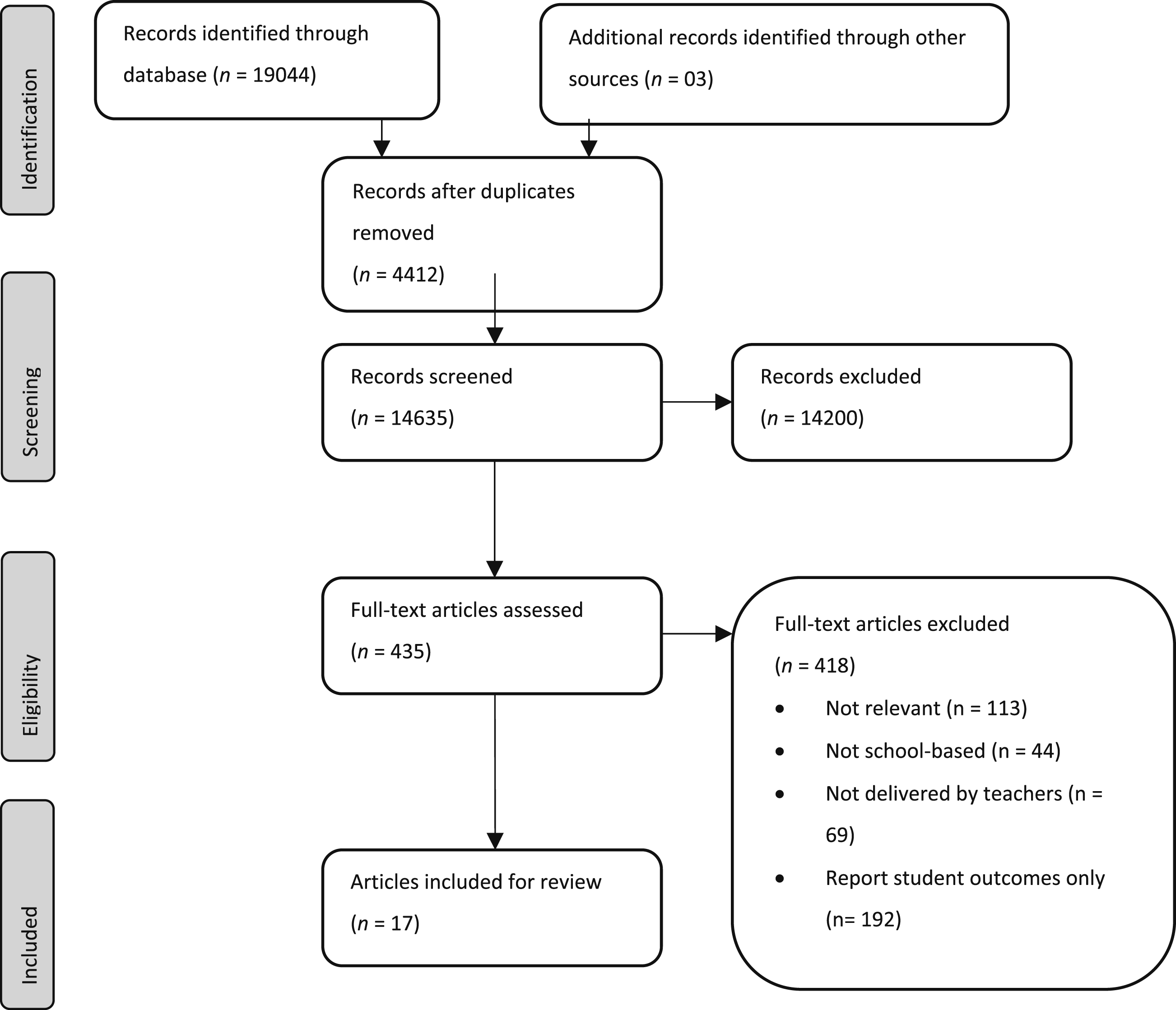
Inclusion Criteria
Studies were included if they were published in English between 2000 and October 2024; assessed a school-based prevention program that targeted alcohol and/or drug use; targeted students under the age of 18; were delivered partly or entirely by teachers or school staff; and reported teachers’ insights, including perceptions and experiences, of AOD program implementation in school settings. Both qualitative, quantitative, and mixed-methods study designs were eligible for inclusion, provided they reported teachers’ perspectives. Observational studies were also eligible where they explicitly incorporated teacher insights, ensuring consistency with the review’s objectives and focus on teacher perspectives. Non-empirical publications (e.g. dissertations, letters, and commentaries), as well as studies of home- and community-based programs, or tertiary-level programs were excluded.
Data Analysis
A two-step approach guided the data analysis in this study. First, each reviewer independently assessed articles using a structured Excel spreadsheet, with their work subsequently cross-checked by another team member. From each included study, we extracted descriptive information including: author(s), year of publication, program name, country of origin, teacher training characteristics (e.g. duration and format), study methodology, reported teacher-specific outcomes (e.g. knowledge, confidence, and relationships with students), and factors influencing program implementation (facilitators and barriers). This descriptive extraction ensured a consistent comparison across studies. In the second step, the extracted data were organised and interpreted with reference to Durlak and DuPre’s (2008) framework for implementation. Through an iterative process, categories were refined and grouped into key themes, which were then reviewed by all team members to ensure accurate representation of the data.
Analytical Framework
To guide the synthesis of findings, we drew on Durlak and DuPre’s (2008) ecological framework for effective implementation. This framework conceptualises implementation as a multilevel process shaped by factors at the community, organisational, provider, and innovation levels. Mapping teacher-reported insights to this model provided a systematic way to identify and interpret barriers and facilitators to program implementation in school settings.
In practice, we categorised extracted data into three levels most pertinent to teacher-delivered interventions: school-level, program-level, and classroom-level. Within each level, factors were coded as either facilitators or barriers depending on the way they were reported by teachers. This approach ensured that the analysis was not purely descriptive but theoretically informed, thereby enhancing the explanatory power of the synthesis. • School-level factors: leadership support and availability of resources/funding. • Program-level factors: training adequacy and program complexity. • Classroom-level factors: teacher motivation, teaching style, and student engagement.
These categories mirror the ecological framework’s recognition that successful implementation depends on the interaction between organisational capacity, program design, and individual-level processes. Positioning the findings within this theoretical lens highlights why each factor matters and how they collectively shape program delivery, fidelity, and sustainability.
Results and Discussion
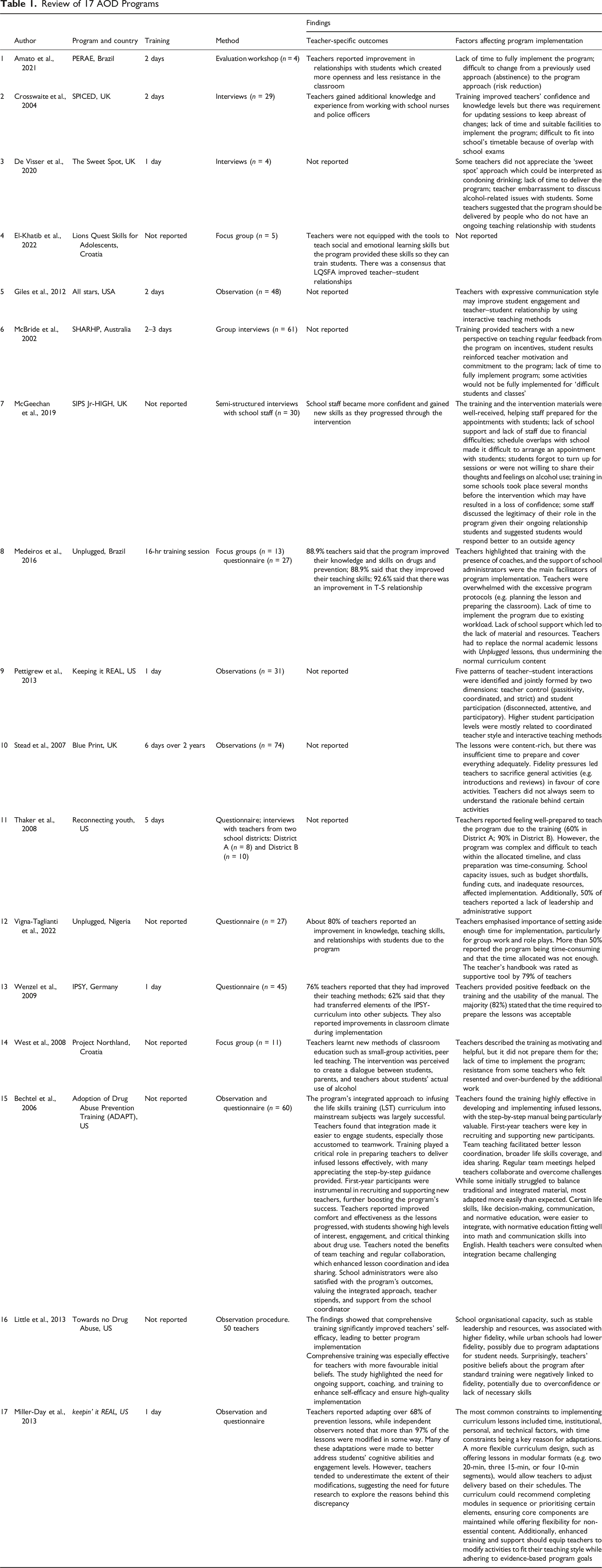
The 17 included studies were conducted across seven countries. The highest number originated from the United States (n = 6), followed by the United Kingdom (n = 4), Brazil (n = 2), Croatia (n = 2), and one each from Australia, Germany, and Nigeria. This distribution highlights that most published evaluations of teacher-delivered AOD prevention programs stem from high-income countries, with comparatively limited evidence emerging from low- and middle-income contexts. Among studies, interviews were the most frequently used qualitative data collection method (n = 6) while questionnaires were the most common quantitative method (n = 8). Additionally, the majority of programs (n = 13) employed a single instrument to assess teacher perception of program implementation whereas four programs utilised both qualitative and quantitative methods.
Review of 17 AOD Programs
Teacher-Specific Outcomes Following Program Implementation
Firstly, our review illustrated that AOD prevention programs could bring about substantial benefits for implementers (i.e. teachers). The majority of the included studies (n = 11) reported teacher-specific outcomes associated with program implementation, highlighting two key benefits: improvements in classroom environment and increased teacher self-efficacy. Teachers reported experiencing positive changes in various aspects of classroom environment including improved teacher–student relationships (n = 5) and teacher–student communication and engagement (n = 4). In addition, evidence from the review suggested six programs were associated with improvements in teachers’ knowledge, teaching skills, and confidence in delivering substance use interventions.
Factors Affecting AOD Program Implementation
Teacher insights from the 17 reviewed studies highlighted a range of factors that can either enhance or inhibit the implementation of a substance use intervention in school settings. These factors can serve as facilitators in one program while acting as barriers in another. Based on three categories – school-level factors, program-level factors, and classroom-level factors – the positive and negative effects of each factor are discussed.
School-Level Factors
The two school-level factors consistently related to implementation are leadership support and funding/resources. Each factor is discussed further to highlight key findings and how it relates to the industry and current evidence in the literature.
Leadership Support
Leadership is an important driver of change and adoption of innovations, as supportive leadership can create a conducive environment for successful implementation and enhance program uptake among teachers and staff (McCarthy & Griffiths, 2021). On the other hand, inadequate leadership support may lead to implementation challenges. In this review, leadership was found to be an enabling factor in one study while identified as a barrier in three studies. For instance, only 50% of teachers in Thaker et al. (2008) study reported that their principal was supportive of the intervention. Lack of leadership support was described as resulting in difficulty in recruiting students for the program (Thaker et al., 2008) and ‘a lack of pedagogical materials and resources to make copies of the material’ (Medeiros et al., 2016, p. 7). Similarly, Little et al. (2013) found schools with stable leadership, faculty, and adequate resources tended to achieve higher implementation. Further, there was a discrepancy between teachers’ and school administrators’ perception of level of support provided for program implementation (Medeiros et al., 2016). While school administrators claimed full support for the program, teacher remarks indicated otherwise. Evidence suggests effective leadership is a crucial factor in establishing the conditions that enable teachers to maximise their effectiveness (Huber & Muijs, 2010). Notably, none of the studies provided detailed explanations for why the programs did or did not gain support from school leaders and managers.
Funding
Securing sustainable funding is essential to ensure the success of school-based prevention efforts; yet previous studies asserted funding deficit is a key challenge in AOD education (Dietrich et al., 2016; MacLean et al., 2012; Renzaho et al., 2016). In this review, financial constraints due to budget shortfalls and funding cuts were cited in two studies as a root cause impacting school capacity to allocate proper resources (e.g. staff and classroom space) required to implement the program (McGeechan et al., 2019; Thaker et al., 2008). In the context of implementing school-based prevention programs, funding and administrative support may or may not always be directly related. Even with strong administrative support, schools may still encounter budget constraints that restrict their ability to allocate funds for prevention initiatives. It is unclear in these studies how the two school-level factors influence each other, and further investigation regarding budget priorities or funding sources specific to the program context would be beneficial to gauge this challenge more thoroughly.
Program-Level Factors
From teachers’ perspective, the two program features that consistently influence implementation are training and program complexity.
Training
Training and ongoing support emerged as a significant factor that received the most empirical support from nearly half of the studies (n = 8) and was generally perceived as a positive influence on program implementation. Teachers in three studies highlighted the essential role of training in fostering their knowledge, teaching methods, and confidence prior to program implementation. In one study, some teachers expressed concerns that their confidence may be lost over time due to the extended delay between training and implementation (McBride et al., 2002). However, description of teacher training in the majority of the included papers (n = 8) often lacked detail and was mostly restricted to information on the duration of the training. Only one study (McBride et al., 2002) depicted training as a salient feature of the program. Two studies compared different training methods and its impact on delivery (Bechtel et al., 2006; Little et al., 2013). Throughout the studies, teachers received two types of training: modelling of each intervention activity; and, training on the research background and methodology underpinning the activities used in the program (McBride et al., 2002). Stead et al. (2007) observed low adherence to program content due to teachers’ lack of understanding of the program approach, indicating the need for training to not only demonstrate the program content and methods but also to explain the principles behind the curriculum. Similarly, Miller-Day et al. (2013) highlighted the need for training to incorporate different implementation styles and discuss adaptations. Training typically took place within 1 or 2 days with the longest training requiring teachers to participate in a 4- to 5-day intensive training (Thaker et al., 2008). Only one study included the teacher training as part of their program evaluation strategy (Bechtel et al., 2006). Teacher attendance rates were generally not reported, except for one program where 4 out of 61 teachers missed training due to other school commitments (McBride et al., 2002).
Program Complexity
Program complexity, referring to the ease or difficulty of implementing a program in an organisation (Thaker et al., 2008), was reported to pose challenges for teachers in 58% of the included papers (n = 10) whereas one program reported it as a positive factor. In particular, Wenzel et al. (2009) reported that teachers gave positive feedback on the manageability of the program with 82% of the teachers finding the time required to prepare the lessons was acceptable. Nevertheless, teachers across ten studies consistently expressed their concerns that there was insufficient time to implement lengthy, complex program manuals, making it difficult to follow and teach within the allocated time. In fact, Miller-Day et al. (2013) reported teachers delivered lessons in a different duration to the estimated duration by program designers. This is due to timetable limitations and changes that are out of teachers’ control. Medeiros et al. (2016) highlighted that teachers attributed lack of time to implement the program as intended due to the ‘excessive amount of program protocols required’ while ‘there was no reduction in their other responsibilities’ (Medeiros et al., 2016, p. 6). In another study by Thaker et al. (2008, p. 243), teachers found the program ‘time-consuming…and an unanticipated burden’ due to its complexity. In Vigna-Taglianti et al. (2022), half of the teachers reported that there was not enough time to prepare and complete the program. Findings suggest that in the face of time constraints, teachers tended to make adaptations the program content such as partially covering, removing, or modifying the activities. It is important to note that in Thaker et al. (2008), although teachers described training in favourable terms; it was perceived to be insufficient to offset the negative impact of program complexity.
Program complexity also implicates the degree to which an intervention can be shaped into existing school practices and routines, as well as its sustainability within the school ecosystem over time. Within the review, 3 out of 17 programs reported facing challenges in integrating their intervention into the school timetable either due to scheduling conflicts with school exams or a lack of time to effectively deliver the program. For instance, teachers in Crosswaite et al.’s (2004) study pointed out that schedule overlap with school exams made it difficult to arrange intervention sessions with students, thus hindering the possibility of integrating the program into school plans. Ensuring sufficient time for the intervention is a prerequisite for successfully implementing and sustaining a program. Within this review, lack of time to deliver the program was cited in ten programs, indicating that the issue of program integration into the school context might be more significant than currently reported.
Classroom-Level Factors
The classroom is where the actual implementation of the program takes place; therefore, attending to the classroom-level factors becomes essential. Within this review, three crucial classroom-level factors emerged that significantly influenced program implementation: teaching style, teacher motivation, and student engagement.
Teaching Style
Two studies (Giles et al., 2012; Pettigrew et al., 2013) in the review pointed to interactive teaching style as another enabling factor for enhancing the quality of program delivery. Pettigrew et al. (2013) observed that an interactive class with highly participatory students occurred when teachers maintained a moderate level of control while empowering students to engage in group discussions or paired activities. Similarly, Giles et al. (2012) found that expressive teachers, whose communication style promotes interactivity (e.g. friendly, open, and relaxed), may foster active student involvement, engagement, and improved student-teacher relationships. However, expressive teachers were more likely to adapt the program curriculum to make the material more ‘relevant and exciting’ for their students (Giles et al., 2012, p. 405). Both studies supported the idea of helping teachers adopt an interactive delivery style through training. Recommendations for promoting interactivity through various teaching methods include role plays, games, small-group activities, and class discussions (Giles et al., 2012). Teachers were also found to adapt program lessons to increase student engagement levels (Miller-Day et al., 2013). Specific practices identified to boost student participation include randomly selecting students’ names from a stack of index cards, efficiently transitioning between activities, clearly articulating lesson objectives and content, and sharing personal narratives (Pettigrew et al., 2013).
Teacher Motivation
Teacher motivation emerged as another theme (McBride et al., 2002). Han and Yin (2016) define teacher motivation as the reasons stemming from individuals’ intrinsic values for choosing to teach and sustaining their teaching, with the intensity of motivation reflected in the effort expended on teaching, which is influenced by various contextual factors. McBride et al. (2002) postulated that teacher motivation was a driving force behind teachers’ willingness and commitment to implement the program as intended. The study further identified two elements that reinforced teacher motivation: first, teachers’ perceptions of students’ motivation towards the program, and second, the program’s efforts to inform teachers of relevant incentives, such as a small contribution to the school health budget (AUS $100) and regular feedback on the research results.
On the other hand, a lack of teacher motivation may manifest in resistant attitudes (Hamlaoui, 2021). Research suggests that teacher resistance is the primary reason new school initiatives fail to achieve desired outcomes or only lead to surface-level changes (Zhidong, 2012). In the current review, reports of resistant teachers were found in five studies. The causes of resistance can be summarised in three key explanations. First, teachers were overwhelmed by the additional tasks related to preparing and delivering the program without any reduction in their existing workload (Medeiros et al., 2016; West et al., 2008). Second, teachers were not receptive to the program’s approach (Amato et al., 2021; de Visser et al., 2020). Third, teachers were reluctant and felt uncomfortable taking on the role of program implementer (de Visser et al., 2020; McGeechan et al., 2019). Addressing these factors is critical for ensuring successful program adoption and long-term impact.
Student Engagement
A large body of research has indicated that student engagement is inextricably linked to classroom climate and academic achievements (Allen et al., 2018; Monteiro et al., 2021). Nonetheless, our findings showed that a lack of student engagement was a key reason why full program implementation was not achieved. Pettigrew et al. (2013) proposed that students’ level of engagement during implementation ranged on a continuum from disconnected to attentive to participatory. The study reported that 68% of the 73 classes observed fell into the attentive category. While the number of disengaged students was not reported, it can be inferred that not all students exhibited the same level of attention, interest, or participation in the intervention activities. In McGeechan et al. (2019), teachers reported incidents where students forgot to attend brief intervention sessions or were unwilling to share their thoughts and feelings on alcohol use. Similarly, teachers in McBride et al. (2002, p. 46) mentioned that some activities were not fully implemented due to the type of students in the class: ‘[M]y kids were not really good at group work and that makes it hard but that’s for everything, not only this. I spend half my time just trying to get them under control’.
Implications and Future Research
This scoping review on the implementation of AOD school-based interventions reveals considerable gaps worthy of further investigation. Firstly, evaluations of AOD program tend to be outcome-focused while prior research suggests that effectiveness alone may not be sufficient to sustain a program (Han & Weiss, 2005; Herlitz et al., 2020). In addition, there was a research-practice gap where preventive interventions, although designed under strict randomised controlled trial settings, were not perceived as feasible by teachers and, as a result, were not fully implemented as intended. This suggests that teacher input remains under-utilised to inform program development. Despite their limited involvement, teacher insights in this review provided promising evidence regarding effects of program implementation on teachers, and critical factors related to the implementation process, which merit attention from future research.
To address these gaps, this review proposes an ecological model of implementation (Figure 2) that integrates teacher perspectives with established evidence on multilevel influences. While prior studies have primarily focused on outcomes, the findings here demonstrate that sustainable implementation depends on the interaction of factors at the school, program, and classroom levels. The proposed model provides a structured framework for understanding these dynamics, moving beyond outcome evaluation towards a systemic perspective that recognises teacher input as central to program feasibility and impact. An ecological model of school-based AOD program implementation, illustrating teacher-identified facilitators and barriers across school, program, and classroom levels (adapted from Durlak & DuPre, 2008).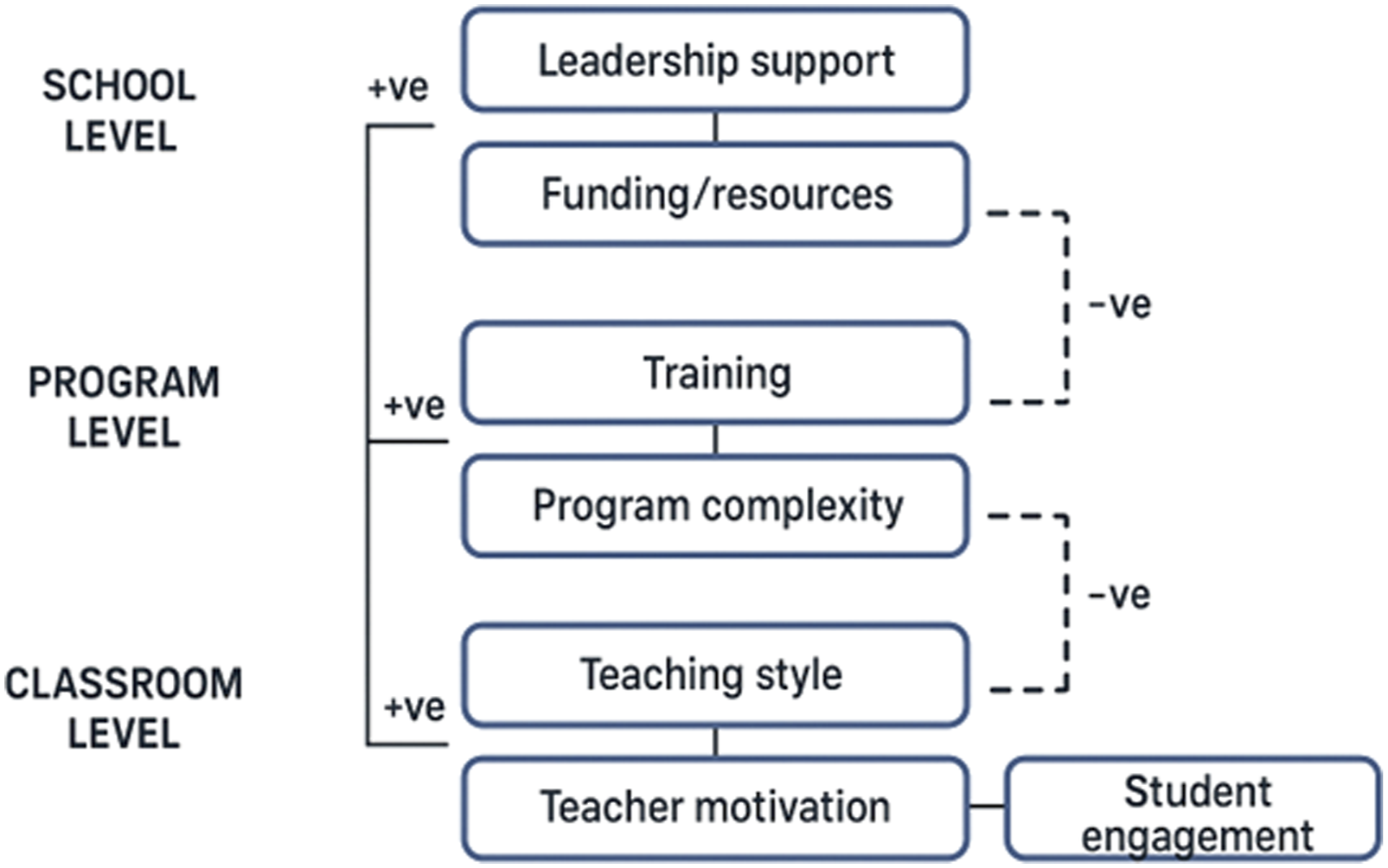
Ecological Model of Implementation
This review highlights that the successful implementation of AOD school-based interventions cannot be divorced from the broader ecological context in which teachers operate. Drawing on Durlak and DuPre’s (2008) ecological framework, the findings illustrate that teacher-identified facilitators and barriers operate across three interconnected levels: school, program, and classroom. The proposed framework (Figure 2) synthesises these insights into an ecological model of implementation, which offers both a conceptual map and a practical guide for strengthening intervention design and delivery.
At the school-level, the model underscores the role of leadership, culture, and resource allocation in shaping implementation. This suggests that programs cannot rely solely on teacher motivation; instead, systemic buy-in from school leaders and education departments is critical. By using the proposed ecological model of implementation as a planning tool, decision-makers can identify structural supports (e.g. policy integration, scheduling flexibility, and funding commitments) that are required to create an enabling environment for program uptake and sustainability.
At the program-level, the model highlights the importance of training, program complexity, and alignment with teacher needs. Implementation can be strengthened when professional development is ongoing, participatory, and tied to classroom realities. This model can be used here as a diagnostic tool: program developers and researchers can map where implementation barriers lie and adapt training or resources accordingly, ensuring programs remain both evidence-based and feasible for teachers to deliver.
At the classroom-level, the proposed model illustrates the intersection between program content, teaching style, and student engagement. Teachers emphasised that interventions are most effective when they support existing pedagogical practices and foster active participation. In practice, educators and program developers can use the model to guide co-design processes that integrate prevention content with broader educational priorities, such as student wellbeing and social–emotional learning. This allows programs to move from being ‘add-ons’ to becoming embedded in everyday teaching practice.
The proposed model provides a framework through which schools, program developers, and policymakers can collaboratively identify and address the multilevel conditions that shape implementation. Rather than treating barriers as isolated challenges, the model encourages a systemic perspective that integrates teacher insights across ecological levels. Visionary application of this model could involve embedding teacher co-design at each stage of program development, testing adaptive program components that respond to contextual constraints, and establishing feedback loops between researchers, schools, and policymakers.
Leveraging Teacher Input for Program Development
Across the 17 programs in this review, teachers perceived them to be very time intensive prior to commencing implementation. Teachers expressed their concerns with having to attend teacher training or studying longer briefing documents ahead of a classroom session. This is supported by research which demonstrates just how time-poor and over-loaded teachers currently are (Heffernan et al., 2022). Despite their best intentions, many program developers “overload” teachers, leading to a significant gap between what teachers perceive as feasible to implement and what program developers have designed. A key practical implication of this study is the need for more teacher-centred AOD programs. This requires working more closely with teachers and schools, ensuring that relevant engagement takes place at appropriate times with those delivering the resources on the ground.
Limited but Promising Evidence Emerged From Teacher Insights
The limited number of studies included in this review highlights that implementation evaluations from teachers’ perspectives remain an under-reported topic. Despite the small sample size (n = 17), two key findings emerged from teacher insights: the outcomes for teachers associated with implementing AOD programs, and the factors influencing program implementation. The two primary beneficial outcomes for teachers identified in the literature are improvements in classroom atmosphere and increased teacher self-efficacy, that is, their confidence and competence.
In real-world prevention programs for adolescent substance use, teachers are often tasked with program delivery without adequate consideration of their qualifications or motivation (Pettigrew et al., 2013). Therefore, these findings have important implications for teacher professional development and motivation and more research into teacher outcomes related to the implementation of preventive interventions is warranted. If program evaluators can identify the added value of these programs for teachers, beyond the typical student outcomes such as delaying, preventing, or reducing the consumption of alcohol, vaping and other drugs, there is a higher likelihood that teachers will be more interested, motivated, and willing to implement the program with fidelity.
According to teacher insights, this review also highlighted a range of factors that can enable or inhibit implementation specific to school-based AOD prevention programs. School-level factors include leadership support and funding while program-level factors involve training and program complexity. Classroom-level factors are comprised of teaching style, teacher motivation, and student engagement. Although the factors presented in this review could be viewed as barrier factors and vice versa; for example, lack of funding and appropriate resources deters teachers from fully implementing the prevention activities as intended then adequate funding/resources would be advantageous, it is important to distinguish the influencing factors at program-level evaluation to effectively determine the strengths and specific areas of improvements for improved implementation and sustainability.
Overall, the current study presents important implications for both research and practice. By identifying the factors influencing the implementation of AOD school-based programs, the review highlights the lack of process implementation measures. This gap poses a limitation for evaluating educational programs, as there is limited assessment of how consistently teachers adhere to the program curriculum or structure, and how instructional strategies inform teaching practices which are key factors in evaluating the success of educational programs (Harachi et al., 1999). Thus, the current study aligns with Dusenbury et al. (2003) in calling for the development of frameworks and measurements for process implementation evaluations and further builds on the implementation mapping literature (Fernandez et al., 2019).
The review highlights several key themes for program developers and intervention designers to consider when creating AOD programs that involve teachers. Specifically, programs can increase teacher involvement by consulting teachers during various stages of program development, communicating value beyond student outcomes, and adopting a broader evaluation approach that includes both outcomes and implementation processes.
Limitations
There are a few limitations to consider when interpreting findings from the current study. One limitation of this review is that the search strategy did not explicitly include the term ‘implementation’ which may have led to the omission of some relevant studies; however, broader search terms relating to programme delivery and teacher roles were used to capture literature addressing implementation-related aspects. It is also important to acknowledge that the reviewed studies originate from countries with diverse educational systems, socio-economic contexts, and patterns of illegal drug use. Notably, significant differences exist between developed nations such as the UK, US, and Australia, and low-to middle-income countries like Brazil and Nigeria. These contextual variations may influence both teacher-specific outcomes and the factors facilitating or hindering program implementation. Future research should prioritise a more nuanced exploration of how country-level differences shape implementation processes and effectiveness, to better tailor AOD interventions to local educational and cultural contexts.
Conclusion
In conclusion, this scoping review highlights the critical role of teachers in the successful implementation of school-based AOD prevention programs. While these programs can positively influence classroom environments and enhance teacher self-efficacy, various challenges such as heavy workloads, insufficient resources, lack of leadership support, and complex program requirements impede their effectiveness. Understanding the factors that facilitate, or hinder implementation is essential for optimising these interventions. Future research should focus on addressing these barriers, involve teachers in designing and evaluating AOD education programs and providing targeted support to teachers to ensure the sustainability and impact of AOD prevention efforts in school settings.
Footnotes

Ethical Considerations
The current study was conducted with ethics approval from a large Australian university with ethics approval number (2021/003).
Funding
The authors received no financial support for the research, authorship, and/or publication of this article.
Declaration of Conflicting Interests
The authors declared no potential conflicts of interest with respect to the research, authorship, and/or publication of this article.
Data Availability Statement
All data used in this review is from published journal articles that can be accessed online. Any further access requests can be sent to the authors and data will be provided upon request.