



Abstract
This article discusses a survey of Australian teachers (n = 297) that elicited their views of teaching and learning during the COVID-19 emergency remote schooling periods. The research identifies differences in teachers’ views of their students’ learning experiences and finds that the groups with the greatest contrast in such views reported using distinctly different digital pedagogies. Participants with extremely negative views of their students’ learning experiences (n = 78) highlighted more presentational, content-delivery pedagogical approaches. These teachers tended to be less confident with digital technologies and emphasised their own technical skills development. Participants with relatively positive views of their students’ remote learning experiences (n = 68) adopted more interactive and collaborative approaches that supported student autonomy. These teachers were more familiar and confident with digital technologies. This study is one of few investigating possible links between pedagogical practices and teachers’ perceptions of their students’ remote learning experiences. Implications for practice and future research directions are provided.
Introduction
The COVID-19 pandemic had a significant impact on many areas of endeavour including the learning and teaching of school-aged students. Many countries experienced extensive school lockdown periods, requiring teachers and students to work away from the school campus, typically from home. This arrangement was rapidly imposed on schools with minimal warning and became known as ‘‘emergency remote schooling’’. Emergency remote teaching is the term used to describe the pedagogical approaches adopted by teachers during this period, while ‘‘remote learning’’ is the term used to describe students’ learning away from school during this time.
Characteristics of emergency remote teaching included the need for teachers to use digital technologies and other means to implement lessons with their students, as most students were required to learn at home. Studies that investigated pedagogical practices and students’ learning experiences during these emergency remote schooling periods are important as they can inform remote learning and teaching practices and outcomes during future disruptions to schooling, whether these occur routinely or during periods of crisis (e.g. national disasters, such as bushfires or floods).
Transition to Remote Teaching and Learning Approaches
Prevalence of Content-Driven Pedagogy
Several studies conducted during and post-pandemic identified the prevalence of content-driven pedagogical practices (e.g. Echeverría et al., 2022; Trust & Whalen, 2021), with such approaches often acknowledged by teachers as a change in their traditional ways of working. However, there is less research considering how these approaches relate to teacher perceptions of the remote student learning experience. One possible exception is the study by DeCoito and Estaiteyeh (2022), which adopted a mixed methods approach to explore the challenges and successes encountered by STEM teachers from their transition to online teaching and learning in Canada. They found that content-driven pedagogical approaches and meeting curriculum objectives were prioritised over more creative and student-centred approaches, with teachers critiquing their own assessment techniques as contrived and generally ineffective. Strategies adopted included the use of pre-recorded videos and self-directed learning in which teachers assigned specific tasks for students to perform independently. Teachers reported difficulties addressing student needs and abilities, which impacted the provision of equitable and inclusive learning experiences and negatively affected their attitudes and views toward online teaching.
In their survey study, Trust and Whalen (2021) found that although the 265 Kindergarten to Year 12 teachers in their study increased their use of digital tools, they mainly used them for more traditional teacher-led classroom communication, information delivery, and management tasks. Despite a third of their respondents learning to use new technologies, the researchers concluded that they were inadequately prepared to evaluate and use the technology in more interactive ways.
Similarly, the predominance of content-driven activities aimed at reproductive learning was the main finding of the Echeverría et al. (2022) study with Spanish primary and secondary teachers. When asked to describe their preferred activity from online teaching, teacher-generated content that was primarily video-based was highlighted. Finally, to seek understanding of the trend toward content-driven approaches, Zavyalova and Galvin (2022) conducted a study to interrogate and contextualise the reasons given by teachers for creating and distributing digital content via YouTube during the pandemic. They found that teacher content creators placed great value on disseminating their knowledge with students and believed that sharing and delivering their own digital content created new understandings for students and were hallmarks of a more professional digital pedagogy. Of interest in this research study is the exploration of links between content-driven pedagogy and teacher perceptions of student learning experiences.
Other Pedagogical Approaches
While the trend toward content-driven and traditional, teacher-led pedagogical approaches was prevalent, it was not ubiquitous. There were some studies of practice that indicated teachers’ valuing of more independent learning and collaboration during the periods of emergency remote teaching.
Bond et al. (2021) in their synthesis of research evidence from secondary schools in 38 countries found that online and peer-to-peer interaction was considered critical for student engagement, with online formative assessments seen as useful for gauging the degree of both this engagement and student understanding. Research conducted by Yates et al. (2021) also considered the experiences of secondary students, finding that authenticity and collaboration were perceived as facilitating their learning, and they valued their teachers providing supportive pedagogies to enhance their motivation to study. The use of more active learning strategies was also found to mitigate some of the challenges associated with remote instruction (Morgan, 2022). Such approaches provided alternative methods for students to learn when they were without computers or reliable internet connections and created opportunities for students to interact with their teachers and peers. These styles of adaptations to digital teaching practices were investigated by a range of studies, (e.g. Moorhouse & Wong, 2022; Shamir-Inbal & Blau, 2021) that found a variety of asynchronous and synchronous digital instructional approaches were optimal to facilitate and assess students’ learning, and to communicate with students and parents. This extended beyond the period of emergency remote teaching with implications for traditional and distance learning environments. Shamir-Inbal and Blau (2021) found that incorporating blended learning in schools on a regular basis may strengthen both digital pedagogical strategies and the self-regulated learning and teamwork skills of students more generally.
Even when there were changes to more collaborative pedagogical approaches noted during remote learning, these changes were not always sustained in the post-pandemic context. Jiménez Sánchez et al. (2022) explored the pedagogical approaches used by physics and chemistry teachers in Spain during the pandemic and any subsequent impact on practice post-pandemic. Their survey found that although the most widely used approaches were didactic during remote learning, other approaches supporting student autonomy, such as the ‘flipped classroom’ in which students did preparatory reading and learning about the topic at home, and then discussed their learning with the teacher and class, increased significantly. Other adaptations by the teachers in this study highlighted the unique benefits of available online technologies including increasing the use of virtual simulations and tools such as WebQuests and online education platforms, most frequently Microsoft Teams. However, with the return to face-to-face classroom teaching, Jiménez Sánchez et al. (2022) found that teacher-led, lecture style pedagogies were reported to increase again, even though a greater proportion of active and autonomous student learning approaches than evident before the school lockdowns were maintained. The disparity between pedagogical practices at these different times calls into question broader beliefs about pedagogy in both face to face and online learning environments.
Role of Attitudes, Confidence and Beliefs in Driving Pedagogical Choice
The connection between personal and wellbeing factors and their role in driving pedagogical practice emerged in a limited body of literature from the emergency remote teaching period. This included exploration of the impact of personal challenges faced by both teachers and students (Pereira et al., 2025), degree of confidence with technology and technology integration self-efficacy (Ewing & Cooper, 2021; Paetsch et al., 2023), contextual factors, digital skills, attitudes towards digital pedagogies and perceived readiness to engage with digital learning (Paetsch et al., 2023; Scully et al., 2021), and implications for specific groups including early career teachers (Paetsch et al., 2023) or teachers of students with English as an Additional Language (EAL) (Bonar et al., 2025).
In an Australian study consisting of interviews with teachers, students and parents (Ewing & Cooper, 2021), both teachers and students expressed increased confidence in using digital solutions for remote learning. However, while they engaged with content, most students felt that remote learning was less personalised and did not deliver the same engagement as face-to-face learning in the classroom. An increase in teacher confidence with using technology for preparing lessons, delivery, assessment and feedback, and communicating with students and families was also found in a Spanish study investigating teachers’ motivation and ability to use technologies for teaching during the pandemic (Beardsley et al., 2021). Similarly, Paetsch et al. (2023) found in their exploration of technology integration self-efficacy of early career teachers that participants had a largely positive experience of the emergency remote teaching period, despite often having limited experience with digital pedagogies prior to the transition. In seeking to understand what factors during this period influenced what the authors referred to as ‘ICT use for teaching and learning’ post-pandemic, they found that teachers’ pre-pandemic self-efficacy (their beliefs about their capability to positively impact student learning) was a predictor of positive teaching experiences, but not pre-pandemic ICT literacy. Overall, teachers who entered emergency remote teaching with higher levels of teacher self-efficacy and ICT literacy, and saw the experience as more positive overall, adopted more active digital pedagogical approaches. The study also found that technology use in the classroom was the same or greater post-pandemic for this group of teachers. While the studies above indicate links between teacher self-efficacy, positive teaching experiences and increased confidence in use of digital pedagogies, none of these explore these factors’ links to teachers’ perceptions of their students’ remote learning experiences.
Similar findings are offered by Pereira et al. (2025) in their exploration of teachers’ concerns and associated changes in practice across lockdown periods and into post-pandemic practice. While the Pereira et al. (2025) study also considered personal and wellbeing factors, a focus on remote teaching experiences demonstrated that greater digital literacy following the first emergency remote teaching period saw teachers reporting a more positive experience in the second period. Teachers felt their online engagements were more meaningful both for curriculum delivery and for assessment and feedback. These findings are aligned with those found in an online open-ended survey of 305 pre-Kindergarten to secondary teachers in Portugal (Seabra et al., 2021) where most of the participating teachers regarded the remote school learning periods as an opportunity to develop digital competencies and transform teaching and learning practices.
As noted above, a focus on the teacher experience and impact on pedagogical practice exists across current literature. However, a gap remains in understanding possible links between teachers’ perceptions of their students’ learning experiences and their digital teaching approaches. This article adds to this literature base by exploring this gap.
The Current Study
This article reports on findings from an Australian research study conducted between 2020 and 2022. The aim of the study was to consider teachers’ perceptions of student learning experiences and wellbeing during the remote teaching periods of the COVID pandemic and to highlight teaching practices used. The study considered data from participants in New South Wales (NSW) schools regarding their experiences during two major school lockdown periods: one in March to May 2020 and the other in June to October 2021.
One part of the study comprised a collective case study of schools identified as managing schooling during the remote teaching periods in exemplary ways (Kearney et al., 2024). Another part of the study investigated teachers’ experiences more broadly through a survey, which comprised both Likert scale and open-ended items. Findings regarding the wellbeing of students and teachers and drawing on the quantitative data from this survey are reported in Burke et al. (2023). In that article (Burke et al., 2023), a variation in teachers’ perceptions of student learning experiences was noted. There was a range of perceptions from extremely negative to relatively positive.
The current article discusses the final part of the study, in which the researchers investigated the trends in pedagogical practices implemented by teachers with contrasting perceptions of their students’ remote learning experiences. The research question for this final part of the study is: What were the characteristics of pedagogical practices of teachers with contrasting perceptions of their students’ remote learning experiences?
Both quantitative data and qualitative responses to open-ended survey items were considered to answer this question.
Although the broader goal of this study was to explore perceptions of students’ learning experiences and teaching practices without highlighting technology-mediated (or digital) learning, the participants chose to focus on digital aspects of their experiences. This is understandable given that the imposed closure of schools during the pandemic made it necessary for schools to adopt digital solutions and for teachers to employ new digital teaching practices (or digital pedagogies) to support their students’ learning (Bozkurt et al., 2020; Eradze et al., 2021; Hodges et al., 2020; Paetsch et al., 2023). There are implications for this type of rapid change for both teacher practice and understanding of student learning, making it important to explore both pedagogical practices and the drivers influencing them. While there are numerous studies examining the changes in pedagogical practice required and enacted during the remote teaching periods of the pandemic (e.g. Bond et al., 2021; Trust & Whalen, 2021) and others considering the wellbeing of teachers (e.g. Pereira et al., 2025), few studies investigate the links between teachers’ digital practices and their perceptions of student remote learning experiences.
Method
Measures
Open-Ended Items From Teacher Survey
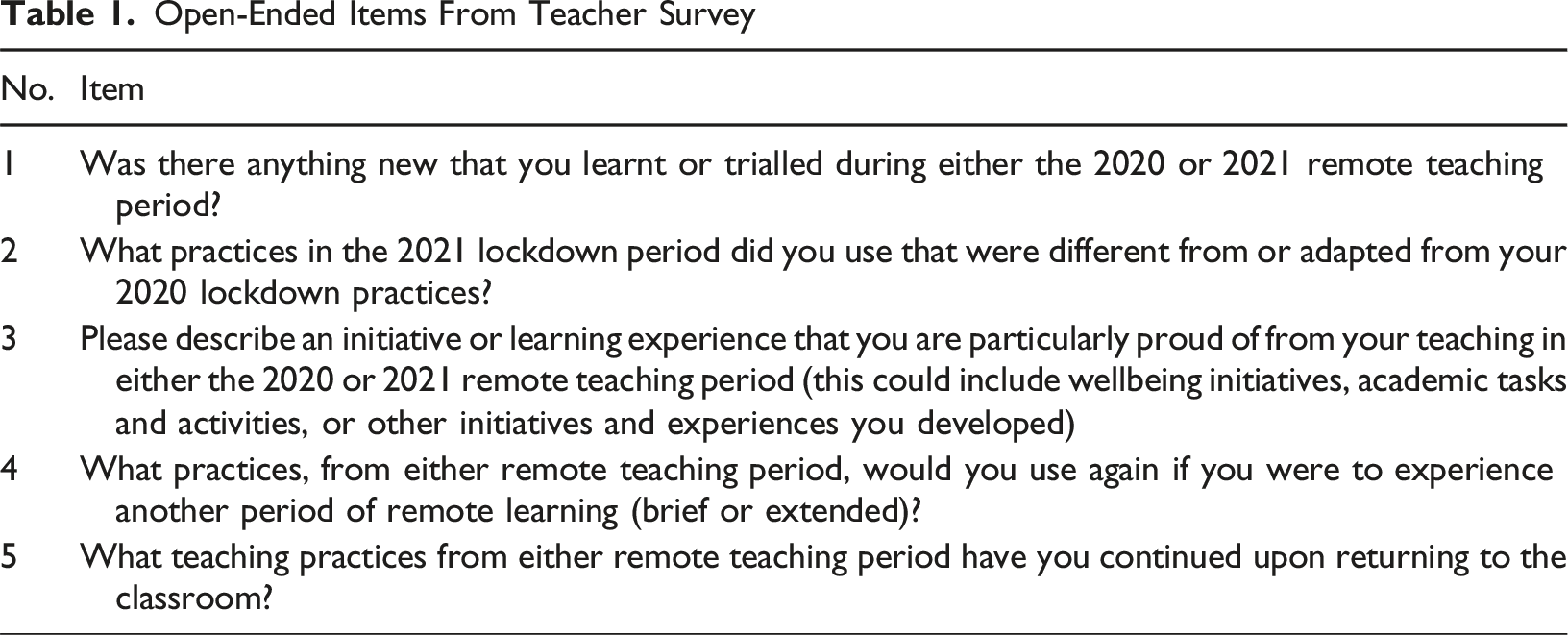
Although no items specifically mentioned technology use, almost every participant chose to include aspects of their digital practices when reporting on their remote teaching in these items. The findings therefore focus on teachers’ reported digital teaching practices that supported their students’ learning during and after the remote teaching periods.
Participants
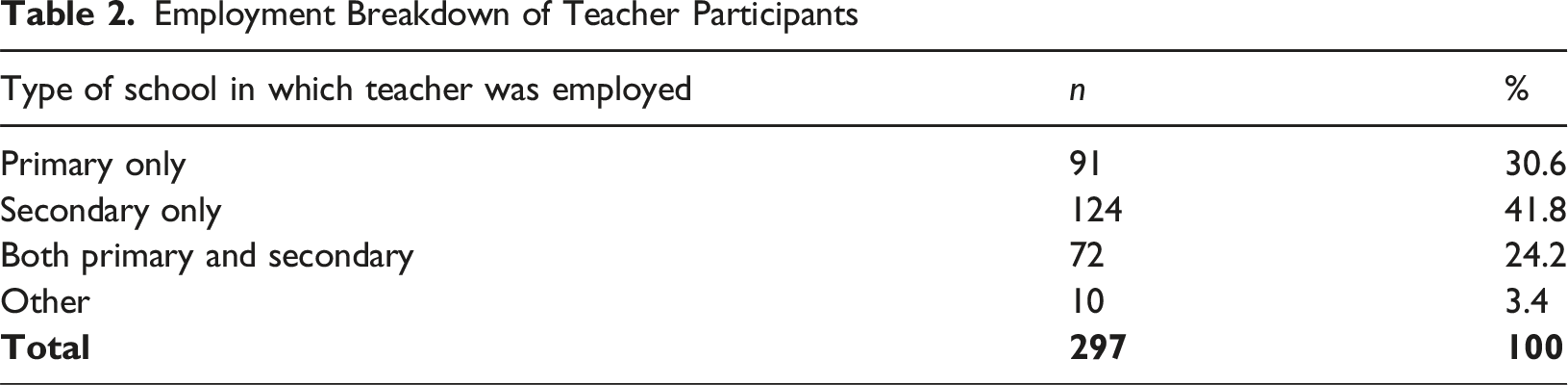
Teacher respondents were recruited for the online survey through emails sent by school sector leaders, utilising their database, which included 502 schools across New South Wales, Australia. This approach helped mitigate concerns about sampling biases due to geographic concentration. Specifically, 43% of teachers were located within 20 km of Sydney, 13% were from Greater Western Sydney, 7% from South-Western NSW (e.g. Riverina), 4% from North-Western NSW (e.g. Bourke), and 13% from North-Eastern NSW (e.g. Clarence Valley). Consequently, there was a diverse representation of participants from both rural and urban schools, as well as from coastal and inland areas.
Employment Breakdown of Teacher Participants
Segmentation Analysis
To evaluate the qualitative responses relating to teachers’ practices and experiences during the 2020 and 2021 school lockdowns obtained in the second half of the survey, the sample was classified into three segments based on the teachers’ own perceptions of student learning experiences (SLE). The SLE construct emerged from analysis of the first half of the survey in which teachers were asked to indicate outcomes during the pandemic across 10 measurement items using a five-point Likert scale ranging from (1) negatively affected, (2) slightly negatively affected, (3) no effect at all, (4) slightly positively affected, to (5) positively affected. Teachers were also asked to report on their own well-being and perceptions of their students’ well-being during this period using the same scale.
Utilising a two-stage evaluation approach of the measurement components and subsequent structural model relating these components (e.g. Bagozzi & Yi, 1988; Ullman, 2006), factor analysis was first used to consider whether the observed ratings on subsets of these items could be considered as highly correlated and combined as reliable measures of an underlying construct relating to experiences of the remote teaching periods. Specifically, exploratory factor analysis (EFA) and subsequently confirmatory factor analysis (CFA) were used and estimated using Mplus Version 8.2 (Muthen & Muthen, 2017).
An Exploratory Factor Analysis (EFA) was conducted to identify the underlying structure of the data using maximum likelihood and varimax rotation. The number of factors was determined based on the eigenvalues greater than 1 criterion and confirmed via visual examination of the scree plot. The EFA suggested a three-factor solution and deletion of two items, which was further validated by the CFA. The fit indices for the three-factor model (AIC = 5870.44, BIC = 5977.56, SABIC = 5885.60, χ2 (7) = 11.8, p = 0.107, CFI = 0.995, RMSEA = 0.048) indicated a good fit to the data. The average variance extracted (AVE) for all items was above the required benchmark of 0.5 to establish convergent validity (Bagozzi & Yi, 1988), whilst the Composite Reliability and Cronbach Alphas for each construct were above 0.7 indicating reliability of the measures used for each respective construct (Fornell & Larcker, 1981). Discriminant validity was also confirmed as the AVE for each construct was greater than the squared correlations between the constructs (Fornell & Larcker, 1981). The three emerging latent constructs from the EFA and CFA were labelled: i) student learning experiences (SLE: AVE = .71; CR = .88; CA = .87); ii) peer-to-peer interactions (P2P: AVE = .67; CR = .82; CA = .70); and, iii) assessment and feedback experiences (AFE: AVE = .56; CR = .79; CA = .72).
As explained in Burke et al. (2023), these latent constructs were evaluated in terms of their usefulness in explaining variation in perceived student well-being and teacher well-being during the remote period. To do so, a structural equation model (SEM) was estimated again using Mplus with the three latent factors (SLE, P2P, and AFE) as independent variables used to predict variation in perceived student and teacher well-being simultaneously; several control variables accounting for differences across school context (e.g., rural or urban location) were also included. The SEM model demonstrated an acceptable fit to the data, as indicated by the Comparative Fit Index (CFI = .939) and Root Mean Square Error of Approximation (RMSEA = .081; 90% CI: = [.030, .136]).
The fitted SEM model fit confirmed each latent construct was significant in explaining changes in student and teacher well-being (see Burke et al., 2023). However, among these three, the perceived impact of the remote schooling period on student learning experience (i.e. SLE) was the biggest driver of perceived student well-being over the remote schooling period: that is, if teachers rated students as having a more positive experience in relation to students’ opportunities to consolidate knowledge and practice skills, and learn new concepts, teachers were significantly more likely to indicate student wellbeing had improved over the remote schooling (β = .215; t = 5.994; p < .001).
Measurement Properties of Students’ Learning Experience (SLE) construct
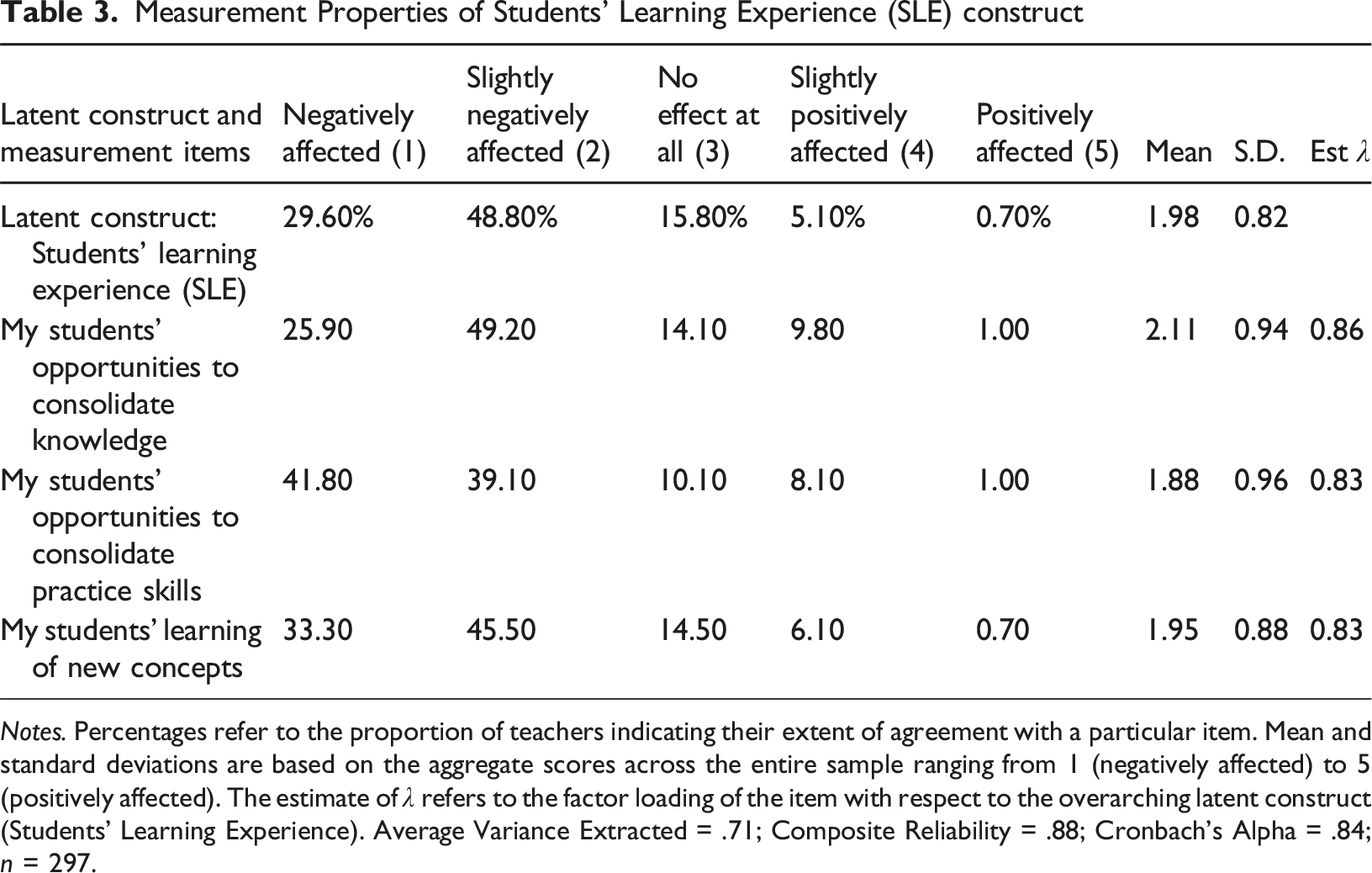
Notes. Percentages refer to the proportion of teachers indicating their extent of agreement with a particular item. Mean and standard deviations are based on the aggregate scores across the entire sample ranging from 1 (negatively affected) to 5 (positively affected). The estimate of λ refers to the factor loading of the item with respect to the overarching latent construct (Students’ Learning Experience). Average Variance Extracted = .71; Composite Reliability = .88; Cronbach’s Alpha = .84; n = 297.
Description of Three Teacher Groups
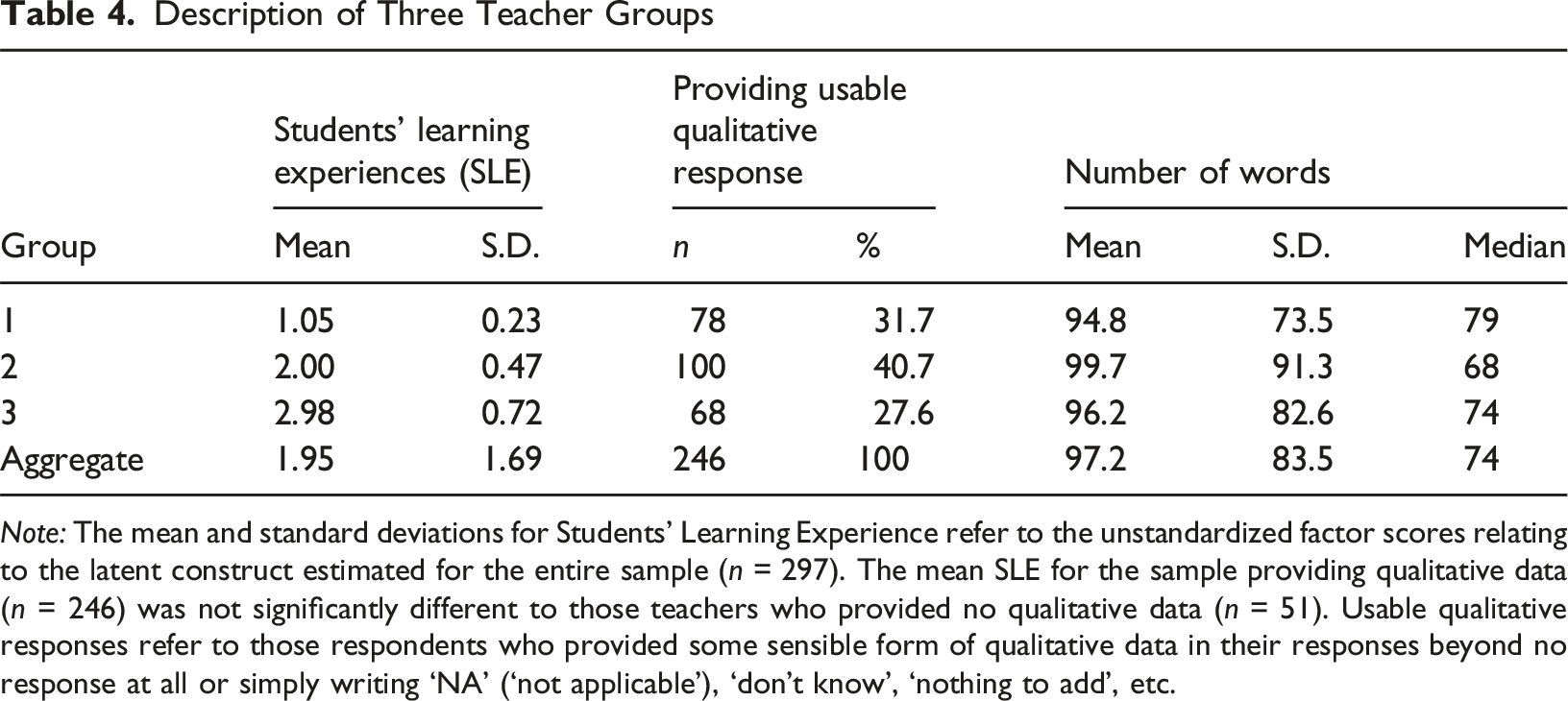
Note: The mean and standard deviations for Students’ Learning Experience refer to the unstandardized factor scores relating to the latent construct estimated for the entire sample (n = 297). The mean SLE for the sample providing qualitative data (n = 246) was not significantly different to those teachers who provided no qualitative data (n = 51). Usable qualitative responses refer to those respondents who provided some sensible form of qualitative data in their responses beyond no response at all or simply writing ‘NA’ (‘not applicable’), ‘don’t know’, ‘nothing to add’, etc.
Following the classification of teachers into three segments based on student learning experiences, the qualitative responses of teachers to five open-ended items were evaluated for within-group trends and emergent themes with respect to their teaching approaches and compared to their overlap and uniqueness with each other group (Huberman & Miles, 1998). The researchers examined and discussed emergent themes in each group to ensure inter-researcher reliability. They compared trends with each other and discussed any inconsistencies in data categorisation to resolve the location of those data in particular themes. An interpretive approach was employed for this analysis, providing insights into the teachers’ views of their adopted and intended approaches during and after the remote teaching periods (Cohen et al., 2011).
Results
A total of 246 respondents of the 297 teachers sampled (i.e. 82%) provided usable responses to the qualitative questions. The sub-set of teachers providing qualitative responses (n = 246) were not significantly different with respect to each measurement item’s mean ratings nor the mean factor score for the SLE latent construct relative to teachers who did not provide a qualitative response (n = 51). Specifically, this included opportunities to consolidate knowledge (Mdiff = −.083; p = .595), to consolidate practice skills (Mdiff = −.174; p = .280), learning of new concepts (Mdiff = −.128; p = .382) and SLE (Mdiff = −.129; p = .362).
At an aggregate level, teachers’ responses averaged 97 words over the five questions. The length of responses varied ranging from a minimum of 23 words to one teacher who wrote a response of 557 words. The average length of responses did not differ significantly across the three groups identified.
Reported Teaching Practices
As noted above, three groups of teachers were identified whose views of their students’ learning experiences during the school lockdown periods differed significantly. The digital teaching practices of teachers in Groups One and Three are the focus in this section, and are based on their responses to the five open-ended survey items. They provide contrasting but internally consistent views which differ from Group Two who were inconsistent in their reporting of their teaching practices during these times. Group One participants (n = 78), who had extremely negative views of their students’ learning in the remote teaching periods, offer a contrast to practices reported by Group Three participants (n = 68), who had relatively positive views of their students’ learning. Group One teachers expressed more techno-centric views of their practices, often highlighting their own technical skill development. They reported on use of technology to support structured, teacher-centred approaches that emphasise content delivery and information transmission. In contrast, Group Three teachers rarely mentioned their own skill development, and evidently used digital approaches supporting active, collaborative, and autonomous student learning experiences.
Themes are firstly discussed in light of these two groups of teachers’ responses to survey open items 1 to 3, which probed participants’ views about what they learnt from the remote teaching periods, and what they were proud of. Themes are then discussed drawing on responses to open items 4 and 5. In these final two survey items, teachers were asked to report on their planned future practices. Item 4 probed teachers’ views of practices that they valued for supporting students’ learning in the event of a future remote teaching episode, while item 5 elicited teachers’ views of practices that continued upon returning to school after the remote learning periods.
Digital Teaching Practices of Group One Teachers
The Group One teachers (n = 78), who had extremely negative views of their students’ learning in the remote teaching periods, generally focused on the technologies that they employed during the remote teaching period and the learning curve they had to negotiate to master these technologies, suggesting a lack of familiarity with the use of technology for teaching. They mostly used the technologies in their teaching practice to support content delivery. About one-third of these Group One teachers reported on a shift to more interactive teaching practices either during or after the pandemic.
Technology Focus
Teacher participants in Group One responded to the survey items 1 to 3 with a strong technical focus on their use of a variety of tools, including video-conferencing technologies and learning management systems (LMSs). Video editing tools and other applications such as OneNote featured in their techno-centric responses. Group One teachers’ frequent emphasis on technical aspects of their practices revealed that they were less familiar with technologies at the beginning of the pandemic. Some examples of this emphasis follow: [In the 2021 lockdown, …] I upskilled early and was able to deliver lessons created with technology. I learnt screen casting, video editing, and graphic design via Canva. [I was proud of …] How the lockdown compelled me to improve my skills with iMovie, which translated into YouTube videos covering the content of my specialist subject.
Some Group One teachers chose to report on specific hardware and peripherals. For instance, a Science teacher commented on a digital writing tool used during the 2021 lockdown: ‘I had to adapt to find a way to write chemical equations and solutions to problems … a stylus was necessary’.
Content Delivery
Group One teachers frequently reported on their adoption of technologies to deliver content, assign work and provide resources to students. Their responses highlighted teacher-centred, presentational approaches that centred on information delivery. Typical responses follow: [In the 2021 lockdown, I used …] Far more teacher-directed pedagogy of key ideas, more uploading of evidence of learning, limited use of student-directed research … My classroom dynamic of questioning and maintaining student engagement became much more centred on the teacher.
Digitisation of resources for students was commonly mentioned by teachers as a way to organise and present content, and assign work to students: [In the 2021 lockdown, I used …] Digitisation of More Resources
Indeed, one teacher proposed that this dominant content-delivery style of teaching created a student expectation of passivity in the learning process: ‘They seemed to have the expectation that they could be passive attendees and trying to shake that up was hard’.
Creation and Use of Instructional Media
The use of structured, teacher-generated instructional media to deliver information was frequently reported: [In the 2021 lockdown, I …] Created YouTube video presentations as a means of teaching the content of my specialist subject area. [I was proud of …] How I have managed to create explicit digital teaching resource materials in hard/challenging topics so that NESB students can assess the content and curriculum.
Use of externally created new media was also reported for supporting Group One teachers’ transmissionist pedagogies: [In the 2021 lockdown, I …] Posted lesson outlines and remote learning PowerPoints with embedded videos.
Monitoring Students’ Engagement with Content
Group One teachers also highlighted the monitoring of students’ engagement with digital content as an important part of their practice. Consolidating and monitoring of content was emphasised: [I learned about …] Using Google forms, creating quizzes that were used as informal assessments for content taught and consolidation. [In the 2021 lockdown, …] There was a continual emphasis on checking answers.
More open-ended online platforms that are typically used to support collaboration and creativity, such as Jamboard, were instead associated with ‘drill and practice’ activities, or with checking of students’ attendance and participation: [In the 2021 lockdown, …] Roll marking was done online by the students using a collaborative document. Jamboard became a way of monitoring student engagement.
Future Plans and Professional Growth of Group One Teachers
Many Group One teachers’ responses to items 4 and 5 reiterated their emphasis on technology and associated skills in their future plans. Surprisingly, despite their negative views of their students’ learning experiences during remote teaching, Group One teachers were committed to continuing similar digital pedagogies into the future: [Upon return to the classroom, I would continue …] Use of MS Teams as a platform for delivery of all resources and content. Embedding Canvas into the fabric of the school.
Their responses prioritised future practices focused on explicit instruction, content delivery and digital resource management: [Upon return to the classroom, I would continue …] Using the online platform more to place ongoing resources for students. To use more tools (like Google Forms) to track students’ progress with the content. [In the next remote teaching period, I would …] Record lessons and embedded quizzes in them … to practise the content learnt. Focus on LMS delivery of learning, and engaging with students via Zoom technology.
They were eager to take advantage of their already-created resources to continue to deliver and reinforce content: [Upon return to the classroom, I would continue …] Extensive use of PowerPoint presentations to provide extra context, visuals and supporting information. I’ve created a significant amount of video content that would help support more of a ‘flipped’ approach to some of my classes in the future. I will also continue posting outlines of upcoming class activity and offering summaries (e.g. screen shots of board notes/illustrations) for students who miss classes.
While the majority of Group One teachers were eager to continue digital practices they had used during the remote teaching periods, a small group (approximately 25 of 78 teachers) reported increased confidence and familiarity with technologies and proposed a move to more interactive digital teaching practices.
In contrast to their earlier responses, teachers from this subset of Group One teachers chose to emphasise more social, student-directed and interactive practices, especially the support of peer learning and student autonomy. Evidence of their pedagogical shift was revealed through their responses to items 4 and 5 about their planned post-pandemic teaching practices. Responses to these items highlighted pedagogical approaches that contrasted with the techno-centric and instructionist approaches emphasised in earlier responses. They mentioned the importance of more active tasks, such as design and project-based activities. Practices supporting student autonomy and peer learning also featured: [Upon return to the classroom, I would continue …] Project based learning where students are encouraged to choose tasks from a choice board and work at their own pace. More independent work - senior students appear to enjoy the ability to work ahead. [In the next remote teaching period, I would …] Provide opportunities for students to speak and listen to each other online other than on heavy content always. like to better explore ways in which students interact. I feel I only began to brush the surface of how to do this.
In this way, this cohort of Group One teachers showed signs of professional growth as they became more familiar and confident with their use of technology to support their teaching.
Digital Teaching Practices of Group Three Teachers
In contrast to the Group One teacher profiles, the Group Three teachers (n = 68), who had more positive views of their students’ learning, generally focused on the use of technologies to support more socially mediated learning, emphasising learners’ interactions with their peers and teachers. More participative tasks promoting learner autonomy were also emphasised. The teachers in this group were generally silent on technical aspects of their teaching practices, indicating more familiarity with the use of technology for teaching. The following response was typical of their focus on interactive facets of teaching rather than the technology: [In the 2021 lockdown, I …] Valued my professional skills more and not rely on (ironically) technology but focus on relationships and understanding.
Support for Students’ Learning with Peers
Group Three teachers frequently mentioned peer learning approaches in their responses, including use of small groups to support student collaboration: [I learned about…] How to manage MS Teams so that I could coordinate group work learning online for my students, this was a game changer! How to get students working in small groups in Zoom breakout rooms, facilitating differentiation and collaborative work. [In the 2021 lockdown …] the focus was on students continuing to interact and communicate.
Peer feedback was also highlighted as important: [I was proud of …] Asking students to do some fun activities and send feedback to other students, sharing positive experiences with other students and teachers.
Support of Students’ Autonomy
More participative tasks that supported learner control were emphasised by Group Three teachers: [I learned about…] Handing over to the kids and steering them from here - the power was in less control and more interaction. More offline independent, self-driven inquiry-based learning. [In the 2021 lockdown …] We released all the lessons for the day each morning and students could work through them at their own pace. [I was proud of …] Blended learning and teaching activities - so the learners can engage with content when and wherever they choose. Projects set that gave children the freedom to work at their own level, research and discuss.
Various types of participative tasks were implemented by Group Three teachers, including practical activities, design tasks, compositions, and inquiry projects: [In the 2021 lockdown …] I implemented more research tasks/projects over a few days rather than work each day, which provided students with flexibility. [I was proud of …] Facilitating students working in groups to produce a teenage magazine: this was successful due to the fact that students were able to hand in their work repeatedly for feedback from the teacher and they could support each other in their small group. The balance between autonomy and teacher support worked really well remotely. At home practical science activities. These were spoken of before the lesson so that students could gather materials. They conducted these and uploaded images and or spoke about their work online.
Future Plans of Group Three Teachers
The responses of the Group Three teachers in items 4 and 5, alluding to their future plans, focused on the use of technologies to support the social aspects of learning, including facilitation of learners’ interactions with student peers, and the promotion of quality learning conversations. These plans were unsurprising given that these were the approaches they had adopted during remote teaching and were perceived as providing relatively positive learning experiences for their students: [Upon return to the classroom, I would continue…] Greater use of shared documents in group work, seeking feedback more regularly on student engagement and understanding.
There was again a focus from these Group Three teachers on student autonomy and flexibility, for example, through blended learning activities: [In the next remote teaching period, I would use …] Student centred and student driven learning. Flipped learning strategies to encourage students to take more responsibility in their learning. Blended learning and … a multi-modal approach so the learners can engage with content when and wherever they choose.
In summary, the Group One teachers, who were extremely negative about their students’ learning experiences during the emergency remote teaching periods, were more concerned with the development of their own technical skills and were preoccupied with online delivery of content. A subset of this group indicated that, as a result of their experience with digital technologies, they would use more interactive teaching practices in the future. The relatively positive Group Three teachers were less concerned with their own skill development and utilised digital technologies to support more interactive learning that fostered student agency.
Discussion
The findings align with the literature emerging from these extraordinary remote schooling periods. The difficulties that teachers experienced in conducting remote classes, particularly the incorporation of online teaching aspects (DeCoito & Estaiteyeh, 2022) were again evident in this study, with teachers reporting overwhelmingly negative views of their students’ learning experiences. These negative perceptions were unsurprising given the rapidity with which teachers had to change their teaching approaches to work online. However, our findings also provide more nuanced insights into teachers’ pedagogical practices during emergency remote schooling. The highly unusual context of pivoting from class-based to remote teaching in a short period of time evidently created contrasting teacher practices, according to our data set. Teachers who reported extremely negative views of their students’ learning experiences (Group One teachers) tended to focus on information delivery practices. They emphasised the use of learning management systems and video-conference tools to support this content-oriented approach, as well as the use of teacher-created media and presentations. In contrast, teachers who had relatively positive views of their students’ learning (Group Three) emphasised more participative, collaborative digital teaching approaches that encouraged student autonomy. They highlighted more active tasks, such as design and project-based activities.
Teachers’ confidence and familiarity with technology was identified as a key difference between these two teacher cohorts and was evidently a factor influencing the groups’ contrasting digital teaching practices. This is aligned with the finding by Paetsch et al. (2023) that teachers’ positive teaching experiences were associated with self-reported changes in technology use and with their technology integration self-efficacy. We acknowledge other second-order (internal) barriers to technology integration (Ertmer et al., 2012) would have influenced teachers’ digital teaching practices in this study, such as teachers’ pedagogical beliefs and their previous experience with digital pedagogies. We also acknowledge that first-order (external) barriers, especially factors arising from the remote teaching context such as access to technology and resources, are likely to have played a part in teachers’ digital pedagogical choices during the remote schooling periods.
The tendency for teachers to pivot to a content-driven online teaching approach during remote schooling is well documented (Echeverría et al., 2022; Trust & Whalen, 2021). We surmise that teachers were being asked to teach in ways that might have been quite unfamiliar to them during this time, and in many cases were required to significantly increase their levels of technology-supported teaching. Accordingly, those teachers who did not tend to use digital pedagogies in their face-to-face classrooms were required to substantially change their teaching tools. Teachers in this group appeared to view digital pedagogical tools, such as video-conferencing technologies, as more easily supporting content-driven, presentational approaches. Many teachers in this group therefore prepared for the remote schooling periods by generating their own instructional media (Kearney et al., 2024), investing a great deal of time into such media production. These sorts of activities are reported in other studies with many teachers reporting they enjoyed the skill development involved in making videos and other media to share content with their students (Beardsley et al., 2021; Kearney et al., 2024; Seabra et al., 2021).
Our findings confirm those of another study (Jimenez Sanchez et al., 2022) that found that teachers were eager to continue with some of the remote schooling practices upon return to the classroom. For example, Group Three teachers acknowledged that their teaching approaches had been modified to focus on the use of technologies to support more social aspects of learning, including facilitation of learners’ interactions with student peers, and the promotion of quality learning conversations. Group One teachers were eager to continue generating instructional media to support their students’ learning and to continue using educational technologies to support direct instruction.
Of note was a subset of the Group One teachers who claimed that their increased confidence with technology (e.g. between the first and second school lockdown periods) assisted a pedagogical shift from techno-centric and instructionist approaches to the use of more interactive digital tasks supporting peer collaboration and student autonomy. In this way, they expanded their digital teaching approaches during remote schooling, as suggested by Beardsley et al. (2021).
Limitations and Future Directions
There are numerous questions which require further investigation. Firstly, studies investigating changes in pedagogical practice as a result of the remote schooling period would illuminate what can be learnt from the remote schooling periods to enhance schooling and student learning experiences. These would build on the findings of Jimenez Sanchez et al. (2022). A limitation of the current study was that the survey instrument only elicited data in connection to specific questions asked. Further studies that adopt alternative methods, such as interviews and focus groups, are needed to investigate how first- and second-order barriers to technology integration influence teachers’ everyday pedagogical decisions when confronted with this type of emergency pivot to remote teaching. Finally, this study was limited to ascertaining teachers’ views of their students’ improved learning. Further research is also needed to ascertain students’ own views of their learning experiences to triangulate data from teachers. Data elicited from other stakeholders, such as parents and school leaders, are also needed.
Conclusion
The transition to emergency remote schooling was extremely challenging, given the shortness of time to prepare for this qualitatively different experience, the context of the pandemic and the challenges of ensuring all students had equitable experiences despite differences in home circumstances. It is therefore unsurprising that many teachers felt negative about their students’ learning experiences. However, our findings indicate that there were two groups of teachers with quite different views of their students’ learning experiences, one relatively more positive than the other.
The key findings from this research suggest that teachers with more negative views of their students’ learning experiences used presentational digital teaching approaches largely centred on content-delivery. The results also indicate a relative inexperience with digital approaches by this group at the start of the remote teaching period. In contrast, teachers who had relatively positive perceptions of their students’ learning experiences, described their digital practices as providing collaborative and agentic experiences for students. Further, these teachers tended to be more familiar and confident with digital technologies.
This research confirms other studies that found the remote learning periods to be problematic for most teachers but is one of the few to link teachers’ perceptions of their students’ experiences with their digital teaching approaches. These insights generated in the context of emergency remote schooling should help to illuminate directions for professional development with digital pedagogies in the future.
Footnotes

Funding
The authors received no financial support for the research, authorship, and/or publication of this article.
Declaration of Conflicting Interests
The authors declared no potential conflicts of interest with respect to the research, authorship, and/or publication of this article.