




Abstract
Developmental Language Disorder (DLD) affects an estimated two in 30 school-aged children; teachers should therefore expect to teach children with DLD during their careers. Little is known, however, about pre-service primary teachers’ identification of DLD characteristics or the support of children with DLD in the classroom. This study explored the knowledge and perceptions regarding DLD of 154 Australian pre-service primary teachers in the final year of their degree. Responses to sixteen yes/no and Likert scale questions regarding DLD characteristics, identification, outcomes, and support provision were analysed. Participants’ knowledge of DLD characteristics and outcomes was generally low, however, most indicated that they could “definitely” or “probably” identify, and confidently support, a child with DLD. Results are discussed with a view to university programs’ preparation and enablement of pre-service teachers to support the educational needs of students with DLD.
Introduction
In Australia, many children commence school at risk (14.5%) or vulnerable (8.4%) due to communication difficulties, such as problems with talking to others and understanding language (Australian Early Development Census [AEDC], 2021). One communication difficulty is Developmental Language Disorder (DLD), a neurodevelopmental disorder of unknown origin (Bishop et al., 2017) characterised by persistent difficulties in language acquisition and use, impacting vocabulary, sentence structure, and discourse (American Psychiatric Association, 2022). DLD emerges during early childhood, typically persisting into adolescence and adulthood. DLD is termed a “hidden” impairment due to its heterogeneous presentation and limited public awareness (McGregor, 2020). DLD is thus under-identified with many cases undiagnosed (Nudel et al., 2023; Tomblin et al., 1997).
Prevalence, Outcomes, and Impacts of DLD
Prevalence of DLD in Australia has been reported at 6.4% (Calder et al., 2022), aligning with reports from the US and UK that 7–8% of the population has DLD (Norbury et al., 2016; Tomblin et al., 1997). These percentages indicate a potential impact on the academic development of two children in every classroom of 30 (Norbury et al., 2016).
Compared to peers without DLD, those with DLD are more likely to experience educational challenges with decoding, reading comprehension, spelling, writing, oral narrative, and numeracy (Adlof & Hogan, 2018; Ziegenfusz et al., 2022). Students with DLD, therefore, often receive lower grades and qualifications and may leave school prematurely (Conti-Ramsden et al., 2018). DLD is also associated with peer relationship problems (Mok et al., 2014), increased risk of mental health concerns and difficulties with financial independence compared with peers without DLD (Botting et al., 2016).
Pre-Service Teachers
In Australia, primary teaching qualifications are typically four-year bachelor’s or two-year master’s degrees. Primary teaching programs cover literacy, numeracy, and information and communication technology, with students enrolled in these programs known as pre-service teachers. The Australian Professional Standards for Teachers require that graduates of initial teaching courses understand student learning and the impact of factors such as cognition on learning. Graduates should also comprehend techniques to support diverse learning needs, including integrating students with disability (Australian Institute for Teaching and School Leadership, 2025). DLD is considered a disability, thus, students with DLD must receive appropriate accommodations.
Pre-Service Teachers Knowledge of DLD and Structural Language
Despite DLD being a disability requiring early identification with requisite educational support and accommodations, no research has examined pre-service teachers’ knowledge of DLD or coverage of DLD content in teacher training programs. Research on pre-service teachers’ understanding of morphology, syntax, and semantics is scant.
Meeks et al. (2016) systematically reviewed pre-service teachers’ readiness to teach reading and its component skills, concluding that structural language knowledge was poor. The review comprised 13 studies, of which five (Binks-Cantrell et al., 2012; Leader-Janssen & Rankin-Erickson, 2013; Lee, 2009; Mahar & Richdale, 2008; Tetley & Jones, 2014) examined morphology via morpheme counting (three based on questions from Moats, 1994), and one asked about pronouns. The remaining studies assessed phonological awareness and phonics as structural language. Meeks et al.'s conclusion supports Brady and Moats (1997), who earlier stated that teacher training programs must incorporate systematic instruction on factors underlying successful reading acquisition, including oral and written language structure. Such skills would assist with the identification of DLD.
Stephenson (2018) conducted a systematic review of research on the skills and knowledge of Australian preservice teachers published between 2005 and 2015. Fourteen studies examined literacy, some reportedly assessing structural language; however, no specific data regarding language skill was provided.
Finally, Buckingham and Meeks’ (2019) review of preservice teachers’ preparedness to teach literacy discussed two Australian studies not mentioned by Meeks et al. (2016). Harper and Rennie (2009) surveyed the language knowledge of 39 first-year preservice teachers with reduced skill at the sound, word, and sentence levels reported. Similarly, Bostock and Boon (2012) examined the capacity of 180 preservice teachers to identify nouns, verbs, and errors in grammar, punctuation, and spelling in text. Low-level abilities were reported. The authors concluded that unless remediated, students’ very low language knowledge would impact their future language teaching. These two studies reiterate that language difficulties associated with DLD may not be recognised by pre-service teachers on placement or once they enter the profession.
The ongoing gap regarding pre-service teachers’ explicit knowledge of language is concerning, given its relationship to literacy instruction and the identification of DLD. It is possible that, as no recent publications have been located, curriculum content has been updated, with individuals undertaking more current pre-service teacher training having stronger language knowledge. This would thus allow them to identify DLD.
Pre-Service Teachers’ Perceptions of DLD
No research has been located examining pre-service teachers’ perceptions of their ability to identify DLD or structural language deficits in children. One study by Harper and Rennie (2009) noted that pre-service teachers had a negative view of non-standard language forms. This finding suggests that students with language differences or difficulties, including those with DLD, may be negatively judged. More recently, Rohm et al. (2022) found that preservice teachers reporting low teaching self-efficacy had significantly lower self-efficacy around the educational inclusion of students with DLD than preservice teachers with high teaching self-efficacy. Variation in perceived capacity to support students with DLD across preservice teachers may also apply to perceived ability to identify and implement management supports for children with DLD.
In-Service Teachers’ Knowledge of DLD and Structural Language
Two master’s theses, resulting in later publications, have explored teachers’ knowledge and abilities to identify children with DLD (Girolamo, 2016; Girolamo et al., 2022; Glasby, 2021; Glasby et al., 2022). Glasby (2021) examined teacher knowledge of DLD and its educational impacts. The author reported that most participants in their sample of 262 primary and secondary teachers in Queensland, Australia, lacked specific knowledge of DLD, including associated characteristics such as longevity and prognosis of DLD (81.7% believed DLD would be remediated by language therapy) alongside confusion of DLD with other presentations such as speech and/or fine and gross motor skills difficulties. Fifty-eight percent of participants did not accurately identify DLD in a scenario-based task and had difficulties selecting appropriate adjustments. Similarly, Girolamo (2016) found that 177 US teachers, who taught pre-K to 21-year-olds in mainstream and special education schools, had difficulty identifying language problems in case studies of students with varying DLD profiles. Specifically, recognising external support needs including referral for speech pathology was lacking.
Earlier Australian studies reported low accuracy when teachers used language screeners to detect language difficulty (including DLD). Jessup et al. (2008) found preschool teachers missed 77 of 266 children (28.9%) aged 4–5 years who were at risk of DLD. The authors noted this finding may reflect the screening tool rather than teacher skill, recommending revision of the screener sensitivity. Similarly, Antoniazzi et al. (2010) in a sample of 15 primary teachers responsible for screening 149 students in their first year of school reported that 19 of 32 (59.4%) students were not identified, and 32 of 145 (22.1%) students were incorrectly identified as requiring further language assessment. The authors concluded that lower knowledge of typical language development likely resulted in inaccurate scoring on screener items. Overall, in-service teachers are largely challenged by identifying language difficulties and DLD. Considering structural language knowledge has similarly been found to be low for pre-service teachers, parallels around DLD identification may likewise be found.
In-Service Teachers’ Perceptions of DLD
Several Australian and international studies have investigated pre- and primary-school teachers’ perceptions regarding the identification of, and support for, children with language difficulties, such as DLD. Perceptions included reduced confidence in identification, citing knowledge gaps and/or a lack of access to identification tools (Mroz, 2006; Mroz & Hall, 2003; Weadman et al., 2021), an inability to provide suitable language support (Sadler, 2005), social and educational supports (Chepngeno et al., 2025), not understanding that DLD is lifelong thus assuming difficulties may resolve (Graham & Tancredi, 2019), and a lack of expertise to implement prescribed speech pathology interventions (Dockrell & Lindsay, 2001). Many indicated receiving little or no pre-service training regarding language development and/or experience working with children with language difficulties or DLD (Chepngeno et al., 2025; Dockrell & Lindsay, 2001; Sadler, 2005; Weadman et al., 2021).
Conversely, some pre- and primary-school teachers have reported high self-perceived confidence concerning language development (Mroz, 2006; Williams, 2006) and capacity to identify children with DLD (Glasby, 2021). The high self-confidence reported by Mroz (2006) and Glasby (2021) did not match assessed competence to identify atypical language. In contrast, Williams (2006), found that teachers’ high self-reported confidence aligned with their abilities to detect language difficulties. Notably, teachers in this study received professional development regarding indicators of language difficulties before judging children’s language abilities. This may explain the differing results and demonstrate the impact of professional development. Accordingly, Glasby et al. (2022) reported that teachers who had received training regarding DLD rated themselves as having significantly higher perceived knowledge and ability to identify DLD than those without training or those who could not recall undertaking training. Hence, professional development regarding DLD appears key.
The Current Study
The exploration of teachers’ knowledge and perceptions of DLD in school-aged children has been limited to in-service teachers. Exploring knowledge and perceptions of DLD in pre-service primary teachers could identify strengths and limitations in their ability to detect DLD, and in their confidence to provide support to children with DLD before they enter the workforce. Such information has the potential to inform tertiary institutions and guide future professional development opportunities.
The current exploratory study sought to address the following research questions: 1. What knowledge and perceptions do Australian pre-service primary teachers have regarding DLD? 2. Are Australian pre-service primary teachers confident in their abilities to identify children with DLD and provide them with appropriate classroom support? 3. Is there a relationship between Australian pre-service primary teachers’ knowledge of DLD and their self-reported confidence?
Methodology
Participants
Participants were final-year pre-service teachers studying primary teaching at an accredited Australian university. Final-year students were selected as they had engaged in workplace learning and completed most academic units. All responses were anonymous.
Demographic Information of Participants
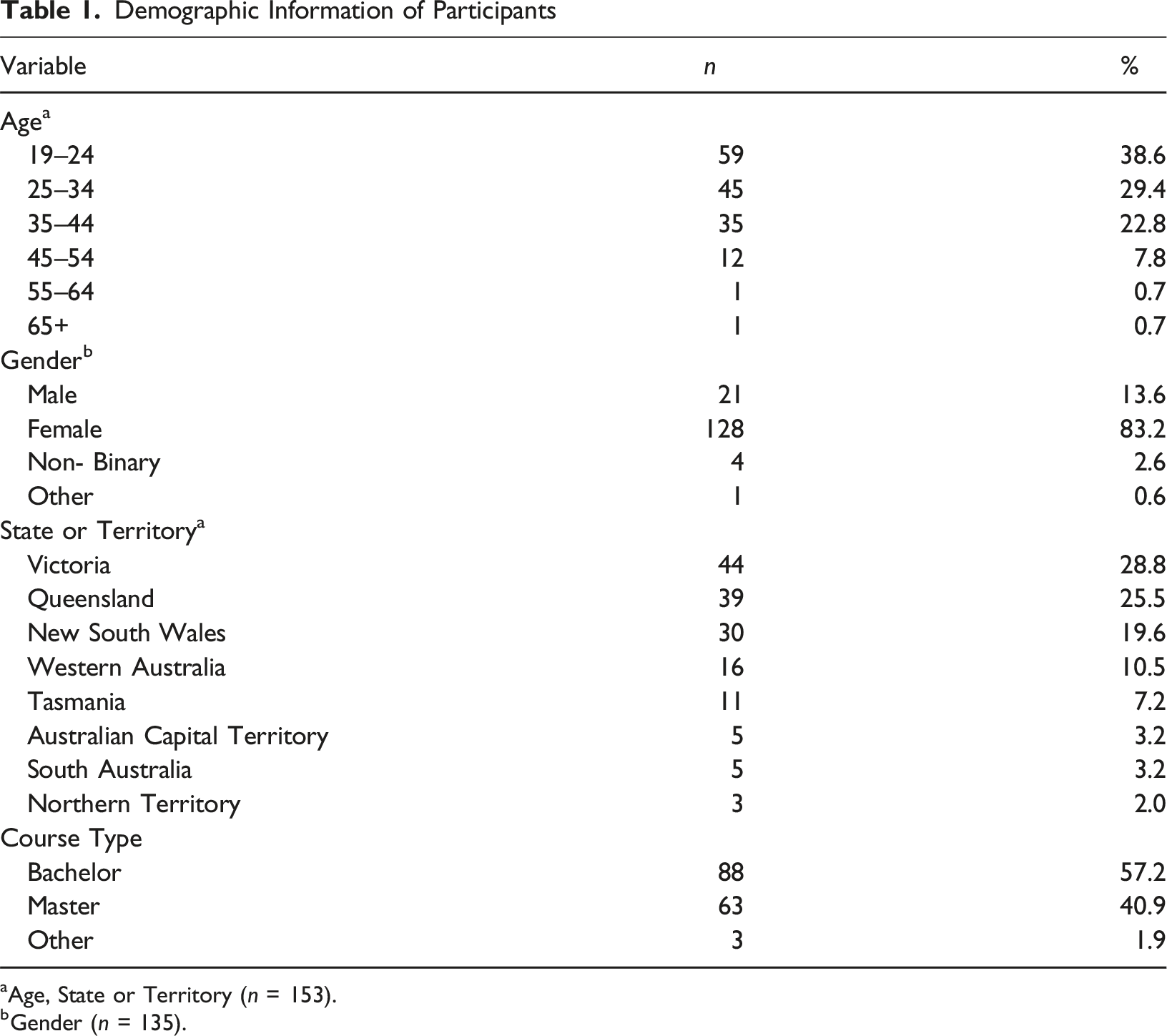
aAge, State or Territory (n = 153).
bGender (n = 135).
Measures
A cross-sectional, exploratory design was employed, and a questionnaire was developed which comprised four demographic, two background knowledge, five knowledge and four perception questions. The questionnaire items were developed by the research team based on the CATALISE Consortium DLD identification criteria (Bishop et al., 2017). As recommended by Bishop et al. (2017), the term Developmental Language Disorder was used throughout the questionnaire to describe a language disorder that emerges during a child’s development rather than being acquired or associated with a biomedical condition. The questionnaire intentionally included misconceptions and inaccuracies about DLD to test recognition of features that discriminate DLD from Language Disorder, and other conditions that affect children’s communication and/or behaviour.
Knowledge
The five knowledge questions asked about aetiology, prevalence, presentation, challenges, and long-term outcomes of DLD. Each question was scorable, relative to the number of correct and incorrect responses, with a total possible score of 35. Knowledge questions comprised two sets of Yes/No questions (one with an option to respond not sure), two sets of 5-item Likert scale questions (response options of definitely yes, probably yes, not sure, probably not and definitely not) and one closed question with four response options. For the yes/no and single-response question, a score of 1 was given for a correct answer and a zero for an incorrect answer. For the Likert scale questions if the correct answer was yes, a score of 1 was given for the definitely yes and probably yes responses and a zero for the not sure and definitely not and probably not responses. If the correct answer was no, a score of 1 was given for the definitely not and probably not responses and a zero for the not sure and definitely yes and probably yes responses.
Participants’ knowledge scores, based on the total possible score of 35, were then used to allocate them to one of three knowledge categories. A score of 18 and above (i.e.: ≥ 50% correct answers) was deemed “passable knowledge”, as 50% or more aligns with a generally agreed-upon pass grade. Scores below 50% were divided into two categories; a score of 9–17 (25–49%) was “low knowledge” and 0–8 (0–<25%) was “very low knowledge”. This allowed for more nuanced evaluation of participant groups with lower knowledge. No participant in the current study received a score of 75% or more correct.
Perceptions
Upon completion of the knowledge questions, participants were provided with information regarding DLD. The four perception questions were presented as 5-point Likert scale questions, with the same response options as previously described. The first two perception questions asked about the participant’s perceived confidence to identify – Could you identify a child with DLD? – and support a child with DLD in the classroom – Are you confident you could provide the appropriate support for a child with DLD? For these two questions, a participant who responded definitely yes or probably yes were identified as being “confident”, whilst a participant who responded, not sure, definitely not or probably not were identified as being “not confident”. The third question asked about perceived actions – If you believed that a child in your classroom had DLD, what would you do? – while the fourth question asked about considerations to support a student with DLD – How beneficial do you think the following considerations are for a child with DLD?
Two free-text questions enabled participants to provide details about any DLD knowledge they had acquired during their degree and any additional comments. Before distribution, two experienced speech pathologists provided feedback on the questionnaire. Amendments were subsequently made related to online usability and user experience.
Procedures
Recruitment
Three convenience sampling recruitment methods were used; social media, email, and snowball sampling. A short study description containing a link to the participant information page and questionnaire was posted to the researchers’ Facebook and Twitter accounts, the Australian Catholic University Allied Health Twitter page and seventeen Facebook groups which were likely to comprise pre-service primary teacher members. Second, 42 tertiary institutions offering accredited primary education programs, listed by the Australian Institute for Teaching and School Leadership (2020) were emailed and invited to distribute the questionnaire to their final-year students. An email template containing the participant information letter and questionnaire link was provided. Twenty-three universities agreed to participate, one declined and 18 did not respond to the initial or follow-up invitations. Third, the final questionnaire item invited participants to share the questionnaire with relevant contacts, encouraging snowball sampling.
Data Collection
The questionnaire was administered using the online software platform, Qualtrics (Qualtrics, Provo, UT) and allowed forward movement only, that is, participants could not return to previously answered questions. The questionnaire was available between April and August 2021. After starting the questionnaire, participants had one week to complete the questionnaire. Skipping items was permitted. Informed consent was indicated by questionnaire submission.
Ethics Approval
The study received ethical approval in March 2021 from Australian Catholic University’s Human Research Ethics Committee (2020-1691).
Data Analysis
Statistical analysis was undertaken using IBM SPSS Statistics (Version 27) (IBM, 2020). Sample sizes varied between questions as not all participants answered all questions or items within questions. As it was not possible to determine if failure to respond indicated a lack of knowledge, or otherwise, data were analysed for all items for all participants (n = 154) unless stated, and any missing data for scored questions were given a score of zero. While including non-response errors in this way may have underestimated the knowledge and perceptions of participants in the analysis (i.e. participants may have had the knowledge, but failed to respond), the random nature of non-responses across the participants made other methods of managing non-response errors inappropriate.
Descriptive statistics were used to analyse participants’ yes/no and Likert responses. A chi-square analysis was used to determine if an association existed between participants’ knowledge category and perceived confidence to identify and support a child with DLD.
The final optional free-text response items yielded limited useful data. Consequently, only responses provided to the other prompt for regarding personal- and university-acquired DLD knowledge are reported.
Results
Participant Demographics
All Australian states and territories were represented, with the largest number of participants from Victoria (28.8%). The majority of participants were studying a bachelor’s degree (57.2%); participant ages ranged from 19–67 years (M = 30.7) (Table 1).
Sources of Knowledge About DLD
Participants’ DLD knowledge was most commonly obtained via their current degree (32.5%); followed by media or personal experience (both 4.5%), professional development (2.6%), and previous study (1.3%). Twenty-nine participants (18.8%) selected the other option. Of these, 12 participants indicated their knowledge was obtained during teacher’s aide/educational support work or personal research, while 17 reported not having heard of or having no knowledge of DLD. Over one-third of participants (35.8%) did not respond to this question.
Participants who selected their current teaching degree were asked to describe in a free text box what they had learnt. One hundred and twelve responses were received. For participants who had heard of DLD, eleven provided comments indicating specific knowledge such as “what DLD is and how to support children”, “teaching strategies to cater to students”, “it affects emotional, social well-being and literacy aptitude”, and “it causes difficulty with using and understanding language”. The remaining participant comments indicated limited knowledge or coverage in their degree: for example, “minimal, five minutes of a lecture”, “very little, more has been mentioned about specific language disorders like dyslexia”, “in first year I learnt that it exists and is part of developmental delays” and “it is a type of disability”.
Despite the question being about knowledge gained, 91 responses indicated a lack of knowledge. Specifically, 61 participants indicated no knowledge with “nothing” written by 39 participants, and “none” by seven. Another eight participants wrote one of “nil”, “N/A”, “not much” or “never heard of it”. The remainder made comments such as “can’t recall it being mentioned”, “unsure what DLD is” and “DLD has never been addressed in my current degree”.
Additional end-of-survey comments were provided by some participants who reported no knowledge of DLD. These included “this has been helpful just for me to know that I really am lacking in this knowledge area”, “sorry I don’t know a lot about DLD but I will defs (sic) learn more” and “your survey is very difficult to complete for someone with no knowledge of DLD at all. Blank questions were simply “I have no clue what we are talking about” answers”.
Several participants indicated a desire for professional development in the area. Comments included “specialized PD opportunities to teachers specialising in DLD would be amazing”, “it certainly is something that PD sessions should be focusing on for teachers”, and “I am very interested in engaging in any form of PD courses to enhance my future teaching”. One participant concluded “this should be something we learn about in our Education Studies. Thank you for bringing this to my attention. I will look for more professional development regarding this”.
Participants’ Awareness of Other Prevalent Developmental Conditions
Participants reported on their knowledge of other neurodevelopmental disorders. Most had heard of dyslexia (98.7%, n = 152/154 responses), ADHD (95.5%, n = 147/152 responses), and ASD (99.3%, n = 151/152 responses). One participant responded “not sure” for knowledge of ADHD, the remaining participants stated they had not heard of the specified neurodevelopmental disorder (dyslexia, n = 2; ADHD, n = 4; ASD n = 1).
Participants’ Knowledge of DLD Risk Factors
Participants’ Responses to Knowledge of DLD Risk Factors Items
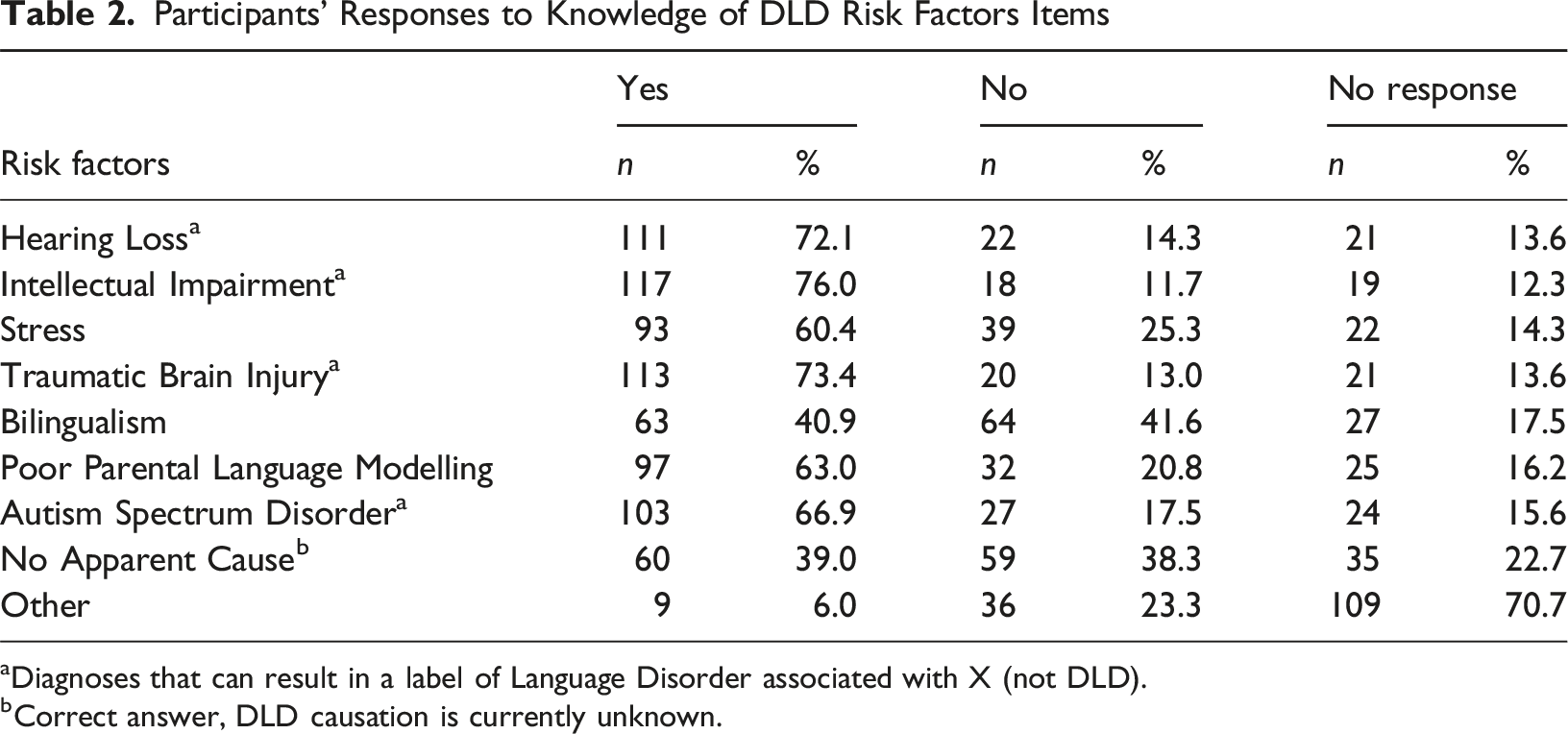
aDiagnoses that can result in a label of Language Disorder associated with X (not DLD).
bCorrect answer, DLD causation is currently unknown.
Participants’ Knowledge of DLD Prevalence
Participants were asked to estimate the prevalence of DLD from a choice of options, where the correct answer was two in each classroom. Forty-two percent of participants selected the correct response, followed by three to four children in each classroom (24%), one in each classroom (19.5%) and five or more in each classroom (6.5%). Thirteen participants (8.4%) did not respond.
Participants’ Knowledge of DLD Presentation in Children
Participants’ Responses to Belief Statements About DLD
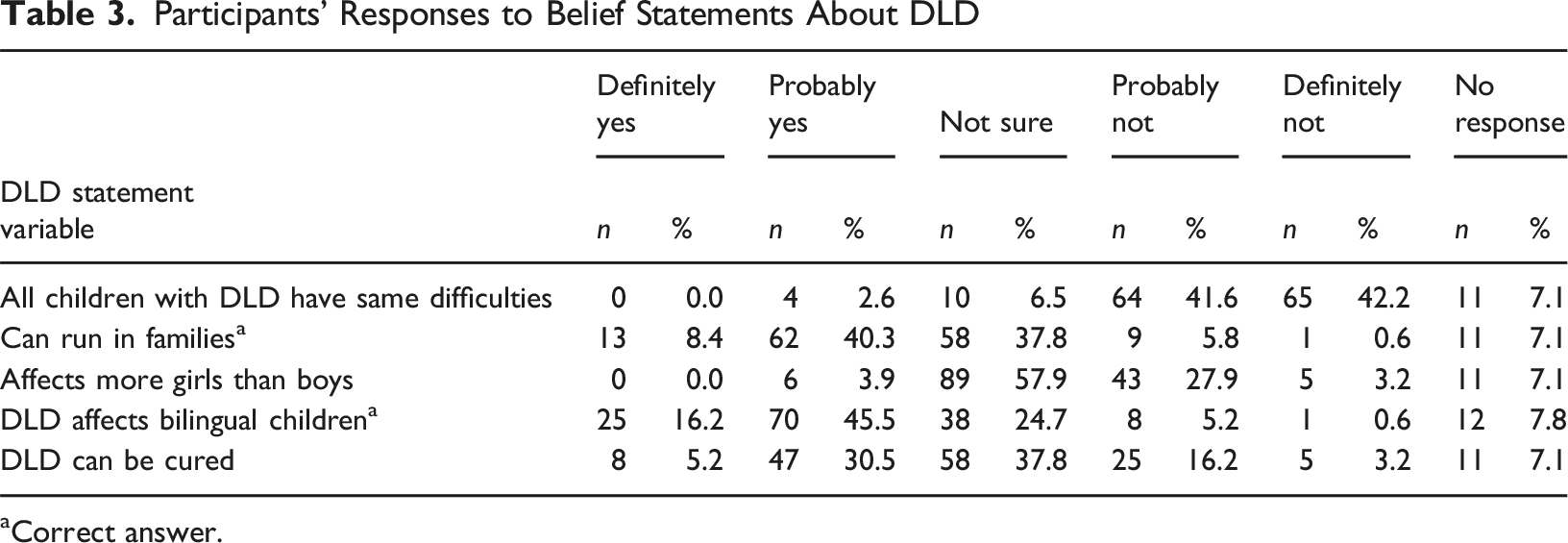
aCorrect answer.
Participants’ Knowledge of Difficulties Associated With DLD
Participants’ Responses to Knowledge of Difficulties Associated With DLD Items
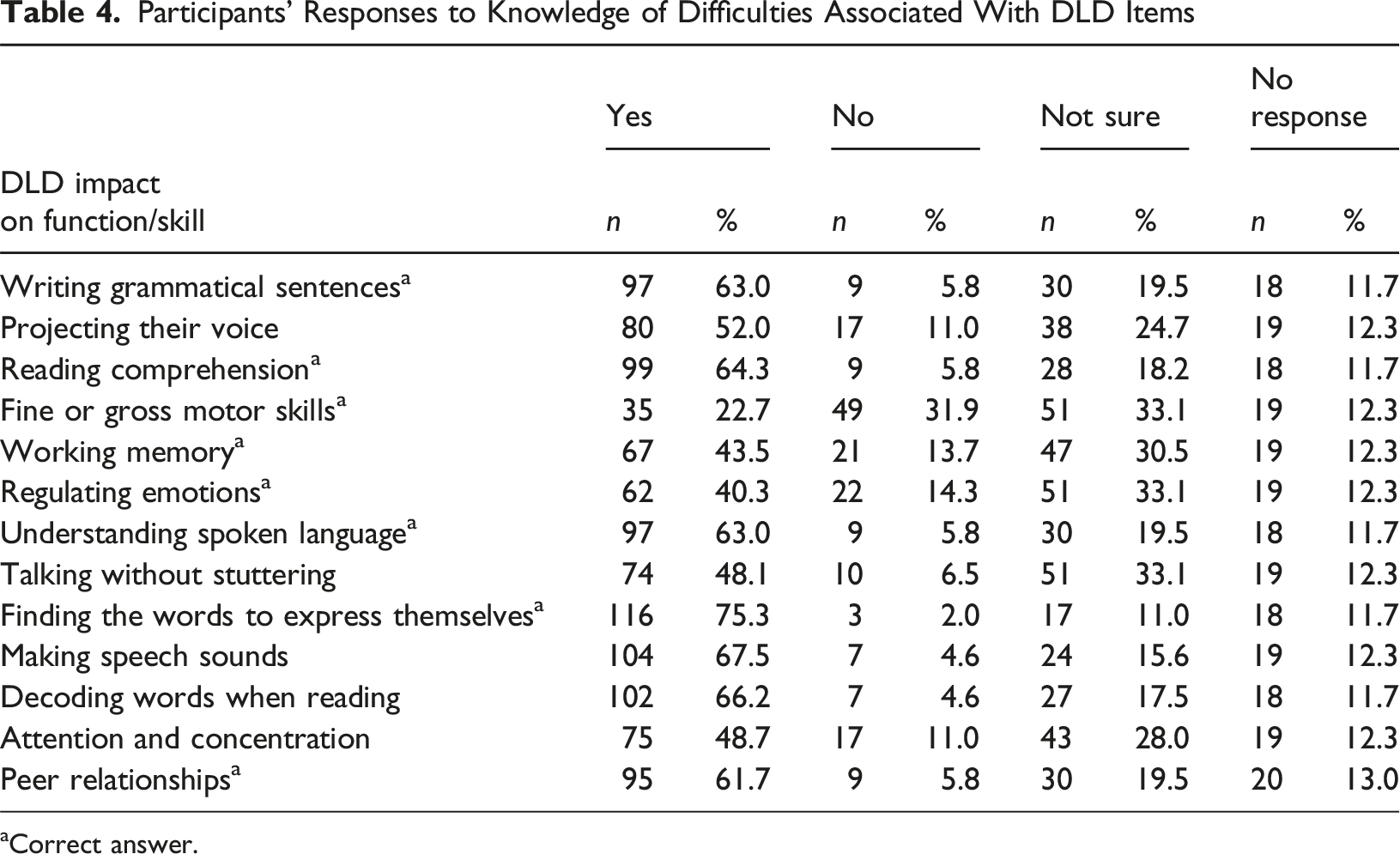
aCorrect answer.
Participants Knowledge of Long-Term Outcomes Associated With DLD
Participants’ Responses to Knowledge of Long-Term Outcomes Associated With DLD Items
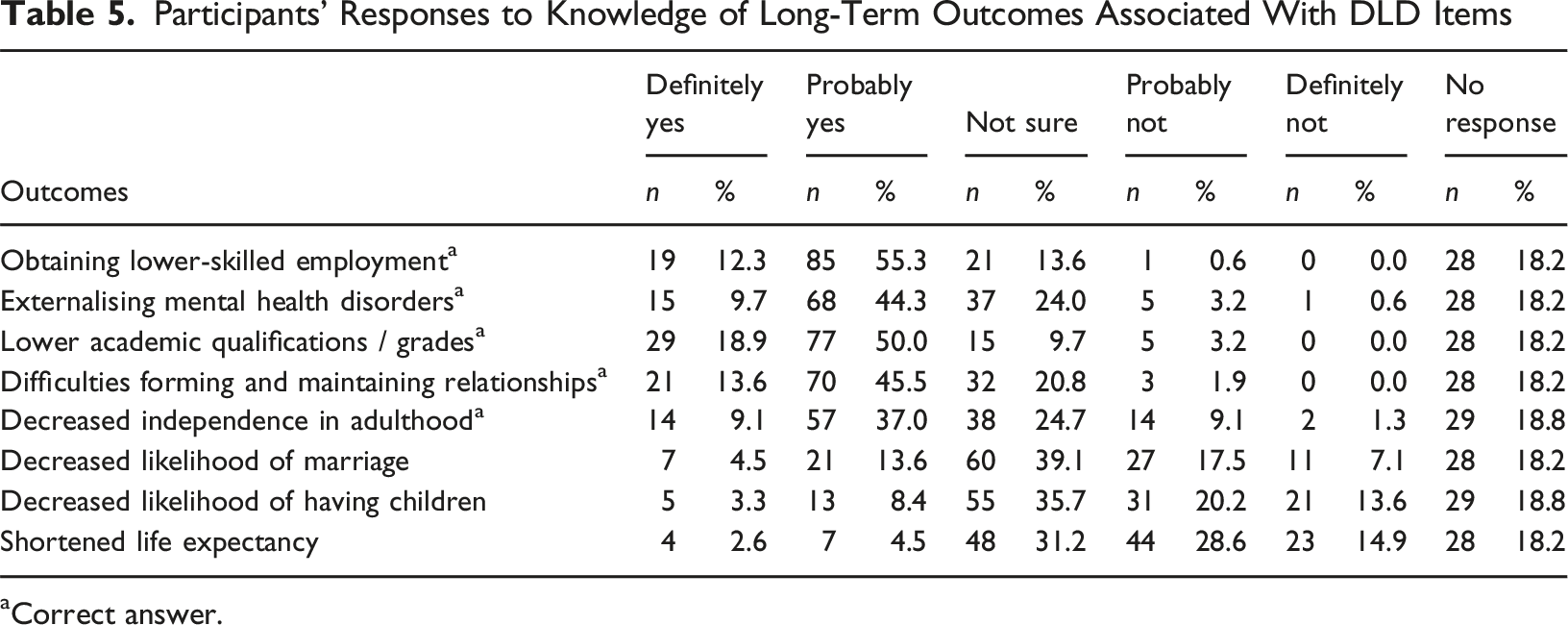
aCorrect answer.
Participants’ Factual Knowledge of DLD
Given the convenience sampling approach and the lack of a national curriculum for initial teacher education, it was deemed appropriate to explore possible differences in participants’ knowledge scores according to their course level and state of institution.
A two-way ANOVA revealed no statistically significant difference in average knowledge scores according to state [Victoria, Queensland and New South Wales only, F (2, 112) = .32, p = .72] or course [bachelor and masters (, F (1, 112) = .13, p = .72]. There was no statistically significant interaction between participant’s state and course either [F (2, 112) = .68, p = .51].
Overall, 17 participants (11%) had passable knowledge (score range 18–22/35) of DLD, while 98 (63.6%) had low knowledge (score range 9–17/35), and 39 (25.3%) very low knowledge (score range 0–8/35).
Management and Referral Decisions
Participants’ Responses to Perceptions of Management of Children With DLD Items
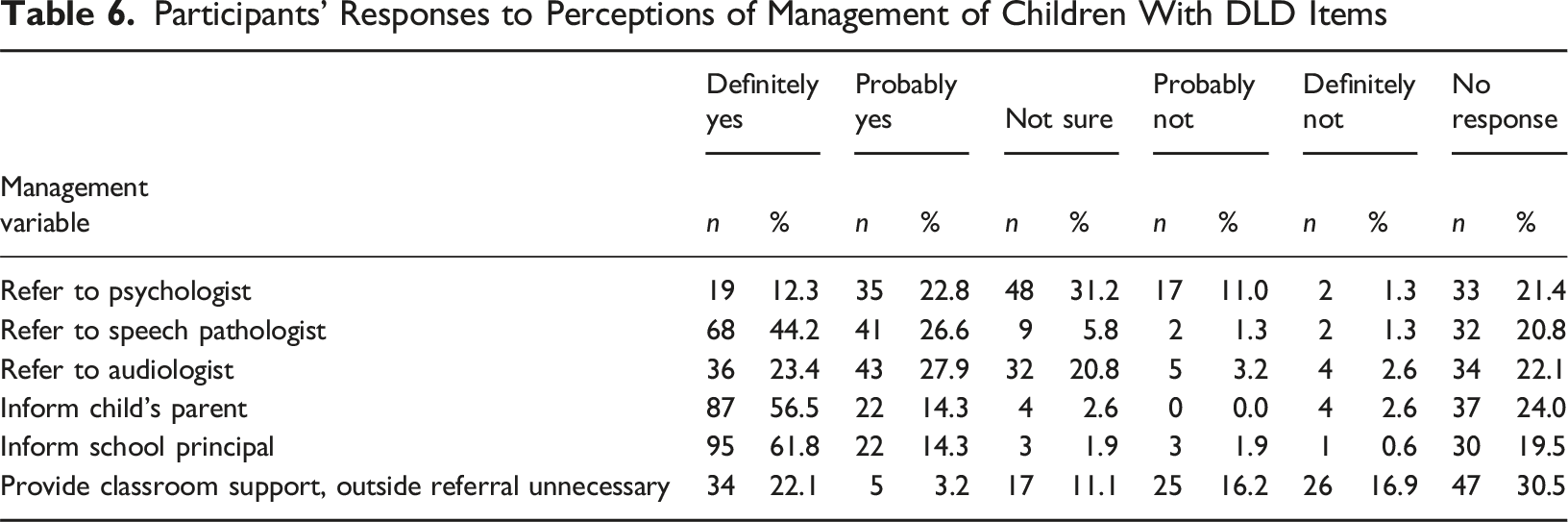
Perceptions of the Benefits of DLD Supports
Participants’ Responses to Perceived Benefits of Support Considerations for Children With DLD Items
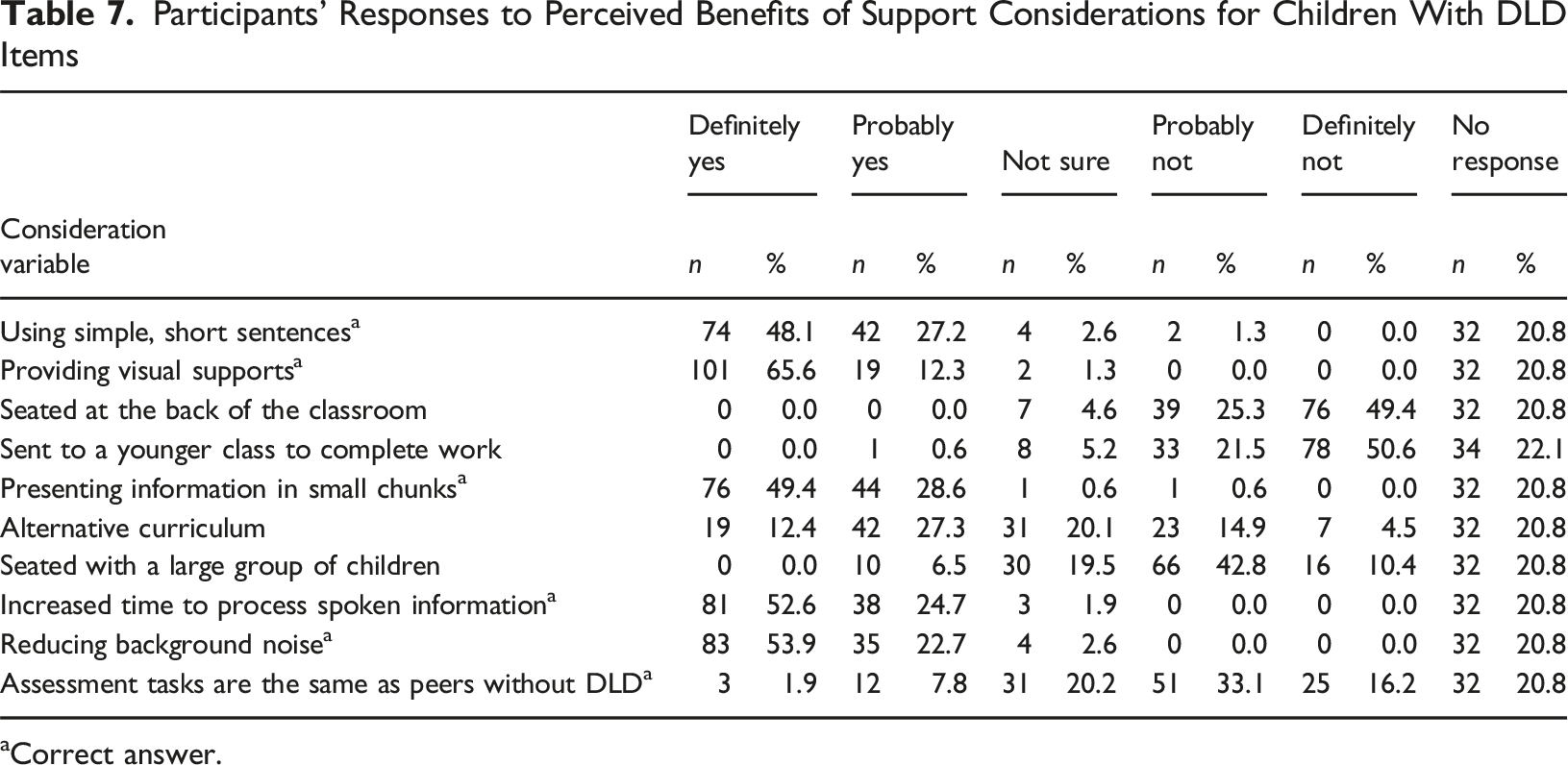
aCorrect answer.
Pre-Service Teachers’ Confidence in Identifying and Supporting Students With DLD
Forty-five percent (45.5%) of participants indicated they could definitely or probably identify a child with DLD, while 15.5% indicated they could probably not or definitely not do so. Twenty-six participants (16.9%) did not respond to the question and 22.1% were not sure.
Participants rated their perceived confidence in providing appropriate support to children with DLD. The majority of respondents (53.9%) felt confident that they could definitely or probably provide support, 15.6% were unsure and 13% were probably or definitely not confident. Twenty-seven participants (17.5%) did not respond.
Relationships Between Participants’ Knowledge and Perceived Confidence
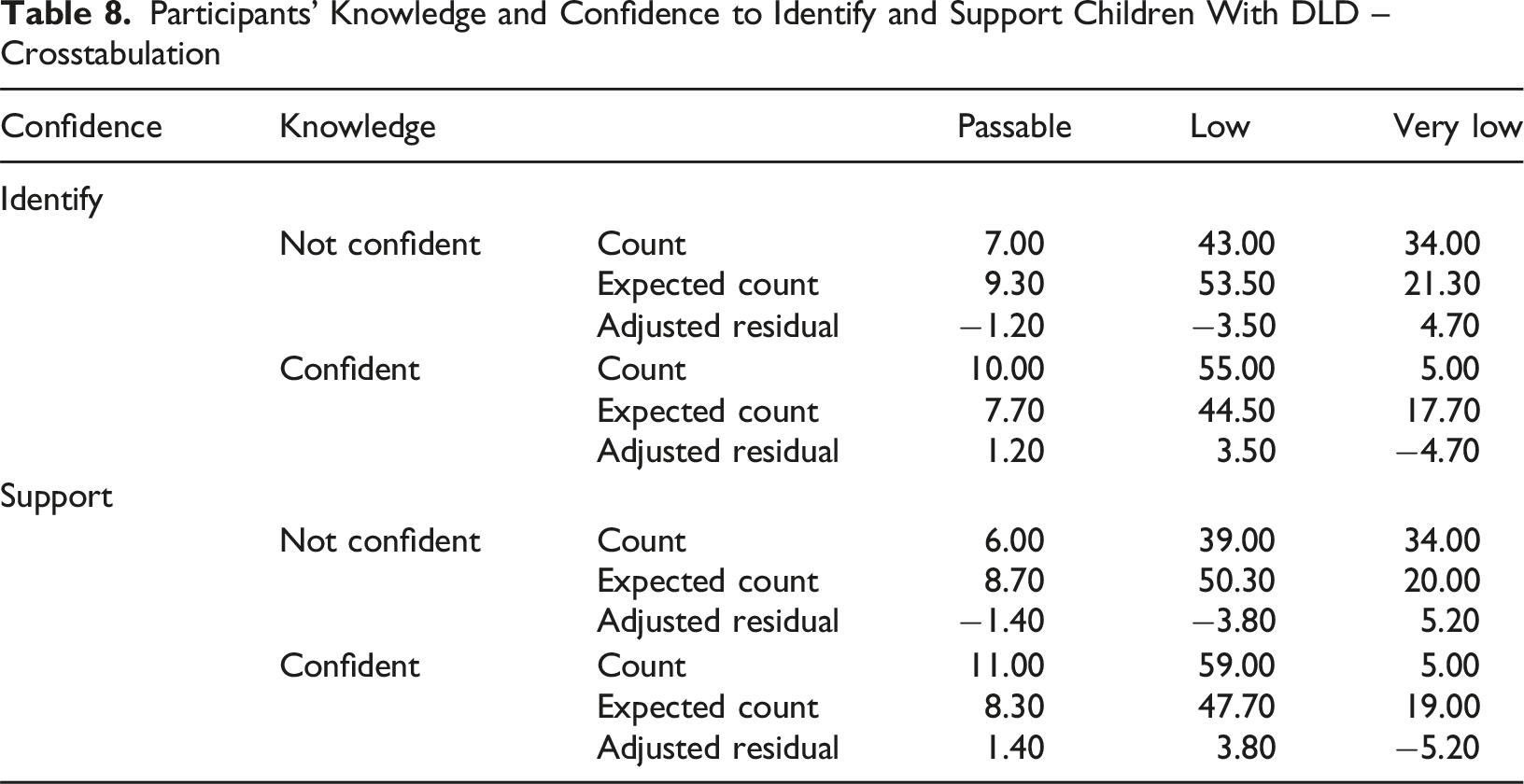
Chi-square analysis was conducted to address the third research question and examine the relationship between participants’ knowledge categories (passable, low, very low) and their perceived confidence to identity and support a child with DLD (confident, not confident). A significant relationship was found between knowledge group and confidence for both identification, X2 (2, N = 154) = 22.47, p < .001, V = .38 and support, X2 (2, N = 154) = 27.03, p <. 001, V = .42.
Participants’ Knowledge and Confidence to Identify and Support Children With DLD – Crosstabulation
Discussion
Pre-service primary teachers demonstrated variable and generally limited knowledge of risk factors, features, comorbidities, and long-term outcomes of DLD. These results align with earlier studies investigating in-service teachers’ knowledge of DLD (Girolamo, 2016; Glasby, 2021; Glasby et al., 2022) and language impairment, where low knowledge resulted in under-identification of children requiring further assessment and over-identification of children who did not (Antoniazzi et al., 2010; Jessup et al., 2008). Thus, pre-service and in-service teachers’ knowledge of DLD remains an area to address in training.
Limited understanding of risk factors for DLD may result in unintended consequences. For example, many participants in the current study incorrectly believed that intellectual impairment and bilingualism are linked with DLD. Children with intellectual impairment may have co-occurring language disorder; however, a diagnosis of DLD specifically requires that intellectual impairment does not account for the language deficits. Likewise, bilingualism does not cause DLD. Some bilingual children with DLD may, however, be encouraged to discontinue speaking their home language in response to difficulties with English language acquisition based on the incorrect assumption that dual language acquisition impacts cognitive and language development (Paradis, 2007). Likewise, those attributing DLD to stress may fail to refer to appropriate services whilst attribution to ‘poor parental language modelling’ may result in stigma. Thus, coverage of DLD risk factors in teaching programs is important.
Most pre-service teachers correctly identified that children with DLD present differently, with a prevalence of two in 30 students per class. Conversely, many pre-service teachers in the current study (73.5%) were unaware of the lifelong nature of DLD, aligning with findings from Glasby’s (2021) study showing that 83.6% believed that DLD would resolve with intervention or time. Understanding that DLD cannot be ‘cured’ (Bishop et al., 2017) is key to ensuring that support is enabled across a child’s school years.
Knowledge of DLD-associated difficulties was present; however, there were still uncertainties. Many participants did not differentiate language-based difficulties from speech, fluency (stuttering) and voice difficulties. Glasby’s (2021) participants also associated DLD with speech difficulties and stuttering. Likewise, pre-primary, primary and secondary teachers in Dockrell et al.’s (2017) study had trouble distinguishing speech from language problems. While some children with DLD have speech difficulties, they are unlikely to sound unusual (McGregor, 2020). The features and comorbidities of DLD require increased coverage in teaching programs, alongside an overview of various communication difficulties. Accordingly, Glasby et al. (2022) reported that in-service teacher knowledge of DLD characteristics was higher for those who had undertaken professional development in language disorders than for teachers without training or who were unsure of training, as well as those reporting coverage in their teaching studies. This suggests that ongoing access to professional development and training appears warranted.
Pre-service teachers in the current study showed limited capacity to distinguish dyslexia from DLD with the majority selecting ‘decoding words when reading’ as a deficit area. Decoding difficulties are associated with dyslexia (Snowling et al., 2020); however, while dyslexia and DLD frequently co-occur, they are distinct disorders (Catts et al., 2005) and require different interventions (Snowling et al., 2020). Children with DLD often experience reading comprehension deficits resulting from weak language comprehension (Bishop et al., 2009). Participants’ responses regarding fine/gross motor skills also varied. While DLD may co-present with motor difficulties (Sanjeevan et al., 2015), they are not diagnostic requirements and are not a reliable marker of DLD. Training pre-service teachers to differentiate DLD from other neurodevelopmental disorders would be beneficial.
Finally, despite many incorrectly thinking that DLD can be cured, the majority of pre-service teachers in this study understood the negative long-term implications of DLD. Pleasingly, this finding suggests that teachers entering the profession recognise the need to advocate for early intervention and support for children with DLD.
Most participants demonstrated knowledge of the speech pathologist’s role in working with children with DLD by selecting appropriate school and external management considerations. Some participants chose classroom-only support. Some teachers in Girolamo et al.’s (2022) study did likewise. Such decisions may delay or prevent DLD diagnosis, resulting in missed opportunities. A recent systematic review and meta-analysis revealed that 63% of youth offenders met DLD criteria (Chow et al., 2022), yet DLD is missed in around 81% of children with emotional and behavioural disorders (Hollo et al., 2014). Pre-service training highlighting the significance of identifying language concerns and making referrals is imperative.
Many participants appropriately identified using visuals and chunking spoken information to support children with DLD. These supports minimise the language barriers that hinder school participation and ability to learn (Graham et al., 2018). While 39.6% of participants indicated that an alternative curriculum would benefit a child with DLD, this does not align with the Australian Disability Standards for Education (2005) nor The Australian Professional Standards for Teachers. Children with DLD are entitled to access the curriculum, with reasonable adjustments and strategies utilised for inclusion (Australian Institute for Teaching and School Leadership, 2025). A separate curriculum would deny equitable learning experiences and as suggested by the Australian Curriculum, Assessment and Reporting Authority (2008), potentially lower expectations and result in poorer academic outcomes for children with DLD.
While around 45% of total participants indicated confidence in identifying a student with DLD, confidence levels varied across assigned knowledge groups. The group with passable knowledge of DLD had an expected split of individuals who identified as either confident or not confident in their ability to identify impacted children. There was, however, a tendency towards more participants reporting confidence. Review of open-text responses found that four participants indicated specific DLD knowledge, typically gained from professional development or working in an education setting. Williams (2006) found that teachers who had received professional development regarding language disorder were generally able to identify language difficulties. This ability aligned with self-reported confidence.
Results for participants not having passable knowledge differed. For participants in the low knowledge group, self-reported confidence in identifying DLD was higher than expected. A similar discrepancy was found by Glasby (2021) and Mroz (2006). More participants with very low knowledge reported not being confident in identifying DLD than expected. This is not unprecedented as Mroz and Hall (2003) noted that teachers expressed concerns about their abilities to identify children with speech and language difficulties and identified a need for additional training. Additionally, some current participant comments suggest some dismay at a lack of DLD knowledge and a strong desire to improve skills. Potentially, these participants then underestimated their abilities.
Pennycook et al. (2017) noted that voluntary self-improvement relies on an individual recognising this need for knowledge. Pre-service teachers may not voluntarily seek out professional development opportunities regarding DLD if they perceive themselves as competent in detecting and supporting children with DLD. Conversely, those identifying a need will most likely seek development. A solution would be coverage of DLD in teacher training alongside mandatory professional development for in-service teachers to alleviate the need for self-identification of training.
Examination of total group confidence to support students with DLD revealed that just over half considered themselves confident in their ability to provide classroom support for students with DLD. A review of results regarding this confidence across the three knowledge groups revealed group variability. This variability paralleled that found for confidence in identifying DLD across the three knowledge groups. Thus, the group with passable knowledge had more participants than not self-report confidence to provide classroom adjustments to students with DLD. This is expected considering the factual knowledge demonstrated by this group. That more participants in the low knowledge group expressed confidence in providing support than expected is concerning. Buckingham and Meeks (2019) reported that a misalignment of knowledge and confidence may prevent teachers from seeking or attending professional development. Finally, fewer participants than expected in the very low knowledge group expressed confidence. This is not unprecedented. Dockrell and Lindsay (2001) found that teachers who self-identified reduced knowledge of speech and language deficits reported feeling unable to provide appropriate classroom support. A potential solution to teacher confidence in supporting students with DLD would be coverage of DLD identification and typical classroom adjustments during teacher training.
The current finding of self-reported confidence by around 50% of pre-service teachers in their ability to support students with language difficulties contrasts somewhat with findings of in-service teachers, where low confidence to support children with language difficulties has been reported by the vast majority (Chepngeno et al., 2025; Dockrell et al., 2017; Dockrell & Lindsay, 2001; Sadler, 2005). The confidence ratings in the current study may reflect pre-service teachers’ variability in work experience, with in-service teachers more aware of their abilities or limitations to identify and provide support to DLD students. Participants’ comments showed that some had exposure to DLD on placement, some had undertaken previous studies introducing them to DLD, whilst others had encountered DLD in a work setting. Thus, exposure to DLD can come from many sources. To ensure equality for all, input at the teacher training and in-service teaching level is ideal.
Implications and Recommendations
Findings point to potentially significant consequences for those pre-service teachers who enter the workforce with insufficient knowledge to recognise indicators of DLD in their students. Timely identification is critical. As Thomas et al. (2019) emphasise, the later children with DLD receive intervention, the higher the risks of long-term negative impacts on education, employment, personal relationships, and mental health. Economic advantages are also linked to early identification, with reduced costs to families and government health and welfare agencies (Cronin, 2017; Nickless, 2024).
The current findings, along with those of Glasby et al. (2022), suggest gaps in pre-service teacher training regarding DLD in Australia. This is concerning as teachers have long cited inadequate pre-service training to work with children with language difficulties (Dockrell et al., 2017; Mroz & Hall, 2003; Sadler, 2005). The data suggests a nationwide approach is required to increase coverage of DLD in pre-service teaching curricula.
Pre-service teachers in this study showed an awareness of the crucial role of speech pathologists in working with DLD. Most participants would consider referring a child with suspected DLD to a speech pathologist. Collaborative practice between speech pathologists and teachers to support children with DLD in classrooms is ideal (Gallagher et al., 2019), along with co-design of university curriculum that embeds DLD and awareness of the role of speech pathologists.
Finally, in line with previously identified international recommendations (Antoniazzi et al., 2010; Hendricks et al., 2019; McGregor, 2020), the co-design with teachers of an Australian DLD screening resource may assist pre- and in-service teachers to recognise the characteristics of DLD. Equipping pre-service teachers with resources to facilitate early support for children with DLD could positively impact the lives of those children.
Limitations
There are potential limitations of the current study that must be acknowledged. Firstly, sampling bias may have resulted from the study attracting participants who thought they had, or lacked, knowledge of DLD. Further, the number of responses from states and territories was disproportionate and participants from 43% of tertiary institutions offering primary teacher training were not represented.
Secondly, as part of the Perception section of the questionnaire participants were provided with information about DLD. This may have influenced participant’s perceived confidence (or lack thereof) to identify and support children with DLD and therefore impact self-ratings of confidence.
Finally, where participants indicated ‘not sure’ or did not provide a response, that response was counted as zero. It is possible that this may have impacted the knowledge and perception ratings and related analysis by overestimating participants’ lack of knowledge.
Conclusion
Australian pre-service teachers in the present study had knowledge gaps regarding the causation, presentation, indicators, and long-term outcomes of DLD, potentially compromising their ability to identify and support children with DLD. Consequently, children with DLD may be unidentified and thus unable to access teacher and specialist intervention, increasing their risk of negative outcomes in education, employment, social relationships, and mental health.
One potential solution for discussion is the co-design of a DLD screening checklist / resource for Australian pre- and in-service teachers. Additionally, the co-design of minimum curriculum inclusion requirements into all Australian teaching programs regarding communication disorders, including DLD, should be considered. This could be positioned alongside national professional development offerings potentially co-facilitated by speech pathology and teaching representatives.
Footnotes

Funding
The authors received no financial support for the research, authorship, and/or publication of this article.
Declaration of Conflicting Interests
The authors declared no potential conflicts of interest with respect to the research, authorship, and/or publication of this article.