




Abstract
Teachers’ conceptualisations of play significantly influence its integration in school contexts, yet these perceptions remain understudied. This study employs Parker et al.’s (2022) Framework for Quality Learning through Play as a theoretical lens to examine how Australian primary school teachers conceptualise play within educational contexts. Data collected from 238 practicing teachers across Australia was analysed through descriptive statistics, supported by participant written responses. Results revealed clear acknowledgement of the developmental benefits of play, aligning with the learning outcomes dimensions of the framework, while beliefs about implementing play into classroom practice and teacher’s facilitation roles varied substantially, reflecting tensions identified in the framework’s facilitation dimension. These findings highlight the complexity of implementing play as a pedagogical tool in primary education illustrating complexities of school contexts and curriculum requirements, tensions between child-led activities and teacher involvement in children’s play.
Introduction
Teachers’ beliefs about play significantly shape educational experiences for primary school children, yet how educators conceptualise play within formal school settings remains understudied. Play is a complex and multifaceted concept; its definition remains highly contested. Throughout literature play has various definitions and interpretations across diverse contexts and by different stakeholders (Fleer, 2021; Keung & Cheung, 2019). While there is no universally accepted definition of play or its functions, children’s play is generally characterised as freely chosen, opportunistic, and intrinsically motivated and process orientated (Fleer, 2021; Hartt et al., 2023; Parker & Thomsen, 2019; Pyle & Danniels, 2017). Despite the complexity in defining play, there is growing recognition of its importance in educational settings beyond the early years (Whitlock et al., 2023). This study explored how Australian primary school teachers conceptualise play within educational contexts, examining their knowledge, values and beliefs about play as a pedagogical approach. By investigating teachers’ perspectives on play in primary school settings, this research addresses an important gap in understanding how play is perceived and implemented beyond the early years classrooms.
To understand how primary school teachers conceptualise play within educational contexts, this study employed Parker et al.’s (2022) Framework for Quality Learning Through Play as a theoretical lens. The framework has four interconnected dimensions: the child’s experience, learning outcomes, facilitation approaches and design elements. These dimensions provide a common language and structure to allow teachers to implement learning through play within formal school settings. The framework addresses challenges that Parker et al. (2022) identify as barriers to effectively implement play pedagogies, these include “a lack of continuity between preschool and school pedagogies” (Parker et al., 2022. p. 5) and “a lack of clarity around definition and role of learning through play at school” (Parker et al., 2022. p. 6). By offering a common language about play that transcends the dichotomy between play and learning, this framework provides a valuable lens for examining Australian primary teachers’ conceptualisations of play in primary schools.
Long Standing Benefits of Play
The benefits of play have been extensively documented in empirical research, highlighting its integral role in development and learning (Dickey et al., 2016; Parker & Thomsen, 2019; Zosh et al., 2022). Play helps children build and maintain positive interpersonal skills and social competence (Rodrigues et al., 2022). It fosters emotional development by enhancing self-regulation and executive functioning (Allee-Herndon & Roberts, 2021; Pyle et al., 2022; Rodrigues et al., 2022) and is linked to physical development, promoting increased balance, agility, coordination, and cardiovascular fitness (Yogman et al., 2018). Play significantly influences linguistic development, supporting language acquisition and enhancing language skills (Holmes et al., 2015; Quinn et al., 2018; Weisberg et al., 2013). Research also links play to academic benefits, positively impacting literacy (Tsao, 2008), numeracy (Skene et al., 2022), and cognitive thinking, problem solving and mental flexibility (Yogman et al., 2018). Given the benefits associated with play, it stands to reason that play should have a place in educational contexts.
Play in Educational Contexts Internationally
While the benefits of play are well-established and widely embraced in early childhood education (ECE) (Bubikova-Moan et al., 2019; Cutter-Mackenzie et al., 2014; Hirsh-Pasek et al., 2008), its acceptance and integration into primary school classrooms to support learning remains contested. Play and learning are often viewed as separate constructs, particularly as children progress into primary education, with increased curriculum demands (Pyle & Danniels, 2017). Internationally, early childhood spans from birth to 8 years (WHO, 2020), bridging the gap between preschool and primary education. While preschools and prior to school settings favour play-based approaches, schools adopt more didactic methods of instruction (Parker et al., 2022). As children progress into school classrooms the role of play diminishes (Allee-Herndon & Roberts, 2021; Barblett et al., 2016; Dickey et al., 2016), raising concerns about the potential risks of prematurely abandoning play in favour of a narrower focus on academic instruction.
This trend appears to be global. A cross-cultural study that examined play in eight countries, found that as children progress into school education, the emphasis on play often decreases, with some countries struggling to balance child-initiated play with more teacher-led approaches (Rentzou et al., 2019). The relationship between national policies, cultural attitudes, and actual classroom implementation reveals significant complexities. While several countries have curriculum frameworks that emphasise play, research consistently shows varying degrees of alignment between policy aspirations and classroom practice. For example, Scotland’s Curriculum for Excellence recognises the value of play throughout schooling (OECD, 2021), yet Scott-McKie and Campbell (2019) noted that play has a minimal role in the learning process in actual classrooms, especially for children beyond the early years. Similarly, Finland often cited as successfully integrating play through its national core curriculum (Finnish National Agency for Education, 2016) shows varied interpretations and approaches among teachers in actual classroom implementation (Hyvonen, 2011).
Play in the Australian Educational Context
In Australia, a significant challenge in implementing play into schools is the lack of alignment between early childhood and curriculum frameworks. The Early Years Learning Framework (Australian Government Department of Education [AGDE], 2022), for educators working with children aged birth to five, aims to extend learning through the transition to school but is separate from the Australian Curriculum (F-10), which minimally references play (Australian Curriculum, Assessment and Reporting Authority [ACARA], n.d). The EYLF outlines play as a matter of pedagogy, while the Australian Curriculum for primary and secondary students leaves matters of pedagogical decision making to the school. The disconnect between the two curriculum frameworks suggests that play is not sufficiently valued as a learning vehicle in primary schools (Parker et al., 2022). This separation of early childhood and school curriculum frameworks exemplifies what Parker et al. (2022) identify as “a division between the policy environment and the communities of implementation” (p. 6). The framework highlights how such divisions between different communities of practice – in this case, early childhood settings and primary schools – hinder the successful implementation of quality learning through play within school contexts. This division is problematic in the Australian education context, where primary schools often bridge two separate curriculum frameworks and often have overcrowded curricula with a strong emphasis on academic content, leaving little room for play experiences (Miller et al., 2022). The pressure to cover vast amounts of material in limited time, often exacerbated by standardised testing requirements, can lead to a narrowing of the curriculum and fewer opportunities for play and exploration (Miller et al., 2022).
However, there has been a notable surge in Australian public discourse about the significance of play. Key stakeholders in the educational landscape have contributed to advocating for children’s right to play (Breathnach et al., 2016; Early Childhood Australia, 2023; Hesterman, 2019; Literacy and Numeracy Education Expert Panel, 2024; Whitlock et al., 2023). Australian research has advocated for greater integration of play into the primary classroom and called for system-wide changes and further support for teachers in their efforts to implement play into classroom practice (Whitlock et al., 2023). Studies have found that teachers recognise play as important to children’s learning and development, but also identify barriers in school contexts (Hesterman, 2019; Whitlock et al., 2023). These findings highlight the complex relationship between teachers’ beliefs about play and its practical implementation in school classrooms.
Understanding Play through Teachers’ Lenses
Teachers’ conceptualisations of play are often linked to their understanding of learning and child development, as their primary focus is on nurturing educational outcomes and supporting children’s growth (Fleer, 2021; Pyle & Danniels, 2017). While studies have explored early childhood teachers’ perspectives on play (O’Keeffe & McNally, 2021; Rentzou et al., 2019), there is a notable lack of research focussing specifically on primary teachers’ perceptions of play for children in the compulsory primary school years. Despite its acknowledged importance, there is limited empirical evidence regarding the enactment of play as a pedagogical tool in school-based teaching and learning programs. This scarcity of research hinders our understanding of how play is conceptualised and implemented in environments where academic pressures often compete with playful pedagogies (Hesterman, 2019; Pyle & Danniels, 2017).
Parker et al.’s (2022) Framework for Quality Learning Through Play aligns with emerging literature on playful pedagogies by recognising that effective implementation requires combining facilitation types, integrating child-led, teacher guided, and teacher-directed learning. This perspective helps illuminate the tensions evident in our study between structuring play and allowing child-led exploration. The framework also emphasis that “agency is central to playful pedagogies” (Parker et al., 2022, p. 5), a perspective that resonates with ongoing Australian discourse about children’s right to play (Breathnach et al., 2016; Early Childhood Australia, 2023).
These facilitation tensions identified in Parker et al.’s (2022) framework are reflected in educational systems internationally, where the balance between play and curricular demands manifests in various ways. In Ireland, despite the inclusion of play in the Aistear national curriculum framework, O’Síoráin and colleagues (2024) found a significant mismatch between pedagogical knowledge and classroom practice in primary schools. In the USA, Lynch (2015) found that while teachers valued play, they expressed concern about dedicating time to play within the context of learning, feeling it reduced necessary instructional time available to cover mandated curriculum content. This challenge is further illustrated in Canadian research, where Fesseha and Pyle (2016) found that while 91% of teacher participants acknowledged play as part of their current classroom practice, only 19% purposefully planned for it, highlighting the gap between acknowledging play’s importance and intentionally incorporating it into teaching practice.
Synthesising these perspectives on play in educational contexts, this study used Parker et al.’s (2022) framework as a theoretical lens to examine the specific tensions Australian primary teachers experience between valuing play and implementing it effectively. By focussing on teachers’ knowledge, values, and beliefs through this framework, this research addresses the gap between policy aspirations and classroom practice, particularly regarding facilitation approaches and teachers’ perceptions of play’s relationship to learning outcomes.
Research Questions and Aims of the Study
Despite extensive research on play in early childhood settings, there remains a significant gap in our understanding of how primary school teachers conceptualise and implement play within their classroom practice. While studies have documented the benefits of play and its presence in curriculum frameworks, limited research has explored how teachers in primary school settings interpret, value, and enact play-based approaches within the constraints of formal education settings. This gap is particularly notable in the Australian context where, like other countries, primary teachers must navigate the transition between the early years and school curriculum frameworks while managing substantial curriculum demands.
The aim of this research was to explore Australian teachers’ conceptualisations of play in school contexts and address the research question: What knowledge, values and beliefs do primary school teachers have about play?
Methodology
This study employed a mixed methods convergent parallel design (Mills & Gay, 2016) to explore how Australian primary school teachers conceptualise play. Ethics Approval for the larger study, of which the current study forms a part, was provided by the University of Canberra’s Human Research Ethics Committee (HREC approval 13441). Qualitative and quantitative data were collected simultaneously, analysed separately, and then compared and interpreted together. The research design was informed by Parker et al.’s (2022) Framework for Quality Learning Through Play, particularly its emphasis on understanding multiple dimensions of quality play experiences. The questionnaire explored teachers’ perspectives across these dimensions, examining knowledge of play benefits (outcomes), views on play’s value (child’s experience), and beliefs about play as pedagogy (facilitation and design).
Participants
The participant sample was purposive, consisting of 238 practicing teachers from primary schools across Australia. Participants self-selected to join the study and were recruited through various channels, including email, social media platforms (Facebook and Instagram), and snowball sampling over a 6-week period. Most of the respondents (78%) were teachers in government schools, while 15% were from private or independent schools, and 7% were from Catholic schools. Their ages ranged from 20 to 70 years old, with 18% of participants falling into the age range 20–29 years; 51% in the range from 30 to 44 years old; 27% in the 45–59 years range; and 4% in the 60–70+ years range. The sample included teachers currently teaching from the first formal year of primary school, in this study referred to as Foundation, to Year 6 (F-6). The study encompassed those teaching multiple year levels simultaneously, specialist roles, and leadership positions. The distribution of participants across year levels provided valuable insights into play conceptualisation across primary education, with 53% of participants teaching in the Early Childhood stage (Foundation to Year 2) and 47% teaching in middle and upper primary. This distribution enabled examination of how play is understood and implemented across different stages of primary education.
Data Collection
Data were collected using an online questionnaire, conducted using Qualtrics (Qualtrics, 2005). The instrument was based on Fesseha and Pyle’s (2016) research on Kindergarten teacher’s conceptualisations of play-based learning. This tool was modified to suit the primary school context. Using Neuman’s (2004) question categories as a guide, the questionnaire was modified to focus on the following dimensions: teachers’ knowledge of the benefits of play, teachers’ views of play, and current beliefs about play’s role in learning as a pedagogical approach.
The instrument consisted of 46 items in total, with an estimated completion time of 20 minutes. It comprised demographic questions, six-point Likert scale questions and open-ended questions to assess participants’ attitudes, beliefs, and opinions about play in primary school classrooms (Neuman, 2004). The Likert scale items ranged from 1 (Very strongly agree) to 6 (Very strongly disagree) and addressed three main dimensions: teachers’ knowledge of the benefits of play (e.g. Students develop social skills when engaging in play), teachers’ views of play (e.g. Students need daily opportunities to engage in play), and current beliefs about play’s role in learning as a pedagogical approach (e.g. Teachers should structure students’ play).
The questionnaire was piloted with 12 primary school teachers representing various year levels (F-6) from both government and non-government schools. Pilot participants completed the questionnaire and provided feedback via a checklist. Based on this feedback, revisions were made to the instrument including clarifying question wording, removing repetitive items, and addressing formatting issues to improve clarity and usability. After incorporating these amendments from the pilot, the final questionnaire was distributed via email and shared on social media. The questionnaire remained open for 6 weeks, during which it was periodically reshared to boost participation, particularly within online social media groups.
The data set underwent an initial review to identify and remove incomplete responses (n = 30). The numerical dataset were analysed using SPSS (version 29). Responses to the open-ended questions were uploaded into Dedoose Version 9.0.17, a web-based data management and analysis tool for text-based data (Salmona et al., 2020). The items were grouped into themes derived from the literature and the original instrument by Fesseha and Pyle (2016). Descriptive statistics were calculated to provide an overview of the participants’ responses. Where item means revealed varying positions by teachers, associations between responses were examined using a crosstab analysis. The open-ended responses were coded deductively from the same themes as the Likert scale items to align the participant voice with the quantitative responses. The open-ended responses provide a rich insight into the perceptions of the participants into the different themes. To ensure reliability and validity of qualitative analysis, the lead author conducted initial coding with PhD supervisors independently reviewing 20% of responses to establish intercoder agreement. Coding discrepancies were resolved through collaborative discussions, with all coding decisions documented and tracked within the Dedoose platform to maintain consistency.
Results
Following the principles of concurrent mixed-methods design, the quantitative and qualitative results were integrated and are presented under three conceptual themes that align with dimensions of Parker et al.’s (20022) Framework: Knowledge and benefits of Play (corresponding to learning outcomes); Value of Play (relating to the child’s experience); and Beliefs about Play as Pedagogy (Reflecting on facilitation approaches and design).
Knowledge and benefits of Play
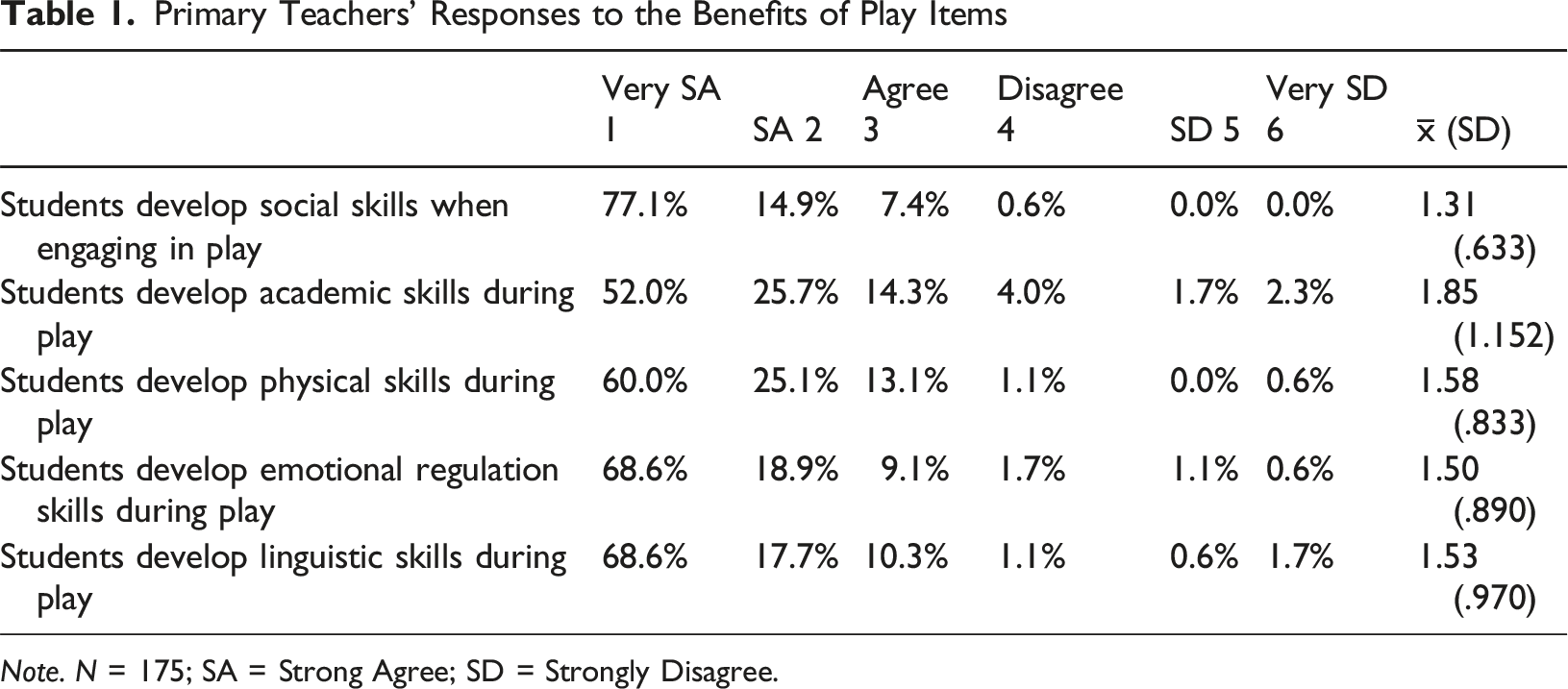
Primary Teachers’ Responses to the Benefits of Play Items
Note. N = 175; SA = Strong Agree; SD = Strongly Disagree.
The respondents consistently highlighted the multiple benefits of play across various developmental domains in their qualitative responses, for example, “Through play children can develop social and cognitive skills, mature emotionally, and gain the self-confidence required to engage in new experiences and environments”. and “[play is] magic… where real learning happens both social and academic” (Participant with 6 years of experience, teaching Year 1–3).
Other respondents in the study linked play primarily with early childhood development, considering it crucial during this stage. One participant stated, “Play is crucial during the early years” (Participant with over 20 years of experience teaching Foundation – Year 4), while another highlighted that “play is vital in early childhood education and can still be useful in the older years”. (Participant with over 20 years of experience, teaching Year 2–Year 6).
Value of Play
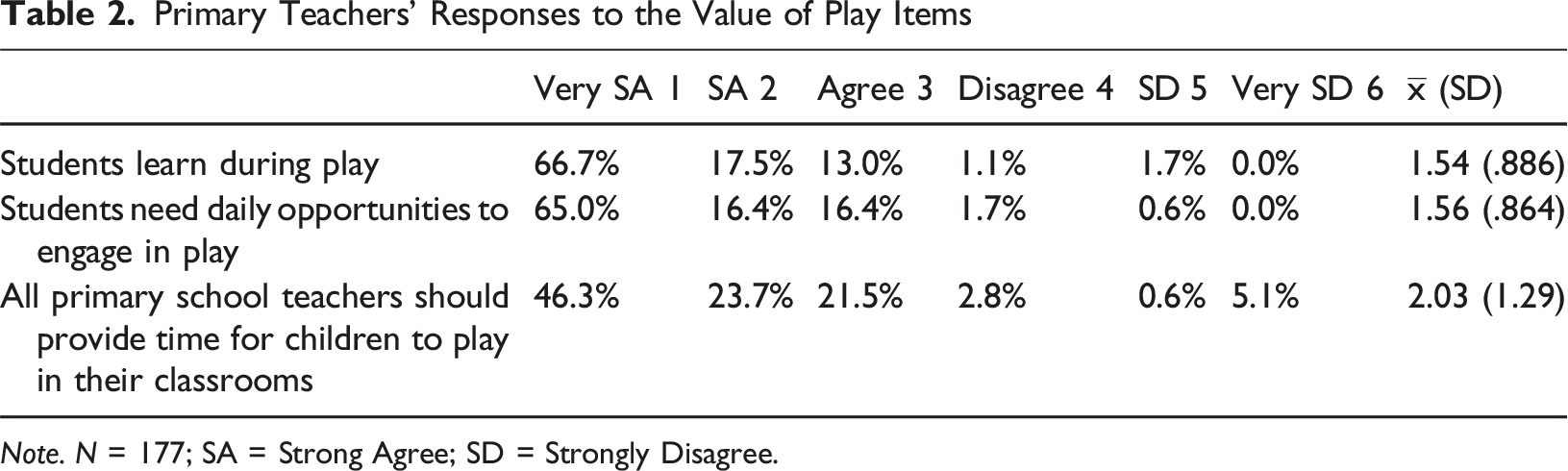
Primary Teachers’ Responses to the Value of Play Items
Note. N = 177; SA = Strong Agree; SD = Strongly Disagree.
Qualitative responses reinforced this pattern, with many describing play as immensely valuable. Responses such as “I deeply value the place of play in education settings” and “play is incredibly important” emphasised its pivotal role. However, the tension between valuing play and implementing was evident, with one early childhood trained teacher noting that while “play is so powerful”, introducing it to primary colleagues has been “challenging – their training doesn’t prepare them for the multifaceted nature of play and how planning for play is less streamlined than a usual lesson might be” (Participant with 9 years of experience teaching Preschool – Year 6).
These reflections support the quantitative data, showcasing both primary school teachers’ appreciation for the value of play and the practical challenges they face in providing time for it in their classrooms.
Beliefs About Play as Pedagogy
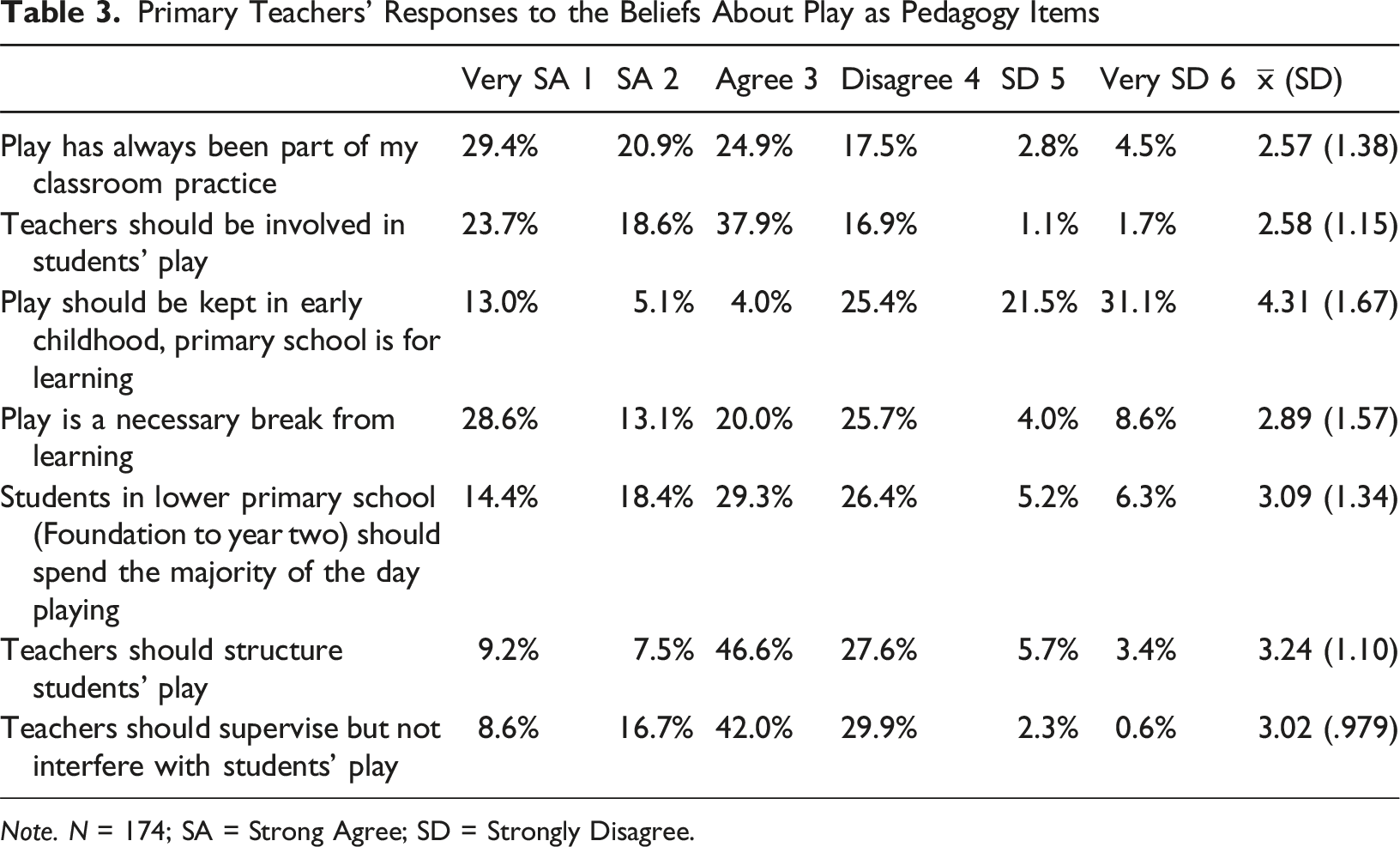
Primary Teachers’ Responses to the Beliefs About Play as Pedagogy Items
Note. N = 174; SA = Strong Agree; SD = Strongly Disagree.
Over 61% of respondents agreed that play is a necessary break from learning. This highlights a possible distinction made by the respondents between play and learning. Further, the open-ended responses revealed diverse perspectives on pedagogical practices among participants. Whilst many acknowledged the importance and value of play, their qualitative responses indicated that implementing play as a meaningful teaching practice is complex and often contentious. Participants’ views ranged from seeing play as incompatible with formal learning to viewing it as an integral part of effective pedagogy: Play is unstructured and while important, I don’t believe it has a place in junior classrooms particularly when they need to be taught biologically secondary skills explicitly. (Participant with 8 years of experience teaching across Foundation -Year 6). Play is something that children do and it’s fun for them, however, should be out of school. School is for learning (Participant with 6 years of experience teaching Year 2–Year 4). Play based education…. is rich and deep, it can be guided and developed to deep understandings of many concepts. It encompasses all learning areas and can help children link concepts, ideas and promote critical thinking (Participant with 8 years of experience teaching across Preschool - Year 1).
However, participants held varied and sometimes conflicting views about these two statements: Teachers should structure students’ play; and Teachers should supervise but not interfere with students’ play. A crosstab analysis considered the responses to these two statements. The 6-point Likert scale was collapsed to represent an agree (scale levels 1–3) or disagree (scale levels 4–6) response for the crosstab. This was undertaken for ease of analysis as the focus was on distinctions between agreeing/disagreeing with statement A but disagreeing/agreeing with statement B.
As reported in Table 4, approximately 40% participants who responded in the agree section of the scale for the statement, teachers should structure students’ play, also responded in the agree section for the statement, teachers should supervise but not interfere with students’ play. This suggests that these teachers feel it is appropriate to scaffold, set up environments for students to play and to supervise, but do not think they should interfere with the students as they play. Such a stance is exemplified by statements such as: Play is incredibly important. It can be a sliding scale between teacher and child initiated, spontaneous and structured (Participant with 4 years of experience teaching Foundation-Year 4). There is a purpose behind it. It is not a free for all there should be some structure in it (Participant with 8 years of experience teaching Foundation – Year 3). Crosstab Analysis of Two Belief Statements: Teachers Should Structure Play Versus Teachers Should Supervise but not Interfere with Students’ Play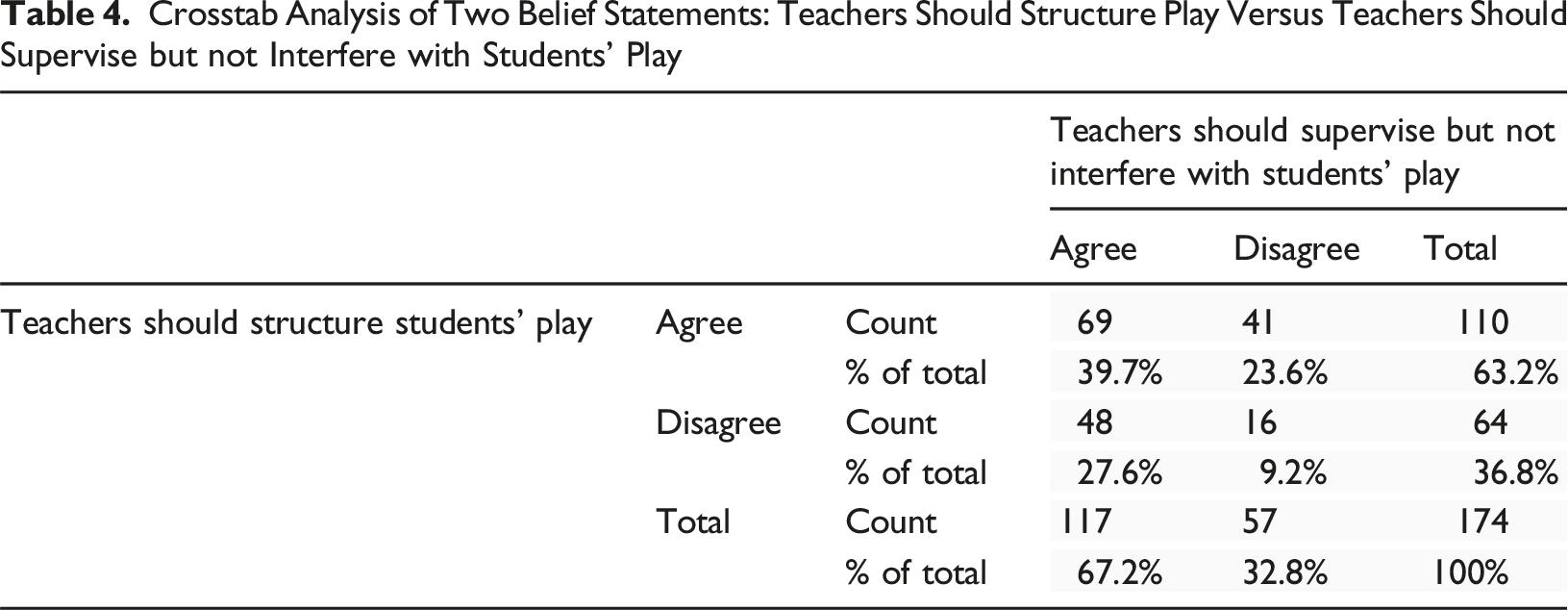
Table 4 also suggests that some participants had opposing beliefs about the two statements, with 23.6% of respondents agreeing that teachers should structure play but disagreeing that they should not interfere, thereby effectively agreeing that they should take an active role in students’ play. The respondents in this group may believe that with duty of care and various classroom/playground management issues there is a certain level of responsibility associated with their role and therefore, the need for structure and management of students’ play is required. An example statement from the open-ended questions suggests some level of facilitation and management by the teacher: Play-based learning must be structured and guided by the teacher; teacher needs to know the student/s well; must have lots of room in the education setting (indoors and outdoors- including in the primary school setting); must have a cognitive, social/emotional, physical development focus; MUST NOT be a free for ALL; must be observed by teacher (Participant with over 20 years of experience teaching Preschool-Year 3).
Similarly, 9.2% of respondents disagreed that teachers should structure students’ play and disagreed that they should not interfere with students’ play. These somewhat contradictory responses suggest that they might not agree with structuring students play but that they should take an active role with students’ play. Conversely, the 27.6% of respondents who disagreed with structuring students’ play but agreed with not interfering indicate a strong stance toward students’ undertaking play as a child-led activity that does not require adult interference but for safety reasons, may need supervision. The following statement highlights this approach: Play is child led, creative, problem solving, experimenting, social, small group, teacher supported and guided, independent, rich learning and autonomous (Participant with 12 years of experience teaching Preschool – Year 2).
Discussion
When viewed through Parker et al.’s (2022) Framework for Quality Learning Through Play, findings of the present study suggests that Australian primary school teachers demonstrate strong alignment with the learning outcomes dimension of the framework, as evident by their clear recognition of play’s developmental benefits across multiple domains. This outcome focused understanding aligns with Parker et al.’s (2022) emphasis on holistic skills development as a core component of quality learning through play. These results also align with international research, such as Zosh et al. (2022) and Yogman et al. (2018), who highlight the powerful nature of play on children’s development. There is a strong consensus among participants regarding the multifaceted benefits of play for children’s development, across all domains – social, emotional, cognitive, physical, and language – respondents consistently expressed high levels of agreement about the positive impact of play.
The relationship between play and academic learning emerges as a key point of tension in teachers’ conceptualisations of play. Despite substantial empirical evidence validating the role of play for enhancing social and emotional skills (Muir et al., 2023; Rodrigues et al., 2022), there is still some debate over the role that play has in learning (Zosh et al., 2022). The findings of this study support this debate, with a slightly lower level of agreement to the statement about play being beneficial for academic learning. In contrast to Pyle and Danniels’ (2017) work that found teachers fit into two distinct groups, those who believe play and learning are dichotomised constructs and the other group who believe play supports academic learning, the present study did not find such dichotomy in the teachers’ responses. A more nuanced perspective among teachers in this sample raises important questions about how beliefs are enacted and how academic outcomes are measured in relation to play within the Australian primary schools. It is worth noting that associations between play and academic learning not previously reported in the literature but present in this study may be due to the potential self-selection of the sample.
This tension between valuing play for social-emotional development while questioning its academic benefits reflects what Parker et al. (2022) describes as challenges in the learning outcomes dimension of the framework. While the framework advocates for a holistic view of outcomes that includes both traditional academic skills and broader developmental domains, our findings suggest that Australian teacher, like their international counterparts, continue to grapple with integrating these perspectives when considering play in formal educational contexts.
Teachers’ challenges in implementing play into the classroom reflect broader international trends in primary education. Similar tensions between valuing play and its practical implementation have been observed in Scotland. A small-scale exploratory study of primary school teachers (Martlew et al., 2011) found that play was peripheral to the learning process in some classrooms, despite its inclusion in the national curriculum. In the United States, researchers reported that teachers often ‘ruled out’ (p. 282) play in classrooms due to various factors, including student behaviour, personal preferences, training, administrative and parental feedback, and district and state mandates (Lynch, 2015). These international perspectives highlight a common challenge, that whilst teachers generally value play, translating this appreciation into consistent, effective pedagogical practices remains a complex issue across international educational contexts. These implementation challenges directly connect to what Parker et al. (2022) identify in their framework as tensions in the facilitation dimension. The framework proposes that effective learning through play requires thoughtful integration of child-led, teacher-guided, and teacher-directed approaches, yet our findings, alongside international research (Bubikova-Moan et al., 2019; Fesseha & Pyle, 2016; Rentzou et al., 2019), reveal that achieving this balance remains difficult for teachers navigating curriculum demands and established educational structures.
These data highlight that play should not be confined to early childhood, aligning with international research (Allee-Herndon & Roberts, 2021; Hesterman, 2019; Whitlock et al., 2023). The range of perspectives on the teacher’s role in structuring and supervising play reflects an ongoing tension between child-led activities and teacher involvement in children’s play, emphasising the complexity of implementing play as a pedagogical tool. Teachers’ varied perspectives on their role in children’s play reveal inherent tensions between educational objectives and preserving authentic play experiences. This work acknowledges complexity in teacher’s recognition the interconnectedness of play and learning. However, the responses suggest that play and play-based learning are terms often used interchangeably despite being conceptualised as distinct concepts in the literature (McLean et al., 2023; Pyle & Danniels, 2017). Play is fundamentally understood to be child-centred (Weisberg et al., 2013). In contrast when teachers utilise play as pedagogy, they are leveraging play as a vehicle to achieve learning outcomes (McLean et al., 2023) and therefore the play is controlled to some extent by the teachers, consequently the child relinquishes some control over the play. It could be argued that within an educational context, play in its truest form cannot occur as it is always constrained by factors within the environment (Gray, 2013). This perspective is supported by Breathnach et al. (2016) who concluded that children are aware of adult-centred agendas, and this influences how children frame activities in the school context. Importantly, the authors indicated that children’s and teachers’ understandings of what constitutes play varies. These data confirm the notion that teacher’s perspectives on play shape the way in which they integrate it into their classroom and the role they take in facilitating play (O’Keeffe & McNally, 2021).
The use of the word “interfere” in the questionnaire’s statements is important, as it typically implies uninvited or unnecessary involvement in a situation. Teachers who disagreed with the interfere statement are essentially indicating that they believe it appropriate to actively engage in children’s play. This perspective aligns with educational approaches that view play as a vehicle for learning, where teachers aim to support, and guide play towards educational outcomes. However, this view contrasts with research on playwork, which emphasises preserving children’s play. From a playwork perspective, adult “interference” can adulterate play by imposing external agendas (Wilson, 2010; King & Newstead, 2022). However, typically within the context of education, teachers view play from an educational lens, aiming to support learning, rather than a lens of pure play where the only external consideration is safeguarding the process of play itself (Wilson, 2010; King & Newstead, 2022). Therefore, teachers who disagreed with the interfere statement may be indicating their belief in the appropriateness of guiding children’s play towards educational outcomes. This reveals a potential misalignment between educational goals and the preservation of child-led, unstructured play.
This tension between educational goals and unstructured play connects to both the facilitation and design dimensions of Parker et al.’s (2022) framework. The framework emphasises that effective design of learning through play experiences requires thoughtful consideration of how to best utilise available resources, including teacher guidance, while maintaining the essential characteristics of playful learning. Our findings suggest that Australian teachers are still navigating how to design learning environments and experiences that balance educational objectives with meaningful play opportunities.
Limitations
Despite the insights gained from this study, several limitations should be acknowledged. Methodological limitations include the self-selection sampling method, which may have attracted participants with a stronger interest in play pedagogies, potentially skewing results toward more positive perspectives on play. The online delivery of the questionnaire also introduced the possibility of non-teacher participation, though demographic screening questions were used to mitigate this risk. Additionally, the cross-sectional nature of the study limits our understanding of how teachers’ conceptualisations might evolve over time or with professional interventions.
Instrument design decisions present both strengths and limitations. The questionnaire items focused specifically on development rather than learning across domains (e.g. Students develop social skills when engaging in play), which may have influenced how teachers conceptualised play’s benefits. The decision to leave the term play undefined within the questionnaire was intentional, as it allowed teachers’ own conceptualisations and understandings of play to emerge naturally, capturing the diversity of meanings that teachers associate with the term. However, this approach may have resulted in varied interpretations of questions, limiting consistency across participants’ responses and representing a limitation in terms of standardisation and comparability.
Data collection limitations centre on the reliance on self-reported data without triangulation through classroom observations or interviews, meaning teachers’ actual implementation of play may differ from their described practices. While this offered valuable insights into personal definitions of play, future research may benefit from multi-method approaches to validate these self-reported perspectives.
Conclusion
This study found that while Australian primary teachers overwhelmingly value play and recognise its developmental benefits, there remains a clear disconnect between their beliefs and classroom practice. The findings have important implications for policy and practice, highlighting the need explicit teaching of playful pedagogical approaches in both initial teacher education courses and targeted professional development. Teachers require support to move beyond valuing play in principle towards confidently leveraging it for academic learning. They suggest a need for clearer, more actionable guidelines on integrating play into primary school curricula.
It’s important to acknowledge that teachers’ perspectives on implementing play in primary classrooms are shaped not only by their personal beliefs and values but also by broader contextual pressures. These may include national policies, cultural attitudes towards play (O’Sullivan & Ring, 2018; Rentzou et al., 2019), curriculum demands, standardised testing requirements, and other systemic constraints (Parker et al., 2022).
The findings of the current study highlight the need for further research exploring the factors influencing the gap between teachers’ valuing play and its practical implementation in primary classrooms. Future research exploring how external factors influence teachers’ integration of play into their pedagogical practices could provide a more comprehensive understanding of the challenges faced in implementing playful pedagogies in primary school settings (Whitlock et al., 2023). Additionally, research investigating how school leaders and system leaders view play in relation to learning could provide valuable insights that inform teacher’s pedagogical approaches in the primary school years.
Footnotes
Acknowledgements
Special thanks are extended to Associate Professor Kym Simoncini for being a critical friend, fellow play advocate, and for her support in initiating the research journey. Lastly, deep appreciation goes out to all the participants who generously gave their time to complete the survey, making this study possible.

Ethical Consideration
Ethics approval was granted by the University of Canberra (HREC - 13441).
Informed Consent
Consent was sought from all participants.
Authors’ Contributions
The first author, a PhD Candidate, conceptualised the study and gained ethics approval with support from the second, third and fourth authors. The first author conducted the study and was the primary writer of this article. The second author assisted with data analysed and contributed to writing the results section. The third author provided guidance throughout the writing process and edited the article. The fourth author reviewed and edited the article.
Funding
The author(s) received no financial support for the research, authorship, and/or publication of this article.
Declaration of Conflicting Interests
The author(s) declared no potential conflicts of interest with respect to the research, authorship, and/or publication of this article.
Data Availability Statement
Data may be requested from the corresponding author.