




Abstract
Research has shown that teachers are at increased risk for compassion fatigue and low career satisfaction. Compassion fatigue may occur as a result of repeated exposure to traumatic experiences of someone in their care. Utilising a sample of 334 Australian teachers, the present study examined the impact of coping styles on compassion fatigue and compassion satisfaction. Regression analyses revealed that avoidant coping strategies were significant predictors of compassion fatigue. Conversely, teachers who utilised problem-focused coping strategies reported lower levels of compassion fatigue and higher levels of compassion satisfaction than teachers who used other types of coping strategies. These results serve to inform future supports and strategies to promote teacher wellbeing and satisfaction.
Keywords
Introduction
Teaching is a rewarding profession that plays an essential role in educating and nurturing the minds of young learners. However, it is also considered one of the most demanding and stressful careers, with teachers facing countless obstacles that leave them feeling overwhelmed and undervalued (Heffernan et al., 2022; Heus & Diekstra, 1999; Schonfeld et al., 2017). Consequently, it is no surprise that teachers are leaving the profession at an alarming rate. A report from the Queensland College of Teachers (2013) estimated that approximately 15% of Australian teachers leave the profession within the first four years of their career. More recent literature by Longmuir et al. (2022) revealed that an estimated 58% of Australian teachers either planned or would like to leave teaching. Similar rates were reported by Kelly et al. (2019) on their sample comprising early-career teachers. Extensive teacher attrition has the potential to lead to a nationwide teacher shortage that would affect all Australians negatively, particularly those in regional and remote areas (Allen et al., 2019). Therefore, it is of the utmost importance that Australian teachers are provided with the support and resources they need to remain, and more importantly, flourish in their roles.
Helping professions are defined as professions or jobs that offer health and education services to individuals and the community, such as counselling, medicine, social work and teaching (American Psychological Association, 2018). Helping professionals face a wide array of challenges, and for teachers, this may relate specifically to efforts rendered to support the academic, social, and emotional development of their students (Heffernan et al., 2022). The workload of teachers is heightened by the growing complexity of learning, behaviour and social needs of young people (Longmuir et al., 2022). Furthermore, addressing the specific needs of students with disabilities or mental health concerns(Mazzer & Rickwood, 2015), and keeping on top of non-teaching related tasks (e.g. meetings and administrative tasks) (Brandenburg et al., 2024) have the potential to negatively affect teachers’ wellbeing. Similarly, Heffernan et al. (2019) discovered that 75% of Australian teachers found their daily tasks ‘unmanageable’, ‘exhausting’, and ‘emotionally taxing’. The ‘emotional labour’ coined by Hargreaves (1998) is therefore an important consideration when investigating teacher attrition and burnout. According to Hargreaves, teaching is an emotional practice, and both teaching and learning involve emotional understanding. Consequently, Hargreaves asserts that teachers’ emotions cannot be separated from professional pursuits.
Concerningly, evidence suggests that the workload burden has grown even greater as a result of the COVID-19 pandemic (Carver-Thomas et al., 2021). With high expectations placed on teachers to eradicate student learning loss from the pandemic, managing increased student mental health and behavioural concerns and providing rigorous instructions that accommodates different learner needs within a classroom, teachers’ workload post-pandemic appears insurmountable, raising concerns about the outlook of teacher wellbeing nationwide (McDonough & Lemon, 2022; Pressley et al., 2024). Adding to the complexity is the finding that many Australian teachers perceive their work as being unappreciated by the general public (Heffernan et al., 2019). Collectively, a heavy workload (Carroll et al., 2022; Heffernan et al., 2022; Manuel et al., 2018) along with a lack of support from leadership (Saloviita & Pakarinen, 2021; Skaalvik & Skaalvik, 2011), are among the most cited reasons as to why teachers leave the profession. Taken together, this evidence suggests that more work needs to be devoted to uncovering the factors that influence career satisfaction in teachers.
Professional quality of life
One facet of career satisfaction and wellbeing that has been understudied in teachers is professional quality of life. Professional quality of life refers to the degree of satisfaction one feels in relation to their work as a helper, and the positive and negative emotions that arise as a result of their work (Stamm, 2010). Professional quality of life comprises two constructs: compassion satisfaction and compassion fatigue (Stamm, 2010). Teachers are often a primary source of support for their students and can thus be seen as frontline workers when it comes to dealing with the stress and traumatic experiences of those they teach (Hupe & Stevenson, 2019). When teachers feel equipped to deal with this responsibility, they may experience compassion satisfaction, which is defined by the experience of pleasure and fulfilment from helping others (Stamm, 2010). However, when teachers feel overwhelmed by exposure to the traumatic experiences of their students (secondary trauma) or are directly exposed to a traumatic event at school (primary trauma), they can experience compassion fatigue (Stamm, 2010). Compassion fatigue is defined as an individual having reduced capacity or interest in being empathic or ‘bearing the suffering of clients’ and is ‘the natural consequent behaviours and emotions resulting from knowing about a traumatising event experienced or suffered by a person’ (Figley, 1995, p. 7).
Compassion fatigue can manifest in a variety of ways, but reduced empathic capacity or interest in helping others is a hallmark of this condition (Figley, 2002; Stamm, 2010). According to Stamm (2010), the symptoms of compassion fatigue draw from two distinct syndromes: burnout and secondary traumatic stress (STS). Burnout is characterised by a state of physical, emotional, and mental exhaustion, and can manifest as feelings of hopelessness, difficulties working effectively, cynicism, and a reduced sense of achievement at work (Maslach & Leiter, 2016). It is theorised that burnout occurs when one perceives that the demands placed upon them exceed the resources they have to cope (McCarthy, 2019), and often results from extended periods of stress and overwork (Stamm, 2010). On the other hand, STS is characterised by feelings of fear, intrusive thoughts and memories, and avoidance (Figley, 2002; Stamm, 2010). STS results from an individual learning about the traumatic experiences of someone in their care and can manifest after a single exposure (Ormiston et al., 2022). Figure 1 illustrates the pathways leading to compassion satisfaction and compassion fatigue in teachers. Illustration of the pathways leading to compassion satisfaction and compassion fatigue following exposure to a primary or secondary trauma.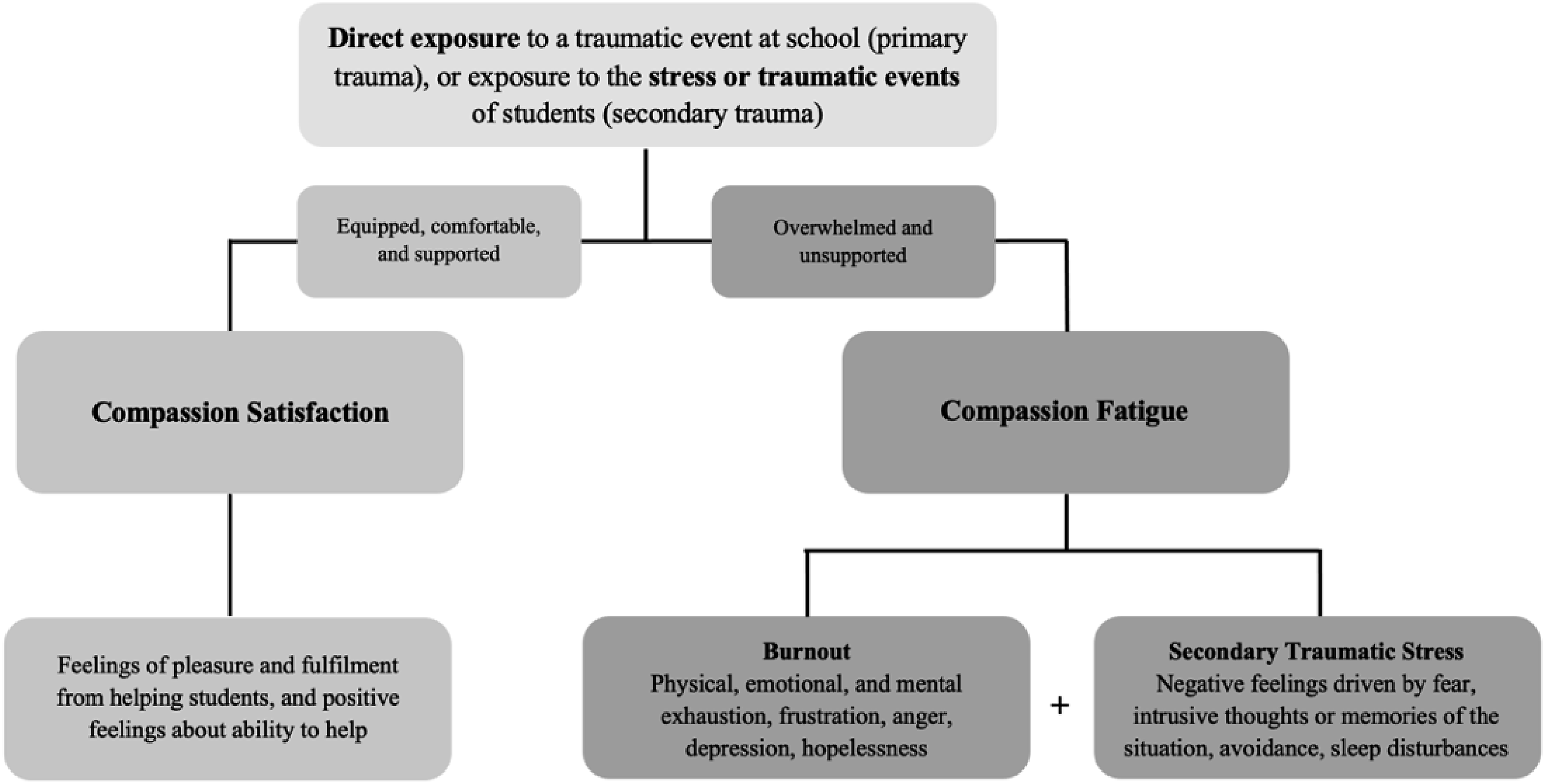
Compassion fatigue and compassion satisfaction in teachers
While compassion fatigue and compassion satisfaction have been studied extensively in healthcare and mental health professionals, they have been understudied in teachers (Hupe & Stevenson, 2019; Ormiston et al., 2022). Preliminary evidence suggests that teachers are particularly vulnerable to compassion fatigue due to the emotional demands of their work, including managing challenging student behaviour, supporting students with complex emotional needs, and working in high-stress environments (McCarthy, 2019; Ormiston et al., 2022). One study from the United States found that elementary, middle, and high school teachers were at high risk for experiencing compassion fatigue (Hupe & Stevenson, 2019). In this study, compassion fatigue was associated with psychological detachment from students, heightened cynicism and low job efficacy. Notably, high compassion fatigue was also linked with negative attitudes towards mandatory reporting of child abuse. It was theorised that this was due to the psychological detachment and elevated cynicism that is characteristic of compassion fatigue; that is, teachers began to believe that no benefit would result from reporting suspected child abuse. Another study found that teachers with low self-efficacy, or beliefs about their own capabilities, were more likely to experience compassion fatigue (Yang, 2021). This suggests that low confidence in one’s ability to teach or help is a potential risk factor. It is also possible that compassion fatigue may diminish one’s teaching self-efficacy. However, the empirical evidence on the role of compassion fatigue on teaching self-efficacy remains scarce and requires further exploration (Yang, 2021).
Several studies have also identified protective factors that promote compassion satisfaction in teachers. An American study found that compassion satisfaction was higher in teachers working in schools that implemented effective trauma-informed care models (Christian-Brandt et al., 2020). Similarly, McMakin et al. (2023) found that trauma-informed approaches, supportive relationships between teachers and leadership, and self-care were associated with high levels of compassion satisfaction and low STS. Overall, more research is required to clarify the factors that contribute to compassion fatigue and satisfaction in teachers. Accordingly, the present research sought to explore factors that might contribute to compassion satisfaction and compassion fatigue, to inform future initiatives to promote teacher wellbeing.
Supporting the professional quality of life of teachers
It is of the utmost importance that the professional quality of life of teachers is protected as there are many ways in which compassion fatigue could be detrimental to their wellbeing. First, high levels of compassion fatigue have been associated with low job satisfaction and poor professional quality of life (Turgoose & Maddox, 2017). Characteristics of compassion fatigue, such as lack of personal fulfilment and perceived ineffectiveness at work, have also been linked to attrition (Christian-Brandt et al., 2020; Howes & Goodman-Delahunty, 2015; Kelly et al., 2019; Mayer et al., 2017). However, compassion fatigue is poorly understood in teachers and has not yet been researched in Australian populations.
If left unchecked, the effects of compassion fatigue may lead experienced and skilled teachers to leave the workforce resulting in students not having access to qualified professionals and the supportive learning environments they create in their classrooms (Nilsen & Gustafsson, 2016). Furthermore, educator attrition resulting from compassion fatigue could place a strain on the wider education system and lead to a nationwide shortage of teachers, affecting all Australians negatively (Allen et al., 2019). Given that compassion fatigue can have negative consequences for the wellbeing of teachers, it is important that more research is devoted to uncovering the risk and protective factors for this phenomenon. Knowledge of these factors will allow tailored support to be offered to teachers, with the aim of increasing professional quality of life and promoting the retention of skilled teachers.
Coping styles
One potential factor that could influence an individual’s risk of experiencing compassion fatigue is the way in which they appraise and respond to stressful life events. According to Lazarus and Folkman’s (1984) transactional theory of stress and coping, individuals are constantly appraising events and stimuli in their environment. When an individual appraises a situation as challenging, threatening, or harmful, they experience emotional distress, resulting in the initiation of coping strategies (Biggs et al., 2017; Lazarus & Folkman, 1984). An individual’s coping style is defined by the ways in which they attempt to manage the emotional distress or address the stressor itself (Biggs et al., 2017).
Two of the most well recognised categories of coping strategies are problem-focused and emotion-focused coping, proposed by Lazarus and Folkman (1984). Problem-focused coping refers to specific strategies that are used in an attempt to directly manage the problem that is causing stress (Antoniou et al., 2013). Examples of problem-focused coping include problem solving to remove the source of the stress and seeking information or assistance to handle the situation (Carroll, 2020). Alternatively, emotion-focused coping refers to methods that attempt to manage the individual’s emotional reaction to the stressor (Antoniou et al., 2013). Examples of emotion-focused coping include the use of humour, self-blame, emotional venting, engaging in positive self-talk, and seeking emotional support from others (Carroll, 2020). Problem-focused coping strategies are often considered the most adaptive for dealing with stressors, as they take an active approach (Cong et al., 2021). While certain emotion-focused strategies like positive self-talk can be helpful, other emotion-focused strategies such as self-blame and emotional venting are generally regarded as maladaptive (Brown et al., 2005).
A third coping style, known as avoidant coping, is commonly included in studies on coping, as avoidance behaviours are not well captured by problem or emotion-focused coping (Lazarus & Folkman, 1984). Individuals who engage in avoidant coping tend to use strategies such as denial, minimisation, and procrastination to escape having to deal with stressful situations (Holahan et al., 2005). Avoidant coping strategies are often referred to as maladaptive, partly due to negative labelling around ‘escape’ and ‘avoidance’ (Biggs et al., 2017). Indeed, evidence indicates that avoidant coping styles are associated with poor outcomes in the long term (Holahan et al., 2005).
The impact of coping styles on compassion fatigue and compassion satisfaction in other helping professions
To date, few peer-reviewed studies have examined the impact of coping styles on compassion fatigue and compassion satisfaction in teachers. One study from Europe investigated the relationship between interpersonal coping strategies and burnout in teachers (Pavlidou et al., 2022). Pavlidou and colleagues found that teachers who used ‘bad practice’ interpersonal coping strategies, such as avoidance and delegation to avoid work, displayed heightened burnout in comparison to those who used ‘good practice’ strategies, such as consultation with colleagues. Another study found an association between emotion-focused coping and burnout in teachers (Boujut et al., 2017). While these studies provided useful information regarding the impact of coping strategies on burnout in teachers, they do not provide insight into the relationship between individual coping styles, compassion fatigue and compassion satisfaction. Though this relationship has been understudied in teachers, there is a substantial body of evidence documenting the links between coping styles, compassion fatigue, and compassion satisfaction in other helping professionals.
Mental health professionals
In their 2008 study, Killian examined the factors contributing to work stress in therapists working with trauma survivors. They found that therapists who utilised avoidant coping styles experienced elevated work stress and burnout, which implies that avoidant coping strategies are not an adaptive way of dealing with job-related stress (Killian, 2008). Jacobson uncovered similar findings in their study on the predictors of compassion fatigue in mental health professionals from the United States (Jacobson, 2012). They investigated the impact of ‘positive’ coping strategies (e.g. seeking emotional support and advice from others, looking for the good in the situation, spirituality), ‘passive’ coping strategies (e.g. using humour, expressing negative feelings, acceptance), and ‘negative’ coping strategies (e.g. giving up, self-blame, use of substances, denial) on compassion fatigue. Jacobson found that the use of negative coping strategies predicted high levels of compassion fatigue in mental health professionals. Conversely, positive coping strategies were associated with reductions in compassion fatigue and elevated compassion satisfaction (Jacobson, 2012). Another study examined the impact of coping strategies on compassion fatigue in genetic counsellors (Udipi et al., 2008). Udipi and colleagues found that coping strategies such as self-blame, giving up, and using religion to cope were all associated with a high propensity for compassion fatigue. Interestingly, seeking social support was also associated with high levels of compassion fatigue. The authors suggested that those who are most vulnerable to compassion fatigue may seek support from the ‘wrong’ people, such as colleagues who are also experiencing compassion fatigue themselves.
Healthcare workers
The relationship between coping styles and compassion fatigue has also been studied in healthcare workers. Zeidner et al. (2013) studied the associations between coping styles and compassion fatigue in health professionals from Israel. They discovered a significant inverse relationship between problem-focused coping and compassion fatigue, such that higher usage of problem-focused coping was associated with low levels of compassion fatigue (Zeidner et al., 2013). Yu et al. (2016) conducted a study on oncology nurses from China and found that avoidant coping strategies were associated with high levels of compassion fatigue (Yu et al., 2016). Further, several studies have established links between emotion-focused coping and elevated compassion fatigue (Meyerson et al., 2022; Yang & Kim, 2016; Zhang et al., 2022). Emotion-focused coping strategies, such as self-blame and emotional venting, have been shown to predict increased levels of burnout and STS in Chinese oncology healthcare professionals (Zhang et al., 2022), Korean nurses (Yang & Kim, 2016), and American dentists (Meyerson et al., 2022).
Taken together, these findings suggest that avoidant and emotion-focused coping styles predict compassion fatigue in other helping professionals. Conversely, it appears that adaptive coping styles, such as problem-focused coping, may act to mitigate compassion fatigue and promote compassion satisfaction.
The present study
To date, no studies have examined the relationships between coping styles, compassion satisfaction, and compassion fatigue in Australian teachers. As previously discussed, links have been established between emotion-focused and avoidant coping styles and heightened compassion fatigue in helping professionals, including therapists and healthcare workers (e.g. Jacobson, 2012; Yu et al., 2016). Therefore, it is reasonable to expect that the same trends may be present in educator populations. It is important that the factors associated with compassion satisfaction and fatigue in teachers are better understood as increased knowledge may allow teachers to be provided with targeted support to enhance their wellbeing and career satisfaction. The present study addressed a gap in the literature and examined the impact of coping styles on compassion satisfaction and fatigue in Australian primary and secondary school teachers.
Aims and hypotheses
The aim of this study was to investigate the impact that coping strategies had on compassion satisfaction and compassion fatigue in Australian teachers. First, this study sought to examine the strength of the relationships between coping styles, compassion satisfaction, and compassion fatigue. The hypotheses for the first aim were as follows: 1. There will be a positive correlation between compassion satisfaction and problem-focused coping, and a negative correlation between compassion satisfaction and emotion-focused and avoidant coping. 2. Compassion fatigue will be negatively correlated with problem-focused coping, and positively correlated with emotion-focused and avoidant coping.
Second, the study aimed to examine the predictive utility of coping styles on compassion satisfaction and compassion fatigue. It is hypothesised that: 3. A positive relationship would be present between problem-focused coping and compassion satisfaction. 4. A negative relationship would be present between emotion-focused coping and compassion satisfaction and similarly between avoidant coping and compassion satisfaction. 5. A negative relationship would be present between problem-focused coping and compassion fatigue. 6. A positive relationship would be present between emotion-focused coping and compassion fatigue and similarly between avoidant coping and compassion fatigue.
Method
Participants
Participants in this study were required to be English-speaking registered teachers in Australia. Voluntary participants were recruited via convenience and snowball sampling methods. The study was advertised to teacher groups on several social media sites, including Facebook and Reddit. Additionally, promotion of the study was done through professional networks and word of mouth. Active recruitment for the study was conducted over four months. In total, 798 responses were received during this time.
The survey responses were subjected to a thorough data filtering process prior to analysis to remove fraudulent and non-eligible responses. Firstly, responses wherein the participant denied being registered as a teacher in Australia were discarded (n = 327). Secondly, responses were discarded if the respondent had not answered all questions (n = 65). Furthermore, it was determined through testing that it would not be feasible to complete the survey accurately in less than 7 minutes, hence responses with a completion time of under 7 minutes were excluded from the analysis (n = 41). Lastly, responses with duplicate IP addresses and completion times were excluded from analysis as it was determined that such responses were likely to be fraudulent (n = 31). In total, 455 responses were discarded, and a final sample of 334 responses were retained for further analysis.
Study design and materials
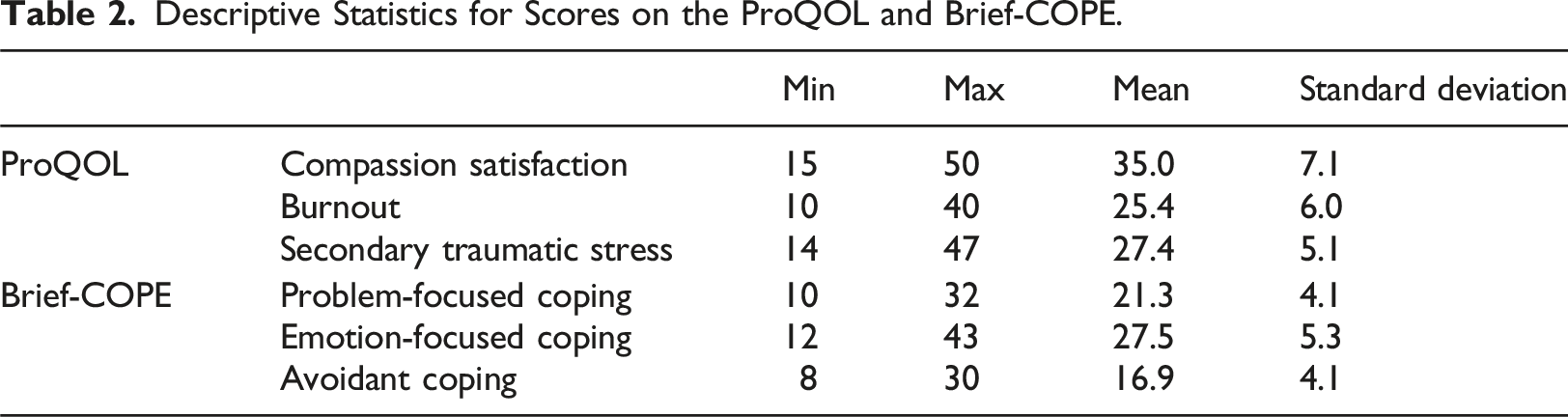
This study utilised a quantitative survey design. The independent variable was coping style, which was divided into three categories: problem-focused, emotion-focused, and avoidant coping style. The Brief-COPE Inventory was used as a measure of coping styles (Carver, 1997). The Brief-COPE is a 28 item Likert-type scale that taps into an individual’s tendency to use a range of coping strategies, such as problem solving, seeking advice, expressing feelings, denial, and substance use. The scale is divided into three subscales: problem-focused coping, emotion-focused coping, and avoidant coping. Participants were required to rate questions such as ‘I’ve been getting emotional support from others’ from one to four (1 = I haven’t been doing this, 2 = a little bit, 3 = a medium amount, 4 = I’ve been doing this a lot). A study using the Brief-COPE on Australian teachers indicated that the internal consistency of the scale was acceptable (Stapleton et al., 2020).
The dependent variable for this study was the Professional Quality of Life (ProQOL) Scale, which measures compassion satisfaction, and the two facets of compassion fatigue: burnout and STS (Stamm, 2010). The ProQOL is a 30 item Likert-type scale that measures the positive and negative effects of helping others who are experiencing trauma. Participants were required to rate questions such as ‘I find it difficult to separate my personal life from my life as a teacher’ from one to five (1 = Never, 2 = Rarely, 3 = Sometimes, 4 = Often, 5 = Very Often). There were 10 questions relating to each subscale, and scores on each of the 10 items were summed to form a total subscale score, ranging from 10 to 50 (scores <22 = low, scores of 23–41 = moderate, scores >42 = high). Items 1, 4, 15, 16, and 29 were reverse scored as suggested in the ProQOL manual (Stamm, 2010). The psychometric properties of the ProQOL have not been studied in teachers. However, a study on the properties of the ProQOL in Australian and Canadian nurses indicated adequate reliability and construct validity of the subscales (Hemsworth et al., 2018).
Data was also collected for the following demographic variables; age, gender, place of work (primary and/or secondary school), role at school, sector of school, location of school (metropolitan/regional/rural), years of teaching experience, and employment status (full-time/part-time/casual/casual relief teacher).
Procedure
Ethics approval for this study was granted by Monash University’s Human Ethics Research Committee (Project ID: 35530). The survey was conducted on the Qualtrics Experience Management (XM) online platform. Participants had the option to pause and resume the survey at a later time. Participants could withdraw from completing the survey at any time by closing their internet browser. Overall, the survey took approximately 10–15 minutes to complete. At the end of the survey, participants were given the option to enter their preferred email address to be entered into a draw to win one of three $50 Amazon e-gift vouchers as compensation. The email addresses were stored separately from the survey responses to ensure anonymity was retained. After the completion of data collection, the researchers randomly selected three participants who had disclosed their email addresses as recipients of the gift vouchers.
Data analysis
The response data was filtered and cleaned using Microsoft Excel (Microsoft, 2023). Data was then analysed using the IBM SPSS Statistics software platform (Version 29). To test the first and second hypotheses, Pearson correlation coefficients were computed between all study variables. Before these analyses were completed, the assumptions of normality, absence of outliers, and linearity were checked. First, skewness and kurtosis values were inspected and found to be within the range that indicates normal distribution.
Histograms and quantile-quantile plots of the variables indicated normal distribution. Boxplots were inspected to identify outliers. There were no outliers on the burnout and compassion fatigue variables. Outliers were detected for STS (n = 6), problem-focused coping (n = 6), emotion-focused coping (n = 5), and avoidant coping (n = 1). In total, 16 outliers were removed, and 318 cases were retained for further analysis. Lastly, scatterplots indicated linearity.
To test the remaining hypotheses, a series of multiple linear regressions were utilised to determine the extent to which coping styles predict compassion satisfaction, burnout, and STS. Before the regression analyses were conducted, the assumptions of linearity, homoscedasticity, independence of errors, independence of independent variables, and normality were evaluated. For all analyses, an alpha level of .05 was used to infer statistical significance.
Results
Descriptive statistics
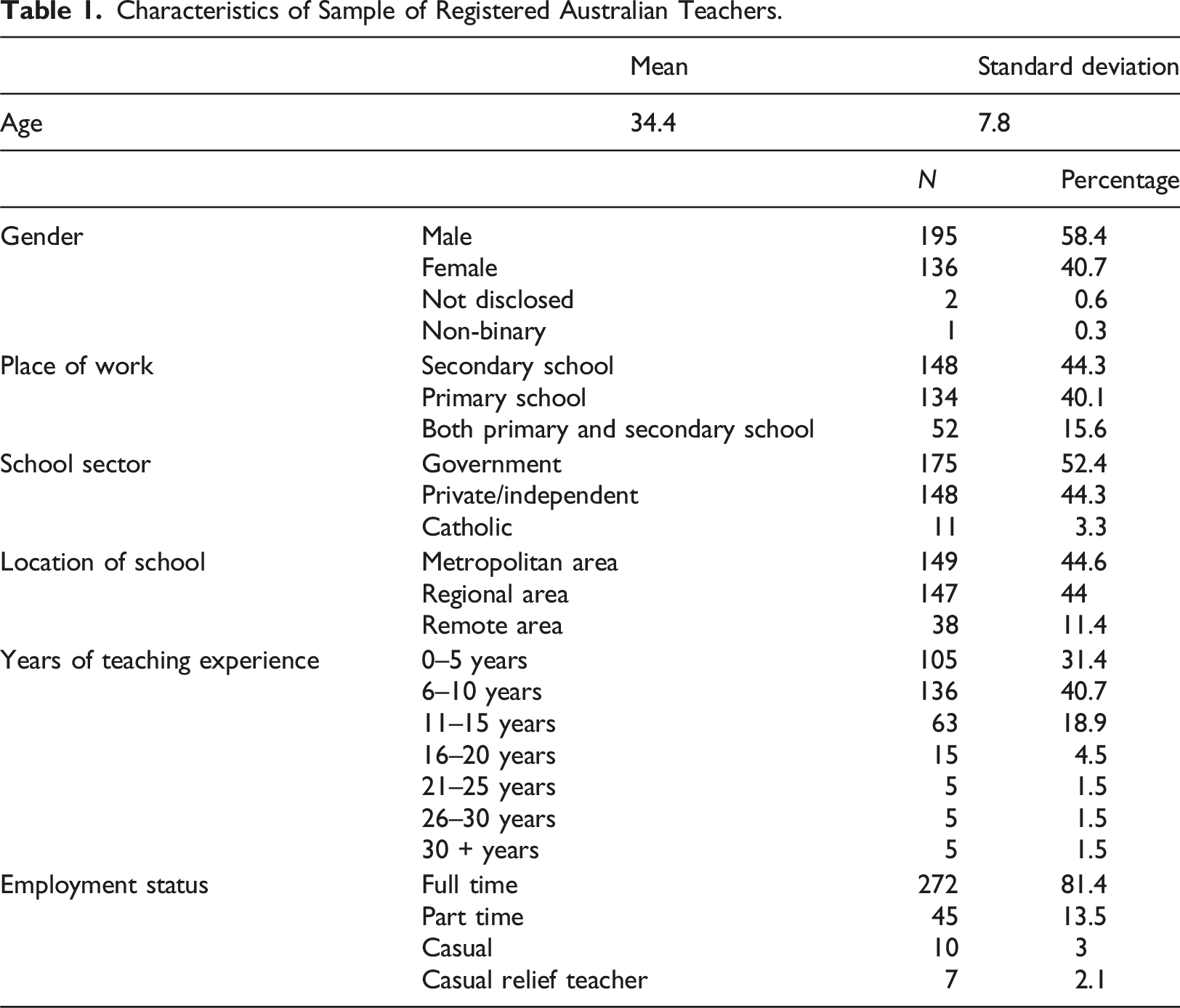
Characteristics of Sample of Registered Australian Teachers.
ProQOL and brief-COPE scores
Descriptive Statistics for Scores on the ProQOL and Brief-COPE.
Pearson correlation
Pearson Correlations for Study Variables.
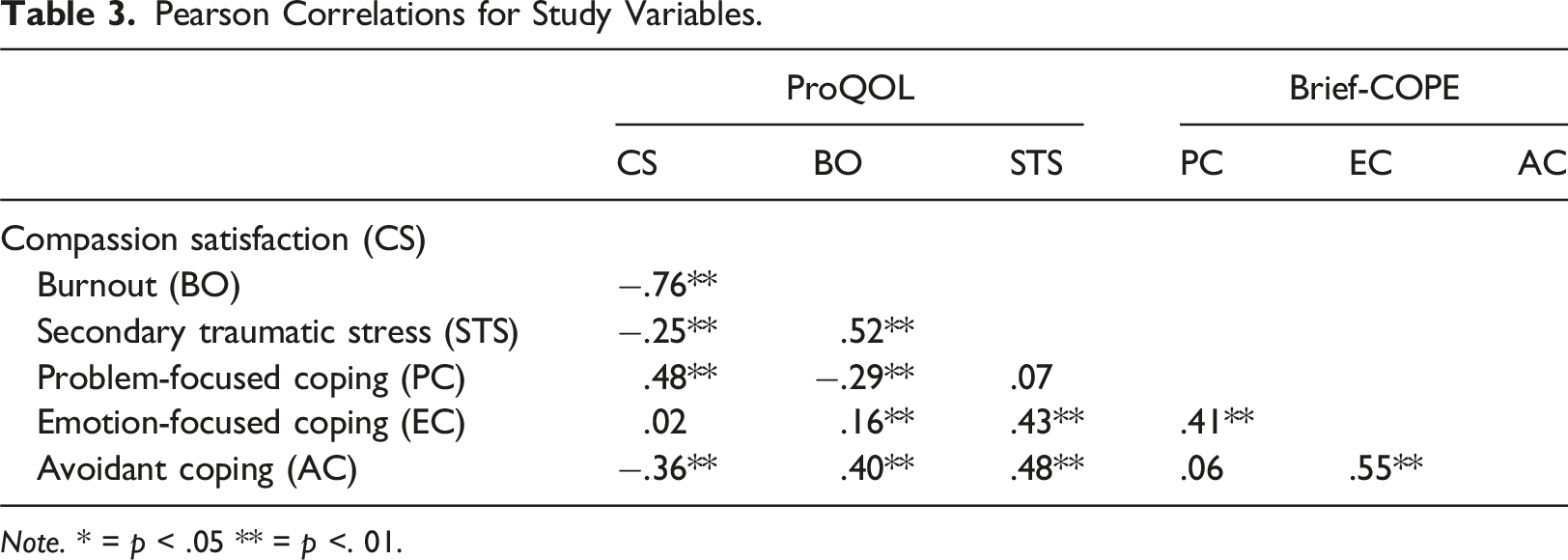
Note. * = p < .05 ** = p <. 01.
Next, the correlations between the independent and dependent variables were analysed. Correlations revealed a positive association, such that, higher levels of compassion satisfaction were associated with higher problem-focused coping. A moderate negative association was found between compassion satisfaction and avoidant coping. The association between compassion satisfaction and emotion-focused coping was not statistically significant. Burnout was found to have a weak negative association with problem-focused coping, such that higher levels of burnout were associated with lower levels of problem-focused coping. Conversely, burnout was found to have a weak positive association with emotion-focused coping, such that higher levels of burnout were associated with higher levels of emotion-focused coping, Moderate positive correlations were found between STS and emotion-focused coping, and STS and avoidant coping. The association between STS and problem-focused coping was not significant.
Multiple linear regression analyses
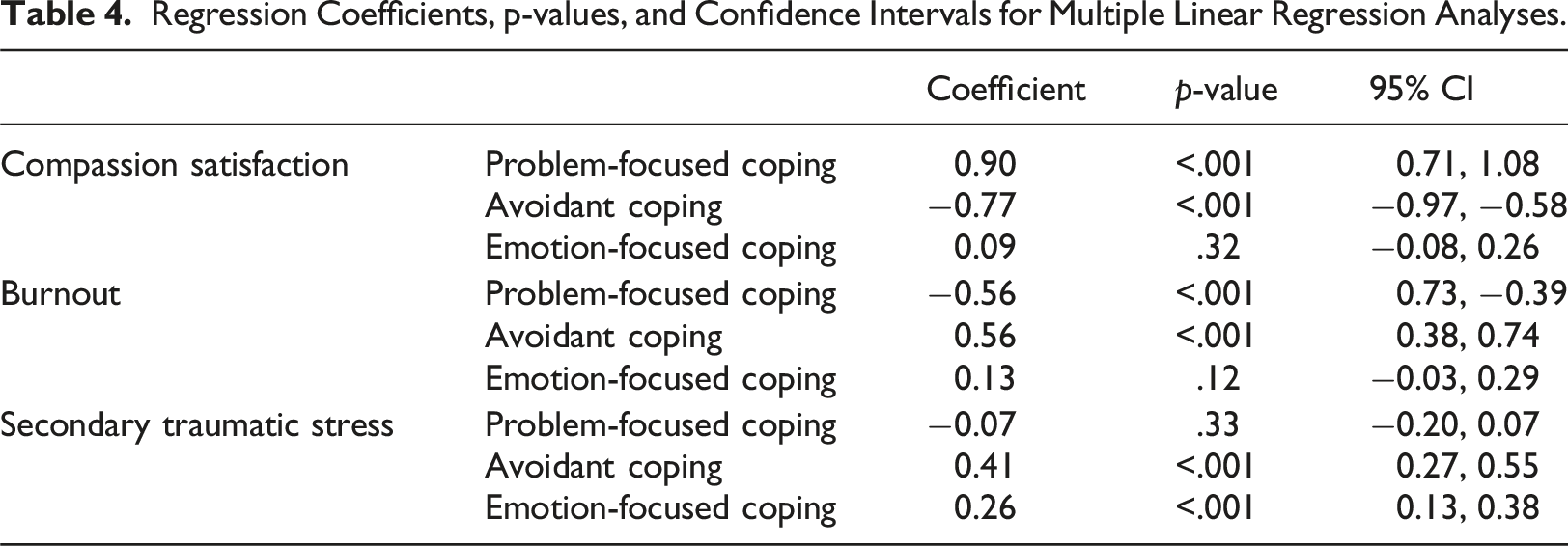
Regression Coefficients, p-values, and Confidence Intervals for Multiple Linear Regression Analyses.
Compassion satisfaction and coping styles
First, a multiple linear regression was run to ascertain how much variance in compassion satisfaction was accounted for by coping styles. The regression was statistically significant, F (3, 314) = 65.01, p < .001. Problem-focused coping was a significant predictor of compassion satisfaction, such that a one unit increase in problem-focused coping was associated with a 0.90 unit increase in compassion satisfaction. Avoidant coping was also a significant predictor of compassion satisfaction, such that a one unit increase in avoidant coping was associated with a −0.77 unit decrease in compassion satisfaction. Emotion-focused coping was not a significant predictor of compassion satisfaction. Overall, the model accounted for 38% of the variance in compassion satisfaction.
Burnout and coping styles
The following section outlines the regression analyses for the subscales that made up compassion fatigue (i.e. burnout and STS). Second, multiple linear regression was conducted to ascertain how much variance in burnout was accounted for by coping styles. The regression was statistically significant, F (3, 314) = 37.38, p < .001. Problem-focused coping was a significant predictor of burnout, such that a one unit increase in problem-focused coping was associated with a −0.56 unit decrease in burnout. Avoidant coping was also a significant predictor of burnout, such that a one unit increase in avoidant coping was associated with a 0.56 unit increase in burnout. Emotion-focused coping was not a significant predictor of burnout. Overall, the model accounted for 26% of the variance in burnout.
STS and coping styles
The multiple linear regression to ascertain the amount of variance in STS accounted for by coping styles was statistically significant, F (3, 314) = 38.32, p < .001. Problem-focused coping was not a significant predictor of STS. Avoidant coping was a significant predictor of STS – a one unit increase in avoidant coping was associated with a 0.41 unit increase in STS score. Additionally, emotion-focused coping was a significant predictor of STS, such that a one unit increase in emotion-focused coping was associated with a 0.26 unit increase in STS. Overall, the model accounted for 27% of the variance in STS.
Discussion
This study was the first to investigate the impact that coping styles have on professional quality of life in Australian teachers. The primary aim was to examine the relationships between problem-focused, emotion-focused, and avoidant coping, and compassion satisfaction and compassion fatigue. In addition, this study aimed to determine the extent to which coping styles predicted compassion satisfaction and compassion fatigue.
Compassion satisfaction and coping styles
Problem focused coping
As predicted, a positive relationship was observed between problem-focused coping and compassion satisfaction. In addition, problem-focused coping was a significant positive predictor of compassion satisfaction such that teachers who utilised problem-focused coping strategies reported higher levels of satisfaction in their work. These findings are consistent with extant literature on the relationship between coping styles and compassion satisfaction in health professionals (Jacobson, 2012; Yeşil & Polat, 2023).
Jacobson (2012) found that mental health professionals who used ‘positive’ coping strategies, such as problem solving and seeking support and advice from others, displayed greater potential for compassion satisfaction. Similarly, Yeşil and Polat (2023) discovered that planning to solve problems and finding the best method of coping was associated with high compassion satisfaction in nurses. It is possible that problem-focused coping strategies promote a sense of purpose and contribution and help teachers to feel more capable of supporting their students, thereby enhancing compassion satisfaction. Research also suggests that teachers who utilise problem-focused coping tend to display more self-efficacy (Boujut et al., 2017; Shen, 2009). Gaining experience dealing with stressors and solving problems as they arise may help cultivate teachers’ appraisal of their ability to teach and support their students. As self-efficacy has been linked to increased compassion satisfaction in teachers (Yang, 2021), it is plausible that self-efficacy may act as a mediating factor in the relationship between problem-focused coping and compassion satisfaction and warrants further exploration in future research.
Avoidant coping
As hypothesised, an inverse relationship was observed between avoidant coping and compassion satisfaction. Teachers who reported high usage of avoidant coping also reported low levels of compassion satisfaction. This finding highlights the negative impact that avoidant coping can have on wellbeing and career satisfaction and has been corroborated by previous literature (Lagos et al., 2022; Thompson et al., 2014). In their study on child life specialists, Lagos et al. (2022) found that avoidant coping strategies, particularly denial and distraction, were associated with reductions in compassion satisfaction. Taken together, the findings suggest that avoidant strategies, such as denial, minimisation, substance use, and avoidance, may not be as effective as problem-focused coping in promoting professional quality of life. When teachers are weighed down by problems that they are avoiding, the satisfaction they gain from teaching and helping their students is likely to be compromised.
Emotion-focused coping
Interestingly, this study did not detect a significant relationship between emotion-focused coping and compassion satisfaction in teachers. Emotion-focused coping was not a negative predictor of compassion satisfaction as initially hypothesised. Previous literature relating to the impact of emotion-focused coping on compassion satisfaction is mixed. On one hand, Lagos et al. (2022) uncovered links between emotion-focused coping strategies, such as self-blame and emotional venting, and low compassion satisfaction in their study on childcare specialists. However, in the same study, coping by gaining emotional support from others was associated with high compassion satisfaction. These findings highlight the possibility that various emotion-focused coping strategies affect compassion satisfaction in different ways. In the present study, emotion-focused coping was examined as a single entity. As a result, the nuances of specific emotion-focused strategies and their impact on compassion satisfaction may have gone undetected.
Compassion fatigue and coping styles
Problem focused coping
Interestingly, the findings of this study suggested that coping styles had varying effects on the two dimensions of compassion fatigue; burnout and STS. Foremost, the results highlighted an inverse relationship between problem-focused coping and burnout in teachers. Problem-focused coping was a significant predictor of burnout, such that teachers who engaged in high levels of problem-focused coping experienced lower levels of burnout. This finding highlights the protective nature of problem-focused coping against burnout and is supported by extant literature (Meyerson et al., 2022; Zeidner et al., 2013). Problem-focused coping involves implementing active strategies to cope with stressors as they arise and would therefore allow teachers to put plans in place to resolve workplace issues that might otherwise increase their risk of developing burnout. This would allow teachers to avoid letting issues build up, escaping a snowball-like effect where a problem that was once small builds upon itself and becomes more significant when left unchecked. Taking active steps such as decreasing workload where possible, taking personal leave, and delegating tasks to reduce load may therefore act to reduce to potential for burnout. As burnout is a phenomenon that builds over time (Stamm, 2010), the protective element of problem-focused coping suggests that teachers should be supported to implement ongoing practical and adaptive workarounds as a way of mitigating burnout.
Conversely, analyses revealed that problem-focused coping was not a significant predictor of STS. STS develops after an individual bears witness to or hears about the traumatic events of others, and as such, the onset of STS can be sudden (Ormiston et al., 2022). When exposed to trauma, there would be no time for teachers to prepare to cope or put problem-focused strategies in place to minimise the effects of STS. Therefore, problem-focused coping may not be an effective strategy for dealing with STS. It is also possible that teachers who have been exposed to a traumatic event may not be in the headspace to problem-solve while dealing with the wave of emotions that accompanies STS (Missouridou, 2017).
Another potential explanation for why problem-focused coping did not predict STS is that teachers may not be aware of the important role that problem-focused coping plays in protecting their own wellbeing when exposed to trauma. Teachers are known to display high levels of altruistic behaviour, or actions that place the welfare of others above the self (Yavuzer et al., 2006). As such, teachers are likely to be proactive when it comes to solving issues involving other people, particularly their students. Therefore, it is possible that teachers are less ready to engage in problem-focused coping when it comes to their own trauma or exposure to trauma, as it may be deemed less important than their students’ needs or other competing demands. This highlights the need for more training to be provided to teachers on dealing with trauma in an active, problem-focused way.
Avoidant coping
A significant positive relationship was observed between burnout and avoidant coping. As expected, avoidant coping was a positive predictor of burnout, such that teachers who reported engaging in high levels of avoidant coping experienced high levels of burnout. Avoidant coping was a significant predictor of STS, such that individuals who had a propensity for avoidant coping strategies reported high levels of STS.
These findings support the extant literature which has established a strong connection between avoidant coping and compassion fatigue (Jacobson, 2012; Killian, 2008; Lagos et al., 2022; Udipi et al., 2008; Yu et al., 2016). A study on compassion fatigue in mental health professionals identified avoidant coping strategies such as giving up, use of substances, and denial as significant risk factors for compassion fatigue (Jacobson, 2012). It is evident that avoidant strategies only exacerbate feelings of burnout and STS and are not effective in helping teachers to cope with the stressors they might encounter.
It has also been theorised that the relationship between avoidant coping and compassion fatigue may be bi-directional (Lagos et al., 2022). It is plausible that high usage of avoidant coping may lead to compassion fatigue. Equally, high levels of compassion fatigue may prompt an individual to use avoidant coping strategies as they do not have the energy to engage in problem-focused or adaptive coping. In summary, avoidant coping has been consistently associated with compassion fatigue, both in the present study and the extant literature. Therefore, future intervention and support should be tailored around educating teachers on more adaptive coping strategies that are proven to be beneficial in managing stress.
Emotion-focused coping
A significant positive correlation was observed between burnout and emotion-focused coping. However, emotion-focused coping was not a significant predictor of burnout in regression analyses. As previously discussed, one possible reason for these insignificant results is that emotion-focused coping was studied as a single construct. Therefore, nuances in the ways that different emotion-focused coping strategies interact with burnout could not be detected. For instance, strategies such as self-blame could exacerbate burnout, whereas leveraging social support could buffer against burnout. Future research would do well to tease apart emotion-focused coping and study the impact of individual strategies on burnout.
Contrastingly, a significant positive relationship was observed between STS and emotion-focused coping. Emotion-focused coping was a positive predictor of STS, with individuals who reported engaging in high usage of emotion-focused coping strategies also reporting high levels of STS. This finding is consistent with past research that has established a positive relationship between emotion-focused coping and compassion fatigue (Boujut et al., 2017; Meyerson et al., 2022; Yang & Kim, 2016; Zhang et al., 2022). In their study on teachers of autistic students, Boujut et al. (2017) found that those who engaged in high levels of emotion-focused coping were more burnt out. It was theorised that this relationship was driven by the lack of self-efficacy displayed by individuals who utilised emotion-focused coping strategies such as self-blame, criticism, and emotional venting. Similarly, previous studies have established emotion-focused coping as a predictor of compassion fatigue in healthcare professionals, such as nurses (Yang & Kim, 2016), oncology healthcare workers (Zhang et al., 2022), and dentists (Meyerson et al., 2022). In particular, strategies such as self-blame and venting were found to have the strongest links with compassion fatigue (Zhang et al., 2022).
Overall, this finding suggests that teachers may be implementing maladaptive emotion-focused coping strategies in response to trauma, such as emotional venting and self-blame. This emphasises the need for education to be provided to teachers on more adaptive emotion-focused coping strategies. For instance, research shows that debriefing with a colleague who understands the nuances and challenges of the job is appreciated by teachers (Hail et al., 2011). Therefore, it may be beneficial if more resources were allocated to providing increased supervision or mentorship from experienced teachers that allows teachers to seek support in a constructive and structured way. Similiar to clinical supervision that is regularly undertaken by mental health professionals, supervision or mentorship support for teachers would do well to involve time devoted to self-reflection, collegial advice, and guided problem solving. Implementing structured support could help mitigate the effects of compassion fatigue and promote compassion satisfaction and adaptive coping in teachers.
Limitations and future research directives
There are several limitations to the current study that should be acknowledged. First, this study implemented convenience sampling methods to recruit participants. As such, advertising for the study may have attracted teachers who feel passionately about the topic. Therefore, the experiences of those who are coping well or uninterested in the topic may not have been captured. Second, this study utilised a cross-sectional design, which does not allow interpretation of causal relationships between variables over time. Future research would do well to study the ways in which coping strategies and professional quality of life change across the career stages of teachers (e.g. early or mid-career teachers). This would allow for better understanding of the factors that influence professional quality of life and enable identification of career stages in which teachers are particularly vulnerable to compassion fatigue. Lastly, the present study did not take extraneous variables that may influence the relationship between coping strategies and professional quality of life into account. For instance, other factors such as workplace support, leadership attitudes, self-efficacy, and personality traits may also play a role in this relationship. Future research would benefit from examining these factors to enable a more nuanced understanding of risk and protective factors associated with compassion fatigue.
Implications and conclusion
Teachers experience a multitude of challenges that can result in decreased professional quality of life and career satisfaction, ultimately causing them to leave the profession. This study extends upon current literature by examining the impact of coping styles on professional quality of life in Australian teachers. The findings highlighted several protective and risk factors for compassion fatigue and compassion satisfaction in teachers, providing insights into how the coping strategies utilised by teachers impact their career satisfaction. Avoidant coping was identified as a consistent predictor of compassion fatigue. Conversely, problem-focused coping was found to be a predictor of compassion satisfaction. The findings for emotion-focused coping were mixed; emotion-focused coping predicted STS, but not burnout. Importantly, the knowledge imparted by this study has the potential to inform targeted intervention and support for teachers to help them feel fulfilled and satisfied in their roles, and in turn assist with teacher retention. Where professional development (PDs) is concerned, teachers report greater benefits and impact when they can exercise professional agency in selecting PDs (McChesney & Aldridge, 2021). Hence, targeted PDs that cater to the varying and diverse needs of teachers within a school community could be one possible way to ensure teachers are supported, and in turn, help buffer against compassion fatigue and promote compassion satisfaction. Consequently, teachers may be less likely to exit from the profession prematurely. Future research could focus on investigating the ways in which coping styles and professional quality of life evolve over time. The inclusion of other variables such as school leadership, self-efficacy, and personality traits may also shed important insights on the relationship between coping, compassion satisfaction, and compassion fatigue.
Footnotes
Acknowledgements
The authors wish to express our gratitude to all who participated in this research and for the time taken in completing the survey.
Author contributions
Pamela Patrick (PP): Conceptualisation, project administration, supervision, review and editing. Elizabeth Bensley (EB): Data collection, results analysis, writing – original draft.
Declaration of conflicting interests
The author(s) declared no potential conflicts of interest with respect to the research, authorship, and/or publication of this article.
Funding
The author(s) received no financial support for the research, authorship, and/or publication of this article.

Data availability statement
The dataset for this study is available upon request.