



Abstract
The widespread move to online schooling during the COVID-19 crisis meant that parents played a significant role in educating their children. However, there is a paucity of research relating to parents’ perceptions of online and remote learning designs. This study used multiple regression analyses and thematic analysis of parent survey responses during COVID-19 to examine which online tasks reduced parental stress and student difficulty, increased student autonomy and learning, and increased parental satisfaction. A key finding was that digital creativity tasks were related to lower levels of parental stress, lower student difficulty, greater student autonomy and greater parent satisfaction with school support. Parents also preferred more web-conferencing lessons and offline tactile activities, and less digital worksheets. These findings have implications for educator-parent collaboration and for remote learning broadly.
Introduction
The COVID-19 pandemic has been the largest disruption to schooling in history, affecting nearly 1.6 billion learners in more than 190 countries (United Nations, 2020). Internationally, populations went into home-based ‘lockdown’ to avoid transmission of the COVID-19 coronavirus. Schools typically have offered online education, but with little time or professional learning to underpin the transition (Clinton, 2020). The pervasiveness of disruption caused by schooling at home, and the need to create more flexible and effective online learning for students in future, means that understanding the impact of schooling at home is a global imperative (Yan et al., 2021).
One consequence of schooling at home during the pandemic was the drastically increased involvement of many parents in the education of their children. Prior to the pandemic, children’s learning could be reasonably absolved to schools. During lockdown, however, parents – who in many cases were also working from home – became responsible for overseeing the learning of their children (Adedoyin & Soykan, 2020). Being involved in the front-line delivery of home curricula was a significant cause of stress for many parents (Aguiar et al., 2021), and some children also had difficulty learning from home (Yan et al., 2021). Many children struggled to complete tasks autonomously (Niemi & Kousa, 2020), for example, while ‘learning loss’ also emerged in some jurisdictions (e.g. Tomasik et al., 2021). Such trends are presumably influenced either by the sorts of learning designs being offered by schools, the amount of parental support required to implement these designs, or both: however, there is little evidence to indicate the sorts of learning designs parents prefer.
Following the COVID-19 pandemic, some parents now have far greater involvement and insight into their children’s learning. Given questions as to whether learning will ever return to the rigid pre-pandemic modes of teaching, where almost all school-based learning takes place in face-to-face classrooms (United Nations, 2020), we aimed to identify the specific tasks within online and remote learning designs that were preferable for parents who were schooling their children at home.
Background and literature review
Challenges of schooling at home
Towards the beginning of the COVID-19 pandemic, Hodges et al. (2020) helpfully distinguished between everyday online learning and ‘emergency remote teaching’. In contrast to experiences that are planned from the beginning to be online, emergency remote teaching includes ‘the use of fully remote teaching solutions for instruction or education that would otherwise be delivered face-to-face or as blended or hybrid courses and that will return to that format once the crisis or emergency has abated’ (Hodges et al., 2020, p. 6). For this reason, we use the term ‘schooling at home’ to describe the pandemic requirement that parents educate their children at home, rather than the term ‘home schooling’ where parents educate their children at home by choice. This accords with nomenclature used by Flynn et al. (2021).
Throughout the pandemic, a top priority amongst educators was to ensure the continuity of academic learning for students (Reimers et al., 2020). There were nonetheless numerous challenges encountered by parents, students, teachers and schools. Socio-economic and resourcing differences meant that some families did not have access to a sufficient number of devices, to reliable internet or even to space to undertake schooling at home (Adedoyin & Soykan, 2020). Some parents had little time available to support their children to school from home (Reimers et al., 2020), while some parents and children experienced pandemic-related anxiety (Adedoyin & Soykan, 2020). Perhaps most crucially, schools and teachers were fundamentally challenged with how to effectively design online learning and curricula to best support children and families during schooling at home (Reimers et al., 2020; United Nations, 2020). Guides to support online schooling at home quickly surfaced (e.g. Bates, 2020; Reimers et al., 2020; Vanourek, 2020). However, these guides were often not based on any sort of systematic analysis of empirical evidence relating to what parents or children found most helpful to support remote and online learning.
Technology use and learning design to support schooling at home
Preparing teachers to teach online requires sustained professional development (United Nations, 2020; Vanourek, 2020). To understand how their teaching strategies need to vary according to the content being taught, the technologies they are using and the context in which they are teaching, teachers must develop Technology-Pedagogy-and-Content-Knowledge (TPACK; Koehler et al., 2013). They also must learn to set appropriate digital tasks (Bonal & González, 2020) and combine and sequence online learning tasks into effective learning designs (Dalziel et al., 2015). According to Programme for International Student Assessment (PISA) data (OECD, 2018), principals believe two in three teachers at their schools have the necessary technical and pedagogical skills effectively to integrate digital devices in instruction.
The Learning Design and Instructional Design fields provide an extensive knowledge base from which to draw evidence about how different pedagogical strategies and technologies can be used to design effective online learning. Online teacher presence coupled with inclusive and interactive design, content and delivery has been shown to increase engagement in universities (Stone & Springer, 2019), for example, while asynchronous tools afford flexibility and reflection and synchronous tools enable real-time interactions (Rapanta et al., 2020). Yet, because school education has traditionally taken place face-to-face, there has been less opportunity to study the best online learning designs for school-aged students. Further, while learning design research emphasises the importance of all stakeholders (Dalziel et al., 2015), the perspectives of parents have largely been ignored in pre-pandemic analyses.
Perhaps because teachers have approached online and emergency remote learning with a range of existing skills and training, a wide range of technologies were used to support schooling at home during COVID-19. These included web platforms, messaging tools, video/web-conferencing, publicly available online videos, teacher-recorded videos, online documents and resources (Scarpellini et al., 2021). Opportunities also differed by educational system and class: in one documented study, for example, students used web-conferencing such as Google Meet, learning management systems such as Canvas and composition tools such as Google Docs (Yan, 2021). In another, teachers invited their students to a virtual classroom every morning using Teams, Zoom, Google Classroom or similar platforms, and frequently used online polling tools like Kahoot (Niemi & Kousa, 2020).
Context can also influence the sorts of technologies that are used. For instance, in rural Australia, access to the Internet can be variable (Halsey, 2018). This made it difficult for some teachers and students in regional areas to utilise online technologies during remote learning (Fray et al., 2022). The variety of contexts and tools across studies has made it difficult to determine how best to support at-home engagement and learning during emergency remote teaching or online learning more generally. In a study by Yates et al. (2021), high school students in New Zealand indicated a preference for learning from home via multimedia resources (particularly videos that could be accessed multiple times), class discussions and gamification. However, evidence relating to best uses of technology for primary school students during schooling at home is scarce, as is evidence relating to parent preferences. Understanding parent preferences is critical, as emergency remote teaching and schooling from home impacted greatly on so many parents, and they are uniquely situated to provide first-hand insights into how different learning designs impacted on them and their children.
Lenses for examining parent preferences towards lockdown learning designs
Five main themes are identifiable in existing research literature relating to parents’ experiences during COVID-19: parental stress, child learning difficulty, independent learning, maximising learning and overall satisfaction with schools. Each provides a specific lens for evaluating learning designs offered by teachers and schools during schooling at home, with relevant literature summarised below.
Parent stress levels
Supporting children’s schooling at home during the pandemic was a challenging endeavour. In the USA, 71% of parents of school-aged children felt that managing remote learning was a significant source of stress (American Psychological Association, 2020). Parents who experienced difficulties supervising their children’s learning were significantly more stressed during the pandemic than parents who were not (Spinelli et al., 2020). Keeping younger children busy at home was a particularly challenging undertaking for people trying to maintain employment or residing in low-income and crowded households (Cluver et al., 2020). Perhaps not surprisingly, many have reported increased exhaustion, burnout and emotional distancing from their children (Aguiar et al., 2021).
Student difficulty
Beyond ICT and space issues, there are several other recognised causes of student difficulty when schooling at home during COVID-19. One was the limited opportunity for peer and teacher interaction, collaboration and feedback (Karakaya, 2021; Niemi & Kousa, 2020) with implications for connectedness and engagement. Increased workload was also challenging for some students (Yan et al., 2021), with teachers not appearing to fully apprehend this load (Niemi & Kousa, 2020). Finally, student engagement decreased over time (Flynn et al., 2021). In one study, high school students reported ‘motivation’ as the hardest part of learning at home (Yates et al., 2021) and in another, students reported disengagement caused by technical difficulties and poor experiences with online learning platforms (Yan et al., 2021). While parental involvement (Mohan et al., 2020) and teachers collaborative and interactive teaching strategies (Devitt et al., 2020) have been shown to help with online engagement, they were not sufficient to arrest these trends.
Student independent learning
Parent stress and student difficulty may each be reduced by learning designs that enable children to learn more independently. Teacher guidance and ‘micro-scaffolding’ (Rapanta et al., 2020, p. 928) during online learning was substantially less than can be provided during face-to-face classes, meaning children may need the autonomy to resolve issues themselves or seek parental support (Sievertsen & Burgess, 2020). Even senior high school students indicate that distance learning during the COVID-19 pandemic required much more self-discipline than face-to-face learning (Niemi & Kousa, 2020). While autonomy-supportive parenting may help students to develop independent learning capabilities (Neubauer et al., 2021), specific learning designs that enable autonomous learning for all students are likely to require careful learning design by teachers (Rapanta et al., 2020). To date, there has been little research addressing this need.
Amount students learn
A fourth parental concern during schooling at home is learning loss. Kwakye and Kibort-Crocker (2021) note the negative impact of remote learning on COVID-19 on high school completion and elementary school progression. This was widespread loss of learning in the UK (Ofsted, 2020), while in Switzerland, learning from home reduced learning and caused greater variance among primary school students specifically (Tomasik et al., 2021). In Australia, although schooling at home did not negatively impact on Year 3 and 4 primary school students’ performance overall, students from lower socio-economic backgrounds achieved less growth in Mathematics (Gore et al., 2021).
Satisfaction with school support
There have been mixed findings regarding parental satisfaction with schools during COVID-19, with some parents claiming that the continuity of children’s learning and support was inadequate (Devitt et al., 2020; Kelly et al., 2020) and others claiming it was disorganised (Scarpellini et al., 2021). Given limited research to date, however, we suggest that the specific learning designs provided by schools and teachers during schooling at home are likely to be associated with parent satisfaction with schooling at home.
Methodology
Context
This study sought to understand the experiences of parents who were undertaking schooling at home in Australia during COVID-19 and their perceptions of online learning designs offered by their children’s schools. In Australia, each state and territory governs its own education and health systems, with whole-state lockdowns depending on the prevalence and spread of COVID-19 cases and individualised schooling at home imposed if a student contracted COVID-19 outside of this period. Essential services workers such as nurses and police officers could elect to send their children to school if they were unable to supervise schooling at home. This meant that there was considerable variance in the frequency and duration of online and remote learning, depending on the location and circumstances of individual families. In terms of technology to support online learning from home, Australian data from PISA 2018 indicates that 88% of 15-year-olds have a quiet place to study, 94% have computer access and 98% have Internet access, suggesting that Australia has well-developed technological infrastructure to support remote online learning (OECD, 2018).
Data collection and participants
An online questionnaire was designed using the Qualtrics XM platform. The questionnaire, taking 5–10 min to complete, was opened for parents to complete during August and October 2021, during Australia’s second major lockdown period. Conducting the survey during the second year of the pandemic meant that schools and teachers had had considerable opportunity to consider the sorts of learning designs that they provided for students who were schooling at home. Similarly, parents had ample experience of supervising schooling at home. Contributions were anonymous, and all respondents were offered the opportunity to win a laptop or one of ten USD$50 gift cards. The link to the survey was distributed via emails to school Parents and Citizens Associations, list-serves, social media (e.g. Twitter, LinkedIn, Facebook) and traditional media.
Exclusion criteria were used to remove incomplete or erroneous responses. Responses were also removed if completion took less than 180 s, if responses did not relate to schooling in Australia, if there was no indication of how many weeks parents had schooled their children from home or if parents did not know how much time their child spent on different tasks during schooling at home.
The final sample included 351 parents (92% female, 7% male, 1% non-binary or undisclosed). Participants worked 28 h a week on average and were schooling 1–4 children at home. For ease of completion, participants were asked to pick one child that they were schooling from home and report on their experiences with schooling that target child. There were 148 (43%) children between Kindergarten/Prep and Year 2, 135 (39%) between Years 3 and 6, 45 (13%) between Years 7 and 9 and 20 (6%) between Years 10 and 12. Children ranged in age from 5 to 18 (54% male, 44% female, 2% non-binary or non-disclosed). Parents spent an average of 11.3 h schooling their child from home each week, and another adult in the household spent an additional 4 h. At the time of completing the questionnaire, parents had spent an average of 17 weeks schooling their child from home across multiple lockdowns (from 1.5 weeks to 50 weeks). Over 79% of children were attending public schools, with 14% from private schools and 7% other. Among those schools, 79% of them were reported as being from metropolitan/city areas whereas 21% were from regional or remote areas.
Instrument
The first two sections of the questionnaire (see Appendix A) collected parent demographics (e.g. age, time spent working at home) and child demographics (e.g. school year, gender, type of school).
The third section asked about schooling at home. Parents provided an estimate of the time in minutes that the child typically spent on ten different types of schooling-related tasks (web-conferencing with a teacher, paper-based activities, digital worksheets, offline tactile activities, other online tasks, online learning games, reading online resources, digital creativity tasks, watching public-domain videos, watching teacher-created videos, other activities). Examples of each type of task were provided in the survey instrument, to promote clarity of interpretation.
Parents then rated their experiences of schooling at home and perceptions of child learning. Experiences of schooling at home were rated on a 6-point Likert scale where 0 = ‘Strongly Disagree’ and 5 = ‘Strongly Agree’: (1) Schooling at home has been stressful for me (2) Schooling at home has been difficult for my child (3) My child is able to learn independently using technology (4) I am satisfied with the home schooling support being offered by my child’s school
Perceptions of child learning were rated by asking parents whether schooling at home led to their child learning less, more or the same as when they were at school. If parents responded more or less, they were then asked to estimate how much more or less they felt their child learnt when schooling at home compared to learning at school. Finally, parents were asked three open-ended questions about the aspects of schooling at home that were most stressful for them and difficult for their child, any benefits of schooling at home and what they would most like to change about schooling from home.
Data analysis
SPSS Statistics Version 25 was used to conduct all statistical analysis. Initially, descriptive statistics were produced that revealed the average amount of time per day that children spent on each of the ten task types. The means and standard deviations of responses to the four core Likert scale items (relating to parent stress levels, children’s difficulty, children’s autonomy and parent satisfaction with school) were then examined and compared. Following this, five multiple regression analyses were conducted to investigate how children’s time spent on different at home activities related to each of five dependent variables: self-reported stress, child difficulty, child independence and satisfaction with the school, as rated on the 5-point experiences scale for schooling at home, and perceptions of child learning at home, measured relative to learning at school. Significance levels of both .05 and .01 have been included, to enable interpretation with a Bonferroni correction for the five regressions that were conducted. Supplementary regression analyses were conducted for specific year groups (K-2, 3–6, 7–9, 10–12) to examine age-related effects.
Participants’ responses to the three open-ended qualitative questions were coded in NVivo 12 Plus to capture parents’ explanations of their perspectives of schooling at home. One member of the research team analysed all the open-ended responses sentence by sentence to identify emergent codes and to group them into themes (Braun & Clarke, 2006; Williams & Moser, 2019). Next, all members of the research team reviewed the codes and themes against the relevant parent explanations to verifying their applicability. Finally, illustrative quotes were selected.
Reporting of results
Quantitative results are reported first (descriptive statistics, regression analyses, post-hoc analysis by age groups), to provide an indication of effects that were observed within the data. This is followed by reporting of the qualitative data, with open-ended responses able to provide reasons for the quantitative effects that were observed. Pseudonyms are not used in reporting of qualitative results, as there was not more than one quote from any one participant. Interpretation of results with respect to the literature is deferred to the Discussion section.
Results
Descriptive statistics
Time allocated to ten different schooling-related activities at home (n = 351).
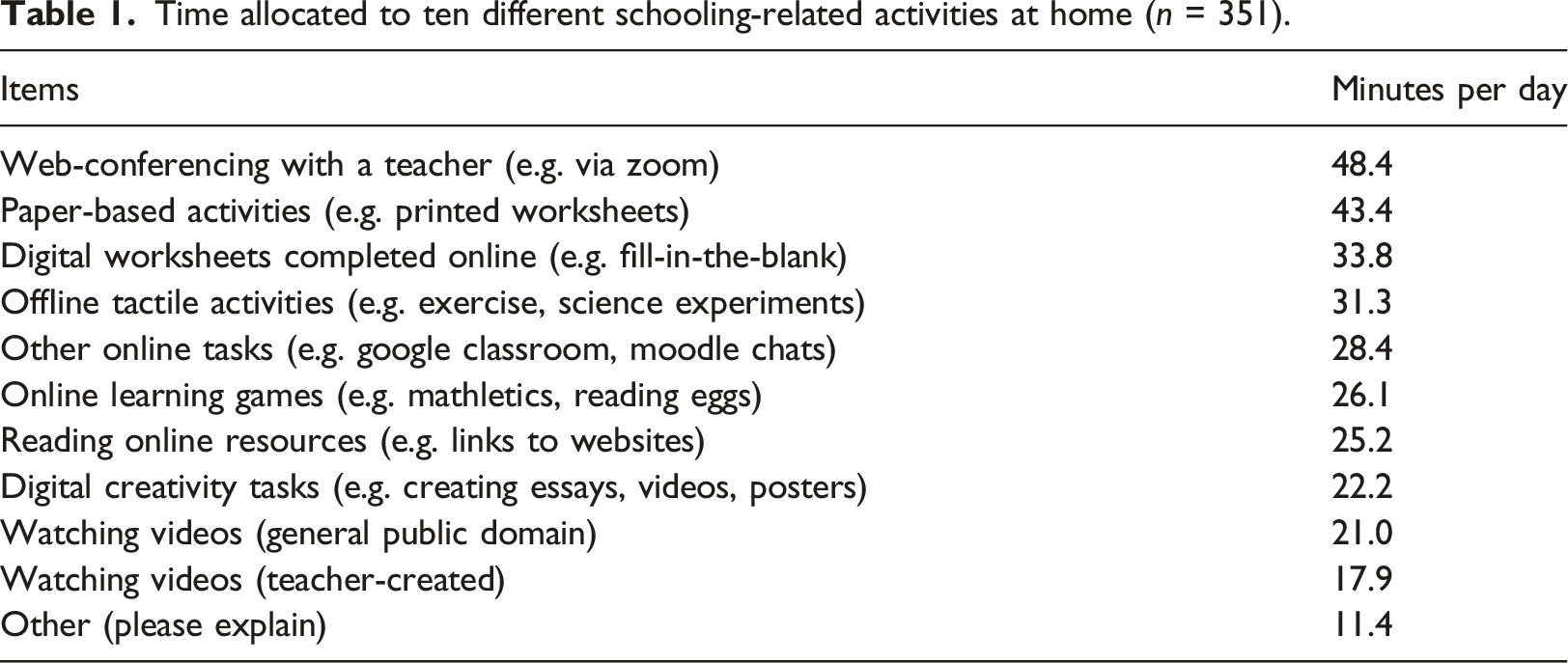
Figure 1 shows parents’ perceptions of schooling at home. Parents generally agreed that schooling at home had been stressful for themselves (M = 3.92/5, SD = 1.38) and difficult for their child (M = 3.63/5, SD = 1.47). Parents were somewhat satisfied with the support being offered by the schools (M = 2.97/5, SD = 1.51), although they were divided over whether their child was able to learn independently with technology (M = 2.50/5, SD = 1.65). Skewness and kurtosis indices ranged from −1.37 to −.12 and −1.22 to 1.15, respectively, indicating acceptable normality (Kline, 2015). Parent likert scale responses relating to their stress, student difficulty, student autonomy and satisfaction with school.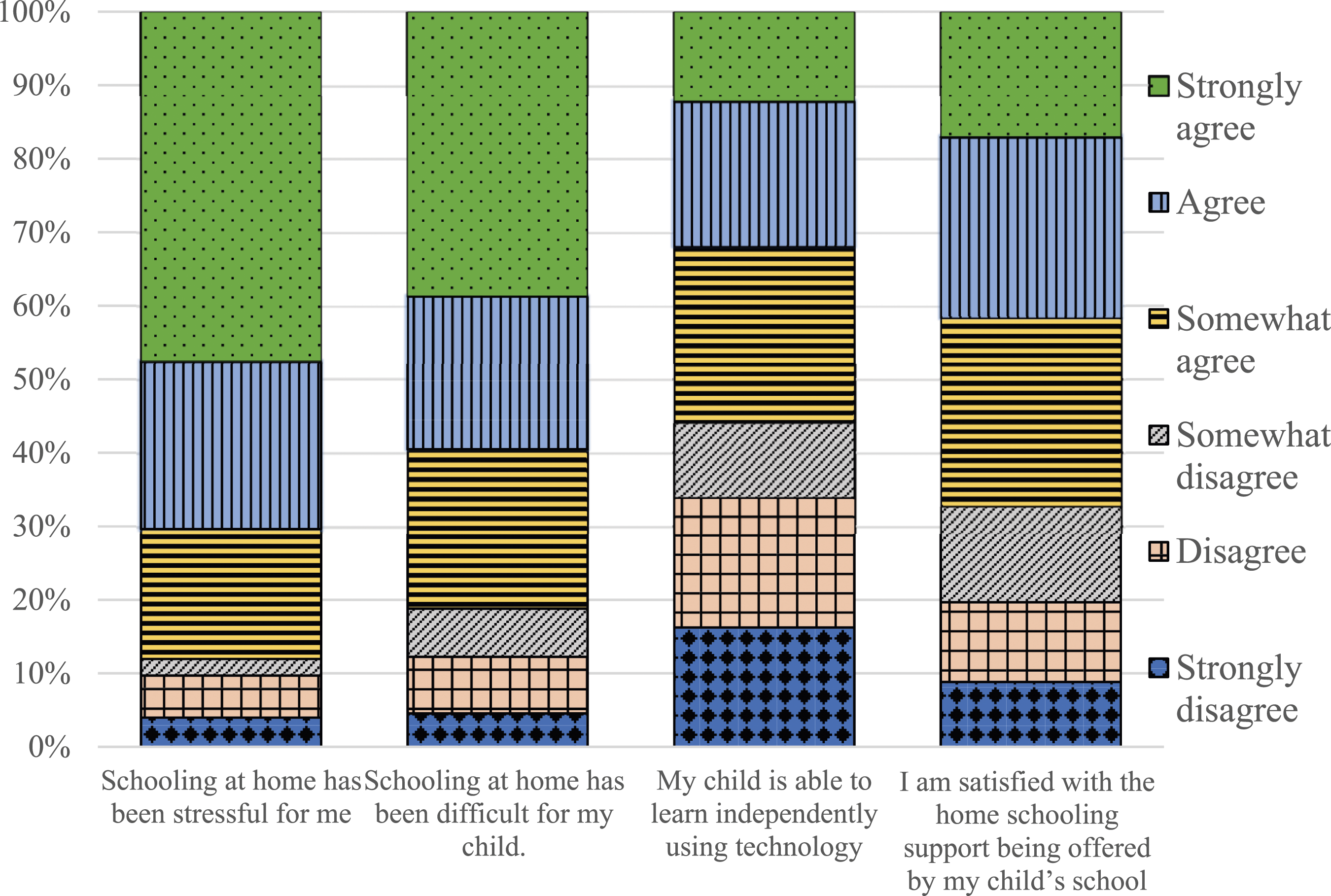
When asked whether their children had learnt more or less during schooling at home, 14% said more, 58% said less, 17% said the same and the remaining 11% did not answer this question.
Correlations between parent experience variables and reports of school-related activities at home.
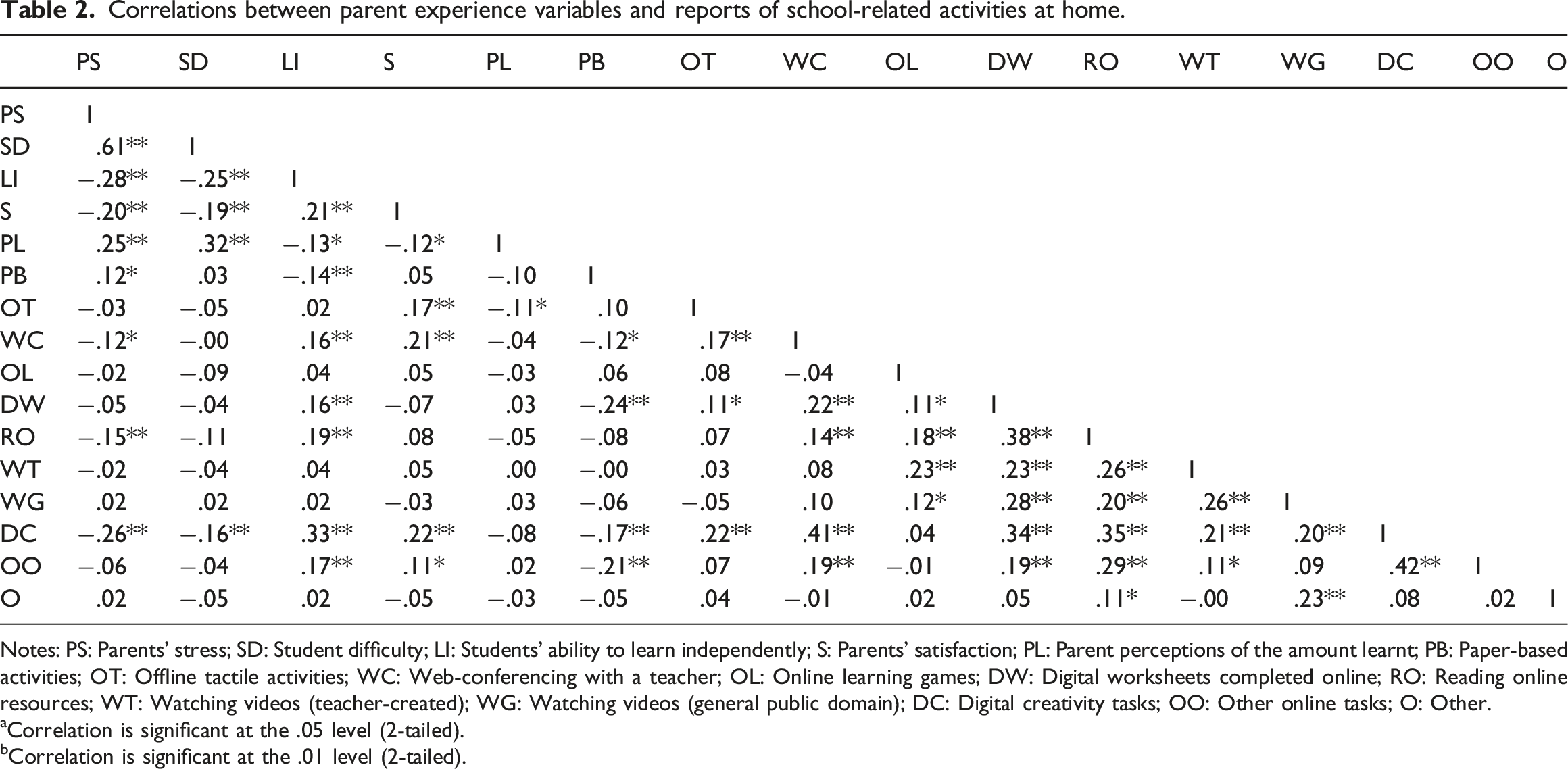
Notes: PS: Parents’ stress; SD: Student difficulty; LI: Students’ ability to learn independently; S: Parents’ satisfaction; PL: Parent perceptions of the amount learnt; PB: Paper-based activities; OT: Offline tactile activities; WC: Web-conferencing with a teacher; OL: Online learning games; DW: Digital worksheets completed online; RO: Reading online resources; WT: Watching videos (teacher-created); WG: Watching videos (general public domain); DC: Digital creativity tasks; OO: Other online tasks; O: Other.
aCorrelation is significant at the .05 level (2-tailed).
bCorrelation is significant at the .01 level (2-tailed).
Regression analyses
Regression results for schooling at home activities and parents’ stress.
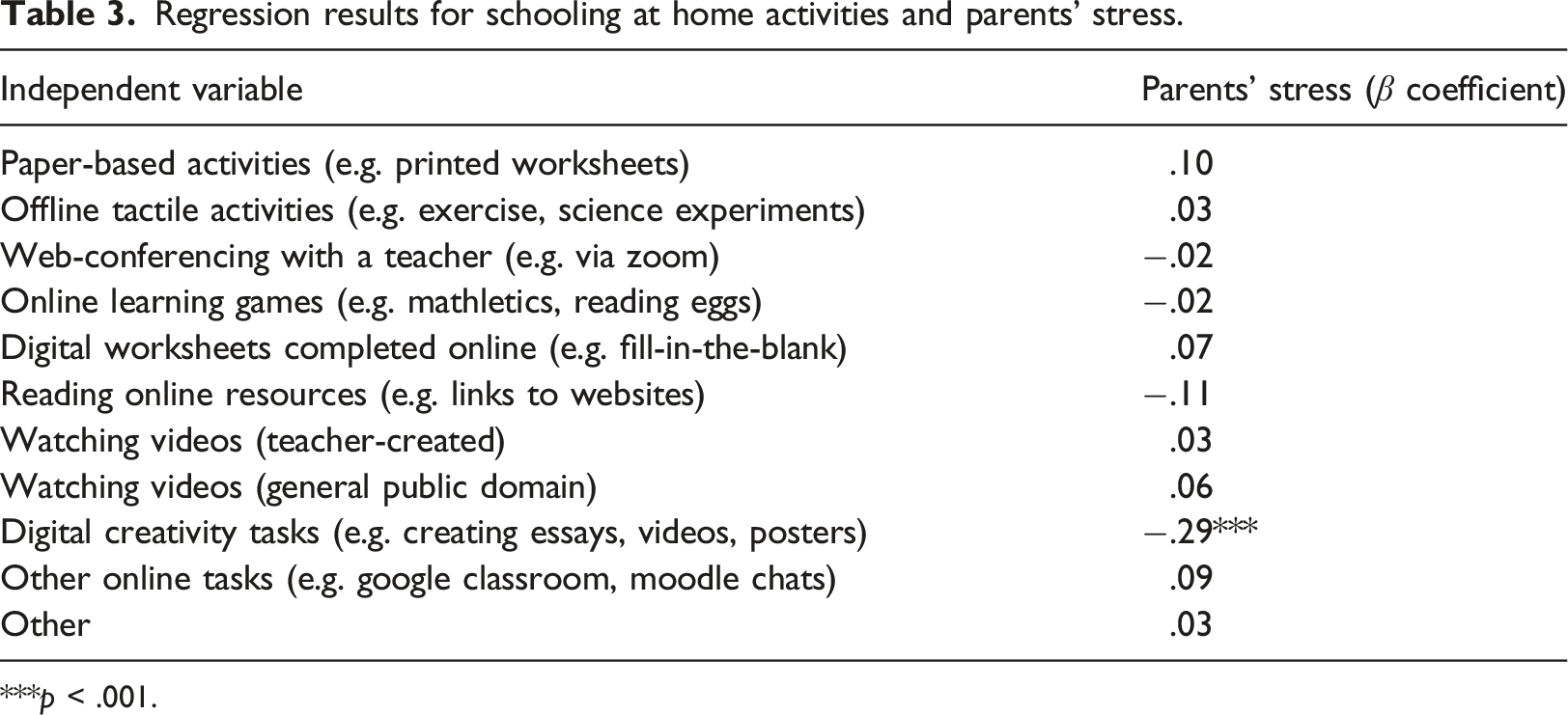
***p < .001.
Regression results for schooling at home activities and student difficulty.
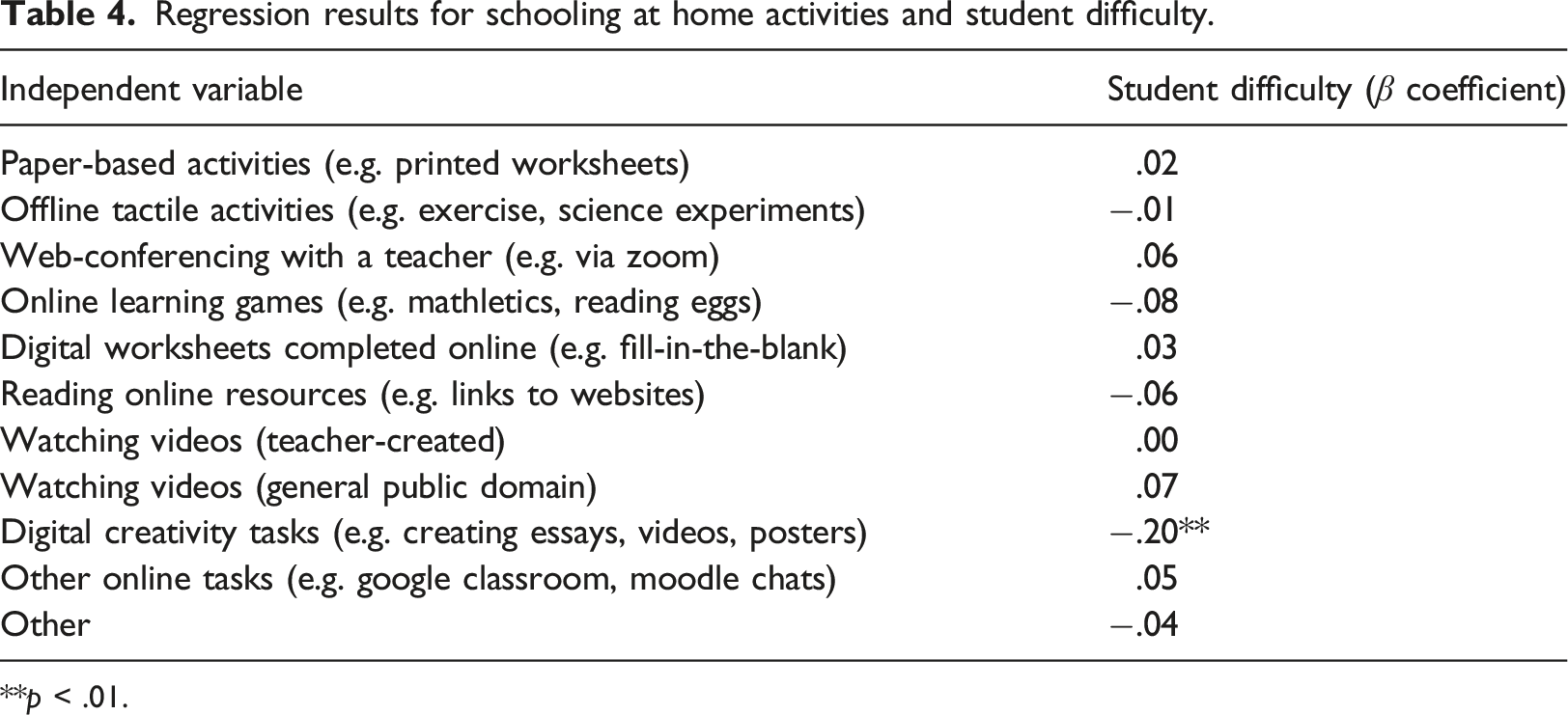
**p < .01.
Regression results for schooling at home activities and students’ ability to learn independently.
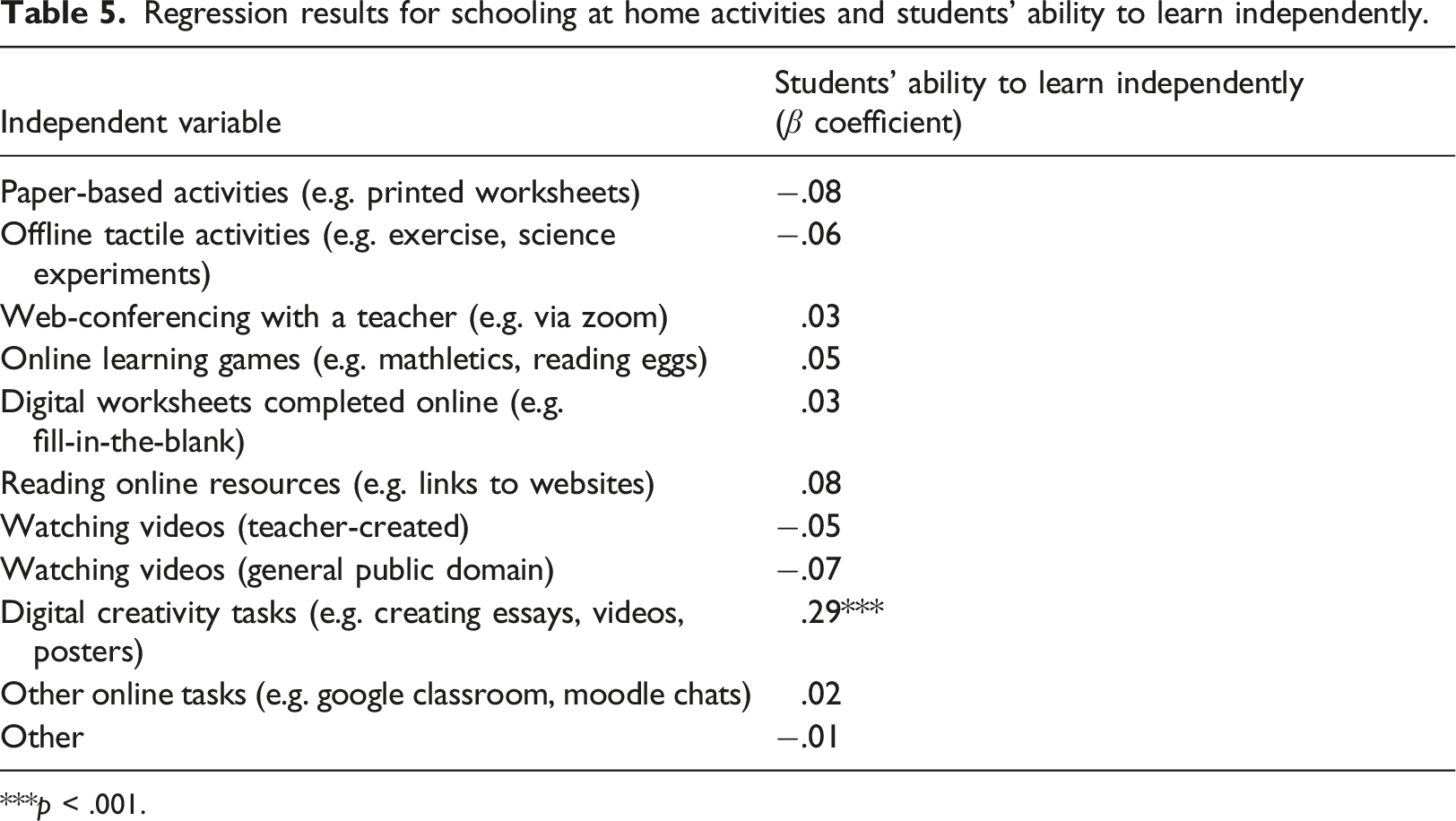
***p < .001.
Regression results for schooling at home activities and parents’ satisfaction.
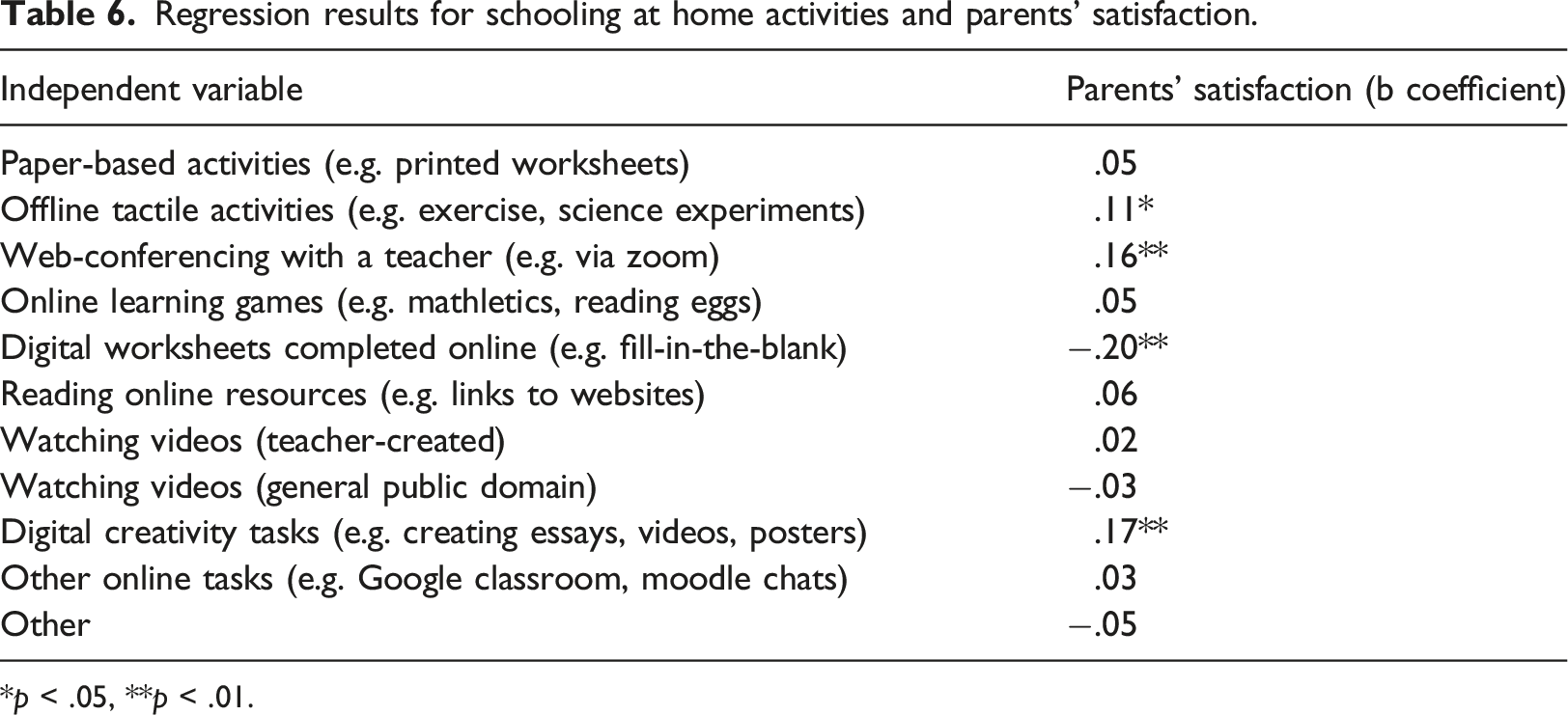
*p < .05, **p < .01.
Regression results for schooling at home and parent perceptions about the amount learnt during schooling at home.
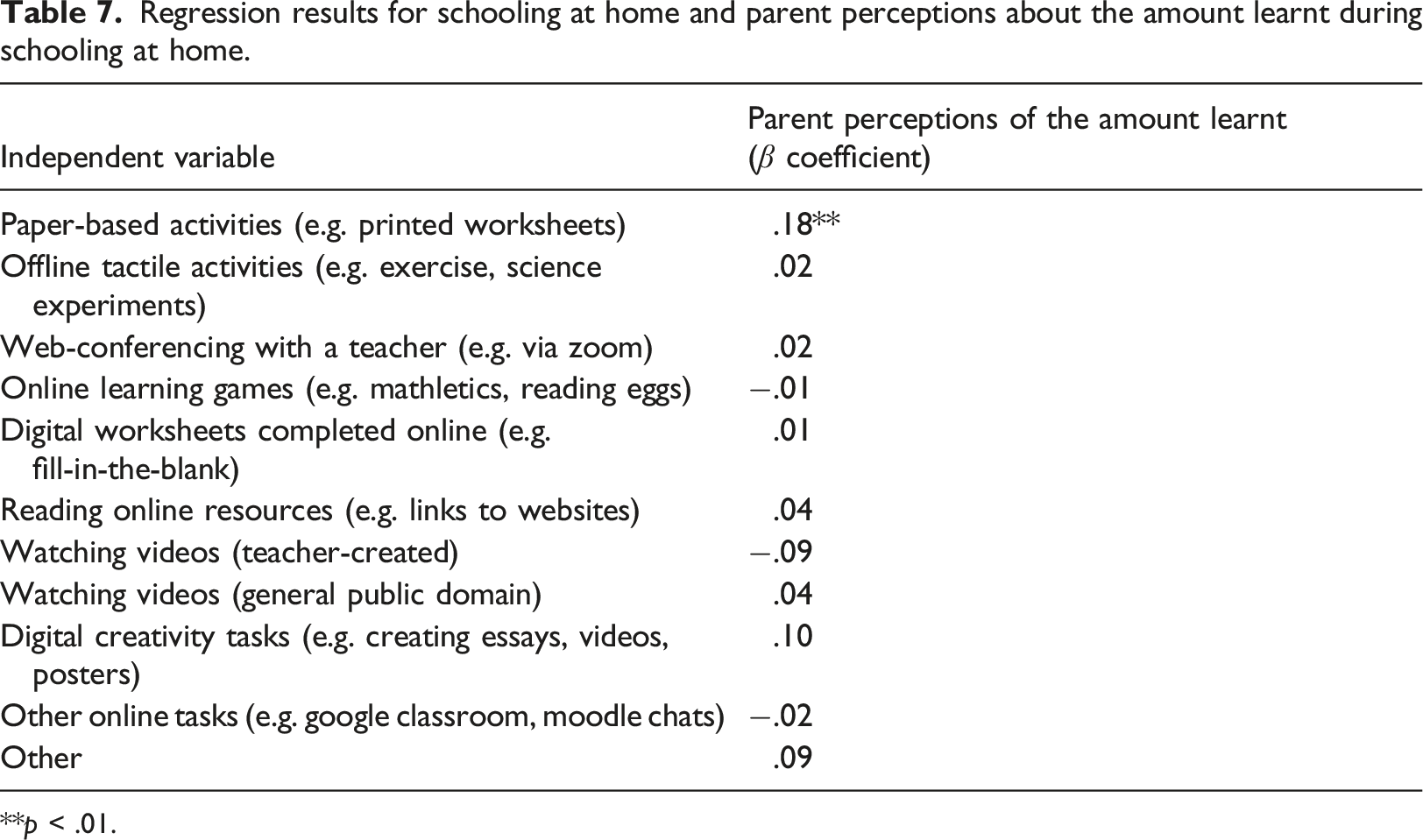
**p < .01.
Supplementary regressions within age groupings
For K-Year 2, parents believed that paper-based activities supported learning (
Open-ended responses
Open-ended responses revealed a preference among parents for ‘more creativity’ in their child’s at-home learning, including ‘personal interest projects’, ‘more time to make’ and ‘creative writing’. Parents of children who were at schools that were not including creative tasks pointed out that the online learning seemed ‘rather passive’ and led to demotivation and task avoidance. On the other hand, parents of students at schools where creativity was integrated into the online curriculum noted that engagement in ‘personal interest projects has increased dramatically’. Parents also saw how creativity projects enabled children to be more ‘self-directed’, appreciating that their children could more easily ‘do it in their own time’. Parents observed that children ‘enjoyed self-directed projects and assignments and would like more of them’.
Some parents indicated that they appreciated paper-based activities due to at-home resourcing constraints. Parents in families with limited access to digital devices indicated paper was more easily administered, with comments like ‘paper-based learning has meant we don’t need to juggle and share devices as frequently’. Others appreciated being able to pick up resource packs from school for reasons such as ‘we cannot all be online at once and do not have a printer’. Others indicated that they appreciated the way paper-based approaches reduce screen-time, with comments expressing a desire for more ‘home learning packs from the school that didn’t rely on using a screen’. Indeed, some parents expressed a preference for moving all learning offline, and away from digital, with comments requesting ‘more tactile and physical activity that is not screen-based’. Interestingly, there were no comments from parents explaining why students may learn more when printed worksheets are incorporated into learning designs.
Parents explicitly stated that they preferred more web-conferencing sessions from schools for a number of reasons. Several parents indicated that web-conferencing sessions gave them time to have relief from supervising their children’s learning (‘The zooms have been great. Particularly the ones in small groups with the teacher. It relieves us from having to teach him for a short while’). Several parents commented that their children felt more engaged and connected with both teachers and classmates through the live web-conferencing sessions (‘my daughter can see her friends and engage with the teacher’). Web-conferencing could enable group work (‘More organised breakout groups with her peers would be great. I see her respond best to those’). There were some indications that web-conferencing sessions created a routine that enabled children to better understand the content being taught, for instance ‘Daily zoom… has meant they didn’t miss a bit in literacy development’, and also ‘allowed a deeper dive into some of the topic areas’. Web-conferencing sessions were also seen to support student motivation and engagement with comments such as ‘he’s more likely to actually do the work’.
The lack of interactivity and authenticity inherent in digital worksheets were cited as reasons for children not preferring them, for instance, ‘a lot of the worksheets and Google Classroom that my daughter completes feels more like busy work than something which is useful to her education, and she completes it without much enthusiasm’. For parents, part of the problem with digital worksheets was that they were not taking advantages of the affordances of online learning (‘Hopeless content provided by schools and extreme lack of any believable attempts by school to shift learning to remote format. Just boring online packages and piles of worksheets’).
Discussion
Overall, parents found schooling their children at home during the COVID-19 pandemic to involve several challenges, including increased personal stress and a perception of learning loss for their children. Parents also gave mixed ratings about their children’s abilities to learn independently. Our general findings relating to parent perceptions of schooling from home during the COVID-19 pandemic support and extend those of other studies internationally. Parents in international samples also found at home learning stressful (e.g. Aguiar et al., 2021), and have also felt schooling at home was difficult for their child (Yates et al., 2021). The general parent perception that their children were learning less at home compared to school aligns with international evidence of learning loss (see Kwakye & Kibort-Crocker, 2021).
Perhaps unsurprisingly, correlational analysis revealed that when student difficulties were higher, ability to learn independently tended to be lower, parent stress levels tended to be higher and satisfaction with schooling at home tended to be lower. These results generally accord with previous findings relating to parent stress (Spinelli et al., 2020) and student engagement (Mohan et al., 2020), though extend upon them by establishing relationships between the four variables of parent stress, student difficulty, learner independence and satisfaction with schooling from home.
Interestingly, specific learning design elements were associated with different parent perceptions of schooling at home. Digital creativity tasks, in particular, were associated with lower parent stress and lower perceived student difficulty, increased perceptions of independent learning and increased levels of parent satisfaction with support that the school provided. While the benefits of digital creativity tasks for students’ learning have been espoused in the educational literature (Janse van Rensburg et al., 2021), the perceived benefits for parents were somewhat surprising: such tasks are not as easily controlled and are less closed in nature than other tasks, which could arguably make them more challenging to supervise at home. Yet, open-ended feedback from parents noted that digital creativity tasks led to greater learner engagement, motivation and enjoyment, and enabled students to work in a more self-directed and independent way. This finding relating to the positive contribution of digital creativity tasks has important implications for how teachers design online learning activities for students.
Offline tactile activities and web-conferencing with a teacher were both associated with greater parent satisfaction, while greater use of digital worksheets was associated with lower parent satisfaction. More time spent completing paper-based tasks was associated with higher perceptions of child learning. These results may relate to a general parental preference for screen-time to be used only when it is most needed. This explanation seems to be supported by the negative association between provision of online digital worksheet activities and parent satisfaction. Digital worksheets were perceived by parents to lack authenticity and interactivity and were seen as a poor attempt by schools to shift to online learning. Yan et al. (2021) also found that eyestrain caused by staring at screens for extended periods was a major concern with learning during the pandemic and suggest that parents may see paper-based tasks as one way to remove the possibility of other distractions, such as playing games on devices or troubleshooting technical difficulties.
Web-conferencing was associated with higher parent satisfaction with school support, particularly for older students. Parents explained how these synchronous teaching sessions were more engaging to students than asynchronous material, providing social interaction and connection to other students who were also isolated at home. From a pedagogical perspective this meant that children could more easily undertake collaborative (group work) activities, and having the teachers interact with students in real-time enabled a ‘deeper dive’ into the content being covered. Several parents appreciated that the web-conferencing sessions momentarily ‘relieved’ them from having to supervise their child’s learning. This accords with broader perceptions from the field relating to the benefits of web-conferencing for education during COVID-19 (Adipat, 2021).
The findings of this study also reveal the importance of tailoring learning designs for the level of the student. The fact that K-Year 2 parents believed paper-based activities supported learning accords with findings regarding the crucial tactile development that occurs in the early years of child development (Bremner & Spence, 2017). It also makes sense that web-conferencing would lead to less learning for K-2 students, who have less developed digital literacies to operate the technology (Lazonder et al., 2020). The greater satisfaction of Year 3–6 parents with online learning games may be due to the motivational effect of games on students of this age (Partovi & Razavi, 2019), while digital worksheets may have had the opposite effect. Parent satisfaction with the use of web-conferencing and digital creativity for Year 7–9 students may be due to the more advanced digital literacies and learning autonomy of high school students (see Lazonder et al., 2020), enable them to engage independently in more interactive and productive tasks. Thus, the critical need to design learning tasks that cater to the age-related needs, motivations and capabilities of students is evident.
As noted earlier, remote and online teaching can only be effective if teachers set appropriate digital tasks (Bonal & González, 2020). Together our findings from parents support calls for extensive and ongoing professional learning to help teachers develop TPACK and learning design capabilities in response to COVID-19 and beyond (United Nations, 2020; Vanourek, 2020). While the COVID-19 pandemic and the need for rapid transition to emergency remote teaching was not ideal, it did provide us with an opportunity to learn about the impact of different online and remote learning designs. The findings from this study emphasise the importance of digital creativity tasks, the utility of offline tactile tasks and web-conferencing with the teacher and taking care not to overload with digital worksheet style tasks. Ongoing professional learning of teachers can help to both prepare for future adverse circumstances where we may need to return to remote teaching, as well as assist teachers to teach more flexibly in their current classes and contexts.
Limitations and future research
Our study is one of the first studies internationally to provide evidence about how different types of learning activities employed during emergency remote learning might impact on parents and students. However, there were three key limitations of this study that should be noted. First, we note our broad characterisation of learning activity. Not all teacher-created online videos are of equal quality, for example, while web-conferencing may also vary greatly depending on how it is implemented. There are also many other aspects of learning design to consider, such as scaffolding, feedback, groupwork approaches, assessment and sequencing. Additionally, parents’ estimates of learning activity timing and quality may differ from those of teachers. We recommend that future research examine the influence of within- and between-task pedagogical strategies upon teacher and student perceptions of learning designs and learning outcomes.
Second, while we considered it important to understand parents’ perceptions of learning design, and while we detected important trends related to parents’ perceptions of stress and student learning, we nonetheless note that these perceptions will necessarily differ from those of students and teachers. They may also differ from those of teachers in other countries with different at-home learning arrangements. We recommend that future research triangulate this data with teacher and student perceptions, across jurisdictions and with independent measures of student difficulty and learning loss.
Third, and over and above our main effects, age differences were also observed. For instance, K-Year 2 parents expressed positive attitudes towards paper-based tasks and negative attitudes towards web-conferencing, whereas Year 7–9 parents expressed negative attitudes towards paper tasks and positive attitudes towards web-conferencing. Given these cohort-specific effects, we urge caution for any conclusions that may not be age-sensitive. As learning from home requires greater independent learning skills (Niemi & Kousa, 2020), it may be that some tasks are simply seen as more manageable for older students. We recommend future research test the interaction of age, children’s self-regulatory and cognitive capacities and teacher learning outcomes when creating online learning designs.
Conclusion
Our study aimed to determine the tasks and learning designs that parents found preferable when schooling at home during the COVID-19 pandemic. Use of digital creativity tasks was associated with parent perceptions of increased student autonomy, decreased student difficulty, decreased parent stress and increased parent satisfaction. Web-conferencing sessions were also considered beneficial for older students, while paper-based resources were considered particularly important for younger students. The findings of this study contribute fresh insights into how parents experience schooling from home and the learning design elements that are associated with greater satisfaction and autonomy, and reduced stress and difficulty. Drawing on parent perspectives, we highlight important ways that teachers can leverage the potential of online technologies in their learning designs and cater to the needs of their students. Rather than transplanting worksheet-based approaches into the digital medium, teachers should consider the age and stage of children in their class. Professional learning may be helpful to assist teachers to transition from ‘emergency remote teaching’ (Hodges et al., 2020) to more effective and flexible online learning design for all learners.
Supplemental Material
Supplemental Material - ‘Lockdown’ learning designs – Parent preferences towards remote and online learning for their children during the COVID-19 pandemic
Supplemental Material for ‘Lockdown’ learning designs – Parent preferences towards remote and online learning for their children during the COVID-19 pandemic by Matt Bower, Jennifer Wing Man Lai, Penny Van Bergen, Lucie Hobson and Rebecca Stephens in Australian Journal of Education
Footnotes
Declaration of conflicting interests
The author(s) declared no potential conflicts of interest with respect to the research, authorship, and/or publication of this article.
Funding
The author(s) received no financial support for the research, authorship, and/or publication of this article.
Ethical statement

Supplemental Material
Supplemental material for this article is available online.
References
Supplementary Material
Please find the following supplemental material available below.
For Open Access articles published under a Creative Commons License, all supplemental material carries the same license as the article it is associated with.
For non-Open Access articles published, all supplemental material carries a non-exclusive license, and permission requests for re-use of supplemental material or any part of supplemental material shall be sent directly to the copyright owner as specified in the copyright notice associated with the article.
