



Abstract
We explored the perspectives of school-based educators located in Victoria, Australia, regarding their support of students who have reading difficulties. An anonymous survey was completed by 523 participants, including educators, educational leaders and Student Support Services staff. Results revealed multiple areas of concern related to their capacity to work on reading intervention with these students. Although participants reported that students with reading difficulties were present in most classes, confidence to work effectively with these students was mixed. They described feeling poorly prepared by preservice programs and indicated that insufficient time and mentorship prevented them from serving these students optimally. As a group, they privileged many approaches that align with best practice for struggling readers, such as explicit instruction, but perceived that such practices are not always feasible to implement. Support was also strong for practices considered non-evidence-based, such as adhering to students’ preferred ‘learning-style’. Recommendations for school-based practice, with a specific focus on students with reading difficulties, are made.
Introduction
It has been estimated that around 30–40% of children will experience difficulty when learning to read (Binks-Cantrell et al., 2020; NAEP Report Card: Reading, 2022), with such difficulties often having lifelong adverse impacts (e.g. Arnold et al., 2005; DeWalt et al., 2004; Livingston et al., 2018). The mechanisms underpinning difficulties when learning to read have received substantial research attention in recent years (e.g. Dehaene, 2020; Hempenstall, 2013). Similarly, literature on evidence-based assessments and interventions for these students is expanding (e.g. Adlof & Hogan, 2019; Scammacca et al., 2016). Despite the urgency of ensuring that students with reading difficulties are identified early and receive high quality intervention, less is known about how teachers and other school personnel view their capacity to support these students (Snow, 2016). Woolfson and Brady (2009) identified that teachers’ self-efficacy when working with struggling students is positively associated with their beliefs and confidence for bringing about learner change. However, contemporary evidence examining the perspectives and confidence of school personnel on this important aspect of their professional roles is lacking. Together, identifying and supporting students with reading difficulties should optimise their reading, writing, spelling and overall academic attainment, along with their capacity for meaningful participation and contributions to society as adults. We report here on how teachers (primary and secondary) and other school personnel, such as psychologists, speech-language pathologists (SLPs), educational leaders and literacy coaches, view their capacity to support students with reading difficulties.
Reading difficulties may arise as part of a broader neurodevelopmental disorder or biomedical condition, as part of a Specific Learning Disorder, or from various personal and/or environmental life circumstances that interfere with learning to read successfully (McArthur & Castles, 2017; Peng et al., 2019). An often contentious position is that some struggling readers are casualties of poor instructional practices as well (Seidenberg, 2017). Suárez et al. (2018) described this phenomenon in their observational study of six early-years American teachers, reporting that none used instructional practices aligned with the landmark US National Reading Panel (Report of the National Reading Panel: Teaching Children to Read, 2000) more than 50% of the time. An equally contentious and related proposition is that, rather that requiring teachers to change their practice, students with reading difficulties should be segregated from the regular class and provided with instruction using specific methods on the basis of their characteristics. Research has not found this to yield the desired results and concluded that there are no category-specific instructional practices (Ysseldyke & Marston, 1999). The principles of Response-to-Intervention (RTI; Murawski & Hughes, 2009) hold that effective instructional approaches to improve students’ reading skills apply regardless of students’ personal characteristics, though the use of these approaches will vary in intensity, frequency and duration on the basis of assessed individual need (Austin et al., 2017). In this paper, we therefore focus on practitioner responses to all students who struggle with reading within regular education classrooms, regardless of presumed aetiology or the presence of a formal diagnosis.
Australian reports over recent decades identify that preservice teachers receive little preparation for explicitly teaching reading and virtually nothing about identifying and helping students with reading difficulties (Buckingham & Meeks, 2019; Rowe, 2005). Furthermore, both in Australia (e.g. Stark et al., 2015) and internationally (Pittman et al., 2019; Washburn et al., 2016), research consistently reveals that educators’ explicit knowledge about linguistic constructs central to providing effective initial reading instruction varies greatly. Collectively, it appears that many teachers are not sufficiently equipped to teach reading effectively nor to identify and support struggling readers for maximum benefit. Consequently, reading instruction and support approaches that lack a robust evidence-base persist in classrooms and intervention settings globally (Meeks et al., 2020; Moats, 2020). Collectively, these findings are cause for concern, particularly with respect to students who experience difficulties learning to read. Such students are likely to need more intensively delivered and scaffolded intervention in order to even approximate the outcomes of typically progressing peers.
Students with reading difficulties are likely to spend most, if not all, of their time in mainstream classrooms, particularly if reading is their primary area of difficulty (e.g. Blanton et al., 2011; Merga, 2020). This reflects the momentum for inclusive rather than segregated educational practices for students with diverse needs (Graham, 2019). Students with reading difficulties are considered to have a disability under the Australian Disability Discrimination Act (DDA) and the legal obligations of educators are clearly articulated in the Disability Standards for Education 2005 (DSE). Accordingly, educators have a legal as well as an ethical obligation to provide suitable instructional practices for all students and reasonable adjustments for those eligible under the DDA. Although there has been mixed support for inclusive educational practices since their inception, Cole et al. (2020) describe convincing evidence that favours inclusion of students with a range of disabilities. They call for a ‘critical review’ regarding how and where students with disabilities receive education (p.7). However, evidence about teachers’ self-reported capacity to manage inclusive classrooms suggests that they feel underprepared (Blanton et al., 2011; Sharma & Sokal, 2016) although less is known about this in particular reference to the teaching of reading. Notably, teachers with additional training in learning support (referred to from here as specialist teachers or STs), report higher self-efficacy compared to mainstream classroom teachers about working in inclusive classrooms (Forlin & Chambers, 2011; Ocloo & Subbey, 2008) although there is a similar knowledge gap regarding how applicable this is to the teaching of reading. As well as teachers, it is equally important to understand views from the perspective of psychologists and speech-language pathologists (SLPs) who also support students with reading difficulties, either directly, or through the provision of consultative support to classroom teachers (Erickson, 2017; Murawski & Hughes, 2009). The practice of utilising specialist support when needed is documented as a legal obligation in section 7.2 of the Disability Standards for Education (DSE, 2005). Little evidence exists about the intervention practices in use, yet momentum is building for allied health professional such as SLPs, to be fundamental to literacy support teams (Fallon & Katz, 2011; Serry & Levickis, 2020; Sun & Wallach, 2014).
Accordingly, in the present study, we explored how teachers and other school-based personnel perceive their capacity to support students with reading difficulties within the context of regular schools and classrooms. Our research questions were as follows: 1. To what extent do teachers and other school personnel perceive they are equipped to work with students with reading difficulties? 2. Are there differences in beliefs and attitudes among different subgroups of school personnel based on (i) their role, (ii) their years of experience and (iii) the location of their school, in relation to providing reading support to these students? 3. How feasible are practices described as important in working with students with reading difficulties?
Methodology
We investigated the views and beliefs of teachers and other relevant school-based staff about working with students with reading difficulties using cross-sectional survey design. Participants were recruited prior to attendance at a workshop in 2018 titled ‘Learning Difficulties including Dyslexia’ 1 . Fifty-five workshops, sponsored by the Victorian Department of Education and Training (DET), were designed and delivered by the authors with a focus on reading difficulties. There were 2439 registrants including classroom and specialist teachers, visiting teachers for students with hearing and/or vision impairment, school leaders and student support service officers (SSS 2 ). Following their registration, attendees were invited to complete a survey and 523 (21.4%) did so. Approval to conduct this research was granted by La Trobe University (HEC18072) and the Victorian Department of Education and Training (DET), (2018_003661).
Participants
Key characteristics of survey participants.
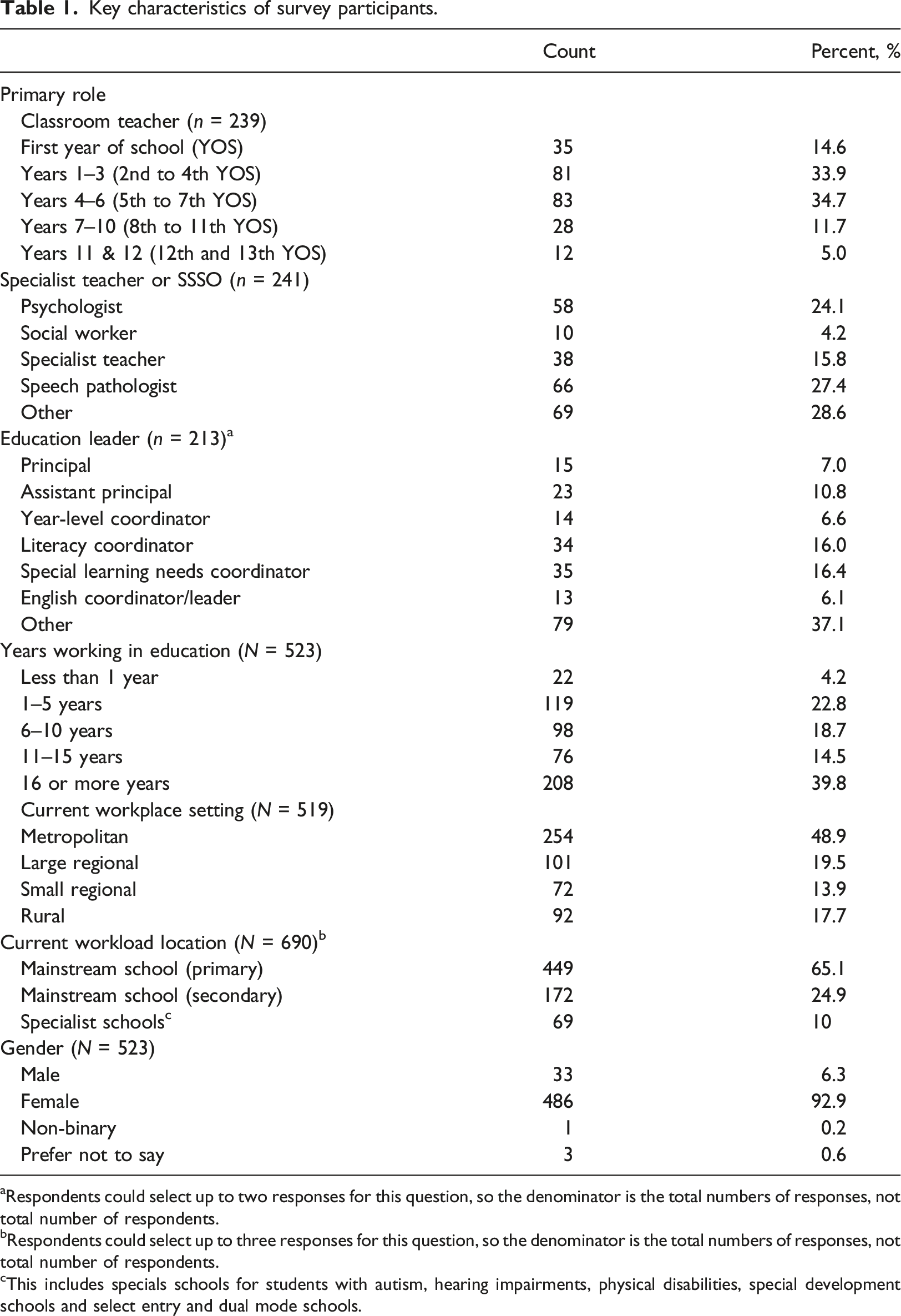
aRespondents could select up to two responses for this question, so the denominator is the total numbers of responses, not total number of respondents.
bRespondents could select up to three responses for this question, so the denominator is the total numbers of responses, not total number of respondents.
cThis includes specials schools for students with autism, hearing impairments, physical disabilities, special development schools and select entry and dual mode schools.
An online questionnaire was developed by the first author, drawing on key issues from the literature about reading difficulties. Feedback was then sought from the other authors and the manager of the Inclusive Education Division (DET), before the instrument was piloted with three teachers external to the project. The collective feedback informed the final version of the questionnaire which contained 44 items. Most items required participants to select options from set responses, and there were two opportunities for extended responses (see Online Appendix 1). The questionnaire had three sections. Section A comprised seven demographic items. Section B comprised 15 statements about attitudes, beliefs and confidence when working with struggling students while Section C comprised 11 statements related to participants’ views of the importance as well as the feasibility of adopting various practices for these students. Of the 11 statements, three referred to practices with strong empirical support such as: Use a Response-to-Intervention approach to determine how to best support students; while another three described practices that foster intra and inter-disciplinary collaborations such as: Adhere closely to a Personalised Learning Support Plan. The remaining five statements referred to practices that are sometimes employed in schools but lack empirical support, for example: Advise that a primary student repeats a year level. Open-ended comments were invited at the end of Section C.
Data analysis
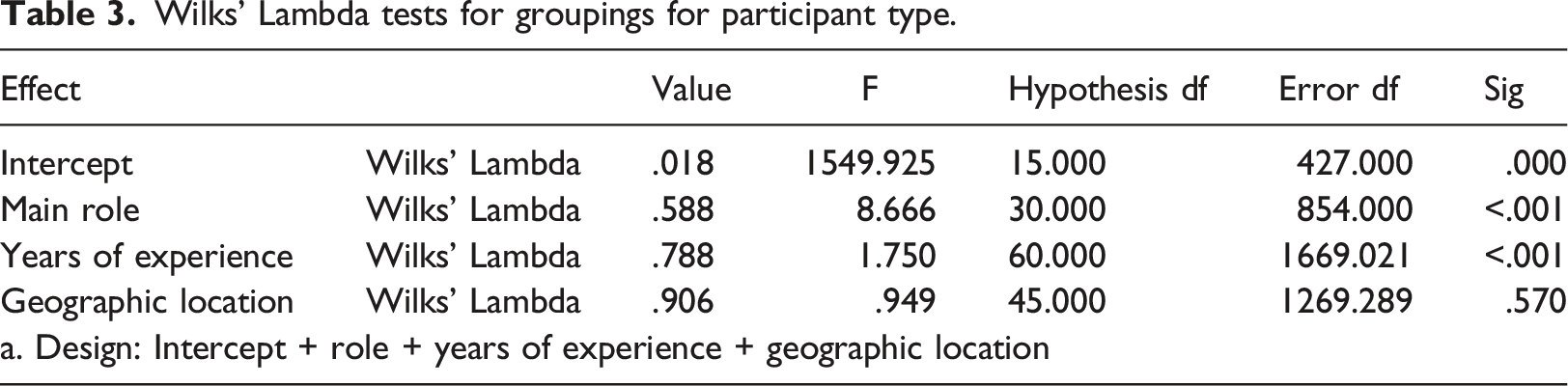
Not all questions were relevant to all participants as some related to practices that were specific to certain subgroups. Hence, the number of responses for each question varied. Demographic data were analysed descriptively. Likert scale responses (Section B) were coded from 1 to 5, with one being strongly disagree, 3 being neutral and 5 being strongly agree. In Section B, means and standard deviations are presented to describe aggregated responses to statements regarding beliefs, attitudes and confidence about working with students with reading difficulties. This is presented as a function of their current main role (classroom teacher, educational leaders and ST or SSS officers), years of experience in education and self-reported geographic location (metropolitan, large or small regional and rural). A multivariate general linear model was used to assess the effect of the three factors; main role, years worked in education and geographic location on the 15 scaled response items in section B. Since the dependent variables are discrete ratings, they are not normally distributed; however, the number of observations is large and so normal theory was used to test for differences between the means of the groups formed by the levels of each factor. Normal probability plots of the residuals from the analysis revealed no major deviations from normality. Wilks' lambda was used in the multivariate analysis of variance to determine whether there were significant differences between the means of groups (factor levels of main role, years of experience and geographic location) on a combination of dependent variables. Analyses were conducted using IBM SPSS Statistics (Version 28).
In Section C, where participants were asked to rate their views on the importance of and the feasibility of implementing 11 separate practices, a Two Proportion Z-Test (Sprinthall, 2012) was used to compare the proportions of the means of agreement concerning perceived importance versus perceived feasibility of these practices.
Qualitative data from the open responses was coded using a modified deductive content analysis (Elo & Kyngäs, 2008) by creating a category matrix that comprised Time and resources limitations, insufficient knowledge and self-directed upskilling. After multiple readings of all comments, author 1 organised the comments into a category matrix. An audit trail was maintained with authors two and four following discussion about the coding choices. Qualitative findings are reported with direct quotes from participants to complement the quantitative data.
Results
Self-reported capability to support students with reading difficulties
Participants’ attitudes and beliefs about working with children with learning difficulties in reading.
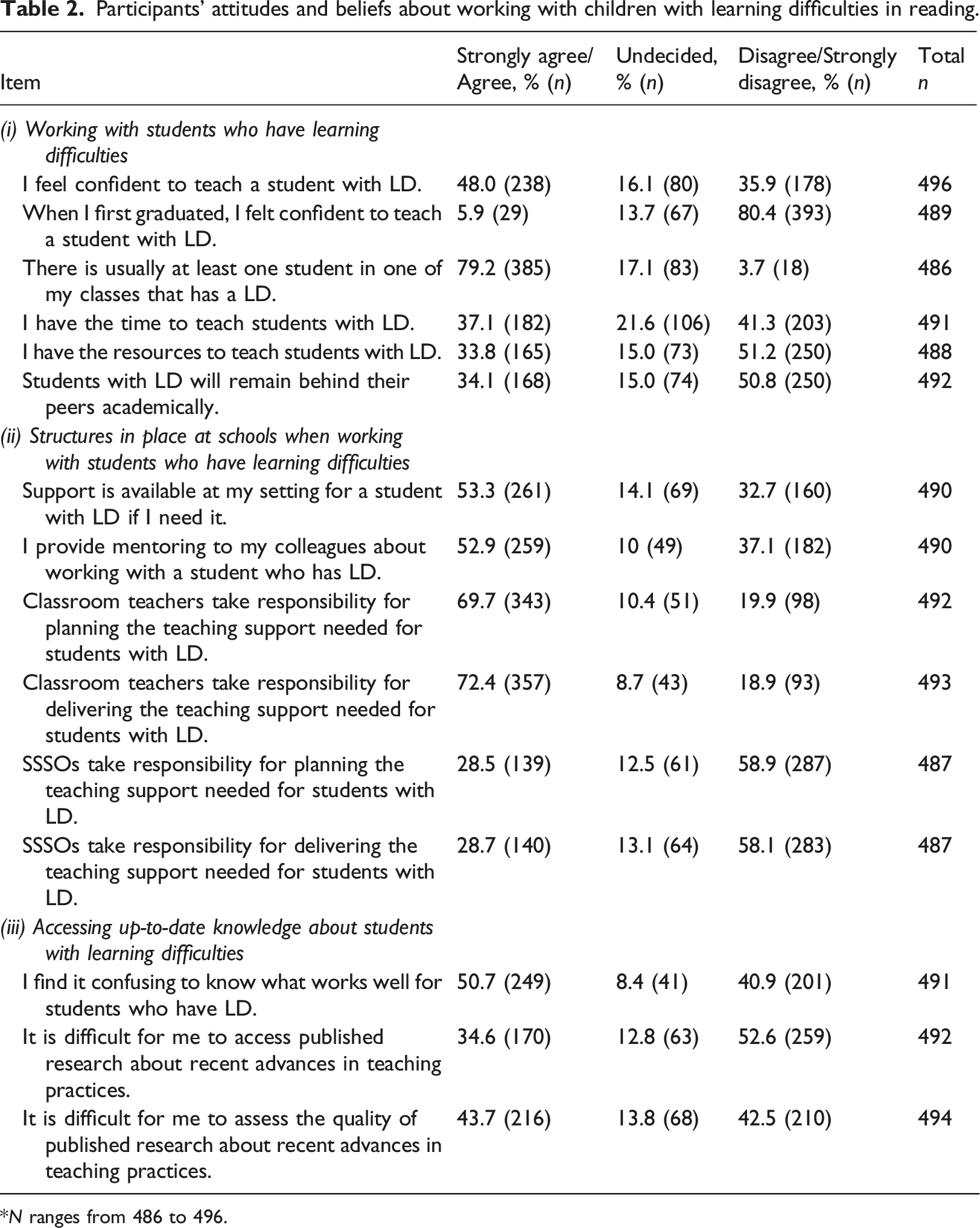
*N ranges from 486 to 496.
Self-reported capability to support students with reading difficulties as a function of participant type
Wilks’ Lambda tests for groupings for participant type.
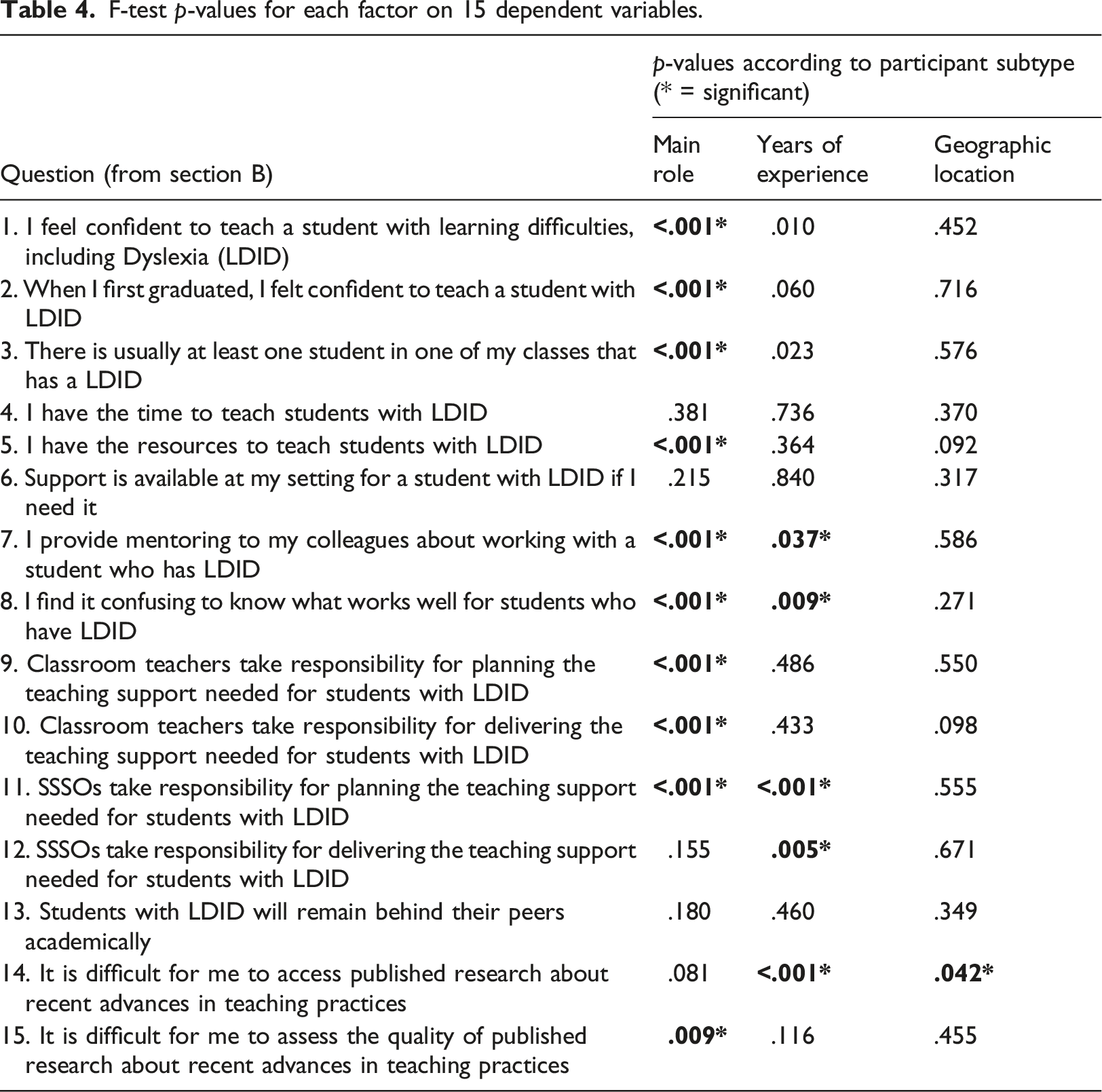
F-test p-values for each factor on 15 dependent variables.
Category 1: Working with students who have reading difficulties
In my experience, few teachers have the capacity to cater for [these] students due to lack of time and/or knowledge.
Confidence when working with students who have learning difficulties (LD). Note: Means (SD) were calculated from a 5-point rating scale, ranging with one being strongly disagree, three being neutral and five being strongly agree.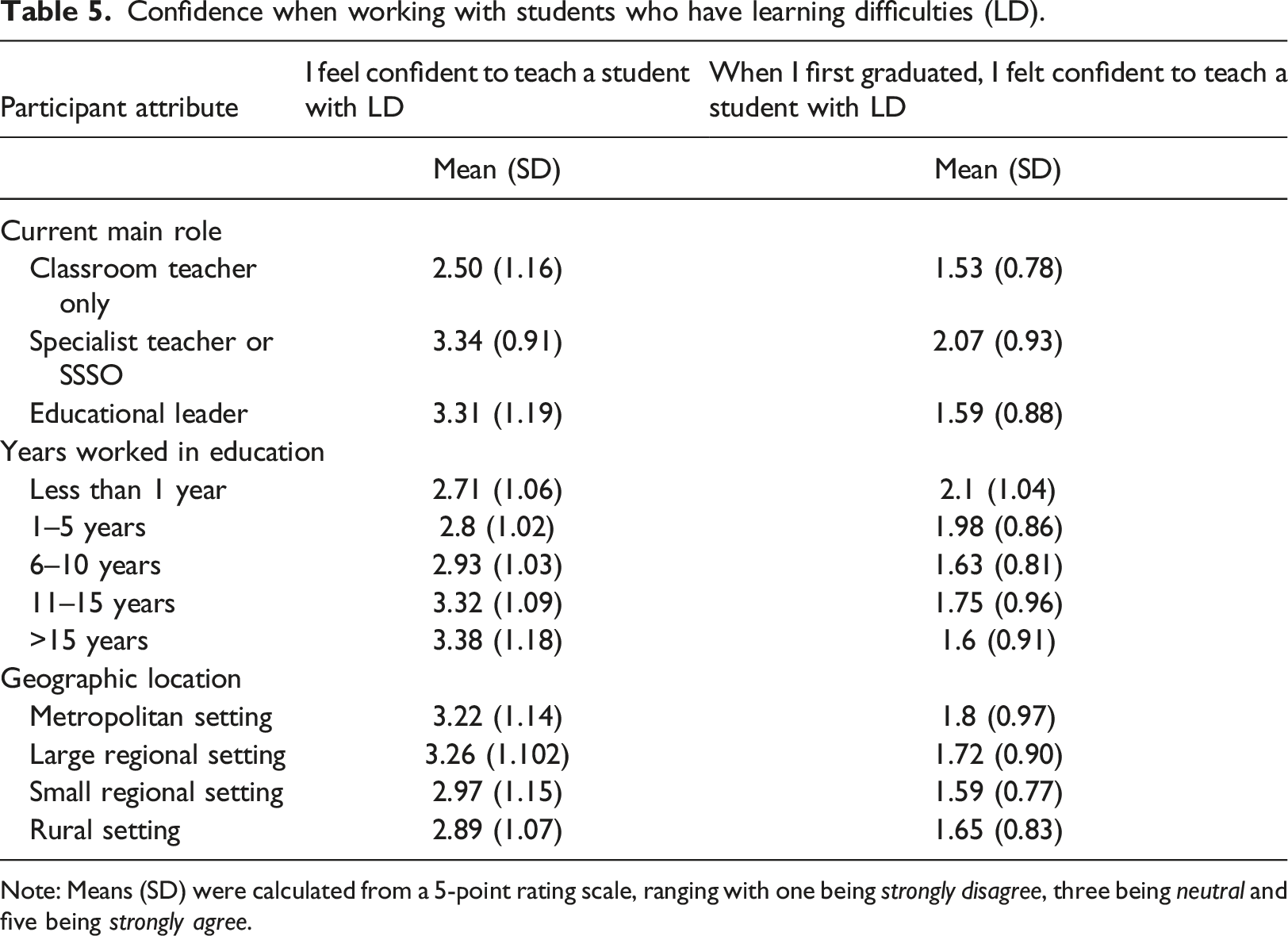
Of the 489 responses concerning participants’ confidence upon graduation to teach a student with reading difficulties, only 6% agreed that they felt confident. Significant between-group mean differences were noted (p < .001, Table 4, item 2) with the STs and/or SSS officers recording significantly higher confidence on graduation (M = 2.07, SD = 0.93) compared to classroom teachers (M = 1.53, SD = 0.78) and educational leaders (M = 1.59, SD = 0.88) (see Table 5). Although STs and/or SSS officers felt significantly more confident on graduation, their mean confidence was still low (M = 2.07). One experienced SLP commented:
I have chosen to invest my own time and money to develop my knowledge in this area. If I hadn’t decided to do this, the knowledge gained from my degree and from the supervision/support available in my job would be inadequate to allow me to confidently work in this space.
Further, a recently graduated classroom teacher stated:
I graduated with a Bachelor of Education … from [redacted]. I was a high achiever, ... I received an award at graduation in recognition of my academic achievement in the area of literacy. Despite this, I felt under-prepared to plan and implement literacy lessons for my year 5/6 cohort.
Participants’ beliefs about the academic trajectory of students with reading difficulties were mixed. About one-third (34.1%) agreed that these students would remain behind their peers academically, while around half (50.8%) disagreed. There were no significant differences in group means according to participant type. This experienced secondary school teacher’s comment reflects the pessimism reported by a third of participants:
[These students] can make positive personal gains and improvements, however, unlike their peers they will not respond as well to intervention, thus having … academic difficulty in the classroom.
Additionally, a small number of participants observed that colleagues may perceive a student with reading difficulties as ‘lazy’ or that they ‘can’t learn’.
There is virtually no time to plan with [educational] aides. I would love one-to-one time with my students with learning difficulties, but I can only manage small group times.
Time limitations also manifested in capacity to access or effectively utilise and collaborate with specialist staff, as reflected in the following statements: SSS support staff such as SLPs are excellent supports however there is not enough time for them to assess, support and work with students and advise and support teachers. (Early-years teacher). SSSs are so busy that even after they have assessed a child … it can take a long time for them to meet with classroom teachers regarding their assessment results. (Literacy coordinator). There are many students with learning difficulties who don’t have SSS support. I have found these students the most difficult to adequately cater for due to time constraints and ensuring everyone gets some face-to-face individual time. (Rurally-based teacher)
Perceptions of resourcing when working with students who have learning difficulties (LD).
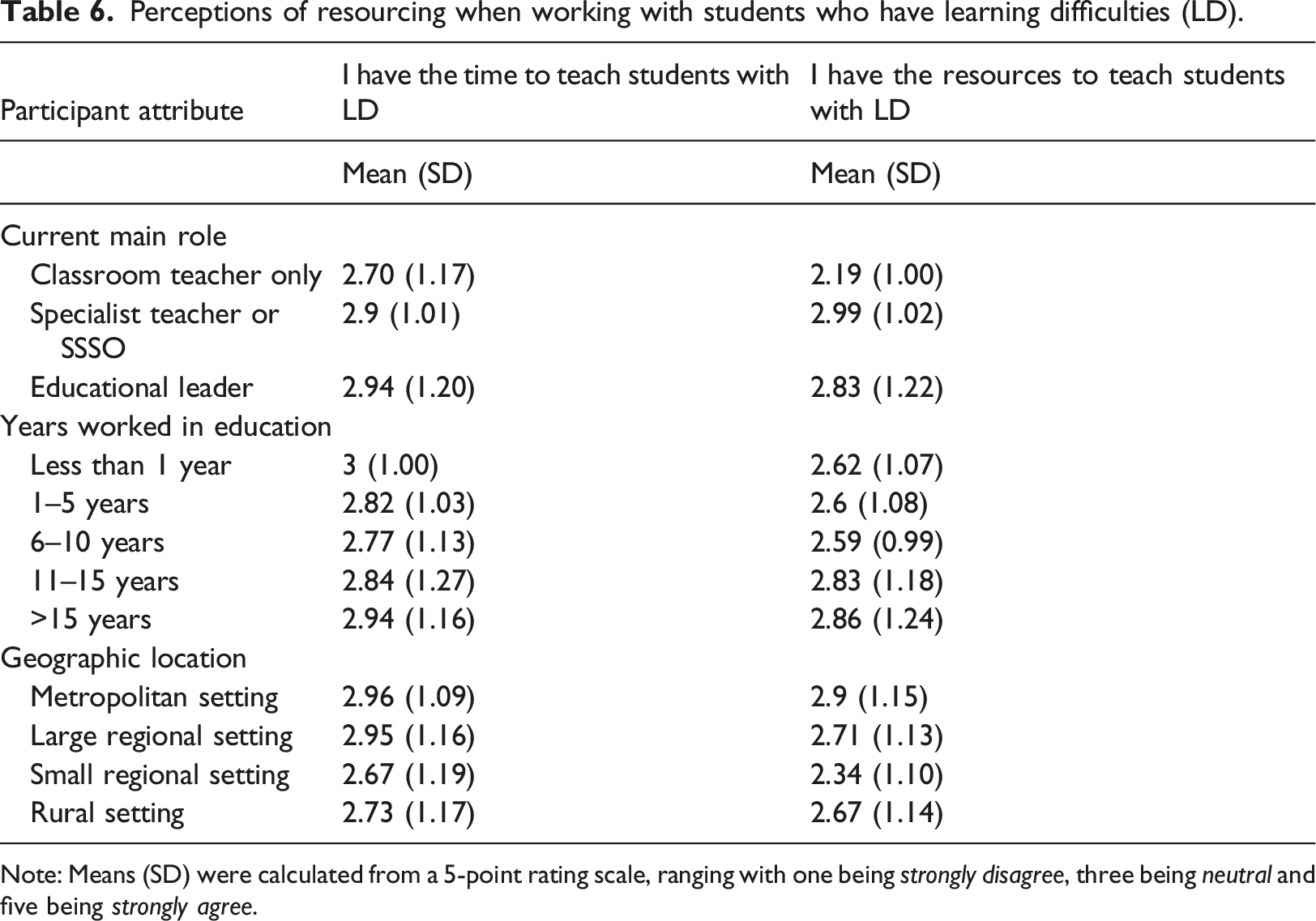
Note: Means (SD) were calculated from a 5-point rating scale, ranging with one being strongly disagree, three being neutral and five being strongly agree.
Category 2: School infrastructure
Perceptions of school infrastructure in relation to students with learning difficulties (LD).
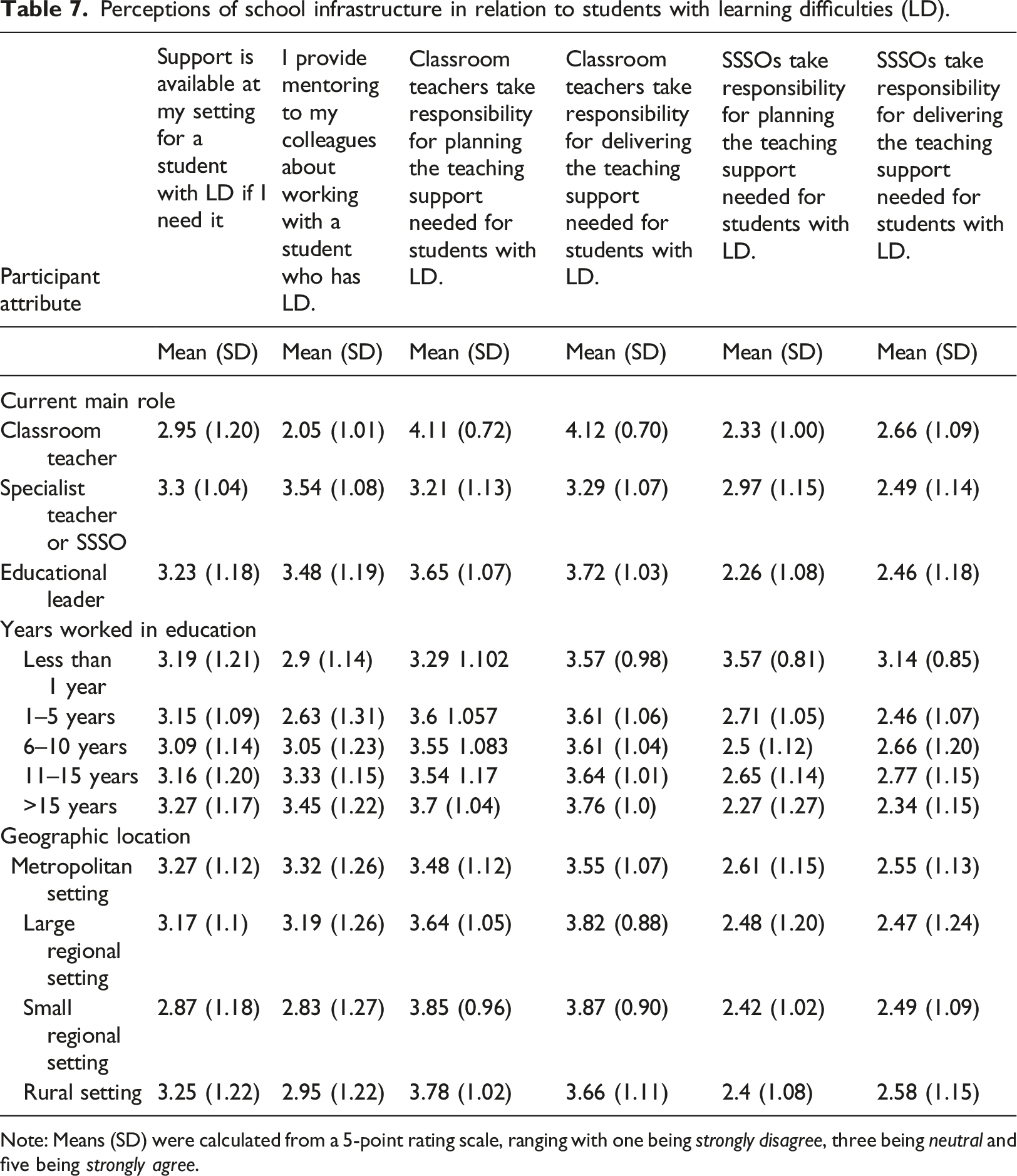
Note: Means (SD) were calculated from a 5-point rating scale, ranging with one being strongly disagree, three being neutral and five being strongly agree.
Quotes below illustrate the conflicting views concerning the planning for teaching students with reading difficulties: … in most schools there is no-one who knows how to deal with students with this type of learning difficulty. (Recently graduated classroom teacher). SSSs who visit schools are often not informed about best practice in this area .... (Recently graduated classroom teacher). Teachers and teaching staff rarely consult with SSSs regarding best practice interventions for students with literacy difficulties as they see it as their domain. (Experienced metropolitan based SLP).
Category 3: Accessing up-to-date knowledge about students with reading difficulties
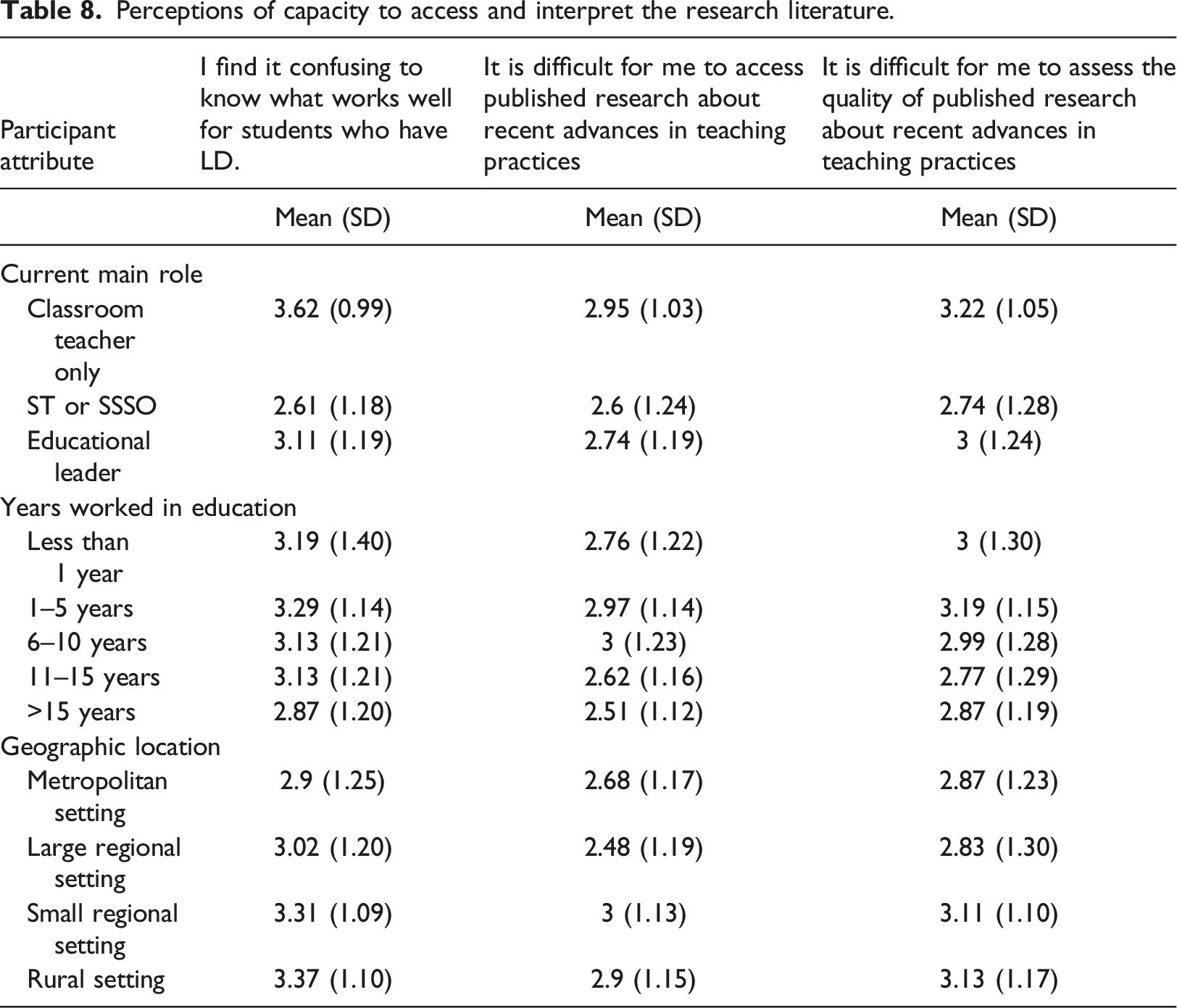
Perceptions of capacity to access and interpret the research literature.
Views on the importance and feasibility of strategies for working with students who have reading difficulties
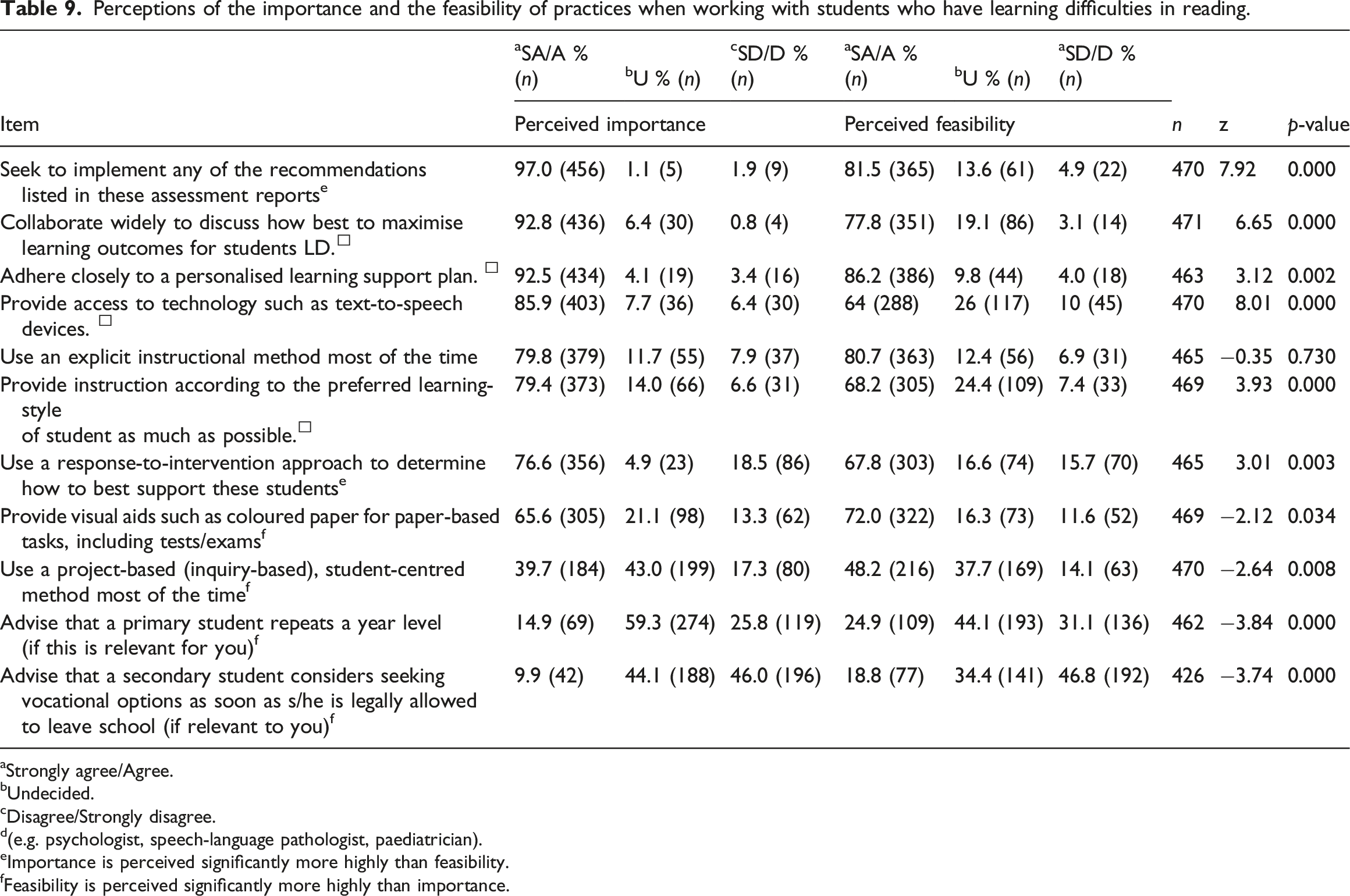
Section C asked participants to judge both the importance and the feasibility of 11 different teaching practices when working with students who have reading difficulties.
Importance
Perceptions of the importance and the feasibility of practices when working with students who have learning difficulties in reading.
aStrongly agree/Agree.
bUndecided.
cDisagree/Strongly disagree.
d(e.g. psychologist, speech-language pathologist, paediatrician).
eImportance is perceived significantly more highly than feasibility.
fFeasibility is perceived significantly more highly than importance.
Feasibility
A large sample Z-test was conducted to compare the proportions for importance versus feasibility for each practice. For the seven practices recognised as being important (>75% agreement), all but one lagged behind when rated for feasibility (Table 9). There was no significant difference in agreement between perceived importance and feasibility for the practice of using explicit instruction (see Table 9). These comments exemplify the tension between knowing that certain practices are important but not necessarily feasible: Due to lack of funding, training and support, it is difficult to implement some support strategies. (Experienced principal) … intervention is important, but it is not possible for this to happen every day at our school. (Classroom teacher)
Discussion
We explored the perceived confidence, beliefs and attitudes of Victorian-based classroom teachers and their colleagues regarding their work with students who have reading difficulties. We also investigated the teaching practices they considered important as well as feasible in their work. Since we had a large group of participants who represented a range of professional disciplines, years of experience and geographical location of schools, we were able to examine whether any beliefs and attitudes were held more strongly based on these characteristics.
Confidence and knowledge
Our findings point to a mixed and inconsistent picture of participants’ perceived confidence and capacity to work with struggling readers. Although it is difficult to adequately quantify the relationship between perceived confidence and knowledge or practice capacity among participants, our findings in relation to their confidence are alarming. Low confidence for working with struggling readers, reported by more than half of our participants, suggests that students who are already vulnerable, may be doubly disadvantaged by virtue of their learning difficulties as well as the quality of the instruction provided. If educators feel ill-equipped to teach students with reading difficulties, it is likely they will be unable to provide adequate support and reasonable adjustments for these students, as is their obligation under the Australian Disability Standards for Education (DSE, 2005). It should be noted, however, that there are freely available online resources 3 available to explain how to abide by the Australian Disability Standards for Education that are available for all educational staff (teachers, educational assistants etc.). This readily available source of information was not mentioned at all by our participants.
Notably, the vast majority of participants felt ill-prepared upon their graduation to work with struggling readers, with classroom teachers apparently feeling less well-prepared than other participants. Notably, 90% of our participants were from mainstream settings, yet many lacked confidence to teach a diverse cohort despite evidence showing that students can make substantial gains when provided with quality and robust intervention for reading difficulties. This is problematic as classroom teachers are typically the first contact-point for struggling readers. Consistent with other Australian research documenting inadequate preservice teacher training for all teachers to provide reading instruction (Buckingham & Meeks, 2019; Rowe, 2005), many of our participants seemed to find working with struggling readers a challenge, which, in turn, is likely to moderate the relationship between self-efficacy and work performance (Stajkovic & Luthans, 1998). Further, our participants’ modest levels of confidence must be considered in light of the unacceptably high prevalence of reading difficulties among Australian students (Buckingham et al., 2020).
Despite many participants describing their lack of confidence to teach students with reading difficulties, more than 75% identified the importance of six teaching practices that have sound empirical support. This is encouraging, but must be considered alongside the fact that many participants also endorsed three practices that lack empirical support. Teaching to a student’s so-called ‘learning style’ has been considered a fruitless endeavour for well over a decade (e.g. Riener & Willingham, 2010) while the use of visual aids and vision-based interventions to compensate for children’s reading difficulties has been comprehensively dismissed by a multitude of professional groups (Barrett, 2009; Handler & Fierson, 2011; Hempenstall, 2002). Support for the importance of privileging an inquiry-based approach to teaching received notably less, yet around 40% of participants indicated they had not yet embraced evidence from cognitive psychology that emphasises the importance of explicit and direct instruction (Sweller et al., 2019) to optimise students’ learning across all domains, including reading. Our findings suggest that many of our participants may struggle to distinguish between practices that have a proven benefit to students with reading difficulties compared to practices that do not. This may be compounded by ongoing promotion of debunked practices in many preservice training programs and educational governing bodies around the country.
A lack of access to published academic literature, which was reported by about half the participants, is also problematic. This, combined with difficulties interpreting such literature, suggests that many school-based personnel are likely to rely primarily on knowledge gained from preservice training which, as noted earlier, may not align with the contemporary evidence.
Infrastructure within school systems: enabler, barrier or both?
As noted above, six well-established practices were viewed by a majority of participants as ‘important’ (along with valuing the practice of teaching to students’ ‘learning styles’). However, all but one had feasibility ratings that were significantly lower than their importance rating. Only the use of explicit instruction was seen as equally feasible and important. This indicates a concerning divide between knowing what should be done and what participants feel is achievable, which further contributes to inadequate but much-needed services for struggling readers.
Resource, time and mentoring limitations were reported widely, particularly by classroom teachers. We cannot verify these reports; however, the perceived lack of supportive infrastructure may also contribute to lowered confidence and self-efficacy to meet the needs of struggling readers. As noted by Van Mieghem et al. (2020), providing support and professional development to educators is key to their successful implementation because inclusive education requires teachers and other school personnel to reconsider the way they work.
Operational factors and responsibilities
Operationally, we found discrepancies regarding participants’ views about who takes responsibility for various aspects, particularly related to planning the support to be offered to struggling readers. In the Australian context, the Disability Standards for Education (DSE, 2005, section 7.2) emphasises the obligation to conduct productive professional collaborations and Dickson (2019) provides a context-specific practical guide about the application of such supports within the Australian needs-based funding model. Although school governance protocols will never be identical, the competing views we found regarding who is taking the lead for planning support, points to confusion at a systemic level. Our findings indicated poor clarity about who is responsible for ensuring the students with learning difficulties receive appropriate instruction and support. This problematic situation raises serious questions about the quality and inclusivity of the education that these students receive. A collaborative team approach along with consistency in governance protocols for all practitioners are central to inclusive educational practices (Dickson, 2019; Lyons et al., 2016; Nes, 2014) whereas our findings seem to perpetuate disciplinary ‘turf wars’ and cannot be in the best interest of students who have reading difficulties. We do not have specific data on participants’ interdisciplinary collaborations, yet the apparent uncertainty about who does what to support struggling readers is an area where clear and agreed parameters are urgently required.
The rapid pace of change in the field of reading difficulties
There is no question that the empirical evidence pertaining to the science of reading and reading difficulties has grown over the last 20 years in sync with advances in the neurosciences (e.g. Dehaene & Dehaene-Lambertz, 2016) and the cognitive sciences (e.g. Sweller et al., 2019). This rapidly evolving landscape helps to contextualise our finding that just over half of our participants reported being confused about what works well for students with reading difficulties. Additionally, participants’ capacities to access and appraise research literature was mixed but limited. Taken together, this depicts a scenario in which most practitioners are unsure about how to support students with reading difficulties. Ultimately, this leaves these students vulnerable to academic failure, and at significant risk for poor longer-term outcomes across personal, economic, health and psychosocial domains. Further reducing the likelihood of practitioners advancing their knowledge about how best to assist struggling readers, many participants identified various barriers to undertaking their own self-directed learning (such as access to journals and interpreting academic literature). Nevertheless, participants’ comments indicated a strong commitment among school-based personnel to always act in the best interests of students, with some participants committing vast amounts of time for their own professional learning and self-study.
Limitations
Our study is limited by the fact that we recruited participants from one sector (government) in only one state in Australia (notwithstanding that the government sector is the largest and Victoria is the second-most populous state in Australia). Further, our participants were registrants at a designated workshop and therefore, we may have recruited a skewed sample of teachers with a particular interest in reading difficulties. Nevertheless, we are encouraged by the number of participants who chose to attend the workshop, the cross-disciplinary representation and the spread across metropolitan, regional and rural schools. Although using a cross-sectional survey design was an efficient method of gaining a snapshot view to address the research questions, we recognise that survey data might not capture the more nuanced aspects of participants’ thoughts and experiences about the research topic, and does not allow the extrapolation of cause-effect relationships.
Conclusions
Our study highlights the reservations among many school-based personnel, particularly classroom teachers, about their confidence and to a slightly lesser extent, their knowledge, to work inclusively and effectively with students who have reading difficulties. This is deeply concerning, particularly considering that these students are a highly vulnerable group, and the consequences of poor reading skills are often far-reaching. The importance of high-quality evidence – informed intervention for students with reading difficulties, along with adequate time and material resourcing for all practitioners is non-negotiable if we are to uphold students’ rights to an inclusive education and to achieve a just, socially equitable, and high-performing education system. University preparation programs should be required to demonstrate, ideally via accreditation processes, that their graduates have at least the core competencies to provide evidence-based classroom reading instruction and intervention. Those who teach and/or provide governance for students with reading difficulties, can positively alter the life-course for these students. To achieve this in the classroom, systemic change is urgently needed at several levels, including educational administration, school leadership and university preparation programs, as well as the Australian Professional Standards for Teachers (Australian Institute for Teaching and School Leadership, 2017) which are used to accredit Initial Teacher Education programmes.
To advance research in this area, we recommend replication of this study targeting a wider sample. Research that explores the lived experiences of staff in schools who are working with students who have learning difficulties is also recommended. Seeking the views and perspectives from students themselves as well as their parents, would further contribute to the depth of understanding about how best to provide academic support. Finally, to provide greater clarity at the level of governance regarding students with reading difficulties, research that analyses policies to identify and support these students is needed. Findings could then be compared with the research evidence about what works well for these students.
Supplemental Material
Supplemental Material - Educators’ perspectives about teaching and supporting students with learning difficulties in reading
Supplemental Material for Educators’ perspectives about teaching and supporting students with learning difficulties in reading by Tanya Serry, Pamela Snow, Lorraine Hammond, Emina McLean and Jane McCormack in Australian Journal of Education
Footnotes
Acknowledgements
We gratefully acknowledge financial support and practical assistance from the Victorian Department of Education and Training (name redacted) for her support and assistance with the entire project. We also acknowledge that valuable guidance provided by Dr Kate de Bruin on an earlier draft of this paper. We are most appreciative of the 523 participants who gave up their time to complete the survey. We are grateful to Dr Graeme Byrne for statistical support and to Professor Carmel Diezmann for feedback on an earlier draft of this manuscript.The views expressed in this article are those of the authors and are not necessarily shared by the Victorian Department of Education and Training.
Declaration of conflicting interests
The author(s) declared no potential conflicts of interest with respect to the research, authorship, and/or publication of this article.
Funding
The author(s) disclosed receipt of the following financial support for the research, authorship, and/or publication of this article: This work was supported by the Victorian Department of Education and Training.

Supplemental Material
Supplemental material for this article is available online.
Notes
References
Supplementary Material
Please find the following supplemental material available below.
For Open Access articles published under a Creative Commons License, all supplemental material carries the same license as the article it is associated with.
For non-Open Access articles published, all supplemental material carries a non-exclusive license, and permission requests for re-use of supplemental material or any part of supplemental material shall be sent directly to the copyright owner as specified in the copyright notice associated with the article.
