



Abstract
Inclusive education is central to achieving high-quality education for all students and is a recognised commitment of the Australian government under international human rights law. However, Australia’s lack of commitment to move away from segregation is reflected in its persistence in maintaining and funding segregated (special) settings. Queensland led the way with the introduction of an inclusive education policy in 2018; nonetheless, this does not go far enough, as there is no commitment to diminish segregated schooling for students with disability. This lack of action works against the effective implementation of the policy. Using the Framework of Drivers for and Barriers to the Closure of Special Schools, we conducted a thematic analysis focussing on societal, systemic, school and family drivers for and barriers to educational desegregation. Our findings indicate where and why discrimination, segregation and exclusion remain strongly embedded in our society and education system. We provide recommendations for future reforms to the Disability Standards for Education in Australia.
Introduction
The United Nations Convention on the Rights of People with Disability (UNCRPD) Article 24, General Comment No. 4 (GC4; United Nations, 2016) states that there is an obligation, ‘to move as expeditiously and effectively as possible’ towards the realisation of the inclusive education rights of students with disability which, ‘is not compatible with sustaining two systems of education: mainstream and special/segregated education’ (United Nations, 2016, p. 13). However, the seductive nature of a dual system is common throughout the world (Buchner & Thompson, 2021) and many countries, including Australia, espouse and even actively support inclusive education, while continuing to fund segregation. The term ‘segregation’ is used to describe special schooling for students with disability and the term ‘desegregation’ has been used to describe the process of closing special (segregated) schools and progress inclusive education reform (Au Coin et al., 2020; Köpfer & Óskarsdóttir, 2019).
Australia’s lack of commitment to desegregation was evident in an analysis of state/territory and national Government reviews and inquiries into the education of students with disability (Lassig et al., 2022). Most recently, the 2020 review of the Disability Standards for Education, 2005 (DSE; Cth), which outline the rights of Australian students with disability and schools’ obligations to these students, highlighted concerns that the DSE is inconsistent with the UNCRPD and questioned whether Australia is complying with its international obligations regarding inclusive education (Australian Coalition for Inclusive Education, 2021). The DSE (2005) specifically states that it is not unlawful to provide specialised units or schools.
Globally, educators are questioning the efficiency and equity of resources to support special education. ‘Funding for students with disabilities accounts for 12–20% of the overall education budget in most countries, and special education costs more per student than regular education and appears to be escalating’ (Banks, 2021, p. 16). So too are advocates and educators questioning the educational and moral premise of segregated schooling (e.g. Slee, 2018). It is clear that a dual system of mainstream and special schools is hindering the reform that is necessary to create a national inclusive education system and we suggest that special schools, in and of themselves, remain a significant barrier to true inclusive education reform. We propose that educational desegregation must occur concurrently with systemic reform supporting inclusion so that all students can be genuinely included. Our focus in this project is the situation in Queensland, Australia.
A framework of drivers for and barriers to the closure of special schools
Findings of a critical review of Canadian literature about the closure of special schools in Canada were synthesised into the Framework of Drivers for and Barriers to the Closure of Special Schools (hereafter called the Framework; Mann et al., under review). The critical literature review process involved identifying scholarly literature, utilising collaborative analysis and synthesising ideas (Grant & Booth, 2009). Our review, analysis and synthesis of the literature were used to develop the Framework. The Framework (Figure 1) structure outlines descriptive information organised in categories that can be useful to inform policy development and implementation and is appropriate to use as a tool to analyse evidence of drivers and barriers to educational desegregation in Queensland, Australia. There are similarities in the history, culture, society and politics of Australia and Canada (Mycock & Wellings, 2017), and both countries are signatories to the UNCRPD Article 24, GC4 (United Nations, 2016). We were inspired by the literature reporting on the progress of educational desegregation in Canada and motivated to use the Framework to analyse the current situation in Queensland. A framework of drivers for and barriers to the closure of special schools.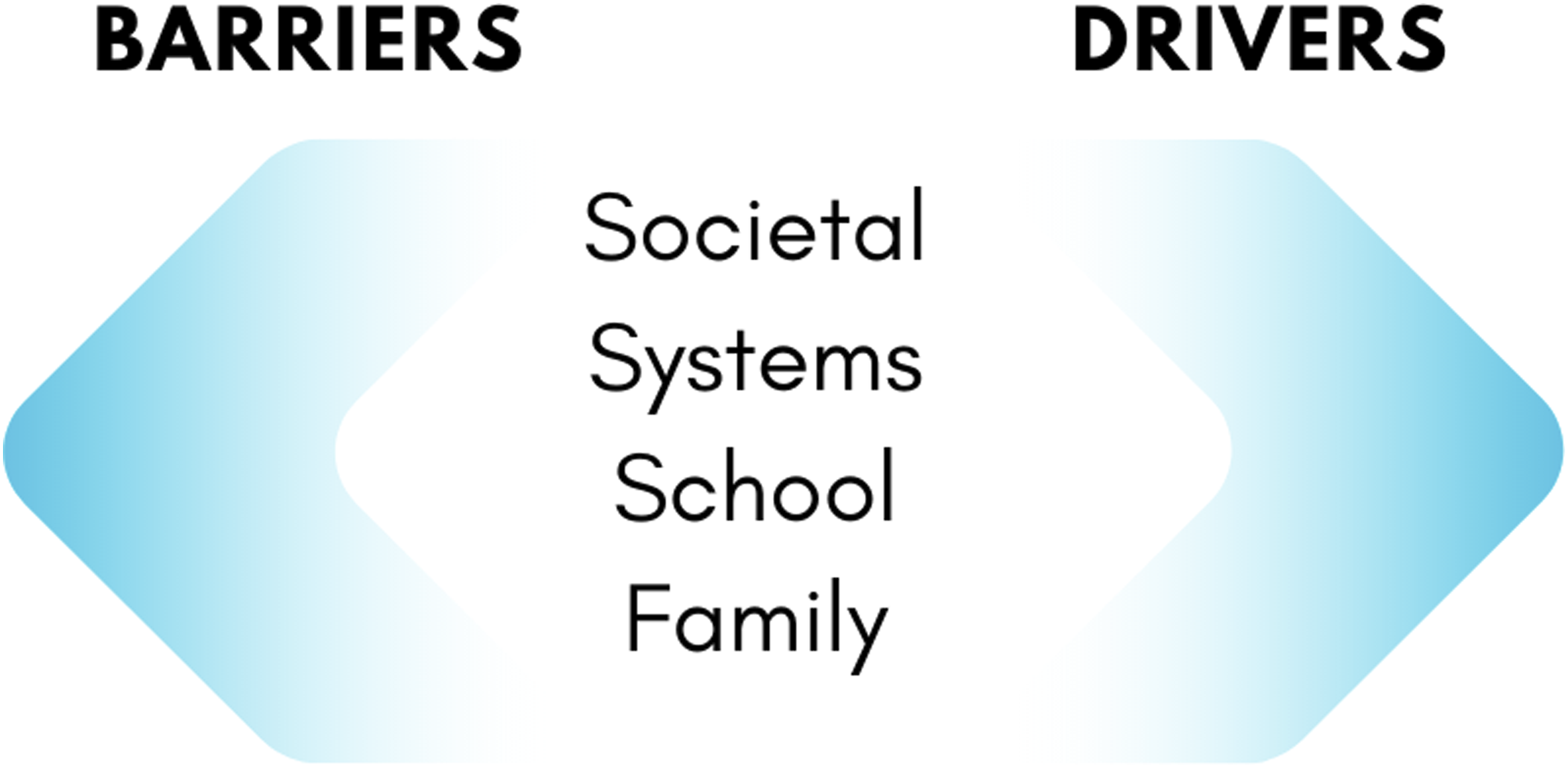
Methodology
This project is a qualitative interpretivist study designed to gather and analyse evidence of drivers for and barriers to educational desegregation in Queensland using the framework in Figure 1. We conducted reflexive thematic analysis (Braun & Clarke, 2012, 2021) of data available in the Queensland Government websites, Department of Education (DoE) policy and strategy documents, media announcements, teacher and principal’s associations, advocacy and parenting groups’ websites, special school websites and public social media posts.
Data collection
We collected textual data by searching the following publicly available sources: government policy and strategy documents on websites from the Queensland DoE, Queensland Teachers’ Union (QTU), Facebook sites for the Minister of Education and Queensland Premier (publicly available sites), Community Resources Unit (CRU), Queensland Advocacy Incorporated (QAI), Queensland Collective for Inclusive Education (QCIE), Queensland Special Schools, Australian Special Education Principals Association (ASEPA) and Australian Coalition for Inclusive Education (ACIE); transcripts of public hearings of the Disability Royal Commission in 2020; and Hansard reports (official transcripts of parliamentary debates).
Searches were conducted using keywords (‘special education’, ‘special schools’, ‘special’, ‘inclusion’, ‘inclusive’, ‘inclusive education’) in targeted websites and within publicly available documents. The search was generally focused on public documents produced after 2018, which was the year that the Queensland DoE introduced the state inclusive education policy. The keywords ‘special school’ and ‘inclusive’ were also searched on Facebook social media posts on public pages of the Queensland DoE page, and selected government executive members’ official Facebook pages.
Researchers engaged in internet research must ensure that there are adequate provisions to protect the privacy of subjects and to maintain confidentiality of any collected data. For this reason, this project obtained university ethical approval (ethics id 5378). We were aware of the possibility of linking data to individuals and the potential harms of disclosure of information. Some data was not identifiable (e.g. information listed on government website as a policy, discussion paper, or a strategic plan) and some data were public media announcements on members of parliament websites. There were instances where identifiable information was reported in the Disability Royal Commission reports, Hansard reports for various hearings and through individual comments on public Facebook sites. Social media postings are often considered public, especially when users make no efforts to restrict access (Buchanan & Zimmer, 2021). Individuals who contribute to public hearings or post comments on public Facebook sites would be aware of the ‘publicness’ of their shared information; however, it is unclear whether participants are aware that their information might be used for research purposes. Therefore, there is a need to ensure that personally identifiable information is removed (Buchanan & Zimmer, 2021). In this project, data files were numbered to identify the data source and to reduce the potential for identification.
Data analysis
The research question for the study was: What are the societal, systemic, school and community drivers for and barriers to educational desegregation in Queensland? This project used reflexive thematic analysis, including both inductive and deductive coding in relation to the Framework (Mann et al., under review). We were guided by Braun and Clarke’s (2012) six-step process for thematic analysis. First, we familiarised ourselves with the data by thoroughly reading the data and making initial observations to discuss as a team. Second, we assigned individual researchers to different domains of the Framework to generate initial codes. Third, researchers worked in pairs to use these initial codes to construct themes that related to our research question and the topics within the Framework: drivers and barriers within each of the four domains of Societal, Systemic, School and Community. Some references were coded under two topics. For example, statements might reflect both a Societal and School barrier. Next, we reviewed themes for overlap and then defined and named themes. When applying the Framework, it was difficult to distinguish between community and societal drivers and barriers. Following discussions amongst the research team, data initially coded at the Community level that mirrored Societal themes was included with Societal drivers and barriers. Remaining data were coded under Family, replacing Community as the Framework’s final domain.
Results
The following section reports the results of the analysis using the Framework of four domains: Societal, Systemic, School and Family. Evidence has been provided to support our coding of data using the Framework.
Societal drivers and barriers
The Framework at Societal level included the impact of widespread attitudes and beliefs about disability, and laws and policies that facilitate or hinder moves to close special schools in Canada (Mann et al., under review). In our analyses of Queensland sources, many examples of drivers and barriers at this level were identified. It is also true that the influence of widespread societal attitudes and beliefs were evident in all other levels of the Framework.
Societal drivers for educational desegregation include a belief in community inclusion – ‘if we hold community inclusion as a goal for people with disability, this must begin in our schools’ (File 47), the view that inclusion is good for everyone – ‘It can change…their life, really. But also, it can have a significant influence on all children, and an understanding and respect for diversity in a school’ (File 29), and the perspective that segregation is harmful – ‘[H]istory has reminded us again and again that the segregation and othering of diverse groups of our own humankind results in the most horrific outcomes’ (File 61). These Societal drivers for desegregation are fortified by a faith in laws and policies. For example, the Queensland Disability Review found that binding international obligations and legislative requirements: ‘create a legal imperative for education providers to deliver the best possible education for students with disability, within an inclusive environment’ (File 40). The drive to close special schools is also strengthened by the belief that inclusive education is a human right, a social justice issue and a moral commitment: ‘We accept all students regardless of their ability, because it is their human right, it is morally right’ (File 31). Furthermore, Disability Royal Commission transcripts indicate that an additional driver for special school closure is knowledge of and reference to research evidence: Probably, if you had asked me 10 years ago, I would have said, ‘No, I think that they [regular and special schools] can coexist’ and we can, you know, keep – the inclusive settings will grow and eventually people will realise you don’t need the special settings. But the data doesn’t support that … it is, to me, untenable that we would continue to offer special education which is inferior on the evidence (File 30).
The most widespread theme regarding barriers to desegregation reform was the belief that specialist, segregated schools are necessary for students with disability. This belief is reflected in data such as: Special schools are a critical part of the offering in education in the State system in Queensland. Such schools provide a crucial context where specialist facilities and services, including teachers specifically qualified in special education, can generate the greatest positive impact [to] the students with the most complex disability and health issues. (File 29)
Powerful subthemes included: (i) the belief that special schools are safer for students with disability; and (ii) the belief that some students, because of the nature of their disability, could only be educated in specialist schools. Comments in these subthemes reflected the belief that special students need special education. These ideas indicate the continued influence of the Medical Model of Disability, in that disability is seen as a deficit in an individual that hinders success in regular schools and requires remediation within a special school (Barton, 2014).
A mirror theme to the belief that special schools play a vital role in our school system is the view that regular schools are inadequate to the task of educating students with disability: ‘Mainstream education isn’t even where it should be for the average learner, let alone one with diagnosed additional needs’ (File 23). Here, too, are influential subthemes, for example, the low expectations held for students with disability and the belief that while inclusion might be a worthy goal, regular schools are not ready yet for such a task.
A widespread societal belief in, and defence of, parental choice regarding school enrolment is especially potent when it comes to parents of students with disability. A belief in parent choice acts as both a driver for and a barrier to the closure of special schools. The belief that parents have a right to choose a school for their children is so powerful to the extent that it could be argued that this is one of the most influential justifications for maintaining a dual system of regular and special schooling. The influence of this societal touchstone is particularly noticeable at the Family level which is discussed below.
Systemic drivers and barriers
The systemic drivers in the Canadian context were described under themes such as education reform, bureaucratic processes, approaches to funding and the collaborative partnering of various stakeholders who contributed to the transformation required for desegregation (Mann et al., under review). In Queensland, a strong theme emerged that highlighted the importance of the DoE’s inclusive education policy and guidelines: ‘Our commitment is to continue our journey towards a more inclusive education system’ (File 38). Closely related to this prominent driver is the theme of the government’s plans to progress inclusion indicating the DoE’s commitment to improving the implementation of inclusive education to meet the commitment stated in their policy. For example, the DoE strategic plan states: … we have mapped the next phase of reform as we continue our journey towards a more inclusive education system. Informed by the views of parent groups and advocates, staff and other stakeholders, this plan will support us to drive continuous improvement and further embed policy into practice. (File 38)
However, the strongest theme that emerged was about DoE’s conflicting messages. Despite the commitment to inclusive education: ‘Our commitment is to continue our journey towards a more inclusive education system’ (File 38), which is aligned with the UNCRPD, GC4 (United Nations, 2016), ‘the department will continue to offer parents the choice of enrolling their child, who meets set criteria in highly individualised programs, including through special schools and academies’ (File 35), highlighting the second subtheme, parent choice. Several quotes from the Disability Royal Commission highlighted that the DoE continues to support segregated, special education by building new special schools and undertaking improvements in existing special schools, which seems to conflict with the policy and strategic plan. Shevlin and Banks (2021) would describe this as policy confusion.
Additional key themes were: (i) resources and professional learning to support inclusion; (ii) acknowledging the importance of student and family voice; (iii) promotion of inclusion; (iv) government support for family advocacy for inclusion; and (v) acknowledging research evidence. Each of these drivers are essential for supporting the current state inclusive education policy and guidelines, and for enabling future plans to reform the school system. To create this environment, schools require resources and professional learning on inclusive education, including, ‘greater collaboration in schools and regional teams around inclusive education’ (File 30) and upskilling school leaders’ capacity through initiatives such as funding for principals ‘to undertake Masters in Inclusive Education’ (File 29).
The Canadian review highlighted the complexities of moving to an inclusive system of schooling and particularly discussed issues of funding equity (Mann et al., under review). The systemic barriers in Queensland were related to operationalising the vision and disassembling the interdependent structures that support segregation, including funding. In addition, the data highlights policies and processes that perpetuate segregation and do not support progress in the journey towards a more inclusive education system. These include a lack of human and physical resources to support inclusion and political reports and government announcements about building new special schools such as: Every Queensland child deserves the best education, and the new Special School in XX is making a huge difference to the lives of students and staff. It’s one of eight new schools we opened this year with four more to be delivered next year, and we’ve just announced US$20 million to build the next stage under our economic recovery plan to create more jobs (File 59).
There is also evidence of ongoing investment in special schools, highlighting a barrier to achieving the vision of inclusion documented in the inclusive education policy and strategic plan.
One of the submissions to the Disability Royal Commission identifies the discriminatory criteria that are part of the policy for eligibility for enrolment in a special school. For example: The person is unlikely to attain the levels of development of which the person is capable unless the person receives special education … The person’s educational program is best delivered in a special school taking into account the appropriateness of this placement for the individual concerned. (File 14).
School drivers and barriers
Four key school drivers for desegregation in the Canadian context were identified: (i) leadership at the school level, (ii) teacher attitudes, (iii) increasing teacher skills in inclusive practice and (iv) change in special education teachers’ roles (Mann et al., under review). In contrast, five key barriers related to: (i) the gap between policy and practice, (ii) losing special education field, (iii) watered down standards, (iv) fears for the well-being and safety of students with disability in the regular school and (v) reluctance of teachers and teacher union opposition.
Our data generated evidence in support of five areas in the school context which can strengthen inclusive culture and practice and thereby lead to special school closure: (i) development, support and evaluation of inclusive practice, (ii) inclusive culture, (iii) leadership for equity and inclusion, (iv) increased teacher skills in inclusive practice and (v) allocation of resources. The most prevalent theme in this data set was related to the development, support and evaluation of inclusive practice. First-person accounts from senior education staff highlighted that the transition to a fully inclusive system has been a slow and carefully planned process underpinned by a whole team approach combined with regional support (i.e. inclusion coaches) and engagement with research evidence on effective inclusive practice. For example, staff with expertise in inclusive practice emphasised that: ‘engagement with the research is essential to strengthening practice’ (File 31). They shared that: ‘we spent, a course of 6 months very thoroughly and systematically planning for the change in what we did’ and ‘genuine inclusive education isn’t achieved overnight by closing a segregated class and having those students turn up in a regular class the next day’ (File 31).
The development of successful inclusive practice has also been informed by exemplars of full inclusion in secondary schools in Queensland. Inclusive practices enabled all students to participate on the same basis as their peers in learning activities with differentiation on the complexity of curriculum content and the pace of instructional delivery. For example, a senior education officer shared: So every one of those students attends mainstream classroom … access curriculum at their level … receive the support they require for their complex needs. They attend all and participate in all school events. And they are definitely valued members of our school community … there are no separate places for them to go. (File 31)
Teacher attitudes had been identified as an important ingredient of inclusive culture and as a key driver for inclusive education that contributed to desegregation. Teachers’ high expectations for students with disability underpinned by a strengths-based approach guided the provision of universal strategies to effectively support every student to participate and succeed. For example, a senior education officer with expertise in inclusive education emphasised that: the goal for us is to ensure universally that all students have the strategies that they need and that we’re not constantly doing lots of individual things, that we’re taking those common practices and ensuring they’re implemented across our school for all of our students because it’s all quality practice for everybody. (File 31)
Leadership for equity and inclusion was identified as instrumental in the movement away from special schools. The recognition of inclusive education as a legal and a moral imperative by school leaders was expressed as willingness to nurture whole school inclusive culture and create opportunities to plan and implement change with the risks it has entailed. For example, a senior education officer pointed out that: … ultimately, it comes down to culture and leadership … I often defer to my principal who is very much a part of this journey … A willingness, you know, and a moral imperative within the key leaders of our school to turn this ship away from something that we knew was not the right practice and to head into uncharted waters with nothing more than it being the socially just thing to do … knowing that this is the important work and is the work of school improvement and is incredibly important for every child in our school. (File 31)
Developing teachers’ skills through supporting and coaching classroom teachers emerged as another driver for desegregation. For example, a senior education officer shared their belief that: … it is very much my belief that every teacher does have the capacity to do this work and to teach diverse classrooms well, but in order to do that…we need to build their capability and give them the time in order to ensure that they plan well to do that, and that they are able to seek coaching and guidance in the delivery…because it’s not necessarily something that you just wake up knowing how to do, particularly as we’re very aware that students with disability in regular classrooms might be something new for a lot of people ... (File 31)
School barriers to desegregation are the beliefs, attitudes and understandings of inclusion many educators continue to hold about the ability for every student to be accommodated within desegregated settings (Mann et al., under review). Evidence from this study suggested that these beliefs create gaps in how policy is translated into practice and promote school-level barriers to desegregation that influence parents’ placement choices. For example, one school principal, while supportive of the push for greater inclusivity, stated that: ‘they struggled to envision a public education system that could accommodate absolutely everybody’ (File 61). Scepticism, disbelief and mistrust from educators about desegregation creates resistance to the inclusion of students with disability in desegregated contexts: ‘There are some teachers who believe that for students with a disability there are special places for them, who refuse to have them in their classroom’ (File 61). At the most foundational level such beliefs can threaten students’ feelings of safety and can make families and children feel unwelcomed in desegregated educational environments. More importantly, these beliefs can inadvertently influence parents’ placement decisions and fuel fears about their children’s well-being and safety in desegregated settings.
Furthermore, policies, processes and practices: ‘that continue to perpetuate segregation and exclusion of students without it really having that intent but as a by-product of the structure that they represent’ (File 29) constitute school-level barriers to desegregation. Alarmingly, evidence suggested that some school facilities do not still provide adequate physical access to their sites for students with disability. These systemic barriers observed within schools in combination with school leadership in turn filter down to the implementation of curriculum delivery and practices.
Our study highlighted barriers to desegregation as reflected through inflexible delivery of curriculum that was not student-centred or differentiated, and did not provide equitable opportunities to demonstrate learning. For example, low expectations of learning were evident, as well as parents’ perceptions that their children were not being taught or provided the support they needed (File 29, File 31). Other important barriers that emerged from the data included a lack of teacher capacity to support diverse learners with their current knowledge, understanding and beliefs, as well as an overcrowded curriculum with limited time to scaffold learning in lessons. Limited opportunities for parental engagement and communication were also evident, together with a range of negative experiences described by parents, including their child being refused enrolment, lack of consultation, power imbalances, as well as disrespectful communication and a lack of support from school leadership and teachers.
School barriers to desegregation are exacerbated by teachers’ lack of experience of inclusion and how it may inform desegregation and inadequate professional learning. This may result in misunderstandings about special education and inclusive education that in turn informs the beliefs and practices that create the school barriers discussed here. Left unaddressed, these barriers perpetuate a recurring cycle of segregation intensified by lack of appropriate professional learning and educational supports to promote changes to policy and practice that in turn reduce school-level barriers to desegregation.
Family drivers and barriers
Similar to the Canadian experience, parents emerged as both key drivers of, and also barriers to, special school closure in Queensland. When driving special school closure, parents influence educational decisions regarding students with disability in three main ways. First, they employ their preference for a unified system, and reject special school placement; for example, ‘Every child should be able to go to their local school where their sibling is, where their community is and where their family wants them to be’ (File 27). Second, they join with other parents to advocate for inclusive schooling and the closure of special schools: ‘Last year a group of families got together and tried to decide…what they would like to put forward and they argued then at least that no new special schools would be built and opened’ (File 30). Third, parents collaborate with educators to create change for their sons and daughters with disability, for example: ‘We have been very open about our desire to work collaboratively with the Department in effecting real change and our willingness to include open and frank feedback as an element of this collaborative work’ (File 9). Educators, too, acknowledged the importance of parent–educator collaboration in the move towards more inclusive ways of working.
Our analyses showed that parent dynamics in driving special school closure were not one-dimensional. Alongside parental influence on systems we found a systemic influence on parents. In the documents we explored, there were various references to building the capacity of parents to advocate for and support inclusive schooling. For example: ‘invest[ing] heavily in parent education, starting early in a child’s life, so they are aware of children’s rights to and benefits and outcomes of inclusive education and move away from thinking children need “special” education’ (File 60). Similarly, another parent organisation described being funded to, ‘build the capacity of families to advocate for, nurture, and sustain their child’s successful participation in inclusive education’ (File 48). A witness at the Disability Royal Commission offered recommendations to ensure that families are: … told about the Disability Standards for Education, the United Nations Convention on the Rights of Persons with Disabilities, the evidence, the policies, and they can be guaranteed the same supports in the regular school setting. I think there needs to be processes of assistance for families who want to transfer or feel that they are being coerced out of the regular system. (File 30)
A belief in, and robust protection of, parental choice and advocacy for their schooling preference has led to ongoing tension in the question of special school closure. As forcefully as some parents demand an end to segregated schooling, other parents demand, just as strongly, the maintenance of the dual system. Social media platforms are sites for hotly contested debates about what is best for students with disability, for example: Parents have the right to choose a Special School and your point fails to see this side of the argument. As you state parents ALREADY have the right to send their child to mainstream. Forcing parents into the single system you propose is dictatorship and takes away the right to choose. (File 22)
While parent choice and advocacy are drivers for special school closure, they are also barriers. Through a newspaper article, one parent shares: ‘From my perspective, school choice is essential ... For us that meant a special school. My daughter is just so happy there, she absolutely loves school’ (File 61). Other parents share their preference for special schooling via government Facebook pages (File 57): ‘every parent has the right to send their child to a school of their choice. Many parents do not want their children in mainstream schools’ (File 24). Parental choice has been used as an advocacy tool for maintaining special schools: ‘It was deemed by a number of parents that special schools are an essential part of the educational landscape in Australia and that nothing can be gained by limiting options’ (File 17).
Discussion
In 2019, the UNCRPD Committee reviewed Australia’s progress towards meeting the requirements of GC4, and recommended developing a national plan for inclusive education that addresses segregation, seclusion and isolation and the lack of age-appropriate settings for students with disabilities at all levels and redirecting adequate resources to a nationwide inclusive education system for all students (United Nations, 2019). We suggest that progressing a national plan for inclusive education cannot proceed without consideration of the drivers for and barriers to desegregation at Societal, Systemic, School and Family levels. Our findings indicate where and why discrimination, segregation and exclusion remain strongly embedded in our society and education system in Queensland.
There are Societal views that specialist, segregated schools are necessary. Our findings also indicate the view that regular schools are inadequate to the task of educating students with disability. Further to these findings, it is also apparent that societal views supporting parent choice regarding enrolment are very powerful and support the maintenance of a dual system of regular and special schooling.
The Systemic barriers in Queensland were related to operationalising the vision and disassembling the interdependent structures that support segregation, including funding. The challenge of progressing the strategic plan of advancing inclusive education while still providing parent choice for special and segregated schools indicates that discrimination, segregation and exclusion remain strongly embedded in our society and education system. The discriminatory criteria evident in the policy for eligibility for special school enrolment is one example. The sources of data in the submissions of the Disability Royal Commission indicate various views that illustrate confusion (Banks, 2021) and lack of alignment between the inclusive education policy, strategic plan and what is happening in practice.
Regarding School-level data that perpetuate segregation, our evidence indicates that people in schools have beliefs and attitudes that perpetuate a medical and special education model of supporting students with disability and may lack an understanding of the differences between special education and inclusion. Additionally, policies, processes and practices in schools promote school-level barriers to desegregation.
Similar to the themes at the Societal level, Family level themes indicated family beliefs in, and robust protection of, parental choice and advocacy for their schooling choices. Some parents demanded that the dual system be maintained. Parent choice can work as a barrier and education systems continue to offer special schools as a choice if it is perceived as a preference. In Queensland, some parents are encouraged to choose a special school placement for their child under the assumption that children with a disability are better placed in special education settings; however, there is no evidence to support this belief (Hehir et al., 2016). Evidence instead suggests that placement in segregated settings for children with disability has resulted in a marginalised population that has been institutionalised, undereducated, socially rejected and excluded from society (Australian Coalition for Inclusive Education, 2021; for a review, see de Bruin, 2020).
Moving forward, all students and families need to feel welcomed in schools. It is imperative that there is adequate school support for teacher professional learning across the education system so that changes in beliefs and practices to support inclusion can occur. Furthermore, it is essential that educators are given more time in their roles to collaborate with families, each other, and multi-disciplinary support in inclusive settings to adequately enhance their own professional knowledge and understanding and also promote implementation of inclusive practices. In addition, the importance of school leadership and support cannot be overlooked as part of this professional learning to ensure an inclusive school culture is promoted from the top down and ensures connectedness and sense of belonging for all staff, families and students in schools (Harris et al., 2020).
Professional learning also needs to strengthen teachers’ capacity on adjustments, differentiation, developing and implementing curriculum that is flexible and responsive to diverse learners needs (Frankling et al., 2017). Furthermore, promoting a strength-based approach to practice, providing positive behaviour support in schools for the students’ social emotional well-being are other essential elements. Most importantly, practices that support and educate schools and improve family–school collaborative partnerships are key to truly inclusive practices on the ground that welcome all students (Mann et al., 2019).
Recommendations for future reforms to the disability standards for education in Australia
Based on our findings, we make the following five recommendations: 1. Professional learning about the DSE needs to go further than sharing knowledge and explaining responsibilities about implementation. There needs to be attention to addressing deficit and ableist mindsets that support discrimination, segregation and exclusion. 2. The DSE needs clear expectations and models of practice about developing parent–school partnerships and student consultation. Listening to the voices of parents and students who have disabilities can support greater society awareness of the benefits of inclusive education for all. 3. There needs to be a greater focus on understanding the rights of students with disability to access inclusive education. Parents of young children with disability need particular access to this information. 4. It must be ensured that education providers across all jurisdictions in each state and territory have policies and strategic plans that align with the DSE. 5. Accountability for implementing the Standards needs to be evident in the Australian Professional Standards for Teachers (AITSL, 2022), and the Australian Professional Standard for Principals and the Leadership Profiles (AITSL, 2019).
Limitations
We are aware that the article documenting the detailed development of the Framework of Drivers for and Barriers to the Closure of Special School has not been published at the time of writing, but we believe that the Framework provides an analytic tool for understanding why discrimination, segregation and exclusion remain embedded in our society and education system in Queensland. We also acknowledge that the data collected from Facebook groups were collected using convenience sampling, which has the inherent limitation of sampling bias, thereby preventing generalisation of the findings to a greater population.
Conclusion
Using the Framework of Drivers for and Barriers to the Closure of Special Schools (Mann et al., under review), we conducted an analysis of data from Queensland DoE policy and strategy documents, media announcements, teacher and principal’s associations, advocacy and parenting groups and public social media posts. Our analysis identified a range of drivers for and barriers to desegregation at the Societal, Systemic, School and Family levels.
We characterise the current state of affairs as systemic inertia, where the dual system remains unchanged and resists any transformation for various reasons and vested interests. The findings from this analysis can help us understand which parts of the system (regular school system, leaders, teachers, resources in regular schools) we need to strengthen so that we can transition smoothly and permanently to a unified education system. It is apparent that often the forces for desegregation are met with equal and opposing forces that work to sustain special schooling. Perhaps this explains why we seem to be at a standstill regarding implementing the UNCRPD requirement to end the dual system of general and special education. Future reforms to the DSE could protect students with disability from discrimination and promote access and participation on the same basis as students who do not have disability.
Footnotes
Declaration of Conflicting Interests
The author(s) declared no potential conflicts of interest with respect to the research, authorship, and/or publication of this article.
Funding
The author(s) disclosed receipt of the following financial support for the research, authorship, and/or publication of this article: This work was supported by the Centre for Inclusive Education, QUT Strategic Grant 2021.
