




Abstract
Formal Indigenous leadership within Australian universities has expanded significantly in the last decade. Given this advancement, understanding how to integrate Indigenous leadership into existing institutional governance structures is an area that requires investigation. Recognising the need to further examine Indigenous leadership in the higher education governance structure, the Walan Mayiny: Indigenous Leadership in Higher Education project commenced in 2018. This Australian Research Council funded project specifically aims to examine the roles and subsequent responsibilities of senior Indigenous appointments within the Australian higher education sector and senior Indigenous higher education roles across Canada, New Zealand and the United States. In doing so, it investigates the responsibilities, impacts, key advantages and barriers of senior Indigenous appointments within Australian universities from an Indigenous perspective. The article provides details of the theoretical framework and research methods adopted within the Walan Mayiny: Indigenous Leadership in Higher Education project. Preliminary findings and demographic information pertaining to the participants who have currently contributed to the study will be presented in order to help us gain a better understanding of the role and subsequent value of Indigenous leadership within the higher education sector.
Introduction
While it has been widely recognised that Indigenous Australians are significantly under-represented across the higher education sector 1 (Bunda et al., 2012; Day et al., 2015; Hogarth, 2017; Rigney, 2010, 2011; Trewin & Madden, 2005; Trudgett, 2009, 2013), Page et al. (2017) reported that the number of Indigenous students in higher education settings and senior Indigenous staff employed by Australian universities has steadily increased. Despite the number of senior Indigenous appointments increasing, slightly less than half of Australian universities are still without an Indigenous senior appointment.
Recognising that limited research has been undertaken in terms of the involvement of Indigenous leadership within the governance structures of Australian universities (Coates et al., 2020), the Walan Mayiny: 2 Indigenous Leadership in Higher Education project commenced in 2018. The project is led by Indigenous researchers, with two authors being Wiradjuri women from central New South Wales and the third author being an Indigenous woman from Queensland. The objective of the project is to examine Indigenous leadership across higher education settings. While the main aim of this article is to provide a comprehensive overview of the methodological approach adopted within the project, preliminary findings are also discussed. This article offers a new lens to help us understand how to best integrate Indigenous leadership in the higher education governance structure across Australian universities.
Leadership within Australian higher education
Leadership, in this case, considers the social and situational contexts within the institution (Hoff, 1999; Scott et al., 2008; Spillane et al., 2004; Tight, 2014). Leaders of today’s higher education institutions promote collegiality through the practice of consultation and ability to create a shared vision (Bolden et al., 2009; Scott et al., 2008). Nevertheless, while a move towards a more collegial approach has been noted, until recent times, Indigenous Australians have been under-represented at senior levels, following a history of exclusion and marginalisation (Coates et al., 2020), meaning that universities were mostly failing to live by the values entrenched in their social inclusion strategic agendas, thus largely, if unintentionally, reproducing white dominated inequity (Coates et al., 2020; Ladson-Billings, 1998). This now raises the essential question, pivotal to this study – in what way is Indigenous leadership included and valued in the wider conversations underpinning leadership in higher education?
Indigenous leadership in higher education
It has been well documented that Indigenous Australians are significantly under-represented in the higher education sector, both as students and within the workforce (Bunda et al., 2012; Coates et al., 2020; Day et al., 2015; Hogarth, 2017; Page et al., 2017; Rigney, 2010, 2011; Trewin & Madden, 2005; Trudgett, 2009, 2013). Spanning a period of three decades, a number of government-initiated reviews investigated the disparity between non-Indigenous and Indigenous Australians in higher education (Behrendt et al., 2012; Bradley et al., 2008; Department of Employment, Education and Training, 1989, 1994). Such reviews made similar recommendations to increase Indigenous student participation as well as the number of Indigenous Australians employed within the institutions by setting target rates, without suggesting strategies as to how to achieve such targets. Instead, the onus was placed on institutions to develop specific strategies for achieving those targets.
Similarly, Andersen et al. (2008) examined the participation rates of Indigenous Australian students in higher education and extended their analysis to the representation of Indigenous staff across the sector. They found employment rates of Indigenous people to be comparatively low in comparison to non-Indigenous Australians. At the time of their study, Indigenous people only made up 0.65% of the workforce across Australian universities. Andersen et al. (2008) argued that a greater presence of Indigenous academic staff was vital to improving ‘Indigenous higher education success’ (p. 1). As well as being positive role models, Indigenous academic staff provide Indigenous students with culturally appropriate support, which is ‘connected to Indigenous student success at both undergraduate and postgraduate level’ (p. 6).
Looking specifically at the governance within Australian universities, the On Stony Ground Report (Moreton-Robinson et al., 2011), called for an Indigenous ‘presence’ at all levels of every Australian university. However, in spite of this recommendation, examining the employment of Indigenous academic staff further, Bunda et al. (2012) identified that although a number of Australian universities have an Indigenous employment strategy in place, ‘Indigenous people were to fill a gap within universities merely by being present, embodying cultural difference without significant change to the status quo’ (pp. 941–942). In fact, at the time of their study, Bunda et al. (2012) found that while Australian universities had employed more than 2000 Indigenous people, this only equated to the equivalent of 266 full-time staff (1.1% of university personnel). Bunda et al. (2012) also reported that the majority of the positions held by Indigenous Australians were administrative and not academic positions.
In 2018, it was reported that the number of Indigenous Australians employed at Australian universities had steadily increased (Department of Education and Training, 2019) and the research space within higher education had started to shift, ‘providing the opportunity for intergenerational transfer of Indigenous research practices and knowledge’ (Ford et al., 2018, p. 277). However, notwithstanding the observed shift, the ability to embed Indigenous Knowledges and practices still varied greatly across disciplines and Australian higher education institutions (Bodkin-Andrews et al., 2019). Furthermore, such ‘observations and shifts’ failed to identify Indigenous leaders as key decision-makers across the wider university governance structure. In fact, Page et al. (2017), reported that Indigenous Australians remained significantly under-represented in senior management positions in universities. Seemingly, Indigenous academics ‘were excluded from the major decision-making structures of their institution’ (Coates et al., 2020, p. 3).
This is not a new phenomenon. In 2018, the National Aboriginal and Torres Strait Islander Higher Education Consortium (NATSIHEC) published a report (see Buckskin et al., 2019) for the Australian Government Department of Education and Training, with the aim to increase Indigenous higher education participation and employment outcomes across the higher education sector. While the objective of the report was to establish how to best support universities with adopting a whole-of-university approach to improving Indigenous higher education outcomes, there was a strong focus on increasing the Indigenous academic workforce. Similarly, Smith et al. (2018) noted that Indigenous leaders being involved in high-level strategic discussions were critical to the success of improving Indigenous higher education outcomes.
Recognising the importance of Indigenous governance across the higher education sector, Universities Australia 3 (UA), in collaboration with the NATSIHEC, 4 established the inaugural Universities Australia Indigenous Strategy 2017–2020 (Universities Australia, 2017). While the Strategy clearly articulated a number of objectives, central to this discussion, the Strategy sought to increase the number of Indigenous academic and research staff, with a strong emphasis on developing Indigenous leadership (Universities Australia, 2017).
More recently, Indigenous leadership within Australian universities has steadily increased, for example the number of Indigenous Pro Vice-Chancellors (PVCs) has increased (see Coates et al., 2020). This increase may be attributed to the introduction of a requirement whereby universities must have a senior Indigenous appointment (Trudgett et al., 2020) to be eligible for Indigenous Student Success Program funding (Australian Government, 2017). In addition to a push for more Indigenous appointments in general, scholarly work has also focussed on Indigenous women’s leadership across the higher education sector (Fredericks et al., 2011; Fredericks & White, 2018; Hogarth & Bunda, 2018; Mooney et al., 2018; Wyld, 2010). However, understanding how to best integrate Indigenous leadership in the higher education governance structure at a senior executive level is an area that requires further investigation (Coates et al., 2020).
Understanding the best methods to incorporate Indigenous people into the leadership structures of institutions is not just a question relevant to Australian universities, as there has already been some considerable work undertaken in Canada, New Zealand and the United States (Barnhardt, 2008; Christman et al., 2015; Gipp & Warner, 2009; Kenny, 2015; King, 2008; Pewewardy, 2015; Secatero, 2015; Vogel & Rude, 2015). Research suggests that the two main benefits of Indigenous leadership to universities are diversity in curriculum by incorporating Indigenous ways of knowing (Ford et al., 2018; Pewewardy, 2015) and increased Indigenous student engagement (Gale, 2011). Furthermore, Auguilera Black-Bear (2015) asserts that Indigenous leadership in institutions requires people to ‘maintain a consciousness of the goals of self-determination and decolonization of education through culturally responsive education’ which must be developed within the context of a local community (Auguilera Black-Bear, 2015, p. 198).
Walan Mayiny: Indigenous Leadership in Higher Education
This article serves two main objectives. First, it provides a comprehensive overview of the theoretical framework and research methods adopted in the study to enable other scholars wishing to pursue a similar inquiry and to critically assess and build upon the theoretical framework presented here. Second, the article reports on the demographic representation of participants who have contributed to the study in order to provide a better understanding of the role and value of Indigenous leadership within the higher education sector. The actual results of the study will be presented in subsequent publications.
Having recognised the need to investigate Indigenous leadership in the higher education governance structure, the Walan Mayiny: Indigenous Leadership in Higher Education project commenced in 2018. The project specifically aims to examine the responsibilities and impacts of senior Indigenous appointments within the Australian higher education sector. This is important because it provides a holistic view of how Indigenous leadership is currently perceived and valued in universities across the nation. Identifying the essential components of Indigenous leadership will assist with establishing a model of best practice for the inclusivity of Indigenous leadership in higher education governance structures and promote educational sovereignty for Indigenous Australians. This is significant because it helps centre the voices of Indigenous Australians across and within institutions.
Additionally, examining what has occurred internationally and comparing it to the Australian context is fundamental to this project as it can provide benchmarks and assist with informing and establishing a framework of best practice. In order to ascertain an international perspective, the study will involve First Nations senior university executive from Canada, New Zealand and the United States to establish how other First Nations groups have provided leadership and governance across their higher education institutions. We chose countries with Indigenous populations and higher education settings that somewhat resemble the structure and governance of Australian educational institutions.
Theoretical framework: Indigenous Standpoint Theory and Institutional Theory
The broader project is underpinned by Indigenous Standpoint Theory (Foley, 2003; Moreton-Robinson, 2013; Nakata, 1998). Nakata (2007, p. 215) defines three principles critical to an Indigenous Standpoint Theory:
‘Cultural interface’ – recognition of how knowledge and understanding of Indigenous Peoples is ‘discursively constituted’ within complex social constructs. ‘Indigenous agency’ – provides a means for Indigenous peoples to see their position relative to non-Indigenous people, while maintaining knowledge of how they are positioned, and to uphold their position if needed. ‘Constant tensions’ – recognition that the ongoing tensions between Indigenous and non-Indigenous dualities are experienced in a physical sense and go beyond a priori assumptions.
According to Nakata (2007), these three principles allow for a critical standpoint in relation to Indigenous peoples position within knowledge, as well as in relation to non-Indigenous people’s understanding of knowledge. An Indigenous standpoint can assist with untangling and unravelling Indigenous people ‘from the conditions that delimit who, what or how we can or can’t be, to help see ourselves with some charge of the everyday, and to help understand our varied responses to the colonial world’ (Nakata, 2007, p. 217).
Significantly, Indigenous Standpoint Theory (Nakata, 2007) is grounded in the resistance (and resilience) to racial oppression (Povey & Trudgett, 2019; Rigney, 1999) and the self-determination of Indigenous Australians. Furthermore, while Indigenous Standpoint Theory is a means of resolving conflict between colonial and Indigenous Australian knowledge (Al-Natour & Fredericks, 2016; Ardill, 2013). In this context, Indigenous Standpoint Theory is used to marry the educational content with Indigenous culture so that the research has perspective and meaning for Indigenous peoples and their community (Choy & Woodlock, 2007).
As a method of inquiry, Indigenous Standpoint Theory provides Indigenous scholars with a platform to examine how Indigenous people are understood and implicated in Western knowledge systems and practices. The project is designed in a manner that valorises Indigenous voices from within institutions, by interviewing senior Indigenous Australian leaders, Indigenous Australian academics and senior Indigenous leaders from Canada, New Zealand and North America. The project examines their experiences as to how they believe Indigenous leadership is perceived, included and valued in higher education.
Additionally, Indigenous Standpoint Theory considers the ‘Indigeneity’ of the researcher (Foley, 2003; Martin, 2003; Rigney, 1999). This project has also been conducted by Indigenous researchers from an Indigenous perspective. Two authors (Coates and Trudgett) are Wiradjuri women from central New South Wales, while the third author (Page) is an Indigenous woman from Queensland. The three authors’ academic experiences range from a modest 18 months (Coates) to more than 20 years’ experience in the field of research (Page). All three authors value and embrace Indigenous knowledges and are deeply committed to ensuring the ongoing self-determination of Indigenous Australians, often using research as the vehicle to facilitate cultural renaissance and cultural longevity.
Institutional Theory is also utilised across the study. Institutional Theory has previously been defined and summarised in multiple ways (Cai & Mehari, 2015; DiMaggio & Powell, 1983, 1991; Giddens, 1984; Greenwood et al., 2008; Lammers & Garcia, 2017; Meyer & Scott, 1983; Powell & DiMaggio, 1991; Scott, 2001; Selznick, 1957, 1996; Zucker, 1977). In broad terms, Institutional Theory is a way of examining how the rules and norms of institutions are established, as well as what causes them to adapt and evolve, or become stagnant and fall behind the wider community (Cai & Mehari, 2015).
The development of Institutional Theory can be mapped across three periods (Cai & Mehari, 2015; Greenwood et al., 2008), namely ‘old institutional theory’, which emerged towards the end of the 1940s, ‘new institutional theory’, which developed at the end of the 1970s and a range of ‘new perspectives’, which have evolved since the 1990s. As new perspectives emerged, Scott (2005) noted two key aspects to be considered when researching institutions: rules and beliefs can be reconstructed to guide the actions of organisations, and institutional rhetoric can often vary and conflict within the institutional environment. Applying Institutional Theory to the Walan Mayiny project, Indigenous experiences will be examined against institutional rhetoric, across and within higher education settings.
Indigenous Standpoint Theory and Institutional Theory have influenced a newly developed framework, namely Indigenous Institutional Theory (Coates et al., forthcoming). The authors anticipate that Indigenous Institutional Theory will be employed by Indigenous peoples, nationally and internationally, when investigating the Indigenous experience across a broad range of institutional settings.
Indigenous research ethics
According to Kovach (2009), academic institutions associate ethical research standards with liability concerns. However, researchers contend that the complexity of ethics, in the context of Indigenous research, is less about liability and more about building reciprocal relationships (Ball & Janyst, 2008; Kovach, 2009). Arguably, specific ethical standards, such as informed consent and community trust, are integrated within Indigenous research frameworks.
Additionally, the integrity of Indigenous people or their communities cannot be undermined as a result of Indigenous research (Wilson, 2008). Indigenous and non-Indigenous researchers alike have an ethical responsibility to understand and abide by principles of respect, reciprocity and responsibility when engaging with an Indigenous community (Atkinson, 2001). Examining the concept of Indigenous research ethics further, Kovach (2009) argued that ‘a relational approach is built upon the collective value of giving back to the community’ (Kovach, 2009, p. 149). Battiste (2016) goes further and states researchers have a responsibility to ‘protect the collective aspects of the groups’ knowledge’ (Battiste, 2016, p. 120).
Recognising that research pertaining to Indigenous Australians must follow a meaningful process of engagement and reciprocity between the communities involved in the research and the researcher, the Australian Institute of Aboriginal and Torres Strait Islander Studies (AIATSIS) established the Guidelines for Ethical Research in Australian Indigenous Studies. Acknowledging Indigenous Australians have the right to self-determination, the guidelines comprise 14 principles grouped under the following six categories:
rights, respect and recognition; negotiation, consultation, agreement and mutual understanding; participation, collaboration and partnership; benefits, outcomes and giving back; managing research: use, storage and access; and reporting and compliance (Australian Institute of Aboriginal and Torres Strait Islander Studies, 2012, p. 3).
Subsequently, the study on which this article reports was granted the required institutional ethics approval. Each participant signed a consent form and those who agreed to be audio recorded were emailed a copy of their transcript for review and approval. It was also conducted in accordance with the AIATSIS guidelines described above. While principles of respect and reciprocity were upheld when we engaged with our Indigenous and non-Indigenous participants, each participant was also provided with a token of appreciation. Participants could nominate to receive the token in the form of a gift card, alternatively they were able to donate their token to one of two charities, namely the Indigenous Literacy Fund or the Fred Hollows Foundation.
Furthermore, the study is intended to contribute to the understandings of Indigenous leadership in Australian universities. The benefits associated with this are significant for Indigenous Australians as these understandings will create new avenues for Indigenous Australians to contribute and engage with universities across the nation. More specifically, in terms of ‘giving back to the community’, one of the aims of the study is to establish a holistic model of how Indigenous leadership can be woven through the academic fabric, employment and governance structures of universities in Australia. The creation of a holistic model for Indigenous leadership in universities will provide institutions with a set of practical strategies that can help optimise their appointment of senior Indigenous academic staff and consequently address the under-representation of Indigenous Australians in universities across the nation. This, in turn, will impact Indigenous student and staff recruitment and retention, community engagement, thus creating Indigenous empowerment, presence and educational sovereignty.
Project design
The project comprised two key phases (Figure 1). Phase 1 involved qualitative interviews in order to learn about a range of participants’ experiences and thoughts concerning Indigenous leadership in higher education (Silverman, 2013). As illustrated in Figure 1, this phase involved interviews with a range of people across the following five different sets of interviews to which we refer as ‘stages’: recruitment firms, senior Indigenous executive, university executive, Indigenous academic staff and international engagement across New Zealand, Canada and United States. Participant contact details were obtained via search engines across university websites. Potential participants were emailed an invitation to participate in the study. If they did not respond to the first invitation, a second and final email was sent. If no response was received they were excluded from the study. Phase 2 involves analysing institutional rhetoric, such as Indigenous Education Statements (IES) and Strategic Plans across every Australian university (outlined further below).
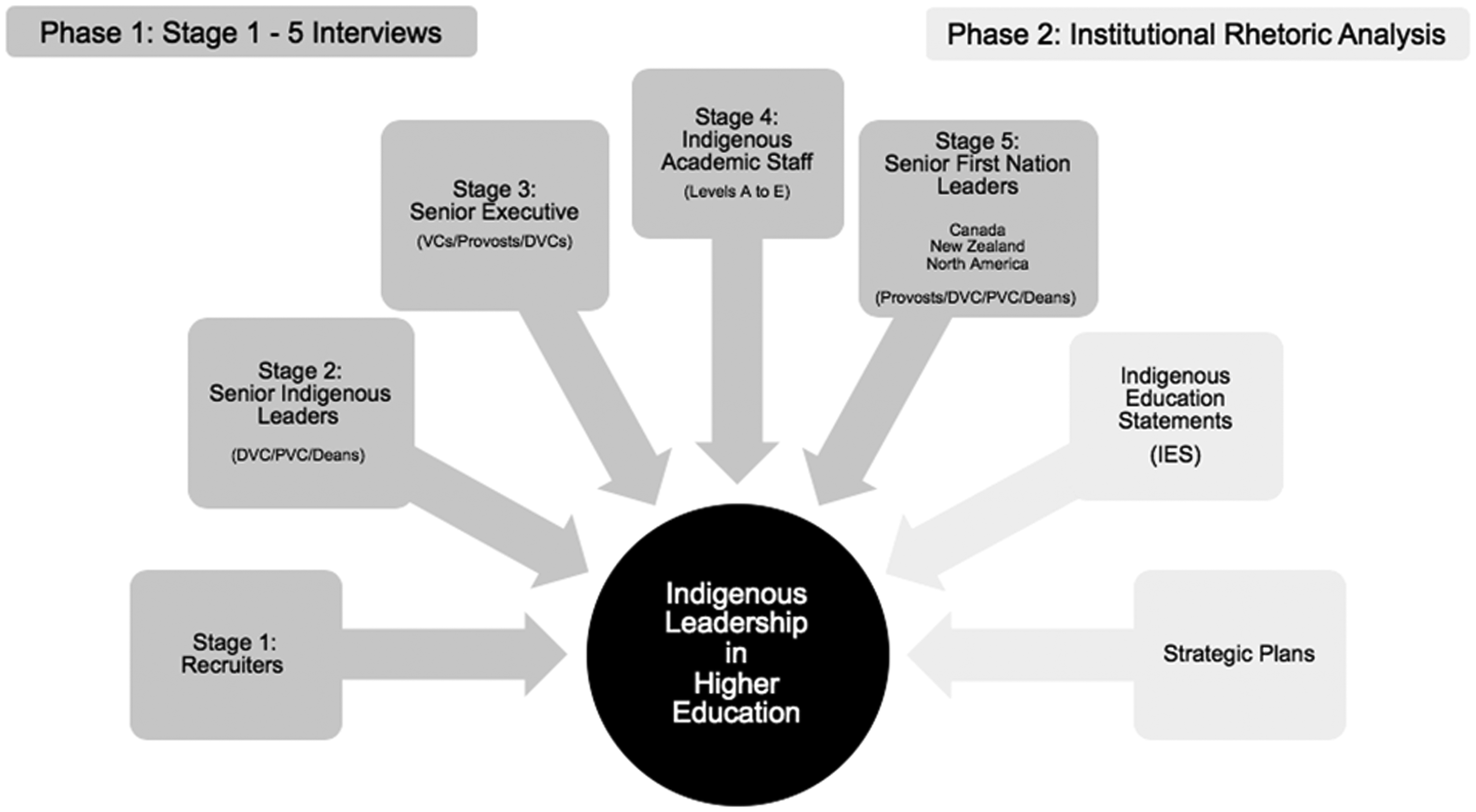
Indigenous leadership in higher education project design.
Phase 1: participant overview
In phase 1, semi-structured interviews were conducted across five stages. At the time this article was written, 76 interviews had been conducted. While each of the stages is outlined in more detail below, the interviews included three recruitment officers (stage 1), 14 senior Indigenous university executives (stage 2), 31 university executives (stage 3), 19 Indigenous academic staff (stage 4) and nine international senior First Nations leaders (stage 5).
Notably, the study has already captured the views and experiences from 64 staff 5 across 35 (90%) of the 39 universities within Australia (Figure 2). Participants came from three (8%) universities in Western Australia, one (3%) in the Northern Territory, two (6%) in South Australia, six (17%) universities in Victoria, six (17%) in Queensland, one (3%) in Tasmania, nine (26%) universities in New South Wales, two (6%) in the Australian Capital Territory and five (14%) that are considered ‘multi-State’ universities.
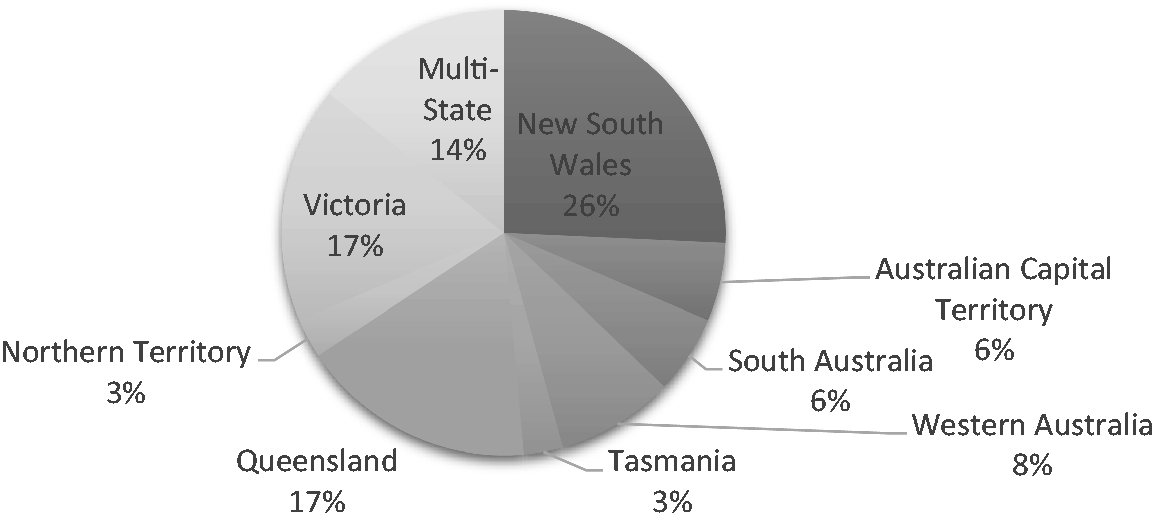
State level participation rates of universities.
In addition to location, Australian Universities 6 can be assigned to one of four main groupings, namely the ‘Group of Eight’ 7 (Go8), the ‘Australian University Technology Network’ 8 (ATN), ‘Innovative Research Universities’ 9 (IRU) and ‘Regional Universities’. 10 Views and opinions were captured from six (75%) of the ‘Go8’ universities, four (80%) from the ‘ATN’, six (100%) of the ‘IRU’ and five (84%) of the ‘Regional Universities’.
All but 11 of the 76 interviews were conducted in person (face-to-face) at the participant’s office or nominated location. Of the other 15 interviews, six (8%) were conducted via telephone, eight (11%) using video-conferencing technology and one participant provided written responses. While most interviews went for approximately one hour, interview duration ranged from 17 minutes to two hours.
Stage 1: recruitment firms
This stage involved interviews with three recruitment professionals from large recruitment firms who had experience sourcing suitable Indigenous academics to undertake senior Indigenous positions (i.e. Dean, PVC or Deputy Vice-Chancellor (DVC) levels). Participants were identified through professional networks. The aim of this series of interviews was to gain an understanding of the briefs they were provided with when given the task of recruiting to such positions. Four recruitment officers were approached and three agreed to participate.
Stage 2: senior indigenous executive
The data for this stage were collected in 2019, when there were 24 senior Indigenous positions across Australia of which two positions were vacant. The 22 Indigenous academics holding a senior Indigenous identified position of Dean, PVC or DVC at the time of the study were invited to participate. Interviews were conducted with 14 (64%) of them. Of the 14 participants, six (43%) were males and eight (57%) were females.
Interview questions focussed on their experiences in the role, and their engagement with university staff, students and community. Questions also centred around key achievements, perceived challenges, goals, characteristics of Indigenous leadership, governance structures and relationships with senior executive.
Stage 3: university executive
All 39 Vice-Chancellors across the nation were invited to participate in the study. A total of 31 university executives, from 30 universities participated in this stage (Figure 3). Four (10%) did not respond, two (5%) were somewhat indecisive/non-committal, three (8%) declined the invitation and three (8%) delegated the opportunity to another member of their senior executive.
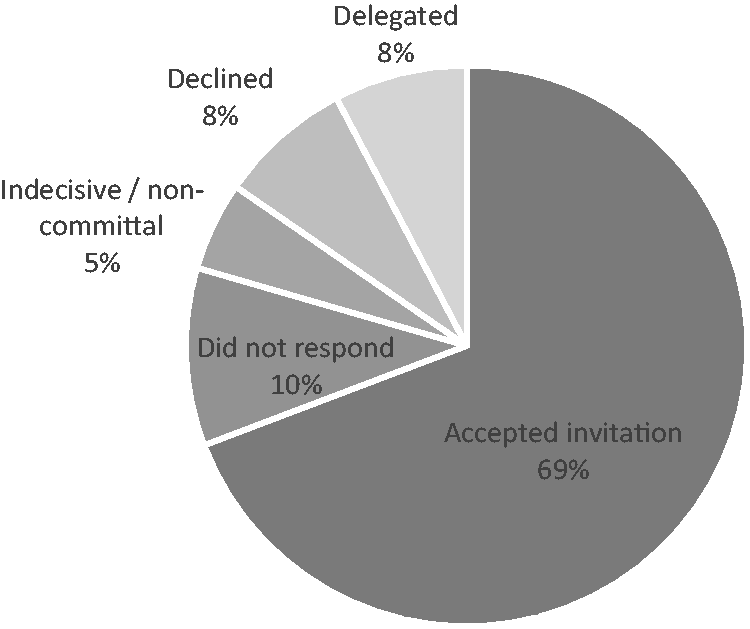
Vice-Chancellor participation in study.
Of the 31 participants who took part in this stage, 27 (87%) were Vice-Chancellors and four were other members of Senior Executive. The participants who had been asked by their Vice-Chancellor to take part one was a Provost and two were DVCs. One Vice-Chancellor asked that another member of the Executive also take part in their interview. Of the 31 participants, 19 were males and 12 were females – which is reflective of the gender disparity at Vice-Chancellor level across the Australian higher education sector. At the time of data collection for this study, there were 39 Vice-Chancellor positions in Australia, with 26 (67%) held by males and 13 (33%) by females.
During these interviews, participants were asked specific questions concerning senior Indigenous appointments, as well as methods to engage with Indigenous staff, students, alumni and community. Additionally, questions centred around the contribution of senior Indigenous leaders, to the vision for the university, in relation to Indigenous Australian education and research.
Stage 4: Indigenous staff
Stage 4 comprised of Indigenous academics ranging from the more junior Level A (i.e. Associate Lecturer academics) through to the Level E (i.e. Professors). At the time that this article was written, 56 people received an invitation to participate in this stage of research, with 19 (34%) agreeing to participate (Figure 4).
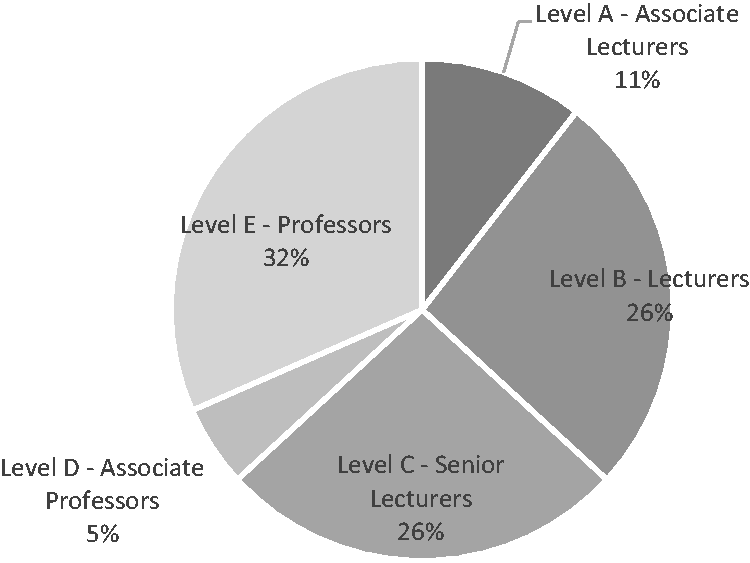
Participation rates of Indigenous academics.
Five (9%) people accepted their invitation but did not confirm their availability for an interview. Two (4%) people withdrew from the project following their interview, three (5%) declined as they no longer held an appropriate role and 28 (50%) did not respond. Interestingly, despite the solid reassurance concerning confidentiality, the two people who withdrew from the project both indicated that they felt it was best to withdraw from the study as they were fearful their workplace would uncover the information they had disclosed. Given the small number of potential participants for this research, there was a perceived risk that people could speculate who may or may not have participated in the study.
Of the 19 stage 4 participants, three (16%) were males and 16 (84%) were females. Of the 19 academics, two (11%) were Level A Associate Lecturers, five (26%) were Level B Lecturers, five (26%) were Level C Senior Lecturers, one (5%) was Level D Associate Professor and six (32%) were Level E Professors. The range of academic levels of the stage 4 participants signifies a diverse range of experiences across the sector.
Where a staff member was employed at a university that had a senior Indigenous position, specific questions were asked about the perception of the role and the effect the role had on their own position. Participants were also asked their opinion on the key strengths and challenges of the role. Where a staff member was employed at a university without a senior Indigenous position, participants were asked to share their views on why that may have been the case and what they thought the benefits and challenges of the role may be, in the event a senior appointment was made.
Stage 5: international engagement
Stage 5 of the study intends to speak with a number of senior Indigenous academic staff in New Zealand, Canada and the United States in order to ascertain how other First Nation groups have provided governance and Indigenous leadership across their institutions. Websites of international universities were thoroughly examined, participants were selected based on the senior Indigenous role they held within their university. While this stage of the project had commenced at the time this article was published, only interviews in New Zealand and Canada had been conducted. Interviews in the United States have been scheduled for August 2020.
The stage 5 participants in New Zealand comprised four males and one female who held positions such as Dean, PVC or DVC. Notably, eight people from New Zealand were invited to participate in the study: five accepted, one agreed to participate but was not able to confirm their availability and two people did not respond to the invitation. Participants in Canada consisted of two males and two females who held similar positions. Nine people from Canada received an invitation to participate: of the nine, four people participated, four did not respond and one initially accepted, but soon after declined (no explanation was provided). Participants in the international component (i.e. stage 5) were asked similar questions to stage 2 participants, however, questions also sought their views on opportunities for international engagement with colleagues holding similar positions, and the value these would have.
Method for phase 1 data analysis
All interviews were transcribed by a professional transcription service for analysis purposes. Drawing on the expertise of Bazeley and Jackson (2013) and Silverman (2013), data analysis was undertaken using the qualitative software package NVivo11. Qualitative methods are particularly useful to explore and analyse complex real-world issues (Bazeley & Jackson, 2013; Silverman, 2013). Additionally, using qualitative data analysis software (QDAS) can increase the rigour of qualitative research and is particularly helpful when managing and coding large data sets (Leech et al., 2011).
Collaborative attention 11 was given throughout the data coding process to ensure no biases were applied (Bazeley, 2009). A combined technique of ‘deductive and inductive analysis’ was applied (Fereday & Muir-Cochrane, 2006). The data pertaining to the interviews were initially coded using a deductive approach. This process involved establishing descriptive categories that corresponded to the interview questions. Once coding categories were established and applied, the inductive analysis was undertaken. This involved reviewing the data a number of times and applying a code relating to an identified abstract concept to arrive at key themes linked to the perceptions of Indigenous leadership roles in university. During this process, the data were collectively challenged, extended, supported, compared and related to other concepts to ensure a deeper analysis (Bazeley, 2009).
Phase 2: IES and Strategic Plans
Every Australian university is required to submit an annual IES to the Commonwealth Government. The IES contain information relating to the Indigenous students and staff and a range of institutional strategic activities. It is also a mandatory requirement that each university publishes the document on a publicly accessible webpage. Similarly, it is mandatory for universities to develop and publish a university-wide strategic plan which contains mission statements, core values, main objectives, organisational priorities, goals, operational tactics (i.e. strategies undertaken in order to achieve the goals) and key performance indicators (i.e. the way in which the overall performance of the strategic plan is measured).
An analysis of university IES and Strategic Plans will be undertaken to examine ‘institutional logics’, or the predominant institutional belief systems (Bastedo, 2009; Hogarth, 2018). This study will access information regarding the levels of Indigenous student retention and attainment, staff employment statistics and other relevant data. An analysis will be undertaken to identify interactions between institutions with senior leadership positions and greater success with Indigenous student and staff retention, engagement and success. Strategic plans will be analysed to assess synergies between institutional rhetoric and outcomes.
Limitations of the study
This research will take a qualitative approach to understanding the importance of senior Indigenous leadership in universities. It will identify the essential components of Indigenous leadership and will establish a model of best practice for the inclusivity of Indigenous leadership in higher education governance structure. The rigorously researched model of Indigenous leadership in universities will have the potential to be applied across a range of areas such as education, employment and health. Analysis of the data will be undertaken using QDAS NVivo11. Using QDAS can increase the rigour of qualitative research and is particularly helpful when managing large data sets (Bazeley, 2007; Leech et al., 2011) as will be the case here. However, while qualitative methods are particularly useful to explore, and analyse complex real-world issues (Bazeley, 2013; Silverman, 2013), the researcher ultimately determines the types of analyses which are used (Denzin & Lincoln, 2011). Furthermore, despite the sample size (i.e. number of participants) across each of the stages being relatively small, the project design illustrates an exploratory study, as opposed to a generalised study (Silverman, 2013).
Preliminary comments
While the skillset, strength and value of senior Indigenous positions will be analysed and published in subsequent articles, we conducted a preliminary analysis of the titles used to describe all the current Indigenous PVC positions. Position titles were sorted based on three criteria, namely whether they were an encompassing title or whether the title had a single focus or multiple foci (see Figure 5).
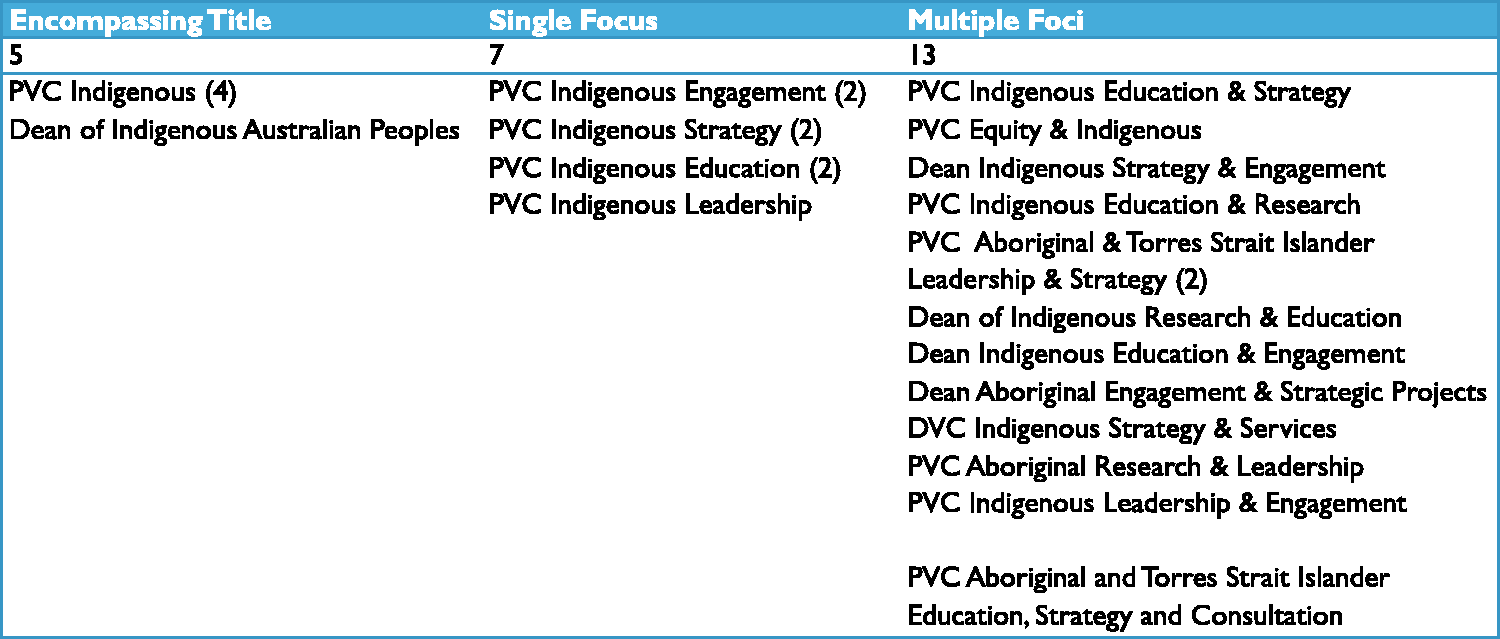
Indigenous Pro Vice-Chancellor position title analysis.
Our analysis reveals no standard Indigenous PVC position in Australia and that each position is unique. We also found that the role across the sector varies, depending on the priority and strategic direction of their individual university. In fact, these PVC roles focus on five key elements (Figure 6), with ‘strategy’ being the most prominent, as eight (33%) of the 24 positions have the word ‘strategy’ in the title. The word ‘engagement’ is next, with seven (29%) of the 24 positions incorporating the word into the position, which is followed by ‘leadership’ (25%), ‘education’ (21%) and ‘research’ (13%).
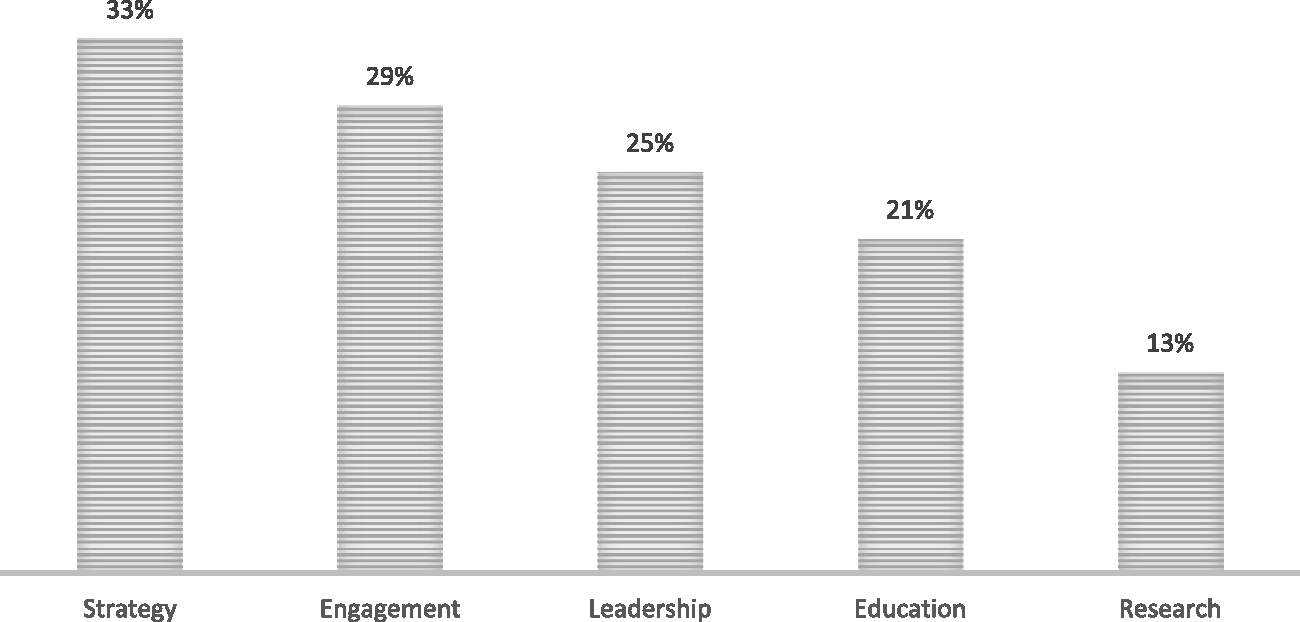
Key elements of indigenous Pro Vice-Chancellor roles across Australia.
These findings suggest that the Indigenous PVC positions are based on the needs of the individual institution and its focus. Additionally, position titles that are multi-foci reflect a relatively broad scope of the Indigenous PVC role with a considerable depth, in terms of strategic and operational responsibilities.
Concluding statements
While there has already been some considerable work undertaken in Canada, New Zealand and the United States to understand the best methods to incorporate Indigenous people into the leadership structures of higher education institutions, understanding how to best integrate Indigenous leadership in the higher education governance structure across Australian universities is an area that requires further investigation (Coates et al., 2020; Page et al., 2017). This article has outlined how the Walan Mayiny: Indigenous Leadership in Higher Education project answers that call. The project is aimed at reviewing, comparing and evaluating the roles and responsibilities of Indigenous leaders across Australia and comparing them with senior Indigenous higher education roles across New Zealand, Canada and the United States. In doing so, it investigates the responsibilities, impacts, key advantages and barriers of senior Indigenous appointments within Australian universities from an Indigenous perspective. The authors argue that while Australian universities are attempting, to some degree, to incorporate Indigenous Australians into the overall architecture of the institution, the implementation remains largely ad hoc. Australian universities still have significant work to do with regards to incorporating Indigenous leadership across the overall governance structure of each institution, in a meaningful manner, rather than simply filling ‘a gap’ (Bunda et al., 2012, p. 941). Critical to this study is optimising the appointment of Indigenous Australians to senior leadership positions and understanding the impact that this will have on Indigenous and non-Indigenous students and staff, as well the wider community. Ultimately, the main objective of the study is to assist UA with progressing Indigenous leadership within higher education. The authors believe that it is absolutely necessary for Indigenous people to contribute to meaningful leadership, at a senior level, in our higher education institutions, in order to ensure our educational sovereignty and self-determination.
Footnotes
Acknowledgements
We would like to thank all participants who kindly shared their knowledge with us.
Declaration of Conflicting Interests
The author(s) declared no potential conflicts of interest with respect to the research, authorship, and/or publication of this article.
Funding
The author(s) disclosed receipt of the following financial support for the research, authorship, and/or publication of this article: We would like to thank the Australian Research Council for funding this project.
