




Abstract
This research explores school attendance rates within the steadily growing population of Victorian urban Indigenous students and challenges for realising high attendance levels. Poverty, pervasive throughout the urban Indigenous community, presents circumstances where it once, and could still, erode regular school attendance. We report one socio-educationally disadvantaged school, teaching a significant Indigenous student population that has mitigated the influence of socio-economic disadvantage. Their Indigenous students' attendance surpasses the attendance of most Indigenous students and almost matches that of their non-Indigenous school peers. Success has been achieved through community partnerships, supported by a Koorie 1 Education Worker, and embedded Indigenous culture. However, in the final primary school year, Indigenous students' attendance declines. This signals an earlier commencement of attendance decline that occurs in later years, often resulting in early attrition. As the school's targeted strategies and programmes have improved all students' attendance, so the attendance gap for Indigenous students persists.
Keywords
Introduction
Australia's Indigenous 2 students attend school less frequently than their non-Indigenous peers in every state, territory and school sector (Australian Curriculum Assessment and Reporting Authority, 2011b; COAG Reform Council, 2013; Commonwealth of Australia, 2015; Queensland Government, 2015). To cumulatively build knowledge, skills, intellectual capacity and academic success for Indigenous and non-Indigenous students alike requires regular school attendance (Biddle, 2014; Bond, 2004; Cameron, 2004; Department of Education Employment and Workplace Relations, 2008; Gray, Hunter, & Schwab, 2000). Biddle (2014) identifies the link between school attendance and academic achievement for all Indigenous students, irrespective of where they attend school in Australia.
The State Government of Victoria's (2014a) Garrin strategy recognises the causal relationship between low school attendance, low core skills and early attrition among Victoria's Indigenous students. Attrition from school often delivers limited employment prospects (Aldermann & Campbell, 2008; Helme & Lamb, 2011) that contribute to socio-economic disadvantage in adulthood (Hancock, Shepherd, Lawrence, & Zubrick, 2013; Vinson, 2007). This relationship holds for all peoples, where cycles of educational and economic disadvantage produce communities where intergenerational poverty flourishes (Hancock et al., 2013; McLaughlin & Peace, 2008).
The Australian Bureau of Statistics (2014) and State Government of Victoria (2014b) estimate Victoria's urban Indigenous population is more than 47,000. This population continues to grow, for several reasons. Biddle (2010) observes that Indigenous families, like many others, have migrated from regional Australia to urban centres in search of employment. Urban Indigenous populations, however, continue to grow beyond the number of immigrants and births within the community. The Profile of Indigenous Australians (Australian Institute of Health and Welfare, 2014b) notes changes in Indigenous identification and the Victorian Government Aboriginal Affairs Report 2013 (State Government of Victoria, 2014) reports a greater preparedness of Indigenous people to reveal their cultural background. Consequently, we anticipate that the Indigenous student population in urban Victoria will continue to increase (Australian Institute of Health and Welfare, 2014).
Low rates of Indigenous students' school attendance occur in regional and remote Australia (Bourke, Rigby, & Burden, 2000; Gray & Partington, 2003; Wilson, 2014; Zubrick et al., 2006). However, urban Indigenous students' school attendance and school experiences remain less well known (Gray & Beresford, 2002). Little is known about how the membership of an Australian urban cultural minority translates to, or influences, the education of children – particularly Indigenous people experiencing high levels of unemployment and poverty. Rothman (2001) reports that the concentration of disadvantaged learners in a particular school gives rise to increased non-attendance and, in turn, intensifies educational disadvantage.
Our study sought to identify causal factors that contribute to urban Indigenous students' school attendance for individual students and across a single school. We also compared Indigenous student attendance, with non-Indigenous peers at Carrington Primary School (CPS).
Methods
The research site
Over a three-year period, we investigated the school attendance of Indigenous and non-Indigenous students at CPS, located in urban Victoria. CPS, an urban, non-government school, serves a socio-economically disadvantaged community (Australian Bureau of Statistics, 2013a, 2013b; Cresswell & Underwood, 2004; Prout, 2008). The My School website publishes the level of advantage for each Australian school's student population and categorises CPS's school community as socio-educationally disadvantaged (Australian Curriculum Assessment and Reporting Authority, 2015). Indigenous students represent 22% of CPS's student population. CPS's Indigenous student cohort is proportionally ten times more numerous than those attending most Victorian government schools (State of Victoria, Department of Education and Early Childhood Development, 2013).
CPS employs an Indigenous staff member – Koorie Education Worker (KEW), to support Indigenous students in all seven grades. The KEW was appointed at the school over a decade ago to cater for three Indigenous students. Indigenous parents began to preferentially send their students to the school because the KEW was there. The number of Indigenous students enrolled has grown to the point where a KEW is justified. The school's ongoing commitment to Indigenous people is evidenced through investment of resources to support a KEW, when enrolment alone would not have warranted the appointment.
Analyses
We examined attendance within and between cohorts. We used a combination of explanatory sequential mixed methods (Creswell, 2012; Muijs, 2004). The quantitative phase analysed Indigenous students' daily attendance and other student enrolment data. We analysed three years of students' daily attendance, Indigenous and socioeconomic status, gender, year level, enrolment and exit dates. Descriptive statistics were tabulated using Statistical Product and Service Solutions (IBM Corp, 2012; Muijs, 2004; Phillips, 2006).
The qualitative phase provided an understanding of attendance rates and students' backgrounds, and the factors that influence daily school attendance (Creswell, 1998). We used multiple methods of data collection – focus group discussion, interviews and observation of participants to identify the causes of Indigenous students' attendance and non-attendance at school. The parents and carers (henceforth parents) joined a focus group to provide their perspectives for Indigenous students' attendance and non-attendance. We were extremely sensitive, inclusive and respectful of Indigenous culture and methodologies. The KEW helped us frame the questions that we used for our focus group of Indigenous parents. The KEW also participated and facilitated that conversation. Through the KEW's input, we ensured our research aligned with Indigenist methodologies of Martin (2003) and Rigney (2006) for Indigenous research. Indigenist methodologies require ongoing consultation and negotiation with the Indigenous community and an ethical and culturally sensitive approach to the research. We specifically excluded primary school students from focus group discussion and interviews due to their vulnerability and Indigenous status (Liamputtong, 2007).
We interviewed the KEW and other school staff, including the Principal. All conversations were digitally recorded, transcribed and coded using themes and categories (Ezzy, 2002; Marshall & Rossman, 2011). To develop themes to inform our study, we undertook an extensive review of the literature on Indigenous student attendance. We identified overarching influences on attendance, that included the school, student, family and socio-economic circumstances in which the student lived. Our preliminary analysis of the data and transcripts validated the presence of each of these factors as causal to Indigenous student attendance.
In addition, each coder independently identified the following themes: school culture – the structures within the school supporting, or otherwise, of Indigenous students; safety – perceptions of students well-being at school; relationships – between all stakeholders and networks within the school; advocacy – for students and parents; symbols – indications of support, or otherwise, for Indigenous culture; and financial support. Given almost complete congruence between allocation of categories to our data, we sought an additional step. Peers independently reviewed our coding and agreed with our categorisations.
Results
In this section, we report first on some general observations stemming from our research. This is followed by a presentation of the results of our analysis of students' attendance at CPS and an explanation of the family structure and socio-economic circumstances in which these students live and how this impacts on their school attendance.
General observations
Symbols at Carrington Primary School (CPS) of Indigenous inclusion that parents say makes them and their children feel welcome. These symbols have been introduced over the last decade.
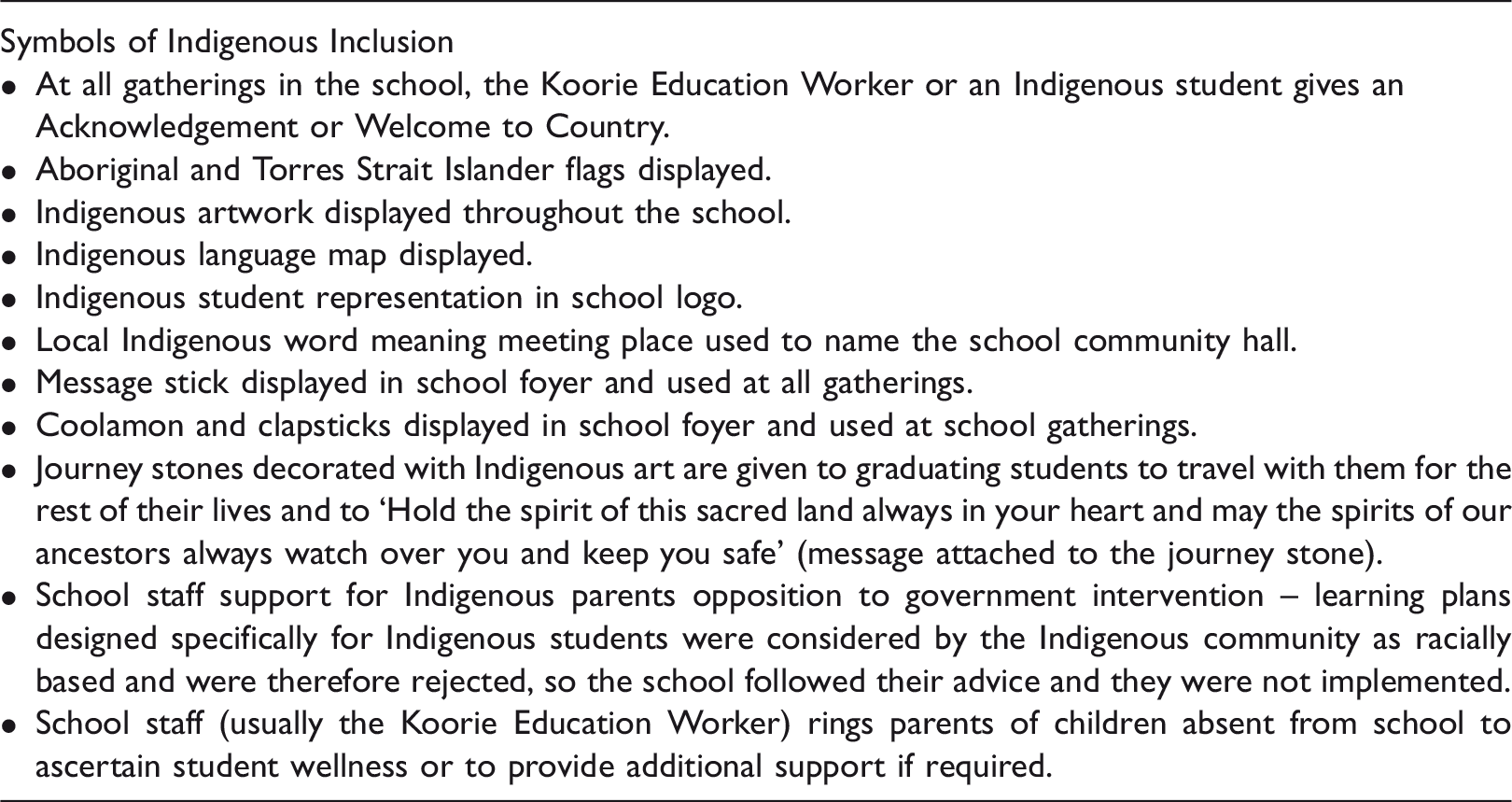
With respect to the KEW, parents said the KEW was important to support their children – educationally and socially, and to provide them with Indigenous representation at the school. Taya asserted ‘we have a voice [through the KEW who] is well respected with all the other teachers and she's got a good name around town’. The KEW says that with her support, teachers ‘have brought [Indigenous] culture into the classrooms and they will do things on it throughout the year’.
The growth of the Indigenous student population over the past decade, focus group participants emphasise, relates to the symbols, the KEW and knowledge in the local community: ‘people know that this is the place that the [Indigenous] children will come and they know they'll be looked after and there isn't any bullying and there is very rarely any racism’ (Danni). Taya explains why she continues to send her child to the school after relocating: I travel for 20 k's or probably even longer [to get to school]… cos I love this school. I wouldn't put [my child] anywhere else. My eldest daughter went to about 4 different primary schools … This is the best ever that I've come across.
Student attendance
Over the three years of this study, CPS students exhibited a 4.1% difference in median attendance between the Indigenous student cohort (91.3%) and non-Indigenous student cohort (95.4%). A 6% variance occurred in Indigenous students' median attendance between the best and worst years.
Median, maximum and minimum attendance rates (percentage) for Indigenous and non-Indigenous students at Carrington Primary School (CPS) for the 2009–2011 school years.
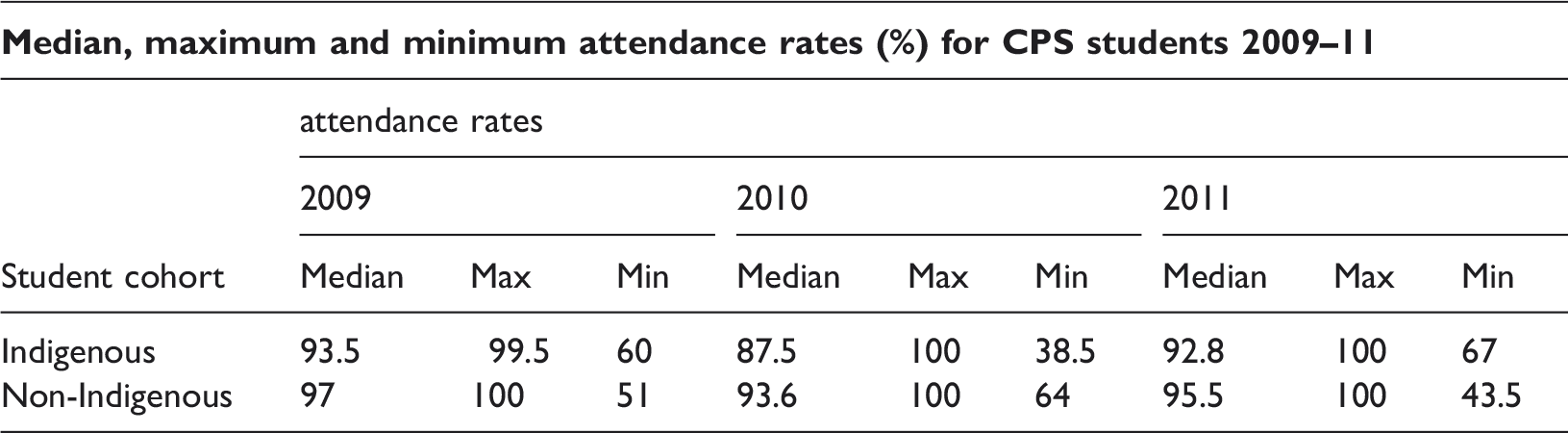
The minimum attendance rate of the Indigenous student cohort and non-Indigenous cohort are low. Minimum attendance for students within the Indigenous cohort declines by 21.5 percentage points, from 60% in 2009 to 38.5% in 2010. The latter represents the lowest attendance by any student enrolled at the school. An increase of 28.5 percentage points in the Indigenous students' minimum attendance occurred in the following year. Anecdotally, school staff say that 2010 was a year when many students and staff were ill and were unable to attend school regularly for that period. In 2009 and 2011, the lowest attendance rate occurred within the non-Indigenous student cohort, and their minimum attendance rate in 2011 was only 5 percentage points better than the worst attendance overall. Both student groups show wide variation between the highest and lowest school attendance. However, few students populate the minimum attendance rate.
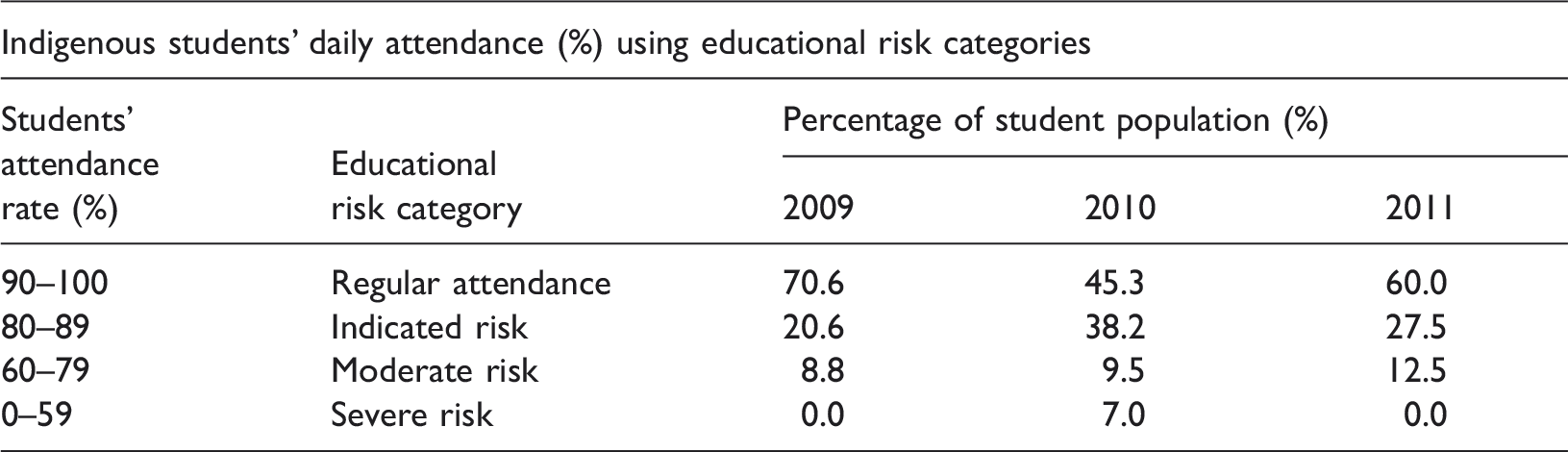
Carrington Primary School's (CPS) Indigenous students' attendance (percentage) classified in Educational Risk Categories for the 2009–2011 school years. Indigenous students' daily attendance for each school year was classified according to the categories defined by Murphy (2009).
To identify patterns of attendance over three years, we disaggregated student attendance according to grade level. We compared the relative change in attendance from the same cohort in the first and last year of the study (2009 and 2011) on the advice of staff at the school. School staff also advised that 2010 was unrepresentative across the school due to unusually high instances of illnesses. Indigenous students produce relatively consistent patterns of attendance at any year level. Figure 1 illustrates the limited relative change in attendance of the same cohort in two non-consecutive years. The largest decline occurred in the cohort that transitioned from grade 4 to grade 6.
Relative change in median attendance rates for the Indigenous student cohort across two school years at Carrington Primary School (CPS) for the years 2009 and 2011.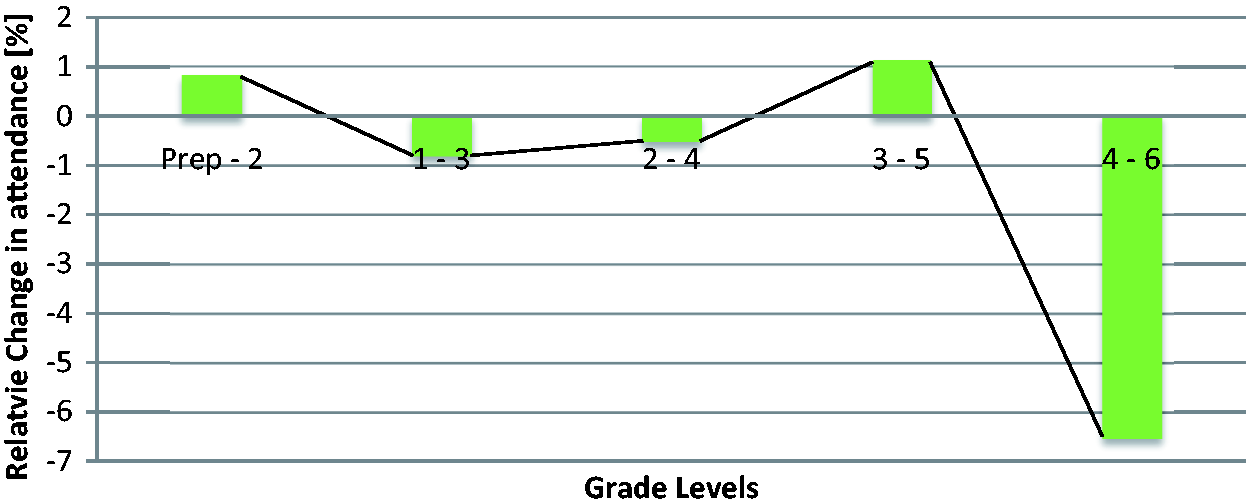
Family structure and socio-economic circumstance of students attending CPS
Our preliminary review of school data identified the family structure of individual students. As part of our data exploration, we sought to identify whether family structure influences student attendance among Indigenous students and their non-Indigenous peers. The results of this exploration are documented here. Over half CPS's Indigenous students live in families with one or both parents, compared with 90% of their non-Indigenous peers. Grandparents care for the majority (21%) of the remainder of Indigenous students – a rarity among non-Indigenous students. The remainder either live with foster carers or move between the homes of other family members. For some Indigenous families – and most non-Indigenous families, CPS represents the local and most proximate school. The large majority of CPS's Indigenous students resides beyond the local neighbourhood area: 50% live further than 2 km from the school and another 30% live more than 5 km away. Irrespective of family structure and location, insufficient income is common to most families.
Student Family Occupation (SFO) for Indigenous students (percentage) who are enrolled at Carrington Primary School (CPS) in 2009–2011. SFO categories are those used in the school's administrative database and defined by the Department of Education and Early Childhood Development (State Government of Victoria, 2015).
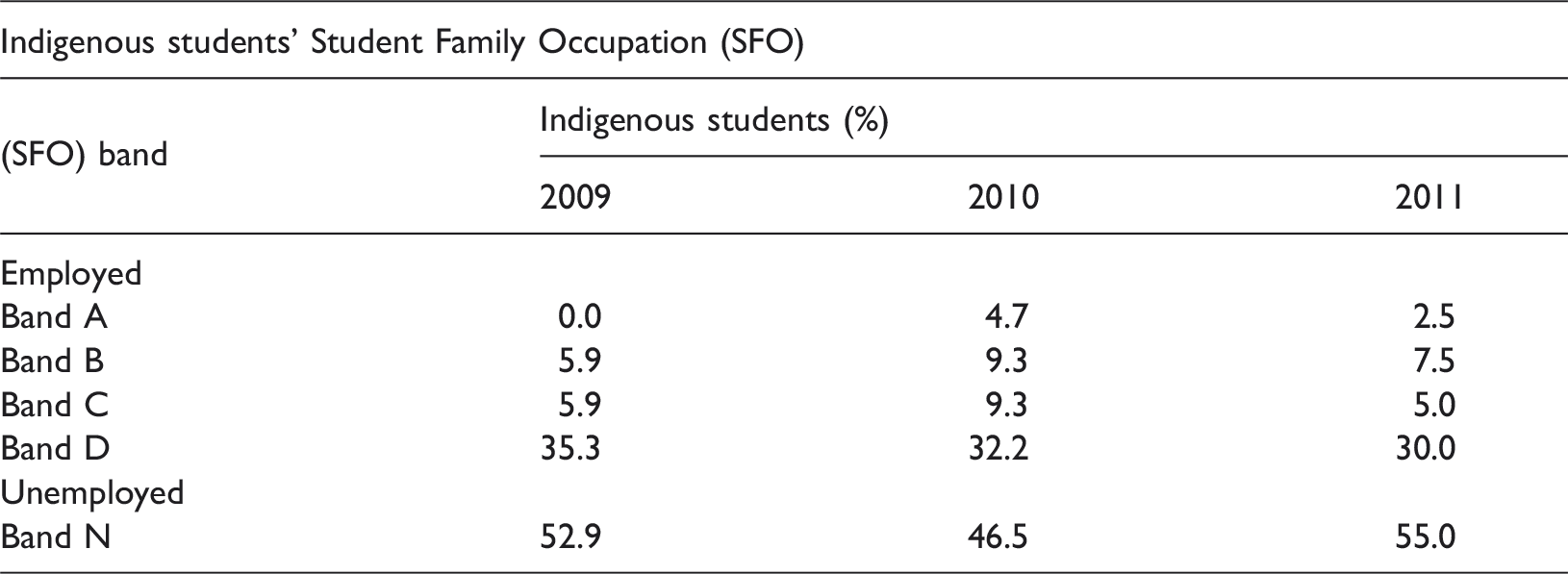
More than 25% of the Indigenous student population had an identified educational special need. The school receives additional funding to support their education. The Garrin Garrin strategy recognises Indigenous students' eligibility for special needs at twice the rate of their non-Indigenous peers (State Government of Victoria, 2014a), which is reflected at CPS.
In an urban community characterised by economic and educational disadvantage, CPS has achieved enviable attendance for low socio-economic and Indigenous students, matching some of the best attendance benchmarks published. Following a detailed discussion of the attendance rates at CPS, we explore the factors that are considered to contribute to both low and high attendance. The factors that contribute to increased attendance are discussed below.
Discussion
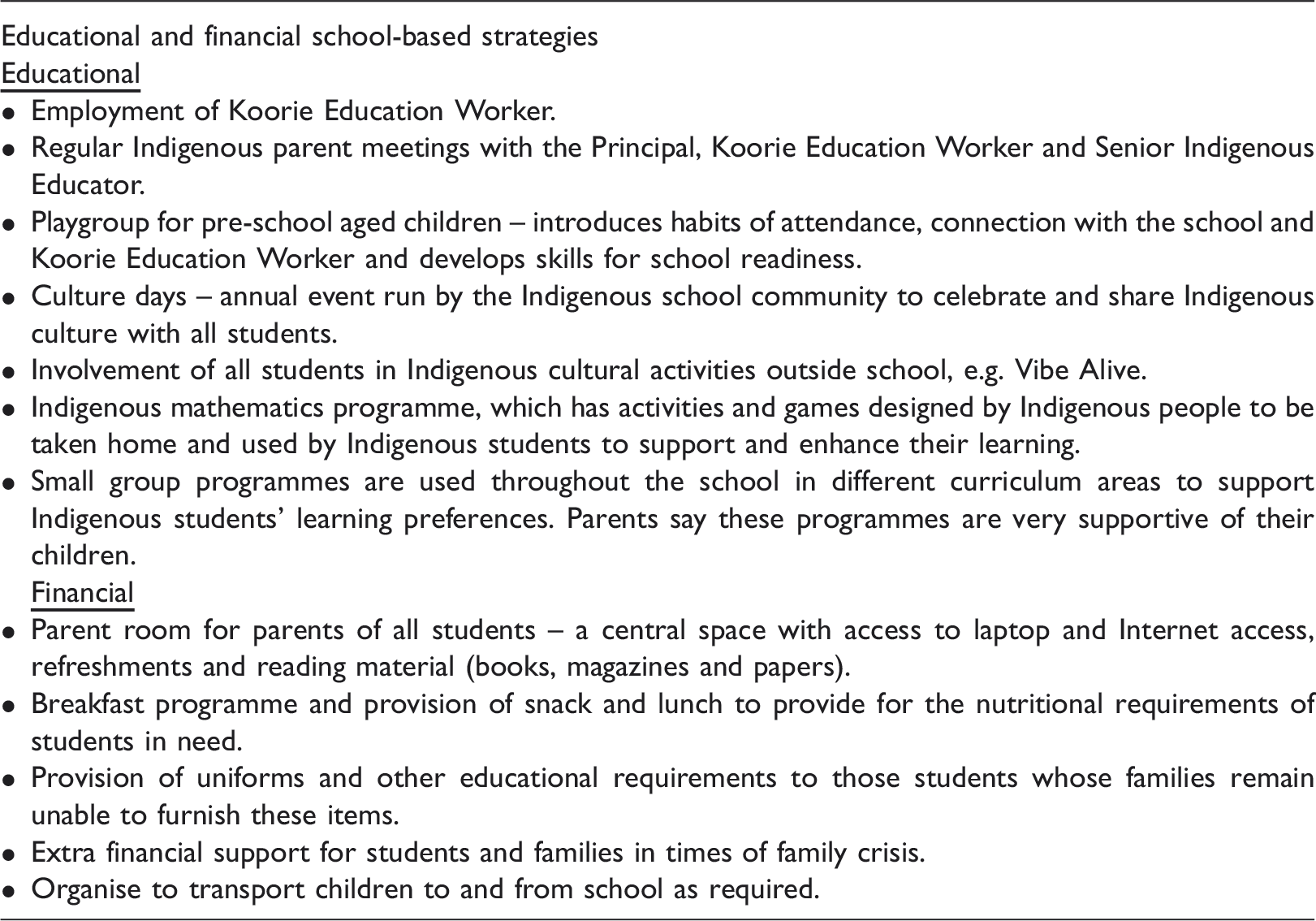
Educational and financial school-based strategies implemented at Carrington Primary School (CPS) to support Indigenous students to succeed at school. These strategies have been introduced over the last decade. Today, these strategies have become embedded within the daily life of the school.
Our study recognises CPS's median attendance rates compare favourably with reported median attendance of Australian school students (Australian Curriculum Assessment and Reporting Authority, 2011b; COAG Reform Council, 2013; Gray & Beresford, 2008; Gray & Partington, 2012). Previous studies reported Australian Indigenous students' school attendance rates from regional and remote areas were significantly lower than those of their non-Indigenous peers. Comparison of CPS data with reported attendance data, however, presents challenges. Purdie and Buckley (2010) and others have previously noted difficulties in comparing attendance data reported in the National Report on Schooling in Australia and the My School website (Australian Curriculum Assessment and Reporting Authority, 2011a, 2015). Methodological approaches and timing of collections challenge us to make any meaningful comparison, although they do provide an indicative national attendance estimate. We provide the following comparisons only as an indication of relative attendance. In 2009, the only year of this study in which national Indigenous attendance data were reported (Australian Curriculum Assessment and Reporting Authority, 2011b), CPS's Indigenous students realise better attendance than Indigenous students' in all Australian states and school sectors, with the exception of Tasmanian Independent and Catholic school sectors. Their median attendance almost matches the attendance of Victoria's non-Indigenous students. Attending as regularly as most other student cohorts offers CPS's Indigenous students an equal opportunity to benefit from the advantages that regular attendance provides. We acknowledge though, that once at school, other factors may influence Indigenous student achievement (e.g. poverty, support strategies).
The wide variation in attendance suggests school-based strategies influence students differently. For most Indigenous students, current strategies offer sufficient support to attend regularly and often. For the few students who continue to produce poor attendance, improvement may result from further consultation to find different solutions. Strategies to improve CPS's Indigenous students' attendance have been in place for over a decade. Although effective overall in supporting favourable median attendance rates, a consistent fall in Indigenous students attendance in their final years of primary school continues. Our study demonstrated relatively uniform attendance of Indigenous students until grade six. We report a -6.5% relative decline in Indigenous student attendance that may foreshadow the well-documented decline in secondary school attendance and commencement of indicators of likely higher levels of attrition (Aldermann & Campbell, 2008; Helme & Lamb, 2011; Withers, 2004). Our work identifies declines in attendance to commence earlier than previously noted, in the upper levels of primary school. Indigenous students lower attendance rates at this level indicates dissatisfaction and disengagement with school occurs earlier than previously considered. Possible explanations given by the KEW include: children are old enough to care for their younger siblings or provide other help for parents; greater understanding and involvement in family affairs, especially the trauma associated with families in crisis; and the widening learning gap – grade five Indigenous NAPLAN reading performance only just surpasses grade three non-Indigenous reading performance (Australian Curriculum Assessment and Reporting Authority & National Assessment Program Literacy and Numeracy, 2013).
Hughes and Hughes (2009) recognise non-attendance can become habitual. Primary school is likely to be the setting where attendance habits and behaviours are formed, and as Gottfried (2009) suggests, the level at which potentially at-risk students should be identified. Indigenous students' retention at secondary school will likely improve with a co-ordinated approach to intervention and targeted strategies that reach into the upper levels of primary school. Currently, only 59% of Indigenous students are retained at year 12 compared with 83.6% of non-Indigenous peers (Australian Bureau of Statistics, 2015).
Gray and Beresford (2002) and Hancock et al. (2013) report that poor school attendance may stem from challenging life circumstances and modest parental incomes. The Garrin Garrin strategy (State Government of Victoria, 2014a) explains these factors frequently produce lower school attendance rates and poor school outcomes. The overwhelming majority of CPS's Indigenous students live in significant socio-economic disadvantage. Patterns of attendance notwithstanding, most of CPS's Indigenous students attend school regularly and consistently.
We confirm in an urban school the outcomes reported previously in rural and remote schools. Specifically, that socio-economic disadvantage exerts a powerful influence on Indigenous students’ regular school attendance (Doyle & Hill, 2008; Gray & Beresford, 2008; Gray & Partington, 2003; Lea et al., 2011; Rothman, 2001; Schools Council, 1992). CPS's Principal agrees. He says poverty interrupts regular attendance. He also states that CPS's students attendance is ‘determined not necessarily by culture, but by socio-economic background’. As a result, he observes, ‘we find exactly the same problems with many of our non-Indigenous students’. In this school, almost the entire student cohort lives in socio-economic disadvantage. Many Indigenous families rely on government benefits, including: unemployment, disability and aged pensions. The Australia Institute (2014) categorises these families as falling below the poverty line. Furthermore, many Indigenous families attain household incomes that fall below the poverty line that the Australian Council of Social Service (2014) established. The fact remains, that if you are an Indigenous student at CPS, you are likely to be living in a family that experiences financial hardship.
Poverty influences Indigenous families' migration to CPS's catchment from remote and rural regions, and relocation to other suburbs. Migration to urban areas from remote and rural regions occurs as families seek employment opportunities. CPS's principal says relocation to other suburbs often occurs in response to losing access to government housing or rental accommodation. Often these circumstances leave few options other than to transfer into emergency and alternate housing located in neighbourhoods outside the school's catchment. The Senior Indigenous Educator notes that Indigenous students and families choose to retain their children's enrolment at CPS when families move away from the immediate school neighbourhood. Parents say that when returning to the area after relocation to distant regions, they seek housing within the school's neighbourhood. They intend to re-enrol their children and continue their association with CPS. Unfortunately, they have to settle for accommodation in other suburbs at greater distances from the school. They base their decisions on the affordability and availability of government housing. Having secured housing some distance from CPS, parents experience the impediment of transport for their children to attend school.
In times of hardship, for families already financially stretched, resources to cover the costs of public transport, fuel or vehicle maintenance become unattainable. The vast majority of CPS's Indigenous student population lives beyond the school neighbourhood and parents rely on public and private transportation for their children to attend school. Consequently, as Biddle, Hunter and Schwab (2004) note, regular attendance becomes problematic. CPS's parents say they often lack money for fuel, have limited means to run and maintain a vehicle, and possess few resources to pay for public transport. These financial and travel constraints present a barrier to students' regular school attendance, nevertheless parents are keen for their children to attend school. Often, with the support of school staff members, solutions are found. The KEW or other staff members transport Indigenous students to school on singular occasions. For other students experiencing more permanent transport issues, regular continuing arrangements are established. As a result of this support, students can continue to attend school regularly.
Many urban Indigenous families, like other families who also experience financial privation, live their lives in precarious circumstances. One minor event can cause disproportional impacts on these families. With few financial or other buffers, minor crises can catastrophically interrupt their daily lives. This includes more than the frequency of school attendance for their children. Interviewees say that some parents experience traumas that render them unable to raise their children, leaving grandparents and foster parents acting in loco parentis. The KEW refers to the families in the school community: ‘They're damaged, … a lot more than we will ever know… and they’ve done their best’. It takes a strong and unique suite of skills to overcome entrenched disadvantage. Whether these crises are short term or persistent, families often remain unable to maintain their children's regular school attendance.
Factors associated with being Indigenous also influence the daily lives of students and their families. CPS's Indigenous families, together with a large proportion of Victoria's Indigenous population are members or descendants of the Stolen Generation (Pope, 2012). Previous government policies have had far-reaching influences on Australia's Indigenous people, causing intergenerational social and financial disadvantage for Indigenous families. Consequences of the forced removal of Indigenous children in the past still resonate for families today (Gray & Beresford, 2002). Trans-generational impacts manifest as ‘poor health, poor social and emotional well being, lower opportunities in education, [and] fractured family relationships’ (Stolen Generation Victoria Ltd, 2008, p. 12). CPS's Senior Indigenous Educator says in this urban community, past traumas translate to challenging life circumstances that contribute to the interruption of Indigenous students’ school attendance.
Biddle and Hunter (2006, p. 15) report that in urban areas, clusters of Indigenous families reside in ‘disadvantaged suburbs with relatively high unemployment rates’. In this community it is also common for families to reside in government supported or low cost housing located in affluent suburbs (KEW, Pers. Comm.). Their economic circumstances confer similar disadvantage to those living in low socio-economic circumstances in close proximity to the school. Irrespective of proximity to the school, students and their families experience disadvantage that produce daily hardships.
Parents and the KEW identify poverty as one of their greatest hurdles to achieve the high levels of attendance and include housing availability and travel as significant barriers. They say financial hardships fluctuate over time and agree that the support of philanthropic trusts and programmes at CPS help them send their children to school. A low historical tradition of families attending school also exerts influence for some families, according to parents. Parents of students with educational special needs report that less regular attendance often results from appointments during school hours with specialist health professionals. Parents say that to a lesser extent, student illnesses, medical and other health-related appointments, which the Victorian Government considers acceptable excuses for non-attendance (Ross, Darby, Macreadie, & Lesman, 2013), impede attendance. They believe these factors similarly affect Indigenous and non-Indigenous students' attendance.
Aware of the challenges facing their student population, CPS has concentrated on raising school attendance for more than a decade for all students, and Indigenous students in particular. To support and encourage students to attend school more often, CPS has created an inclusive and supportive school environment. The KEW is one of the most visible elements of this strategy. Working together, the KEW, CPS staff and Indigenous school community have implemented strategies designed to overcome the endemic socio-economic disadvantage experienced by CPS's Indigenous school community (see Table 5). They include a breakfast programme – including other sustenance as required, financial support for school requisites and extra-curricular activities, and organising transportation for students to and from school. The KEW contacts families by phone when Indigenous students are absent. Parents say the contact indicates the school's concern for their children's welfare. It also forms the initial contact point for the school to identify and implement strategies that enable the student to continue to attend school regularly.
Socio-economic disadvantage is widespread throughout the entire CPS school community, so in this school, programmes supporting the symptoms of socio-economic disadvantage experienced by Indigenous students advantage most of CPS's student population. All students are the beneficiaries of each strategy, programme and initiative, regardless of the student group for whom it was originally designed. Irrespective of the socio-economic challenges experienced by most students, their annual rates of attendance remain high, and higher than would be expected if compared with other similarly disadvantaged areas. Despite improving attendance of the whole school population, the continuation of an attendance gap between the cohorts remains. Indigenous students, whose attendance remains poor, continue to be a challenge for CPS's school community. How to improve the attendance of this group may prove beyond the capacity of the school community to remedy.
At CPS, staff members and other stakeholders believe that the programmes in place ameliorate financial disadvantages in ways that ensure students attend regularly. The strategies benefit all students and Indigenous students specifically. Indigenous students enrolled in other schools may receive less support that caters for socio-economic disadvantage than those offered at CPS. In those other schools, the effects of socio-economic disadvantage would remain unaddressed and likely reflect much lower attendance than those achieved by CPS's Indigenous students. Median attendance rates at CPS suggest that when the effects of Indigenous students' socio-economic disadvantage are mitigated, cultural influence remains as the contributing factor to lower median attendance rates, albeit only slightly lower.
Conclusion
CPS has partnered with the Indigenous school community to improve attendance through programmes that systemically address socio-economic disadvantage. These strategies have improved the attendance of all students who experience hardships. The school's median attendance rates are high for a school the government classifies as socio-educationally disadvantaged (Australian Curriculum Assessment and Reporting Authority, 2015). That the school, its community and parents achieve relatively high attendance rates under the circumstances warrants praise. However, members of the Indigenous student cohort are more likely to have lower daily school attendance.
Strategies targeted at improving CPS's Indigenous students' attendance have been in place for over a decade. Although effective overall in supporting favourable median attendance rates, a consistent fall in Indigenous students attendance in their final year of primary school continued. This may be the precursor of a well-documented trend of falling attendance rates and lower school retention that is observed during secondary school years. Primary school settings provide the foundation of educational experiences, including attitudes and habits towards regular attendance, and the establishment of patterns for later attendance. Indigenous students' retention at secondary school will likely improve with a co-ordinated approach to intervention and targeted strategies that reach into the upper levels of primary school.
At other schools, it has been shown that poverty among Indigenous students and their peers contributes to lower school attendance (Gray & Beresford, 2002; Lamb, Jackson, Walstab, & Huo, 2015). CPS may succeed because it identified poverty as an overriding influence on Indigenous students regular school attendance. Analysis of quantitative data revealed the pervasive poverty amongst the Indigenous families of CPS's students, while interviews with stakeholders recognised the causal link between poverty and the ability to attend school regularly. CPS demonstrates that programmes to enhance Indigenous students' attendance work best when targeting one of the root causes of the problem – poverty.
Footnotes
Acknowledgements
The generous participation and contribution of the Indigenous school community at the Carrington Primary School (a pseudonym) made this work possible. We thank them for their candid responses to our many questions, and for their generosity with their time. We wish to express our thanks to the parents of Indigenous students and the Koorie Education Worker for giving up their time to share their valuable views and opinions. We also acknowledge the generous support of the Koorie Education Worker who guided and supported all aspects of the qualitative data collection of this project. Finally, we thank the Elders and community leaders in which the school is situated for their support and permission to conduct this project, without which, this project would not have been possible. Ethical constraints preclude the identification of Country.