




Abstract
Objective:
In the context of escalating impacts of climate change, bushfires have emerged as a natural disaster that may significantly impact a population’s mental health. Adolescents typically residing in rural and regional areas present unique challenges in the aftermath of bushfires.
Method:
Adhering to the PRISMA framework, a literature search was conducted to identify studies assessing the impact of bushfires on mental health in adolescent populations. Extracted information included demographic characteristics, bushfire location, timeframe post-bushfire, study design and relevant mental wellbeing outcomes.
Results:
Nineteen studies were included within the review, which examined the impact of nine separate bushfire events across six countries. There are consistent findings suggesting that exposure to bushfire is associated with adolescent mental disorders, particularly post-traumatic stress disorder and depressive symptoms. Consistent predictors of poor mental health findings in adolescents include the subjective feeling of threat during the bushfire, property loss, housing adversity and injury to oneself or a family member. There is also replicated evidence that in adolescent populations, subjective or perceived life threat has a greater impact on post-traumatic stress disorder symptoms than objective or actual life threat.
Conclusion:
All studies showed that exposure to bushfires impacts adolescent mental health, with some symptoms worsening at follow-up. Adolescents require sustained psychosocial supports and targeted interventions within impacted regional and rural communities. Future research should further explore long-term impacts and strategies to effectively manage the impact of bushfire.
Introduction
In recent years, bushfires have emerged as one of the most devastating modern natural disasters. Bushfires are defined as any uncontrolled burning of vegetation that spreads through a natural environment, such as in a forest or grassland (Tedim et al., 2020). Bushfires have the potential to destroy vast ecosystems and infrastructure. Driven by climate change, their frequency and intensity are projected to escalate further (Brown et al., 2021b; Herold et al., 2021), with recent studies estimating that currently there are 3 million more hectares of environment damaged by bushfires each year when compared with 20 years ago (Tyukavina et al., 2022). This escalation of bushfire events heightens the proportion of individuals at risk of exposure to bushfire and the likelihood of the subsequent mental health effects that can occur post-event (Cook et al., 2008).
A recent scoping review of 60 studies highlighted the impact of exposure to bushfire events on the mental health of the adult population (To et al., 2021). The results revealed an increase in rates of post-traumatic stress disorder (PTSD), depression and anxiety both immediately after a bushfire but notably for a considerable period afterwards. These mental health outcomes did seem to be associated with a number of risk factors, including characteristics of the bushfire event itself.
Despite the research in adult populations, there has been far less consideration of the impact that bushfires have had in relation to younger populations, particularly those within the key transitional periods of young adolescents (10–14 years) and older adolescents (15–19 years) (Diaz et al., 2021). It is likely that the outcomes may be worse for adolescence and have a longer term impact given that adolescence is a crucial point in lifespan development with unique physiological, psychological, and behavioural changes (Christie and Viner, 2005; Diaz et al., 2021; McElhaney et al., 2009). It is also well established that during adolescence there is an increased risk of mental disorders, including anxiety, depression, substance use, and eating disorders (A. Lewis et al., 2015a; Shore et al., 2018). Importantly, it is known that health conditions and behaviours experienced during this transitional period can have long-lasting effects on an individual’s wellbeing in later life (Sawyer et al., 2012).
Clearly bushfire exposure is likely to elicit a traumatic response. Trauma, as defined by the American Psychiatric Association (2013), is likely to occur when an individual is exposed to actual or threatened death, serious injury, or sexual violence. Moreover, individuals who become traumatised during adolescence often grapple with enduring health impacts that extend into adulthood (Carr et al., 2013; Desivilya et al., 1996; McFarlane and Van Hooff, 2009). These long-term impacts are likely due to various neurophysiological responses that occur in the developing brain. Trauma has been seen to alter the sensitivity of the amygdala to perceived threats, resulting in heightened emotional reactivity (Herringa, 2017). In addition, the prefrontal cortex, which typically helps to regulate emotional responses and dampen amygdala-driven fear responses, may also be compromised in its development due to trauma, leading to deficits in impulse control, decision-making, and emotional regulation (Herringa, 2017). While the impact of generalised trauma in adolescents is well documented, little research exists on the specific impact that bushfire trauma has, noting its growing prevalence in modern society due in part to climate change.
Therefore, this systematic review aims to investigate the impact that bushfire exposure has on adolescent mental health, considering their unique developmental stage. As part of this investigation, we will explore potential predictors that influence the range of mental health symptoms observed in adolescents following bushfire exposure. This exploration will allow us to consider various components typically evaluated in the context of bushfire exposure. Furthermore, there will be an analysis of the potential trajectory of mental health disorders over time, seeking to understand whether these presentations tend to improve or persist. The findings from the adolescent populations will then be compared with those from adult populations, facilitating an exploration of how bushfire exposure may have different effects across age groups. This comparison will help to explain the distinctive outcomes observed in adolescents and consider the specific interventions they may require to support recovery.
Method
The following review follows the Preferred Reporting Items for Systematic Reviews and Meta-Analysis (PRISMA) framework (Page et al., 2021) (Figure 1. PRISMA flowchart of study selection). The systematic review was registered via PROSPERO on the 2nd of May, 2023 (CRD42023405459).
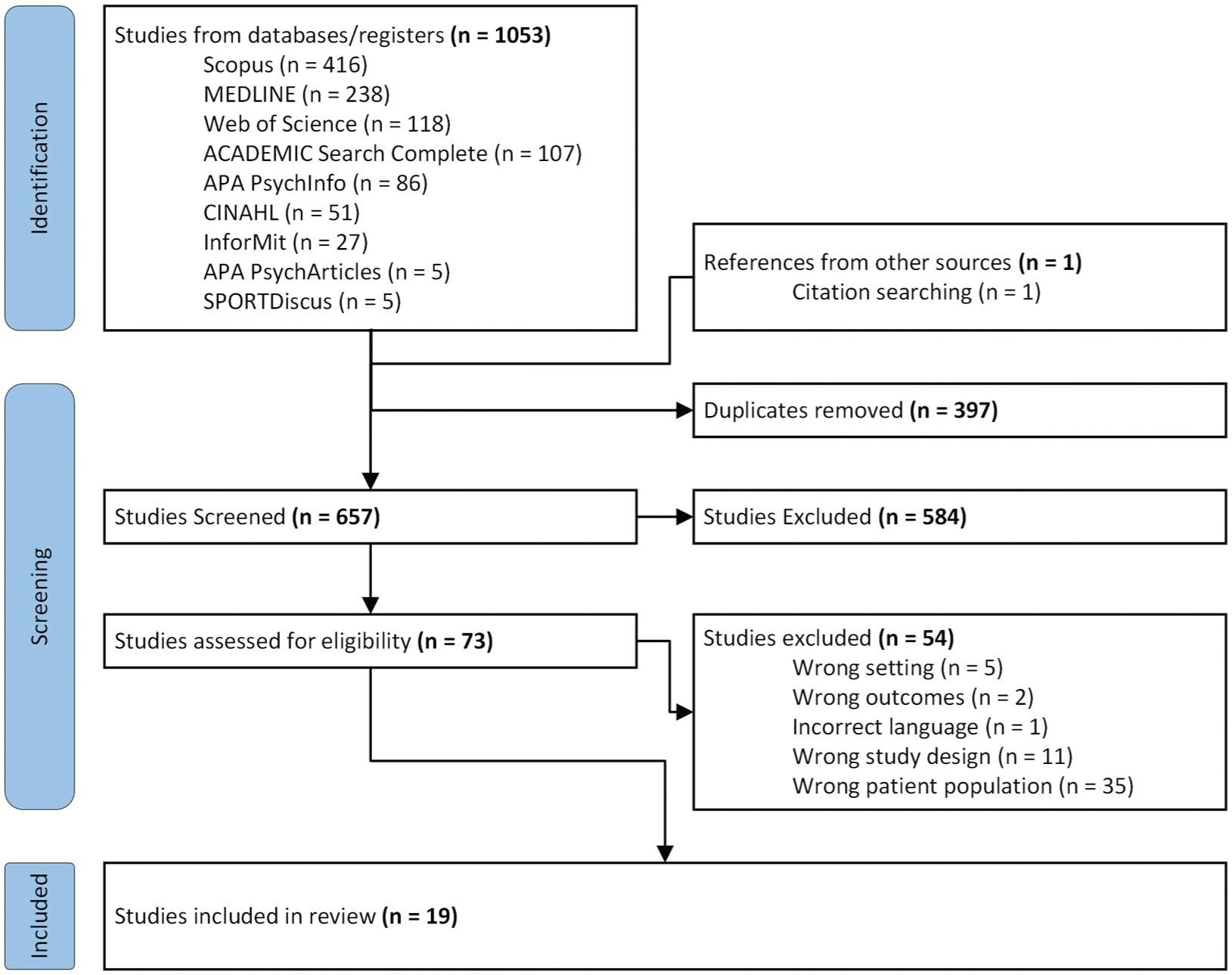
PRISMA flowchart of study selection.
Search strategy
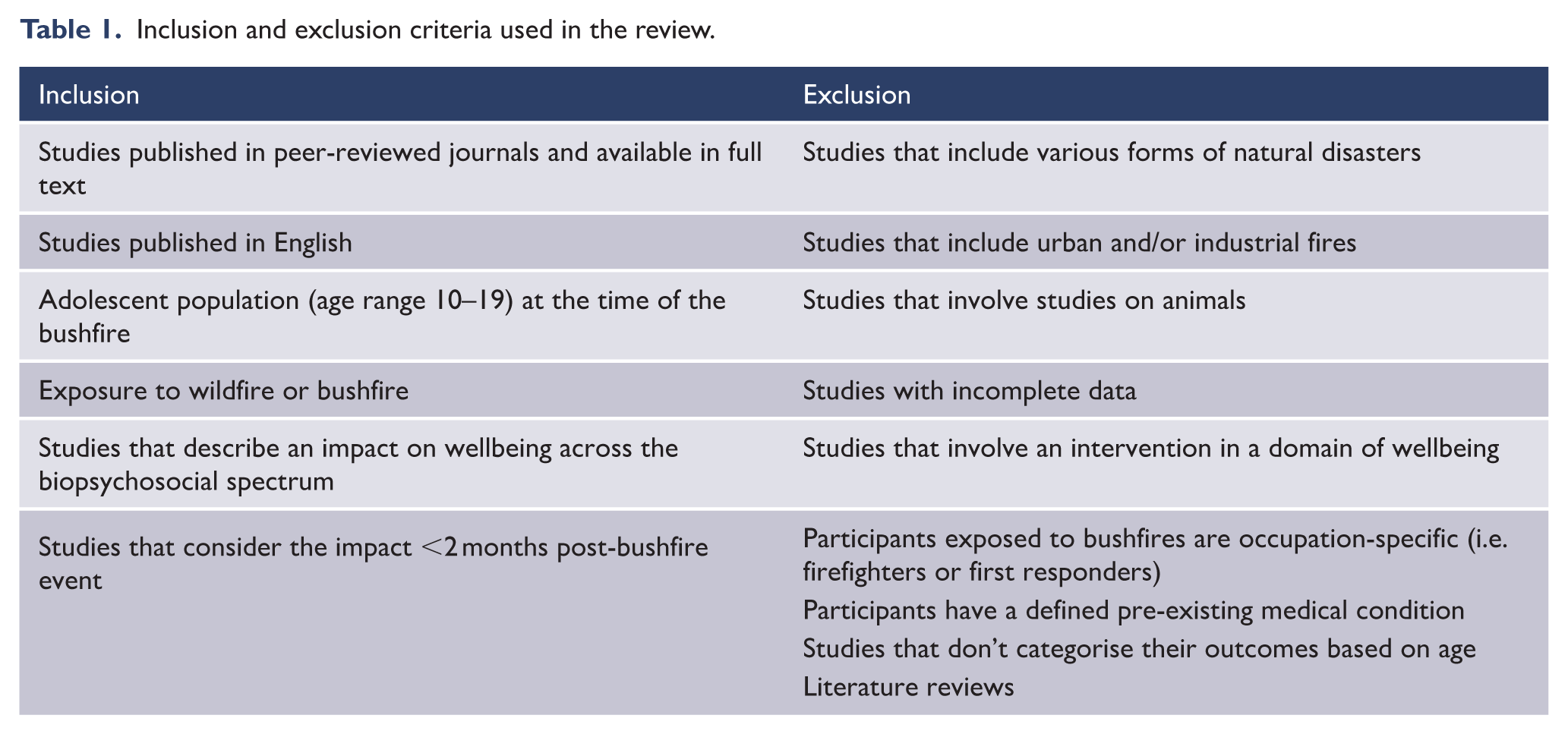
An initial exhaustive literature search was conducted on the 12 April 2023, with a subsequent updated search conducted on 19 December 2024, across the MEDLINE, APA PsycINFO, APA PsycArticles, CINAHL Complete, Scopus and Cochrane databases. The search strategy combined a variety of Medical Subject Heading (MeSH) search terms (e.g. ‘bushfire’, ‘adolescents’, ‘wellbeing’) while also employing various Boolean and truncation strategies (Appendix 1. Search Strategy). Bibliographic searches of papers cited in the included articles were also reviewed for studies not previously captured. Articles were imported into COVIDENCE and then screened for relevancy based on their title and abstract against the inclusion and exclusion criteria by three of the authors (PK, JP, LR) (Table 1. Inclusion and exclusion criteria). Any discrepancies were resolved via discussion.
Inclusion and exclusion criteria used in the review.
Upon completion of the initial screening, the full text of the remaining articles were imported into COVIDENCE and reviewed again against the inclusion and exclusion criteria. The full text review was completed by all authors, with each full-text being reviewed independently by two authors. Any discrepancies among any of the authors regarding the article’s inclusion status were once again resolved via discussion with the remaining authors.
Selection criteria
The inclusion criteria encompassed studies focusing on subacute or chronic mental health and wellbeing outcomes among adolescents’ post-bushfire. These included measures of clinical disorders such as PTSD, anxiety and depression. Positive wellbeing outcomes, such as mental resilience and coping, were also considered. Behavioural outcomes included substance use, while cognitive/emotional outcomes encompassed both emotional stability and/or suicidal ideation. In addition, generalised psychological wellbeing scores were also included in the analysis.
Exclusion criteria encompassed studies related to natural disasters other than bushfires, lacking outcome stratification within an adolescent population, or incorporating an intervention as part of the recovery process. Adolescence was defined as the age range between 10 and 19, which is based on the adolescent age range defined by Diaz et al. (2021).
Quality review
Each paper included underwent a quality assessment using the appropriate Joanna Briggs Institute (JBI) critical appraisal tool relevant to each of the included study designs. The JBI critical appraisal tool was selected based on its adaptability and its capacity to achieve congruence (Buccheri and Sharifi, 2017). The quality scores assigned to each study, based on these checklists, are documented in Appendix 2. Quality Review. With consideration that all papers achieved a score of greater than 50%, no papers were excluded.
Data extraction
Data extraction was conducted by importing relevant data into a summary table (Table 2. Summary of Results). Each author independently extracted data from each study, with any discrepancies resolved through consensus. To ensure data comparability, appropriate statistics were converted into a common metric (Cohen’s d) based on conversion formula provided in Borenstein et al. (2009). The extracted data were then grouped by common wellbeing outcomes and summarised through text, highlighting key trends across the included studies.
Results.
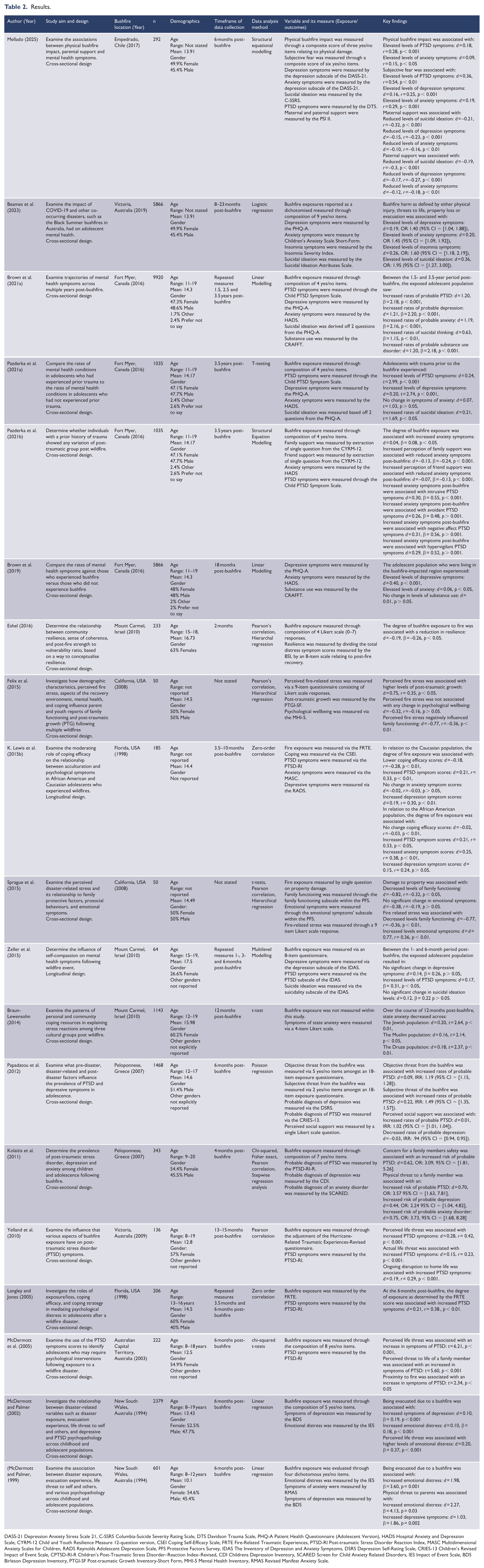
DASS-21 Depression Anxiety Stress Scale 21, C-SSRS Columbia-Suicide Severity Rating Scale, DTS Davidson Trauma Scale, PHQ-A Patient Health Questionnaire (Adolescent Version), HADS Hospital Anxiety and Depression Scale, CYRM-12 Child and Youth Resilience Measure 12-question version, CSEI Coping Self-Efficacy Scale, FRTE Fire-Related Traumatic Experiences, PTSD-RI Post-traumatic Stress Disorder Reaction Index, MASC Multidimensional Anxiety Scales for Children, RADS Reynolds Adolescent Depression Scale, PFS Protective Factors Survey, IDAS The Inventory of Depression and Anxiety Symptoms, DSRS Depression Self-Rating Scale, CRIES-13 Children’s Revised Impact of Event Scale, CPTSD-RI-R Children’s Post-Traumatic Stress Disorder–Reaction Index–Revised, CDI Childrens Depression Inventory, SCARED Screen for Child Anxiety Related Disorders, IES Impact of Event Scale, BDS Birleson Depression Inventory, PTGI-SF Post-traumatic Growth Inventory-Short Form, MHI-5 Mental Health Inventory, RMAS Revised Manifest Anxiety Scale.
Results
A total of 19 studies were included within the review, comprising 17 cross-sectional studies and two longitudinal studies. The maximum follow-up length was three and a half years post-bushfire event. Table 2 provides a summary of all relevant data from these studies, including methods and findings. These 19 studies examined the impact of nine separate bushfire events across six different countries, with multiple publications examining the same bushfire event: Australia (four events), the United States of America (two events), Israel (one event), Greece (one event), Canada (one event) and Chile (one event). These nine bushfires occurred between 1994 and 2019.
Considering the age of the ten unique populations surveyed across the included studies, the mean pooled age of the included populations was 13.98 years, with a pooled standard deviation of 1.49 years. The majority (seven studies) fell within the 14- to 15-year age bracket, providing a concentrated understanding of this specific adolescent age group. Three studies included populations with a mean age above 15 years, while three studies had populations with a mean age below 14 years. This indicates that the study populations encompassed populations from both the considered younger and older adolescent age brackets as defined by Diaz et al. (2021). Most studies recruited participants from specific school year levels, leading to relatively narrow age ranges in most samples. With consideration of the age of exposure at the time of the bushfire, there was a mean bushfire exposure age between 9.6 and 17.4 years old.
Measures used in studies
Within the review, there were 23 psychological and behavioural outcome measures used among the included studies. The reported measures encompassed a range of mental health symptoms relating to anxiety, depression and post-traumatic stress, along with psychological processing relating to coping self-efficacy and post-traumatic growth. Behavioural symptoms around substance use were reported in only two studies, and suicidal ideation was also reported in five studies; however, this outcome was measured based off questions used in other measures. It is with this consideration that there is the potential for many of these mental health measures to overlap, reflecting a general psychopathological factor (Caspi et al., 2014). This factor suggests that various mental health symptoms might not be entirely distinct from one another, and therefore different mental health outcomes have the potential to share underlying mechanisms or vulnerabilities, which in turn may complicate the interpretation of the findings. This overlap could lead to challenges in accurately identifying specific mental health issues, as symptoms may manifest in similar ways across different disorders.
In reviewing the measures used, there was a notable limitation in replication across the studies due to the heterogeneity of measurement. Measures that were used in multiple studies were self-reported measures and included the Hospital Anxiety and Depression Scale (four studies), the Patient Health Questionnaire (Adolescent version) (four studies), the Child PTSD Symptom Scale (CPSS) (two studies), the Protective Factors Survey (two studies), the Post-traumatic Stress Disorder Reaction Index for Children-Revised (PTSD-RI-R) (three studies), the Strengths and Difficulties Questionnaire (SDQ) (two studies), and the Patient Health Questionnaire (PHQ-9) (two studies).
Symptoms of PTSD
PTSD was the most widely reported mental health presentation, with various components of the bushfire event appearing to influence the level of symptoms among the included populations. Among these predictors, subjective bushfire threat consistently stood out as being associated with higher levels of PTSD symptoms among the exposed adolescents. Subjective threat, reflecting individual’s interpretations and experiences of the bushfire, seemed to play a more influential role compared with objective threat, which primarily pertained to the physical danger posed by the fire. Across studies that assessed subjective threat, all three identified its association with heightened rates of PTSD symptoms. Notably, subjective threat to life demonstrated a small yet significant association with increased PTSD symptoms, with effect sizes ranging from d = 0.22 (Papadatou et al., 2012) to d = 0.36 (Mellado, 2025). It is worth noting the methodological difference in how these studies measured PTSD, as Papadatou et al. (2012) utilised a cut-off score of 17 with the Children’s Revised Impact of Event Scale (CRIES-13) tool to determine a probable diagnosis, Yelland et al. (2010) incorporated a continuous score of the Post-Traumatic Stress Disorder–Reaction Index–Revised (PTSD-RI-R) as a part of their analysis, while Mellado (2025) used the Davidson Trauma Scale (DTS). McDermott et al. (2005) reported a similar significant finding regarding subjective threat to life and its association with higher levels of PTSD symptoms; their data did not allow for synthesis into Cohen’s d due to insufficiently detailed reporting. Furthermore, a comparison can be made between scores associated with subjective threat to life and objective threat to life concerning PTSD scores, with all three studies finding negligible effect sizes, ranging from d = 0.09 (Papadatou et al., 2012) to d = 0.19 (Mellado, 2025).
Kolaitis et al. (2011) examined specific components of bushfire exposure and their association with PTSD symptoms. The authors found that having concern for a family member’s safety had a large effect on PTSD symptoms (d = 0.62), and having a family member physically threatened by the bushfire also had a strong effect on PTSD symptoms (d = 0.70). However, the large effect size found by the authors is likely related to the use of a low cut-off score of 12 on the PTSD-RI-R, which is considered in the mild range of symptoms according to Steinberg et al. (2004). Comparatively, Langley and Jones (2005) employed a bushfire exposure composite score that encompassed both subjective and objective threats. This broader measure was linked to a smaller increase in PTSD symptoms, with a modest effect size of d = 0.25. Further analysis of the same population by K. Lewis et al. (2015b) found similar effect sizes across both the Caucasian (d = 0.31) and African American (d = 0.21) populations. These findings potentially suggest that while bushfire exposure impacts adolescent mental health, the strength of this effect can vary depending on the specificity of the measures used and demographic factors that are considered.
Several studies have considered how PTSD symptoms change over time following bushfire exposure. Zeller et al. (2015) found that over the first 6 months post-bushfire, PTSD symptom scores, while significantly different, had a negligible effect size of d = 0.17. This result contrasts against the longer term outcomes, whereby Brown et al. (2021a) found that PTSD symptoms continued to worsen between the 1.5- and 3.5-year period post-bushfire, revealing a large effect size of d = 1.2 at the 3.5-year period. These findings are significant in that they potentially suggest that the recovery of PTSD symptoms post-bushfire is not positively influenced by time and may not follow the projected pathway that is more commonly associated with the presentation (Rosellini et al., 2018).
Two studies looked at how other components external to the bushfire influenced PTSD symptoms. Pazderka et al. (2021a) found that those who reported being exposed to a prior trauma had increased levels of PTSD symptoms with a small effect size of d = 0.24 when compared with those without a previous trauma. It should be noted though that what was prior trauma was open to interpretation, with a large number of those reporting a previous trauma (42%), not disclosing what the trauma was. Another component that was considered to influence PTSD symptom scores post-bushfire was anxiety levels. Pazderka et al. (2021b) utilised a structural equational model to highlight the small effect size between self-reported anxiety levels and the PTSD symptoms of intrusion (d = 0.30), avoidant behaviour (d = 0.26), negative affect (d = 0.31), and hypervigilance (d = 0.29). These results have to be interpreted with a degree of caution given that there is the potential for many symptoms of anxiety to be linked with the symptoms of PTSD given that both conditions are influenced by the alterations of information processing relating to danger and fear (Williamson et al., 2021).
Based on these findings, there is strong evidence to suggest that the associated interpretation of the potential threat seems to be a stronger predictor of higher levels of PTSD symptoms among exposed adolescents. This suggests that individuals’ interpretations and experiences of the bushfire have a more influential role compared with objective threats related to physical danger. Furthermore, there is some evidence to suggest that PTSD symptoms may worsen over time following bushfire exposure, as indicated by the study completed by Brown et al. (2019), who noted the large and significant effect size of the change in PTSD symptoms over time.
Symptoms of depression
Symptoms relating to depression were reported in 11 studies. However, there was limited cross-over among the included studies regarding the depression measures used and the variables influencing depression scores. McDermott and Palmer (1999) identified the strongest effect size for depression scores, finding that physical threats to parents were associated with a large effect size (d = 1.03). However, this result is likely influenced by the younger population age range of 8–12 years. In contrast, the same authors reported a much lower effect size (d = 0.10) when examining a broader age range of 8–19 years in a subsequent study (McDermott and Palmer, 2002). Similarly, Kolaitis et al. (2011) identified strong effect sizes relating to depression, with ongoing housing adversity (d = 0.95) and property loss (d = 0.82). They also found that physical injury to family members had a moderate effect size (d = 0.40). It is important to note that these scores must be with the small number of individuals who experienced housing adversity (n = 8) and property loss (n = 10) which may limit the generalisability of these associations with depressive symptoms.
In their study, Brown et al. (2019) found that depressive symptoms were higher among individuals living in bushfire-impacted areas (d = 0.40). This result contrasted with the findings of Beames et al. (2023), who, by using a dichotomised yes/no exposure measure, found a negligible effect size of d = 0.19 for the bushfire-exposed group. The difference in scores may relate to how each of the studies defined their exposure group. Brown et al. (2019) surveyed individuals located in the township where the bushfire event occurred and then compared them against a non-exposed population dataset from a separate study. Conversely, Beames et al. (2023) reported from a population group that was across a larger demographic area, which potentially resulted in a wider range of experiences of bushfire exposure. A similar finding was reported by K. Lewis et al. (2015b), who found that the degree of bushfire exposure, when considered as a continuous score, also seemed to have a negligible effect on depression symptoms among both of their Caucasian (d = 0.19) and African American (d = 0.15) cohorts. Mellado (2025) reported that subjective fear of the bushfire was associated with elevated levels of depression, however the effect size was considered negligible (d = 0.16). Papadatou et al. (2012) also used a depression score as an outcome measure but did not report the specific findings and only mentioned in text that neither of their subjective threat or objective threat scores was associated with depressive symptoms. McDermott and Palmer’s (2002) was the only study to report on a specific component of acute exposure, whereby evacuation following the bushfire was found to have a significant yet negligible effect on depression scores (d = 0.10).
Two longitudinal studies looked at how depression and depressive symptoms changed over time post-bushfire. In the initial 6 months after a bushfire, Zeller et al. (2015) reported significant yet negligible changes in depressive symptoms (d = 0.14). In contrast, Brown et al. (2021b) found an increase in probable depression diagnoses between the 1.5- and 3.5-year period post-bushfire, with a substantial effect size of d = 1.21.
A number of studies have reported predictors of depressive symptoms. Pazderka et al. (2021b) found that self-reported prior trauma predicted a small increase in depressive symptoms (d = 0.20). Mellado (2025) found that both maternal and parental support had a negligible effect on depressive symptoms (d = –0.15 and d = –0.17 respectively), which compares with the results by Papadatou et al. (2012), who found a negligible association between social support and the likelihood of probable depression (d = –0.03).
These results contrast with those found in relation to PTSD symptoms, whereby PTSD scores were consistently associated with the degree of exposure, particularly the subjective threat. Comparatively, there seems to be a minimal association between bushfire exposure and depressive symptoms and seems to be more related to loss secondary to the bushfire.
Symptoms of anxiety
Anxiety was reported in nine of the studies, utilising six different measures. In comparison with previously reported mental health outcomes such as PTSD and depression symptoms, anxiety symptoms appeared to be less strongly associated with bushfire exposure. Kolaitis et al. (2011) reported the strongest effect size, indicating that individuals who reported a physical threat to a family member experienced the most significant increase in anxiety symptoms, with an effect size of d = 0.75.
Beames et al. (2023) found that a self-reported bushfire exposure had a small effect size on the probability of a diagnosis of an anxiety disorder (d = 0.20). This finding contrasts with Pazderka et al. (2021b), who observed that a continuous exposure score had a negligible effect on anxiety symptoms (d = 0.04), comparable with when the results of the same exposed population were compared against a non-exposed cohort. Similarly, Mellado (2025) also found that self-reported physical exposure had a negligible effect size on anxiety symptoms (d = 0.09), while subjective fear was associated with a larger yet still negligible effect size (d = 0.19). It should be noted that the differences in scores may be attributed to the various measures used and how they were interpreted. Beames et al. (2023) utilised a cut-off score from the Children’s Anxiety Scale for a probable diagnosis, which contrasts against the Fort-McMurray studies, which used a continuous symptom score as reported by the anxiety subscale of the HADS, and Mellado (2025) relied on the symptom score from the DASS-21. Another potential variable that has to be considered within the results of Beames et al. (2023) is that their data collection coincided with the COVID-19 pandemic, which may have also influenced anxiety symptoms. Again, with consideration of a continuous exposure score, K. Lewis et al. (2015b) reported an interesting finding in that bushfire exposure was associated with higher levels of anxiety in their African American cohort (d = 0.25), but not in their Caucasian group (d = –0.02), which potentially suggests that anxiety is not strongly linked with exposure itself but potentially external factors associated with the recovery process.
With consideration of how anxiety symptoms may change over time, Braun-Lewensohn (2014) found that over the initial 12 months post-bushfire, state anxiety, defined by sensations of fear, nervousness and discomfort, decreased across all three population groups. However, both the Muslim and Druze populations exhibited negligible effect sizes of d = 0.16 and d = 0.18, respectively, whereas the Jewish population reported a small effect size of d = 0.20. These results contrast with the long-term outcomes reported by Brown et al. (2021b), who found that anxiety symptoms continued to increase between the 1.5- and 3.5-year time period, with a large effect size of d = 1.12. This aligns with similar patterns seen among previously reported mental health outcomes of PTSD and depressive symptoms.
With consideration of other factors that may influence anxiety post-bushfire, Pazderka et al. (2021b) found that those who reported previous trauma had a negligible impact on their anxiety symptoms (d = 0.07). Once again, these results need to be interpreted with caution given the wide range of situations that were considered traumatic.
Suicidal ideation
Suicidal ideation was reported in five studies. With consideration of a general bushfire exposure score, Beames et al. (2023) found that self-reported exposure had a small effect on levels of suicidal ideation (d = 0.36). However, these results should be interpreted with caution, as they were gathered during the COVID-19 pandemic, which may have influenced this finding, noting that it would be difficult to determine which event (bushfire versus pandemic) would have influenced this finding. Comparatively, Zeller et al. (2015) found that across the first 6 months following bushfire, there was no change in suicidal ideation (d = 0.14), which contrasts with the long-term finding by Brown et al. (2021b) found that suicidal ideation scores increased during the 1.5- to 3.5-year period post-bushfire (d = 0.63). This potentially suggests a delay in the psychological impact and that suicidal ideation may intensify over time in response to long-term stressors and potential feelings of hopelessness over time.
In addition, similar to their previous findings, Pazderka et al. (2021b) found that those who reported being exposed to a previous trauma prior to the bushfire reported higher levels of suicidal ideation, with a small effect size of d = 0.21, when compared with those who did not report being exposed to a previous trauma. This result does align with the notion that multiple/repeated trauma exposure does increase the risk of suicide (LeBouthillier et al., 2015); however, this is more likely influenced by the specific type of trauma, noting that childhood maltreatment and assaultive violence have the highest rates of suicidal ideation.
With consideration of external factors that can influence suicidal ideation, Mellado (2025) found a small association between the level of maternal support and a reduction in suicidal ideation scores at 6 months post-bushfire.(d = –0.21), indicating that higher levels of maternal support may reduce suicidal ideation. In contrast, paternal support showed a negligible association (d = –0.19).
Substance use
Substance use was reported in two studies, both of which were part of the Fort Myer group of studies. In comparing the substance abuse levels of the geographically exposed cohort to a similar control cohort, Brown et al. (2019) did not find any association between those geographically exposed to the bushfire and levels of substance use (d = 0.01). However, in their follow-up study utilising the same geographically exposed cohort, M. Brown et al. (2021b) found that substance abuse levels did increase during the 1.5- to 3.5-year period post-bushfire (d = 1.20). However, it is likely that this significant finding relates to the trajectory of substance use throughout the adolescent timespan, noting that substance use increases with age before hitting its peak in the mid-20s (Chen and Jacobson, 2012); therefore, this result has to be interpreted with caution given that it does not compare against a non-exposed cohort.
Discussion
The aim of the systematic review was to investigate the impact that bushfire exposure had on adolescent mental health, specifically considering the potential predictors that components of exposure had on various mental health presentations. The results of the systematic review suggest that there are evident connections between these findings and the various mental health symptoms. Furthermore, there are some patterns associated with how these presentations are both unique to the adolescent population and their trajectory over time.
PTSD emerged as the most extensively studied outcome. A consistent finding across the included research on subjective bushfire threat, encompassing individuals’ interpretations and experiences of the event, emerged as a significant predictor of heightened PTSD symptoms among exposed adolescents. This finding aligns with previous research relating to the development of PTSD symptoms, which are more likely associated with the perception of threat and loss of control than the objective physical threat itself (Heir et al., 2016; Holbrook et al., 2001). The other main finding was the apparent trend of worsening PTSD symptoms over time, which challenges the notion of recovery post-bushfire exposure. This finding may be unique to the adolescent population, given that a previous systematic review by Zhang et al. (2022) found that among the general population, the rates of probable PTSD decreased over time post-bushfire. This contrasting finding from this review is likely linked to the unique developmental stage of adolescence, whereby there is associated sensitivity within the subcortical regions of the brain that process fear and emotion, along with the potential for the development of the prefrontal cortex to be hindered as a result of the trauma (Cisler and Herringa, 2021).
While symptoms of depression were prevalent among the included studies, the association with bushfire exposure appeared less consistent compared with PTSD symptoms. The main variables that were more strongly associated with symptoms of depression were housing adversity, property loss and physical injury to family members. At the centre of these variables is the concept of loss, which has historically been linked to depression (Bowlby, 1980). In considering the principles of attachment theory, the potential loss following a bushfire may impact an adolescent’s sense of security and stability. Housing adversity, inadequate housing conditions or relocation can disrupt individuals’ sense of security and stability in their living environment, which can influence the presenting symptoms of depression (Marçal, 2022). Conversely, with consideration of the youngest population surveyed, McDermott and Palmer (1999) found that depressive symptoms were most strongly associated with fear of harm to a family member, which seems to suggest that the younger population’s security and emotional stability is linked to their caregivers. Similar to what was reported with symptoms of PTSD, depressive symptoms among adolescents were also found to increase over the long-term timeframe post-bushfire. However, this finding is consistent with general adolescent population findings, noting that the prevalence of depressive disorders increases with age, typically hitting a peak at the age of 17 (Keyes et al., 2019). These findings therefore suggest that those who experience loss as a result of bushfire may predict higher levels of depressive symptoms; the trajectory of depression over time aligns with developmental trends observed in the broader adolescent population.
In contrast to symptoms of PTSD and depression, symptoms of anxiety were less influenced by bushfire exposure, with the only strong effect size being linked to being concerned with the safety of a family member. Given that anxiety is characterised by a sense of apprehension and worry about future uncertainties, it is likely that the level of anxiety symptoms is more related to external factors outside of the bushfire exposure but potentially still connected to aspects of the recovery process. This concept is explored within the structural equational model by Pazderka et al. (2021b), who found that both family and friend support had stronger associations with anxiety scores than the degree of bushfire exposure. This finding links with general population findings, noting that perceived social support can reduce symptoms of anxiety (Roohafza et al., 2014). Higher levels of social support may enable individuals to externalise their concerns and fears, fostering a sense of understanding and empathy that can mitigate anxiety about the future (Zhu et al., 2020). This underscores the importance of examining socio-environmental factors alongside direct exposure to traumatic events. With consideration of the finding that anxiety symptoms may also increase over time following bushfire, this potentially contrasts against what has been previously reported among a general population, whereby anxiety has been seen to decrease over the course of adolescence, which is often attributed to various factors, including developmental maturation, increased coping skills, and greater emotional regulation abilities as individuals transition into adulthood (McLaughlin and King, 2015). Given that the degree of bushfire exposure was not seen to be a predictor of anxiety symptom scores, it is likely that this long-term finding may be associated with potential ongoing disruptions. In addition, the cumulative effects of post-traumatic stress, depression, and other mental health challenges could further exacerbate anxiety symptoms over time.
Suicidal ideation emerged as a concerning outcome, with evidence suggesting that while there was no increase in the short-term timeframe post-bushfire, the long-term longitudinal data indicated a potential for thoughts of suicide to increase over time. This is of particular concern given that suicide is the third highest cause of death in adolescents (Cunningham et al., 2018). Similarly, substance use also demonstrated an upwards trajectory over time post-bushfire. However, once again, that finding would be expected in an ageing adolescent population (Nelson et al., 2015). The concern is that those who have high-risk substance use during adolescence are more likely to maintain high-risk patterns into adulthood.
With consideration of the impact of age It remains challenging to differentiate any unique impacts between younger and older adolescent populations given that most of the populations analysed in this systematic review fell within the 14- to 15-year age bracket, and only one study stratified their findings to age. Findings relating to anxiety, depression and PTSD symptoms were consistent between those studies reporting median ages between 14 and 15 and those with a median age below 14. However, comparing these findings with those in the older adolescent age range proved to be more difficult due to the large heterogeneity in both aim and measures that these studies used. One study focused on resilience (Eshel, 2016), while another examined state anxiety (Braun-Lewensohn, 2014). Therefore, the only comparison that could be made was relating to the findings of Zeller et al. (2015), who did not find any change in depression scores post-bushfire. There is then the potential finding that an increase in exposure age may potentially account for a reduction in depressive symptoms. However, this finding does contrast against the more generalised findings of what is known about depression rates in older adolescents, noting that it is typically a period with higher rates of depression (Keyes et al., 2019). Furthermore, it should be noted that within the same study, PTSD symptoms showed changes across all age groups, suggesting that age alone is unlikely to influence the development and trajectory of PTSD symptoms.
With consideration of the more generalised findings, it is likely that these results are impacted by the unique neurophysiological development occurring during adolescents, noting that trauma has the potential to alter amygdala activity and amygdala-prefrontal coupling, which can lead to difficulties with emotional regulation and threat reactivity (Herringa, 2017). It is based on these potential neurophysiological changes that these mental health and behavioural findings are not isolated phenomena, and are likely to coexist and influence one another (Eskander et al., 2020) due to the shared neurophysiological mechanisms that result from both the exposure to the traumatic incident and the subsequent environmental circumstances. By recognising the interconnected nature of these presentations, stakeholders can develop more effective strategies to support the mental wellbeing of bushfire-affected adolescents and promote resilience in the face of adversity.
Limitations
One of the primary limitations of this systematic review was the diversity of the measures employed across the included studies. In addition, studies that utilised similar measures also incorporated different cuff-off points when considering probable diagnoses. Furthermore, questions must be raised relating to the psychometric strength of several of the outcome measures. For example, bushfire exposure was measured in a variety of different ways (e.g. objective exposure, subjective threat), and these differences likely contributed to the variability in findings. Typically, our results found that the more generalised the score, the lower the impact of various mental health outcomes. It is, therefore, recommended that future research should consider developing and adopting more standardised exposure metrics and ensuring consistent timeframes to enhance comparability across studies.
Another limitation was the limited data on the long-term impact of bushfire exposure. Only one population had been analysed beyond the 2-year mark, with none exceeding three and a half years, which limits the understanding of how bushfire trauma influences individuals as they approach adulthood. This limitation does highlight the need for future research to invest in long-term follow-up studies that can capture outcomes beyond school years.
Another notable limitation of the systematic review was the challenge of establishing the direction of causality between bushfire exposure and mental health outcomes. While the included studies provide valuable insights into the associations between these variables, the majority of them were of a cross-sectional design, which limited their ability to infer causality.
In addition, the limited examination of background variables, such as socioeconomic status (SES), education level and rurality, represents a notable gap in the current literature. These factors are known to influence both the likelihood of bushfire exposure and the manifestation of mental health symptoms. Future research may need to consider these demographic and socioeconomic variables, noting the impact that they may have on mental health outcomes.
Moreover, the lack of complex statistical modelling beyond linear regression in most studies is a notable limitation. While linear regression provides valuable insights into the associations between variables, more sophisticated modelling techniques could further clarify the pathways through which bushfire exposure impacts mental health outcomes, allowing for more targeted interventions and policy recommendations.
Implications for future research
Future research within this space should attempt to potentially focus on different ages within adolescents to determine what the trajectories and patterns are within the different age brackets. Furthermore, given the scarcity of longitudinal studies, further research looking into more long-term outcomes is needed to determine the progression of symptoms of PTSD, depression and anxiety as they enter adulthood. Finally, there needs to be a consideration in the standardisation of measurement with regards to bushfire exposure, which would further our understanding of the pathways through which trauma from bushfires impacts mental health.
Furthermore, these findings suggest several important considerations for mental health interventions and policies. For instance, the strong association between subjective bushfire threat and PTSD highlights the need for trauma-informed care that addresses perceived threats and emotional responses. Mental health policies should also consider the developmental trajectory of adolescents and the importance of early intervention to prevent long-term negative outcomes. Impacted communities need to be provided with assistance to provide long-term mental health support, recognising that PTSD, depression and anxiety symptoms may worsen over time rather than improve. Furthermore, given the social nature of adolescent development, interventions that promote social support may help mitigate anxiety. Programmes that strengthen community and peer support systems could buffer against anxiety and provide protective factors in the recovery process.
Conclusion
The systematic review highlights the complex nature of adolescent wellbeing and recovery after exposure to traumatic bushfire events. While the included studies employed diverse methods and measures, consistent patterns emerged linking the experiences of adolescents to their mental health. Symptoms of PTSD and depression were seen to be influenced by the degree of perceived exposure, potential danger and loss. Furthermore, there were some suggestions that mental health symptoms may continue to worsen over time. This finding raises significant concerns about the long-term impact of bushfire exposure on adolescent mental health. Therefore, further research is needed to explore the long-term impacts and to develop approaches to post-bushfire recovery that consider the potential long-term impact.
Footnotes
Appendix 1
Appendix 2
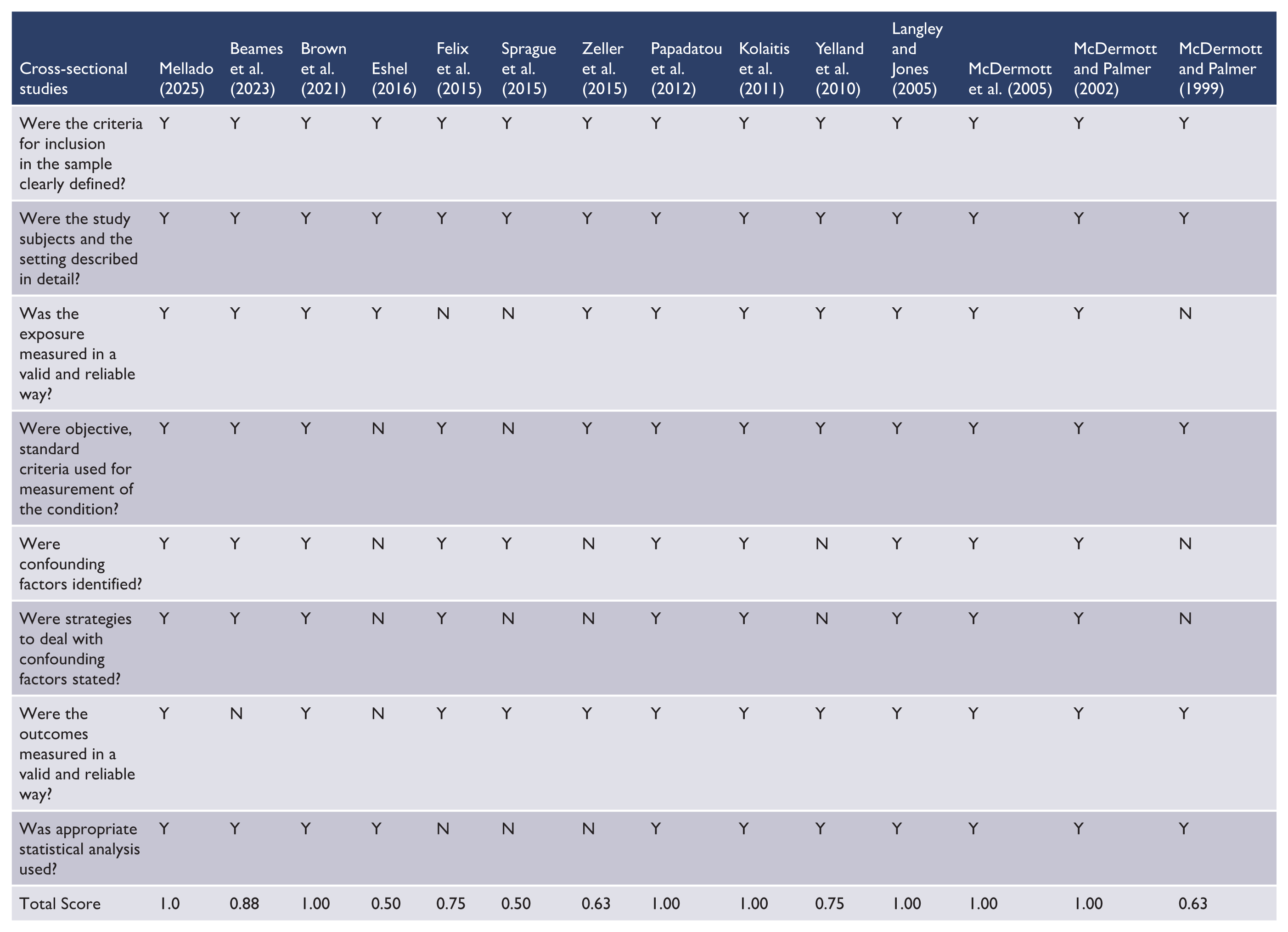
| Cross-sectional studies | Mellado (2025) | Beames et al. (2023) | Brown et al. (2021) | Eshel (2016) | Felix et al. (2015) | Sprague et al. (2015) | Zeller et al. (2015) | Papadatou et al. (2012) | Kolaitis et al. (2011) | Yelland et al. (2010) | Langley and Jones (2005) | McDermott et al. (2005) | McDermott and Palmer (2002) | McDermott and Palmer (1999) |
|---|---|---|---|---|---|---|---|---|---|---|---|---|---|---|
| Were the criteria for inclusion in the sample clearly defined? | Y | Y | Y | Y | Y | Y | Y | Y | Y | Y | Y | Y | Y | Y |
| Were the study subjects and the setting described in detail? | Y | Y | Y | Y | Y | Y | Y | Y | Y | Y | Y | Y | Y | Y |
| Was the exposure measured in a valid and reliable way? | Y | Y | Y | Y | N | N | Y | Y | Y | Y | Y | Y | Y | N |
| Were objective, standard criteria used for measurement of the condition? | Y | Y | Y | N | Y | N | Y | Y | Y | Y | Y | Y | Y | Y |
| Were confounding factors identified? | Y | Y | Y | N | Y | Y | N | Y | Y | N | Y | Y | Y | N |
| Were strategies to deal with confounding factors stated? | Y | Y | Y | N | Y | N | N | Y | Y | N | Y | Y | Y | N |
| Were the outcomes measured in a valid and reliable way? | Y | N | Y | N | Y | Y | Y | Y | Y | Y | Y | Y | Y | Y |
| Was appropriate statistical analysis used? | Y | Y | Y | Y | N | N | N | Y | Y | Y | Y | Y | Y | Y |
| Total Score | 1.0 | 0.88 | 1.00 | 0.50 | 0.75 | 0.50 | 0.63 | 1.00 | 1.00 | 0.75 | 1.00 | 1.00 | 1.00 | 0.63 |
Declaration of conflicting interests
The authors declared no potential conflicts of interest with respect to the research, authorship and/or publication of this article.
Funding
The authors disclosed receipt of the following financial support for the research, authorship and/or publication of this article: The authors received a grant from Latrobe Youth Space (funding number G2495) to complete an evaluation of an adolescent community engagement project to promote bushfire recovery. The authors declare that the funding body had no involvement in the systematic review.

References
Supplementary Material
Please find the following supplemental material available below.
For Open Access articles published under a Creative Commons License, all supplemental material carries the same license as the article it is associated with.
For non-Open Access articles published, all supplemental material carries a non-exclusive license, and permission requests for re-use of supplemental material or any part of supplemental material shall be sent directly to the copyright owner as specified in the copyright notice associated with the article.
