



Abstract
Objective:
Veterans transitioning to civilian life after leaving the military face unique health concerns. Although there is a significant body of research exploring veterans’ experiences of transition and predictors of well-being, there are limited studies examining how social group engagement influences veterans’ transition. We explored how Australian Defence Force veterans’ social group engagement and identity influenced their adjustment to civilian life and well-being.
Methods:
Forty Australian veterans (85% male; mean age = 37 years, range = 25–57 years) took part in in-depth, semi-structured interviews. Participants completed two mapping tasks (a social network map and life course map) that provided a visual component to the interviews. Interview transcripts were analysed thematically and interpreted by adopting a social identity approach.
Results:
Joining the military involved a process of socialisation into military culture that for most participants led to the development of a military identity. An abrupt or difficult discharge from defence was often associated with a negative impact on social group engagement and well-being in civilian life. Veterans’ social group memberships may act not only as positive psychological resources during transition but also as a potential source of conflict, especially when trying to re-engage with civilian groups with different norms or beliefs. Military values inscribed within a veteran’s sense of self, including a strong sense of service, altruism and giving back to their community, may operate as positive resources and promote social group engagement.
Conclusion:
Engaging with supportive social groups can support transition to civilian life. Reintegration may be improved via effective linkage with programmes (e.g. volunteering, ex-service support organisations) that offer supportive social networks and draw upon veterans’ desire to give back to community. Social mapping tasks that visualise veterans’ social group structures may be useful for clinicians to explore the roles and conflicts associated with veterans’ social group memberships during transition.
Introduction
The age-adjusted suicide rate for ex-serving Australian Defence Force (ADF) men and women is higher when compared to the Australian population, highlighting the importance of research focusing on veteran well-being (Australian Institute of Health and Welfare, 2020). Research in Australia and internationally has generally found high levels of functioning in veteran populations; however, a significant number of veterans experience mental, physical and social problems after leaving the military (Australian Institute of Health and Welfare, 2018; Macmanus and Wessely, 2013; Oster et al., 2017; Thompson et al., 2016). The recent Australian Mental Health Prevalence Report (Van Hooff et al., 2018) estimated that approximately 46% of ADF members who discharged from full-time service within the past 5 years: (1) met 12-month diagnostic criteria for a mental disorder and (2) reported significantly greater psychological distress, depression, anxiety, anger, suicidality and alcohol use, in comparison to regular ADF members. The transition to civilian life is increasingly recognised as one of the most stressful periods for military members worldwide due to factors including changes in identity, social networks, status, occupation, finances, supports and culture. However, and especially in Australia, there is limited research focusing on how social group engagement influences veterans’ transition.
Social identity and transitioning to civilian life
Social identity theory (Tajfel and Turner, 1979) and self-categorization theory (Turner et al., 1994) are seminal theories within psychology that articulate relationships between social group memberships and individuals’ sense of self. Within these theories, personal identity refers to how an individual defines themselves (the ‘I’ and ‘me’) as unique and with individual differences compared with other in-group members (Turner et al., 1994). Social identity refers to social categorisations of the self and others (the ‘us’ and ‘we’) in terms of shared similarities with members of a social group, in contrast to other groups.
Social group memberships potentially act as key resources which can be drawn upon to promote well-being during stressful life transitions (Haslam et al., 2008; Jetten et al., 2017). Multiple social group memberships may be beneficial for individuals, given there is a greater chance they will be able to maintain at least some of these memberships after a life-changing event, in turn promoting ‘social identity continuity’ and increased subjective well-being. Furthermore, the quality of people’s engagements with social groups (i.e. the level of ‘social identification’ with a group) is an important aspect influencing adjustment to challenging life transitions (Sani et al., 2012). In other fields, a social identity approach has been productively drawn upon to examine resilience for individuals transitioning to university (Iyer et al., 2009), retiring from work (Haslam et al., 2019), rehabilitating after a stroke (Haslam et al., 2008) and in recovery from alcohol and other drug dependence (Best et al., 2016).
There is a growing corpus of research examining how veterans’ engagements with social groups influence their mental health outcomes (Cederbaum et al., 2017; Ciarleglio et al., 2018; Evans et al., 2010; Hatch et al., 2013). Binks and Cambridge (2018) found that UK veterans experienced identity conflicts when attempting to reintegrate into civilian life and those who had internalised a strong military sense of self often struggled the most following discharge. Thompson et al. (2017) speculated that Canadian veterans who belong to multiple social groups, and those who maintain a military identity alongside their new civilian identity, may be more likely to experience fewer difficulties when transitioning to civilian life. Thompson et al. (2019) found that weak social group identity among Canadian veterans was associated with difficulty adjusting to civilian life and mental health challenges.
Joining the military involves a process of acculturating to military life and often forming a military sense of self. For those who take on particularly salient military identities, the transition to civilian life can be challenging (Binks and Cambridge, 2018; Demers, 2011; Herman and Yarwood, 2014; Smith and True, 2014). Challenges affecting transition to civilian society arise through competing behavioural expectations that veterans face while in service, compared to different expectations they face in civilian society. Military culture tends to be forged on principles of obedience, chain-of-command and cohesiveness with peers; in contrast, civilian life demands expectations of autonomy and self-advocacy (Smith and True, 2014).
While there has been quantitative research exploring ADF veterans’ transition to civilian life (e.g. Van Hooff et al., 2018), there has been minimal qualitative work focusing on ADF veterans’ social group engagements, identity and well-being at the ‘micro level’. Addressing this gap, and by drawing on a social identity approach (Tajfel and Turner, 1979; Turner et al., 1994), this study aims to examine how military identities and social group engagements influence veterans’ transition. Specifically, we ask the research question: how do veterans’ social group engagements and identity influence their adjustment to civilian life and well-being? We discuss the implications of our analysis for future health/policy interventions aiming to support veterans transitioning to civilian life.
Methods
Design
Data were generated as part of a qualitative study that explored veterans’ experiences of transition. The study was approved by the Departments of Defence and Veterans’ Affairs Human Research Ethics Committee (REF E017-016).
Participants and recruitment
Participants responded to advertisements on social media and through veterans’ support organisations. To be eligible for the study, participants had to have recently (within past 5 years) exited their full-time regular ADF role. Exclusion criteria were (1) under 18 years old, (2) served as reservists only prior to exiting the ADF or (3) experiencing psychological distress.
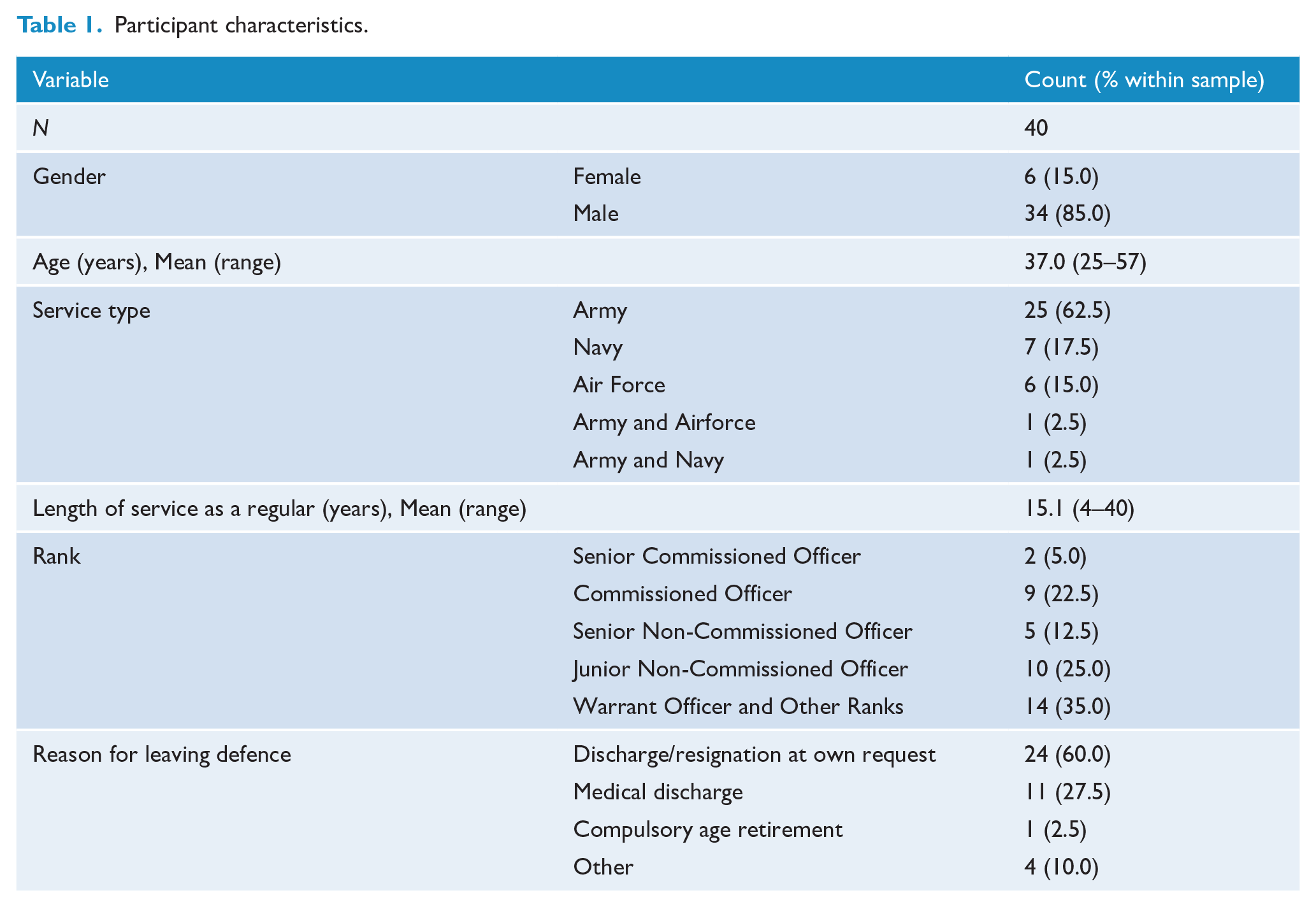
In total, 40 participants were recruited (see Table 1). The mean time elapsed since participants had discharged from the ADF was 3 years and 4 months.
Participant characteristics.
Data collection
Participants were invited to participate in semi-structured, in-depth interviews. The interview schedule (see Supplementary File 1 ) explored veterans’ social group engagement and identity, life course trajectories and well-being, and challenges faced when adjusting to civilian life. Participants were invited to complete two mapping tasks which aided in eliciting discussion about their engagements with social groups and transition. The interviews and mapping tasks were conducted both face-to-face and over the phone (by E.S., A.B. and R.B.) and were audio-recorded.
The first mapping task involved participants drawing a social identity map (adapted from Beckwith et al., 2019; Best et al., 2014; Cruwys et al., 2016) where they identified and labelled their social groups, indicated whether the groups were supportive (by labelling them with a green sticker) and drew lines between the groups to indicate if they were related. The second mapping task involved drawing a life course map (Klingemann and Klingemann, 2016). Participants were invited to draw a lifeline with its ups and downs (representing well-being from 1 year before joining the ADF to the present), and to include labels to reflect on what led to these ups and downs. The interview schedule and mapping tasks were piloted during the first few interviews and refined (e.g. by updating some terms with defence-specific language).
Data analysis
The interview recordings were transcribed verbatim by an external transcription service and anonymised. The interview transcripts were coded in QSR NVivo Version 11 using thematic analysis (Braun and Clarke, 2006) by E.S. and A.B. Regular review meetings were held between authors M.S., E.S. and A.B. to ensure the emerging coding framework was grounded in the data.
Findings
Here, we present themes exploring: (1) how life in the military and transitioning to civilian life influenced veterans’ identities, (2) social groups and identity during transition and (3) how values attached to military identities served as resources for veterans after leaving defence. To maintain participant anonymity, we have adopted pseudonyms and inserted text in the social identity maps to cover participant handwriting and alter any identifying terms.
Military life, transition and identity
In this theme, we explore how participants’ military identities developed after they joined the military and how transitioning to civilian life influenced social group engagement and well-being.
Forming military identities
For many participants, joining the military involved a process of being socialised into military culture, in turn leading to the formation of an identity forged on military values. Describing the process of recruitment to the ADF, Tom (Army for 7 years) explained,
The thing about the Army is that you have to have a certain mentality before joining, […] that’s why you go through all the screenings, that’s why you have all your psych tests […] Then they make you all dress the same, then they make you all look the same because you all have to be clean-shaven, you all have to have the same kind of hair […] they build a new mentality in there as well.
Tom’s experience described a homogenised military culture where group norms and beliefs were privileged over individual characteristics. Processes of socialisation worked to ‘build a new mentality’ and to foster a standardised military culture. The physical appearance standards that many participants described were part of a process of materialisation (Binks and Cambridge, 2018), where appearance symbolised how individuals were part of the same group.
As other participants described, the process of military socialisation involved ‘stamping an identity during that period as a soldier’ (Chris, Army for 13 years) which led to individuals feeling a ‘[…] sense of belonging to a group bigger than just – a purpose bigger than your own’ (Craig, Army for 15 years). As part of a process of social identification (Tajfel and Turner, 1979), new recruits categorised themselves as belonging to their military units and adopting the norms and beliefs relevant to the military.
Some participants with army experience described how they had been trained to become part of a team of ‘warriors’ (see Dunivin, 1994), which was considered especially important for a future that may require combat during war. It was about becoming ‘ […] a warrior, and being strong, and being prepared to fight and suffer and do things that most people would only watch in the movies’ (Jeremy, Army for 10 years). By taking on these characteristics, many participants described how they were becoming increasingly different in comparison to their civilian counterparts. These forms of social comparison (Tajfel and Turner, 1979) heralded the beginning of in-group (military) versus out-group (civilian) comparisons that often continued after discharging from defence.
However, not all participants formed a strong sense of military identity, nor felt a sense of belonging to military social groups during service. For example, when describing whether he took on a military identity, Bryce (Army for 9 years) stated,
I wasn’t someone that was so attached to their military identity. Like, I was, and I wasn’t. I was kind of proud of my army service and all that sort of thing, but I wasn’t like, ‘I am an army guy’. I was like, ‘I am Bryce’, who’s in the army, or who was in the army.
Thus, although many participants formed a strong sense of military identity after joining defence, adopting a military identity was only partial for certain participants who could not relate to military culture to the extent others might.
Transition experiences and well-being
A key feature of discharging from the ADF and flow on effects influencing identity and well-being was whether the transition to civilian society was planned and predictable, or unplanned and abrupt. For example, Stephen (Airforce for 9 years) emphasised that his transition was made easier as his exit from the ADF was voluntary and planned:
I had a very easy transition. Because I wasn’t transitioning because I could no longer do the job, or I was being medically discharged. It was purely by choice to be around family. So, everyone was very supportive, particularly my family, emotionally.
In contrast, where a participant’s discharge was abrupt, such as in the case of being an involuntary or forced termination, there were often associated negative impacts on social group connection and well-being. For example, after leaving the military, or as Chloe (Army and Airforce for over 20 years) recounted ‘when the machine spits you out before you’re ready to go’, veterans were often highly vulnerable. Low self-esteem was linked to difficulties in being accepted into social groups:
There’s no support. You’re on your own, and if you’re not cognisant of the fact that defence ends but life doesn’t, you probably won’t have developed those [social] networks, and that becomes plain dangerous. […] So, you’re very vulnerable. You’re very fragile. Your self-esteem has taken an awful bloody pounding, and then you’re expected to go out and in 12 months of supported transition time reconnect with either previous social support networks or create new ones. (Chloe, Army and Airforce for over 20 years)
John (Navy for 10 years) used the metaphor that leaving the ADF was like a ‘break-up’ from a long-term relationship:
I started sort of understanding the fact that it’s no longer ‘me’. It’s been long enough now. I’m starting to let go. […] Yeah, the best way to explain is like the break-up of a long-term relationship. It took a while, but eventually I got over it.
Thus, the nature of a veteran’s transition had implications for the ways they were able to engage with social groups. Social identity continuity (Haslam et al., 2008) was often maintained when veterans’ families or other supportive groups were available to assist pre- and post-discharge; however, there were also examples where an abrupt discharge disrupted veterans’ social identity continuity, which could leave individuals feeling particularly vulnerable.
Identity, social groups and transitioning to civilian life
The transition experiences of participants, their engagements with social groups and formation of social identities varied and were context-specific. Informed by a social identity approach, here we consider a number of illustrative examples by exploring participants’ narrative accounts and the social identity maps they drew.
In this first example, Simon (Navy for 40 years) described the ongoing salience of his military identity after discharging from defence about 2 years before the interview. As he stated, ‘So I see myself as first and foremost a submariner and a person who gave 40 years of his life to his country’. As can be seen in Simon’s social identity map (see Figure 1), the social groups of which he was a member were explicitly marked ‘All ex-defence’ and consisted of groups including ex-submariner and veterans’ organisations. Simon categorised himself as belonging only to ex-military social groups. Emphasising how members within these groups supported each other, Simon stated, ‘It doesn’t matter who it is within the group, if someone is hurt […] we rally around them […] We help our own, as we call it’.
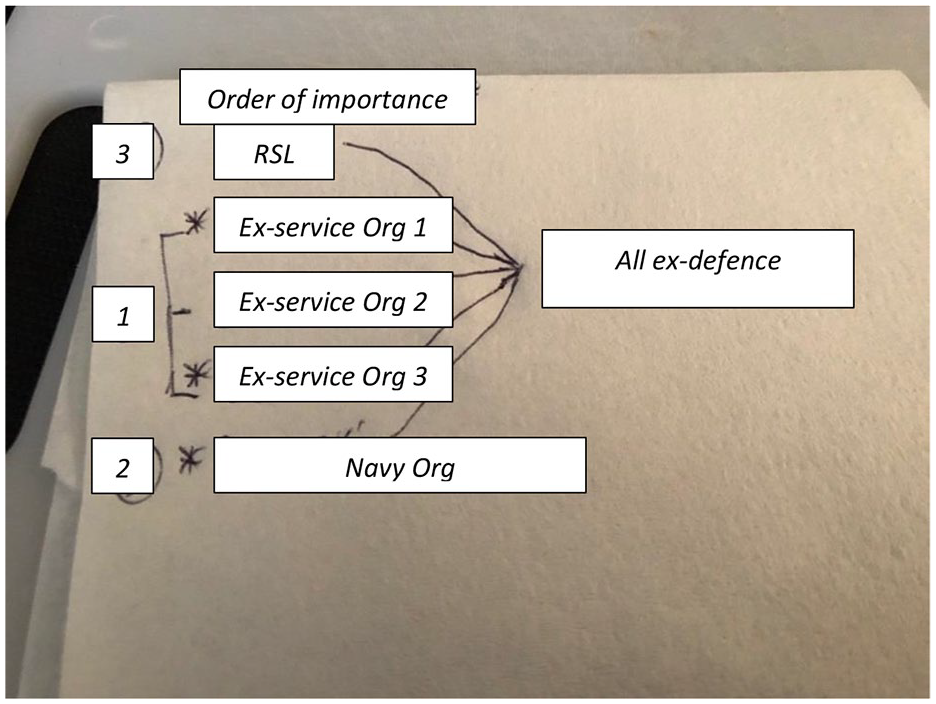
Social identity map – Simon.
Simon described how he distanced himself from civilians: ‘I don’t mix with civilians. The people I mix with are defence, ex-defence’. This process of social comparison and categorisation (Tajfel and Turner, 1979; Turner et al., 1994), where ex-defence (in-group) versus civilian (out-group) comparisons were made, reinforced in-group favouritism and out-group discrimination, which for Simon involved avoiding ‘civvies’. In order to minimise tensions with civilian social groups, Simon explained how he actively avoided contact with them: ‘So to make life easier for me, I don’t bother engaging with people to explain things. Unless they’re ex-military, where they understand’. Given Simon had retired and did not necessarily have to engage with civilian groups, for example by not having to integrate with civilians for the purpose of employment, the potential conflict between his strong military identity and outsiders on ‘civvy street’ was minimised.
In contrast, in this second example, Tom’s (Army for 7 years) life circumstances meant there was a need for him to engage with civilian groups, which was not without tension. He was interviewed nearly 5 years after discharging from defence. In Tom’s social identity map (see Figure 2), three groups were marked as supportive on the left-hand side (with the placement of the green dots) that included ex-ADF and family groups. Three other groups on the right-hand side to which he belonged were not marked by him as offering support during his transition.
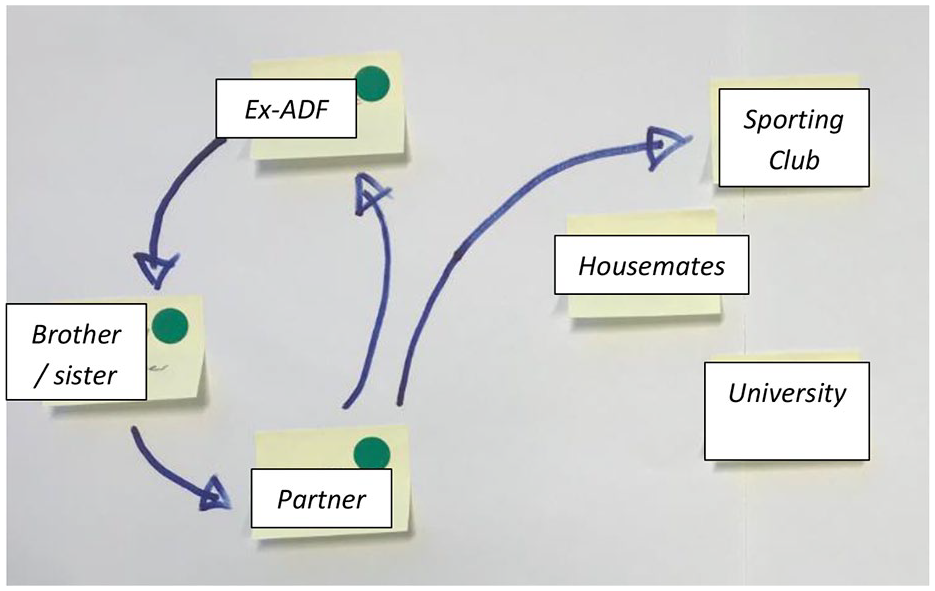
Social identity map – Tom.
Tom categorised the ex-ADF and familial groups as in-groups, and conversely, the other groups as out-groups, where he did not feel a sense of belonging. Explaining why tensions existed when interacting with civilians, Tom described how being in the army could lead to difficulties in (re)engaging with civilian society:
This is what’s wrong with the Army, like I was saying to you, they go to work, they go home, they hang out with Army, they go out on the weekends […] Then you lose the ability to talk to anybody or have anything in common with anybody because it’s Army, Army, Army.
Describing a disconnect with some civilian groups, Tom described that he did not ‘connect with them on the same level’. Furthermore, he reflected on how discharging after a long period of service had led to a disconnect with civilians in terms of time and place. As Tom recalled:
I didn’t fit in with anybody, and I remember saying over and over again that I was just ‘broken’, I didn’t fit anymore and I didn’t belong in normal society. Not that I was some ravaged beast […] I didn’t connect with anybody. Then starting uni was a huge thing. I’d be talking to the kids and I was like, ‘oh yeah, Grinspoon’, and they were like, ‘who’s Grinspoon?’, and I was like, ‘fuck me!’. So, it was also realising that I’m also getting older and I’m now stuck with these kids.
Hence, for Tom, certain social groups acted as supports, whereas interacting with others led to frustration. Tom’s experience is consistent with Jetten et al.’s (2017) notion that social groups can act as both sources of support, important for health and well-being (acting as a ‘social cure’), and in other circumstances sources of frustration, detrimental to mental health and well-being (a ‘social curse’).
There were also instances where veterans had a salient military identity, while also having other identities that assisted functioning in civilian life. In this next example (see Figure 3), Scott (Army for 6 years) identified ex-service and reservist groups on the left-hand side, and family and business-related social groups on the right-hand side to which he belonged (on both sides, he identified supports with the placements of green dots).
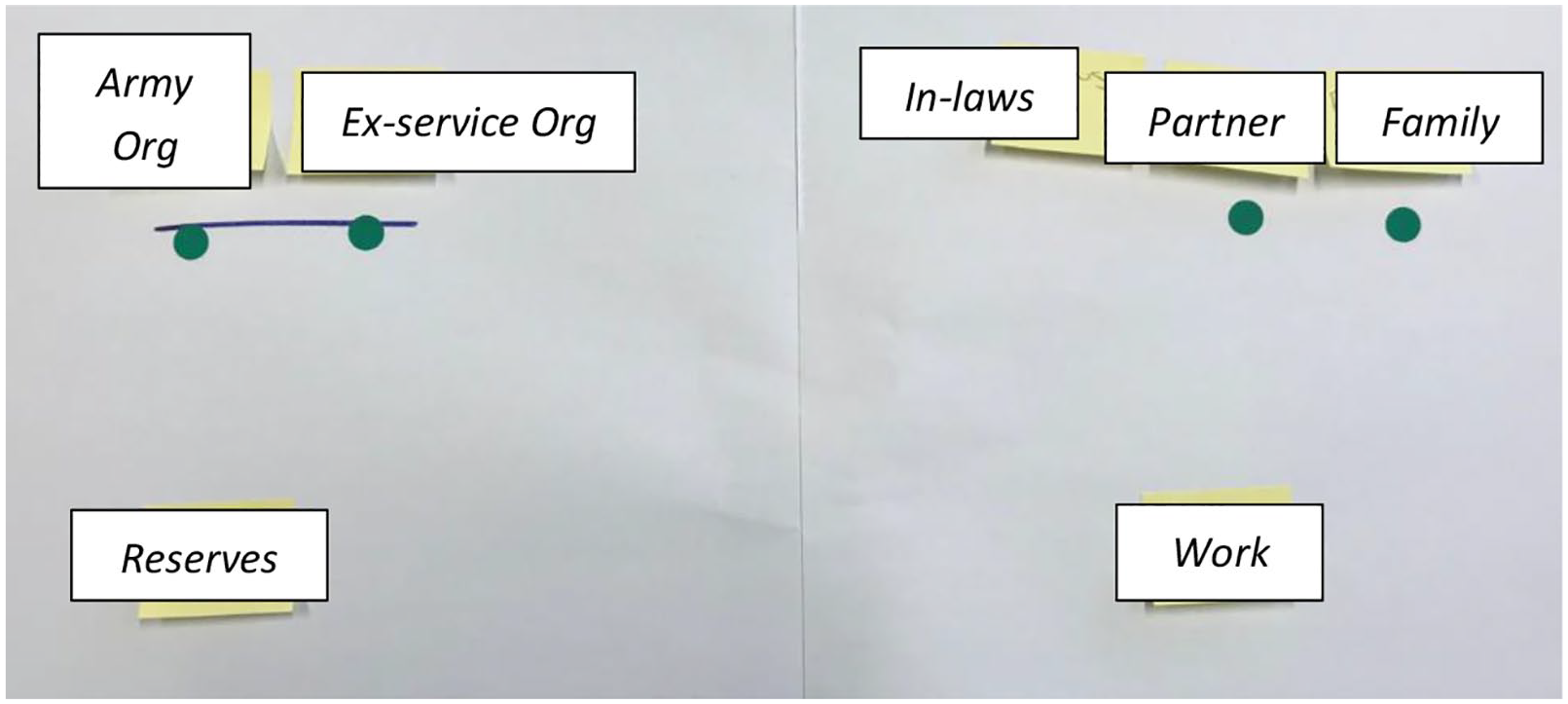
Social identity map – Scott.
As Scott described, following his discharge from defence about 2½ years before the interview, he had two co-existing social identities:
It’s like two different identities for me. […] So, for instance you have your family and you’re part of the structure and all that, and then your military side which is like a – it’s family but it’s a different – it’s a very deep and meaningful family because it’s a very rare bond that you share.
Scott belonged to multiple social groups during his transition from defence (some ex-defence and some family groups), which acted not only as positive psychological resources, but also promoted a sense of ‘social identity continuity’ and well-being (Haslam et al., 2008; Jetten et al., 2017). Moreover, Scott identified that these different in-groups served different functions, and the difficulties on ‘civvy street’ articulated within other narrative accounts were not similarly experienced by him. To maintain a sense of self-fulfilment that was attached to military service, Scott described how he joined an army reserves group:
For reserves down here [referring to his social identity map] that was a very important part for me when I did get out of full-time service. I took a break from serving altogether for some months when I got out of full-time service. […] Then I made the decision to jump into reserves to give me I guess you could say that fulfillment, which was very good and it helped me get to where I am today.
In summary, participants’ social group engagements and the types of social identities they maintained or formed after discharging from defence were variable and differed in terms of structure. Our analysis sheds light on how veterans’ interpersonal conflicts (e.g. arising from interactions between a strong military identity and life on ‘civvy street’) emerged differently and were context dependent. For some veterans who had a strong military identity and minimal contact with civilian groups after discharging from the military, a new civilian identity was neither formed, nor necessary, to function in everyday life. For others, attempts at integrating with social groups in civilian life (e.g. for study, employment) were challenging. Consequently, the formation of a new civilian identity post-discharge was not without difficulty for many participants, and attempts at integration often led to feelings of frustration. For others, the co-existence of a stable military and family or civilian social identity during transition provided stability through which veterans found a sense of belonging.
Military identity: values and serving community
In contrast to our exploration of the way military identities may conflict with life on ‘civvy street’, this final theme explores how military values inscribed within veterans’ sense of self could also operate as positive resources. As part of their personal identity developed in the military, a strong sense of service, altruism and giving back to community underpinned the value systems of many participants. Many participants expressed the view that values developed during their military training were assets that could be harnessed to serve and give back to the community. These values were central to promoting engagement with different social groups, particularly in helping other veterans who had recently left the military and were beginning their transition.
Chloe (Army and Airforce for over 20 years) described how her time in the ADF involved ‘being inculcated to serve’, and thus giving back after leaving was rewarding and facilitated engagement with community:
It’s giving back [to community]. I think that’s been the biggest reward. I’ve had first-class indoctrination as to what serving the community means. That’s the reward, I think, finding ways to continue that, just not in uniform.
Similarly, Derek (Army for 21 years) agreed that serving the community as part of his new civilian role was fulfilling and created opportunities for him to help the wider ex-service community:
More importantly, I suppose I’ve failed to mention is my work. My work here links into all the previously mentioned communities. Because it’s fulfilling. It makes me feel good helping people. Especially now, managing people that actually are helping, in essence my community. My ex-service community. It’s all intertwined.
Finally, Jeremy (Army for 10 years) expressed how important it was for him to not forego values attached to his military identity now that he was transitioning to civilian society:
That’s one of the hard things about being out is feeling like all those skills and being in that environment is slipping away. I’m disconnected from it all. So, yeah, but I definitely don’t want to lose those values […] What if I need to do something that requires me to still be who I was in the army. I’m not going to let that go. Yeah, just values and all that stuff, yeah, I definitely don’t want to let it go.
Beyond the difficulties veterans often faced during transition, in these examples we see how some veterans drew upon resources developed in the military including service, altruism and giving back to community. There was a common view that maintaining these values after leaving the military was valuable insofar as enabling connection with supportive social groups. Furthermore, the development of opportunities (e.g. employment, volunteering), where veterans could put these values into practice to support the ex-service and wider community, was viewed as important.
Discussion
Our analysis traces ADF members’ acculturation into defence and how military identities are formed. We observed socialisation processes at work where most participants (but not all) came to view military social groups as in-groups, and where military norms and values were taken on to inscribe a sense of group belonging. As Smith and True (2014) discussed in relation to basic training, the military ‘instils in its recruits the idea that they have sacrificed their own agency and individuality for the sake of the larger collective’ (p. 152). Smith and True (citing Goffman, 1961) viewed the process of stripping recruits of their civilian selves as a form of ‘admission procedure’. Similarly, in our own study, we see the ‘stamping’ of a military identity and the process of recruits prioritising group purpose, over that of the self, after joining the military.
In this study, the development of a strong military identity while serving in the ADF often led to difficulties engaging with civilian social groups. Our findings evidenced that it is not only the number or arrangement of social groups that facilitates adjustment to civilian life, but also the quality of social groups, and the extent to which they can be engaged with. Our analysis complicates the notion that maintaining a military identity alongside a new civilian identity is associated with fewer difficulties for veterans adjusting to civilian life (see Thompson et al., 2017). We found that the conflicts veterans experienced when attempting to engage with civilian groups during transition were context dependent and influenced by veterans’ life stage and personal goals. For example, for a veteran who has retired, and neither desires nor needs to engage with civilian groups, forming a new civilian social identity might not be an aspiration, nor likely beneficial. However, for other veterans, depending on their life stage, for example if they need to maintain employment or study in civilian society, relationships with civilian groups (and the formation of a new civilian identity) might be necessary, and may be supportive, or in other circumstances the source of interpersonal conflict. Thus, veterans’ social group memberships can act as both positive psychological resources and a potential source of harm for health and well-being (Jetten et al., 2017). Reconciliation of these positions may lie in considering ways to forge necessary military identities while in defence, while simultaneously maintaining and allowing time for the retention of pre-military civilian social ties, rather than expecting these ties be created following transition.
Our findings about the challenges underlying identity change and adjusting to civilian life are similar to those found by other studies that link difficulties with reintegration with mental health concerns (Brewin et al., 2011; Demers, 2011; Orazem et al., 2017; Van Hooff et al., 2018). Van Hooff et al.’s (2018) quantitative analysis of the link between service factors (e.g. deployments), transition factors (e.g. type, years since transition), demographics (e.g. gender, age) and veteran mental health outcomes (e.g. anxiety, post-traumatic stress disorder [PTSD], suicidality) was extensive. As they suggested, social disfranchisement also influences veterans’ outcomes, and our study uses novel visualisation methods to empirically trace the associations between social group engagement, isolation, identity and well-being.
Policy-makers and ex-service organisations may better assist veterans during transition by helping them to engage with relevant volunteering (e.g. country fire associations) and job opportunities (e.g. emergency service roles). These roles create opportunities for veterans to not only apply the practical skills they gained in the ADF but also to work in environments that allow them to give back to community that are consistent with values linked to military culture. Our findings indicate that successful reintegration to civilian society may be improved by engaging veterans with programmes (e.g. volunteering, ex-service support organisations) that utilise the often altruistic and ‘giving back’ attitudes held by them, in turn promoting engagement with supportive social groups. Furthermore, peer support programmes may also have an important role to play in improving levels of social support, self-efficacy and coping skills to facilitate community reintegration (Drebing et al., 2018).
The social identity mapping tasks (adapted from Beckwith et al., 2019; Best et al., 2014; Cruwys et al., 2016) provided a mechanism where participants could draw and reflect on their engagement with, and the role of, social groups. Clinicians working with veterans may find it useful to utilise social identity maps in order to elicit conversations about veterans’ engagement with different social groups. As an adjunct to the pharmacological armamentarium available to psychiatrists for the treatment of mental health issues (e.g. anxiety, depression, PTSD), and for interdisciplinary care teams, social identity mapping tasks may assist in tracing, and encouraging engagement with, supportive social groups to promote well-being. This may be viewed as a tool in the wider context of the emerging area of ‘social prescribing’ where service users are linked with social supports to foster well-being (Bickerdike et al., 2017). However, as Bickerdike et al. (2017) assert, although social prescribing is being widely advocated for, there is an insufficient evidence base evaluating its efficacy. Future research about the long-term outcomes of changes in social group engagements, and social prescribing, is vital within veteran research globally.
Limitations
Our study has a number of limitations. First, the findings should be interpreted with caution given the bias associated with our sampling strategy. Specifically, the findings from the self-selecting sample who participated may not be relevant to other veterans (e.g. those in an acute state of psychological distress who may require intensive supports; veterans who left the military more than 5 years ago). Second, we asked questions about the relationship between social groups, and transition experience and well-being, to Australian veterans. Military and social cultures in other countries, along with the supports available to veterans in other jurisdictions, are likely to differ and therefore it would be valuable to expand this genre of social research to veterans in other countries.
Conclusion
Joining the ADF involved a process of socialisation into military culture that led to the development of a military identity. However, some participants remained ambivalent about the extent to which they adopted a military identity. An abrupt discharge from defence was often associated with a negative impact on social group connection and well-being. During veterans’ transition to civilian life, their social group engagement, identity and conflicts with civilian groups were context dependent and interlinked with life stage and personal goals. Veterans’ reintegration into civilian life may be improved by better considering how pre-existing, supportive civilian social ties can be maintained through their military careers. Furthermore, linkage with programmes (e.g. volunteering; ex-service support organisations), which utilise the often-altruistic values held by veterans, may in turn promote veterans’ engagement with supportive social groups. Social mapping tasks may be useful for clinicians to explore the roles and conflicts associated with veterans’ social group memberships during transition to civilian life.
Supplemental Material
sj-docx-1-anp-10.1177_00048674211046894 – Supplemental material for Transitioning to civilian life: The importance of social group engagement and identity among Australian Defence Force veterans
Supplemental material, sj-docx-1-anp-10.1177_00048674211046894 for Transitioning to civilian life: The importance of social group engagement and identity among Australian Defence Force veterans by Anthony Barnett, Michael Savic, David Forbes, David Best, Emma Sandral, Ramez Bathish, Alison Cheetham and Dan I Lubman in Australian & New Zealand Journal of Psychiatry
Footnotes
Acknowledgements
The authors would like to thank all the participants of this study who generously provided their time and shared their experiences and insights. We would also like to thank RSL Victoria and other veteran support organisations, as well as Turning Point’s social media and communications team, in helping to promote the study.
Declaration of Conflicting Interests
The author(s) declared no potential conflicts of interest with respect to the research, authorship and/or publication of this article.
Funding
The author(s) disclosed receipt of the following financial support for the research, authorship and/or publication of this article: This study was funded by the Defence Health Foundation.

Supplemental material
Supplemental material for this article is available online.
References
Supplementary Material
Please find the following supplemental material available below.
For Open Access articles published under a Creative Commons License, all supplemental material carries the same license as the article it is associated with.
For non-Open Access articles published, all supplemental material carries a non-exclusive license, and permission requests for re-use of supplemental material or any part of supplemental material shall be sent directly to the copyright owner as specified in the copyright notice associated with the article.
