




Abstract

To the Editor
The COVID-19 pandemic has seen mental health services urgently adopt video consultation (VC). Indeed, the UK Royal College of Psychiatrists has recommended psychiatrists avoid face-to-face interactions in favour of VC (Royal College of Psychiatrists, 2020). Australian psychiatrists and other mental health practitioners have followed suit. Here, we present a tool to assist in determining consumer preparedness and potential barriers for this shift in practice: the Video Consultation Consumer Home-based Assessment Tool (VC-CHAT).
Pre-pandemic, VC was primarily delivered to consumers using hardware and software positioned in clinical facilities such as GP practices or community mental health centres while specialists would connect remotely from another location. However, the urgent large-scale expansion of VC to a rapidly self-isolating population has required consumers to connect from home, or other remote locations, using their own devices and Internet connections.
We identified a clinical need to understand the logistical readiness of consumers for home-based VC in order to harness the efficiency, acceptability and flexibility of digital modalities so that therapeutic alliances along with continuity of care could continue during the pandemic (Lal and Adair, 2014). In our review of policy documents and peer-reviewed literature, we could not find a practical assessment tool for consumer VC readiness.
To develop the VC-CHAT, we consulted consumers, carers and clinicians to identify the elements required for consumers to access VC (Figure 1). Using these elements, we designed a simple audit tool for use with consumers and carers to assess the feasibility of remote VC-based clinical service delivery (Figure 2). To meet the emergent clinical need, we successfully piloted the tool with consumers. Barriers to VC were identified by the VC-CHAT, and we have suggested some solutions to those barriers (Figure 3).
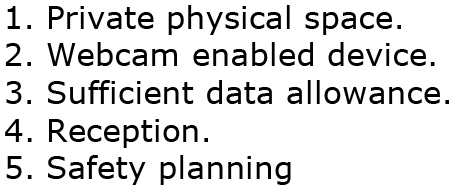
Consumer elements for video consultation (VC).
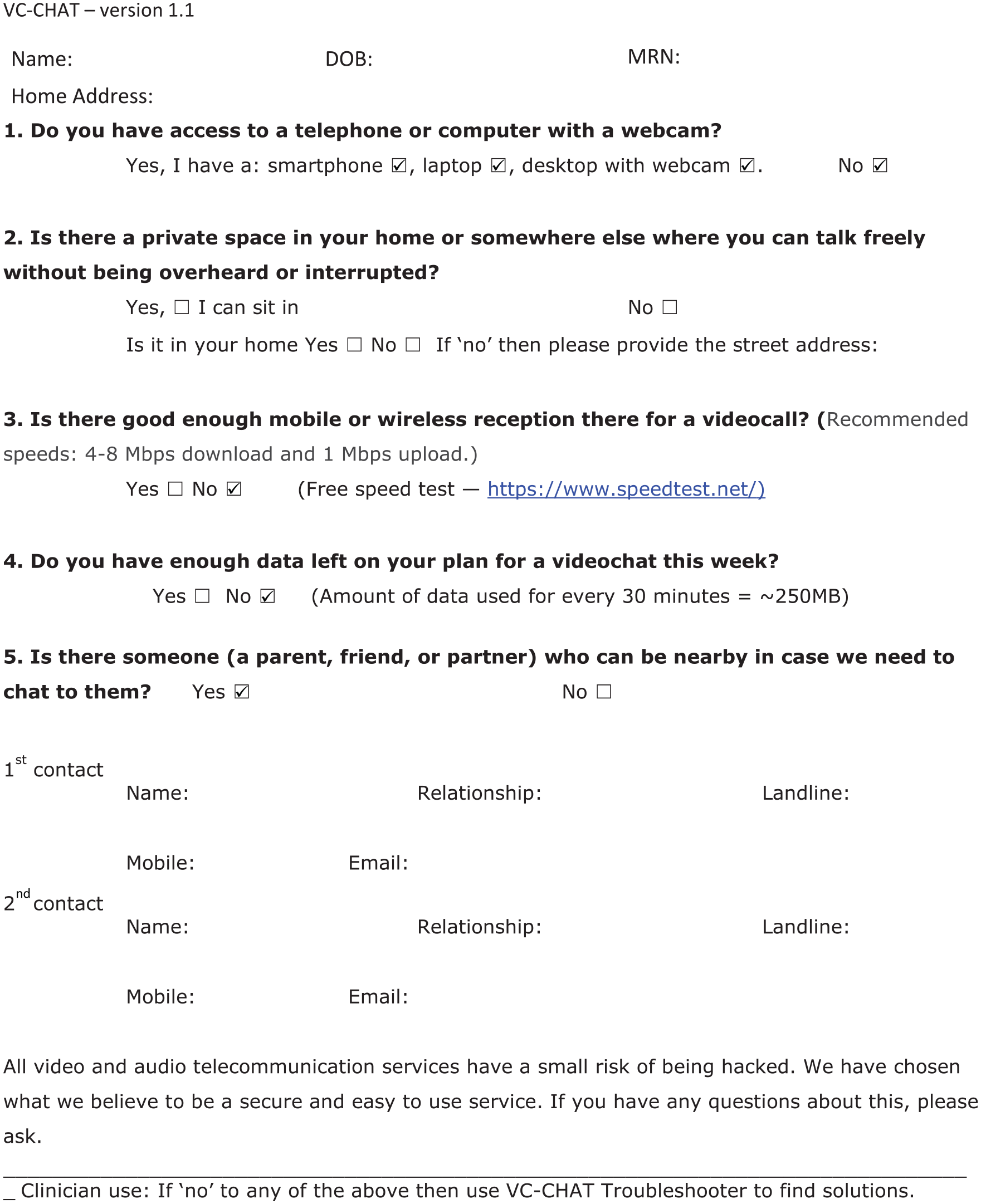
Video Consultation Consumer Home-based Assessment Tool (VC-CHAT).
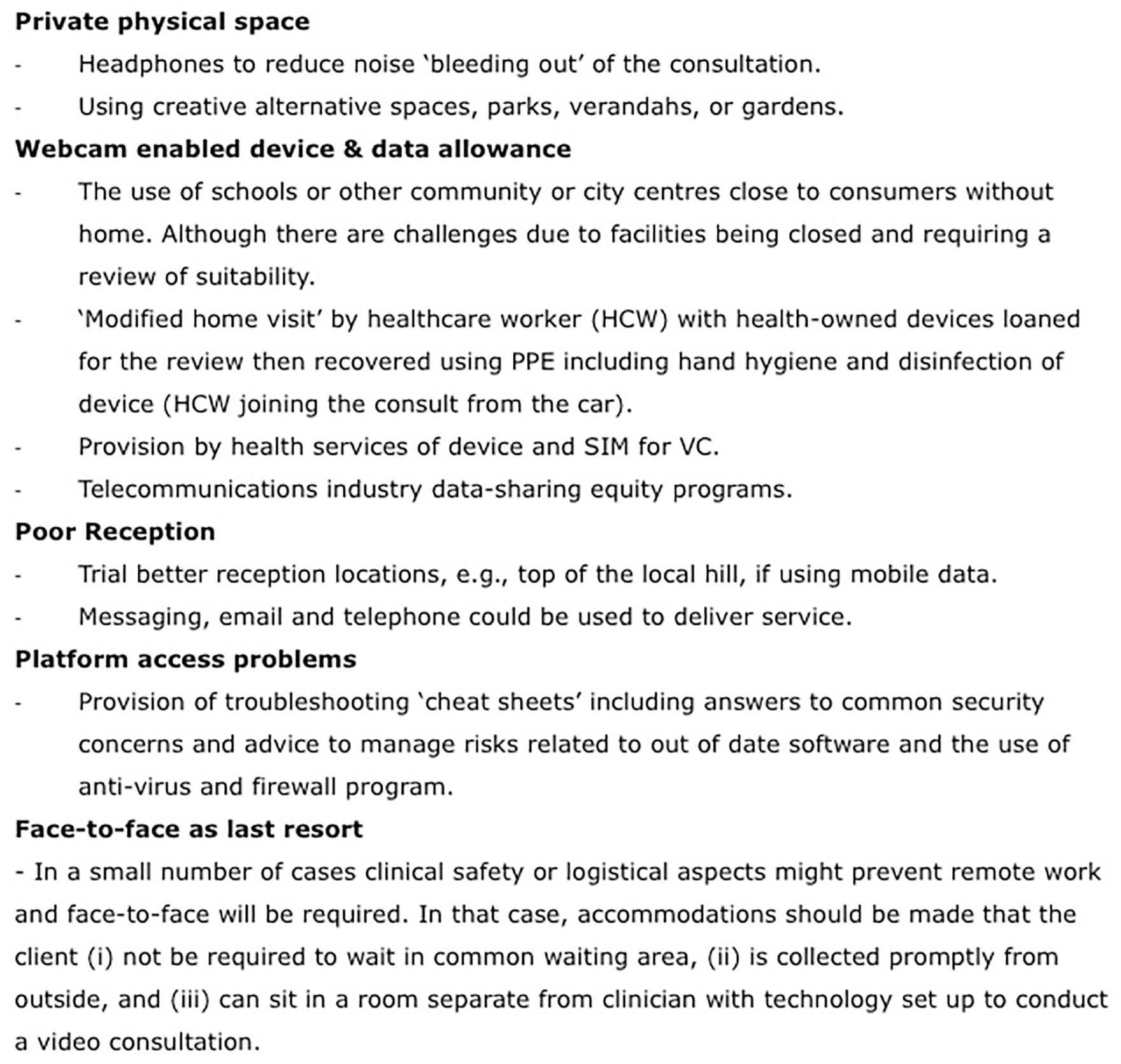
VC-CHAT troubleshooter.
We anticipate that the VC-CHAT (1.0) could be refined further over time. Other future developments could see the integration of this new tool with existing VC resources, for example, inclusion in pamphlets and videos for consumers and clinicians (Agency for Clinical Innovation, 2019). We hope the tool will help facilitate VC in concert with rapidly evolving local guidelines in the face of the COVID-19 pandemic and beyond. We welcome suggestions for VC-CHAT 2.0!
Footnotes
Declaration of Conflicting Interests
The author(s) declared no potential conflicts of interest with respect to the research, authorship and/or publication of this article.
Funding
The author(s) received no financial support for the research, authorship and/or publication of this article.
