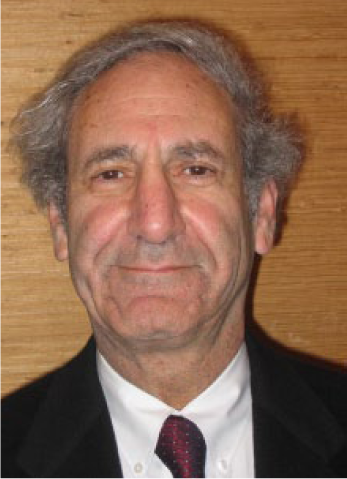
For the past decade, Robert Post, a Clinical Professor of Psychiatry at George Washington University School of Medicine and recipient of the 2017 Mogens Schou Award for research, has immersed himself in direct patient care, having previously held a prestigious clinical research position at the National Institute of Mental Health (NIMH) for 36 years. Known worldwide for his ‘kindling hypothesis’, he maintains an active academic profile and continues to publish NIMH data alongside findings from his International Bipolar Collaborative Network. Remaining equally patient and teaching-focused, he writes a newsletter four to six times a year for patients, family members and physicians (www.bipolarnews.org) and has started a Child Network for parents of children aged 2–12 to aid the weekly assessment of children with mood or behavioral problems.
Playing golf with Bob in Sydney, and having him critique your ‘swing’, provides some delightful insights into the workings of a marvelous mind. Driving thinking in the field for decades and inspiring others in the process, he models to a T how to provide a ‘fair way’ for the cultivation of others. Both as a golfer and as an individual, he is without a doubt above par.
What drives you? What truly drives me is the desire to find better treatments for patients with depression and bipolar illness so that their lives and those of their families are minimally impacted by these disorders. If we educate patients well and treat them consistently long term after a first episode of mania or second episode of depression, I believe we can make these conditions more benign.
What advice would you give your younger self? Talk to my kids more and tease them less (they turned out great anyway). Make sure you enjoy your work, wife and friends even more than you do now. Exercise more, eat fewer cheeseburgers and have a pet dog earlier in life.
As a psychiatrist, what have you learnt about the human condition? It is a miracle that, with 12 billion neurons each with up to 100,000 synapses, anyone grows up relatively OK. Health is fragile and losses in life are certain, but most people, especially our patients, are heroic in dealing with these vicissitudes. Good people outnumber the bad significantly, but sometimes the bad guys seem to win, in the short term at least.
Research is fundamental to psychiatry because … without it we would be limited to what we already know as to how to best treat patients. Everyone talks about the need for ‘new discoveries’, but if we just learned how to use our current treatments alone and in combination better via systematic research, we could make enormous advances right now. New findings and concepts will keep on emerging, many of which will propel new therapeutic advances.
The topic in psychiatry I am most passionate about is … childhood-onset illnesses, such as depression and bipolar disorder. These appear to be more common in the United States compared to many other countries throughout the world. We need to recognize and treat them better and earlier so that we can reverse the current findings that early onset confers a more difficult course as compared to later onset in adult life.
Stigma still plays a huge role in delayed or poor treatment as childhood onsets of other medical illnesses, such as diabetes and epilepsy, are treated early and well, often by a whole team of clinicians, while children with serious psychiatric illnesses rarely get this type of excellent and early treatment.
What is the future of psychiatry? There will be endless new discoveries in psychiatry, many of which will generate new treatments. One hope already on the horizon is to better match individuals to the best treatments for them. The revolution in genetics and molecular biology will deliver personalized medicine (who responds to what drugs) much sooner than any breakthrough new treatment discovery. It will also be relatively easy to find out what are the best treatments for the third of patients who have elevated inflammatory markers. A new set of drugs will involve epigenetic mechanisms that have the potential for dealing more directly with some of the underlying vulnerabilities to psychiatric illness and their recurrence. A new set of targeted psychotherapies, making use of extinction therapy in the reconsolidation window, will be developed to better minimize the effects of posttraumatic stress disorder (PTSD), anxiety disorders and cravings in drug addiction. Psychotherapeutic work in conjunction with brain stimulation techniques and drugs with epigenetic effects will also lead to more effective therapeutic modalities.
The brain and its relationship to memory and behavior is, and will continue to be, the most exciting frontier in medicine.
Footnotes
Declaration of Conflicting Interests
The author(s) declared no potential conflicts of interest with respect to the research, authorship and/or publication of this article.
Funding
The author(s) received no financial support for the research, authorship and/or publication of this article.