




Abstract

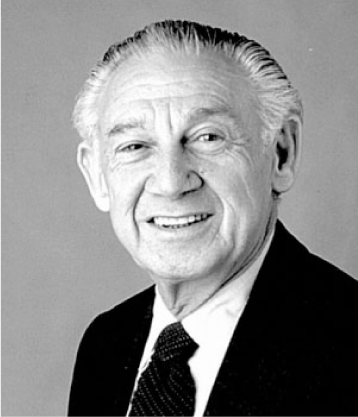
Professor S Gershon graduated from the medical school of the University of Sydney in 1950 and moved to Royal Park Hospital in Victoria for his psychiatry training, where Dr John Cade, who had identified the therapeutic effects of lithium, was Psychiatrist Superintendent. As a Senior Lecturer in the Department of Pharmacology at the University of Melbourne, he developed a productive relationship with Dr E M Trautner in the Department of Physiology and its chairman Professor R D Wright examining the scientific basis of psychiatric disorders and their treatment. This was pivotal when he later moved to the United States to assume successive chairs before becoming Vice Chancellor for Research in the Health Sciences at the University of Pittsburgh. Throughout this time, he researched and promoted the use of lithium and was instrumental in the introduction of lithium into clinical practice in the United States and also in securing its approval from the Food and Drug Administration (FDA) for the treatment of mania. He remains active as the Editor of Bipolar Disorders and is now Emeritus Professor of Psychiatry at the University of Pittsburgh.
Walking along the famous Miami Beach listening to Professor Gershon providing a personal history of lithium—focusing on its discovery and promulgation—the truism ‘history is written by the victors’ comes to mind. It’s difficult to determine from his account whether he sees himself as one of those on the winning side of the ‘lithium war’, but there is no doubt that he is one of those ‘ion men with mettle’1 who consciously decided to pursue the difficult questions in psychiatry. Along the way, he mentored many and remains an inspiration for many more.
At my time, in medical school, the explanations and understanding of these psychiatric illnesses in biological terms were essentially nil. We had no etiology, no understanding and no treatment. It is perhaps useful to give two examples of how different those times were. First, I spent part of my early residency in psychiatry in Ballarat at a large old Victorian hospital with 2000 patients. The medical staff comprised the superintendent, a most junior resident, a resident slightly senior to myself and myself. The superintendent was kept very busy filling out report forms on each patient, and, at least in all male patients with the diagnosis of schizophrenia, the etiology, as written in the superintendent’s own hand, was ‘masturbation’. The second example was in the area of treatment. We seemed to essentially have two choices: a sedative, of which there were many, from all chemical and pharmacological classes and electroconvulsive therapy (ECT).
So, understandably, my interests were skewed in the direction of treatment. Furthermore, I realized that we had no specific treatments for anything. Indeed, at that time, ECT was used for everything. Being naturally a difficult person, I thought backward. In my ignorance, I could not see making a frontal attack on causation, but as my experience developed and increased, I thought about looking for specific treatments for specific disorders. And in 1960, I wrote a paper entitled Lithium: A Specific Psychopharmacologic Approach to the Treatment of Mania (Gershon and Yuwiler, 1960); this was the beginning of a search that led to many other places and questions.
Footnotes
Declaration of Conflicting Interests
The author(s) declared no potential conflicts of interest with respect to the research, authorship and/or publication of this article.
Funding
The author(s) received no financial support for the research, authorship and/or publication of this article.