




Abstract
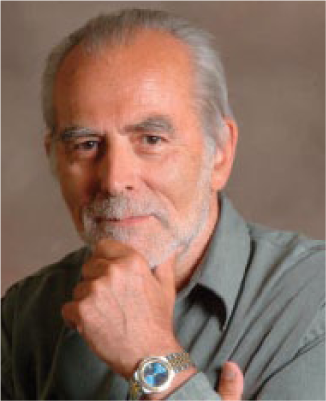
Professor of Psychiatry at the University of Toronto and director of the Mood Disorders Centre of Ottawa, Paul Grof graduated in medicine and then specialized in psychiatry in 1962. He worked as a research psychiatrist in the Psychiatric Research Institute in Prague and as a fellow in psychoendocrinology of affective disorders in West Germany before becoming a research psychiatrist at McMaster University, Canada. He has run affective disorder clinics throughout his career and has served as a Visiting Scientist at the National Institute of Mental Health (NIMH) and as an Expert for the World Health Organization, Mental Health section. In 2015, he was awarded the Mogens Schou Research Prize from the International Society for Bipolar Disorders (ISBD) for his life work in advancing our understanding of mood disorders.
Listening to Paul expound upon recent discoveries while standing in his apartment in downtown Toronto, looking out across Lake Ontario, it becomes apparent that his scientific brain constantly draws inspiration from his artistic mind. The lake and the surrounding buildings are distinct, but form a single vista; it is easy to appreciate why Paul chooses to live on the brink connecting the two.
While psychiatry, in both its daily practice and biological research, is still fundamentally rooted in mechanistic reductionist thinking, during the past century, the hard sciences have already constructed new paradigms and offer an entirely new worldview. Whether it is quantum physics, astronomy, geology or chemistry, the conceptual thinking is dominated by complex systems, multiple field phenomena and deep interconnectedness, which may be slowly penetrating into and transforming psychiatry.
To explore productively the complex bio-psycho-social interconnections, we must start truly cooperating in large consortia and give up the silos of egos. We might even have to start asking some serious questions about the role of human consciousness in psychopathology.
These radical changes have started only gently, yet I think there is no turning back. The future has arrived.
Footnotes
Declaration of Conflicting Interests
The author(s) declared no potential conflicts of interest with respect to the research, authorship and/or publication of this article.
Funding
The author(s) received no financial support for the research, authorship and/or publication of this article.