




Abstract
Objectives:
Research on the impact of natural disasters on health and well-being faces several methodological challenges, including: sampling issues; exposure assessment; and outcome measurement. The present study used a comprehensive measure of disaster exposure to assess relationships between exposure to the Canterbury (New Zealand) Earthquakes of 2010–2011 and both: (a) self-reported distress and (b) positive outcomes; and also investigated gender differences in reports.
Methods:
Data were gathered from the Christchurch Health and Development Study, a 35-year longitudinal study. The study examined data from 495 individuals exposed to the Canterbury Earthquakes for who complete data on exposure and reactions to the earthquakes at age 35 were available.
Results:
Participants with higher levels of exposure to the earthquakes reported significantly (p<0.0001) higher levels of distress due to fear, death and injury, and disruption caused by the earthquakes. Higher levels of exposure to the earthquakes were also associated with significantly (p<0.0001) higher levels of reporting positive consequences following the earthquakes. Women reported significantly (p<0.0001) greater distress than men and significantly (p<0.001) greater positive consequences.
Conclusions:
Higher levels of exposure to disaster were associated with higher levels of distress, but also with higher levels of self-reported positive outcomes, with females reporting higher levels of both positive and negative outcomes. The findings highlight the need for comprehensive assessment of disaster exposure, to consider gender and other group differences in reactions to disaster exposure, and for studies of disasters to examine both positive and negative consequences.
Introduction
In recent years, there has been growing concern about the impact of natural disasters on the health and well-being of human populations (Arnold et al., 2005; The World Bank, 2010). In addition, there have been growing concerns that the rates of these disasters may be increasing (GRID-Arendal, 2012; World Bank, 2013). As a consequence of these concerns there has been a growing literature which has examined the mental health and psychosocial impacts of natural disasters (for reviews see: (Green, 1998; Kar, 2009; Norris et al., 2002; Rubonis and Bickman, 1991; Schnurr and Green, 2004). This research is beginning to develop an account of the mental health risks of natural disasters, with these including increased rates of post-traumatic stress disorder (PTSD), major depression, anxiety disorders and substance use disorders (Foa et al., 2006; Galea et al., 2005; Norris et al., 2002; North and Pfefferbaum, 2013; Rubonis and Bickman, 1991).
While there is a growing body of evidence on the impacts of natural disasters in general, and specifically exposure to earthquakes, this area of research faces a number of recurrent methodological challenges. These challenges include the following.
Sampling issues. Studies have often reported problems of obtaining representative samples of those exposed to disasters (Galea et al., 2008; Kessler et al., 2008). The reason for this is that often those exposed to disaster will leave the area where the disaster occurred and are difficult to locate and enlist in research.
Assessment of exposure. A number of studies have used detailed indices of disaster exposure that capture multifarious aspects of exposure (e.g. Brackbill et al., 2013; La Greca et al., 1998; Weems et al., 2007; Welch et al., 2014). However, to this point only one study has examined earthquake exposure using a method of assessment that both: (a) assesses a wide range of events that may have occurred during the earthquakes, and (b) was well-validated (Lai et al., 2004). It may be argued that because the trauma associated with a particular disaster is likely to be closely related to the specific events occurring in the disaster, it is critical for researchers to develop instruments designed specifically to assess the experiences that occurred in that disaster.
The measurement of outcomes. While most research in this area has focused on the assessment of mental health (Foa et al., 2006; Galea et al., 2005), it is clear that the psychosocial impacts of disaster extend well beyond this (Bonanno et al., 2010). In particular, disasters pose complex mixes of adverse experiences which may influence many areas of personal functioning, including: death of relatives and acquaintances, loss of personal property, exposure to traumatic event(s), changes of residence, disruption of employment, changes of daily routine, and similar potential adverse life events. For this reason, an important component of the assessment of the psychosocial impact of natural disasters requires assessment of the extent of the stress/distress caused by various life events consequential on the disaster.
Understandably, most research in this area has focused on adverse consequences, but it may be proposed that for some of those involved in disasters, this involvement may have unanticipated positive consequences. For example, the literature examining resilience and post-traumatic growth has suggested that individuals exposed to traumatic events may experience long-term positive consequences in terms of personal growth following exposure to extreme stressors (Connor, 2006; Peterson et al., 2008; Tedeschi and Calhoun, 1996, 2004). However, it could be conjectured that any positive consequences arising from a stressor such as a natural disaster may be strongly linked to the nature of the stress exposure itself. In addition, to date, very limited research has been conducted on the shorter-term positive consequences of natural disaster exposure (Chang, 2010; Fredman et al., 2010), with these studies suggesting that exposure to a natural disaster (widespread flooding) may have a number of positive consequences, including increased community cohesion, and improved interpersonal and partner relationships. For this reason it may be informative for the study of the sequelae of earthquakes to also examine possible positive consequences.
There have been a growing number of studies which have examined the various risk and protective factors associated with responses to natural disasters. One consistent finding from this research is that of gender differences in which women report greater adverse responses than men (Bowler et al., 2010; Chen et al., 2007; Fan et al., 2011; Foa et al., 2006; Johannesson et al., 2009). It has been suggested that this may be due to factors such as gender differences in stress response (Taylor et al., 2000), and gender–role differentiation in post-disaster tasks (Fothergill, 1996). However, no attention has been given to the issue of the extent to which there are gender differences in perceptions of the positive consequences of natural disasters.
In this paper, we report a study of the impacts of a series of natural disasters on the psychosocial well-being of a well-studied birth cohort whose members were exposed to this disaster. Specifically, beginning in September 2010, the city of Christchurch and the surrounding Canterbury region in New Zealand were struck by a series of over 10,000 earthquakes, with four major earthquakes causing widespread property damage to the city, and one (22 February 2011) resulting in 185 deaths. The city of Christchurch is also home to the long-running Christchurch Health and Development Study, a birth cohort of 1265 children born in 1977. Of this cohort, more than 50% were exposed to the Canterbury Earthquakes and, at age 35, these cohort members were interviewed about their experiences of this earthquake.
The present paper examines a series of issues relating to the psychosocial consequences of exposure to the Canterbury Earthquakes. These issues are as follows.
Variation in the extent of exposure to the earthquakes. While the sequence of earthquakes afflicted Christchurch and the surrounding Canterbury region, the extent of individual exposure to the earthquakes varied widely. The first stage of this research focuses on the development of a measure of exposure to the earthquakes.
Assessment of earthquake-related life events and stress. The second stage of the analysis examines the relationships between the extent of exposure to the Canterbury Earthquakes and the reports of the extent of distress this exposure caused in key areas of personal functioning.
Assessment of positive consequences of earthquake exposure. The third stage of the analysis will explore the relationships of the extent of exposure to the Canterbury Earthquakes and perceptions of the positive consequences of these earthquakes for key areas of personal, family, and related functioning.
Examination of gender differences. The final stage of the analysis will examine the extent to which there were gender differences in reports of both the negative and positive consequences of the earthquakes.
More generally, we sought to develop a profile of perceptions of both the negative and positive psychosocial consequences of the Canterbury Earthquakes and to explore gender differences in these perceptions.
Method
Participants
The data were collected at the age 35 assessment of the Christchurch Health and Development Study (CHDS), a longitudinal study of a cohort of 1265 children born in the Christchurch (New Zealand) urban region over a 4-month period from April to August 1977. This cohort has now been studied on 23 occasions from birth to age 35 years (Fergusson and Horwood, 2001; Fergusson et al., 1989). All aspects of data collection have received ethical approval by the Canterbury regional Health and Disability Ethics Committee and all data were collected with the explicit consent of study participants.
Data collection
In 2012, members of the CHDS cohort were approached to respond to the age 35 assessment for the study. This process identified 962 cohort members available for contact, who represented 79% of the surviving cohort. Of these 962 cohort members, 505 were resident in Canterbury at the time of the earthquakes. These cohort members were invited to participate in a further interview concerning their exposure to the Canterbury Earthquakes. Of those eligible, 495 (98%) agreed to participate. Those respondents completed an interview of approximately 1 hour that assessed their earthquake experiences and reactions to the earthquakes. All interviews were conducted by trained interviewers, with 92% of the interviews being conducted face-to-face, and 8% of the interviews being conducted via telephone. These interviews took place approximately 20–24 months following the start of the Canterbury Earthquakes in September 2010. By the time the interviews began cohort members could have been exposed to four major earthquakes ranging in Richter scale magnitude from 6.0 to 7.1.
Extent of earthquake exposure
For each of the four major earthquakes, participants were asked a series of questions relating to the severity and immediate impact of the earthquakes. Items were based on the Modified Mercalli Earthquake Intensity Scale (Dowrick, 1996) and designed to examine the consequences of the earthquakes for property, buildings, land and infrastructure. Using this information, a series of 11 indices were constructed to reflect the severity of each earthquake. These indices were scaled on a 3-point scale: 0 = no/minor impact; 1 = mild/moderate impact; 2 = severe/major impact. Individuals not exposed to a specific earthquake were coded as zero on all indices for that earthquake. To reduce the dimensionality of the data, for each index, scores were summed across the four earthquakes to produce a total score. These scores were then used in a confirmatory factor model to test for unidimensionality. Model fitting was conducted in Mplus (Muthen and Muthen, 2007) using robust maximum likelihood methods. Goodness-of-fit was assessed using the model chi squared fit statistic, the root mean square error of approximation (RMSEA), the comparative fit index (CFI) and the standardised root mean square residual (SRMR). This analysis showed that, with some allowance for correlated item specificity, the scale items fitted a single factor model representing the severity of the individual’s earthquake exposure. The 11 earthquake indices and the factor loading for each index are shown in Table 1 (below). To create an overall measure of the extent of earthquake exposure a factor score estimate was obtained from a sum of the 11 scale scores. This score was found to be of high internal consistency (α=0.92).
Measures of the immediate impact of the earthquakes and factor loadings.
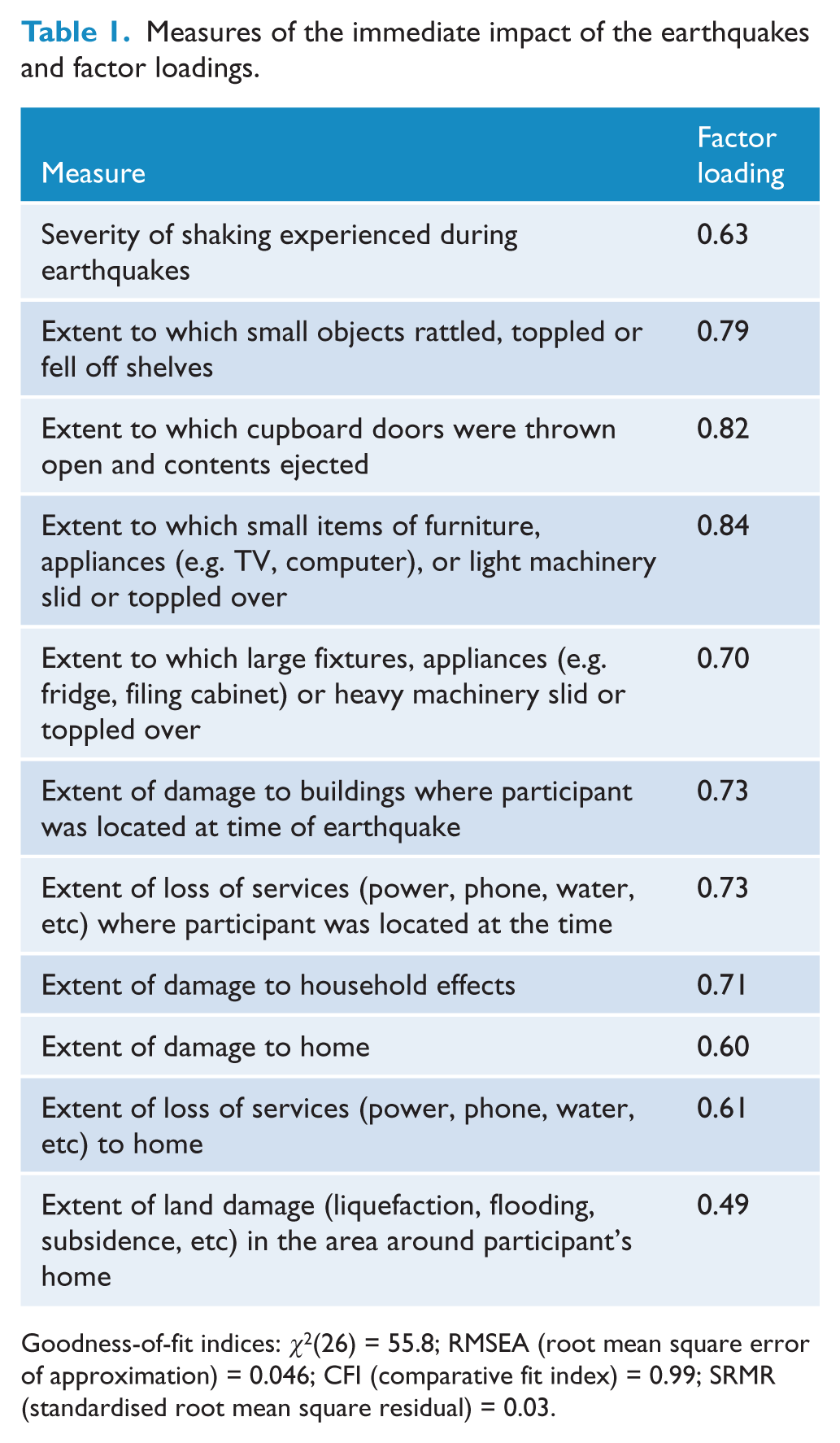
Goodness-of-fit indices: χ2(26) = 55.8; RMSEA (root mean square error of approximation) = 0.046; CFI (comparative fit index) = 0.99; SRMR (standardised root mean square residual) = 0.03.
For the purposes of tabular data display and the present analyses, the overall measure of earthquake exposure was used to classify the cohort into four groups representing quartiles on the distribution of the immediate impacts of the earthquake score The correlation between the four-level classification and the continuous measure was r = 0.93. The mean and SD for the continuous exposure measure for each quartile were as follows: quartile 1 (M = 14.75, SD = 5.23); quartile 2 (M = 27.70, SD = 2.87); quartile 3 (M = 37.15, SD = 2.95); quartile 4 (M = 52.02, SD = 7.96).
Earthquake-related distress and positive consequences
Participants were also asked a series of questions regarding the extent to which the earthquakes had both adverse and positive consequences for a number of domains of life functioning. These domains were as follows.
Distress related to fear, damage and injury caused by the earthquake. These items assessed the level of distress caused by: fear responses during the earthquakes; distress over damage to homes and property of the cohort member, wider family, and friends; and injury to self or family members.
Distress related to disruption. These questions assessed the level of distress caused by: having to move house or leave the area; disruption of family life and children’s schooling and uncertainty about the future; disruption of services (power, water, sewerage); disruption to employment; loss of community; family and friends moving house or leaving the area; uncertainty about the continuing aftershocks; and difficulties in getting answers about property status or repair/rebuilding of the family home.
Positive consequences of the earthquakes. These items assessed the extent to which the participant felt there were positive consequences from the earthquakes in the following areas: improving family relations; increased appreciation of life; improved relationship with neighbours; and increased personal strength and children’s maturity.
In all cases, items were scored on a five-point scale: 1 = ‘not at all’ to 5 = ‘a great deal’. For the purposes of the present investigation, the items described above were used to create summary measures of distress and positive consequences in the following manner:
First, the scores for the items in each of the three domains were summed and divided by the number of items to produce an overall mean score for that domain.
Second, the number of items in each of the three domains to which participants responded ‘a great deal’ were summed across domains to create a count measure of the number of items with the highest level of response. For the two distress domains (fear, death, injury, and disruption) the resulting two count measures were summed to create a single count measure relating to distress.
Statistical analyses
The associations between the overall mean score for each of the three life-functioning domains (fear, death, injury distress; disruption distress; positive consequences) and exposure to the immediate impact of the earthquakes were modelled using ordinary least squares regression. These models were of the form:

where Yi was the score for the domain measure, Xi was the four-level categorical earthquake impact measure, and Ui was the model disturbance. In addition, each model was tested for the presence of statistically significant non-linear trend. For the association between one outcome (disruption distress) and earthquake exposure there was evidence of statistically significant (p<0.05) non-linear trend in the association. For this analysis, the four-level categorical exposure variable was replaced by dummy variables representing the four levels of exposure.
In the next step of the analyses, in order to examine gender differences in reports of both the negative and positive consequences of the earthquakes, the models described above were extended to include terms representing: (a) gender and (b) a gender × exposure interaction.
In order to examine the extent to which the results of the study were robust to alternative representations of the measure of earthquake exposure, the four-level earthquake exposure classification was replaced by the continuous earthquake exposure measure, and the analyses repeated. Because of the strong correlation between these measures (r = 0.93), the results of these analyses were the same as those employing the four-level classification, and so have not been reported in detail here.
Results
Associations between immediate earthquake impact and distress related to (a) fear, damage and injury; and (b) disruption caused by the earthquakes
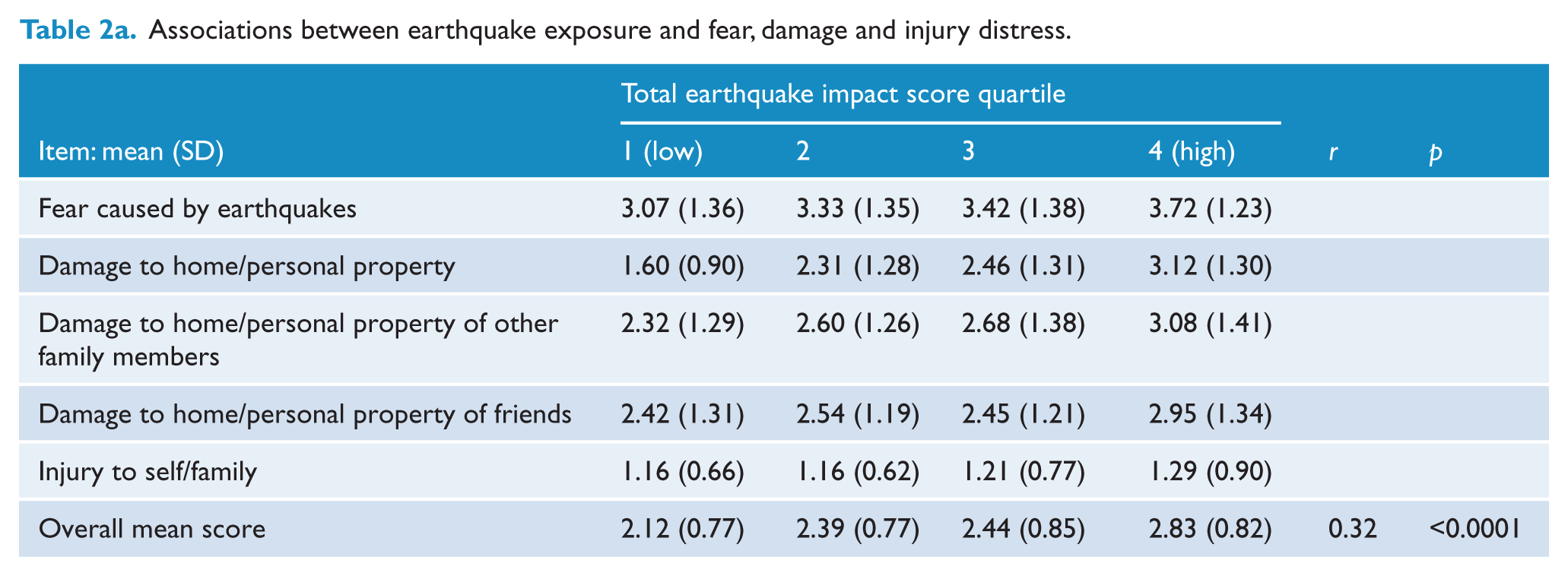
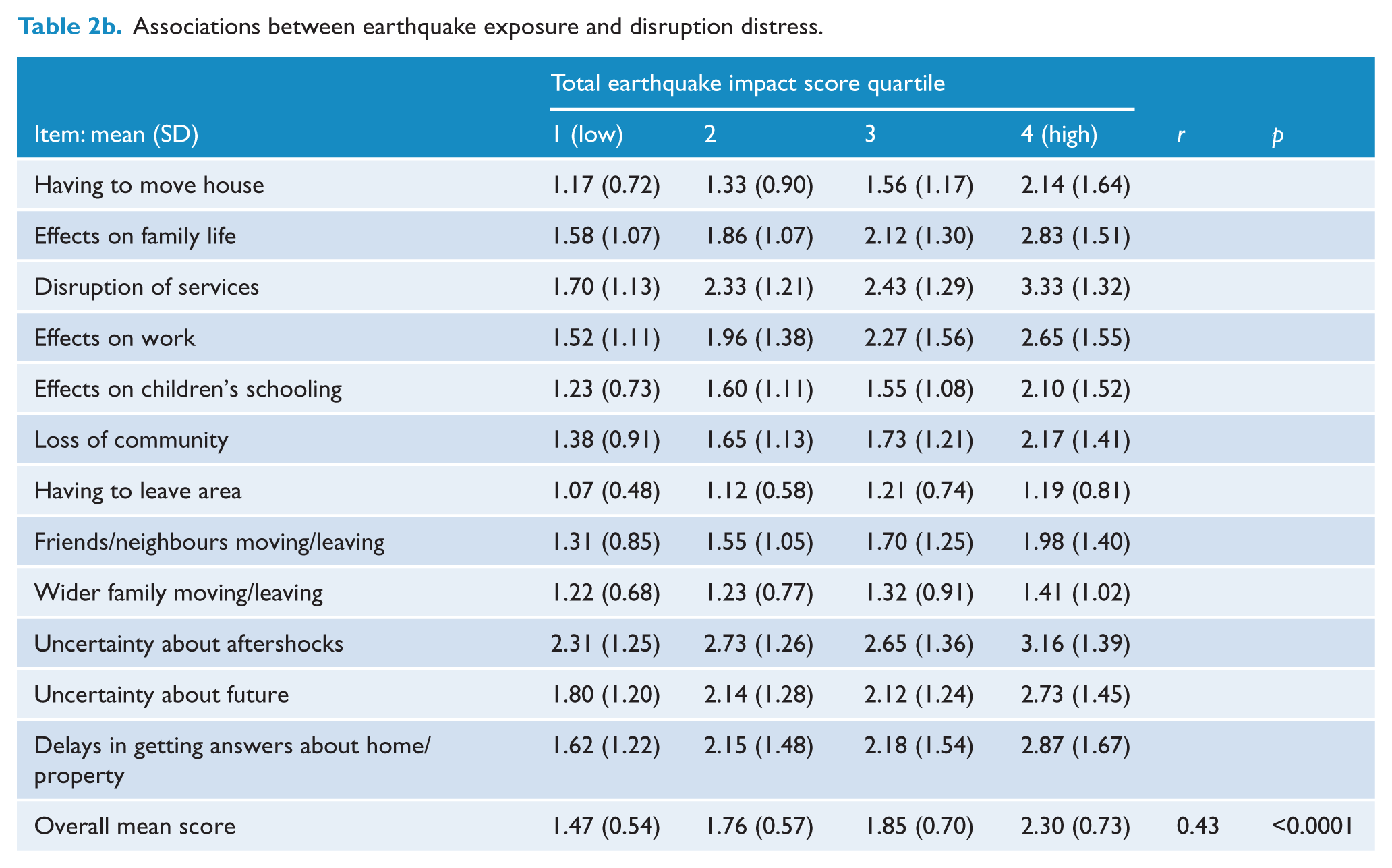
Tables 2a and 2b show the cohort classified into quartiles based on scores on the measure of exposure to the immediate impacts of the Canterbury Earthquakes (see Methods). For each quartile, the tables display mean scores for: five measures of distress related to fear, damage and injury due to the earthquakes (Table 2a); and 12 measures of distress related to disruption caused by the earthquakes (Table 2b). The tables also show the overall mean scores across items for each quartile, and reports on the correlation coefficient and the test of significance for the linear association between immediate earthquake impact and each of the two mean measures of distress. The tables show the following.
Increasing levels of exposure to the immediate impact of the earthquakes were associated with higher mean levels of distress related to fear, damage, and injury due to the earthquakes. This trend was summarised by the mean score for the five items, showing a statistically significant (p<0.0001) association between exposure to the immediate impact of the earthquakes and distress related to fear, damage and injury (r = 0.32). There was no evidence of statistically significant non-linear trend (p>0.10).
Increasing levels of exposure to the immediate impacts of the earthquakes were also associated with increasing levels of distress related to disruption of personal/family lives and daily activities. This trend was summarised by the mean score for the 12 items, showing a statistically significant (p<0.0001) association between exposure to the immediate impact of the earthquakes and distress related to disruption of personal/family lives and daily activities (r = 0.43). In this analysis, there was also evidence of a statistically significant (p<0.05) non-linear trend in the association between earthquake exposure and disruption distress. The analysis was repeated using dummy variables in place of the four-level measure of earthquake exposure, which did not materially alter the pattern of results (not shown).
Associations between earthquake exposure and fear, damage and injury distress.
Associations between earthquake exposure and disruption distress.
Further examination of the distress data combined across both domains (see Methods) showed that those individuals in the highest quartile reported an average of 2.90 (SD = 3.34) responses for which they felt ‘a great deal’ of distress, whereas those individuals in the lowest quartile reported an average of 0.78 (SD = 1.69) responses for which they felt ‘a great deal’ of distress. In addition, the two distress measures were strongly correlated (r = 0.70).
Associations between immediate earthquake impact and positive consequences following the earthquakes
Table 3 shows, for each quartile, based on the measure of exposure, the mean scores for six items related to perceptions of positive consequences for cohort members and their families arising from the earthquakes. The table also shows the overall mean score across the six items for each quartile, and reports on the correlation coefficient and the test of significance for the linear association between immediate earthquake impact and the mean measure of positive consequences. The table shows that increasing levels of exposure to the immediate impacts of the Canterbury Earthquakes were associated with higher mean scores on the measures of positive consequences. This trend was summarised by the mean score for the six items, showing a statistically significant (p<0.0001) association between exposure to the immediate impact of the earthquakes and positive consequences for individuals and families (r = 0.25). Positive responses to the earthquakes were also well correlated with the measures of: (a) fear, damage and injury distress (r = 0.46); and (b) disruption distress (r = 0.49).
Associations between earthquake exposure and positive consequences items.
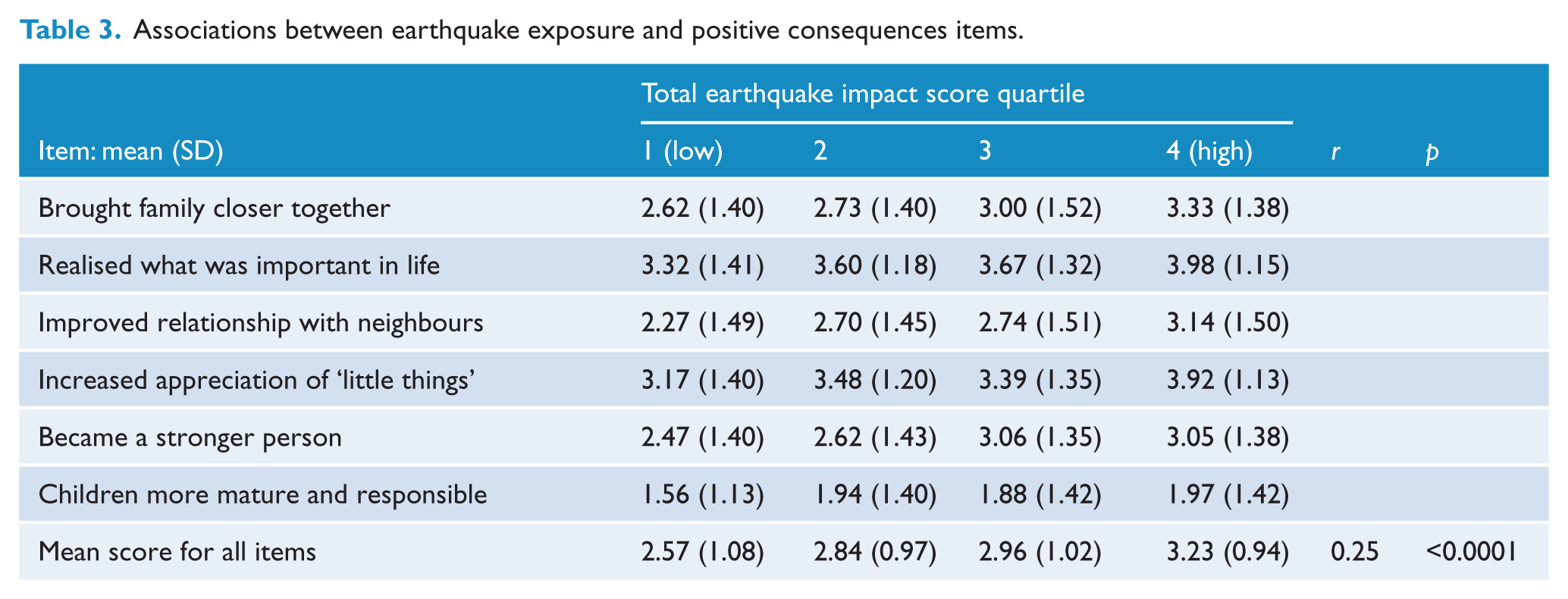
For ratings of items for which participants felt ‘a great deal’ of positive consequences had occurred, those in the highest quartile reported an average of 1.64 (SD = 1.82) positive consequences, whereas those in the lowest quartile reported an average of 0.99 (SD = 1.65) positive consequences.
Gender differences in negative and positive reports of earthquake consequences
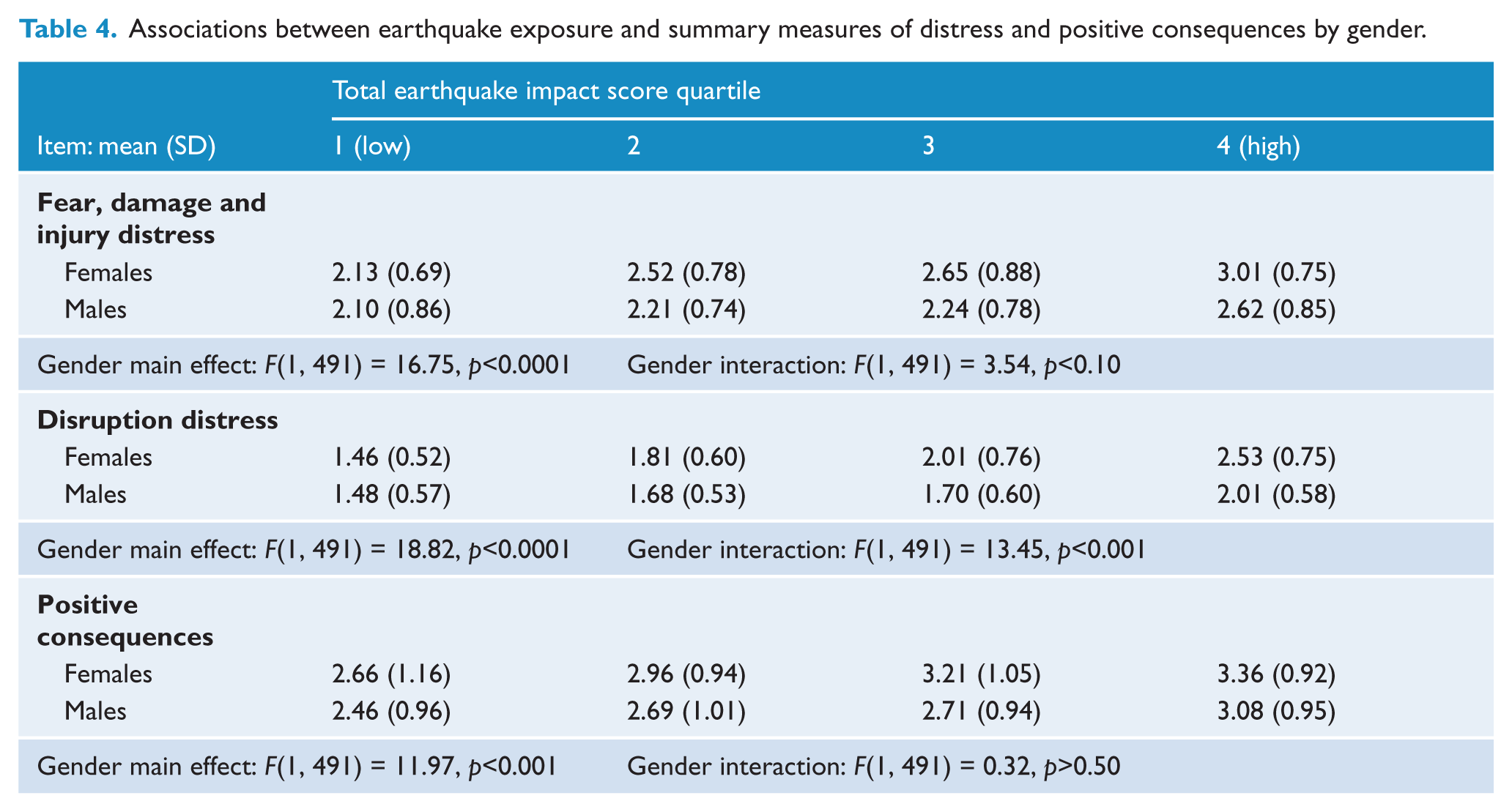
In order to examine the extent to which the findings shown above in Tables 2a, 2b and 3 differed according to gender, the three summary measures of distress and positive consequences were stratified by gender. The gender-stratified data are shown in Table 4, which shows the mean score for the measures of fear, damage and injury distress; disruption distress; and positive consequences – for each earthquake impact score quartile, by gender. The table also reports on tests of main effects for gender and gender × earthquake exposure interactions (see Methods). The table shows that, in general, females had higher mean scores than males for reports of both distress and positive consequences; tests for main effects of gender for each of the three mean scores were statistically significant (p<0.001). In one case (disruption distress), there was evidence of a gender × earthquake exposure interaction (p<0.05), and, in another case (fear, damage and injury distress), there was a marginally significant (p<0.10) gender × earthquake exposure interaction. Inspection of the data suggests that the association between earthquake exposure and disruption distress was stronger for females than for males.
Associations between earthquake exposure and summary measures of distress and positive consequences by gender.
Discussion
The present study examined the responses of members of a well-studied birth cohort to a major disaster, the Canterbury Earthquakes of 2010–2011. This analysis led to three general conclusions.
First, as one might expect, increasing exposure to the Canterbury Earthquakes was associated with increasing stress and distress related to a large number of areas of life functioning, including: damage to personal property and injury to self or family, and disruption of daily routines and community contacts. Overall, those in the most exposed quartile of the distribution reported 2.90 responses to which they felt ‘a great deal’ of distress, compared to 0.78 in the lowest quartile. Furthermore, in all cases, there was evidence of generally linear increases in responses to the earthquakes in which increasing exposure was associated with increasing stress.
These findings highlight the importance of studies of natural disasters obtaining individual accounts of exposure to the disaster, rather than relying on location as a measure of exposure (Bonanno et al., 2010). The findings of this study demonstrate the fact that people living in a region exposed to a natural disaster may vary quite widely in their experiences, and these variations in exposure will be reflected in the individual’s response to the disaster.
A further finding was that not only did exposure to the earthquakes influence the levels of stress reported, but they also influenced the extent to which study participants reported positive consequences of the earthquakes in terms of strengthening family and community relationships, and increasing personal and family members’ resilience. Again, there was evidence of a gradient in which increasing exposure to the earthquakes was associated with increasing reports of the positive consequences of the earthquakes. Those in the highest quartile of exposure reported 1.64 positive consequences that were given the maximum rating, compared to 0.99 for the lowest quartile. These findings highlight the fact that natural disasters such as the Canterbury Earthquakes may have both positive and negative consequences and that the extent of exposure is a critical determinant of both outcomes (Alexander, 2005; Chang, 2010; Hallegatte and Dumas, 2009).
Finally, the present study provided an ideal context in which to investigate gender differences in reactions to adversity. While there has been a growing literature on gender differences in these responses, few studies have been in the position to examine gender differences in response to a common set of circumstances. The present study provided this opportunity. In confirmation of previous research, the study confirmed that women reported higher levels of stress and distress, which increased with increasing exposure to the earthquakes. However, it was also the case that women saw greater positive benefits from the earthquakes. These findings suggest that previous reports suggesting that women are more fearful and likely to become distressed as a result of exposure tell only half of the story, and more generally women tend to show greater responsivity (both positive and negative) to adverse life events.
The present findings also highlight the need for studies of major life events to examine both the positive and negative consequences of these events. Most accounts of natural disasters depict these events as major sources of human suffering and distress. While the harms that events such as the Canterbury Earthquakes cause cannot be dismissed, the present study suggests a far more nuanced account of the impact of a natural disaster, with respondents reporting both positive and negative consequences, and these responses varying with gender.
In addition, the literature on resilience and post-traumatic growth has suggested that exposure to trauma may lead to long-term positive consequences in the lives of those exposed (Connor, 2006; Peterson et al., 2008; Tedeschi and Calhoun, 1996, 2004), and studies have suggested that exposure to natural disasters including earthquakes may also be linked to post-traumatic growth (Cerdá, 2014; He et al., 2013; Holgersen et al., 2010; Lowe et al., 2013). While resilience and post-traumatic growth were not measured in the present study, it may be speculated that the perceptions of positive consequences reported by individuals exposed to the Canterbury Earthquakes may serve as the initial impetus for eventual growth and resilience in the years following the disaster. Further research is needed to better understand linkages between short-term perceptions of positive consequences and later resilience and post-traumatic growth amongst individuals exposed to the trauma of natural disasters.
While the present study has a number of advantages, primarily due to the availability of data from a well-studied cohort, this feature is also a limitation of the study since the findings are limited to populations in their mid-30s. It is possible that reactions to the Canterbury Earthquakes varied with age, with the result that reactions amongst younger and older populations may be different from those found for this cohort. Also, the time frame for assessment, which was 20–24 months after the onset of the earthquake sequence, limits the conclusions to longer-term reactions to earthquake exposure. It should also be noted that the disaster exposure measures in the present study do not define trauma exposures as required for PTSD diagnosis, so the use of such measures may not be fully applicable in such contexts. A further limitation is that the assessment of earthquake exposure may be restricted by the extent to which self-reported personal perceptions of the events may be subject to the usual biases inherent in self-report. Notwithstanding these limitations, the present study suggests that higher levels of exposure to the earthquakes were associated with increases in both negative and positive reactions to the disaster, with this effect being stronger for women than for men.
Footnotes
Funding
This research was funded by the Health Research Council of New Zealand (Programme Grant 11/792). The funding source (Health Research Council of New Zealand) played no role in the preparation of the manuscript or the decision to submit the manuscript.
Declaration of interests
The authors report no conflicts of interest. The authors alone are responsible for the content and writing of the paper.