




Abstract
Objective
Chemerin, a newly discovered adipokine, is correlated with hypertension, diabetes and coronary heart disease. The aim of this study is to investigate the association of serum chemerin concentrations with the presence of atrial fibrillation.
Methods
Serum chemerin concentrations were determined in 256 patients with atrial fibrillation and 146 healthy subjects. Atrial fibrillation patients were then divided into paroxysmal, persistent and permanent atrial fibrillation.
Results
Serum chemerin concentrations were significantly higher in atrial fibrillation patients compared with healthy controls. In subgroup studies, patients with permanent atrial fibrillation had higher serum chemerin concentrations than those with persistent and paroxysmal atrial fibrillation. Furthermore, significant higher serum chemerin concentrations were observed in persistent atrial fibrillation patients compared with paroxysmal atrial fibrillation subjects. Serum chemerin concentrations were associated with the presence of atrial fibrillation after logistic regression analysis. Pearson correlation analysis revealed a positive relation of serum chemerin concentrations with body mass index, systolic blood pressure, diastolic blood pressure, triglycerides, low-density lipoprotein cholesterol, blood urea nitrogen, creatinine, C-reactive protein and left atrial diameter.
Conclusion
Serum chemerin concentrations are associated with the presence of atrial fibrillation and atrial remodelling.
Introduction
Atrial fibrillation (AF) is a common cardiac rhythm disturbance in clinical practice. AF results in decreased quality of life, increased prevalence of stroke, thromboembolic events and mortality. 1 The estimated prevalence of AF has increased by at least 2.5-fold during the pasting 50 years due to prolonged life. The pathophysiologic mechanism of AF remains unclear up to date. Recent studies have revealed a substantial link between AF, aging, obesity, inflammation, diabetes, hypertension and cardiovascular diseases. 2
Chemerin, a newly discovered adipokine, is expressed in different tissues such as the liver, pancreas, lung and adipose tissue. 3 It is involved in the differentiation of normal adipocytes and glucose metabolism. 4 Recent investigations have shown higher serum chemerin concentrations were correlated with obesity, dyslipidaemia, insulin resistance, hypertension, diabetes, and coronary artery disease, infections, renal failure and chronic inflammatory diseases such as chronic obstructive pulmonary disease and chronic pancreatitis.5–12 Medications including metformin treatment also have effects on serum chemerin concentrations. 13 We hypothesized that chemerin may also serve as a mediator in the pathogenesis of AF.
Therefore, we performed this cross-sectional investigation in a population of AF patients to determine the relationship of serum chemerin concentrations with the development of AF and atrial remoulding.
Materials and methods
Subjects
This cross-sectional study was performed in a population of 256 consecutive adult patients (aged ≥18 years) with AF who were enrolled from Department of Cardiology, The Fourth Affiliated Hospital of Harbin Medical University. AF was diagnosed by personal interview and reviewing the medical history and electrocardiogram (ECG) data of all patients according to the guidelines established by the European Society of Cardiology in 2010. 14 AF is defined as a cardiac arrhythmia with the following characteristics: (1) the surface ECG shows ‘absolutely’ irregular RR intervals; (2) there are no distinct P waves on the surface ECG; (3) the atrial cycle length (when visible). 14 Patients with dilated or hypertrophic cardiomyopathy, congenital heart disease, congestive heart failure (New York Heart Association (NYHA) class III or IV) or valvular heart diseases, coronary artery disease, infections, chronic inflammatory diseases, diabetes, renal failure (chronic kidney disease class III, IV, or V), and receiving medication of metformin were excluded from this study.
AF patients were then divided into paroxysmal AF (n = 88), persistent AF (n = 86) and permanent AF (n = 82). 15 Paroxysmal AF was defined as AF episodes lasting less than seven days and which terminated spontaneously. Persistent AF was defined as AF episodes lasting more than seven days and/or requiring termination with pharmacologic or direct current cardioversion. Patients with AF lasting more than six months in duration and more than one attempt of unsuccessful cardioversion to restore normal sinus rhythm were considered to have permanent AF. The control group included 146 healthy subjects who underwent routine medical check-ups in our hospital. They have no systemic disease. The study protocol was approved by the Human Ethics Review Committee of our hospital and a signed consent form was obtained from each subject.
Measurements
Venous blood was collected after a minimum of 10 h of fasting for further examination. Serum chemerin concentrations were assessed by an enzyme-linked immunosorbent assay kit (Phoenix Pharmaceuticals, Inc., USA). Left atrial diameter (LAD) was evaluated by an experienced sonographer using a Vivid4 System (GE Healthcare Bio-Sciences, Tokyo, Japan).
Statistical analysis
Sample size was determined by power analysis using preliminary data obtained in our laboratory with the following assumptions: α of 0.05 (two-tailed), power of 90%, difference in serum chemerin concentrations between AF patients and healthy control of 23.4 μg/L and a standard deviation of 27.7 μg/L. A minimum of 28 subjects in case and control groups would detect a difference in serum chemerin concentrations. The data were exhibited as means ± standard errors or median (interquartile range). Kolmogorov-Smirnov test was performed to analyse the data normality. The differences of clinical characteristics between case and control groups were determined using unpaired t-test, Chi-square tests, or Mann-Whitney U test. Comparison of the characteristics between the three AF subgroups was performed by Chi-square tests, one-way ANOVA or Kruskal-Wallis test. Univariate analysis was performed and the variables with a P < 0.10 (the parameters of systolic blood pressure (SBP), diastolic blood pressure (DBP), C-reactive protein (CRP) and chemerin) were then entered into a backward stepwise multivariate logistic regression model to calculate the Odds ratio values (OR) and 95% confidence intervals (CI) for the presence of AF. The correlation of serum chemerin concentrations with other parameters was analysed by Pearson correlation analysis and multiple regression analysis. P-value < 0.05 was thought to be of statistical significance.
Results
Baseline clinical characteristics
AF patients showed higher levels of SBP, DBP, CRP and LAD compared with the controls.
Serum chemerin concentrations in AF patients
Clinical and biochemical characteristics.
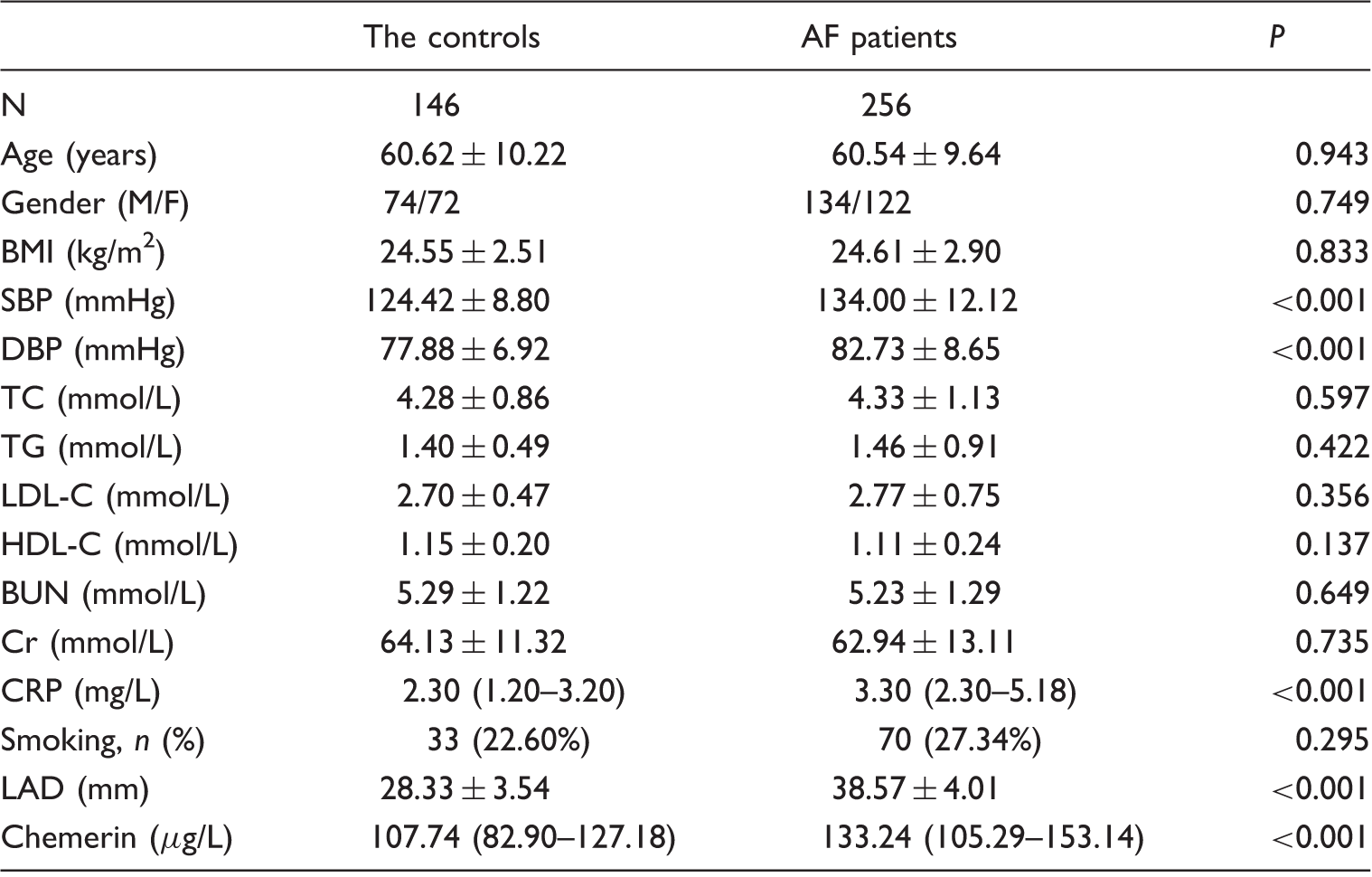
Note: Chemerin and CRP were presented as median (interquartile range), other characteristic were presented as means ± standard errors. Parameters of gender and smoking were analysed by Chi-square tests; parameters of CRP and chemerin were analysed by Mann-Whitney U test; other parameters were analysed by unpaired t-test.
AF: atrial fibrillation; BMI: body mass index; SBP: systolic blood pressure; DBP: diastolic blood pressure; TC: total cholesterol; TG: triglycerides; LDL-C: low-density lipoprotein cholesterol; HDL-C: high-density lipoprotein cholesterol; BUN: blood urea nitrogen; Cr: creatinine; CRP: C-reactive protein; LAD: left atrial diameter.
Logistic regression analysis for the presence of AF.
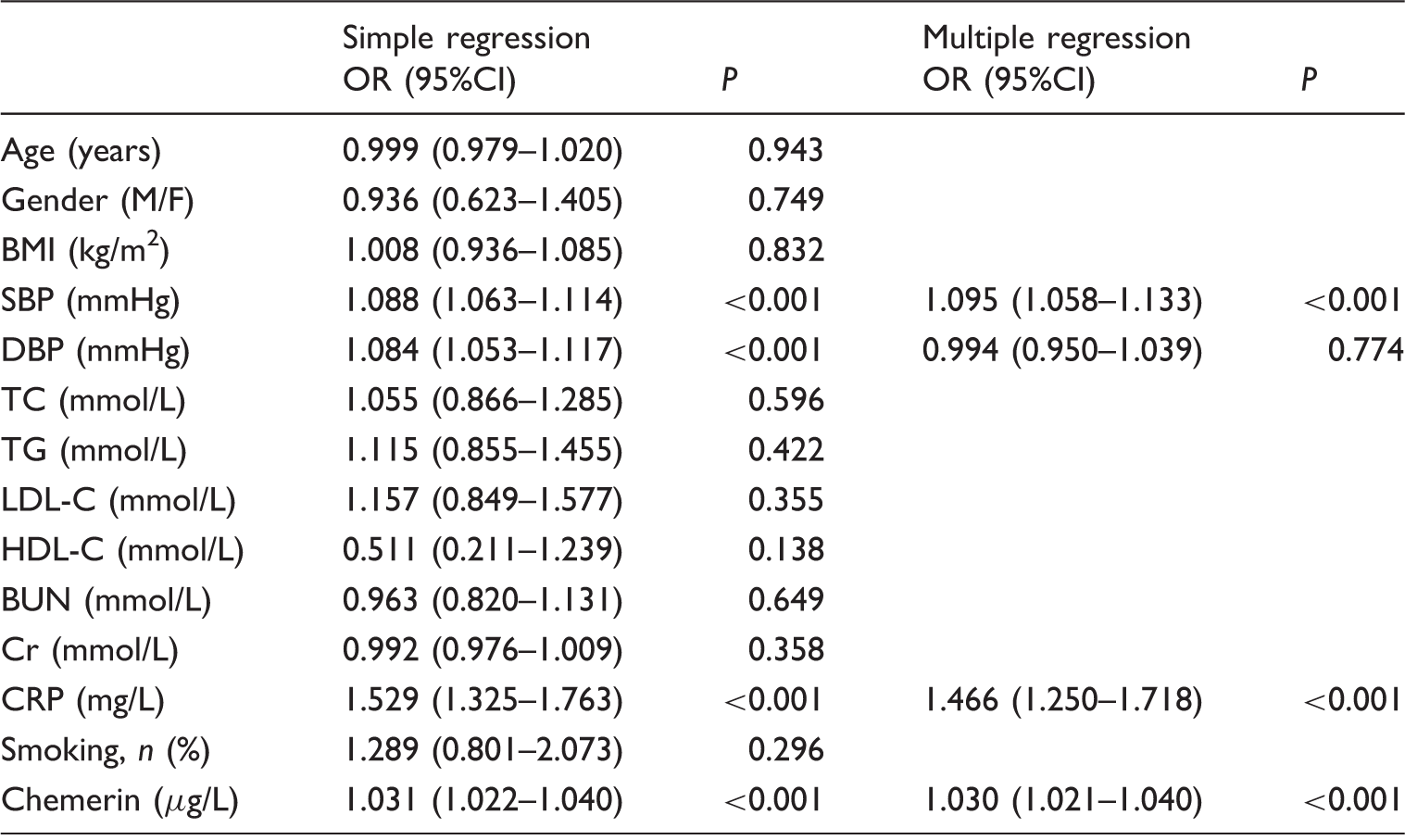
AF: atrial fibrillation; BMI: body mass index; SBP: systolic blood pressure; DBP: diastolic blood pressure; TC: total cholesterol; TG: triglycerides; LDL-C: low-density lipoprotein cholesterol; HDL-C: high-density lipoprotein cholesterol; BUN: blood urea nitrogen; Cr: creatinine; CRP: C-reactive protein; LAD: left atrial diameter.
Clinical and biochemical characteristics of AF subgroups.
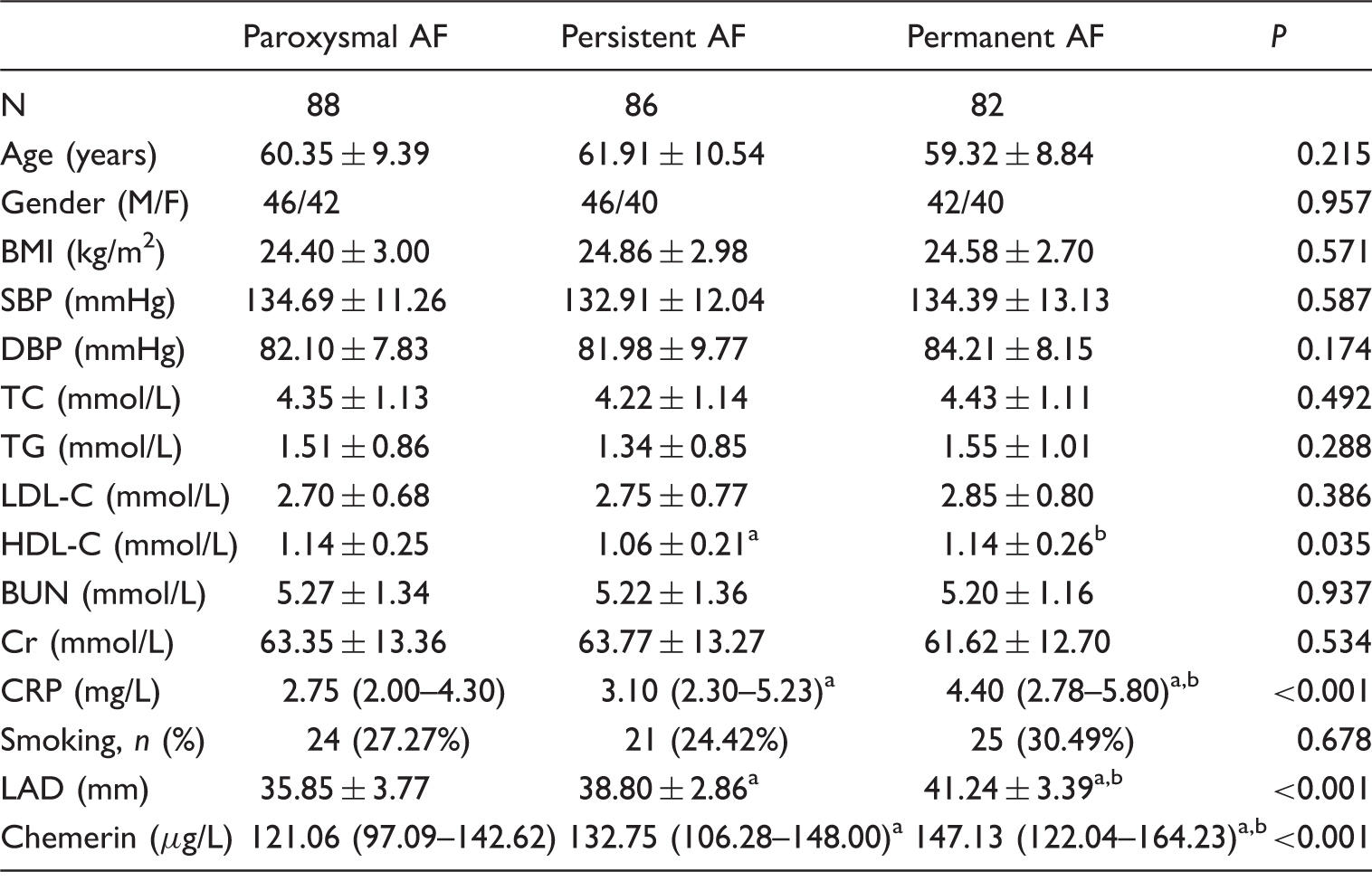
Note: Chemerin and CRP were presented as median (interquartile range), other characteristic were presented as means ± standard errors.
Parameters of gender and smoking were analysed by Chi-square tests; parameters of CRP and chemerin were analysed by Kruskal-Wallis test; other parameters were analysed by one-way ANOVA.
AF: atrial fibrillation; BMI: body mass index; SBP: systolic blood pressure; DBP: diastolic blood pressure; TC: total cholesterol; TG: triglycerides; LDL-C: low-density lipoprotein cholesterol; HDL-C: high-density lipoprotein cholesterol; BUN: blood urea nitrogen; Cr: creatinine; CRP: C-reactive protein; LAD: left atrial diameter.
P < 0.05 vs. paroxysmal AF patients.
P < 0.05 vs. persistent AF patients.
The correlation of serum chemerin concentrations with other parameters
The correlation of serum chemerin concentrations with other parameters.
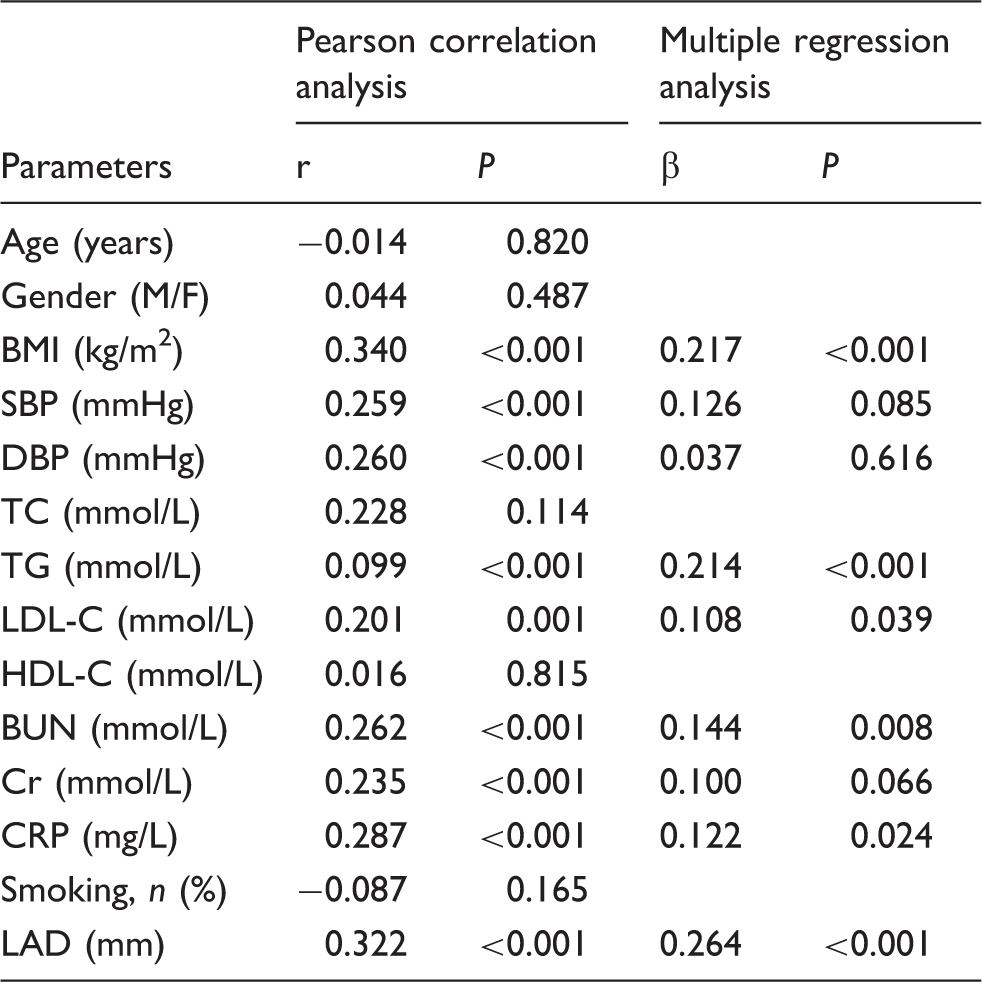
Note: Pearson correlation analysis showed that serum chemerin was correlated BMI, SBP, DBP, TG, LDL-C, BUN, Cr, CRP and LAD. Then those parameters (BMI, SBP, DBP, TG, LDL-C, BUN, Cr, CRP and LAD) were entered into a multiple regression analysis model to determine the correlation of those parameters with serum chemerin.
AF: atrial fibrillation; BMI: body mass index; SBP: systolic blood pressure; DBP: diastolic blood pressure; TC: total cholesterol; TG: triglycerides; LDL-C: low-density lipoprotein cholesterol; HDL-C: high-density lipoprotein cholesterol; BUN: blood urea nitrogen; Cr: creatinine; CRP: C-reactive protein; LAD: left atrial diameter.
Discussion
Recent evidence has shown the association between obesity and AF development. It is reported that obese individuals have an increased risk of developing AF by 49% compared with non-obese individuals. 16 In addition, the risk of AF increased in parallel with greater BMI in this cohort. 16 A follow-up study (median 13.5 years) demonstrated that higher body fat at any measured location was associated with a higher risk of AF development. 17 Chemerin is a newly discovered adipokine. It is closely correlated with obesity. Knockout of chemerin or its receptor CMKLR1 expression impaired the differentiation of 3T3-L1 cells into adipocytes, reduced the expression of adipocyte genes involved in glucose and lipid homeostasis and altered metabolic functions in mature adipocytes. 3 This indicates that chemerin regulates adipogenesis and adipocyte metabolism. 3 Plasma chemerin concentrations were significantly associated with BMI 5 and abdominal visceral fat accumulation. 18 Circulating chemerin significantly decreased with weight loss in obese patients undergoing bariatric surgery. 19 It seems that obesity may serve as a link between chemerin and AF pathogenesis. However, there were no differences in BMI between AF patients and controls in our study. Therefore, it indicates that BMI or obesity may not be the main mechanism for explaining the differences of serum chemerin concentrations between the case and control groups.
An increasing body of investigations has demonstrated that inflammation plays an important role in the initiation and progression of AF. Increased circulating inflammatory markers are observed in AF patients, and those inflammatory markers may predict the AF development and AF recurrence after cardioversion or catheter ablation. 20 Chemerin is a recently discovered adipokine correlated with inflammation. Chemerin significantly stimulates the release of pro-inflammatory cytokines including interleukin-6, interleukin-8, tumour necrosis factor alpha and interleukin-1 beta in human articular chondrocytes. 21 Chemerin plays an important role in inflammation by inducing macrophage adhesion to vascular cell adhesion molecule 1 and fibronectin. 22 Chemerin was also found to up-regulate the expression of chemokine (C–C motif) ligand 2 and toll-like receptor 4 in synovial fibroblasts. 23 In addition, our results show that serum chemerin concentrations are correlated with CRP which is a inflammatory factor. Therefore, chemerin is hypothesized to contribute to the presence of AF partly through activating different inflammatory pathways which then leads to elevated levels of inflammatory markers.
The present study also demonstrated an association of chemerin with LAD which is considered as a parameter for atrial remoulding. Atrial remoulding is an important mechanism of AF development. Our results indicate that chemerin is association with atrial remoulding. However, this hypothesis should be verified by further study in animals or humans.
The present study demonstrated that serum chemerin concentrations were correlated with metabolic parameters such as BMI, blood pressure and serum lipid. This is consistent with other studies that also reported a significant association of serum chemerin concentrations with multiple contributing factors of metabolic syndrome.24–26 These findings indicate that chemerin may play an important role in the mechanism of metabolic syndrome.
This study has several potential limitations. First, our study is of cross-sectional design. The causative relation must be confirmed by future longitudinal studies. Secondly, the control subjects were recruited from subjects undergoing routine medical check-ups in hospital. They are not entirely healthy controls. Therefore, there is potential bias in the controls. This may have some effects on the results. Subjects with impaired glucose tolerance or hypertension were not excluded from our study, which may also have some confounding effects on the results.
In conclusion, serum chemerin concentrations are correlated with the presence of AF. In addition, serum chemerin concentrations are associated with atrial remolding which is assessed using LAD.
Footnotes
Declaration of conflicting interests
The author(s) declared no potential conflicts of interest with respect to the research, authorship, and/or publication of this article.
Funding
The author(s) disclosed receipt of the following financial support for the research, authorship, and/or publication of this article: The Foundation of Finance Bureau of Heilongjiang Province [201620]; The Presidential Foundation of the Fourth Affiliated Hospital of Harbin Medical University [HYDSYYZ201503].
Ethical approval
The ethics committee of The Fourth Affiliated Hospital of Harbin Medical University (2015FAHHMU0215).
Guarantor
LZ.
Contributorship
GZ and LZ researched literature and conceived the study. MX, YZ and QY were involved in protocol development, gaining ethical approval, patient recruitment and data analysis. GZ wrote the first draft of the manuscript. All authors reviewed and edited the manuscript and approved the final version of the manuscript.