




Abstract
Background
MicroRNAs have been implicated in many biological pathways involved in tumourigenesis and can serve as prognostic biomarkers in many cancer types. The present study aims at evaluating the prognostic significance of miR-425-5p in cervical cancer.
Methods
Real-time polymerase chain reaction was performed to assess the expression levels of miR-425-5p in 35 pairs of cervical cancer tissues and their matched normal tissues as well as serum samples from 40 cervical cancer patients, 13 benign cervical disease patients and 32 healthy controls. The association between miR-425-5p expression levels in tissue and serum, and clinicopathological factors was examined. The correlation between serum miR-425-5p expression levels and overall survival of cervical cancer patients was assessed by Kaplan–Meier analysis and Cox proportional hazards model.
Results
MiR-425-5p expression levels were significantly increased in cervical cancer tissues compared with matched non-cancerous tissues. Higher expression of miR-425-5p was positively associated with high tumour stage (P = 0.0003) and positive lymph node metastasis (P = 0.0107). Serum concentrations of miR-425-5p in cervical cancer patients were significantly higher compared with benign cervical disease and healthy controls. Moreover, the up-regulation of serum miR-425-5p occurred more frequently in cervical cancer patients with high TNM stage (P = 0.0003) and positive lymph node metastasis (P = 0.0037). Kaplan–Meier analysis showed that high serum miR-425-5p expression levels predicted poor survival (P = 0.0571). Cox proportional hazards risk analysis demonstrated that miR-425-5p was an independent prognostic factor for cervical cancer.
Conclusion
Our study suggests that miR-425-5p is up-regulated in cervical cancer and serum miR-425-5p may serve as a potential prognostic biomarker for cervical cancer.
Introduction
Cervical cancer is the second most common gynaecological malignancy after breast cancer in the world and comprises 12% of all cancers globally.1–3 It is responsible for the death of thousands of women every year. 4 It is estimated that there will be nearly 13,000 new cases of cervical cancer by the year 2016 just in the United States. 5 Cervical cancer is characterized by uncontrolled cell division and tissue invasiveness of the female uterine cervix due to genetic and epigenetic changes. 2 Although increasing evidence suggests that early detection of cervical cancer has reduced mortality, the prognosis of advanced or recurrent cervical cancer remains very poor. Many studies have shown that patient age, FIGO stage, tumour size, haemoglobin concentration, lymph node metastasis and lymph-blood vessel invasion are independent factors for survival of cervical cancer patients. 6 However, these clinicopathological factors alone are not sufficient to predict prognosis of cervical cancer patients. Therefore, identification of novel molecular biomarkers will assist in obtaining a more accurate prediction of the prognosis of this disease.
MicroRNA (miRNA) is an abundant class of conservative and small non-coding RNAs which post-transcriptionally regulate gene by targeting mRNA for degradation or inhibition of translation. 7 miRNAs are implicated in regulating diverse tumourigenic processes, such as in cell apoptosis, cell proliferation, stress response, and metabolism, etc. and have been found to be dysregulated in a wide variety of cancer types, including cervical cancer.8,9 Recent studies have shown that miRNAs can serve as novel prognostic biomarkers in various cancer types. For example, miR-499 polymorphism has been reported to associate with gastric cancer patients in Chinese population 10 ; serum concentration of miR-147 has been identified as a diagnostic biomarker in human non-small cell lung cancer; 11 aberrant expression of miR-26b has been regarded as a potential prognostic biomarker for cervical cancer patients. 12 miR-425-5p has recently been reported to be up-regulated and to promote tumourigenesis in various cancer types.13,14 However, the potential role of miR-425-5p as a prognostic biomarker in cervical cancer has not been investigated.
In the present study, we examined miR-425-5p expression levels in human cervical cancer tissue and serum samples. The correlation between miR-425-5p and clinicopathological features and prognosis was analysed. Our results suggest that miR-425-5p is significantly higher in cervical cancer tissues and serum compared with matched non-cancerous tissues or healthy controls. Cox regression analysis reveals that serum miR-425-5p expression level may serve as a prognostic biomarker for survival in cervical cancer patients.
Methods
Tissues specimens
The study was approved by the Ethical Committee of Tianjin Huanhu Hospital, and informed consent was obtained from all patients. Cervical cancer tissue samples and matched non-tumour adjacent tissues (NATs) were obtained from patients who underwent surgical resection at Tianjin Huanhu Hospital, between March 2010 and December 2014 and were evaluated independently by two pathologists based on H&E staining. Overall, approximately 78% of tumours cells were found in the tumour biopsies. All tissues were immediately snap-frozen in liquid nitrogen and stored at −80℃ until use. In addition, the patients with any other tumour were excluded from the study. A total of 35 pairs of cervical cancer tissues were examined in the study. According to the criteria of the Union for International Cancer Control (UICC)/American Joint Committee on Cancer (AJCC), seventh edition, 9, 11 and 15 patients exhibited stage I, II and IIIa cancer, respectively. None of the subjects had received any therapeutic procedures prior to this study, including surgery, chemotherapy and radiotherapy.
Serum samples
From May 2009 to October 2014, we collected serum samples from patients who visited Tianjin Huanhu Hospital. Patients with recent history of any cancer other than cervical cancer were excluded. A total of 40 patients were involved in this study, and 17 Is, 14 IIs, 4 IIIas, 16 IIIbs and 22 IVs were identified, according to the criteria of the UICC/AJCC, seventh edition. Furthermore, serum from 13 patients with benign cervical disease (cervical tissue with hyperplasia precancerous features) and 32 cases of healthy controls were also obtained; 28/40 (70%) of the cervical cancer patients and 15/32 (46.8%) of the patients with benign cervical disease were HPV positive, respectively. Serum samples were extracted from whole blood after centrifugation (2800 g, 10 min) and stored at −80℃ until further processing. The prognosis was evaluated in all cervical cancer patients with serum samples in August 2015. Overall survival (OS) was defined as the time from cancer onset until death or by censoring at the last follow-up date.
Isolation of total RNA and quantitative RT-PCR
Total RNAs of tissues and serum samples were extracted with Qiagen miRNeasy Mini kit (Qiagen, Hilden, Germany) according to the manufacturer’s protocol, and then both miRNAs and mRNA were reverse transcribed to cDNA. TaqMan miRNA assays (Applied Biosystems, Foster City, USA) with specific RT primers and probes were used to quantify the expression of mature miR-425-5p. cDNA was generated from 500 ng of total RNA using PrimeScript™ RT Master Mix Perfect Real Time (TaKaRa, Dalian, China). Geometric mean of U6, miR-23a and miR-191 was used for miRNA template normalization. As for serum samples, geometric mean of miR-16, miR-223 and miR-31 was used for template normalization. All samples were performed in triplicate and independently repeated three times. The ΔCt values were calculated by subtracting the Ct of geometric man of reference miRNA from the Ct of the miR-425-5p (ΔCt = Ct miRNA – Ct reference miRNA). The 2−ΔCt was calculated for each sample and divided by the control sample (one of the cervical cancer tissue sample) value to obtain the relative miRNA expression level.
Statistical analysis
Statistical analysis was performed using IBM SPSS Statistics Version 16 (SPSS Inc., Chicago, IL, USA) and GraphPad Prism v5.0 (Graphpad Software Inc.). The Wilcoxon test was used to compare miR-425-5p expression in paired tumour tissue samples and NATs. The Mann–Whitney U test and Kruskal–Wallis test were used to perform statistical analysis of serum miR-425-5p concentrations between unpaired groups and multiple comparison groups, respectively. The Pearson’s Chi-squared test and Fisher’s exact test were used to evaluate the association between serum or tissue miRNA concentrations and clinicopathological parameters. In addition, survival curves were constructed with the Kaplan–Meier method and compared using log-rank test. Cox proportional hazards regression analysis was used for univariate and multivariate analyses of prognostic values. P value of two-sided less than 0.05 was considered statistically significant.
Results
miR-425-5p expression level in cervical cancer tissue and serum samples
To analyse the expression of miR-425-5p in cervical cancer patients, we measured the concentrations of miR-425-5p in 35 pairs of cervical cancer tissues and the NATs. As shown in Figure 1(a), significantly higher concentration of miR-425-5p was detected in tumour tissues compared with NATs (P < 0.0001). We also measured the miR-425-5p expression levels in serum samples from 40 cervical cancer patients, 13 patients with benign cervical disease and 32 healthy controls. Consistent with tissue sample data, the expression levels of serum miR-425-5p were significantly higher in the cervical cancer group than in the benign cervical disease group (P < 0.0001) or healthy control group (P < 0.0001) (Figure 1(b)).
miR-425-5p expression in cervical cancer tissue and serum samples. (a) Quantitative PCR analysis of relative miR-425-5p expression in tissues from 35 pairs of cervical cancer patients and matched NATs. (b) Quantitative PCR analysis of relative miR-425-5p expression in serum sample of cervical cancer patients (n = 40), benign patients (n = 13) and healthy control (n = 32). Data represent mean ± SD. ****, P < 0.0001.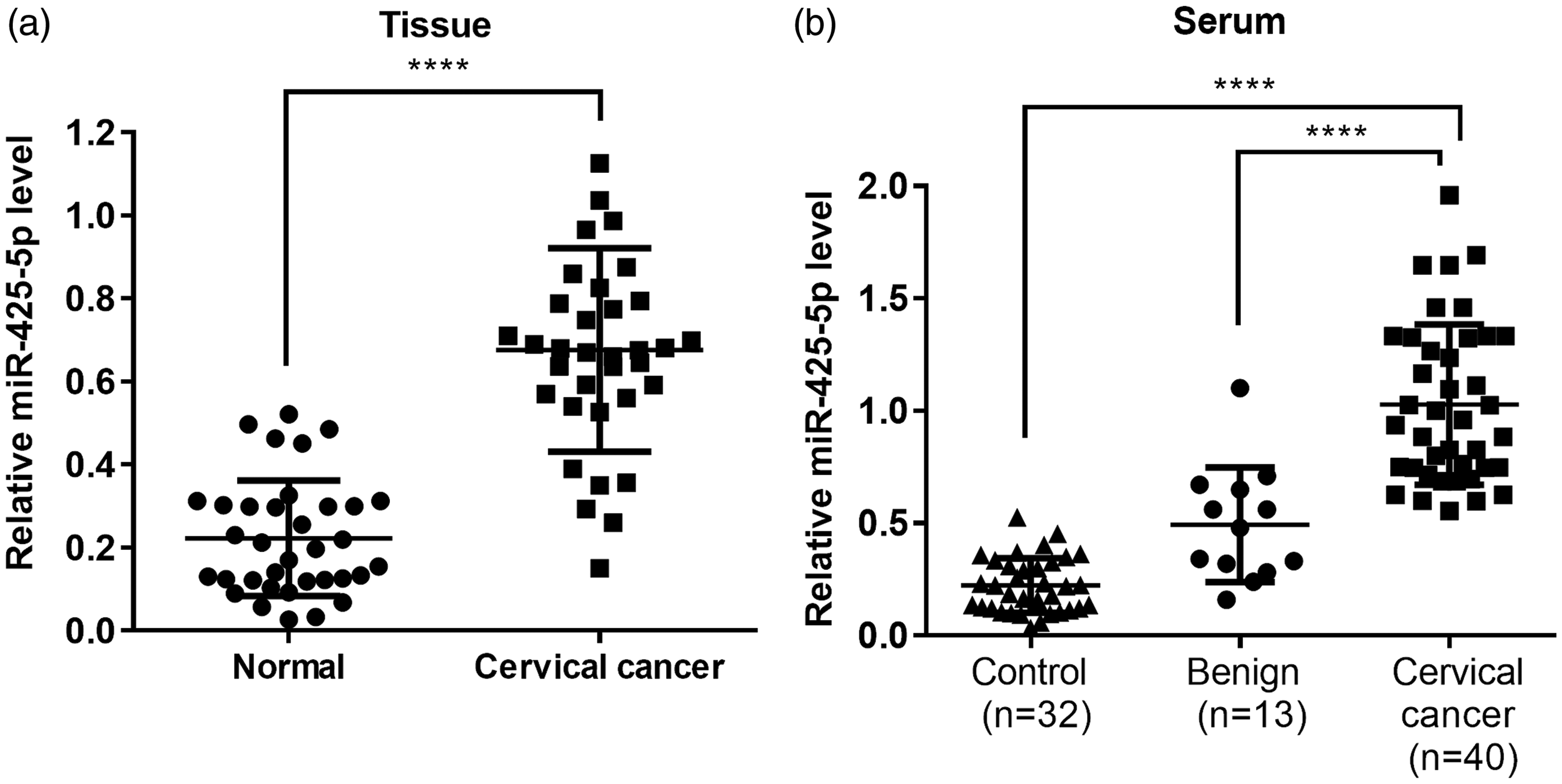
Association between clinicopathological features and miR-425-5p expression levels in cervical cancer patient tissues
Correlation between tissue miR-425-5p expression level and clinicopathological characteristics.
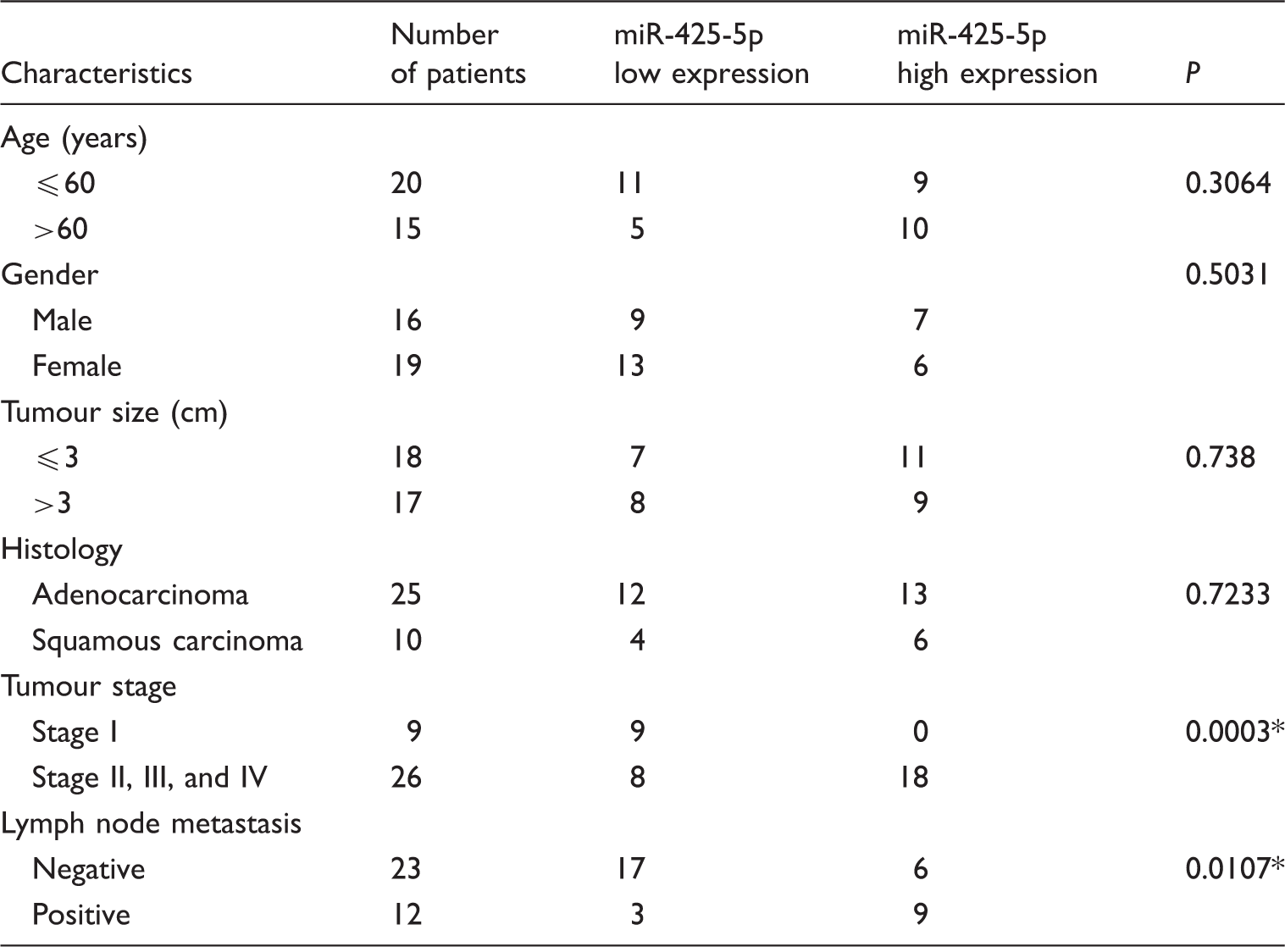
Statistical significance (P < 0.05).
Association between clinicopathological factors and serum miR-425-5p expression levels
Correlation between serum miR-425-5p expression level and clinicopathological characteristics.
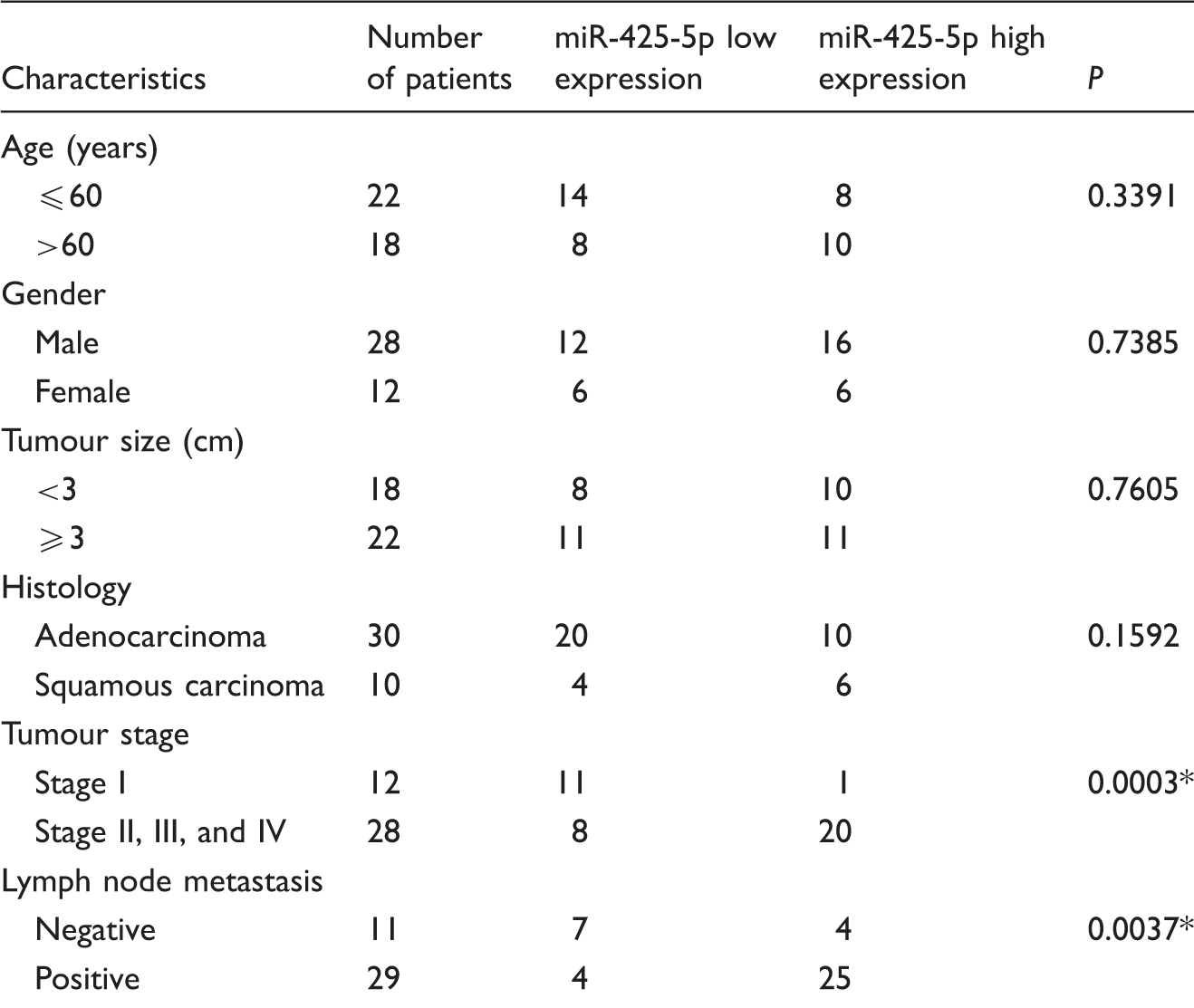
Statistical significance (P < 0.05).
Correlation between serum miR-425-5p concentration and patients’ survival
We further examined the association between serum miR-425-5p concentrations and OS or disease free survival (DFS) of cervical cancer patients that include the same cohort analysed above. OS or DFS curves of cervical cancer patients were estimated using the Kaplan–Meier method and analysed using log-rank test. A total of 50 cases with complete follow-up data were grouped into low miR-425-5p expression and high miR-425-5p expression based on median expression. Evaluation of survival in cervical cancer patients revealed that high expression of miR-425-5p was correlated with poor survival of patients with a median survival of 22 months (range 3–45 months). As of August 2015, 72.8% of patients with high miR-425-5p had died during the follow-up period, whereas 40.8% of patients with low miR-425-5p had died (long-rank test; P = 0.0571) (Figure 2(a)). As for the DFS, the mortality rates for patients with high or low miR-425-5p were 80.9% and 45.6%, respectively (long-rank test; P = 0.0046) and the patients with high serum miR-425-5p had a median survival of 35 months (range, 2–60 months) (Figure 2(b)).
Overall survival (a) and disease-free survival (b) in cervical cancer patients with low or high serum concentrations of mir-425-5p. Statistical analysis was performed using log-rank test.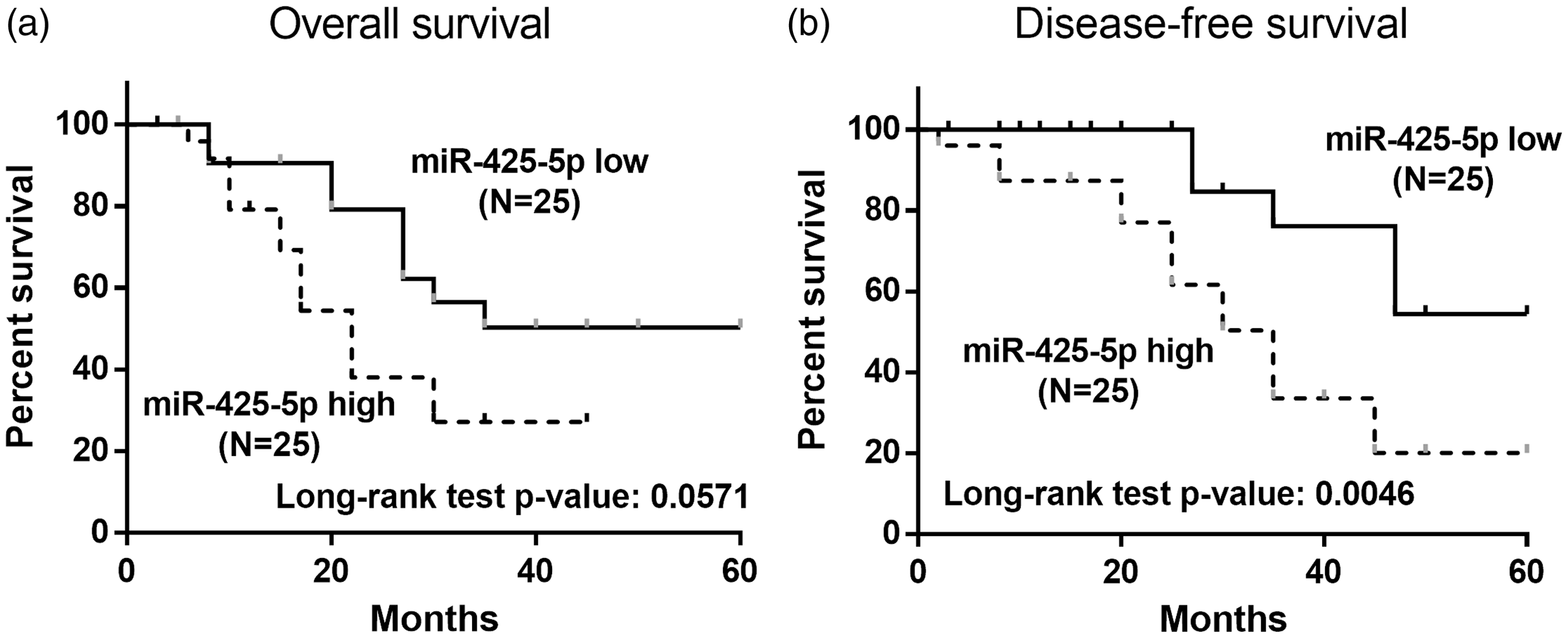
Univariate and multivariate Cox analysis for prognosis of patients with cervical cancer
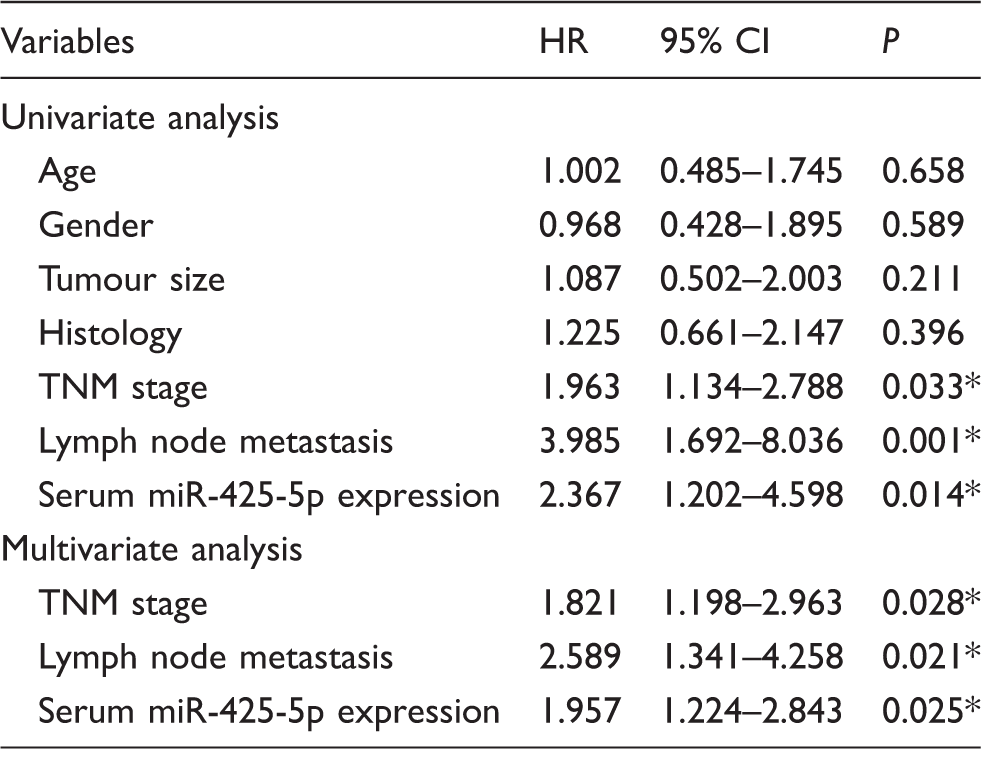
Univariate and multivariate analysis of overall survival in cervical cancer patients.
HR: hazard ratio.
Statistical significance (P < 0.05).
Discussion
Numerous studies have suggested that miRNAs are implicated in the initiation and progression of tumour development, although the underlying mechanism remains largely unknown.8,15 miRNAs can function as oncomiRs or tumour-suppressor-miRs depending on their target genes in many cancer types, including cervical cancer. 16 For example, miR-506 has been reported to act as a tumour suppressor by directly targeting the hedgehog pathway transcription factor Gli3 in cervical cancer. 17 Another study led by Li et al. 18 showed that miR-342-3p suppressed cervical cancer cell proliferation, migration and invasion via targeting FOXM1. 18 Additionally, miR-195 can inhibit proliferation, migration and invasion of cervical cancer cells by regulating CCND2 and MYB expression. 19 Meanwhile, some miRNAs function as oncomiRs in cervical cancer development. Hou et al. reported that miR-196a could promote cervical cancer proliferation via p27Kip1. 20 Up-regulation of miR-182 was found in cervical cancer and was significantly correlated with advanced stages of cervical cancer. 21 MiR-150 has recently been reported to promote cervical cancer cell proliferation and survival. 22 Down-regulation of miR-135b inhibits cell growth of cervical cancer cells. 23 Thus far, studies on miR-425-5p have been limited. Most recently, miR-425-5p has been identified as potential biomarker in renal cell carcinoma, lung squamous cell carcinoma, breast cancer and bladder cancer.24–26 Consistently, miR-425-5p has been reported to promote tumourigenicity and aggressiveness in breast cancer and gastric cancer.13,14 In addition, PTPRN2, one of the major target genes for miR-425-5p, has been recently reported as a candidate tumour suppressor in CRC.27,28 However, the expression levels of miR-425-5p in cervical cancer are poorly characterized. In the present study, we observed that miR-425-5p was significantly up-regulated in cervical cancer tissues compared with NATs (Figure 1(a)). Moreover, an elevated expression level of miR-425-5p was found in serum samples of cervical cancer patients compared with benign cervical disease patients or healthy controls (Figure 1(b)). Additionally, high expression levels of miR-425-5p in tissue or serum were found to be correlated with more advanced tumour stages and lymph node metastasis as well (Tables 1 and 2). These results suggest that miR-425-5p may function as an oncomiR in cervical cancer and may play an important role in cervical cancer progression and metastasis.
Recently, accumulating evidence suggests that a collection of miRNAs can serve as diagnostic or prognostic biomarkers in many cancer types.8,10,11 In particular, some miRNAs have been shown to be correlated with prognosis of cervical cancer patients. Liang et al. showed that the expression level of miR-215 was associated with tumour progression and poor survival rate in cervical cancer, supporting that it may serve as a potential prognostic marker to identify high-risk population. 29 Using microarray analysis, Park et al. 30 identified 86 dysregulated miRNAs in adenocarcinoma of the uterine cervix compared with normal tissues of the uterine cervix and demonstrated miR-363-3p as an independent favourable prognostic biomarker. Also, Hu et al. 31 have shown that miR-200a and miR-9 can predict patient survival by analysing 102 cervical cancer samples using a PCR-based miRNA assay. Moreover, miR-31 has been identified as an independent prognostic factor and functions as an oncomiR in cervical cancer via targeting ARID1A. 32 In our study, we examined the correlation between serum miR-425-5p expression levels and prognosis of cervical cancer. Kaplan–Meier survival curve analysis revealed that patients with high concentrations of miR-425-5p exhibited a significantly poor OS and DFS (Figure 2). Univariate and multivariate Cox proportional hazards regression model analysis indicated that high serum miR-425-5p concentration was correlated with increased death from cervical cancer (Table 3). In addition, high expression level of miR-425-5p was an independent poor prognosis factor for cervical cancer (Table 3).
In summary, miR-425-5p was found to be up-regulated in cervical cancer tissues and serum. High expression of miR-425-5p was positively associated with TNM stage and lymph node metastasis. Furthermore, elevated serum miR-425-5p expression level was correlated with poor survival and poor diagnosis and was demonstrated as an independent prognostic biomarker for cervical cancer. Further studies are warranted to investigate the molecular mechanism of miR-425-5p in cervical cancer tumourigenesis and its potential as a novel therapeutic target for cervical cancer treatment.
Footnotes
Declaration of conflicting interests
The author(s) declared no potential conflicts of interest with respect to the research, authorship, and/or publication of this article.
Funding
The author(s) received no financial support for the research, authorship, and/or publication of this article.
Ethical approval
This study was approved by The Ethics Committee and Institutional Review Board of Tianjin Huanhu Hospital, China (Protocol number 56/12).
Guarantor
RJ.
Contributorship
LS, JL, BW, CM, YL, and NM did the experiments. LS and RJ designed the study and wrote the manuscript. All authors read and approved the final manuscripts.