




Abstract
In this paper, a lanthanide complex-based fluorescent sensor Tb(4-MBA) was developed for the selective recognition of diabetic ketoacidosis (DKA) and the diabetes biomarker β-hydroxybutyric (β-Hb). β-Hb significantly enhanced the fluorescence emission of the Tb(4-MBA) complex at 539 nm. Based on the analysis of the surface electrostatic potential distribution and time-resolved spectra, we speculate that in the reaction system of β-Hb with Tb(4-MBA), β-Hb and Tb(4-MBA) may form a complex through hydrogen bonding interactions, which brings β-Hb closer to Tb3+ and thus reduces the non-radiative energy loss of the solvent molecules to Tb3+ and significantly enhances the Tb(4-MBA) fluorescence intensity. The linear range of Tb(4-MBA) for β-Hb was 2–55 μM, and the limit of detection (LOD) was 50.6 nM. This sensor has high sensitivity and selectivity and shows great potential in the field of screening and diagnosis of diabetes mellitus and DKA.
This is a visual representation of the abstract.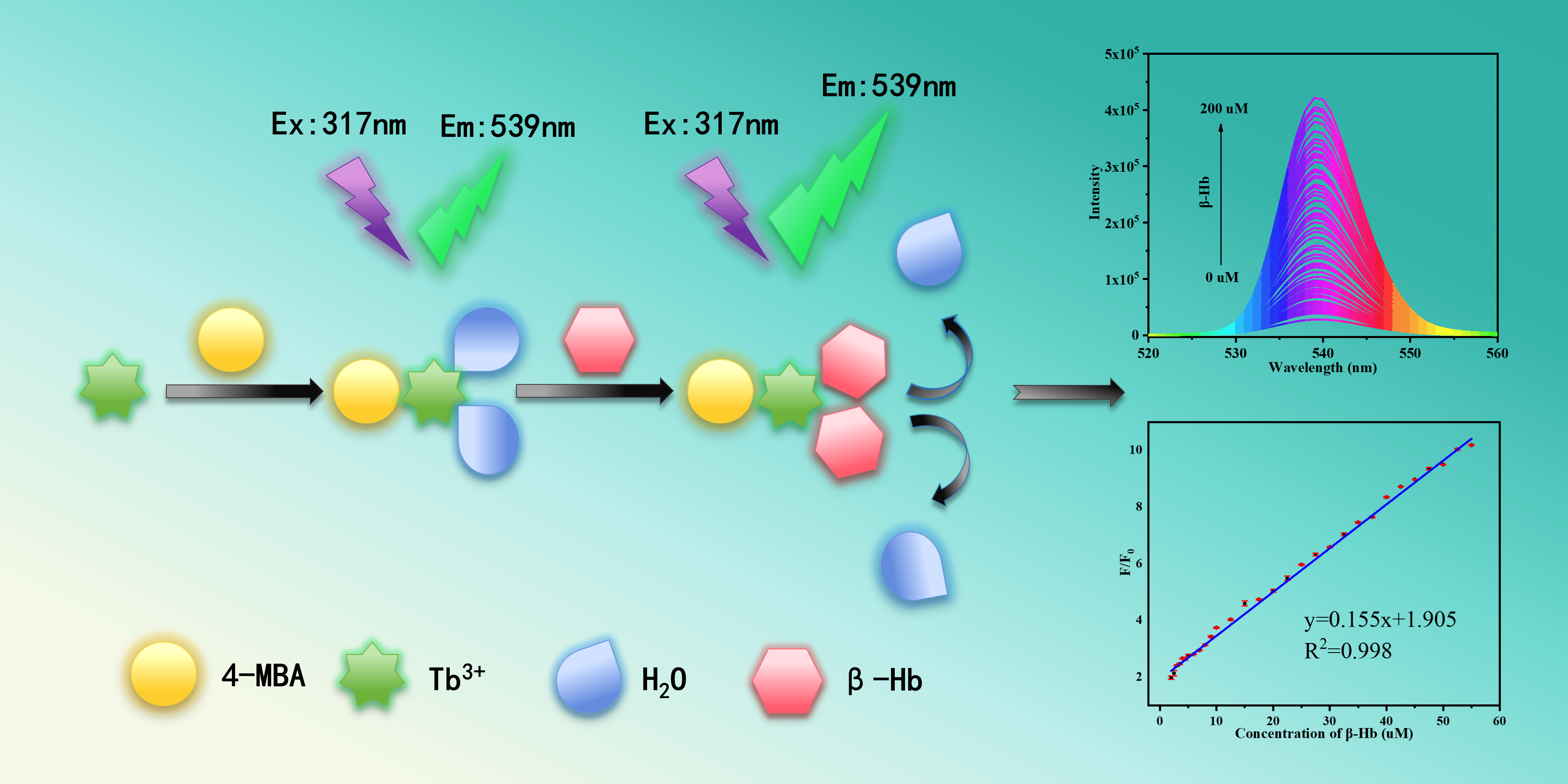
Get full access to this article
View all access options for this article.
References
Supplementary Material
Please find the following supplemental material available below.
For Open Access articles published under a Creative Commons License, all supplemental material carries the same license as the article it is associated with.
For non-Open Access articles published, all supplemental material carries a non-exclusive license, and permission requests for re-use of supplemental material or any part of supplemental material shall be sent directly to the copyright owner as specified in the copyright notice associated with the article.
