




Abstract
We present the first implementation of complex-valued classical least squares (CLS) regression in spectroscopy. Although the results indicate that complex-valued CLS does not outperform methods that utilize only the more suitable part of the complex refractive index spectra, it includes an error detection feature that enables a self-correction mechanism. This mechanism decreases the mean absolute error (MAE) to approximately 26% relative to using only the mid-infrared (MIR) absorption index (k) spectra for CLS, and to about 46% relative to using only the MIR refractive index (n) spectra of benzene–toluene mixtures. For benzene–cyclohexane mixtures, the MAE was reduced to approximately 75% relative to the k spectra and 58% relative to the n spectra. In contrast, for benzene–carbon tetrachloride (CCl4) mixtures, i.e., a system that exhibits particularly large deviations from Beer’s law, no improvement over the n spectra was observed; the n-based MAE was 81% relative to the k spectra. These percentages may further vary based on the complexity of the system, the spectral regions selected for CLS and the corresponding deviations from Beer’s approximation.
This is a visual representation of the abstract.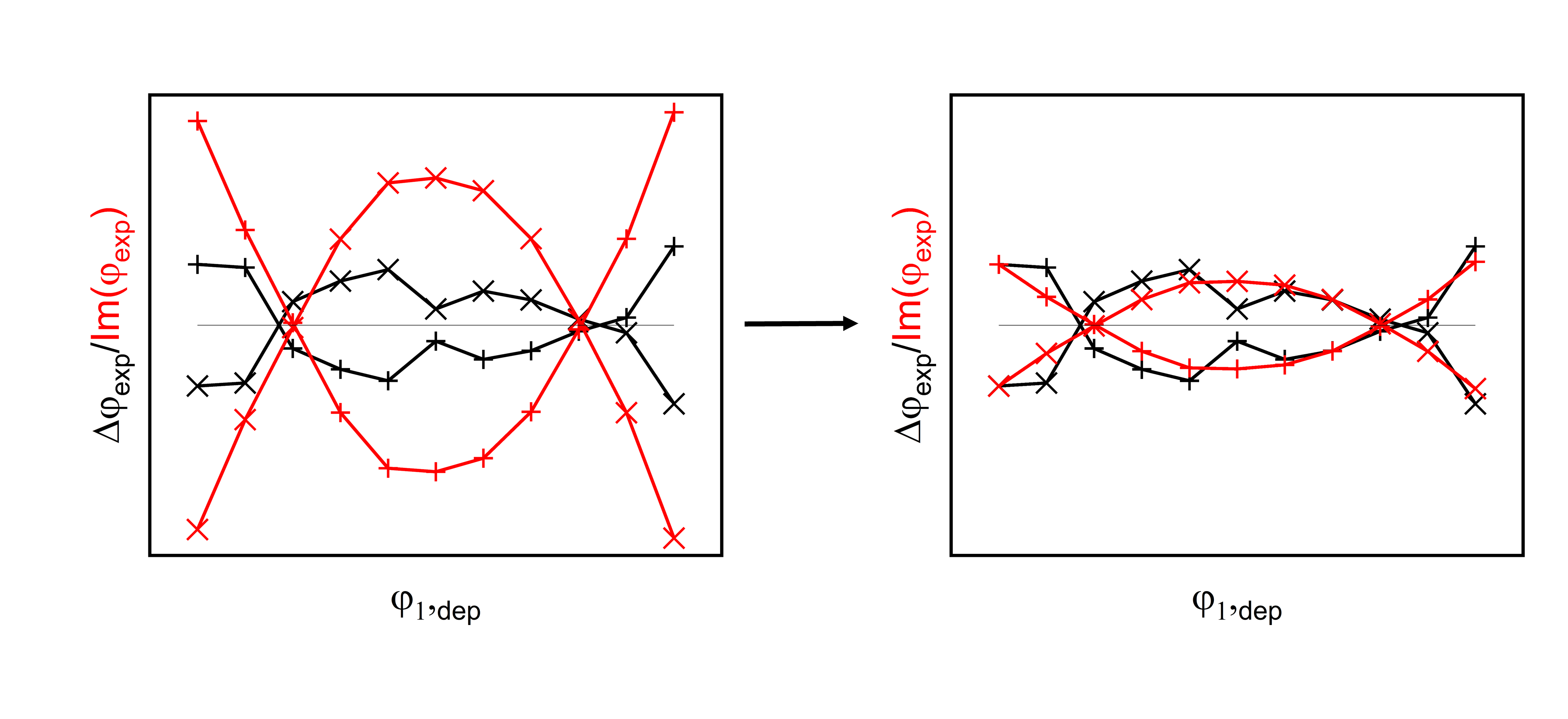
Keywords
Get full access to this article
View all access options for this article.
References
Supplementary Material
Please find the following supplemental material available below.
For Open Access articles published under a Creative Commons License, all supplemental material carries the same license as the article it is associated with.
For non-Open Access articles published, all supplemental material carries a non-exclusive license, and permission requests for re-use of supplemental material or any part of supplemental material shall be sent directly to the copyright owner as specified in the copyright notice associated with the article.
