




Abstract
Two-dimensional correlation spectroscopy is used to investigate the intermolecular interaction between two substances dissolved in the same solutions, where the intermolecular interaction is described by two reversible reactions producing two supramolecular aggregates. The severe overlappings expected among the characteristic peaks of the original solute and aggregates make conventional one-dimensional spectra difficult to accurately reflect the physiochemical nature of the intermolecular interaction. The double asynchronous orthogonal sample design (DAOSD) approach is utilized to analyze the simulated data for proof-of-principle demonstration. The patterns of cross-peaks are much more complex compared with the intermolecular interaction described by only a single reaction. Four major groups of cross-peaks with characteristic patterns observed in the pair of DAOSD asynchronous spectra are systematically analyzed and classified. Further analysis of the spectral feature of the cross-peaks of the DAOSD asynchronous spectra is helpful to exact additional information concerning the variation of the peak position and peak width of the aggregates compared with those of the original solute. The result is important to reveal the physicochemical nature of intermolecular interaction between the solutes (e.g., changes in conformation, dynamical behavior, etc.). The pattern of cross-peaks in the corresponding 2D asynchronous spectra may become rather complex when the peak position, peak width, and peak intensity of two supramolecular aggregates change simultaneously. Further work using artificial intelligence techniques to interpret the complex cross-peaks is still being carried out.
This is a visual representation of the abstract.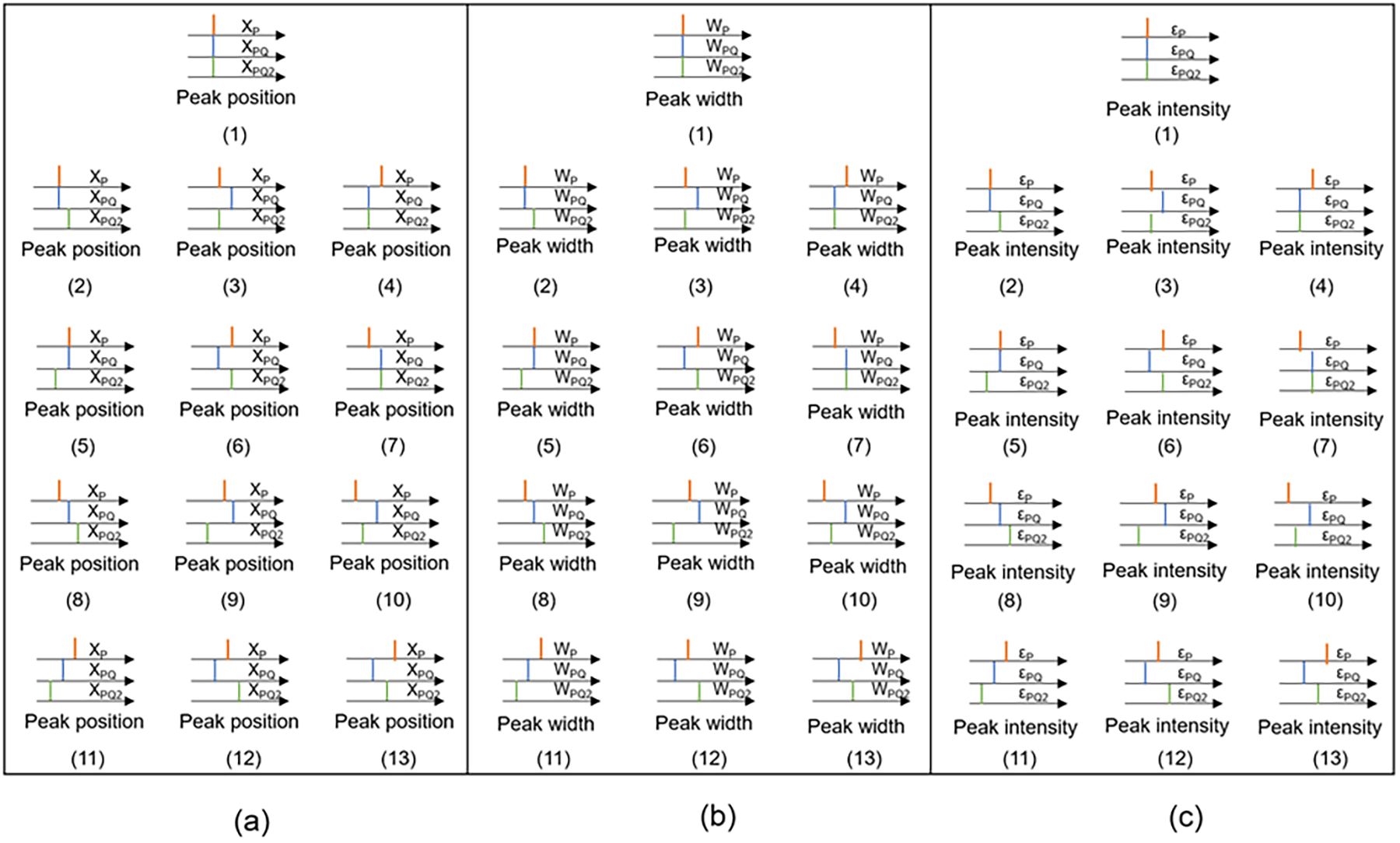
Keywords
Get full access to this article
View all access options for this article.
References
Supplementary Material
Please find the following supplemental material available below.
For Open Access articles published under a Creative Commons License, all supplemental material carries the same license as the article it is associated with.
For non-Open Access articles published, all supplemental material carries a non-exclusive license, and permission requests for re-use of supplemental material or any part of supplemental material shall be sent directly to the copyright owner as specified in the copyright notice associated with the article.
