




Abstract
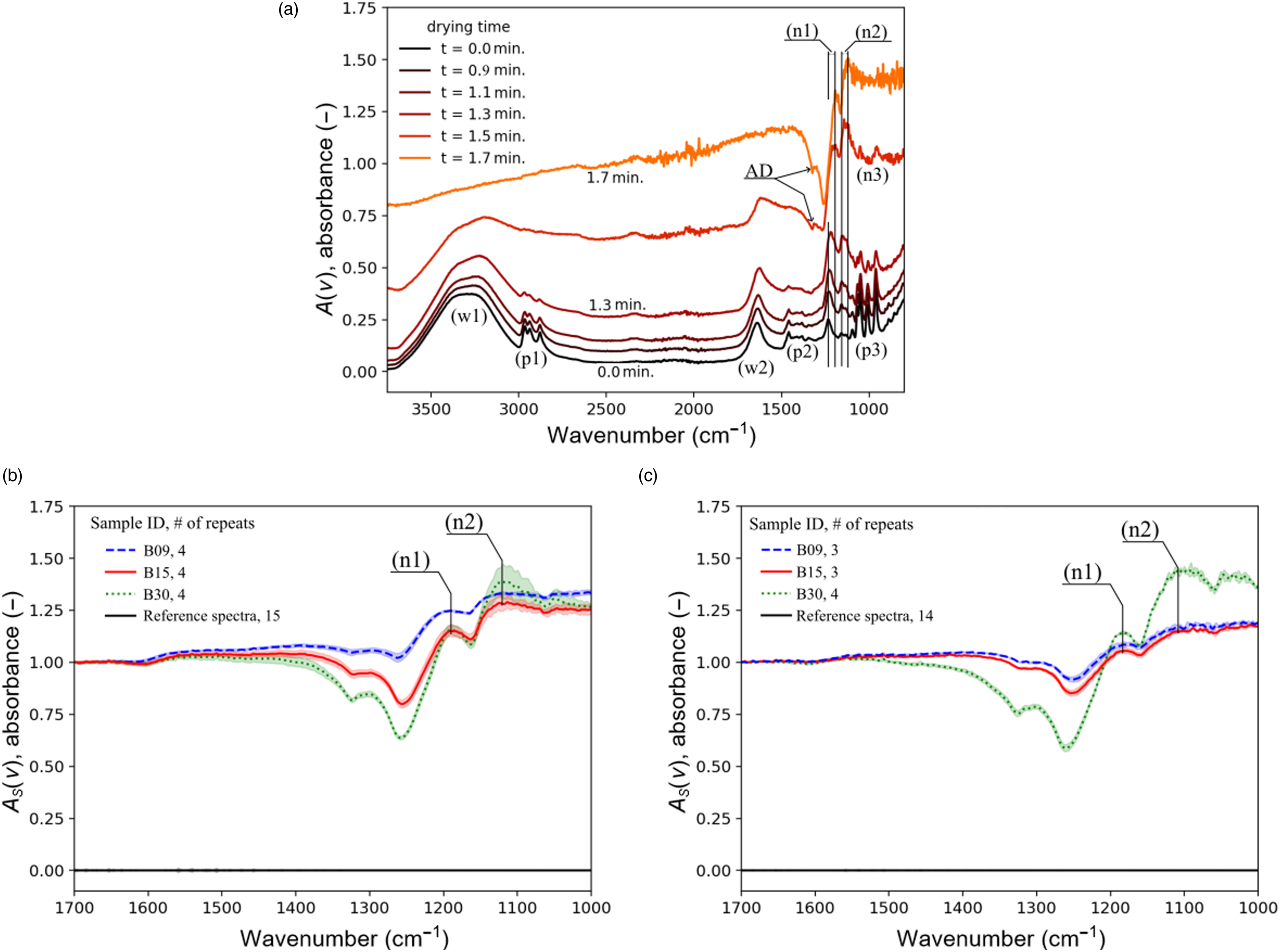
As the production of polymer electrolyte fuel cells expands, novel quality control methods must be invented or adapted in order to support expected rates of production. Ensuring the quality of deposited catalyst layers is an essential step in the fuel cell manufacturing process, as the efficiency of a fuel cell is reliant on the catalyst layer being uniform at both the target platinum loading and the target ionomer content. Implementing a quality control method that is sensitive to these aspects is imperative, as wasting precious metals and other catalyst materials is expensive, and represents a potential barrier to entry into the field for manufacturers experimenting with novel deposition processes. In this work, we analyzed catalyst inks to determine if their ionomer content could be quantized spectroscopically. Attenuated total reflection (ATR) Fourier transform infrared spectroscopic technique was investigated producing a signal proportional to the ionomer content. ATR spectroscopy was able to quantitatively differentiate samples in which the ionomer to carbon mass ratio (I/C) varied between 0.9 and 3.0. The I/C ratio was correlated to the measured ATR signal near the CF2 vibrational bands located between 1100 cm−1 and 1400 cm−1. The experimental results obtained constitute a step toward the development of novel quality control methodologies for catalyst inks utilized by the fuel cell industry.
Keywords
Get full access to this article
View all access options for this article.
References
Supplementary Material
Please find the following supplemental material available below.
For Open Access articles published under a Creative Commons License, all supplemental material carries the same license as the article it is associated with.
For non-Open Access articles published, all supplemental material carries a non-exclusive license, and permission requests for re-use of supplemental material or any part of supplemental material shall be sent directly to the copyright owner as specified in the copyright notice associated with the article.
