




Abstract
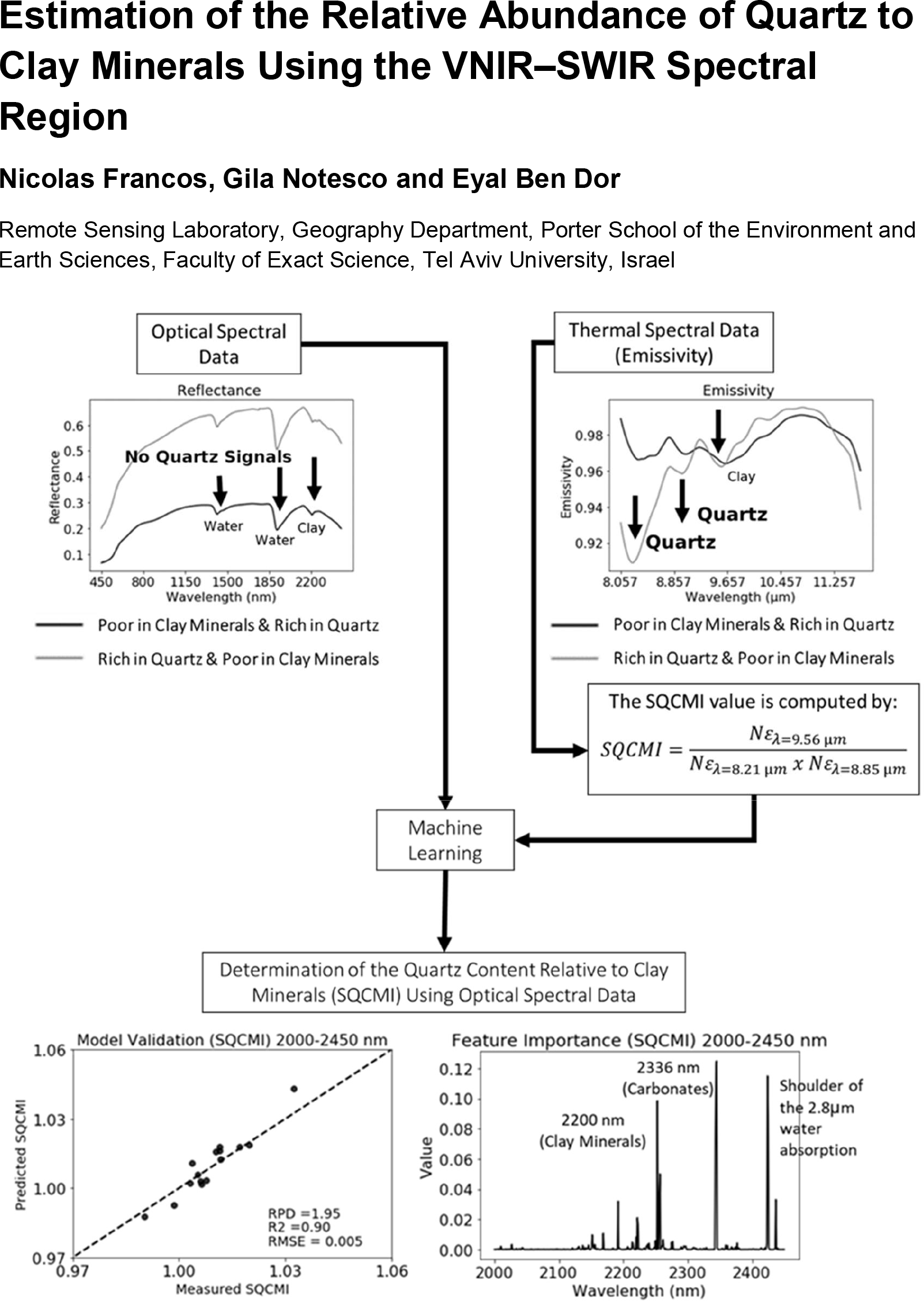
Quartz is the most abundant mineral on the earth’s surface. It is spectrally active in the longwave infrared (LWIR) region with no significant spectral features in the optical domain, i.e., visible–near-infrared–shortwave-infrared (Vis–NIR–SWIR) region. Several space agencies are planning to mount optical image spectrometers in space, with one of their missions being to map raw materials. However, these sensors are active across the optical region, making the spectral identification of quartz mineral problematic. This study demonstrates that indirect relationships between the optical and LWIR regions (where quartz is spectrally dominant) can be used to assess quartz content spectrally using solely the optical region. To achieve this, we made use of the legacy Israeli soil spectral library, which characterizes arid and semiarid soils through comprehensive chemical and mineral analyses along with spectral measurements across the Vis–NIR–SWIR region (reflectance) and LWIR region (emissivity). Recently, a Soil Quartz Clay Mineral Index (SQCMI) was developed using mineral-related emissivity features to determine the content of quartz, relative to clay minerals, in the soil. The SQCMI was highly and significantly correlated with the Vis–NIR–SWIR spectral region (R2 = 0.82, root mean square error (RMSE) = 0.01, ratio of performance to deviation (RPD) = 2.34), whereas direct estimation of the quartz content using a gradient-boosting algorithm against the Vis–NIR–SWIR region provided poor results (R2 = 0.45, RMSE = 15.63, RPD = 1.32). Moreover, estimation of the SQCMI value was even more accurate when only the 2000–2450 nm spectral range (atmospheric window) was used (R2 = 0.9, RMSE = 0.005, RPD = 1.95). These results suggest that reflectance data across the 2000–2450 nm spectral region can be used to estimate quartz content, relative to clay minerals in the soil satisfactorily using hyperspectral remote sensing means.
Keywords
Introduction
Quartz makes up around 20% of the earth’s crust and is the most abundant mineral on the earth’s surface. 1 Reflectance spectroscopy in the visible–near-infrared–shortwave-infrared (Vis–NIR–SWIR) spectral region across the 400–2450 nm range has proven to be a useful technology to provide information about many minerals and soil attributes via the generation of spectrally based models; these models can be used as a proxy method to assess the soil composition on unknown soil samples. This capability is based on direct spectral fingerprints of each property that is active across this spectral range. Thus, iron oxides, calcite, and clay minerals (CM), among others, can be characterized using Vis–NIR–SWIR spectral information, because these minerals have significant spectral fingerprints in this region. 2 Unfortunately, quartz does not present any marked spectral features in the Vis–NIR–SWIR spectral region, 2 and hence this region (also termed “optical region”) cannot be exploited to detect or map quartz minerals directly by optical remote sensing (RS) means through either hyperspectral or multispectral sensors.
In contrast, the thermal region and, most importantly, the longwave infrared (LWIR) region (8–12 µm), is characterized by strong and well-defined spectral fingerprints of quartz at 8.21 µm and 8.85 µm, and of other Si-bearing minerals (e.g., CM) at 9.56 µm (representing the fundamental vibration modes of the silicon–oxygen bond, Si–O). Accordingly, the emissivity spectra in the LWIR region hold valuable information for quantifying the content of quartz and CM in the soil.3,4 Recent studies by Notesco et al.3,4 have demonstrated the ability to determine the quartz content, relative to that of the CM, using the Soil Quartz Clay Mineral Index (SQCMI), calculated from the emissivity spectrum of the soil surface across the LWIR region. This was supported by the high correlation (R2 = 0.93) found between the SQCMI and the Si-to-Al ratio, representing the quartz-to-CM ratio in the soils.
Adar et al. 5 showed that it is possible to predict broad–band spectral emissivity of the LWIR region using optical reflectance data. This was achieved by using the indirect relationship between the emissivity and albedo characteristics of the soil. It is therefore interesting to see whether quartz, which is spectrally active in the LWIR region, can also be indirectly correlated with the Vis–NIR–SWIR spectral signals. As indirect relations occur between active and inactive chromophores in the optical domain,6,7 the possible (indirect) relation of quartz with the Vis–NIR–SWIR spectral range needs to be checked to determine the possibility of assessing quartz content solely from the optical spectral range.
For this examination, we used the gradient-boosting algorithm, 8 a powerful machine learning technique for regression (and classification) problems, which has been found to work well in soil spectroscopy.9,10 This direction is crucial to harnessing the spectral imaging technology from orbit to efficiently assess soil mineralogy from afar (amongst other spectral imaging missions). Therefore, we used the legacy soil spectral library (SSL) 11 of Israel, which includes a comprehensive analytical evaluation of soil mineralogy, chemistry, and spectroscopy across both the Vis–NIR–SWIR and LWIR regions, to study all possible relationships that might be used to estimate quartz content from the optical region.
Methods
Soil Samples and Chemical Analyses
Ninety soil samples from the Israel SSL, 11 representing seven soil orders of the USDA classification system, were selected for this study. The samples were collected from the upper surface zone (0–5 cm depth) and were brought to the laboratory, air-dried, gently crushed, and sieved to pass a ≤2 mm sieve. Then, the 2 mm fraction was milled using an agate mortar and pestle to pass a 100-mesh sieve. The chemical analyses were performed using well-established soil science methods, 12 and elemental analysis was performed by using a Philips MagiX PRO PW 2440. The mineralogy was quantitatively determined by X-ray diffraction (XRD) of an unoriented sample using a Philips Model 1010 X-ray diffractometer with Fe-filtered CoKa radiation. 13 Relative quantitative calibration for the main minerals was performed to assess the mineral content in each sample. Hygroscopic water was calculated by gravimetric measurement of the air-dried versus oven‐dried (105–110 ℃ overnight) samples. 12 The specific surface area (SSA) was obtained by sorption of ethylene glycol-monoethyl ether on the oven-dried sample, and gravimetric measurement against an internal clay standard (SWy-1) of 800 m2/g. 14 The content of CaCO3 was measured using a calcimeter. 15
Spectral Measurements
The spectral measurements of the sieved samples (particle size < 2 mm) were performed separately in the Vis–NIR–SWIR and LWIR spectral regions. For the Vis–NIR–SWIR spectral region, each soil sample was measured using the Analytical Spectral Devices (ASD) FieldSpec 4 with 2150 spectral bands in the 350–2500 nm range, a sampling interval of one band per nanometer, and a contact-probe assembly (ASD). The crystal glass cover of the contact probe touched the sample in question and the optic fiber was located 2.5 cm from the sample at 45°. The reflectance was calculated relative to a white halon panel (LabSphere®) and adjusted to a bright sand internal standard (LB) following the approach of Ben-Dor et al. 16
For the LWIR spectral region, images were acquired with the Telops Hyper-Cam®, covering the 8.0–11.7 µm region with 122 bands and a spectral resolution of 4 cm–1.
17
For the LWIR radiance measurements, the soil samples were exposed to the sun (with an outdoor air temperature of ∼30 ℃) and then the LWIR images were acquired. The emissivity spectrum of each soil sample was calculated as described in Notesco et al.
3
(Eq. 1)


Figure 1 shows the emissivity (Fig. 1a) and the Vis–NIR–SWIR spectra (Figs. 1b and 1c) of the samples that presented the lowest and highest SQCMI, designated H2 and EC1, respectively. Figure 1a shows the high-contrast quartz absorption at 8.21 µm. In Fig. 1b, on the other hand, the main differences seem to be related to the albedo effect, although after calculating the normalized reflectance, the differences in the CM absorption at 2200 nm are much more pronounced (Fig. 1c).
(a) Emissivity spectra of samples H2 (lowest SQCMI) and EC1 (highest SQCMI). (b) Vis–NIR–SWIR reflectance of the same samples. (c) The normalized reflectance of H2 and EC1 in the 2000–2400 nm spectral range.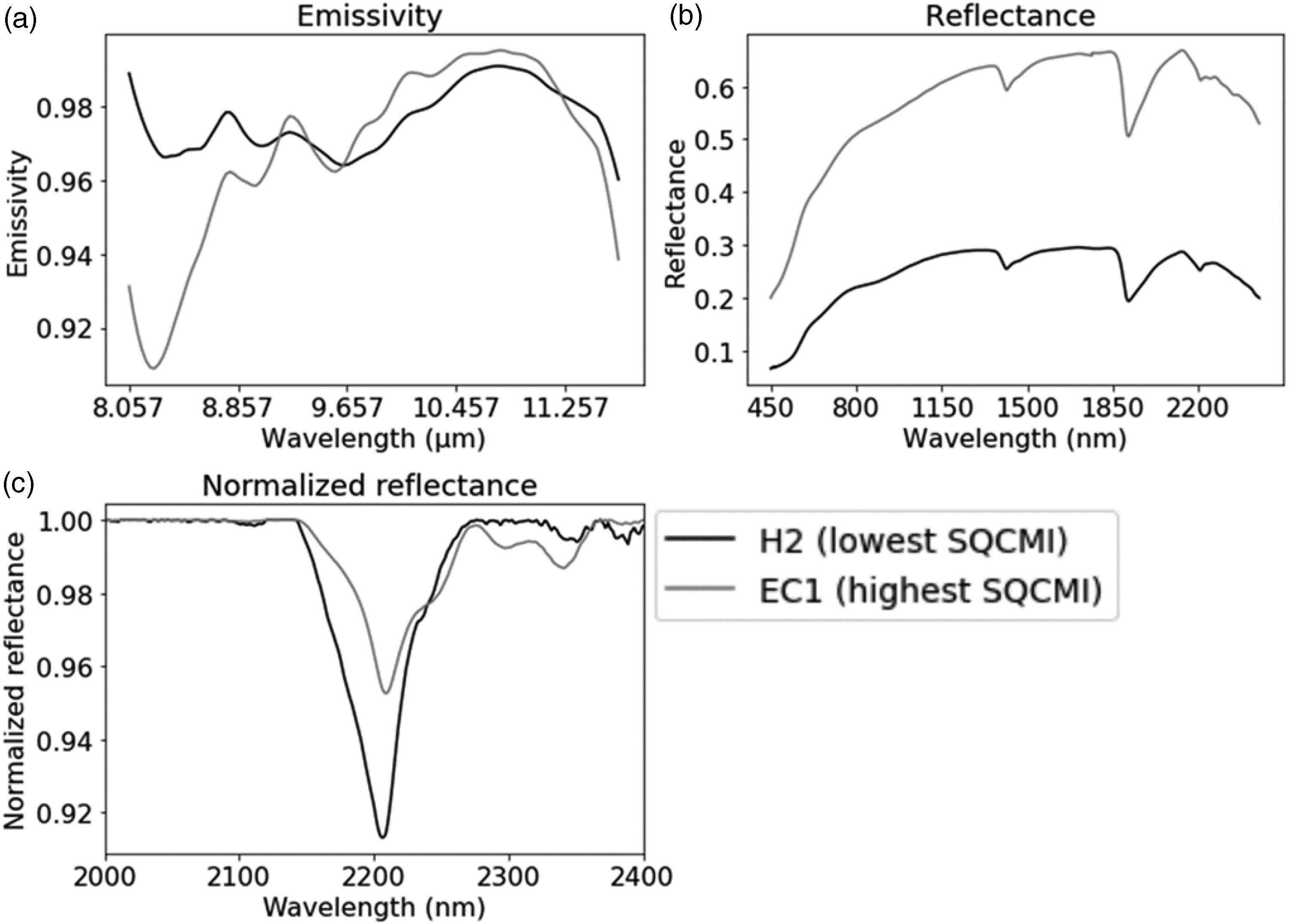
Data Analysis
All of the properties (mineral abundances and soil properties) were correlated to each other to determine any indirect assessment of quartz and CM content. Then, we used the gradient-boosting algorithm 16 of the Scikit-Learn module 20 of Python 3.7 to extract spectral-based models for assessment of the following parameters through the Vis–NIR–SWIR spectral range:

The measured CM content in five samples was zero, and these were omitted from the analyses of the above parameters. The samples that presented a quartz-to-CM ratio >10 were also ignored because the values of these samples were very distant from the majority. This occurred because ratios tend to distance parts of the distribution, and this was especially pronounced for samples with very low CM and high quartz contents, as shown in the histogram of the quartz-to-CM ratio in Fig. 2. To maintain equilibrium for the analysis and because most of the samples contained lower quartz-to-CM ratio values, these samples were not considered for any of the cases evaluated in this study. Figure 2 illustrates the histograms of the properties that we aimed to predict before (in blue) and after (in red) removing the samples with a quartz-to-CM ratio >10. The distributions of the quartz and CM contents were almost unaffected by this preprocessing, and the distributions of the SQCMI and quartz-to-CM ratio were rectified. The values of Fig. 2 were annexed to Table S1 (Supplemental Material).
Histograms of the analyzed samples before and after removing samples with quartz-to-CM ratio values >10.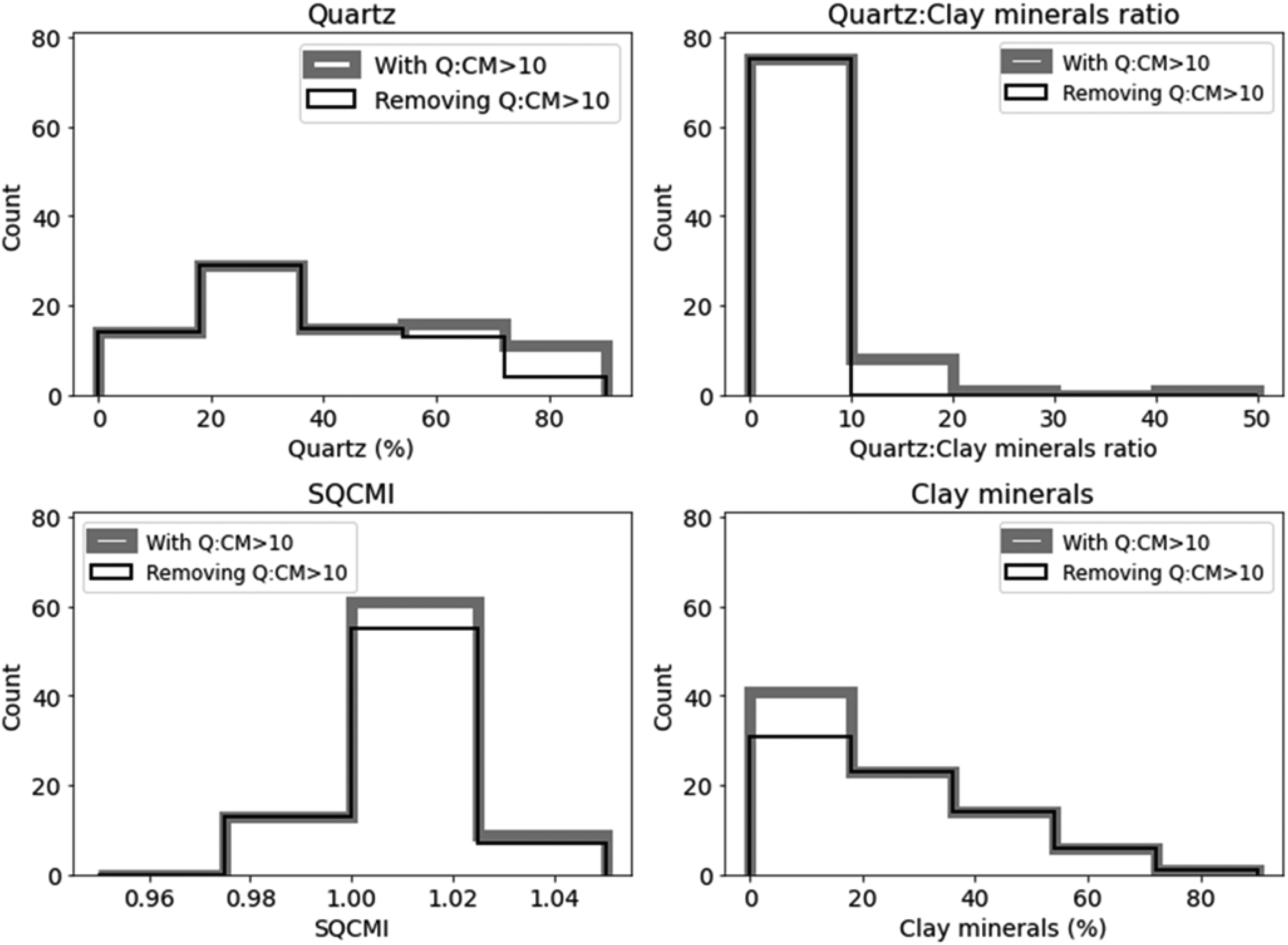
Statistics of the examined soil properties before removing the samples with a quartz-to-CM ratio > 10.a
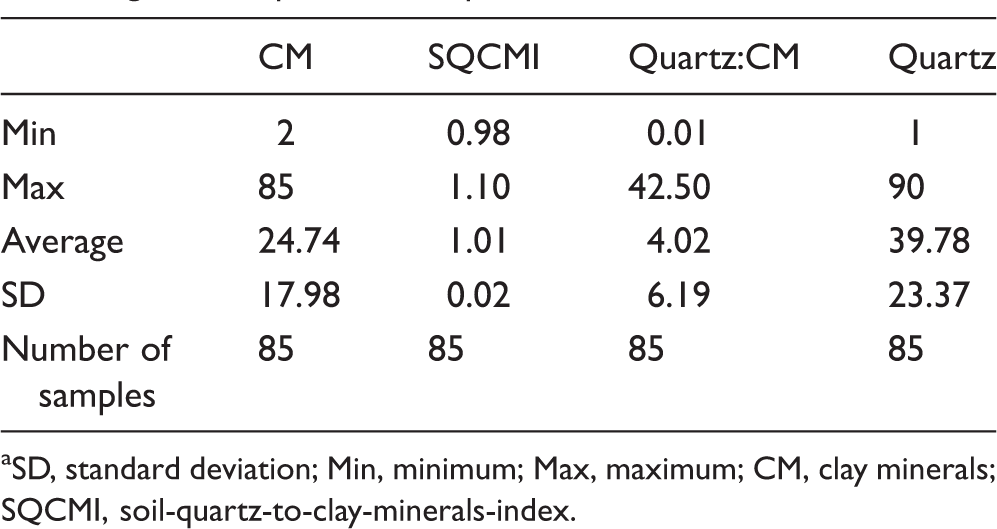
aSD, standard deviation; Min, minimum; Max, maximum; CM, clay minerals; SQCMI, soil-quartz-to-clay-minerals-index.
Statistics of the examined soil properties after removing the samples that have a quartz-to-CM ratio > 10.a
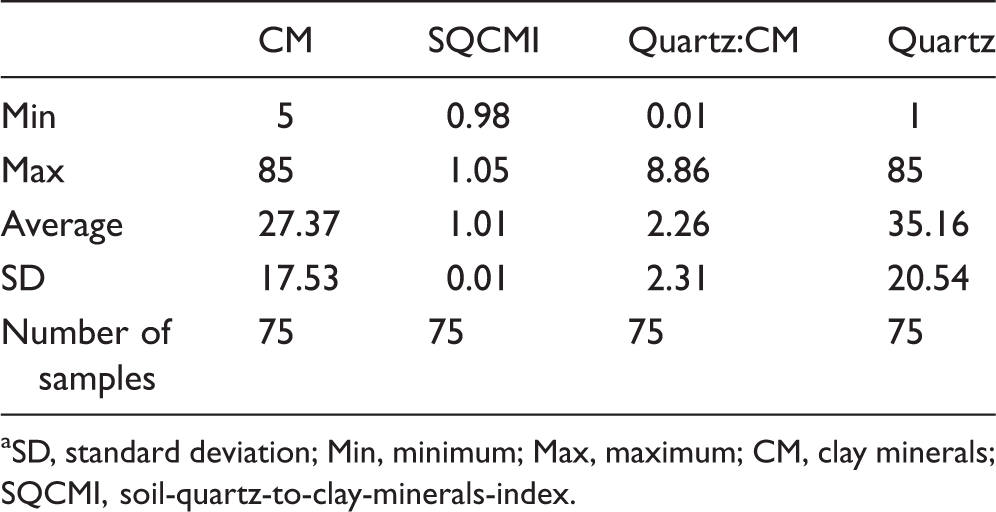
aSD, standard deviation; Min, minimum; Max, maximum; CM, clay minerals; SQCMI, soil-quartz-to-clay-minerals-index.
Before generating the spectral-based models, we selected the 450–2450 nm spectral range (from the original 350–2500 nm) to avoid the noise caused at the edges of the bands. Next, the Vis–NIR–SWIR spectral data were preprocessed using the Savitzky–Golay (SG) first derivative 23 to enhance spectral features (absorption type) and reduce physical effects (baseline type). 24 The SQCMI was calculated from the spectral emissivity as explained in the Spectral Measurements section. Then, the data were randomly split: 20% of the samples were used for validation and 80% for calibration. The performance of the spectral-based models was evaluated using R2, root mean square error (RMSE), and the ratio of performance to deviation (RPD). 25 According to Cozzolino et al., 26 the RPD can indicate a model’s performance according to the following rules: RPD > 2, excellent model; 1.6 < RPD < 2, acceptable model; RPD < 1.6, poor model.
To identify the most important bands in every case’s model, we analyzed the feature importance product of the gradient-boosting algorithm. 27 Feature importance indicates the extent to which every band contributes to building the boosted decision tree within the spectral-based model for estimating the property of interest. The more a band is used to make key decisions within the decision trees, the higher its relative importance. This importance is computed for each attribute (band), allowing a comparison between the attributes (bands). 27
The publications of Viscarra Rossel and Behrens, 28 Whiting et al., 29 and Ben-Dor 2 were used to relate soil properties to their contribution to building the spectral-based models. Note that because the spectral reflectance data were preprocessed using the SG first derivative, some of the spectral features might have been manifested in bands before or after the indicative wavelengths reported by Ben-Dor, 2 Viscarra Rossel and Behrens, 28 and Whiting et al. 29
Results
Correlation matrix (Pearson’s r) between the examined soil properties.
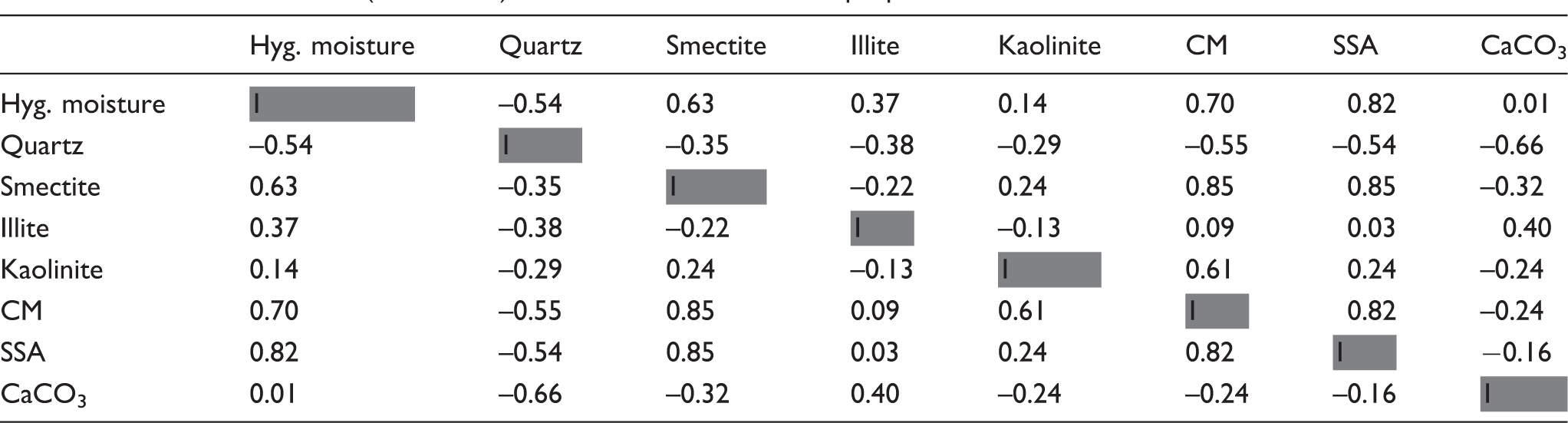
The correlation matrix in Table III can further help to define possible indirect spectral relationships for properties that are spectrally featureless. Although quartz has no direct spectral features in the Vis–NIR–SWIR region, it is (negatively) correlated to the surface properties SSA and hygroscopic moisture, and to CM and CaCO3 (Table III). As the attributes correlated to quartz have spectral fingerprints, we assumed that it would be possible to indirectly estimate the quartz content and the relative abundance of quartz-to-CM using their features across the Vis–NIR–SWIR region. The next stage provides a systematic examination of the performance obtained between the Vis–NIR–SWIR region and quartz to assign the latter to the spectrally active properties.
Quartz Versus Vis–NIR–SWIR Spectral Region
We first explored the direct relationship between quartz content and the Vis–NIR–SWIR spectra. Figure 3a presents the validation results from the spectral-based model. The most informative wavelengths of the model are provided in Fig. 2b. The statistical measures were relatively low (RPD = 1.32, R2 = 0.45, RMSE = 15.63) and the most important wavelengths were located around the CM (2200 nm) absorption at 2258 nm. As quartz has no spectral features in the Vis–NIR–SWIR spectral range, and from Table III it appears that quartz exhibits a negative correlation with CM content, we assumed that despite the poor predictions, the spectral-based model benefits from the indirect (and negative) correlation between quartz and CM contents. This idea was confirmed by other workers2,30,31 who reported indirect correlations between non-chromophoric and chromophoric properties (such as CM).
Spectral-based model for quartz prediction using Vis-NIR-SWIR spectral data. (a) Validation group. (b) Feature importance spectrum.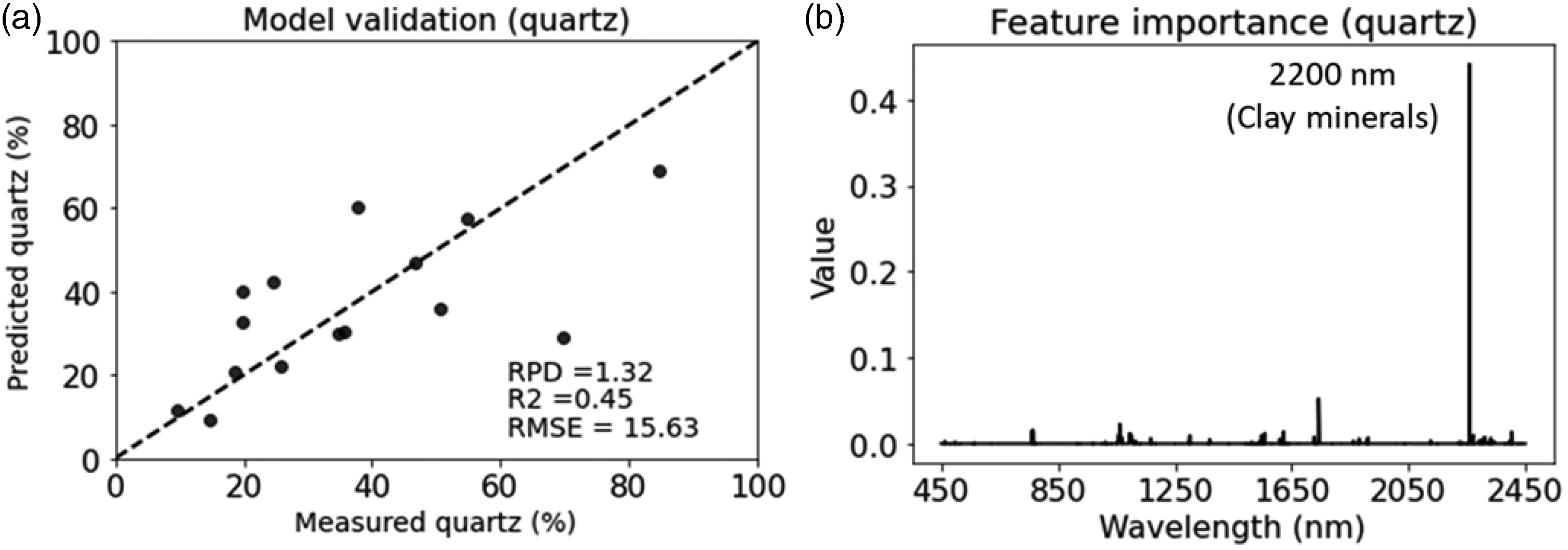
As the 2000–2450 nm (also terms SWIR2) spectral region seems to contain the most important information for predicting quartz content, a new spectral-based model was run using solely this spectral range to focus on these features. Nevertheless, as seen in Fig. 4a, this model’s performance was also unsatisfactory (RPD = 1.18, R2 = 0.42, RMSE = 16.58). As shown in the feature importance plot (Fig. 4b) and Table III, the indirect contribution of CM and carbonates to predicting quartz is now found to be important and the correlation of these properties with quartz content is considerable (rquartz versus CM = –0.55 and rquartz versus carbonates = –0.66). Nonetheless, picking these chromophores to the quartz estimation is still weak.
Spectral-based model for prediction of quartz using the 2000–2450 nm spectral range. (a) Validation group. (b) Feature importance spectrum.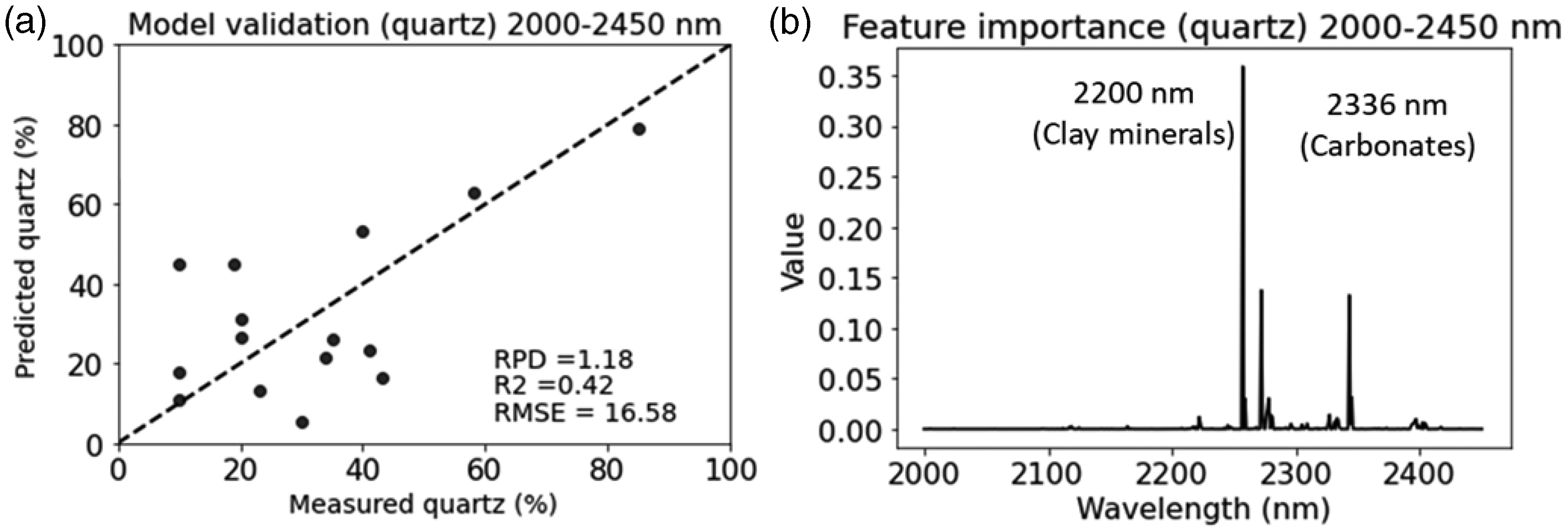
Clay Minerals Versus Vis–NIR–SWIR Spectral Region
As the indirect relation between CM and quartz played a major role in the Vis–NIR–SWIR region in the first examination, we further checked the spectral interaction of the most relevant minerals in the clay fraction, i.e., the phyllosilicate minerals smectite, illite, and kaolinite. Figure 5 illustrates the validation results of the spectral-based model generated to predict the total content of the sum of these CM from the Vis–NIR–SWIR spectral region. The performance of this model is very good (RPD = 1.7, R2 = 0.70, RMSE = 7.36), and the most indicative spectral bands were obtained at 1945 nm and 1182 nm. As clayey soils have a higher capacity to retain water, these wavelengths can be assigned to a combination mode of OH in hygroscopic water (at 1915 nm and at 1135 nm)
28
which is highly correlated with SSA,
32
as can be seen in the correlation matrix of Table III, where a high correlation between SSA and hygroscopic moisture was obtained (r = 0.82).
Spectral-based model for the prediction of the sum of the main CM using Vis–NIR–SWIR spectral data. (a) Validation group. (b) Feature importance spectrum.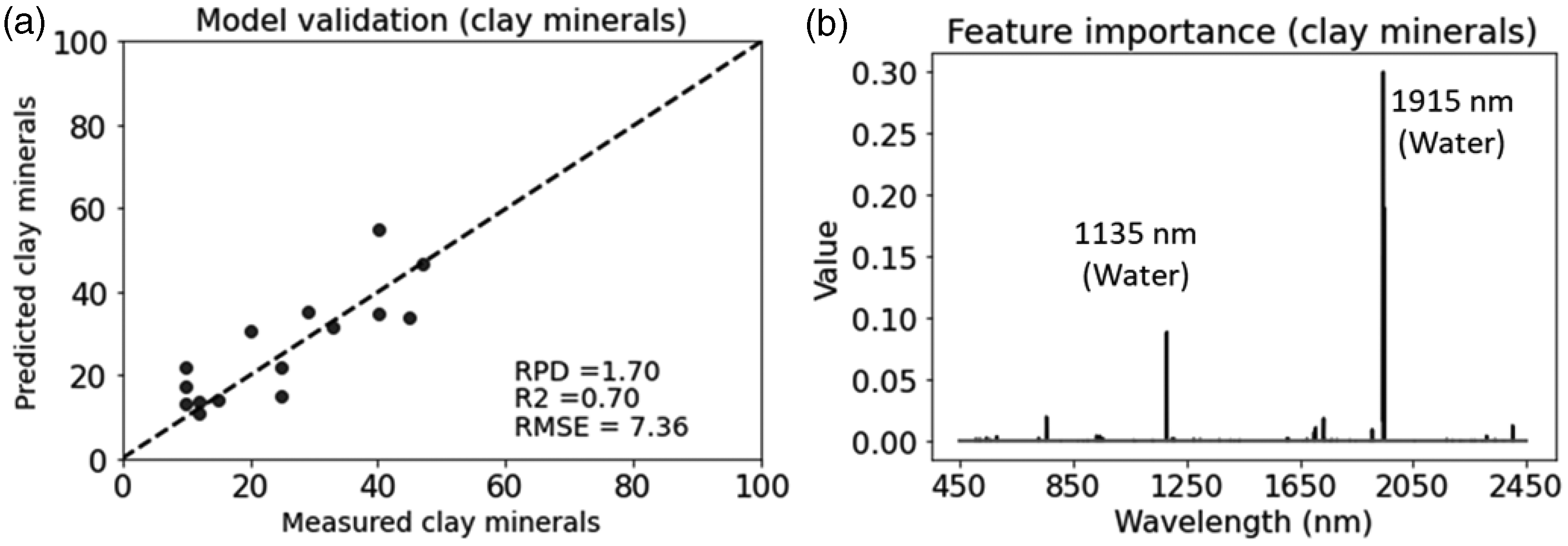
SQCMI Versus Vis–NIR–SWIR Spectral Region
As already mentioned, the SQCMI takes into account the quartz content relative to the CM content in the soil. It is therefore interesting to examine the SQCMI relationship with the Vis–NIR–SWIR spectra. Figure 6 shows the validation results of the spectral-based model. This spectral-based model gave excellent performance (RPD = 2.34, R2 = 0.82, RMSE = 0.01), with the most indicative wavelengths found at 1918 nm and 2377 nm, associated with water molecules. The first (1918 nm) is a combination mode of OH in hygroscopic water and the second (2377 nm) is the shoulder of the fundamental stretch of an OH vibration in water at 2.8 µm, as reported by Whiting et al.
29
From Table III, it is postulated that there is a good correlation between hygroscopic moisture and the CM content, and as already discussed, the adsorbed water molecules might represent the CM that are represented by the SQCMI. Accordingly, the performance of the SQCMI using the Vis–NIR–SWIR spectral region (R2 = 0.82) is better than the quartz itself (R2 = 0.45). As the hygroscopic moisture is controlled by the CM and their high surface area, the CM act as the main (indirect) chromophore to estimate SQCMI from the Vis–NIR–SWIR region.
Spectral-based model for the prediction of SQCMI using Vis–NIR–SWIR spectral data. (a) Validation group. (b) Feature importance spectrum.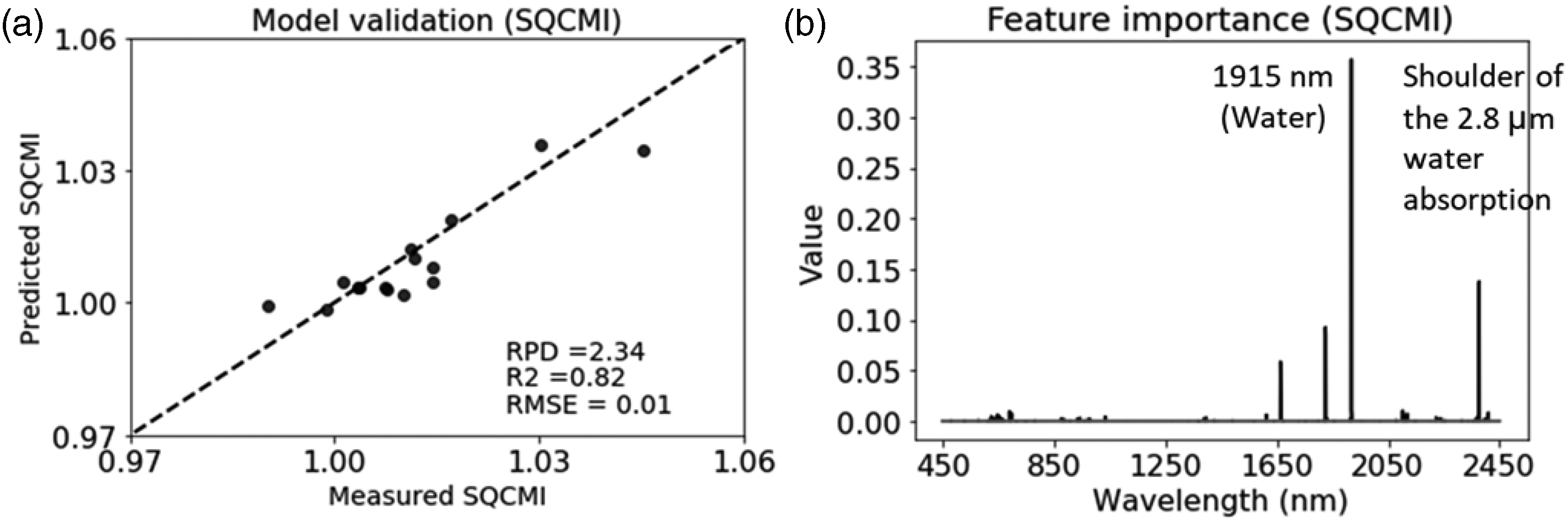
Due to the important contribution in the 2000–2450 nm spectral region to the model, we zoomed in on this region in a new spectral-based model to examine whether this region alone can better predict the SQCMI. It is important to mention that the 2000–2450 nm spectral range is an atmospheric window. Figure 7 shows the performance of the spectral-based model in its validation stage along with the most indicative wavelengths (2345, 2344, 2424 nm). As seen in Fig. 7a, the accuracy of the spectral-based model in the selected SWIR2 region (2000–2450 nm) considerably improved the prediction performance of the SQCMI (from R2 = 0.82 to R2 = 0.90) relative to the entire optical region (450–2450 nm). The spectral assignments for 2345 and 2344 nm can be assigned to CaCO3, which reaffirms the negative correlation between quartz and CaCO3 shown in Table III (r = –0.66). On the other hand, the 2424 nm wavelength can be assigned to the shoulder of the strong absorption feature of the fundamental water OH at 2.8 µm (following Whiting et al.
29
). These results show that in practice the SQCMI parameter can harness an atmospheric window in the optical range to estimate the contents of quartz, relative to CM, with high accuracy.
Spectral-based model for the prediction of SQCMI using the 2000–2450 nm spectral range. (a) Validation group. (b) Feature importance spectrum. (c) Relationship between SQCMI and quartz-to-CM ratio (z-scores).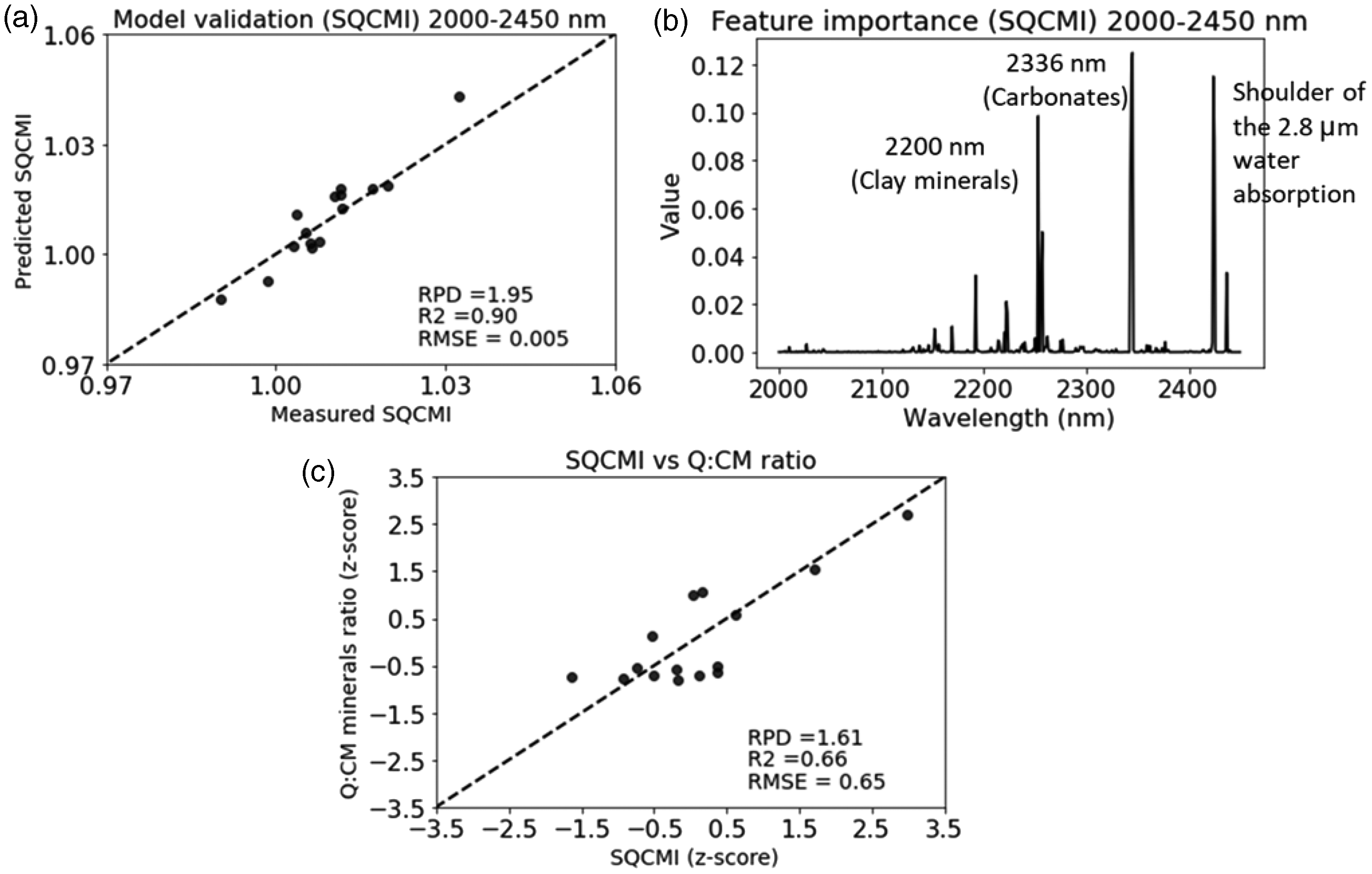
Given the high accuracies obtained in predicting the SQCMI using the 2000–2450 nm spectral range, we also examined the relationship between the SQCMI and the quartz-to-CM ratio in the validation group that was selected for the estimation of SQCMI (Fig. 7c). The strong relationship (R2 = 0.66 and RMSE = 0.65) between the SQCMI and quartz-to-CM ratio (both in z-scores) reaffirmed the SQCMI as a good indicator of the relative abundance of quartz-to-CM, as suggested by Notesco et al., 3 who showed a strong relationship (R2 = 0.93) between the SQCMI and the Si-to-Al ratio used to represent the quartz-to-CM relative abundance.
Quartz-to-CM Ratio Versus Vis–NIR–SWIR Spectral Region
The relationship between the SQCMI and the relative abundance of Si-bearing minerals was explained. However, since the SQCMI is related to the LWIR spectral features, we also found it important to evaluate the relationship between the Vis–NIR–SWIR spectral range and the quartz-to-CM ratio (based on XRD measurements). Figure 8 illustrates the results of the validation stage of the quartz-to-CM content ratio using the Vis–NIR–SWIR spectral range. The results of this model are good (RPD = 2.02, R2 = 0.75, RMSE = 1.19), but still lower than those achieved with the model using the SQCMI values, probably due to inaccuracies obtained in the XRD mineral assessment.
Spectral-based model for the prediction of quartz-to-CM ratio using Vis-NIR-SWIR spectral data. (a) Validation group. (b) Feature importance spectrum.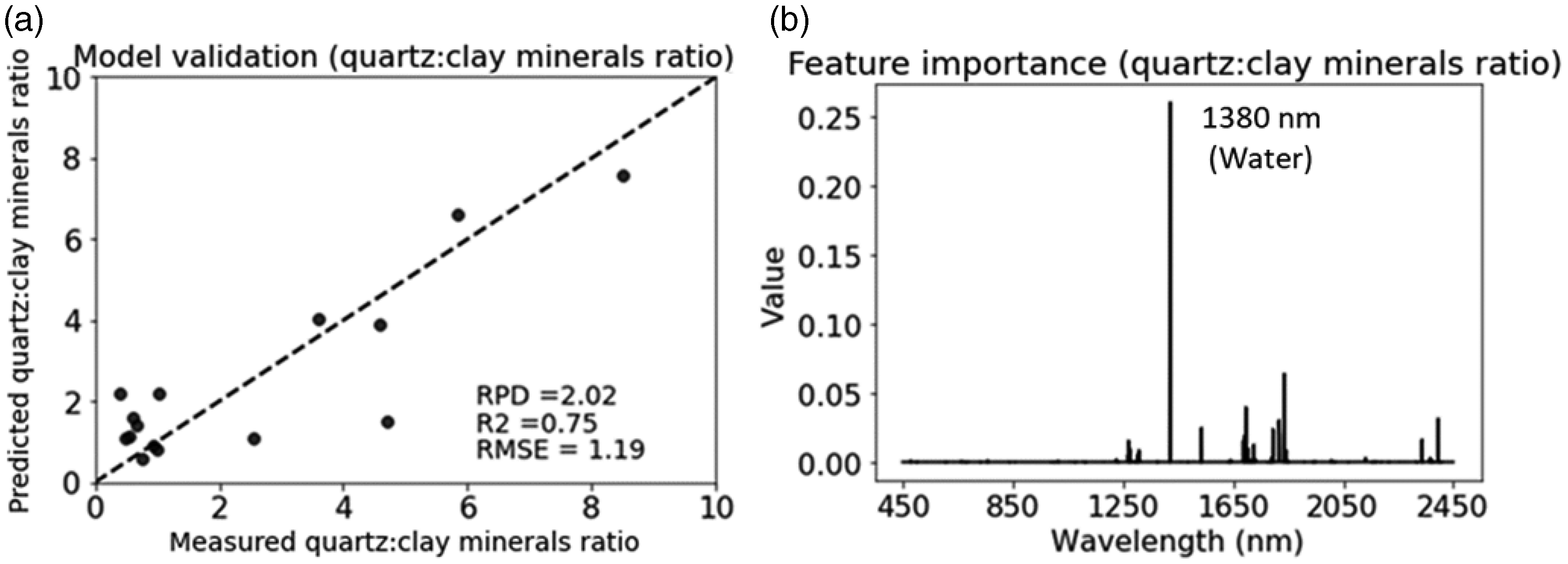
In this model, the spectral features were again found to be caused by the overtone of water molecules at 1380 and 1915 nm. These results further reinforce the spectral assignment explanation in which CM affects soil surface properties 32 (SSA and hygroscopic moisture) and provide the most important chromophores in the Vis–NIR–SWIR region that can indirectly provide a quantitative assessment of quartz content.
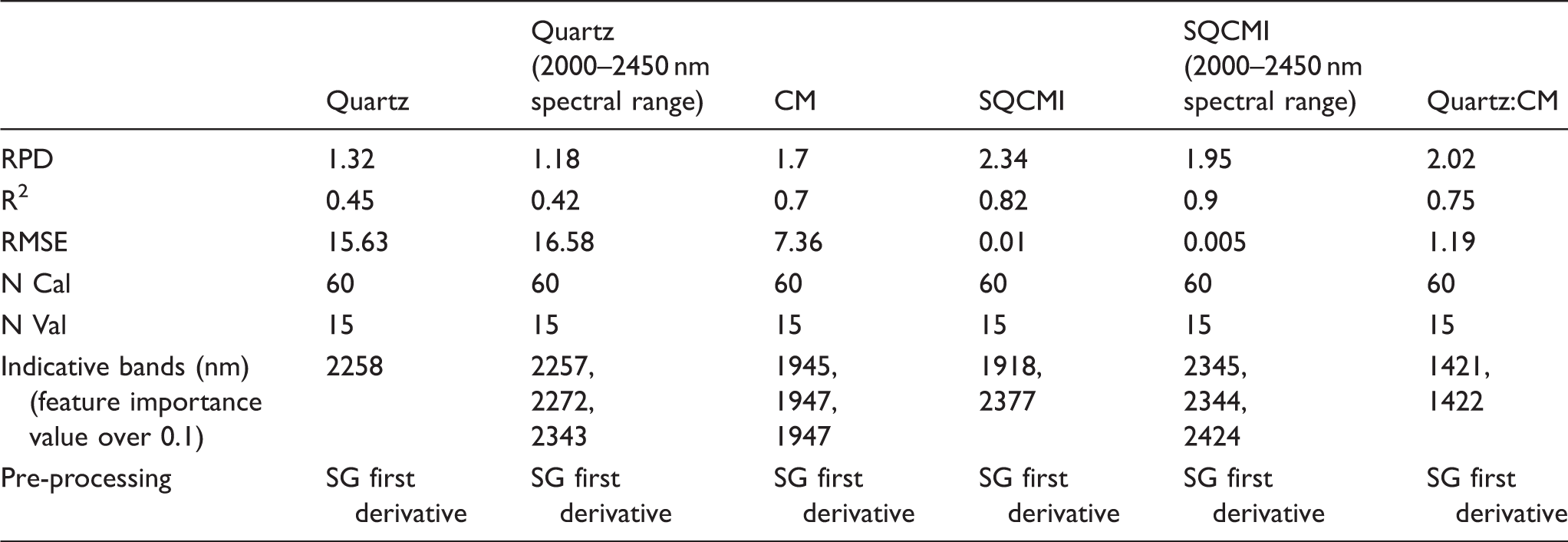
A summary of the statistics parameters and the most important wavelengths (nm) of the spectral-based models.
Discussion
The inability to monitor quartz minerals directly from the Vis–NIR–SWIR region poses a challenge, due to its lack of spectral fingerprints in this region. As the LWIR region characterizes the Si–O bond spectral signals in both quartz and CM, our solution, presented above, consisted of using the SQCMI representing the relative abundance of Si-bearing minerals from the LWIR region and modeling it with the Vis–NIR–SWIR region. Use of the Israeli legacy SSL with detailed chemistry, mineralogy, and spectral information (optical and LWIR ranges) enabled running several correlations among the soil attributes themselves, as well as with the spectral readings. The Vis–NIR–SWIR region was highly correlated to the SQCMI. Nonetheless, as the most important wavelength in this model was first found at 1918 nm, it might be problematic to estimate quartz content from air or orbit through the SQCMI correlation. This is because this wavelength is located among the major absorption bands of water vapor in the atmosphere, so it cannot be exploited by airborne or satellite hyperspectral methods. However, the extraction of a better model for predicting the SQCMI was found outside the atmospheric attenuation region, using the 2000–2450 nm spectral range (SWIR2). This leads to the assumption that quartz can be estimated with high accuracy using hyperspectral RS with the model generated in this study.
The advantage of using the machine-learning approach to generate spectral-based models with the most important wavelengths enabled finding indirect relationships to assess quartz-related indicators using the Vis–NIR–SWIR spectral region. The spectral-based models in this study were judged according to the statistical parameters (R2, RMSE, RPD) from the validation stage, and in particular, the spectral assignments. A correlation matrix (Table III) was established to better identify the spectral (indirect) assignments by examining the correlations between the chromophoric and non-chromophoric properties in the Vis–NIR–SWIR region. For example, the high negative correlation between CaCO3 and quartz enabled us to use the spectral features of CaCO3 generated in the spectral-based models to predict the quartz content (R2 = 0.45) and the SQCMI (R2 = 0.90) as well. The hygroscopic water chromophores were found to be the best indicators for indirectly predicting CM, SQCMI, and the quartz-to-CM ratio. Accordingly, the analysis shows very clearly that it is possible to use proximate models to estimate quartz content-related indicators through the spectral assignments that are related to surface properties such as hygroscopic water, SSA, and CM. Based on the locations of the most important bands, we found that the SWIR2 region might be important for SQCMI and less important when we run it directly against quartz. As quartz and CM are part of the SQCMI, it is not surprising that they are also correlated with the Vis–NIR–SWIR region (R2 = 0.75) but not as highly as the SQCMI (R20.45–2.5 µm = 0.82 and R22.0–2.5 µm = 0.90). The quartz-to-CM ratio is the closest index to the SQCMI, but the fact that the latter presented the best results suggests that the spectral (LWIR) to spectral (Vis–NIR–SWIR) analysis is much better than that of the spectral (Vis–NIR–SWIR) to mineral attributes (quartz and CM). Although the SQCMI represents the quartz-to-CM relationship, it can still provide important information about the quartz content because soil samples with abundant quartz content will tend to present an SQCMI value > 1.01. 3
It is not surprising that the SQCMI was more accurate, because it is assessed in one spectral emissivity measurement, following the same protocol for all samples simultaneously. On the other hand, the semi-quantitative XRD measurements of the quartz and CM may lead to some inaccuracies, since each of them is determined independently, and the measurement conditions are not exactly the same for every soil sample.
From all of the models and from Table IV, the following pattern could be discerned, considering the determination coefficients (R2) using the optical region (either all or part of the Vis–NIR–SWIR)

The best spectral-based models were those obtained when all Si-bearing minerals (quartz and CM) were added to the analysis, in either spectral or mineralogical terms. While the entire Vis–NIR–SWIR spectral range yielded spectral-based models with important wavelengths located among strong water–vapor absorption features (e.g., 1900 nm), use of the SWIR2 (2000–2450 nm) spectral range alone provided the best accuracy for predicting the SQCMI. As the SWIR2 region is not attenuated by the atmosphere, it offers a fair approach to monitoring the relative abundance of quartz minerals using hyperspectral RS (also termed spectral imaging) onboard air and space platforms. However, it is important to ensure that the soils are under dry field conditions, which can be achieved in the laboratory or over dry environments. Accordingly, for future SSL builders, we strongly recommend performing two spectral measurements per soil sample, one in the optical (400–2500 nm) region and one in the thermal (7–12 µm) range.
Certainly, 60 samples are not enough to generate a robust model that represents all soils worldwide. However, the soils of the present study provided fair global variation, representing 7 out of the 12 USDA soil orders. 33 We hope that this study will be a precursor to further research in this direction with more soil samples, as previously done with this data set for other soil attributes.11,34
As the forthcoming optical hyperspectral remote sensors are being prepared for orbit: NASA’s Earth Surface Mineral Dust Source Investigation (EMIT), European Space Agency’s Copernicus Hyperspectral Imaging Mission (ESA CHIME), and German Aerospace Center’s Environmental Mapping and Analysis Program (DLR EnMAP), or are already in use, the Italian Space Agency’s PRecursore IperSpettrale della Missione Applicativa (ASI PRISMA), the presented results show the possibility of estimating the relative abundance of quartz from orbit based solely on the SWIR2 spectral region under the described conditions.
Conclusion
This study evaluated the performance of a gradient-boosting algorithm for predicting the SQCMI as an alternative to estimating quartz-related information using Vis–NIR–SWIR spectroscopy. It can be concluded that although quartz has no specific fingerprints in the Vis–NIR–SWIR spectral region, it is still possible to estimate its content and relative abundance to a certain degree of accuracy. The negative and indirect correlation between quartz and CM and its related surface properties was manifested in the spectral assignments of the models that were generated for quartz-related indicators. The most important spectral features were attributed to CM or a related property, such as hygroscopic moisture. Although all variables provided fair models, the best accuracy was achieved by modeling the SQCMI using all or part of the Vis–NIR–SWIR spectral range. Despite the good model with the quartz-to-CM ratio, the SQCMI gave better results (R 2 quartz:CM ratio =0.75, R 2 SQCMI = 0.82) especially when the 2000–2450 nm region was considered (R 2 SQCMI (2.0–2.45 µm) = 0.9). When examining this spectral region with the real quartz values, estimation accuracy decreased considerably (R2 = 0.42). These results indicate that the spectral-based parameter in the LWIR region (SQCMI) is better than the attribute itself (quartz-to-CM ratio) for the development of spectral-based models. If LWIR sensors have the SQCMI spectral bands, then using them directly to assess the relative abundance of quartz is possible. However, if no LWIR sensor is available, the SWIR2 spectral region can be used from orbit over dry mineral soils.
Supplemental Material
sj-pdf-1-asp-10.1177_0003702821998302 - Supplemental material for Estimation of the Relative Abundance of Quartz to Clay Minerals Using the Visible–Near-Infrared–Shortwave-Infrared Spectral Region
Supplemental material, sj-pdf-1-asp-10.1177_0003702821998302 for Estimation of the Relative Abundance of Quartz to Clay Minerals Using the Visible–Near-Infrared–Shortwave-Infrared Spectral Region by Nicolas Francos, Gila Notesco and Eyal Ben-Dor in Applied Spectroscopy
Footnotes
Declaration of Conflicting Interests
The author(s) declared no potential conflicts of interest with respect to the research, authorship, and/or publication of this article.
Funding
The author(s) disclosed receipt of the following financial support for the research, authorship, and/or publication of this article: This study was financially supported by the Israel Ministry of National Infrastructure, Energy and Water Resources (Grant Number: 218-17-007).
Supplemental material
The supplemental material mentioned in the text, consisting of Table S1, is available in the online version of the journal.

References
Supplementary Material
Please find the following supplemental material available below.
For Open Access articles published under a Creative Commons License, all supplemental material carries the same license as the article it is associated with.
For non-Open Access articles published, all supplemental material carries a non-exclusive license, and permission requests for re-use of supplemental material or any part of supplemental material shall be sent directly to the copyright owner as specified in the copyright notice associated with the article.
