




Abstract
Václav Treitz (1819-1872), the Czech surgeon-anatomist who described in 1853 the eponymous fibromuscular band that suspends the fourth portion of the duodenum from the right crus of the diaphragm, was a partisan for Bohemian independence from its historical subjugation under the Austrian Empire. As a professor of pathological anatomy at the Charles-Ferdinand University in Prague, he insisted on his right to teach in Czech, the mother tongue of his students and their future patients, and not German, the official language of higher learning and government. Treitz was thus targeted as a troublemaker by a regime determined to crush nationalist impulses that threatened central authority. His colleagues pleaded with him to compromise; a recalcitrant Treitz boycotted faculty meetings and retreated into isolation. As political suppression tightened, he became despondent and frustrated, finally committing suicide in 1872. His dream of an independent Czech state had to survive two world wars and two murderous autocracies before it came true more than a century later with the creation of an independent Czechia in 1993.
Enlightened Absolutism
Richard Fox, Claire Fox, and William Graham in Hershey and Philadelphia, PA, reviewed Treitz’s life as a surgeon-anatomist and political activist, using sources from the Czech literature. 1 Their paper is the source of the facts of his life that follow. A multi-author book, A history of the Czech lands, published by the Charles University in Prague and edited by Jaroslav Pánek and Oldřich Tůma, provided the history of Czechia, the modern state into which the Bohemian lands evolved. 2
Treitz (Figure 1) lived in a time of political upheaval. His native Bohemia was one of the scores of countries, duchies, and estates under the absolute rule of Habsburg empress Maria Theresa (1717-1780; r. 1740-1780) of Austria and her son Joseph II (1741-1790, r. 1780-1790). (Actor Jeffrey Jones played Joseph in the movie Amadeus.) Václav Treitz. Public domain.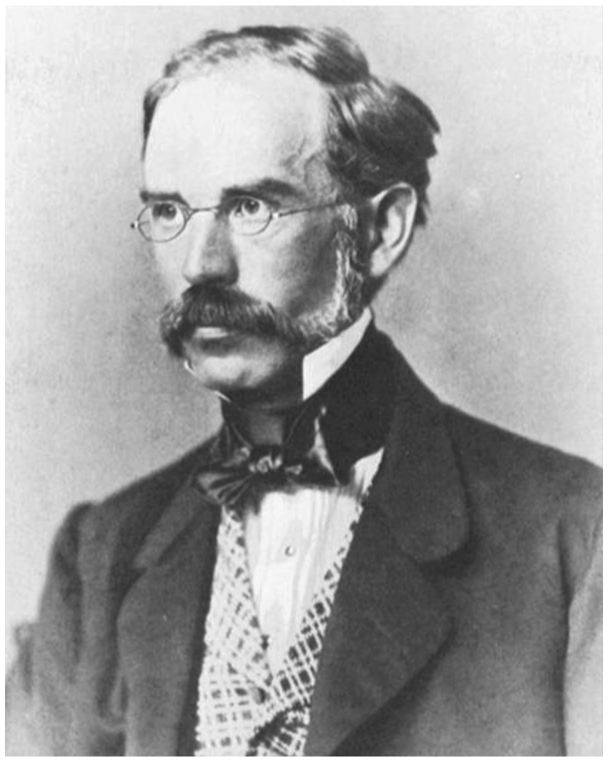
For all the power and authority of the Habsburg throne, no country, even those with empires that spanned continents and the globe, was immune from populist uprisings fired by the Enlightenment ideals of liberty, equality, and justice. The American (1775-1783) and French Revolutions (1787-1799) exemplified the danger of unchecked populism to monarchical rule. While Maria Theresa and Joseph ended their reigns in the traditional manner—each died on the throne—the beheading of their daughter and sister Marie Antoinette (1793) showed that the threat was not just political.
Maria Theresa and Joseph tried to stay ahead of the worst revolutionary impulses through enlightened absolutism, the implementation of Enlightenment reforms that gave their subjects a measure of self-governance, equal protection under written laws, the abolition of serfdom and unearned privileges of aristocracy, and universal education. 3 German as the lingua franca for all administrative functions of the Empire assured the primacy of the German-speaking ruling class throughout the polyglot empire, particularly lands like Bohemia where they were in the minority. Educational reform not only addressed widespread illiteracy but also supported the German-speaking bureaucracy. 3
In the first half of the 19th century, the task of assuring the authority of the Habsburg monarchy fell to its chancellor of state, Klemens von Metternich (1773-1859, in office 1821-1848). An adroit diplomat, he both mollified Napoleon by arranging the French emperor’s marriage to a Habsburg princess (Marie Louise, 1810) and finessed his exile to Elba (1814). As chair of the Congress of Vienna (1814-1815), Metternich engineered the reconstitution of the Austrian Empire that had been decimated during the Napoleonic Wars. 4
Having dealt with the near destruction of the realm from without, Metternich maneuvered to prevent its disintegration from within. The Austrian Empire subsumed twelve distinct non-German nationalities that included Czech-speaking Bohemians, Hungarian Magyars, Slovaks, Poles, Bosnians, and Romanians. Each had a homogenous ethnic population and its own language. Nationalist movements emerged, inspired by the promise of self-rule and the example of the American and French Revolutions. 4
“Metternich was convinced of a very widespread conspiracy to overthrow all governments without exception,” wrote Wolfram Siemann, a German historian of the 19th century. 4 Violent attacks on elites and the aristocracy only reinforced his view. In 1815 Carl Sand, a student at the University of Tübingen, murdered German writer and Russian diplomat August von Kotzebue at the latter’s home in Mannheim.
Metternich used the death to implement the Carlsbad Decrees (1819), a set of disciplinary edicts to suppress populist uprisings. His primary targets were the universities, especially the professors who radicalized students, and a free press that promoted rebellion. The decrees included the prohibition of student organizations; control of curricula in universities; and the summary removal of professors whose lectures were deemed subversive to governmental institutions.
Any publication of material hostile to the state was outlawed. In addition to the censorship of published material, authorities demanded the pre-censorship of anything harmful to the state. Insubordination was severely punished. If individual states were unable to control populism within its borders, central Austrian authority reserved its right to use force to enforce its decrees. 4
Education under an Autocracy
Young Václav and his family, Bohemians who spoke German, did well under Austrian meritocracy. His father was a jurist who administered Austrian law, a reform that ended arbitrary rule by the many counts, margraves, and dukes over their respective lands and estates (and parodied by the philandering count in The Marriage of Figaro).
Recognized as an exemplary student by Catholic priests at the Piarist College in Benešov in central Bohemia, the younger Treitz was chosen to study medicine at the Charles-Ferdinand University in Prague. When he graduated in 1846, he was selected to train at the University of Vienna and the Allgemeines Krankenhaus.
It was an auspicious opportunity for a young trainee. Vienna’s rise as a leading center in medicine was a product of enlightened absolutism. The aim was to maintain the health of the citizenry and keep pace with advances in science and technology. It began with reforms in medical practice and education initiated by Gerhard van Swieten (1697-1772), physician to Maria Theresa, when he organized the First Vienna Medical School. 5 Built at the direction of Joseph II, the 1500-bed Allgemeines Krankenhaus admitted its first patients in 1794. 6
The second great reformer in medicine was Ludwig Baron von Türkheim (1777-1846), director of the hospital. He restructured medical practice and education by specialty, beginning with surgery in 1837 and ending in neurology in 1846, the year of his death. 7 In the revolutionary year of 1848 Carl von Rokitansky (1804-1878), Josef Škoda (1805-1881), and Ferdinand Ritter von Hebra (1816-1880) petitioned the ministry of education to reorganize the medical school to emphasize faculty-based scientific research and clinical experience. Their proposal was accepted in 1849, creating the Second Vienna Medical School with Rokitansky as its first rector (1852). 7
Rokitansky, Škoda, and Hebra were Bohemian intellectuals, all potential role models for Tretiz (Hebra was born in Moravia, which was administratively part of Bohemian territory). But while Treitz’s politics drifted toward populism, his professors remained steadfast on the primacy of Vienna as the center of Austrian medicine, with German as its formal language. 1
Suppression of Czech Nationalism
German-speaking elites, having the upper hand in all spheres of Bohemia for so long, were indifferent to the Czech majority. 8 Czech was the language of daily life, but commoners had little hope for social or political advancement. Their frustration fed a Czech nationalist movement based on a Czech ethnic and cultural identity. 9
The Czech language became an essential part of their platform, led by Václav Kramerius (1753-1808) and Josef Jungmann (1773-1847). According to Jungmann, “a person [was] only a true Czech only if he used the Czech language. 9 ” Metternich’s Carlsbad Decrees constrained the academics, so Bohemian commoners led calls for reform. 9
Revolutions spread across Europe in 1848, including parallel uprisings in Hungary and Bohemia. Amid the chaos Metternich was ousted. The Austrian military and its allies crushed the Hungarian revolt and imprisoned and deported the leaders of the Bohemian insurrection. 10
To placate the Czechs, the government proposed a new constitution that granted a measure of freedom and civil rights. The effort was scuttled with the fall of Metternich from office. The neurologically crippled monarch Ferdinand I (1793-1875, r. 1835-1848), dominated by Metternich throughout his reign, was removed in favor of 18-year-old Francis Joseph I (1830-1916, r. 1848-1916), an arch conservative backed by Felix Schwarzenberg, a Bohemian prince who restored Austrian monarchal authority after the 1848 risings. 10
Francis Joseph and Schwarzenberg set forth their own version of a Bohemian constitution. They allowed Bohemians limited self-government. Serfs were emancipated and given title to their own land; nobles and aristocrats lost their hereditary privileges. Limited freedom of speech was granted. Elected representatives in the Diet (parliament) debated political issues but had no executive authority.
The concessions, however, were window dressing. The Habsburg monarchy kept its iron clad autocratic rule. All nationalist activities were systematically repressed through informants, censorship, and prosecution. 10
Czech Nationalists in Academic Medicine
Treitz completed his term in Vienna in 1848, the year of political turmoil throughout western and central Europe. Undeterred by the political turbulence, and perhaps attracted by the promise of Bohemian independence, Treitz returned to Prague to begin a medical practice. He remained committed to academic study, working part-time as an assistant in pathological anatomy at the medical school. 1
Jan Evangelista Purkyně (also Purkinje; 1787-1869), the famous scientist and a committed Bohemian nationalist, arrived in Prague in 1850. As a youth, Purkinyé was educated in German and Latin in Piarist seminaries in his native Bohemia and Moravia. He received his medical degree at the Charles-Ferdinand University (1812-1817) and served on its faculty as assistant in anatomy and physiology at the university. At the age of just 36 he accepted the chair of physiology at the University of Breslau in 1823, where he spent most of his illustrious career. 11
When the chair of anatomy and physiology in Prague came open in 1835, Purkyně, newly widowed and taking sole care of two infant sons, saw a chance to return to his homeland. The Austrian scientific establishment, however, refused to credit his time at Breslau. He stayed put, depriving Austria of the honor of some of his greatest achievements in cardiac and neurological cellular anatomy. 11
Now aged 63 with his most productive years as a scientist behind him, Purkyně returned to Prague as professor of physiology, famous not only in Austria but also t the world for his scientific accomplishments.
His intense Bohemian nationalism simmered during his decades of academic exile. Upon his return to his homeland, he became active in Czech politics and served in the state senate. Purkyně promoted Czech science and its publication in the Czech scientific literature, including the Journal of Natural History, Živa, a journal that he both founded and edited, and the Journal of the Bohemian National Museum. He helped Czech researchers enhance their standings in the international scientific community, translating their manuscripts into German for publication in mainstream German scientific journals. 11
Like Purkyně, and perhaps at his suggestion, Treitz went abroad to launch his academic career. He accepted a teaching position in Cracow at the Jagiellonian University in 1851. He advanced quickly and became professor of pathologic anatomy the following year. In 1853 he published his first paper in the German language Prague Quarterly where he described the ligament of Treitz (Figure 2), a fibromuscular structure composed of smooth muscle fibers that terminated into the duodenum, the same kind of tendrils present in the larynx, third layer of the stomach, anal sphincter, urinary bladder, and the scrotum.
1
Crura in an adult female. R, right crus; R1, fasciculus of right crus passing to left of esophageal passage; L, left crus; T, musculus suspensorius duodeni (muscle of Treitz); X, small muscular fasciculus, sometimes present, passing from the mesial aspect of the left crus through the fibers of the right crus towards the caval opening. Ligament of Treitz. Illustration from Low A. A note on the crura of the diaphragm and the muscle of Treitz. J Anat Physiol. 1907;42(1):93-6.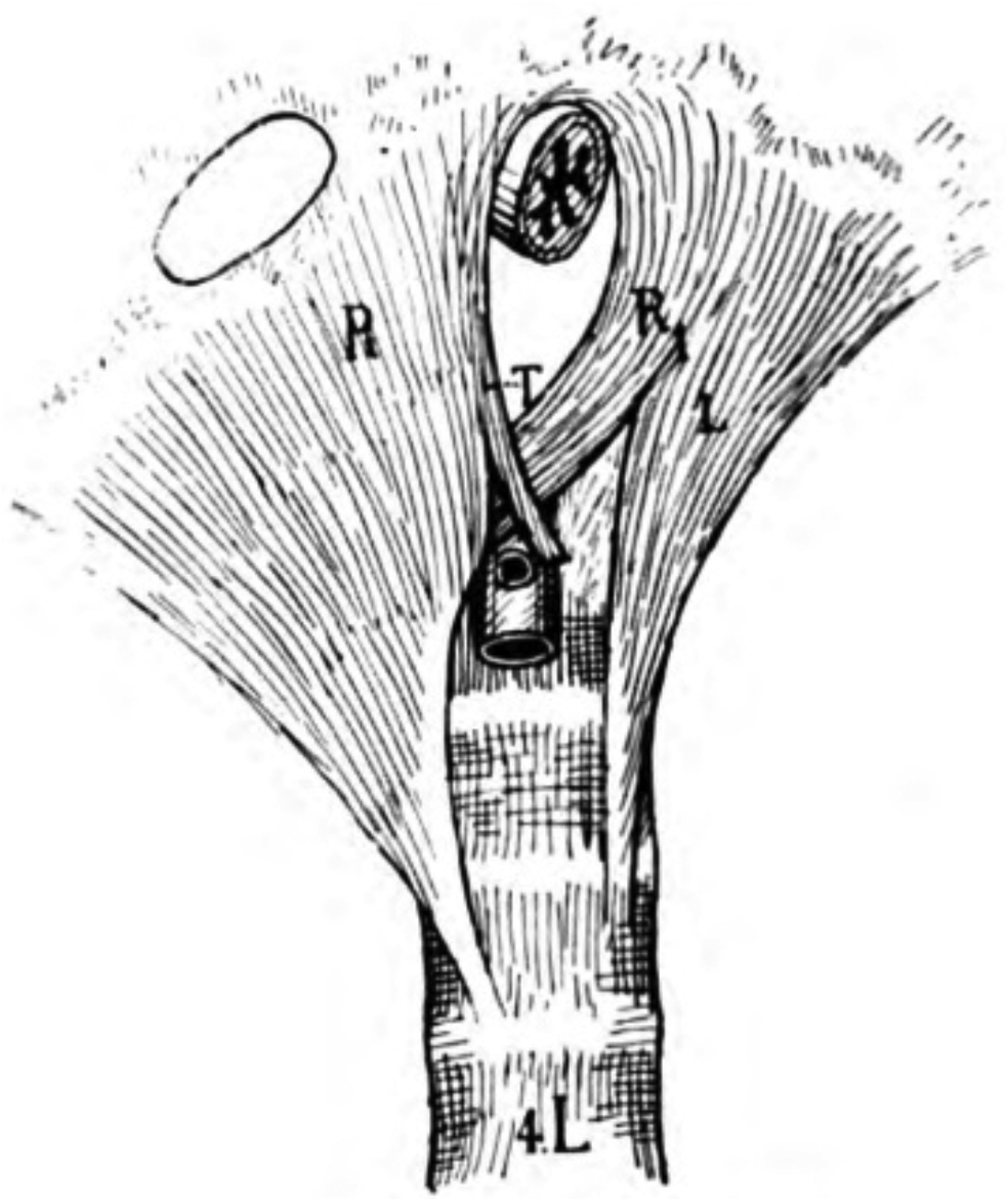
In 1855, Treitz returned to Prague as professor of pathological anatomy at the university and prosector at the Prague General Hospital. He was an academic success, directing his own pathological institute and publishing articles on retroperitoneal hernia (1857) and structural changes in the intestine from uremia (1859). His lectures were in so much demand that he taught both semesters.
Despite his achievements, Treitz fought with his colleagues on such clinical topics as chlorine hand cleansing to prevent puerperal fever (which he adopted from Ignaz Philipp Semmelweis, his colleague during his time in Vienna) and whether bedrest was the optimal treatment for tuberculosis. 1
The fundamental basis of his unpopularity, and ultimately his ostracism, was the matter of Czech nationalism, a cause strengthened by Purkyně’s presence on the faculty. Treitz and Purkyně were in the minority. Most of the medical school faculty were Germans and German-speaking Bohemians who supported Viennese authority.
Their medical students were mostly Czech. In the mid-1860s, with Purkyně’s guidance, they founded the Czech Medical Society, dedicated to both scholarship and Bohemian nationalism.
Chief among their concerns was instruction in Czech, their national language. The sanctioned position from Vienna was the language was the lecturer’s choice, but nearly all lessons were in German. In 1863, the disagreement was brought before the Austrian congress. The body recommended the establishment of a separate Czech university, an offer that was rejected by the students and faculty. 1
The controversy divided the faculty into camps. The Second Vienna Medical School and the Allegmeines Krankenhaus had primacy over all other schools and hospitals, including the one in Prague. Rokitansky was a royalist unsympathetic to student demands despite his Bohemian upbringing and his success as a reformist in academic medicine. German was the language of medicine, serving its establishment just as it served the government. 12
Purkyně, by virtue of his scientific accomplishments, was the only member of the faculty that had the standing to oppose Rokitansky. The dispute taxed Purkyně, who in 1865 was nearing his 80th year and slowing down noticeably. His opponents mocked him behind his back, calling him “an incorrigible old man. 12 ”
Respecting Purkyně stature in science, Rokitansky eased him into retirement. In return Purkyně received a pension, assurances for a new building for his department, and the privilege of naming his successor as chair. The “old man” accepted. Before he died 4 years later of complications of renal disease he was knighted and awarded the Austrian Order of Leopold. 12 According to a report in the Proceedings of the Royal Society of London, at his death in 1869 Purkyně “was mourned by every class of society in Bohemia. 1 ”
No one felt his loss more than Treitz, who mourned a friend, colleague, and mentor. Purkyně’s physical demise and death came at a vulnerable time in Czech politics. The Habsburgs, weakened by the disastrous defeat of the outmanned and outgunned Austrian army in the Austro-Prussian War (1866), acceded to Hungarian demands to both divide and unite the empire as a dual monarchy, Austria-Hungary (1867).
The accommodation outraged Czech representatives in the national assembly. With Bohemia as one of the largest components of the realm, Austrian Prime Minister Prince Adolph Auersperg resisted any further fracturing of the monarchy, especially Czech demands for federalism and more representation. 13
Treitz did not have the strength to withstand the setback. Rather than confront his critics and opponents, he instead withdrew and avoided any contact with his erstwhile colleagues. He kept to himself, making him vulnerable to personal attacks and political maneuvering behind his back.
His friends on the faculty tried to persuade him to preserve his standing in the faculty but failed to bring him out of his seclusion. Treitz refused to attend any meetings of the faculty. His lectures devolved into polemics against the school, polarizing students and faculty and antagonizing his bosses.
During a dissection he cut himself, inducing recurrent bouts of furuncles and pyemia. Treitz refused to do prosections and shirked his academic duties. In 1872, he ingested potassium cyanide and committed suicide. “But I will still be pursued” were his last words, a reflection of his feelings of oppression that tormented him over his final years. 1
Epilogue
The partition of the faculties of the Charles-Ferdinand University by language came to pass in 1882, with separate Czech and German institutions and with the schism, their respective medical schools. The German medical faculty had their traditional connections with the Austrian academic mainstream and foreign German universities. The notable scientific advances from Prague came from the German school, notably Alfred Kohn in histology and Edwin Klebs in bacteriology. Only internal medicine, surgery, and obstetrics aligned with the new Czech medical school. The rest of the clinical departments had to be rebuilt from scratch. 14
Separation bred animosity between the two faculties. The flashpoint was a trivial but symbolic one: ownership of the traditional insignia donated by Charles IV to the university, which was possessed by the German university. 14
In the aftermath of World War I Austria-Hungary shattered into its component states, including an independent Czechoslovakia. The university became the Charles University, retaining its 14th century namesake and eliminating the reference to the Habsburg monarch Ferdinand. The German-speaking branch was called the German University in Prague. 15
After the Anschluss takeover of Austria in March 1938, illegal firearms were discovered in one of the buildings of the German University, leading to the persecution of students and faculty. The Nazis closed both schools just months later. 14 The German University in Prague reopened under the Nazi ministry of education, inculcating Nazi ideology into higher education. 15
The defeat of the Third Reich brought an end to the German University. The Charles University was reborn, with sole possession of the charter of Charles IV. Scientific research was reborn, with Jaroslav Heyrovský receiving the Nobel Prize in 1959. 15
The postwar intellectual vigor at the new university steeled its resistance to yet another authoritarian regime imposed by the communists in 1948 and the brutal putdown of the Prague Spring uprisings in 1968. 14 Demonstrations by Charles University students in November 1989 sparked the Velvet Revolution and the nonviolent fall of the communist Politburo. 15 In 1993 Czechoslovakia was formally split into two nations, the Czech Republic (later Czechia) and Slovakia. An independent Czechia fulfilled the dream of a professor whose name is spoken in operating rooms throughout the world and whose act of patriotism was to teach anatomy in the mother tongue of his students and their patients.
Footnotes
Declaration of Conflicting Interests
The author(s) declared no potential conflicts of interest with respect to the research, authorship, and/or publication of this article.
Funding
The author(s) received no financial support for the research, authorship, and/or publication of this article.
