




Abstract
Richard Nixon injured his left knee in a limousine door while campaigning in North Carolina in 1960, resulting in septic arthritis that required a multi-day admission to Walter Reed Hospital. Still ill for the first presidential debate that fall, Nixon lost the contest based more on his appearance than his performance. Partly as a result of this debate, he was defeated by John F. Kennedy in the general election. Because of his leg wound, Nixon developed chronic DVTs in that limb, including a severe thrombus in 1974 that embolized to his lung, required surgery, and prevented him from testifying at the Watergate Trial. Episodes like this one highlight the value of studying the health of famous figures, where even the most minor injuries have the potential to influence world history.
Introduction
Richard Millhouse Nixon (1913-1994), one of the most controversial presidents in recent history, has generated extensive scholarship exploring his life and political career. Many historians have analyzed the 1960 presidential campaign that Nixon narrowly lost to John F. Kennedy, attributing his defeat, in part, to a poor performance in the country’s first televised presidential debate. Moreover, some scholars associate Nixon’s debacle with a recent knee injury suffered on the campaign. We evaluate that conclusion by relying on primary sources and especially contemporary newspaper articles. Reconstructing the injury and its treatment, we found circumstantial evidence suggesting it negatively affected the debate. Over a decade later, following his impeachment and resignation, Nixon was called to testify against Watergate co-conspirators but demurred due to a recent procedure addressing a blood clot in that same leg. Exploring his chronic deep vein thromboses (DVTs) and their management, we, for the first time, link them to his 1960 knee injury and in so doing show how a relatively minor injury shaped the course of American history.
Richard M. Nixon
Born into a Quaker family in California, Richard M. Nixon endured a hardscrabble youth before attending the local Whittier College and then matriculating into the new Duke University Law School. Serving in the United States Navy during World War II, he entered politics shortly thereafter, winning a seat in the House of Representatives in 1947 and in the Senate in 1950. The Republican Party nominated him as Dwight D. Eisenhower’s running mate in 1952. Despite a notably active vice presidency, he lost a particularly close presidential race to Kennedy in 1960. After avoiding the 1964 election, Nixon was nominated as his party’s candidate in 1968 and won. His contentious term included notable foreign and domestic accomplishments but will forever be remembered for the Watergate scandals that led to Nixon’s impeachment and subsequent resignation. He continued to be involved in politics until his death from an ischemic stroke in 1994. 1
Left Knee Injury
In July of 1960, Nixon was nominated for the presidency with minimal opposition at the Republican National Convention in Chicago, Illinois. Early in the campaign, Nixon planned several appearances in the southern states, which, in that era, often represented a solid Democratic voting bloc. Nixon’s team suspected that Kennedy’s liberal positions on key social issues might make the relatively conservative “Dixiecrats” swing toward the more moderate Republican candidate. 2 Nixon campaigned throughout the south, gathering large crowds at each stop. Visiting North Carolina in mid-August, he spoke at the Greensboro Coliseum to a packed house on 17 August.
The Greensboro Coliseum had been built in 1959, and, with a seating capacity of 9000, was one of the biggest arenas in the south at that time. The crowd greeting Nixon filled the stadium while an additional 5000 supporters gathered outside and adjacent to the main building.3-5 After the speech, against Secret Service policy, Nixon chose to shake hands with a large group of supporters who surrounded his limousine. Nixon stood atop his vehicle in an effort to be seen by the entire crowd (Figure 1), and as he attempted to get back in the car, his left knee was crushed in the door. The injury, despite tearing his pants and cutting his skin, initially was thought to be insignificant, but within a week, Nixon’s knee began to swell, and he developed a fever. The Vice President continued to campaign until the last week of August when the pain in his knee significantly worsened.
6
On August 27th, Nixon was seen by the assistant White House physician, Walter Tkach, who noted an abscess at the site of the original skin injury as well as a painful knee with an obvious effusion. Doctors aspirated pus from the knee joint and recommended the Vice President be treated as an inpatient.
7
Nixon resisted admission to the hospital because he was actively campaigning, but when the culture of the aspirate returned as Staphylococcus aureus, he agreed.
8
The Vice President was admitted to the VIP unit at Walter Reed Hospital in Washington DC, on August 29th with the diagnosis of septic arthritis.
7
Nixon’s attending physician was Dr Raymond Scalettar, a rheumatologist. Scalettar
8
treated the Vice President with arthrocentesis, traction, and antibiotics, including erythromycin and penicillin. Nixon slowly improved while at Walter Reed, but he cut the expected 2-week stay short when he grew concerned about slipping in the polls. Nixon
9
left the hospital on September 9th, stopping his antibiotics even though he continued to have pain and stiffness of the left leg and knee. Nixon remained ill after his discharge, despite resuming his campaign. His knee continued to hurt, and 5 days after exiting Walter Reed, he developed a fever of 103 F with shaking chills. Placed back on antibiotics, he continued his slow recovery prior to the first televised presidential debate that occurred on September 26th.8,9 Richard Nixon surrounded by a large crowd of supporters outside of the Greensboro Coliseum on August 17th, 1960 after he gave his speech and just before he injured his knee (Jack Moebes of the Greensboro News and Record).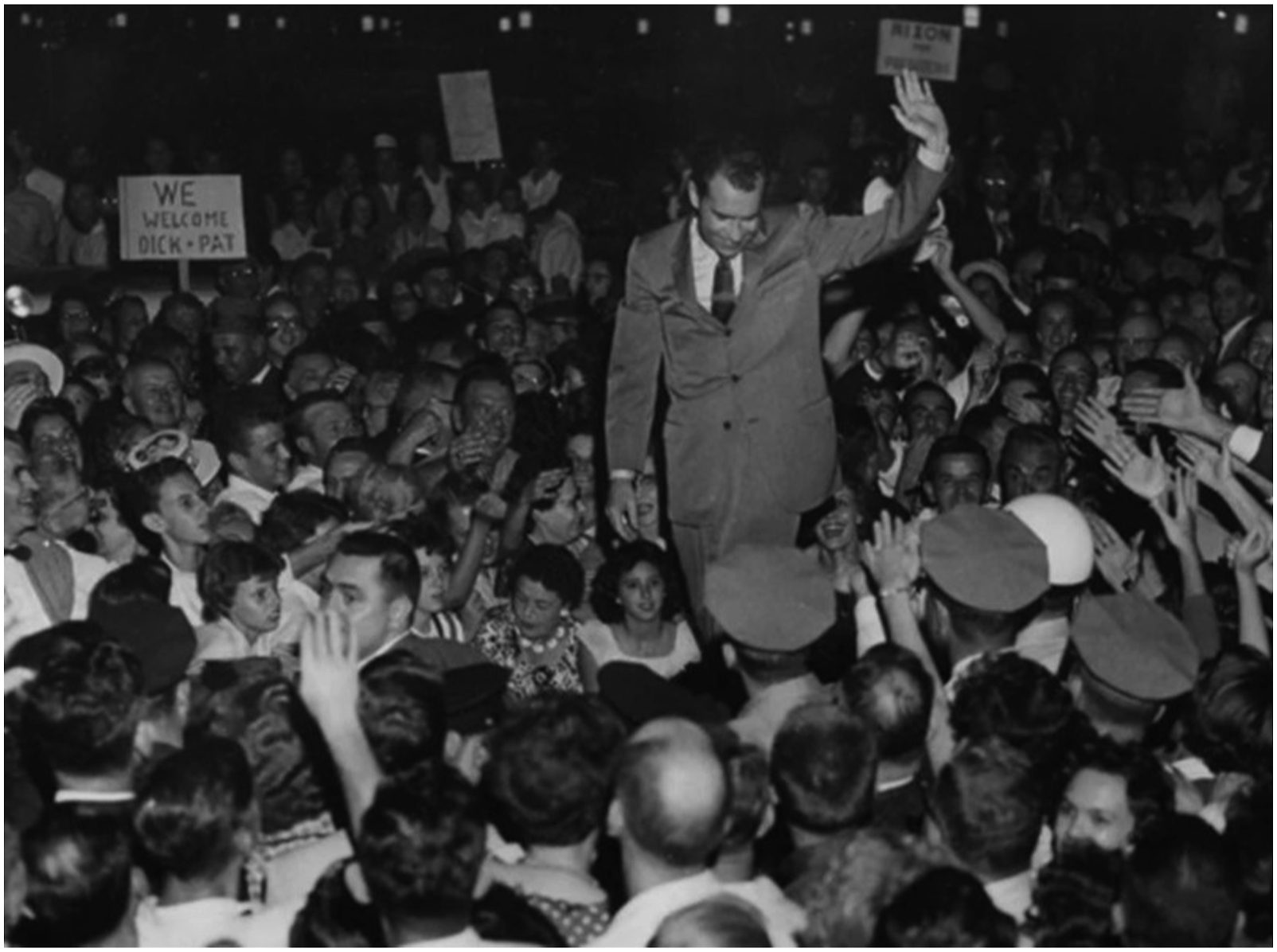
Nixon’s care—and lack thereof—reflected the well-known perils of “V.I.P. Syndrome,” a term coined by psychiatrist Walter Weintraub 10 in 1964 to describe how celebrities, politicians, royalty, and other known figures typically receive different treatment than the anonymous patient, often to their detriment. It unlikely that an average person would be able to dictate the length of hospital stay or duration of antibiotics, particularly in 1964 when patient autonomy was limited. Nixon’s insistence on terminating his medical therapy early to return to the campaign trail, and his doctors’ acquiescence to these demands, contributed to his prolonged recovery and, most probably, to his poor debate performance.
First Televised Presidential Debate and the Impact of the Knee Injury
In 1960, for the first time ever, both candidates agreed to a series of 4 public televised debates, with the initial occurrence in Chicago on the evening of September 26th. It drew approximately 65 million viewers, the largest audience recorded for any political event in the history of television.
11
Over 80% of households in the United States owned a television in 1960, so the impact of this televised debate cannot be underestimated.
12
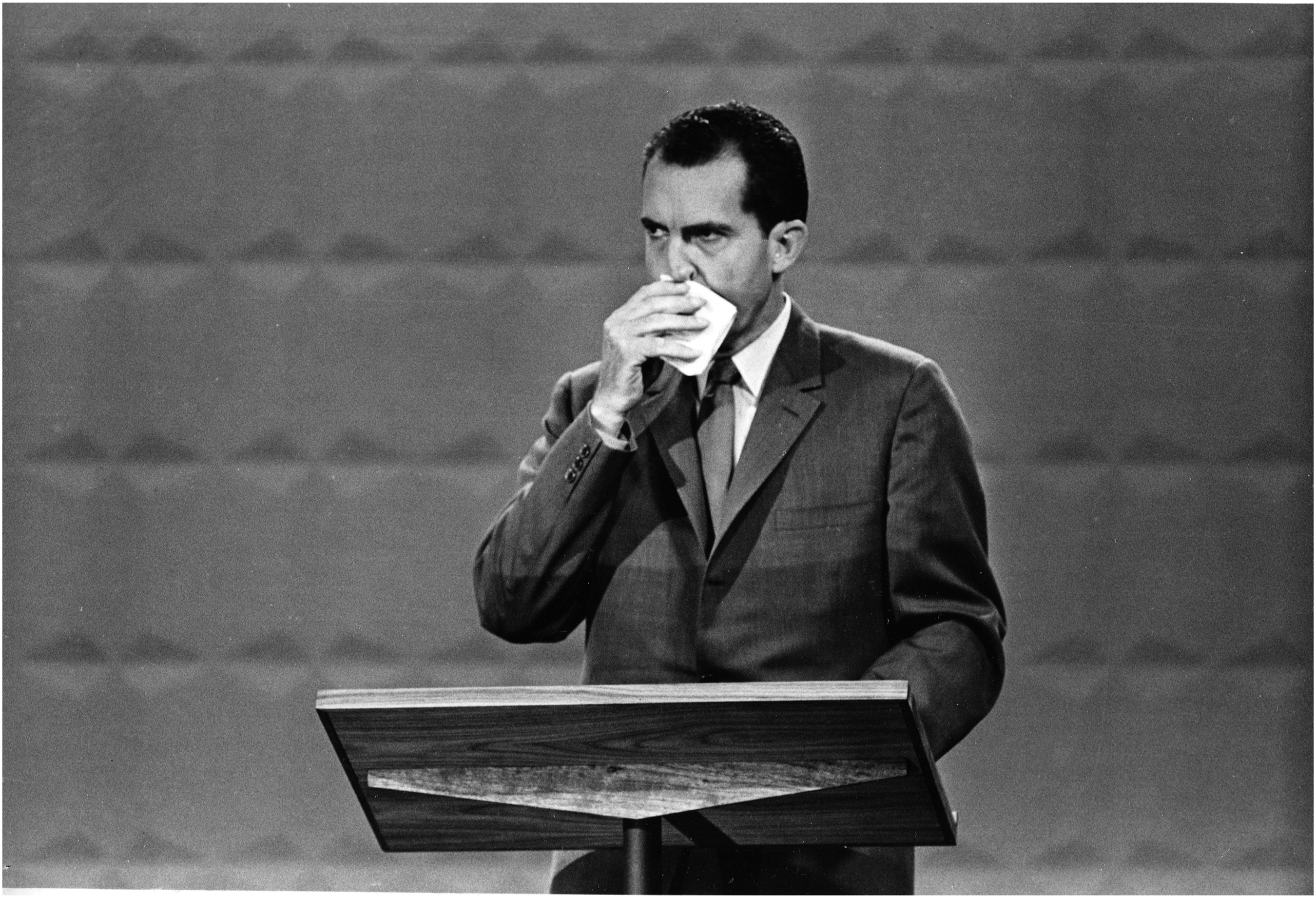
Nixon’s appearance generated significant commentary by both contemporaries and historians alike. They noted his sallow color (compared to Kennedy’s appearance), weight loss (his shirt appeared too large), shifting posture (he often shifted weight off of his left leg throughout the 1 hour debate), and profuse sweating (frequently mopped his face under the hot stage lights) (Figures 2, 3).13-15 The press initially said little concerning the candidates' appearances, but the viewing public immediately reported a discordance. Many newspapers conducted informal polls of potential voters, receiving comments such as “[Nixon] seemed pretty tired at the beginning,”
16
“didn’t look very well – thin and tired,”
17
or simply “looked sick.”
18
Pundits agreed, echoing that “on the television screen he seemed thin, almost gaunt.”
19
In comparison, they remarked how Kennedy looked “tan and healthy.” John F. Kennedy and Richard M. Nixon at the first televised presidential debate in Chicago on September 26th, 1960. In the public domain at https://commons.wikimedia.org/wiki/File:Kennedy_Nixon_debate_first_Chicago_1960.jpg (accessed 30 December 2022). Richard Nixon wipes sweat during first presidential debate in Sept of 1960. Photograph courtesy of the Associated Press, used with permission.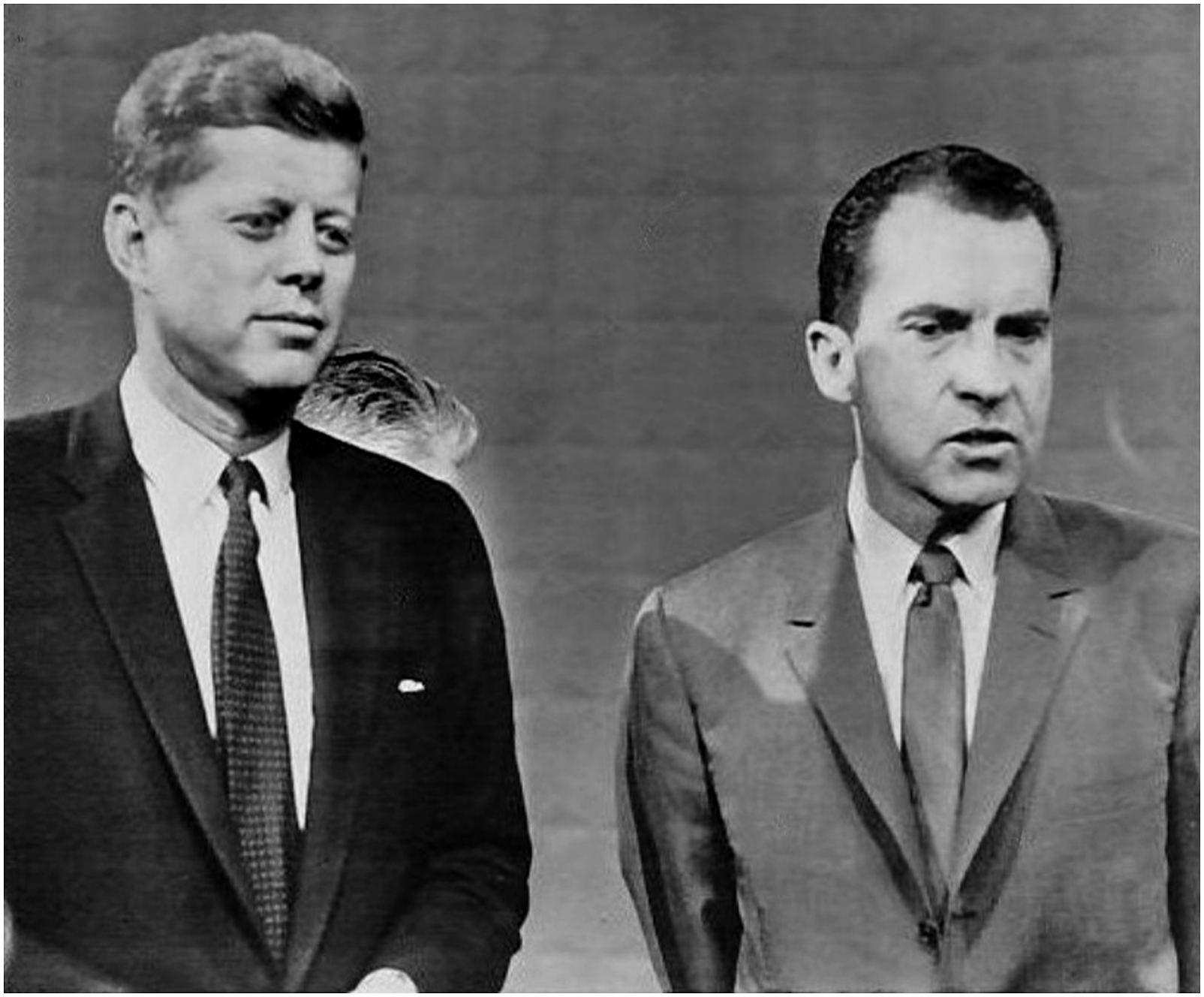
Given the unanimity of these opinions, it is interesting that re-watching the debate—it is widely available online—fails to reveal a marked difference between the 2 candidates. You can see Nixon perspiring more than Kennedy and, perhaps, shifting his weight back and forth, but the dramatic contrast noted in 1960 is not evident. Maybe modern, high-definition color monitors portray a wider palette of greys that capture Nixon’s appearance more accurately than 1960 black and white televisions, or perhaps the notion of him looking sickly just went viral without much basis in fact. Regardless, most Americans at the time seemed to accept the prevailing observation. In surveys, Kennedy was thought to have won the debate by a 2-1 margin in the East and a 4-3 margin in the West. The Midwest survey called the debate a draw between the 2 candidates. 20 Most historians—as well as Nixon himself—suggest that Nixon’s appearance at the first debate was one of the deciding factors in an otherwise very close presidential race. 21
After the first debate, Kennedy had a slight lead in the polls that he carried to the national election on November 8th. Kennedy won one of the closest presidential votes of the 20th century, gathering 49.72% of the popular vote compared to Nixon’s 49.55% (a difference of 112 000 votes out of over 68 million cast). The tight election results were challenged in many states, but Nixon refused to contest the results, and Kennedy was sworn in as the 35th President of the United States on January 20th, 1961.
Did Nixon’s leg injury affect his debate performance and appearance—and thus the 1960 Presidential election? Did it possibly explain the constant weight-shifting during the debate when he appeared to favor his right leg? Contemporary news services actively wondered “if he had really recovered from the infected knee?” 19 Nixon had re-aggravated his knee injury, bumping it when exiting the car on the way into the WBBM television studio where the debate was to be held. 22 Ten pounds under his usual body weight, he experienced low-grade fevers leading up to and through the broadcast. Ultimately, it is impossible to make a definitive determination in hindsight, but it is telling that Nixon 23 himself wrote in his book Six Crises that his knee injury and physical condition likely contributed to the outcome of the initial debate.
It is interesting to consider not only the role of Nixon’s health on the debate but also how public knowledge of Nixon’s medical status influenced the interpretation of his performance. From Woodrow Wilson hiding his 1918 stroke to Donald Trump minimizing his COVID-19 infection in 2020, politicians and political candidates have sought to portray themselves as healthy, vigorous individuals capable of leading the country. 24 Nixon was no exception, checking himself out of the hospital early and trying to campaign vigorously. But by declaring himself as hale and hearty, he also eliminated medical excuses for his television appearance. Such are the perils of medical disinformation.
Chronic Left Leg Phlebitis
Nixon’s first sign of chronic venous disease of the left leg occurred in 1965 during a trip to Asia, with stops in Japan, Vietnam, Taiwan, and Australia. Problems with his left leg began during his stay in Japan. At the time, his symptoms included pain behind the left knee and swelling of the left leg. He was treated in Japan with heparin injections.25,26 Although Nixon did not run for President in 1964, he was the candidate on the Republican ticket in 1968, facing Democrat Hubert H. Humphrey. Nixon was elected President in the 1968 election and was reelected in 1972 by a wide margin over the Democratic ticket that included George McGovern. 1
During his presidency, Nixon continued to suffer from recurrent deep vein thrombosis of the left leg. It was treated intermittently with anticoagulation, but, for unclear reasons, he refused to take warfarin long term. 25 The disease was managed with leg elevation, compression stockings, and phenylbutazone or episodic warfarin when his symptoms flared, which occurred frequently during or after long trips on Airforce One. 25 In the summer of 1974, Nixon developed more acute symptoms on a foray to the Middle East where he had pain in his left calf, associated with edema and erythema.25,27 This was followed by a flight to the USSR, which exacerbated his symptoms. 28 Each time, his physicians treated him with conservative measures. 25
Nixon’s political career unraveled due to the Watergate Scandal, and he resigned on August 9th, 1974. After leaving office, he developed another left leg DVT, this time complicated by a pulmonary embolism. The history of Nixon’s DVT and pulmonary embolism in the fall of 1974 has been previously reported, but in brief, he developed a symptomatic deep vein thrombosis of the left leg a month after leaving the presidency.25,29,30 Admitted to Long Beach Memorial Hospital in California on September 23rd, he was treated with heparin and warfarin for his thrombotic disease. After discharge, he was re-admitted on October 23rd to Long Beach Memorial with worsening swelling and pain in the left leg, raising concern for progressive venous thrombosis on active anticoagulation. A venogram confirmed clot extending up to the left iliac vein. On October 29th, he was taken to the operating room where the iliac vein was exposed through a retroperitoneal approach using an incision just above the left inguinal ligament. The surgeons palpated the clot in the iliac vein and placed a Miles clip on the left iliac vein above the clot.31,32 Postoperatively, Nixon developed significant hypotension due to retroperitoneal hemorrhage that eventually responded to multiple transfusions. The bleeding resulted in a very large left flank hematoma and a protracted recovery. This series of events prevented him from traveling to the Washington DC trial of John Ehrlichman, HR Haldeman, and John Mitchell (also known as the “Watergate Trial”). 29 Other than left leg edema, Nixon did not have major morbidity from his chronic venous disease during the rest of his life. 25
Did Nixon’s Leg Trauma in 1960 Cause His Chronic Left Leg Venous Disease?
Significant knee trauma is a known cause of chronic deep vein thrombosis. Nixon’s left knee injury in 1960 was certainly sufficient to result in venous disease of the leg. He apparently did not have a fracture, but his injury did result in septic traumatic arthritis requiring several days of bed rest. The combination of immobility, infection, and trauma is a significant risk factor for lower extremity thrombosis.
33
Although he did not manifest venous disease in the left leg until 1965, there was no other plausible etiology of this chronic condition. It has been stated in the lay literature that Nixon’s frequent long trips on AirForce One resulted in his chronic DVT. While it is true that long airplane rides have been associated with the onset of DVT, this in and of itself has not been observed for other presidents despite their extensive air travel. On the contrary, given the configuration of seating on AirForce One, this airplane serves more like an office for the President, with work spaces that do not require extended periods of static positioning. Presidents likely are seated in typical fashion during take-off and landing but otherwise can move freely around AirForce One. Nixon presumably kept his legs elevated while seated due to his DVT history (Figure 4). There are other political leaders who have suffered from episodes of deep vein thrombosis due to long airplane rides. First Lady Hillary Clinton was diagnosed with a DVT twice, the first time in 1998 and the second episode occurred in 2009 when she was the Secretary of State.
34
In 2007, Richard Cheney developed a DVT after he completed a 9-day (65 h of flying) trip as Vice President.
35
In 1974, when Nixon was evaluated at Long Beach Memorial Hospital, other causes of his deep vein thrombosis were considered including a paraneoplastic condition from a hidden cancer. No cancer was found, and Nixon lived for another 19 years with no other obvious causes of his venous disease other than the 1960 knee trauma. He developed atrial fibrillation later in life that likely contributed to his eventually fatal ischemic stroke in 1994 but was never diagnosed with a specific hypercoagulable condition. Given the lack of other explanation, it seems most likely that Nixon’s knee injury in 1960 resulted in his chronic venous disease. President Richard Nixon sits in a recliner on AirForce One talking to Henry Kissinger. Photograph Courtesy of Getty Images, used with permission.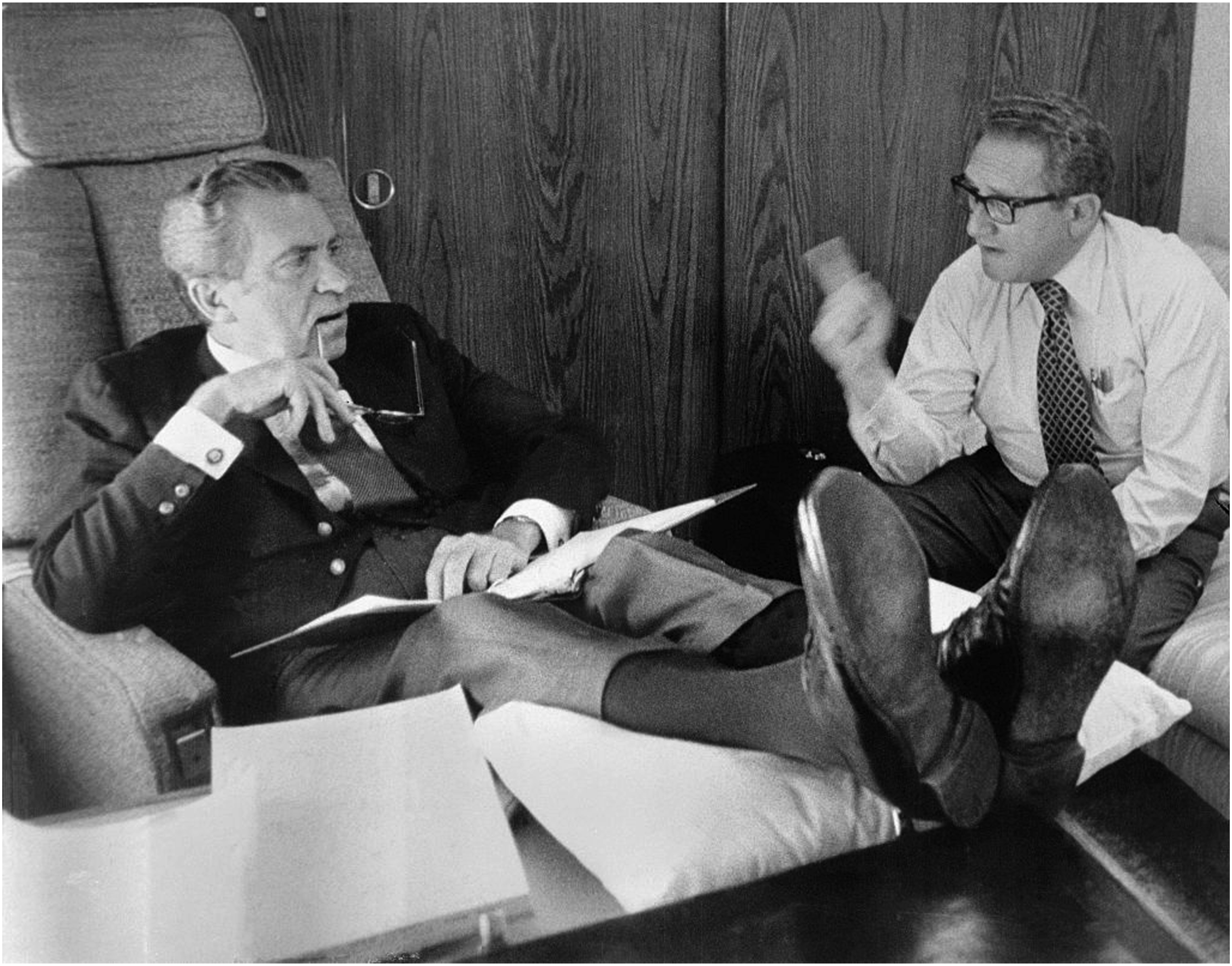
Conclusion
Richard M. Nixon suffered a left knee injury outside of the Greensboro Coliseum in 1960 during a campaign stop. Several days later, he was admitted to Walter Reed Hospital with septic arthritis requiring bed rest and antibiotics. The sequela of this knee injury has been blamed for a variety of events including Nixon’s loss of the first presidential debate in 1960 and subsequent defeat of the national election. Nixon went on to develop chronic venous disease of the left leg and eventually recurrent DVT. In September of 1974, a month after resigning the presidency, Nixon developed a symptomatic DVT and pulmonary embolism. He required an operation a month later to clip the iliac vein, preventing further emboli. The complicated recovery from this operation prevented Nixon from testifying in the Watergate trial in Washington DC. Studying these events through the publicity surrounding figures like Nixon provides unparalleled perspectives on contemporary medical problems while obviating many legal and ethical concerns over patient privacy given the existing press attention to these stories. 36 Moreover, as demonstrated previously, these incidents create an opportunity to explore how even seemingly straightforward, benign pathology can shape the course of history.24,37 Here, what started as a simple knee injury influenced a variety of national events in the 1960s and 1970s, including a presidential election and one of the most significant White House scandals of the 20th century.
Footnotes
Declaration of Conflicting Interests
The author(s) declared no potential conflicts of interest with respect to the research, authorship, and/or publication of this article.
Funding
The author(s) received no financial support for the research, authorship, and/or publication of this article.

