Abstract
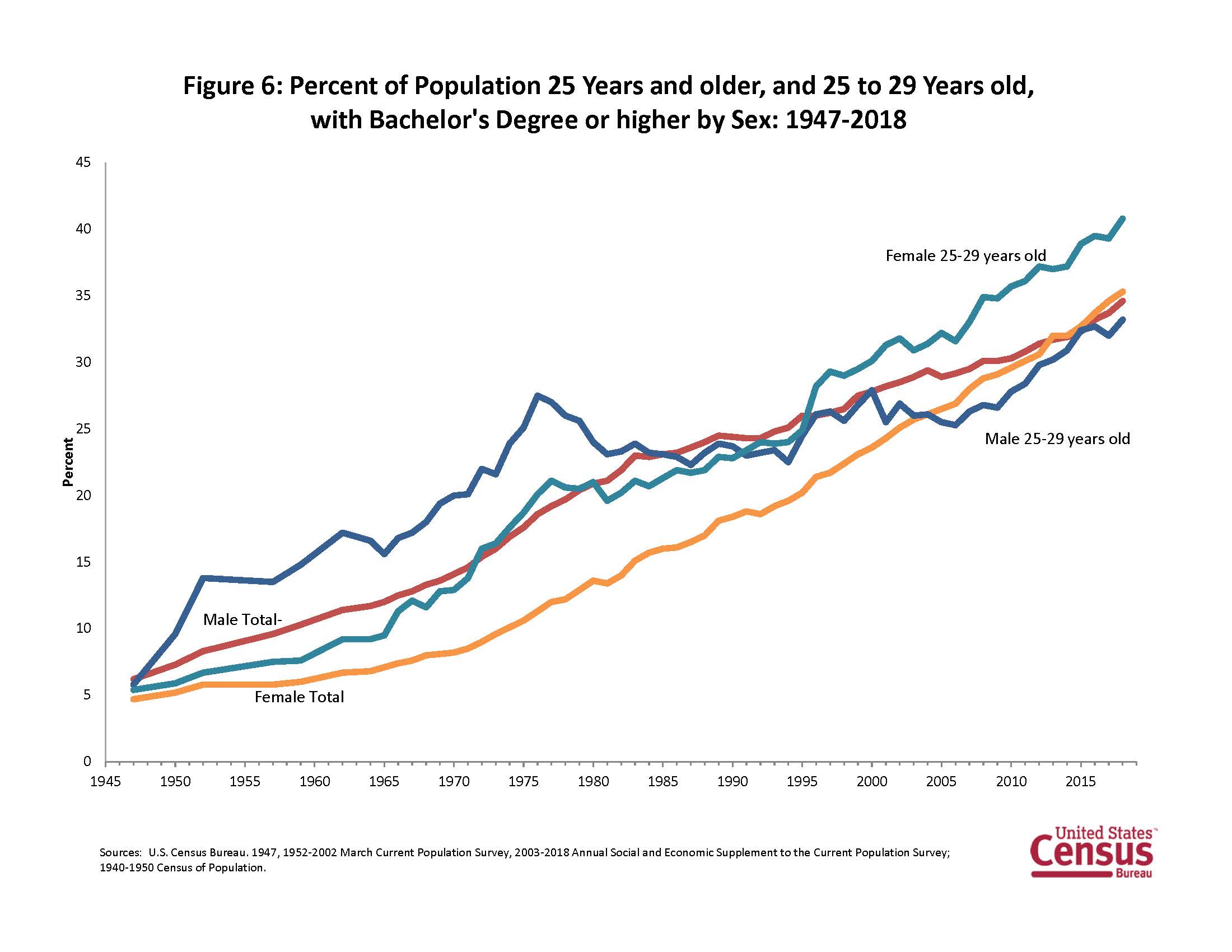
Women’s opportunities have been profoundly altered over the past century by reductions in the social and structural constraints that limit women’s educational attainment. Do social constraints manifest as a suppressing influence on genetic indicators of potential, and if so, did equalizing opportunity mean equalizing the role of genetics? We address this with three cohort studies: the Wisconsin Longitudinal Study (WLS; birth years 1939 to 1940), the Health and Retirement Study, and the National Longitudinal Study of Adolescent Health (Add Health; birth years 1975 to 1982). These studies include a “polygenic score” for educational attainment, providing a novel opportunity to explore this question. We find that within the WLS cohort, the relationship between genetics and educational outcomes is weaker for women than for men. However, as opportunities changed in the 1970s and 1980s, and many middle-aged women went back to school, the relationship between genetic factors and education strengthened for women as they aged. Furthermore, utilizing the HRS and Add Health, we find that as constraints limiting women’s educational attainment declined, gender differences in the relationship between genetics and educational outcomes weakened. We demonstrate that genetic influence must be understood through the lens of historical change, the life course, and social structures like gender.
Get full access to this article
View all access options for this article.
References
Supplementary Material
Please find the following supplemental material available below.
For Open Access articles published under a Creative Commons License, all supplemental material carries the same license as the article it is associated with.
For non-Open Access articles published, all supplemental material carries a non-exclusive license, and permission requests for re-use of supplemental material or any part of supplemental material shall be sent directly to the copyright owner as specified in the copyright notice associated with the article.