



Abstract
Populist politicians frequently employ anti-establishment appeals in their discourse by targeting an imagined or real power elite. Do such appeals have a mobilizing effect among voters? What role do the emotional responses of voters play in this process? We address these questions using a vignette experiment embedded into a nationally representative survey fielded in Turkey, a country where a populist party has long been in power. Our research design enables us to assess whether voters respond more positively to a populist framing of a call for mobilization on an issue compared to a non-populist framing, and whether their emotional responses act as mediators. We find that populist rhetoric indeed does have a mobilizing effect, though only for a low-cost form of political participation (signing a petition) and only among the constituency of the populist party. Turning to the role of emotions, we find that the populist framing of the issue led voters to report more discontent, despair, and anxiety, and these emotions mediate the positive influence of the populist message on mobilization. Thus, our study contributes to research on populism by highlighting the role of emotions in the mobilizing effect of populist discourse.
Introduction
Although successful mobilization of the masses in politics is a valuable asset for any leader or party, it holds a special significance for populist politics. Since populist leaders and parties claim to represent “the people” and base their legitimacy solely on popular support, they seek political participation of the masses. For instance, Barr (2009, p. 36) emphasizes mass demonstrations as “standard tools of populist leaders” because they enable the populist leader to communicate their appeals and help showcase and affirm their authority (Weyland, 2001).
Given this importance of political participation of the masses for populist politics, one would expect populist rhetoric to have a mobilizing effect. Is this the case? That is, does framing a call for mobilization about an issue in populist terms increase people’s likelihood of taking political action? Studies have also shown that populist appeals typically feature a more emotional language than non-populist ones (e.g., Canovan, 1999; Kriesi, 2014; Widmann, 2021), and certain emotions influence individuals’ propensity to engage in political action (Brader, 2006; Marcus et al., 2000; Verbalyte et al., 2024 in this Special Issue, Part One). Could people’s emotional reactions toward the populist rhetoric play a role in political mobilization?
This article addresses these questions by drawing on a vignette experiment embedded in a nationally representative survey fielded in Turkey ahead of the 2018 general elections. The Turkish context presents a case of populism in power since a right-wing populist party, the Justice and Development Party (Adalet ve Kalkınma Partisi, AKP) of Recep Tayyip Erdoğan, has long been in power. Therefore, the populist rhetoric of Erdoğan, which frequently appeals to emotions (Aslan, 2021; Gerstlé & Nai, 2019), is familiar to most citizens. This feature of the context should help to improve the realism of the experiment.
Our research design mirrors and extends that of Anduiza et al. (2017). In the experiment, we told respondents that a message has been circulating on social media about the meagerness of the minimum wage, an issue that occasionally becomes salient in Turkish politics. The manipulations consist of additional short statements that further elaborate on this issue in populist and non-populist terms. Following these prompts, we ask respondents to indicate to what extent they identify with particular emotional states when they think about the current minimum wage level. Finally, in the outcome questions of the experiment, we probe respondents’ willingness to consider two forms of non-electoral political participation, namely, signing a petition and joining demonstrations to help increase the minimum wage.
This setup enables us to assess whether a populist framing of a call for political mobilization on an issue leads citizens to be more willing to participate compared to a non-populist framing of the same issue. In addition, since we collect data on respondents’ emotional states right after being exposed to the populist (and non-populist) messages, we can analyze whether differences in these emotional states as a result of our manipulations serve as mediators on any effects of the messages on political mobilization.
Our results suggest that populist rhetoric does indeed have a mobilizing effect, though with some caveats. First, we observe the mobilizing effect of the populist message in our experiment only on respondents’ willingness to sign a petition and not on attending a demonstration. This finding might simply reflect the costlier nature of protest participation than signing a petition, especially in the electoral-autocracy context of Turkey. Second, we find that the partisans of the governing AKP drive the mobilizing effect of the populist message in our sample. Previous research shows that partisans of the AKP display higher levels of populist attitudes than partisans of other parties or independent voters in Turkey (Aytaç et al., 2021). Thus, populist rhetoric seems to be influential only on citizens who already display an affinity to populist principles.
Turning to the role of emotions, we find that the populist message led respondents to report more discontent, despair, and anxiety about the current minimum wage level compared to respondents in the control condition. Moreover, formal mediation analysis reveals that a considerable portion of the effect of the populist message treatment is exclusively channeled through these emotional reactions of respondents. This result suggests that populist messages that are emotionally loaded are likely to have even more significant mobilizing effects.
As part of the Triple Special Issue “The Emotional Side of Populist Support: Key Affective Mechanisms at Test,” our study contributes to research on populism by investigating the mobilizing effect of populist discourse and highlighting the role of emotions in this process. Even in a political context unfavorable to non-electoral participation as that of Turkey, we find that populist politicians, through the use of populist appeals, could have leverage in mobilizing their base. Classical research on unconventional political participation emphasized discontent as a critical driver of mobilization (e.g., Gurr, 1970); our findings align with this social-psychological framework.
Populism, Mobilization, and Emotions
In line with the ideational approach in the literature, we contend that the essence of populism rests on the ideas of people-centrism, anti-elitism, and a Manichean outlook on politics (Hawkins & Rovira Kaltwasser, 2019). Populists consider society as comprising two homogeneous groups: “the people” and “the elite,” where the latter is depicted as a corrupt and self-serving group. Furthermore, the antagonism between these two groups has a moral character based on the Manichean worldview of a struggle between good and evil (Müller, 2016).
Populism could be seen as a threat or corrective to liberal democracy (Rovira Kaltwasser, 2012). It is considered a threat because it rejects the liberal notion of the system (Mudde, 2021). However, another body of literature claims that populism can be corrective to democracy as it mobilizes the underrepresented strata of society by claiming to represent unheard demands (Canovan, 1999; Mudde & Rovira Kaltwasser, 2013). This helps to reduce education- and income-based inequalities in political participation that are widely observed across democracies (Anduiza et al., 2019). Some recent global political movements, such as the Occupy Wall Street and the Tea Party protests in the U.S., the indignados movement in Spain, anti-austerity protests in Greece, and anti-lockdown protests organized by right-wing populist parties (e.g., Vox in Spain) during the COVID-19 pandemic could be considered examples of populist mobilization. In such cases, populist actors mobilize “ordinarily marginalized social sectors into publicly visible and contentious political action” while exploiting anti-elitism (Aslanidis, 2017; Jansen, 2011, p. 82; Stavrakakis et al., 2016).
This potentially mobilizing force of populism has been a subject of scholarly examination. While there is mixed evidence about the relationship between the rise of populist parties and electoral participation (Huber & Ruth, 2017; Immerzeel & Pickup, 2015), a positive association between having populist attitudes and non-electoral participation has been shown. Based on survey data from nine European countries, Anduiza et al. (2019) reported that citizens with more populist attitudes are more likely to engage in non-electoral participation, such as petition signing and online expression of political views, and these effects are more substantial among individuals with lower levels of income and education. There is weaker evidence for a link between populist attitudes and participation in demonstrations.
What might be the mechanism here? Populism could mobilize individuals in at least two ways. First, populism constructs a collective action frame by appealing to a collective identity of “the people” against the elites. When such identities tap into “the people versus the elites” duality, they generate a sense of belonging to a collective identity against a common enemy (Anduiza et al., 2019). In other words, populism articulates various social grievances and brings different segments of the population “under the encompassing banner of ‘the people,’ with ‘elites’ as the perpetrators of injustice” (Aslanidis, 2017, p. 309). Second, while doing so, populism also portrays politics as a moral struggle. While such a Manichean perspective helps identity building (Wirz, 2018), it could also foster political participation. Since in the populist narrative, the elites exploit the system for their own benefit at the expense of the people, it becomes a moral responsibility to act against them (Busby et al., 2019).
These considerations, in turn, suggest that the populist rhetoric based on a Manichean cleavage between the “pure people” and “corrupt elites” (Rico et al., 2017, 2020) is likely to invoke certain emotions in individuals. As populism typically emerges from widespread discontent (Spruyt et al., 2016) or a sense of severe crisis (Rooduijn, 2014), populist messages are well-suited to channel feelings of despair and discontent. Moreover, populist actors typically blame the elites and the establishment for the suffering of the ordinary people, which should induce anger (Erişen, 2024 in this special issue, Part Three; Hameleers et al., 2017; Widmann, 2021). Lastly, the depiction of politics by populists—the presence of a corrupt and self-serving elite, a struggle between “good and evil”—is likely to bring about some level of anxiety (Veit et al., 2024 in this special issue; Part Three). Indeed, studies on populist communication have shown that frequent appeals to emotions characterize populist rhetoric (e.g., Canovan, 1999; Kriesi, 2014; Martella & Bracciale, 2021; Widmann, 2021). Populist parties use more negative emotional appeals (e.g., anger, fear) than mainstream parties (Widmann, 2021), and populist appeals elicit stronger emotions than non-populist appeals (Wirz, 2018).
Research in political psychology highlights that people’s emotional responses to political actors, events, and appeals could make them more or less likely to participate in politics (Brader, 2006; Marcus et al., 2000). The appraisal theories of emotions (e.g., Lazarus, 1991; Roseman & Smith, 2001) demonstrate that individuals’ evaluations (appraisals) of events, situations, or actors that influence their welfare are followed by emotional reactions. These emotional reactions, in turn, could influence political behavior (Marcus et al., 2000).
Among such emotions, anger, which arises from blaming others for preventable harm, has a potent mobilizing effect (Erişen, 2024 in this special issue, Part Three; Filsinger, 2024 in this special issue Part Two; Lerner & Keltner 2001). Previous observational and experimental research has shown that anger-evoking political messages heighten individuals’ participatory intentions (e.g., Valentino & Neuner, 2017; Weber, 2012). Anxiety has a similarly mobilizing effect, though its effect has been weaker than anger (Valentino et al., 2011; Veit et al., 2024 in this special issue; Part Three). Finally, canonical approaches to unconventional political participation consider feelings of discontent and despair essential for the successful mobilization of the masses (e.g., Gurr, 1970). Although discontent simply refers to dissatisfaction with one’s circumstances and a desire for an improved situation, an absence of hope characterizes despair, for example, with the efficacy of conventional ways of political participation (see Lindholm et al., 2024 in this special issue, Part Two).
Even though previous studies have examined the role of emotions in the adoption of populist attitudes (e.g., Rico et al., 2017, 2020) and the persuasiveness of populist messages (e.g., Hameleers et al., 2017; Wirz, 2018), the link between populist mobilization and emotions deserves further scrutiny. In the following, we explore this potential relationship by building on Anduiza et al. (2017). In a survey experiment fielded in Spain, the authors presented respondents with a call to action about the healthcare system. The manipulations in the experiment consist of framing the call in populist and non-populist terms and changing the message’s source. The results suggest that populist messages could indeed mobilize individuals, especially those with pre-existing high levels of populist attitudes, low socioeconomic status, and lower levels of past participation. We extend this setup with original data from Turkey, explicitly considering emotions as a mechanism behind populist mobilization.
The Turkish Case
Populism is not unfamiliar to Turkish politics. The antagonistic populist framework that pits “the people” against “the elite” is reminiscent of the center-periphery dichotomy that has long been used to conceptualize the dynamics of Turkish politics. According to Mardin (1973), a deeply entrenched socio-political division forms the basis of the center-periphery cleavage. The “periphery” is a coalition of local and traditionalist forces; a mix of ethnic, linguistic, and religious groups systematically kept out of the ruling circles. Such exclusion binds these groups in their rebellious opposition to the “center.” Historically, these groups formed the very source of defiant opposition to the new regime, and its modernization reforms in the early decades of the Republic via a series of bloody rebellions. Hence, they lie at the root of Republican fears and sensitivities concerning the regime’s survival and its legitimacy to secure stability in the long run.
With the AKP coming to power in 2002, this antagonistic populist dichotomy has become relevant for understanding Turkish politics. Dinçşahin (2012, p. 627) presented various examples where Erdoğan asks “the people” to protect the Republic against the military-bureaucratic elite who only seek self-interest. In this dichotomy, the AKP constructed a persona of the military-bureaucratic elite repressing the silent religious majority in Turkey. In this narrative, the elites comprised of the military, bureaucracy, and judiciary have always hindered the realization of the people’s will, and this elitist establishment should be abolished to better serve the people (Yabancı, 2016, p. 10). Within this struggle against the elites, the AKP’s understanding of democracy appears as extremely majoritarian, “whereby democracy is equated with the popular will, and only majorities in the ballot box epitomize ‘the will of the nation’” (Aytaç & Öniş, 2014, p. 45).
Nevertheless, the nature of this cleavage has been drastically altered since the centrist institutions were captured one by one by the ruling AKP (Somer, 2017). As a result, some scholars argue that the center-periphery dichotomy no longer shapes the political dynamics in modern Turkey, and that a kulturkampf between two irreconcilable images of the “good society” with inherently hostile proponents became the major driver of Turkish politics: one based on positivism, science, gender equality, and secularism, and the other one on tradition, religion, and family values. 1 Although the former group resides in more liberal and secular coastal towns, the latter live in the Anatolian hinterland (Kalaycıoğlu, 2012, 2021). 2
Aytaç et al. (2021) showed that partisans of the ruling AKP are more likely to hold populist attitudes than other voters. This positive association between AKP partisanship and populist attitudes is especially salient for the popular sovereignty aspect of populism. Although this result might initially sound counterintuitive, the authors highlight the importance of elite rhetoric for public attitudes (Zaller, 1992). As the AKP leadership constantly invokes populist principles in their rhetoric, the constituency of this party seems to have internalized these principles.
As a case of populism in power, Turkey presents an intriguing context for empirical analysis of populist mobilization. Previous studies that tested the effect of populism and emotions primarily focused on democratic countries where populists are in opposition. However, Turkey has had a populist government since 2002, which may have shifted the understanding of the elites and the people. In addition, Erdoğan is also known for frequently using emotional elements in his rhetoric (Aslan, 2021; Erişen, 2024 in this special issue, Part Three; Gerstlé & Nai, 2019), which renders the Turkish context an opportune setting for analyzing the role of emotions in populist mobilization.
Data and Research Design
Our research design draws on an experiment embedded into a nationally representative face-to-face survey (N = 1,648) conducted in Turkey ahead of the June 2018 general elections. 3 Mutz (2011) highlighted that population-based survey experiments, such as ours, are particularly appealing from a research design perspective as they can combine the internal validity of the experimental setup with the ability to generalize the findings to the population of interest, in this case, the voting population of Turkey.
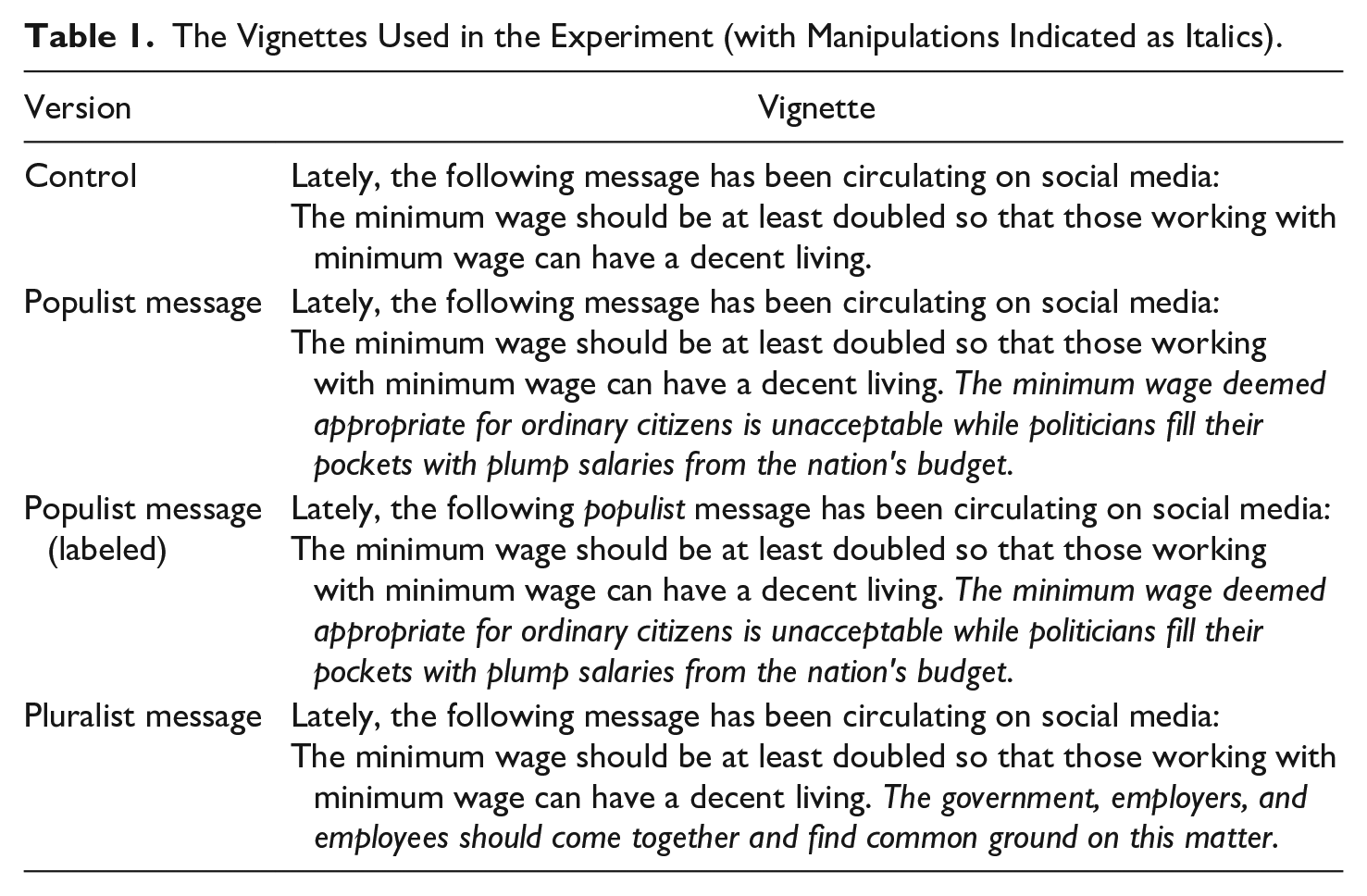
Respondents in our survey were randomly assigned to one of the four versions of the survey instrument: three treatment and one control version. In each version, respondents were told that a message had been circulating on social media about the minimum wage. In the control group, the message was simply that the minimum wage should be at least doubled so that those working with minimum wage can have a decent living.
This minimum wage issue has become occasionally salient in Turkish politics, especially in recent years. Turkey has one of the lowest minimum wages in Europe, and with accelerated inflation and depreciation of the Turkish Lira in recent years, the purchasing power of the minimum wage has diminished considerably. This has led to calls for substantial increases in the minimum wage. Moreover, OECD data show that Turkey has one of the OECD’s highest minimum-to-median-wage ratios (at about 70%), highlighting that a high proportion of workers earn a wage at or close to minimum wage. 4 This means that changes in the minimum wage affect the incomes of a large segment of society, rendering the issue politically sensitive.
The experiment manipulates additional statements presented to the control group. In one of the treatment groups, the follow-up statement highlights that the current minimum wage deemed appropriate for ordinary citizens is unacceptable while politicians fill their pockets with plump salaries from the nation’s budget. This additional statement creates a moral antagonism between the ordinary people and a corrupt political elite in line with populist principles; therefore, we label this treatment as the “populist message” treatment. The message in the second treatment group has the same structure as in the “populist message” treatment with one difference: the message is explicitly labeled as populist. In this way, we will see whether labeling a message explicitly as populist heightens or dampens its mobilizing potential. We call this treatment a “populist message (labeled).”
Finally, the third treatment gives a message that emphasizes compromise and cooperation between different political stakeholders, and thus is at odds with populist principles. The additional statement in this treatment says that the government, employers, and employees should come together and find a common ground to improve the minimum wage. We call this treatment the “pluralist message.” The exact wording of the vignettes used in the experiment (with manipulations indicated as Italics) is presented in Table 1.
The Vignettes Used in the Experiment (with Manipulations Indicated as Italics).
These experimental prompts were followed by the potential mediator and outcome questions. For the potential mediators, we asked respondents the following question: “To what extent, if at all, does the current level of minimum wage make you feel the following? Please indicate on a 1 to 5 scale where 1 corresponds to ‘not at all’ and 5 corresponds to ‘very much’.” In line with the previous discussion on the potentially mobilizing role of negative emotions, we considered the emotional states of contentment, anger, despair, and anxiety.
The outcome questions of the experiment came last, where respondents were asked whether they would be willing to sign a petition or participate in a demonstration to help increase the minimum wage. The answer choices ran from “definitely would not” (coded 1) to “definitely would” (coded 7) on a seven-point scale.
Table 2 presents descriptive statistics on several characteristics of respondents in each of the four experimental groups (with variable explanations). The similarity of these observable characteristics across the groups suggests that randomization was successful. A likelihood ratio test from the multinomial logit regression of treatment assignment on these characteristics is statistically insignificant (Wald
Selected Sample Characteristics Across Experimental Groups (with Variable Explanations).
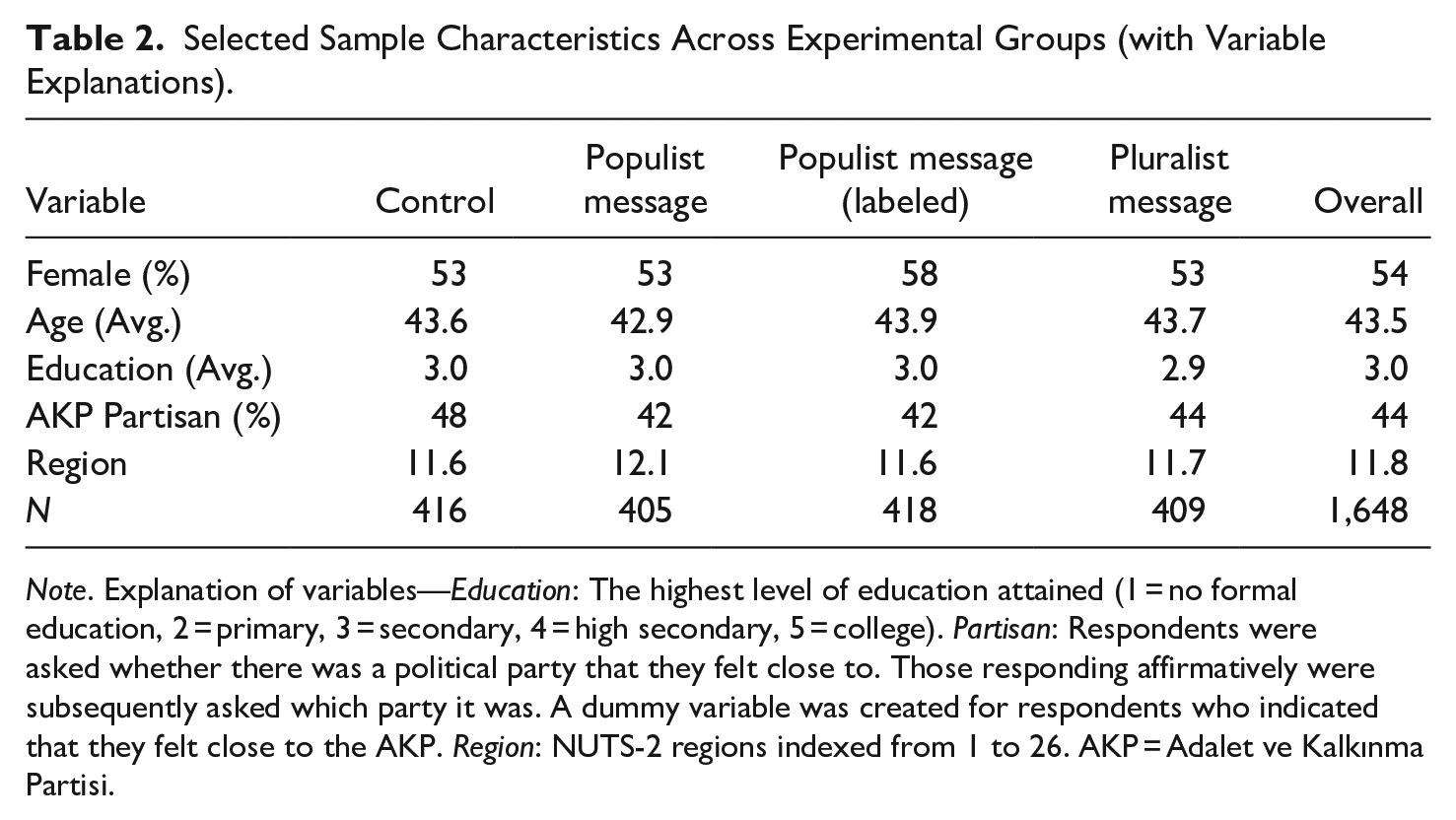
Note. Explanation of variables—Education: The highest level of education attained (1 = no formal education, 2 = primary, 3 = secondary, 4 = high secondary, 5 = college). Partisan: Respondents were asked whether there was a political party that they felt close to. Those responding affirmatively were subsequently asked which party it was. A dummy variable was created for respondents who indicated that they felt close to the AKP. Region: NUTS-2 regions indexed from 1 to 26. AKP = Adalet ve Kalkınma Partisi.
Analysis
Figure 1 below presents the distribution of responses to the outcome questions in the sample for the control condition only. For signing a petition, we see that about a third of respondents (33%) stated that they would definitely participate (the highest value in the answer scale) in signing a petition to help increase the minimum wage. Only about a quarter of respondents (24%) indicated that they would not participate in such an initiative (values of 1–3 on the answer scale). Thus, the mean likelihood of signing a petition is 4.9 out of 7.
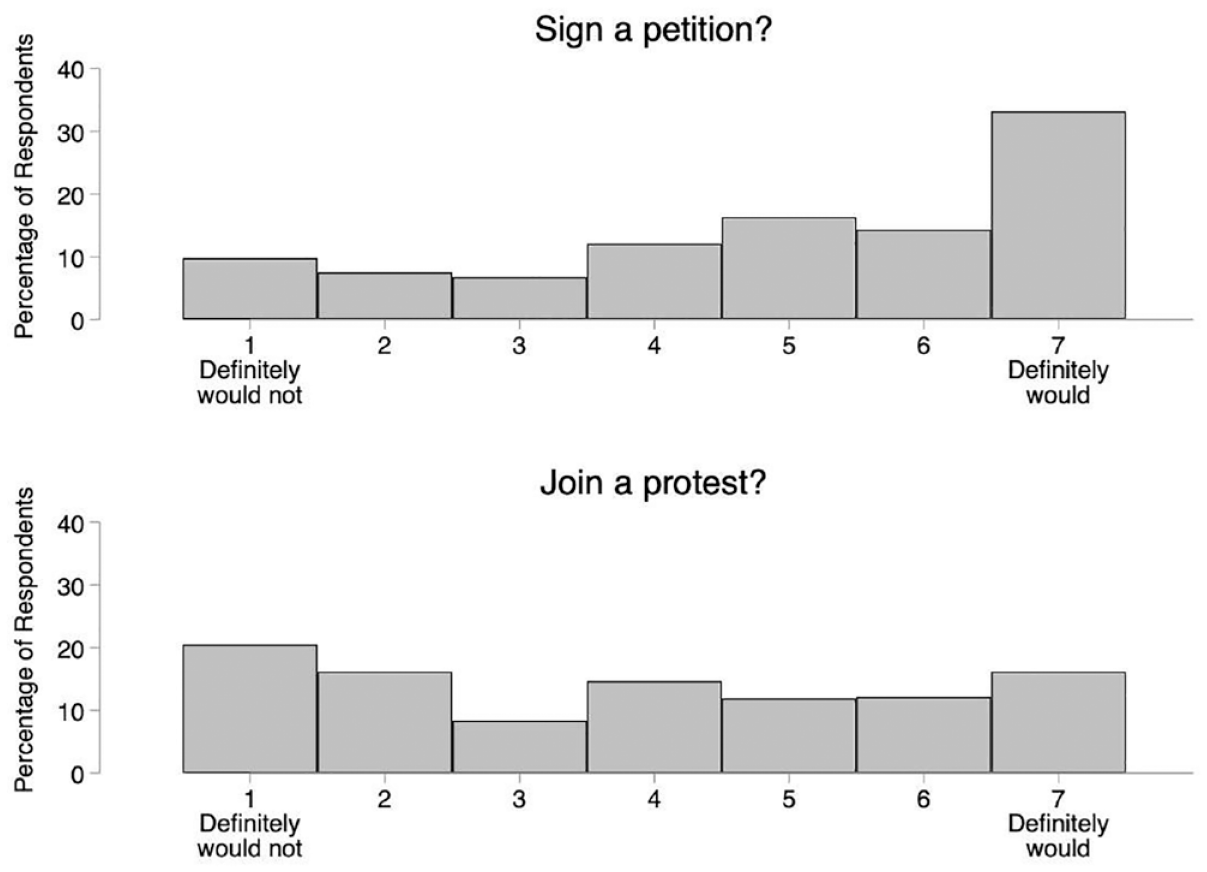
The distribution of the dependent variables in the control group.
In contrast, the likelihood of joining a demonstration is considerably lower at 3.8. Almost half of the respondents (45%) stated that they would not participate in a demonstration, and only 16% of them declared that they would definitely participate. Respondents’ lower willingness to participate in a demonstration than signing a petition is expected since protest participation is a considerably costlier and risky form of political participation compared to petition signing.
What have been the effects of our experimental manipulations on respondents’ willingness to sign a petition and join a demonstration? Table 3 presents regression analyses of average treatment effects using ordinary least squares (OLS) estimation. Model (1) takes respondents’ likelihood of signing a petition as the dependent variable, and in Model (2), we consider their likelihood of joining a demonstration.
Regression Analyses of Average Treatment Effects.
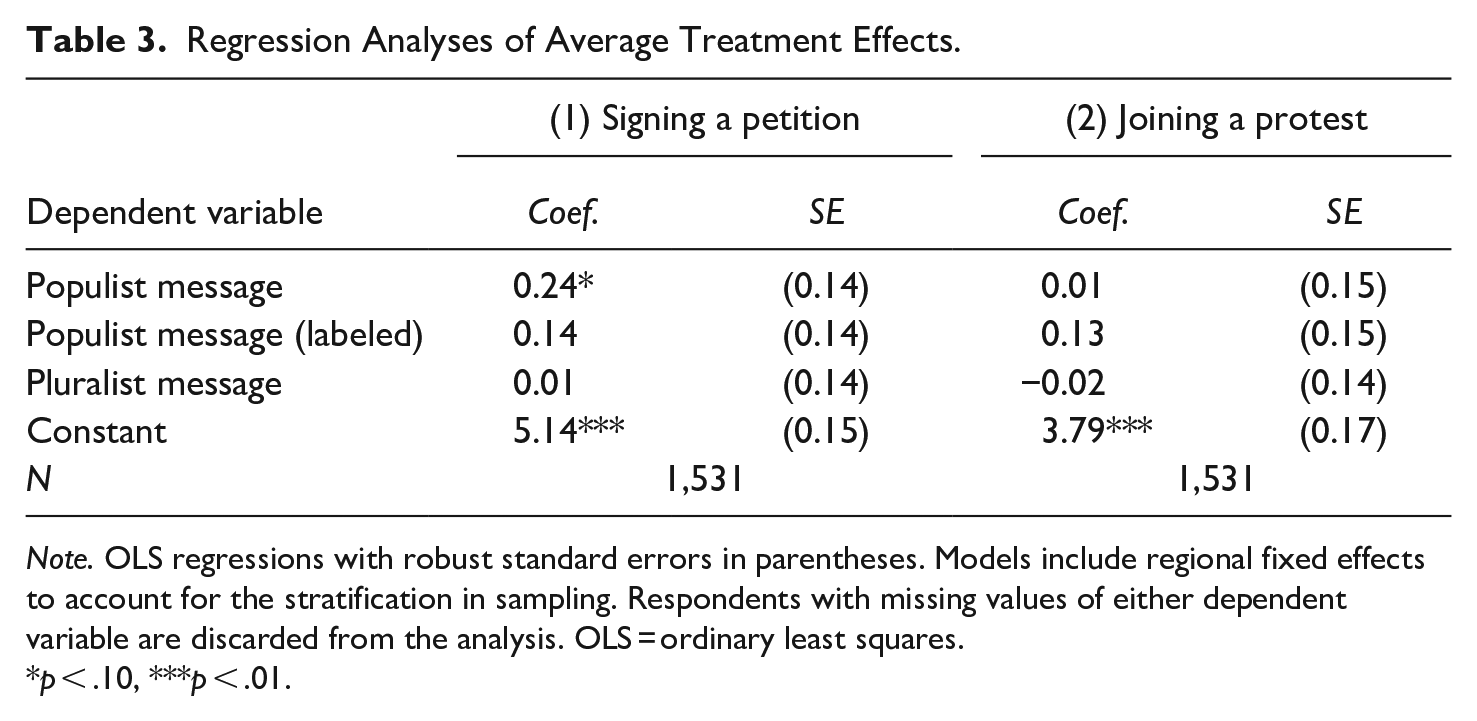
Note. OLS regressions with robust standard errors in parentheses. Models include regional fixed effects to account for the stratification in sampling. Respondents with missing values of either dependent variable are discarded from the analysis. OLS = ordinary least squares.
p < .10, ***p < .01.
In Model (1), we see that respondents presented with the populist message about the minimum wage were more likely to say that they would sign a petition than those in the control condition. This positive mobilizing effect of the “populist message” treatment is statistically significant (p = .08). Recall that the base likelihood of signing a petition (that of respondents in the control group) was already relatively high (mean of 4.9 on a 1–7 scale); thus, it is remarkable that a short message could mobilize individuals further. In contrast, we see that the effect of the “populist message (labeled)” treatment is statistically insignificant, suggesting that labeling a message explicitly as populist dampens its mobilizing potential. This might be due to negative connotations associated with the label “populist,” but further research is needed. Finally, we do not observe any mobilizing effect of the “pluralist message” treatment; respondents in this category were no more or less likely to state that they would sign the petition compared to the control-group respondents.
Turning to respondents’ likelihood of joining protests in Model (2), we see that none of the treatments have statistically significant effects. In this case, a potential reason for the null effects is that protest participation is a considerably costly form of political participation compared to signing a petition. Moreover, the Turkish context as an authoritarian electoral regime (Alizada et al., 2021) might have discouraged people even from stating that they would join protests.
Which individuals in our sample were more likely to be mobilized by the populist message? To address this question, we conduct subgroup analyses by examining the interactions of our treatments with several relevant covariates. These include respondents’ demographics (age, gender, education, and income levels), satisfaction with the economy and how democracy works, political efficacy, and partisanship. Only partisanship seems to present a significant variation in the results among these variables. 5 Specifically, the positive effect of the populist message treatment on the likelihood of signing a petition is present only among the partisans of the governing party, the AKP.
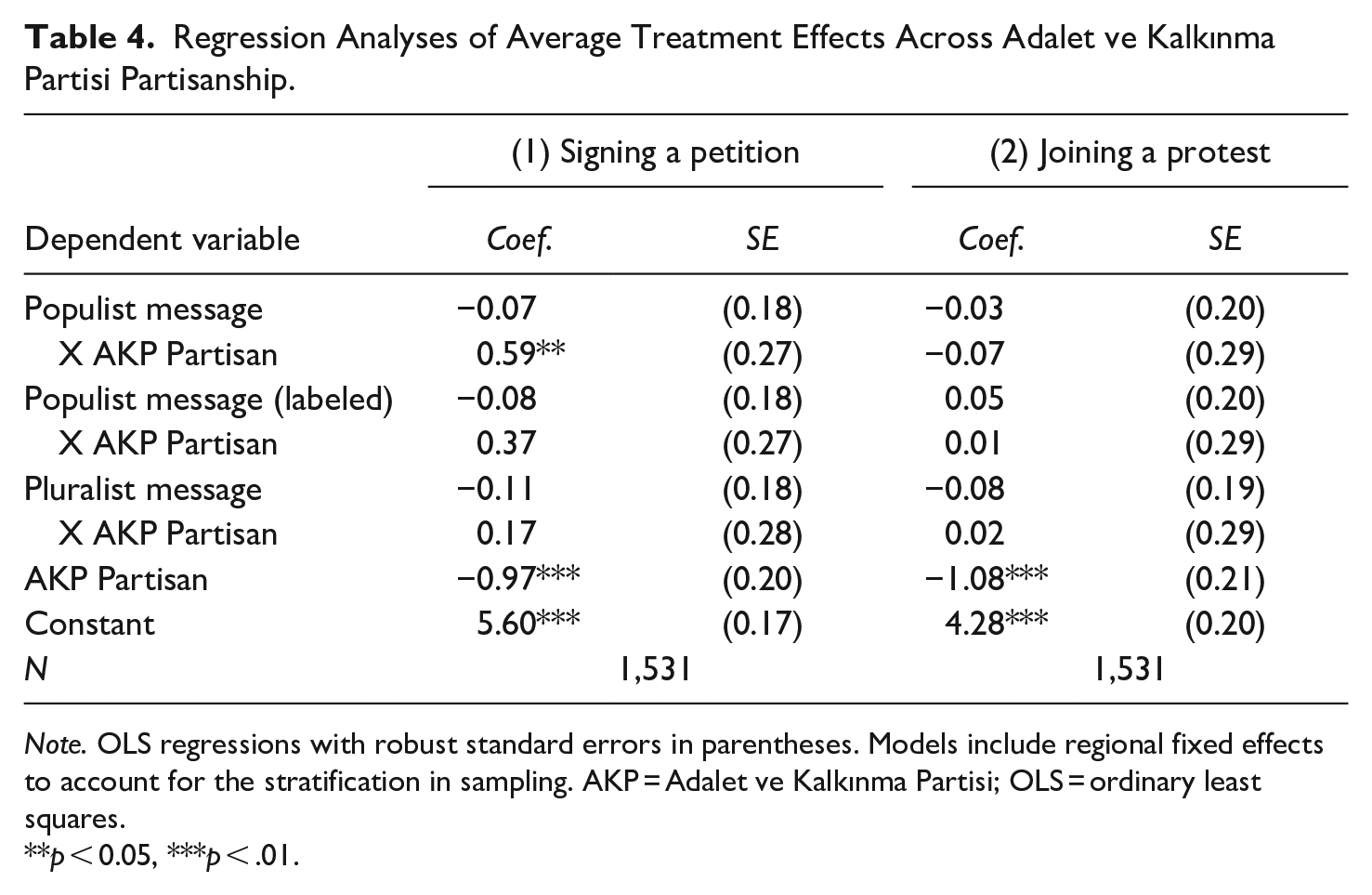
Table 4 presents an analysis of our experiment by distinguishing the results for AKP partisans and other respondents. The coefficients of the stand-alone treatment terms indicate the treatment effects among respondents who are not AKP partisans (the base category), and the coefficients of the interaction terms (e.g., Populist message X AKP Partisan) highlight any additional effects for AKP partisans. We see that the populist message treatment has a positive and statistically significant mobilizing effect on signing a petition only among AKP partisans (Model 1). Thus, the overall effects observed in Table 3 are driven by AKP partisans. Looking at protest participation as the dependent variable (Model 2), neither AKP partisans nor other respondents are mobilized by the populist message.
Regression Analyses of Average Treatment Effects Across Adalet ve Kalkınma Partisi Partisanship.
Note. OLS regressions with robust standard errors in parentheses. Models include regional fixed effects to account for the stratification in sampling. AKP = Adalet ve Kalkınma Partisi; OLS = ordinary least squares.
**p < 0.05, ***p < .01.
How can we explain that the populist message leads to mobilization among AKP partisans only? Although we cannot definitively pin down the answer to this question with the current research design, previous research gives some hints. Aytaç et al. (2021) showed that in the Turkish context, the partisans of the ruling AKP are more likely to hold populist attitudes than others. This, in turn, is related to the heavy use of populist messages in the discourse of AKP leadership (Aytaç & Elçi, 2019). Therefore, it is likely that the populist message in our experiment resonated with what AKP partisans are regularly exposed to and reflected a view of politics that they tend to approve. In contrast, opposition partisans and independent voters might have associated the populist language with the AKP, and thus it might have failed them to mobilize. A similar result has been found in the experimental study of Wirz (2018), who reported that the effects of populist appeals are more powerful for individuals with strong populist attitudes.
We should also note that the AKP partisans in our sample are less willing to participate in political action than others. In the control group, while the mean values of the likelihood of signing a petition and joining demonstrations are 4.4 and 3.3 for AKP partisans, they increase to 5.4 and 4.3 for other respondents, respectively. This discrepancy could also be seen in the negative and statistically significant coefficient of AKP Partisan in Table 4. Such a discrepancy is likely because support for the AKP is associated with lower socioeconomic status and education levels, both in our sample and previous studies (e.g., Aytaç 2020; Çarkoğlu, 2012). Low socioeconomic status and education levels are well known to depress political participation (Verba et al., 1993). Moreover, in the Turkish context, religiosity is found to affect non-electoral participation negatively (Kalaycıoğlu, 2007), and AKP partisans are more religious than other voters.
Together with our finding that the populist message in our experiment mobilizes primarily AKP partisans, this observation highlights that populist messages, perhaps indirectly, contribute to the mobilization of groups that traditionally display lower political participation levels. In this way, our results echo those of Anduiza et al. (2017, 2019) in that populism might contribute to reducing inequalities in political participation.
Emotion as Mediators
Do the emotional states we considered play a role in the mobilizing effect of populist messages? To address this question, we conduct two sets of analyses. First, we look at how respondents’ emotions (about the minimum wage) in the treatment conditions fare with those of control-group respondents and whether there is a correlation between the strength of these emotions and reported intentions of signing a petition and joining a demonstration. Later, we conduct a causal mediation analysis to test whether respondents’ emotional reactions to the populist messages are relevant mechanisms for their mobilizing effect we observed in the experimental analyses.
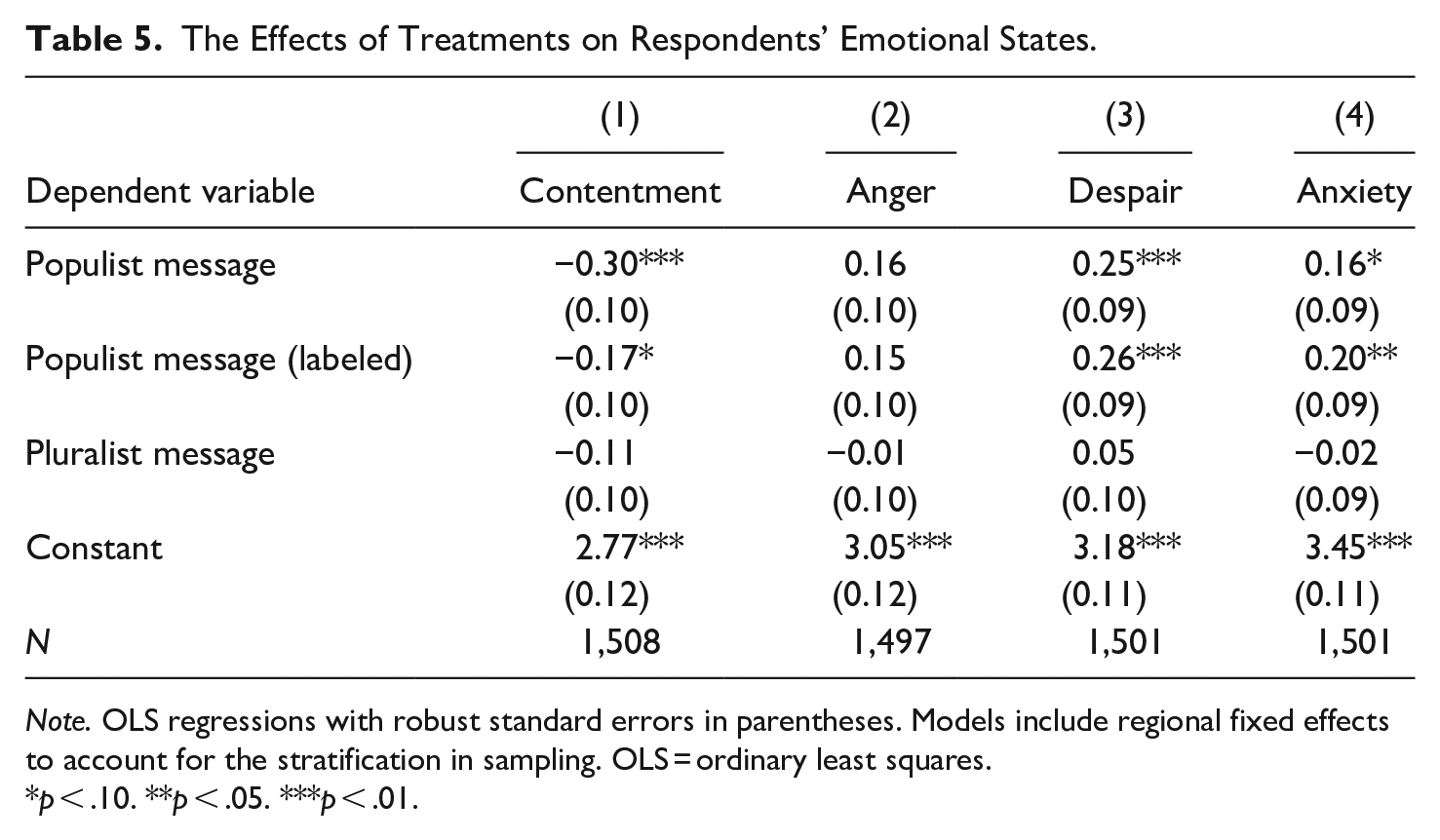
In Table 5, we present the effects of the treatments on respondents’ emotional states. Respondents in the populist message treatment condition reported more discontent (the negative coefficient on contentment), despair, and anxiety than control-group respondents when they thought about the minimum wage. The populist message (labeled) treatment also leads to higher levels of discontent, despair, and anxiety among respondents in this group. None of the treatments led to statistically significant differences in respondents’ levels of anger. The pluralist message treatment did not move any of the emotions we considered in our sample.
The Effects of Treatments on Respondents’ Emotional States.
Note. OLS regressions with robust standard errors in parentheses. Models include regional fixed effects to account for the stratification in sampling. OLS = ordinary least squares.
p < .10. **p < .05. ***p < .01.
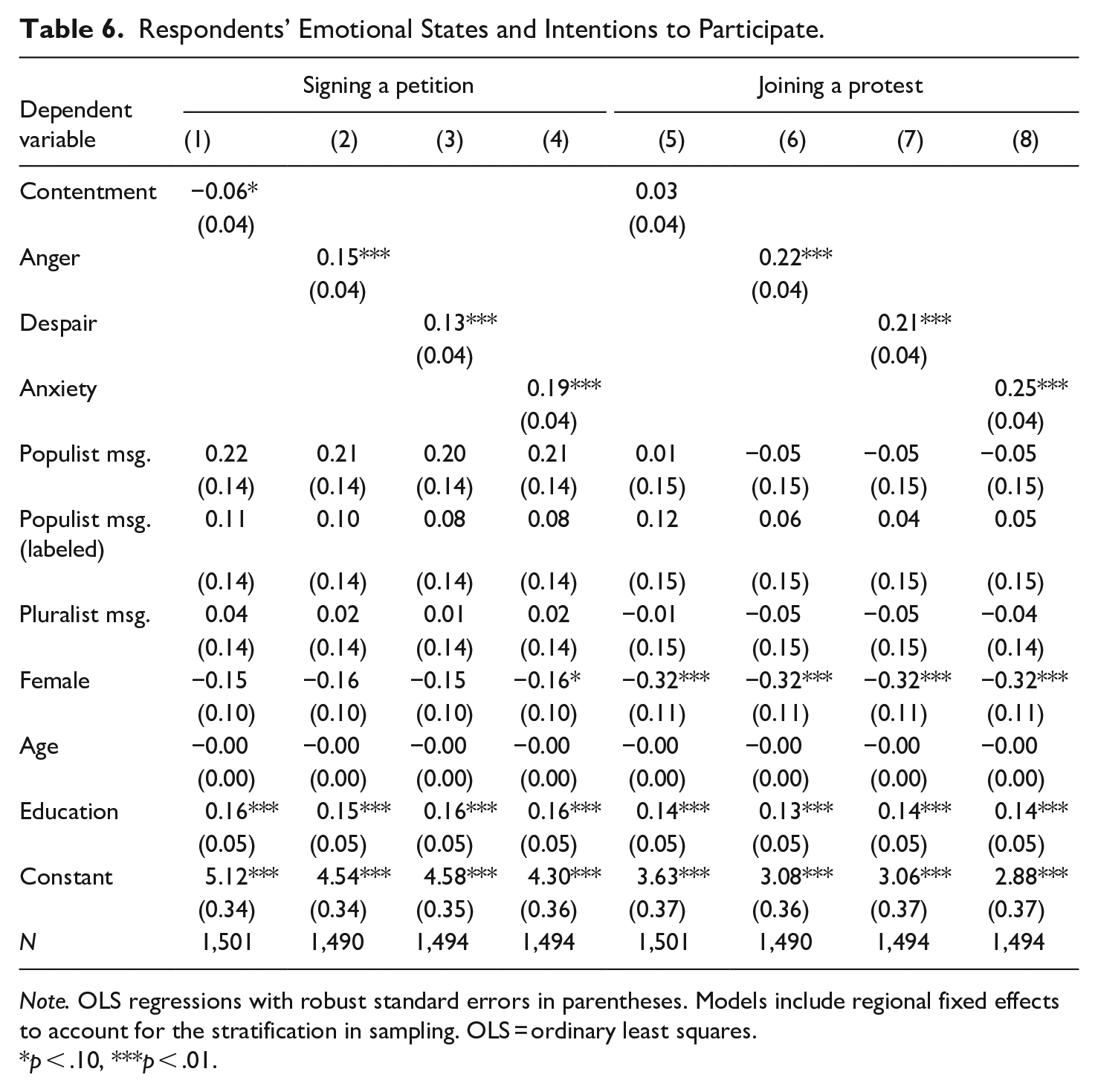
Table 6 presents the relationship between respondents’ emotional states and their reported intentions of signing a petition and joining a protest. 6 We see that after controlling for some basic demographic factors (gender, age, education, region), the relationship between the emotions we considered and the reported intention of participation is in the expected direction: those individuals who feel more anger, despair, and anxiety about the minimum wage are more likely to say that they would sign a petition and join a protest. On the other hand, the relationship between discontent and these forms of participation is weaker than other emotions. Still, we should keep in mind that this analysis is correlational only and subject to omitted variable bias; thus, there is no implication of causality here.
Respondents’ Emotional States and Intentions to Participate.
Note. OLS regressions with robust standard errors in parentheses. Models include regional fixed effects to account for the stratification in sampling. OLS = ordinary least squares.
p < .10, ***p < .01.
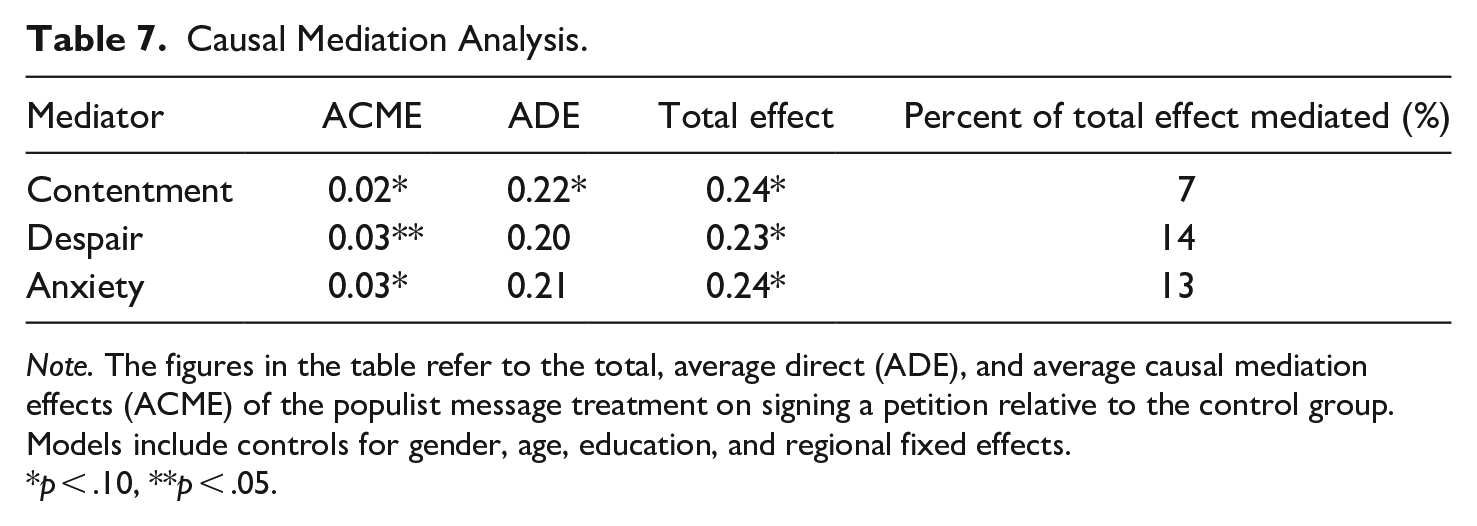
Earlier, we had seen that only the populist message treatment exhibited some mobilizing effect (for petition signing) among our respondents. Moreover, in Table 5, we see that the same treatment also had statistically significant effects on respondents’ emotional states. Could these effects on emotions be a relevant mechanism linking the populist message treatment with an increased propensity to sign a petition? For this purpose, we employ causal mediation analysis. We aim to identify the average causal mediation effect (ACME), that is, the proportion of the positive effect of the populist message treatment on petition signing that operates through respondents’ emotions about the minimum wage. A comparison of ACME with the average direct effect (ADE), the remaining effect of the populist message treatment through other channels, allows us to evaluate the degree to which the emotional states we were able to manipulate act as a mediator for the effects we observe (Imai et al. 2011).
Table 7 presents the principal quantities of interest from the causal mediation analyses for potential mediators for contentment, despair, and anxiety. 7 The three emotional states we considered in the experiment are statistically significant mediators. About 7 to 14% of the total effect of the populist message treatment is exclusively channeled through the emotional states of contentment, despair, and anxiety. Furthermore, respondents who felt increased levels of discontent, despair, and anxiety about the minimum wage due to our populist message treatment were also more likely to say that they would sign a petition about this issue.
Causal Mediation Analysis.
Note. The figures in the table refer to the total, average direct (ADE), and average causal mediation effects (ACME) of the populist message treatment on signing a petition relative to the control group. Models include controls for gender, age, education, and regional fixed effects.
p < .10, **p < .05.
Conclusion
We reach two main conclusions from our analyses about the effects of populist messages on political mobilization in a context of populism in power. First, we find that populist discourse does indeed have a mobilizing effect on voters, albeit for a relatively low-cost form of political participation (signing a petition), and this effect is concentrated among the constituency of the populist party. In the Turkish case, this constituency corresponds to the supporters of the ruling AKP. Given that this conservative, low socioeconomic status constituency typically displays a lower level of political participation compared to the rest of society, our results suggest that populism could help bridge the socio-economic participation gap not only in democracies as reported in previous research (Anduiza et al., 2017, 2019) but also in the context of an electoral autocracy, like that of Turkey (Alizada et al., 2021).
Second, certain emotions mediate the positive influence of the populist message on mobilization. Specifically, we find that respondents who received the populist message reported higher levels of discontent, despair, and anxiety than control-group respondents. Moreover, formal mediation analysis confirmed that in our experiment, these emotions did play a causal role in the link between the populist message and the higher likelihood of signing a petition.
Perhaps unexpectedly, the populist message treatment did not lead to more anger among our participants. Brader and Marcus (2013) stressed that the presence of the intentional actions of some agent who can be blamed is essential to trigger anger; perhaps “the agent” in our treatment, “politicians,” was too general and diffuse and thus not satisfactory on this front. The null finding concerning the effects of the populist message on respondents’ likelihood of joining a demonstration might be due to several factors. First, the specific populist message we used might simply not be enough to prompt individuals to high-cost collective action. Second, the increasingly authoritarian practices in the Turkish context might have discouraged individuals from even articulating a desire to protest. Third, the failure of our treatment to invoke anger, arguably the most potent mobilizing emotion, might have played a role as well (see Erişen, 2024 in this special issue, Part Three for contrary findings).
Our study opens up avenues for further research. For instance, boycotts, unofficial strikes, occupation of buildings, or protest campaigns in social media are other forms of unconventional political participation; studies could look at the effects of populist messages on the likelihood of engaging in such activities. In our experiment, we considered a very specific issue to mobilize individuals; perhaps a more general populist rhetoric might be more effective in encouraging people to collective action. In addition, the outcome question in our experiment was an attitudinal measure of mobilization (intention to participate) rather than a behavioral one; another direction of research could focus on behavioral measures.
The fact that our empirical context is a case of populism in power might also have a systematic effect on the results. As we discussed earlier, the opposition supporters and independent voters might have perceived the populist message negatively due to its association with the incumbent AKP, and therefore chose not to mobilize. In turn, the populist message may have failed to generate anger among AKP supporters because they are emotionally challenged by a potentially resonating populist rhetoric against their own party. 8 Fielding a similar study in a context where the government is not a long-standing populist party might be useful to address these issues. Finally, further research could explore the role of positive emotions, such as enthusiasm and hope, on mobilization through populist appeals.
Footnotes
Declaration of Conflicting Interests
The authors declared no potential conflicts of interest with respect to the research, authorship, and/or publication of this article.
Funding
The authors received no financial support for the research, authorship, and/or publication of this article.