



Abstract
Protest movements around the world have become increasingly likely to incite counterprotests that adopt an opposing stance. This study examines how a protest and a counterprotest interact with and shape each other as digitally networked connective action. My empirical focus is the so-called Million MAGA March—in which supporters of U.S. President Donald Trump protested the “stealing” of the November 2020 election by his rival, Joe Biden—and a counterprotest that erupted simultaneously. Drawing on a computational mixed-methods approach to examine two corpora of tweets featuring hashtags used by protesters and counterprotesters, respectively, the study identifies three mutually reinforcing dimensions of protest–counterprotest interaction: affective repertoires, discursive strategies, and network structures. It argues that “affective polarization”—or negative partisanship driven by hostility toward an outgroup—offers a useful conceptual means of understanding the significance of affect and collective identity in digital social movements, especially protest–counterprotest interactions. In doing so, the study also addresses concerns that “big data” methods are insensitive to the role of identity and expressive communication in social movements. Finally, the study demonstrates how online and offline political action are mutually constitutive aspects of contemporary contentious politics.
Introduction
Protest movements frequently face-off against counterprotests, which emerge in reaction to the protest and adopt an opposing stance. The relationship between the two has been described as “a sometimes loosely coupled tango of mobilization and demobilization” (Zald & Useem, 1987, p. 247). This tango has been playing out for decades in arenas as different as abortion rights, gay rights, gun control, school textbooks, nuclear power and so on (Meyer & Staggenborg, 1996). In recent years especially, there is hardly a major protest movement that is not tested by a counterprotest—from the Arab uprisings (Kamrava, 2012) to Korea’s candlelight movement (Kim & Shahin, 2020).
This study untangles this tango by examining how protests and counterprotests react to and interact with one another—whittling and molding each other in the process. A counterprotest is not simply another protest. Even if its underlying motivations can be traced back to long-standing causes and concerns, its genesis as reaction to a social action bears significantly upon its form and character (Meyer & Staggenborg, 1996; Zald & Useem, 1987). Building on this premise, this study delineates interactions between a protest and its counterprotest across multiple dimensions and demonstrates how the counterprotest develops vis-à-vis the protest it is reacting to—and vice versa. In addition, it situates protest–counterprotest dynamics within the framework of affective polarization—which views the fragmentation of the body politic in terms of affect and collective identity rather than differences in opinion about policy (Iyengar et al., 2019)—and thus connects the study of social movements to larger ideological and systemic upheavals leavening contemporary society.
My empirical focus is the so-called Million MAGA March, during which thousands of supporters of Donald Trump gathered at the Freedom Plaza in downtown Washington DC to protest the “stealing” of the November 2020 election by his rival, Joe Biden. The protest sparked a counterprotest from anti-Trump activists, which distinguished itself by deriding the pro-Trump protest as the “Million Moron March.” Viewing the two movements through the lens of connective action—or social movements that rely on digital technologies for organization and mobilization (Bennett & Segerberg, 2012, 2013)—I examine a two corpora of tweets with hashtags employed by the protesters and the counterprotesters, respectively. The study’s mixed-methods design employs three computational techniques—sentiment analysis, structural topic modeling, and social network analysis—to compare the protest and the counterprotest across affective, discursive, and structural dimensions, respectively. The analysis indicates that while the protest exhibited characteristics along each of these dimensions that would be expected of a movement, the counterprotest was often different and sometimes quite the opposite in comparison.
The study demonstrates how affective, discursive, and structural dimensions of a protest and a counterprotest intersect with and reinforce each other. In doing so, it advances a growing body of research on protest–counterprotest interactions by developing a multidimensional analytic framework—comprising affective repertoires, discursive strategies, and network structures—to unravel the dynamics of their “tango” (Zald & Useem, 1987). By explaining these interactions in terms of affective polarization, it also illustrates how protest movements reflect—and reproduce—ideological chasms and cultural tensions within the body politic. The integration of multiple computational techniques into a cohesive mixed-methods design offers a template for comprehensive “big data” research on social movements, addressing the concern that computational research lacks sensitivity to “issues of collective identity and connected forms of expressive, rather than instrumental, communication” (Gerbaudo & Treré, 2015, p. 865).
Protests versus Counterprotests
Protest movements face a paradox: the more successful they are, the more likely they become to evoke a counterprotest. As Inata (2021) argues, “one group’s excessively large mobilization promotes counter-mobilization by another seeking to maintain the status quo” (p. 2). In the United States, especially during the Trump era, “right wing mobilizations increased as groups called for immigration enforcement, limits to abortion, ‘free speech,’ white rights and against ‘Sharia law’” (Wood, 2020, p. 1). These actions have often been confronted by counterprotests. Indeed, right-wing protests have historically been twice as likely to evoke “leftist” counterprotests than vice versa (Reynolds-Stenson & Earl, 2018). It was therefore not a surprise that the November 14 Million MAGA March was also met with a counterprotest.
Some studies have examined the “counterframing” employed by counterprotesters—or “rhetorical strategies that challenge the original claims or frames” (Benford & Hunt, 2003, as cited in Ayoub & Chetaille, 2020, p. 23). Scholars such as Ayoub and Chetaille (2020) have drawn on Benford and Hunt’s conceptual framework, in which counterframing can take multiple forms: a counterprotest could respond to a protest by denying the existence of the problem the protesters are raising (problem denial), attributing it to different causes (counter attribution), or offering a different set of solutions (counterprognoses). In their empirical study, Ayoub and Chetaille (2020) examined the interaction between Poland’s lesbian and gay movement and its countermovement, a diverse coalition involving religious groups, political parties, and nationalists. Despite internal differences, the countermovement’s “frames converged around an issue of the nation being ‘under attack’ by external forces—largely in a differentiated response to the universal human rights frames with which the LG movement initially presented their cause” (p. 22). The LG movement responded by reframing its cause to stress its “Polishness” (p. 21).
Nikolayenko’s (2019) analysis of Twitter posts about an antiwar protest against Russia’s 2014 intervention in Ukraine showed peace activists framed their cause as “patriotic” and “morally superior.” In response, “opponents of the march considered themselves as real patriots and their adversaries as national traitors” (p. 602). Nationalism, as both Ayoub and Chetaille (2020) and Nikolayenko’s (2019) research shows, thus serves as a key framing device for both protesters and counterprotesters to justify their causes and actions (see also, Shahin, 2021).
Connective Action as Affective Polarization
Studies such as Nikolayenko (2019) tend to view Twitter posts as discursive strategy—or choices regarding how to relay information about protest or counterprotest. But as Bennett and Segerberg (2012, 2013) have argued, digital technologies such as social networking sites (SNS) are not just conduits of information: they also enable people to “commit to an action” with regard to a social or political concern and “recommend it to others” (2013, p. 16). In doing so, SNS “connect large populations across space and time” (2012, p. 748). That is to say, posting about a cause on digital platforms, creating hashtags and memes, liking, sharing, or replying to posts, and connecting with others sharing similar content constitute its own form of social action—or connective action.
Bennett and Segerberg suggest that various features of connective action make its “logic” fundamentally different from “old-style” collective action. First, connective action is more individualistic—a result of “structural fragmentation and individualization in many contemporary societies,” especially in advanced democracies (2012, p. 743). Individuals connect online by sharing personal stories related to an issue or grievance. Technology itself, rather than an activist group or NGO, performs the function of social organization. This means participants of connective action do not develop a “collective identity” that binds them with their co-participants. Second, because of this bottom-up process of “co-production and co-distribution” (2012, p. 752), connective action movements are highly decentralized—powered by the “crowd” rather than a few leaders. As a result, such movements have a flat, or “non-hierarchical,” network structure.
Empirical evidence, however, does not always support these suppositions about digitally networked action. Digital networks tend to be scale-free networks—a small number of “hubs” bring the network together and have many more connections than the rest of the “nodes” (Barabási, 2009; Shahin et al., 2021). This makes networks centralized and hierarchical—with hubs being highly powerful and influential across the network. This is also true of digital action networks. As González-Bailón and Wang (2016) have argued, “a minority of users bring online networks together and facilitate global dissemination in protest communication” (p. 96).
Shahin and Ng (2021) have found that the supposed strengths of connective action—including the “individualized nature” of participation and “excessive flexibility” of digital networks—along with a “negative emotional culture” can in fact weaken digital social movements and make them susceptible to governments and other powerful social institutions. They argue that the construction of collective identity is more important than ephemeral “connectivity” in helping digital movements succeed. Indeed, collective identity—racial, gendered—has been vital to the success of movements such as Black Lives Matter (Shahin et al., 2021) and #MeToo (Zeng, 2020), which emerged and spread mainly through digital technologies and especially Twitter. Bennett and Segerberg’s (2013) conception of identity as idiosyncratic is itself problematic: a sense of identity is impossible to achieve without reference to a social group or collective within which the individual “self” is located—and which in turn is differentiated from other groups or collectives (Jenkins, 2008; Tajfel, 1981).
Recent political science research draws attention to the increasing significance of group identity in American polity. Although such identification has long been a part of party-based politics (Lipset & Rokkan, 1967), it has become more nihilistic in recent decades and contributed to making American politics and society increasingly polarized. Rather than primarily identifying with a political party (Democratic, Republican) or ideology (Liberal, Conservative), ordinary Americans are becoming more likely to identify against the other side—or what Abramowitz and McCoy (2019) call “negative partisanship.” Iyengar et al. (2019) also note that affiliation with one party is premised on the “dislike and distrust” of the other party and its supporters. Moreover, “as partisan and ideological identities (become) increasingly aligned, other salient social identities, including race and religion, (have) also converged with partisanship” (Iyengar et al., 2019, p. 134). This phenomenon is known as affective polarization because it underscores the salience of sentiments and emotions in partisanship today—especially negative and hostile emotions such as fear and anger (Huddy et al., 2015; Lu & Lee, 2019). It demonstrates that politics is less about making a “rational choice” between alternative policy options and more about collective identity, emotional (dis)connect, and group behavior. Social networking sites have helped expand partisanship beyond party members to ordinary citizens (Vaccari & Valeriani, 2016). Inter-group hostility is especially pronounced on Twitter (Yarchi, Baden, & Kligler-Vilenchik, 2021), an SNS where social networks are more likely to be comprised of infrequent “weak ties” (Valenzuela et al., 2018). Such hostility is evident on Twitter even when Democratic and Republican party leaders directly engage with each other, such as during presidential debates (Zheng & Shahin, 2020).
Although affective polarization is typically studied in the domain of conventional politics, it may be even more relevant in the context of contentious politics. Affect has long been known to shape protest movements—underlying motivations for participation as well as interrelations among movement participants (Goodwin et al., 2000). Shahin and Ng (2021) found digital protests to be dominated by a negative emotional culture. Specifically, fear and anger are among the emotions most commonly associated with protest movements (Ahmed et al., 2017; Castells, 2012; Jasper, 2011)—just as they are with affective polarization (Huddy et al., 2015; Lu & Lee, 2019).
Affective polarization is therefore a useful conceptual tool for understanding protest movements, especially in terms of how ideological, partisan, and racialized identities interact with each other and find expression in and as “social action.” Protest–counterprotest dynamics, in particular, provide an apt empirical context for such research because they instantiate the antagonisms that are central to affective polarization. Drawing on this literature review, I expect protest–counterprotest antagonisms to be evident across at least three dimensions: affective repertoires (Ahmed et al., 2017), discursive strategies (Nikolayenko, 2019), and network structures (González-Bailón & Wang, 2016). In this study, I turn my attention to the Million MAGA March and its counterprotest as connective action and view their “tango” (Zald & Useem, 1987) as a form of affective polarization. The study focuses on the following research questions: RQ1: What are the differences between the affective repertoires of the protest and the counterprotest? RQ2: What are the differences between the discursive strategies of the protest and the counterprotest? RQ3: What are the differences between the network structures of the protest and the counterprotest? RQ4: How do interactions between the protest and counterprotest along these three dimensions explain the differences between them?
Method
The Million MAGA March took place on November 14, 2020. Data were collected over a three-day period, November 14–16, via Netlytic.org, a social data mining platform that uses Twitter’s Rest API v1.1 (Gruzd, 2016). Data collection proceeded through two search queries. The protest query included the hashtags #MillionMAGAMarch OR #MillionsMAGAMarch OR #MAGAMarch OR #MAGAMillionMarch OR #MarchForTrump OR #MAGAMarchDC. The counterprotest query included #MillionMoronMarch OR #DozenMAGAMarch. The hashtags were identified after a thorough review of tweets about the protest and the counterprotest on Twitter. The search string was not case-sensitive, meaning that a tweet containing any of the search terms within a query, with characters in any case or combination of cases, would be mined within the API’s limit of 1000 tweets per 15 minutes for each query.
The protest query collected 128,026 tweets and the counterprotest query yielded 72,363 tweets. English-language tweets were then extracted from each dataset for analysis, leading to a protest corpus of 108,333 tweets and a counterprotest corpus of 68,230 tweets (n = 176,563). These tweets were studied using a computational mixed-methods approach.
Sentiment Analysis
Sentiment analysis helped answer RQ1 (affective repertoires). This method quantifies the incidence of words that represent sentiment polarity—Positive and Negative—or emotions such as Fear, Joy, Sadness, and so on. The analysis is based on a lexicon with words from a language, say English, pre-classified into different sentiment and/or emotion categories. This study used the NRC Word-Emotion Lexicon, which is not only one of the most comprehensive lexicons of its kind—classifying more than 14,000 words—but also highly nuanced (Mohammad & Turney, 2013). Based on Plutchik’s (1994) theory of universal emotions, it distinguishes Positive and Negative sentiments as well as eight emotion categories: Anger, Anticipation, Disgust, Fear, Joy, Sadness, Surprise, and Trust. The dictionary has been constructed and vetted manually to ensure high validity (Mohammad & Turney, 2013).
The analysis was carried out in the RSutdio programming environment, where the NRC lexicon is available as part of the “syuzhet” package (Jockers, 2020). Sentiment analysis yields “sentiment scores”—the number of words from each sentiment or emotion category found in a corpus. This indicates the total incidence of each sentiment and emotion within a corpus. To make comparisons across protest and counterprotest corpora, which differ in tweet volume, sentiment scores were converted into proportions of the respective corpus’s overall sentiment score. In addition, tweets featuring high levels of the most prominent emotions in each corpus were identified and examined manually to better understand what prompted those emotions among protesters and counterprotesters, respectively. The manual analysis also helped offset concerns about sentiment analysis’s inability to detect sarcasm (Sykora et al., 2020).
Structural Topic Modeling
For RQ2 (discursive strategies), I used structural topic modeling (STM), an unsupervised machine learning approach that reveals the latent semantic structure of a text. Topic modeling works on the assumption that words that have a high probability of co-occurring in proximity repeatedly across a voluminous corpus constitute a meaningful theme or “topic” (Blei, 2012). A corpus is also assumed to have multiple topics. The computational analysis reveals these topics as bags of co-occurring words along with the proportion of each topic in the corpus (Shahin & Dai, 2019). The researcher has to interpret the “meaning” of a topic by understanding the semantic link among the words constituting the topic. Structural topic modeling is a more advanced form of topic modeling that allows the model to estimate the effects of a covariate on each topic.
I used STM concurrently on both corpora (protest and counterprotest) to compare the discursive strategies of protest and counterprotest participants in terms of differences in the proportions of topics across the two corpora. The analysis was carried out in RStudio using the custom-built “stm” package (Roberts et al., 2020). Each tweet was defined as a “document” and the corpus to which the tweet belonged was defined as the “covariate.” Preprocessing included the removal of Twitter handles, numbers, punctuation, special characters, stopwords, as well as the hashtags that had been used as search queries for the respective corpora. Words were tokenized and stemmed before the analysis. The lower threshold of word frequency was set at 5, which means words used fewer than 5 times were removed as they were unlikely to contribute to topic estimations.
I ran multiple estimations of the model using spectral initialization, with topic numbers ranging from 6 to 20. The model with 10 topics emerged as the best-fitting model with sizeable proportions of every topic in at least one corpus and relatively few overlapping words across topics. Tweets with the highest probability of belonging to each of the 10 topics were then extracted to assist the manual interpretation of each topic.
Social Network Analysis
RQ3 (network structures) was answered using social network analysis. SNA is less a specific method and more an approach to study relations among social actors for a wide range of purposes (Burt, 1980). For this study, I employed SNA for two purposes. One was to measure the “centralization” of the protest and the counterprotest networks, or the extent to which a small number of nodes dominate a network (Butts, 2008; Shahin & Dai, 2019). The second was to identify the dominant nodes—also called “hubs” in network theory—from each network.
The two networks—protest and counterprotest—were operationalized similarly: with Twitter accounts defined as nodes and retweets as network ties. The networks were directed: an account that posted a tweet was defined as the “source” and an account that was retweeted by the source was the “target.” Gephi, an open source network analysis software, was used to visualize the two networks and compute node-level metrics, after which the matrix was imported into RStudio. Centralization was calculated on the basis of weighted indegree using Freeman’s (1978) formula.
Subsequently, all accounts within each network (protest and counterprotest) were ordered by weighted indegree and the top 10 accounts from each network were distinguished as crowd-enabled elites—or accounts that were most likely to be retweeted in the two networks, respectively (see also, Shahin et al., 2021). All original tweets posted by these 20 accounts were identified and studied manually for a close understanding of the kinds of posts that were likely to make accounts influential in the protest and the counterprotest network, respectively. In addition, these influential accounts’ profile information, including username, bio, location, and the number of accounts they followed or were followed by, was downloaded from their Twitter account pages.
Results
Affective Repertoires
RQ1 asks about differences in the affective repertoires of the protest and the counterprotest. Previous research suggests that Negative sentiment and emotions such as Fear and Anger would prevail in a protest movement. Sentiment analysis revealed that Negative sentiment (16.1%) was indeed higher than Positive sentiment (14.7%) in the Million MAGA March corpus (see Figure 1). However, the sentiment polarity was reversed in the Million Moron March counterprotest, with Positive sentiment (18.6%) scoring over Negative sentiment (15.0%). Similar differences were evident at the level of emotions. Fear (12.7%) and Anger (11.5%) dominated the protest tweets as expected, but the counterprotest corpus was most likely to feature the emotion of Trust (14.4%). Fear (9.6%) was also reasonably high here, but not nearly to the same extent as it was in the protest corpus.
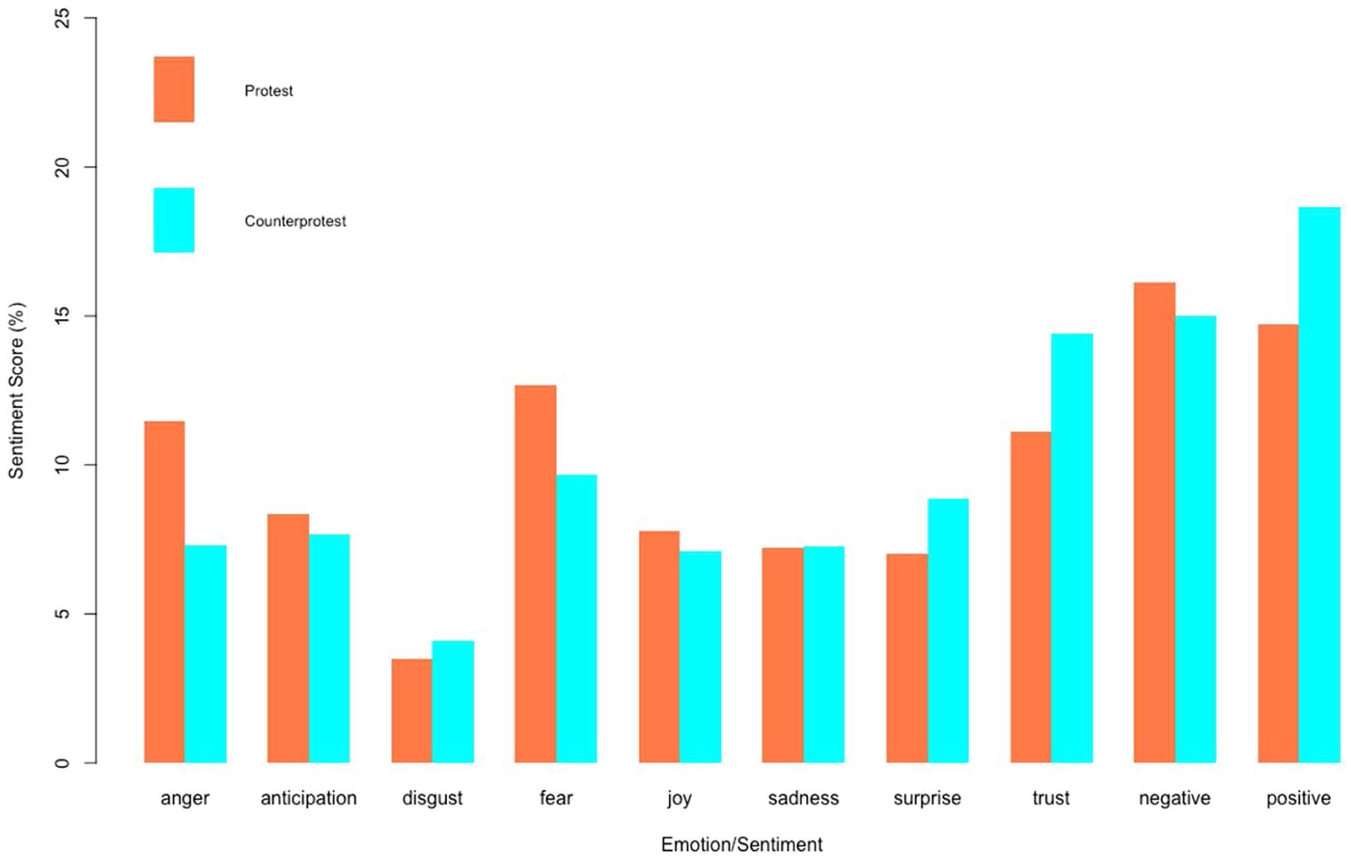
Sentiment analysis of protest and counterprotest tweets.
To better understand what drove Fear and Anger in the protest corpus, I looked more closely at tweets that featured these emotions. The high incidence of Fear and Anger came from the heavy retweeting of one particular tweet, which claimed a “#BLM activist & registered child sex offender” had been “arrested for allegedly assaulting people after the #MillionMAGAMarch.” This tweet alone was retweeted 4530 times in the MAGA corpus. But some other tweets also contributed to these emotions. For instance, another oft-retweeted post read, “Antifa leftists are everything they claim to hate. Violent, lawless, disgusting people we saw on full display as peaceful Trump supporters decided to have the #MillionMAGAMarch. Mainstream liberals should be forced to denounce this vile behavior.”
In the counterprotest (Million Moron March) corpus, the high incidence of Trust emerged from tweets that “counseled” MAGA protesters on what they ought to be doing. For instance, one tweet suggested, “If the Proud Boys were real patriots, they would donate their time and money to support veterans’ charities, providing shelter, food and healthcare to those who have actually served their country.” Some other tweets were more sarcastic. One such tweet said, “Dear Million Moron Marchers, Pls wear your masks when you wave your swastika flags and white supremacy t-shirts. We hope you are enjoying your last hoorah.”
But Fear, too, was high in this corpus, driven by concerns about violence. One tweet suggested, “This is the big bang of Trump’s civil war. These people generally endorse white supremacy while claiming to believe in America. They have been taught to fear and fight, but their cruelty has awakened the real Americans of all ethnicities and religions.” Another tweet with a high degree of Fear read, “#DC folks please assume the #ProudBoys to be armed and dangerous. They just stabbed three people and will NOT hesitate to stab you. For the love of god be safe tonight.”
Two important conclusions may be drawn from the sentiment analysis of protest and counterprotest tweets. First, while the MAGA protest movement exhibits sentiments and emotions that previous scholarship would lead us to expect (Ahmed et al., 2017; Goodwin et al., 2000; Shahin & Ng, 2021), the counterprotest is quite the opposite. The protest is propelled by Negativity, Fear and Anger: the counterprotest by Positivity and Trust. Second, in both movements, the most prominent emotions are expressed in tweets that are about the “other” side. Fear and Anger are especially high in Million MAGA March tweets that are not about Trump or conservatives but about BLM and “antifa leftists.” Similarly in the Million Moron March corpus, Trust was expressed in tweets referring not to Biden or liberals but to Trump supporters—the so-called Proud Boys—although these tweets did not indicate trust in them per se, but sarcastically advised them on what they should be doing as “real patriots.”
Discursive Strategies
RQ2 turns attention to the discursive strategies of protest and counterprotest participants. STM yielded a 10-topic model that indicated the most prominent strategies. Three of these—Topics 5, 8, and 1—were significantly more likely to be present in the Million MAGA March corpus, while three others—Topics 3, 2, and 7—were more prominent in the Million Moron March tweets (see Figure 2). Differences across the two corpora were marginal for the remaining four topics—4, 6, 9, and 10.
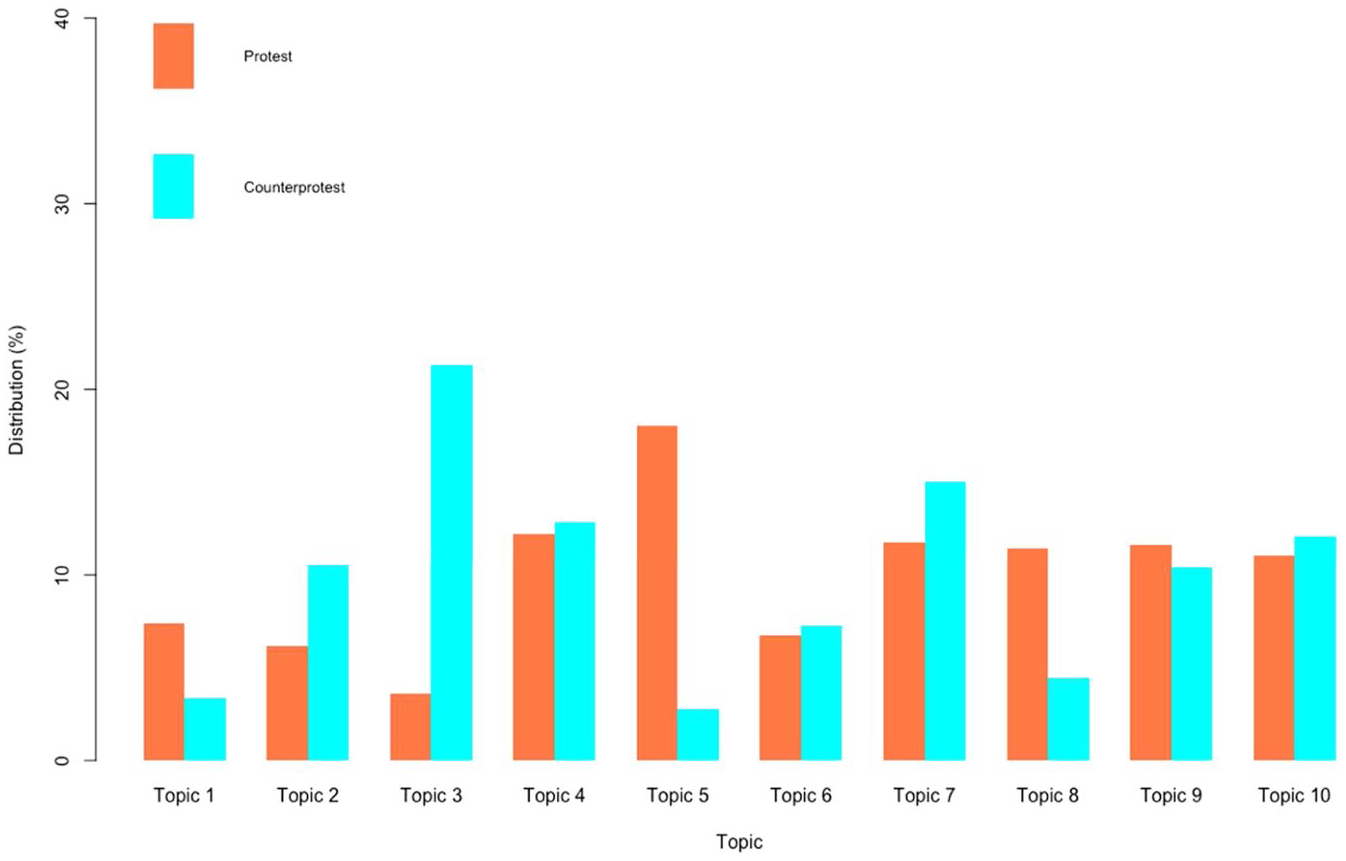
Distribution of topics across protest and counterprotest tweets.
Topic 5 was the biggest topic of discussion in the protest corpus, comprising the tokens trump, support, washington, follow, antifa, blm, and attack (see Table 1). Tweets corresponding with this topic expressed the rationale behind the Million MAGA March—support for Trump’s Victory. For instance, a tweet by Alex Bruesewitz ( @alexbruesewitz ), who describes himself as a Conservative activist, said, “It was a GREAT honor to speak to TENS OF THOUSANDS of great Americans today at the #MarchForTrump WE. ARE. THE. MAJORITY. We are SILENT no longer. We will ALWAYS fight for @realDonaldTrump and for FREE & FAIR elections.” This tweet was retweeted 999 times in the corpus. However, an undercurrent of this topic was that supporting Trump’s election simultaneously meant opposing BLM and antifa. Another prominent tweet in this topic simply comprised a series of hashtags signifying this connection: “BLM-antifa Freedom Plaza #Washington DC after #MarchForTrump #MillionMAGAMarch Saturday 14 Nov 2020 14th and Pennsylvania Avenue NW #WashingtonDC #TrumpToSaveAmerica #TRUMP2020ToSaveAmerica #TrumpSupporters #FreedomPlaza #AntifaTerrorists #BLMthugs #BLMAntifaTerrorists #BLMAntifa.”
Topic model of protest and counterprotest tweets.
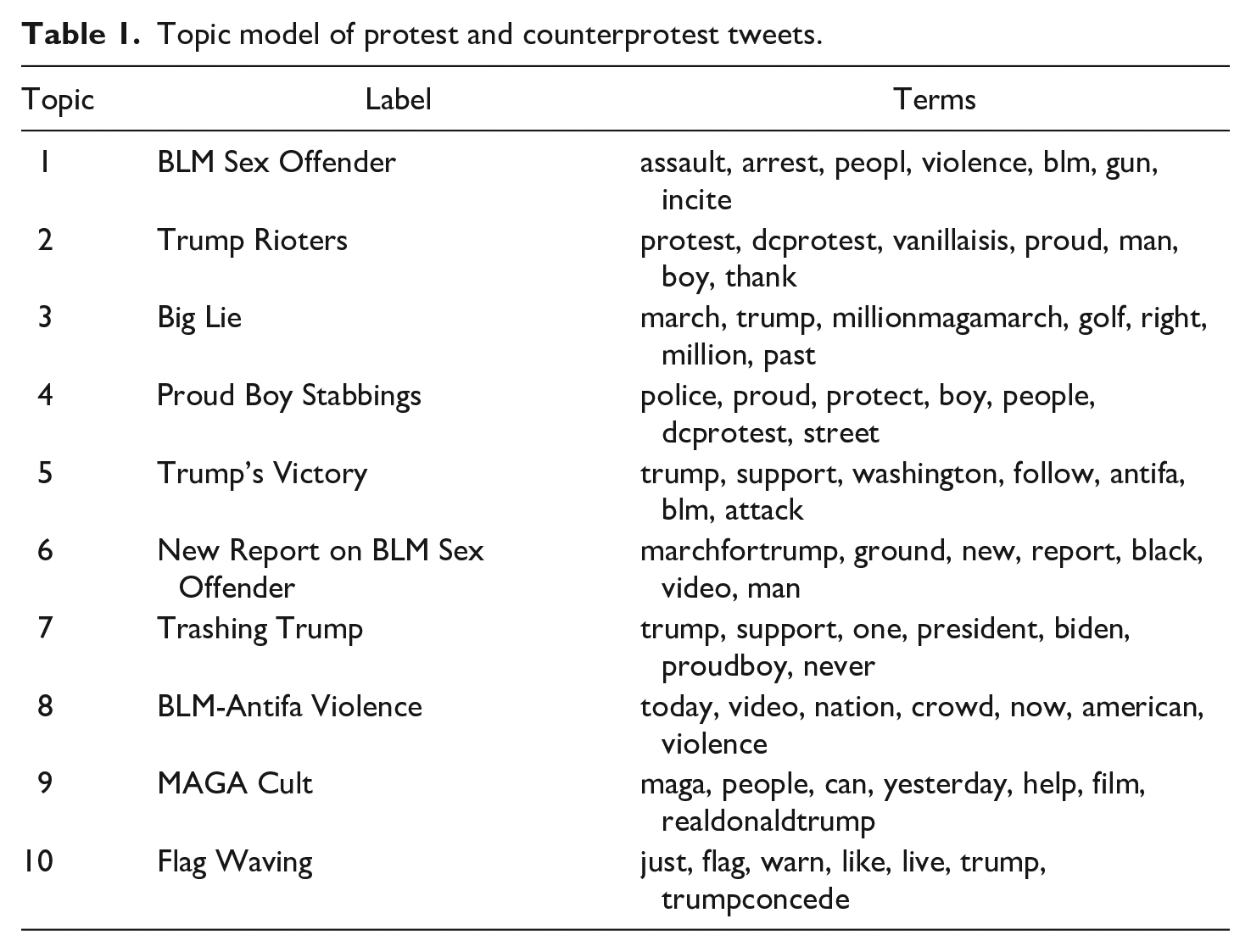
Topic 8, comprising the tokens today, video, nation, crowd, now, american, and violence, was driven by a single tweet—retweeted 5688 times in the corpus. The tweet, originally posted by Andy Ngô (@mrandyngo), the author of a book on antifa, said, “There was a lot of violence today against attendees of the #MillionMAGAMarch. Now, a large crowd sings the American national anthem outside the Willard Hotel in DC. Video by @BGOnTheScene: https://t.co/kq8PDv7Xfq.” The linked video displayed Trump supporters singing the national anthem. By portraying pro-Trump protesters as patriots singing the national anthem, the tweet did not simply suggest the counterprotesters were anti-Trump partisans but were effectively traitors to the nation itself. I labeled this topic BLM-Antifa Violence. A third topic that was prominent in this corpus, Topic 1, comprised the tokens assault, arrest, people, violence, blm, gun, and incite. This topic even more explicitly attempted to create “moral shock” vis-à-vis the counterprotesters. Most of the tweets in this topic—labeled BLM Sex Offender—related to one “BLM activist” and “child sex offender” who was arrested for allegedly assaulting a MAGA protester. Many tweets in this topic were also retweets of Andy Ngô.
In the counterprotest corpus, none of the prominent topics were about the election itself—or about Biden or the Democratic Party. Instead, they were mostly reactions to the MAGA protests. The biggest topic of discussion, Topic 3, comprised the tokens march, trump, millionmagamarch, golf, right, million, and past. It was labeled Big Lie as it suggested that the number of protesters the Trump team was claiming to be present at their march was a lie. As one such tweet said, “BREAKING: White House Press Secretary Kayleigh McEnany just claimed that 1 Million Trump supporters are marching in the #MillionMoronMarch FACTS: Estimates show the number at around 10–20,000 people. Even the #MillionMAGAMarch is a BIG LIE!” The tweet was originally posted by Mrs Krassenstein (@HKrassenstein), who calls herself a “Biden Supporter” in her profile. It was retweeted 3090 times in the corpus.
Topic 2, comprising the tokens protest, dcprotest, vanillaisis, proud, man, boy, and thank, drew attention to the violence being committed by MAGA protesters. It was labeled Trump Rioters. As a tweet by ChuckModi (@ChuckModi1) claimed, “One of 6 #BlackLivesMatter signs Trump mob of rioters tore down from LIUNA Building around midnight after counter-protesters went home. Police watched but did not intervene. Guess property damage ain’t that serious after all #MillionMoronMarch #DCProtests #VanillaISIS.” The use of hashtag #VanillaISIS here implies that pro-Trump supporters were effectively White terrorists—thus attempting to promote moral shock against them. A third prominent topic in this corpus, Topic 7, included the tokens trump, support, one, president, biden, proudboy, and never. Tweets under this topic, labeled Trashing Trump, mainly expressed sexually explicit profanities against Trump and his supporters—the Proud Boys—and taunted their “masculinity.”
The topical diversity of the MAGA protests and counterprotests illustrates the process of framing and counterframing. However, the counterframes do not engage in problem denial, counter attribution, or counterprognoses (Ayoub & Chetaille, 2020; Benford & Hunt, 2003). If the election result was framed by protesters as the “problem” (Topic 5: Trump’s Victory), then the counterprotesters did not simply deny but disregarded the problem altogether. As a result, there was no counter attribution of the cause of the problem either—nor any counterprognoses for its solution. What the counterprotests denied instead was that the MAGA protests were as voluminous as the protesters were claiming them to be (Topic 3: Big Lie). In addition, both sides attempted to delegitimize each other as “violent” (Topic 8: BLM Violence, Topic 2: Trump Rioters). MAGA protesters further tried to create moral shock against counterprotesters by suggesting they were traitors to the nation and included members who committed heinous sexual crimes. Meanwhile, the counterprotesters did the same by suggesting Trump supporters were terrorists and cast aspersions on their “masculinity.”
Network Structures
Besides affective and discursive dimensions, this study also examined, under RQ3, the structures of the Twitter networks formed by the MAGA protest and the anti-MAGA counterprotest. Both were examples of Barabási’s (2009) “scale-free networks”—a small number of nodes dominated the network structure through retweets. Of the 108,333 tweets in the MAGA protest corpus, as many as 92.2% were retweets. In the counterprotest corpus, a slightly lower 88.5% of the 68,230 tweets were retweets. Such networks tend to be highly centralized. Graph-level centralization based on weighted indegree was 0.36 for the protest network and a slightly lower 0.33 for the counterprotest network (see Table 2).
Protest and counterprotest retweet networks on Twitter.
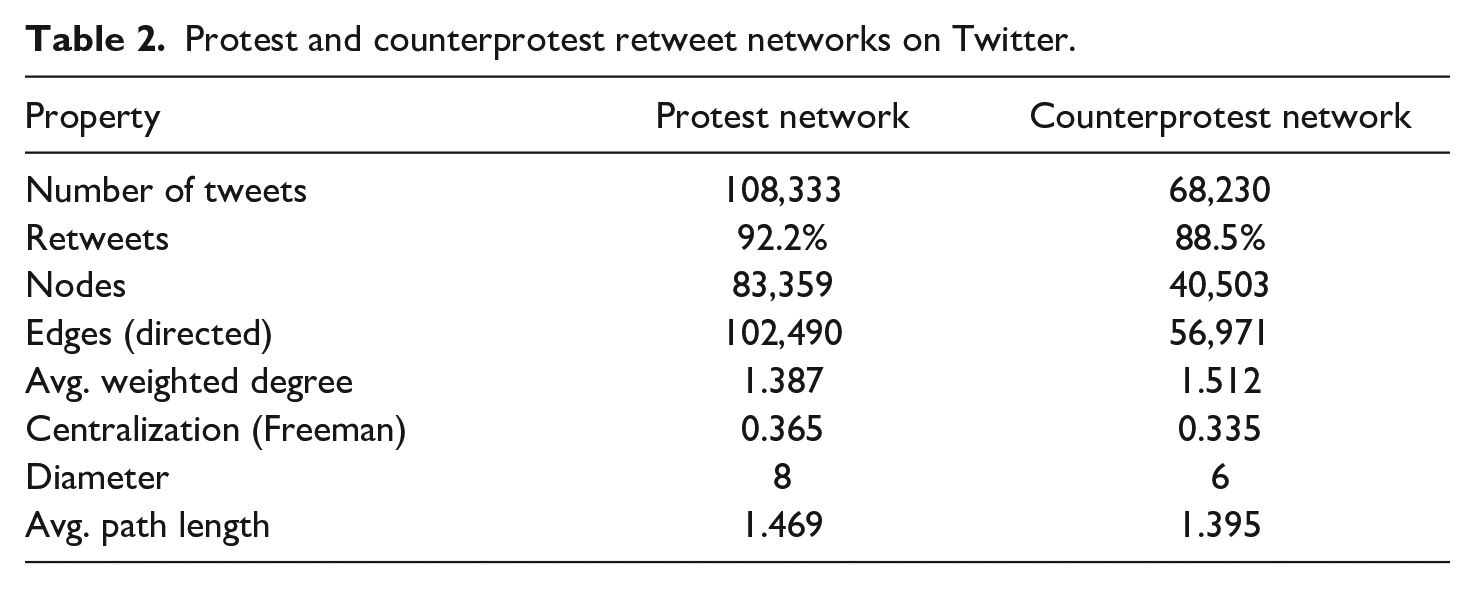
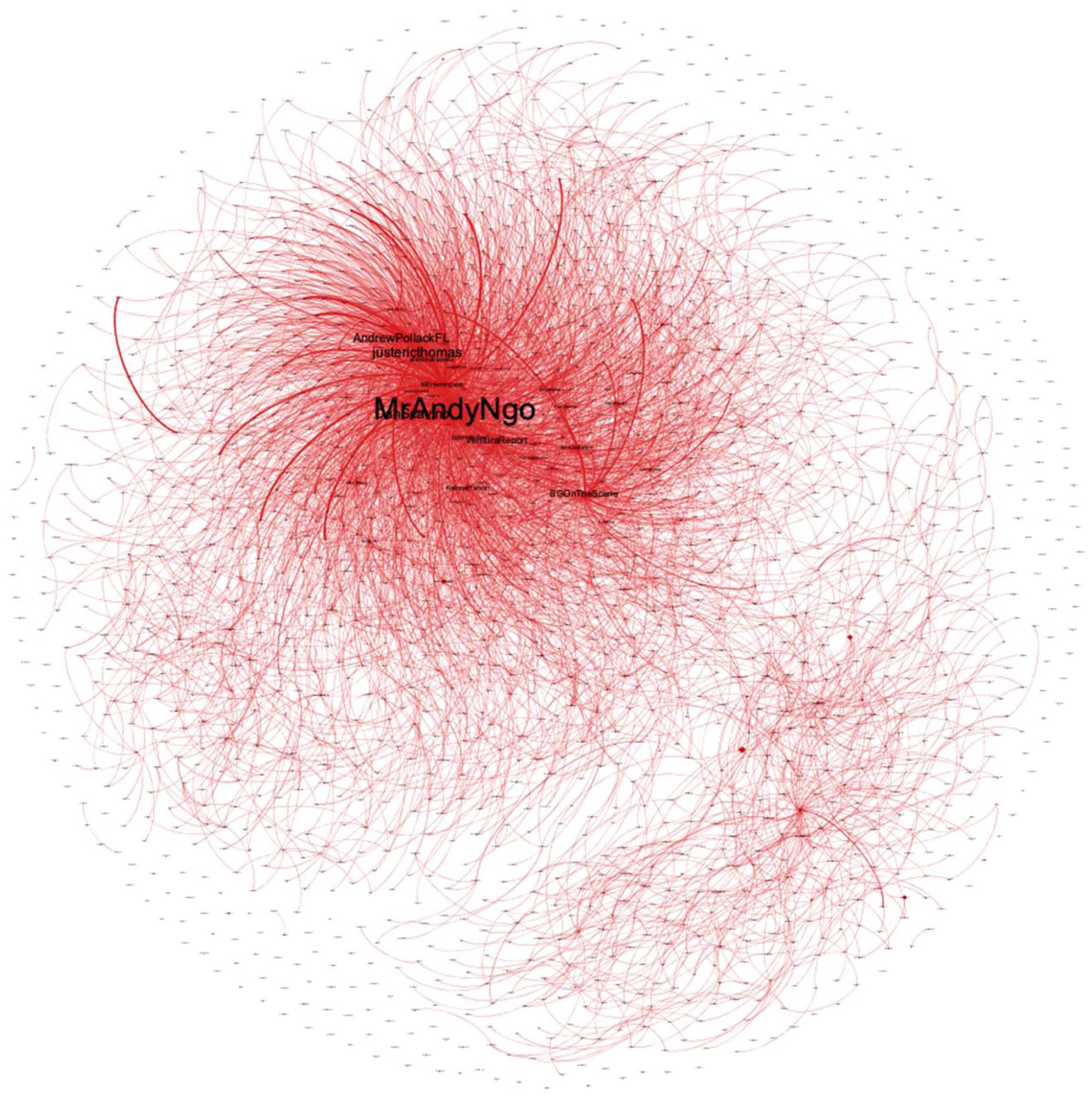
I further identified the top 10 most influential accounts—the crowd-enabled elites (Shahin et al., 2021)—in each network, also based on weighted indegree. In the MAGA protest network (see Figure 3), by far the most influential account was that of Andy Ngô ( @MrAndyNgo ), who describes himself as the editor-at-large of The Post Millennial news website and the author of a book on antifa. Almost all of his tweets targeted BLM and antifa for assaulting MAGA protesters or attempted to create moral shock toward them. Ngô had 29 unique tweets in the protest corpus. Some of these were retweeted hundreds or even thousands of times, such as the tweets comprising the topics BLM-Antifa Violence and BLM Sex Offender, discussed in the previous section.
Influencers in the protest Twitter network.
Jorge Ventura Media ( @VenturaReport ), a field reporter for Daily Caller, tweeted about “thousands” of Trump supporters rallying at Freedom Plaza—as well as the “threats” and “assaults” they were facing from BLM activists. Brendan Gutenschwager ( @BGOnTheScene ), an “independent reporter” and Eric Thomas ( @justericthomas ), whose Twitter profile simply says “camera with flash,” also tweeted along similar lines. Many of their tweets specifically called out BLM or antifa “attacks” on families, women, and children—others blamed the Washington, D.C. police for doing little to control the counterprotesters. Kimberly Klacik ( @kimKBaltimore ), a Republican congressional nominee from Maryland, tweeted, “Antifa & BLM are destroying our country. This is no longer republicans vs democrats.”
Two of the top 10 crows-enabled elites in the MAGA protest corpus—Kiki ( @fatfairygodmuva ) and sketchy_Jeff ( @sketchy_jeff )—posted anti-protest and anti-Trump tweets. But they were not trolls. Kiki had only two original tweets in the corpus while sketchy_Jeff had just one. None of their tweets were aimed at “provoking” MAGA protesters either: like all counterprotesters, they were questioning and challenging the protesters and their claims—except they used the protest hashtags to do so. Kiki’s tweets claimed MAGA supporters were “stealing” BLM chants and committing violence; sketchy_Jeff posted a video from 2016 in which Hillary Clinton, the Democratic nominee whom Trump had then defeated to become president, was showed as saying Trump would claim an election to be rigged whenever he would lose. “She warned us,” the tweet reminded.
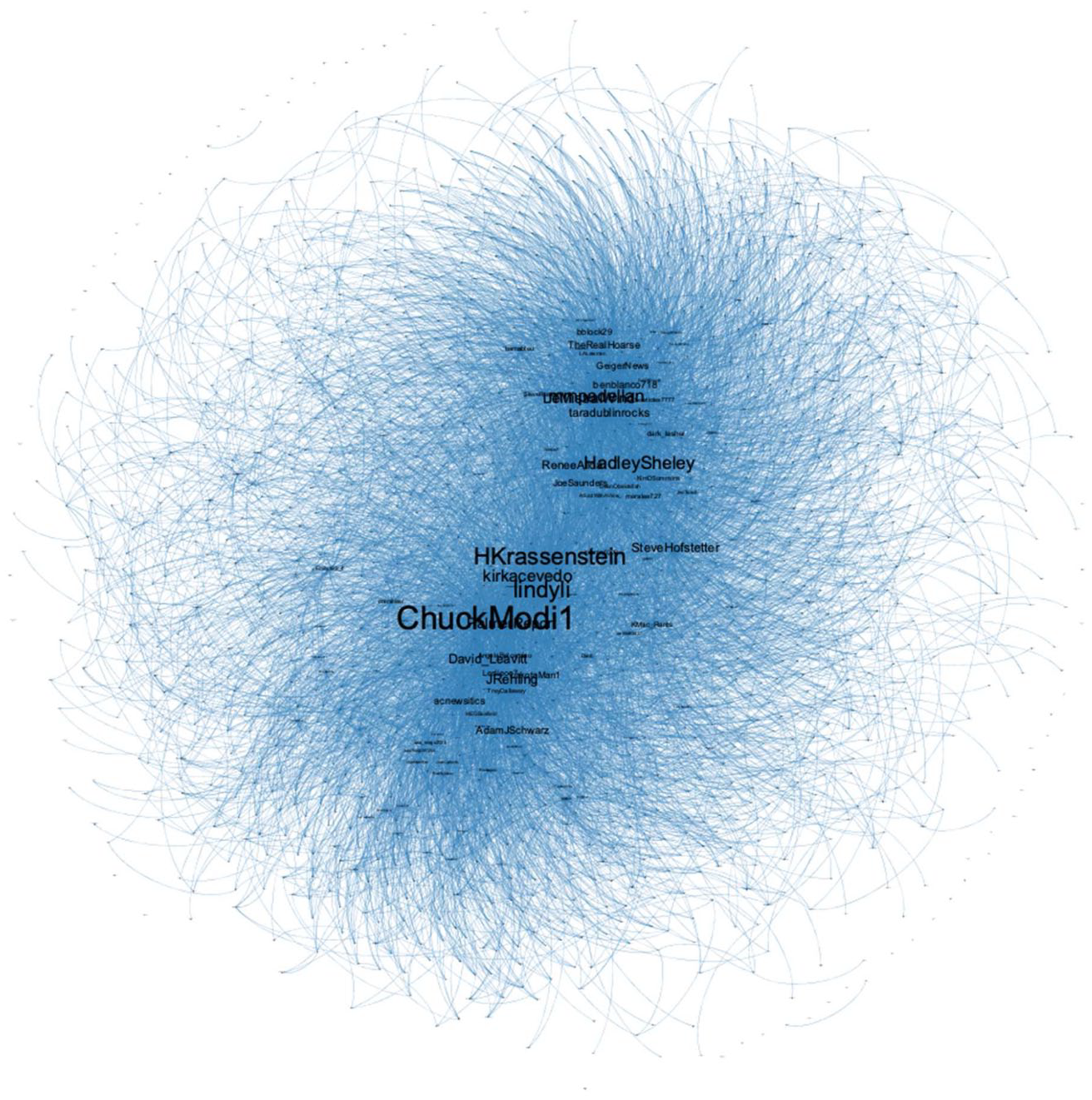
In the counterprotest corpus, the dominant account—ChuckModi ( @ChuckModi1 )—described himself as a “justice journalist” and “sports writer” (see Figure 4). The account had 24 unique posts in the corpus that were retweeted numerous times—including posts from the key topic Trump Rioters, as mentioned in the previous section. Most of his tweets blamed MAGA protesters for acts of violence, especially against the counterprotesters, and often employed the #VanillaISIS hashtag. Almost all these tweets also called out the police for letting protesters do as they would. As one such tweet said, “Trump supporters are allowed to do whatever they want, and break whatever laws they want. We are restricted to right here and kettled. I find this all insane and crazy. . .” Several of ChuckModi’s tweets adopted a mocking tone, such as one that went, “I’m hear (sic) to laugh at people & this ridiculous crybaby attempt to say the votes don’t count if we don’t get what we want. . .”
Influencers in the counterprotest Twitter network. Affective polarization.
Overall, the make-up of crowd-enabled elites among the counterprotesters was more varied. Both Hadley Sheley ( @HadleySheley ) and Kirk Acevedo ( @kirkacevedo ) described themselves as political junkies; both posted tweets employing profanities and mockery. BrooklynDad_Defiant! ( @mmpadellan ) called himself a “Proud papa” while Mrs Krassenstein ( @HKrassenstein ) described herself as the “Wife of a Krassenstein brother”—likely referring to either Brian or Ed Krassenstein, twins who were suspended from Twitter in 2019 for trolling President Trump (Spangler, 2019). One of Mrs Krassenstein’s tweets was prominent in Topic 3: Big Lie, as noted earlier. Another lamented: “When you peacefully protest that Black Lives Matter, Donald Trump will tear-gas you. When you take to the streets to overthrow a Democratic election, Donald Trump will join you.” Other elites in this corpus included Biden delegate Lindy Li ( @lindyli ), stand-up comic Steve Hofstetter ( @SteveHofstetter ), multimedia journalist David Leavitt ( @David_Leavitt ), and Minstral Wind ( @LeMistralWind ), an environmentalist and music buff.
Two important similarities were evident among the crowd-enabled elites in the protest and counterprotest networks. One, many of them tended to be tweeting from the ground—sharing first-hand accounts of what was happening on Freedom Plaza, often with the help of videos and photos, rather than commenting from a distance. Second, many of these elites tended to be “microcelebrities” with large online followings, often running into hundreds of thousands, sometimes millions. These two similarities illustrate the interconnectivity of online-offline political mobilization (see also, Greijdanus et al., 2020). Participants who share first-hand accounts of social action from the ground tend to emerge as the most influential voices online. But not everybody tweeting from the ground is likely to achieve such influence: in line with the logic of Barabási’s (2009) scale-free networks, accounts that have an already established online presence with large numbers of followers are most likely to become powerful hubs within the network and their voices are most likely to carry the furthest.
At the same time, there were also two crucial differences between protest and counterprotest elites. The elites among protesters tended to be more homogeneous—many of them were right-wing journalists and authors. In contrast, there was more diversity among counterprotest elites, at least in terms of their self-presentation in Twitter profiles. Second, while top 10 protest influencers included two anti-MAGA voices, no pro-MAGA voices were present among the top 10 counterprotest influencers. This indicates the protest movement was less likely to use counterprotest hashtags than vice versa.
Discussion
Counterprotests have a long history and they have become especially important as a political phenomenon in recent years (Meyer & Staggenborg, 1996; Wood, 2020). This study untangles what Zald and Useem (1987) have called the “tango” of protest and counterprotest. Specifically, it formulates a three-dimensional framework—comprising affective repertoires, discursive strategies, and network structures—within which the dynamic interactions between protest and counterprotest movements may be examined and explained. The analysis of the Million MAGA March and its counterprotest following the 2020 U.S. presidential election as connective action on Twitter reveals stark differences between the protest and the counterprotest along each of the three dimensions (RQs1-3).
First, the affective repertoires of the two movements were quite dissimilar. The protest movement was driven by Negative sentiment and emotions of Fear and Anger—in line with previous research on the role of affect in protests (Ahmed et al., 2017; Castells, 2012; Goodwin et al., 2000; Shahin & Ng, 2021). However, Positive sentiment and the emotion of Trust dominated the counterprotest—although Fear, too, was high. In both corpora though, the most prominent emotions emerged from antagonistic tweets directed at the “other” side. Similarly, topic modeling suggested the protesters and counterprotesters employed discursive strategies driven primarily by hostility, focusing on acts of violence and morally shocking behavior from the other side (see also, Ahmed et al., 2017). This was particularly true of the counterprotest: the protesters did articulate their own issue agenda—support for Trump’s victory—in at least one topic. Finally, the network structure of the protest was marginally more centralized than that of the counterprotest. The real difference along this dimension lay in the make-up of their “crowd-enabled elites” (Shahin et al., 2021). The protest network had a relatively homogeneous set of elites, mostly right-wing journalists and authors. Elites in the counterprotest network were more varied, indicating that even though the network was hierarchical, a wider range of voices had the potential to rise up the hierarchy and dominate. Once again though, in line with the other two dimensions, it was accounts whose tweets adopted an “us versus them” tone and attacked the other side that were most likely to be retweeted and become influential across the network.
The three dimensions draw attention to different aspects of protest–counterprotest interactions, but they also intersect with each other (RQ4). For instance, tweets that featured a high incidence of the most salient emotions in a corpus also drove up its most prominent topics. This is not surprising. As Jasper (2011) has noted, “feeling and thinking are parallel, interacting processes of evaluating and interacting with our worlds” (p. 286). In other words, emotion and cognition, instinctive affect and instrumental strategies of discourse, feed off and reinforce each other. The same tweets then also made particular Twitter accounts more influential within the two network structures, respectively.
These three dimensions thus constitute a holistic framework for understanding and evaluating protest–counterprotest dynamics, driven by the shared logic of affective polarization (Iyengar et al., 2019). The study demonstrates that affective polarization, which highlights the significance of affect and collective identity over and above so-called rational choice models of political behavior, offers a useful approach for explaining contentious politics and social action. It provides social movement scholars a theoretical means to study the construction and implications of collective identity in digitally networked action—which the focus on resource mobilization and “network individualism” in recent years has put paid to (Gerbaudo & Treré, 2015; Shahin & Ng, 2021). At the same time, it highlights the significance of affect in collective identity construction, contributing to a belatedly growing body of research (Goodwin et al., 2000; Jasper, 2011).
These findings have not only theoretical but normative significance too. Deliberative democracy rests on the assumption that even deep-seated differences can be resolved through deliberation and a rational consensus can be reached. But prospects of consensus are dim when each side defines itself in opposition to the other side and measures its political gains primarily in terms of the other’s losses. Such an attitude toward politics undercuts the legitimacy of democratic processes and institutions as arbiters of political power. This was evident, for instance, in Trump supporters’ unwillingness to accept the result of the November 2020 election—of which the Million MAGA March was itself an outcome—and, two months later, in their assault on the U.S. Capitol. As Mouffe (2000) argued, deliberative democracy’s need for a rational consensus turns a blind eye to the centrality of affect and collective identity in the practice of politics. The rise of affective polarization, however, means the United States—and, perhaps, other polarized democracies—continue to do so at their own peril.
Beyond their differences, the analysis has also brought to light some significant similarities between protests and counterprotests. One, both relied on creating “moral shock” as a discursive strategy, calling to attention the supposed depravity of the opposite side (see also, Ahmed et al., 2017). This was perhaps one reason why Fear was high in both corpora. Another common discursive strategy was nationalist “flag waving,” which Ayoub and Chetaille (2020) and Nikolayenko (2019) have also found in protest–counterprotest interactions in other countries. While flag waving was particularly true of the MAGA protest corpus in this study, even counterprotesters posted tweets such as this: “The most terrifying moment of the entire Trump movement was when they started using their own flag instead of the US flag. . .” This is in line with recent research on how nationalism has turned into a means of justifying partisanship and normalizing party-based discrimination, especially online (Shahin, 2021).
Another key similarity was that the most influential accounts in both social networks were tweeting from the physical site of the protest—Freedom Plaza. But these accounts already had large online followings, which made their tweets more likely to be retweeted than other accounts. This finding underlines the mutually constitutive nature of online-offline action in contemporary social movements. As our lives become more deeply enmeshed with digital technologies, treating online and offline as exclusive possibilities of social action no longer makes sense. Few movements can avoid being online today—and yet, few can hope to achieve any measure of success by remaining exclusively online (Greijdanus et al., 2020). Perhaps a more fruitful line of inquiry would turn attention to the ways in which online and offline actions feed off each other—making a protest movement more vigorous but, simultaneously, also more likely to incite a counterprotest (Greijdanus et al., 2020; Inata, 2021).
The limitations of this study can serve as avenues for future research. Differences in the affordances of digital platforms lead to different kinds of social networks (Valenzuela et al., 2018) and different forms of political conversation (Yarchi et al., 2021). Future research can investigate cross-platform differences in protest–counterprotest interactions along affective, discursive, and structural dimensions. Scholars may also examine protest–counterprotest interactions on issues such as abortion rights, lesbian and gay rights, and climate change along these dimensions. Comparative/cross-national research on such issues can lead to the identification of system-specific factors that influence protest–counterprotest interactions.
Footnotes
Declaration of Conflicting Interests
The author(s) declared no potential conflicts of interest with respect to the research, authorship, and/or publication of this article.
Funding
The author(s) received no financial support for the research, authorship, and/or publication of this article.
