




Abstract
Latin Americans represent one of the most sizable migrant communities in Spain. Yet, unlike other minority groups, they count with longer migration tradition, linguistic and cultural similarities with the Spanish population, and easier access to Spanish nationality. Drawing on original data covering a large number of candidates (N = 5,055), this article examines whether this apparently favorable configuration guarantees the nomination of candidates from this minority group at local elections in municipalities with strong demographic presence of Latin American residents. Our findings indicate that this group is still underrepresented in Spanish politics. Few Latin American candidates are fielded by political parties, and even fewer (<2%) manage to achieve elected office. To interpret these results, we examine the extent to which Spanish parties field minority candidates. We show that while some parties are proactively including these candidates, only few nominate them in secure positions of the electoral lists and that Spanish parties’ inclusiveness does not seem to be aligned with Latin American voters’ partisan preferences.
Keywords
During the past decades, the topic of migrants’ access to elected office across European countries of settlement has received increased scholarly attention. Existing studies examining patterns of descriptive political representation of different minority groups point toward a worrying phenomenon: Representative institutions often fail to adequately reflect societal diversity. Even when migrants and their offspring account for very sizable groups within the population, national, regional, or even local parliamentary assemblies still feature few immigrant-origin officeholders in their composition (Bird et al., 2011; Bloemraad & Schönwälder, 2013; Dancygier et al., 2015).
Faced with such troubling evidence about the meaning of representative democracy, scholars have started to explore an array of different societal, political, and institutional factors that account for this representation gap. Within this constellation of elements, the legal framework defining migrants’ access to electoral rights (based on residence or citizenship acquisition) plays a crucial role by directly defining the pool of individuals entitled to stand as candidates in elections (Donovan, 2007). However, even the existence of rather favorable legal regulations allowing migrants to run for office neither necessarily guarantees that migrants are fielded as candidates nor guarantees that they eventually manage to ensure seats in parliamentary assemblies.
This, in turn, has led scholars to examine the importance of political parties operating in host countries on the outcomes of minority representation. In electoral systems based on closed and blocked lists, parties stand out as gatekeepers of the selection process as they directly control who enters the electoral competition in the first place (Donovan, 2007; Geddes, 1998; Saggar, 2000). Yet parties’ motivations to field immigrant candidates can be driven by different considerations. To begin with, their ideology or broader positions on immigration are expected to shape their strategies for selecting immigrant candidates. Traditionally, the political left has been associated with more attentiveness to issues related to migration and immigrant integration, with left-wing parties being usually more welcoming of minority candidates, especially since they often also benefit more from minority voters’ support (Bloemraad & Schönwälder, 2013; Ciornei, 2014; Farrer & Zingher, 2018; Tiberj & Michon, 2013; Tolley, 2019).
Beyond purely ideological considerations, it is also reasonable to expect that anticipated electoral rewards can strongly incentivize parties to recruit immigrant-origin candidates. More sizable migrant groups are more likely to trigger the attention of most parties (not only left-wing parties), thus stimulating them to nominate minority candidates from these groups. This is particularly the case when migrants’ electoral potential is high (they have voting rights in the host country); when they are highly concentrated in specific constituencies, with stronger potential to act as a “voting block”; or when they already show certain predisposition to support specific parties (Donovan, 2007; Fieldhouse & Cutts, 2008; Schönwälder, 2013; Sobolewska, 2013). Newly established parties, which still lack a well-defined pool of voters, may have even stronger incentives to tap into the support of the migrant electorate, especially if they are left wing and when the electoral niche is sizable (Bergh & Bjorklund, 2011; Dancygier et al., 2015; Donovan, 2007). Their openness to minority candidates may be further enhanced by their less established hierarchies compared with traditional mainstream parties, as stronger institutionalization in party structures makes it harder for aspirant office seekers to enter existing parties (Bloemraad & Schönwälder, 2013).
Yet, even when parties do decide to field minority candidates, this does not necessarily mean that such candidates will also have a guaranteed seat in representative institutions. In fact, candidates’ chances of becoming elected officeholders also depend on a second stage of the selection process in which parties decide which candidates are placed in more or less “winnable” electoral districts or in more or less “safe” positions on electoral lists (Mügge, 2016). The latter is particularly important in electoral systems with closed and blocked party lists in which the degree of safety of a candidate’s position on the list directly constrains their likelihood of getting elected.
This article aims to examine these different mechanisms potentially affecting migrants’ access to elected office by focusing on the specific case of Latin Americans (LAs) in Spain. As discussed in the Introduction to this Special Issue, Spain is one of the European countries that has experienced substantial inflows of labor migrants from Latin America. LAs also have a privileged access to Spanish citizenship after 2 years of prior legal residence in the country (compared with 10 years for other nationalities); and some of them recently received the right to vote in Spanish local elections based on reciprocity agreements signed with their origin countries.
A priori, this configuration of demographic and institutional factors is expected to favor LAs’ access to elected office in Spain. This article aims to test if this was the case, by looking at their patterns of descriptive political representation and Spanish parties’ inclusiveness toward Latin American candidates. To do so, we draw on the results of an original survey conducted in municipalities in which LAs accounted for 10% or more of the population for the 2011 and 2015 local elections. Our focus on local elections is justified by the fact that municipal parliamentary assemblies generally stand out as the first (and more accessible) arena for immigrant minorities to engage in politics (Schönwälder, 2013).
Case Study, Data, and Methods
As previously mentioned, LAs represent one of largest foreign groups in Spain’s (relatively recent) immigration history. The first inflows of migrants from this minority group to Spain were characterized by the arrival of highly educated and politically active individuals seeking refuge (Cebolla & González-Ferrer, 2008). These initial flows rapidly started to diversify, with large numbers of LAs coming to Spain during the 2000s and 2010s in search of a job. Their labor migration has been encouraged by the common mother tongue, historical (postcolonial) ties with Spain, rather favorable attitudes from the Spanish population, 1 as well as the availability of jobs especially prior to the 2008 financial crisis. Most LAs entered the Spanish labor market as unskilled workers, manufacturing and construction workers, or employees in restoration, protection, and sales, while many Latin American women were involved in elderly care and domestic work (Consejo Económico Y Social España, 2019).
Due to these sustained waves of economic migration, by 2011 and 2015 (the two electoral years analyzed here), LAs were already the largest migrant group (more than 30% of all foreign-born residents in Spain), with most of them coming from Ecuador, Colombia, Argentina, Peru, Bolivia, Venezuela, or the Dominican Republic. 2 The 2011 municipal elections were particularly relevant for this group, as they were the first ones in which some Latin American nationalities could vote for the first time. The 2015 elections marked a significant turning point in Spanish politics due to the rise of new parties that challenged the traditional Spanish two-party system: the emergence of Ciudadanos (Citizens, Cs) outside Catalonia and the appearance of the left-wing coalitions supported by Podemos (We can) in many medium-sized and large municipalities (Rodon & Hierro, 2016).
In terms of their political inclusion, LAs have a differentiated access to local electoral rights in Spain compared with other foreign groups. To begin with, LAs in Spain benefit from a fast-track access to naturalization, which puts them at an advantage over other migrant minorities. They are only required to reside in Spain for 2 years to apply for Spanish citizenship, instead of the 10 years generally required for other foreign residents. LAs make a great use of this advantage, and 73% of the more than 1,290,000 migrants naturalized in Spain between 1996 and 2015 were of Latin American origin. 3 Additionally, Spain applies a selective enfranchisement system for non-EU (European Union) foreigners, according to which only selected nationalities are entitled to vote in Spanish local elections, based on reciprocity agreements with origin countries. Nationals of Latin American countries such as Ecuador, Bolivia, Peru, Colombia, Chile, and Paraguay with more than 5 years of residence in Spain were entitled to vote for the first time in the 2011 Spanish local elections on prior registration in the electoral census (Pérez-Nievas et al., 2014; Vintila, 2015). 4 However, given the limited information provided and the high administrative barriers, very few of those entitled to vote actually registered to vote. In fact, only 51,133 LAs registered to vote for the 2011 election and 21,609 LAs for the 2015 election. 5 In any case, it should be noted that these reciprocity agreements only included the active suffrage, without covering the passive suffrage. Thus, only LAs already naturalized as Spanish citizens have the right to stand as candidates in Spanish elections. Overall, this opportunity structure is expected to favor the political representation of this minority group by significantly increasing the pool of naturalized LAs entitled to stand as candidates (and to vote) in Spanish local elections.
To examine the patterns of descriptive political representation of LAs in Spain, we rely on original data collected in the framework of the research project “Plural Councils? The Political Representation of Migrants in Spain” (APREPINM). To identify the Latin American candidates fielded for Spanish elections, we conducted a survey with local party organizations across all Spanish municipalities of more than 1,000 inhabitants (n = 81) in which LAs returned a strong demographic presence (at least 10% of the population) in 2011 or 2015.
In each municipality, we contacted the local organizations of all parties that gained at least one seat in the previous national or regional elections. The survey thus included all nationwide mainstream parties that ran in these municipalities (Partido Popular/People’s Party [PP], Partido Socialista Obrero Español/Socialist Party [PSOE], Ciudadanos/Citizens [Cs], Izquierda Unida/United Left [IU], Unión Progreso y Democracia/Union Progress and Democracy [UPyD]), those regional parties relevant in specific regions, and all left-wing coalitions running in 2015 with the support of the nationwide party Podemos. As mentioned, the 2015 elections represented a breaking point leading to considerable changes not only in the Spanish party system, including the emergence of left-wing coalitions in many medium- and large-size municipalities, but also with Ciudadanos competing in local elections nationwide for the first time (Rodon & Hierro, 2016). In brief, these elections not only meant the breakthrough of new political parties at the local level but also the advancement of more inclusive ways of selecting candidates for electoral lists (Jaime-Castillo et al., 2018).
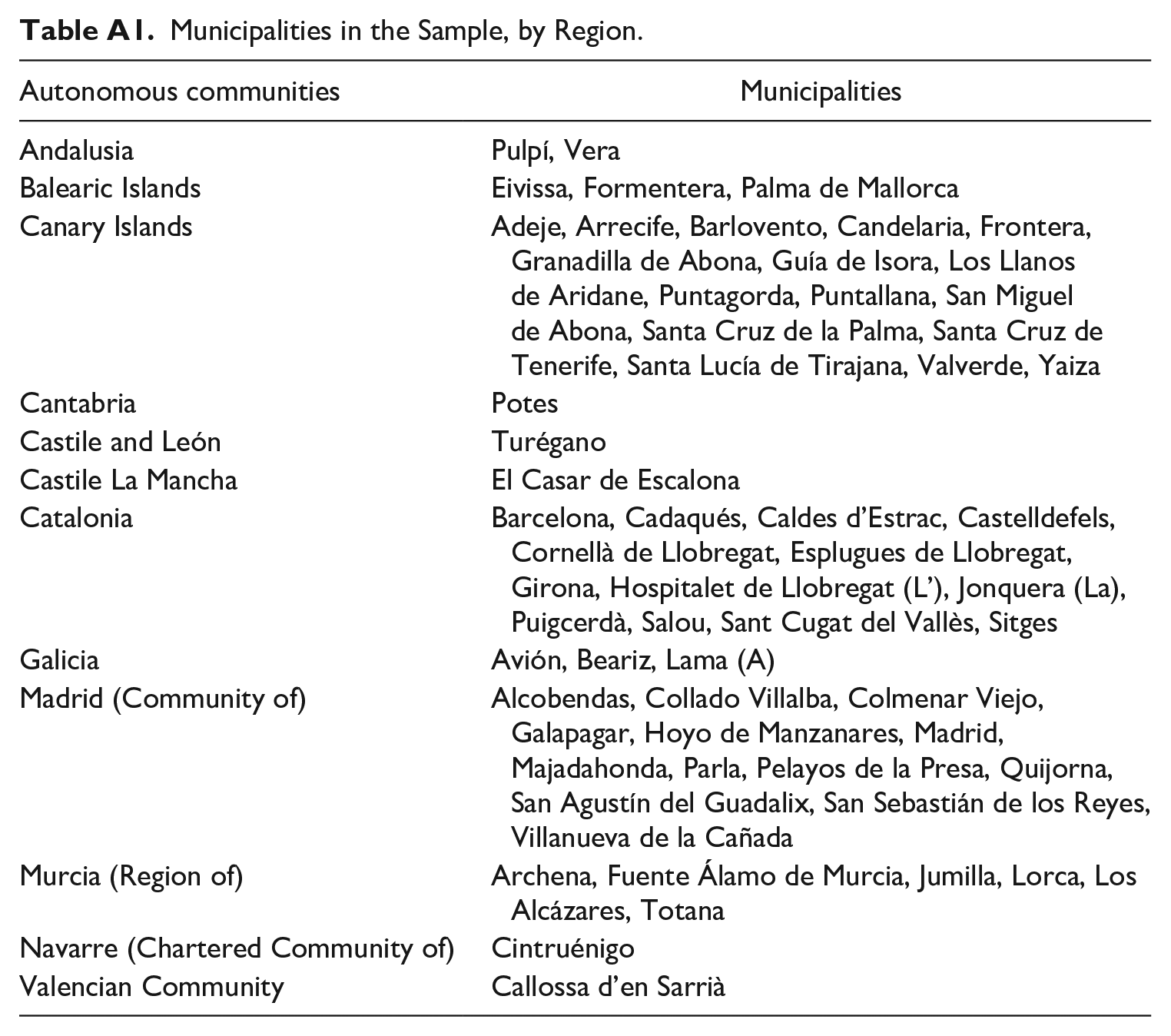
The survey was based on individualized questionnaires (which included the electoral lists presented by each party organization) with standardized questions regarding the origin of the candidates fielded in 2011 and 2015. We define Latin American candidates as all those individuals (a) born in Latin America of non-Spanish parents (first-generation Latin American immigrants) or (b) born in Spain of at least one Latin American parent (second-generation). The response rate of the survey was 43% of all the local organizations that we contacted. Thus, our final database includes 241 local party organizations distributed across 61 municipalities in 12 Spanish regions (Appendix Table A1). In total, 5,055 candidates were fielded by these local organizations that answered our questionnaire.
Results
Overall, only 122 LAs were fielded as candidates for the 2011 and 2015 Spanish local elections in municipalities counting with a large proportion (≥10%) of Latin American residents in the total population (Figure 1). This demonstrates that, against our initial expectation, being a sizable migrant community is not sufficient to ensure an adequate presence in Spanish local politics. Yet our findings also indicate that there was a slight increase in the nomination of LAs in 2015 (2.8% of all candidates) compared with that in 2011 (2%). Nonetheless, the number of LAs elected as local councilors after both elections was extremely small, indicating that this group still faces important barriers not only in entering party lists but also in terms of being nominated in positions that could ensure their election.
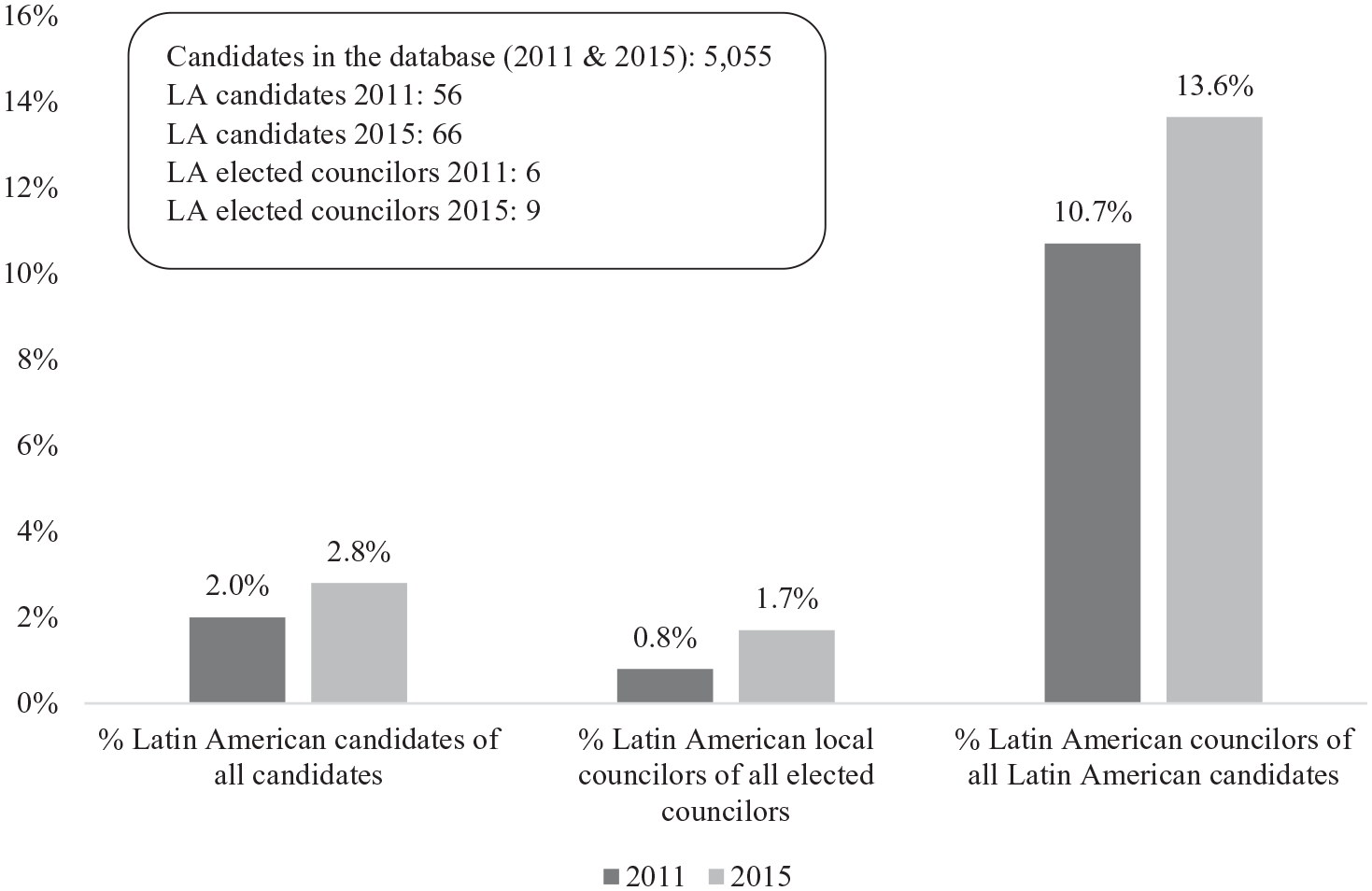
Latin American candidates and elected councilors in 2011 and 2015.
Figure 2 compares the share of Latin American candidates in each party list for which we obtained an answer, with the percentage of Latin American residents out of the total population of the municipalities in which these lists were presented. As shown, the proportion of candidates from this group fielded by Spanish parties is, in most cases, well below the line of perfect representation (when the percentage of candidates fielded perfectly matches the percentage of LAs in the population). In fact, out of the 104 parties that responded to our questionnaire, most of them did not field any Latin American candidate at all (even though all of them were in municipalities with 10% or more LAs in the population), whereas only 10 local organizations included Latin American candidates in a proportion that is equal or higher to their share in the population. 6 These findings are in line with the results of past studies showing that other sizeable migrant communities also return a very limited political presence in Spain at the local, regional, or national level (Pérez-Nievas et al., 2014; Pérez-Nievas et al., 2020; Vintila & Morales, 2018), with Latin American candidates following a general trend of underrepresentation of minorities in Spanish politics.
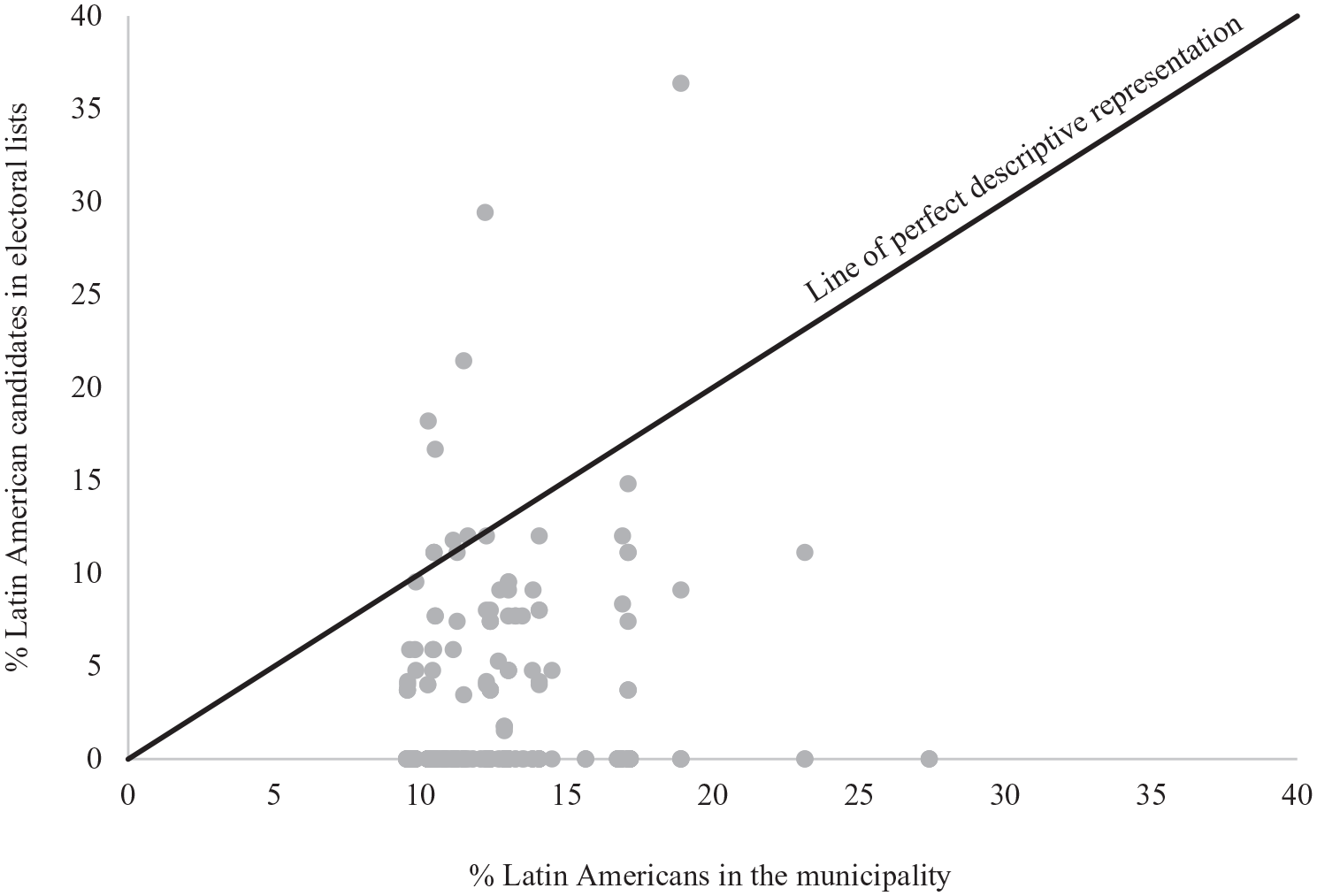
Share of Latin American candidates in party lists versus share of Latin Americans in the municipalities (2011 and 2015).
As discussed in the introductory section, parties play a central role in minorities’ political inclusion by directly constraining their chances to enter local politics, particularly in blocked and closed list systems. Their motivation for reaching out to minority candidates may be shaped by their ideological stance, with left-wing parties being more prone to support minorities’ political integration. It may also be determined by certain party system characteristics, with newly created parties having more incentives to field minority candidates as an electoral strategy for approaching new electoral niches. Additionally, in new parties with less institutionalized internal structures, it may be easier for “newcomers” (e.g., candidates of immigrant background) to enter party lists or secure a safe position, compared with more established parties. Most important, it is reasonable to expect that parties’ decision to nominate minority candidates may be triggered by strategic electoral calculations assessing potential electoral payoffs. This is even more likely to be the case for parties that traditionally rank high in migrants’ partisan preferences. Regarding this later aspect, Table 1 compares the party preferences of LAs and Spaniards, drawing on a survey conducted by La Caixa in 2017 across highly diverse Spanish neighborhoods. 7 As observed, most LAs (60.8%) show a strong partisan preference for left-wing parties (compared with 39.2% for right-wing parties), which is unsurprising given that LAs have been traditionally closer to the political left and particularly to PSOE (Morales et al., 2010). Thus, mainstream established parties score very high in LAs’ preferences, with the Socialist Party receiving stronger support from this group, especially when compared with its main right-wing counterpart PP.
Partisan Preferences a of Spaniards and Latin Americans.
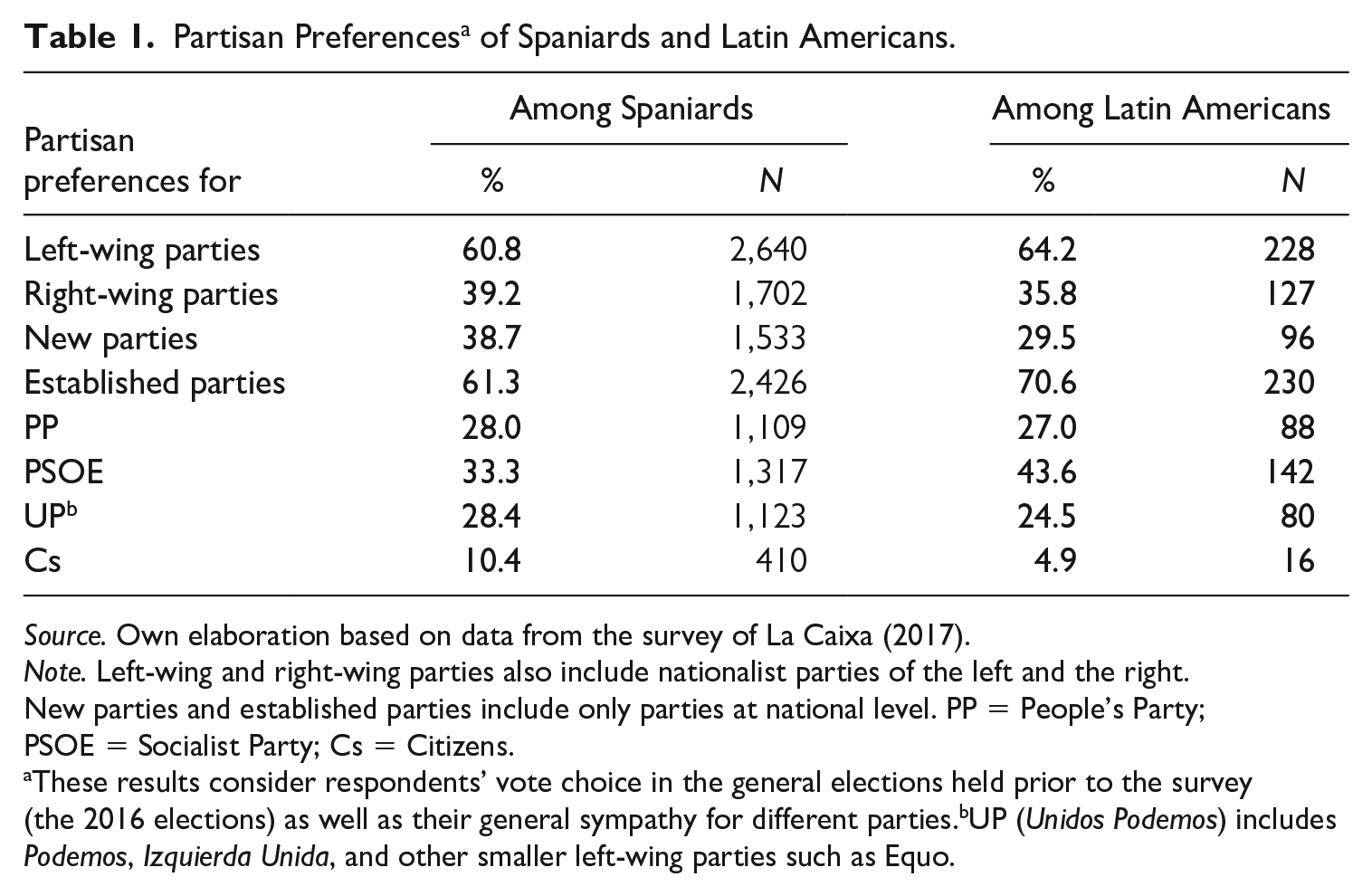
Source. Own elaboration based on data from the survey of La Caixa (2017).
Note. Left-wing and right-wing parties also include nationalist parties of the left and the right. New parties and established parties include only parties at national level. PP = People’s Party; PSOE = Socialist Party; Cs = Citizens.
These results consider respondents’ vote choice in the general elections held prior to the survey (the 2016 elections) as well as their general sympathy for different parties.bUP (Unidos Podemos) includes Podemos, Izquierda Unida, and other smaller left-wing parties such as Equo.
Table 2 shows how different parties fielded Latin American candidates for the 2011 and 2015 local elections. As observed, around 62% of all LAs were nominated by left-wing parties, thus confirming the trend observed across other European countries that left-wing parties are more inclusive of minority groups when compared with right-wing parties. However, right-wing parties were more inclusive in 2011, although only by two candidates.
Distribution of Latin American Candidates for the 2011 and 2015 Elections, by Party.
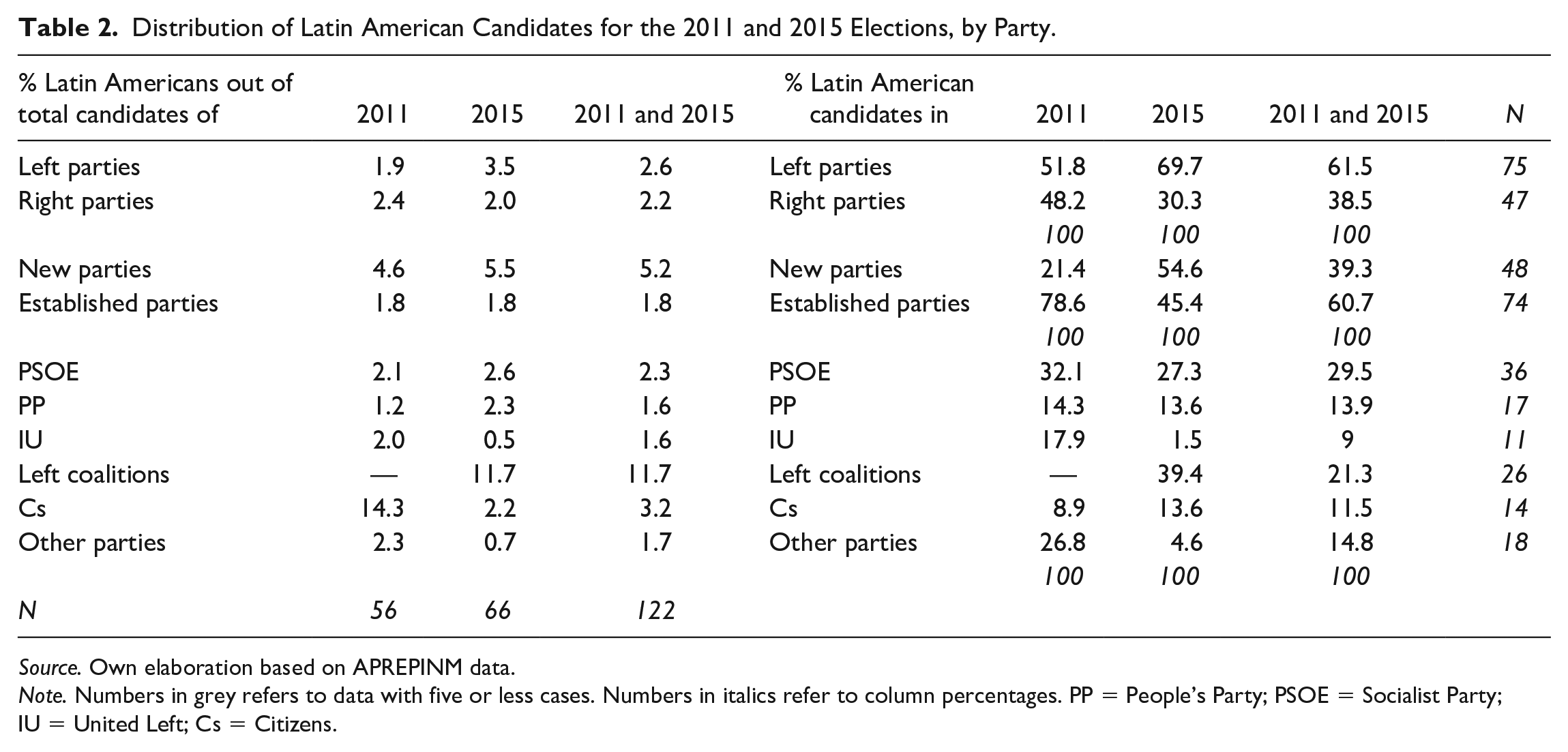
Source. Own elaboration based on APREPINM data.
Note. Numbers in grey refers to data with five or less cases. Numbers in italics refer to column percentages. PP = People’s Party; PSOE = Socialist Party; IU = United Left; Cs = Citizens.
Of the two mainstream parties, the share of LAs in PSOE’s lists was much higher than for the PP, although the proportion of LAs of all candidates fielded by both parties was limited. The case of PSOE is particularly interesting: Although LAs usually return quite a strong preference for this party, only 2.3% of all PSOE candidates fielded in municipalities with a large Latin American population were from this minority group. In fact, the increase in the share of the Latin American candidates in all left-wing parties between the two elections is not due to PSOE’s proactive stance in fielding more Latin American candidates, but rather the emergence in 2015 of new left-wing coalitions affiliated to Podemos. These coalitions fielded up to 40% of all LAs who ran for the 2015 elections, much more than any other mainstream party. This also suggests that new parties, especially those on the left, are more inclusive of minority voices, with the share of Latin American candidates in new parties being almost three times higher than in established parties. Traditional mainstream parties, including the traditional left, seem to lag behind in the implementation of proactive strategies for the political inclusion of LAs.
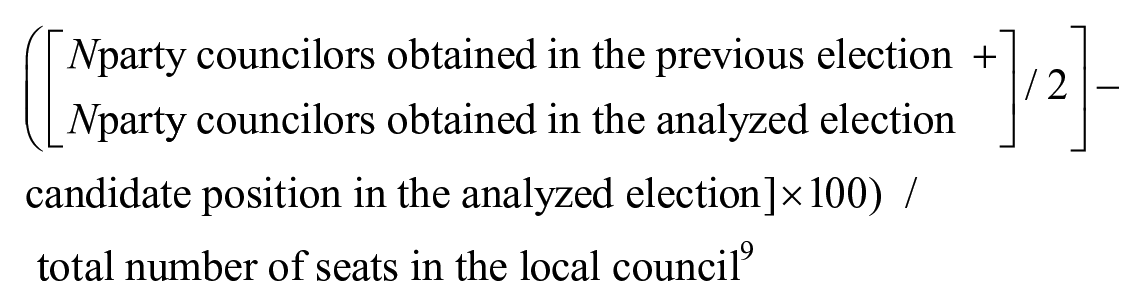
Additionally, from the already limited pool of Latin American candidates, very few managed to be elected. In an electoral system such as the Spanish one, with blocked and closed party lists, this could be explained by candidates’ position on the electoral lists. To explore this argument, Table 3 shows the distribution of Latin American candidates fielded for the 2011 and 2015 elections taking into consideration how “safe” their position in the party list was. For this, we created an index of nomination in safe seats 8 that takes into consideration not only the electoral results of the respective party for the elections analyzed but also the results of the previous elections, using the following formula:
Levels of Safety a of Candidates’ Positions in Electoral Lists, by Party (2011 and 2015 Elections).
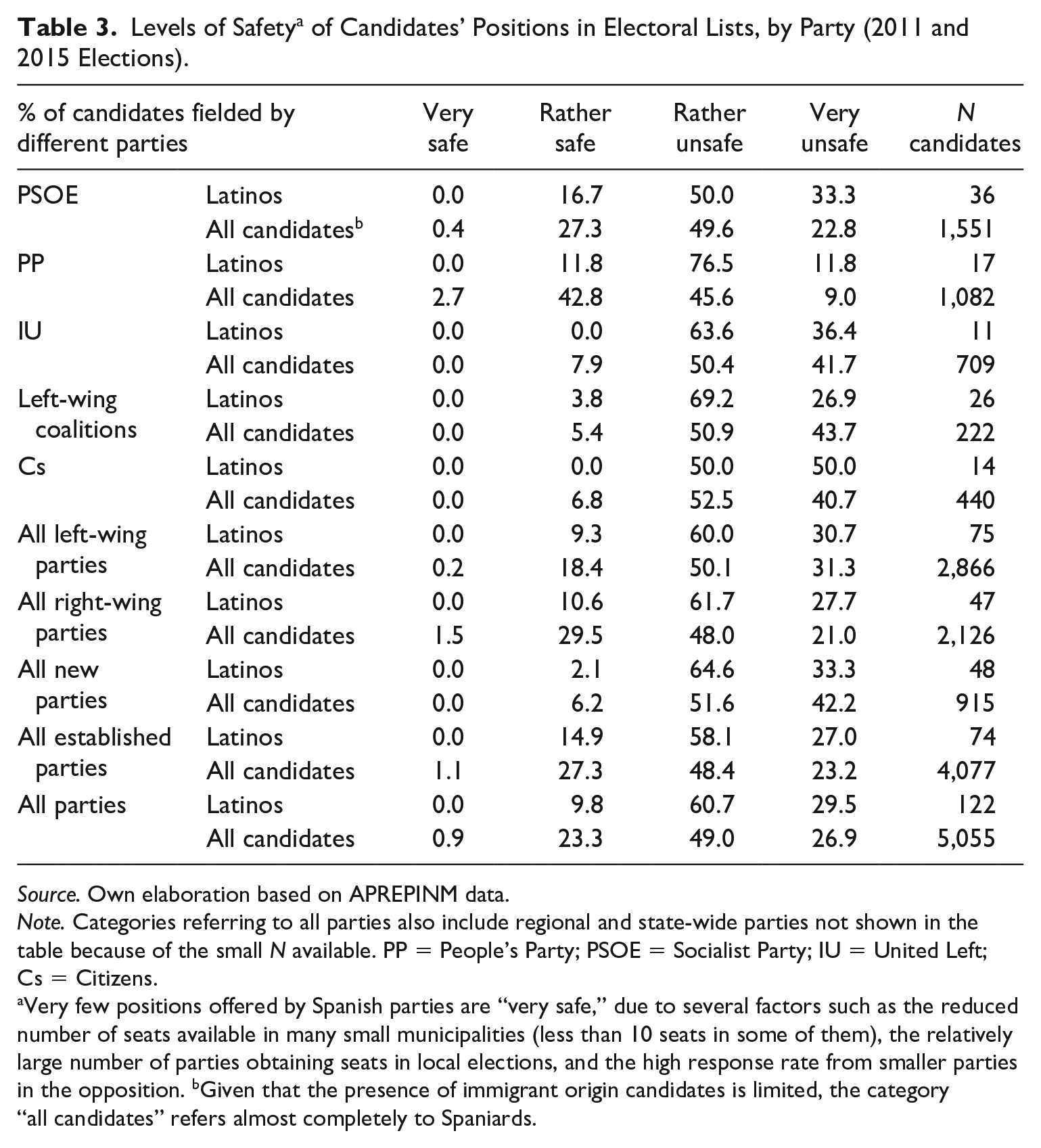
Source. Own elaboration based on APREPINM data.
Note. Categories referring to all parties also include regional and state-wide parties not shown in the table because of the small N available. PP = People’s Party; PSOE = Socialist Party; IU = United Left; Cs = Citizens.
Very few positions offered by Spanish parties are “very safe,” due to several factors such as the reduced number of seats available in many small municipalities (less than 10 seats in some of them), the relatively large number of parties obtaining seats in local elections, and the high response rate from smaller parties in the opposition. bGiven that the presence of immigrant origin candidates is limited, the category “all candidates” refers almost completely to Spaniards.
Our findings show that 90% of all Latin American candidates were included in unsafe positions of the electoral lists, with limited chances of being elected. This explains why so few of them managed to secure seats after the 2011 and 2015 elections. Although the local party organizations that participated in our survey nominated only a small share of all their candidates in very safe or rather safe positions of the lists (0.9% and 23.3%, respectively), this proportion was even more reduced for LAs (with 0% and 9.8%, respectively). This, of course, explains the poor results in the rates of success of Latin American candidates who actually entered the city councils in 2011 and 2015, while also making evident the rather limited support that most Spanish parties provide for Latin American immigrants to run for elected office. In most cases, when LAs were fielded in party lists (particularly in the largest mainstream parties), they were generally assigned to rather unwinnable positions of such lists. This, in turn, demonstrates that most Spanish local party organizations have not taken too seriously their commitment toward the political integration of this very sizable minority group.
If we consider the available (very and rather) safe seats by each party and compare between LAs and non-LAs (Figure 3), we can see that left-wing coalitions present the smaller gap (−1, 6%) in absolute terms. Ciudadanos and Izquierda Unida also show smaller gaps than the PP and PSOE, although they do not place any Latin American candidate in either very or rather safe positions. This might be partly explained by the smaller number of safe seats that they can offer. Among the two mainstream parties, the PSOE places LAs in better positions than the PP (−11% gap compared with −33.7%). Nonetheless, even the PSOE placed more than 83.3% of Latin American candidates in unsafe positions (close to the 88.2% of the PP), with almost no chances of being elected. Consequently, its strategy for the inclusion of Latin American candidates seems rather symbolic, even though the PSOE remains the preferred party among Latin American residents.
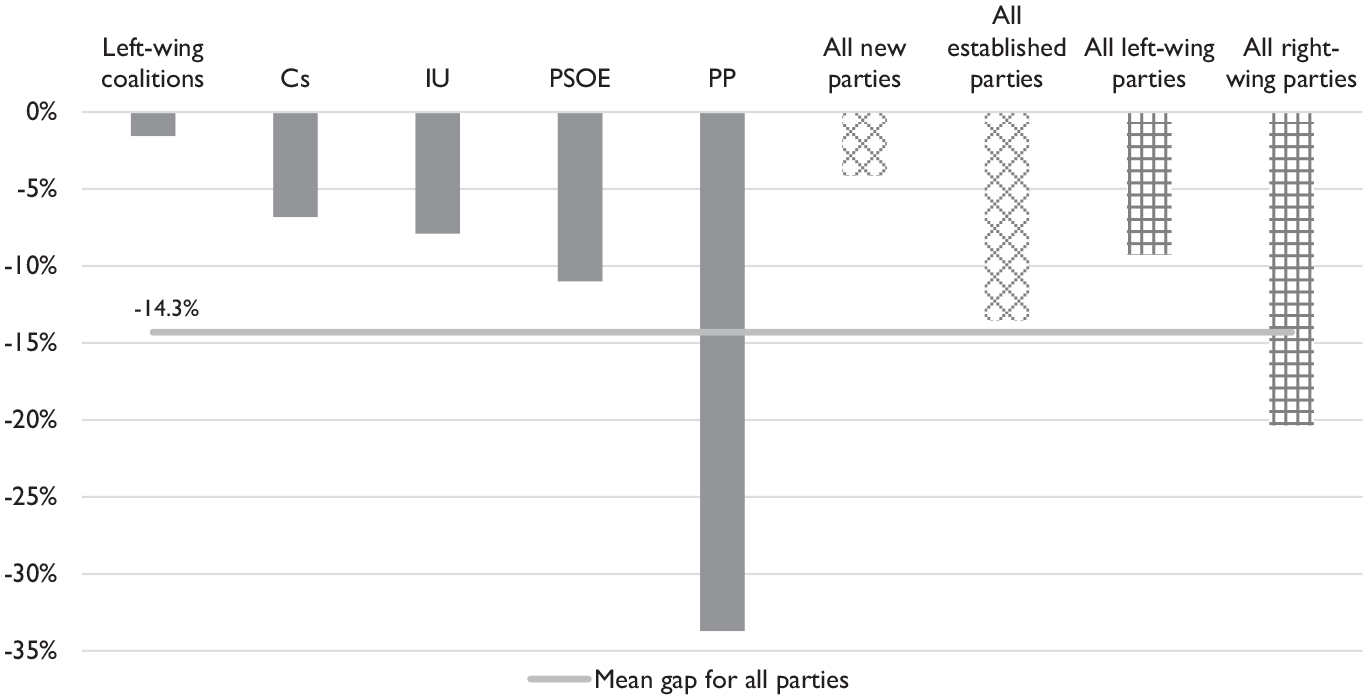
Mean gap in safe positions between Latin American candidates and all candidates, by party (closer to zero means a smaller gap).
Conclusion
In the broader context of scholarly literature pointing toward an important underrepresentation of minorities in legislatures across Europe, this article closely examined LAs’ access to elected local offices in Spain. We argued that, a priori, the sizable Latin American community might be benefited in its pathways to political representation by a configuration of demographic and institutional factors. LAs account for a large proportion of all migrants in Spain, and their political integration could be potentially incentivized by the common language, the shared cultural ties with Spaniards, the privileged citizenship regime they enjoy compared with other nationalities, as well as the rather positive views that Spaniards have toward them.
This configuration of factors would thus initially lead to rather high expectations regarding LAs’ access to representative institutions in Spain. Their descriptive political representation—measured both as the nomination of LAs in party lists and the presence of Latin American in office—was also expected to be particularly encouraged by left-wing parties, as the political left has traditionally been associated with pro-immigration stances, while also benefiting from migrants’ electoral support. As demonstrated, this is also the case for LAs in Spain, which show a strong preference for left-wing parties (particularly the PSOE). Consequently, such parties may have stronger incentives to reach out to this new electoral niche by approaching Latin American candidates, especially in municipalities with high demographic presence of LAs within the overall population.
Against these initial expectations, our findings indicate that very few Latin American candidates were fielded by Spanish parties for local elections and that even fewer managed to secure a seat in local councils. In municipalities where LAs account for 10% or more of all inhabitants, less than 3% of all candidates nominated for the 2015 elections and less than 2% of all local councilors eventually elected have a Latin American background. These shares were even lower for the 2011 elections in which some Latin American nationalities were entitled to vote for the first time. Demographic concentration, a privileged access to nationality, or selective enfranchisement processes, therefore, do not seem to act as sufficient conditions that guarantee an adequate presence of (prospective) Latin American officeholders in Spanish politics. Moreover, when LAs were eventually selected as candidates for local elections, their positions on party lists were usually quite unsecure, explaining why so few eventually got elected.
Even if traditional left-wing parties would presumably benefit more from the recruitment of Latin American candidates, our results show that, in the Spanish case, these parties still lag behind in their inclusiveness of the Latin American minority compared with the new Spanish left. Such lack of inclusivity seems particularly surprising in parties that score very high in LAs’ political preferences, such as the PSOE. In turn, the new left-wing coalitions that emerged in the Spanish political scene during the 2015 local elections (strongly supported by Podemos in most cases) seem more open to the recruitment of Latin American candidates than traditional mainstream parties. The more inclusive methods followed by left-wing coalitions, the more fluid power structures of new parties, and their ideological position (which clearly challenged traditional local politics in Spain) seem to have favored the entrance of prospective politicians with a Latin American background in electoral lists, although it remains to be seen if such an effect will continue to be observed in the future.
Footnotes
Appendix
Municipalities in the Sample, by Region.
| Autonomous communities | Municipalities |
|---|---|
| Andalusia | Pulpí, Vera |
| Balearic Islands | Eivissa, Formentera, Palma de Mallorca |
| Canary Islands | Adeje, Arrecife, Barlovento, Candelaria, Frontera, Granadilla de Abona, Guía de Isora, Los Llanos de Aridane, Puntagorda, Puntallana, San Miguel de Abona, Santa Cruz de la Palma, Santa Cruz de Tenerife, Santa Lucía de Tirajana, Valverde, Yaiza |
| Cantabria | Potes |
| Castile and León | Turégano |
| Castile La Mancha | El Casar de Escalona |
| Catalonia | Barcelona, Cadaqués, Caldes d’Estrac, Castelldefels, Cornellà de Llobregat, Esplugues de Llobregat, Girona, Hospitalet de Llobregat (L’), Jonquera (La), Puigcerdà, Salou, Sant Cugat del Vallès, Sitges |
| Galicia | Avión, Beariz, Lama (A) |
| Madrid (Community of) | Alcobendas, Collado Villalba, Colmenar Viejo, Galapagar, Hoyo de Manzanares, Madrid, Majadahonda, Parla, Pelayos de la Presa, Quijorna, San Agustín del Guadalix, San Sebastián de los Reyes, Villanueva de la Cañada |
| Murcia (Region of) | Archena, Fuente Álamo de Murcia, Jumilla, Lorca, Los Alcázares, Totana |
| Navarre (Chartered Community of) | Cintruénigo |
| Valencian Community | Callossa d’en Sarrià |
Acknowledgements
We would like to thank all members and collaborators of this project for their assistance with the data collection. We are also indebted to Laura Morales for her insightful comments on the initial design of the questionnaire, as well as to Josep Lobera (leading researcher of the 2017 La Caixa survey) for providing us with the data on Latin Americans’ partisan preferences. Finally, we wish to thank the editors of this Special Issue for their useful comments on previous drafts of this article.
Authors’ Note
Marta Paradés is currently affiliated with Universidad Pontificia Comillas.
Declaration of Conflicting Interests
The author(s) declared no potential conflicts of interest with respect to the research, authorship, and/or publication of this article.
Funding
The author(s) disclosed receipt of the following financial support for the research and/or authorship of this article: This article uses data from the APREPINM Project that received funding from the Spanish Ministry of Economy and Competitiveness in the framework of the Call of the National Research Program Oriented to Societal Challenges (reference CSO-2016-79540-R). We would like to thank all members and collaborators of this project for their assistance with the data collection. The article and its open access publication is also based upon work funded by COST Action 16111 EthmigSurveyData ( ), supported by COST (European Cooperation in Science and Technology) and funded by the Horizon 2020 Framework Programme of the European Union; the University of Oxford; the Universidad Autónoma de Madrid, and the Casa de Velázquez in Madrid.