



Abstract
I examine the relative poverty risk among single-parent households in countries that have a large share of households with dual earners. Data from the Luxembourg Income Study (LIS) Database are used to analyze eighteen OECD countries in the period 1984 to 2010. I find that single parents face higher relative income poverty risks in countries with a large share of dual-earner households and that this higher risk of poverty is related to higher standards of living in those countries: higher standards of living have raised poverty thresholds, and single-parent incomes are less likely to reach those higher poverty thresholds. I also find that this overall pattern varied across institutional contexts: a rise of dual-earner households puts single parents at a disadvantage only in countries that have relatively low public expenditures on childcare and relatively low income transfer policies.
Families in high-income countries have seen significant changes in recent decades. Two of the most important economic changes have been the rise of women’s participation in the labor force, which increased the share of households with dual earners (Ferragina 2020; Goldin 2006), and a rise in the diversity of family forms, including single parenthood (Thomson 2014; Bernardi, Mortelmans, and Larenza 2018). The increase in women’s economic activity, often described as part of the gender revolution, is generally associated with lower economic inequality, but it has not been without certain economic trade-offs. This article examines one such potential trade-off: that single-parent families may face a higher risk of poverty in societies that have a large share of dual-earner households. Can the incomes of single parents keep up with the incomes of dual-earner couples to keep their families out of poverty, and, if not, what are the implications for social policy?
The gender revolution has been a force of economic equality in many countries since (broadly) the 1960s (England 2010). More women entering the labor market, working longer hours, and in better-paying occupations and positions, has reduced economic differences between women and men substantially (Goldin 2006). Their economic activity also improved women’s control over—and access to—household income (Bennett 2013) and eligibility for insurance-based social policy (Lewis 1992). Moreover, the rise of women’s employment in the gender revolution has resulted in women earning larger shares of household income, which was associated with lower inequality among households (Harkness 2013; Nieuwenhuis, Van der Kolk, and Need 2017) and a small reduction in relative poverty rates in the working-age population as a whole (Nieuwenhuis et al. 2020).
Yet the gender revolution has also been described as “uneven and stalled” (England 2010, 149). In a number of countries, most notably in the United States, women’s employment rates have stopped increasing or even decreased. Fathers lag behind in taking up care roles, and the care responsibilities among single parents lies predominantly with single mothers. And some groups have benefited more from the gender revolution than others, to the advantage of women with higher levels of education and access to better-paying occupations. This has brought into focus the potential trade-offs in terms of inequality of gender and class in relation to the gender revolution in general, and the institutional context supporting women’s employment more specifically (Hook and Li 2020). This literature, however, has paid limited attention to family diversity, including single parents becoming more common in many countries.
The income situation of single parents through the gender revolution is not immediately evident. On the one hand, the rise of women’s earnings has given rise to dual-earner households that often out-earn single-parent household incomes. This can be expected to represent a disadvantage to the (relative) income position of single parents. Yet, the majority of single parents (a large majority of whom are women) have been in a couple prior to being a single parent (Bernardi, Mortelmans, and Larenza 2018). This would mean that in dual-earner societies, many women will have been working before becoming a single parent, which is beneficial to their employment opportunities after becoming a single parent. Still, though, it is well documented that the use and benefits of childcare (as a typical dual-earner policy) are socioeconomically unequal (Van Lancker 2018), and that many high-income countries have reduced income replacement policies—in part to promote further employment growth, and in part as the rise of dual earners allowed for such reductions (Dingeldey 2007; Mertens 2017).
Taken together, there are a lot of unknowns regarding the (relative) income position of single parents in dual-earner societies. This study takes a broad perspective, examining the relative income poverty risks among single parents and parents in a couple in eighteen high-income countries as the share of dual-earner households increased in the period from 1984 to 2010 in many of these countries. A comparison between single parents and parents in a couple is well motivated, as both have children and, as such, are potentially affected in similar ways by the institutional context, while a key difference is that single parents typically will not be able to have two incomes. This study answers two questions: To what extent has a rise in the share of dual-earner households in high-income OECD countries affected the poverty risks of single parents relative to parents in a couple? And to what extent has the protective capacity of work-family reconciliation and income protection policies for single parents been altered by the rising share of dual-earner households?
Theory
Research on the poverty risks of single parents proceeds from three types of explanations of household poverty: individual, structural, or policy (Brady 2019; Nieuwenhuis and Maldonado 2018). The potential influence of dual-earner households on single-parent poverty is a structural explanation and, as such, introduced first, followed by individual and policy explanations.
Structural explanations of the poverty risks of single parents are conventionally understood as related to the employment conditions of single parents, such as precarious, part-time or low-wage employment, unemployment, and in-work poverty (Horemans and Marx 2018; Gingrich 2008). This type of explanation acknowledges factors beyond the control of individual single parents, such as overall unemployment rates, wage-setting practices, or earnings inequality. Here, I expand this type of explanation to argue that the income poverty risks of single parents are also to be understood relative to the economic situation of other household types and, in particular, relative to the share of dual earners.
Income poverty is typically conceptualized as individuals living in a household that has a total income lower than a specific threshold, and often this threshold is set relative to other household incomes. The reason that household incomes are used, is that household members are assumed to share their incomes and that there are economies of scale at the level of the household. The reason that poverty thresholds in high-income countries such as in the OECD and the EU are set relative to other household incomes in society (for instance relative to the median household income) is based on the principle of social participation: “having too few resources or capabilities to participate fully in a society” (Smeeding 2017, 21; also see Townsend 2010).
Based on such conceptualization of relative income poverty, single parents can experience increased risks of poverty even if their incomes remain the same, if other households have increased incomes. This represents that the typical standard of living has increased to the point that for some households it becomes more difficult to participate fully in that society. From this, the baseline expectation follows that in a context in which more people are dual earners (or live in households with even more than two earners), the relative income poverty risks of single parents will be higher relative to parents in a couple (polarization hypothesis). The underlying mechanism pertains to households’ capability to have multiple earners. This is straightforward but nonetheless important to test: the association between poverty among single parents and the share of dual earners in society can be (partially) explained by parents in a couple being more likely to live in a household with multiple earners (employment hypothesis).
Individual explanations assert that single parents are more likely to be at risk of poverty, compared to other family types, because single parents are more likely to have a disadvantaged socioeconomic background. Most prominently, this position was brought forward in the “diverging destinies” hypothesis (McLanahan 2004), based on the observation that single parenthood is more common among less educated parents. Yet, although this educational gradient in single parenthood is observed across many high-income countries, it actually explains only a very small part of their economic disadvantage (Härkönen 2018) and explains little of trends over time among single parents (Zagel, Hübgen, and Nieuwenhuis 2021). However, in the context of the gender revolution and the rise of women’s employment, it remains important to test the explanation that the lower level of education among single parents can explain part of their elevated poverty risks compared to other household types, for two reasons. First, with the rise of women’s employment and to the benefit, in particular, of dual-earner couples, homogamy increased: the higher educated and people with higher income potential increasingly tend to intermarry (Kalmijn 1998), forcing lower-educated single parents to compete economically with higher-educated couples with higher earnings potential. Second, among high-income countries, the educational gradient in single parenthood was found to be weakest (or even almost absent) in Southern European countries with low female labor force participation (Härkönen 2018). In other words, in countries in which women’s employment is high (and, by extension, where there are likely many dual earners), the educational gradient was more clearly present, and single parents will be disproportionally disadvantaged. Thus, the association between poverty among single parents and the share of dual earners in society can be (partially) explained by their educational disadvantage relative to parents in a couple (education hypothesis).
Policy explanations of poverty, finally, are based on the degree to which social policies reduce or increase poverty risks. Single parents do relatively well in societies with defamilializing policies that support equality of gender and decommodifying policies that support equality of class (Cooke 2018; Nieuwenhuis and Maldonado 2018). This means that both work-family reconciliation policies and general income transfer policies can be beneficial to single parents. Yet whether and how their effectiveness for single parents is altered by the presence of a large share of dual earners in society is unknown.
Defamilization relates to how policies alter the “terms and conditions under which people engage in familial or caring arrangements” (Lister 1994, 29). It is often applied to theorize how work-family reconciliation policies, such as public childcare, facilitate in particular the employment of mothers. It has been documented that childcare services are more often used by families who are better off socioeconomically (Van Lancker 2018), while other studies demonstrate that the socioeconomically vulnerable and single parents are disadvantaged most by the absence of social policies that support the dual-earner model (Zagel and Van Lancker 2022)—among other reasons because families who are better off can compensate for the absence of social policies on the private market. Even though the share of dual earners itself will likely be higher in the context of extensive defamilization policies such as early childhood education and care (ECEC), thus potentially increasing the poverty line for single parents, it is still expected that the presence of ECEC services will facilitate single parents in reaching above this poverty line through employment. The association between poverty among single parents and the share of dual earners in society is weaker in the context of more extensive defamilization (ECEC) policies (defamilization hypothesis).
Decommodification relates to how policies can allow individuals to “maintain a livelihood without reliance on the market” (Esping-Andersen 1990, 22). Income transfer policies (such as unemployment benefits, social assistance, or sickness benefits) have such decommodifying function, and have been shown as particularly beneficial to single parents (Bradshaw, Keung, and Chzhen 2018). Yet, levels of decommodification have generally fallen in recent decades, and social assistance levels are below commonly accepted poverty thresholds in most countries (Nelson 2013). Decreasing levels and accessibility of unemployment benefits in Sweden—a notable dual-earner society—were found to have had limited impact on overall levels of poverty, but single parents who did not have a second earner in the household were found to be disproportionally affected with strongly elevated poverty risks (Alm, Nelson, and Nieuwenhuis 2020). To test a generalization of this latter finding, it is hypothesized that a lower level of decommodification will be related to higher poverty among single parents, particularly in the context of a high share of dual earners. Or otherwise formulated: the association between poverty among single parents and the share of dual earners in society is weaker in the context of more extensive decommodification policies (decommodification hypothesis).
Methods
The hypotheses in this study are tested using data from the Luxembourg Income Study (LIS) Database 1 on individuals and households, that cover (among other concepts) income, family relations, and labor force participation. The data are harmonized to maximize comparability across countries and over time. These data are analyzed using two-stage multilevel regression. In the first stage, estimates of poverty among single parents and parents in a couple are obtained from the micro-data. In the second stage, these estimates (aggregated at the level of the country-year) are regressed on indicators of the institutional context.
Sample
The data cover individuals and households from eighteen countries in the period 1984 to 2010. Although more recent years could not be included due to lack of availability of contextual data, this period is sufficient to capture the rise of people living in dual-earner households in many countries. The countries included are Australia, Austria, Belgium, Canada, Denmark, Finland, France, Germany, Greece, Ireland, Italy, the Netherlands, Norway, Spain, Sweden, Switzerland, the United Kingdom, and the United States. In total, 158 country-years were included. Individuals were selected who are either a single parent or a parent in a couple and in the age range 25 to 49 to focus on the prime-working-age population.
Measurements
The primary units of observation were individuals, for whom a number of variables were defined.
At-risk-of-poverty (AROP): A person was considered AROP when living in a household with a disposable household income (that is, the total income of all household members, after benefits and taxes) below 60 percent of the national median household income. All household incomes were equivalized for household size using the square root of the number of household members. This definition of AROP is a measure of relative income poverty, and such relative measures are used in official capacity by the European Commission (Eurostat 2013) and the OECD (e.g. 2015).
Household type: An indicator classifying the household in which individuals live, distinguishing between single parents and parents in a couple. Couples include both married and cohabiting partners. The single parent can be in a relationship, but that person cannot live in the household. Other adults, however, such as siblings or parents of the single parent, can live in the same household (and thus a single parent can also live in a household with more than one earner, and their possible income is included in the total household income).
Employment: At the individual level, it is measured whether a person is currently employed.
Dual-earner household: In addition, a variable was constructed to indicate whether an individual lives in a household with an additional earner.
Education: Measured at the individual level, using a standard ISCED (International Standard Classification of Education) 2011 classification of low (up to lower secondary education, ISCED levels 0, 1, or 2), middle (upper secondary to postsecondary, nontertiary education, ISCED level 3 or 4), and high (short-cycle tertiary education and above, ISCED levels 5 to 8).
Control variables: In addition, control variables were included for gender, age, and age-squared.
The data were combined with three variables at the contextual level, which each were measured at the level of the country-year and are thus time-varying within each country. For ease of interpretation, all contextual variables were standardized to a mean of 0 and a standard deviation of 1.
Percentage of dual earners: This variable was aggregated from the micro-data for each country-year specifically, using the full sample of the prime-working-age population (not only single parents and parents in a couple, but also singles and couples without children). The numerator was the number of individuals who live in a household with more than one earner (so technically the variable refers to multiearner households), and the denominator all individuals in the sample.
Defamilization is indicated by ECEC. Public expenditure on ECEC as percentage of gross domestic product (GDP) was obtained from the OECD. 2 Although the problems with using expenditure data as a policy indicator are well known (Clasen and Siegel 2007), these are the only available indicators that proxy ECEC policy while covering a large number of countries over a long period of time.
Decommodification index: Obtained from the comparative welfare state dataset (Brady, Huber, and Stephens 2020) (and originating in the comparative welfare entitlements dataset; Scruggs, Jahn, and Kuitto 2013), this indicator represents the overall benefit generosity across countries, covering policies that include unemployment benefits and sickness benefits.
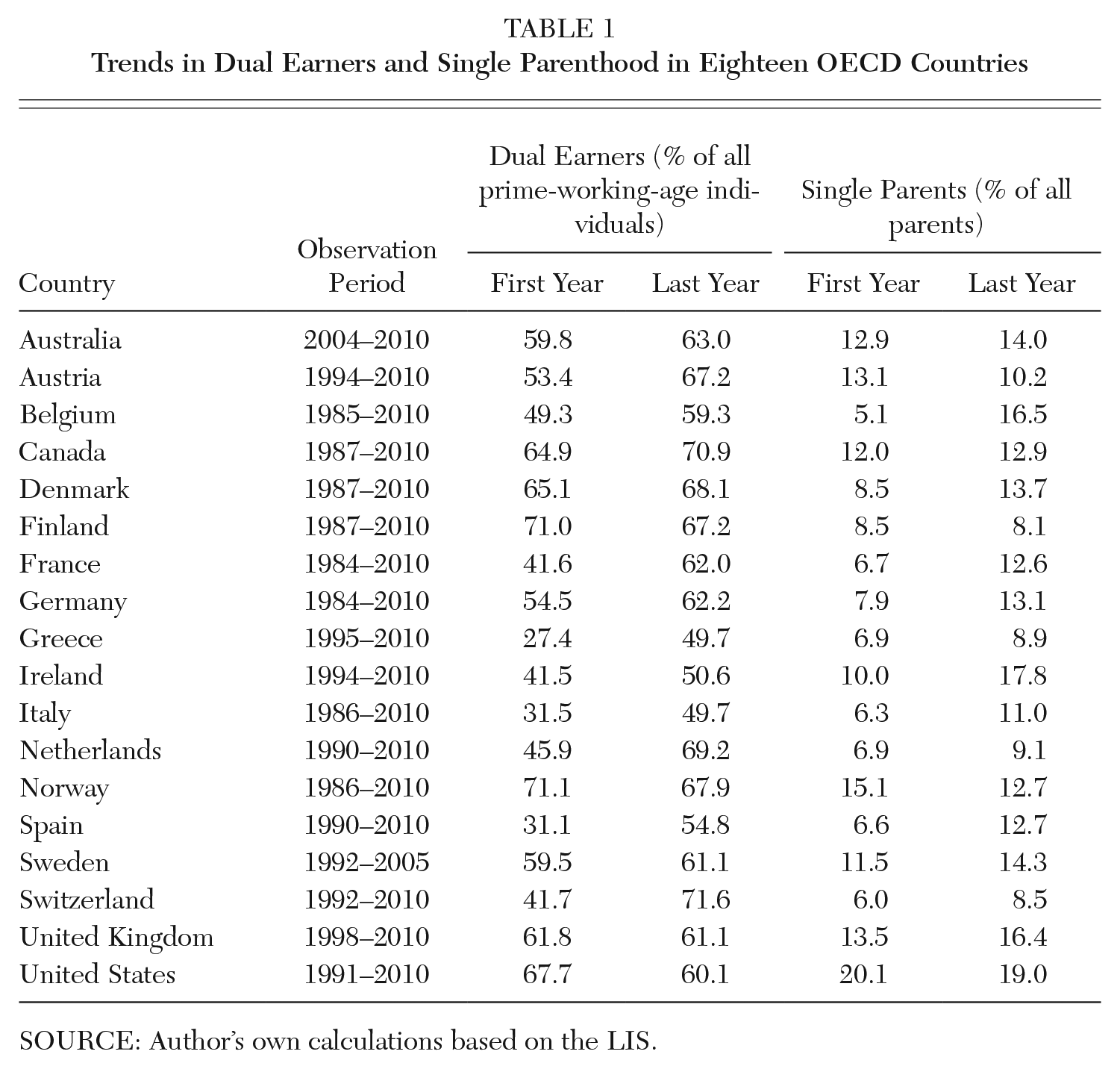
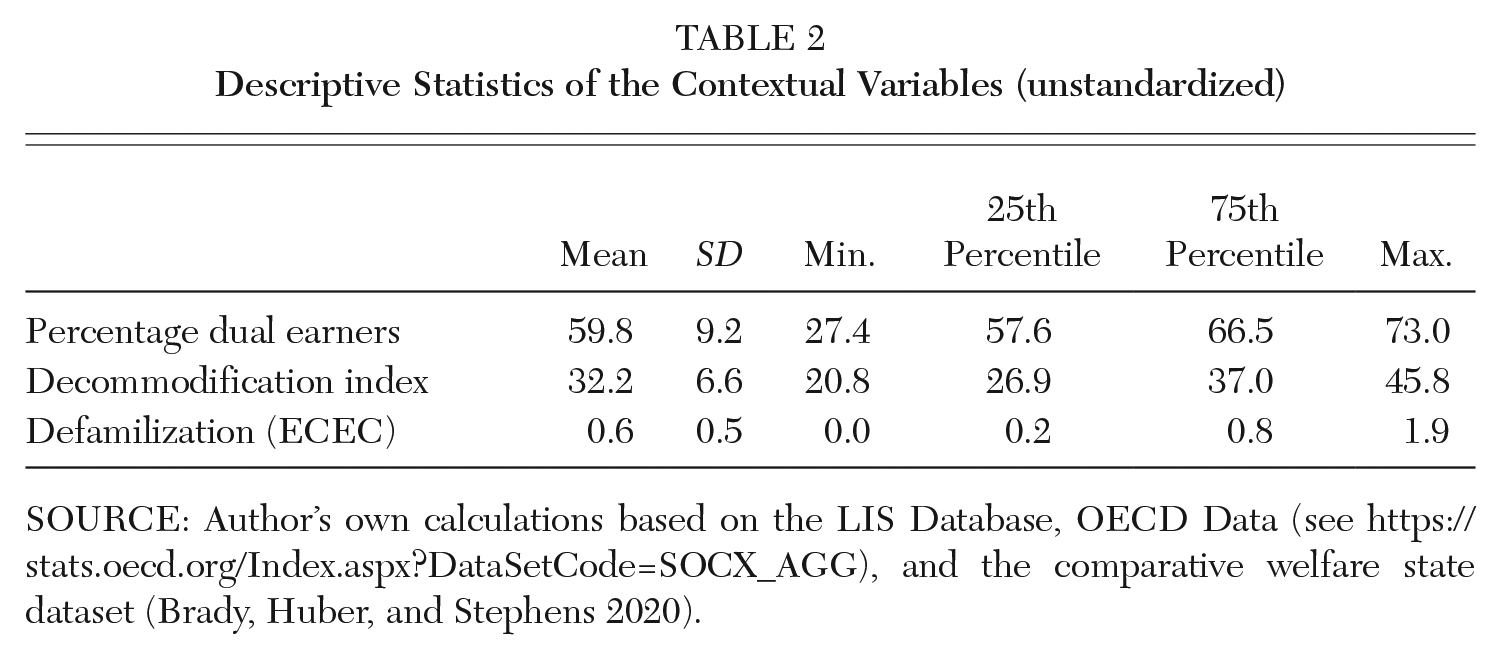
Table 1 shows that the percentage of dual earners has increased in most—but not all—countries, as has the percentage of single parents. Table 2 provides descriptive statistics of the contextual variables (prior to standardization).
Trends in Dual Earners and Single Parenthood in Eighteen OECD Countries
SOURCE: Author’s own calculations based on the LIS.
Descriptive Statistics of the Contextual Variables (unstandardized)
SOURCE: Author’s own calculations based on the LIS Database, OECD Data (see https://stats.oecd.org/Index.aspx?DataSetCode=SOCX_AGG), and the comparative welfare state dataset (Brady, Huber, and Stephens 2020).
Method of Analysis
To account for the multilevel nesting of individuals in country-years, a two-stage regression technique (Möhring 2021) was used. In the first stage, at the level of the individual and for each country-year separately, AROP rates were determined for single parents and parents in a couple, using regression analyses to account for various sets of control variables. AROP was regressed on household type and the control variables, which was then repeated while controlling for education, and again to also control for the employment variables. For each of these models, average marginal effects were calculated for single parents and parents in a couple, producing two data points for each county-year (one for single parents, one for parents in a couple). 3 In this stage, the data were analyzed using linear probability regression models, which is considered preferable over logit models as it allows for comparison of estimates across models (Breen, Karlson, and Holm 2018).
In the second stage, at the level of the country-year, all average marginal effects (indicating poverty risks of single parents and parents in a couple, under several sets of controls) from the first stage were combined with the contextual data. The poverty risks were regressed on the interaction between the two household types and the contextual variables. These analyses were based on 158 country-years (with AROP estimates separately for single parents and parents in a couple, resulting in 316 country-year-level observations). The advantage of this two-stage procedure over an integrated mixed-effects regression approach is that it is not biased by the relatively small number of countries in the analysis (Bryan and Jenkins 2016), and it allows for cross-national variation and trends in the relationship between control variables and (in this case) AROP (Heisig, Schaeffer, and Giesecke 2017). All second-stage regression models used ordinary least squares (OLS) and include country-fixed effects to account for time-invariant unobserved heterogeneity.
Results
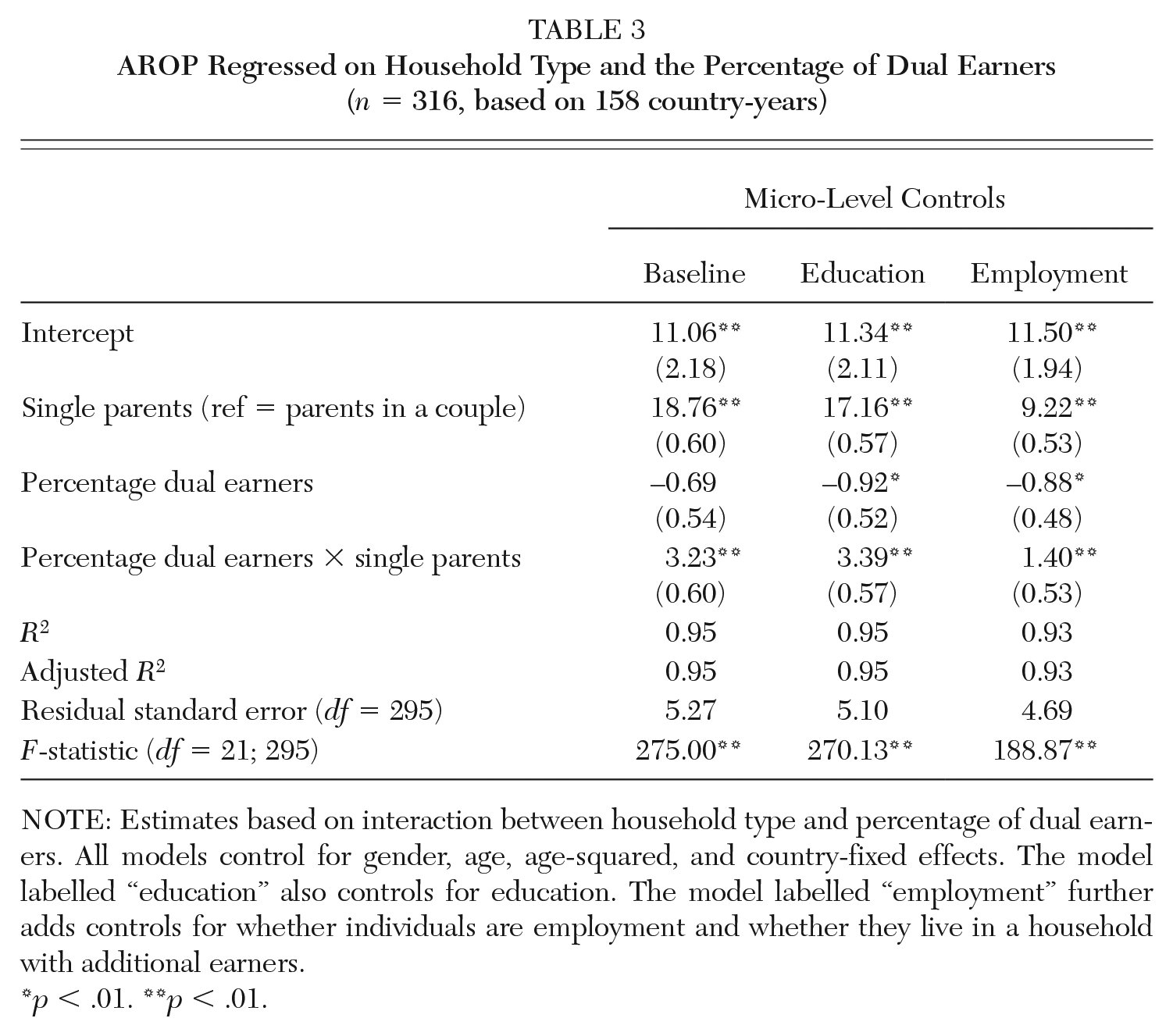
The baseline results are presented in Table 3, in which AROP rates are regressed on the interaction between household type and the share of dual earners in society. Here, the units of observation are country-years, and the three columns represent models in which the estimates of poverty for different household types were created using different micro-level controls. The “baseline” model only controls for gender and age and shows that in countries with an average share of dual earners (as the contextual variables were standardized to have a mean of 0 and standard deviation of 1), single parents have higher poverty risks (11.06 + 18.76 = 29.82 percent) than parents in a couple (11.06 percent) and that the poverty risk of single parents is higher in association with a larger share of dual-earner households in society. For each standard deviation increase in the share of individuals living in a dual-earner household (about 9 percentage points; see Table 2), poverty among single parents increases by −0.69 + 3.23 = 2.54 percentage points. Poverty among parents in a couple is unrelated to the share of people living in a dual-earner household. This supports the polarization hypothesis.
AROP Regressed on Household Type and the Percentage of Dual Earners (n = 316, based on 158 country-years)
NOTE: Estimates based on interaction between household type and percentage of dual earners. All models control for gender, age, age-squared, and country-fixed effects. The model labelled “education” also controls for education. The model labelled “employment” further adds controls for whether individuals are employment and whether they live in a household with additional earners.
p < .01. **p < .01.
Next, accounting for levels of education changes very little to the estimates presented in Table 3. Differences in education between single parents and parents in a couple do not provide a relevant explanation of differences in poverty between single parents and parents in a couple or of how they are affected by the share of dual earners. This falsifies the education hypothesis.
The final model in Table 3 controls for individuals’ employment status and whether they live in a dual-earner household themselves. The degree to which a larger share of dual earners polarizes the poverty risks between single parents and parents in a couple is now substantially lower (from 3.23 to 1.40). This supports the employment hypothesis: the elevated poverty risks of single parents in countries with a high share of dual earners can be (partially) explained by parents in a couple being more likely than single parents to have multiple earners in the household. In other words, while the gender revolution and the rise of dual earners has improved equality in a number of ways (see above), in terms of relative income poverty, single parents have not been able to “keep up” by increasing their employment at the same rate.
The latter finding raises the question what the potential role of social policy can be. To test this, the models in Table 3 were extended to also include interactions with the degree of decommodification (through ECEC) and an index of decommodification. This involves three-way interactions, which are notoriously difficult to interpret. Therefore, instead of the regression parameters, marginal effects are presented.
Figure 1 visualizes the marginal effects of the share of dual earners on poverty risks among single parents and parents in a couple and shows these separately in the contexts of lower and higher defamilization. In the context of low defamilization, shown in the panel to the left, an increase in dual earners is associated with an increase in poverty risks among single parents, but not among parents in a couple. This is highly similar to the results presented in Table 3, based on the dark lines (controlling for employment, as shown by the lighter lines, shows that employment remains the mechanism explaining why the share of dual earners is related to the poverty among single parents but not among parents in a couple). Yet, in a context of high defamilization, these associations disappear: single parents do not fall behind parents in a couple (in terms of poverty) when dual earners are more common. Figure 2, finally, shows that a higher degree of decommodification also protects single parents against the consequences of a high share of dual earners. Taken together, these findings support both the defamilization hypothesis and the decommodification hypothesis.
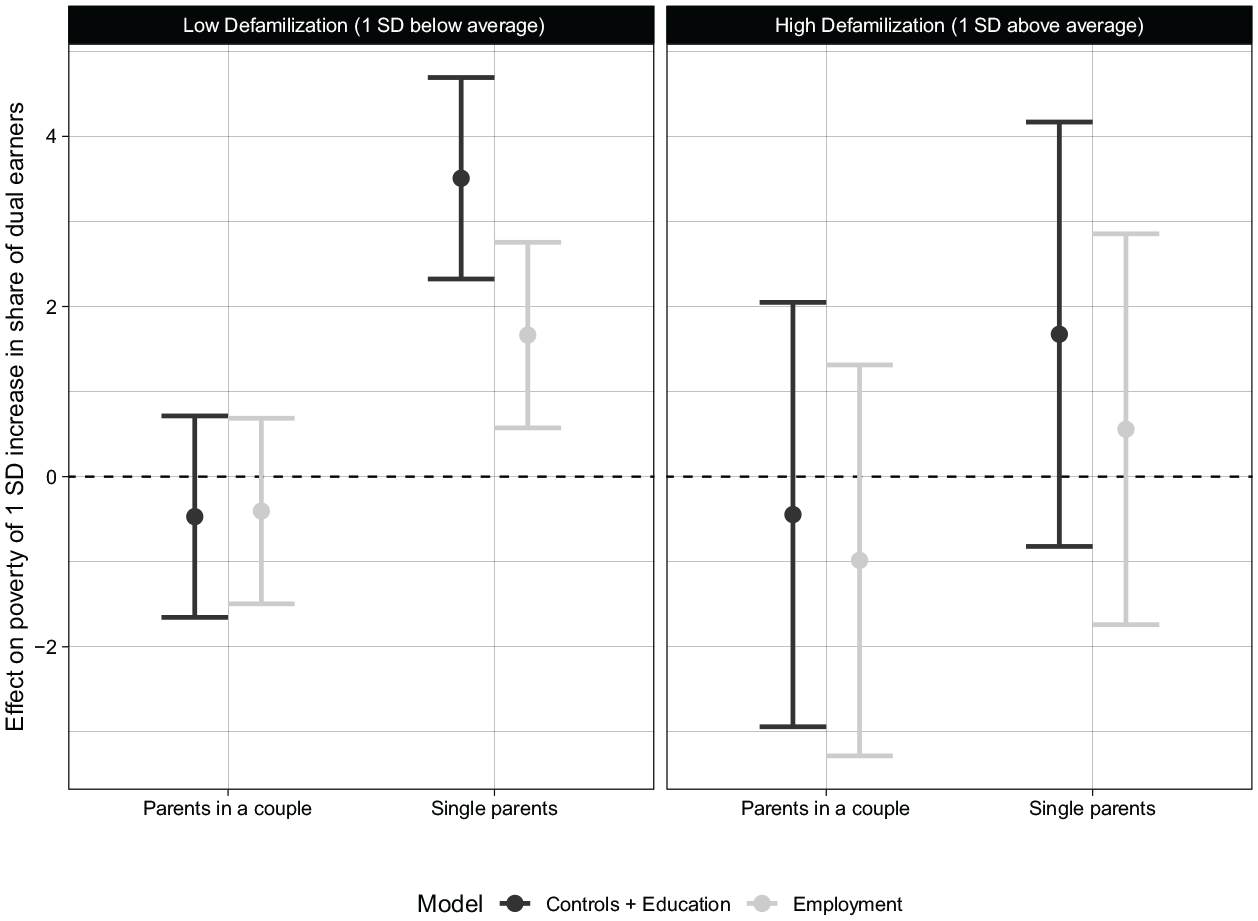
Marginal Effects of the Percentage of Dual Earners on AROP Rates, by Household Type and Defamilization (ECEC) (n = 316, based on 158 country-years)
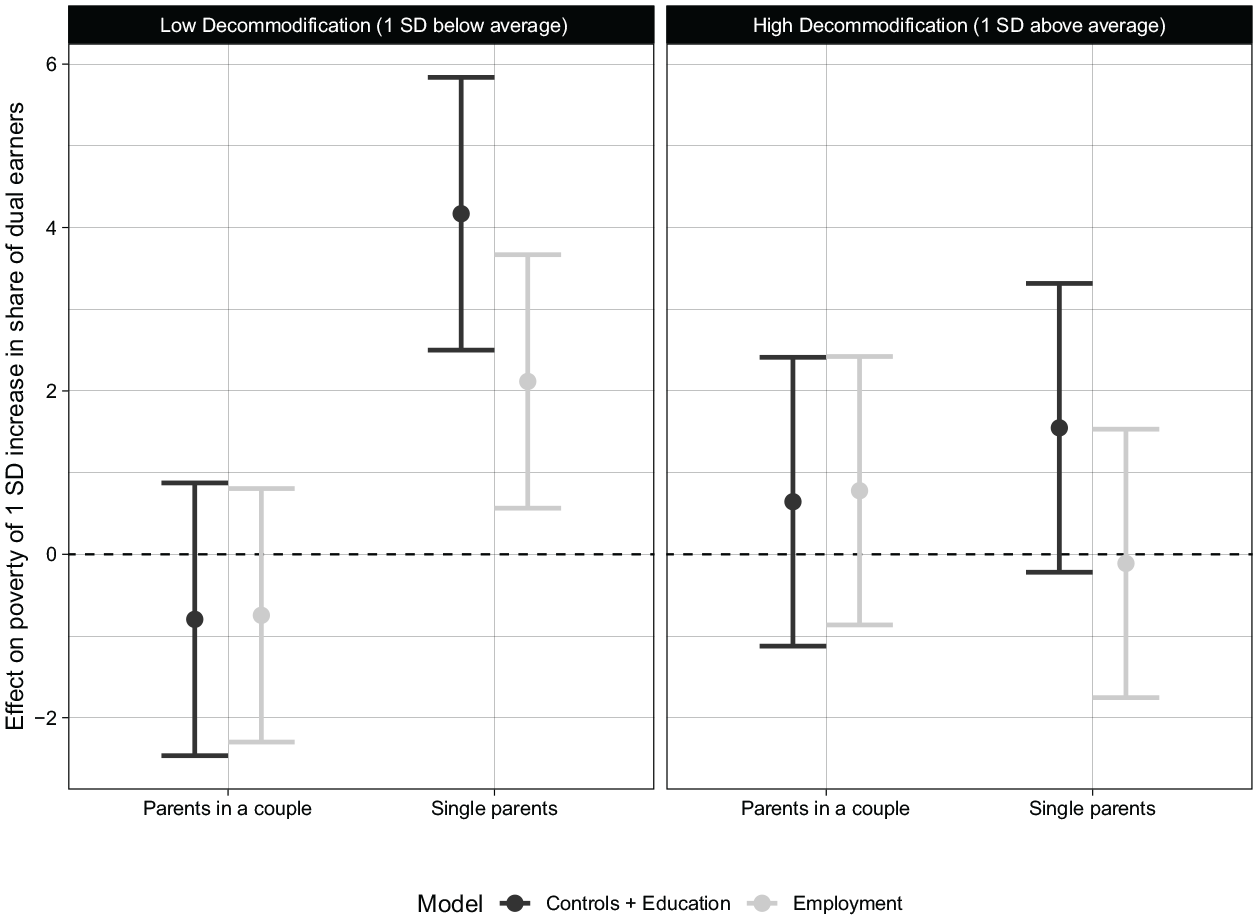
Marginal Effects of the Percentage of Dual Earners on AROP Rates, by Household Type and Decommodification (income transfer policies) (n = 316, based on 158 country-years)
Conclusion
I set out to understand the economic position of single parents in high-income countries, given the rise of dual-earner households in recent decades. There were two main findings. The first is that single parents face higher relative income poverty risks in the context of a large share of dual earners. This is related to the fact that the rise of dual earner households is linked to higher standard of living in society and therefore a higher poverty threshold that fewer single parents are able to reach on a single income. Secondly, this overall pattern varied across institutional contexts: a rise of dual earners puts single parents at a disadvantage only in the context of a low degree of defamilization (indicated by ECEC) or decommodification (indicated by income transfer policies).
A broad, country-comparative perspective was particularly suitable to test associations, to evaluate whether these associations can be generalized to number of high-income countries and how these associations differ across institutional contexts characterized by (variation in) ECEC and income replacement policies. But what is gained in terms of a broad perspective is lost in terms of details of causal inference. As such, further studies should implement research designs more suitable for detailed causal inferences—likely at a smaller scale in terms of country and year coverage—including longitudinal analyses at the individual and household level, and more detailed indicators on ECEC policy. Moreover, it should be acknowledged that poverty is multifaceted, and no single indicator will capture each aspect. AROP is a commonly used measure of poverty that captures the important dimension of poverty of not being able to participate fully in society. Future work using alternative measures of poverty (and deprivation) can shed further light on the complex interplay between the gender revolution, the rise of dual earners, and the economic position and living conditions of single parents; this also requires focus on the interplay between various policy instruments (Nelson, Nieuwenhuis, and Yerkes, 2022). Finally, future research can evaluate to what extent the findings presented here also pertain to singles without children: a growing group that also is not likely to have multiple earners in the household.
The findings have important implications for both theory and policy. In terms of theory, poverty among single parents is often explained by their individual background, structural changes in labor markets, or their social policy context (Brady 2019). Cross-national comparisons generally show that the individualized explanations have little purchase in explaining single-parent poverty, in favor of explanations related to structural and policy factors (Brady, Finnigan, and Hübgen 2017). Differences in the policy context proved to be a more important explanation of poverty among single parents, particularly in the context of high shares of dual earners. As such, a new and important structural factor was introduced here: the share of dual earners in society. This fits in well with the argument that poverty risks are inherently relational (Tomaskovic-Devey and Avent-Holt 2019) and cannot solely be explained by reference to individuals’ own socioeconomic background, family composition, and policy context, but also requires reference to the economic activity and composition of other households in society.
In terms of policy, it has long been identified in the EU and beyond that despite increases in labor force participation rates, and despite active social policy (including ECEC) to support women’s employment, poverty rates have hardly—if at all—declined (Vandenbroucke and Vleminckx 2011; Cantillon and Vandenbroucke 2014; Nieuwenhuis et al. 2020). The findings presented here contribute the insight that although a rise in employment will help protect individuals and households against poverty, it also represents a displacement in who benefits from employment and who is disadvantaged by the increase in employment of others. As such, policies to support both work-family reconciliation and income protection are particularly important in the context of a dual-earner society, to keep groups that currently are not—or cannot be—in a dual-earner household from falling into poverty.
What can this comparative study say about the United States? It has been well documented—in this volume and elsewhere—that compared to other high-income countries, single-parent poverty is very high in the United States (Casey and Maldonado 2012; Nieuwenhuis and Maldonado 2018; OECD 2011). Positioning the United States in comparative perspective in this study contributed the insight that the relatively high shares of dual-earner families—particularly in early periods—combined with the absence of adequate public support for combining work and family and adequate income protection, contribute to the United States’ perfect storm for single parents.
Footnotes
Notes
Rense Nieuwenhuis, an Associate Professor in sociology at the Swedish Institute for Social Research (SOFI) at Stockholm University, studies how gender inequality, family diversity, and social policy affect poverty and economic inequality. He published in journals such as Social Forces, European Sociological Review, and Journal of European Social Policy.