




Abstract
This paper investigates the phenomenon of presidential constitutional engineering (PCE) in Sub-Saharan Africa between 1990 and 2020. It introduces a novel conceptual framework and classification system that captures the most frequent and impactful strategies used by political elites to retain power through legal-constitutional means. These include manipulating term limits, adopting new constitutions to reset term counts, altering electoral systems, and imposing restrictive candidacy conditions. Unlike broader notions of electoral manipulation, the paper focuses specifically on legal-constitutional reforms that reshape the structure of presidential competition. Drawing on our dataset of documented PCE attempts, it offers comparative insights into institutional fragility and the concentration of executive power. The framework contributes to both academic debate and policy design by offering a clear typology that scholars and practitioners can adapt to assess democratic resilience and constitutional stability across presidential systems.
Introduction
Most African countries adopted Europe-inspired constitutions upon becoming independent, following either the Westminster model (most former British colonies) or the French Fifth Republic constitution (most former French colonies). The subsequent frequent military coups and the establishment of one-party political regimes, whether pro-Marxist (Angola, Mozambique, Ethiopia, Benin, Republic of the Congo), Afro-socialist (Guinea, Madagascar, Tanzania, Ghana), conservative traditionalist (Malawi, Ivory Coast, Nigeria) or pragmatic (Zambia, Kenya), treated the constitutions, their objectives and democratic mechanisms as empty documents. The situation gradually changed in the early 1990s. The end of the Cold War had an immediate effect on American and Soviet (later Russian) foreign policies, diminishing economic assistance to like-minded regimes in the global South and resulting in severe economic problems in many African countries.
Financial assistance from the World Bank and the International Monetary Fund in the early 1990s was often contingent upon democratic reforms in the recipient countries. These conditions included the immediate restoration of constitutionalism, the adoption of multi-party political systems, and the implementation of free and fair elections with inclusive power-sharing arrangements. As a result, forty-two out of the then forty-eight Sub-Saharan African countries held parliamentary and presidential elections in the early 1990s. However, this trend was short-lived. Since then, our dataset (see below) shows that over a third of African presidential systems have altered their electoral laws governing presidential elections. Moreover, more than half of the African countries have sought to extend presidential mandates – either directly or indirectly – by introducing new electoral rules, manipulating existing systems, or delaying scheduled presidential elections.
This analytical report examines presidential constitutional engineering (PCE), referring to the strategic efforts of political elites – particularly incumbent presidents, their political parties, and allied supporters – to constitutionally modify the rules governing presidential power, tenure, succession, and electoral competition. These efforts are undertaken with the overarching goal of consolidating or extending presidential dominance within a formal legal framework. PCE includes, but is not limited to, the removal of presidential term limits, adjustments to the number or duration of terms, and the resetting of term counts following constitutional amendments. It also encompasses the introduction of disqualifying criteria for presidential candidates based on factors such as age, lineage, or residency duration. Additionally, it may involve changes to the presidential electoral system, such as transitioning from an alternative vote (AV) system to a first-past-the-post (FPTP) system or eliminating direct presidential elections.
The primary objective of PCE is to extend a president's hold on power beyond constitutionally defined term limits, neutralise political rivals, and establish favourable conditions for success in upcoming presidential elections. While the authors recognise that presidents can wield significant executive authority – granted by the constitution – to shape political outcomes and influence future elections, they distinguish such actions from PCE. Specifically, they do not classify measures like appointing electoral commission members, disqualifying certain presidential candidates, or restricting voter registration as forms of PCE; instead, these are considered abuses of political power. Similarly, violent or overtly unconstitutional tactics – such as coups d’état, military takeovers, postponement of scheduled elections, or the dissolution of parliament – are also excluded from the definition of PCE.
Our primary objective is to present a clear and user-friendly classification system for PCE, designed for practical use and supported by illustrative examples for each category. This framework underscores the relevance of PCE as a lens through which to better understand African constitutionalism – particularly within the context of the continent's dominant (semi-)presidential systems, where over 90 per cent of political systems fall into this category. These constitutions typically grant presidents – most of whom are directly elected – extensive executive powers. These powers are further amplified by entrenched political practices, including presidential control of constitutional parliamentary majorities, dysfunctional party systems with weak and fragmented opposition parties, the near-absence of civil society, and the neopatrimonial character of (traditional) African societies.
In contrast to presidential systems in the Euro-Atlantic region, African presidential systems typically lack effective checks and balances that would enable other constitutional institutions to constrain the president's dominant position or prevent the abuse of executive power within the political system. The judiciary, including the constitutional courts, national electoral committees and the parliament, are often only extended arms of the president and his immediate circle. Censorship and auto-censorship, the open control of public and private media, loyal armies and security forces further facilitate the exercise of unrestricted presidential power. Presidents and their allies (including the highest-ranking military officers) control companies which dominate the economic activities in their countries.
Our conceptual framework of PCE focuses on the pre-electoral manipulation of constitutional and legal frameworks by incumbents to cement presidential dominance. This approach builds on and further develops the existing concepts. While Sarah Birch's (2011) concept of electoral malpractice examines irregularities that occur during elections, PCE shifts the analytical lens to the anticipatory phase – where the groundwork for electoral advantage is laid through legal and institutional redesign. Similarly, although Andreas Schedler (2002) has theorised electoral authoritarianism as a broader regime type where competitive elections occur without meeting democratic standards, PCE does not seek to typologise entire regimes. Rather, it highlights incremental strategies adopted by presidents in (semi-)presidential African systems to reshape electoral and constitutional orders in their favour. This allows PCE to complement regime-type theories with a focused emphasis on agency and strategy. Furthermore, in contrast to macro-concepts such as democratic backsliding (Haggard and Kaufman, 2021), PCE theorises the tactical mechanisms presidents deploy to shield themselves from electoral uncertainty.
Our work also builds on previous presidential engineering and constitutionalism research in Africa, which has received increasing scholarly interest (Abbiate et al., 2017; Baturo and Elgie, 2019; Cheeseman, 2019; Fiala, 2018, 2020; Fombad, 2016; McKie, 2019; Mangala, 2020; Osei et al. 2021; Posner and Young, 2007; Southall and Melber, 2006; Tull and Simons, 2017). Yet, most of these works provide detailed descriptions and analyses of PCE in specific African countries but lack the ambition to create a classification that would provide a solid basis for a broader comparative analysis of a larger number of African and potentially other non-European countries.
Notable exceptions are scholars such as H. Kwasi Prempeh (2008) and E. Gyimah-Boadi (2015), who have drawn attention to the enduring dominance of executive power and the erosion of democratic norms in Africa. Prempeh (2008) highlights how presidential supremacy – rooted in postcolonial state formation and reinforced by weak institutional checks – remains largely intact. PCE builds directly on this insight by showing how constitutional tools can turn into instruments of domination. Gyimah-Boadi (2015) documents how the normative commitment to constitutional limits and democratic accountability is waning among elites – even leaders once praised as democrats have later sought to extend their time in office. These insights highlight the pressing need for systematic tools to identify and compare such practices across Sub-Saharan Africa and other non-Western regions. This paper addresses that gap by categorising PCE attempts in Sub-Saharan countries between 1990 and 2020, offering an updated classification of constitutional engineering within African presidential systems – one that may also be applicable in broader comparative contexts.
The paper is divided into three parts. First, it presents a timeline of the different types of PCE in the context of contemporary African presidential systems from 1990 to 2020. The second part presents a theoretical model of PCE, which consists of two main models comprising seven subtypes of PCE. The third part analyses each theoretical type of PCE and documents them in clear tables using the example of individual African countries. Acknowledging that the scope of the paper does not allow the inclusion of all cases of successful or failed PCE attempts, the case selection is subjective – we provide a complete dataset as an annex to this paper: https://evstu.upol.cz/wp-content/uploads/2015/12/ThirdTermTables1990-2020.pdf
African Presidential Regimes and Constitutional Engineering
Semi-presidential or presidential political systems are more traditional in Sub-Saharan Africa than parliamentary systems. Competitive presidential elections came with the democratisation process in the 1990s, and the first democratic presidential elections were often plebiscites on political transformation. Many incumbent presidents tried to defend their position in a democratic competition with new candidates who articulated the will to change the political direction of their countries. However, various methods of manipulating the electoral system, the broader electoral process, and public opinion quickly emerged. Election integrity deteriorated between the first and second free elections in the 1990s (Bratton and Posner, 1999) and, with few exceptions, continued to decline throughout the twenty-first century. This trend was not limited to isolated cases. Table 1 provides a sample of PCE attempts showing that they became widespread across many countries and, in several instances, involved repeated efforts by the same president. Our more comprehensive and detailed dataset, including specific provisions and outcomes, is available online: https://evstu.upol.cz/wp-content/uploads/2015/12/ThirdTermTables1990-2020.pdf
Overview of PCE Attempts in Sub-Saharan Africa, 1990–2020 2 .
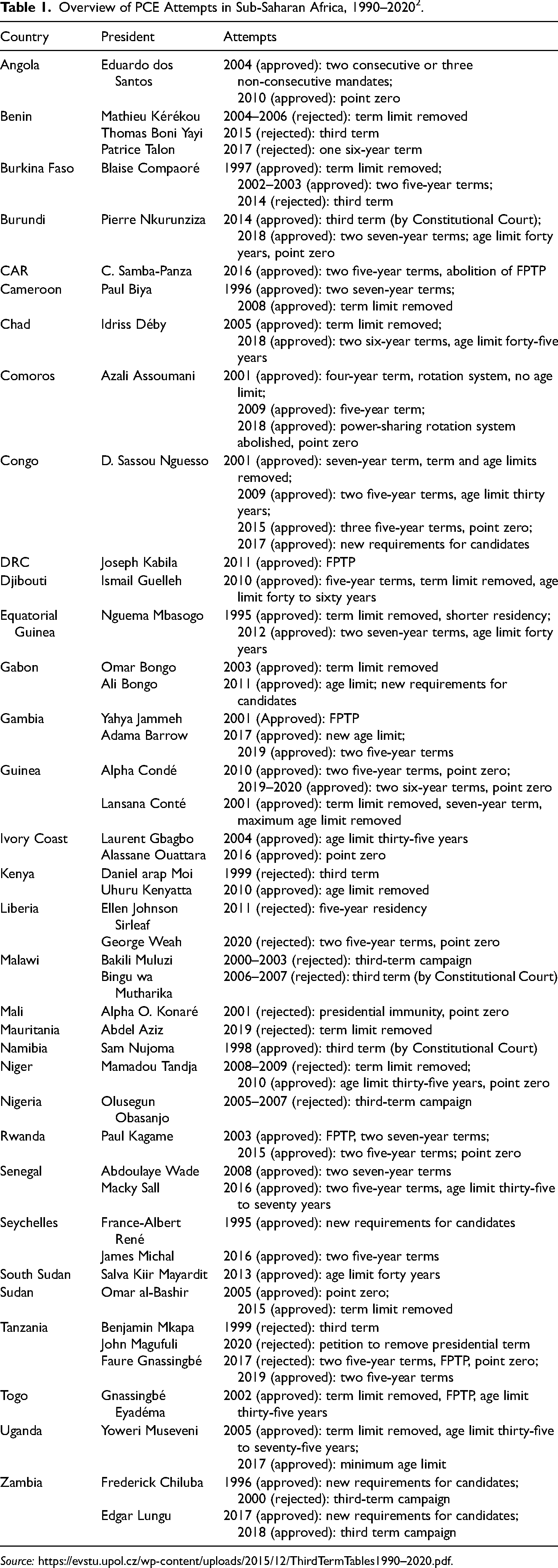
In the euphoric times of the early 1990s, many newly adopted constitutions in Sub-Saharan Africa introduced democratic safeguards, including provisions that limited presidents to only two consecutive terms. These reforms were intended to promote political renewal and prevent indefinite rule. However, as political realities set in, many incumbent presidents began to view these limits as obstacles to their continued hold on power. Aiming to create conditions that would obstruct political alternation, they sought to increase the number of their terms, extend their duration, or remove the limits altogether, making term manipulation the most frequent form of PCE in the region.
However, the process often proved to be more complex than expected. In some cases, incumbent presidents successfully eliminated term limits, while in others, such efforts were rejected – typically due to pressure from civil society or internal party opposition. As altering the number or length of presidential terms proved increasingly difficult, a new practice began to emerge; incumbent presidents approaching the end of their final term would push through a new constitution or amend key articles governing the presidency, resetting the count and enabling themselves to run again without retroactively counting previously served terms. 1
Consequently, constitutional amendments frequently provided incumbent presidents with the legal basis to seek re-election, even after having served two or more terms under the previous constitutional framework. Constitutional courts often endorsed this interpretation, as the presidential office typically controlled the appointment of new judges, and the courts’ decisions operated within a system that lacked a clear separation of powers. Other types of PCE include various forms of electoral law changes, ranging from the establishment of specific regulations designed to disqualify the most formidable competitors to altering the electoral system to an FPTP or indirect election.
Considering all the methods of constitutional engineering discussed, only countries without a presidential system refrained from attempting PCE between 1990 and 2020. These include São Tomé and Príncipe, Cabo Verde, Mauritius, Mozambique, Botswana, and South Africa. In five additional countries, constitutional change was either unnecessary or structurally inapplicable: presidential terms were already unlimited (Ethiopia, Lesotho, Somalia), the country was a monarchy (Eswatini), or no national elections were held (Eritrea). Of the remaining thirty-nine Sub-Saharan African countries, thirty-three witnessed at least one attempt – successful or not – at PCE.
Basic Types of PCE
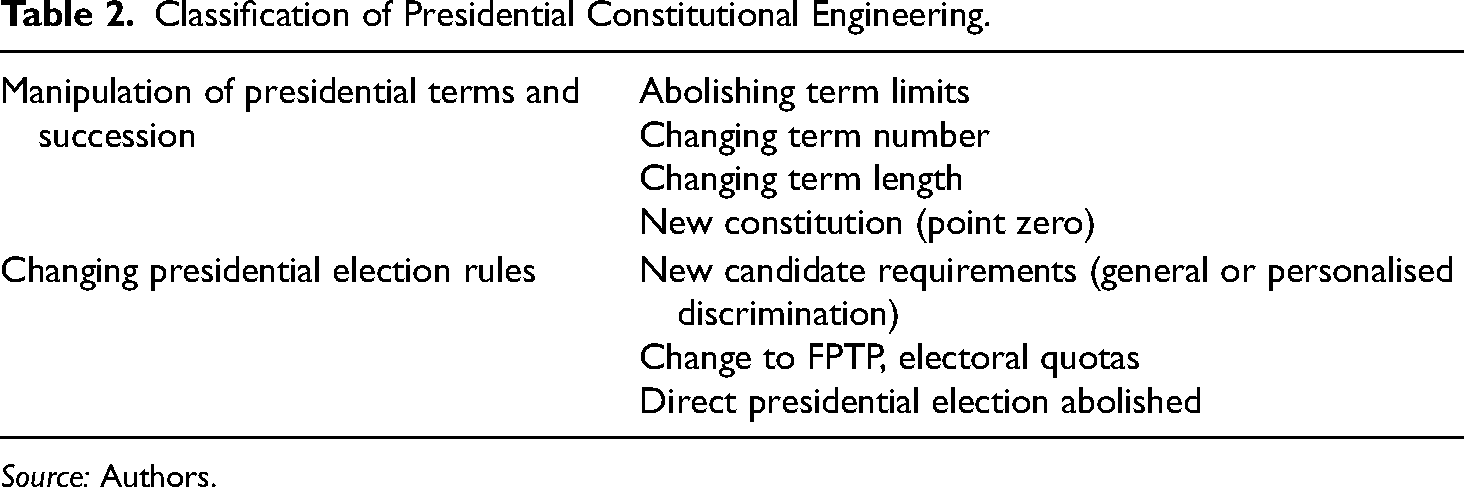
Table 2 presents our PCE classification in African politics, which we divide into two basic categories: (1) manipulation of presidential terms and succession in the constitutions, and (2) changing presidential election rules. Category 1 encompasses the abolishment of presidential term limits, changes in their number and length or the adoption of a new constitution to prevent a retroactive count of terms served under previous constitutional arrangements. The mere adoption of a new constitution is frequently interpreted by African constitutional courts as a “point zero,” from which presidential terms are considered to commence anew. Category 2 is divided into restricting access for presidential candidates to elections through general or personalised discrimination, transition to FPTP, or the abolition of direct presidential elections (e.g. Angola in 2010).
Classification of Presidential Constitutional Engineering.
Source: Authors.
Figure 1 provides an overview of all eighty-six successful PCE attempts in Sub-Saharan Africa between 1990 and 2020, of which fifty-five belonged to the first category and thirty-one to the second category. The manipulation of presidential terms is more common, even though constitutional change is a relatively complicated and delicate process. In addition to requiring a parliamentary constitutional majority, it often necessitates subsequent approval through a national referendum. This process involves several incremental steps, including garnering support within the president’s own political party and parliamentary majority, as well as winning over public opinion and key civil society structures, such as trade unions, churches, professional organisations, youth, women and other social organisations. Timing is crucial. If the country has a fundamental democratic structure, implementing the desired changes can take many years, until society and key social groups are convinced that such constitutional changes are justified.
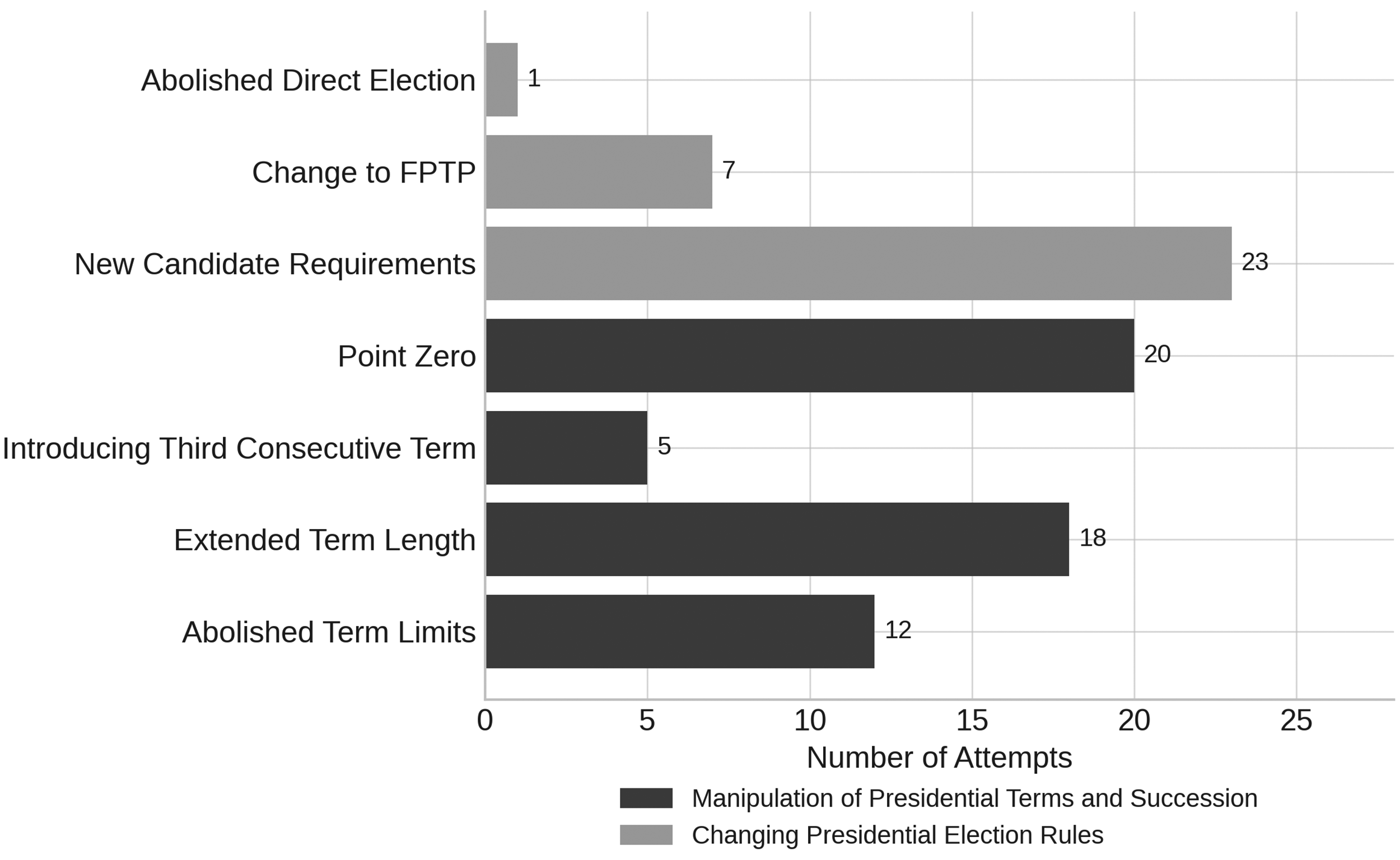
Overview of presidential constitutional engineering (PCE) attempts in Sub-Saharan African countries by type (1990–2020).
In addition to manipulating presidential mandates, incumbent presidents who have not yet completed their regular terms, or those in countries without presidential term limits, can influence their re-election by altering electoral laws. The most common method introduces new, severely limiting, and exclusive rules for presidential candidates, such as age, citizenship, origin, length of residency in the country, election deposits, and requirements to collect signatures. These regulations can be broadly applied to limit competition or specifically target a strong opponent. 3 Another method changes a two-round electoral system to a one-round system (FPTP). In a two-round system, there is a higher risk that opposition support from the first round could unite behind a single challenger in the second round (as in Gabon in 1991 and the Democratic Republic of Congo in 2011). Finally, electoral manipulation includes the establishment of strictly defined vote quotas in each electoral district and the abolition of direct presidential election (Angola).
The executive political power in Africa, often aligned with a parliamentary constitutional majority, typically possesses various tools to prevent political alternation or to secure victory for a new party candidate from their ranks. If they are unable to amend the constitution or electoral laws, they may resort to unconstitutional methods, such as postponing or cancelling elections. However, our paper focuses exclusively on PCE. The following section applies each type of PCE to examples from sub-Saharan Africa.
Applying Various Types of PCE to Sub-Saharan African Political Reality
Manipulating the Number and Length of Presidential Mandates
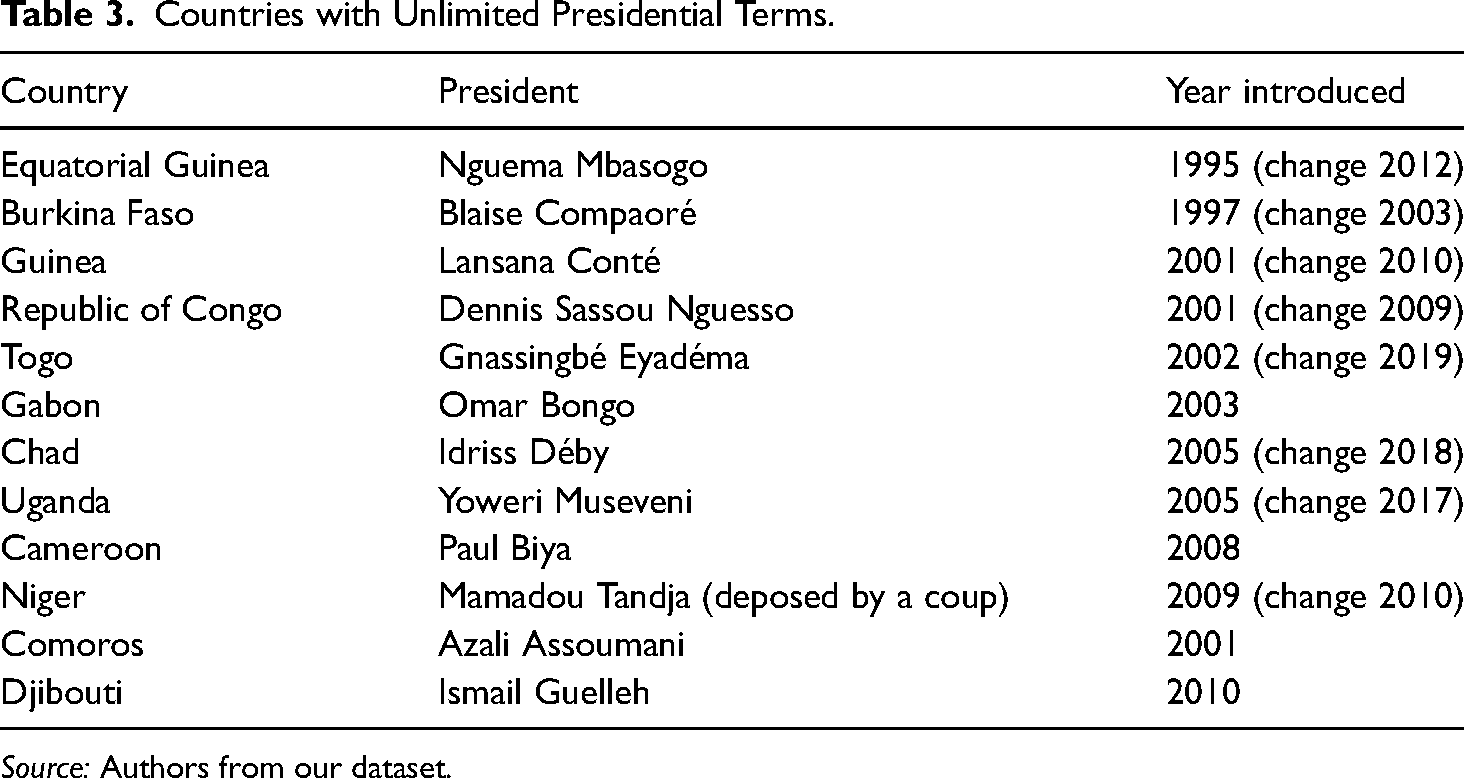
Term time limits on the exercise of political power within constitutional bodies are common, not only in fully democratic systems but also, to a significant extent, in non-democratic regimes. However, the prevalence of such limits has been gradually declining in Africa – from 63 per cent in 2009 to 56 per cent by December 2020 (Africa Research Bulletin [2000–2020], Dulani, 2011: 12; Political Handbook of the World [1990–2017]; Posner and Young, 2007). In Sub-Saharan Africa, presidential terms typically range from four to seven years, with the most common arrangement being two consecutive five-year terms. As of December 2020, we observed this configuration in twenty-six Sub-Saharan African countries. Notably, the two-term limit continues to enjoy the highest level of public support (Dulani, 2011: 61; 2015), partly due to the widespread belief that incumbent presidents are unlikely to lose in elections (Bogaards, 2013; Maltz, 2007). Despite public support, however, incumbent presidents frequently attempt to extend their tenure beyond the constitutionally mandated limits. Table 3 highlights the instances in which efforts to abolish presidential term limits have been successful.
Countries with Unlimited Presidential Terms.
Source: Authors from our dataset.
Many of the presidents listed in Table 3 rank among the longest-serving leaders not only in Africa but also globally. For example, Ugandan President Yoweri Museveni has remained in power since 1986. Although the 1995 Constitution initially limited presidents to two consecutive terms – and despite Museveni's vocal criticism of similar efforts by other African leaders – he successfully pushed through a constitutional amendment before the end of his second term, effectively removing the presidential term limit. 4
An interesting development took place in Burkina Faso. Blaise Compaoré first came to power after a military coup in 1987. A 1991 constitution introduced two seven-year presidential terms, but Compaoré secured a constitutional amendment that removed presidential term limit in January 1997. Strong domestic and international pressure led to another amendment, which renewed a two-term system in 2003 (and lowered the term length to five years). When Compaoré tried to push through an amendment introducing three terms in October 2014, mass protests erupted, and he had to leave the country. A new constitutional proposal tabled in November 2019 confirmed two five-year terms without any possible changes in the future (Moestrup, 2019: 366).
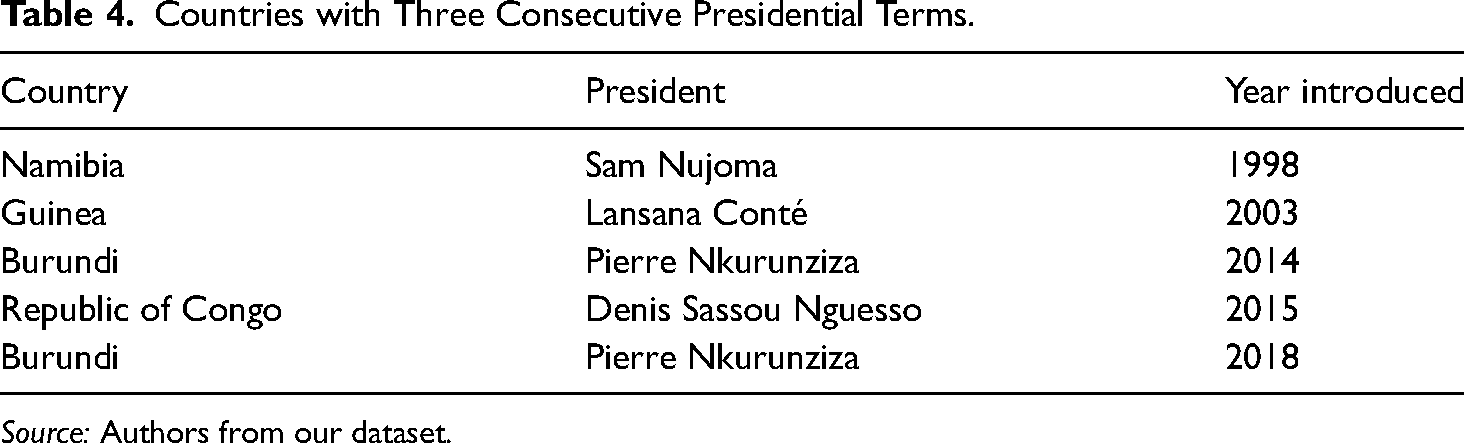
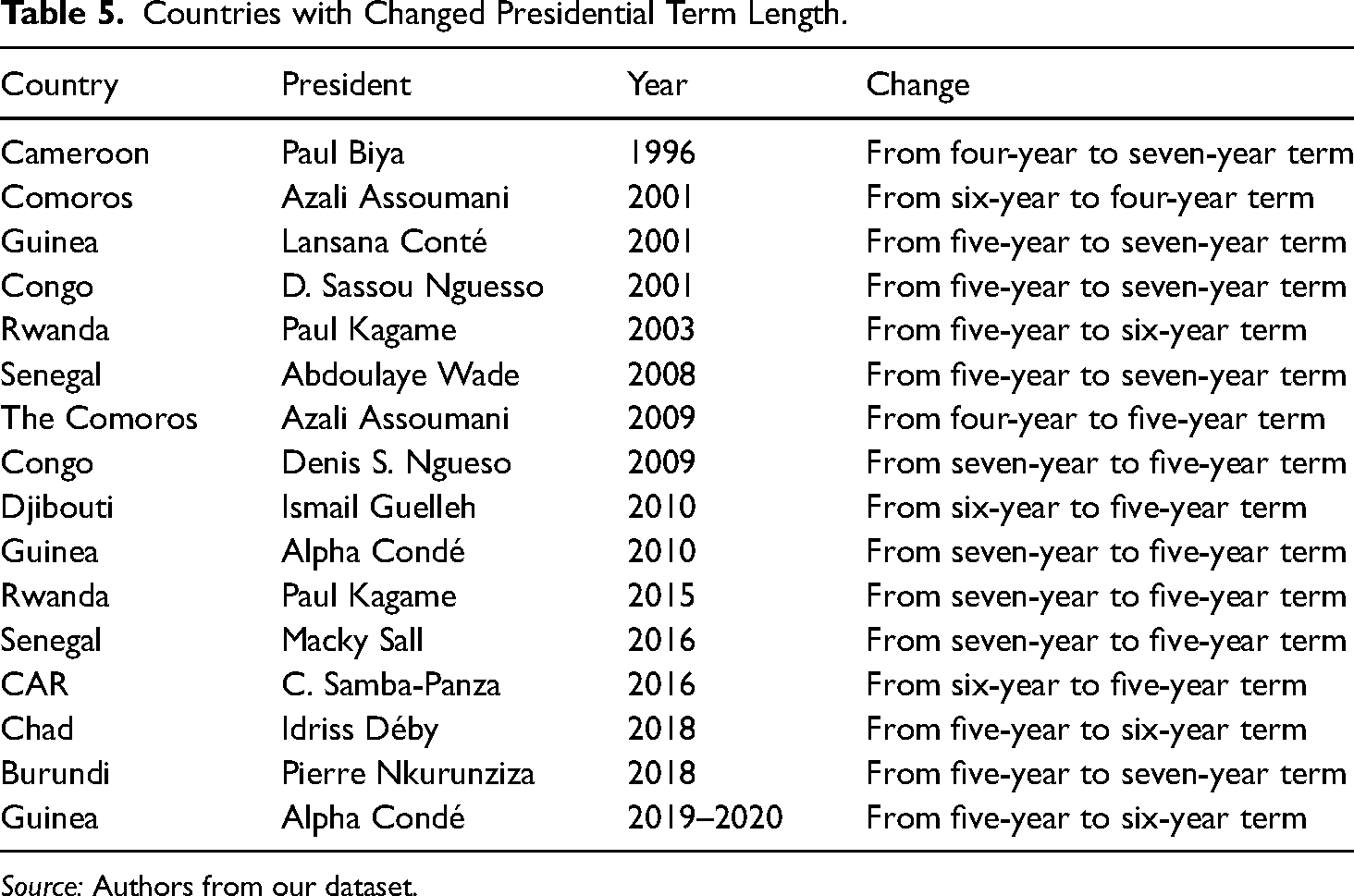
Table 4 offers an overview of presidents who remained in office after PCE enabled an increase in the number of presidential terms from two to three. As noted earlier, only a limited number of presidents have successfully secured a third term. Table 5 demonstrates that changes to the length of presidential terms have been more frequent and widespread PCE method.
Countries with Three Consecutive Presidential Terms.
Source: Authors from our dataset.
Countries with Changed Presidential Term Length.
Source: Authors from our dataset.
As the reader will note, in several African countries, including Rwanda, Senegal, Comoros, Guinea, and Congo, this political practice is quite prevalent, enabling presidents to remain in office for extended periods.
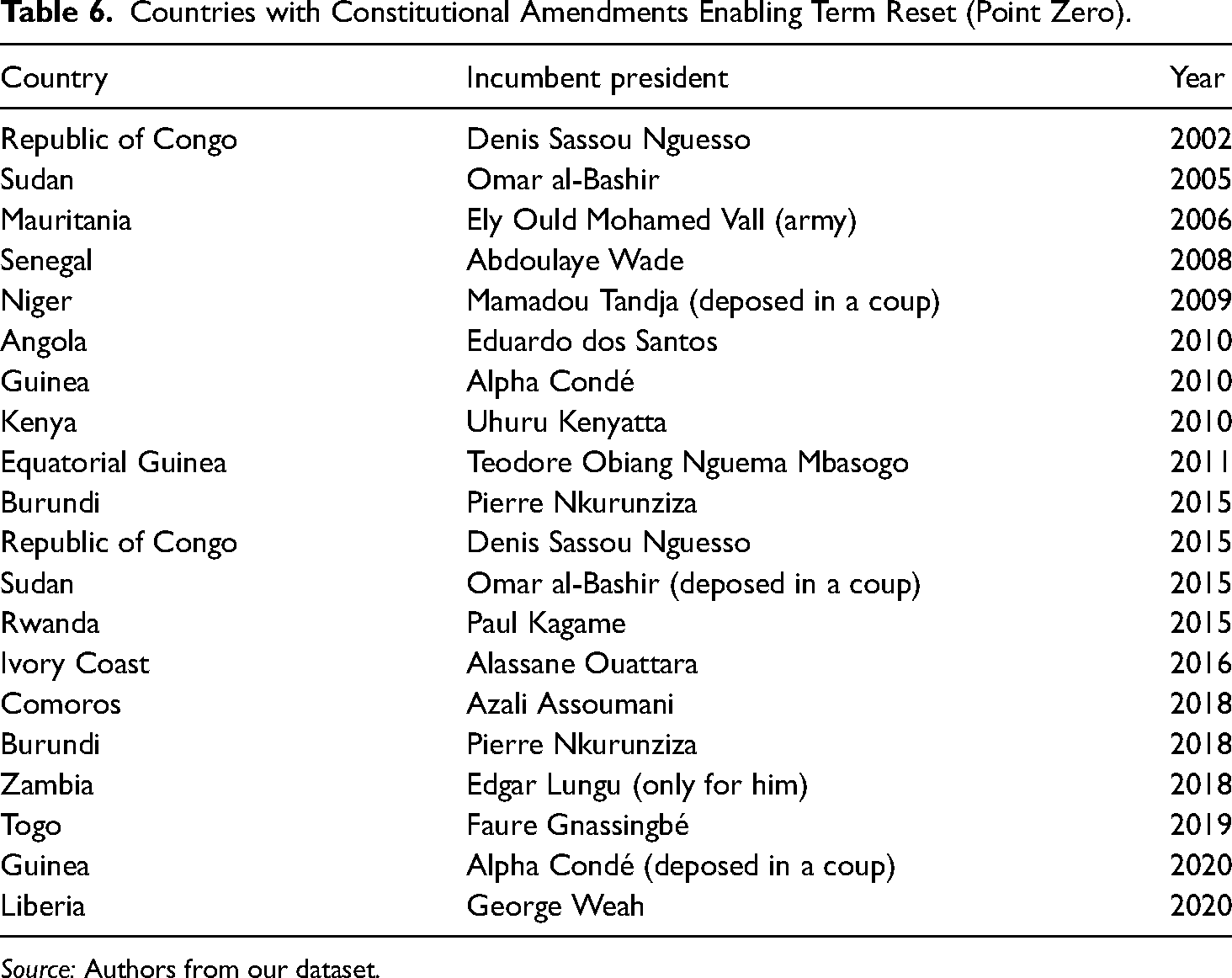
As previously mentioned, “marginal” adjustments in the number and length of presidential terms permit incumbent presidents to seek re-election for a new term (point zero). Table 6 provides an overview of such cases.
Countries with Constitutional Amendments Enabling Term Reset (Point Zero).
Source: Authors from our dataset.
Table 6 illustrates that a significant number of presidents in Africa have served three or more terms. As previously demonstrated, many presidents turn to constitutional amendments or the adoption of new constitutions to justify resetting the term count. Although this practice has raised serious constitutional concerns – and has been challenged by legal scholars, opposition parties, and segments of civil society – many African constitutional courts have upheld it. In most cases, these courts have ruled that adopting a new constitution or amending existing provisions effectively allows incumbent presidents to seek re-election, thereby dismissing constitutional complaints as unfounded.
Changing Presidential Election Rules
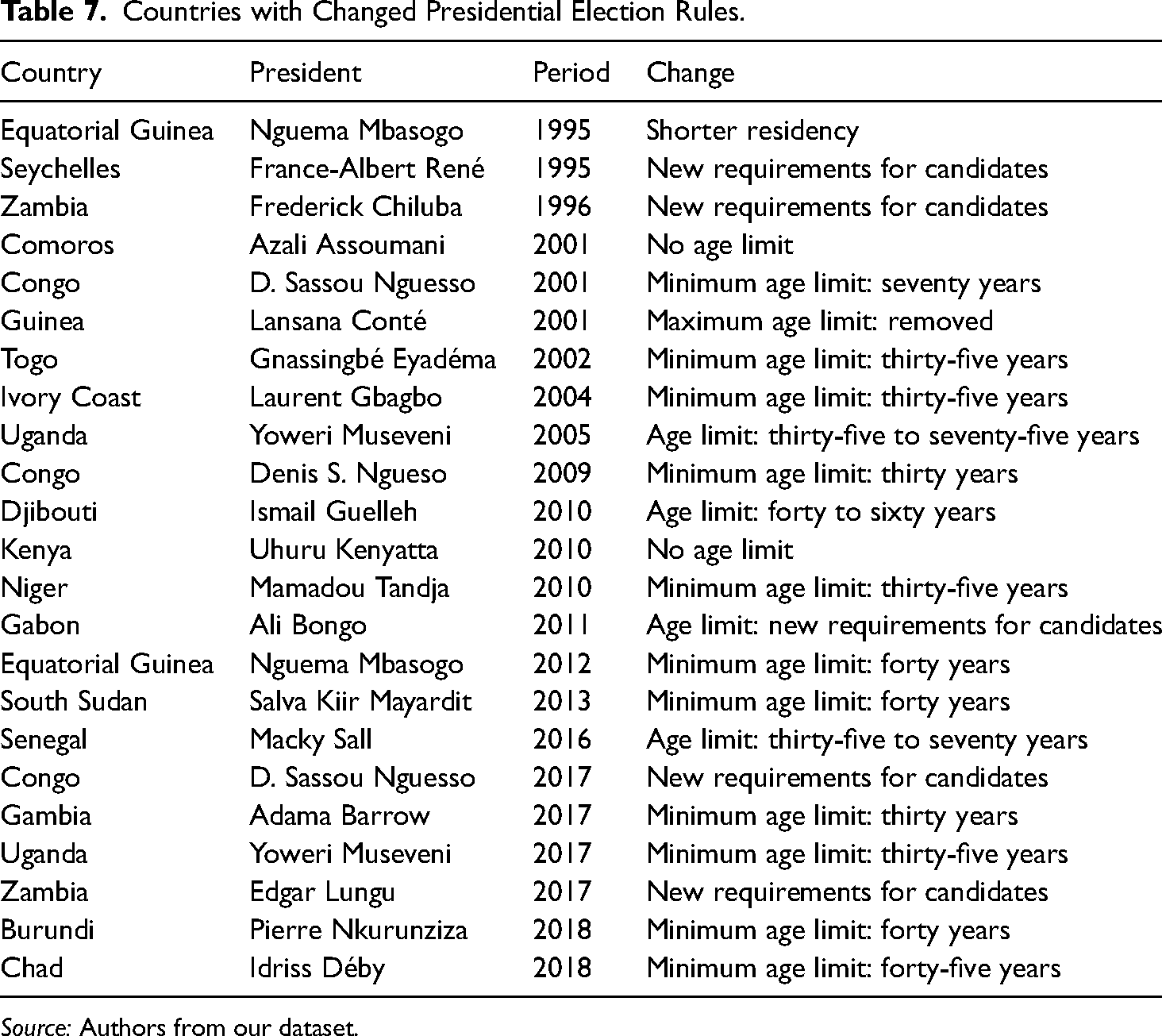
Another type of PCE uses manipulation of specific conditions that enable the participation of individual candidates. The political experiences of African countries over the past thirty years provide numerous examples of constitutional amendments designed to restrict access for potential opposition candidates, or even to deliberately target specific presidential candidates, while simultaneously facilitating the participation of incumbent presidents. In addition to common requirements such as full legal capacity, citizenship, a minimum age, nomination by deputies or senators, or a specified number of voter signatures, African constitutions often impose additional restrictive conditions. These conditions may include requirements such as a minimum duration of citizenship, citizenship by birth, a specified period of uninterrupted residence in the country before the election, exclusive state citizenship, affiliation with or endorsement by a political party, and upper age limits, among others. As shown in Table 7, age restrictions have been among the most frequently used mechanisms for influencing candidate eligibility.
Countries with Changed Presidential Election Rules.
Source: Authors from our dataset.
Many of these stipulations raise legitimate questions about their purpose and the political intentions of the legislature, particularly the ruling political elites. For example, in Zambia, the unpopular President F. Chiluba feared that the growing popularity of ex-President Kenneth Kaunda would jeopardise his chances of victory in the presidential elections. A controversial constitutional amendment introduced in 1996 stipulated that the parents of a presidential candidate must be from Zambia and that the candidate could only serve two non-consecutive terms in office. This amendment faced widespread disapproval from the opposition, as Kaunda's parents were from Nyasaland (now Malawi), and he had held office six times (1964, 1968, 1973, 1978, 1983, 1988).
Manipulating the eligibility criteria for presidential candidates is a common tactic used to shape the political landscape, including adjustments to minimum and maximum age requirements. Following the 2009 military coup in Madagascar, the transitional government led by thirty-four-year-old Andry Rajoelina took power. It dissolved both chambers of parliament and pledged to draft a new constitution and organise fresh parliamentary and presidential elections within twenty-four months. The new constitution, introduced in 2010, lowered the minimum age for presidential candidates from 40 to 35, thereby enabling Rajoelina to run for office.
Age limits, particularly maximum thresholds, have also posed challenges for incumbent presidents. This is evident in the cases of Denis Sassou Nguesso in the Republic of the Congo, Teodoro Obiang Nguema Mbasogo in Equatorial Guinea, and Yoweri Museveni in Uganda. The most recent case of age limit manipulation occurred during the 2020 constitutional referendum in Ivory Coast, which abolished the seventy-year age limit to allow the incumbent president, Alassane Ouattara (born 1942), to participate in the 2020 elections.
Permanent residency requirements are also frequently used as a strategic barrier to candidacy. In 2010, Madagascar's new constitution stipulated that presidential candidates must have resided in the country for at least six months prior to the election. This provision aimed to prevent the ousted president, Marc Ravalomanana, who had fled into exile in South Africa, from participating in the elections.
Finally, the nomination process can be altered to disqualify opposition candidates. In Kenya, every candidate must obtain two thousand signatures from all electoral districts (Kinya, 2017). In the much smaller country of Senegal, a 2018 constitutional amendment raised the number of required signatures to at least 0.8 per cent of registered voters, as well as a minimum of two thousand signatures from each of the fourteen electoral regions, totalling approximately 53,000 signatures. As only candidates from the strongest political parties could fulfil these requirements, only one independent candidate participated in the 2019 presidential election.
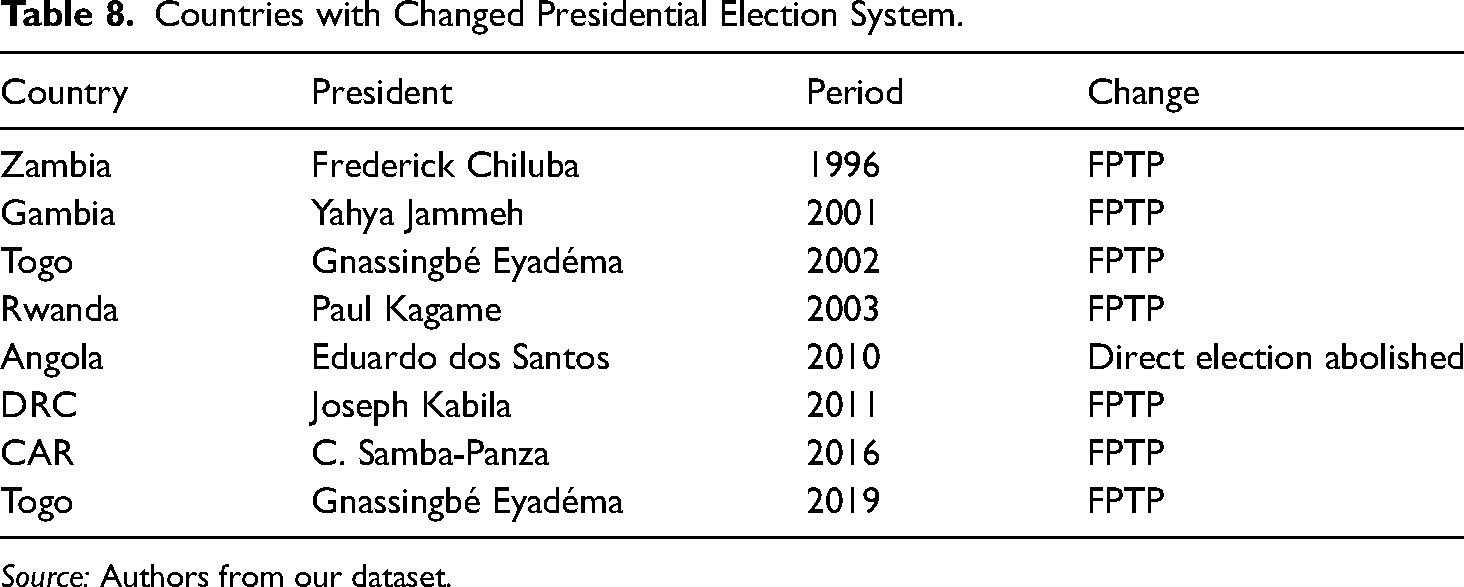
Changing the presidential electoral system – though scarcely addressed in the literature – is another example of PCE. One such method involves replacing the absolute majority two-round system with an FPTP model. However, as illustrated in Table 8, relatively few African countries have adopted FPTP for presidential elections.
Countries with Changed Presidential Election System.
Source: Authors from our dataset.
Zambia is a clear example. The 1991 Constitution introduced a two-round system, but this was replaced in 1996 by a simple majority system. President Chiluba pushed for the change, fearing the opposition could unite behind a single candidate in a runoff. Similarly, when Omar Bongo Ondimba, who had been the president of Gabon since 1967, passed away, changes to the electoral system facilitated the election of his unpopular son, Ali Bongo Ondimba, as president. In Togo, President Faure Gnassingbé introduced an FPTP system in 2019 after facing significant opposition and widespread demonstrations.
Another way is a conditional electoral victory. In Kenya, a candidate must not only secure 50 per cent of the votes plus at least one additional vote in the first round but also obtain at least 25 per cent of the votes in at least half of the forty-seven electoral districts (counties). If these criteria are not met, a second round takes place between the two leading candidates (Kinya, 2017). The defeated candidate from the 2017 election filed a complaint with the Kenyan Constitutional Court, and as a result, the election had to be repeated. A similarly complex system exists in Nigeria, where the federal president is elected by a so-called qualified majority. To be elected, a candidate must receive at least 25 per cent of the votes in two-thirds of the Nigerian states. However, these two cases do not represent a clear-cut PCE model, as the electoral changes may have been responses to the multi-ethnic composition of both countries.
Conclusion
Current academic literature does not fully capture the various aspects of PCE. The alternation of political power, a fundamental feature of democracy, has become relatively widespread in Sub-Saharan African countries and beyond, including Latin America, the post-Soviet space, and Asia. Notably, some of these practices have also appeared in Western liberal democracies. Our classification identifies seven primary types of PCE commonly observed in Sub-Saharan African countries. The first three types focus on altering the number or length of presidential terms or even abolishing term limits altogether. The final type in this category – constitutional changes that extend or shorten presidential terms, sometimes repeatedly – may initially seem marginal. However, constitutional courts have often used these changes to legitimise the potential re-election of incumbent presidents. The remaining types of PCE involve restricting access to presidential elections for certain candidates. In addition to imposing complex conditions for candidate registration, we have recently seen long-serving presidents attempt to manipulate minimum and maximum age requirements for eligibility. The final type of constitutional engineering involves altering the presidential election system itself. While less common, this strategy has been employed by unpopular incumbents seeking to secure their position.
The record of successful and unsuccessful PCE attempts in Sub-Saharan African countries in the period from 1990 to 2020 clearly indicates an increasing frequency of these attempts, and this trend is likely to continue as many African presidents approach the end of their second terms. This classification reflects the most recent developments in Sub-Saharan presidential regimes, providing scholars of African studies with a structured tool to analyse how constitutional and electoral changes impact regime consolidation in autocratic contexts. Furthermore, the report, along with its accompanying dataset, establishes a foundation for comparative studies and policy evaluations. While this work focuses on conceptual clarity and classification, it also aims to guide future empirical and theoretical research that explores the implications of PCE both within Africa and globally.
Footnotes
Acknowledgements
We would like to thank all reviewers for their insightful comments and suggestions, which have greatly contributed to improving the content of this article.

Declaration of Conflicting Interests
The authors declared no potential conflicts of interest with respect to the research, authorship, and/or publication of this article.
Funding
The authors disclosed receipt of the following financial support for the research, authorship, and/or publication of this article: This article is the result of the IGA_Faculty of Law 2024 project entitled “Presidential Constitutional and Electoral Engineering in Africa” (IGA_PF_2024_002).
Ethical Approval and Informed Consent Statements
Not applicable.