




Abstract
This paper investigates the restitution of Tanzanian human remains from colonial contexts in the Anthropological Collection at the University of Göttingen, Germany. This collection contains 66 human remains from Tanzania whereby 22 of them are from the Isanzu ethnic group. This paper focuses on the Isanzu human remains from Mkalama District in Singida Region and examines the circumstances of acquisition and their historical background. This interdisciplinary research combines methodological approaches from critical historical provenance research and cultural anthropology to study the Isanzu remains. We include investigation of the Isanzu ethnic group's awareness, emotions, opinions, and concerns over the restitution of their Ancestors’ remains back to the community. This paper proposes a plan for best practices in restitution and urges that wisdom, agreement, and negotiation results of Isanzu stakeholders should be taken into account to bring the restitution process of Isanzu's Ancestors to fruition.
Introduction
This paper reports on research undertaken among the Isanzu who are the largest agro-pastoralist ethnic group in the Mkalama District, Singida Region in Tanzania (Figure 1). The study was carried out as part of the “Sensitive Provenances” collaborative provenance research project at the University of Göttingen, Germany. The objectives of the study were to investigate the origin and circumstances of acquisition of human remains at the Anthropological Collection in Göttingen. The study also investigated the local Isanzu community's perceptions, emotions, opinions, and concerns regarding the restitution of the Ancestral human remains to Tanzania. Building on the case study of the Isanzu ethnic group, we propose an action oriented approach that may help solve the problems of restitution of human remains to Tanzania.
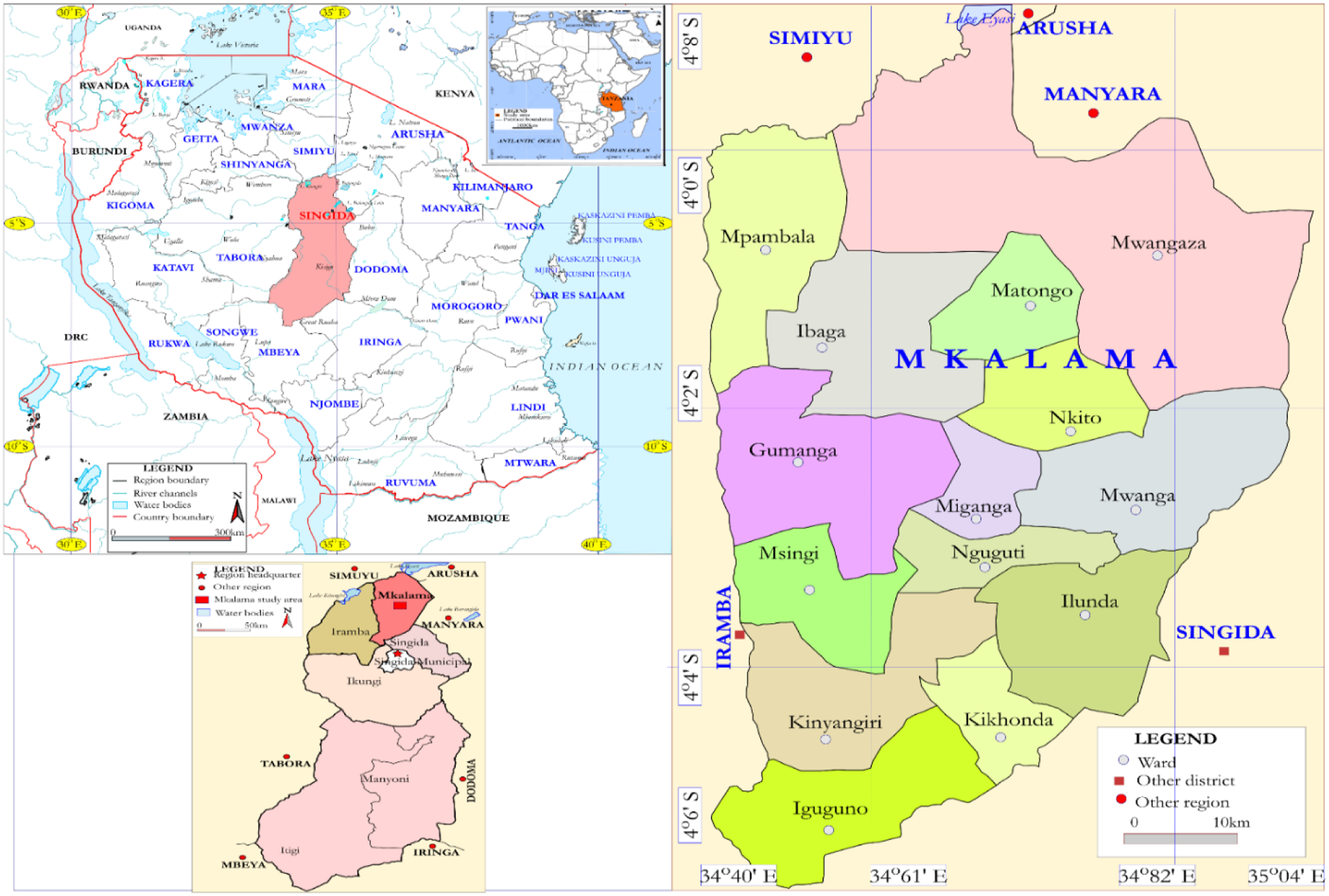
A Map of Tanzania Showing a Case Study Area Mkalama District Council. Source: ArcGIS (2022).
The first official contact between Germans and the Isanzu dates back to 1899 when the German military patrols made their first large-scale expedition from Kilimatinde into Iramba and Isanzu area (Sanders, 1997). It is suggested that when they arrived in Iramba, senior ethnic rulers were swiftly captured, some of whom were hanged (Lindstrom, 1987). When the military forces arrived in Isanzu in the late 1890s, they rapidly appointed a Jumbe “Headman” as political agents largely employed under the German regime all across German East Africa and authorised to administer the rural country sides of the colony. Between 1901 and 1902, German colonial officials decided to establish another station besides Fort Kilimatinde and subsequently constructed a new fort in the Isanzu area. Mkalama village was chosen just southwest of central Isanzu, and it is believed on the 26 May 1901, Sergeant Künster and his troops moved into the area (Obst, 1923; Sanders, 1997). Thereafter, German forces began erecting a large stone military fortress at the Mkalama village. The fort which still stands today – albeit in ruins – was a huge structure located strategically on the top of a hill, surrounded by stone walls (Figure 2).
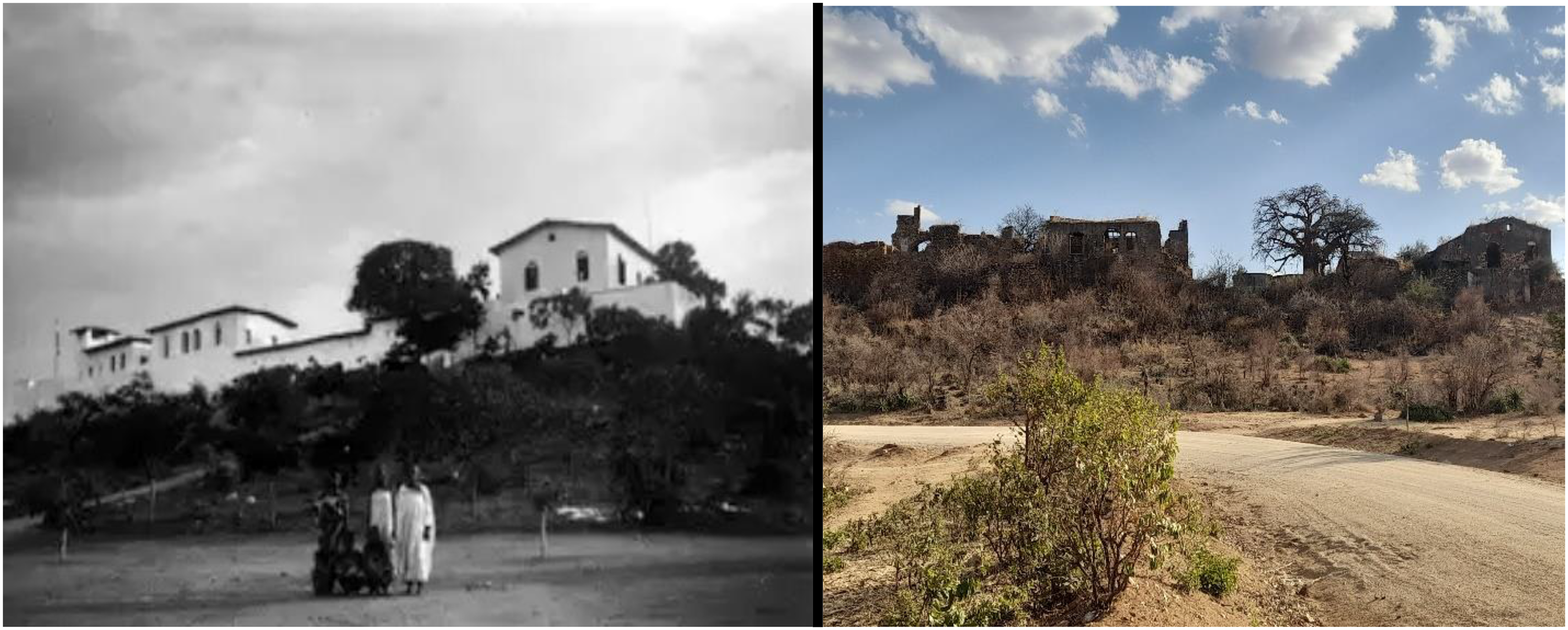
On the Left is the Mkalama Fort from the 1910s and on the Right is the Ruined Fort Which Stands Today (pictures by Maximilian Felix Chami, October 2022, and www-boma-kalender.de).
During the process of constructing the fort in Mkalama in 1902, the German colonial government encountered different riots from the Isanzu ethnic group organised by their Chief Kitentemi who was later arrested and taken to Kilimatinde and hanged. Kitentemi's death was a blow to the Isanzu fighters, and in the second battle with the Germans, Isanzu forces were heavily defeated, and many Isanzu fighters were killed. The German victory allowed forces to camp in Mkalama and continue to build their fort which was completed in 1910 (Scott, 1985; Thurnwald, 1935; Sanders, 1997) and imposed taxes and forced labour to Isanzu in this period (Jellicoe, 1969). During the First World War, German forces plundered and drafted enormous numbers from the Isanzu ethnic group via carrier safaris and transport wagons to Arusha and Moshi. Towards the end of the war, the Germans retreated south into Iramba and abandoned their fort at Mkalama (Sanders, 1997; Maddox, 1988).
The words “restitution” and “repatriation” are sometimes used interchangeably with the meaning of returning human remains to their country and to the community of origin (Bienkowski 2015: 433). In this paper, however, we use “repatriation” to address the administrative, legal, political/diplomatic, and technical/logistical aspects of the return of the ancestral remains from former colonial institutions back home to the place of origin (patria). “Restitution” refers to a more general and complex process of provenance research, acknowledgment, remembering, mourning, and reconciliation, which aimed to a reconnection for new futures (Rassool & Gibbon, submitted). Repatriation and restitution of collection items are currently addressing mainly ethnographic and human remain collections; natural history collections are also slowly coming into focus. As this study discusses the restitution of human remains, many scholars theorise and conceptualise what should be best practice in the restitution of the Ancestor human remains and cultural objects back to their original place (Mass, 2014; Ndiaye, 2019; Heeb and Kabwete, 2022; Schmidt and Heeb, 2022). On the other hand, some scholars have to recontextualise and develop new practices and approaches for the restitution of Ancestor human remains, while others analysed the shifting role of museums in relation to the restitution of human remain collections in parts of the world such as New Zealand (Hicks, 2020; McCarthy, 2014; Tythacott et al., 2014) or Australia (Pickering, 2020). In addition, some studies suggest that the restitution of Ancestor human remains should go parallel with financial reparations and cultural remembrance such as memorial sites, while others focus on the findings of provenance research conducted into human remains and evaluation of the historical documents and contemporary sources (Karangwa et al., 2022; Kowalak, 2022; Stoecker and Winkelmann, 2018). Based on the foregoing, we argue that the local communities, i.e. ethnic groups whose forefathers were robbed and exploited by the colonial regime, should be involved in the process of provenance research and repatriation. As the question might be at what stage of the provenance research should the local communities be engaged, it is their right to be involved in all procedures of the restitution and provenance research. In line with this, the current local communities might provide more evidence and information about their missing Ancestors rather than relying solely on historical documents and anthropological assessments. Thus, by focusing on the evaluation of local communities’ opinions and perspectives, this study extends the scope of knowledge on how to deal with the restitution of ancestor human remains.
Research on the provenance and restitution of human remains in Tanzania is a relatively recent discourse that begun to be debated nationally about ten to thirteen years ago (BBC, 2018; Gross, 2018). Most of the discourse on cultural heritage and museum studies in Tanzania has been concentrated in academic spheres and when discussed in public forums has been regarding management and conservation of movable and immovable cultural heritage (e.g. Juma and Khamis, 2005; Kamamba, 2005; Kayombo, 2005). This concentration has hidden an essential aspect of group identity and the fate of Ancestral human remains extracted from their community for dubious scientific usage in German collections. The concentration on these discourses has, unfortunately, left out some important debate of the restitution of Ancestral human remains taken during the German colonial period. Even though the provenance research conducted by German institutions have been able to provide contextual and circumstantial evidence of the origin of many Ancestral human remains, the local communities of whom the human remains belong to have not be included in research activities. As a result of this marginalization, the information on the human remains is incomplete and the perspectives from the communities of origin are sidelined from discourse and debate. Local opinions and insights on the origin, restitution, robbery, and fate of their Ancestor human remains are crucial to the question of restitution. A comprehensive approach would include mapping out the Ancestral human remains that are abroad and discussing with the local communities in Tanzania to gauge their understanding and suggestions for the restitution process. In addition, it is unsurprising that there is limited information on whether local communities would be interested in accepting their Ancestral remains as much of the information regarding these remains is missing or incomplete. In this paper, we argue that efforts in acknowledging past wrongs should go parallel with the repatriation of these human remains to the local communities they were taken from.
The history of anthropological collecting in Tanzania dates to the beginning of the arrival of early missionaries and explorers in the mid-nineteenth century. This was the first time that the Europeans began to engage with Tanzanian communities, and both took or received gifts from traditional elders or leaders including objects that modern societies consider valuable cultural heritage (Perras, 2004; Kayombo, 2005). From the early 1880s to 1914, numerous expeditions were conducted by the Germans to explore and survey the territory's population and resources. Infrastructure projects such as the construction of the Central Railway in the 1900s allowed for even greater collections – including human remains – being transported from the periphery to Dar es Salaam and shipped to Germany (Haupt 1984). The past few years have seen lively global debate and demand of restitution and repatriation of cultural heritage objects from former European colonies. The debate has been dominated mostly by the reclaiming of cultural heritage objects such as the Benin Bronzes that were taken to Europe during the nineteenth century (Schmidt and Heeb, 2022; Adewumi, 2015). The debate on human remains has been part of the same agenda as 10,000 of African human remains including former Tanganyika are stored in European museums and institutions. With the restitution of these human remains discussed for the last three decades, most African countries including Tanzania have not been able to develop an appropriate framework, methodologies, or approaches for a best practice of restitution of their Ancestral human remains which are abroad.
Some of the ethnic groups in the country such as Chagga and Ngoni are still looking and demanding the return of their ancestral human remains without success (BBC, 2018). This lack of a proper model or framework for the restitution of Tanzanian Ancestral remains has brought challenges and complications in terms of who and where these human remains will be returned to. The question of restitution thus opens the discussion to issues of reparative justice not only in acknowledgement of committed crimes but also of monetary compensation and development of communities in which the remains were taken from.
In piecing together this problem, several questions remained unanswered. For instance, will the ethnic group accept to receive the human remains from their ethnic origin with no family or clan name? Will they demand any justice or compensation for their ancestors? Will they bury their ancestors or use them for research and exhibition? What belief and faith systems guide these rituals given the evolution of religion in these communities such as Islam and Christianity? By focusing on the Isanzu ethnic group in the Mkalama district, this paper addresses the stated knowledge gaps to propose actions for the best practices of the restitution human remains to Tanzania.
Methodology
The University of Göttingen holds two anthropological collections with ancestral remains from colonial contexts from various world regions: the “Blumenbach Skull Collection” at the Center for Anatomy and the “Anthropological Collection” at the Institute for Historical Anthropology and Human Ecology. In both collections are the remains of seventy-one ancestors from today's Tanzania, which entered the collections during the German colonial period. Between August and November 2022, the provenance of sixty-six Ancestral human remains from the present-day Central Tanzania, that is, Dodoma, Singida, and Manyara/Arusha, were examined at the Anthropological Collection at the University of Göttingen, Germany. These Ancestral human remains were from Isanzu, Burunge, Sandawe, Irangi, Maasai, Tindiga, and Nyaturu. This study adopted a case study and phenomenological research approach that allowed in-depth, multi-faceted explorations of restitution as one of the complex issues in today's socio-cultural reality (Wertz, 2005). In this regard, Isanzu ethnic group and their Ancestor human remains were selected to be studied as they formed the majority group of the human remain collection from Tanzania. This helped to collect more data and allowed the study to explore more dimensions of the case of human remains from Tanzania.
The study begins with the broader context of German colonialism in Tanzania and its local impact to single cases of Ancestor human remain appropriation. Using historical sources, anthropological examinations, and contemporary accounts, the origin of the Ancestor human remains was not only recontextualised, but interviews and formal discussions were also conducted in Mkalama District, Singida Region, in October 2022. Interviews and formal discussion involved the Chief of Isanzu, elders of the ethnic group, cultural officers, youth, and government officers in Mkalama District. Furthermore, a site survey to identify German colonial remains or evidence of German colonial occupation in the area was conducted. Personal observations have also been included in this article. During the visit, we interacted with members of the Isanzu ethnic group in the vicinity and heard expressions of the widespread views that they are open for restitution if all their rights regarding their Ancestral remains can be granted and justice be obtained. They also revealed why Isanzu Ancestor human remains should be returned and outlined different ways of treatment they should receive thereafter.
Findings and Interpretation
How Isanzu Human Remains Were Taken Away: Context of Acquisition
In 1910, the Geographische Gesellschaft (Geographical Society) in Hamburg commissioned the Hamburg geographer Erich Obst with a research expedition to German East Africa. The expedition was also supported by the Reichskolonialamt (German Colonial Office), which provided some of the scientific equipment on loan and later paid the production costs for the route surveys and maps. As a young and upcoming scientist at the age of twenty-four, Obst attended an anthropological training course at the Hamburg Ethnological Museum taught by physical anthropologist Otto Reche in preparation for the expedition (Obst, 1915: 8).
The main objective of Obst's expedition was to explore the geological morphology, hydrological data, and botanical and zoological condition of the Great East African Rift in the area between 4° and 6°30’ south latitude and 34° and 36° east longitude. This area included the present-day administrative regions of Singida, Manyara, and Dodoma. The human inhabitants were also to be included in the investigations, because of the alleged “natural state” of these areas. According to Obst's initial assumption, the “remnants of the indigenous African population, Bantu […], Hamites and mixed peoples can be found.” The overriding concern of all the expedition’s investigations was the question of “whether the landscapes travelled through were suitable for white settlement” (Obst 1915: 9).
Accompanied by the medical doctor, Walter Gutsch, and about sixty local African porters, Obst arrived in the village of Mkalama in the Isanzuland in the second half of April 1911. The village was the site of a military station (see Figure 2) and had a local trading centre with traders of Indian and Arab descent. With the support of the station chief, First Lieutenant Gustav von Blumenthal, the expedition explored the surrounding region over four weeks (Obst, 1915: 26; Sanders, 1997: 64). During this stay until September 1911, Obst excavated “22 complete skeletons to clarify the anthropological conditions” among the Isanzu. Obst did not give any information about the exact location of the burial ground; however, it was most likely near the military station of Mkalama (Obst, 1915: 35). According to Obst, the removal of the skeletons from the graves was not met with any direct resistance from the local Isanzu. Obst later reported: “The attitude of the natives towards such a desire [to dig up human skeletons] is very different. […] the Waisansu even came after me after I had dug up over 20 skeletons there and offered to show me the grave of their grandfather, mother, etc. for a handful of beads and some tobacco.” On the other hand, it was observed that the Waisanzu honoured their dead through the decoration of the graves of their grandfathers and mothers (Zum Mallen, 2021: 19).
Obst sent all the excavated ancestral remains from the expedition to the Geographische Gesellschaft in Hamburg, which then handed them over to the Hamburg Museum für Völkerkunde. There, the sixty-eight skulls and skeletons including twenty-two from Isanzu ethnic group were added to the museum's anthropological collection and inventoried in 1912 (MARKK archive, 786). In the 1950s and 1960s, the contents of the Anthropological Collection of the Museum für Völkerkunde Hamburg (today MARKK, Museum am Rothenbaum. Kulturen und Künste der Welt) were transferred to the Anatomical Institute of the University of Göttingen, thus dissolving the Anthropological Department of the Hamburg Museum in the late 1950s. At the University of Göttingen, the Anthropological Collection moved around 1972 to the newly founded Anthropological Institute where the collection is still curated today.
Germany Conquest, Occupation, and Administration Evidence in Isanzuland, Mkalama
The respondents were further asked about the German conquest, occupation, and administration evidence in the Isanzuland and Mkalama District at large. They confirmed German presence in the area and pointed to the remnants of the German colonial occupation in their district. Respondents mentioned several existing features associated with the German past such as a ruined administrative and military station Boma, a hanging tree, the railway, and food storage warehouses. They also mentioned some of the signs and writings that can be seen in their areas mainly in rock hills. During the discussion, one respondent stated that the Mkalama Military Station (Boma) started to be built in 1902 and was completed by 1908. After building the Boma the Germans selected one of the trees and put a sign where people who committed a crime against the colonial government were sent to be hanged there (9 October 2022).
Other relics of the German presence are the Lutheran Church and school which are still in use today. The Lutheran Church in Mkalama was first started by a missionary from the German Leipzig Mission to preach in the Isanzu and Iramba area. The church, however, is in a poor state and in need of conservation (Figure 3).
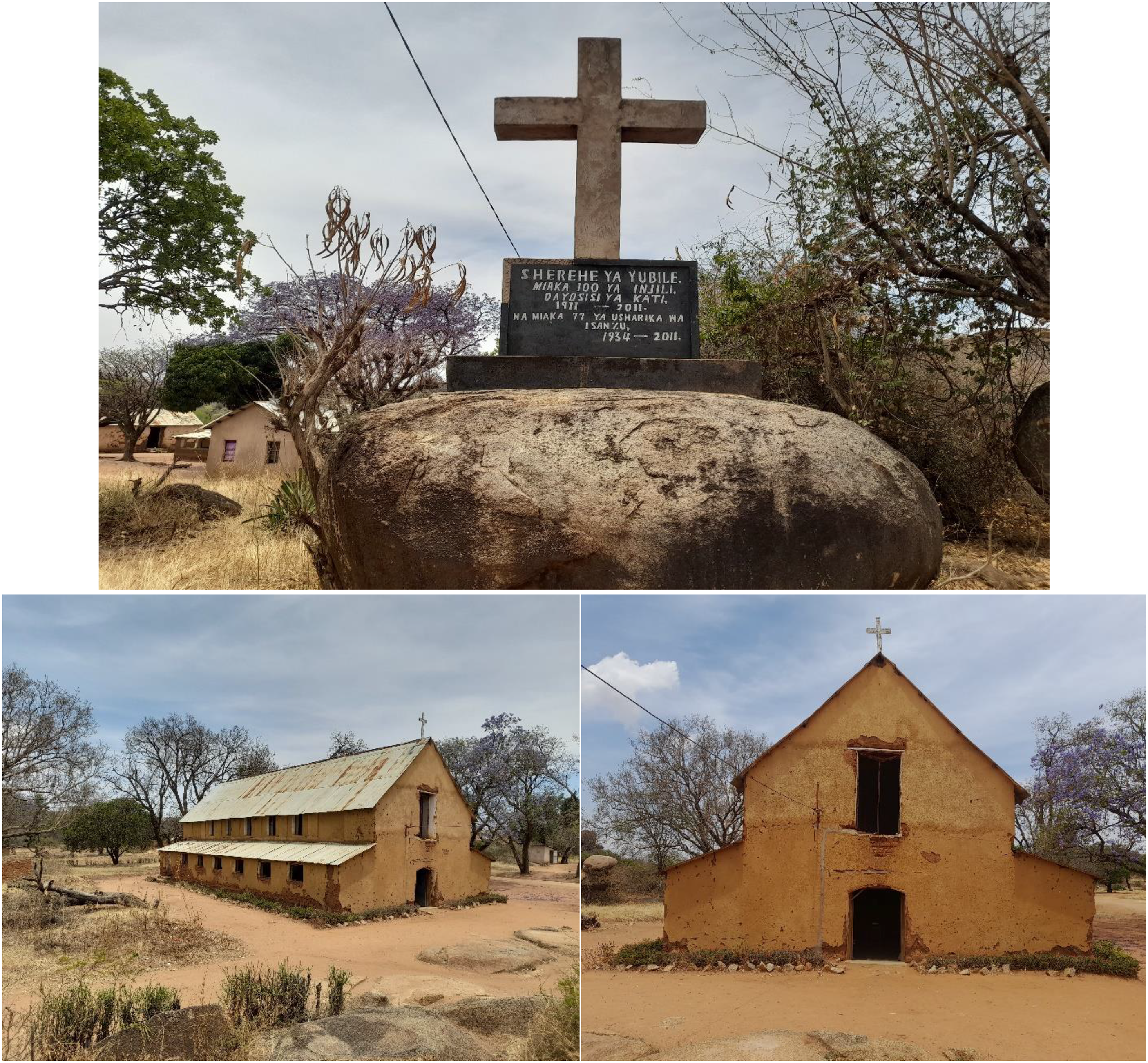
Isanzu Lutheran Church Which Was First Started by a Missionary from the German Leipzig Mission before the First World War (1911) and Later American Augustana Lutheran Missionaries Came and Continued with the Mission in 1926 (pictures by Maximilian Felix Chami, October 2022).
Some of these relics such as the military station provide historical evidence for the presence of early twentieth-century settlements of Germans in the Mkalama area and the contact between the Germans and the Isanzu ethnic group (Scott, 1985; Sanders, 1997). The Lutheran Church at Mkalama is also an important building which is still in use today dating back to 1911, when the first missionary from the German Leipzig Mission arrived and preached among the Isanzu. It is suggested that the Leipzig Mission worked in the area before World War I but had to abandon their work because the German colonial government had to remove their missionaries due to suffering from nervous breakdowns perhaps due to the harsh environmental condition (Benson, 2015: 19). It is believed that some Isanzu people were baptised, and it was the start and spread of Christianity in Mkalama area. However, it can be argued that many German missionaries had to leave Tanganyika after 1918, not all returned and, in some areas, American and Swedish Lutherans took over (Benson, 2006).
The hanging tree nearby the military station provides us with information on how the Isanzu people were humiliated by the colonial government. The documented sites such as the old graveyard also nearby the military station provide us with a concrete assumption that the Isanzu forefathers who were killed or hanged used to be buried in this area about 150–200 metres from the military station (see Figure 4). Due to this, it is possible that the Isanzu Ancestors’ remains were collected by Erich Obst's expedition in 1911 in this old graveyard. During the survey conducted in October 2022 in this old graveyard, some of the old stones arranged systematically were visible in some of the burial sites. This can be further supported by Obst's report that suggests the Isanzu ethnic group tended to decorate the graves of their beloved ones (Zum Mallen, 2021).
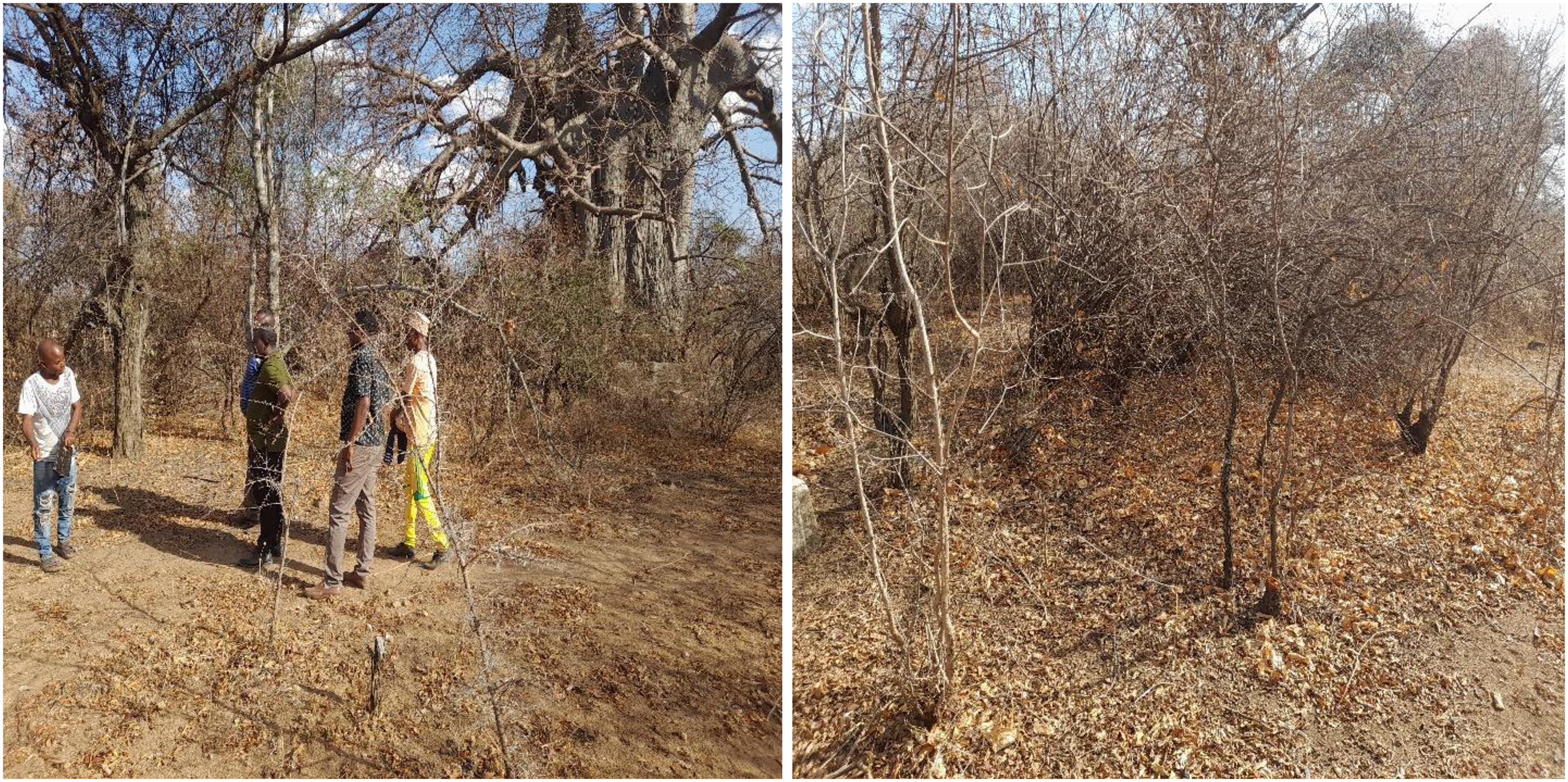
Old Graveyard About 150–200 Metres from the Mkalama Military Station That Was Used to Bury Locals Who Were Hanged or Killed after Being Found Guilty by the German Colonial Government (pictures by Maximilian Chami, October 2022).
The findings indicate the evidence of German colonial conquest, rule, and occupation in Mkalama District as suggested in historical sources. The hanging tree and military station provide clear evidence that acts of violence were committed against the Isanzu ethnic group by German colonial troops. The remembrance of the German colonial period, however, is mixed among the inhabitants of Mkalama. Some respondents said that the Germans brought religion into their ethnic group as many people were baptised and became the Christians of the Lutheran Church, today the Lutheran Church of Tanzania. They further suggested that the Germans brought education and schools to their ethnic group and many Isanzu chiefs such as Sagilo, Omarikinto, Salim Mugunda, and Wiliam Kali (Figure 5) were able to go to school and got an education (see also Sanders, 1997). Other respondents revealed that the presence of the Germans’ colonial remains in their surroundings made them feel uncomfortable as it scares them and brings bad memories. The presence of the hanging tree and the former graveyard nearby the military station remind them of their forefathers who were killed or robbed during the German colonial period in the Mkalama area. However, they all suggested that if these colonial remains are well utilised by the government, they might be a good source of income generation for their community and country in terms of the tourism industry. One respondent said: in those days, many scholars came from Isanzu because when the Germans arrived in Mkalama, they looked at the Isanzu people and sent them to schools which were in Kirumi and Isene areas and many became great scholars in the region and were also introduced to the Christian religion. (9 October 2022)
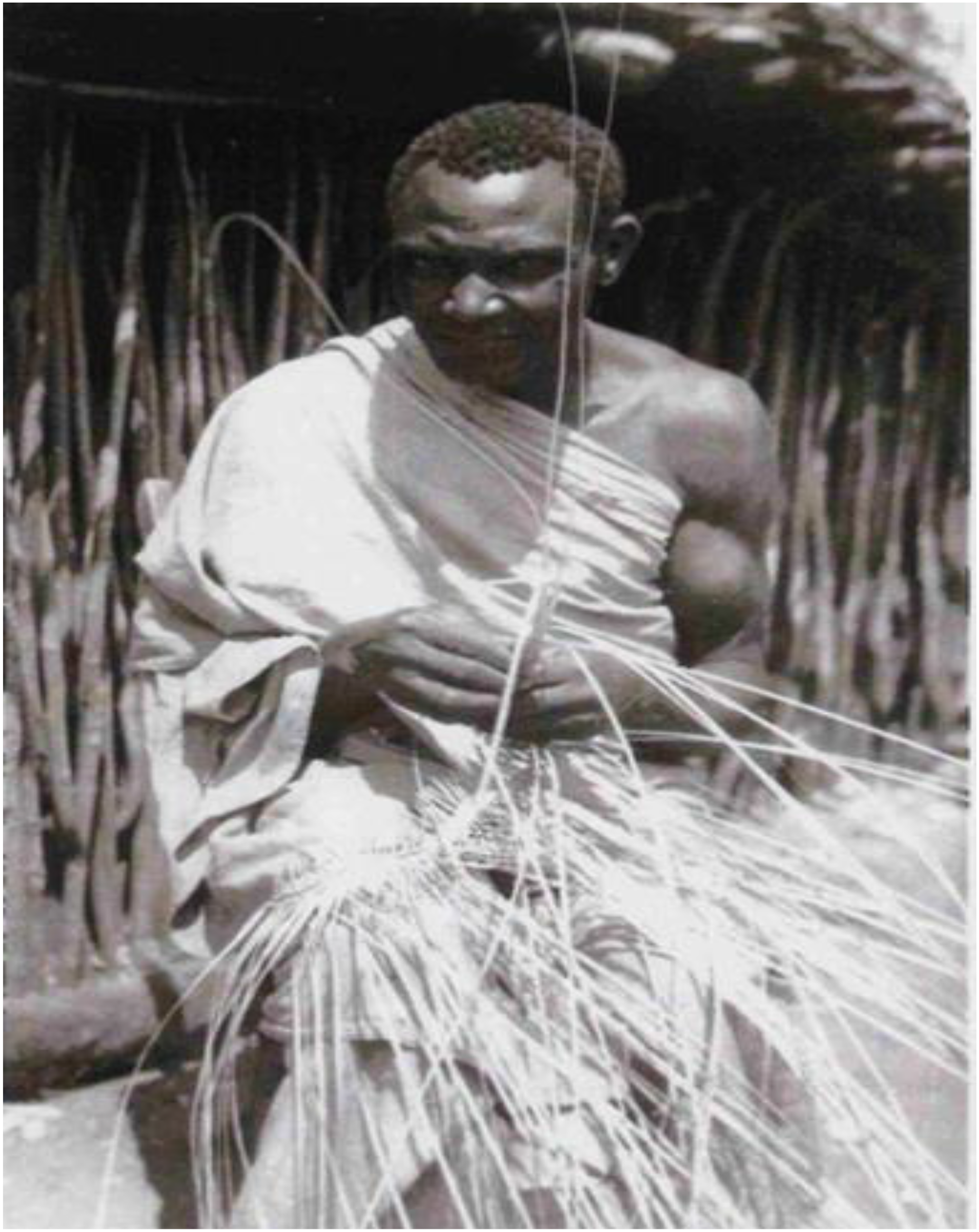
Chief William Kali Weaving Beer Strainer. Source: Sanders (1997).
The findings imply that there is the existence of a multi-vocality and variety of feelings and opinions regarding the presence of German conquest, occupation, and remains in Mkalama. Others see the negative side, while others see the positive side of German colonial rule in Mkalama as the historical remnants can be used as a source of tourism activities in the area.
Collection of Isanzu Ancestral Human Remains in Germany
The respondents were asked if they know of anything of value or significance taken by the Germans from their ethnic group during their occupation in the Mkalama area. However, the respondents failed to mention many things but still reported that some of their local equipment such as war fighting objects and ivory were the main items of value taken by the Germans (see also Gissibl, 2016). The other vital thing which was mentioned by all the respondents was Chief Kitentemi who was arrested by the Germans. He was taken away by the Germans, never to return to Isanzu again. He is still remembered as powerful chief and warrior of Isanzu responsible for riots against the German colonial government in Mkalama and an expert in rainmaking. The current Isanzu Chief said: the Germans came and when they left Mkalama, they left with our treasures including Kitentemi who was our main Chief and they took him via this middle way here. He was the founder of everything in our ethnic group, including stones for making rain, which the Germans also took after leaving with him. We Isanzu ethnic group still respect him a lot by doing rituals and activities to remember him. (11 October 2022)
The findings show that Isanzu ethnic group does not know much about the valuable objects that were taken from them by Germans apart from ivory and the human remains of Chief Kitentemi. It can be suggested that the Isanzu focus largely on stolen objects and heritage that are related to rainmaking and the supposedly hung chief, Kitentemi. As such, they are not aware of ethnographic objects that are housed in Germany nor of human remains besides those of Kitentemi and the stones he used for rainmaking rituals that are considered part of his corporeal form.
Regarding the report on whether human remains from Isanzu ethnic group were taken by Germans during the colonial time in Mkalama, the respondents revealed that no one has ever witnessed or even knew about the story. However, they said that it might be possible that the human remains of their grandfathers were taken, but they did not have that information. Some respondents further suggested that if they were able to take Chief Kitentemi and disappeared with him, then there is also a possibility that they took the human remains of our ancestors as well. During the discussion, some respondents reported that these human remains might have been taken from the old graveyard nearby the Mkalama military station (Boma). These might be the people who were hanged or killed by Germans and were buried in the area close to the military station (Figure 4). The findings imply that the Isanzu ethnic group were not aware of the presence of their ancestral human remains in Germany. This may be due to the older generation who had this information but did not pass it down to their successors. Another explanation might be that these human remains were, in fact, taken from the old graveyard close to the military station (Boma). At that time, 1910–1912, the surrounding area was not accessible to locals.
Respondents also discussed how they feel about the presence of their Ancestors’ remains in Germany. Upon receiving the news, the respondents were shocked and disappointed to hear of the presence of the human remains of their Ancestors in Germany, even though they did not know this information previously. For the Isanzu ethnic group, the human body is sacred, and usually, they visit the graves of their Ancestors to perform ritual activities. According to Isanzu belief systems, the human remains from their ethnic group should be returned so they may be accorded the same spiritual dignity that other ancestors experience. Memory forms a crucial role in the social lives of the Isanzu and is connected to the physical memory of ancestors in the form of graves and remembrance.
Furthermore, during the discussion, the respondents suggested that the challenges they have faced in recent years, especially climate change and weather problems such as the lack of rain in their area, are due to the presence of their Ancestors being in Germany. According to them, their Ancestors are sad and angry that they are far from home and that no one cares about them nor brings them back home. They further suggested that the Ancestors should be returned, and they will be buried with all respect, and rituals will be performed to welcome them back home. During discussion one respondent said, traditionally we go for pilgrimage to the graves of our Ancestors with faith that you go and tell them about your problems to find assistance. So, if our Ancestors have been taken by the Germans, what do we benefit from staying here? The Germans have inflicted a big loss on us, and we feel very bad. If there is a possibility, then our Ancestors should be returned quickly even if it is not known from which family or clan. As they all are Isanzu, then the government should help us to return our Ancestors so that they can rest in peace here in Mkalama. (11 October 2022)
The respondents underlined the cultural taboos in researching their Ancestors’ remains. They stated that it is not allowed for someone to research their Ancestors and research on Ancestral remains is something which they do not agree with nor accept. They feel that their Ancestors have been embarrassed and inflicted shame upon. They suggested that it might be difficult to do a DNA research test to match those human remains as they are in a different generation and information on those remains in terms of family and clan is missing as no one has ever claimed his or her forefather. These findings indicate that the Isanzu ethnic group still have a strong connection with their Ancestors in terms of faith and the afterlife and they are ready to be connected back with them in terms of ritual activities and pilgrimage.
Restitution of Isanzu Human Remains: Conditions and Challenges
In this section, we examine possible restitution approaches and the rituals which might be performed by the Isanzu ethnic group upon the return of their Ancestors. The respondents accepted to receive their Ancestors back home in collaboration with the Tanzanian Government and advised that they should be clothed. Additionally, they recommended that each of them should be placed in a respective coffin and kept well until the procedures to take them back are completed. Respondents also mentioned that before welcoming back the Ancestor's remains, traditional and cultural practices should be done in Germany. They revealed that a black cow and sheep should be prepared for the Isanzu people to conduct their ritual practices in Germany before taking their Ancestors back home. This will also be done in the home community as they will prepare a burial site and ask for blessings for this activity before travelling to Germany. Once the Ancestors arrive home, they will do a big ceremony to welcome them back home and prepare beer and food before laying them to rest in their allocated burial site.
Lastly, the respondents suggested the need for the Isanzu ethnic group to get compensation as justice for their Ancestors. The compensation should be based on improving their social services such as hospitals, schools, and infrastructure in their district. During the discussion one respondent said: We mean that the compensation should be based on the community social services that can be improved and benefit our Isanzu ethnic group. Compensation should not be based on money because money is the devil, and it will bring the conflict to our society.
The shame and injustice inflicted upon their ancestors entitles the Isanzu people to receive compensation for their wellbeing which is believed to have otherwise been granted through their ancestors through spiritual and material protection such as good rains.
Furthermore, the respondents provided opinions and advice regarding the institutions that hold their Ancestors’ collections in Germany. The respondents reported that the institutions holding their human remains and the Government of Tanzania should start negotiations on how they can return their Ancestors to their community. While the Ancestors wait for the negotiation to be processed, their Ancestors should be kept well and not used for any further research activity or exhibition. These findings suggest that the Isanzu ethnic group are ready for the restitution of their Ancestors on the basis of these conditions which need to be implemented while negotiations between the two Governments of Tanzania and Germany take place.
We also examine the challenges that may arise in the process of restitution of Ancestral remains to the Isanzu ethnic group. The challenges outlined here are based primarily on observation during the visit to the anthropological collection at Göttingen and during the data collection in the Mkalama district. It was observed that much of the information regarding the Isanzu human remains were missing. This includes the names of families and clans, of which these Ancestors are originating from. This brings a challenge in allocating and identifying the right people or families who will receive the remains. DNA technology might also be used under certain conditions and in a limited way to trace ancestry, clan, or family information. The question remains if DNA will be able to accurately trace back the fourth or fifth generation. At the moment no one in Isanzu has laid claimed to his or her Ancestor, not to mention the ethical issues of invasive DNA testing of human remains from colonial contexts (Jilala and Lwoga, 2022).
Besides the lack of information around the human remains, another challenge is that the majority of the Isanzu ethnic group are not aware of the presence of their ancestors’ human remains in Germany. Potential problems may arise from this limited awareness as some Isanzu, besides the group of respondents, may refuse to accept receiving the human remains of people as they do not have enough information and discussion around burial and compensation may not be unanimously agreed upon. In carrying out restitutive acts, the historical context of colonialism and the tendency of German colonial actors to collect human remains must be adequately explained and discussed with the communities. The discourse on restitution must consider the lack of awareness around the presence of human remains as part of the problem and design education awareness campaigns as a crucial feature in restitution. It must also be aware of the structures of the ethnic group such as group elders and the Chief who decide on the direction of the community.
The case of the Isanzu represents a general trend in the issue of restitution in Tanzania. Tanzania has more than one hundred and twenty ethnic groups, and ancestral remains of more than thirty of these groups can be found in different institutions in Germany, including the Prussian Cultural Heritage Foundation (Kowalak, 2022), the Charité University Hospital Berlin (Reimann, 2022), and the University of Göttingen. Reparations, justice, and development along ethnic lines may be in line with reparative justice but undermines the nation-state project and threatens this unity. This brings challenges to the Tanzanian government institutions on how to handle restitution issues and negotiations between them, ethnic groups, and German institutions. There is a need to devise a national plan for restitution, which could provide a framework and guidance in terms of the restitution process in the country. The issues of compensation might need more clarification and institutional assistance for the affected groups. However, the country has prioritised the restitution of objects with scientific value and significance to the country's national identity. For example, the restitution of dinosaur of Tendaguru that was taken during the Germany colonial period and exhibited at the Natural History Museum in Berlin (Heumann et al., 2023) seems to be more beneficial for the country than Ancestral human remains. That is why more efforts to improve Tendeguru site infrastructure including information centre and preparation of the management plan and consider inscription on the UNESCO World Heritage List continue (Chami, 2023; UNESCO, 2022). Repatriation of heritage such as the dinosaur may be more favoured as it is a relic of scientific heritage that may bring prosperity in tourism and economic growth and does not threaten the unity of the nation-state, unlike human remains which would highlight ethnic differences and bring little to no tourist income.
Another consideration is whether the home institutions such as museums or communities of origin are prepared to deal with the logistical work of repatriation. We may choose to look at examples from other countries who have engaged in restitution processes for longer than Tanzania such as those from Oceania, e.g. New Zealand. The Te Papa Tongarewa Museum of New Zealand was conceptually re-designed and developed different programmes and infrastructure in the 1980–1990s that could accommodate Maori cultural heritage including their social and spiritual practices (Henare, 2004). This conscious decision to conduct a conceptual overhaul of the Te Papa Tongarewa Museum of New Zealand is a significant advantage in the repatriation of human remains. Should the country decide that museums function as the transitory location for human remains or permanent location for the remains that are not desired or lack sufficient information, there needs to be a similar conceptual overhaul of the museum itself. The country therefore must ask itself how to connect with communities of origin and, if desired, re-conceptualise what museums should be. Lastly, does the economic responsibility of reparation fall on the host institution – such as the university or museum – or does it fall under the German government's mandate? Conversely, where reparations are agreed, are these funds to be directed to the affected communities of origin or to Tanzania's development projects at large? As much as the human remains can be traced to specific communities, the impact of German colonialism arguably affected the country at large. More interesting is that the union of Zanzibar urges the development to include this region despite the island never falling under German colonial rule. These concerns must be considered and discussed with the wide range of stakeholders and communities.
Discussion
The research illustrates that the Mkalama District is endowed with many German colonial remnants of historical and heritage value, with the potential of contributing to cultural memory and tourist development in the area. They include the ruined German Military station (Boma), Lutheran Church, old graveyard, food storage warehouse, hanging tree, and remnants of the railway. Furthermore, the lack of information among the members of the Isanzu group regarding the excavation of Isanzu human remains and the transportation to Germany was also experienced. Perhaps their forefathers who witnessed the excavations done by Obst feared to inform the community and the coming generation as the colonial government could be violent towards them. It was further observed that the Isanzu people are not aware of whether some of their ethnographic objects were also taken by the Germans during their stay in Mkalama. The presence of a shield made of Buffalo skin, wood, and pigment (see Figure 6) from Charles De Cordier Fine Arts in Gent, Belgium, is believed to be of Isanzu ethnic group from Tanzania. It can be urged that during World War I, the Germans forces pillaged, plundered, and shipped all the important things with them from Mkalama to German (Maddox, 1988). Perhaps others had to sell some of the important objects to different people after arriving home. Yet, in this case, since Gent is in Belgium, Belgian occupying forces may have been involved. They entered the region in 1915 and also engaged in military plunder and exploitation of the surrounding environment.
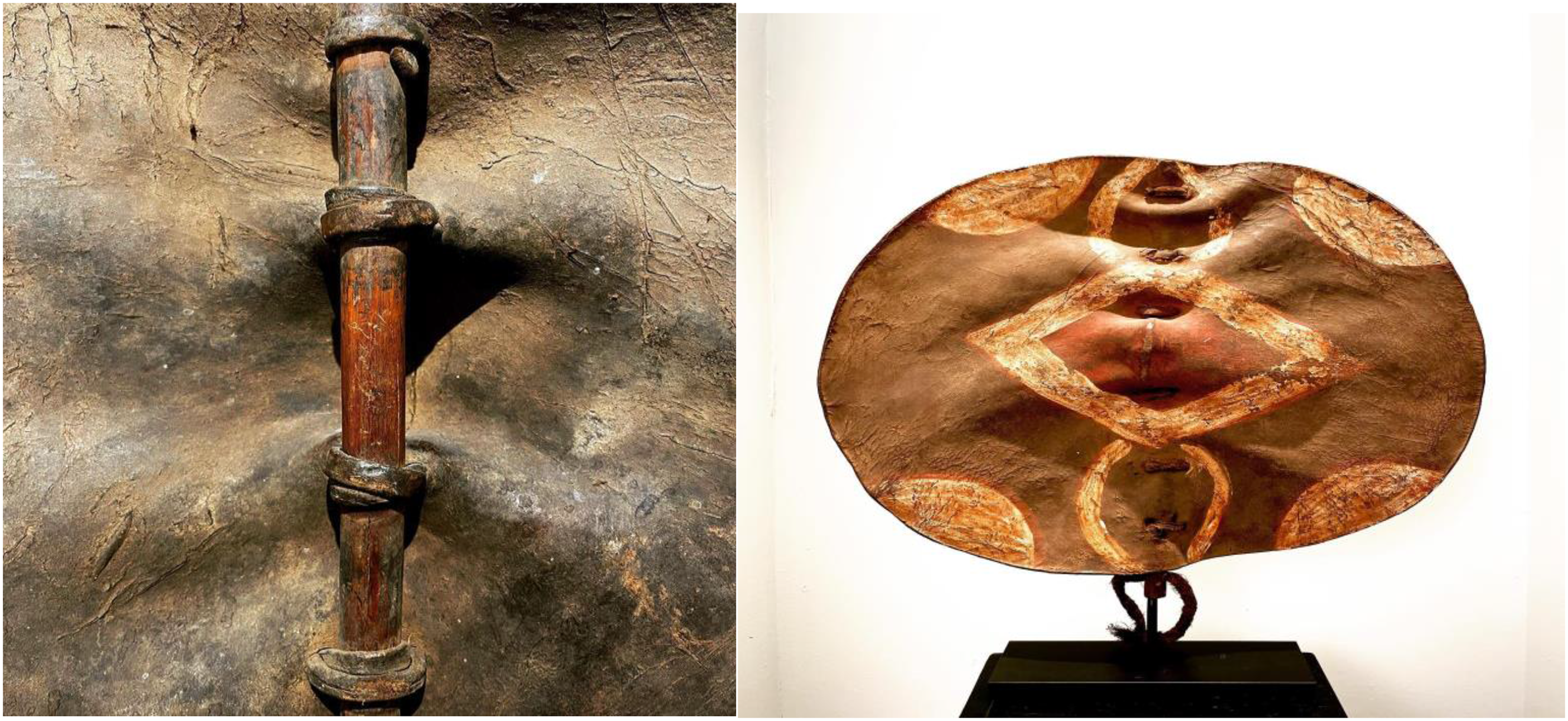
A Shield Believed to be of the Isanzu Peoples of Tanzania Made of Buffalo Skin, Wood, and Pigment. Source: Charles De Cordier Fine Arts (2022).
Additionally, more efforts also should be given to the process of restitution of Isanzu Ancestors’ remains as they have outstanding value in terms of faith, rituals, and connection to the ethnic group. The current social and environmental problems facing Isanzuland such as climate change and lack of rain are now associated with the belief and information that their Ancestors are far away from them and no rituals can be done for them. From an African perspective, ritual activities have great importance in traditional African ethnic groups and are inseparable from culture (e.g. Gyekye, 1987; Mbiti, 1975). The primary purpose of rituals in African ethnic groups is to create fixed and meaningful transformations in the life cycle (birth, puberty, marriages, and death), including ecological and temporal cycles such as planting, harvest, and seasonal changes (Chami 2019; Kgatla 2014:82; Ray 1976). It involves conducting religious actions or ceremonies through words, symbols such as graves, and action by communicating in a religious language (Chami, 2019: 53; Mhaka, 2014: 374). In this case, the restitution of Isanzu Ancestral remains of the ethnic group carry great importance for their life cycle. As the ethnic group is ready to receive their ancestors and conduct ceremonies and rituals, the rejection or prolonged process of repatriation is believed to lead to the collapse of social order, structures, and incite violent reactions among the community. The local population in Mkalama may also benefit from significant repatriation of their Ancestors and opening the area in terms of tourism products and development. Visitors might be interested to visit Isanzuland and see the memorial sites of the Ancestors and former German colonial structures in the district.
Before Obst and his expedition arrived in Mkalama in April 1911, the area nearby the Military station (Boma) by 1910 had several shops run by Arab peoples, where people could buy, among other things, beads and cloth (Obst, 1923; Sanders, 1997). The area became a more integrated trading centre for the local economy and acquired importance to the long-distance trade routes that existed in past decades. That being the case, there is an assumption that some of the people who had not or not only Isanzu ancestors were buried in the old graveyard which likely later became the site where Obst excavated human remains in September 1911 before shipping them to Hamburg in Germany. A further reason why there has been limited discussion and action in the repatriation of human remains is that the idea of deceased and unnamed humans in a foreign country is a taboo and sensitive topic. The question of human remains brings forth issues of witchcraft and curses that may have been inflicted by the Germans and continue to plague communities of origin with their ancestral remains being in Germany.
The repatriation of the Isanzu Ancestors’ remains should be based on wisdom, agreement, and negotiation. As the Isanzu Chief and elders have blessed the idea of repatriation of their forefathers to return home regardless of all the information missing, it is the time now for the ethnic group to be given this opportunity to be connected back with their ancestors. Since restorative justice and compensation for their Ancestors’ removal are on the agenda, the institution responsible for handling and receiving in Tanzania might discuss this more with the community during the process. Whatever the reasons one could provide, it suffices to note that the return of Ancestor's remains to Tanzania without a proper plan will be challenging. Therefore, there is a need for the country to develop a plan that presents guidelines for the repatriation of human remains. Repatriation plans have become an increasingly popular tool for returning cultural and natural properties. Hence, the main objective of this plan should be to provide a framework and the necessary strategies to ensure that human remains are returned to the ethnic groups. Given that Tanzania has limited experience with repatriation of human remains, there is a great opportunity to map out what an “ideal” repatriation and restitution process can look like with the support and collaboration of various stakeholders to devise innovative solutions in cases with insufficient information. Given that Germany holds human remains from other ethnic groups in Tanzania, the plan could be applied to cases beyond the Isanzu and revised accordingly.
From Theory to Practice: Restitution of Ancestor Human Remains in Tanzania
This section addresses the aim of the paper to propose theoretical considerations and implementable practices towards the restitution of human remains in Tanzania using the case study of the Isanzu ethnic group. This section provides guidance, framework, and method (action-oriented approach) for the repatriation of human remains back to Tanzania. These key actions could be incorporated in and addressed during the conception of developing a restitution plan for human remains. Therefore, the action-oriented approach for restitution of human remains should address the following issues.
Ethnic Group Engagement and Participation in the Process of Repatriation
The restitution of human remains depends largely on the support of the ethnic groups as they play an important role in the return of their Ancestors. These ethnic groups are the direct descendants of the Ancestors whose human remains were removed and ought to be restored, and they relate to them spiritually. Therefore, the needs and aspirations of the local community must be addressed to ensure their support in this process of restitution. If the ethnic group is not involved in this process, it will be difficult for them to support the repatriation. If included in the process, the engaged ethnic group will be a crucial partner to the government in ensuring their ancestors’ smooth return and rehabilitation home. Furthermore, ethnic groups can only play an active role in the repatriation process of human remains if they are aware of the values and the significance of restitutions and find ways to resettle the human remains in a manner that is culturally appropriate to them.
Research and Education: Human Remains and Ethnic Groups
There is a need to address the issues of research and education programmes related to the return of ancestors’ remains. Research and educational activities are crucial for information, interpretation, and presentation with regard to the circumstance of the acquisition of human remains and their origin. Research and education are powerful means of raising public awareness regarding human remains. It should be well known that the wide range of research publications and educational programmes all contribute to public education and the interpretation of human remains. The prepared repatriation plans should acknowledge the important role of research and education in process of restitution, community education, and public engagement.
Government and Institution Responsible for Repatriation of Human Remains
This action should be aimed at providing clear guidelines and setting up an appropriate governmental and institutional framework for developing strategies for the restitution process. The plan should identify which governmental institution will manage the restitution programme in the country. The institution selected will be responsible to manage and oversee all the restitution and repatriation programmes with national or international scope. Furthermore, the government should allocate funds to the responsible institution to ensure easy facilitation and implementation of the restitution programme in the country. Discussions on the restitution process should not be limited to the fields of academia or government alone but include community elders, women, youth, and other relevant stakeholders who may be able to offer a broad range of opinions and suggestions.
Negotiation and Agreement Process of Restitution
This action needs to address all the issues regarding negotiation and agreement by establishing or identifying the institution to oversee the claiming and restitution process. The claims also on compensation from the local communities should be considered. The institution responsible and the national committee should have a meeting with the local ethnic groups and get their feelings and opinions before starting negotiation and agreements.
Conclusion
The outlined actions and strategies could be taken as the starting point towards the development of the National Restitution Plan/Policy in Tanzania. The four key action areas above need to be intensively observed during the development of the restitution plan. If these key areas are well incorporated into the National Restitution Plan or Policy, it will ensure effectiveness in the implementation of the restitution programme of the country. Its success will be measured by how it has been able to ensure the return of Ancestor's human remains back to the ethnic groups. In conclusion, the restitution of the Ancestors remains in Tanzania without having a plan or policy will be challenging. This paper has shown how the ethnic groups are ready to be connected with their Ancestors both physically and spiritually; the process must be conducted with coordination and sensitivity so as to bring back harmony to the communities. As has been stated, this restitution is crucial in solving the challenges of the present that the Isanzu face. This is a belief that other ethnic groups in Tanzania hold, and as such, the return of Isanzu human remains offers a worthy opportunity for other restitution processes in Tanzania to follow.
Footnotes
Acknowledgements
This article was developed with assistance from the National Museum of Tanzania's outreach programme in Singida Region. The activity in the respective area aimed at getting the Isanzu ethnic group opinions and feelings regarding the restitution of their Ancestors. The authors thank the Georg-August-Universität Göttingen and the Volkswagen Foundation for supporting the research activities in Mkalama District, Singida. Finally, we would like to thank the Director of Mkalama District Council Ms. Asia Messos together with the Cultural Officer Mr. Lunzegere Kilala and Adson Ndyanabo for their assistance and hospitality during our stay in Mkalama. Asanteni sana. We also thank the two anonymous reviewers for valuable comments.
Declaration of Conflicting Interests
The authors declared no potential conflicts of interest with respect to the research, authorship, and/or publication of this article.
Funding
The authors disclosed receipt of the following financial support for the research, authorship, and/or publication of this article: This work was supported by the Volkswagen Foundation (grant number 97724).