




Abstract
While research on income inequality and institutional trust mainly focuses on how actual changes in inequality and individuals’ perceptions affect trust, we know little about whether changes in wages relate to institutional trust. This study investigates how institutional trust develops across wage groups over time and whether substantial wage increases are associated with changes in institutional trust. Using data from the Panel Labour Market and Social Security (PASS), we show that wage inequality decreased in Germany between 2019 and 2023. While wage levels are positively associated with trust, decreases in wage inequality do not translate into increases in trust among low-wage workers. To the contrary, whose wages increased by approximately 20% over our observation period, show a decline in institutional trust. Fixed-effects regressions reveal a statistically significant, but only weak, association between wages and institutional trust. Overall, our findings suggest that even substantial wage increases, such as those from minimum wage reforms, may not strengthen institutional trust, highlighting the limits of economic interventions in shaping citizens’ perceptions of government.
Introduction
Institutional trust is a cornerstone of democracy. It fosters democratic participation (e.g., Zmerli and Newton 2008), voting for democratic parties (Ivanov 2023), and support for redistributive policies (Habibov et al. 2018). Yet, the rise of populism suggests that institutional trust has eroded in many democracies (Berman 2019). Declines in trust in institutions over recent decades may result from increasing societal polarization around key values and rising income inequality (Brady and Kent 2022). Research suggests that income inequality—and citizens’ perceptions and evaluations of it at the national level—are crucial drivers of declining institutional trust (e.g., Bienstman 2023; Bienstman et al. 2024). Thus, one promising strategy for political actors could be to address income inequality directly, for instance, through minimum wage reforms.
To provide empirical insights into the potential effects of such reforms, this study poses the following research questions: (1) How does trust develop across different wage groups during a period of substantial increases in minimum wages? (2) Are substantial wage increases associated with increases in trust? Answering those questions is crucial because prior evidence shows that national-level perceptions of inequality, rather than individual income gains, shape political trust (e.g., Bienstman 2023; Broockman et al. 2024; Devine and Valgardsson 2024). If even substantial wage increases among low-income workers fail to bolster trust, this would suggest that redistributive policies do not easily shift public perceptions of inequality. Moreover, investigating time trends across different wage groups implicitly tests whether policy efforts to reduce economic inequality translate into higher trust.
This study focuses on Germany, where recent policies have explicitly targeted low-income households to reduce inequality. Since the COVID-19 pandemic, such efforts have sought to increase the wages of low-income groups and mitigate the financial hardships stemming from the economic downturn and inflation. A pivotal policy in this regard, though not directly tied to the crises, was the substantial increase in the federal minimum wage. The stepwise reform from 9.60 Euro in July 2021 to 12.00 Euro in October 2022 translated into a nominal wage increase of roughly 25% for affected workers within just over a year. During the same period, basic income support in Germany (e.g., the “Bürgergeld”) also became more generous, particularly benefiting low-income households. Thus, during and after the pandemic, policymakers implicitly aimed both to alleviate financial burdens associated with the economic downturn since 2021 and to stabilize institutional trust at a time when it was eroding (e.g., Zoch and Wamsler 2024).
To address our research questions and contribute to work on individual-level dynamics between wages, incomes, and institutional trust, we first descriptively investigate changes in wages and institutional trust over time, and, second, employ a fixed-effects regression approach to assess the association between wages and trust. This approach allows us to account for time-invariant unobserved heterogeneity, thereby increasing the validity of our estimates. Furthermore, a within-person design advances prior research, which often relies on cross-sectional data and does not allow for analysis of the effects of substantial wage increases on trust. Moreover, by linking wage dynamics to trust in institutions, our study sheds light on the potential of structural policies in reshaping citizens’ political evaluations. We examine these dynamics using household panel data from the German Panel Labour Market and Social Security (PASS) (Trappmann et al. 2019), which enables us to analyze between- and within-person changes over time.
Theoretical considerations and related research
This study adopts an experiential view of institutional trust (e.g., Uslaner 2008). Accordingly, we assume that individuals’ everyday experiences with political and bureaucratic institutions shape the formation of trust (e.g., Fairbrother et al. 2022). Institutional trust furthermore constitutes an important determinant of generalized trust (Sønderskov and Dinesen 2016), which is a core element of the social fabric, functioning as a mechanism that reduces social complexity and facilitates social interaction (Luhmann 2014).
We assume that labor market processes are important for trust because they constitute crucial arenas of social interaction (Abbott 1988), and because employment outcomes are central to individuals’ senses of self and identity (e.g., Jahoda 1981). In line with this argument, previous research indicates that unemployment (e.g., Giustozzi and Gangl 2021) and low job quality, measured for instance by job insecurity (Wroe 2014), are negatively associated with institutional trust. Consequently, we expect that improvements in a key dimension of employment quality are positively associated with institutional trust.
In contrast, wage gains need not translate into higher institutional trust if concurrent political and economic developments, such as pandemic-related policies or rising inflation, violate workers’ expectations (e.g., Van der Meer 2010). Moreover, inequality can undermine trust by fostering perceptions of unfairness and unresponsiveness in democratic processes (Bienstman et al. 2024). Even when inequality in wages or labor income decline, as was the case in Germany over the past decade (see, for instance, Börschlein et al. 2024; Grabka 2022), increasing inequality at the household level, which has likewise characterized Germany in recent years (e.g., Spannagel, 2025), may offset perceptions of improving distributive outcomes and thereby weaken the potential trust-enhancing effects of labor market processes. Additionally, other macro-level developments, such as rising inflation or heightened immigration, may crowd out the relevance of labor market processes in individuals’ evaluations of institutions. Taken together, these considerations suggest that even substantial wage increases may not differentially affect the development of institutional trust across worker groups and may leave overall trust levels unchanged when broader inequality dynamics and competing societal concerns remain salient.
Thus far, research comparing trust across income groups, which carefully distinguishes between causes and effects, highlights the stratifying role of income (Brülle and Spannagel 2026). However, studies of individual-level income changes find little effect on institutional trust (Broockman et al. 2024; Devine and Valgardsson 2024). Overall, the current state of research suggests that experiences and attitudes related to status loss, anxiety about social demotion, and social position contribute more to variations in trust than do marginal increases in individuals’ incomes.
Research on trust and populist voting in Germany highlights a pronounced regional divide. Trust is lower in Eastern Germany, partly reflecting enduring structural economic differences between East and West (Dragolov et al. 2016; Hebenstreit et al. 2025; Kellermann 2024). Similarly, support for populist parties follows clear regional patterns, with stronger support in rural and Eastern regions (e.g., Arzheimer 2023). Against this background, our analysis explicitly investigates East–West differences in the association between wages and institutional trust.
Data, methods, and sample
We use data from the Panel Labour Market and Social Security (PASS-SUF0623; 10.5164/IAB.PASS-SUF0623.de.en.v1). The PASS is a large-scale annual panel study of German households that surveys approximately 15,000 individuals from 10,000 households each year since 2006; interviews are mainly conducted between February and May (90% of interviews in our analysis sample are conducted in these months). The PASS consists of a representative general population sample and a welfare benefit recipient sample. This makes it suitable for our analysis, as the sample of benefit recipients captures individuals who are affected by minimum wage increases. The response rates in the survey stand at approximately 30% (Trappmann et al. 2019). The German Institute for Employment Research (IAB) conducts this annual survey. To ensure high data quality, interviewers for the survey receive between 6 and 8 hours of training per wave, and the IAB continuously monitors the survey progress during the field time.
The PASS enables us to measure institutional trust with the following four questions: “How much trust do you have in the following public institutions or groups of persons? (1) The political parties; (2) the German government; (3) the German Constitutional Court; (4) the police.” These measures are included from 2019 onward (i.e., survey wave 13). The four measures show high internal consistency (Cronbach's alpha=0.88). Consequently, we build a sum score to measure institutional trust that ranges from 0 (low) to 10 (high).
To calculate wages, we use the gross monthly labor income and contractual working hours associated with individuals’ main activity. We exclude individuals with mini jobs and those with hourly wages below 8.50 Euro and above 200 Euro. All wages are deflated based on 2020 prices. To show wage development, we display wage changes relative to 2019 for three wage groups: (1) individuals with wages below 12 Euro in 2019; (2) individuals with wages between 12 Euro and 16 Euro in 2019; and (3) individuals with wages above 16 Euro in 2019. The intuition underlying the division of the sample into these three groups is to distinguish between a group that is directly affected by the minimum wage increase, a group just above the minimum wage threshold that may be indirectly affected through employer-driven wage adjustments intended to preserve a differentiated wage structure, and a group that is likely unaffected by minimum wage legislation, either directly or indirectly. Additionally, we show the changes in trust between 2019 and 2023 using these three wage groups.
Overall, we use 12,677 valid responses from individuals who were observed in 2019, took part in at least one follow-up survey, and provided valid information on the variables we use in the regression described later. In our analysis, 19.29% of the sampled individuals are in the low-wage group; 25.68% belong to the group of individuals who earned between 12 Euro and 16 Euro in 2019; and 55.03% in the sample report hourly wages higher than 16 Euro. To account for the specific features of the data (i.e., the oversampling of individuals from households with long-term benefit receipt), we use cross-sectional survey weights in our descriptive analyses. The specifics of the weighting procedure are described in Berg et al. (2024). In the descriptive analyses, we simply show wage changes and the trajectories in institutional trust for the three wage groups, as well as by region.
In addition to the descriptive analyses, we run fixed effects regressions. In these regressions, we account for unobserved, time-constant individual heterogeneity in order to move closer to a causal identification of the effect of wage increases by removing such time-constant factors. For example, personality traits are likely largely time-constant, unobserved, and may affect both trust and wages. The use of fixed effects regressions, therefore, rules out potential biases in this regard. We estimate the following model:

Results
Trends in wage inequality over time and institutional trust
The left-hand side of Figure 1 shows the real wage changes in relation to 2019 for the three wage groups. The figure indicates that the wages of individuals earning more than 16 Euro per hour only slightly increased between 2020 and 2021. In the long run, real hourly wages even decreased. With regard to the group that earned between 12 and 16 Euro in 2019, Figure 1 shows that wages increased by approximately 10% in 2020 and did not further change during the observation period. As expected, low-wage workers experienced the most pronounced changes during the observation period. In 2023, the hourly wages of this group increased by 18%. An explanation for the relatively large change in hourly wages in the pandemic year of 2020 could be that low-wage individuals either—at least temporarily—lost their jobs or decreased their working hours due to the pandemic.
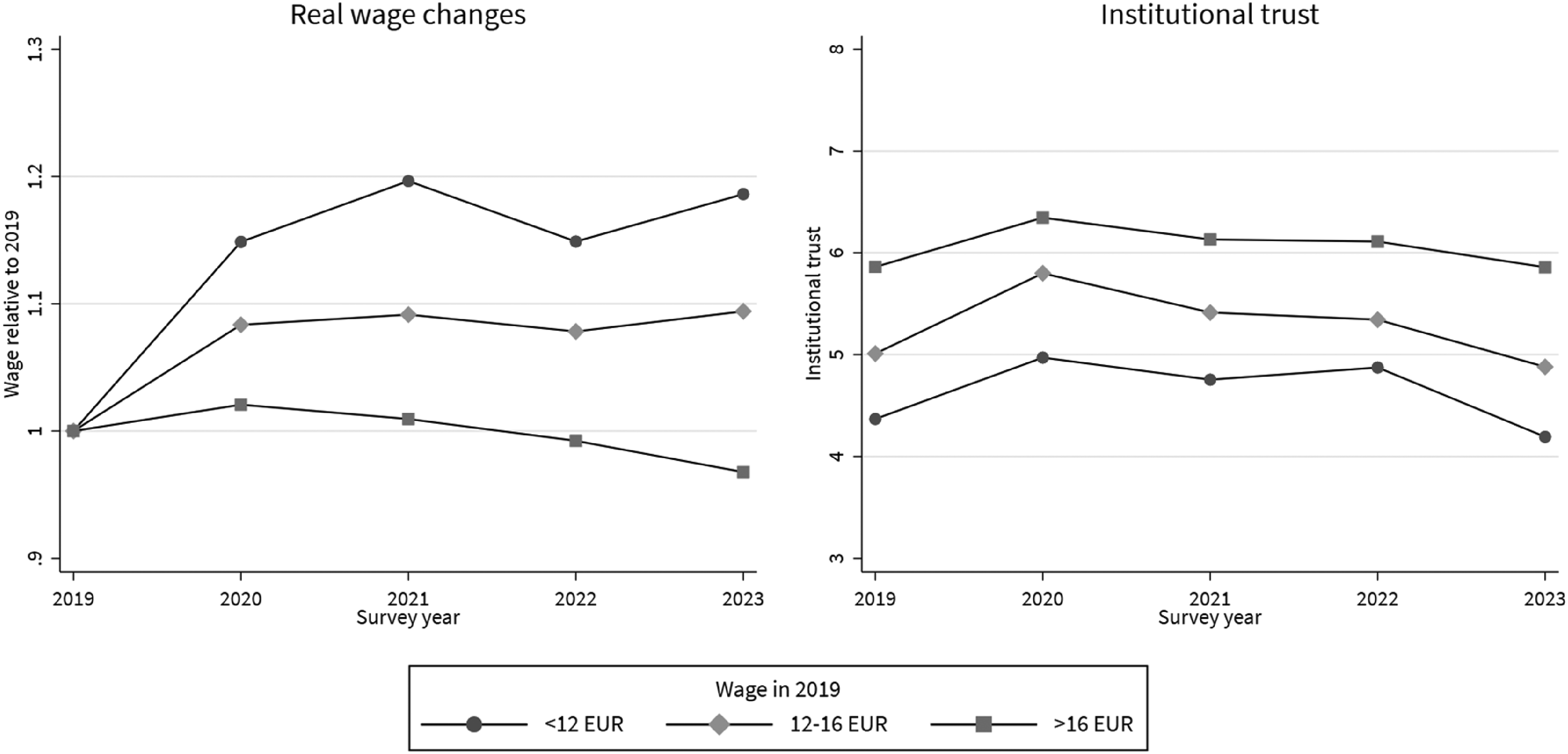
Development of real hourly wages and institutional trust between 2019 and 2023.
The right-hand side of Figure 1 indicates that wage levels structure individuals’ trust, i.e., the higher the wages are, the greater the degree of institutional trust. Figure 1 further supports the findings of previous research on rally around the flag effects and the decline in trust until 2022 (see Zoch and Wamsler 2024). Institutional trust further decreased for all wage groups in 2023, leading to lower trust levels in 2023 than in 2019. Interestingly, this decline is similar for high-wage workers and low-wage workers, i.e., for individuals who experienced no wage increases and even wage declines in 2023 and for individuals whose wages increased by approximately 20% in our sample. Thus, reductions in wage inequality appear not to be associated with decreases in trust. Furthermore, our description indicates that the group that was at the margin of being affected by the minimum wage showed the most pronounced decreases in trust. Given the findings of research on income inequality and trust, this may suggest that, particularly in this group, perceptions of income inequality or unfairness prevailed.
Figure 2 presents descriptive trends for East Germany and West Germany. Overall, Figure 2 indicates that wages at the lower end of the distribution increased most strongly in East and West Germany and that in West Germany, institutional trust was at higher levels for low-wage workers than for low-wage workers in East Germany. Slight differences in wage development between East Germany and West Germany emerge: In East Germany, the wages of high-wage workers increased during the COVID-19 pandemic, whereas no wage increases among high-wage workers can be observed for West Germany. Furthermore, for low-wage workers, wage increases were more pronounced in West Germany in 2021. In 2023, wage increases were on a similar level between the German regions.
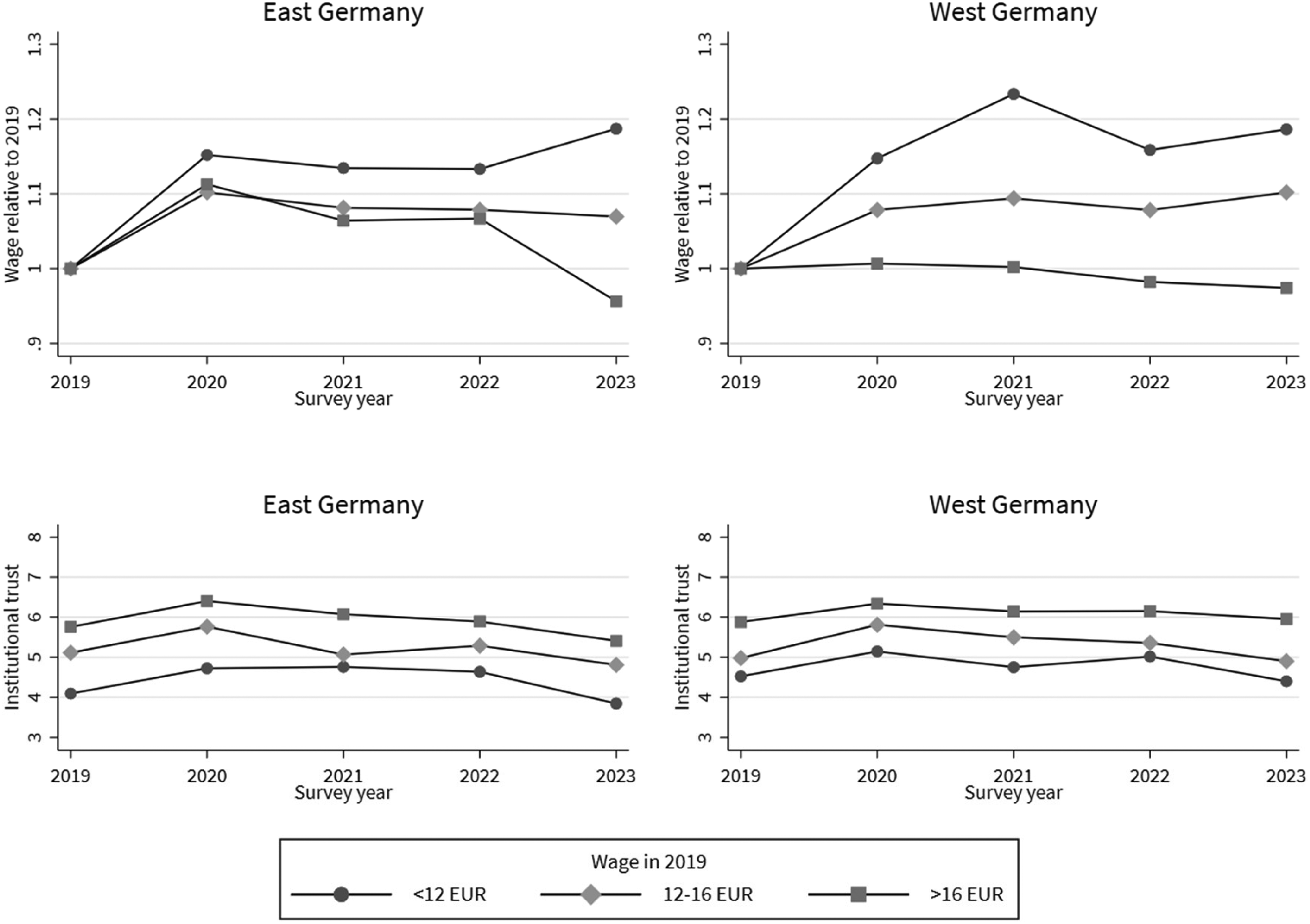
Development of real hourly wages and institutional trust between 2019 and 2023 by region.
With respect to the development of trust, the findings for East Germany suggest similar long-term declines for all wage groups. The trends for West Germany mirror the overall pattern described above. Interestingly, the decline in trust among the wage group that was close to being affected by the minimum wage is most pronounced in West Germany. This may further indicate that perceptions of income inequality changed the most within this group during the observation period.
Strong wage increases and institutional trust
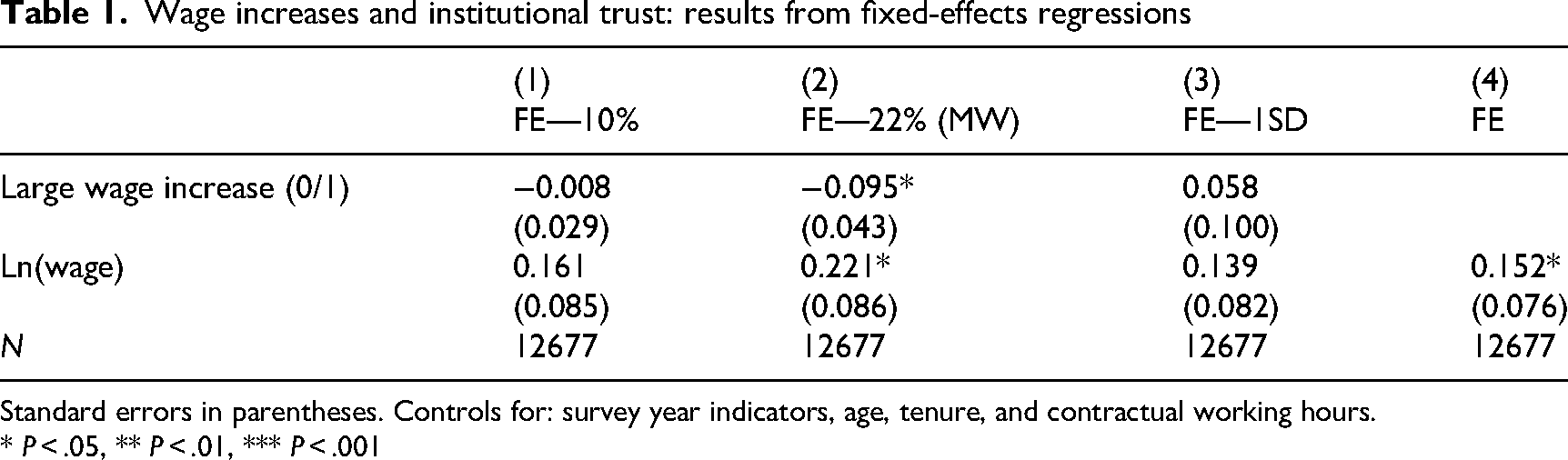
Next, we turn to fixed-effects regressions to estimate the partial correlation between wages and trust. Table 1 presents results for the full sample, examining three measures of wage increases: a 10% increase (column 1), a 22% increase, which is comparable to the minimum wage rise (column 2), and a one standard deviation increase relative to the previous survey wave (column 3). Column 4 reports the effect of hourly wages without conditioning on large pay increases.
Wage increases and institutional trust: results from fixed-effects regressions
Standard errors in parentheses. Controls for: survey year indicators, age, tenure, and contractual working hours.
* P < .05, ** P < .01, *** P < .001
Hourly wages appear to be significantly correlated with trust in each specification. However, effect sizes are very small. For example, in column 4, a 1% increase in wages is associated with only a 0.00152-point increase in trust. Column 2 shows a statistically significant negative effect of large pay increases, but the effect size is again minimal, and the negative direction is somewhat counterintuitive. However, it is important to keep in mind that the overall effect of a large wage increase is the combination of the coefficient of the large wage increase plus the scaled marginal effect of ln(wage). Our findings do thus not show that large wage increases have an overall negative effect on institutional trust, but that large wage increases do seem to have a smaller combined effect than the sum of small, incremental wage changes.
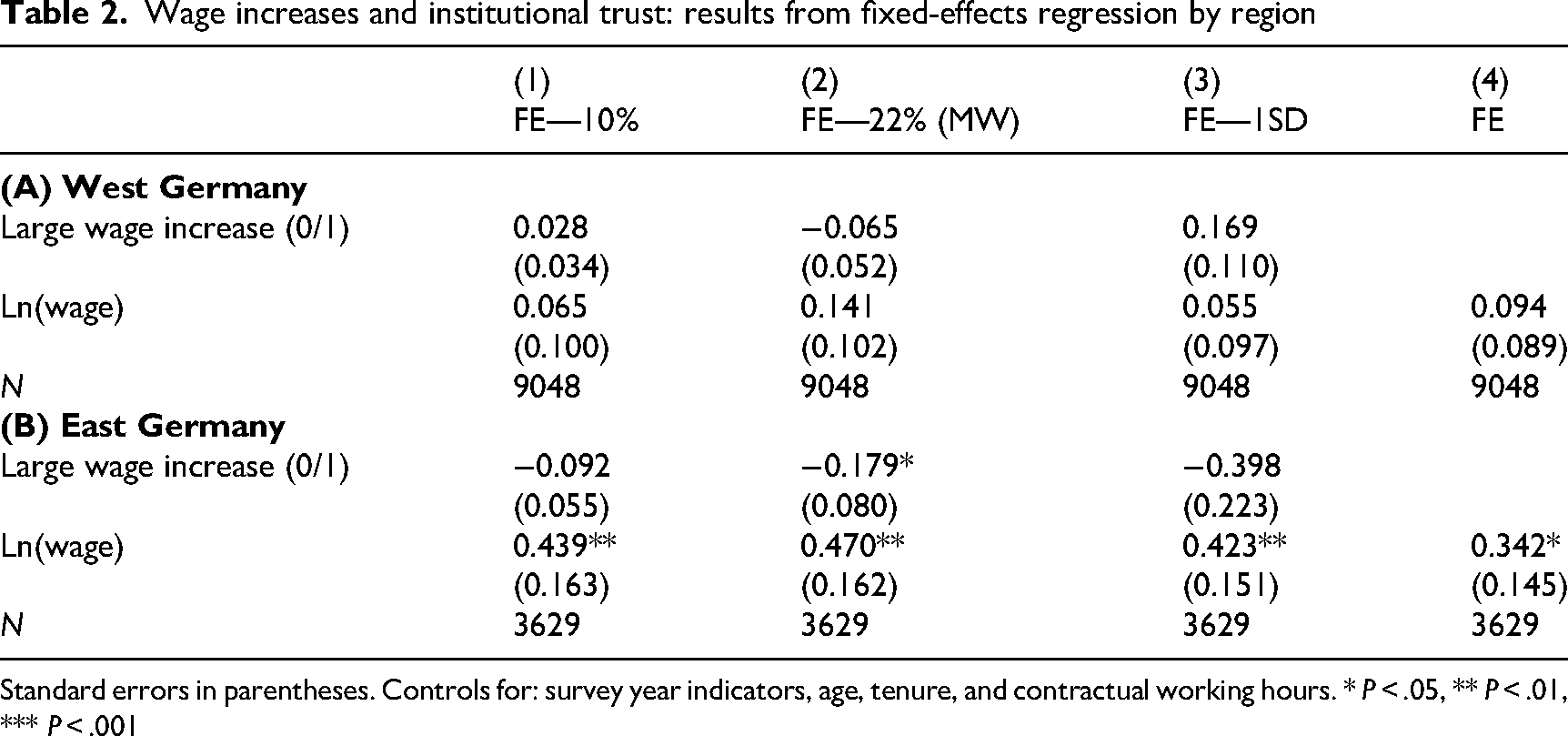
Table 2 presents regression results separately for West Germany (panel A) and East Germany (panel B). In West Germany, neither hourly wages nor substantial wage increases appear to be meaningfully related to institutional trust. In East Germany, wages and trust show a positive association, although the effect size is small: a 1% increase in wages corresponds to an increase in trust of approximately 0.00342 scale points. Again, large pay increases are weakly negatively related to trust, suggesting that a large wage increase dampens the increase in trust that stems from cumulative small wage changes.
Wage increases and institutional trust: results from fixed-effects regression by region
Standard errors in parentheses. Controls for: survey year indicators, age, tenure, and contractual working hours. * P < .05, ** P < .01, *** P < .001
Discussion and conclusion
By using individual-level longitudinal data from the Panel Labour Market and Social Security, describing trust trajectories over time, and employing within-person estimators, we contribute to research on the monetary determinants of trust, which has thus far relied primarily on cross-sectional data and between-group comparisons and therefore has been unable to assess how changes in wages relate to changes in trust. We show that wage levels are associated with institutional trust, but decreases in wage inequality between 2019 and 2023 did not lead to higher trust among low-wage workers. Trust trends were similar among individuals who experienced no wage increases, those with wage declines in 2023, and those whose wages increased by approximately 20%. Notably, the group marginally not affected by the minimum wage experienced the most pronounced declines in trust (between 2020 and 2023), particularly in West Germany. Consistent with prior research on income inequality and trust (Bienstman et al. 2024), this finding may indicate that individuals in this group perceived increases in inequality despite the actual decline observed in the data (see Appendix Figures A1 and A2 for robustness with fixed-effects specifications). Fixed-effects regressions further show that wages are weakly associated with institutional trust only in East Germany. Furthermore, our analyses show that large wage increases tend to have smaller effects on institutional trust compared to a sum of small, incremental wage changes.
Because institutional trust is a key determinant of social trust (Sønderskov and Dinesen 2016), our results suggest that labor market policies aimed at reducing wage inequality may have limited potential to strengthen social cohesion. Policies addressing income inequality and economic hardship since the onset of the COVID-19 pandemic do not appear to have promoted institutional trust in Germany. Between 2019 and 2023, we observed a decoupling between labor market improvements and citizens’ perceptions of inequality and trust. This indicates that policymakers were not successful in communicating clearly about the fairness and effectiveness of the implemented reforms to enhance citizens’ perceptions of government responsiveness. Furthermore, as our study provides an indirect test of the political effectiveness of labor market policies, such as the minimum wage reform, in regaining citizens’ trust during periods of multiple crises, our results suggest that such strategies do not appear to be promising avenues for fostering trust or regaining support among specific voter groups in the future.
The largest declines in trust occurred between 2022 and 2023, suggesting that events during this period may have contributed. While the German government successfully mitigated energy costs (“Gaspreisbremse”), ensured alternative gas supplies, and implemented the Bürgergeld reform to benefit low-income households, these efforts do not appear to have increased trust. Other factors—such as concerns about migration, the negative public image and interparty disputes of the “Ampel-Koalition,” inflation between fall 2022 and spring 2023, and stagnating economic growth—may have overshadowed potential positive effects of decreasing wage inequality. These dynamics are consistent with the “Triggerpoints” concept proposed by Mau et al. (2023), where specific issues evoke strong emotional reactions, while gradual improvements, such as decreases in inequality within the labor market, may go largely unnoticed.
Although our study advances current research on the monetary determinants of trust, some limitations remain. First, our analyses focus on within-individual variation and therefore neglect between-individual differences. This approach reduces statistical power and may obscure effects that primarily operate between individuals rather than within individuals. Second, cultural factors may become more salient for trust formation during periods of societal disruption, potentially rendering monetary effects substantively small or insignificant in such contexts. Third, we do not further investigate sources of heterogeneity in the association between wages and institutional trust. For instance, urban–rural divides or political identities may constitute important sources of heterogeneity and warrant further investigation. Fourth, our analysis is limited to a single societal context. However, many countries experienced intensified debates about economic inequality in the wake of the COVID-19 pandemic, alongside rising support for populist parties challenging core democratic principles. At the same time, policymakers in many democracies continue to view increases in (minimum) wages as a viable strategy for mobilizing voter support. Against this background, our findings may offer relevant insights beyond the German context.
Overall, our findings strengthen trust research emphasizing that its formation is contingent on perception, context, and emotional salience, rather than solely on objective income changes. However, understanding these dynamics on the individual level is crucial for both research on social cohesion and for policy strategies aimed at addressing dissatisfaction with democratic institutions and the rise of populism. Future research should therefore further investigate the decline in trust among workers near the minimum wage threshold. Moreover, understanding whether increasing dissatisfaction with institutions drives populist voting behavior in contemporary democracies remains an important area for future study.
Footnotes
Funding
The authors disclosed receipt of the following financial support for the research, authorship, and/or publication of this article: This work was supported by the Daimler und Benz Stiftung, Hans Böckler Stiftung (grant number Postdoc scholarship, 2023-40-4).
Data availability
This study uses the scientific use file from the Panel Labour Market and Social Security (DOI: 10.5164/IAB.FDZD.2407.en.v1), which can be found here: https://fdz.iab.de/pd_hd/panel-arbeitsmarkt-und-soziale-sicherung-pass-version-0623-v1/. Replication material can be found here:  .
.
Author biographies
Appendix
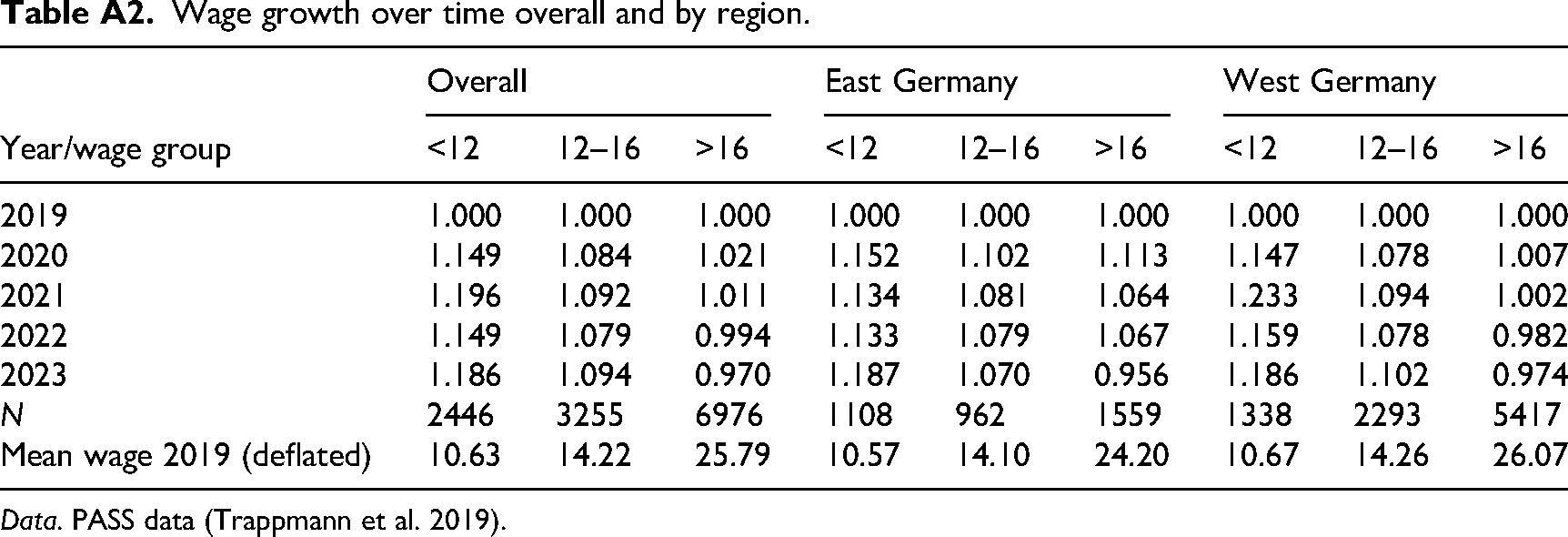
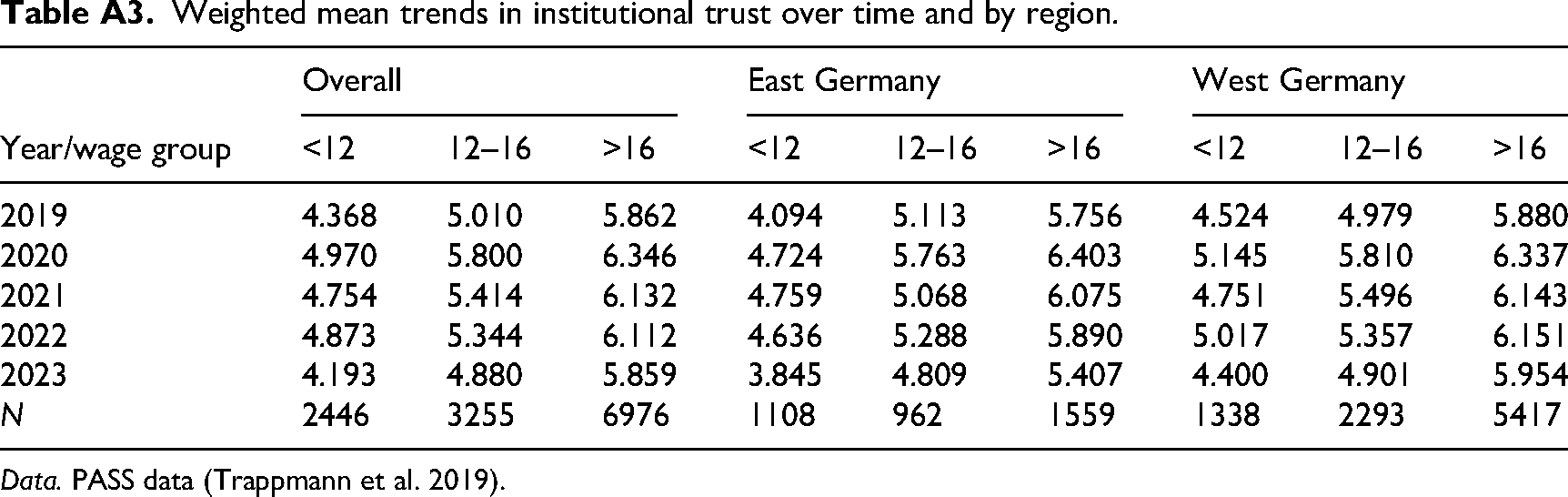
Sample descriptive summary. Wage growth over time overall and by region. Data. PASS data (Trappmann et al. 2019). Weighted mean trends in institutional trust over time and by region. Data. PASS data (Trappmann et al. 2019).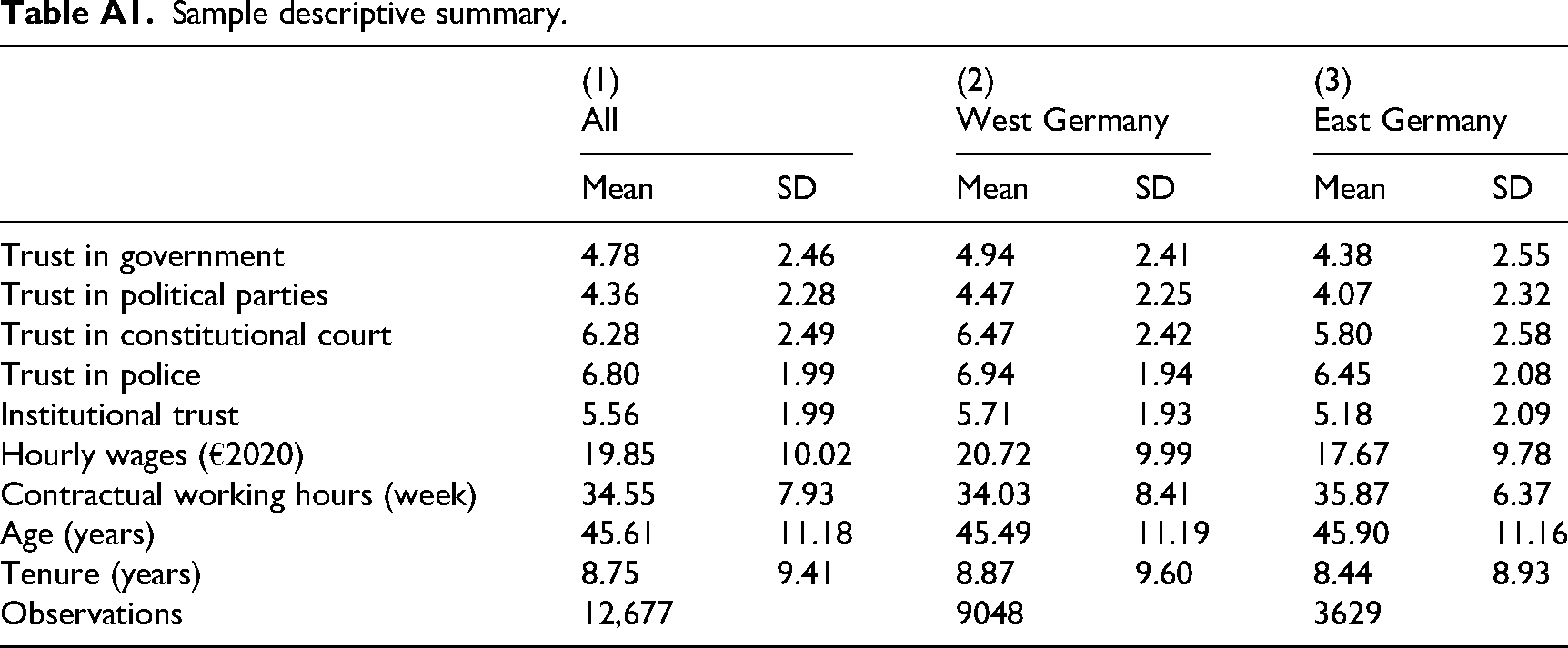
(1)
(2)
(3)
All
West Germany
East Germany
Mean
SD
Mean
SD
Mean
SD
Trust in government
4.78
2.46
4.94
2.41
4.38
2.55
Trust in political parties
4.36
2.28
4.47
2.25
4.07
2.32
Trust in constitutional court
6.28
2.49
6.47
2.42
5.80
2.58
Trust in police
6.80
1.99
6.94
1.94
6.45
2.08
Institutional trust
5.56
1.99
5.71
1.93
5.18
2.09
Hourly wages (€2020)
19.85
10.02
20.72
9.99
17.67
9.78
Contractual working hours (week)
34.55
7.93
34.03
8.41
35.87
6.37
Age (years)
45.61
11.18
45.49
11.19
45.90
11.16
Tenure (years)
8.75
9.41
8.87
9.60
8.44
8.93
Observations
12,677
9048
3629
Overall
East Germany
West Germany
Year/wage group
<12
12–16
>16
<12
12–16
>16
<12
12–16
>16
2019
1.000
1.000
1.000
1.000
1.000
1.000
1.000
1.000
1.000
2020
1.149
1.084
1.021
1.152
1.102
1.113
1.147
1.078
1.007
2021
1.196
1.092
1.011
1.134
1.081
1.064
1.233
1.094
1.002
2022
1.149
1.079
0.994
1.133
1.079
1.067
1.159
1.078
0.982
2023
1.186
1.094
0.970
1.187
1.070
0.956
1.186
1.102
0.974
N
2446
3255
6976
1108
962
1559
1338
2293
5417
Mean wage 2019 (deflated)
10.63
14.22
25.79
10.57
14.10
24.20
10.67
14.26
26.07
Overall
East Germany
West Germany
Year/wage group
<12
12–16
>16
<12
12–16
>16
<12
12–16
>16
2019
4.368
5.010
5.862
4.094
5.113
5.756
4.524
4.979
5.880
2020
4.970
5.800
6.346
4.724
5.763
6.403
5.145
5.810
6.337
2021
4.754
5.414
6.132
4.759
5.068
6.075
4.751
5.496
6.143
2022
4.873
5.344
6.112
4.636
5.288
5.890
5.017
5.357
6.151
2023
4.193
4.880
5.859
3.845
4.809
5.407
4.400
4.901
5.954
N
2446
3255
6976
1108
962
1559
1338
2293
5417