




Abstract
Despite improved access to upper secondary education, social inequalities in skills acquisition have remained pronounced in Germany. However, it is empirically unclear whether the disparities have increased or decreased in the context of educational expansion. Therefore, this study addresses whether social differences in reading skills have increased or decreased in the past two decades, focusing on learning conditions at school and cultural conditions at home. Based on theoretical considerations of the Maximally Maintained-Inequality and the Effectively Maintained-Inequality hypotheses, we distinguish between distributional and correlation effects of learning conditions at home and at school and use the series of Programme for International Student Assessment data to analyse the development of reading skills inequality. Using OLS-regression and KHB-decomposition methods our findings reveal that while inequalities in reading skills persist, the underlying mechanism of these disparities has changed between 2000 and 2022. Inequalities declined markedly in the 2000s but increased again after 2015. The initial decline is largely attributed to more equitable access to upper secondary education. In contrast, the recent increase in disparities appears to be driven less by educational participation and more by the growing influence of cultural resources offered at home.
Introduction
In the course of educational expansion, social inequalities in educational participation have declined (Breen et al., 2010; Schindler, 2016; Van de Werfhorst, 2024). However, educational inequalities have not disappeared completely (Becker, 2024; Heiskala et al., 2021; Scharf et al., 2023) and continue to manifest themselves in disparities in students’ skill levels (OECD, 2023). Reading literacy is particularly relevant in this context, as it not only encompasses the ability to read and interpret texts but also is fundamental to acquiring further skills. Since the first Programme for International Student Assessment (PISA) study in 2000, differences in reading skills by social background have been documented. While the initial findings sparked considerable public and political attention, society now seems to have become accustomed to the persistence of educational inequality. However, not achieving equal educational opportunities has far-reaching consequences for individuals, the economy, and society at large.
Given the long history and knowledge about social inequalities in skills acquisition, the question arises whether they rise or decline over time. In Europe, countries differ in terms of their education systems and the extent of social inequalities. Since the acquisition of skills depends on learning opportunities available at home and at school, we consider both. For our study, we focus on Germany, where learning conditions vary considerably within the stratified school system and educational inequality is pronounced.
The literature offers mixed findings on whether educational inequalities in Germany are increasing or decreasing. Some studies report a decline in disparities in educational achievement (Ehmke and Jude, 2010; Müller and Ehmke, 2016), while others find increasing social inequalities (Hußmann et al., 2017; Sachse et al., 2022; Weis et al., 2019). Still others suggest that inequalities remain stable during certain periods (Stubbe et al., 2020) but increase during others (Niemietz et al., 2023).
Analysing changes in educational inequality over time is challenging. First, from a methodological perspective, the data and instruments used must be comparable across time points. Second, a sufficiently long observation period is needed to avoid misinterpreting short-term fluctuations. Third, from a theoretical perspective, previous research has rarely developed clear expectations about the mechanisms driving changes in skill inequality. A key question is how the relative importance of school-based versus home-based learning conditions has evolved over time. However, these potentially shifting mechanisms have rarely been examined empirically in a longitudinal framework. Thus, this study investigates how social disparities in reading skills have changed in Germany over the past two decades – and if so, why?
Theoretical considerations
The key question is why the association between reading skills and social background should change over time. This could, on the one hand, be due to changes in the relationship between social background and learning conditions at school or at home. In the following, we refer to this as a distribution effect that changes over time. On the other hand, changing inequalities could also be related to an increasing or decreasing importance of different learning conditions for acquiring reading skills over time – here, we refer to a correlation effect that changes over time. Both effects can occur simultaneously, resulting in persistent inequalities. But why and in which direction should these partial effects change over time? The literature offers two prominent theoretical approaches that address the change in educational inequalities over time: the Maximally Maintained-Inequality hypothesis and the Effectively Maintained-Inequality (EMI) hypothesis. These theoretical considerations have been used in various studies in recent years but have rarely been extended to differences in skill acquisition.
Raftery and Hout (1993) expect social disparities to decrease due to saturation effects in upper secondary education participation. The central argument of such an expansion hypothesis is that privileged groups have already achieved such a high level of education that they are limited in their further expansion (ceiling effects). As educational opportunities broaden, less privileged groups begin to catch up and social disparities in educational participation decline. Given the close link between school type and learning opportunities (Herrmann and Bach, 2025; Maaz et al., 2008), increasingly similar school conditions should lead to more equal skills acquisition across social groups. Even without complete saturation in higher school tracks, a higher growth rate in the middle school tracks by disadvantaged students relative to privileged students can already contribute to equalization. Overall, one would expect an increased participation of socially disadvantaged students in higher secondary school tracks that will lead to a reduction in disparities in reading skills (
Referring to cultural conditions in families, Lucas (2001) argues that social disparities remain stable or even increase over time (Effectively Maintained-Inequality hypothesis, EMI). This perspective emphasizes that, with educational expansion, participation in higher educational tracks alone is insufficient for securing high-status positions. The central argument of the EMI hypothesis is that privileged groups will seek alternative means of distinction, when upper secondary school tracks lose their exclusivity – such as attending more prestigious schools, engaging in skill-enhancing activities outside of school or to perform better at school – to maintain their social status. According to Bourdieu and Passeron's (1977) theory of cultural reproduction, the transmission of cultural capital from parents to children is a key mechanism through which social inequality is reproduced. Investments in cultural resources such as access to books and parental support of reading can enhance children's skills independently of school type. From this perspective, it would be expected that privileged groups increasingly invest in cultural learning opportunities at home to better support their children in the acquisition of reading skills (
In Figure 1, we summarize our theoretical expectations. As already mentioned, we distinguish between distribution effects on the one hand, i.e., shifts in the distribution of students across school types (H1a) or in cultural resources at home (H2a), and correlation effects on the other hand, i.e., shifts in the strength of the association between school type (H1b) or cultural resources (H2b) and reading skills.
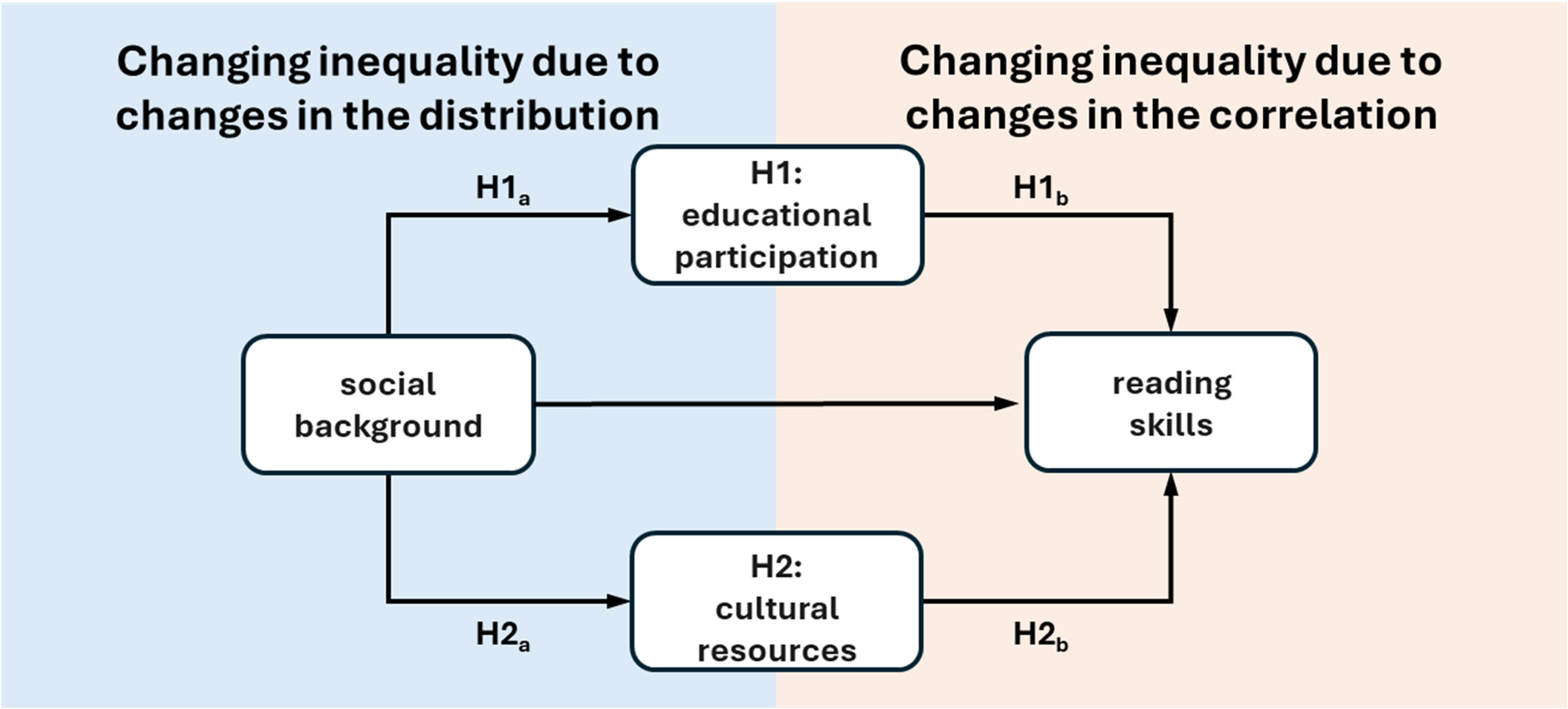
Analytical framework and theoretical expectations.
This distinction between these partial effects helps to clarify whether changes in inequality are due to changes in the learning conditions (distribution effects) or to changes in how strongly these conditions affect skill acquisition (correlation effects). Overall, taking the various considerations into account, it can be assumed that different learning conditions at school are increasingly less likely to lead to social inequalities in reading skills (
Data, variables, and methods
Data
To empirically test our theoretical assumptions, we use data from the PISA covering the years 2000 to 2022 (OECD, 2023). PISA is an international study that assesses the skills of 15-year-old students in mathematics, reading, and science every 3 years. In addition, the data contain information on students’ family backgrounds, home learning environments, and educational participation.
Although the data are cross-sectional and thus limited in terms of causal inference, the PISA data are generally well-suited for trend analyses. There are certainly factors that limit the comparability of PISA results over time, such as changing from paper to computer-based assessment, the specific IRT model used for scaling (Robitzsch et al., 2020), and the changing prevalence of rapid guessing (Polat and Kelecioğlu, 2024). Nevertheless, we believe that the data are very well-suited to our research question due to the stable measuring instruments and collection procedure.
For this study, the various PISA datasets from 2000 to 2022 were processed, harmonized and merged into an integrated analysis dataset. To ensure comparability over time, students from special needs schools (n = 5750), vocational schools (n = 2048), and those outside the target age range of 15–16 years (n = 10) were excluded from the analysis.
As with most large-scale surveys, there are missing data in PISA. To avoid systematic bias due to unit-nonresponse, we weight the data using the weighting factors contained in the datasets. To obtain robust inferences, we imputed missing values (item-nonresponse) using Multiple Imputation by Chained Equations and considered the hierarchical data structure through clustering at school level (further information on missing and imputed data can be found in Table A1 in the appendix). An analytical sample of 140,978 students resulted.
Variables
All variables used in the analysis are listed in Table 1.
Descriptive statistics.
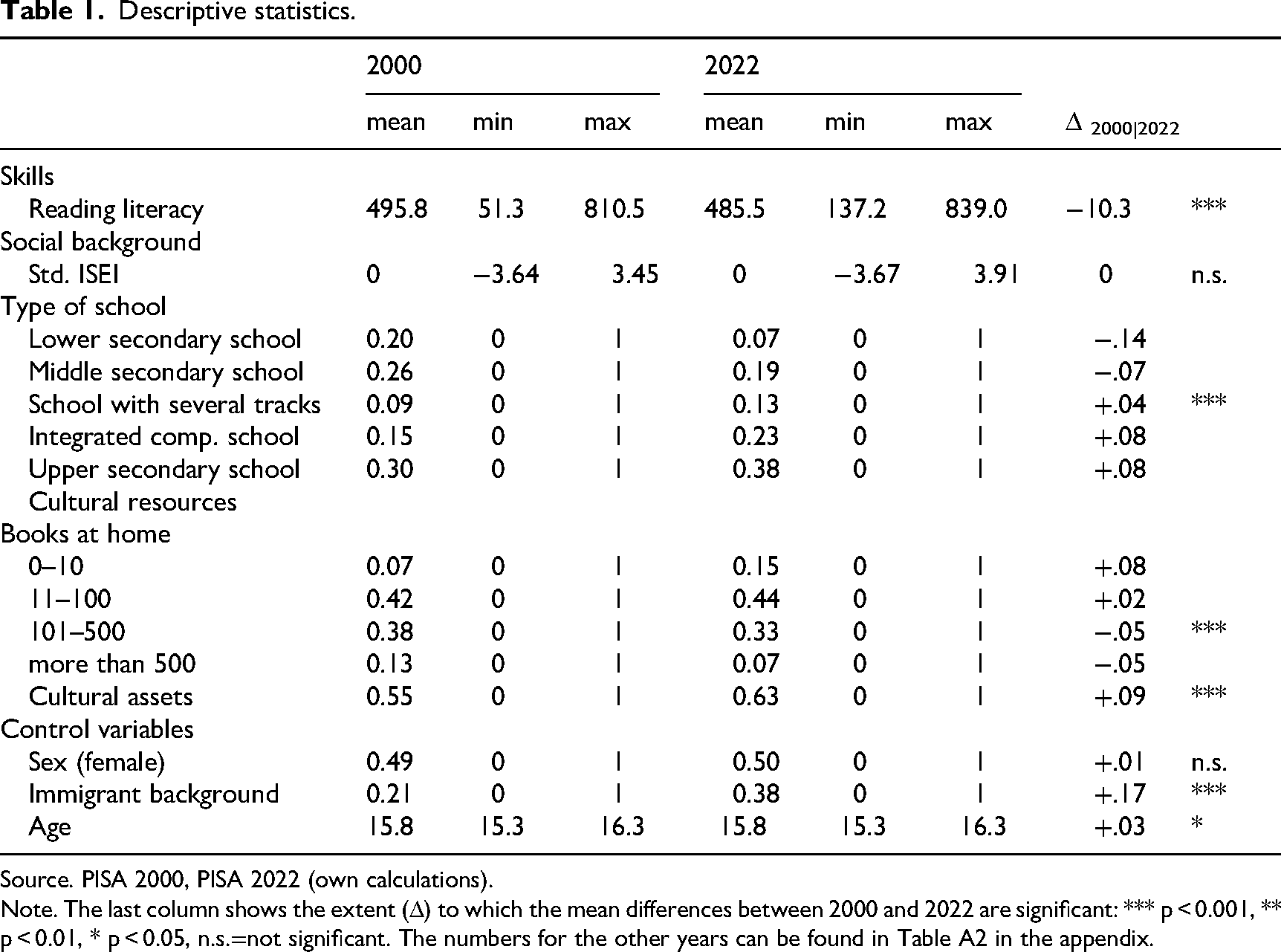
Source. PISA 2000, PISA 2022 (own calculations).
Note. The last column shows the extent (Δ) to which the mean differences between 2000 and 2022 are significant: *** p < 0.001, ** p < 0.01, * p < 0.05, n.s.=not significant. The numbers for the other years can be found in Table A2 in the appendix.
Reading skills are measured using PISA's multi-matrix design, which involves a 2-hour test and the generation of five plausible values per student. These plausible values were used in separate analyses, with the results being pooled after estimation (Rubin, 1987). The reading scale ranges from 0 to 1095 points, with 95% of students scoring between 335 and 645 points.
Social background is operationalized using the highest SES of both parents, measured via the International Socio-Economic Index of Occupational Status (ISEI). This index was determined based on occupational information provided by parents and students and ranges from 11 to 90 points. To ensure comparability across survey years, the ISEI is standardized for each year and classified into quartiles. This approach allows for a relational analysis of social background, comparing students at the top (quartile 4) and bottom (quartile 1) of the SES distribution.
We examine changes in educational participation over time using students’ school type. School type is categorized by five groups: lower secondary school (Hauptschule), middle secondary school (Realschule), school offering multiple tracks, integrated comprehensive school, and upper secondary school (Gymnasium). In Germany, students are tracked into different school types after primary school (grade 4 or 6, depending on the federal state). These tracks differ in curriculum, orientation (academic vs. vocational) and access to further education. Over time, participation rate in upper secondary schools has increased (from 33% in 2000 to 38% in 2022), while attendance at lower secondary schools has declined sharply (from 21% to 7%).
Cultural resources at home are measured using two indicators: the number of books, ranging from 0 (less than 10 books) to 4 (more than 500 books) as well as the students’ cultural assets, measured using a mean score of the presence of classical literature and works of art in the parental home. The index varies from 0 (no cultural assets) to 1 (above average cultural assets). Unfortunately, the data do not contain in-depth and longitudinally comparable information that could provide a more comprehensive picture of the cultural learning environment at home. However, previous research has shown that the number of books until today is a key variable in explaining educational inequality (Heppt et al., 2022) and is in line with Bourdieu's concept of ‘objectified’ cultural capital. Notably, the prevalence of cultural resources has declined over time: in 2000, 13% of students reported having more than 500 books at home, compared to only 7% in 2022.
To avoid systematic bias, we consider the following control variables: age (in months), sex (female vs. male), and immigration status of parents (born vs. not born in Germany). The proportion of students with an immigrant background has increased substantially over the study period (from 22% to 39%).
Analytical strategy
Our analytical approach is guided by the theoretical framework outlined in Figure 1. We proceed in three steps:
First, we descriptively examine how the association between social background and both educational participation (H1a) and cultural resources at home (H2a) has changed over time (distribution effect). Second, we examine how the association between school type (H1b), cultural resources (H2b), and reading skills has evolved (correlation effect). As in the national PISA report (Weis et al., 2019), we use the proportion of explained variance (R2) in both steps to investigate whether the correlations (H1a; H1b; H2a; H2b) between the variables strengthen or weaken over time. Third, we apply KHB-effect-decompositions (Karlson et al., 2012) to quantify the extent to which the changes in reading skills disparities are attributable to changes in school type (H1) and cultural resources (H2). The KHB method allows us to isolate the contribution of each explanatory factor to the SES-related differences in reading skills. We estimate KHB-decompositions for each survey year and examine how these contributions change over time. The main question of this last analytical step is whether the changed explanatory mechanisms support the considerations of the expansion hypothesis or rather the considerations of the EMI hypothesis. All analyses were conducted using the statistical software Stata version 19 and were based on 5 imputed datasets.
Results
How do social differences in learning conditions at school and at home change over time (distribution effect)?
Figure 2 illustrates educational participation linked to parental SES. Children from low-SES families (1st quartile) are significantly less likely to attend an upper secondary school (orange bars) than children from families whose parents have a higher SES (4th quartile). In contrast, children from low-SES families are proportionately more likely to attend a lower secondary track (blue bars). The differences in educational participation are comparatively stable over time. However, lower tracks have been chosen less frequently in recent years. Children from disadvantaged families progress to higher secondary tracks more recently and have significantly increased their proportion at integrated comprehensive schools (yellow bars). While the educational composition of students with high SES appears to be more stable over time, a shift in the composition of students with low SES from lower to higher educational pathways can be observed. In line with the expansion hypothesis, children from less privileged families are generally catching up in terms of educational participation. However, differences overall appear pronounced throughout the study period.
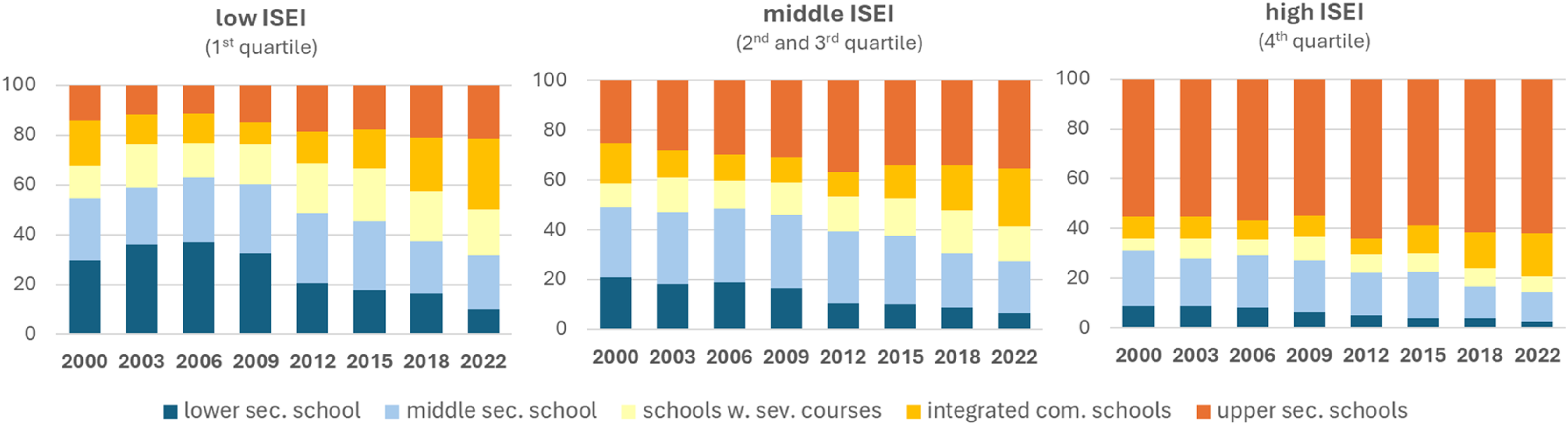
Educational participation by social background (ISEI-quartile) between 2000 and 2022 (in percent).
Turning to cultural conditions in the parental home, we find a similar picture in terms of inequality, but a contrasting picture in terms of change (see Figure 3). Students from privileged families have better access to books at home than students from disadvantaged families. Across time, all social groups show a decline in the number of books at home, and the proportion of students with fewer than 10 books is rising sharply. In absolute terms, this is particularly noticeable among disadvantaged groups – the proportion of students with few books has increased by 15 percentage points, compared to 5 percentage points in privileged groups. However, the relative proportion of students with few books has more than doubled in all social groups, while the proportion of students with many books has halved over time.
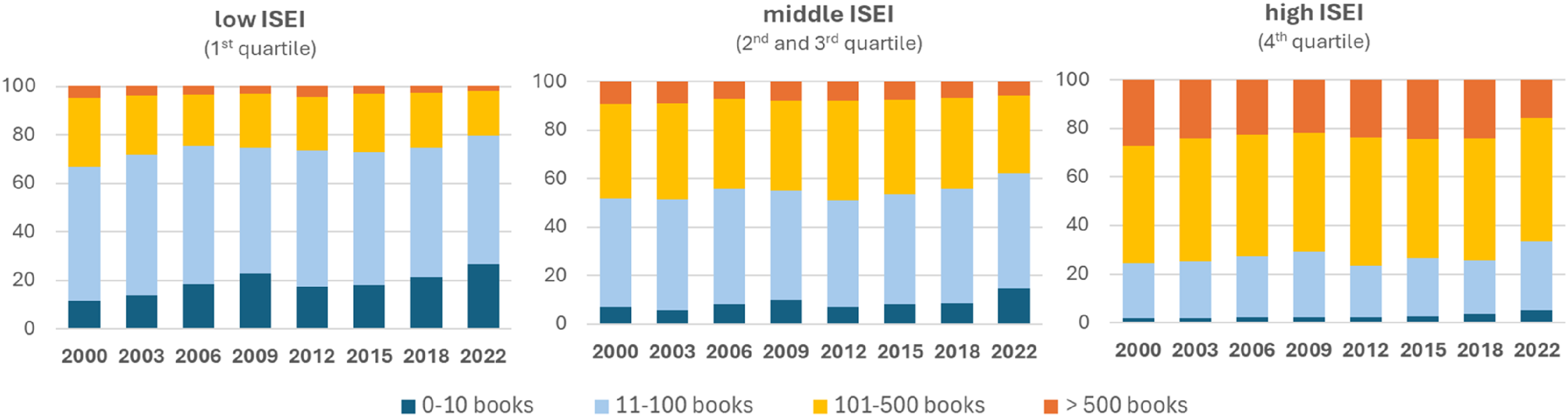
Number of books by social background (ISEI-quartile) between 2000 and 2022 (in percent).
To gain a more precise understanding of the changes in the distribution linked to social background, we consider the explained variance (R2) in Figure 4 as an indicator of the relationship between SES and type of school (H1a) as well as between SES and cultural resources (H2a). These are the results of separate linear OLS-regressions without control variables. All information on the model parameters and effect coefficients can be found in Table A3 and A4 in the appendix. 1
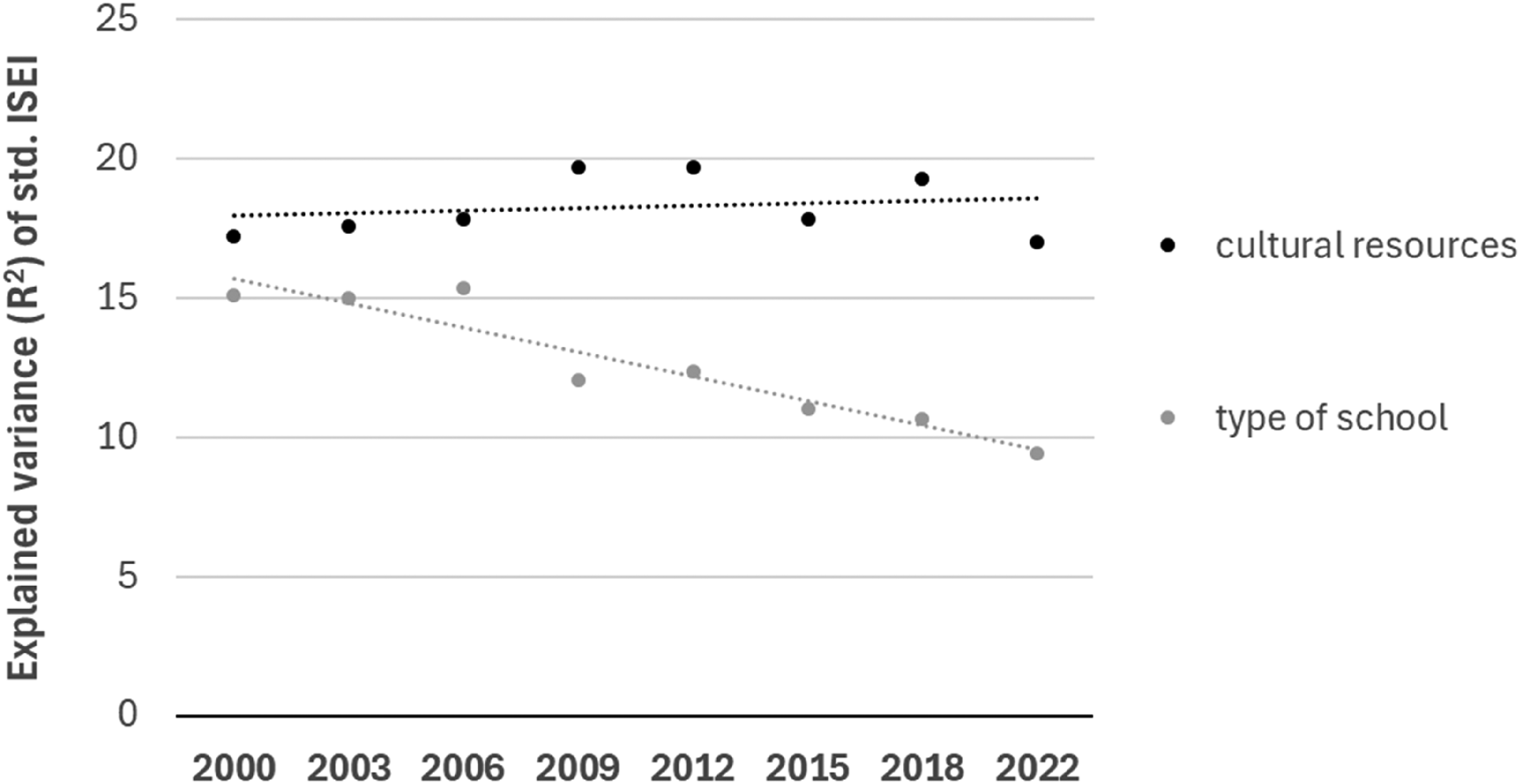
Correlation between standardized socio-economic status (ISEI) and educational participation and cultural resources between 2000 and 2022 (R2).
On the one hand, the correlation between type of school and social background decreases markedly over time (grey line), while on the other hand, the correlation between cultural resources and SES remains largely stable (black line). This means that learning opportunities at school are becoming increasingly similar across social groups while cultural conditions at home remain unequal – regarding the distribution effect, the empirical results support H1a.
How does the relationship between reading skills and learning conditions at school and at home change over time (correlation effect)?
In a second analytical step, we examine whether the correlations between educational participation (H1b), cultural resources (H2b), and the acquisition of reading skills change over time. Figure 5 again shows the proportion of the variance (R2) in reading skills that is explained by the type of school (grey line) and cultural resources (black line). This approach enables us to determine whether the importance of a certain characteristic for the acquisition of reading skills is changing.
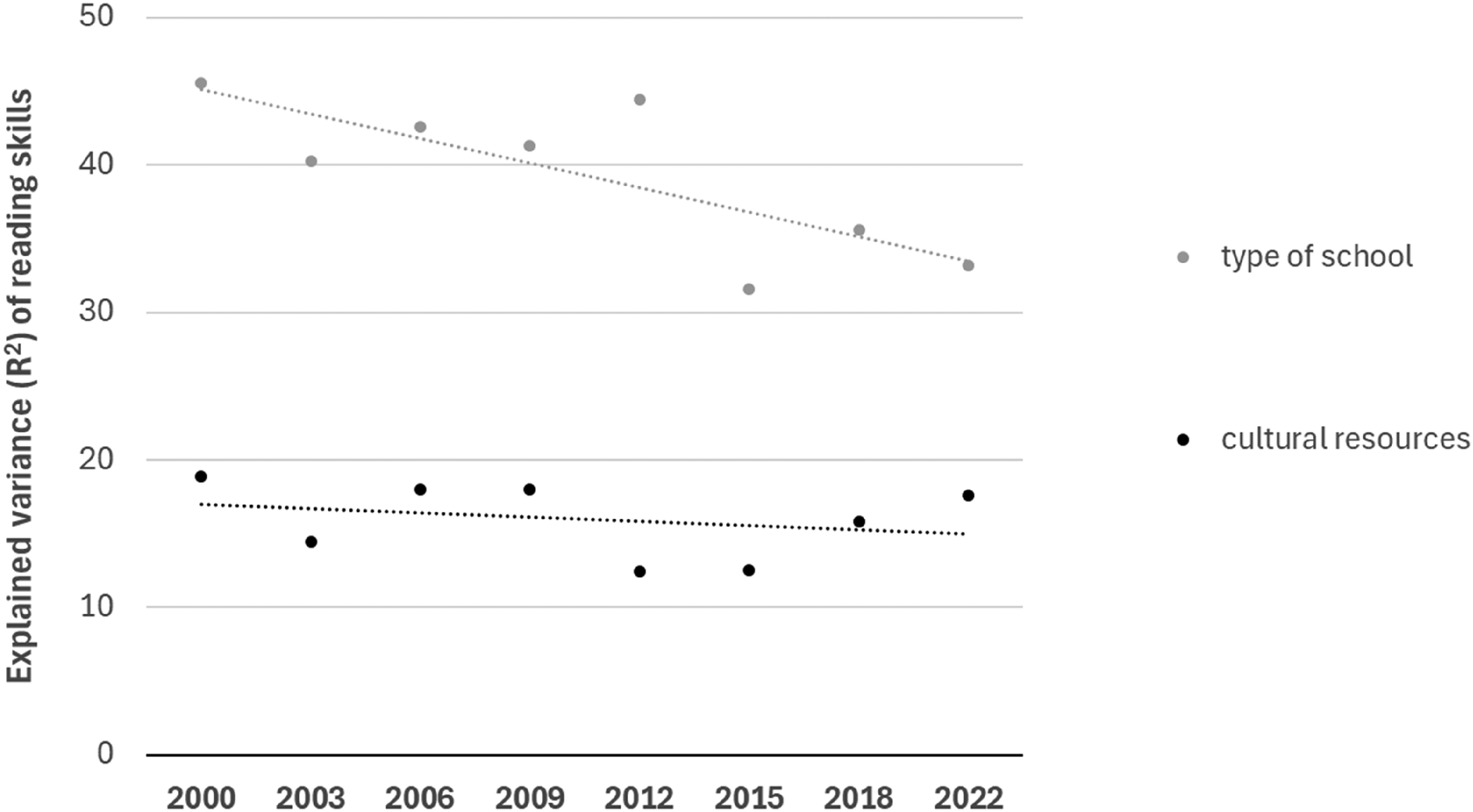
Correlation between reading skills and educational participation and cultural resources between 2000 and 2022 (R2).
In line with the theoretical consideration, the association between school type and the acquisition of reading skills is declining. The R2-values show that reading skills are closely linked to the type of school attended. Those who attend an upper secondary school are correspondingly more likely to have better reading skills. However, while around half of the variance can be explained by the type of school (or vice versa) in 2000, it is much smaller in 2022. The proportion of variance that can be explained by the type of school decreases. This is in line with the assumption that educational participation tends to lose explanatory power over time (H1b). However, regarding the expected change in the importance of learning opportunities at home, the correlation between cultural resources and reading skills does not increase but remains relatively stable over time. 2
Decomposition analysis: How and why are social inequalities changing in relation to the acquisition of reading skills?
As the previous sections show, the changes in learning opportunities at school suggest that social inequalities in reading skills decrease (expansion hypothesis), while the constant differences in cultural resources at home suggest that they remain persistent (EMI hypothesis). The question therefore arises as to how social inequalities in skills acquisition develop and why.
Figure 6 shows the results of linear OLS-regressions with reading skills as dependent variable and the standardized ISEI as independent variable (regression coefficients). Here, one can see how the correlation between social background and reading skills changes over time and whether the differences between the various points in time significantly differ. For this purpose, a Chi2-test was calculated between the regression coefficients of selected years. Over the entire period, students from privileged families have significantly higher reading skills than students from less privileged families. Looking only at the endpoints (2000 and 2022), no statistically significant change can be seen between these two timepoints (Chi2 = 4.2; n.s.). While this suggests that the social differences have remained stable over time, a differentiated view reveals two opposing trends: the differences in reading skills decreased significantly between 2000 and 2012 (Chi2 = 13.8; p < .001) followed by an increase after 2015. Whether statistical significance is achieved in the second part of the observation period depends on which time point is selected for comparison. Nevertheless, the results suggest that the decline in social inequalities tends to reverse after 2015.
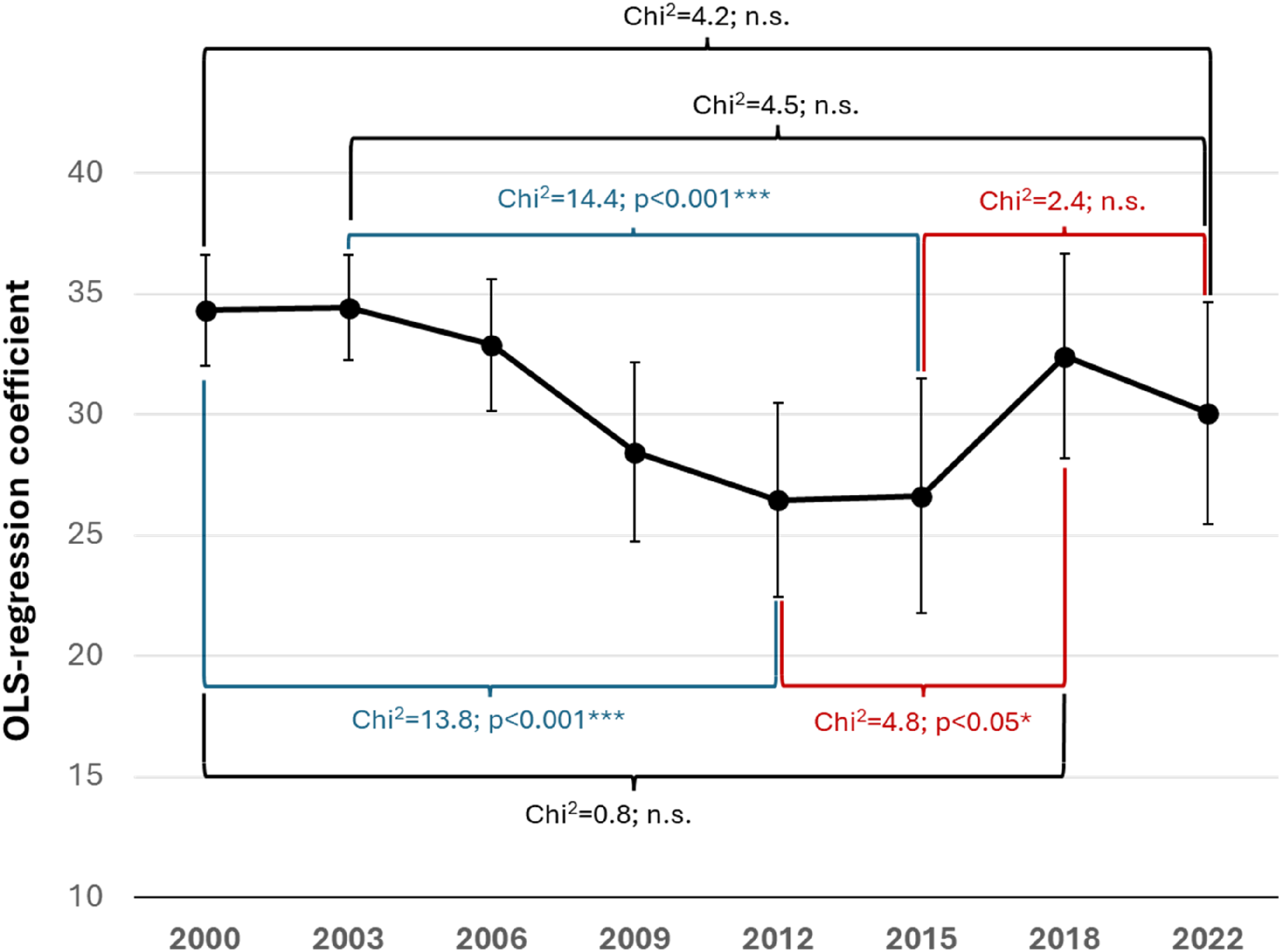
Correlation between socio-economic status (std. ISEI) and reading skills (OLS-regression coefficients) and test for significant changes over time (Chi2-Test).
To explain these opposing trends, we provide results from the KHB-effect decomposition analysis below. Figure 7 shows the differences in reading skills between high-SES and low-SES students (regression coefficients) and how these differences change over time. The SES-differences can be deduced from the total length of the bars. The results confirm that social inequalities initially decrease and then increase in 2015. In addition, Figure 7 shows to what extent these effects are related to differences in educational participation (light grey bars), differences in cultural resources (orange bars), and differences in socio-demographic composition (black bars).
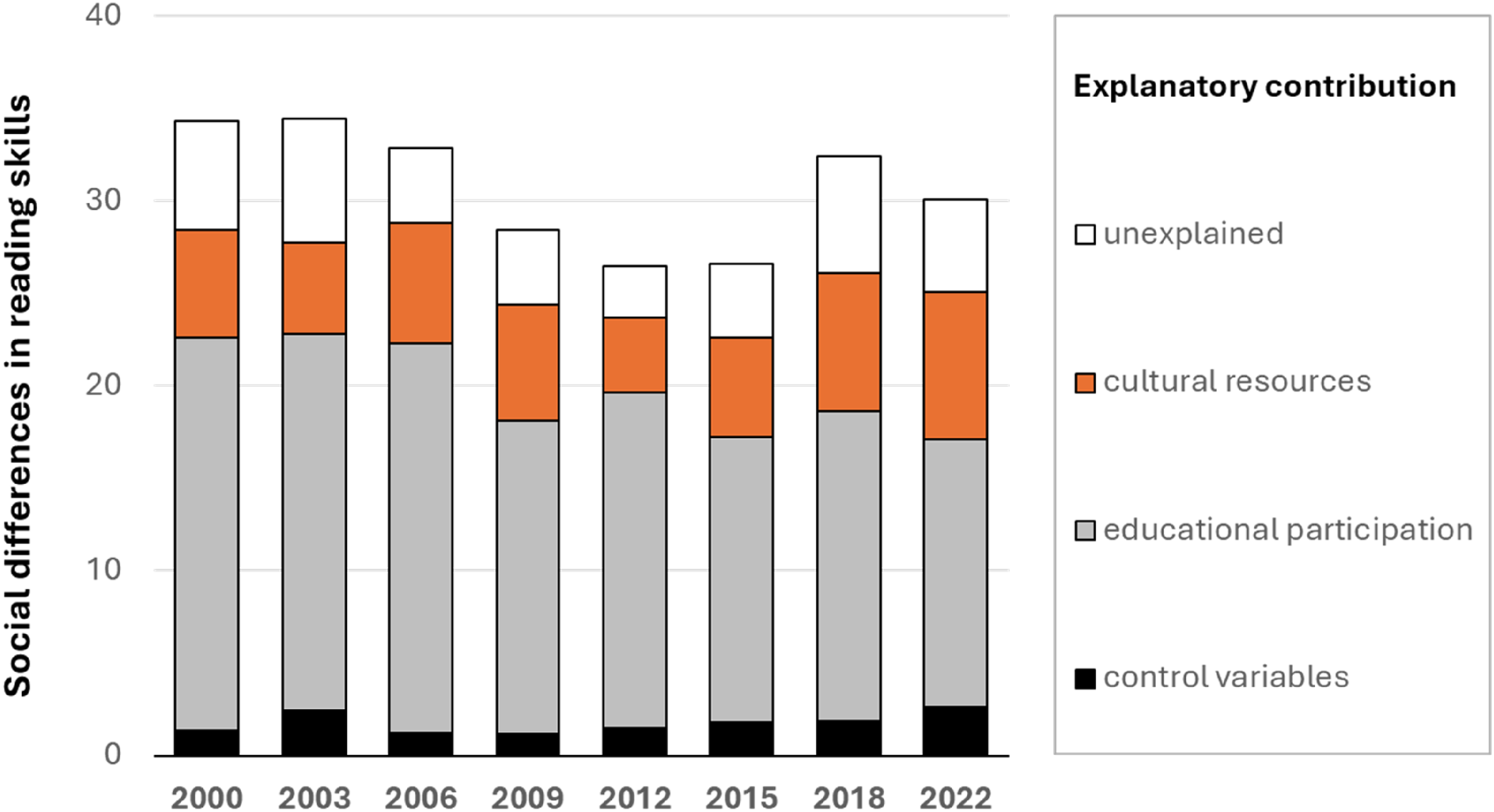
Results of KHB-decompositions. Share of social differences in reading (2000–2022) and explanatory part of educational participation and cultural conditions.
Between 2000 and 2012, the explanatory share of educational participation is declining (shrinking grey bars). The explanatory power of cultural conditions remains rather stable in this first period. This supports the expansion hypothesis and the declining importance of educational participation in explaining social inequality in skill acquisition.
Turning to the period from 2012 to 2022, it becomes apparent that, while educational participation is becoming less important in explaining social disparities, cultural conditions play an increasingly important role (slightly growing orange bars). This seems to mark a turning point in the reduction of skill differentials, with improved educational conditions of less privileged students at school being outweighed by different cultural conditions in the family. This supports the EMI hypothesis. Overall, the findings therefore support the expansion hypothesis at the beginning of the study period and the EMI hypothesis in the second part of the study period.
Discussion
In this study, we examined how social disparities in reading literacy have evolved in Germany over the past two decades. Using PISA data, we examined shifts in educational participation, the differences in cultural learning conditions at home, and the development of reading skills between 2000 and 2022. Our main finding is that social disparities decreased between 2000 and 2012 but then increased again by 2022. Overall, we find evidence for both our hypotheses: the expansion hypothesis, according to which an equalization of learning opportunities at school leads to a decrease in social disparities, and the Effectively Maintained-Inequality hypothesis, which posits that the underlying mechanism changes, but inequality remains stable.
Our ambiguous findings can be explained through a combination of the two mechanisms. We find that educational participation has tended to equalize over time. Likewise, the explanatory power of educational participation for reading skills diminishes over the years, while the importance of cultural resources at home remains stable. A decomposition analysis confirms these findings: The decline in disparities between 2000 and 2012 can largely be explained by equalizing educational participation. Similarly, the growth in disparities from 2012 until 2022 is related to an increase in the importance of cultural resources at home. In sum, our results suggest that, from 2000–2012, the decline in social disparities can mostly be attributed to equalized access to educational participation, whereas the increase from 2012–2022 can largely be attributed to the increasingly important role of cultural resources at home.
Our results are in line with the mixed findings in the existing literature. Often, evidence of an increase or decrease in educational inequality is contradictory. Some studies stated that educational expansion facilitates the persistence of inequalities (Shavit and Blossfeld, 1993) – an argument that is not supported by our findings. Instead, educational expansion and educational reforms with the aim to allow for more mobility within the German education system have fostered the equalization of educational participation. This, in turn, seems to have contributed to the decrease in social disparities in reading skills between 2000 and 2012. At the same time, our results suggest that cultural resources at home lead to an increase in social disparities, which confirms international research findings (Ayalon and Shavit, 2004; Katrňák et al., 2016).
Our study is limited in several ways. First, we focused on Germany, so that it remains unclear whether there are similar trends in other education systems. In future research, international comparisons could provide additional insights into the reasons why social disparities grow or decline in education systems. Second, our analysis was limited to reading skills; it would be interesting to see how inequalities have developed in other domains. Third, a substantial share of variance was not explained in our decomposition analysis. On the one hand, this could be related to insufficient operationalization of learning opportunities in the family and at school. In particular, the operationalization of learning conditions in the parental home based on the number of books is likely to require a new conceptualization in view of the digital age and changing learning requirements. On the other hand, the remaining unexplained variance could also indicate that key mechanisms have not yet been considered, which opens up room for future research. Fourth, we followed a descriptive approach, which limits causal interpretation of our results. Future research could focus on changes in different countries, competence dimensions, and advanced analytical methods.
Our study provides implications for policymaking. The analyses show that social disparities in educational achievement are overall persistent in Germany with a current tendency to increase. This means that the many policies that were introduced to reduce inequalities might have had effects on some individual trajectories but have not yet taken effect on the system level. Our findings show that it will not suffice to increase participation in higher educational tracks because the effects of education on learning outcomes may also change. Second, our results suggest that schools need to focus more on the task of compensating for unequal starting conditions (Skopek and Passaretta, 2021) and support outside school, as the mechanisms of social reproduction may also change over time and increasingly be found outside the education system. Focusing on educational opportunities within the education system alone will not suffice to effectively reduce social inequalities.
Supplemental Material
sj-docx-1-asj-10.1177_00016993261435544 - Supplemental material for Educational participation, cultural resources, and social inequality: Have social inequalities in reading literacy increased or decreased between 2000 and 2022?
Supplemental material, sj-docx-1-asj-10.1177_00016993261435544 for Educational participation, cultural resources, and social inequality: Have social inequalities in reading literacy increased or decreased between 2000 and 2022? by Markus Lörz, Jannis Burkhard, and Kai Maaz in Acta Sociologica
Footnotes

Funding
The authors received no financial support for the research, authorship, and/or publication of this article.
Supplemental material
Supplemental material for this article is available online.
Notes
Author biographies
References
Supplementary Material
Please find the following supplemental material available below.
For Open Access articles published under a Creative Commons License, all supplemental material carries the same license as the article it is associated with.
For non-Open Access articles published, all supplemental material carries a non-exclusive license, and permission requests for re-use of supplemental material or any part of supplemental material shall be sent directly to the copyright owner as specified in the copyright notice associated with the article.
