




Abstract
Preschool education is regarded by many researchers and policymakers as a potential equalizer of educational opportunities. Yet, cross-national research shows that there exist large variations in the equalizing effects of preschool education across countries. In this paper, we study to what extent the national level of privatization of the preschool sector can explain these cross-national differences by examining its impact on the equalizing effects of preschool education. For this purpose, we use data from the Progress in International Reading Literacy Study 2016 for 24 countries. The results show that having spent more time in preschool is more strongly associated with primary school achievements for children of disadvantaged families. We find some modest support that this compensatory pattern—in which preschool compensates for a reduced set of resources in the home environment—is somewhat weaker in societies with higher levels of privatization, though not reaching conventional standards of statistical significance. The study highlights the relevance of considering the impact of national preschool settings on the distribution of preschool benefits across children with varying socioeconomic backgrounds.
Keywords
Introduction
There is growing academic and public interest in preschool education as an equalizer of educational opportunities. 1 Prior research has shown that socioeconomic inequalities in performance are to a substantial degree rooted in a young age (Lee and Burkam, 2002; Skopek and Passaretta, 2018). Before school entry, children from a lower socioeconomic background are already lagging behind in skills crucial to their (future) academic performance, such as in their literacy, math, and memory competencies (Duncan et al., 2007). Once these socioeconomic status (SES) gaps have manifested, evidence suggests that they tend to remain by and large stable, and widen slightly, throughout primary and secondary school (Bradbury et al., 2015; Passaretta et al., 2022). This has led to an increased focus on educational interventions at earlier life stages to (partially) level out the playing field before children enter primary education (Burger, 2010). Furthermore, from a human capital perspective, investments in preschool education are expected to have greater returns than those at later stages (Heckman, 2006). These promising effects have stimulated policy initiatives to expand and improve preschool programs by national policymakers and international organizations such as UNESCO, the Organisation for Economic Co-operation and Development (OECD), and the European Union (EU) (Strietholt et al., 2020).
Yet, cross-national research into the equalizing effects of early childhood education and care (ECEC) attendance on cognitive outcomes has yielded mixed results. In some countries, ECEC benefits are homogeneously distributed across children from different SES, while in others, it is most beneficial for children from disadvantaged backgrounds (Cebolla-Boado et al., 2017; Dämmrich and Esping-Andersen, 2017; Ghirardi et al., 2022; Schlicht et al., 2010). Prior research has even attested to the existence of complementary effects in certain countries, meaning that higher SES children gain more from preschool enrollment in terms of educational performance (Cebolla-Boado et al., 2017; Esping-Andersen et al., 2012). The explanation of these cross-national differences has received little academic attention so far, as most research has focused on evaluating local, regional, and national preschool arrangements (Dämmrich and Esping-Andersen, 2017; Strietholt et al., 2020). Yet, taking a cross-national perspective can broaden our understanding of how nationwide settings and institutional characteristics are related to the distribution of preschool benefits (Kulic et al., 2019).
One important dimension of cross-country variation is the degree of privatization of the ECEC sector. Countries vary considerably in the extent to which preschool facilities and investments are provided by the public or private sector (Brennan et al., 2012). Single country-based evidence suggests that privatization of the ECEC sector fuels social segregation and unequal access to high-quality preschool by SES (Brennan et al., 2012; Mierendorff et al., 2018; Van Lancker and Ghysels, 2016). Consequently, privatization can offset the equalizing effects of ECEC, widening rather than narrowing the development gap between children from different social origins (Van Lancker and Ghysels, 2016). In this paper, we address the following research question: To what extent is the level of ECEC privatization associated with the equalizing effects of preschool attendance on learning outcomes among students of different SES?
We are, to the best of our knowledge, the first to empirically study the potential moderating influence of privatization on the equalizing effects of preschool from a cross-national perspective. We use data from the Progress in International Reading Literacy Study (PIRLS, 2016) for 24 countries to study this potential relationship. Our results demonstrate that having spent more time in preschool is more strongly associated with primary school achievement for children of disadvantaged families. Yet, we find modest support that this compensatory pattern is somewhat weaker in societies with higher levels of privatization, although not reaching statistical significance.
Theoretical background
Preschool education and SES
The first years of a child's life encompass critical stages of development that lay the foundation for later educational attainments (Heckman, 2006). ECEC can improve the short- and long-term educational outcomes of its participants, including improved cognitive competencies, better school discipline, and less frequent grade retention (Barnett, 1995). 2 Moreover, prior evidence suggests that the benefits of preschool go beyond improved educational attainments alone, with participants having a lower chance of being convicted for crimes, as well as having higher labor market participation (Currie, 2001; Havnes and Mogstad, 2011).
Empirical studies on the distribution of educational benefits across children from different SES have yielded three different types of results (Burger, 2010). First, some studies argue that the benefits of preschool are homogeneously distributed across participants, irrespective of the child's SES (e.g. Burger, 2010; McGinnity et al., 2017; Strietholt et al., 2020). Following this line of research, preschool does not effectively alter the cognitive outcomes gap among children from different social backgrounds, but rather brings about similar levels of educational progress for all participants (Burger, 2010).
The second set of results attests to the existence of complementary effects, meaning that preschool enrollment is most beneficial for children from more advantaged origins (Cebolla-Boado et al., 2017; Melhuish et al., 2006). Theoretically, it is argued that the cognitive gains of preschool can be maximized for already privileged children by adequate parenting and activities undertaken at home that complement the teaching material (Cebolla-Boado et al., 2017). Additionally, affluent parents can afford higher-quality ECEC arrangements and generally possess more skills in choosing institutions that best fit their child's needs (Kulic et al., 2019). According to these findings, preschool in its current state, enhances social inequalities instead of concurring them.
Yet, the majority of studies argue the opposite, namely that there are equalizing or compensatory effects at play. To understand how ECEC can bring about compensatory effects, the alternative mode of care that ECEC substitutes should be considered. Large social inequalities exist in children's early years with regard to home environment, available resources, and cognitive stimulation. Children from disadvantaged origins are less likely to experience a stimulating home environment that facilitates learning and cognitive development (McGinnity et al., 2017). On average, lower SES children receive lower quality and quantity language inputs from their parents, spend less time reading, and engage less frequently in numeracy-promoting activities (e.g. stimulation to learn shapes, digits, and counting) (Kluczniok et al., 2013). Preschool arrangements that provide cognitive stimulation may compensate for these deficits. Children from more advantageous backgrounds, in contrast, have less to gain from preschool because they are already provided with a solid level of cognitive skills at home (Kulic et al., 2019). Indeed, various empirical studies find that the benefits of preschool participation are especially profound for children from disadvantaged origins (e.g. Felfe and Lalive, 2012; Ghirardi et al., 2022; Van Huizen and Plantenga, 2018). Preschool education thus has the potential to narrow the cognitive outcomes gap among children from different SES. However, the equalizing effects are generally not large enough to achieve full compensation, thus leaving a substantial part of the educational inequalities in place (Cebolla-Boado et al., 2017).
Cross-national research has also attested to these varying effects of preschool across children from different SES. A comparison between Denmark and the US shows that ECEC enrollment has an equalizing effect on cognitive test scores in Denmark, whilst the educational benefits in the US are homogeneously distributed at school entry (Esping-Andersen et al., 2012). Moreover, the study shows that the educational benefits no longer remain for poor children by the spring of fifth grade in the US, thereby producing complementary effects in the long term. Similarly, based on data from PIRLS and the Program for International Student Assessment (PISA), Dämmricht and Esping-Andersen (2017) find evidence for the equalizing effects of ECEC in some countries, whilst in other countries they find that ECEC attendance grants similar advantages to all children. Schlicht et al. (2010) show that high ECEC enrollment rates are associated with more educational equality in post-communist countries, but no significant moderating effects were reported in Western European countries. Cebolla-Boado et al. (2017) demonstrate in a comparative study including 28 countries that ECEC enrollment is positively associated with children's literacy achievements. In most countries, the benefits of preschool are especially strong for children from disadvantaged backgrounds, thus arguing in favor of a compensatory effect. Yet, there is also a minority of countries in which the ECEC benefits are approximately homogeneously distributed among children from different social backgrounds (i.e. Sweden) or countries in which children from advantaged backgrounds benefit most from ECEC enrollment (i.e. Israel, Romania, Malta, and New Zealand).
In conclusion, the cross-national findings on the equalizing effects of preschool are mixed. Nevertheless, from the overview of the studies discussed above, we conclude that the evidence for a compensatory effect is most decisive. Hence, the following hypothesis was formulated: The educational benefits of participation in preschool are higher for low-SES children than for high-SES children (i.e. compensatory/equalizing effects) (H1).
A moderating role of privatization?
The cross-national heterogeneity that is found in prior evidence points toward the relevance of considering national contexts when addressing questions on the distribution of ECEC benefits across children with varying SES. There are considerable differences across countries regarding the availability, quality, and costs of preschool services (Kulic et al., 2017). Nationwide policies and institutional settings shape the behavior of its citizens and partially determine which students will reap the greatest benefits of ECEC enrollment (Kulic et al., 2019). In this paper, we argue that the level of privatization of the ECEC sector is one of these crucial nationwide settings that may be predictive of the (de-)equalizing effects of preschool education.
In the past few decades, privatization has been introduced in preschools in many countries, mainly based on arguments of cost-efficiency and freedom of choice for consumers (Brennan et al., 2012; Lloyd and Penn, 2012). Nonetheless, there exists a large cross-national variation in the extent to which early educational services are provided by the public or private sector (Kulic et al., 2017). In Nordic countries, the private sector is very limited due to the state's involvement in childcare provisions to guarantee universal access. In contrast, in countries such as the UK and the US, the private sector has traditionally been more central to the provision of preschool services (Penn, 2011). Yet, in most countries, the preschool landscape reflects a “mixed economy,” meaning that the public and private sectors are both involved in the supply of preschool (Van Lancker and Ghysels, 2016).
Research has suggested that the privatization of the ECEC sector is associated with increased social exclusion and inequality in access to high-quality ECEC (Penn, 2011; Van Lancker and Ghysels, 2016). According to the OECD (2006), one of the negative effects of privatization and insufficient public funding is that it leads to lower-quality care, especially for children from less affluent backgrounds. In the absence of government interventions, enrollment in high-quality facilities is expensive (because of, for instance, better-educated staff and lower child–staff ratios) (Van Lancker and Ghysels, 2016). Consequently, access to high-quality care is restricted to those with the capacity to pay for it. Lower-income families are then forced to rely on either informal arrangements (e.g., parents, friends, or neighbors) or cheaper facilities offering lower-quality services (Van Lancker and Ghysels, 2016). Relatedly, prior research has shown that when privatization levels are high, the quality of preschool facilities tends to be lower in areas where socioeconomically disadvantaged families reside (Hatfield et al., 2015; OECD, 2021). These resulting SES disparities in high-quality access can be detrimental to potential compensatory effects, since the educational benefits of preschool are highly dependent on the quality of care provided (Barnett, 1995; Dearing et al., 2009). Low-quality ECEC services can even be harmful to the cognitive development of children (Van Huizen and Plantenga, 2018; Van Lancker and Ghysels, 2016).
Furthermore, privatization is found to result in the segregation of children over preschool facilities by household income (Mierendorff et al., 2018; OECD 2006). In other words, when privatization levels are high, children from lower- and higher-income families tend to be concentrated in separate facilities. A contributing factor to this socioeconomic segregation is that private centers are more likely to engage in the “cherry picking” of children from advantaged families (Drange and Telle, 2020). The social composition of early education groups is a crucial determinant of potential educational gains, since children learn from one another through social interactions. Various studies have established that the cognitive gains of early childhood education are greater when the classroom or facility has a more advantaged student body (Aguiar and Aguiar, 2020; Miller et al., 2017). This effect is explained by the on-average greater expressive abilities and more advanced vocabularies of children from affluent backgrounds, from which children with less affluent backgrounds learn through peer interactions (Miller et al., 2017). The socioeconomic segregation as a result of privatization could thus negatively impact the educational gains of enrollment for children of disadvantaged backgrounds due to reduced peer learning. Hence, we argue that the development gap between children of different SES is unlikely to narrow when the levels of economic segregation and privatization are high.
As opposed to privatization, government interventions are argued to combat preschool-related inequalities (Meyers and Gornick, 2003). Government interventions can take various forms, such as the direct provision of public preschool services, publicly funding private providers (i.e. supply-side subsidies), parental subsidies (i.e. demand-side subsidies), or tax relief for parents (Meyers and Gornick, 2003). In comparison to the direct provision of ECEC services, the latter forms of government intervention represent a greater reliance on the private market or family to provide services or to absorb costs (Meyers and Gornick, 2003). Various scholars have argued that these different forms of government intervention are essential to enhance the accessibility to high-quality services for socioeconomically disadvantaged children (Immervoll and Barber, 2006; Van Lancker and Ghysels, 2016). Moreover, government involvement can overcome market barriers through initiatives aimed at improving the supply of high-quality ECEC in low-SES areas (Cloney et al., 2016).
Based on this body of literature, we argue that the level of privatization of the ECEC sector matters for the distribution of preschool benefits across children from different SES. Higher levels of privatization are associated with magnified inequalities in the access to high-quality ECEC provisions and the segregation of children over institutions according to income. Both factors could potentially offset any equalizing effects of preschool attendance. Hence, we hypothesize: The equalizing effects of preschool on later educational performance are lower when there are higher levels of privatization of the ECEC sector (H2).
Data, measures, and methods
Data
We use data from PIRLS, administered in 2016 by the International Energy Agency. PIRLS provides a dataset with internationally comparable reading literacy achievement (RLA) scores for fourth-grade students (ages 9–10) from 50 countries and 11 regions. The data also provide information on parental SES and preschool attendance. PIRLS uses a stratified sample, resulting in a representative subset of schools and students within each country. The PIRLS data is merged with country-level indicators on privatization of the preschool sector (OECD, 2016). The sample is restricted to 24 countries with available country-level privatization indicators. We excluded 29,769 participants (N = 125,347) due to missing values on key variables, primarily related to incomplete parent or guardian questionnaires. The final sample consists of 95,578 students in 24 countries. To account for sample selectivity on indicators relevant to this study, 3 we use inverse probability weights (see the “Methods” section).
Measures
Dependent variable
We use the students’ standardized RLA as our measure of academic performance. Literacy statistics are regularly used as indicators of (educational) inequalities, given their importance for academic success and essential role in daily life and work activities (Cebolla-Boado et al., 2017). RLA is measured with 12 reading passages and accompanying questions. To minimize assessment demands, each student is presented with two of the 12 passages according to a systematic booklet assembly and rotation procedure. Instead of a single score, PIRLS includes five “plausible values” (range: 0–1000) for each student, reflecting their performance had the entire assessment been observed. RLA is standardized to allow for a more meaningful interpretation of effects.
Independent variables
The main independent variables at the student level are the duration of preschool attendance and SES, both measured with the PIRLS home questionnaire completed by parents or guardians. We used the duration of ECEC (did not attend = 0, one year or less than one year = 1, two years = 2, three years = 3, four years or more = 4) as the independent variable. The duration of preschool enrollment is crucial for the establishment of cognitive benefits and has more within-country and between-country variation than a binary attendance indicator.
We measured SES with indicators for parental occupational status (converted to the International Socio-Economic Index [ISEI], 4 see Ganzeboom et al., 1992) and parental education. The dominance principle was applied to assign the highest level of education and highest ISEI score among both parents in order to also include single-parent families. The indicators were combined into a z-standardized SES scale (ranging from −2.34 to 1.39) that was shown to have a good internal consistency (Cronbach's α = 0.78).
At the country level, the independent variable of interest is the level of privatization of the ECEC sector. Relying on data from OECD (2016), we use two indicators to proxy a country's level of ECEC sector privatization: (i) the proportion of private enrollment and (ii) the proportion of private expenditures. Both indicators represent essential ways in which privatization of the preschool sector may occur in a country. Whereas the private enrollment indicator is informative of governmental efforts in the direct provision of preschool services, private expenditures give an indication of governmental involvement in preschool funding. The OECD differentiates between two different types of ECEC institutions, namely early childhood educational development programs (ISCED 01) and pre-primary education (ISCED 02). Privatization indicators on the ISCED 01 level are not widely available, so we rely solely on data on the ISCED 02 level. 5 The country-level indicators were measured in 2013.
The first privatization indicator is the proportion of pupils enrolled in private early childhood and care facilities. An institution is regarded as private when it is ‘controlled by a non-governmental organization or by a governing board that is not selected by a government agency’, regardless of the amount of government funding (OECD, 2020: 174). Private preschool institutions thus have a private governance structure, but can still rely on government agencies for funding. On average, a third of the attendants of pre-primary education in OECD countries are enrolled in private institutions, though there is wide variation between countries.
The second indicator is the proportion of annual preschool expenditures sourced from private sources. The financial burden for the funding of pre-primary educational institutions is generally divided between private and public sources. Across OECD countries, private funding on average represents 17% of the total expenditures on pre-primary education, though there is again large cross-national variation. Different private entities may contribute to the funding of pre-primary institutions, such as households, businesses, or foundations. Public preschool funding is generally more decentralized than for other levels of education, meaning the public expenditures can come from central, regional, or local government levels. Though this indicator offers information about ECEC funding, it cannot be interpreted as a measure of the overall distributional impact of government funding in this domain. To illustrate, countries with a similar share of private expenditures can have different childcare subsidy systems (e.g. flat-rate subsidies or subsidies specifically targeted at lower-income households).
Control variables
At the student level, we include age (in years), migration background (yes = 1), and gender (female = 1) as control variables. Summary statistics for all student-level variables are depicted in Table 1. Summary statistics at the country level can be found in the Supplemental Materials (Table A1).
Descriptive statistics individual-level variables.
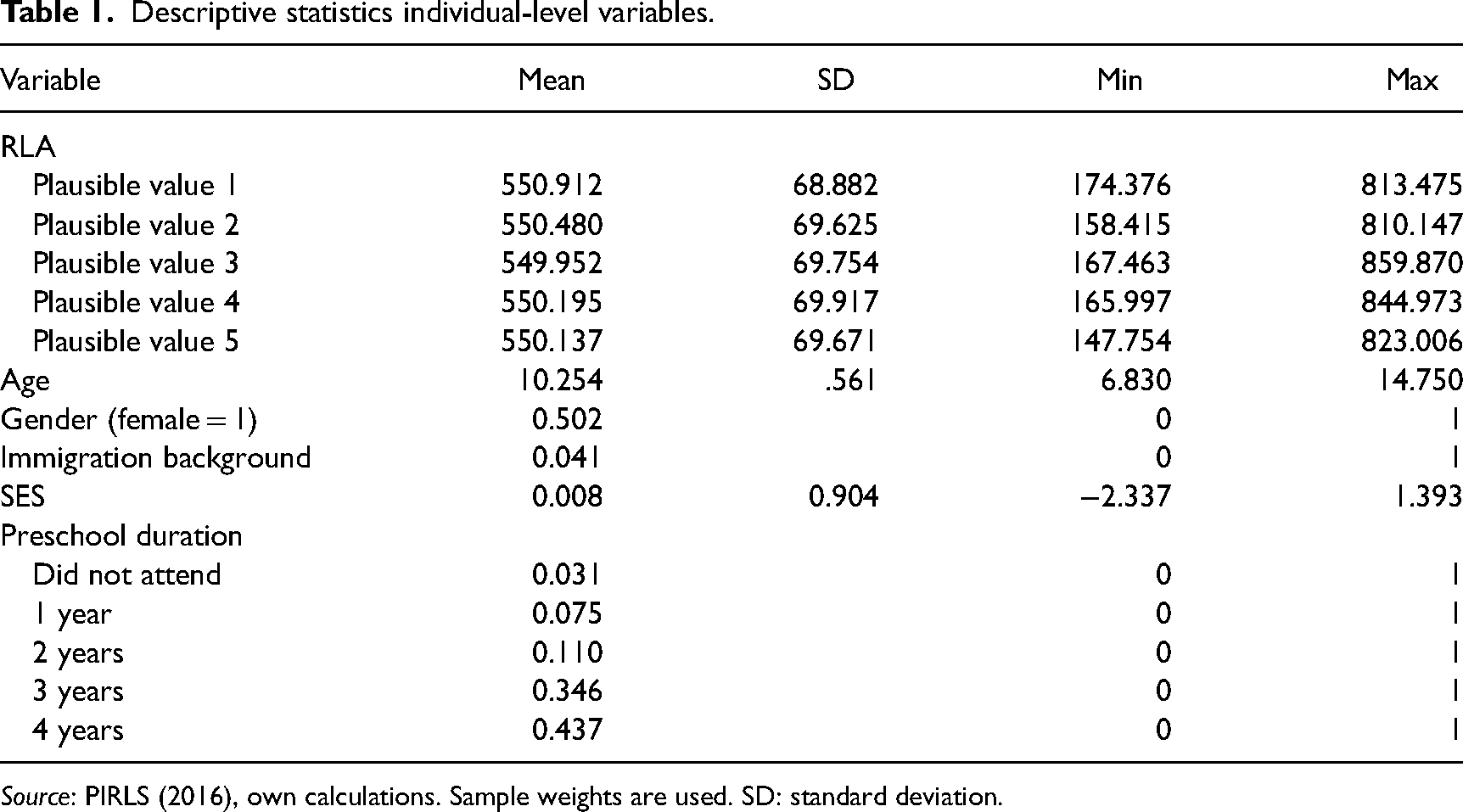
Source: PIRLS (2016), own calculations. Sample weights are used. SD: standard deviation.
Methods
The PIRLS dataset has a hierarchical structure, with students i nested in countries k. We estimate multilevel regression models that explicitly account for this clustering. Following the scaling approach recommended by PIRLS, all models are estimated separately for each plausible value, after which coefficients and corresponding standard errors are averaged to obtain accurate estimates. Weights are used in all analyses to (i) account for the probability of selection and non-participation at each sampling stage, (ii) account for selectivity in the analytic sample (see the ‘Data’ section), and (iii) assure that all countries carry equal weight in the analyses.
Model 1 includes the random country intercept and analyzes the main effects of SES, preschool duration, and control variables. Additionally, a random slope of preschool duration is added to the model because it showed strong slope variation and it significantly improved the model fit. Model 2 builds on model 1 and includes the interaction effect between SES and ECEC duration to test the first hypothesis. Model 3 includes country-fixed effects to evaluate if these findings remain robust when controlling for between-country heterogeneity. Models 4 and 5 include a three-way cross-level interaction term between SES, ECEC duration, and one privatization indicator—that is, (i) private enrollment or (ii) private expenditures—as a test for the second hypothesis. These models also include random slopes of the lower-level variables (i.e. preschool duration, SES, and the interaction between these variables) to prevent overly optimistic statistical inferences (Heisig and Schaeffer, 2019). We adjust the degrees of freedom for statistical tests of macro-level variables to avoid anti-conservative inference given the relatively low number of cases at the country level, following Elff et al. (2021).
6
The model specification for models 4 and 5 is as follows:
Results
Descriptive results
Figure 1 depicts country-level descriptive statistics for parental education gaps in (a) reading scores, (b) ECEC duration (i.e. average years in ECEC), (c) the effects of ECEC participation on reading performance, as well as (d) the proportion of private enrollment and private expenditures. In accordance with the literature (Houtenville and Conway, 2007), Figure 1(a) shows that standardized RLA scores are on average lower among children with less educated parents in every single country. Yet, the gaps do differ in size across countries, ranging from Spain with the lowest parental education gap of approximately 0.5 standard deviations to Israel with a gap of approximately 1 standard deviation. Figure 1(b) illustrates that children with less educated parents tend to spend a shorter period of time in ECEC in all countries in our sample, which is again in line with prior evidence (Cebolla-Boado et al., 2017).
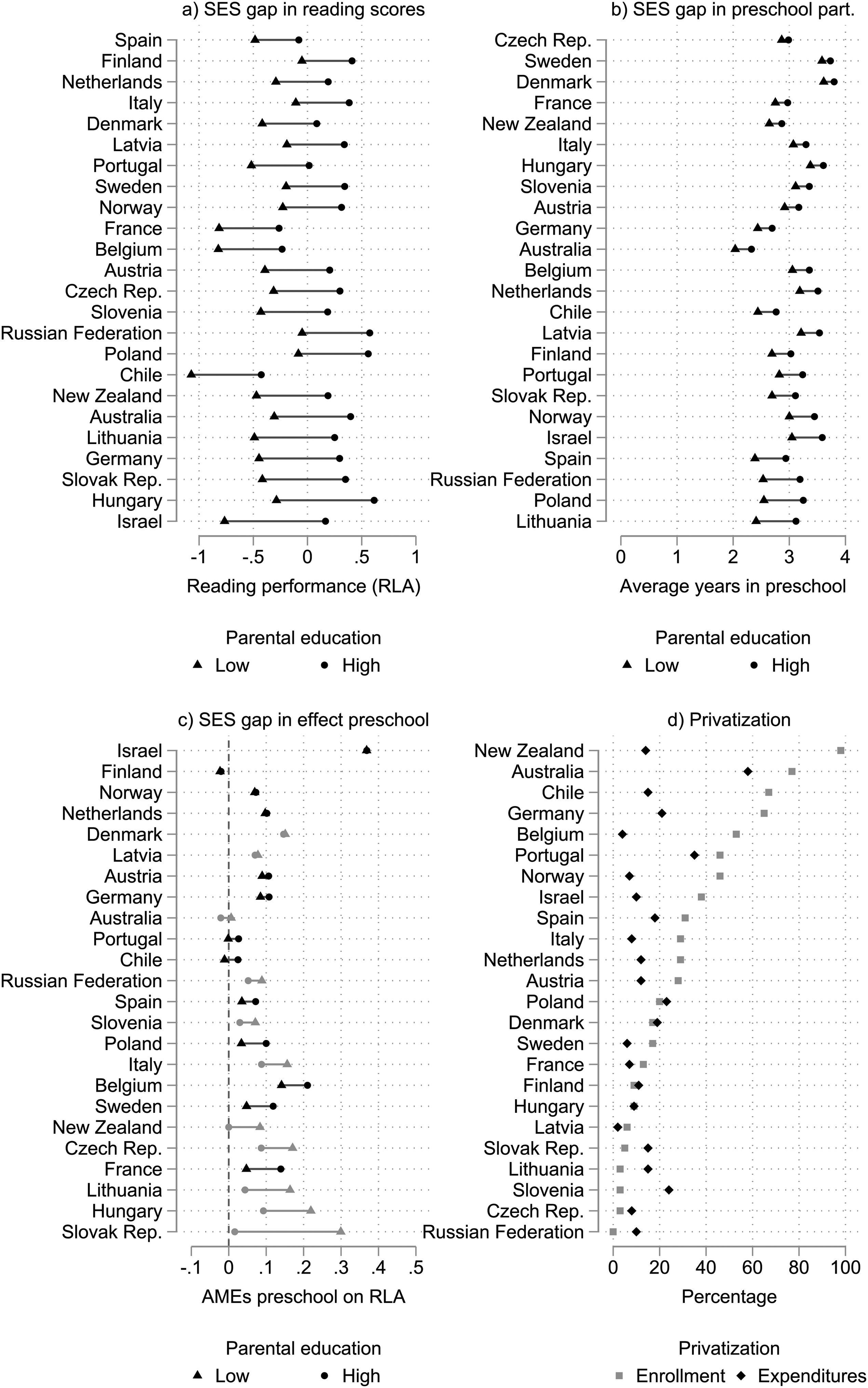
Country-level descriptive statistics of (social inequalities in) ECEC participation and privatization of the preschool sector.
Figure 1(c) shows the average marginal effects of ECEC duration on RLA by parental education—that is, the estimated change in (standardized) RLA associated with a one-unit change in ECEC duration for high-SES and low-SES students. These estimates are derived from single-country ordinary least squares (OLS) regressions including student-level control variables (age, gender, and migration background). The figure shows that there are large cross-national differences in ECEC effects: we find evidence for homogeneous effects (i.e. Israel, Finland, Norway, The Netherlands, Denmark, and Latvia), complementary effects (i.e. Austria, Germany, Portugal, Chile, Spain, Poland, Belgium, Sweden, and France), and compensatory effects (i.e. Australia, Russian Federation, Slovenia, Italy, New Zealand, Czech Republic, Lithuania, Hungary, and Slovak Republic). This further underlines the relevance of looking into the extent to which nationwide settings of privatization can account for these cross-national differences. As depicted in Figure 1(d), there exist large cross-country variations in the proportion of private enrollment and private expenditures. Moreover, these two aspects of preschool privatization are shown to correlate moderately with each other (r = 0.33).
Multilevel regression results
Table 2 shows the results of the multilevel regression models. The null model indicates that 5.9% of the variance in RLA resides at the country level.
Results of multilevel OLS regression models on RLA.
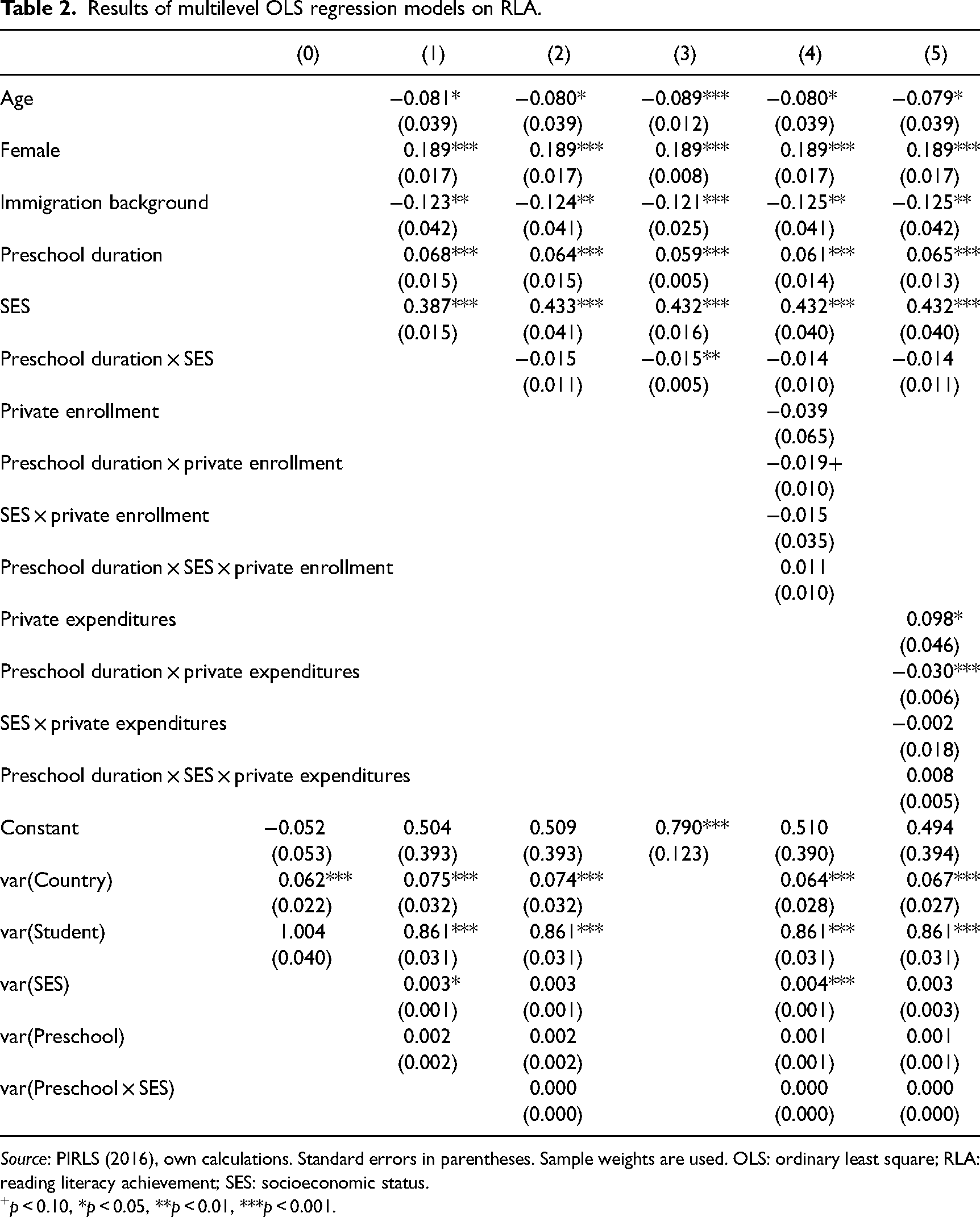
Source: PIRLS (2016), own calculations. Standard errors in parentheses. Sample weights are used. OLS: ordinary least square; RLA: reading literacy achievement; SES: socioeconomic status.
+p < 0.10, *p < 0.05, **p < 0.01, ***p < 0.001.
In model 1, we estimate the coefficients of preschool duration, SES, and the student- and country-level control variables. SES and preschool duration are positively related to RLA. With every one-unit increase on the preschool duration measure (range: 0–4), a student's RLA increases on average with 0.068 SD. This finding is in accordance with prior research, which has established that the benefits of preschool last until the fourth grade of primary school, but tend to be modest in size (e.g. Cebolla-Boado et al., 2017; Dearing et al., 2009). SES is also a significant predictor of RLA, with an increase of one SD on the SES scale being associated with an increase of 0.387 SD in RLA. The indicators for age and immigration background are as expected negatively related to RLA. In addition, girls are shown to score generally 0.189 SD higher on RLA than boys.
In model 2, we add the interaction between SES and preschool duration to test whether the educational gains of preschool duration differ for children depending on their SES. While the negative direction of the coefficient is in line with our theoretical expectation (i.e. the educational benefits of preschool attendance are greater for students from lower SES), the interaction effect does not reach conventional standards of statistical significance. When controlling for (un)observed country heterogeneity in the third model with country-fixed effects, the effect remains similar in size and direction but turns statistically significant. According to this model, the main effect of preschool attendance, identified for the group of average SES, is strengthened by around 25% for every SD reduction in SES. Based on these outcomes, we find some evidence for the first hypothesis that “the educational benefits of preschool duration are higher for children from lower SES” (i.e. compensatory/equalizing effects).
In models 4 and 5, we add the three-way interaction terms between SES, preschool duration, and either standardized privatization indicator (i.e. private enrollment and private expenditures). Note that we do not include country-fixed effects here, as prior research demonstrates that including random slopes for lower-level components of cross-level interactions is necessary to prevent overly optimistic estimates that do not reach conventional thresholds of statistical significance (Heisig and Schaeffer, 2019). The effects are displayed graphically in Figure 2(a). This figure shows the marginal effects of preschool duration on RLA for −1 or +1 SD of private enrollment, depending on a student's SES. The graph illustrates that in countries characterized by proportionally low levels of enrollment in private preschool institutions, the marginal effect of preschool duration on RLA decreases as the student's SES increases (i.e. compensatory/equalizing effects), which is portrayed by the descending line for −1 SD privatization. In contrast, the marginal effect of preschool duration on RLA remains by and large the same for children from different SES (i.e. homogeneous effects) when a country is characterized by higher levels of private enrollment (portrayed by the approximately stable line for +1 SD privatization). In less privatized systems, early childhood education is almost three times more strongly related to student achievement for students at the lower end of the SES scale compared to students at the higher end of the SES scale. Conversely, within more privatized systems, we find that students at the higher end of the SES scale are benefiting the same from preschool attendance as students from lower SES in terms of their later educational performance. These trends are in line with our hypothesis that the “equalizing effects of preschool on educational performance are lower when there are higher levels of privatization of the preschool sector.” Note, however, that we should interpret these findings with caution, as the differences between the slopes for −1 and +1 SD of private enrollment are not statistically significant, nor are the slopes significantly different from zero. 7
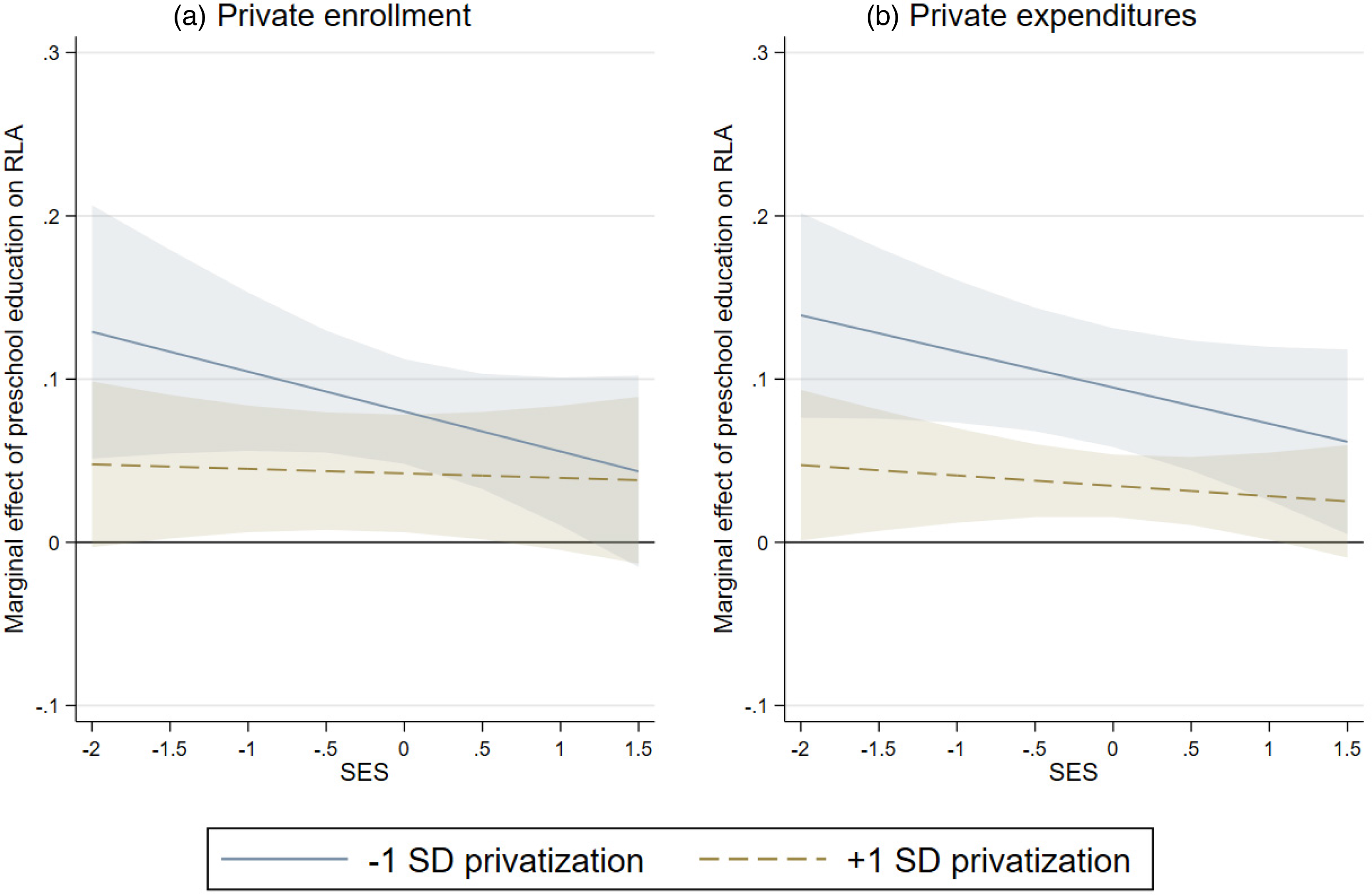
Average marginal effects of preschool duration on RLA for different values of SES and depending on the level of privatization of the preschool sector. Note: Depicted with 95% confidence intervals.
The results for the three-way interaction with private expenditures (model 5), visualized in Figure 1(b), show similar results. The graph displays a descending line for countries characterized by low levels of private expenditures, meaning that the marginal effect of preschool duration on RLA decreases as SES increases (i.e. compensatory/equalizing effects). Yet, also in countries with higher proportions of private expenditures, the marginal effect of preschool duration on RLA decreases slightly as SES increases, though the slope is considerably less steep. In sum, the graph illustrates that the equalizing effects of preschool attendance are generally stronger when there are proportionally less private expenditures within a country. Though this is again in line with our hypothesis that the equalizing effects of preschool are lower when the preschool sector is more privatized, it should be noted that the differences between the slopes are not statistically significant. The graphs also show that the educational gains of preschool are generally lower in countries characterized by higher levels of private enrollment and expenditures, no matter the SES level of the student.
Robustness check I: School-level clustering
As a robustness check, we incorporate the school-level j into the analysis (Nj = 4729). Within these models, students i are nested in schools j which are nested in countries k. By including a random intercept for schools in the models, we can estimate the equalizing effects of preschool attendance while controlling for the allocation processes of schools. Note that the inclusion of the school level in comparative research is not self-evident, as its random intercept nets out between-school variation that may be related to the macro-variable of interest (Bol et al. 2014). In this case, if privatization of the ECEC sector is correlated to between-school segregation, taking away between-school segregation may hinder the observation of country-level correlates with academic performance. We are predominantly interested in determining whether the observed trends remain in models that fully exploit the nested structure of the PIRLS data.
The main results are visualized in Figure 3 (see Supplemental Materials B for corresponding results). Overall, these results confirm the findings discussed above, though the effects are reduced in size. We again find a significant though small equalizing effect of preschool attendance on educational performance for children with varying SES in the fixed effects model. More importantly, however, we observe similar trends for the privatization indicators (see Figure 3): the equalizing effects of preschool attendance are less strong in countries characterized by higher levels of private enrollment and private expenditures. Yet, the three-way interactions are again not significantly different from zero.
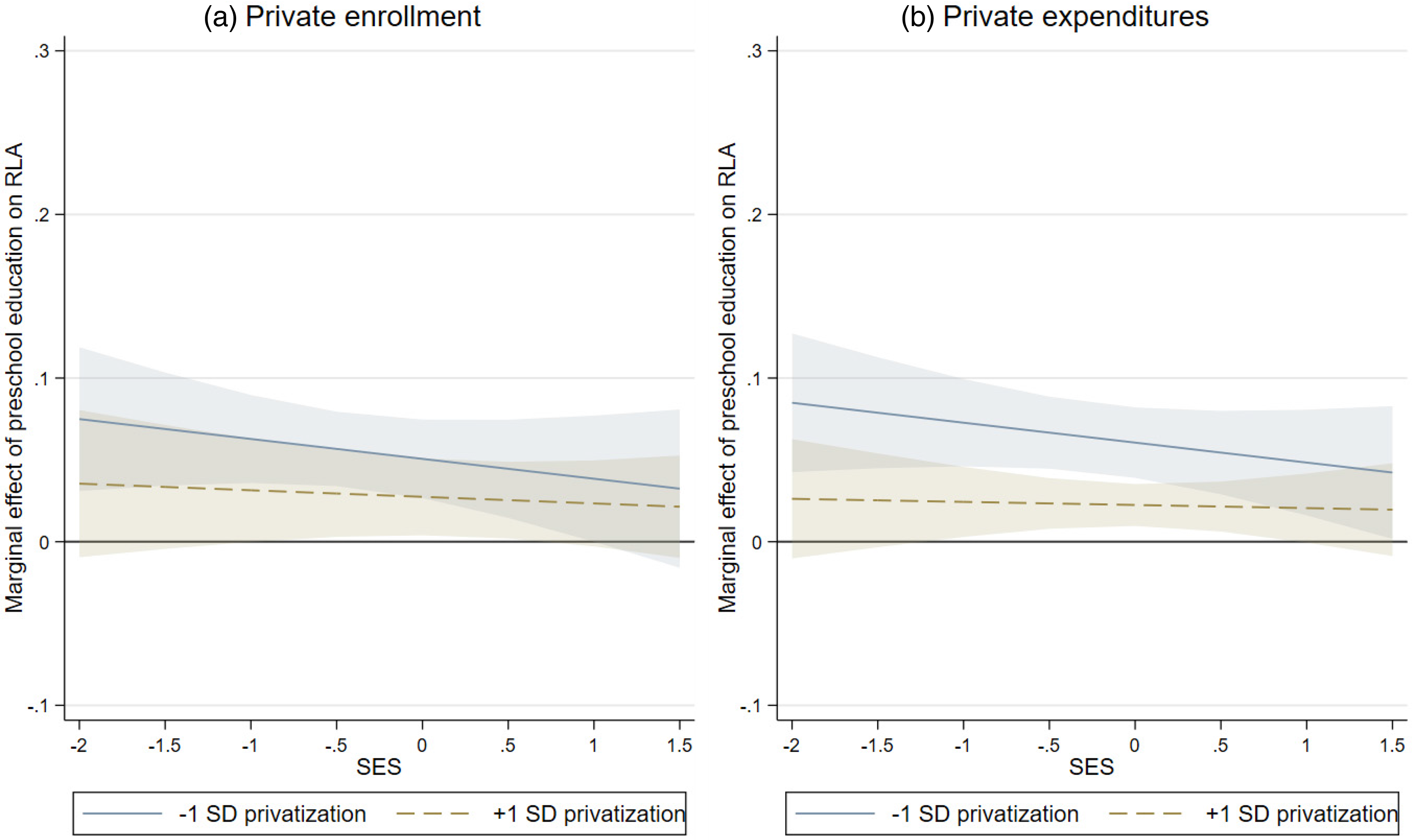
Average marginal effects of preschool duration on RLA for different values of SES and depending on the level of privatization of the preschool sector, including school-level random intercept. Note: Depicted with 95% confidence intervals.
Robustness check II: Controlling for the quality of preschool education
As a second robustness check, we control for the quality of preschool education on the country level in the models. In accordance with prior studies (Aguiar and Aguiar, 2020; Kulic et al. 2019), we employ the ratio of pupils to teaching staff in full-time equivalents as a proxy for preschool quality (derived from the OECD, 2016). 8 The results are presented in Figure 4 (see Supplemental Materials C for tables). In line with prior evidence (Aguiar and Aguiar, 2020), we find that higher pupil-to-teaching staff ratios are associated with lower RLA scores. Additionally, Figure 4(a) shows that the educational benefits of preschool for children from lower socioeconomic backgrounds are higher at higher levels of country-level preschool quality. These findings emphasize the importance of a high-quality ECEC sector for addressing inequality in educational opportunities. Moreover, our conclusions concerning the role of privatization remain unchanged when controlling for preschool quality. Though, again, the three-way interactions with the privatization indicators are not significant, the compensatory effects of preschool education are shown to be stronger in countries with lower levels of preschool privatization. As portrayed in Figure 4(b), even a model including three-way interactions with preschool quality and private expenditures shows similar results as those previously reported. 9
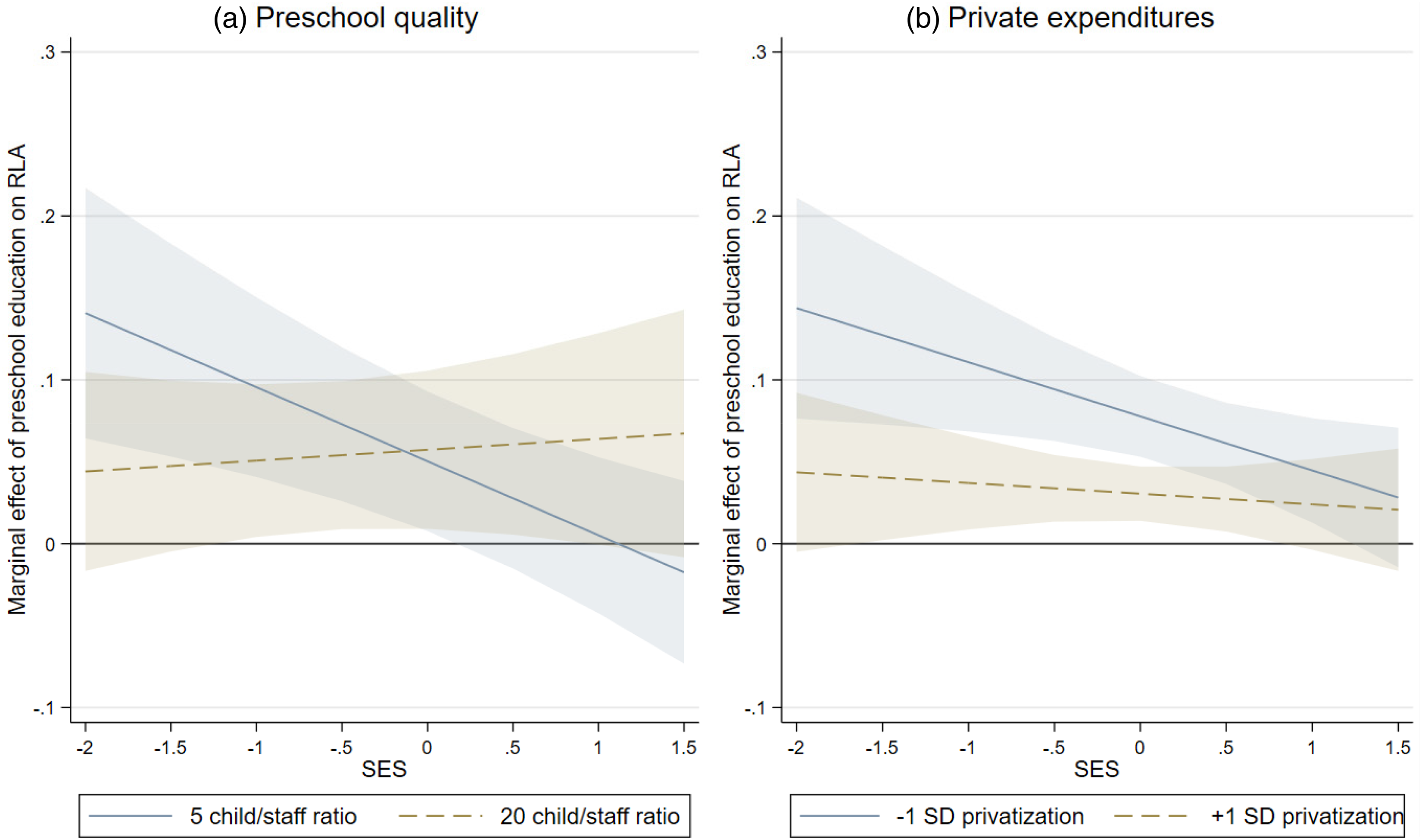
Average marginal effects of preschool duration on RLA for different values of SES and depending on the level of preschool quality (panel a) and private expenditures (controlling for preschool quality (panel b)).
Conclusion and discussion
In recent decades, Western countries have witnessed a large expansion of preschool services following initiatives from national policymakers and international organizations such as UNESCO, the OECD, and the EU (Strietholt et al. 2020). One of the main objectives of increasing participation rates in early childhood education is to combat educational inequalities at a young age. Preschool education is believed to (partially) offset these inequalities by offering low-SES children cognitively stimulating environments, thereby leveling the playing field before school entry (Ghirardi et al. 2022). Yet, various studies have revealed large variations in the equalizing effects of preschool across countries (e.g. Cebolla-Boado et al. 2017; Esping-Andersen et al. 2012; Schlicht et al. 2010). These cross-national differences have received little academic attention to date, since most research has been focused on evaluating national or even local preschool arrangements. In this paper, we sought to fill this gap in the literature by studying to what extent the equalizing effects of preschool education are affected by the level of privatization of the preschool sector. Using a comparative approach, we hope to contribute to the expanding literature on the characteristics of effective early childhood education to reduce educational inequality and improve learning outcomes in primary education.
Using data from PIRLS (2016), we demonstrated that the number of years a child has spent in early ECEC was predictive of their primary school literacy performance. Moreover, this association was strongest among students of disadvantaged backgrounds, implying that early childhood education generally works in a compensatory manner, benefiting children with fewer resources and cognitive stimulation at home. A further interest of the current study was to analyze whether this compensatory effect becomes weaker in societies with more strongly privatized preschool facilities. We found some modest support for this hypothesis; in societies with proportionally less privatization of the ECEC sector in terms of enrollment and expenditures, the compensatory effect of early childhood education is stronger. However, this effect was not statistically significant following conventional statistical significance tests.
Our study has some limitations. First of all, while the ECEC literature has emphasized the relevance of both intensity and quality of preschool education for child development, our study could only examine intensity (years attended). More fine-grained measures of intensity (e.g. hours per week) or student-level quality were not available. Second, the privatization indicators do not provide information on the distributional impact of government funding, neither do they cover the degree of privatization at the ISCED 01 level due to a lack of available data. Prior evidence from meta-analyses shows that the effects of early childhood education on children's cognitive outcomes are larger for programs starting in infancy/toddlerhood rather than programs starting in preschool years (Li et al., 2020). Hence, privatization of early childhood educational development programs before preschool entry may be more critical for leveling the playing field, compared to the privatization levels we studied. Conversely, intensive ECEC participation below the age of one can have damaging effects on parent–child attachments and the child's cognitive and emotional development (Han et al., 2001). Further research could address these issues. Another line of research that deserves further cross-national attention is the impact of privatization on access to ECEC, a topic beyond the scope of our study.
Despite these limitations, this study has called attention to the cross-national variation in the equalizing effects of preschool education. Our findings point toward the relevance of considering national policies and how these policies shape the distribution of preschool benefits. In combination with prior evidence that privatization can enhance inequalities in preschool use (Van Lancker & Ghysels 2016), our study suggests that the equalizing objectives of preschool education are potentially more successfully achieved when the preschool sector is less privatized. In other words, when governments take a more active role in preschool provision and funding, this may combat inequalities in preschool use (Van Lancker & Ghysels 2016) as well as enhance the cognitive gains of preschool for children from lower SES. Future studies are encouraged to consider how the equalizing effects of preschool are shaped by other nationwide policies and institutional settings, such as the intensity of investments in preschool education, the standardization of the preschool curriculum, or country-wide quality requirements for preschool facilities.
Supplemental Material
sj-docx-1-asj-10.1177_00016993231205201 - Supplemental material for Privatization of preschool education: The implications for educational inequalities in cross-national perspective
Supplemental material, sj-docx-1-asj-10.1177_00016993231205201 for Privatization of preschool education: The implications for educational inequalities in cross-national perspective by Lisa Janssen, Dieuwke Zwier and Herman van de Werfhorst in Acta Sociologica
Footnotes
Funding
The authors received no financial support for the research, authorship, and/or publication of this article.
Data availability statement

Supplemental material
Supplemental material for this article is available online.
Notes
Author biographies
References
Supplementary Material
Please find the following supplemental material available below.
For Open Access articles published under a Creative Commons License, all supplemental material carries the same license as the article it is associated with.
For non-Open Access articles published, all supplemental material carries a non-exclusive license, and permission requests for re-use of supplemental material or any part of supplemental material shall be sent directly to the copyright owner as specified in the copyright notice associated with the article.
