



Abstract
Despite the acknowledged complexity and time pressures of early childhood educators’ work, very few studies have examined the nature of this work, minute-by-minute, over the working day. This paper reports on data gathered through 10,155 time-use diary (TUD) records provided by 321 educators participating in the Exemplary Early Childhood Educators at Work Australian Research Council Linkage Project. Participants were recruited from preschool/kindergarten and long day care centres that had achieved a rating of Exceeding the Australian National Quality Standard on all seven Quality Areas. Analyses of this extensive dataset illustrate the rhythm and diversity of educators’ work across a typical day and identify the similarities and differences in worktime distributions for educators working in preschool vs. long day care settings, and for educators with different qualifications and positional responsibilities. The findings suggest differential allocations of worktime that raise important considerations for achieving high quality early childhood education and care services.
Keywords
Introduction
The nature of early childhood education and care (ECEC) educators’ work and the time educators have (or need) to undertake this work are inextricably linked; however, research has tended to focus on the nature of the work and its complexity (Cumming et al., 2014; Gibson et al., 2015), and on professional recognition, pay and conditions (Education Services Australia, 2021). More recently, as issues of workforce sustainability have become critical (Fenech et al., 2022), greater attention is being given to the challenges of workload, time demands and time pressure. International research suggests educator workload and a lack of time are related to higher levels of emotional exhaustion and lower quality performance (OECD, 2019). In Australia, Thorpe et al.’s (2023) recent analysis of the Early Years Workforce Study (EYWS) has highlighted educators’ concerns relating to workload, particularly the challenge of balancing administrative responsibilities with interactions with children, and the large number of tasks that needed to be completed within a set period of time. Concerns were also raised about the lack of ‘downtime’ and work “that must be completed regardless of paid time” (Thorpe et al., 2023. p. 11 of 25). Also drawing on the EYWS, McDonald et al. (2018) noted that time was identified by educators as an important resource issue that was relevant to retention, specifically access to paid non-contact time during work hours for curriculum planning, critical reflection, documentation, and assessment of children’s learning.
The examination of time, as a topic in itself, has featured in only a small number of early childhood research studies. While early studies focused on the domination of schedules and ‘clock-time’ (Pacini-Ketchebaw, 2012; Rose & Whitty, 2010), Nuttall and Thomas (2015) broadened this categorisation to include educators’ use of time, divided between specific activities, and their perceptions of time, or temporality, theorised as the lived experience of time by educators. Recent work by Hjelt et al. (2023) has extended understandings of temporality in ECEC settings to add the term ‘temporal capital’ (Wang, 2019) to explain the sense of control educators have over their own time within the collective rhythms of their work communities. Temporal capital is used to refer to: the institutional processes that govern practitioners’ use of time; agency and the ability of educators to influence the time structures of their work; and educators’ decision-making and responsibility for time management.
As an emerging body of research, studies of workload experience among the ECEC workforce have applied qualitative methods, interviews and focus group conversations, identifying key themes about educators’ use and perceptions of time and time management. While these methods have provided valuable insights into the lived experiences of ECEC educators, much remains to be uncovered about the nature of educators’ work. For example, educators’ references in focus group interviews to ‘paperwork’ and ‘interaction with children’ (Thorpe et al., 2023) may be readily understood but are insufficiently defined to produce the evidence needed to generate a clear picture of ECEC workload. Press et al. (2015, p. 88) argued that both qualitative and quantitative data are required to identify and articulate “the complex nature of the work undertaken ECEC educators and the environmental factors that contribute to job satisfaction and retention.” In their subsequent design of the Exemplary Early Childhood Educators at Work (EECE@W) Australian Research Council Linkage Project, Press et al. (2020) proposed the construction of a taxonomy to describe the everyday work of Australian early childhood educators and to enable the collection of large-scale, generalisable data about what educators in high quality ECEC centres do. The taxonomy was developed in collaboration with a panel of six early childhood experts who identified and defined 10 domains of work activity, each with sub-classes of activity (Wong et al., 2015). The comprehensiveness of these domains and sub-classes was then tested with early childhood organisations and practitioners in the field using time-use diary methodology (Harrison et al., 2019; Mitchell et al., 2019). As described in later sections of this paper, time-use diary methods enable the intensive study over a specified time period of participants’ actions (‘what’ they do).
Our aim, in this paper, was to use detailed records of educators’ time at work gathered through the EECE@W study of high quality ECEC settings to examine the nature of educators’ working day, exploring similarities and differences in work patterns for educators working in preschool/kindergarten (hereafter preschool) and long day care centres 1 . We were particularly interested in giving attention to educators with differing qualifications and different levels of responsibility, including their positional leadership roles. These questions are highly relevant to the current ECEC climate where issues of retention and staff shortages, particularly for degree-qualified early childhood teachers (ECT), have reached critical levels (Fenech et al., 2022). Examining the nature of educators’ work may also provide new insights into reported differences in quality ratings between preschool and long day care centres (ACECQA, 2023) and observed quality for educators with differing qualifications (Manning et al., 2019).
The ECEC context
Jackson (2022, p. 738), in her critique of the assumption of causality arising from Manning et al.’s (2019) evidence of a positive correlation between higher quality ECEC and educators’ educational attainment, points out that “educators’ practice is shaped by more than their qualifications alone,” arguing that giving pre-eminence to qualifications “overlooks other important differences in the diverse ECEC workforce.” Jackson (2021) identifies and justifies a range of personal, social and cultural factors that may play an important role in the associations between qualifications and quality. Furthermore, a substantial body of research underscores the importance of the ECEC workplace in supporting educators and enabling services to achieve higher quality ratings, including, for example: a workplace culture of collaborative leadership and teamwork (Harrison et al., 2020), effective service management (Jones et al., 2017), and the provision of material and non-material benefits and affordances (PriceWaterhouseCoopers, 2014).
Other studies have explored structural influences of ECEC settings on educators’ worktime. An OECD (2017) comparison of pre-primary and primary settings reported that staff spent more time with children in pre-primary settings and, as a result, had less paid time for activities such as preparation and meetings with colleagues and parents. The authors noted the potential risk for staff of making up the difference through unpaid work in their own, personal time, a finding echoed by Australian research (Thorpe et al., 2023). Educators working in long day care centres have reported long contact hours with children as a concern (Mckinley et al., 2018), along with balancing the need for spending more time with the children and less time on administrative tasks, such as preparation, planning, and team meetings (Blöchliger & Bauer, 2018). Inherent structural differences between long day care and preschool settings, such as the length of the working day, age range of children, group size, and staff-child ratios, are familiar themes cited as affecting workload, but very few studies have sought to compare the work of educators in preschool versus long day care.
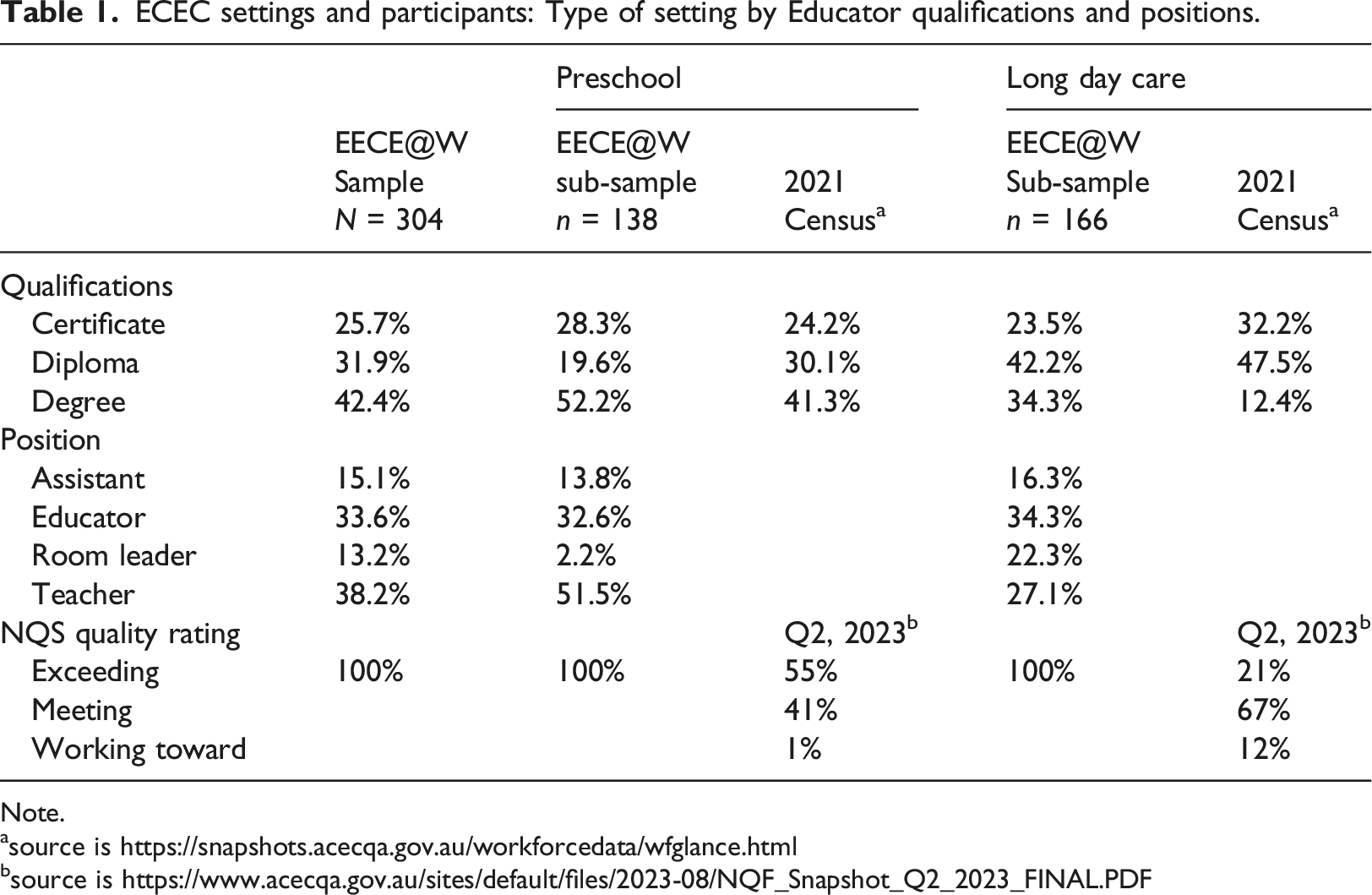
ECEC settings and participants: Type of setting by Educator qualifications and positions.
Note.
Researching worktime in high quality ECEC contexts
The EECE@W study sought to understand educators’ practice through their self-reported work activities and the time they allocated to these tasks. By focusing on educators in high-quality preschool and long day care settings, the study provided an opportunity to identify similarities and differences in educators’ work patterns that may reflect the type of setting they worked in. The focus on high quality work environments also enabled an exploration of differentiation, as proposed by Jackson (2022), in relation to educator qualifications and work responsibilities within the context of high quality ECEC centres. Three research questions were examined: 1. What does the everyday work of ECEC educators entail? 2. How are educators’ work activities distributed over the working day? 3. Do work activities vary across educators’ qualification levels, position, and place of work (long day care vs. preschool)?
Method
Drawing on the theory of practice architectures (Kemmis & Grootenboer, 2008), the EECE@W study was designed to examine what it is that exemplary early childhood educators do, what informs their practice, and how workplaces support educators to be exemplary in the care and education of young children, in a three-phase multi-level investigation (Gibson et al., 2023). In this paper we report on data collected in phase one, which used time use diary methods to record educators’ work activities and build a picture of a typical day. Exemplary educators were identified through the proxy of the centres that they worked in having achieved ratings of Exceeding in all seven Quality Areas of the NQS (Australian Children’s Education and Care Quality Authority [ACECQA], 2018). 2
Recruitment
Recruitment occurred from 2017 to 2019 across all states and territories of Australia, with an initial focus on three states: NSW, QLD and WA. All eligible centres were approached by a direct email, with prior approvals sought from large ECEC service provider organisations. Ethics approval for the study was granted by the Charles Sturt University Human Research Ethics Committee, protocol number H17014.
For each round of recruitment, information was sought from ACECQA to identify centres with a current rating of Exceeding the Australian National Quality Standard (NQS) on all Quality Areas (QAs) that were therefore eligible for recruitment. We invited all eligible centre-based services (long day care and preschool). Information about the study was provided in writing to centre managers/directors with follow-up emails or telephone calls to provide further information. Consenting centres were asked to invite participation by educators who worked directly with children. Centre managers and directors were only included as participants when their work week included a regular allocation of time providing care and education for children.
Data collection was via a smartphone time-use diary (TUD) app designed for the EECE@W project (Wong et al., 2022). Participation required educators to download and use the app to enter responses for two randomly selected hours. Loan phones were made available to educators who did not have a smartphone but who wished to participate in the study. In recognition of centre policies and guidelines limiting the use of smartphones while educators are at work, information was provided for parents to alert them to their educators’ use of their smartphones for the purpose of research.
Data collection
Educators who consented to participate were provided with a user guide which was developed to help educators work through the steps and sequence of downloading and using the TUD app, and to provide ‘trouble shooting’ advice. After downloading the TUD app, participating educators were asked to complete a once-only set of questions about their place of work (long day care or preschool), their position (teacher, educator, assistant 3 , room leader), and their early childhood qualification (degree, diploma, certificate). Participants then completed TUD records for 10 working days. The app was designed to generate a ‘beep’ during work hours, alerting the educator to complete a set of questions about the previous hour. At each data collection point, educators were asked to recall and report the work activities they did during the previous hour, using pre-coded response options. Educators had the option to delay completion of the app, when busy with other responsibilities. Reminder ‘beeps’ were provided, but educators could also skip a ‘beep’. When this occurred, the app automatically added the unrecorded time to the program so that the full 20 hours would be completed.
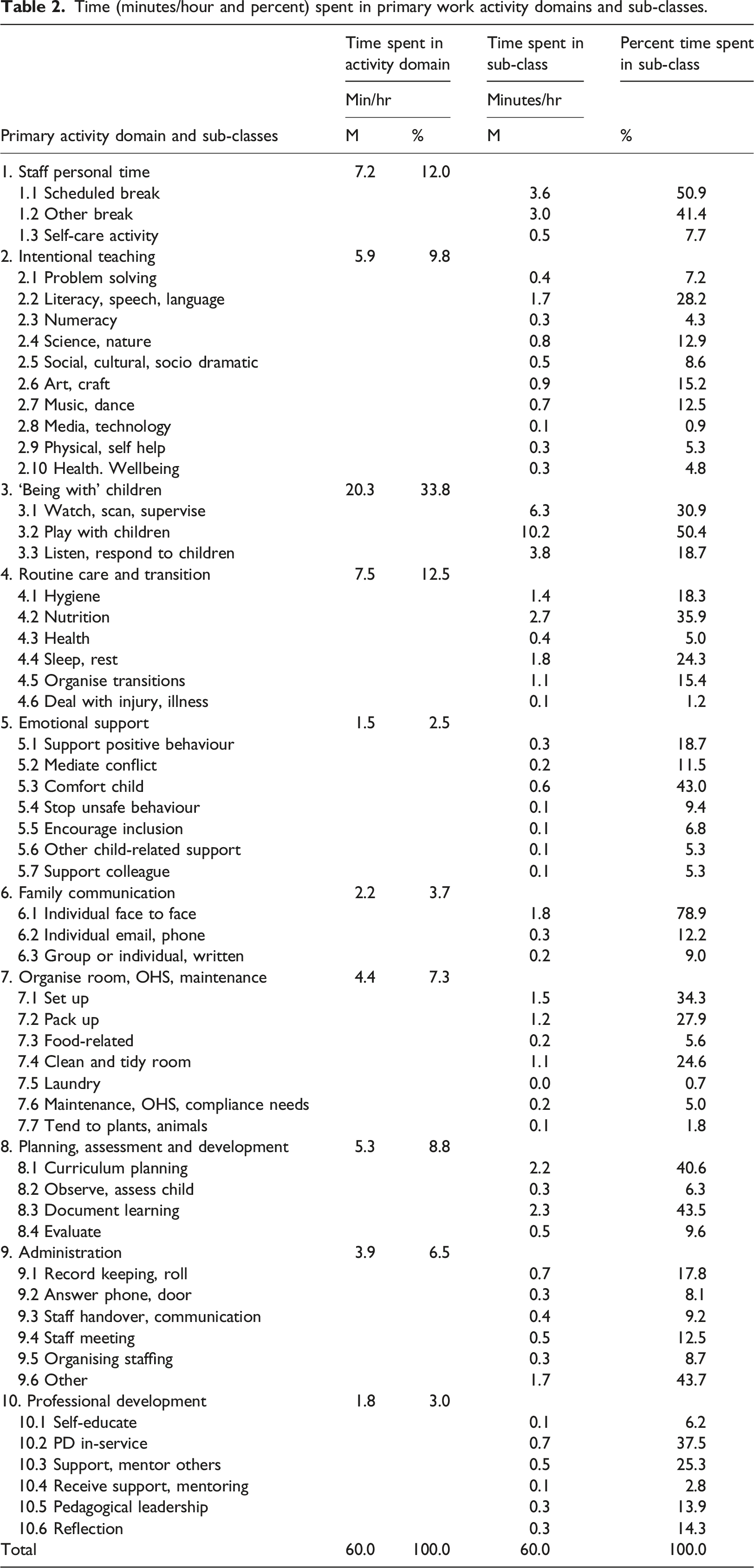
Time (minutes/hour and percent) spent in primary work activity domains and sub-classes.
For each TUD hour, educators were asked to recall the range of activities they did in the hour prior to receiving each alert. Recognising that educators often do more than one thing at a time (e.g. comforting a child whilst supervising other children), the TUD app was designed to prompt educators to record their main activity (primary) and whether or not they were doing another activity at the same time (secondary 4 ). The amount of time for each activity, and sub-class, was entered in blocks of 6-minutes 5 . e.g., an educator could record 30 minutes of ‘being with children’ with the sub-class ‘play with children’ entered as five blocks of 6-minutes. ‘Being with children’ could also be entered as the secondary activity with ‘listen, respond to children’ as the sub-class. This process was continued until the full allocation of 10 blocks of 6-minutes was completed.
Participants were supported by the EECE@W Research Assistants, who were available to answer questions by email or telephone. Educators were also provided with a User Guide for the TUD App which set out clear instructions, with diagrams and images, to explain the process of responding to each of the questions. The User Guide also included definitions and examples of each of the 10 work activity domains and 55 sub-classes. e.g., Domain 3 and its three sub-classes of were described as follows:
Domain 3. ‘Being with’ children 3.1 Watch/scan/supervise (e.g. watch and ensure safety of children, without necessarily interacting or teaching) 3.2 Play with children (e.g. play alongside or together with children [digging in sandpit; building something; using art materials, joining in with a game]) 3.3 Listen/respond to children (e.g. engage with children to respond to their needs, helping children to do something without necessarily teaching [provide materials, hold hands while jumping]).
Analysis
The completed TUD data set consisted of 3,610 hours (10,155 episodes) of worktime records provided by 321 educators. The records of educators’ main (primary) work activities were combined to create an ‘average working day’ that extended from 7am to 7pm. Initial analysis determined the average number of minutes per hour (mean M) that educators spent in each of the 10 domains of work activity, and within these, the time spent in each of the 55 sub-classes of work. Next, we created tempograms to provide a visual illustration of the distribution of work activities from the start to the end of the working day. Data for each period of 15-minute blocks of time from 7am to 7pm was graphed in relation to the amount of time recorded for each primary work activity. The third set of analyses used regression tests to compare the amount of time spent in each of the primary work activities by educators’ place of work (preschool, long day care), qualification (degree, diploma, certificate), and position (room leader, teacher, educator, assistant).
Results
Participating educators
The distribution of participants by type of ECEC and qualification is summarised in Table 1. Proportionally, within the 304 educators who provided information on qualifications, there were more with a degree (42.4%) than a diploma (31.9%) or certificate (25.7%). The proportion of degree-qualified educators in the EECCE@W sample was greater than figures reported in the 2021 Australian Workforce Census: 52.2% versus 41.3% for preschool staff and 34.3% versus 12.4% for long day care centres. The number of diploma-qualified educators in the EECE@W sample were similar to the 2021 Workforce Census: 42.2% versus 47.5% for long day care centres; 19.6% versus 30.1% for preschools, as were those with certificate qualifications: 23.5% versus 32.2% for long day care centres; 28.3% versus 24.2% for preschools. Table 1 also summarises wider context differences for NQS ratings and qualifications by service type: All of the participating EECE@W services had an overall NQS rating of Exceeding. In comparison, 2023 data for the wider Australian context showed that 55% of preschools and 21% of long day care centres had achieved Exceeding NQS ratings.
Time spent in each domain of work activity over an ‘average’ working day
Initial analyses of the TUD dataset identified the average minutes per hour spent in each of the 10 domains and 55 sub-classes of work activity (see Table 2). Results showed that, on average, during a typical hour of work, educators spent 37.4 minutes per hour or 62.3% of their time engaged with children. Of this, 20.3 minutes (33.8% of the hour) was spent ‘being with children’; 7.5 minutes (12.5%) in ‘routine care or transition’ activities; 5.9 minutes (9.8%) in ‘intentional teaching’; and 1.5 minutes (2.5%) providing ‘emotional support’. We also included 2.2 minutes (3.7%) of ‘family communication’ as time engaged with children, because most occurred face-to-face when children were likely to have been present. Just over one-quarter (25.7%) of educators’ working day was allocated to non-child-facing activities: ‘plan, assess, evaluate’ (8.8%), ‘organise the room, OHS, maintenance’ activities (7.3%), ‘administration’ (6.5%), and ‘professional development (3.0%), with the remaining 12.0% for ‘staff personal time’.
Distribution of primary work activities across educators’ working day
The full dataset of 10,155 episodes of TUD data was used to create tempograms, which are based on the graphical distribution of educators’ recorded work activities across an ‘average’ working day. In Figure 1, the x-axis depicts daily work time (7am to 7pm) in 15-minute intervals spread over 60 columns. The y-axis shows the proportion of time spent in each of the 10 domains of work activity, shown as a percent of each 15-minute period. Each domain has a different colour, as explained in the Legend. For example, a large part of educators’ day is spent ‘being with child’; the green bars indicate a similar percent allocation of time from 8:30am to the end of the day. Tempogram of time-use patterns for ECEC educators’ work activities.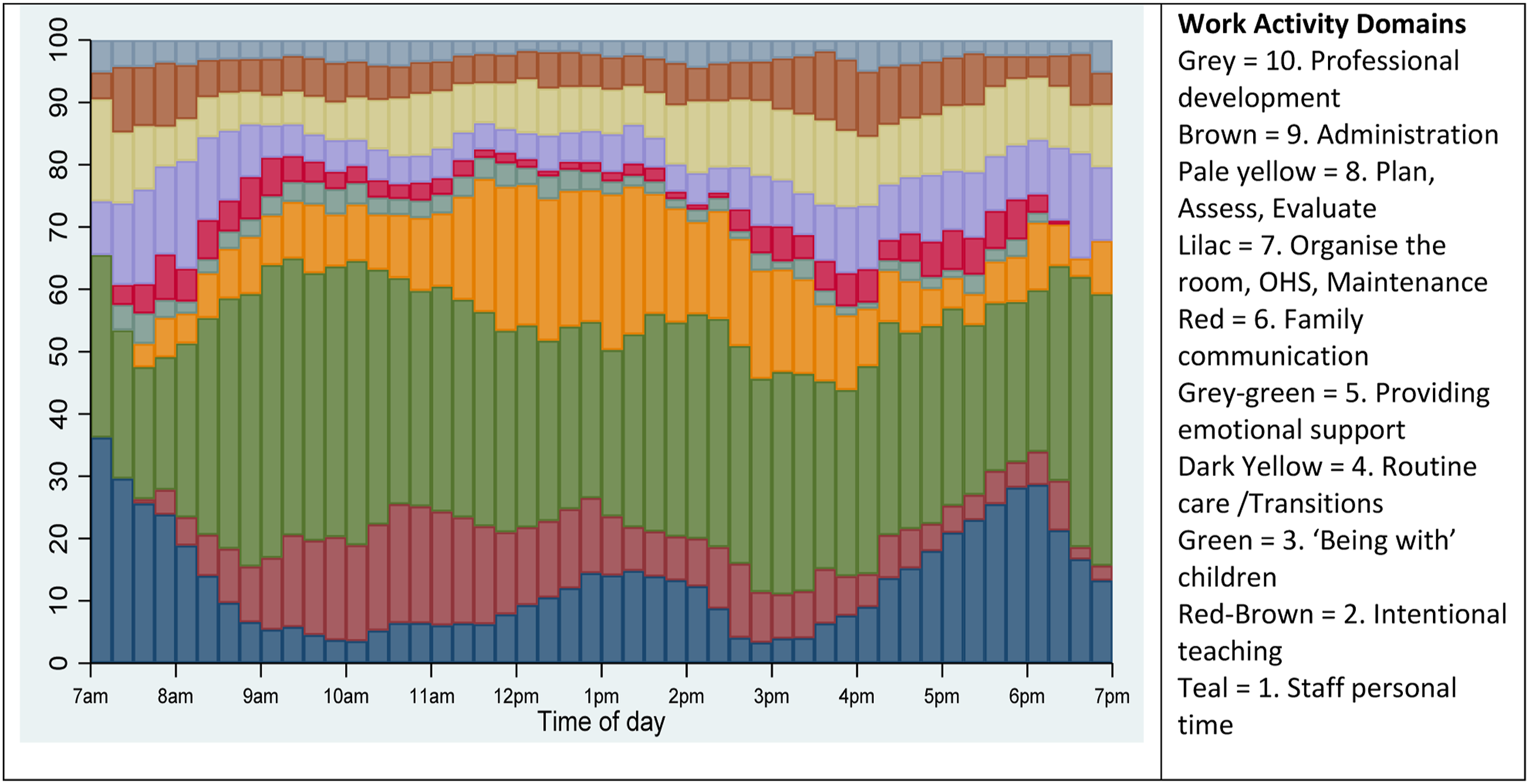
A key finding that can be gleaned from this graphical image is that educators were engaged in all 10 domains across all episodes of time recorded during their working day. The pattern of the EC ‘average’ working day also showed that some work activities required a larger proportion of educators’ time at some periods of the day and less time at others. For example, more time was reported for organising the room (lilac) and family communication (red) early in the morning (7:15am to 9:15am) and in the afternoon (from 2:30pm to the end of the working day). Distinctive patterns were also evident for routine care/transitions (dark yellow), with a peak time from 11:15am to 3:30pm, and intentional teaching (red-brown), which increased from 9:00am, remained high until 1:00pm and then continued at a fairly steady level until the end of the day. There were other work activities, however, that occurred more consistently across the day. Being with children was the most obvious example of this pattern, but time spent in professional development, plan/assess/evaluate, and providing emotional support was also consistent across the day.
Similarities and differences in work activities by type of ECEC service
We then separated the dataset to create two tempograms, one for educators who worked in preschool and one for educators who worked in long day care (see Figure 2). While the distribution of the 10 domains of work activity (y-axis) was similar for both groups, there were marked differences in the spread across the day (x-axis). The pattern of the day for preschools appeared to be ‘squashed’ into the hours children typically attend (9am to 3pm), while for long day care these activities were spread more evenly across the whole of the working day (7am to 7pm). This pattern was particularly evident for intentional teaching, which in preschools occurred from 9:15am to 3:15pm, with the heaviest concentration from 10:15am to 1:00pm. While long day care also emphasised morning engagement in intentional teaching (from 8:00am to 12:00pm), this activity occurred across the whole of the day (7:30am to 6:00pm). Further examination of these tempogram patterns suggested differences in the amount of time spent in routine care (more dark yellow in the long day care image) and organising the room (more lilac in the preschool image, particularly before 9am and after 3:30pm). Tempograms of time-use patterns for educators in preschool and long day care centres.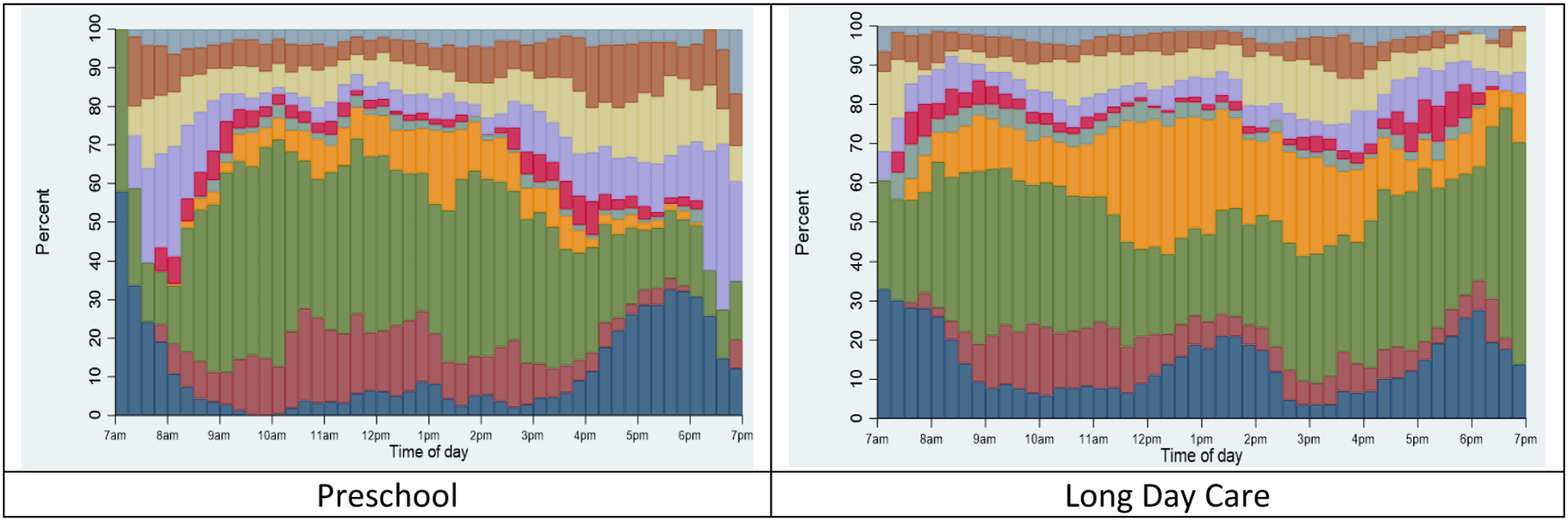
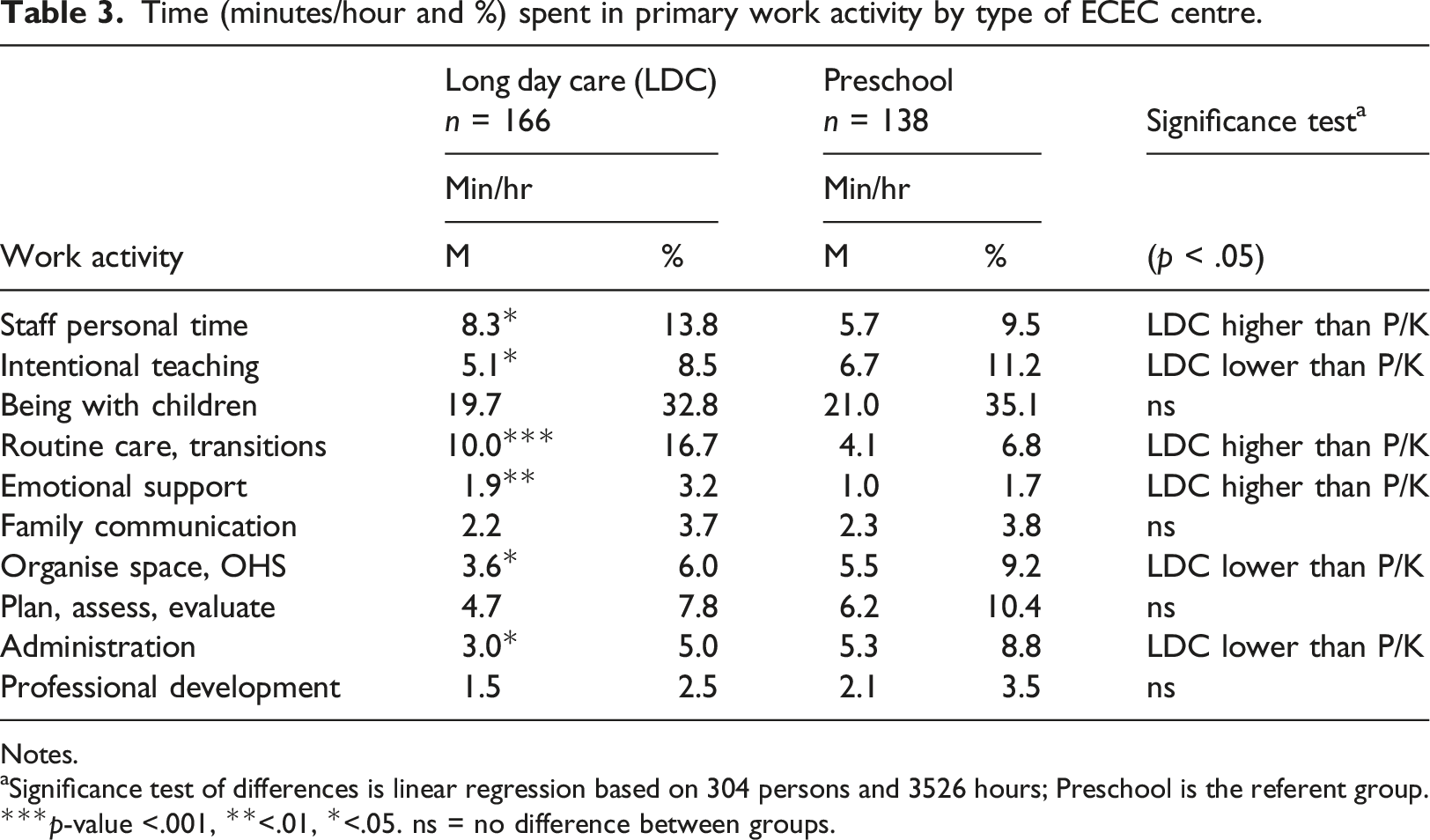
Time (minutes/hour and %) spent in primary work activity by type of ECEC centre.
Notes.
aSignificance test of differences is linear regression based on 304 persons and 3526 hours; Preschool is the referent group.
***p-value <.001, **<.01, *<.05. ns = no difference between groups.
Similarities and differences in work activities by educators’ qualifications and positions
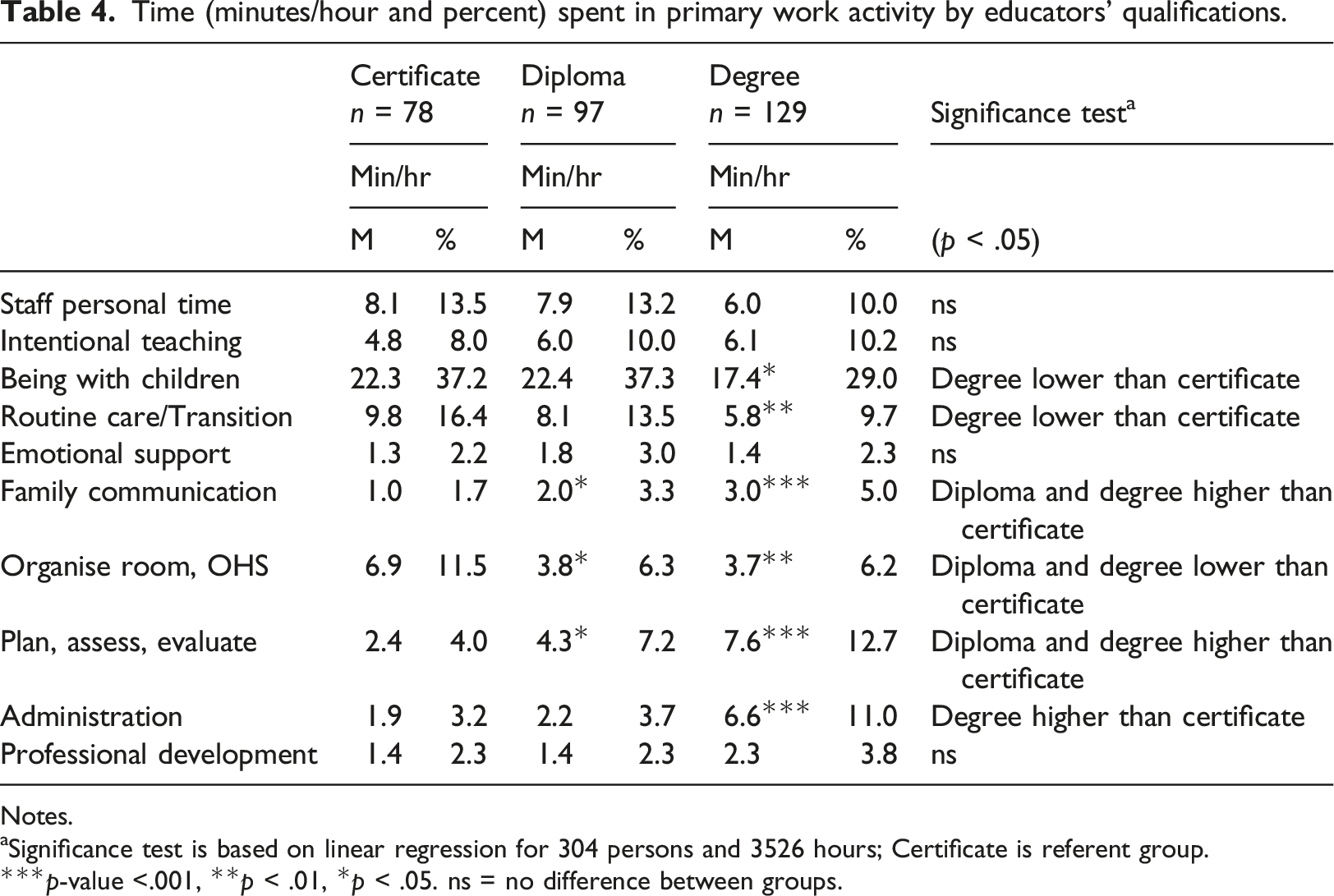
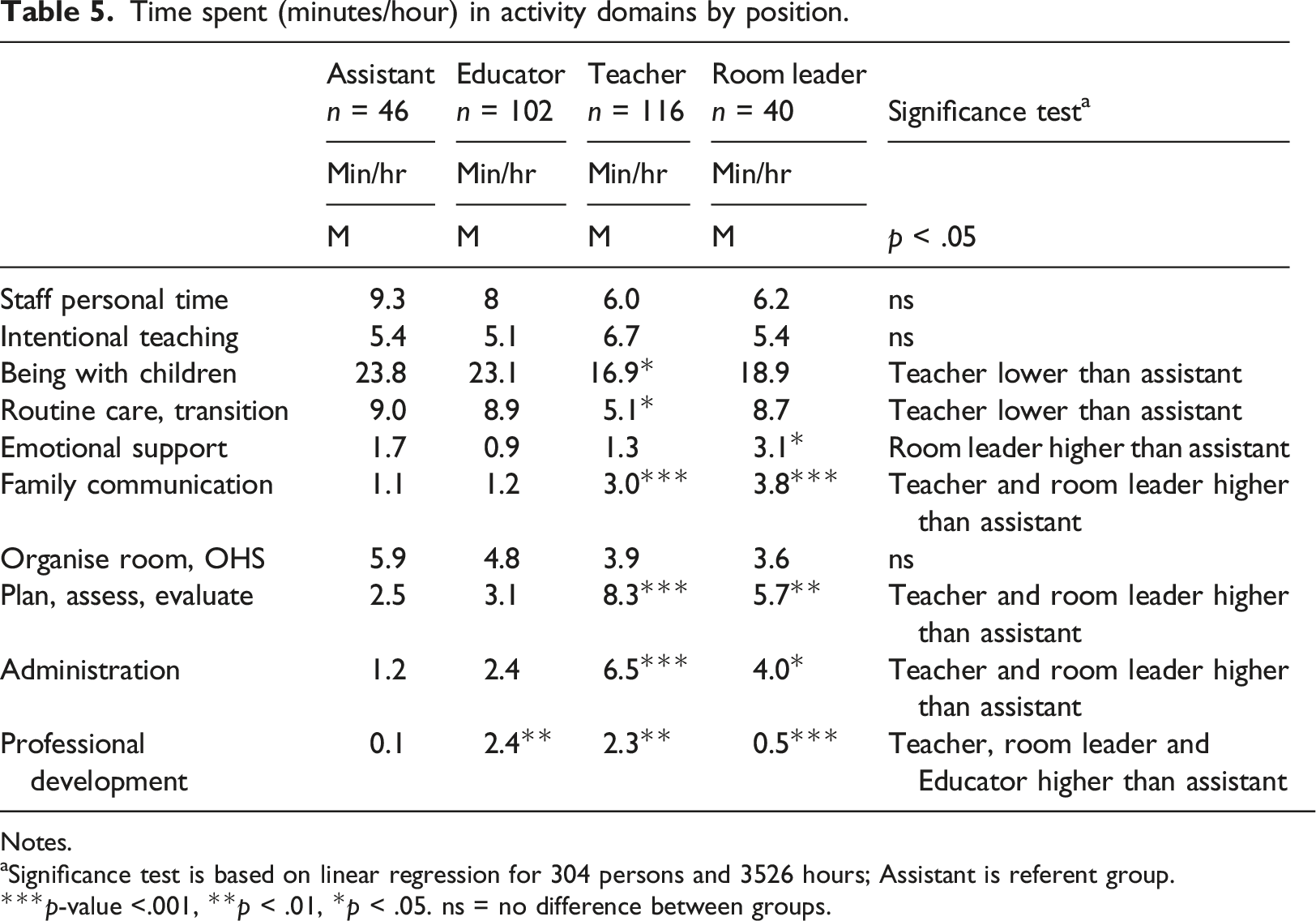
We divided the dataset to create tempograms for educators with degree, diploma, and certificate qualifications. The distribution of the 10 domains of work activity (y-axis) was very similar for these three groups across the working day, but some differences were suggested for the amount of time reported by staff (x-axis). We then applied statistical comparisons for educator qualifications and position to identify similarities and differences in the time spent in each work activity.
Time (minutes/hour and percent) spent in primary work activity by educators’ qualifications.
Notes.
aSignificance test is based on linear regression for 304 persons and 3526 hours; Certificate is referent group.
***p-value <.001, **p < .01, *p < .05. ns = no difference between groups.
Time spent (minutes/hour) in activity domains by position.
Notes.
aSignificance test is based on linear regression for 304 persons and 3526 hours; Assistant is referent group.
***p-value <.001, **p < .01, *p < .05. ns = no difference between groups.
Discussion
New insights into the complex and diverse nature of early childhood educators’ work have been uncovered in these analyses of educators’ time-use records. The findings provide a complementary but somewhat different picture to concerns reported in previous studies relating to workload, lack of ‘downtime’, and the challenge of balancing administrative responsibilities with interactions with children (Thorpe et al., 2023). In this sample of high quality ECEC services, educators spent 62% of their working day engaged with children and 38% in non-child-facing activities (26%) and personal time (12%). The work educators did was highly complex, distributed over nine domains of work activity and 52 defined sub-classes of activity that occurred throughout the working day. The distributions generated by tempogram analyses suggested a rhythmic pattern to the spread of these tasks across the day and illustrated the combined, yet changing, foci of educators’ attention.
This study used a time-use diary (TUD) smartphone app to document what educators did, minute by minute across their working day. Educators’ work with children was distributed across six domains: 'being with children' (33.8%); 'routine care/transitions' (12.5%); 'intentional teaching' (9.8%); ‘emotional support’ (2.5%) and ‘family communication’ (3.7%). Time spent in non-child-facing activities was distributed across three domains: ‘plan, assess, evaluate’ (8.8%); ‘organise the room, OHS, maintenance’ (7.3%); ‘administration’ (6.5%); and ‘professional development (3.0%). Our analyses of these detailed records of educators’ work activity offer new insights into previously observed differences in quality ratings for preschool and long day care centres, reported by the NQS assessment and rating system (ACECQA, 2023). The results also shed new light on the previously unexplored contributions of educator qualifications and positional responsibilities within the diverse employment contexts of ECEC services.
Results showed that in high-quality preschool and in long day care settings (rated as Exceeding NQS across all Quality Areas), key features of educators’ work activity were the same: educators spent the same proportion of time ‘being with’ children and communicating with families. Critically important for quality (Grieshaber & Hunkin, 2023; Logan & Sumsion, 2010), we also found that time spent in non-child-facing activities of planning, assessment and evaluation, and staff professional development was the same regardless of service type. The equivalence of preschool and long day care is a significant finding, given concerns about differential levels of quality across long day care and preschool settings in Australia: the proportion of preschools achieving Exceeding NQS ratings (55%) is more than double the proportion for long day care (21%), shown in Table 1 (ACECQA, 2023).
Where there were reported differences in the time spent by educators in preschool and long day care settings for some work domains, we suggest these could be attributed to the different age groups that educators worked with and/or the length of the working day. For example, the younger age group in long day care likely explains the additional time spent in providing emotional support and attending to routine care needs; and the longer working day explains more time allocated to staff breaks. Other differences are less obvious to explain but may be linked to different structural features of the two types of settings. More time spent in administrative tasks in preschool settings may reflect differing enrolment patterns: there may be larger numbers of children enrolled in preschools that operate two-day per week programs. More time allocated to organisational activities in preschool may be explained by physical environments that require changing the set-up of the room for play-time, meal-time and sleep/rest-time.
The increased time reported for intentional teaching in preschool is more difficult to explain, but may reflect differing program structures or staffing profiles. As illustrated in the tempogram distributions, time spent in intentional teaching in preschools had the heaviest concentration from 10:15am to 1:00pm, while in long day care intentional teaching was reported across the whole of educators’ working day, from 7:30am to 6:00pm. The differing staffing profiles of the EECE@W sample may also explain these differences: over half (52%) of the preschool sample were degree-qualified compared to about one-third (34%) in the long day care sub-sample (see Table 1). We note, however, that the results of our analysis offer possible considerations that warrant further research, and we propose caution in the ways that these TUD findings are explained.
The results also extend previous studies of observed quality in ECEC settings for educators with differing qualifications (Manning et al., 2019). It is important to note that, in Australia, ECEC is delivered by teams of educators made up of varying qualifications. The educators who participated in the EECE@W TUD research were all working in high-quality centres; therefore, our assumption was that all educators, regardless of qualification, were engaged in work that contributes to quality. This was confirmed by evidence that all educators, regardless of qualifications, engaged in ‘intentional teaching’ and providing ‘emotional support’ for the same amounts of time. Of further importance is the finding that, regardless of qualification, all educators engaged in the same amount of professional development, which is known to support quality in ECEC (Grieshaber & Hunkin, 2023; Logan & Sumsion, 2010).
The TUD results also showed meaningful differences in work distributions. Diploma and degree-qualified staff reported spending more time in two domains: ‘family communication’ and ‘plan, assess, evaluate’ compared to certificate-qualified staff. Degree-qualified teachers spent more time in ‘administration’ than other qualified staff and took the greatest responsibility for planning and assessment/evaluation. These findings align with expectations that the division of labour across differently qualified staff would consider the utilisation of specialist skills and training. Another possible interpretation is that the greater amount of time given to planning and evaluating the program by degree-qualified teachers may create the conditions that enable other educators to deliver high quality practice through intentional teaching, being with children, and routine care/transitions.
Similarly, our comparisons for worktime allocations by position showed that educators in leadership roles (e.g., room leader, teacher) were engaged in more planning, evaluating, administration, and family communication than assistants and educators who were not in identified leadership roles. This suggests a division of responsibilities that may explain how staff in all positions contributed equally to intentional teaching. In a profession that requires collaboration and working as a team to meet national quality standards and implement the national early childhood curriculum, Belonging, Being and Becoming: The Early Years Framework for Australia V2.0 (Australian Government Department of Education [AGDE], 2022), it is important that clearly defined roles and responsibilities enable educators’ work, and not constrain them. Working as a unified team, where roles are distinct, yet complementary, is a key feature of ECEC services, and as our study demonstrates, an important consideration for aspiring to achieve high quality. We refer readers to subsequent phases of the EECE@W project in which these underlying features of high quality programs were explored in more depth (Gibson et al., 2023).
Limitations and recommendations for further research
The EECE@W study draws on a targeted sample of ECEC services that had achieved ratings of Exceeding NQS on all Quality Areas in 2017–2019, and results are not generalisable to a wider range of preschool and long day care centres. We also acknowledge that the proportion of degree-qualified participants in the EECE@W sample was higher than reported in the current workforce census (see Table 1). Further research is needed to compare educators’ worktime across services of varying quality in order to fully test our interpretations, including the differentiation of work by qualifications and positional responsibilities.
We also note that TUD information was restricted to educators’ time at work, which did not record of any work-related activities educators may have undertaken outside of paid hours. Future studies could consider the use of extended diaries to capture additional, non-paid, work commitments. A further limitation of the TUD app relates to questions that arise about the broader context of the ECEC service and how this or other features of the room or staffing might affect educators’ work. Further consideration should be also given to the role of systemic, organisational and centre features associated with quality improvement from Working Toward NQS to Exceeding NQS (Harrison et al., 2023).
Another area not recorded in the TUD dataset, but explored in subsequent stages of the EECE@W project (Gibson et al., 2023), relates to questions about the role of the Centre Director in supporting worktime distributions, and how activities are differentiated and distributed amongst a team. Questions also remain about the moment-to-moment decisions educators make about what activity/ies to prioritise. Further research is needed to explore issues of managing time raised by Hjelt et al. (2023), and perceptions of time highlighted by Nuttall and Thomas (2015).
Conclusions
In this paper we used an innovative TUD methodology to closely examine, and better understand, the ways that educators distribute their time across domains of activity in their everyday work, for different types of ECEC services, and for educators’ qualification levels and positional roles. The results demonstrate differential distributions of roles and responsibilities, along with similarly supportive engagement with children’s play and learning. Whilst we do not have clear explanations for these distinctions of how time was spent, we have offered possible contextual considerations worthy of consideration.
TUD methodology has not been widely used in ECEC settings; however, as our data show, it can generate important understandings of the nature of educators’ work and thereby, better inform workforce and resource planning at service and systems levels. At a time when many countries are experiencing extensive workforce shortages, questions are being raised about what factors are necessary to retaining quality ECEC. Our findings demonstrate that providing time for degree-, diploma-, and certificate-qualified staff to plan, assess and evaluate, and undertake professional development, is a critical feature of high quality services. The findings further suggest the importance of distributed work responsibilities, by qualification and position, and underline the key role of degree-qualified teachers in planning, evaluation and administration.
Footnotes
Declaration of conflicting interests
The author(s) declared no potential conflicts of interest with respect to the research, authorship, and/or publication of this article.
Funding
The author(s) disclosed receipt of the following financial support for the research, authorship, and/or publication of this article: This work was supported by the Australian Research Council (LP160100532).
