



Abstract
Access to resources, wealth, and power positions varies systematically with membership in social categories. This article asks what role the elites themselves – as holders of power and regulators of access to influential positions – can play in maintaining, but also changing, the demographic composition of elites. Drawing on a unique survey among the entire Norwegian elite, we investigate what holders of elite positions believe are the main causes of gender imbalance and lack of ethnic diversity, and whether their beliefs influence their willingness to implement measures to promote gender equality and ethnic diversity. In line with expectations drawn from the literatures on policy representation and critical frame analysis, we find a strong, positive relationship between the belief in the importance of institutionalized causes of inequality and the willingness to introduce ameliorative measures to increase diversity. Conversely, we find a negative relationship between the belief in individualized explanations, such as the lack of qualifications, and the willingness to introduce measures. As elites are key holders of power, the findings imply that how elites view the causes of categorical inequality has strong bearings on the room for structural change.
Introduction
Elites are currently under scrutiny in public debates world-wide, in part due to their role in producing inequality (Khan, 2012). While economic inequality is increasing across liberal democracies, financial, political and cultural inequalities are maintained because elites have access to resources and the power to define status hierarchies. Access to elite positions is an important part of inequality maintenance, as such positions are overwhelmingly possessed by white men (Khan, 2012, 373). However, there is scant research on how individuals in power positions conceive of the causes of inequality, and whether their conceptions of inequality have any bearing on their inclination to implement measures to increase diversity in leadership.
Access to resources, wealth, and power positions tends to vary systematically with membership in social categories, such as gender, race, and ethnicity – a pattern commonly referred to as categorical inequality (Massey, 2007). Yet, explanations of such inequalities vary across disciplines. In sociology, categorical inequalities are typically portrayed as durable patterns in social life (Ridgeway, 2014; Tilly, 1998). Massey (2007, 5–6), for example, states that “all stratification processes boil down to a combination of two simple but powerful mechanisms: the allocation of people to social categories, and the institutionalization of practices that allocate resources unequally across these categories.” In economics, by contrast, inequalities between groups are more often seen as the product of aggregate differences in human capital and other productivity-relevant factors (Becker, 1964; Borjas, 1989), suggesting that inequalities are primarily reflections of the uneven distribution of skills at the individual level. The basic difference between these explanations is the role assigned to institutionalized practices: While sociologist tend to believe that categorical inequalities are (partly) produced through such practices, economists primarily explain inequality as reflections of average group differences in individual merits. For simplicity, we refer to these two explanations of inequality as institutionalized and individualized explanations (Teigen et al., 2019).
Importantly, the distinction between institutionalized and individualized explanations not only reflects different answers as to why there is inequality. It also presents highly different views of how change may come about: If inequality is the product of aggregate differences in human capital, change will occur if underrepresented groups invest in relevant education and work experience, enabling them to achieve parity with the dominant group over time (cf. Hakim, 2006; Phelps, 1972). By contrast, if inequality is the product of institutionalized practices allocating resources unequally across social categories, such as gender and ethnicity, change will occur by altering these institutionalized practices (Acker, 1990, 2012; Reskin, 2000, 2003). Several strands of research have pointed out the crucial link between the perception of problems and possible remedies. The literature on policy representations (Bacchi, 1999, 2009), for example, claims that how a social problem is defined largely determines the relevant policy response. Similarly, in critical frame analysis (Verloo, 2005), the definition of the problem is theoretically expected to align with the proposed solutions and the responsible actors (cf. Teigen et al., 2019).
In this article, we zoom in on the role elites themselves – as holders of power and regulators of access to influential positions – can play in maintaining, but also changing, the demographic composition of elites. Drawing on a comprehensive survey among the national elite in Norway, which includes 1351 top leaders in ten sectors of Norwegian society, we examine what individuals in elite positions believe are the main causes of enduring white male dominance in leadership and whether such beliefs influence their views on implementing measures to increase gender equality and ethnic diversity. The elite respondents were presented four widely accepted explanations for continued white male dominance in top positions, two of which were grounded in an individualized understanding and two that put institutionalized practices at the heart of persistent inequalities. Subsequently, the respondents were asked if they found it necessary to implement measures to increase the representation of women and ethnic minorities in leadership. By this research design, we can directly assess whether there is a relationship between the perceptions of causes and the support for solutions to make change occur and whether this relationship varies between the problem being the lack of gender balance or the lack of ethnic diversity.
The article makes several contributions to the literature. First, the data includes survey responses from more than 70 percent of the entire Norwegian elite, defined as all individuals inhabiting top positions in key sectors of society, including the political elite, the business elite, the state administrative elite, the media elite, and the academic elite (cf. Higley and Burton, 2006; Gulbrandsen 2019). The elite literature typically focuses on a limited set of elite groups, such as those holding positions of political authority or corporate power, making this comprehensive sample unique.
Second, we investigate whether the relationship between causes and solutions varies by the underrepresented group in question. To the extent that elite research has focused on perceptions of inequality at all, the literature has predominately focused on gender inequalities and the perpetuation of male dominance (Teigen et al., 2019; Teigen and Karlsen, 2020; Teigen and Wängnerud, 2009; Vianello and Moore, 2000; Wängnerud and Niklasson, 2006). By systematically comparing how elite groups explain the lack of both gender balance and ethnic diversity, we take into account that a growing share of the population in Western countries, including Norway, is non-white, and respond to a recent call to include a broader perspective on inequality in elite research (Khan, 2012, 373). This is of particular interest in the Nordic context where critics have claimed that ethnic diversity, in both research and politics, is often ignored at the expense of gender equality (Borchorst et al., 2012; Lister, 2009; Siim and Borchorst, 2017).
Finally, the article merges theories of categorical inequality, policy representations and critical frame analysis with empirical research on elites. As elites are often viewed as “the engines of inequality” (Khan 212: 373), insight into their understanding of how inequality is produced and remedied is of crucial importance. Indeed, elites are powerful gatekeepers of scarce goods: If their willingness to include measures to increase diversity depends on their understanding of how inequality is produced, this has important implications both for policy-making and for how reproduction of inequality is conceptualized in the social sciences.
Theoretical framework and expectations
The sociological literature on inequality takes as its point of departure the categorization of individuals into groups, and that groups have unequal access to resources, power, and status (Massey, 2007; Ridgeway, 2014). Furthermore, categorical inequalities tend to persist over time as dominant groups preserve their position through what Tilly (1998) calls exploitation and opportunity hoarding, which are commonly observed as institutionalized practices of discrimination and exclusion from organizations (Massey, 2007).
The concept of categorical inequality stands in contrast to basic assumptions in economics, which rest on the idea that observed inequalities between groups are the product of free competition among individuals in the marketplace, where resources and opportunities are allocated based on the type and volume of human capital (Becker, 1964; Borjas 1989). Certainly, economists too recognize that individuals’ opportunities may be constrained by discrimination. However, according to the classical theory of the nature of discrimination in economics (Becker, 1971), discriminatory employers will eventually be crowded out of the market as their prejudiced judgments will prevent them from hiring the most qualified candidates.
The crucial difference between these two, schematically sketched perspectives, rests on their divergent understandings of how inequalities are produced and maintained: According to theorists of categorical inequality, the core of the matter is institutionalized practices that leads to the allocation of resources to individuals based on their social group membership – what we previously referred to as institutionalized explanations. According to classical economic theory, by contrast, resources are allocated to individuals based on their own investments in human capital; what we referred to as individualized explanations.
Importantly, the distinction between individualized and institutionalized notions of inequality is not equivalent to or simply an alternative version of the classical distinction between supply and demand. Certainly, white, male dominance is often explained as either the result of supply- or demand-side factors (Thébaud and Charles, 2018). In this framework, supply-side explanations of inequality focus on the attributes and actions of candidates regarding their level of education, work experience, career orientation, preferences, motivations, and so on, while demand-side explanations rather focus on the actions of gatekeepers, such as their “taste for discrimination” (cf. Becker, 1971), statistical uncertainty (cf. Phelps, 1972), or implicit biases (cf. Bertrand et al., 2005). Though a growing sociological literature criticises the either/or conundrum of the supply and demand perspective (Correll, 2001; Gabaldon et al., 2016; Ridgeway and Correll, 2004; Thébaud and Charles, 2018), we argue that both supply and demand are fundamentally individualized explanations, as its original micro-economic rationale presupposes that explanations are found at the individual level – in the preferences and actions of the applicants/candidates and/or the employers/gate-keepers.
Distinguishing between institutionalized and individualized explanations opens other avenues for theorizing inequality, considering how practices that produce and reproduce inequalities are embedded in societal and organizational structures (cf. Petersen and Saporta, 2004 Ridgeway and Correll, 2004;). Institutional causes of inequality arise from intra-organizational structures and practices of workplace priorities, rules, and recruitment practices. Individualized causes, by contrast, are external to the organizational structure and typically refers to the available pool of candidates’ qualifications, career choices, and preferences. This distinction is particularly useful when the empirical task at hand – as is the case in this article – is to examine what the elites themselves believe are the main causes of inequality in leadership and whether such beliefs have an impact on their willingness to implement measures to increase diversity. This does not preclude that institutional causes of inequality, such as network recruitment and discrimination, simultaneously may be interpreted to encompass individual aspects.
In accordance with the literatures on policy representations and critical frame analysis (cf. Bacchi, 2009; Verloo, 2005), which both presupposes that the definition or conceptualization of a problem has a direct impact on the type of measures decision-makers are willing to implement, we hypothesize that elite beliefs in institutional causes lead to a stronger support for the implementation of measures than elite beliefs in individualized causes. Indeed, “measures,” in most cases, imply the introduction of formalized rules with clear boundaries and obligatory enforcement by third parties; in new institutionalist terms, they meet the very definition of an institution (cf. Streeck and Thelen, 2005, 10). Hence, we expect elite respondents who believe that white male dominance in leadership is caused by institutionalized practices, such as network recruitment and discrimination, are more in favour of introducing measures to promote gender balance and ethnic diversity than respondents who believe that persistent inequalities are due to individualized causes, for example, that women and ethnic minorities lack relevant qualifications.
Concerning elite explanations of the type of underrepresentation in question – i.e., the lack of gender equality and the lack of ethnic diversity – our analyses are more exploratory. On the one hand, and following the critique against politics and research in the Nordic countries for ignoring ethnic inequality at the expense of gender inequality (Borchorst et al., 2012; Lister, 2009; Siim and Borchorst, 2017), one might expect that elites are more aware of the lacking gender equality and as such are more prone to support measures do promote gender balance. On the other hand, attention to both the lack of ethnic diversity in top positions and to the problem of ethnic discrimination has increased considerably over the past ten years (Quillian and Midtbøen 2021). This might suggest that elites are particularly aware of the striking lack of ethnic diversity and consequently more inclined to introduce measures to recruit more ethnic minorities into elite positions.
Who are the elites – and why study them?
Elites have attracted much attention in social science research because of their power and their capacity to act and achieve their will despite the resistance of others (cf. Weber 1922). However, the elite literature operates with different definitions of what constitutes the elite in a certain society. In classical elite theory, a strict line was drawn between the elite and the people (Mosca, 1939 [1895], Pareto, 1916/1963), and the study of elites usually referred to political elites and/or political and economic elites (Pareto, 1916/1963). Mills (1956), however, emphasized that the power of elites is linked to their positions as leaders of major institutions. Mills (1956) pointed at political institutions, the military, and the corporate world as institutions constitutive for the elite, but elites are also seen in a wider sense as those at the top of internal authority structures in the most powerful social organizations (Giddens, 1972).
In this positional view, the elite is made up of the people who hold positions that enable them to influence national policies (Higley and Burton, 2006). Of course, elites have also been defined as those who hold a vital amount of resources, be it economic or cultural (cf. Bourdieu 1984), making them capable of influencing decisions and exercising power (Khan, 2012). In this article, however, we build on the positional view and define the elite as the individuals holding the top positions within key sectors and organizations of society (cf. Giddens, 1972; Gulbrandsen, 2019 Higley and Burton, 2006). The individuals at the top of different sectors and organizations possess the capacity to adopt and implement specific measures, including remedies for the lack of gender balance and ethnic diversity in top positions. Hence, to study elite perceptions of how categorical inequalities are produced and maintained, and whether such perceptions have any bearing on the willingness to implement measures, is crucial for understanding the room for structural change.
The Norwegian leadership study: data and methods
The empirical backbone of the article rests on a unique data set: the 2015 Leadership Study, a comprehensive survey among the entire Norwegian elite (Torsteinsen, 2017). The elite survey sample was constructed using the positional method to identify elites (Gulbrandsen, 2019; see also Hoffmann-Lange, 2007) and included all individuals holding top positions within ten sectors of Norwegian society (N = 1939). The survey was designed by the authors as part of the project “Elites and Society”. The fieldwork was carried out by Statistics Norway. The mode of data collection was personal interviews or telephone interviews. The data consist of individuals in positions such as cabinet ministers, members of Parliament, editors of large media outlets, bishops, supreme-court judges, and top leaders of large corporate businesses. The surveyed sectors were (1) politics; (2) state-administration; (3) cultural institutions; (4) media; (5) business; (6) organizations/civil society; (7) research and higher education; (8) the police and judiciary sector; (9) the military services; and (10) the Norwegian church. The response rate was 71.5 percent, including 1351 respondents in top positions in ten sectors. 1 The response rate from the entire elite population is comparatively very high, even for Norway. 2 Table 1 provides an overview of the elite sample by sector and gender.
Number of surveyed respondents by elite group and gender, 2015.
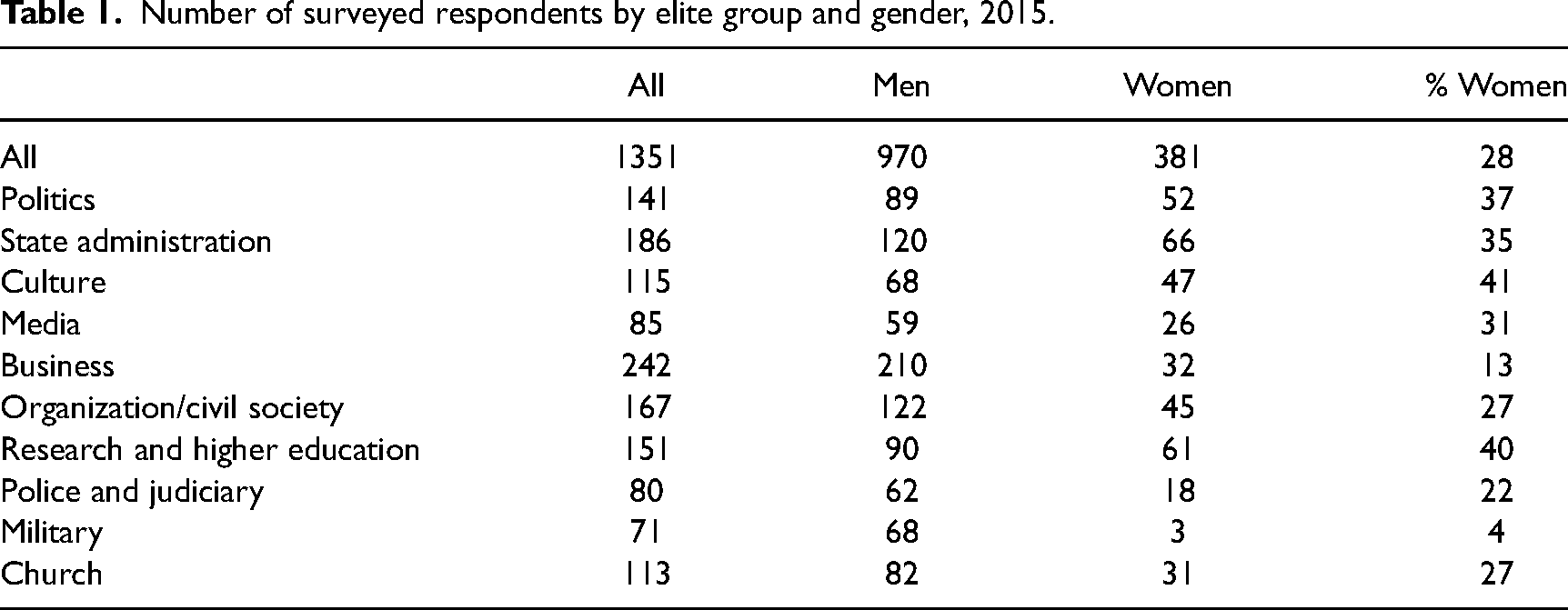
As is evident in Table 1, Norwegian elite groups are generally male dominated. Male dominance is most pronounced in the military and the business elite, and least pronounced in the top positions in research and higher education, culture, and in politics. 3 Also, the Norwegian elite is mainly born and raised in Norway by Norwegian parents; less than five percent have themselves immigrated to Norway or are born in Norway to immigrant parents, compared to more than 15 percent in the overall population in 2015 (when the survey was conducted). Among the very few with a non-Norwegian background, most come from the other Nordic countries, Western Europe, or the US, suggesting that the Norwegian elite – similarly as the elite on a global scale (cf. Khan, 2012) – is predominantly white. However, information on ethnic origin in our sample is, unfortunately, not available.
The white male dominance in Norwegian top positions stands in contrast with the main hallmarks of Norway's gender equality advancements in recent decades, where high employment among both men and women is facilitated by strong and active gender equality and welfare-state policies (Ellingsæter, 2018; Teigen, 2018). Interestingly, in Norway, equality in terms of both policy and conception has for decades been equivalent to gender equality. Indeed, the country has been a latecomer in integrating gender equality policy with other strands of categorical inequalities, such as ethnic origin (Skjeie et al., 2019). Consequently, it is an open question whether Norwegian elites, predominantly white male, are more open to gender balance than ethnic diversity, or, conversely, whether the long history of active gender equality policies has made the elite more sceptical of measures to promote gender balance than to measures to increase ethnic diversity.
Operationalization
We operationalized the perceptions of causes of a lack of gender balance and ethnic diversity in top positions with a total of eight items stating four commonly claimed explanations for each type of inequality (four for each problem, gender balance and ethnic diversity) – two institutionalized explanations and two individualized explanations. The two items measuring institutionalized causes were “too much recruitment to management positions takes place through informal networks” and “female applicant/individuals with an immigrant background are discriminated against in hiring.” We consider these items to express institutionalized factors as they represent social practices embedded in institutional arrangements. The two items measuring individualized causes were “too few women/individuals with ethnic minorities apply for management positions” and “women/ethnic minorities are often not sufficiently qualified for leadership positions.” We consider these items to express individualized factors as they apply to conditions external to institutional contexts and practices and concern general characteristics of the underrepresented groups. 4 We computed four additive indexes from these eight items, two institutionalized cause indexes (one for gender balance and one for ethnic diversity) and two individualized cause indexes (one for gender balance and one for ethnic diversity). 5 The indexes ranges from 0 (both items not important) to 6 (both items very important). The questionnaire was organized in topical sections; hence, the items on gender equality were separated from items on ethnic diversity.
We operationalized support for measures to remedy the lack of gender balance and ethnic diversity with a total of 20 items (10 for each problem), asking the respondents to what degree they find it important to implement measures in each of the ten sectors that are included in the Leadership Study. 6 We computed two additive indexes, one for measures to promote gender balance, and one for measures to promote ethnic diversity as dependent variables. The indexes are standardized and range from 0–1 for each of interpretation. Higher values indicate support for measures (1 indicates very important to implement measures on all 10 items). The two indexes correlate to a great extent (.62 Pearson's R), indicating that the support of measures to increase gender balance is strongly related to believing it is necessary to introduce measures to increase ethnic diversity.
We use gender, age, education, and political ideology as control variables. Previous studies show that women are more likely to support gender equality measures, like quotas, compared to men (Hughes et al., 2017; Inglehart and Norris, 2003; Kitterød and Teigen, 2018; Knight and Brinton, 2017). Higher education and left-wing ideology are also related to more liberal views in general and are therefore also likely to influence the support of measures. Gender, age, and education are taken from the Norwegian Statistics official registry. Education has three categories (low, middle, and high). The elite is highly educated so the “low” category includes education up to university level below four years (primary, high school, and bachelor: 23%), the middle category is university level above four years (master or similar: 52%) and the high category is what Norwegian statistics refer to as “research level” of education (PhD or similar: 25%). In the analysis, we include education as two dummy variables (low education is the reference category). Political ideology is measured based on a survey item of vote choice at the latest election. Voting for a left-wing party (the labour Party, the Socialist Left Party, and the Red Party) is used as a proxy and is coded as a left ideology. Table 2 provides descriptives for the variables included in the analysis.
Descriptive for variables in the analysis.
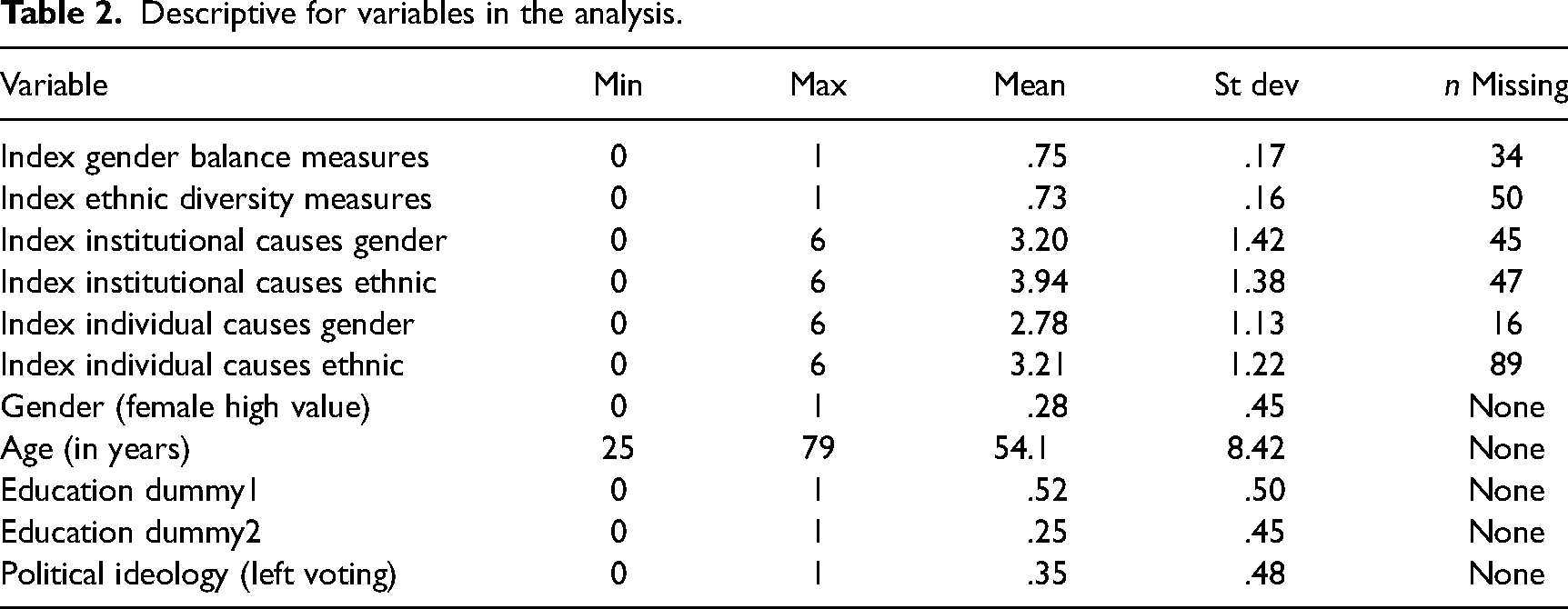
In addition to the descriptive analyses presenting elite support for causes and measures, we use multivariate OLS regression analyses to disentangle the relationship between causes and measures controlled for gender, education, political ideology and sector. OLS regression is the natural choice when the dependent variable is numerical.
Results
Elite perception of causes and support of measures to promote equality
What are the Norwegian elite's perceptions of the causes of a lack of gender balance and ethnic diversity in the top positions of society? Figure 1 shows the overall support for the four causes included in the questionnaire. The results suggest that the elite, as a whole, believe that both institutional and individualized causes are significant causes of inequality in the top positions of society. The individualized cause, “too few applicants,” and the institutionalized cause, “informal recruitment,” are deemed very or somewhat important by about 70 percent for both the lack of gender balance and ethnic diversity. However, while three-fourths of the elite find discrimination to be an important cause for a lack of ethnic diversity, only about one-third (37 percent) perceive discrimination to be an important cause of gender imbalance. The difference between the two problem areas is also large for the individualized cause “not qualified.” While almost 40 percent believe lack of qualifications to be an important cause of ethnic inequality, only 16 percent believe that it is an important cause of gender inequality. Consequently, some elite respondents believe that both discrimination and lack of qualifications are important reasons why top positions are dominated by ethnic majority individuals.
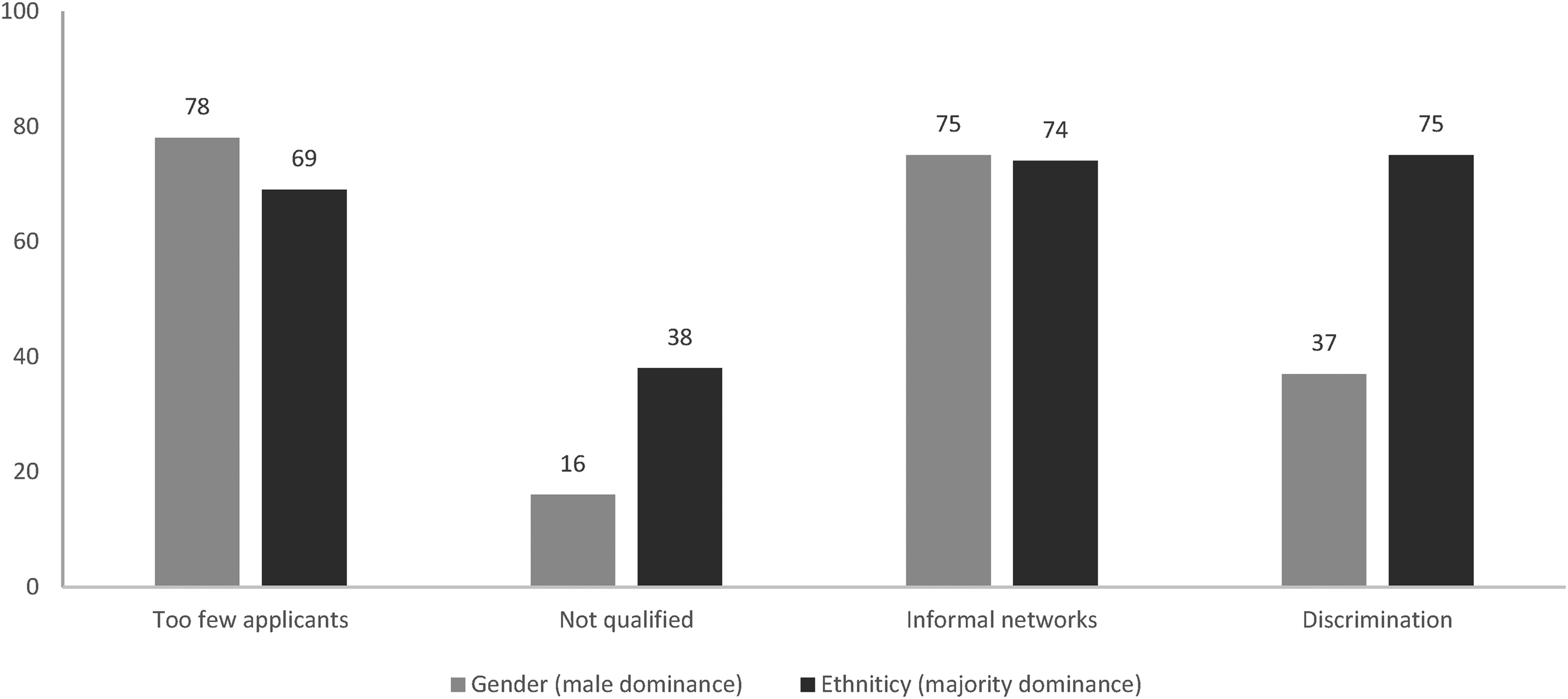
Support for different causes of male-dominance and ethnic majority dominance in top positions (N = 1351) (% very important and somewhat important).
Regarding the distinction between individualized and institutionalized causes, the figure furthermore shows some interesting differences depending on whether the problem in question is gender imbalance or the lack of ethnic diversity. In terms of causes of male dominance, a quite mixed picture emerges, as “too few applicants” and “informal networks” both receive high support. In terms of ethnic majority dominance, there is generally high support for all items, but the support is particularly strong on the institutional side.
Moving on to the Norwegian elite's support for measures, Figure 2 depicts the proportion of the elite that believes it is very important to implement measures to promote gender balance and ethnic diversity within different sectors of society.
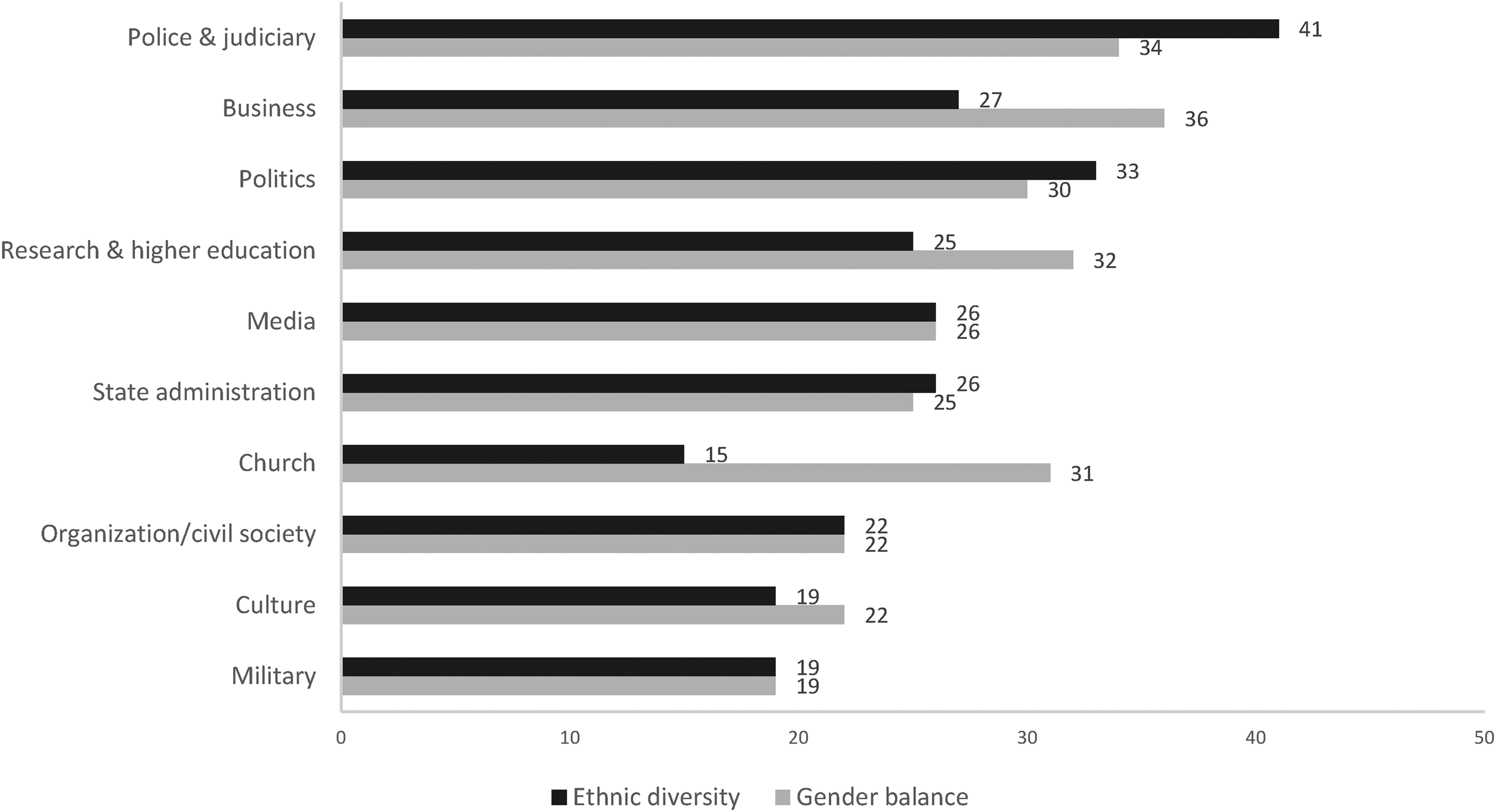
Support for measures to promote greater gender balance and ethnic diversity in top positions in ten sectors (% very important).
Overall, a relatively large proportion of the Norwegian elite, between 20 and 40 percent, finds it very important to implement measures to promote gender balance and ethnic diversity across sectors. If we include somewhat important, a considerable majority find it important to implement measures in most sectors (see Figure A1). 7 There are, however, interesting variations in the elite's responses concerning these sectors in support of measures to increase ethnic diversity and improve gender balance. Measures to promote ethnic diversity are deemed more important than gender balance for the police and judiciary, and for politics. Conversely, measures to promote gender balance are considered more important than measures to promote ethnic diversity in business, research and higher education, and – most strikingly – the church. For the media and state administration, there are hardly any differences in support for measures to promote ethnic diversity or gender balance. The same goes for the three sectors receiving the least in support of measures, the military, the culture, and organizations/civil society.
The differences in support of measures for different sectors probably reflect knowledge about the actual composition of leadership in the different sectors, as well as the general media framing on these issues. In addition, we gather that there are sectoral variations in the legitimacy of claims about representation. For example, it is well known that there are few women in the business elite, and ethnic diversity in the police force is often mentioned as important to maintain trust in the police force in different segments of society. Such contextual factors are probably important drivers of the varied support of implementing measures in different sectors.
A main aim of this article is to examine the relationship between the perception of causes for white male dominance and the support for measures to make change occur – and whether this relationship depends on the problem being the gender imbalance or the lack of ethnic diversity. First, we investigate the bivariate relationship between cause perceptions and support for measures (Figure 3). We use the indexes of cause perceptions and support for measures described in the method section above.
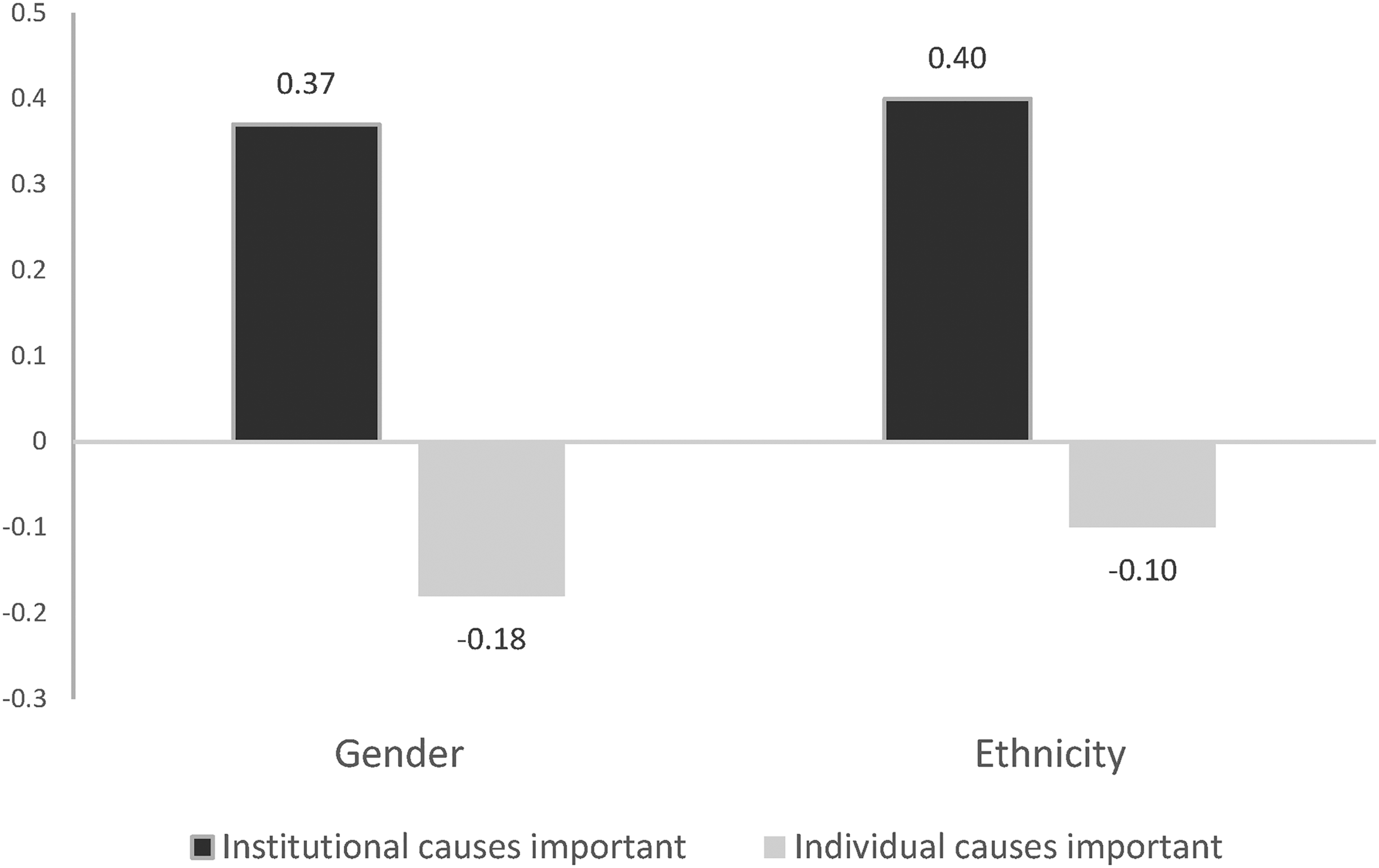
Bivariate relationship between cause perceptions and support for measures. Pierson R.
The figure shows that believing institutional causes to be important has a strong positive relationship with support for measures. This is true for both gender balance (.37) and ethnic diversity (.40), and the correlation is more or less equally strong between the two topics. Believing individual causes to be important has a clear significant negative relationship with support for measures. However, the correlation coefficient is less than half the size of the institutional cause perception. For belief in individualized causes, the relationship is somewhat stronger for gender balance than ethnic diversity (-.18 vs. -.10). A likely reason for this difference is the greater belief in lack of qualifications being an important cause for lack of ethnic diversity; many with this belief will support measures to increase ethnic diversity.
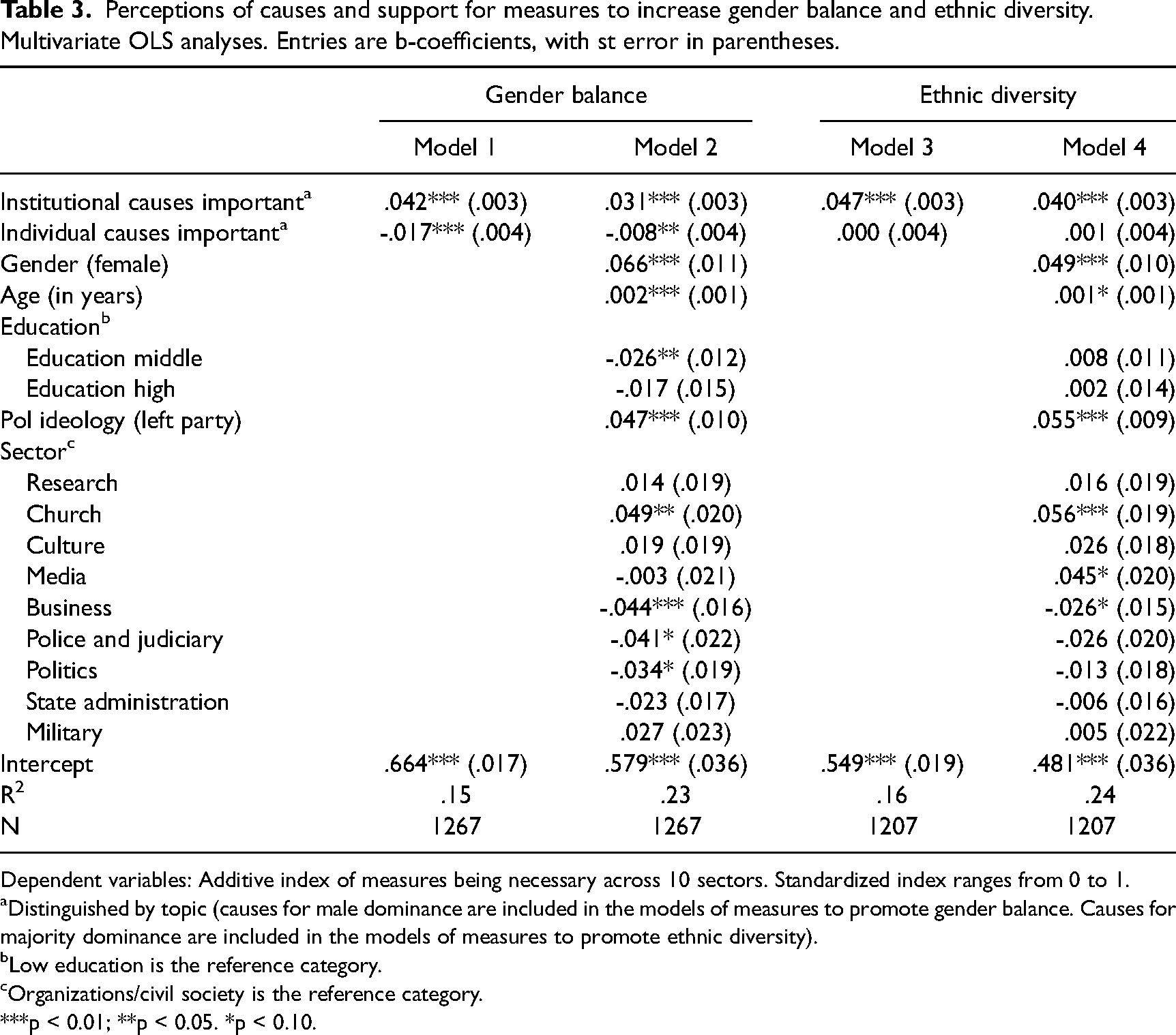
To investigate these matters further, we have carried out multivariate analyses investigating the link between perceptions of causes and support for measures to promoting gender balance (models 1 and 2) and ethnic diversity (models 3 and 4) (Table 3). The dependent variables are the indexes of support for the measures accounted for in the method section. In models 1 and 3, to study the relationship between the two main cause perceptions and support for measures, we include only the two indexes of cause perceptions – institutional and individual. In models 2 and 4, we control for gender, age, education, political ideology, and sector affiliation.
Perceptions of causes and support for measures to increase gender balance and ethnic diversity. Multivariate OLS analyses. Entries are b-coefficients, with st error in parentheses.
Dependent variables: Additive index of measures being necessary across 10 sectors. Standardized index ranges from 0 to 1.
Distinguished by topic (causes for male dominance are included in the models of measures to promote gender balance. Causes for majority dominance are included in the models of measures to promote ethnic diversity).
Low education is the reference category.
Organizations/civil society is the reference category.
***p < 0.01; **p < 0.05. *p < 0.10.
The analyses also show the strong relationship between perceptions of causes and support for measures aiming at increasing the gender balance and ethnic diversity in top positions. Elite members who believe that the lack of gender balance and ethnic diversity are caused by institutionalized practices such as network recruitment and discrimination are significantly more inclined to support measures to remedy such inequality. The b-coefficient for the institutional causes-index indicate a change of .042 for each point on the scale from 0–6, suggesting a total change of about .25 points on the dependent variable, which ranges from 0 to 1. Conversely, the relationship between individual cause perceptions and support for measures is negative for gender equality (-.017). The bivariate relationship between individualized causes and support for ethnic diversity measures (Figure 3), is no longer significant when we control for institutional cause perceptions (model 3), indicating a close relationship between these two variables. Overall, this clearly indicates that elite members who believe that gender and ethnic inequalities are caused by individual characteristics of women and ethnic minorities are less inclined to support measures to promote structural change.
The positive relationship between institutionalized cause perception and support for measures is strong, and only marginally reduced after controlling for other relevant factors (models 2 and 4). Women support measures for both gender balance (.066) and ethnic diversity (.049) to a greater extent than men do. This echoes earlier studies showing that women are more supportive of gender equality measures (Inglehart and Norris, 2003; Kitterød and Teigen, 2018; Knight and Brinton, 2017). Interestingly, age is positively correlated with support for measures, indicating that older members of the elite are more supportive than the young. Although the age structure is rather compressed among the elite, and the b-coefficient indicate that a difference in 20 years only indicate a change in + .04 on the index, the positive correlation between age and support of equality measures nevertheless suggests that there are few signs of a rising tide (Inglehart and Norris, 2003).
There are no differences to speak of based on education. For political ideology, members of the elite voting for left-wing parties support measures to a greater extent than people voting for center- and right-wing parties (.047 for gender balance, and .055 for ethnic diversity), suggesting that liberal values indeed relate to support for equality measures. As for elite groups, the business elite is significantly less supportive of measures to increase gender balance than other elite groups (-.04) and is also less supportive of measures to increase ethnic diversity (-.026), yet not to the same extent. The church elite stands out in the opposite direction by being significantly more supportive of measures to increase both gender balance and ethnic diversity. Although the control variables reduce the correlation between cause perceptions and support of measures, they far from account for the main result from our analyses. Rather, the positive correlation between beliefs in institutionalized practices as causes of inequality and support of measures to change this situation remains significant and strong.
Discussion
As elites have been referred to as “the engines of inequality” (Khan, 2012, 373), they can arguably also be engines of structural change through their powerful role as decision-makers and regulators of access to influential positions in society. Insight into elite perceptions of how categorical inequalities are produced and remedied is consequently of crucial importance to understanding the persistence of gender and ethnic inequality in the top positions of society. Based on a comprehensive survey among the entire Norwegian elite, this article has investigated what the elites believe are the main causes of enduring white male dominance in leadership and whether such beliefs have any bearing on their willingness to implement measures to promote gender balance and ethnic diversity. Distinguishing between individualized and institutionalized causes of inequality—the former being operationalized as a lack of qualifications and that few women/ethnic minorities apply, the latter as network recruitment and discrimination—we hypothesized that respondents who perceive institutionalized practices as important causes of inequality would be more inclined to implement measures to remedy the situation. Additionally, we wanted to explore similarities and differences in how the elite assesses of the causes of gender imbalance and lack of ethnic diversity.
The results show that although the Norwegian elite, as a whole, finds both individualized and institutionalized factors to be important causes of white male dominance in top positions, there is indeed a strong, positive relationship between cause perception and support of ameliorative measures: Those who believe in institutionalized causes are more inclined to support measures to promote gender balance and ethnic diversity than those supporting individualized causes. Moreover, we find a negative relationship between beliefs in individualized causes and support of measures.
Overall, the conclusions hold after including controls for gender, education, age, political ideology, and sector affiliation. Admittedly, we find that women and politically left-leaning respondents are more in favour of implementing measures, all else being equal, yet the relationship between beliefs in institutionalized causes of inequality and support for measures is strong and significant even after these controls. Interestingly, sector affiliation does not generally seem to affect the support for measures. The church elite constitutes an exception, who are the elite group most enthusiastically for measures to promote gender balance and ethnic diversity. Conversely, the business elite constitutes an important exception in being significantly less supportive of measures to promote gender balance. This pattern of less support also applies to police and judiciary, politics and state administration, however the relationships are not strong. Especially for the strongly male-dominated business elite, this finding fits into a larger picture of this elite group being comparatively less supportive of gender equality policies (Teigen et al., 2019; Teigen and Karlsen, 2020).
What are the implications of these findings? First, the results clearly suggest that how elites conceptualize a problem is essential for support, or lack of support, for implementing measures. This is in line with expectations derived from other fields of research, such as the literature on policy representations (Bacchi, 1999, 2009) and critical frame analysis (Verloo, 2005), which convincingly have suggested that the definitions of a problem largely determine the relevant solutions. As elites are key actors in suggesting and implementing policy solutions, our study demonstrates the importance of studying how people in positions of power themselves conceive of the causes of inequality. To the extent that the lack of gender balance and ethnic diversity in leadership are caused by institutionalized practices such as network recruitment and discrimination, elite beliefs in this reality have a strong bearing on their will to implement measures to increase diversity in top positions. This is an important finding as the beliefs and attitudes of elites are found to change over time (Teigen et al., 2019) and also by the framing of an issue (Teigen and Karlsen, 2020). Consequently, a knowledge-based public discourse on the reasons for categorical inequalities may prove to be important for future support of ameliorative measures.
Second, our results suggest that elites perceive the causes of lack of gender balance and ethnic diversity in quite similar ways. Certainly, the bivariate analyses in Figure 1 show that both discrimination and the lack of qualifications are considered more important factors in explaining the lack of ethnic diversity than the lack of gender balance, suggesting that there are some important differences. However, the positive relationship between the belief in institutionalized causes of inequality and the willingness to implement measures is strong regardless of the underrepresented group in question. As elite research concerned with inequality has overwhelmingly focused on the underrepresentation of women (Teigen et al., 2019; Teigen and Karlsen, 2020; Teigen and Wängnerud, 2009; Vianello and Moore, 2000; Wängnerud and Niklasson, 2006), these findings suggest that a broader approach to equality has merit. Indeed, in the Nordic countries, there is a long-term debate in both research and politics, whether ethnic equality is systematically downplayed compared to gender equality (cf. Borchorst et al., 2012; Lister, 2009; Siim and Borchorst, 2017). Whatever the merit of this critique, our results suggest that, among the Norwegian elite, concerns over a lack of ethnic diversity appear equally strong as concerns over lack of gender balance, indicating a more comprehensive view on categorical inequalities than previously suggested. Perhaps the strong gender equality discourse of the Nordic countries may even have facilitated and enabled a broader equality discourse including ethnic diversity, meeting “the challenge posed to the Nordic model by growing ethnic diversity” (cf. Lister, 2009).
Our study does not come without limitations. Although the theoretical distinction between institutional and individual causes, and the empirical findings supporting the relationship between such perceptions and support for measures, is an important contribution to our understanding of variation in support for measures against categorical inequality, the actual operationalization of individualized and institutionalized in the survey questionnaire is somewhat limited. Future research should elaborate on the individual-institutional distinction by including a broader set of variables. Moreover, some might argue that both recruitment and discrimination encompass individual actions and attitudes, and future work should continue the theoretical discussion and operationalization of the institutionalized aspects of these concepts. Finally, the data analyzed in this article is based only on one country, questioning the broader generalization of the conclusions to other contexts. Future research should examine whether a strong relationship between perceptions of causes and support for measures is present across countries. The relative importance of institutional over individualized causes of inequality may relate to a general stronger belief in institutional aspects in social-democratic compared to liberal welfare states. Policy-feedback loops may also be of relevance, where a tradition for gender equality policies point in direction of institutional rather than individualized causes (see Teigen et al., 2019).
Conclusion
In this article we have shown how the belief that institutionalized causes of inequality is strongly related to the willingness to introduce ameliorative measures to increase diversity. Conversely, we find a negative relationship between the belief in individualized explanations and the willingness to introduce measures. As elites are key holders of power, the findings imply that how elites view the causes of categorical inequality has strong bearings on the room for structural change.
More broadly, this study suggests that the theories social scientists use to explain persistent inequalities continue to be of high relevance. Classical economic theory presupposes that the allocation of individuals to positions in society relies on their human capital characteristics. By contrast, sociological theories of categorical inequality argue that individuals’ access to resources, power, and status is based on their membership in social groups and, moreover, that such inequalities persist over time through institutionalized practices of discrimination and exclusion in organizations (Massey, 2007). Of course, analyzing survey data on elites’ perceptions of inequality does not offer clear evidence of the reasons why leadership positions continue to be occupied by white men. Nevertheless, our findings suggest that a more comprehensive understanding of how institutionalized practices hamper structural change may in fact expand the room for structural change and, in turn, lead to increased equality.
Footnotes
Declaration of Conflicting Interests
The author(s) declared no potential conflicts of interest with respect to the research, authorship, and/or publication of this article.
Funding
The author(s) disclosed receipt of the following financial support for the research, authorship, and/or publication of this article: This work was supported by the Norges Forskningsråd (grant number 230729) and NordForsk (grant number 80713).

Supplemental material
Supplemental material for this article is available online.