




Abstract
The increase in non-marital childbearing has coincided with educational expansion, although non-marital childbirths are more common among the low-educated population. This article quantifies the contribution of changes in education-specific rates of non-marital childbearing and educational distribution of parents to increases in non-marital childbearing among Finnish first-time parents over the period 1970–2009. Using Finnish register data on first-time mothers (N = 112,730) and fathers (N = 108,812), the study decomposes changes in the proportion of non-marital first childbearing in pairwise comparisons of successive decades for four educational segments: low educated (International Standard Classification of Education (ISCED) 0–2), medium educated (ISCED 3–4), lower tertiary educated (ISCED 5–6) and upper tertiary educated (ISCED 7–8). The findings show that the increase in non-marital first-time births was mainly attributable to the large population of medium-educated women and men and the growing segment of lower tertiary-educated women. The highest proportion of non-marital first-time childbearing remained among the low-educated population, but diminishing group size meant their overall contribution was small. The growing upper tertiary-educated population increased its contribution to non-marital childbearing but still exhibited the lowest non-marital childbearing rates. We conclude that the medium-educated population merits increased scholarly attention for its important contribution to population-level changes.
Introduction
Since the 1970s, the proportion of children born outside marriage has grown substantially in many Western countries; at the same time, the average level of education has increased (Van Bavel, 2012). This paper investigates the extent to which the increase in non-marital first childbearing is attributable to changes in the educational distribution of first-time parents and behavioural changes across educational groups, drawing on the Finnish context. The upward trend in non-marital childbearing is among the most remarkable changes of recent decades in family dynamics in the Western world (Sobotka and Toulemon, 2008). The greatest part of this increase can be attributed to the rise in childbearing within cohabitation (Kiernan, 2001). Although non-marital childbirth has become socially acceptable, it remains a risky life course event – for instance, as a potentially poverty-triggering effect – making the trend highly significant for society. As compared to marital births, non-marital births more often result in single-parent families because a non-marital birth involves either a single mother or cohabiting parents, who separate at a much greater rate than married parents (Europe: Kiernan, 2001; Andersson, 2002; Andersson et al., 2017; Western countries: Heuveline et al., 2003; Finland: Jalovaara and Andersson, 2018; Sweden: Kennedy and Thomson, 2010; United States (US): Osborne et al., 2007; Raley and Wildsmith, 2004). The risk of poverty in Europe is known to be twice as high for single-parent as for two-parent families (Eurostat, 2016a) and sociologists have characterised this change in family life as posing ‘new social risks’ that are not covered by traditional welfare state arrangements and lead to major welfare losses (Bonoli, 2007; Taylor-Gooby and Zinn, 2006).
Educational level is a key predictor of a person’s resources and opportunities (Vandecasteele, 2011). At the micro level, many studies have linked non-marital childbearing to the mother’s low level of educational attainment (Europe: Perelli-Harris et al., 2010; Sobotka, 2008; Finland: Jalovaara and Andersson, 2018; Russia: Perelli-Harris and Gerber, 2011; United Kingdom (UK): Ní Bhrolcháin and Beaujouan, 2013) and to the father’s (e.g. US: Carlson et al., 2013; Europe: Trimarchi and Van Bavel, 2018). This ‘Matthew effect’ (Merton, 1968) of accumulated disadvantage over the life course has attracted the attention of social researchers, who emphasise the ‘diverging destinies’ (McLanahan, 2004) of children with low-educated parents compared to those with high-educated parents. One consequence of this line of research is that studies have tended to focus on the relative behavioural differences between educational groups while neglecting how group size impacts societal trends.
To understand how family behaviours diffuse through different social strata, it is important to identify how educational segments contributed to changing trends in family structure. It seems likely that the low-educated population segment has become too small to make a significant contribution to the tremendous increase in childbearing outside marriage over recent decades. In almost every Western country, mean years of schooling have increased since the 1970s (Gakidou et al., 2010), first reflecting a strong increase in secondary schooling and later the expansion of tertiary education (Halsey, 1993; Lutz et al., 2007). In many Organisation for Economic Co-operation and Development (OECD) countries, the medium-educated – defined as those with an upper secondary or high school degree (International Standard Classification of Education (ISCED) 3) or a post-secondary non-tertiary education (ISCED 4) – now constitute the largest population segment (Cherlin, 2011; Lutz et al., 2007; OECD, 2016; Eurostat, 2017). Among the younger female population, the high-educated segment (tertiary, ISCED 5–8) is largest. Cherlin (2011) posited for the US that the growth of the medium-educated population segment and its declining marriage rates have contributed to the increase in non-marital childbearing. However, there is scant empirical evidence to support this proposition, especially outside the US.
This descriptive study addresses the question of how population-level increases in non-marital childbearing and educational expansion relate to the negative educational gradient in non-marital childbearing observed at the micro level. A recent study addressing the proliferation of non-marital births in the 1990s and 2000s in Norway examined the role of educational expansion measured as the proportion of tertiary-educated women (Vitali et al., 2015). Covering the period 1970 to 2009 in Finland, the present study expands on this research by looking back to the period when rates of non-marital childbearing began to rise, and by taking account of all educational levels.
The approach adopted here accounts for changes in education-specific rates of non-marital childbearing and in the educational distribution of parents. Decomposition of rates is a standard demographic technique little known in fields other than population research. We believe it can prove very useful in other domains of sociological research as well. In this study, Finnish register data enabled analysis of educational attainment trends for women and men with regard to non-marital first-time childbearing from 1970 onwards. We decompose the increase in non-marital childbearing in a pairwise comparison of decades, distinguishing between low-educated and medium-educated segments and, within the tertiary-educated, between those who attended vocational college (lower tertiary educated) and those with a university education (higher tertiary educated). We drew this distinction because the tertiary-educated segment has become large and is heterogeneous in that lower tertiary education is characterised by a more vocational emphasis and is shorter than university education, with weaker labour market prospects (Prix, 2013). In adopting a descriptive approach, we offer no proof of any causal relationships between expansion of educational attainment and non-marital childbearing. Nevertheless, our results complement existing work by providing the missing link between individual behaviour and macro family trends, which will help future studies to identify the population groups that are at new social risks.
Background
Behavioural differences in non-marital childbearing among different educational segments
There is substantial evidence that – in the US and across Europe – births outside marriage are most common among the low educated, less common among the medium educated and least common among the high educated (US: Upchurch, Lillard and Panis, 2002; Europe: Perelli-Harris et al., 2010; Sobotka, 2008; Andersson et al., 2017). The low opportunity costs of early childbearing, high perceived standards of marriage and higher incidence of unplanned births may explain the high likelihood of non-marital childbearing among the low educated (Oppenheimer, 2003; McLanahan, 2004; Edin and Kefalas, 2005; Perelli-Harris et al., 2010; Trimarchi and Van Bavel, 2018).
Because they involve the application of different economic standards, marriage and childbearing may be disconnected decisions, especially among the less educated (Edin and Kefalas, 2005; Gibson-Davis et al., 2005; Gibson-Davis, 2009). Most individuals wish to become parents (Sobotka and Beaujouan, 2014) and Edin and Kefalas (2005) argue that parenthood is considered a part of the life course among those of lower socioeconomic status, independent of financial circumstances. Because they leave the educational system earlier and often have a flat earnings pattern during their childbearing years, there are fewer incentives and lower opportunity costs for the less educated to postpone childbearing (Ellwood et al., 2004). Additionally, childbearing brings meaning to the lives of less-educated women who might otherwise feel that other life’s opportunities are less available to them (Edin and Kefalas, 2005).
In contrast, marriage is an aspiration; culturally, it is associated with certain financial and emotional standards that couples in the lower strata may find difficult to meet (Oppenheimer, 1994; Edin and Kefalas, 2005; Smock, Manning and Porter, 2005). For example, a lack of economic resources creates greater barriers to marriage because the prerequisite of economic independence is not satisfied or because there are insufficient funds for an expensive wedding (Thornton et al., 1995; Kravdal, 1999; Smock and Greenland, 2010). It has been argued that poor or uncertain economic prospects undermine the ability of low-educated men (and women) to fulfil the role of provider, diminishing their attractiveness as marriage candidates (Perelli-Harris et al., 2010; Oppenheimer, 2003; Trimarchi and Van Bavel, 2018; Schnor et al., 2017). However, this does not deter couples from cohabiting or having children (Gibson-Davis, 2009). In this way, low economic resources act as a barrier to marriage but not necessarily to childbearing (Gibson-Davis, 2009; Gibson-Davis et al., 2005).
Perceived lower benefits and higher costs of marriage may often motivate low-educated individuals to take shorter routes to parenthood that either bypass (Ravanera, Rajulton and Burch, 2004; Sobotka, 2008; Sobotka and Toulemon, 2008) or precede marriage (Liefbroer and Corijn, 1999). In contrast, high-educated individuals tend to plan the timing and order of their life-course transitions more carefully and to postpone the transition to parenthood until later. As childbearing interferes with career plans and incurs high opportunity costs, the highly educated are motivated to postpone parenthood more than marriage (Liefbroer and Corijn, 1999). The medium educated are generally considered to occupy an in-between category that averages the characteristics of the low and highly educated (Furstenberg, 2011); we discuss their situation in more detail in the section ‘Largest increases in non-marital childbearing among the medium-educated’.
Population changes in non-marital childbearing
In the Western world, the dissociation between childbearing and entry to marriage began in the 1960s and 1970s, with increasing economic prosperity and the expansion of secondary and tertiary education (Lesthaeghe, 2010). Most of this dissociation is attributable to the postponement of marriage and the increase in childbearing among cohabiting couples (Perelli-Harris et al., 2010). Drawing on Inglehart’s theory of post-materialism (Inglehart, 1990), the theory of the second demographic transition (Lesthaeghe and Van de Kaa, 1986; Van de Kaa, 1987; Lesthaeghe, 1995, 2010) explains this change in family behaviour in terms of economic and ideational changes. Economic development and investment in education helped to meet material needs and contributed to shifts in values towards a higher acceptance of premarital sexual intercourse, non-marital relationships, non-marital childbearing and separation. According to the proponents of the second demographic transition theory, high-educated individuals have initiated this value change because they hold more liberal attitudes and therefore are more open to alternative lifestyles (Surkyn and Lesthaeghe, 2004).
In an alternative interpretation (Esping-Andersen, 2009), greater access to education led to women’s empowerment, strengthening their ability to break with social constraints (such as marriage before childbirth) and marginalising the function of marriage as an institution that protected women. Perelli-Harris et al. (2010) argued that these ideational changes were important because, although insufficient to initiate rapid change in childbearing behaviour, they altered social norms regarding non-marital childbearing. The essential drivers of this change in behaviour, they claimed, were changes in the marketplace, especially in the 1980s and 1990s, including advances in technology and economic globalisation. These increased both living standards and job insecurity, making the occupational future less predictable, especially for the least skilled. In response to this increased uncertainty, young people invested more time in education and postponed marriage in favour of more temporary and reversible arrangements such as cohabitation. The least educated were more likely to cohabit at the time of childbirth, as they experienced greater economic uncertainty over their life course while also desiring children (Perelli-Harris et al., 2010). At the same time, women’s economic independence has also contributed to increases in non-marital childbearing among the more educated (Willis and Haaga, 1996).
In summary, it seems that educational expansion contributed to the change of ideational climate that made childbearing outside marriage socially acceptable. The perceived costs of non-marital childbearing diminished and, at the same time, the decline in men’s earnings and the increase in women’s employment served to diminish the benefits of marriage. As a result, the proportion of children born outside marriage increased. However, although high-educated individuals espouse less-traditional attitudes towards marriage and childbearing than less-educated individuals and often cohabit when childless (Esping-Andersen and Billari, 2015), in most countries these characteristics have not translated into a positive educational gradient in non-marital childbearing in either earlier or more recent decades (Sobotka, 2008; Sobotka and Toulemon, 2008; Perelli-Harris et al., 2010).
Largest increases in non-marital childbearing among the medium educated
If we assume the increase in non-marital childbearing happened at the same pace across the low, medium and high educated, these population segments would have contributed to the increase in non-marital childbearing in proportion to group size. However, although non-marital childbearing has increased among the high educated, these increases are much smaller than among the low- and medium-educated segments in Europe and the US (Europe/Western countries: Perelli-Harris et al., 2010; McLanahan and Jacobsen, 2015; US: Kennedy and Thomson, 2010). Vitali et al. (2015) showed that the expansion of female tertiary education in Norway in the 1990s and 2000s contributed to the spatial diffusion of childbearing to non-married couples; at the same time, childbearing within cohabitation became more common among the lower educated. This suggests that although the overall likelihood of non-marital childbearing has increased, education-related differences persist, even with educational expansion (Vitali et al., 2015; Finland: Jalovaara and Fasang, 2015).
Using different definitions of medium educated, empirical studies drawing on the US and Sweden reported that the non-marital childbearing behaviour of the medium-educated population has increasingly converged with the behaviour of the less educated. Relying on US survey data, Cherlin (2011) showed that the increase in non-marital childbearing during the 1990s was largest among the medium educated (defined as high school graduates and those with some college education). Defining medium-educated mothers as those in the second and third quartiles of the education distribution, McLanahan and Jacobsen (2015) drew on US Census data to calculate trends among unmarried mothers of children younger than 1 year for the period 1960–2010. After 1990, the medium-educated group showed the fastest increase in non-marital childbearing, approaching the level of the low-educated group. Kennedy and Thomson (2010) identified a similar trend in Sweden; during the period 1970–1990, the largest increases in non-marital births occurred among medium-educated women and men (defined as those holding a secondary degree). This implies that, by the 1990s, patterns in the medium-educated population resembled those among the low educated.
In relation to changes in the US context, Cherlin (2011) argued that the medium-educated population has traditionally tended towards a conventional married lifestyle, but the decline of classic jobs that provided a steady income for this segment has changed the conditions for family life. Although many women and men in this group still seek to marry, the economic and social climate makes marriage less attainable, even for childbearing. In Europe, large-scale economic crises and the restructuring of labour markets meant that the medium-educated population experienced the increasing uncertainty and loss of opportunities previously more common among the low educated, possibly causing the medium educated to favour cohabitation or to postpone marriage (Oppenheimer, 1994; Lappegård et al., 2014; Klein, 2015; Iriondo and Pérez-Amaral, 2016).
The Finnish context
Like other Northern and Western European countries, Finland has witnessed both educational expansion and a significant increase in non-marital childbearing (Sobotka & Toulemon, 2008; Eurostat, 2016b, 2017). In the contemporary Finnish population, as in most other Western countries, the medium educated are the largest segment, other than among the young female population, where tertiary education has been most common since the early 2000s. Finnish tertiary-level education is divided into the traditional university sector and a vocational college (polytechnic) sector that serves occupations with a greater emphasis on applied skills, including health, service and social roles. Polytechnics and universities also differ in terms of graduates’ average labour market prospects (see Prix and Kilpi-Jakonen, 2018). Women in particular have increasingly opted for a vocational college education at tertiary level (Prix, 2013). The present study examines gender-specific education structure and distinguishes between lower and upper tertiary education, which may relate to differences in family formation behaviour.
In Finland, labour market opportunities for the medium and low educated have diminished in recent decades. From 1985 to the early 1990s, the sharp rise in inequality of earnings (because of changes in labour market institutions) was comparable in magnitude to the UK and the US (Eriksson and Jäntti, 1997). The severe recession in the early 1990s accelerated a restructuring of Finland’s economy from industrial jobs to high-skill sectors. During the crisis, employment rates fell across all social strata, but the labour market position of the lowest educated was permanently affected and, unlike the other groups, employment rates have remained low at around 50% (Statistics Finland, 2018; Härkönen et al., 2016).
The temporary drop in employment rates was especially strong among the medium educated, from 75% in the late 1980s to 58% in the early 1990s. Among the tertiary educated, employment rates have generally been higher, but those with a vocational college education had weaker labour market prospects than those with a university education and were more affected by the economic crisis (lower tertiary educated: down from 88% to 73%; upper tertiary educated: down from 91% to 84%) (Statistics Finland, 2018). A further ongoing trend during educational expansion is ‘credential inflation’ or decreased earnings returns on education, which has affected both medium- and high-educated segments (Prix, 2013).
Although the Nordic countries were European pioneers in terms of non-marital childbearing, many other European countries have recently reached or exceeded Nordic levels (Eurostat, 2016b). In Finland, the proportion of childbirths outside marriage was quite low (below 10%) for many decades but started to increase strongly in the early 1970s (see Figure 1). As in most other European countries, rates of non-union childbearing (i.e. births to lone mothers) have remained fairly constant in Finland, which means the increase in non-marital childbearing largely relates to cohabiting couples (Europe: Andersson, 2002; Andersson et al., 2017; Heuveline et al., 2003; Finland: Hoem, Jalovaara and Muresan, 2013).
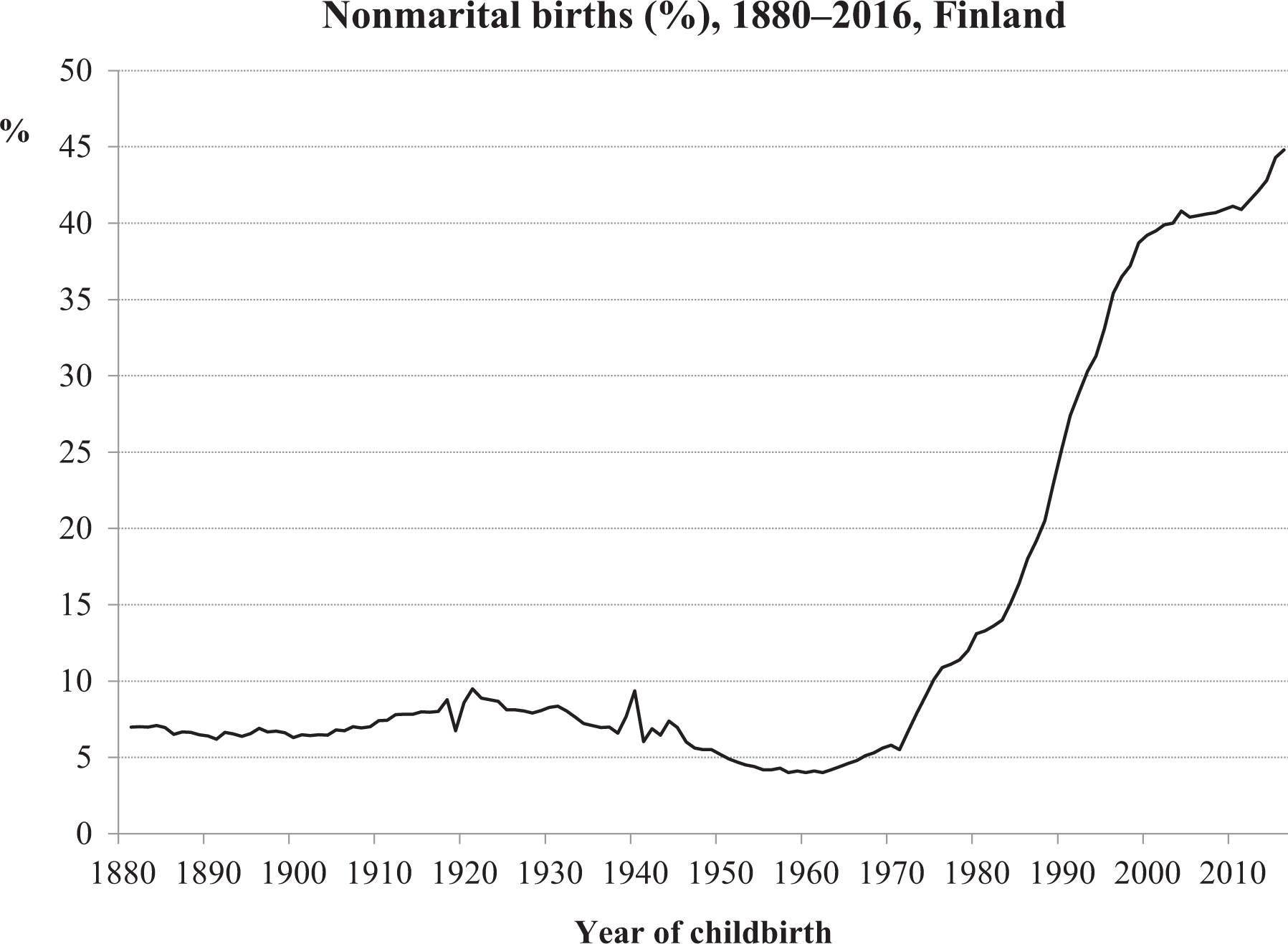
Percentage of all births outside marriage among women in Finland, 1880–2016. Source: Pitkänen and Jalovaara (2007) (to 2005); Statistics Finland, Vital Statistics (from 2006 onwards).
Recent estimates of mothers’ union contexts at birth for children born in the period 2003–2009 show that more than half (55%) of children were born to married women, one-third (33%) were born to cohabiting women and 12% to single mothers (i.e. those without a co-residing partner at the time of birth) (Jalovaara and Andersson, 2018). 1 Union context at birth is relevant here, as half of the children born to cohabiting parents experience parental separation by age 15 as compared to only a third of those born in marriage (Jalovaara and Andersson, 2018). 2 Non-marital childbearing is concentrated among women at the lowest education levels (Jalovaara and Andersson, 2018; Finnäs, 1995; Jalovaara and Fasang, 2015; Saarela and Finnäs, 2014). 3
With regard to childbearing within cohabitation, educational differences have emerged in female cohorts born after 1947 (Finnäs, 1995). In recent cohorts, a large majority (69%) of children of mothers with tertiary education were born in marriage. In contrast, about half of the children of mothers with upper secondary education and less than one-third of children of low-educated mothers were born in marriage (Jalovaara and Andersson, 2018). Among children with a non-married mother, most were born in cohabitation, regardless of their mother’s educational level (although non-union childbirth was more common among low-educated mothers).
Like the other Nordic countries, Finland has many policies that aim to promote social equality. In these circumstances, McLanahan (2004) presumes the link between social stratum and a child’s family structure would therefore be relatively weak. In reality, however, there are huge socioeconomic disparities in children’s family experiences in the Nordic welfare states, including Finland (Jalovaara and Andersson, 2018; Härkönen, 2017). In terms of the economic resources available for children, these disparities have visibly widened in Finland since the 1990s (Härtull et al., 2017). In the Finnish context, mid-life earnings are highest for men and women who follow the ‘traditional’ path of having two or more children within a stable marriage as compared to those who cohabit or experience unpartnered parenthood (Jalovaara and Fasang, forthcoming).
To date, the factors contributing to the increase in non-marital childbearing in Finland remain unknown. A review of the policy context reveals no relevant policy reforms during the 1990s that might account for the sharp increase in non-marital childbearing. If a newborn baby’s father is not married to the child’s mother, paternity needs to be specifically acknowledged, after which the parents can agree on joint legal custody. Legal regulations governing parental rights and responsibilities do not otherwise distinguish between children born to married and unmarried parents. The literature explains the rapid increase in non-marital childbearing in Finland from the 1970s onwards in terms of weakening of the social norm of marriage before childbirth (Pitkänen and Jalovaara, 2007). At the same time, further education, labour force participation and high income seem to promote marriage and marital childbearing in the Finnish context (Jalovaara, 2012; Jalovaara and Fasang, 2015).
Hypothesis
Our hypothesis is that the medium-educated segment is the main contributor to the increase in non-marital childbearing observed at the macro level since the 1970s in Finland. This hypothesis is based in the first place on a composition argument – that is, a population segment must be of sufficient size to contribute to a population-level change in demographic behaviour. The medium educated comprises the largest educational segment in post-World War II Europe (see for example Rendall et al., 2010) and has grown even larger because the expansion of tertiary education began with more people attaining medium-educational levels. As the low-educated segment has decreased significantly in size, it cannot have contributed much to the overall increase in non-marital childbearing, even if low-educated persons are the most likely to have a child outside marriage. Notably, the medium educated represent the largest segment of men, but this is no longer the case among women. Medium-educated fathers are therefore likely to play a greater role in the increase of non-marital childbearing than medium-educated mothers. Secondly, there is a behavioural argument; although the high-educated population is growing, the high educated are less likely than the medium educated to have a child outside marriage (e.g. Perelli-Harris et al., 2012; Vitali et al., 2015). Even if this likelihood has increased, the proportion is likely to be lower than in the other educational groups. Third, there is a structural argument; as education expands, those with a secondary education may gradually become the lower social stratum and so begin to exhibit characteristics commonly observed in the lowest-educated group – particularly when faced with economic downturn, as argued by Kennedy and Thomson (2010) and Cherlin (2011). Finally, the recent increase in non-marital childbearing is mainly attributable to mothers in non-marital cohabitation with the father of their children rather than to single mothers. Unlike non-union childbearing, which is most often observed among the lowest educated (Kennedy and Thomson, 2010; McLanahan and Jacobsen, 2015), childbearing within cohabitation has become commonplace among the medium-educated population segment and, to a lesser extent, among the tertiary educated (Sobotka, 2008).
Data
The present study drew on Finnish data compiled at Statistics Finland (permission TK53-663-11) from a longitudinal population register and registers of employment, educational qualifications, vital events and other such sources. The data are taken from an 11% random sample of persons born between 1940 and 1995 who had been recorded as residents in the Finnish population between 1970 and 2009. The sample included data on the timing of vital events such as union formation, union dissolution and childbearing, as well as time of completing each post-basic educational degree (monthly precision). We excluded data on foreign-born individuals because of a lack of information about their educational histories prior to immigration. The final sample included 112,730 first-time mothers and 108,812 first-time fathers.
To reduce selectivity problems, the analysis was restricted to first-time biological parents. Specifically, because unmarried parents are more likely to separate before a second child is born, union status at the time of higher-order births partly reflects patterns of separation and re-partnering (Wu and Musick 2008; Manlove et al. 2012). We performed separate analyses for mothers and fathers, covering men’s childbearing almost as comprehensively as women’s, as less than 2% of the children in our data had no registered father. We defined a non-marital first childbirth as the birth of a child to a woman or a man who was not married when their first child was born. The proportion of non-marital childbearing was calculated as the number of first births outside marriage relative to total first births. As a proportion of parents marry soon after the birth of a child, supplementary analyses considered the marital status of the parent 12 months later.
Education data are based on Statistics Finland’s register of completed degrees, referring to the highest level attained at the time when the first child is born (monthly precision). Note that many secondary-educated parents are finalising their tertiary education and nearing graduation around the time of childbirth. Although this leads to anticipatory analysis (Hoem and Kreyenfeld, 2006a, 2006b), our supplementary analyses considered highest educational attainment at age 35. Based on the ISCED (2011), we distinguished four levels of education:
Low (basic) education (ISCED 0–2) includes persons for whom no data are registered on post-comprehensive, non-compulsory education. Basic education corresponds to about 9 years or fewer in the educational system.
Medium education (ISCED 3–4) lasts 11–12 years and includes the matriculation examination (i.e. the final examination at the end of general upper secondary school that determines eligibility for higher education) and vocational qualifications obtained 1–3 years after basic education.
Lower tertiary education (ISCED 5–6) combines two levels: lowest-level tertiary education, which takes about 2–3 years to complete (ISCED 5); and lowest degree-level tertiary education, which takes about 3–4 years to complete after upper secondary education and includes polytechnic degrees and university bachelor’s degrees (ISCED 6).
4
Examples of lower tertiary education include degrees in technical engineering, business and administration and nursing; changes in the education system mean these degrees are increasingly from polytechnics (see also robustness tests).
Upper tertiary education (ISCED 7–8) takes about 5–6 years to complete after secondary education and leads to master’s degrees from universities or equivalent (or higher) educational degrees.
In our sample, mean age at first childbirth for women was 23 years if low educated, 25 years if medium educated, 28 years if lower tertiary educated and 30 years if upper tertiary educated. For men, mean age at first childbirth was 26 years if low educated, 27 years if medium educated, 30 years if lower tertiary educated and 31 years if upper tertiary educated.
Methods
A decomposition methodology was selected because it enabled us to examine how much of the increase in non-marital childbearing can be attributed to changes in behaviour and how much to changes in the population’s educational composition. For the decomposition analysis, we looked at the proportion of first children born to married and unmarried parents stratified by parents’ levels of education across the childbearing years for the period 1970–2009. In pairwise comparisons of successive decades (1970s to 1980s, 1980s to 1990s and 1990s to 2000s), we decomposed the change in overall rate for each educational subgroup. For this purpose, we used a decomposition technique (Kitagawa, 1955; see also Das Gupta, 1993; Preston et al., 2001) that allowed us to identify the extent to which a change in rate could be attributed to changes in (a) population composition and (b) subgroup-specific rates. The decomposition was calculated as:


where the increase in non-marital childbearing is the difference in the proportion of non-marital childbearing (NMC) in the period t1+1 as compared to the period t1; C is educational composition; and i is the educational subgroup. The total difference is decomposed into two parts: composition effect and rate effect (Das Gupta, 1993; Chevan and Sutherland, 2009). The composition effect
Results
Trends in non-marital childbearing and mother’s educational attainment
Figure 2 shows the trends in non-marital first childbearing 1970 to 2009, expressed as the proportion of non-marital births to all first births in that year for women and men (denoted as NMC in the Methods section). At the beginning of the observation period, the great majority of first births were to married parents, but by the end of this period the proportion had decreased to less than half. The trend was almost identical for men and women; any slight differences between them in earlier decades may reflect the incomplete registration of unmarried fathers. In the decomposition analysis, we considered changes in the mean proportion of non-marital first childbirths across decades.
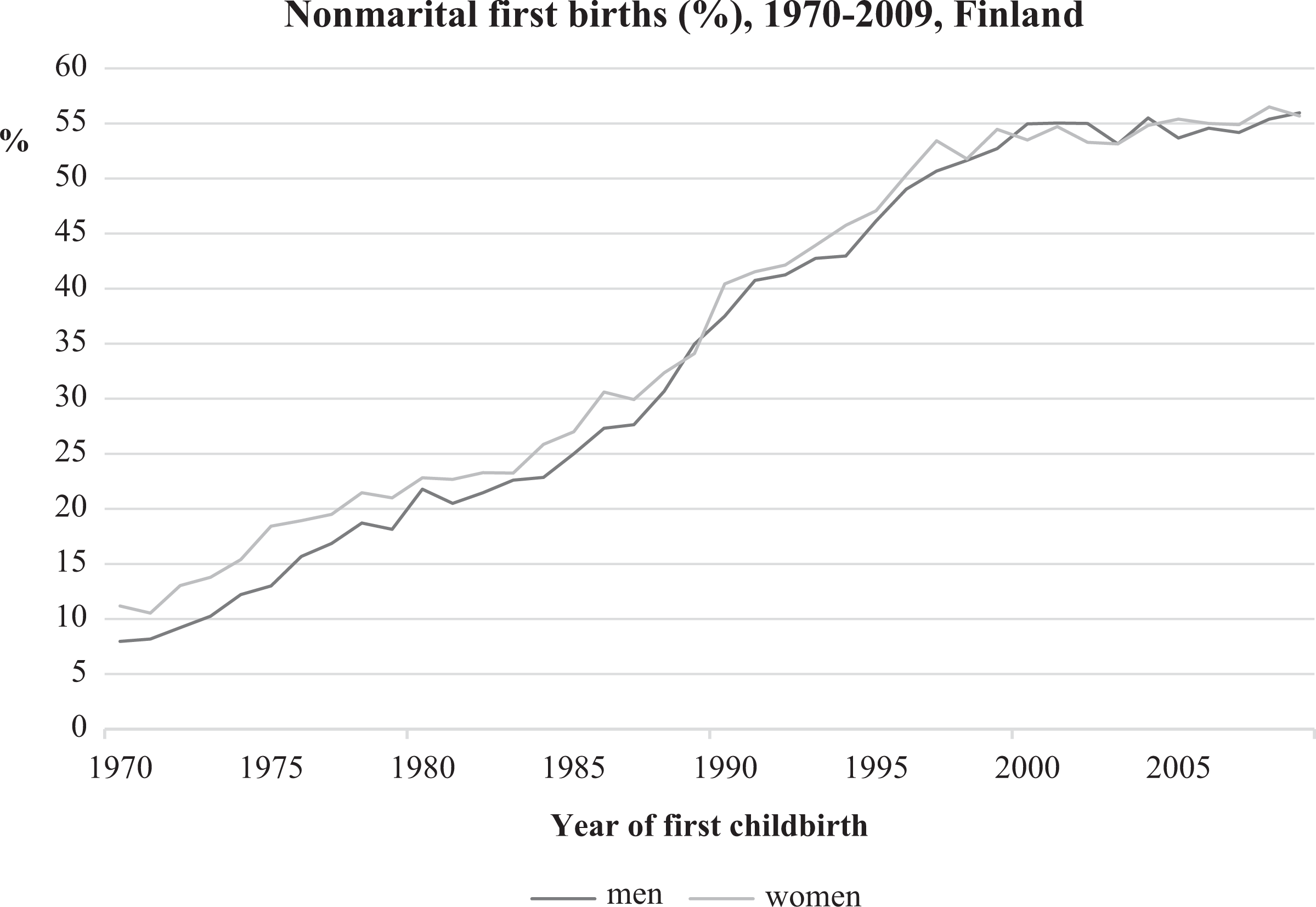
Percentage of all first births outside marriage for women and men in Finland, 1970–2009. Source: Register data from Statistics Finland.
Figure 3 shows the proportion of non-marital first-time childbearing subdivided by level of maternal and paternal education
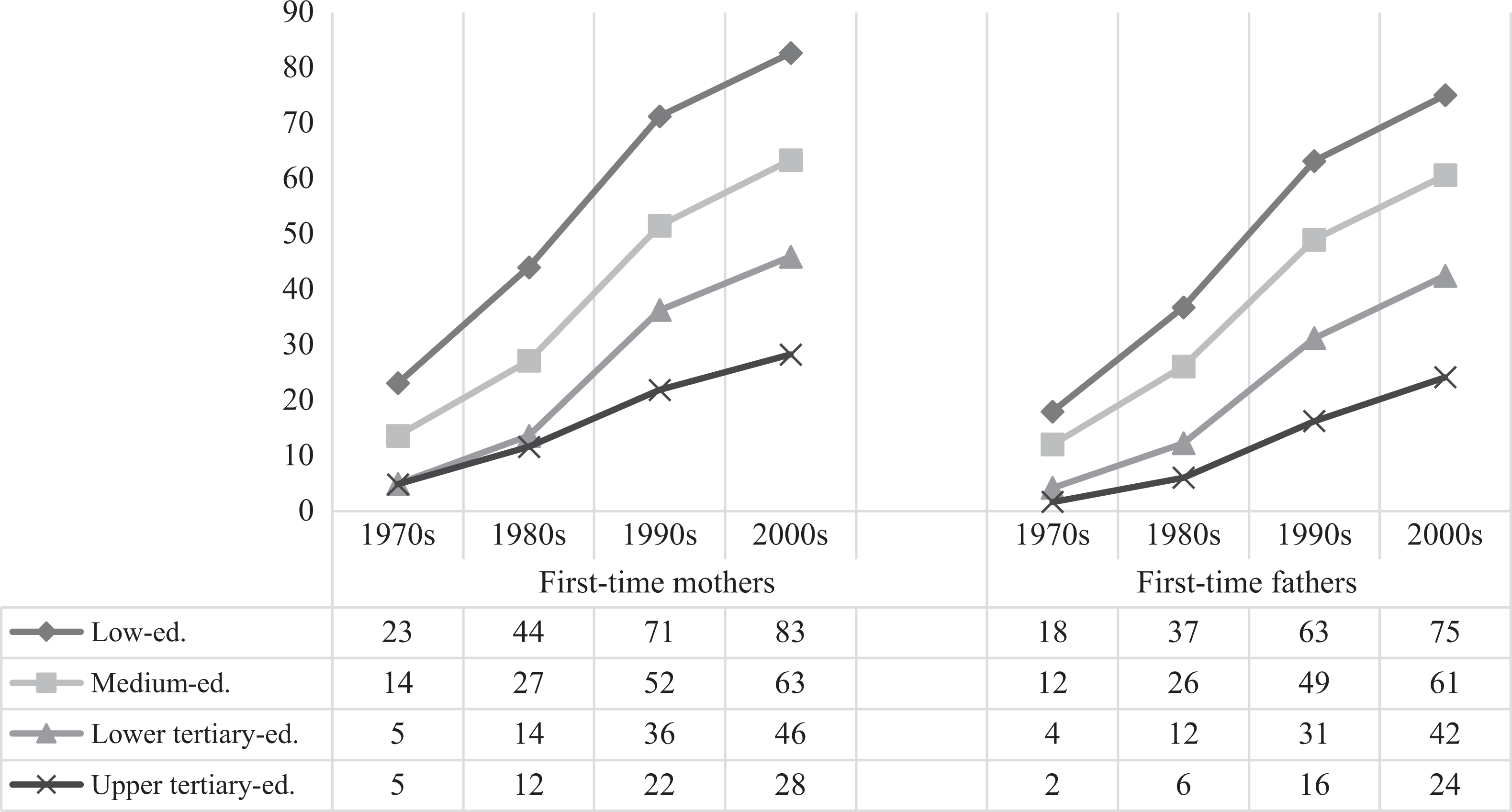
Percentage of non-marital first births by parental educational attainment by decade for first-time mothers and first-time fathers in Finland, 1970–2009. Source: Register data from Statistics Finland.
Figure 4 displays changes in the educational distribution of first-time mothers and fathers across decades
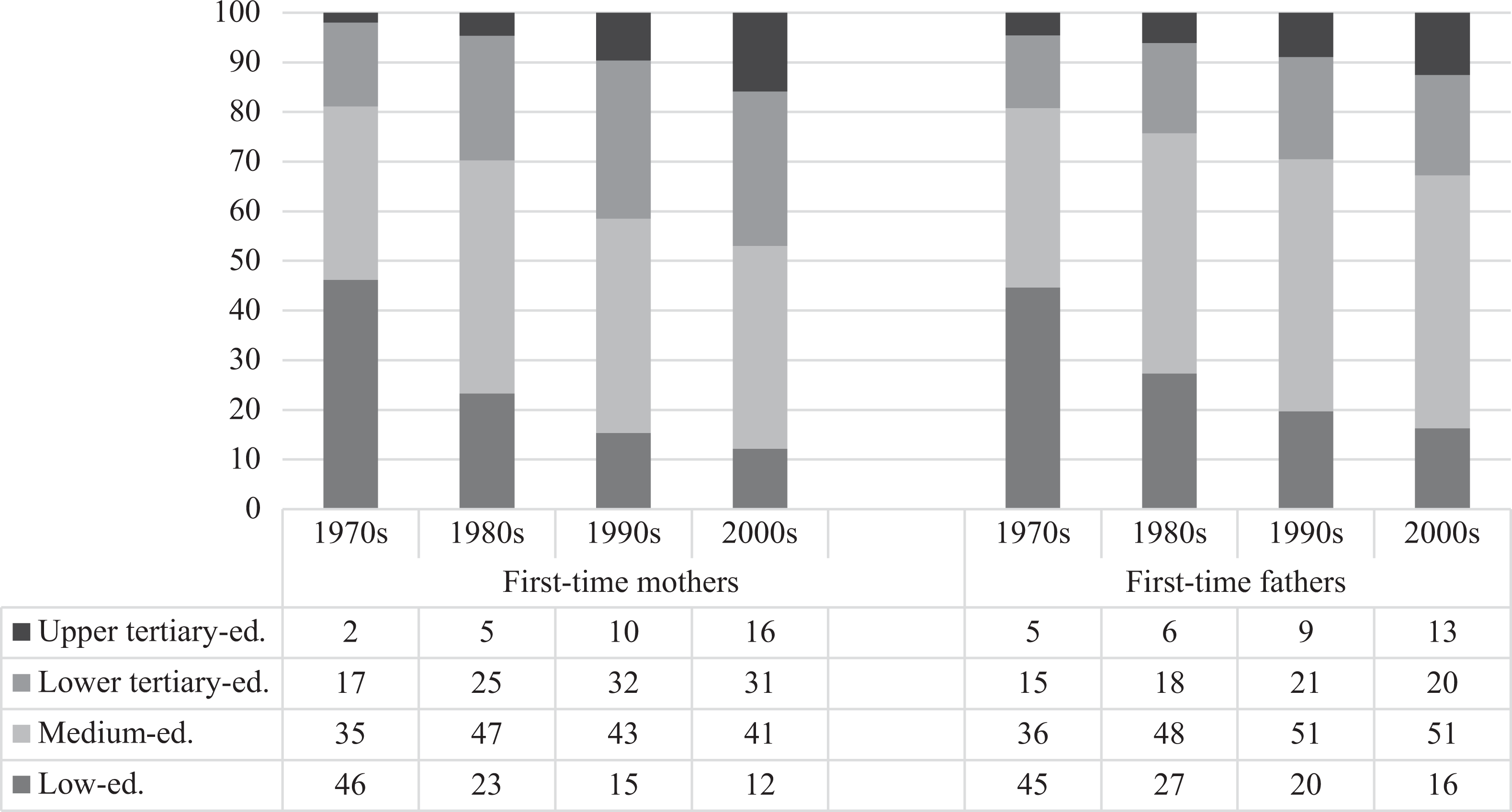
Educational distribution among first-time parents (percent) by decade for first-time mothers and first-time fathers in Finland, 1970–2009. Source: Register data from Statistics Finland.
Results of the decomposition analysis
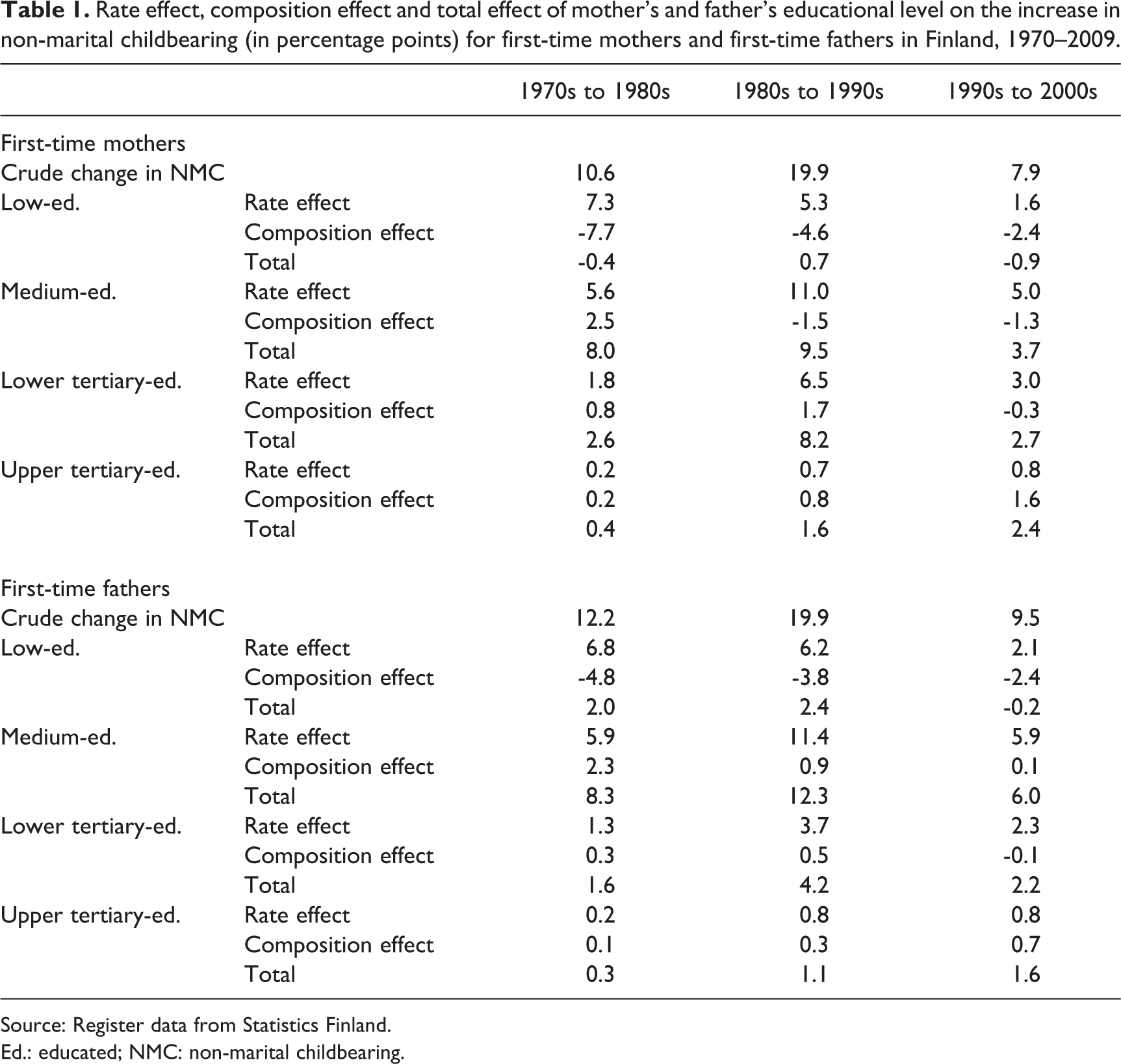
For first-time mothers and first-time fathers in each educational category, Table 1 shows the effect of changes in the rate of non-marital births (rate effect), the effect of changes in the size of the educational category (composition effect) and the sum of both effects (total effect). For instance, from the 1970s to the 1980s, the rate effect for low-educated women was 7.3, which means they contributed 7.3 percentage points to the increase in non-marital childbearing, based on average group size in these decades. However, the number of low-educated women was declining, with a negative composition effect of -7.7. Taking rate and composition effects together, the low-educated population did not contribute to the increase in non-marital childbearing from the 1970s to the 1980s; rather, they slowed the overall increase, with a negative overall effect of -0.4. Low-educated mothers contributed very little (0.7) to the increase in the 1990s and again slowed the increase in the 2000s (-0.9). Given the changes across the entire study period, low-educated mothers clearly did not drive the increase in non-marital childbearing from 1970 to 2009.
Rate effect, composition effect and total effect of mother’s and father’s educational level on the increase in non-marital childbearing (in percentage points) for first-time mothers and first-time fathers in Finland, 1970–2009.
Source: Register data from Statistics Finland.
Ed.: educated; NMC: non-marital childbearing.
Medium-educated women made a sizeable contribution to the overall increase in non-marital childbearing, largely due to significant increases in the rate of non-marital childbearing. From the 1970s to the 1980s, medium-educated women contributed to the overall increase with positive rate and composition effects, accounting for 75% of the total increase (8.0 percentage points of an overall increase of 10.6 percentage points). Although the group of medium-educated women has decreased in size since the 1990s, it remained the main contributor to the increase in non-marital childbearing from the 1990s to the 2000s. From the 1970s to the 1990s, lower tertiary-educated women contributed to the overall increase with positive rate and composition effects. Although decreasing slightly in size from the 1990s to 2000s, this group continued to contribute to the increase in non-marital first-time births. Only the group of upper tertiary-educated women increased in size throughout the four decades of the study period, reinforcing any rate effect. However, increases in non-marital childbearing among these university-educated women were relatively small and therefore of minor importance to the overall increase in non-marital childbearing during the 1970s and 1980s. Since then, however, their contribution has become increasingly important due to their growing group size.
Overall, the increases in non-marital childbearing rates among medium and lower tertiary-educated women made these groups the main drivers of the increase in non-marital childbearing, particularly the substantial increase that occurred between the 1980s and 1990s. However, on combining the lower and upper tertiary groups, it becomes clear that tertiary-educated women accounted for 49% (= (8.2+1.6)/19.9 percentage points) of the increase in non-marital childbearing between the 1980s and the 1990s, and for 65% (= (2.7+2.4)/7.9 percentage points) of the increase between the 1990s and 2000s.
The picture looks a little different for first-time fathers; the main contributors to the increase were medium-educated men, due to the large increases in the rate of non-marital fatherhood. They contributed 68% (8.3/12.2) to the increase in the 1980s, 62% (12.3/19.9) in the 1990s and 63% (6/9.5) even in the 2000s. Even the combined contributions of lower and upper tertiary-educated men remained less significant than that of the medium-educated population to the increase in non-marital childbearing. Low-educated fathers contributed modestly but positively to the overall increase from the 1970s to the 1990s, but in the most recent period, the decreasing size of this group cancelled out any rate effect.
Figure 5 distinguishes the effects of compositional changes in mothers’ and fathers’ education levels from the effects of changes in non-marital childbearing behaviour within educational categories on crude changes in non-marital first childbearing rates during the period 1970–2009. The results show the upward trend in non-marital childbearing has been driven entirely by a change in non-marital childbearing behaviour within educational groups. The total composition effect of education is negative; which means that the increase in non-marital childbearing caused by changes in education-specific rates was partly offset by educational expansion. Composition effects were smaller for first-time fathers than for first-time mothers.
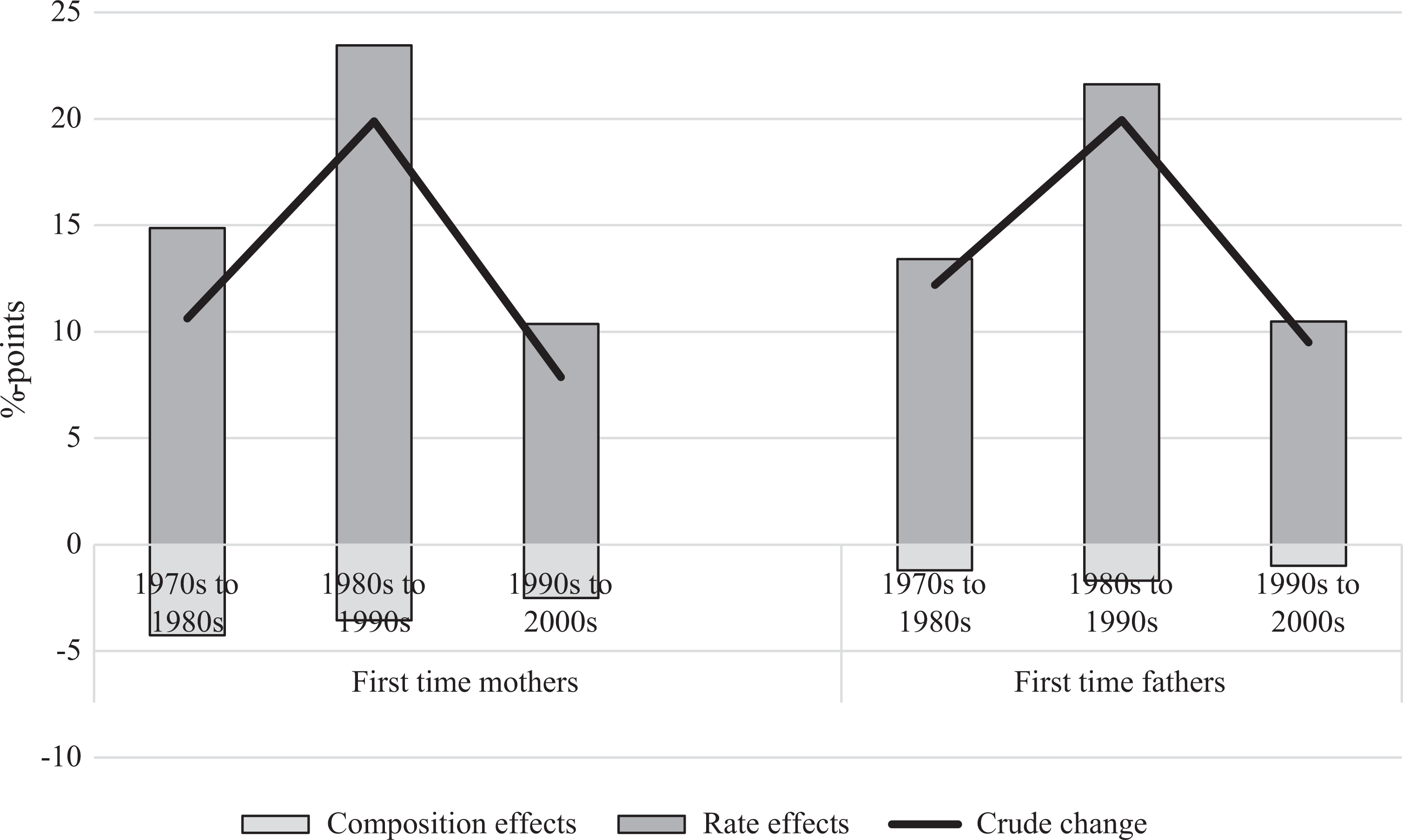
Crude changes in non-marital childbearing, effects of changes in educational composition and effects of changes in education-specific rates for first-time mothers and fathers in Finland, 1970–2009. Source: Register data from Statistics Finland.
Robustness tests: Marital status and education measurement
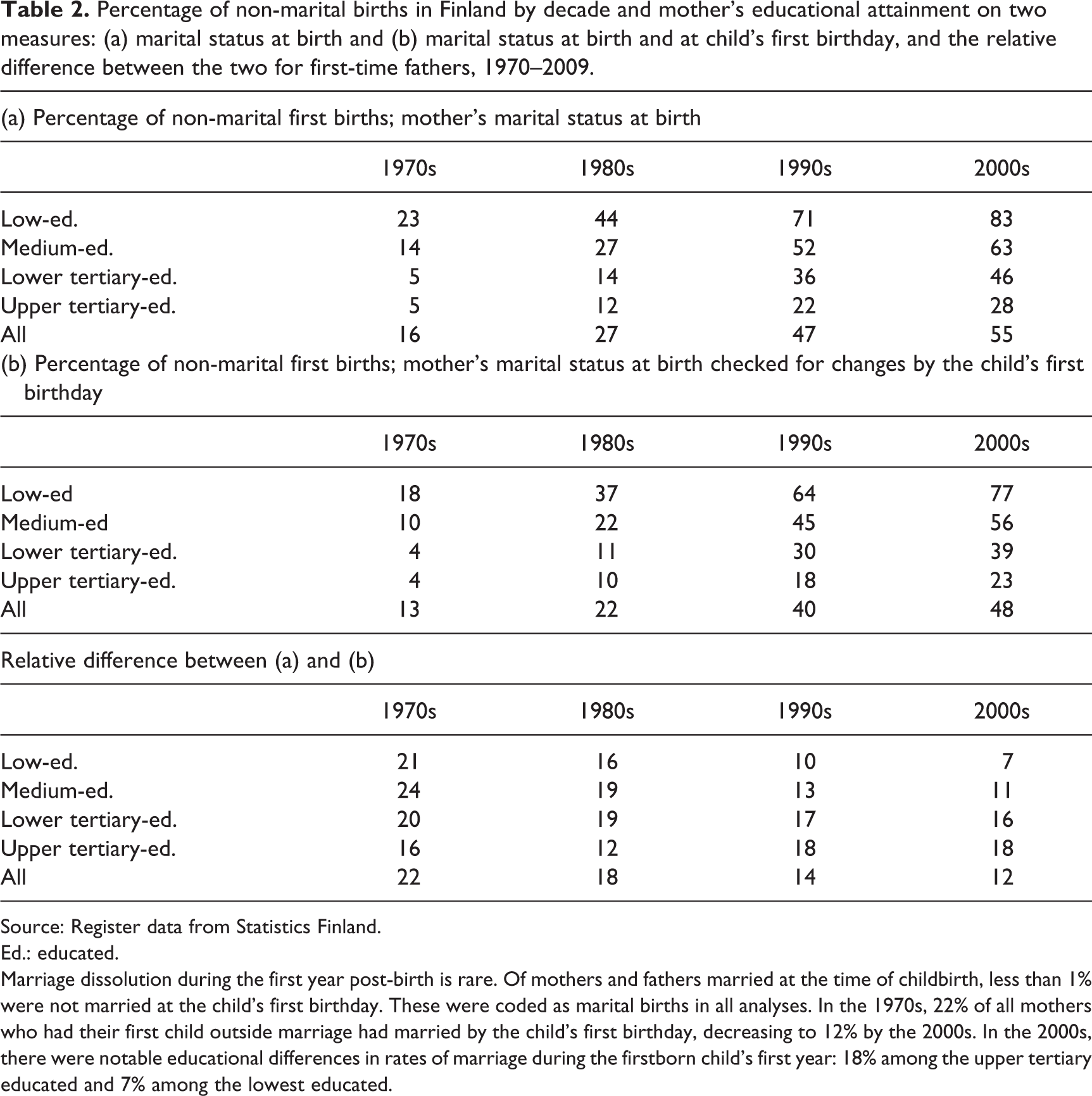
Because a substantial proportion of parents marry soon after the birth of a child, we performed supplementary analyses of parental marital status 12 months after the birth, coding non-marital births as marital if the parent was married at the time of the child’s first birthday (see results for first-time mothers in Table 2). The results remained unchanged. In a second set of checks, we used the highest level of educational attainment by age 35, or by December 2010 at latest, to evaluate time distortion effects. Here again, results remained largely unchanged. In a third set of checks, we used refined educational categories, distinguishing between ISCED levels 5 and 6. The results (not shown) indicate that these groups were similar in their non-marital childbearing behaviour, confirming our decision to group them together. Similarly, when we distinguished between general and vocational upper-secondary education (ISCED 3 and 4), there was little difference between results for the two.
Percentage of non-marital births in Finland by decade and mother’s educational attainment on two measures: (a) marital status at birth and (b) marital status at birth and at child’s first birthday, and the relative difference between the two for first-time fathers, 1970–2009.
Source: Register data from Statistics Finland.
Ed.: educated.
Marriage dissolution during the first year post-birth is rare. Of mothers and fathers married at the time of childbirth, less than 1% were not married at the child’s first birthday. These were coded as marital births in all analyses. In the 1970s, 22% of all mothers who had their first child outside marriage had married by the child’s first birthday, decreasing to 12% by the 2000s. In the 2000s, there were notable educational differences in rates of marriage during the firstborn child’s first year: 18% among the upper tertiary educated and 7% among the lowest educated.
Conclusions
This study was motivated by the observation that the substantial increase in non-marital childbearing over recent decades coincided with educational expansion, although childbearing outside marriage has been more common among the lower educated (Sobotka, 2008; Vitali et al., 2015). Using register data on Finnish first-time parents, we examined the increase in non-marital childbearing over the period 1970–2009 and quantified the contributions of changes in (a) education-specific rates of non-marital childbearing and (b) educational distribution of parents. Following Cherlin (2011), we expected to find the increase attributable mainly to medium-educated mothers and fathers, as this large and growing category has driven macro-level demographic trends in recent decades and differs in behaviour from the highest-educated segment.
Over the period 1970–2009, having a first child outside marriage has become increasingly common across all social strata. At the same time, we found a persistent negative educational gradient, with no convergence between low- and medium-educated parents. Our decomposition analysis reveals that the overall increase in non-marital childbearing is mainly attributable to increases in non-marital childbearing rates in the medium-educated population. Among mothers, the lower tertiary educated were almost as significant in this regard. Although the highest proportion of non-marital first-time childbearing was still among the low educated, their overall contribution was small due to diminishing group size. The upper tertiary educated contribution to non-marital childbearing increased, but non-marital childbearing rates remained relatively low. However, if lower and upper tertiary-educated women are taken together (as done in most studies), they account for approximately half of the increase in non-marital childbearing. Educational expansion is weaker among first-time fathers than first-time mothers; fathers are most commonly medium educated and this group contributed most to the increase in male non-marital childbearing.
Group size proves a key element in the contribution of educational segment to the increase in non-marital childbearing, but changing behaviour appears equally important. Educational expansion has contributed to the ideational climate change that made childbearing outside marriage socially acceptable. The largest increase in non-marital first childbearing occurred from the 1980s to the 1990s; at the same time, Finland underwent a strong economic recession that led to a significant temporary drop in employment rates that affected the medium educated in particular, as well as the lower tertiary educated. It has been argued that economic constraints act as a barrier mainly to marriage (Gibson-Davis, 2009) and the experience of uncertainty and loss of opportunity may have led the medium and lower tertiary educated to favour cohabitation or to postpone marriage. Our results for Finland do not indicate that non-marital childbearing behaviour among the medium educated converges with that of the low educated, in contrast to US and Swedish studies (Cherlin, 2011; Kennedy and Thomson, 2010; McLanahan and Jacobsen, 2015). This is perhaps because, in Finland, these groups still differ in occupational terms. The highly educated tend to favour marital childbearing more than the less educated because of factors such as the higher opportunity costs of early childbearing. However, non-marital childbearing is also on the rise among the highest educated. Women’s empowerment means that marriage has become less important as a protective institution. As the social costs of non-marital childbearing and the benefits of marital childbearing narrow as a result of men’s declining earnings and the increase in female employment, this also tips the balance against marriage for the highly educated (Willis and Haaga, 1996).
As shown here, the medium educated constitute a large group that contributes significantly to population-level changes. As such, the medium educated merit increased research attention in future research. We have argued that the negative educational gradient in non-marital childbearing relates mainly to differences in entry into marriage and the perceived optimal timing of marriage and childbearing in terms of costs and benefits. However, it remains unclear whether arguments that explain differences in family formation behaviour between the lowest and highest educated can be applied to medium-educated population segments or whether a new theoretical understanding is required.
Based on Finnish register data, we were able to describe the increase in non-marital childbearing since its onset in the 1970s with one limitation: we could not distinguish between non-union and union births. Information about unmarried cohabitations (inferred from register data) is available from 1987 onwards, when non-marital childbearing was already quite common. We refrained from using these data because we would have missed a significant period of increase in non-marital childbearing. As the evidence suggests the greatest part of that increase can be attributed to childbearing within cohabitation, our results would probably look quite similar if the data were restricted to union births. Recent educational disparities in marital, cohabiting and non-union births are a matter for future research.
The ‘diverging destinies’ argument (McLanahan, 2004; McLanahan and Jacobsen, 2015) is underpinned by the idea that the resources available to a child will depend on whether they are born to a low- or high-educated mother and that the mother’s marriage and separation behaviour will accentuate this difference. On this argument, low-educated mothers are likely to form non-marital partnerships with a higher risk of separation, leading to single motherhood and further loss of resources. In contrast, highly educated mothers tend to have stable marriages, contributing to the accumulation of resources. In most Western countries, including Finland, non-marital childbearing is associated with a negative educational gradient. Consequently, children with low-educated parents are more likely to live in a single-parent family. However, this focus on relative differences neglects the increasing tendency among the more educated to have children outside marriage and the fact that, as a result of educational expansion, the medium and higher educated account for the largest proportion of parents in recent childbirth cohorts. Finnish research has shown that women’s union context at childbirth influences their risk of single motherhood across all educational groups (Jalovaara and Andersson, 2018). It follows that even if cohabitation is considered a more established union, it seems to bring higher new social risks (Bonoli, 2007).
Next to available resources, living in a single-parent family is known to impact children’s psychological wellbeing, health, schooling and subsequent labour-market attainment (Härkönen et al., 2017). One can argue that the greater economic resources of the medium and higher educated provide a buffer against the negative consequences of living in alternative family forms, although empirical studies have so far reached inconsistent conclusions on this issue. In the US, for example, Amato and Anthony (2014) reported that the effects of divorce on educational outcome are strongest among children with the highest risk of experiencing parental separation (e.g. those born to low-educated parents). Referring to British data, Bernardi and Boertien (2016, 2017a) showed the negative effect of parental separation on educational choices is stronger for children with a highly educated father, as they experience greater financial loss. It seems likely that both diminished resources and dropping below a certain resource threshold can negatively affect children’s lives. The heterogeneous consequences of non-marital childbearing and parental separation may blur the boundaries of children’s destinies and cause them to diverge less.
A recent study by Bernardi and Boertien (2017b) used decomposition to analyse how the prevalence of non-intact families in different educational groups in Germany, Italy, the UK and the US contributed to macro levels of social background inequality as expressed in children’s educational attainment. We would encourage more research that addresses the contribution of educational group size to social trends when evaluating between-group differences in non-marital childbearing and the consequences for parents, children and society.
Although lowest-educated women and men have become a small minority, their position is weakest because of the accumulation of (potential) disadvantages such as weak labour market position, non-union childbearing and high rates of union dissolution, and researchers and policy makers must devote further attention to this group. In addition, we should acknowledge that non-marital childbearing is now common among the medium and high educated, and we should be sensitive to the new social risks that this change in behaviour may bring. It is also important to take account of the heterogeneity in tertiary education, as the lower tertiary educated are a growing category (especially among women), and their behaviour differs from that of the upper tertiary educated. The decomposition method used here complements between-group comparison studies; together, they provide a comprehensive picture of concurrent societal trends. We argue that sociological research, including the narrative of ‘diverging destinies’, would benefit from more fully accommodating the contemporary realities of educational strata in the societies under study.
Footnotes
Acknowledgements
The authors wish to thank Elizabeth Thomson, Alessandra Trimarchi, Juho Härkönen and Jan Van Bavel for their comments.
Funding
The author(s) disclosed receipt of the following financial support for the research, authorship, and/or publication of this article: This study received funding by the European Research Council (ERC grant agreement no. 312290 for the GENDERBALL project, Principal Investigator: Jan Van Bavel) and the Academy of Finland (decisions 275030, 321264 and 320162).