




Abstract
Country-case studies examining the relation between curricular tracking (ability sorting) in secondary education and civic and political engagement (CPE) have led to mixed findings. This calls for a comparative approach. Thus far, as a result of the available data, comparative studies examining the effect of curricular tracking on civic engagement have been cross-sectional in nature. In this paper, we introduce a longitudinal approach by drawing from two cross-sectional surveys with identical CPE measures for the same birth cohort before and after tracking (CIVED 1999, ISSP 2004 and EVS 2008). We examine the relation between the duration of curricular tracking and the development of CPE between the age of 14 and young adulthood in 25 countries. The results show that a longer tracked curriculum is negatively related to the development of civic and political engagement, particularly at the lower part of the distribution. Moreover, we find that the negative relation between length of the tracked curriculum and CPE is mediated by enrolment rates for higher education. This result suggests that tracking does not directly negatively affect civic and political engagement, but does so because it is associated with reduced participation in higher education.
Keywords
Introduction
Educational attainment is recognised as an important predictor of civic and political engagement (CPE) (Dee, 2004; Nie et al., 1996). There is substantial empirical support that the social context of the school can partially explain this relation between educational attainment and CPE. Recently, a new body of literature has emerged that demonstrates that besides the individual and school level, the level of the education system is also related to civic outcomes (Janmaat and Mons, 2011; Van de Werfhorst, 2017). In this paper, we examine the importance of one feature of the education system for CPE, namely, that of ‘curricular tracking’: the sorting of students in secondary education in different courses, curricula, or schools, based on cognitive skills and motivation (Hallinan, 1994).
There is extensive empirical evidence that more tracking is related to more socioeconomic inequality in cognitive educational outcomes and educational attainment (e.g. Hanushek and Wössmann, 2006). Regarding civic outcomes of education, however, research about the consequences of curricular tracking is relatively scarce. It is important to find out more about the relation between tracking and CPE, because if tracking negatively affects the level of engagement, or equality in engagement, this could undermine the equality of democratic representation. Especially in light of concerns about a decline in CPE and an increasing civic engagement gap amongst different social groups, it is essential to study the effect of tracking on civic and political engagement (Levinson, 2012).
Several country-case studies regarding the effects of curricular tracking on individual CPE have led to mixed findings, both confirming and rejecting a relation between tracking and CPE (e.g. Hoskins and Janmaat, 2016; Janmaat et al., 2014; Persson, 2012). These differential effects of tracking on CPE across education systems call for a comparative examination of the relation between the degree of tracking and CPE. Thus far, only a hand full of cross-national studies exist that attempt to find out whether tracking affects CPE (Hoskins et al., 2016; Janmaat, 2011; Janmaat and Mons, 2011; Van de Werfhorst, 2017). However, as a result of a lack of longitudinal data that include measures of CPE during adolescence, which is both the formative phase of CPE and the period during which curricular tracking occurs, these studies are all cross-sectional in nature.
In this paper, we add to the literature on the relation between curricular tracking and CPE by enabling a longitudinal comparative approach. We follow Hanushek and Wössmann (2006) by using data about one birth cohort at two points in time, before and after tracking, from two cross-sectional surveys with identical measures of CPE. Accordingly, the difference in CPE before and after tracking can be compared for education systems with more and less pronounced tracking. This longitudinal approach enables us to study the importance of tracking with more rigour than cross-sectional comparative studies. We examine the relation between the length of the tracked curriculum and CPE, in terms of efficiency (overall level) and equality (differential effects for different parts of the distribution), in 25 education systems. By using country fixed effects we account for country differences that are stable across time. The findings show that a longer tracked curriculum is related to reduced levels of civic and political engagement, particularly at the lower part of the distribution of engagement. Moreover, we find that this negative relation is mediated by enrolment rates in higher education.
Curricular tracking and students’ civic and political engagement
Education systems differ in the degree to which curricular tracking occurs in various ways, such as the age of selection, the number of tracks, whether tracking occurs between or within schools, and the length of the tracked curriculum. The average age at which selection takes place in Organisation for Economic Co-operation and Development (OECD) countries is 14, but in some countries it occurs as early as at age 10 (Austria and Germany) (OECD, 2013). Track assignment can be determined by choice (e.g. Denmark and Italy), special tests/exams (e.g. Slovak Republic), teacher evaluations (e.g. Germany), or a combination of the three (e.g. the Netherlands). Usually, different tracks can be characterised as (pre-)vocational, general, and/or pre-academic education. The average number of tracks in OECD countries is three. In Australia, the Scandinavian countries, the UK and the USA secondary education is comprehensive, meaning there is only one type of secondary education. Within comprehensive education tracking also occurs however through within-school ability grouping which can entail streaming or course-by-course tracking (Chmielewski et al., 2013). For example, in England upper-secondary-education students can take courses at level one to three (Hoskins and Janmaat, 2016). In non-comprehensive systems tracking can occur either within schools, between schools, or a combination of the two and the number of available tracks in secondary education differs from two (Greece) to seven (Netherlands).
A limited body of country-case studies that attempt to find out whether tracking affects CPE has led to mixed findings. Compared to enrolment in a general/pre-academic track, enrolment in (pre-)vocational education is related to lower levels of intention to vote in Denmark, England and Germany and to lower levels of protesting in England (Eckstein et al., 2012; Hoskins et al., 2016; Hoskins and Janmaat, 2016; Janmaat et al., 2014). Persson (2012) and Witschge et al. (2014), in contrast, find no such relation for respectively Sweden and the Netherlands. Their studies suggest that differences in CPE amongst students in different tracks are a consequence of student selection, i.e. that the same characteristics that are related to track allocation are related to civic and political engagement.
Janmaat et al. (2014) rightly point out that these mixed findings regarding effects of tracking on civic engagement may be explained by differences in the degree to which tracking occurs and social segregation exists across education systems. To our best knowledge, thus far there are only a few cross-national studies about the relation between tracking and CPE. These studies show that, across education systems, students who graduated from (pre-)vocational education demonstrate lower levels of CPE than students who graduated from general/pre-academic education. Furthermore, these disparities in CPE amongst people from different tracks are larger in education systems with more pronounced tracking (Janmaat, 2011; Janmaat and Mons, 2011; Van de Werfhorst, 2017). However, these studies are all cross-sectional in nature and examine a population of only adolescents or adults. When examining the relation between tracking and civic outcomes of education it is important to observe respondents before they reach adulthood because political attitudes are formed and crystallised during adolescence and early adulthood (Alwin et al., 1991; Sears and Levy, 2003). Moreover, tracking in secondary education mostly occurs before adulthood. To arrive at our hypotheses about the relation between the duration of tracking in education systems and CPE, we can draw on findings regarding individual and structural corollaries of tracking that are simultaneously predictors of CPE. We distinguish three such corollaries of tracking that can potentially impact CPE: (a) academic achievement, (b) differential civic education curricula, and (c) the social composition of classrooms. The data we use in this paper unfortunately does not allow for testing these mechanisms. The discussion about the mechanisms below merely serves to explain what kind of relation between tracking and CPE we expect and why.
First, track placement is associated with general academic achievement, both in terms of selection and causation (Korthals, 2015). A qualification in (pre-)vocational secondary education corresponds to a different level of academic achievement compared to a qualification in pre-academic education. Moreover, general/pre-academic education programmes are often longer than (pre-)vocational programmes which means that students in these tracks have more time for learning in secondary education and hence are likely to learn more (Becker, 1980). In turn, academic achievement, or the acquisition of academic skills, is positively related to civic engagement (Verba et al., 1995).
Second, providing different curricular tracks to students also magnifies differences in the specific civic and citizenship skills that are generated. An increasing number of studies demonstrates that, in various education systems, students in different tracks are subject to a different citizenship education curriculum and teacher pedagogy. Students in the pre-academic track typically get more civic learning opportunities that, moreover, are aimed at developing a critical and active stance (Ten Dam and Volman, 2003; Ho, 2014). In contrast, students in (pre-)vocational tracks are familiarised with a more passive and duty-based attitude and pragmatic skills that are intended to enable ‘survival’ in society.
Third, the social composition of tracks may be influential for the development of CPE. Students from advantageous socioeconomic backgrounds are disproportionately distributed to higher tracks, whereas students with a lower socioeconomic status (SES) and from minority groups are overrepresented in (pre-)vocational tracks (Hallinan, 1994; Hanushek and Wössmann, 2006). Tracking thus has implications for the social network position of students. Based on the peer-effects hypothesis students in (pre-)vocational tracks will be influenced by their classmates who are likely to have a relatively low SES and therefore presumably a relatively low level of CPE. Vice versa, students in the general/pre-academic track will be influenced by their classmates who are likely to have a relatively high SES and therefore a relatively high level of CPE. Some examples of how peer effects can manifest are through discussion of social and political issues and civic and political activities that individuals get involved in.
Based on the differential academic achievement, civic learning opportunities and peer effects described above, it can be expected that at the individual level students in the (pre-)vocational track will develop lower levels of engagement than students in the general/pre-academic track. At a structural level, these theories suggest that dispersion in CPE will be higher when tracking is more pronounced. Also, it can be expected that as a result of less incentives for developing CPE in the (pre-)vocational track, the overall level of CPE will be lower in education systems with more pronounced tracking. This leads to our first hypothesis: Students in education systems with a longer tracked curriculum show less growth of civic and political engagement between age 14 and early adulthood than students in education systems with a shorter tracked curriculum, particularly at the lower part of the distribution.
Several studies demonstrate that tertiary education positively affects CPE (e.g. Dee, 2004; Mayer, 2011). These studies point at the same underlying mechanisms described above: higher education increases cognitive skills, civic and political knowledge and skills, and democratic values, and it provides a positive network effect. Accordingly, for those educated in higher education, the costs for civic and political engagement are reduced while the benefits are perceived higher. If a higher duration of tracking is associated to both lower levels of participation in higher education and lower levels of CPE, it may be that the decrease in CPE results from lower participation rates in higher education rather than directly from the duration of tracking. Hence, to observe differences in the development in CPE it is important to take into account higher education participation rates across education systems under study. Based on this argumentation we derive our second hypothesis: If we control for participation in higher education, the negative effect of the length of the tracked curriculum on civic and political engagement is reduced.
Data and methods
Unfortunately, there are no cross-national panel data available including features of civic engagement with a cohort of secondary school students who are followed through young adulthood. Therefore, we follow the approach of Hanushek and Wössmann (2006) of combining comparative cross-sectional individual-level data sources of the same birth cohort, one assessed at a time before tracking started (among early adolescents), and one after tracking has finished (among young adults). With this design we can study the relationship between the length of the tracked curriculum in education systems and levels of CPE. We include fixed effects for countries that take away all country variation that affects early adolescents and young adults within a country equally (e.g. history, culture, and general prosperity). To interpret this effect as causal it must be assumed that the duration of tracking and participation rates in higher education are, at the national level, unrelated to other unobserved country-level changes between early adolescence and early adulthood. Given that this is a strong assumption, we are careful to interpret the findings as causal. Yet, as our model filters out unobserved stable country characteristics, our findings can more rigorously study the relation between tracking and (inequalities in) civic engagement than other cross-sectional studies. A downside of the design is that, in the absence of individual comparative panel data, we cannot ascertain which educational career individuals have followed. Hence, this paper examines the association between the education system and individual-level civic engagement, not between individual educational career and engagement. While theoretically we may assume that system differences result from individual-level differences across tracks, we cannot draw this conclusion due to potential ecological fallacy.
The two cross-sectional data sources of the same birth cohort that are combined are the ‘Civic Education Study’ (CIVED) 1999 in which various civic engagement measures are collected in the school grade with the most 14-year-olds in 31 countries (t1) and two adult social surveys of which we select the younger adults (t2): (a) the ‘International Social Survey Programme’ (ISSP) from 2004, which has citizenship as the central theme, and (b) the European Value Survey (EVS) from 2008. Macro-level variables are collected for the countries that are represented in both the CIVED and ISSP or EVS samples by using official OECD, Eurydice and World Bank data. Respondents in the younger CIVED 1999 sample get a score of zero for variables that do not apply to them yet, such as the length of the tracked curriculum and enrolment in tertiary education.
Students who were 14 years old when CIVED was carried out in 1999, were around 19 years old when ISSP 2004 was collected and around 23 years old when EVS 2008 was collected. Because the number of respondents within this age in both adult social surveys is too small, we extended the age of the adult wave to 19–29 years. This choice is justified on the basis of the robust finding that civic and political attitudes take shape during adolescence and stay rather stable after this (Alwin et al., 1991; Sears and Levy, 2003). We did however perform a robustness check to see if extending the age range of our adult sample affects our findings which is explained below.
The formulas of the two models are presented below. In these formulas i, t and T, and c and C stand for individual, time (this is a dummy for the data source that is used: CIVED 1999, ISSP 2004, or EVS 2008), and country, respectively. The X term stands for the control variables gender, age and socioeconomic status. By using fixed effects for time and country, we are able to estimate the difference in CPE between t1 and t2 by the two main independent variables controlling for gender and age. The independent variables are ‘years of tracking after age 14’ and ‘tertiary education’ (explained below). Note that we operationalise ‘years of tracking by country’ × ‘wave’, so the δ parameter refers to the country fixed effects estimate of track years on civic engagement. Modelled this way, the effect of track years can be interpreted as a differences-in-differences estimate, where the difference in CPE between t1 and t2 is compared for students that get a different ‘treatment’ (‘years of tracking’) (Hanushek and Wössmann, 2006; Meghir and Palme, 2005).


To examine inequality of changes in civic engagement, these two models are estimated for the sample as a whole and both the top (85th percentile) and the bottom (15th percentile) of the distribution of the main dependent variable.
Dependent variables
The main dependent variable is an index for civic and political engagement made from three survey questions: (a) interest in politics, (b) whether a ‘good citizen’ should always vote, and (c) frequency of discussion of political issues with peers. Interest in politics is available in CIVED and both ISSP 2004 and EVS 2008. The underlying items of these variables are presented in the Appendix (Table 10). The variable interest in politics was recoded so that the categories are ascending: (a) not at all interested, (b) not very interested, (c) fairly interested, (d) very interested. Data on how important it is for a ‘good citizen’ to vote was z-standardised within waves across countries. A higher score on this variable corresponds with conferring more importance to voting. Finally, the items measuring frequency of political discussion with peers from the two surveys were synchronised by combining the items in CIVED measuring frequency of discussing national and international politics (see Table A1). Subsequently, principal factor analysis was applied within the CIVED sample and the ISSP sample separately and across countries to create a CPE index. For the CIVED and ISSP sample the index respectively has an eigenvalue of .61 and 1.11 and an alpha of 0.46 and 0.63 (the factor loadings are presented in Table 11 in the Appendix). The low eigenvalue and alpha for the CIVED sample can be explained by the fact that at the age of 14 political attitudes are yet to be adopted and crystallised substantially, whereas young adults have done this for the most part (Alwin et al., 1991; Sears and Levy, 2003).
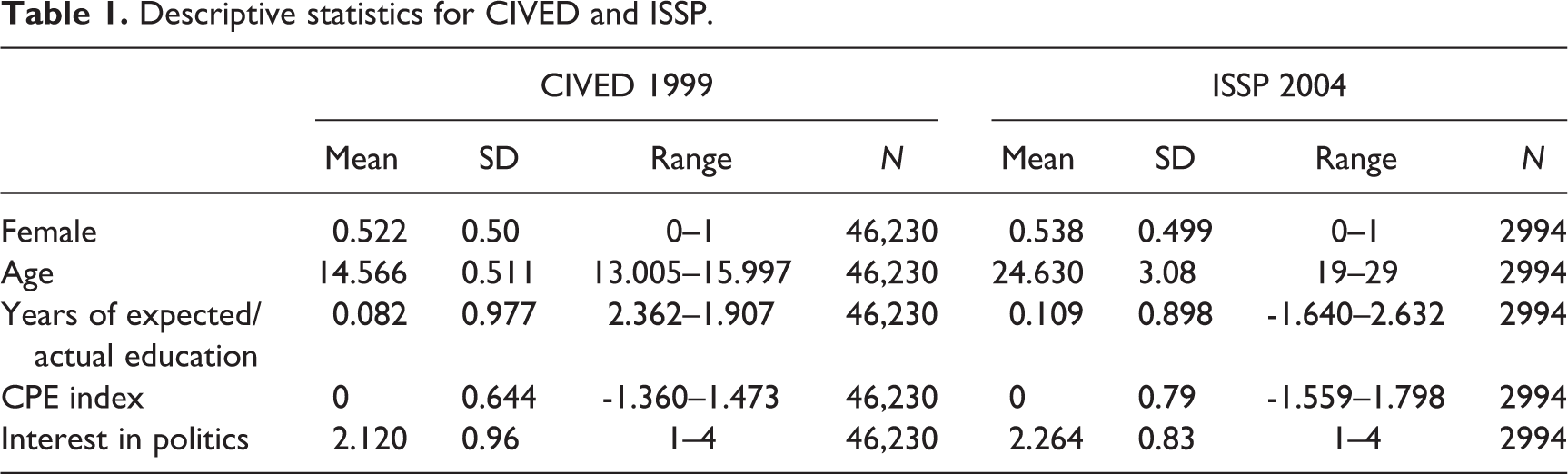
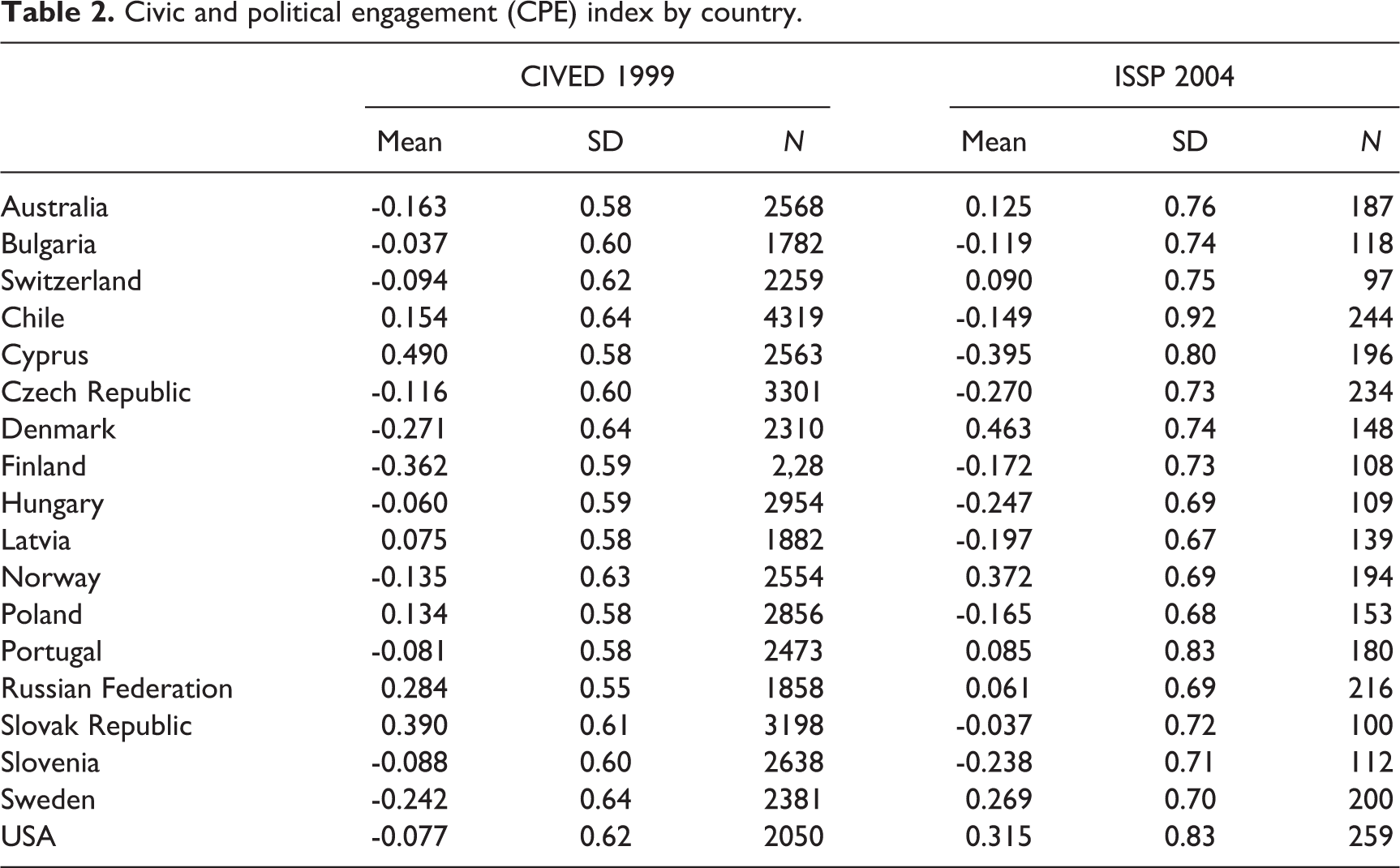
All required underlying items for this variable are available in both surveys for 18 countries. In Tables 1 and 2 respectively the basic descriptive statistics and the country scores of CPE are presented. The sample for CIVED is substantially larger than that of ISSP with 46,230 v. 2994. We took this into account by including sampling weights so that the total of observations of both samples get an equal weight.
Descriptive statistics for CIVED and ISSP.
Civic and political engagement (CPE) index by country.
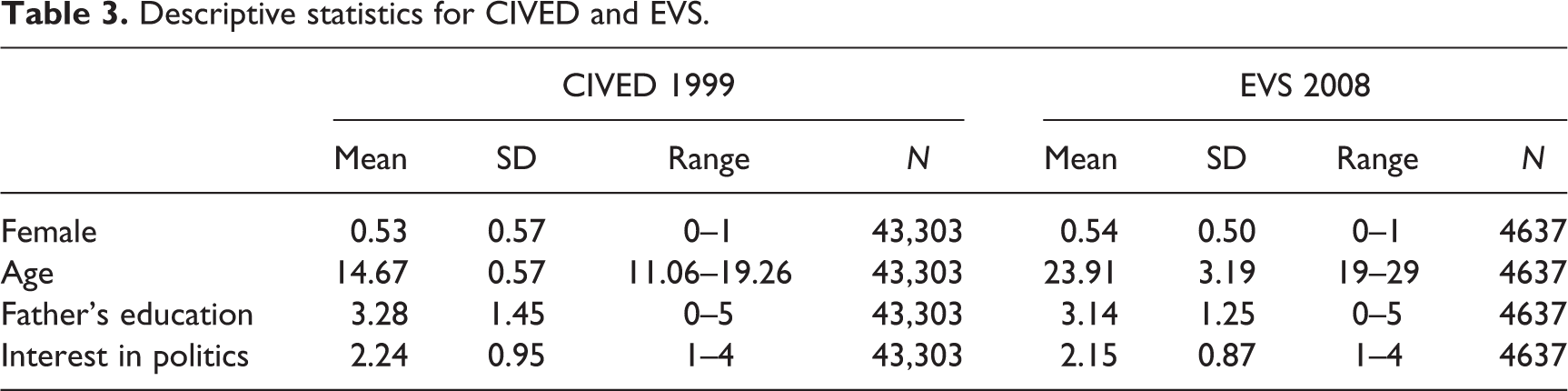
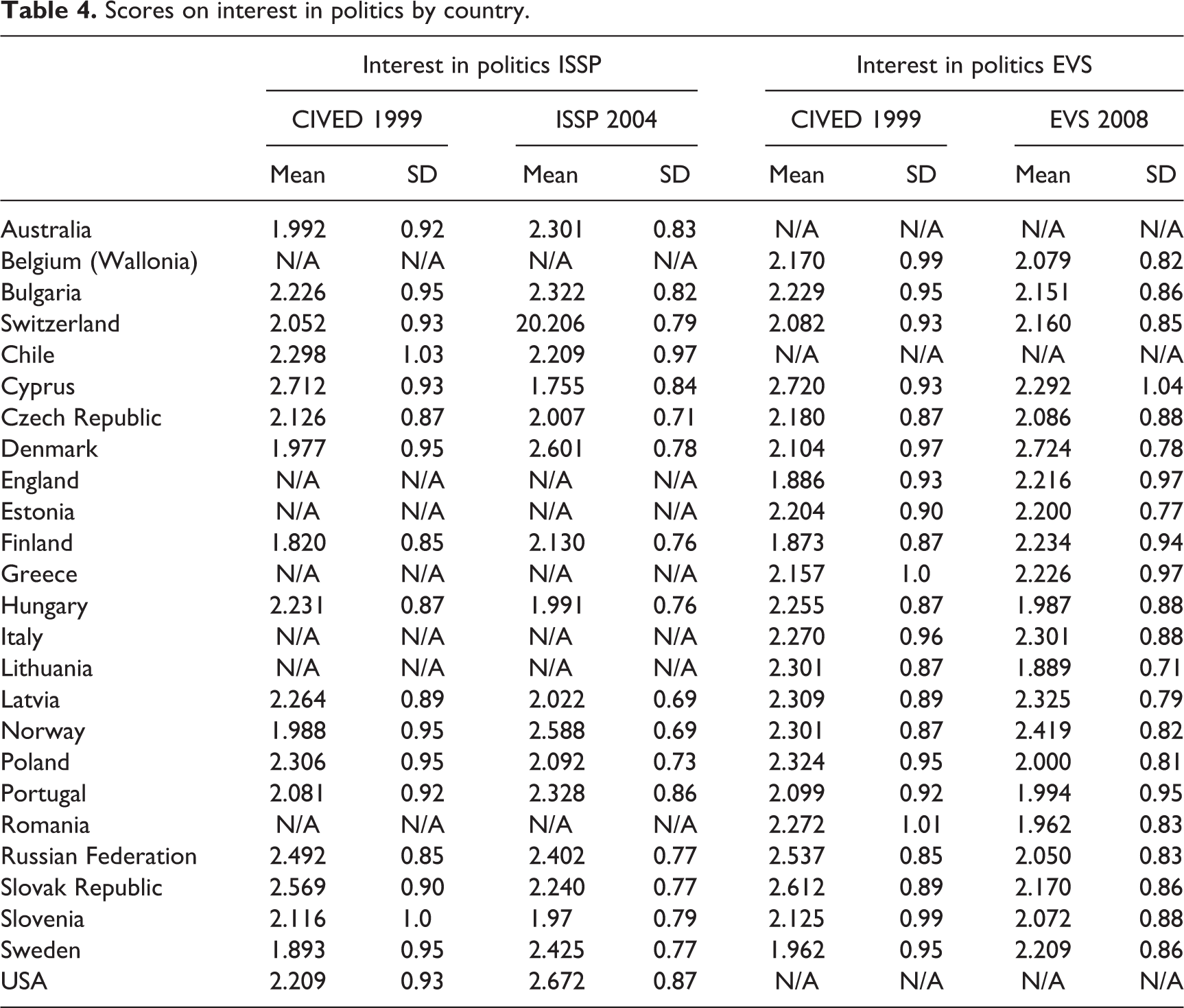
Since the CPE index described above is created for a pool of countries it is possible that changes in the country scores on the index of civic and political engagement between t1 and t2 are the result of relative changes between countries. To take this into account, we repeat the analysis with ‘interest in politics’ as the dependent variable taken from CIVED 1999, ISSP 2004 and EVS 2008. In all three surveys, this variable is measured with the same answer categories. Therefore, it is not necessary to standardise the scores and hence this approach allows the examination for absolute (not relative) scores for interest in politics. A downside of interest in politics as the dependent variable is that due to the limited number of categories it is not possible to apply the conditional quantile regression models. The variable is available for 18 countries when using ISSP 2004 as t2 and 22 when using EVS 2008. The descriptive statistics can be found in Table 1 (CIVED and ISSP sample) and Table 3 (CIVED and EVS sample). The country scores for interest in politics by survey are presented in Table 4. To take into account the large difference in sample size between CIVED and both adult surveys, sampling weights were applied once again.
Descriptive statistics for CIVED and EVS.
Scores on interest in politics by country.
Independent variables
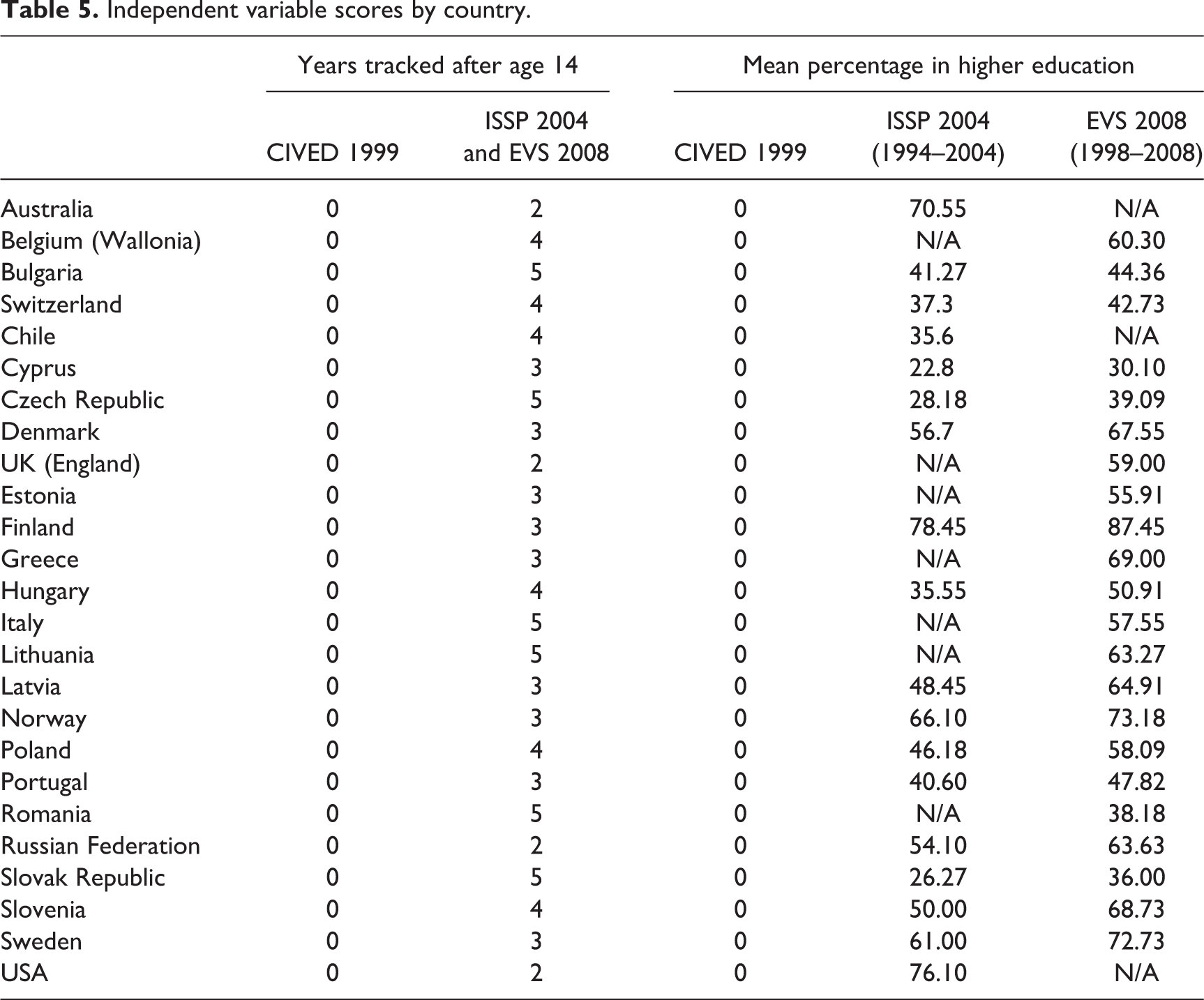
The independent variables are: (a) the number of years students in a country are tracked in secondary education after age 14, and (b) the mean percentage tertiary education enrolment. The number of years students are tracked after age 14 is based on the ‘age of first selection’ and the ‘typical age finishing high school’ from Eurydice (2007) and OECD’s Education at a Glance (2002). Age of first selection refers to the moment in which students are first enrolled in differential learning routes or course levels after all students were enrolled in the same learning route. The mean percentage of tertiary education enrolment was calculated for the period that the oldest respondents of the adult cohort were 19 years old, for ISSP 2004 and EVS 2008 1994 and 1998, respectively, until the year the survey was taken by using World Bank data. 1 In Table 5 and Figure 1 the scores on both independent variables by country are presented. Interestingly, many countries with only two or three years of tracking after age 14 demonstrate a relatively high percentage of people in higher education. Conversely, countries with four or five years of tracking after age 14 demonstrate relatively low percentages of participation in tertiary education. Moreover, this latter group includes noticeably many Eastern European countries.
Independent variable scores by country.
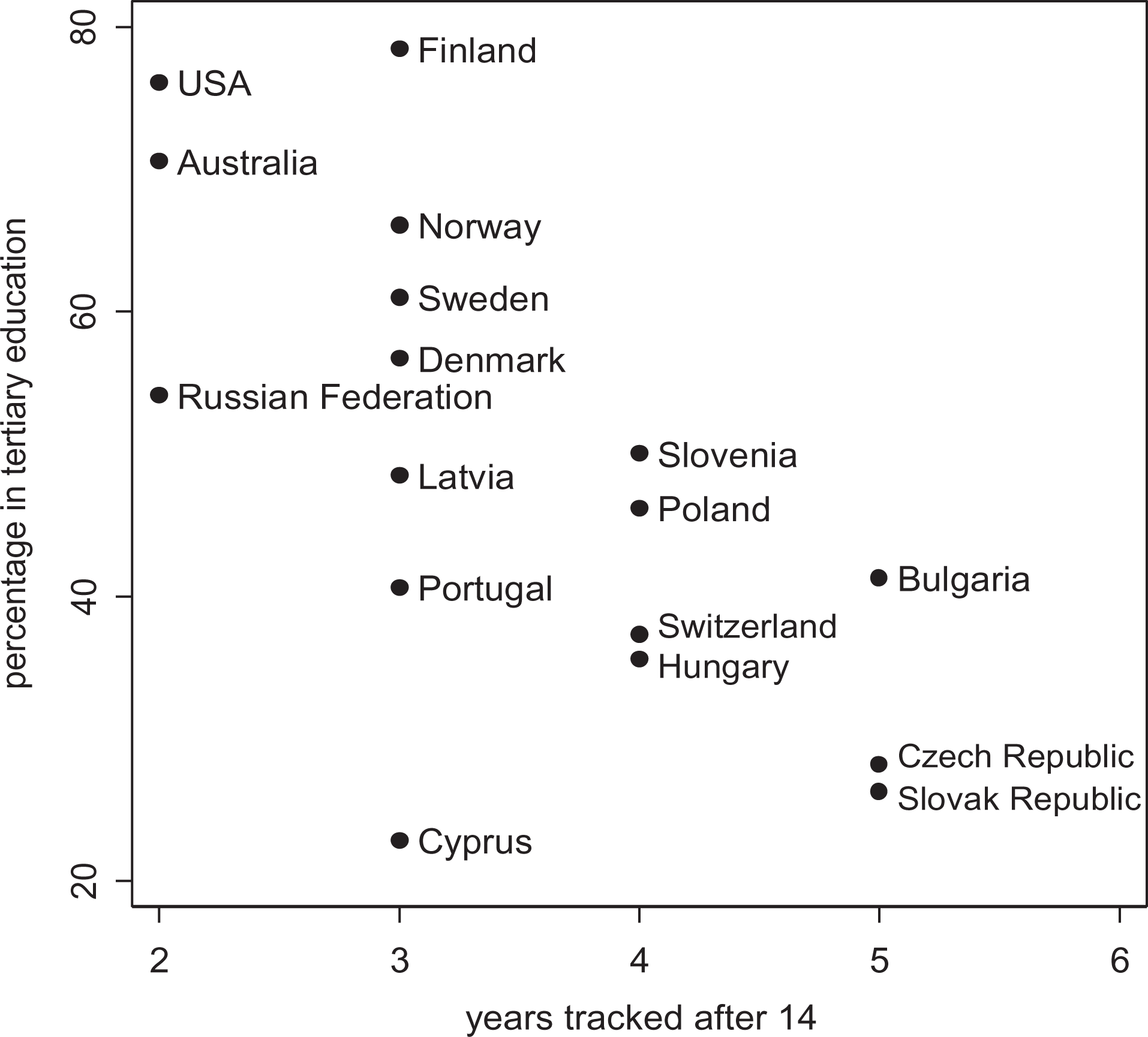
Scatter plot country scores on independent variables. Note: Chile is not presented in the graph, because with four years of tracking after age 14 and an average of 35.60% of the population in tertiary education, it highly overlaps with Hungary (4 years of tracking and 35.55% in higher education).
Control variables
The overlap of social background items in CIVED and the two adult social surveys is limited. We control for three background variables: gender (1 = female), age, and socioeconomic status. Regrettably, CIVED 1999 and ISSP 2004 do not share a common socioeconomic measure such as parents’ education. However, as a proxy we take respondents’ own educational attainment. We used ‘expected years of further education’ from CIVED and ‘years of schooling’ from ISSP and standardised them. When interpreting this measure as a proxy of SES we make an assumption that errors of the CIVED respondents’ regarding their future education are random. Therefore, we present models both with and without this measure of SES when analysing CIVED-ISSP data.
CIVED and EVS, in contrast, include an identical measure of SES: father’s education (Table 3). The items from both surveys were recoded so that they contain the following categories: 0, no elementary school, 1, elementary school, 2, finish some high school, 3, graduated from high school, 4, some post-secondary non-tertiary education, and 5, tertiary education.
Diagnostics and robustness checks
We chose 14 as the age at which we start counting years of tracking to apply a ‘clean’ country fixed effects design, by using the available CIVED data where civic and political engagement is measured at the age of 14. However, in some countries, students are sorted into tracks before the age of 14. To account for this limitation, we ran separate models with a measure for years of tracking including the years of tracking before age 14 as a robustness check. This analysis led to substantially the same findings, only with smaller effect sizes, as our main analysis where we examine years of tracking after age 14. 2
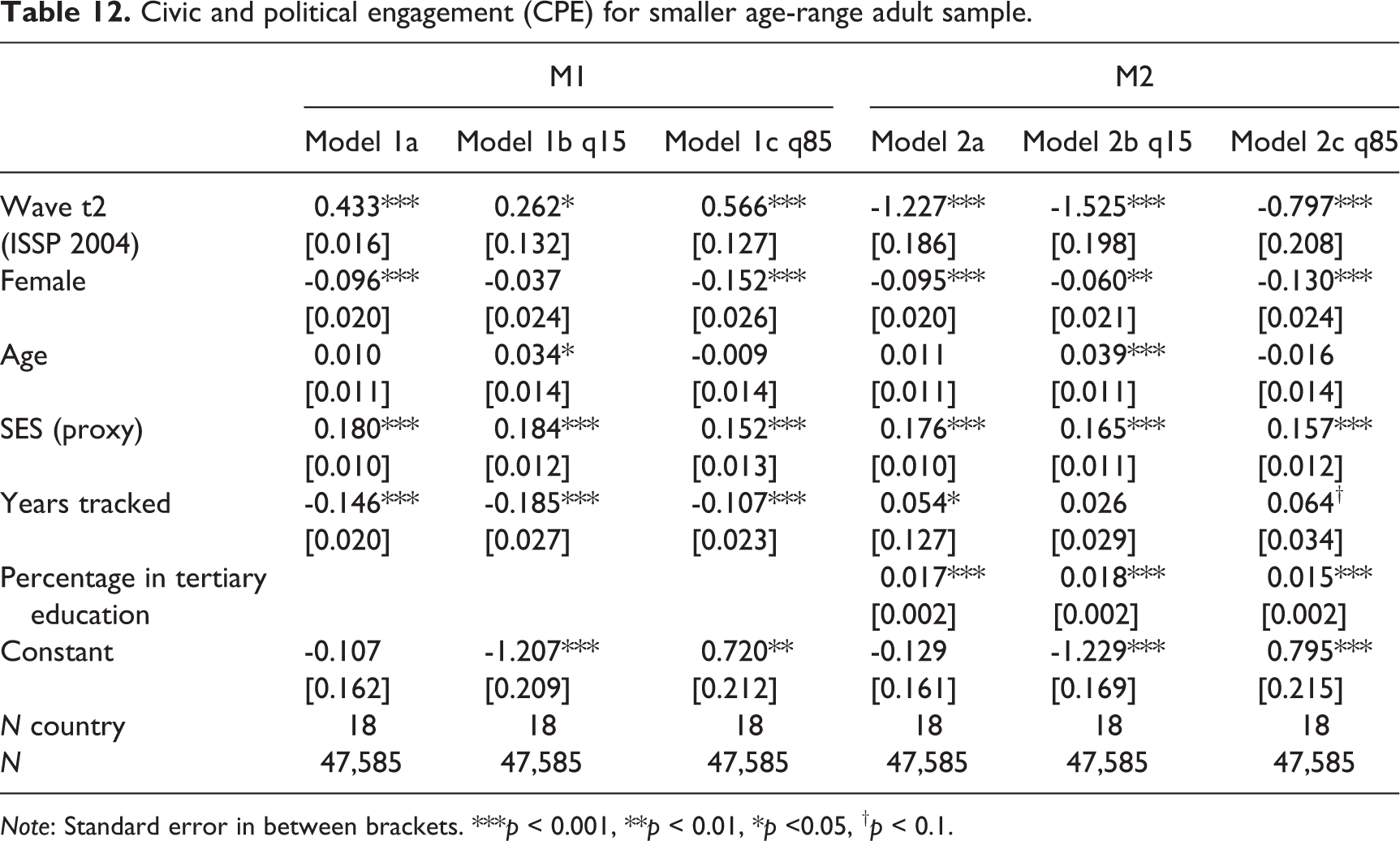
To take into account our assumption that civic and political outcomes of respondents older than 19 are highly similar to when the respondents were 19 and, hence, that the stretching of the adult age group does not lead to bias, we reran the models with an adult wave of age 19–24 (Appendix, Table 12). This led to one substantially different finding which is reported in the results section.
Although we account for differences between countries that are stable between t1 and t2 by using country fixed effects, it is still possible that changes in countries with regard to political stability and culture could impact our findings. Therefore, it is important that we account for variation in political culture. The level of corruption is recognised as an important feature of political institutions that, moreover, negatively influences civic engagement (Hooghe and Quintelier, 2014). Hakhverdian and Mayne (2012) demonstrate that the relation between education and trust in institutions is mediated by the level of corruption. As a robustness check we repeated our analyses including a measure of corruption as operationalised by the World Bank. 3 This variable reflects ‘perceptions of the extent to which public power is exercised for private gain, including both petty and grand forms of corruption, as well as “capture” of the state by elites and private interests’ (Kaufmann et al., 2009). In our analyses including a measure for the level of corruption, we did not find a significant effect for the level of corruption and the results were substantially the same as in our main analysis. 2
Results
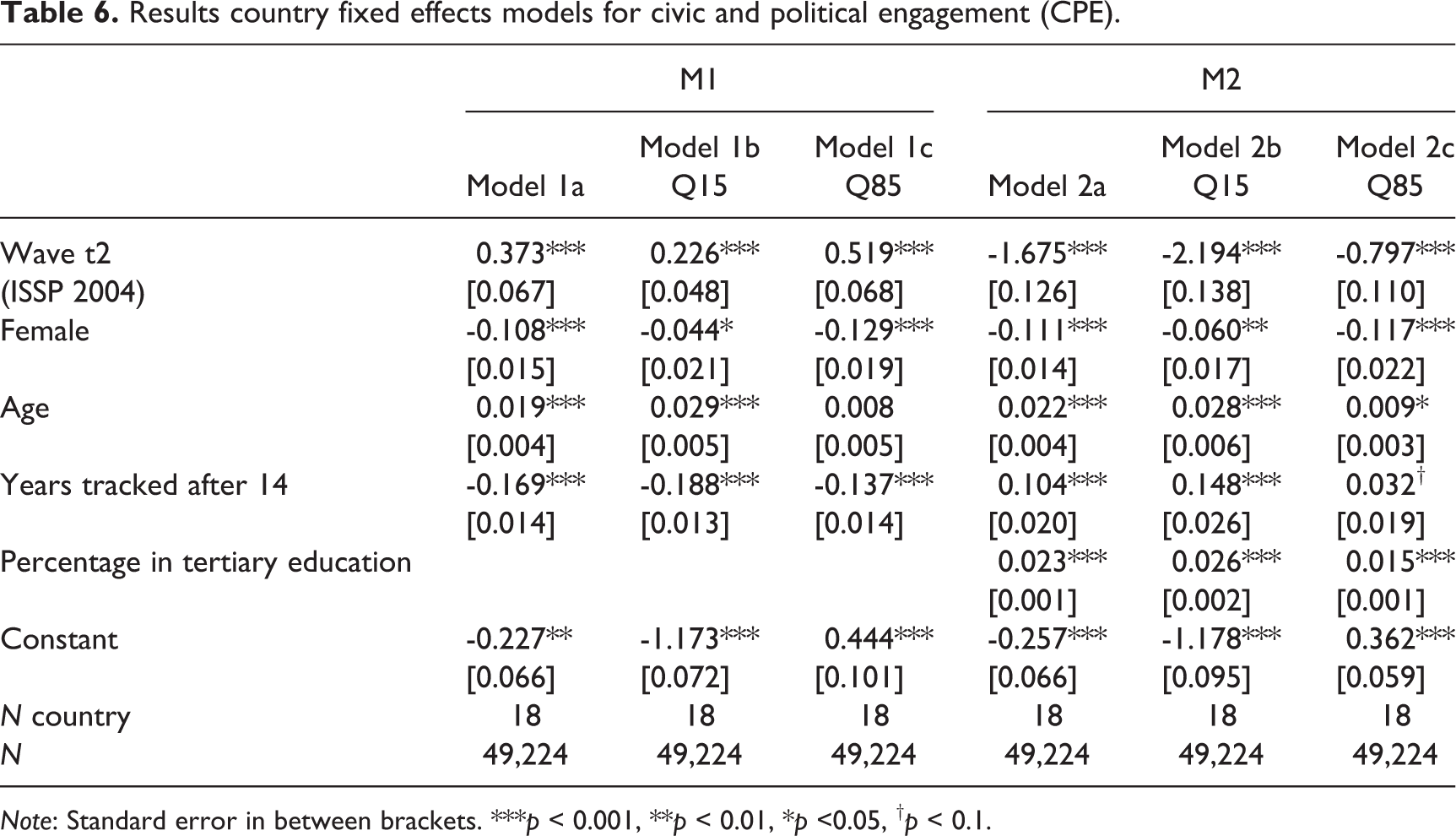
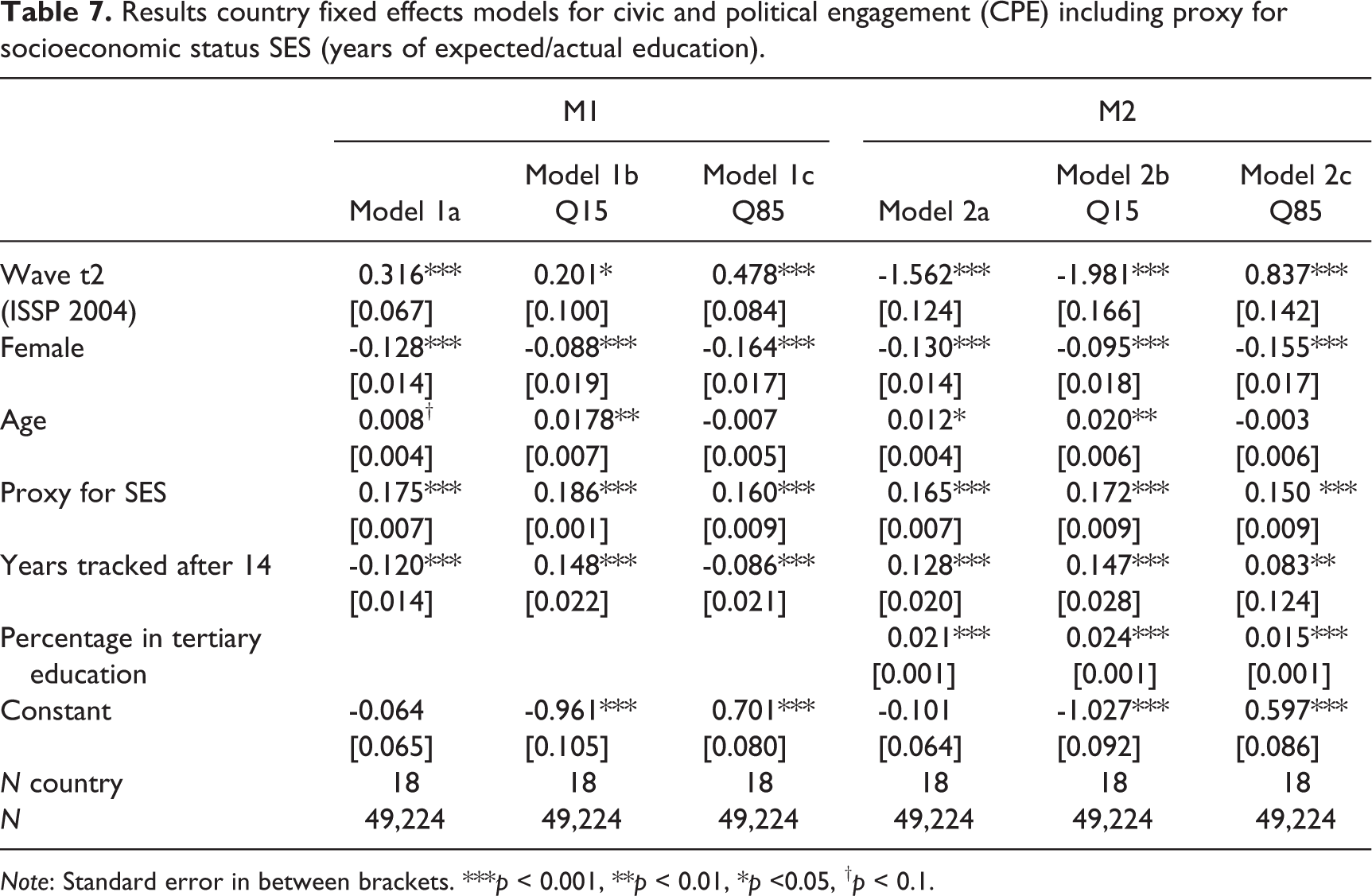
The results of the country fixed effects models for the first dependent variable CPE are presented in Table 6 (without a proxy for SES) and 7 (with a proxy for SES). The tables include six models, namely, the models in which the ‘treatment’ of years of tracking is assessed for the sample as a whole and for the 15th and 85th percentile (models 1) and the models in which we also control for the percentage in tertiary education, once again for the whole of the sample and the 15th and 85th percentile (models 2). For reasons of parsimony the fixed effects for country are not presented in the tables.
Results country fixed effects models for civic and political engagement (CPE).
Note: Standard error in between brackets. ***p < 0.001, **p < 0.01, *p <0.05, † p < 0.1.
In all models of both tables being female is negatively related to the CPE index. In contrast, being older is generally significantly positively related to the CPE-index. Only for the 85th percentile of the CPE distribution age is not significantly related to CPE (see model 1c in Table 6 and models 1c and 2c in Table 7). In Table 7 we see that our proxy for SES is significantly positively related to the CPE index. Finally, a dummy for being a respondent of the adult sample is positively related to civic and political engagement in models 1 in both tables. This result indicates that at the aggregate level CPE increases for the sample between the age of 14 and young adulthood. When participation in tertiary education is included in the model, however, being in the older wave is associated with a lower level of engagement.
Results country fixed effects models for civic and political engagement (CPE) including proxy for socioeconomic status SES (years of expected/actual education).
Note: Standard error in between brackets. ***p < 0.001, **p < 0.01, *p <0.05, † p < 0.1.
In model 1a of Table 6 the independent variable of our interest, years tracked after age 14, is negatively related to the CPE index with -0.169 at p < 0.001. This finding implies that CPE increased less between 1999 and 2004 for people living in societies with a more prolonged period of tracking after the age of 14. In models 1b and 1c, where model 1a is repeated for the 15th and 85th percentile of the civic and political engagement distribution, the negative effects of years of tracking are respectively more and less pronounced with -0.188 and -0.137 at p < 0.001. This finding means that a longer tracked curriculum is on average associated with less civic engagement across the distribution, but that the loss in engagement in strongly tracked systems is most severe at the bottom of the distribution. In models 1a, 1b, and 1c of Table 7, where SES is included into the models, we find the same pattern as in Table 6 only with smaller effect sizes; the length of tracking after age 14 is negatively associated with CPE, especially for those at the bottom of the distribution. With these findings hypothesis 1 is supported.
In model 2a of Table 6 the mean percentage in tertiary education within the countries in the sample between 1994 and 2004 is included. Not surprisingly, this variable is positively related to CPE; in education systems with more people enrolled in higher education average CPE is higher. What is surprising, however, is that the effect of years being tracked after age 14 is now positive. This is not only true in the model for the whole sample with 0.104 at p < 0.001 in Table 6 and 0.128 at p < 0.001 in Table 7, but also for the bottom of the distribution with 0.148 at p < 0.001 (Table 6) and 0.147 at p < 0.001 (Table 7) and the top of the distribution with 0.032 at p < 0.1 (Table 6) and 0.083 at p < 0.001(Table 7). This suggests that the negative and inequality enhancing effects years of tracking found in models 1 are only there because tracking reduces enrolment in tertiary education. With this finding hypothesis 2 is confirmed. The positive effect of years of tracking in models 2 suggests that disregarding the negative relation between tracking and enrolment in higher education, more pronounced tracking stimulates civic and political engagement, notably for initial low-achievers. When studying a more-narrow adult population (age 19–24 instead of 19–29) the effect of number of years tracked after age 14 is rather similar for model 1 (Table 12). The results in model 2 of Table 12 differ from our main results in Table 6 and 7 in that the effect of years of tracking is not significant for the 15th percentile and that it is stronger rather than weaker for the 85th percentile compared to the whole sample. Nonetheless, the finding that the negative effect of years of tracking that we find in model 1 disappears when we control for participation in tertiary education remains robust. Hence hypothesis 2 is still confirmed after this robustness check.
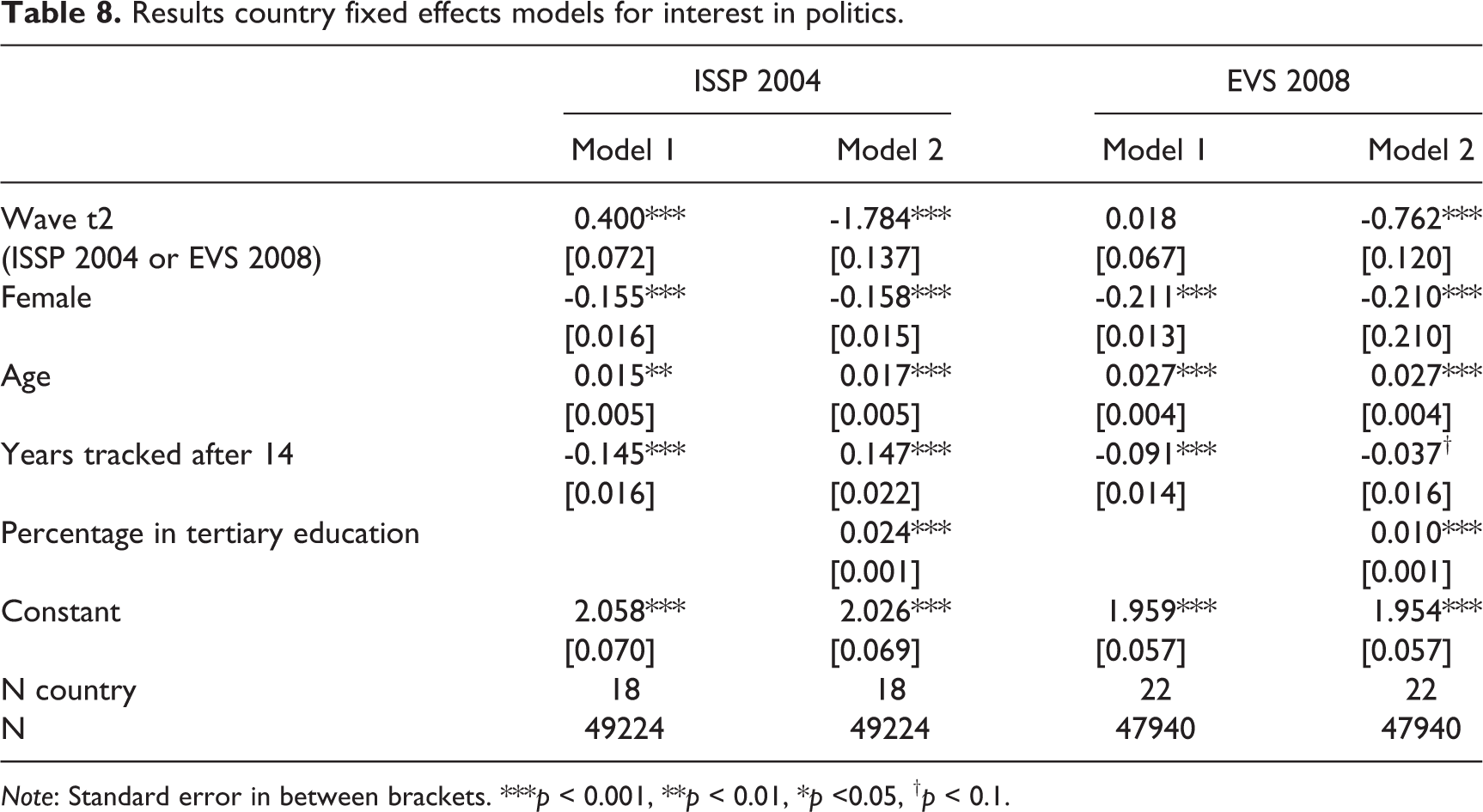
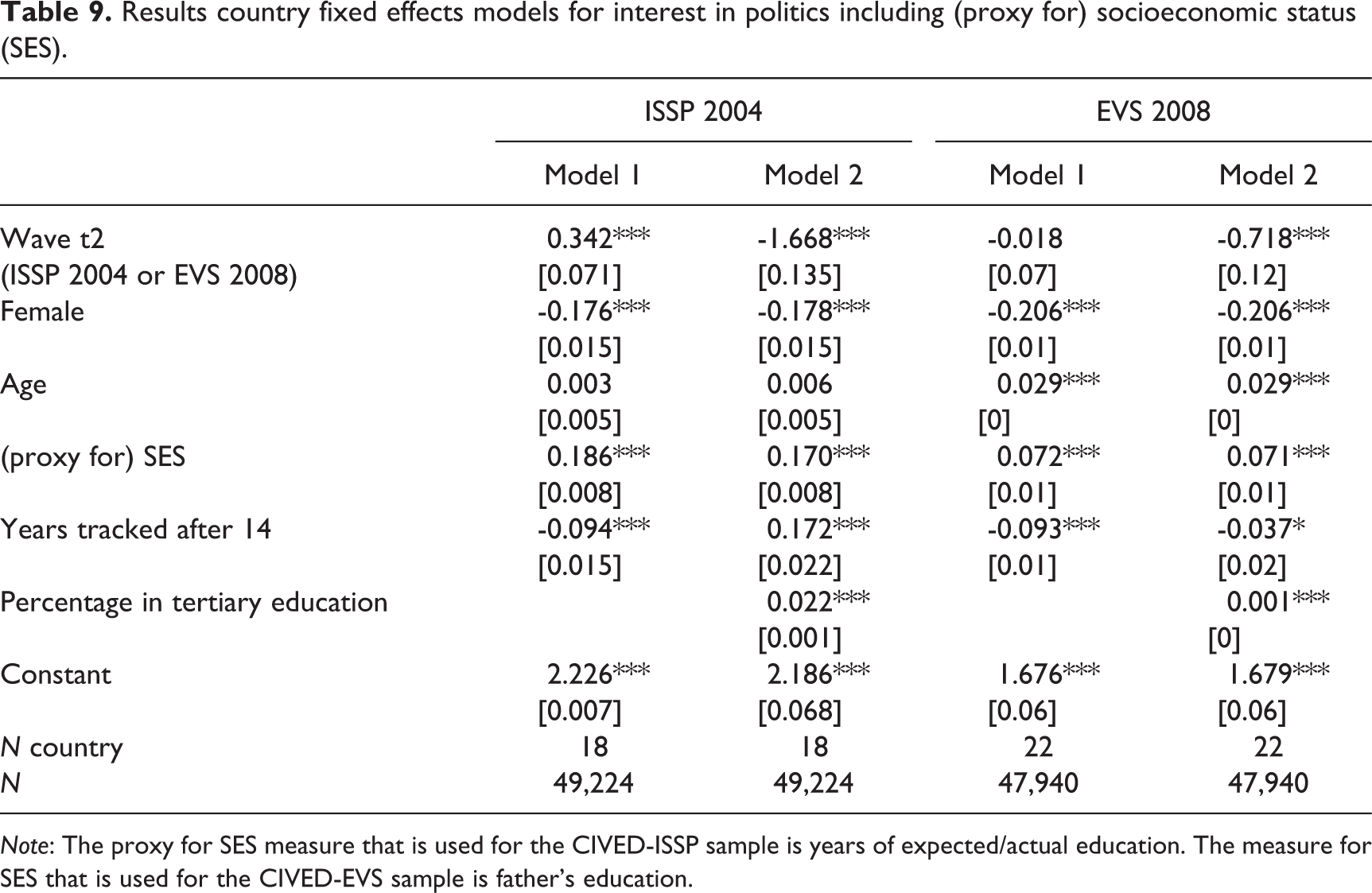
Tables 8 and 9 present the findings of the models with and without (a proxy for) SES for the second dependent variable: interest in politics. Because it is not possible to study percentiles for this variable, we only examine two models.
Results country fixed effects models for interest in politics.
Note: Standard error in between brackets. ***p < 0.001, **p < 0.01, *p <0.05, † p < 0.1.
Results country fixed effects models for interest in politics including (proxy for) socioeconomic status (SES).
Note: The proxy for SES measure that is used for the CIVED-ISSP sample is years of expected/actual education. The measure for SES that is used for the CIVED-EVS sample is father’s education.
The findings for the control variables gender, age, and (a proxy for) SES are highly similar to the findings in Tables 6 and 7 described above. Only age is no longer significantly related to interest in politics when we control for a proxy for SES in the CIVED-ISSP sample (Table 9).
When examining models based on CIVED and ISSP data, the same pattern as found for the CPE index described above becomes apparent; a longer tracked curriculum is negatively related to interest in politics (-0.145 at p < 0.001 in Table 8 and -0.094 at p < 0.001 in Table 9), but this turns into a positive relation when the percentage in tertiary education is included in the model (0.147 at p < 0.001 in Table 8 and 0.172 at p < 0.001 in Table 9). When examining the models run with a sample from CIVED and EVS data, the effect of years tracked is negative once again in model 1 (-0.091 at p < 0.001 in Table 8 and -0.093 at p < 0.001 in Table 9). In contrast to all previous results, the relation between number of years tracked and the dependent outcome in model 2 stays significantly negative with -0.037 at p < 0.1 in Table 8 and -0.037 at p < 0.05 in Table 9. However, the effect of years of tracking on interest in politics does decrease in model 2 compared to model 1. Therefore hypothesis 2 is still confirmed. In short, the findings for the dependent variable interest in politics also confirm hypothesis 1 and 2 similar to the findings for the CPE index and hence add to the robustness of these findings.
Conclusion
The mixed findings from country-case studies examining the relation between curricular tracking and CPE identify the need for a comparative approach. Unfortunately, there is a lack of longitudinal cross-country studies that include measures of CPE during adolescence, which is both the formative phase of CPE and the period during which curricular tracking occurs. In this study, we overcome this issue by combining data from two cross-sectional surveys with identical measures of CPE for the same birth cohort. Using a country fixed effects design, we assessed whether there is a relation between the length of the tracked curriculum across education systems and the development of CPE – in terms of efficiency and equality – in 25 countries.
The findings show that when students are tracked longer in secondary education, CPE is reduced, particularly for the lower part of the engagement distribution. Thus, in education systems with a longer tracked curriculum both the average engagement is reduced and the inequality in engagement is enlarged. This is the opposite of what is desirable for democracy considering a strong democracy requires an engaged citizenry and political equality (Dahl, 1998). It moreover demonstrates that early tracking education systems contribute to the civic engagement gap. The fact that we find a similar but less pronounced negative effect of the duration of tracking on aggregate CPE when we account for tracking before the age of 14, suggests that this effect is more noticeable after the age of 14 than before.
However, we find that the negative effect of tracking is mediated by enrolment rates in higher education. In fact, we find that, when taking into account the enrolment in tertiary education, the length of the tracked curriculum is no longer negatively, but positively related to CPE, notably for initial low-achievers. It is well known that early-tracking systems have more barriers and educational dead-ends regarding higher education and that tertiary education participation rates are lower in these education systems. Our findings suggest that tracking is harmful particularly because it reduces enrolment in higher education. As a result, a larger share of the population misses out on the benefits that higher education provides for CPE, such as increased cognitive and civic skills, and a social network of people who are likely to have high CPE. Another possible explanation of why lower tertiary education rates, and therefore tracking, are harmful for CPE is that people with a (pre-)vocational education who do not have access to higher education may feel that society does not acknowledge them properly and therefore they turn away from it (Van Houtte and Stevens, 2008). The positive effect of tracking, when controlling for higher-education participation rates, could be explained by the higher classroom and school homogeneity of students in terms of SES in education systems with a longer tracked curriculum. This implies that students hold more similar values which enables an open classroom climate for discussion (Campbell, 2007; Isac et al., 2011).
The findings of this paper are consistent with findings from other comparative studies that demonstrated that more tracking is associated with less CPE and more dispersion of CPE between tracks or socioeconomic groups. However, these studies were all cross-sectional in nature. Moreover, we add to the literature with our finding that the relation between the duration of tracking and CPE may not be driven by tracking itself, but by the consequences tracking has for access to higher education.
Although we have addressed a few important limitations with our robustness checks, some remaining caveats need to be mentioned. First of all, by taking 19 as the age at which students have left high school, we simplify heterogeneity in the age at which people leave high school, across and within countries, and the various educational or occupational pathways they take after this. Unfortunately, there is no suitable cross-national longitudinal micro data available to address this heterogeneity.
Second, the design does not deal with unobserved characteristics that correlate with both tracking and growth in CPE during adolescence. Besides enrolment in higher education there may be other aggregate or macro-level changes between being 14 and young adulthood that correlate with both tracking and CPE and, hence, can bias the findings.
Finally, by design we were only able to study contextual effects on CPE, while the underlying theory of individual-level effects of track enrolment could not be tested. Hence, we may theorise about tracking systems affecting differences between students educated in different tracks, but there is a potential ecological fallacy when we do so. We see our results therefore as a complement to studies that examine school career data on one or a few countries, that analyse individual-level differences between students educated in different tracks.
The policy implication of our findings is that to reduce the civic engagement gap, countries with pronounced curricular tracking may gain from increasing the possibilities and reducing the obstacles to ultimately accessing higher education for people in (pre-)vocational education. Besides that, it is necessary to look further into the mechanisms that are at work in creating the positive relation between tertiary education enrolment and CPE. Subsequently, experimenting whether certain CPE-increasing features can be extracted from higher education and be provided to students who will not continue in higher education, may be beneficial for the CPE of these people.
Footnotes
Funding
The authors disclosed receipt of the following financial support for the research, authorship, and/or publication of this article: This work was supported by the Netherlands Initiative for Education Research (PROO) [grant number 411-10-920] and the Innovational Research Incentives Scheme (Vici) [grant number 453-14-017] of the Netherlands Organisation for Scientific Research (NWO).

Notes
Appendix
Civic and political engagement (CPE) for smaller age-range adult sample.
| M1 | M2 | |||||
|---|---|---|---|---|---|---|
| Model 1a | Model 1b q15 | Model 1c q85 | Model 2a | Model 2b q15 | Model 2c q85 | |
| Wave t2 | 0.433*** | 0.262* | 0.566*** | -1.227*** | -1.525*** | -0.797*** |
| (ISSP 2004) | [0.016] | [0.132] | [0.127] | [0.186] | [0.198] | [0.208] |
| Female | -0.096*** | -0.037 | -0.152*** | -0.095*** | -0.060** | -0.130*** |
| [0.020] | [0.024] | [0.026] | [0.020] | [0.021] | [0.024] | |
| Age | 0.010 | 0.034* | -0.009 | 0.011 | 0.039*** | -0.016 |
| [0.011] | [0.014] | [0.014] | [0.011] | [0.011] | [0.014] | |
| SES (proxy) | 0.180*** | 0.184*** | 0.152*** | 0.176*** | 0.165*** | 0.157*** |
| [0.010] | [0.012] | [0.013] | [0.010] | [0.011] | [0.012] | |
| Years tracked | -0.146*** | -0.185*** | -0.107*** | 0.054* | 0.026 | 0.064† |
| [0.020] | [0.027] | [0.023] | [0.127] | [0.029] | [0.034] | |
| Percentage in tertiary education | 0.017*** [0.002] | 0.018*** [0.002] | 0.015*** [0.002] | |||
| Constant | -0.107 | -1.207*** | 0.720** | -0.129 | -1.229*** | 0.795*** |
| [0.162] | [0.209] | [0.212] | [0.161] | [0.169] | [0.215] | |
| N country | 18 | 18 | 18 | 18 | 18 | 18 |
| N | 47,585 | 47,585 | 47,585 | 47,585 | 47,585 | 47,585 |
Note: Standard error in between brackets. ***p < 0.001, **p < 0.01, *p <0.05, † p < 0.1.